Wirework Planters

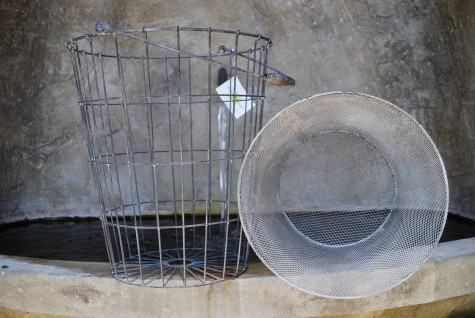
This photograph of a wirework planter and insert lowers my blood pressure considerably.  I am planting furiously-directing and following three crews.  My group-there are 16 of us.  I know there are celebrated CEO’s who manage many more than I-but I find what I can keep track of, instruct and help out-16 is a plenty big number. I do plant pots for the store-it is recreation of a sort.  I planted a few wirework planters yesterday; I have a big love for steel in any dimension. Steel wire, galvanized, painted, raw, faux finished- I find all the available forms of interest. Wire planters need lining-soil and wire need an intervening medium of some type.
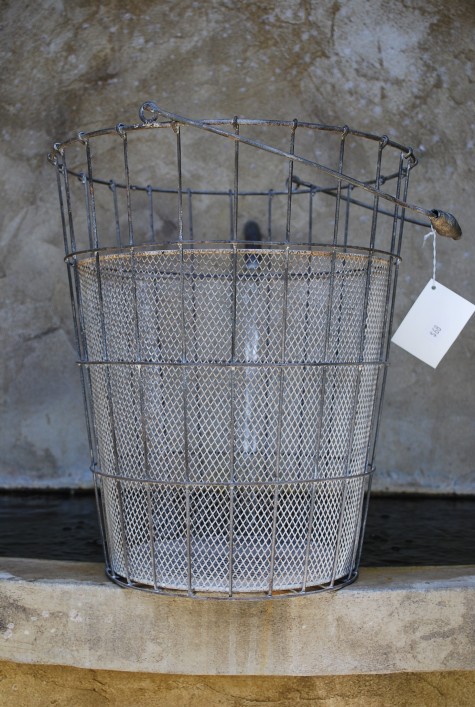
This galvanized steel basket came with a densely constructed liner.  Landscape fabric is all this bucket needs to keep the soil where it belongs.  The galvanized mesh is almost dense enough on its own to hold soil.  The fabric will not obstruct the pattern of the diamond mesh in any way. This basket could be planted in a loose, or very contemporary manner, but surely it asks for a very simple liner. 
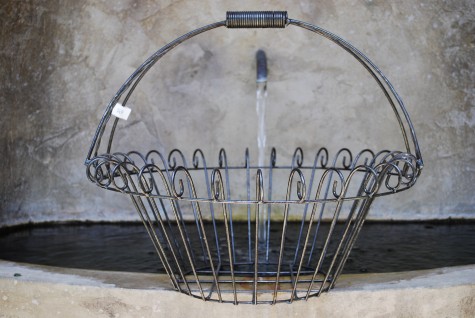
This round heavy wire basket-beautiful in its own right. To ready this basket for planting-any number of materials would work.  Florist’s moss, in giant sheets, is a good choice.  We call high quality florist’s moss “hides”- large intact sheets make easy work of lining wire.  Small pieces are a nuisance to handle, in addition to being an invitation to topiary erosion.  Wet soil running out the side of your basket-not so pretty.  If you must use smaller moss pieces, overlap them a good amount.  Well done moss makes a great presentation.  The moss in contrast to the steel wire-easy on the eye.  Alternative liners for wire baskets-you have choices., should florist’s moss not enchant you. The wiry coir mat-difficult to form, but eminently effective.   Landscape fabric-cool and easy.
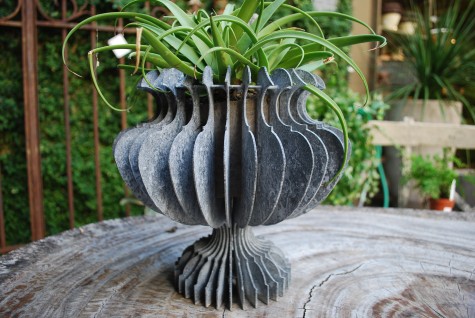
This small handmade laser cut steel pot is lined in grey landscape fabric.  This is a compatible pairing; the intricate steel work is the star of the show.  The wiry succulent completes the thought.
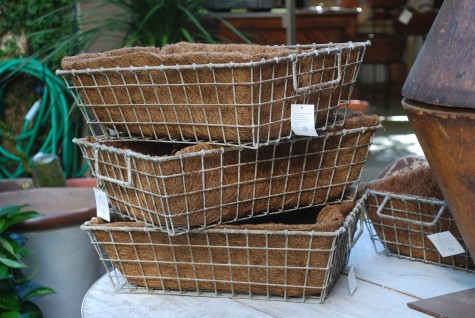
Coir is thick and difficult to handle-these wire baskets came with the liner already made.  The color and texture is a good contrast to the wirework.  Containers such as these are perfect for herbs, as they drain fast.  Succulents are likewise a good choice.  A small basket such as this may not be a good choice for those flowers needing regular moisture.  I will water once a day if I have to, but I like an every other day schedule the best.  As this suits my life, I plant large containers.
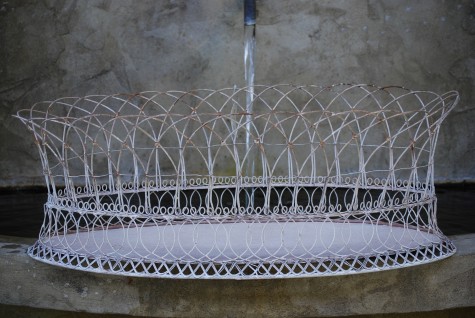
This fancy Nancy white wirework oval planter-I could line and plant this at least ten different ways. Should you be shopping, be clear in your own mind about what effect you are trying to achieve.  Something delicate like the wire-I would go there first.  Maidenhair ferns?  Miniature fuchsias? Thyme, variegated oregano, and alyssum?
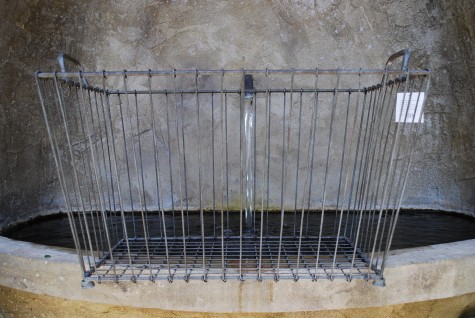
This geometric wire rectangle has plenty of space between the bars-so a bulkier liner material would work just fine.
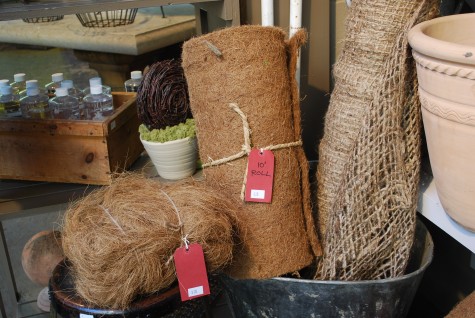
Natural materials from jute, burlap, hemp fiber and the like make great liner material. They have great textural appeal, which looks great paired with a simple container. Once you pass by the moss option, there are plenty of things out there.  Fabrics-just that option alone could produce some stunning containers.  
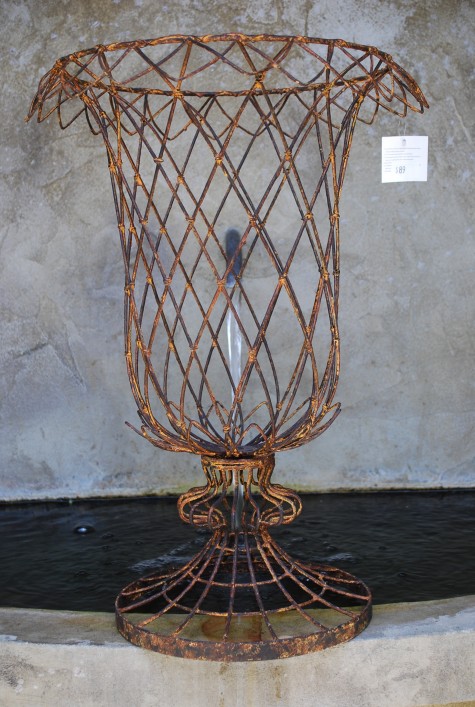

This faux finished wire urn is tall and elegant.  I stuffed the entire thing with moss.  The base-stuffed solid with moss.
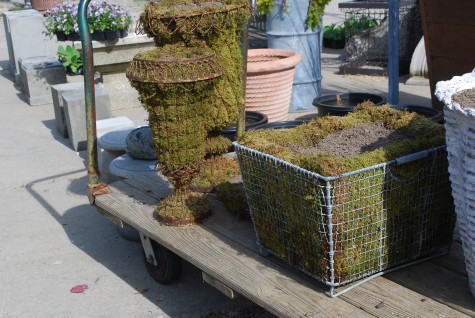

Once the moss is in place, I trim off the wild hairs, and dye it with moss dye.  This helps a lot to keep the color better longer.
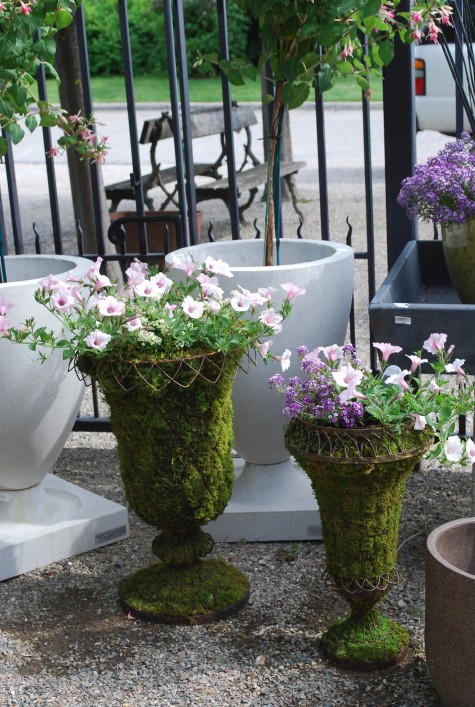

Twenty minutes this morning planting was the emotional equivalent of a cat nap. These vista silverberry mini petunias have a delightfully horizontal growth habit-very pretty.
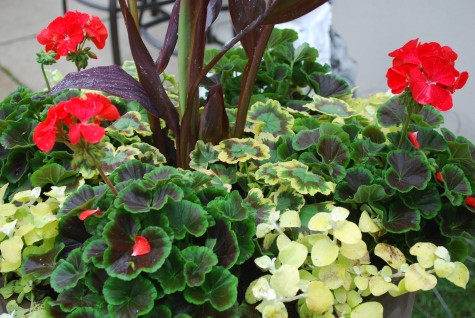
Neither Rain Nor Snow Nor Sleet…..

Annual planting season is an event like no other. The next six weeks are the most intense design/plant days of my entire year.  I review the plants, first.  I have a large group of plants that I custom grow, and then there is the shopping for whatever looks great and sparks an idea.  My annual design is plant generated.  They may inspire a color palette, an shape, an exciting exercise in texture, or suggest a gorgeous mass.  Groups of pots-I think a lot about the rhythm that gets established.  I could explain my process in a hundred essays-but in the end, my eye is my own. All I have to offer anyone is my point of view.  That point of view-I have no formula.  All I have is my off the cuff, late to be delivered, idea.  The big  idea here-trust your own vision, or find someone who can beautifully represent you.   Should you plant for yourself, I am happy to contribute to your effort.  But be advised-what I do in the blink of an eye, is all my own.

My client with the firebowl-she has an event on Thursday.  Flowers-especially in a zone 5 where the summers are relatively short-are a very emotional issue for Michigan gardeners.  Once the weather shows signs of breaking, I get calls.  Everyone is so relieved the endless winter is over-everyone wants to move outside, and enjoy every day of the summer.  No one has any interest in the night temperatures, the soil temperatures-why should they?  That is my job.   

But all of them have special birthdays, trunk shows, parties, graduations, anniversaries-important milestones.  Milestones that need be celebrated with flowers.  A late May early June annual garden is no looker-everyone knows that.  But when the seasonal flowers are planted, any event is all the better and happier for that expression.  My notes are as much about events that influence scheduling, as design.     

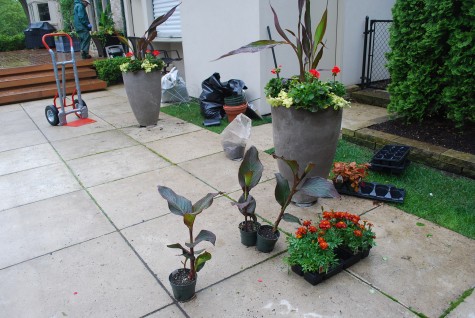
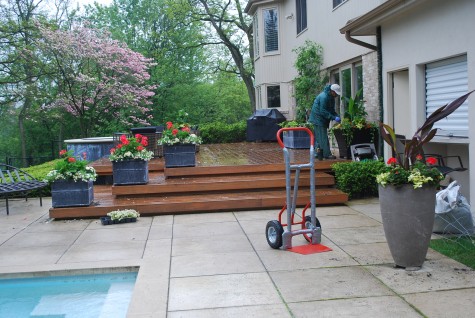
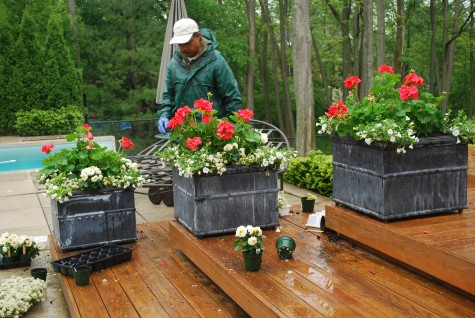
Inclement weather-whatever. There are no rain days when we plant annuals.  The annual planting season is short, so we all have gear.  The actual planting is a footnote.  The bulk of the work is the contracting for custom grown material, the contracting for a custom soil mix, the maintenance and gas for the truck, the design, the shopping, the arranging for transport, the hauling of soil, the cleanup, the disposal of debris-big, and largely unseen, work. Whew!

My client Susie wanted orange this year-she loved how my pots looked last year.  What do I so love about her? She has one big idea to express-having done so, she is confident enough to step back, and watch what happens.  We have been working together more than 15 years.  Relationships get forged, over time. Those relationships show, believe me.  Good design relationships result in work any eye would appreciate.  

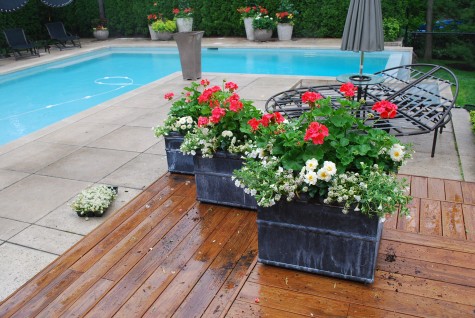
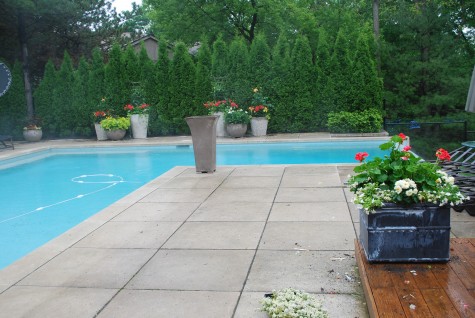
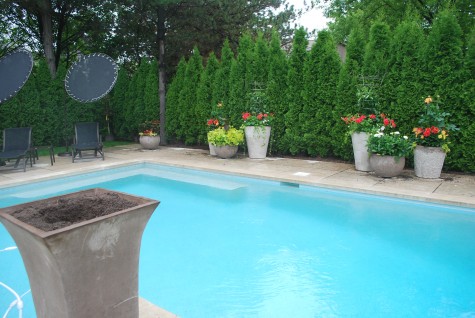
We moved one pot this year to a new location-I was caught flat footed today.  I had to regroup, and come back. I spent no small amount of time deciding what should go in that Francesca del Re pot at the corner of the pool-as well I should.  Taking the time to do a thoughtful job in the middle of a frenetic season-I can be depended upon for this.  No client knows I am awake half the night worrying about their design,  their life and their installation-this is as it should be.    It is my worry about how to bring orange,white, and lime to life for Susie.   

I planned and planted surely around the pool deck.  That newly placed planter took the better part of the afternoon to resolve.  I promise to post pictures of the mature annual plantings-you can decide if you like them.

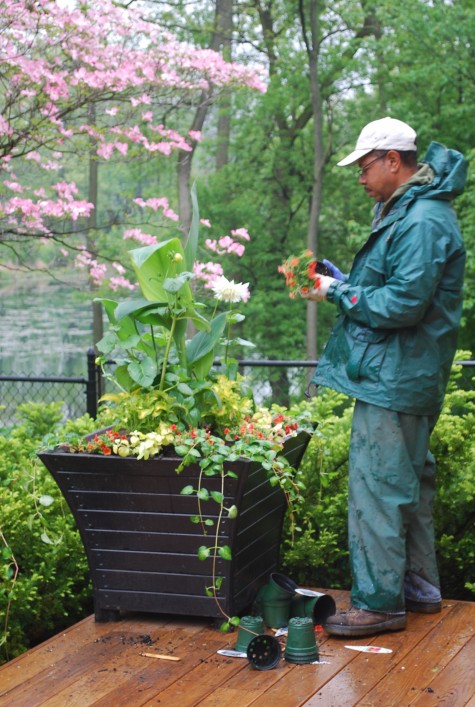
My client Susie-she bought giant white dahlias for her wood boxes.  Fine.  I tuned up.  The planting of the annual gardens and pots-lots of emotion, lots of changes, lots of conversation-lots of tuning up.  I would not have it any other way.  


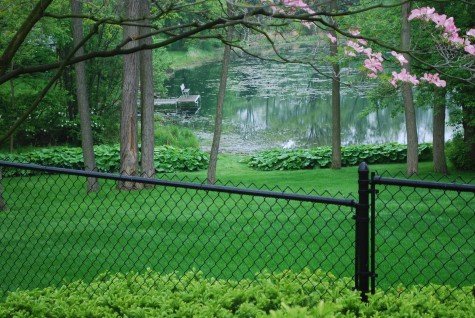
Outside her annual plantings-I am so pleased to see the butterburrs have taken hold at the pond.  The long view-so beautiful.  Any relationship forged over a conversation about the landscape-energetic, and very beautiful.  Thanks, Susie.

A Bit More Box Talk

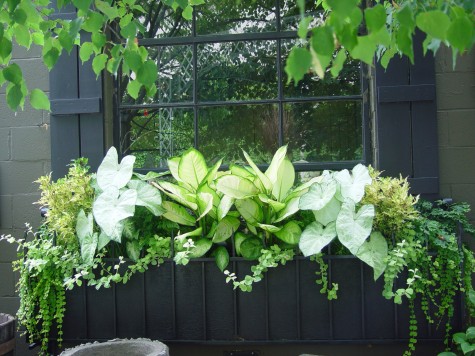
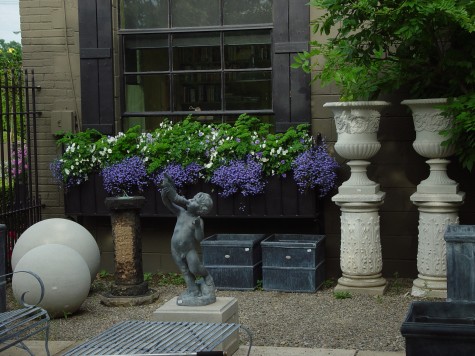
The east side of my shop is heavily shaded by a row of 15 year old lindens.  The shop landscape is mostly about displaying our collection, and pots we plant.  Given that the lindens are the only in ground element, there is plenty of additional visual interest.  The window boxes light up that heavy shade, especially if I concentrate on pale colors.  The lime and white in this box put plants at eye level, and out of the way of foot traffic.  These iron boxes have galvanized steel liners that I paint whenever the mood strikes me, and however that mood strikes me.   The color of the box is an important part of its appearance. I like the chance to change. 

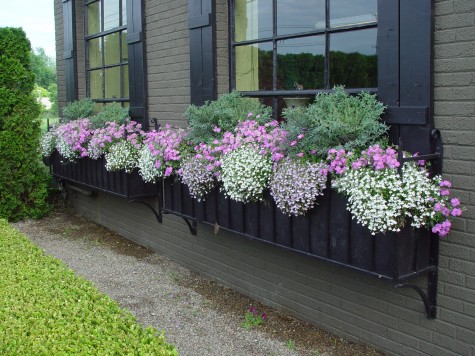
Spring plantings do not have the heft of the summer-the season is short and sweet.  Some plants definitely show better up off the ground-lobelia is a case in point.  The plant and its flowers are diminuitive and delicate; they need a seat up front and center.  Ornamental kale grows large, but its effect is lacy.  I like this type of planting up off the ground. 

Summer for me is all about sumptuous-no matter what style of planting appeals. An austere and edited can be sumptuous-just think about it. This year, the liners of the boxes got a rustic, dribbled and worn paint surface that complimented the style of the planting I had in mind.    

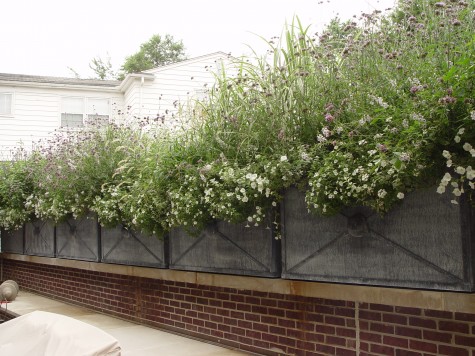
Not all boxes need to be under a window; this row of boxes provides welcome screening for a second floor condominium terrace, set squarely on top of a rail wall.  In an instant, this terrace became private. The planting-a graceful meadow two stories up. The client has since gone the route of arborvitae in the boxes; they have lived in them for squite a few years now.   

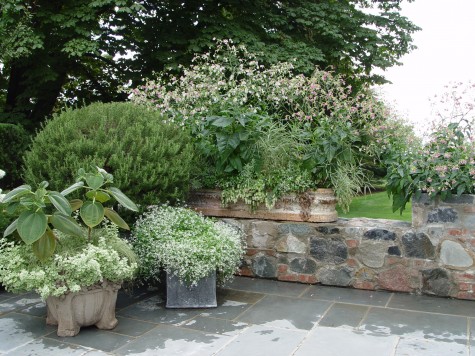
This old French iron box also sits on a wall enclosing a terrace, and adds another level of planting that makes the space cozy.  The wall was built with an integral box, seen in the right side of this picture. A gardener can vary the levels of planting by choosing plants that vary in their mature height. Window and wall boxes, containers on stands-this is an equally effective way of transforming a collection of pots into a beautifully styled vignette. What do you need, in the way of up and down?  Ask this question before you giving any arrangement your blessing.  Just as soil can be amended, an arrangement in your garden can be changed, modified, unexpectedly effective-given your visual study. 

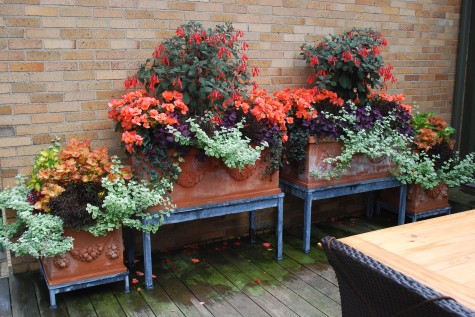
My boxes on stands make a strong statement on a large brick wall.  I could handle that wall differently to be sure-an iron panel, a series of shelves, trellises for the pots-I have options.  I chose the height of the stands to put the decoration of the pots at my eye level when I am sitting close by-I love my pots as much as the plants. The top half of this wall looms over me.  I have not forgotten this; whatever time it takes for me to figure a top to bottom solution, so be it.

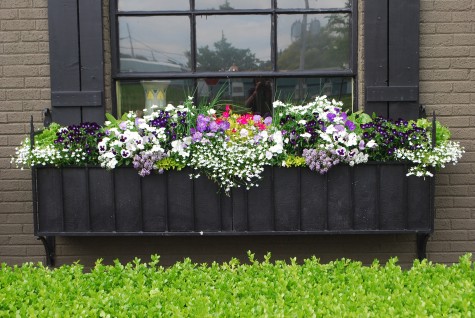
A window box is a big, stolidly rectangular object.  When planting them, I make every effort of vary the height of the plants-in contrast to the rigidity of the box.  This spring planting undulates softly, pleasingly.  The Persian Queen geranium color gets acknowledged with a few bits of lime marjoram in the front.  The white phlox is loose and open, compared to the uniformly cheery violas.  The lettuce bookends bring a smile to my face.  The most important part-give the time it takes to really enjoy your gardening. 

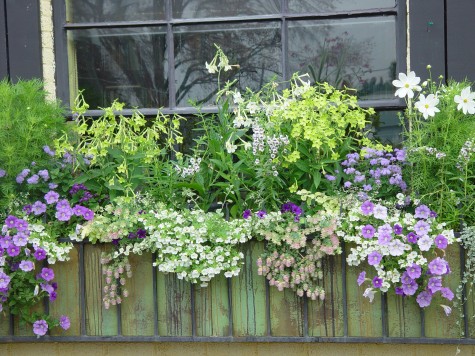
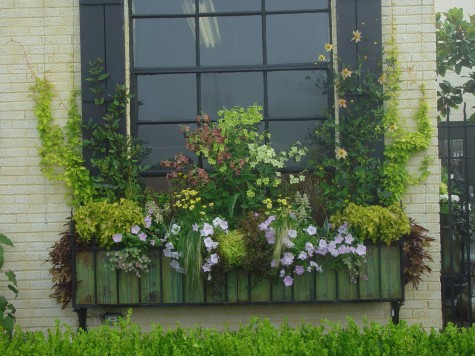
When the outside of the shop was in its yellow and whitewash phase, I thought my brown, lime and lavender window box scheme looked good.  The lime green hops went on to almost cover the walls on either side of the box.  The wispy Victorian era single dahlias-so subtle you can hardly see them. I refrain from grading my window box planting-who needs to be graded?  I appreciate history, change-the record of a given season. This is enough to keep me gardening.  


OK, I will choose a new topic, until the next great box comes along.

A Hybrid Vehicle


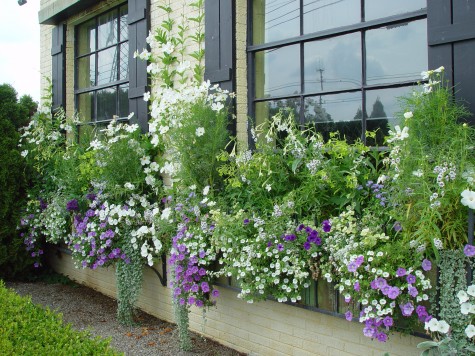
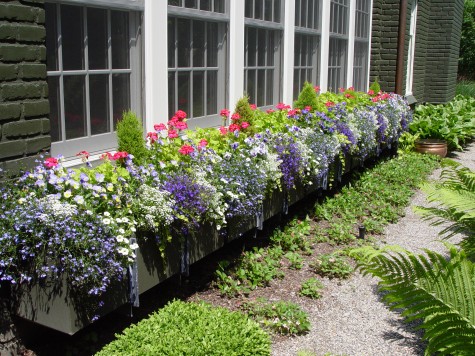
Last year at this time I wrote a post about window boxes.  They are a hybrid vehicle; you have the control of the soil and water as you do with a container, with something of that generous square footage you get planting in the ground.  As I still like this description, I will revisit the idea. Window boxes have all the advantages of containers. Perfect drainage.  A height that is convenient to plant.  A soil mix of your own choosing.  They go on to make it possible to have flowers on the second story, or the roof, or on a balcony railing.  They are a fine way to put flowers in the foreground of your views from inside out. 

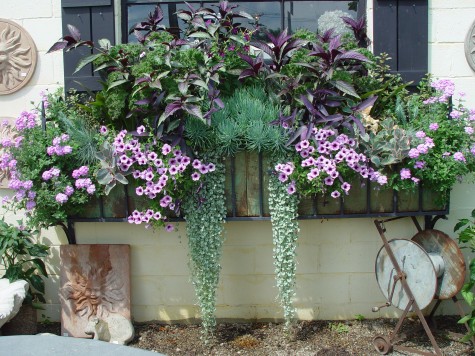
My shop has 7 giant window boxes-it is heavenly to choose the plants, plant, and watch them become a garden. I have sized them not only to hold lots of plants, but also to hold a sufficient soil mass to keep the moisture level even.  The bottom half of the box is drainage material; annuals are very shallow rooting.  Overpotting them can lead to troubles with fungus or rot.  This box was organized around the relationship of  blue green and red violet.  I will admit I shopped plenty of places to get just the right colors and lively textural contrast.   

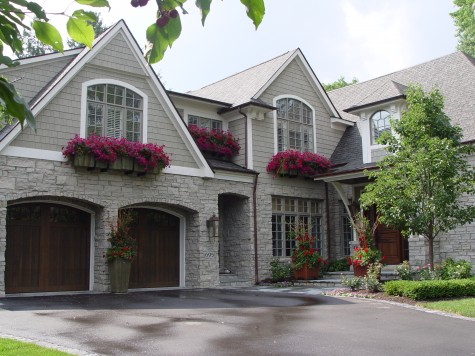
These second story boxes permit lots of flowers where a large portion of the front of the house is driveway.  Neighborhood lots can be small, and houses large.  Flowers on the second story make a big splash from the street.  The boxes are fine company for the containers at ground level.  A good irrigation contractor can water your boxes automatically, and subtly.  It is no substitute for hand watering, but automatic irrigation can buy you a little time when you are late getting to the watering.  Proper watering is critical to success with annuals-no matter where you plant them.

I have clients with window boxes eight inches wide, and as deep.  Unless you plant succulents, it is impossible to keep water on boxes of such a small soil mass. To look right, window boxes need to be made specifically for the windows they feature-so the window and the box read as one visual idea.  I like boxes that go wide of the actual window. This makes it possible to plant tall plants, or climbers, as a frame for that window.  Undersized boxes have a way of making a window look oppressively top heavy.  Glass appears to be dark, or black from the outside, unless the interior lights are on.

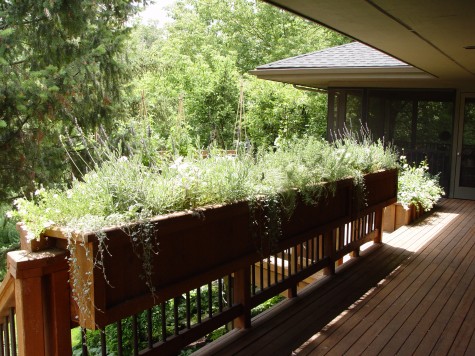
Window boxes reinvented as railing boxes can provide lots of visual interest where the railing is part of a pass through, and not a seating area.  One year, I did these boxes in herbs, lavender, and a few pale flowers.

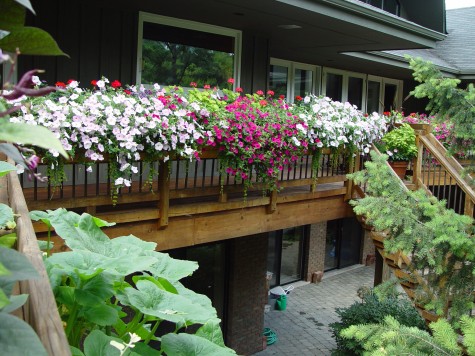
Another year they were alive with bright color; by the end of the summer, it was a hanging garden extravaganza. 

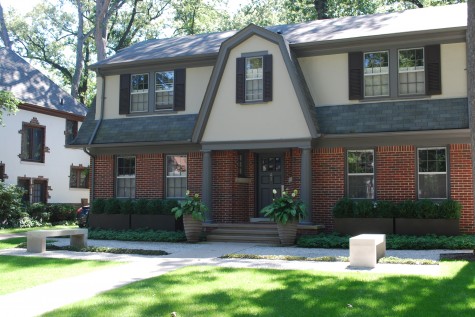
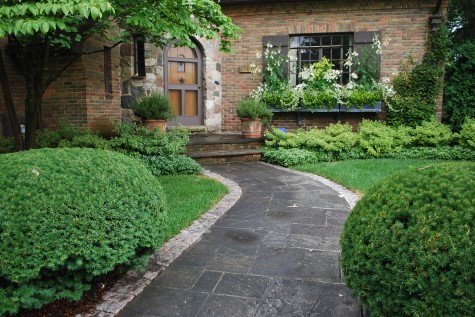
These window boxes actually sit on the ground. They add a great deal ofcarefully edited interest to the spare facade of this home.  The boxwood live in these boxes year round. The boxes are really steel rectangles-there is no need to have a bottom.  A  landscape that is quite modern in design can handle window boxes, properly done.

The low windows of the porch/sunroom asked for window boxes.  The flowers look great from inside.  Not obvious in this picture-the lot line is a scant 10 feet from the wall of the sunroom.  Window boxes can provide for a garden in tight spaces too small to plant in ground.


There is something so inviting and pleasing about a window box; I would not do without them.