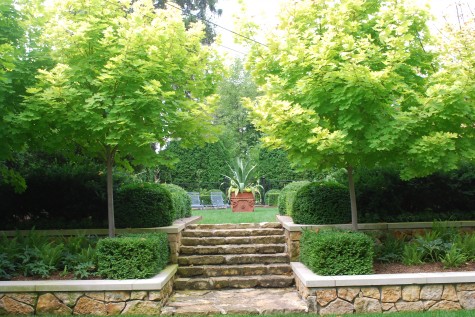
 What is not to love that comes in a box? A birthday present, a book, a new fleece, a pair of Hunter muck boots or new pair of pruners, a working washing machine, a flat of sweet woodriff from Bluestone; the box creates all kind of excitement about what is inside. Anyone who knows me has heard me wax eloquent on the subject of the box. I like to make them, and I love to plant them up. Big planting spaces permit plenty of garden expression. The giant Tuscan planter box pictured above was a summer home for a giant and unwieldy agave. In its plastic pot, it looked dangerous and standoffish. In the box, plenty gorgeous. This box of generous proportions visually organizes my entire side yard garden. Anything planted inside a box reads as a present to the garden.
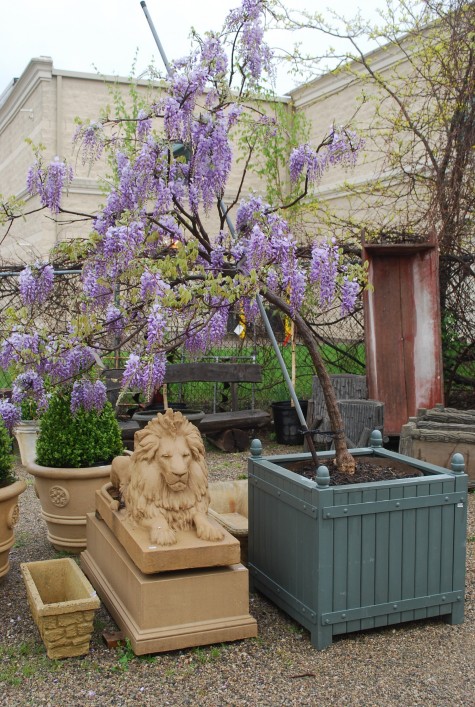
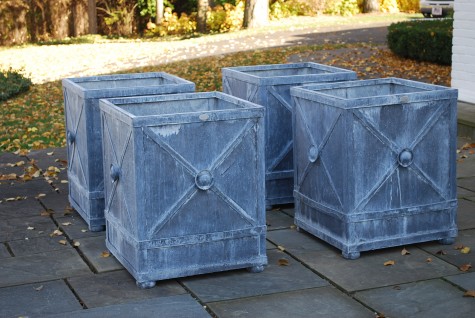 We make these Egren boxes. I named this box after Michael and Karen; they were the first to order them. I designed them to solidly reflect the history of the classical orangery box, in a shape and configuration of my own. The classic French made orangery boxes have steel corners, but they are made of wood, and painted. The mild French climate supports this material-I was after a gorgeous box that would persist. Egren boxes-my idea of a box for our climate.
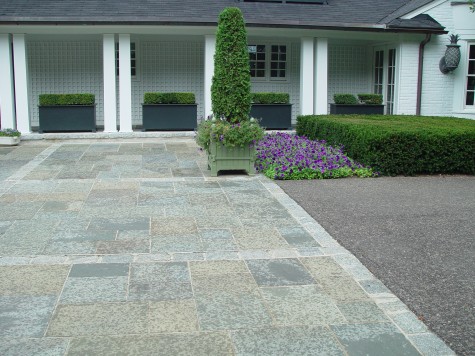 There are those landscapes that call for boxes. These painted rectangles on the porch planted with boxwood are in support of four original Jardin du Soleil French orangery boxes placed at the four corners of the drivecourt. That support is clean, and elegant. The trimmed boxwood in the generous boxes-a beautiful and unexpected proportion. They separate the porch from the drive and walk. Box, boxed-a statement of very few words with big impact. Should you be considering wood boxes, having a galvanized metal liner made to fit will confine the water in the soil to the soil. Repeated soaking damages wood and paint.
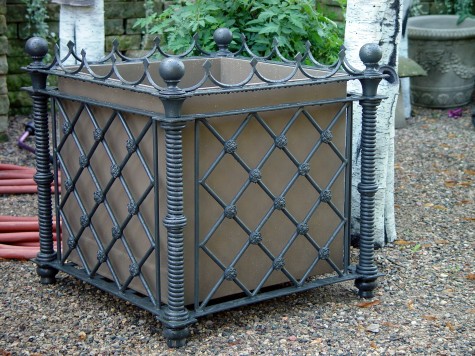 These English iron boxes have galvanized steel liners that have been painted. The large square of soil they hold make them perfect for topiary evergreen plantings. Evergreens planted with their roots above ground-consider a box. A big box. Well-grown healthy evergreens have big rootballs. Undersizing the planter is asking for trouble. Big boxes are a good home-a home that has room for future growth. There will be some space for an underplanting. Most painted finishes on metal will require maintenance sooner or later, unless that rusty looky suits you.
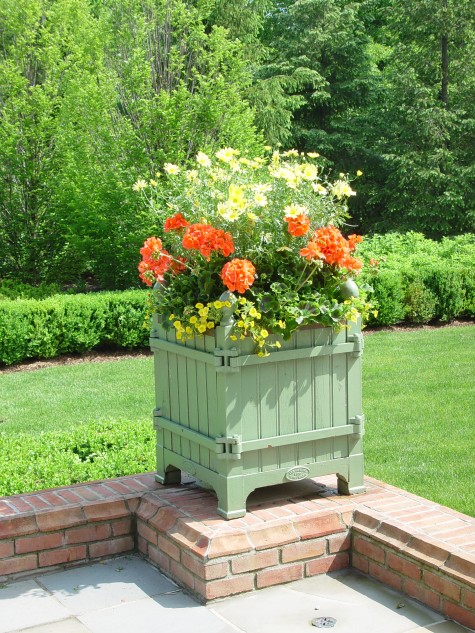 A beautiful box can anchor a driveway, a terrace-or in this case, a terrace. These brick piers were designed specifically to hold these gorgeous French boxes. If you are looking at boxes for your garden, pay mind to those designs that get that box up off the ground plane. Boxes glued to the ground-dowdy. If I am placing boxes without feet, I try to set them on gravel; this makes the box look dressed up. Set up a bit, a box can be quite elegant. The air space at the bottom also permits water to drain away freely.
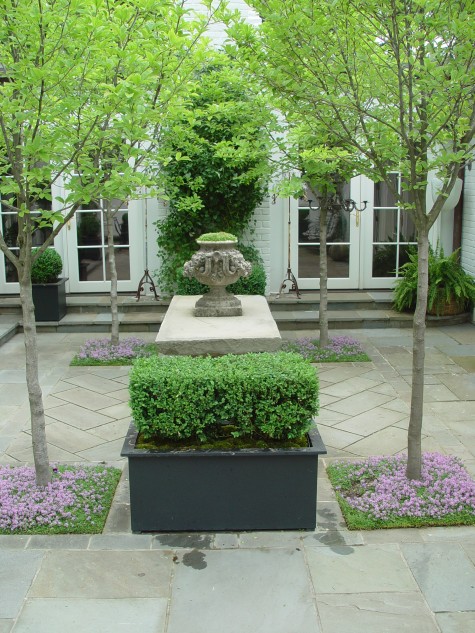 A box can make a big statement about a change of grade. On the ground plane, bluestone, thyme, and magnolias. These boxes deliver visual delight at a different level. This makes for a space all the the more interesting. When you design, look at all the levels at your disposal; these boxwood are pruned to the height of the stone table, reinforcing the statment being made about this plane. This small courtyard, completely enclosed by the home, was designed primarily for the views from inside, not so much for utility. Should you need a little punctuation, consider a box. A small square, a giant square, a rectangle of note.
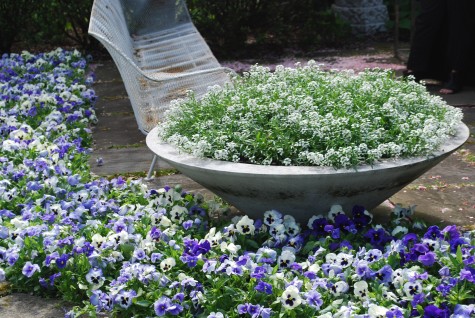
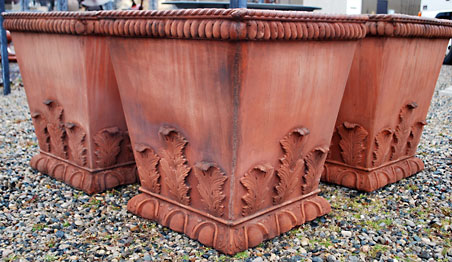 These English made concrete planters in the classical Italian style are not exactly boxy. But for the purposes of this essay, they qualify. These V-shaped squares would take any garden from the the sleepy to the sublime. I so love their solid and understated shape and decoration-I could plant an entire garden in these squares.
 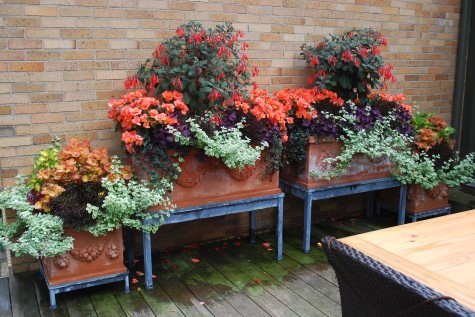 No matter what I might engineer for my shop or my clients, I have a big love for classical Italian terra cotta. Baked clay boxes figure prominently in my scheme of things. Buck obligingly forged stands for my boxes. Up off the ground given 17 inches or so, these boxes enchant whomever might be seated on the terrace. Choosing containers for a terrace has much to do with what you will see, seated. These boxes have beautiful decoration on them. They are to my mind, a work of art. I like to look at these boxes as much as the flowers. Elevating them on stands puts them within visual reach.
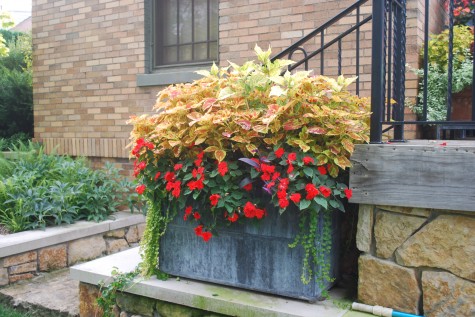
A box may not immediately seem like an extraordinary garden feature. That is a matter of placement; I will leave that to you to sort out. For many years I had a pair of round Italian terra cotta pots in this spot. They were beautiful, planted up-but the box makes much of the transition from the deck level to the ground. It could be a box could do a similar thing for your garden.