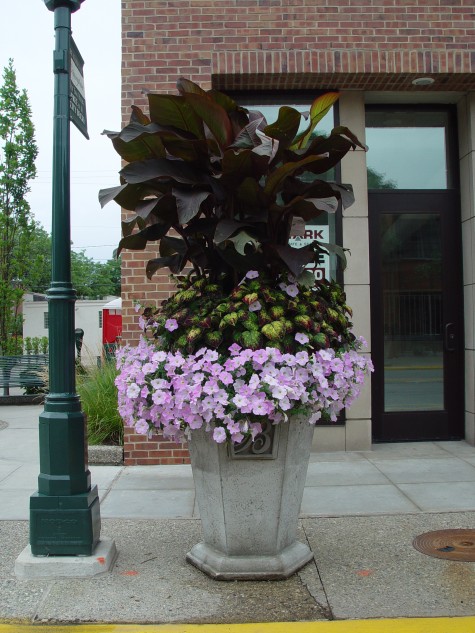
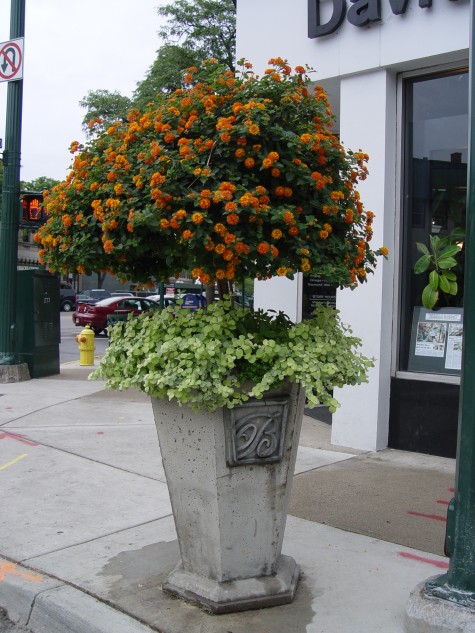
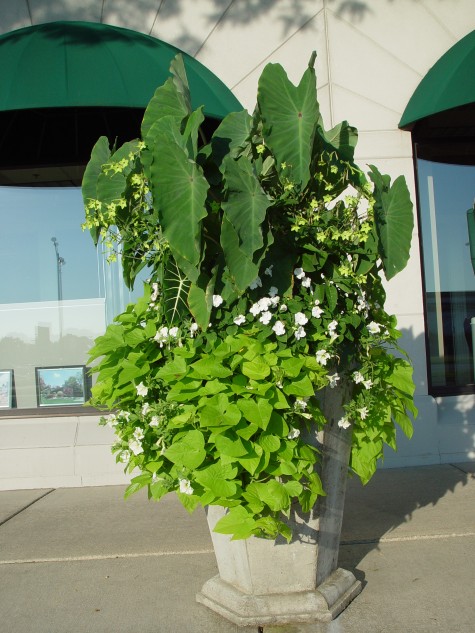
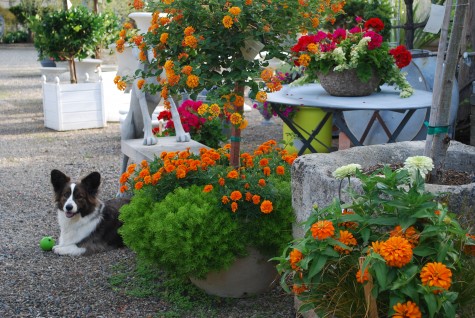
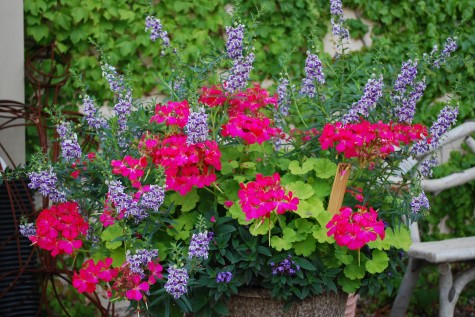
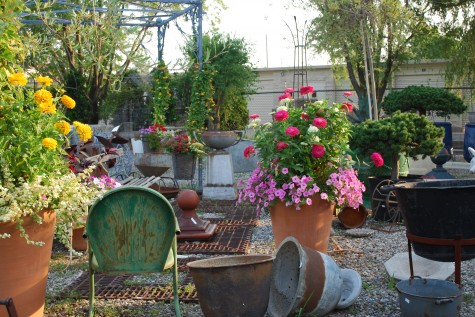
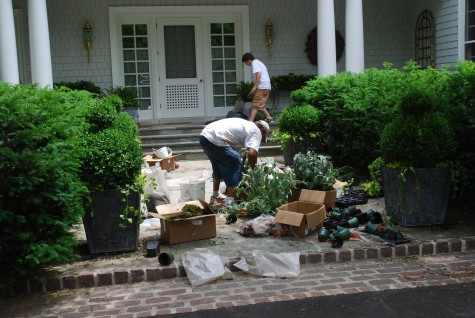
 A client with whom I have had a relationship spanning many years-how can I describe her point of view about the landscape? She was never interested in showy, always in stately. Her color palette-quiet. She oversees an amazing collection of old yews, and older trees. Her landscape, gardens, and containers clearly reflect her understated taste. Many years ago I added touches of pale pink, blue and lavender-and of course the white.
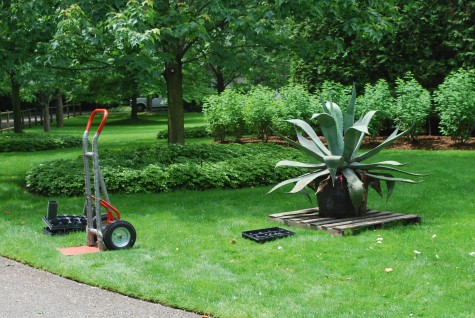 In recent years her taste has evolved such that I plant her containers with green plants of all different textures and habits. I store her collection of green topiary plants every winter; many have considerable age. The agave of hers pictured above is many years old. We plant it in a Bulbeck lead egg cup every year. Each and every one of her garden containers have a history of note. It took no small amount of time to put that collection together. Her plants-a collection of considerable age.
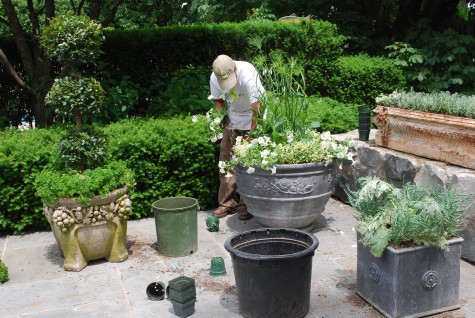 This years annual planting of course involved the planting out of her topiary collection. The underplanting this year-green, more green, white and grey. The triple ball eugenia topiary pictured above on the left I underplanted with parsley. The Bulbeck egg cup-a king Tut papyrus, and white nicotiana alata. The lead square is home to a cardoon, and some blue pencil succulents.
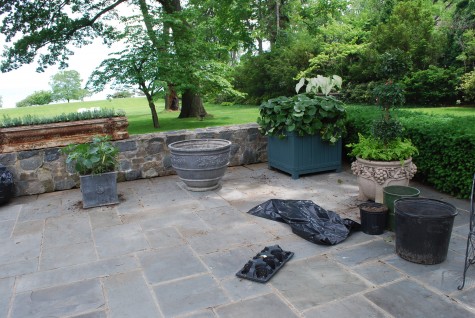 The thriple ball eugenia on the shady side of the terrace gets a ruff of ferns. The big Belgian oak box-a mass of farfugium. The small lead square-a mass of white datura and variegated sage. The empty Bulbeck egg cup-waiting for the old agave.
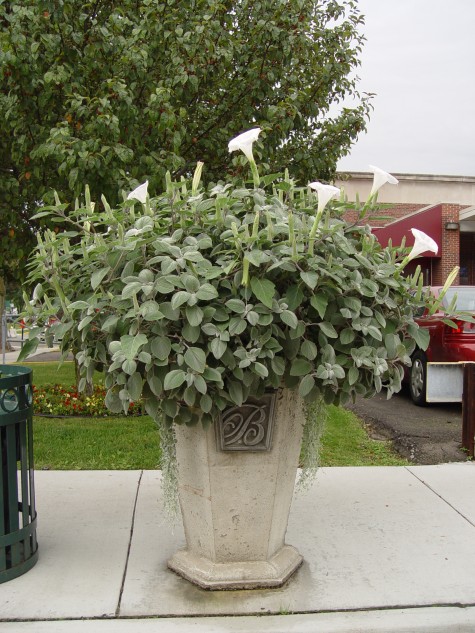
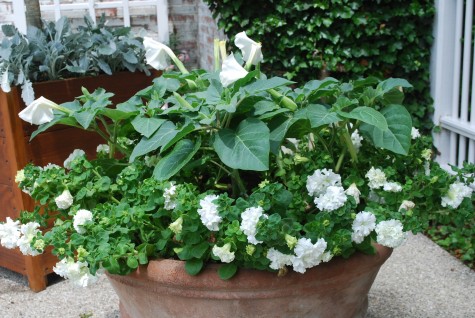 White datura-spectacular. Though every part of the plant is poisonous, I plant it whenever I can-with strong instruction. When you touch this plant to deadhead it, wash your hands afterwards. Gardening is all about the work-is it not? The underplanting of this double white petunia-this I like. They grow long and lanky-I am hoping for sideways growth under the datura. The pairing of simple white datura flowers with ultra double white petunia flowers-this is my idea of an interesting conversation.
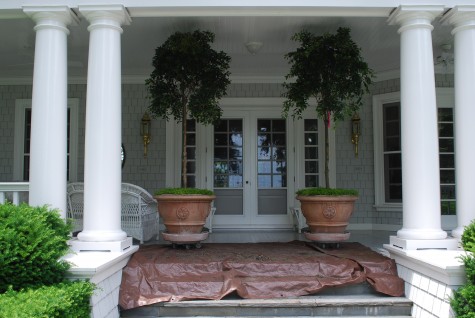
These old eugenias-I will need to replace them next year. In an effort to keep the grime off the painted porch floor, we replanted them, and underplanted them with lime selaginella on a tarp. A dirty business, gardening. No small amount of what I do is to be efficient about the cleanup.
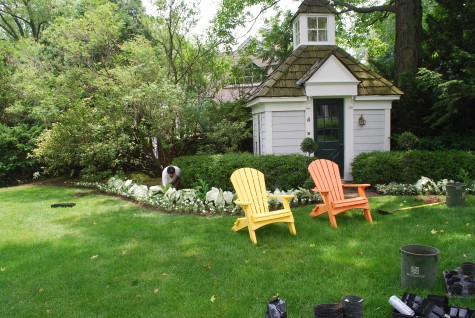 We planted the playhouse for the first time this year. White nicotiana, white Christmas caladiums, white polka dot plant, white impatiens. As this area is some distance from the rear terrace, I called for lots of white. White-what it does I could write a book about-but not this week. Ask me later. White reads beautifully from a distance. My idea here is to connect the playhouse visually with the rear terrace-so lots of the white that will bring the two spaces closer. A second pair of triple ball eugenia topiaries flank the front door. I try never to treat a space on autopilot. So many shady annual plantings- routine. Who needs routine?
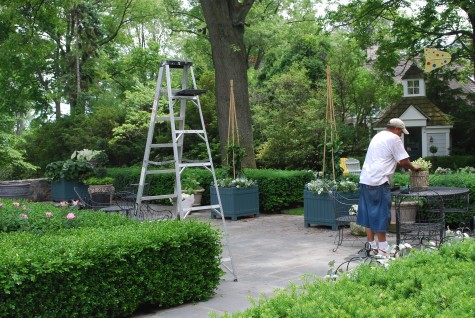 We have big boxes to plant, and small containers to plant. Each and every pot may have its planting, but the existing landscape, the relationship of the big planter boxes to the small containers-everything needs to work with the neighbor. My idea-be friendly.
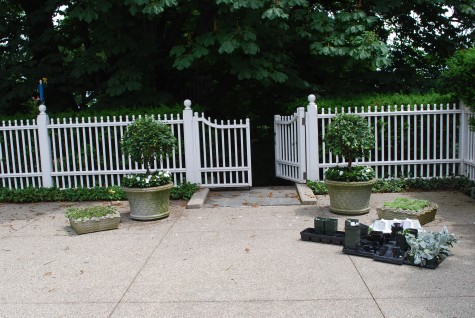
These single ball eugenia topiaries are but 2 years old. I am pleased about how they are coming along. I underplanted them with white new guinea impatiens; come August, these pots should be more than beautiful. Patience-you and I know all about this. My client-she knows about patience better than anyone else I have ever met.
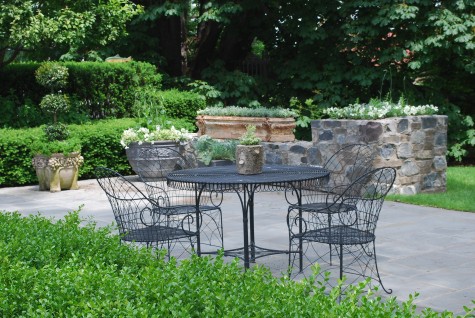
The long troughs planted thickly with lavender-they will be incredibly beautiful with some time. The walls we built to enclose the terrace have a considerable space to plant-on top. My work is not so much about the actual, physical work. It is much more about the evolution, the building, the communication and interaction. When I wake up in the middle of the night anxious-it is not about her. My green please client-she is a keeper.