The John Davis Roses

climbing roses (11)One of the many benefits of planting summer containers for a client that has had a landscape and garden designed and installed by us is the chance to see how that landscape is growing on. This client is 45 minutes away, so my visits are not all that often. I will drive out whenever there is a problem that needs some attention. But this yearly visit is never about trouble. It is about adding some seasonal plants to a garden that is the apple of its owner’s eye. She not only looks after it, she truly enjoys every bit of it. Planting her containers in June is a pleasure. The soil is warm, and the plants that have spent the early weeks of the summer protected from unpredictable weather in a greenhouse look great, and will handle the transplanting without issue. Though we planted 21 containers today, the big news of the day were the John Davis roses.

June 13, 2016 055John Davis is one of the Canadian Explorer Series of extremely hardy and disease resistant roses developed by Agriculture Canada in the 1960’s.  The goal was to hybridize garden roses that would not only withstand cold northern winters, but would perform beautifully in spite of it. John Davis is hardy in zone 3-think of that. There are quite a few roses in the series, all of which are good garden plants in my zone, meaning they are tough plants that shrug off the fungal diseases roses are famous for. They bloom as if there were no tomorrow. John Davis is a great choice for a not too tall climber that has the look of an old fashioned rose more often seen in England or California.

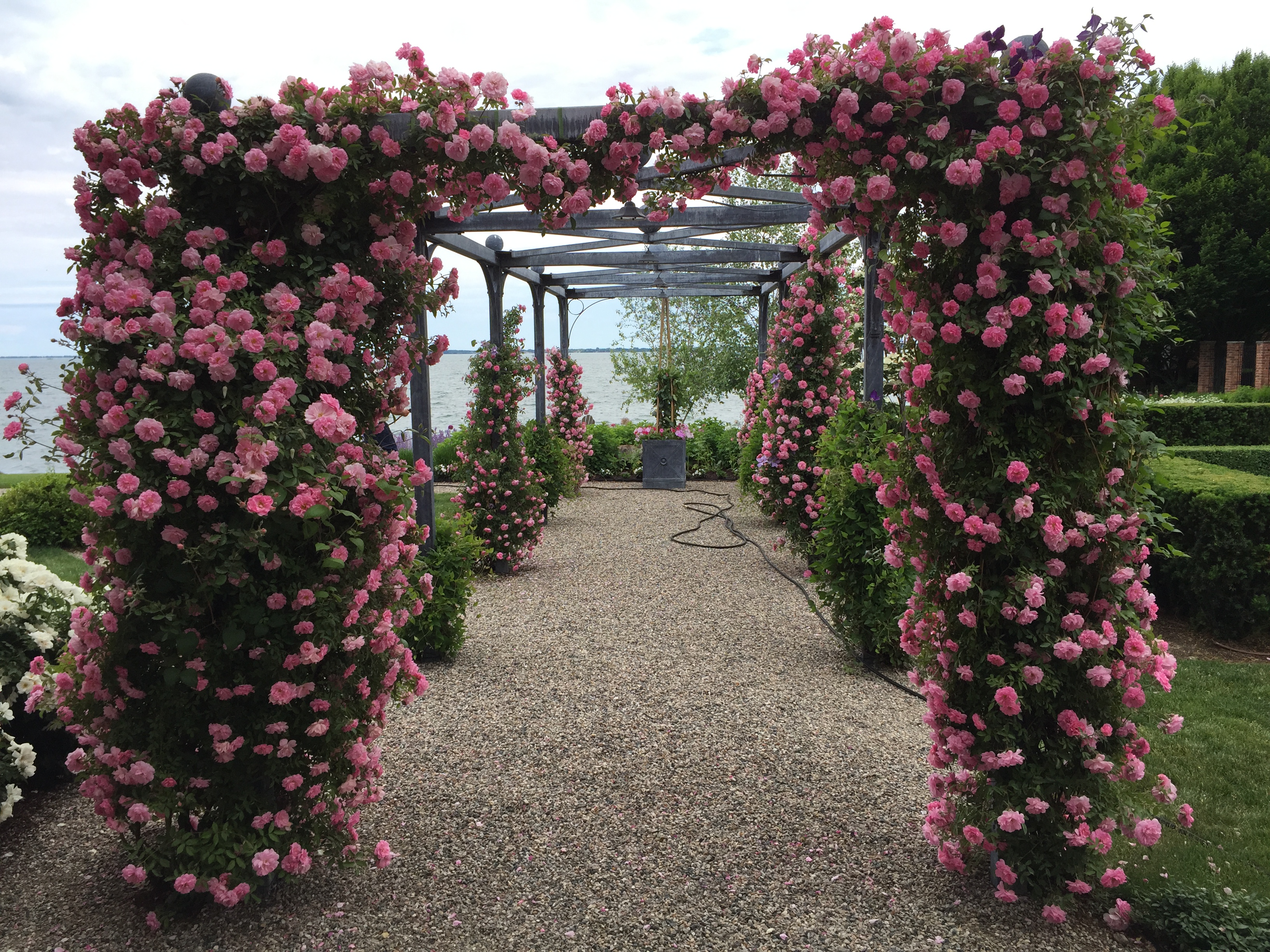
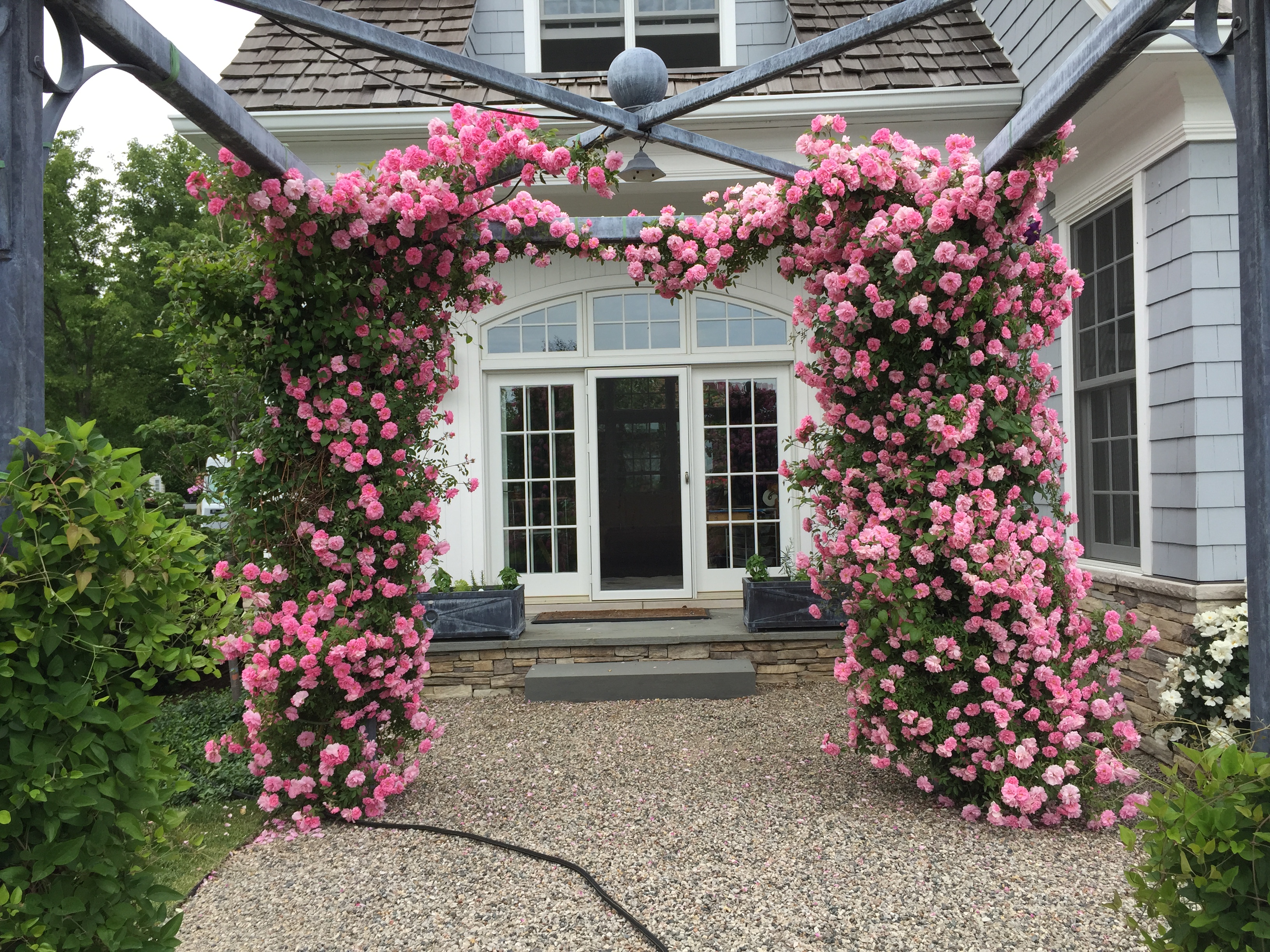
climbing roses (6)This is the 4th June for the John Davis climbing roses planted on each post of a pair of long pergolas that frame the view from the back of the house to the lake. Each was planted with a companion clematis, which range in color from white to dark purple. The clematis do not seem to mind the competition from these vigorous roses. Though John Davis usually tops out at about 7 feet, these roses are up 9.5 feet off the ground, and have started to grow over the roof of the pergola. I will be interested to see if they keep adding more height. I have planted John Davis in a number of gardens, almost all with great success.  This group has seemed happy from the moment they were planted.  The soil is heavy clay, and does not give its moisture up easily.  There is a constant breeze from the lake, which I suspect has something to do with the fact that I never see mildew or black spot on the plants. They get a yearly dose of rose tone, and extra water when they need it. All that remains is to stand back in June, and take in the bloom.

June 13, 2016 065The lax canes have had some support to attach them to the pergola poles, but that is not visible. The flowers are not particularly large, but there are thousands of them on each one of these plants. I am surprised that this series of roses is not more readily available in my area.   The roses we have available at Detroit Garden Works, including John Davis, had to be custom grown. I made arrangements for that almost a year ago.

June 13, 2016 047I understand the reluctance to grow roses.  They are ungainly plants that no one would have, but for the bloom and perfume.  They routinely fail.  I mitigate that tendency by planting the graft 2 to 3 inches below ground. No gardener wants diseased plants in their garden. Choosing roses with a clear track record of resistance to disease and hardiness is educated buying. The Canadian Explorer roses might be worth a look. I find that they are reliable in every regard.
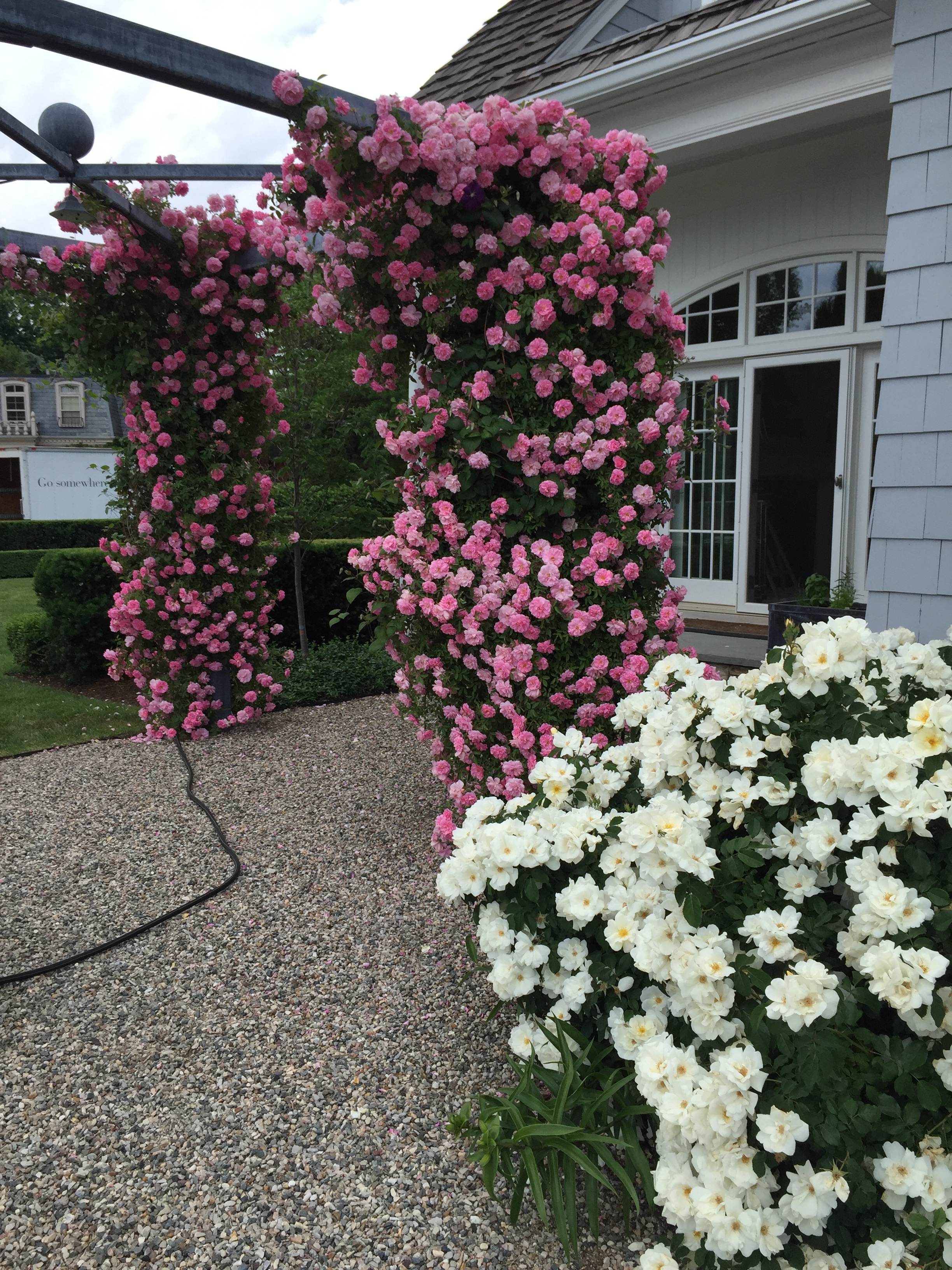
June 13, 2016 110Roses in bloom like this is a garden experience like no other for a gardener who greatly values romance. Roses invoke romance like no other garden plant. I would go on to say that the big idea here is that any garden plant in the right place and endowed with the proper care will thrive. So much about the success of a garden depends on a thorough understanding of the horticultural requirements. I am rarely perfect in this regard. I have been known to short some greatly needed sun to sun loving perennials. I have placed my share of part sun perennials in shade that is too deep. I have exposed shade plants to blistering sun, in the hopes they will adjust.  I have planted perennials that require perfect drainage in soggy soil, in hopes I could skate by.  Suffice it to say that everything I have leaned about planting perennials has come from the plants.  Any plant that is unhappy will speak back to me, if I am inclined to observe, and listen.
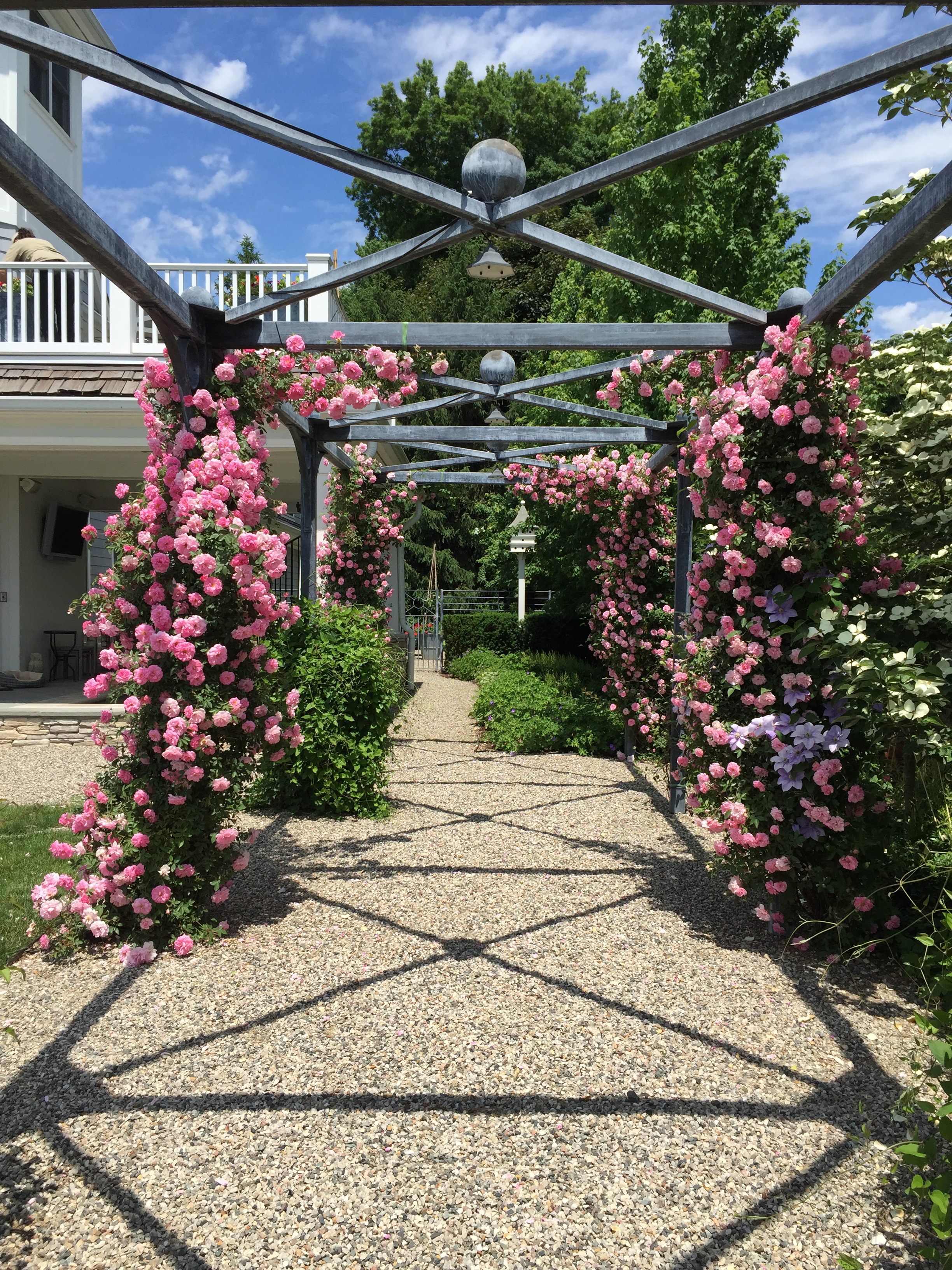
June 13, 2016 080These John Davis roses in bloom are extraordinary. I can only claim that I somehow managed to put the right plant in the right place, in the beginning. What had happened over the past 4 years is a constellation of events attended by nature, and looked after by an extraordinary client. This does not happen so often. Thanks, Harriet.
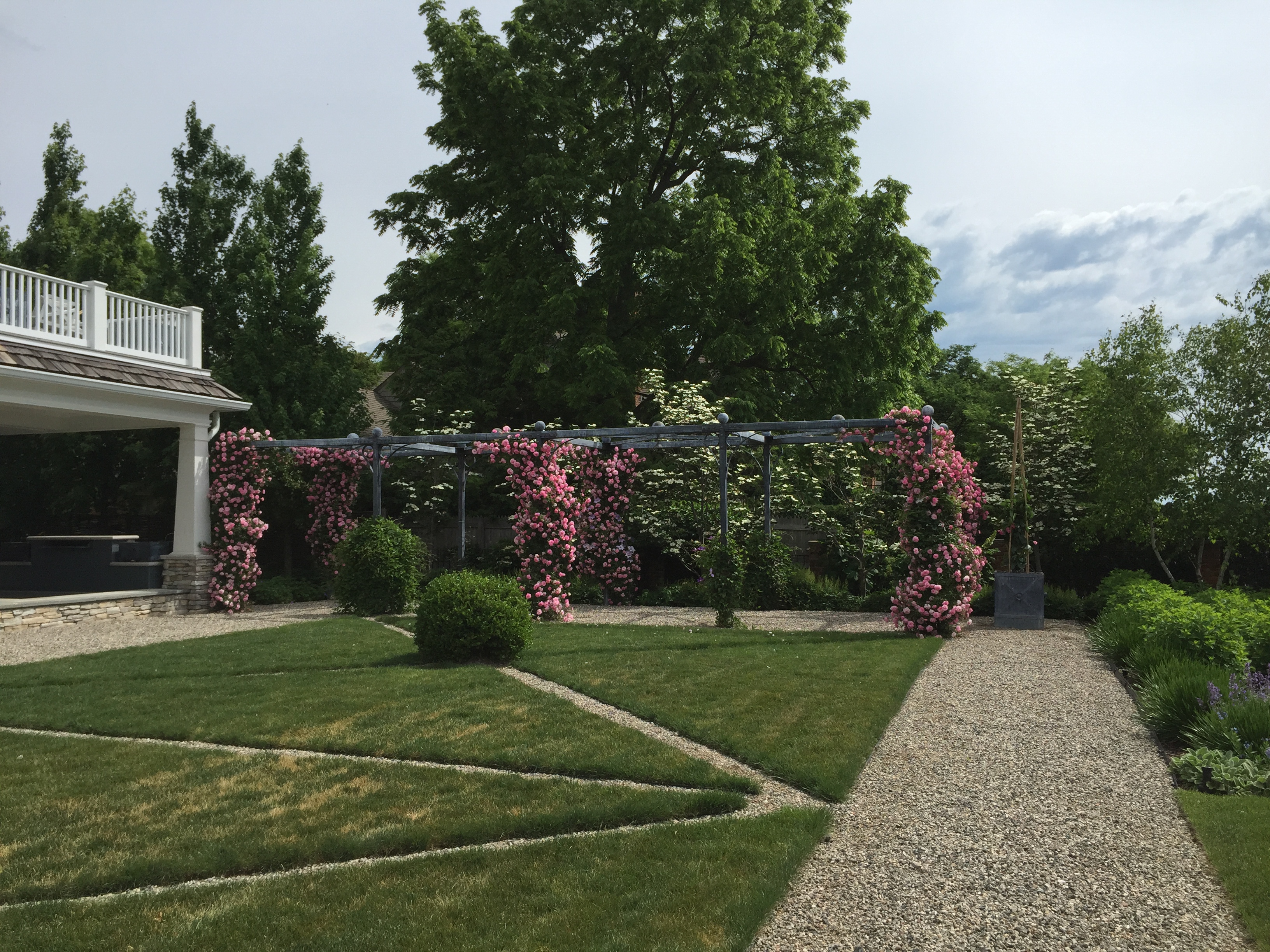
June 13, 2016 053The day planting containers here was a moment I shall not soon forget.
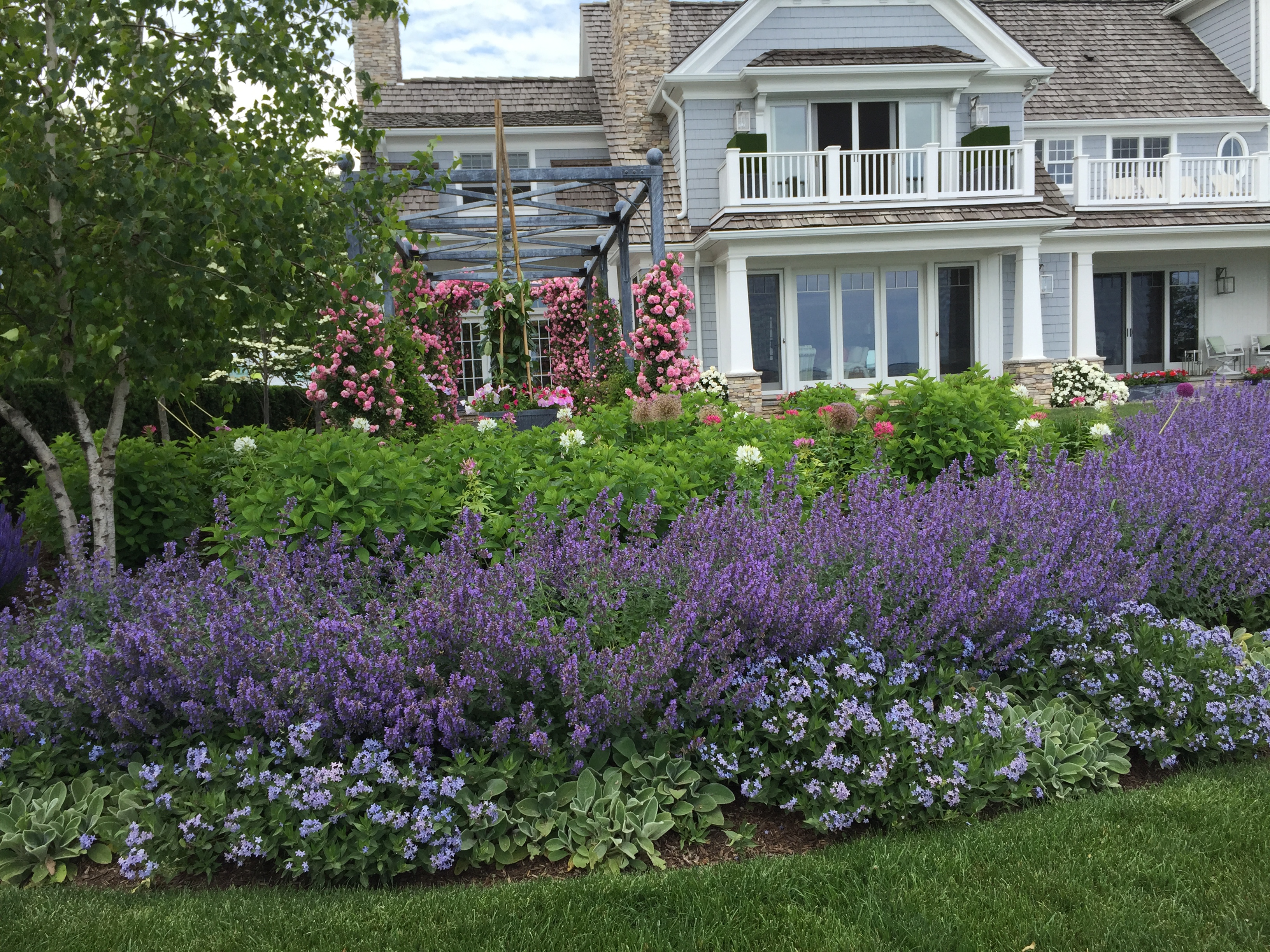
climbing roses (10)June garden

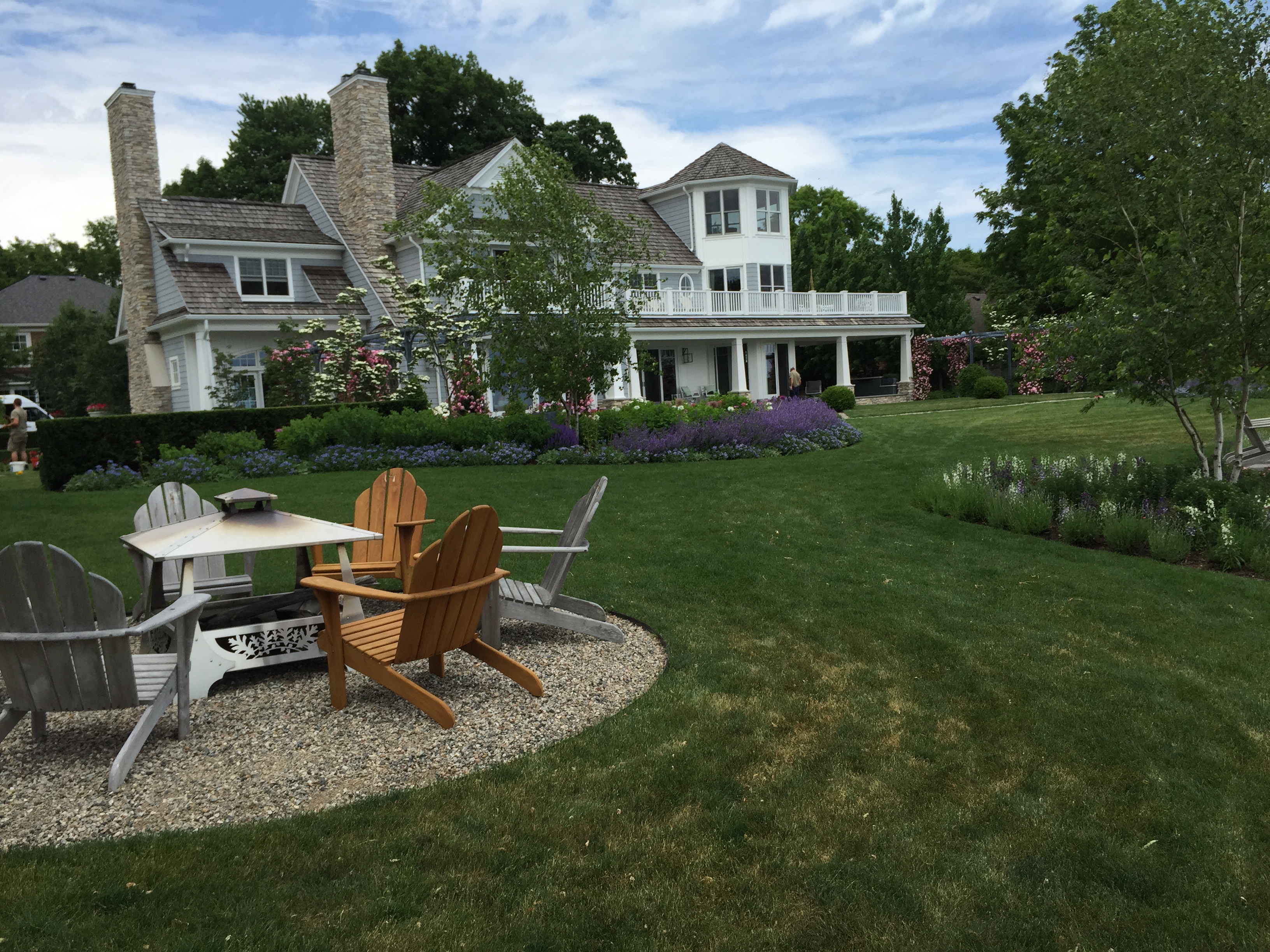
climbing roses (8)Venus dogwoods in bloom

climbing roses (1)John Davis

climbing roses (7)The greater garden is just as beautiful.
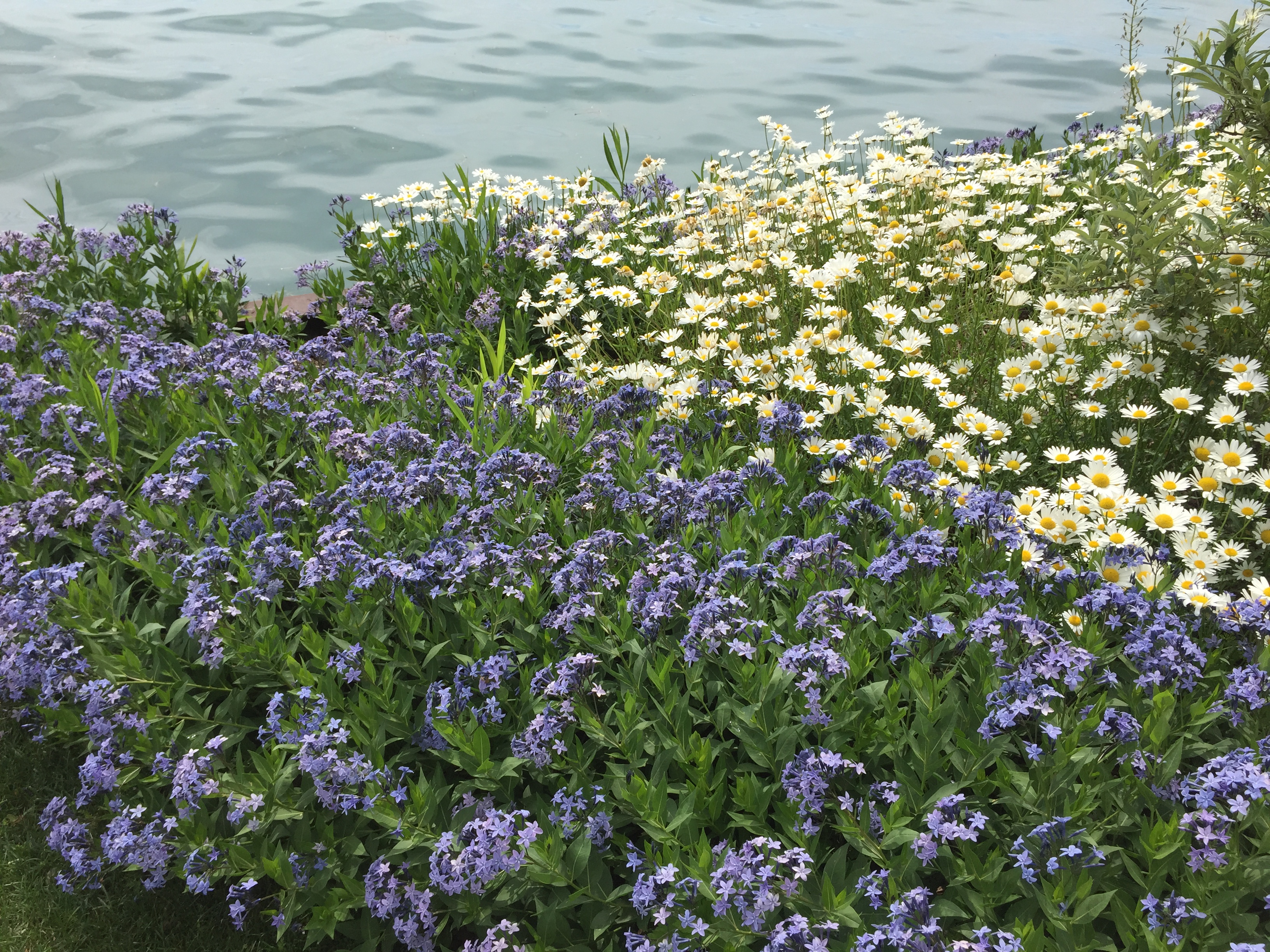
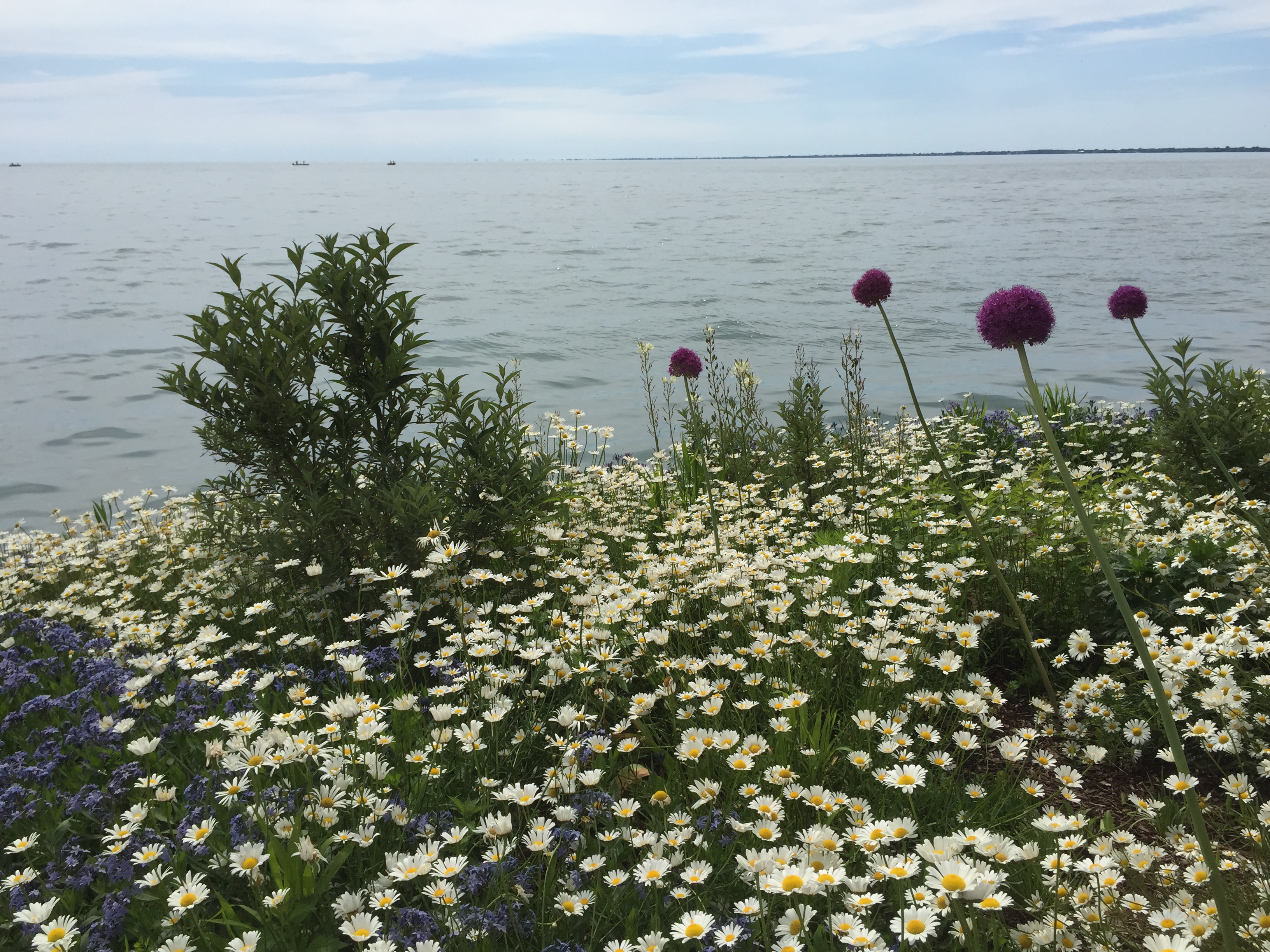
climbing roses (5)oxeye daisies and amsonia “Blue Ice”

climbing roses (4)looking towards the lake

climbing roses (9)A June garden-what could be better?
Save

Save

The First Container Planting

annual planting (3)
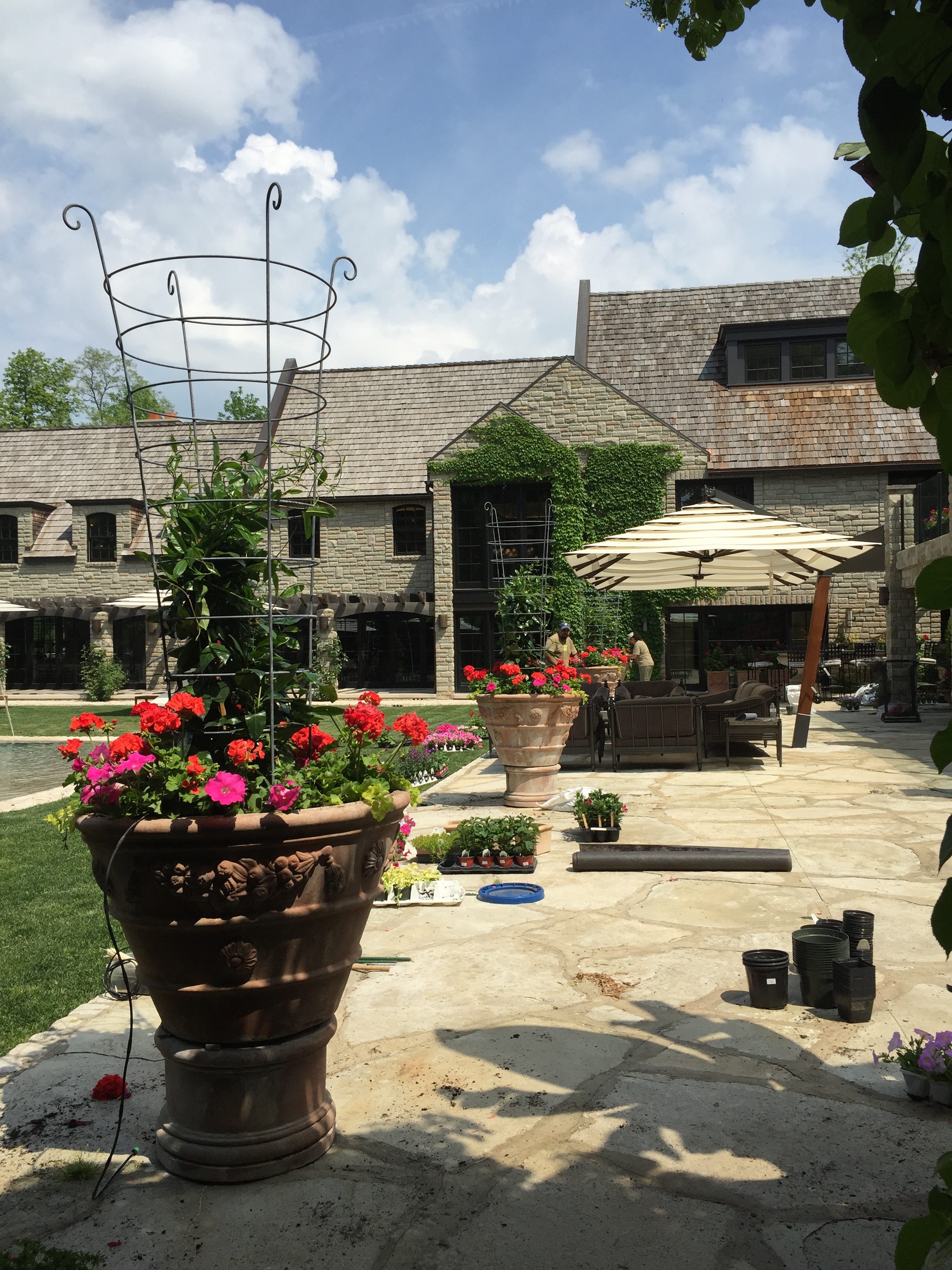
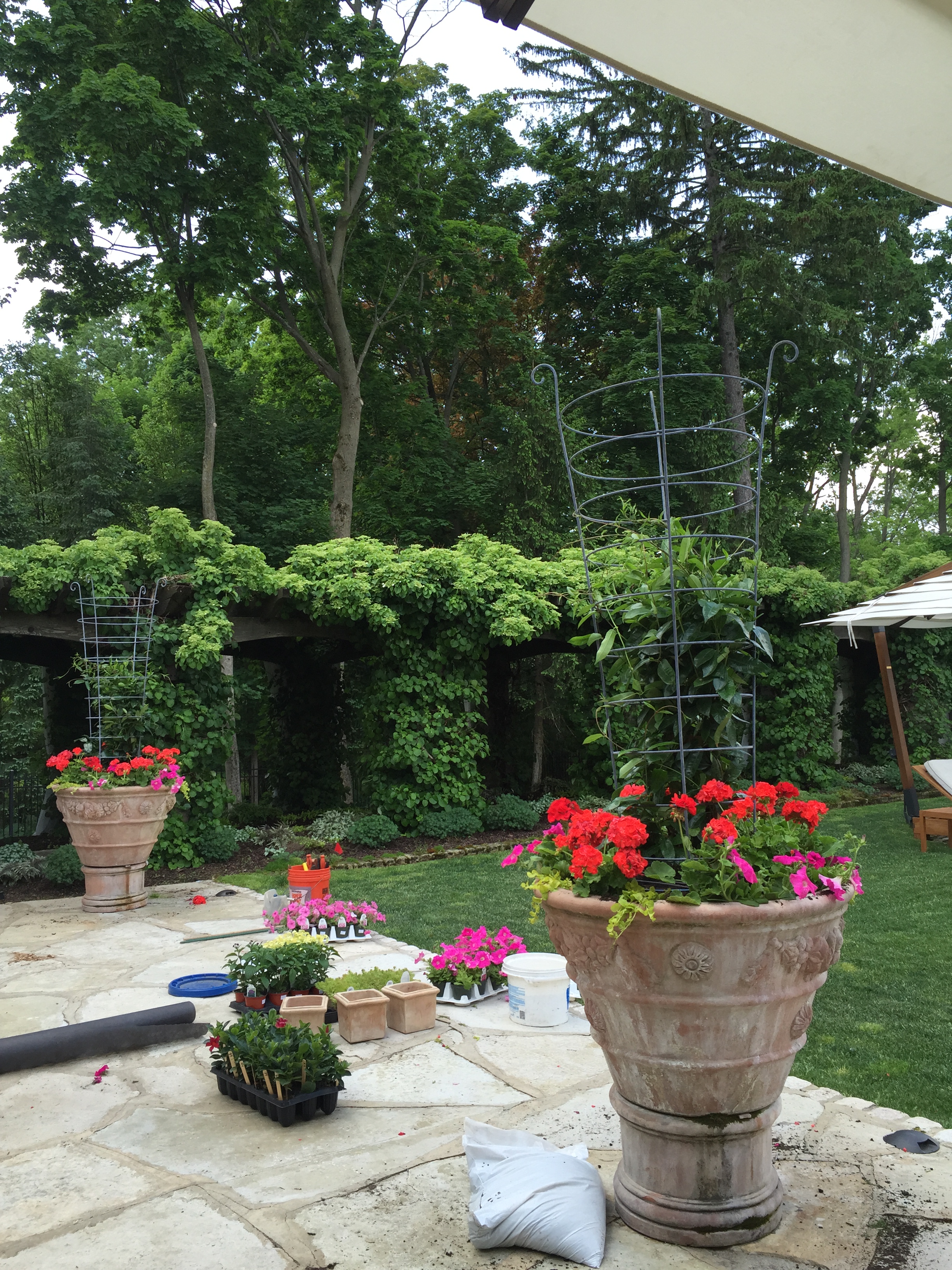
Every year, the prospect of having a full roster of container gardens to plant makes me want to black out. I spend the first three weeks of May utterly certain that I cannot plant one more pot.  That I am out of ideas. Luckily, time passes by, and and I start shopping. A client I have worked for as long as this one is easy to shop for. I had a pair of giant banana plants to pick up at our farmer’s market at 5:45 am. I was ready at 7am to let Dan know that we would need two pallets-130 bags –  of our custom container soil blend, and 30 bags of bark. We would need moss fabric for a pair of wire urns, and a ladder to tie the mandevillea to the steel plant climbers.

annual planting (12)I had shopped with David and Riley on Friday.  They put all of our plants on racks, and loaded them onto our trucks.  At the end of the day Friday, I was ready in the plant regard.  I had an inkling of an idea about what I would plant. Of course I was going over that inkling, critically. I had from 6-8am Saturday morning to print the photographs from last year, and write on them what materials we would use in them this year. Two hours gives me enough time to change my mind. Once my crew is ready to load, I am too.  I take extras and alternates, just in case.

annual planting (5) Once every pot had gotten filled with bark for drainage, and our container soil mix, all of the centerpieces get planted.  Then I lay out the scheme for the rest of the pot.  I was entirely absorbed and focused on how each plant would grow out, and interact with its neighbor. I favor containers that have a beautiful overall shape by the time they mature.  My favorite part of this planting for a group of Italian terra cotta pots? Orange geraniums. Geraniums, as they provide an incredible amount of color when properly grown.  They are heavy feeders. But more so than the bloom habit, that orange would contribute an interesting variation to a warm color palette.  The red mandevilleas and red geraniums are a bluish red. The orange geraniums have just enough yellow to make the combination interesting. My client is keen about the drama that can be created by intense color.
annual planting (6)This pair of Italian pots can handle the size and textural drama of a pair of large scale bananas. Not yet visible are a collar of strobilantes, or Persian shield plants that will ring the trunks of the bananas.  The chartreuse leaved Persian Queen geraniums and misty lilac waves petunias will highlight the iridescent red-violet of the Persian Shields.

annual planting (9)Lime green is a key color in this planting scheme. All of the warm colors are all the more intense, by their proximity to lime green. The red represented in this container is red sunpatiens. They will grow quite large.  The lime licorice will lighten that load of red.

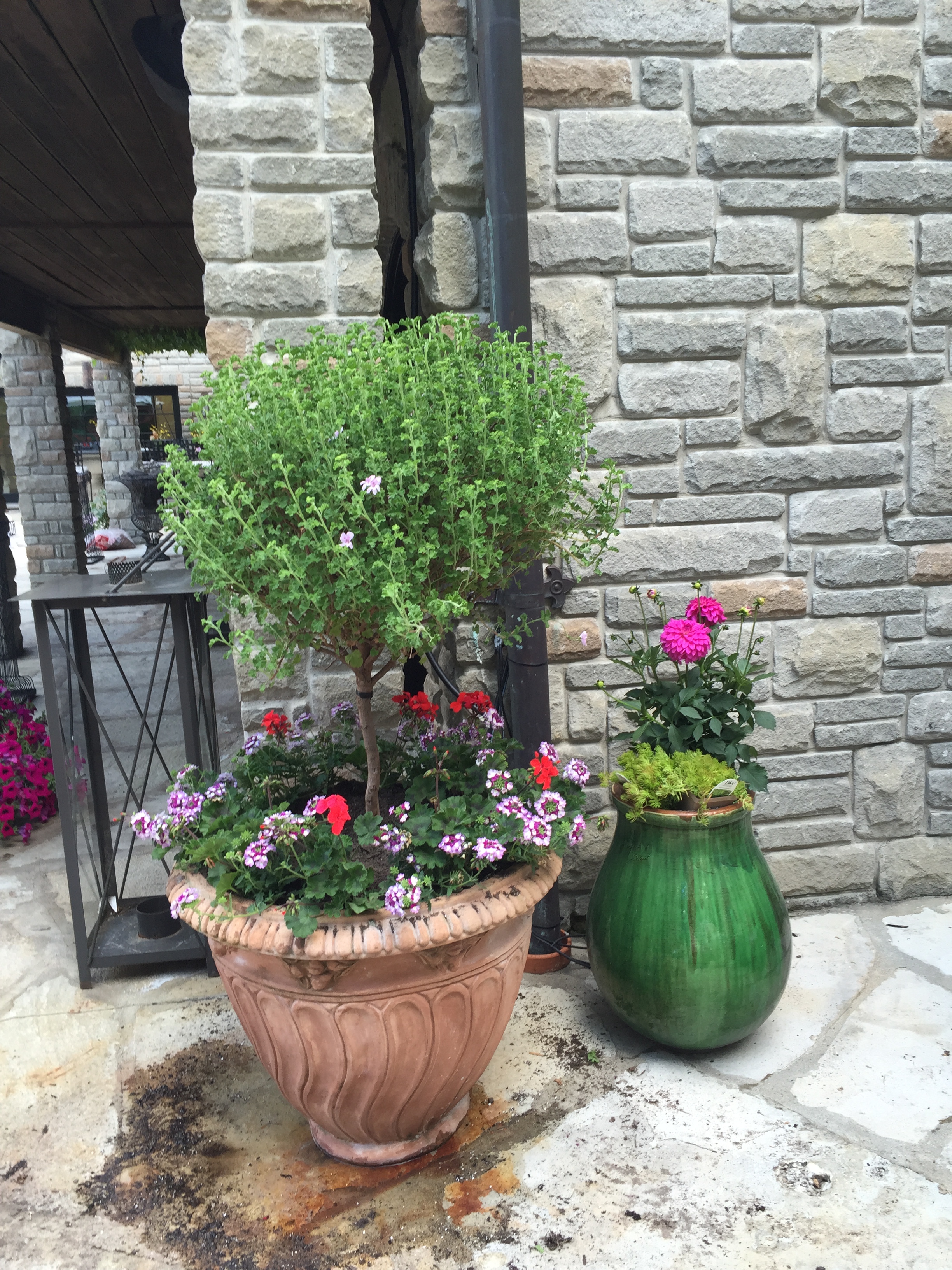
annual planting (7)This big scented geranium will have pale pink flowers intermittently over the summer.  But they are primarily grown for their bright apple green foliage that can be clipped into shapes.  We gave this geranium the most rudimentary clip.  My client has a lot of formally trimmed shrubs maintained by the company that prunes our boxwood at the shop.  Her crew will put a skilled set of hands to the spherical shape of this geranium.  It is under planted with an orange geranium of a different sort than the big growing zonal geraniums.  Caliente geraniums come in a wide range of colors, and are extremely easy to grow. The pink and white bicolor trailing verbena “Lanai Twister Pink” is a beautiful addition to this series.

annual planting (11)There are two containers in fairly dense shade.  The color of the lime dracaena “Janet Craig” brightens any shady area.  The dracaena is under planted with bird’s nest ferns.  The leaf form is simialr to the dracaena, but is a darker green.

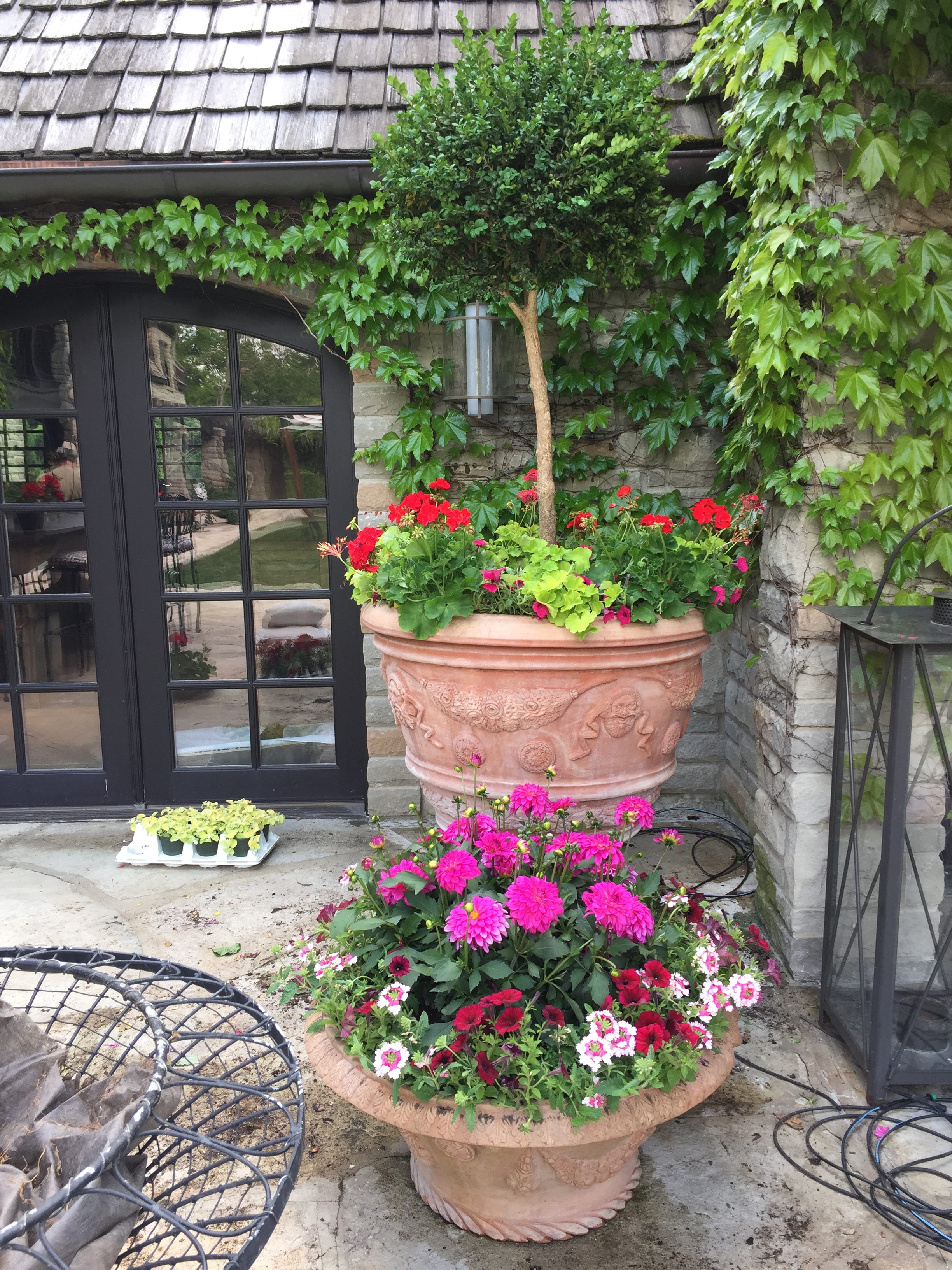
annual planting (8)A boxwood topiary on standard is under planted with Persian Queen geraniums, red geraniums, and vista fuchsia petunias. The low terra cotta bowl features hot pink XL dahlias, black cherry supertunias, and a bicolor trailing verbena.

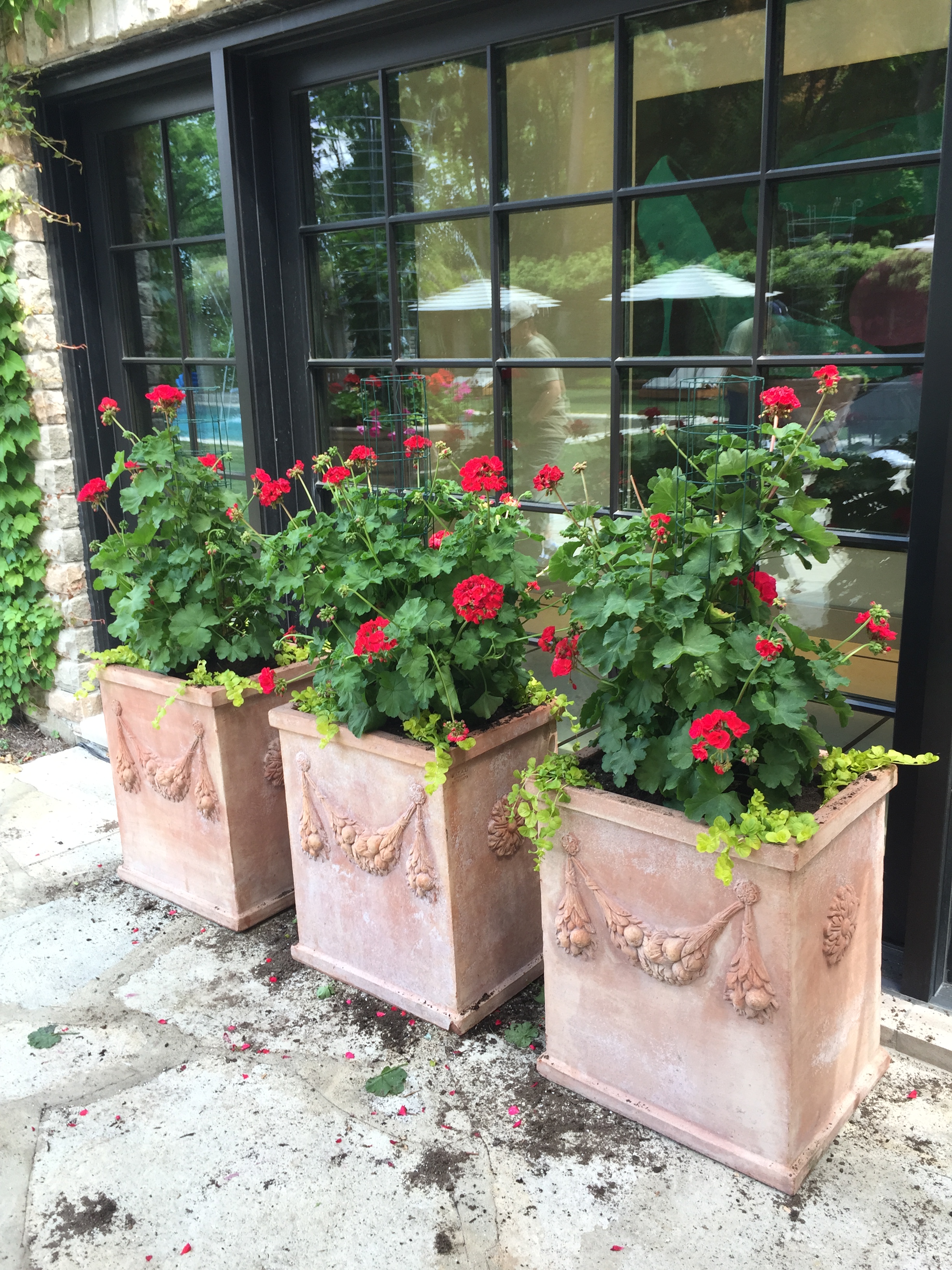
annual planting (10)3 terracotta boxes get identical treatment.  Hot pink zonal geranium towers, and lime creeping jenny.

annual planting (14)This old cast iron rectangular cauldron sits in a garden bed which is so shady that very little grows there. It is planted with a a pair of lime green fleck leafed dieffenbachia “Camouflage”, Janet Craig dracaenas, and Black Gold Xtreme sansevieria. The sansevieria in the box is repeated in ground at each end. This planting will thrive all summer long with next to no water.

annual planting (1)By 2pm, you would never know we had been there. It was a splashy beginning to our container planting season.

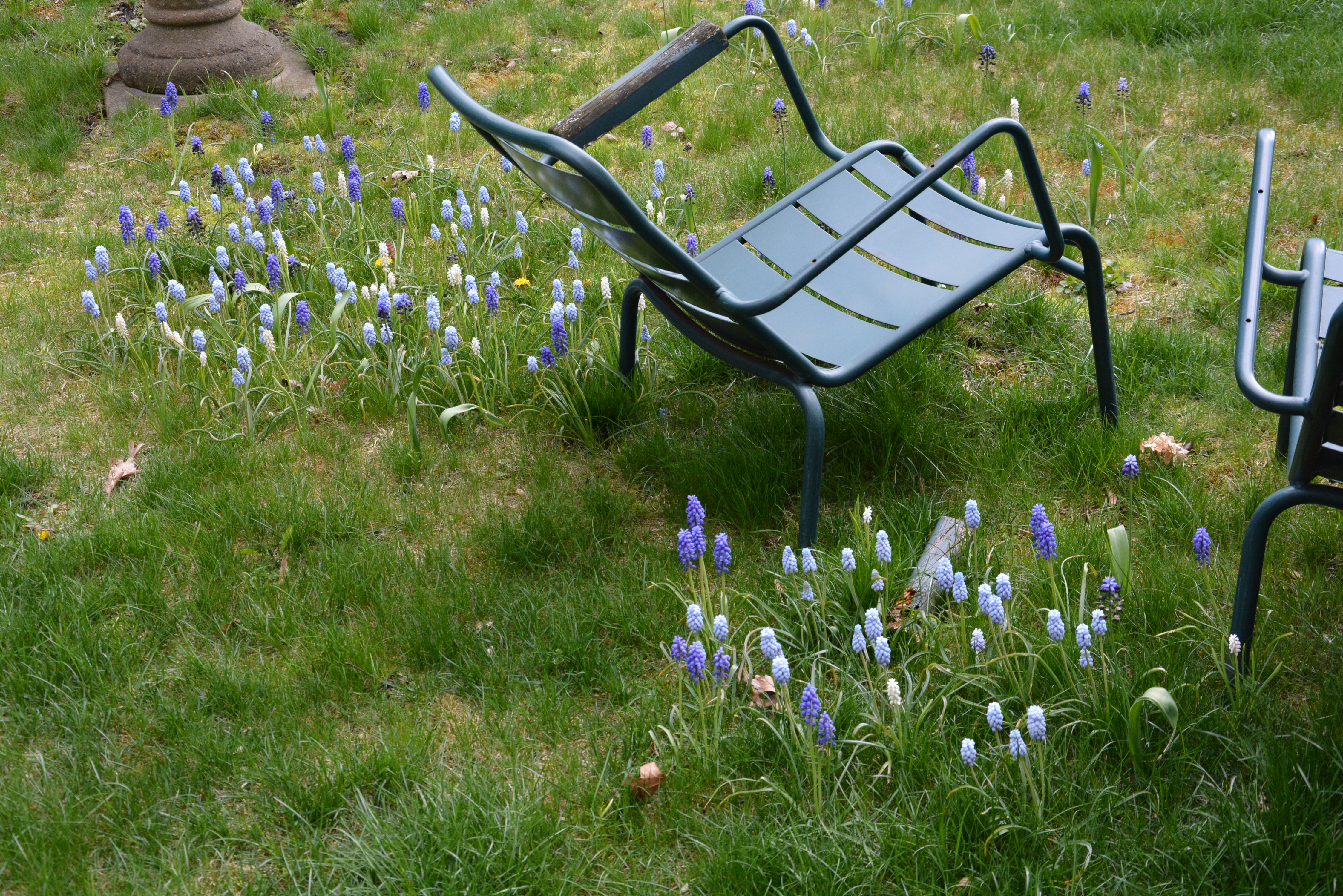
Grape Hyacinths

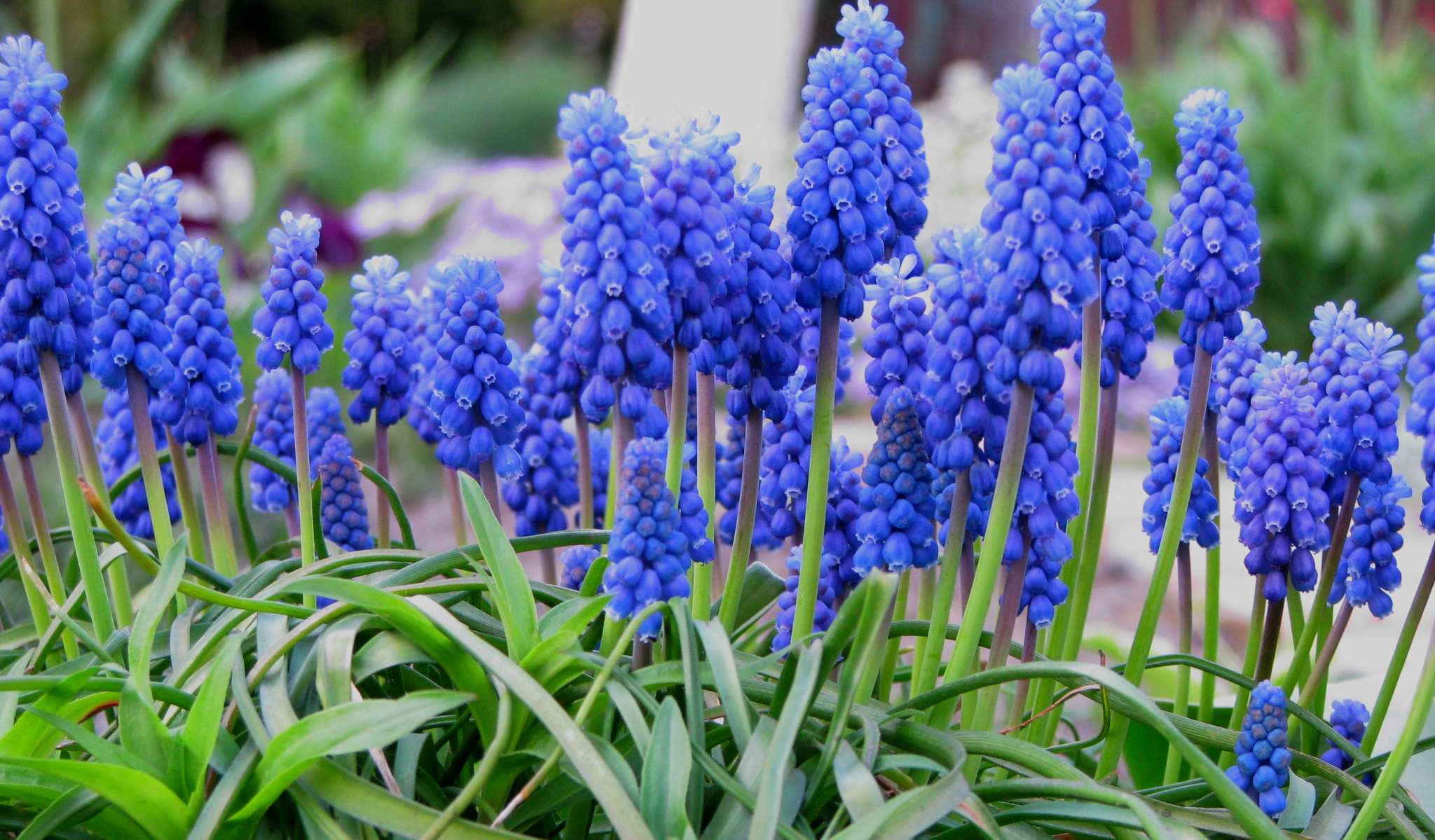
Muscari_armeniacum2In my opinion, a drift of grape hyacinths in full bloom is one of spring’s  crowning moments. They may be small, but they pack a big visual punch. The muscari group is one of the most charming and most reliable of all of the small spring flowering bulbs. The tiny corm, planted only 3″ below the surface of the soil in the fall, will give rise to a pair of thin strappy white striped leaves, and a flowering raceme the most brilliant shade of cobalt blue.  That blue makes a spring garden worth growing.

grape hyacinths (2)From my  favorite on line horticultural reference for the Midwest, the Missouri Botanic Garden Plant Finder, I read the following:

“Muscari armeniacum, commonly called grape hyacinth, is an early spring-blooming bulbous perennial that is native to southeastern Europe (including Armenia). It features conical racemes of slightly fragrant, tightly packed, deep violet blue, urn-shaped flowers atop scapes rising to 8” tall in early spring. Each bulb produces 1-3 scapes with 20-40 flowers per scape. Each flower has a thin white line around the rim. Dense inflorescence purportedly resembles an elongated, upside-down bunch of grapes, hence the common name. Scapes rise up from somewhat floppy clumps of narrow, fleshy, basal, green leaves (to 12” long) that appear in autumn and live through the cold St. Louis winter to spring when the plants flower.”

This description tells me that Muscari will grow well in my garden, but I would like to add that they are simple to plant. All you need is some decent friable soil, and a finger to push them below ground. I have seen corms left laying on the surface send a few roots into the soil, and bloom on their sides the following spring. They are willing.

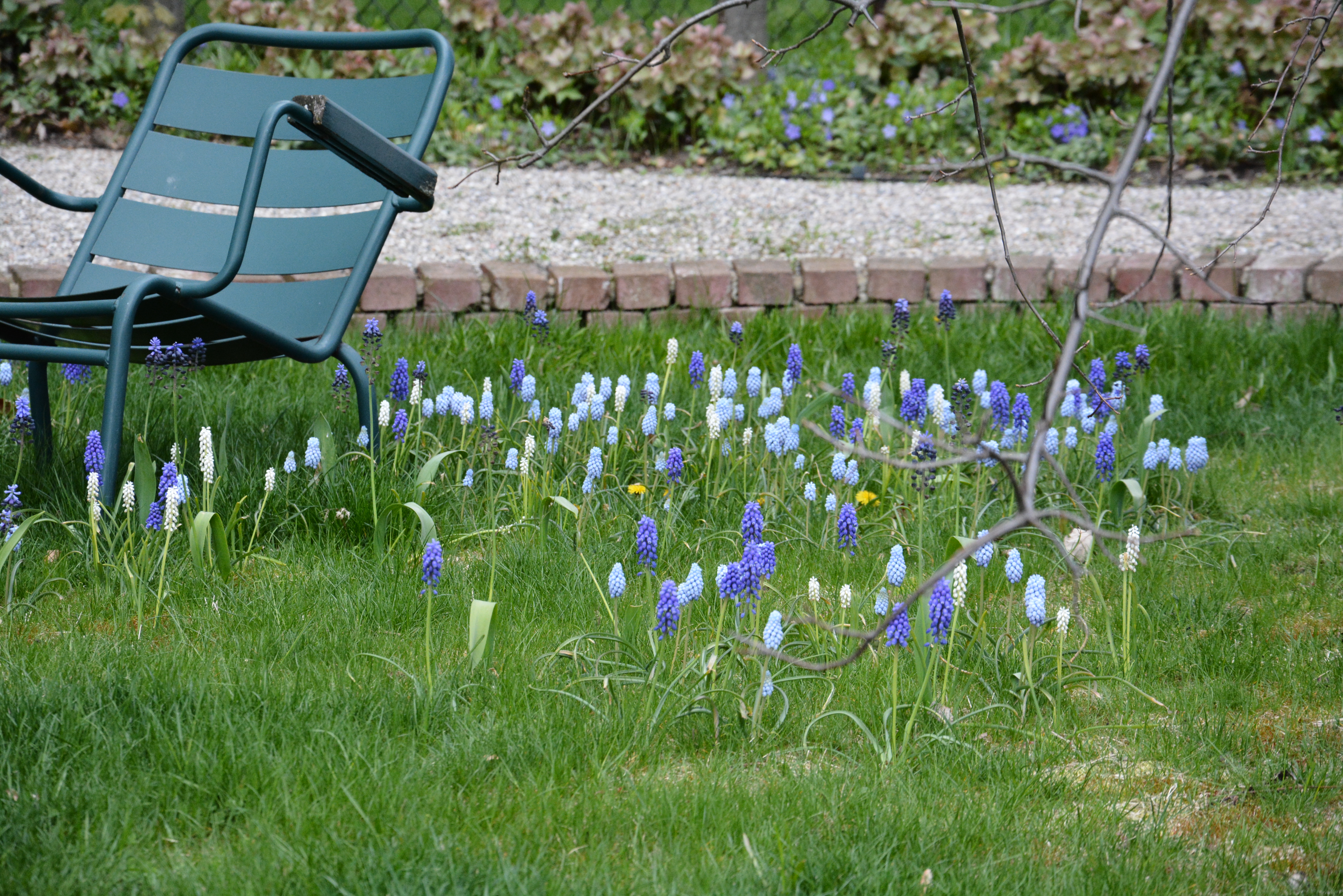
grape hyacinths (3)Grape hyacinths will come up and thrive just about anywhere you plant them.  I would avoid soggy soil that would rot the corms, and dark places fit only for ferns. They come up through a lawn without complaint. They are incredibly hardy. I have never done anything to mine, except plant and enjoy. They are persistent year after year, and can make substantial clumps. The only difficulty?  You have to buy and plant them in the fall.  Preferably in 50’s or 100’s. If you are willing and able, they will be too.

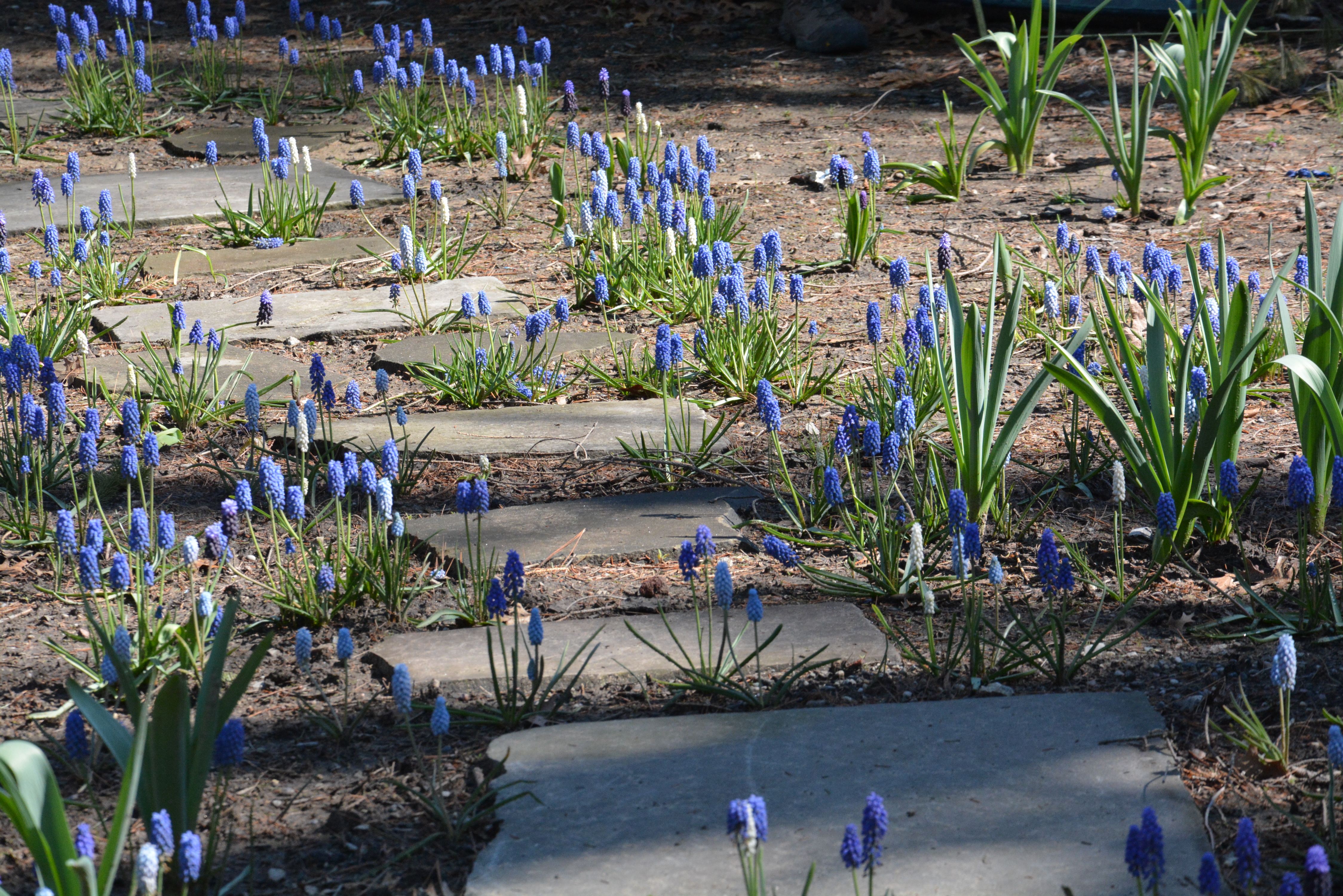
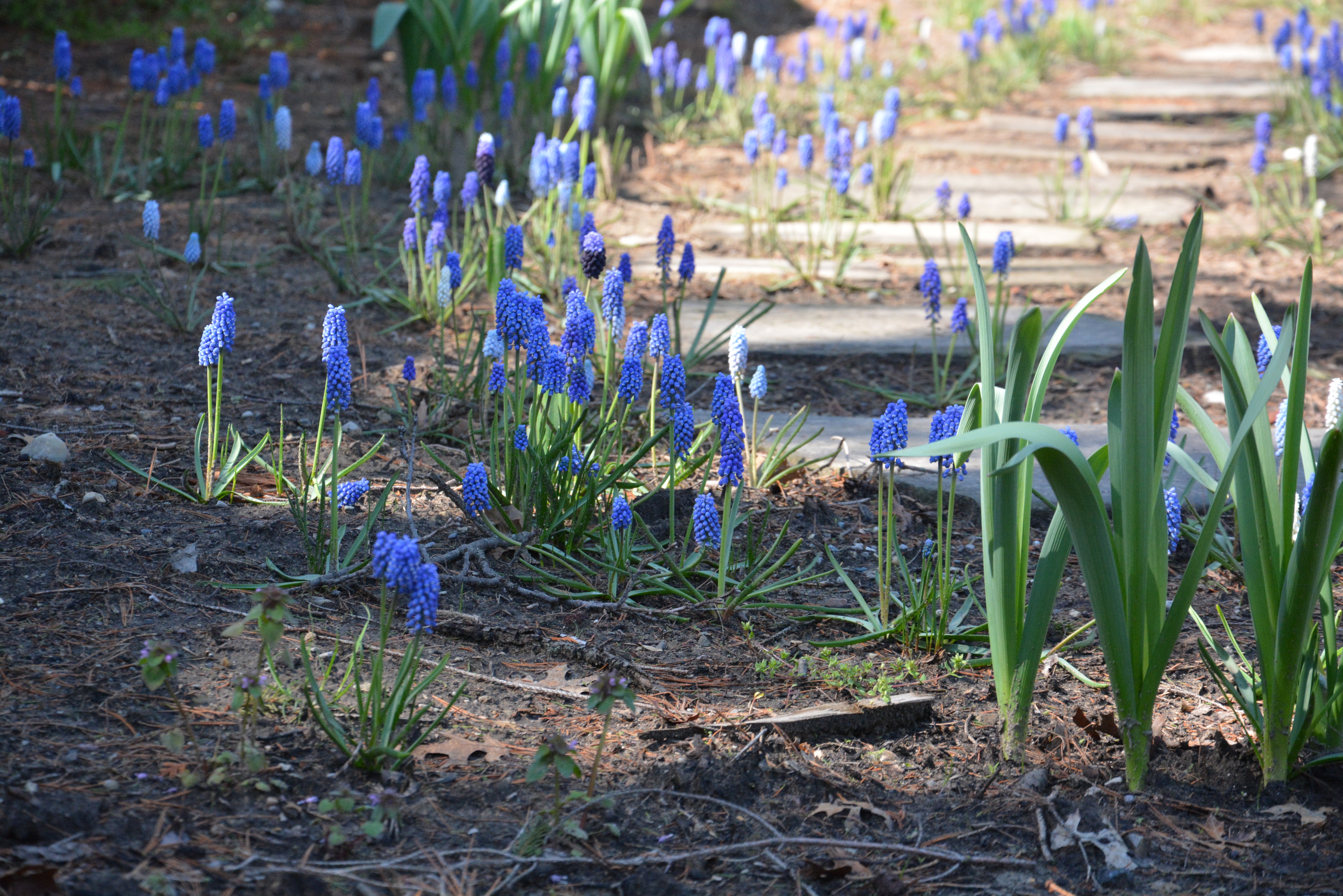
DSC_5201A new landscape project I am about to install involves the installation of a fairly large partial shade garden. My clients are very fond of blue flowering plants, and especially blue spring flowering bulbs. The rustic stone walk was finished in late October.  The coast was clear to plant bulbs, which we did fairly late in November.  It was cold, but as long as the ground is not frozen, spring flowering bulbs can be planted. Since the planting would be late, we stored the bulbs in a cool place, so they would not suffer from being out of the ground so long. Muscari cultivars seldom grow talled than 8″, so planting them near the walk made sense.

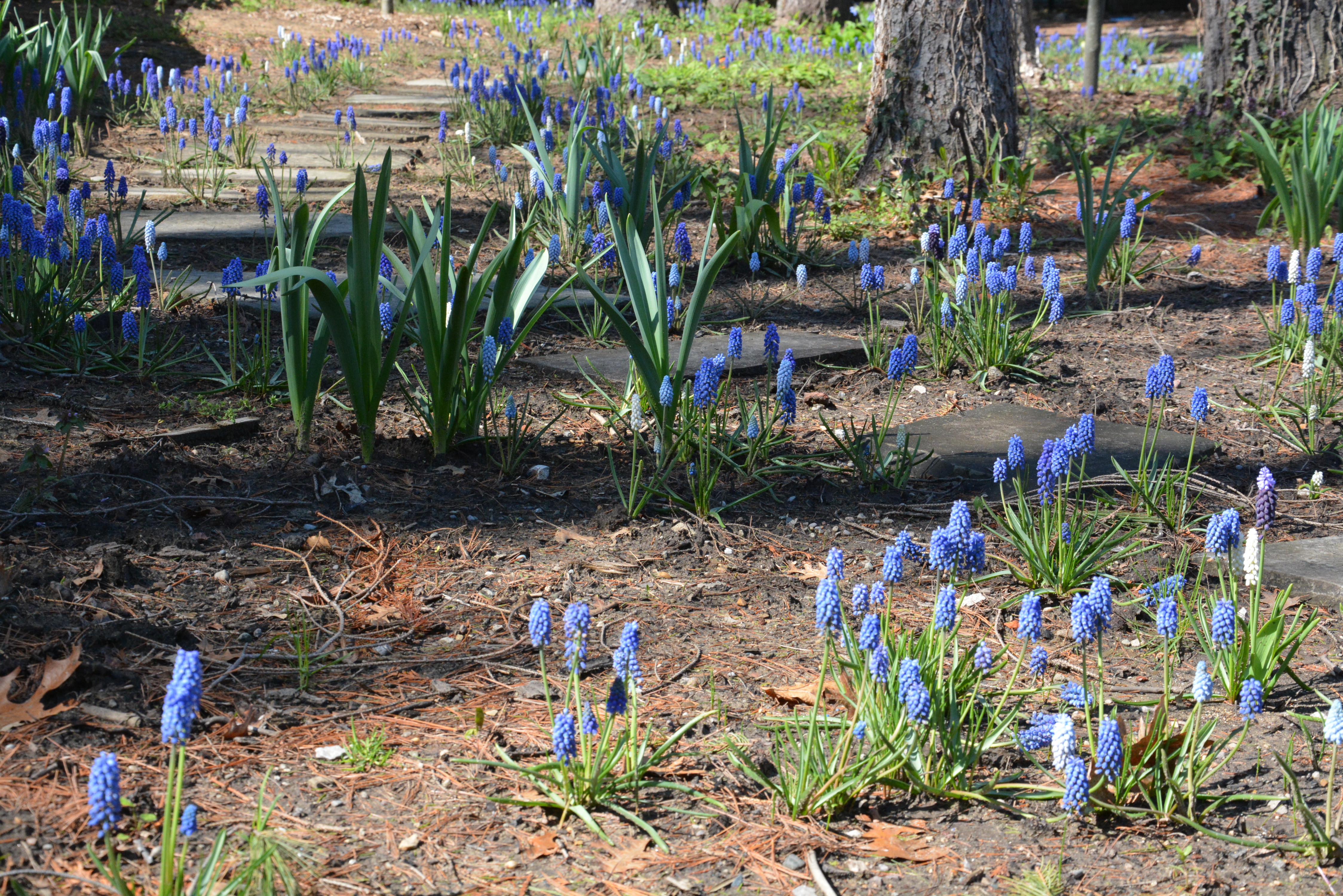
DSC_5204We planted a variety of muscari cultivars, all the the blue and white range. We planted the tried and true muscari armeniacum, and  Blue Magic, Atlantic muscari, Magical Mixture, and superstar. Lots of cobalt blue, light blue, with a smattering of white. We also planted several types of camassia, and chionodoxa forbesii Blue Giant, to extend the blue spring bloom period. Later yet, there will be some smaller growing alliums.  These muscari blooming make a quite a statement, even though they are blooming in an ocean of bare dirt.

DSC_5199The planting of this woodland garden got a head start last fall.  The locations of these bulbs will direct the height and bloom season of what I plant with them. We will plant sweet woodriff and European ginger. Were the soil not so sandy, I would plant forget me nots. I will plant more Virginia bluebells to the patch that is existing, Jack in the pulpit, Dutchman’s britches, anemone sylvestris, campanula porscharskyana, lamium white nancy, and so on.

DSC_5197We also have planned for a few Venus dogwoods in the sunniest places, a few witch hazel, and a few Canadian hemlocks. Blue leaved hostas, big and small. If we plant any astilbe, it will be a loose and airy growing version. A stand of goatsbeard is a good choice for the back of the shady border. Like snakeroot,  they take some time to establish and grow – but they are well worth the trouble.

DSC_5196Right now, this is a garden of possibilities.  What a pleasure to be at that point, in early spring. If you are planning a garden in our zone right now, check out the Missouri Botanic Gardens opinion about your choices. And leave some spaces and places for grape hyacinths.

the Plant Finder

A New Gravel Driveway

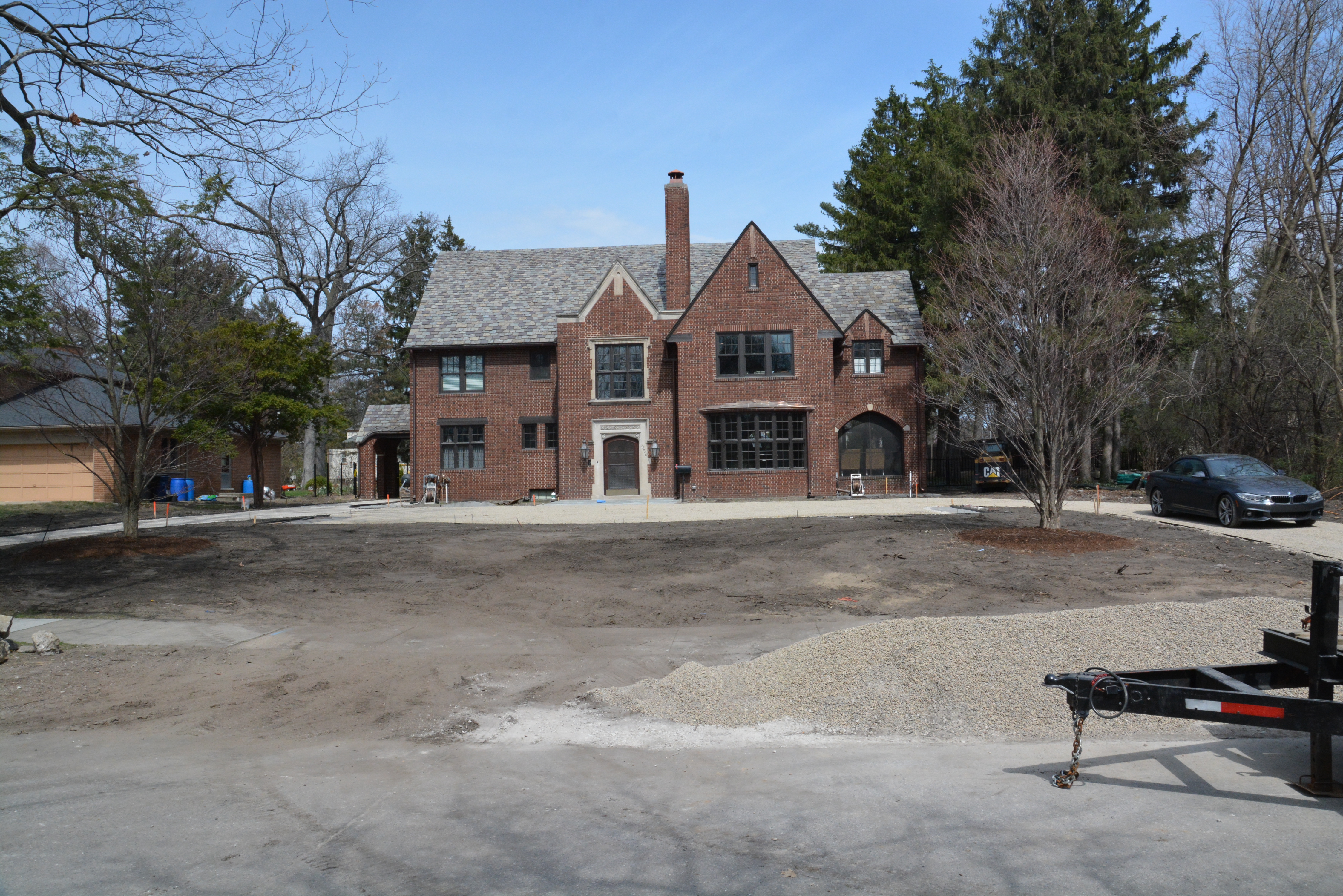
landscape under construction (8)I admire people who buy old homes, and sign up for all that it will take to renovate them. That is a huge commitment in every regard. An undertaking such as this demands lots of time and even more patience. I cannot imagine the expense. This gorgeous English Tudor style home is 95 years old. Very old homes like this one are remarkably sturdy and well built. I own a house built in 1930, and I can attest to how rock solid it is. I can barely drill a hole in my steel mesh reinforced plaster to hang a picture. That plaster and brick set over concrete block walls means that my house is incredibly quiet and structurally sound. This home features a virtually indestructible brick fired from a clay body featuring a big mineral content – manufactured with the idea of longevity and service in mind.  A good bit of the trim is hand carved limestone, all of which is excellent condition. The new roof is slate; slate roofs last just about forever. But great age exacts a toll on the working parts of an old house. Every house is a small city. It needs electricity, heat, air conditioning, weather tight windows, plumbing – this is a short and not comprehensive list. What got updated here is just about everything, and took a year and a half to accomplish. A kitchen and bathrooms that worked well in 1920 were reworked from the ground up. The interior renovation of this house is finished, and is finished beautifully.

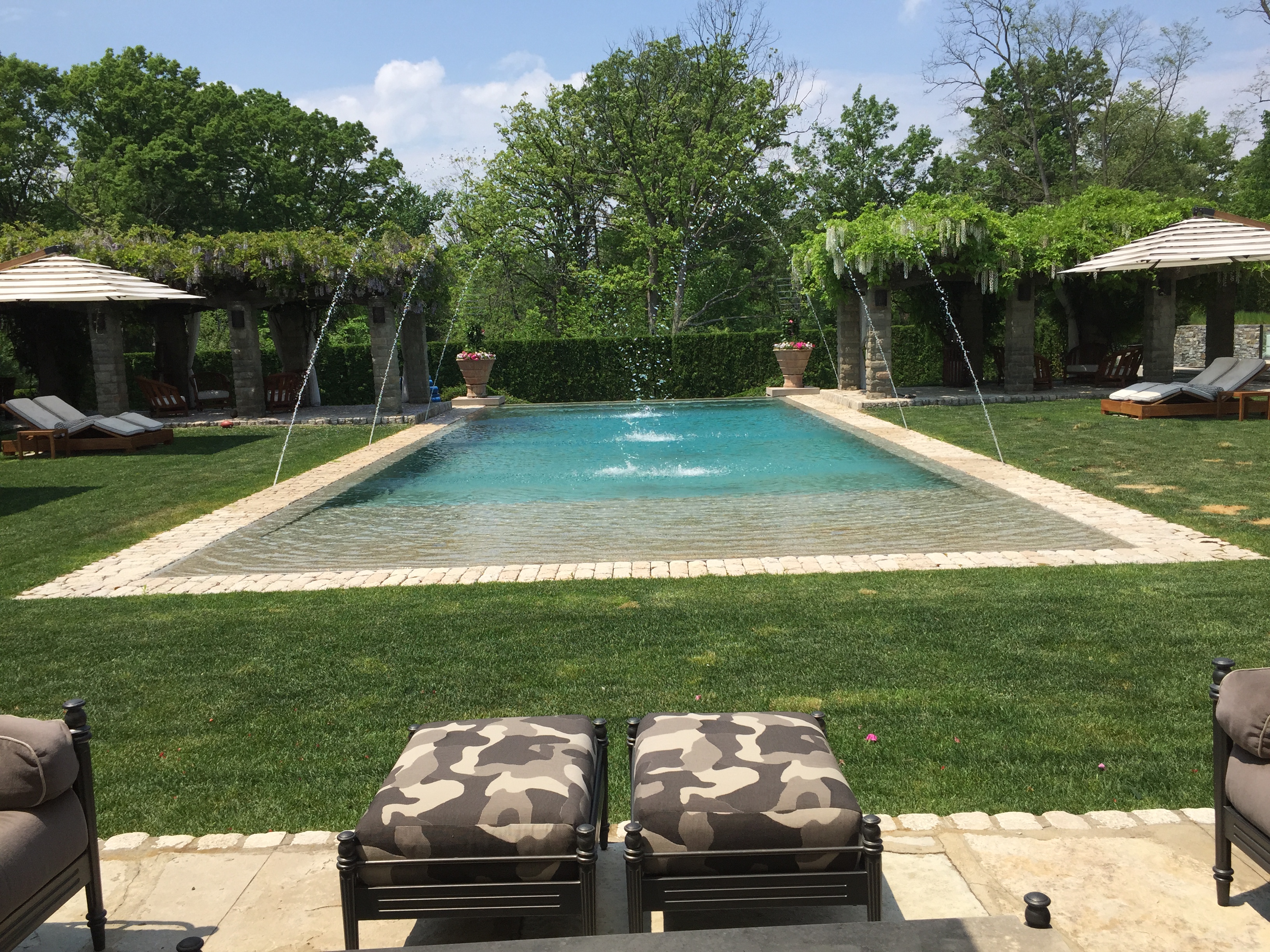
My client’s interior designers introduced me to them and their property.  Eventually they would turn their efforts towards the landscape. Last year’s landscape efforts were concentrated on a pool, terracing, a spa, and an astonishing pergola built and installed by the Branch Studio. Screening trees, and a large collection of small spring flowering bulbs got planted late in the fall. This year, we hope to plant the front, side, and rear yard landscape. The property had been neglected for decades. The gravel driveway, all but invisible under a thatch of compost and weeds, was lined in concrete curbing that went 24 inches below grade.  A number of trees grew up, and spent decades thriving. Many of those trees were now were in serious decline.  Disease and fierce weather had taken their toll. The roots had grown over the curb, reducing the width of the drive to just over 8 feet.  A new driveway design and installation would need be the first part of the installation of the landscape.

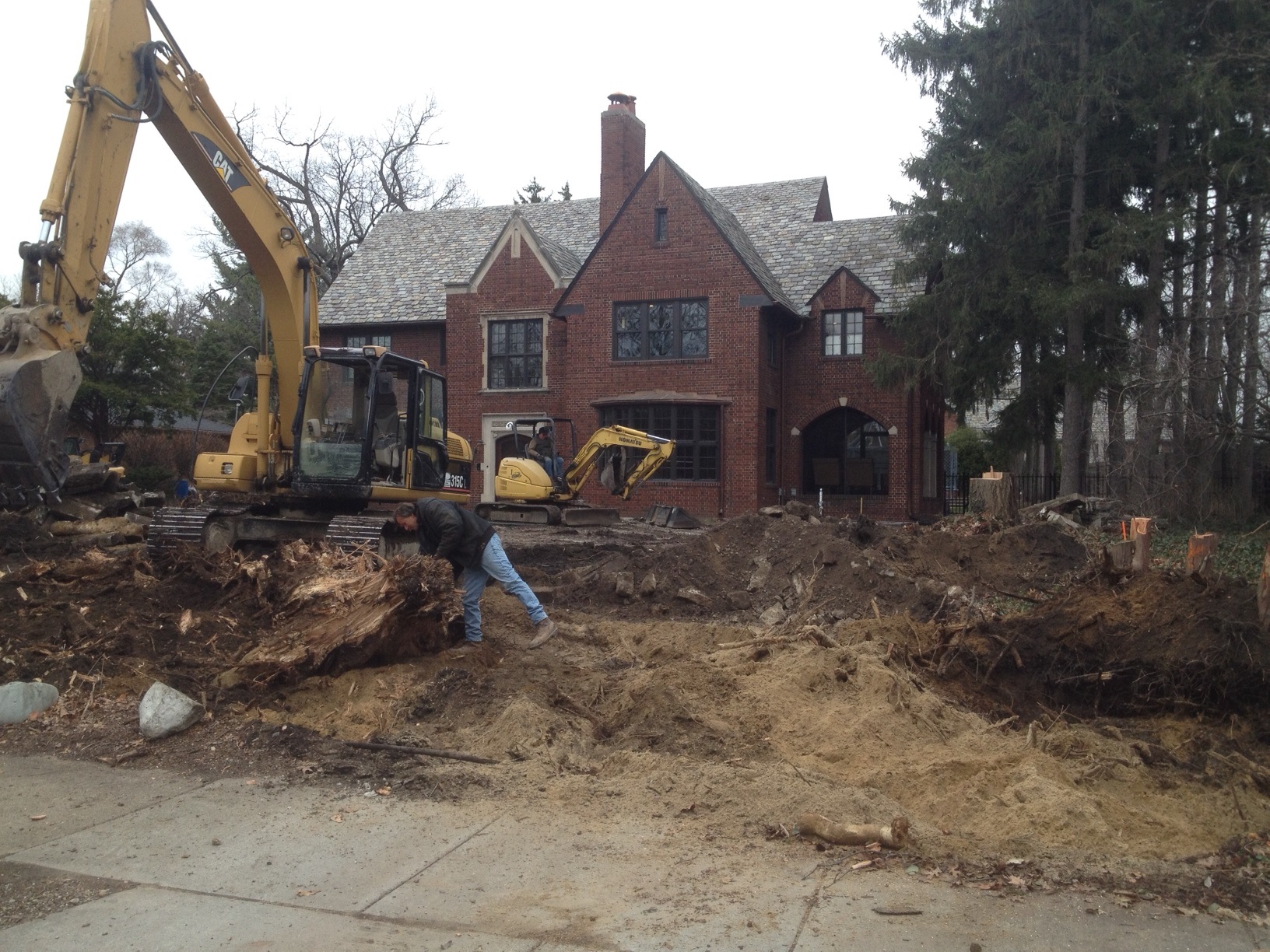
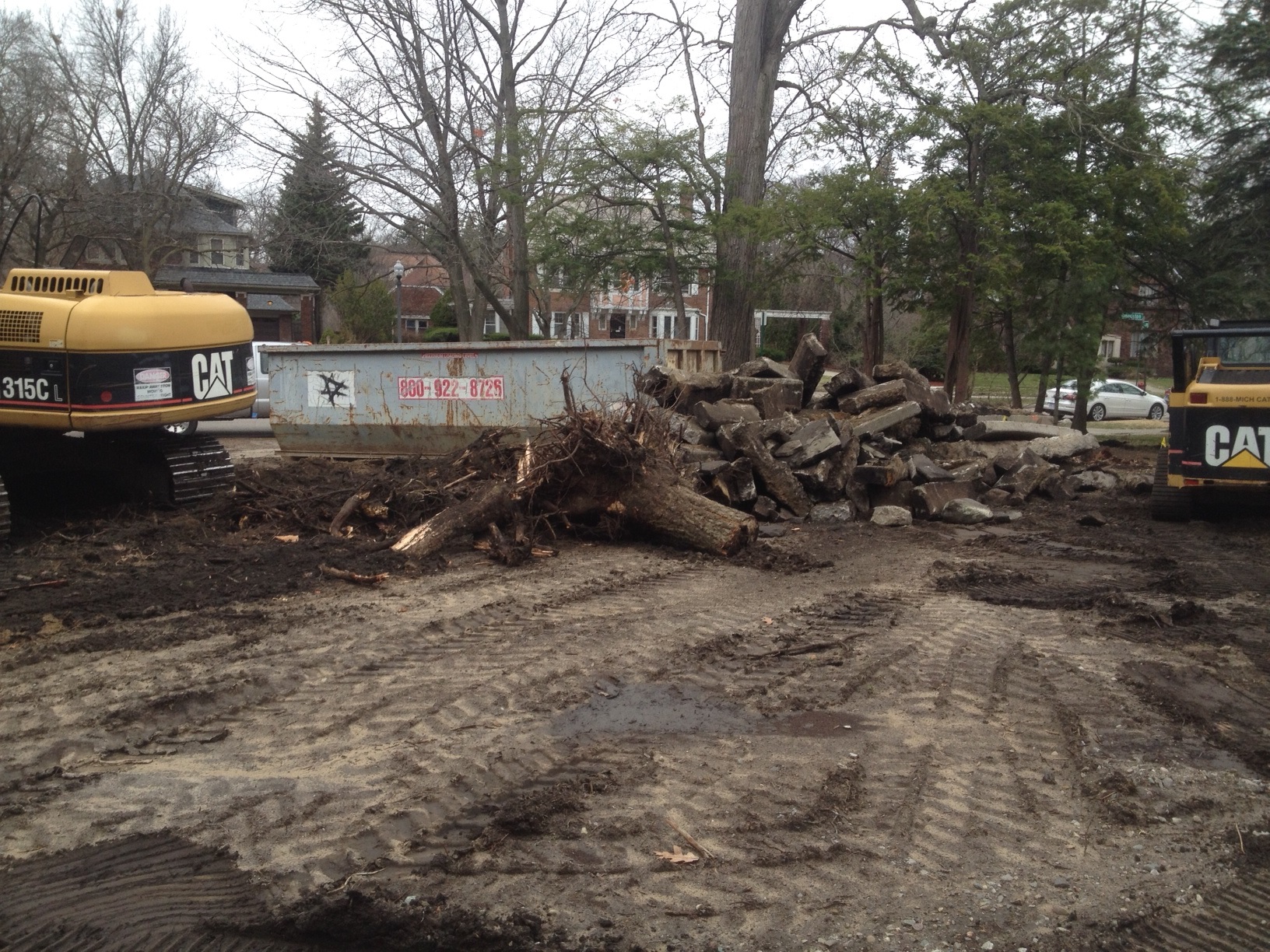
Once the front yard landscape was agreed upon, there was a lot of work to do. Once the dying and diseased trees came down, the stumps were loaded into a 30 yard dumpster – almost 12 tons worth. That is a staggering number, and it explains why so many large machines are parked in the front yard. Taking apart an old landscape and driveway is a shocking experience, but bare dirt that is asking to be regraded is a big breath of fresh air. It is never an easy thing to abandon what was, and go on.

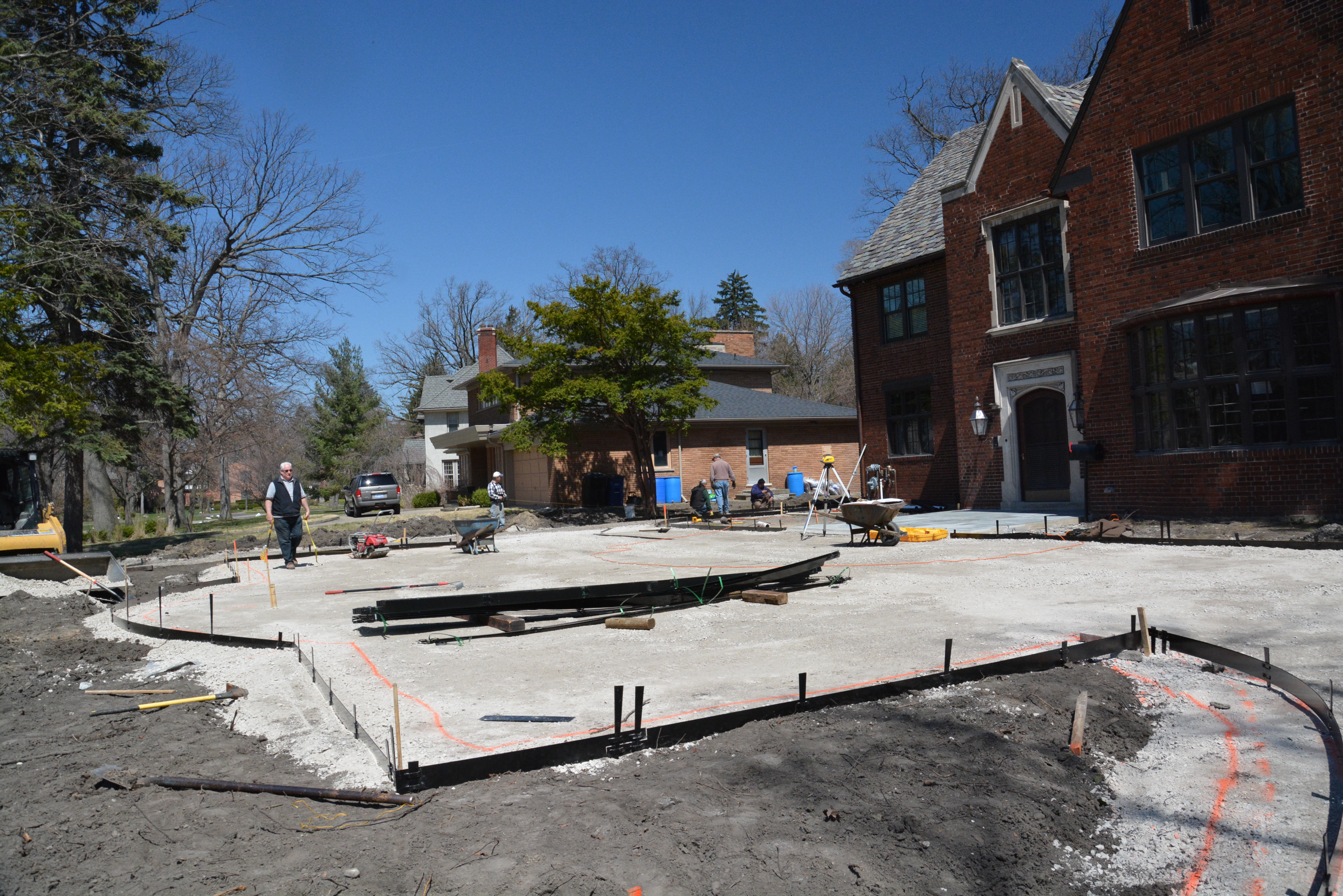
a new driveway (12)Once the drive curbs and the trees were removed, the ground had to be graded.  In this case, there was quite a bit of what I call balancing to do.  The land which was high on one side was lowered, and the low side needed to come up.  From the street, the land would look balanced, left to right.

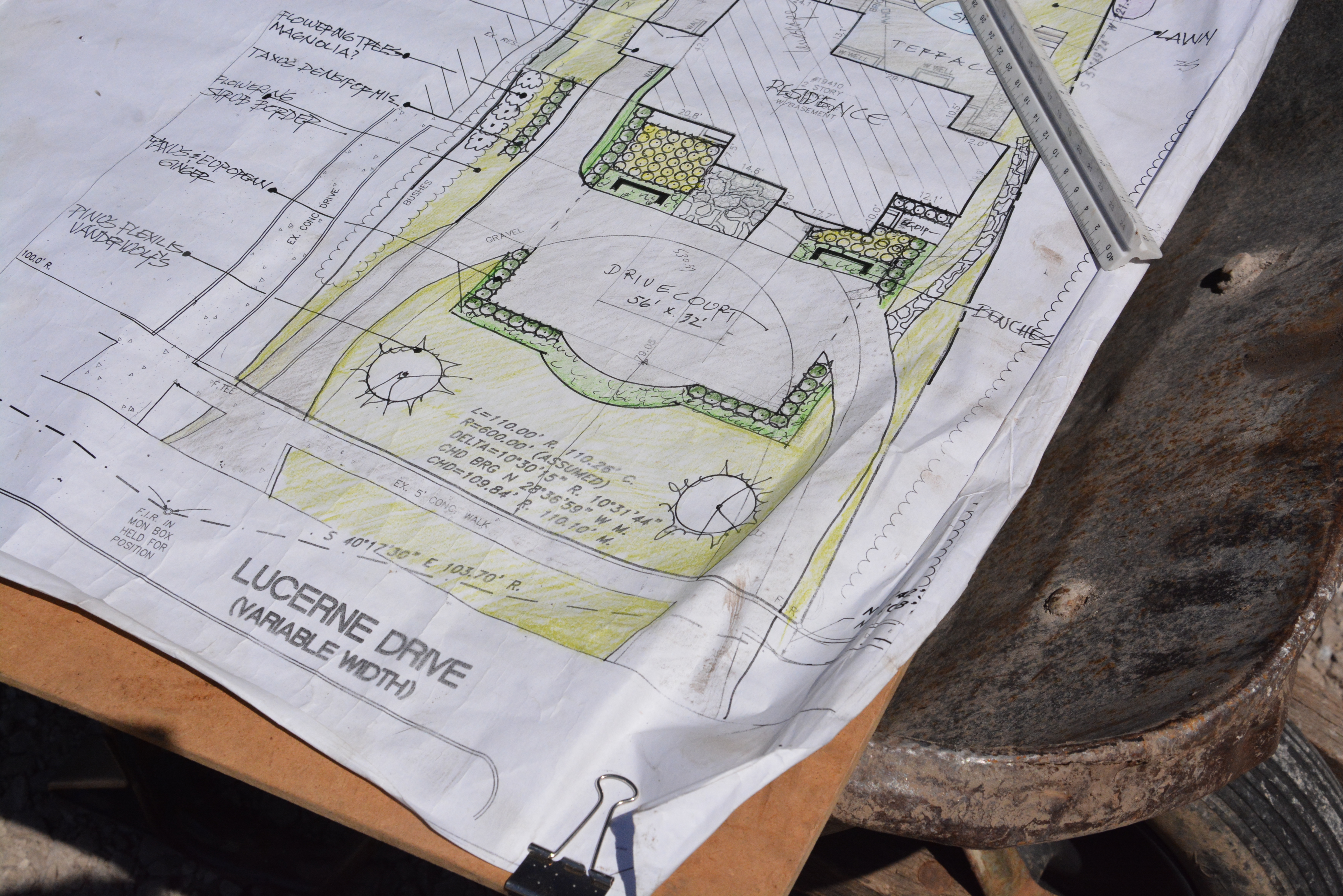
a new driveway (4)The grade of the driveway would determine the final grade of all of the land surrounding it. A large motor court some 56′ feet wide by 32′ deep would be a dominant feature of the landscape. This would permit off street parking for clients who entertain regularly. But most importantly, a gravel drive and motor court seems appropriate for a house of this age and architecture. It interests me that many very old homes with motor courts were built before the advent of motor traffic. It can be a beautiful feature in and of itself. The accompanying landscape would in a simple way feature the house and gravel court.

a new driveway (2)In many respects a gravel drive is simpler and somewhat less expensive to install than concrete, asphalt, or stone.  One of the biggest expenses is the cost of the edging. The gravel must be contained.  A hard boundary is what keeps the gravel in place.  Gravel that has crept away from its intended location can look great in a very informal setting. It would look messy and untended in a house of this architectural formality.

a new driveway (3)
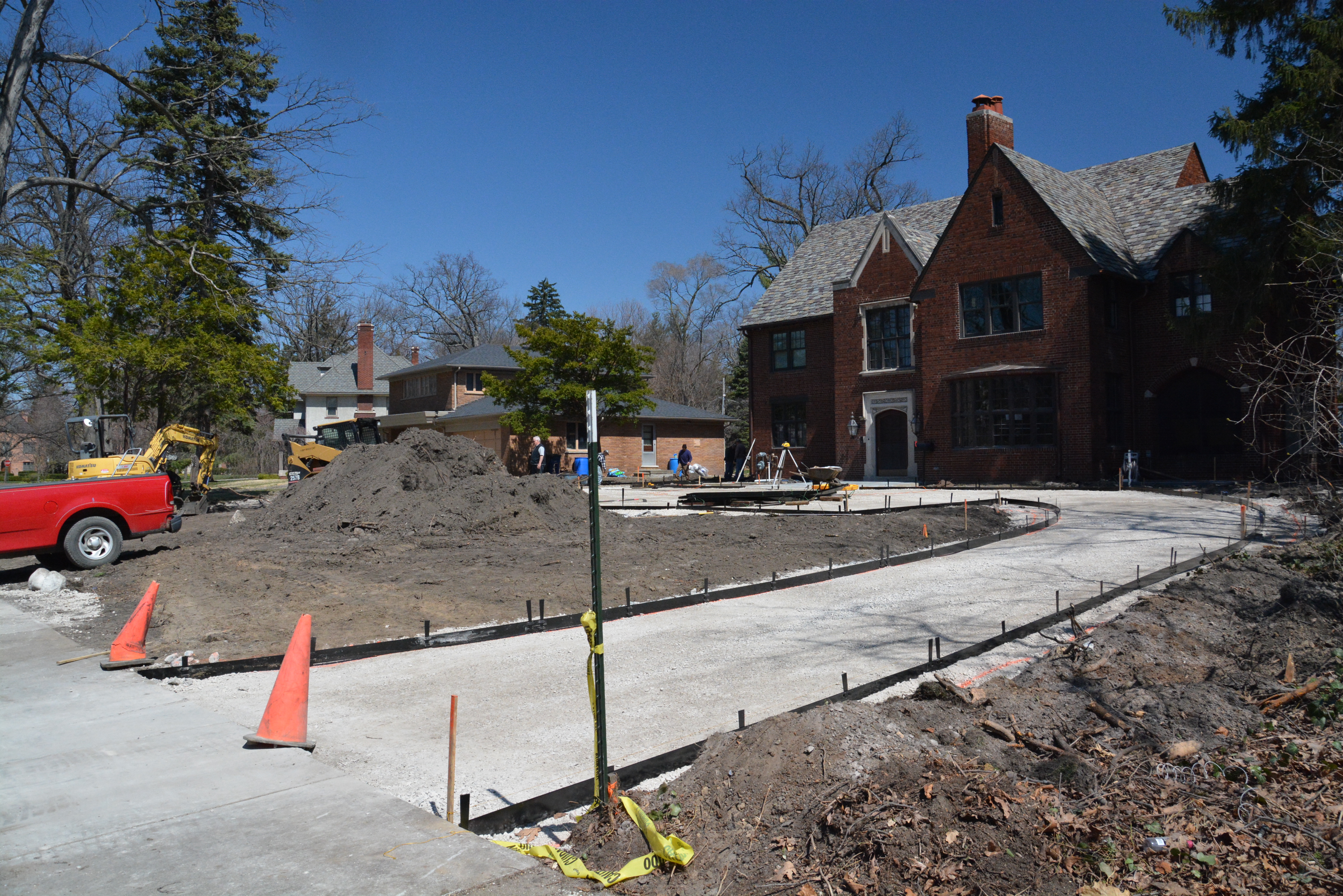
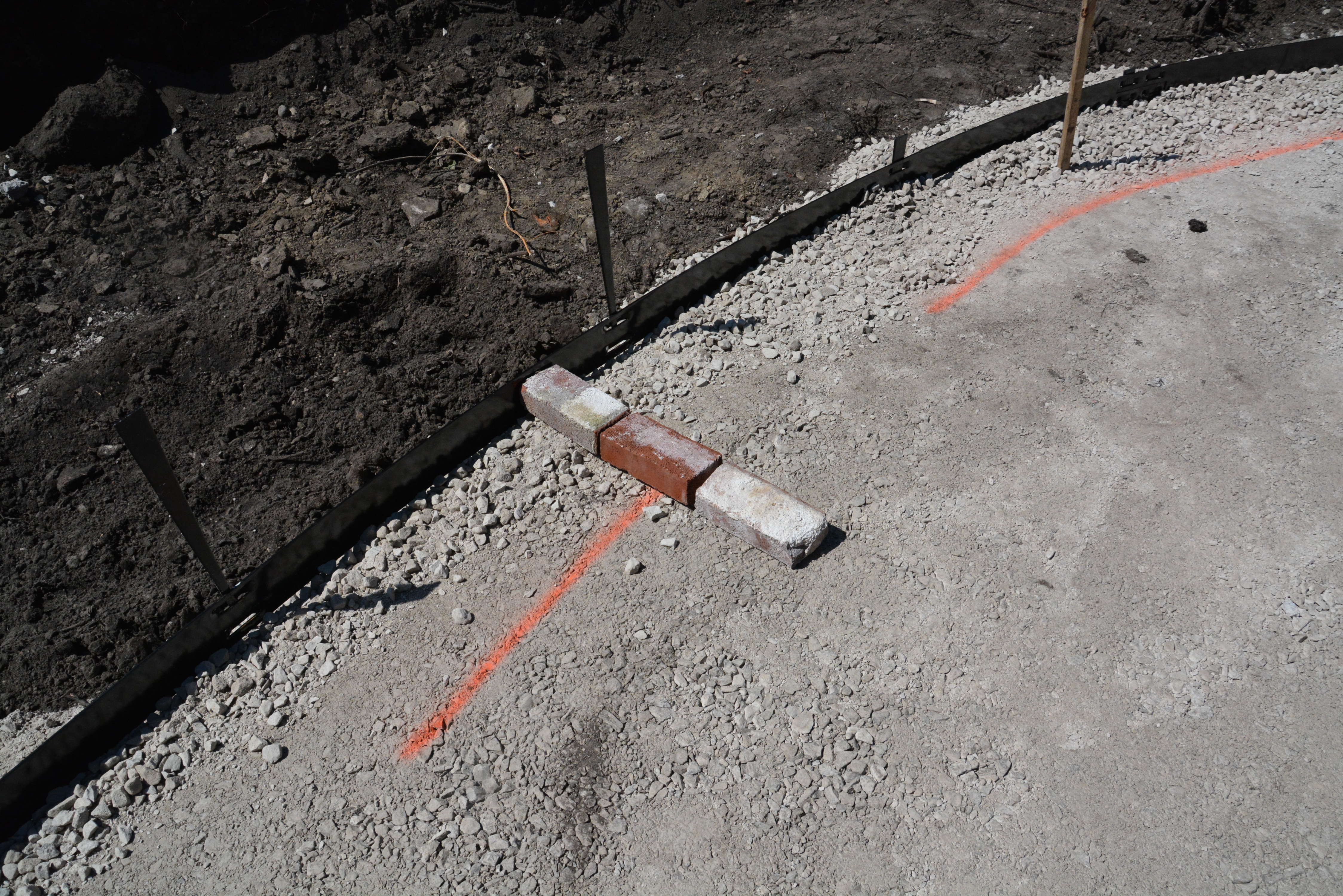
Both the drive and motor court are edged in 1/4″ thick steel.  That steel edges is secured by steel stakes that are driven into the ground through steel loops welded to the back of the edging. The steel has to be this thick to withstand repeated vehicular traffic, and stay in place.

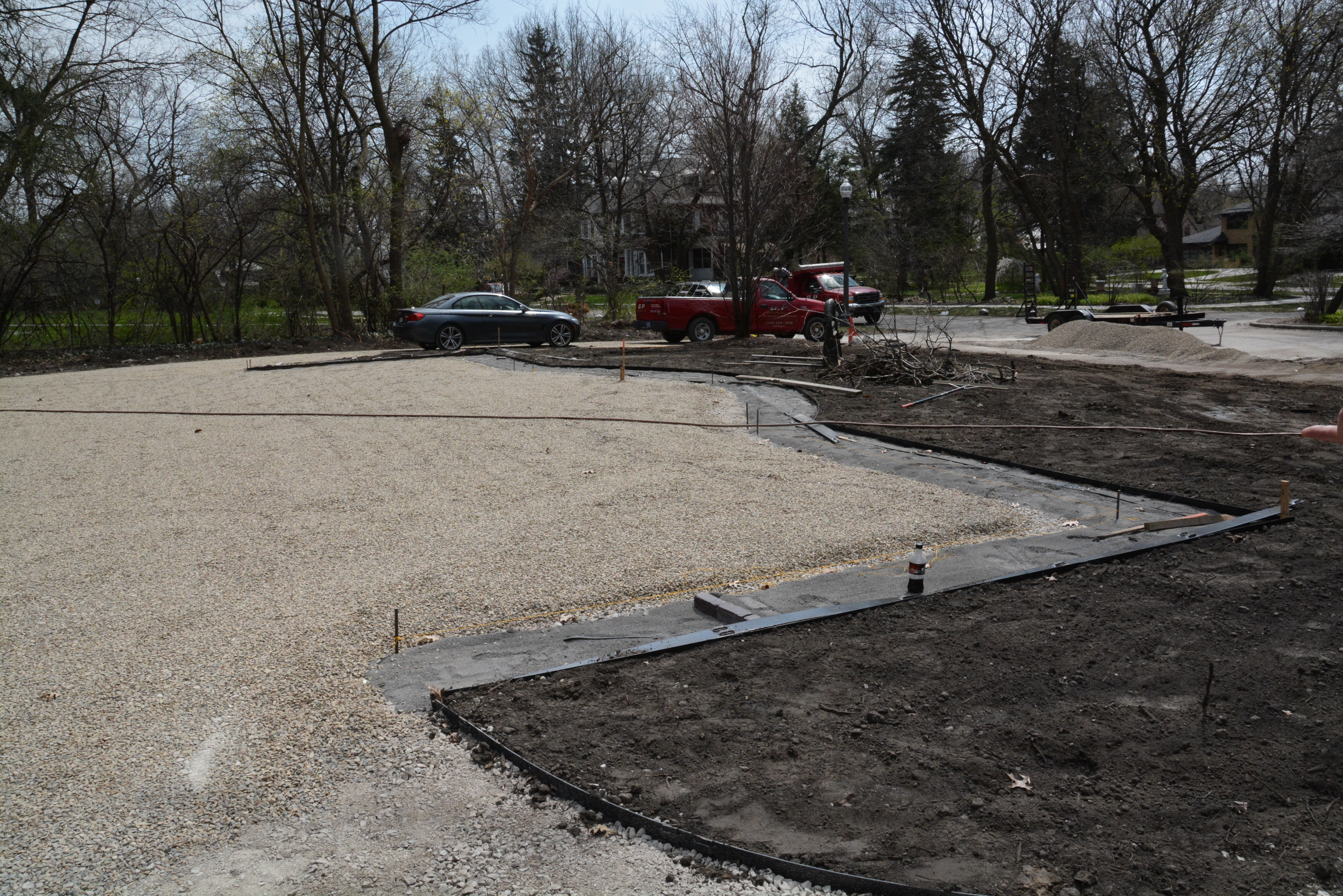
a new driveway (6)The gravel motor court will be bordered in concrete paver brick, three bricks deep.  The border will help to visually reduce the size of the gravel area. It will also recall the brick on the house. This brick will be dry laid between parallel bands of steel edging.  Concrete brick can better withstand compression weight of a vehicle. Pictured above is a base layer of compacted road gravel.  The finished crushed stone will be added at the very last, at the height you see indicated by the top of the steel edging.
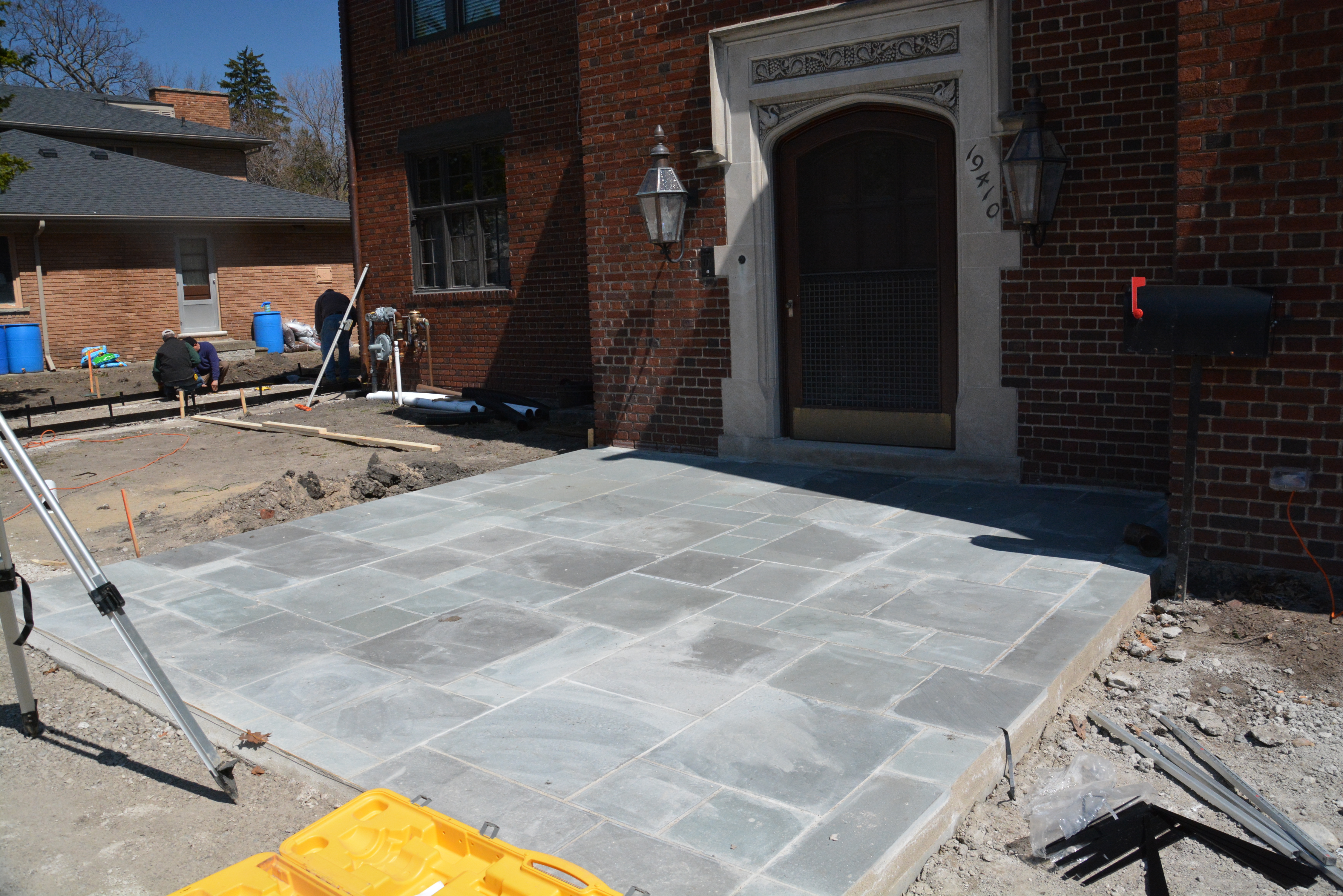
a new driveway (5)A large new blue stone front walk will make beautifully clear the location of the front door. The house is not symmetrical in its footprint.  The walk which is large enough to feel like a terrace is a centering gesture. There is plenty of room for containers out away from the front door. This exterior entry way echoes the scale of the spacious foyer just inside.

a new driveway (9)An important element of designing any driveway is to check if it is driveable.  My clients drove it a number of times when the scheme was painted on the ground. One little but significant change was made to help anyone backing down the drive stay in the lane. A driveway that doesn’t work well always shows where that pinch point is. Curves and changes of direction need to be gradual and sweeping.

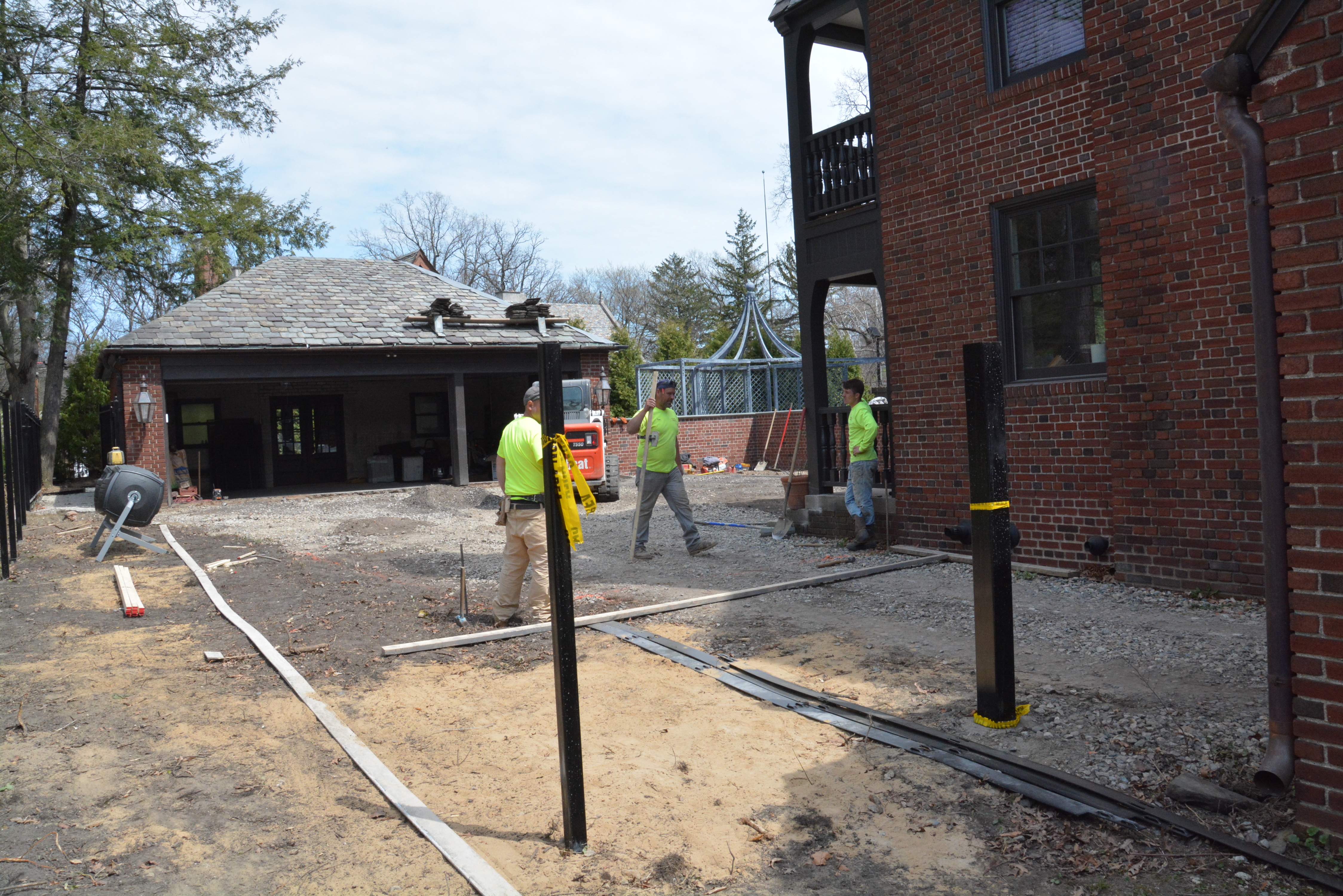
gravel drivewayThe drive at the back will be installed as concrete aggregate, rather than compacted gravel. This will make it easy to shovel a path from the detached garage to the back door. The forms are being set for this portion of the drive. An iron fence and gate appropriate to the architecture is to come soon.

a new gravel driveway (3)The bed lines near the gate to the back yard were specifically set to allow my clients to back out of the garage, and turn around.

a new gravel driveway (2)As of late yesterday, the finish gravel has been put down in the motor court. The concrete brick is due to come in today.

a new gravel driveway (1)At the last of the day, a pair of 25 foot multitrunked katsura trees were added to frame the view of the house from the road. The landscape will be underway shortly.