Decoration

What is decoration? The dictionary says it is something that is added to something else to make it more attractive. As awkward as this might sound, I think this sums it up rather well. It is indeed a certain special and personal something added to an ordinary something. Others say it is the act of adorning, embellishing or honoring. A one word description of decoration might be ornamentation. All manner of living creatures decorate their home, nest or self with the idea of attracting a potential mate. From the most simple to the most sophisticated level, people decorate. Many decorate their homes for specific holidays. Bakers decorate cakes based on an expression for special occasion. Some people hang bunting in celebration of the 4th of July. Some fashion houses embroider over a selected fabric, for beauty’s sake. Those of us who wear glasses welcome the opportunity to wear a beautiful pair of glasses. Everyone decorates the place where they live to make is more personal and pleasing. That decoration may take the form of paint, furniture, flooring, art, hardware, rugs-the list of decorative elements from which to choose is long. Anyone who wishes to decorate has not only hundreds of years of precedence, but also an astonishing range of choices.
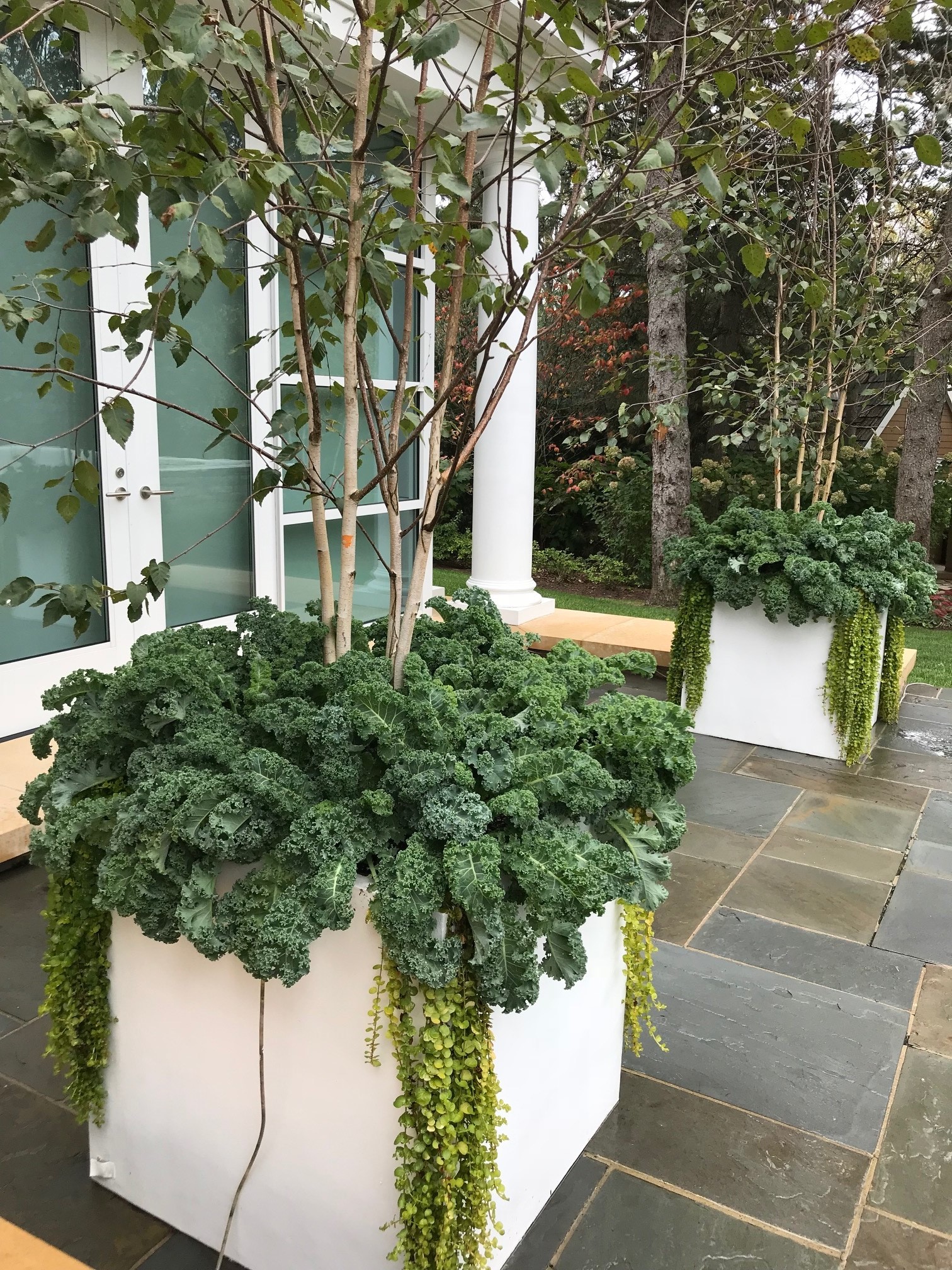
Where am I going with this? Gardeners plant trees, shrubs and perennials. They dig beds, and plant. We all plant for different reasons.  Some need a place to sit in the shade. Others like to grow vegetables. Some plant in a way friendly to their kids, or their age. Others favor a landscape that is friendly to company. But no doubt a good bit of planting that gardeners do has to do with an expression of beauty. Decorating a container with plants is a satisfying way to celebrate the season.
The meaning of beauty is far too wide a topic for me to address. I find it tough to write about what constitutes beauty, as everyone’s opinion is different. Maybe the best part of beauty is the process by which people create it.  Most gardeners have an idea of what constitutes beauty in the garden, and they plant towards that. Gardens of great age are gardens that have evolved, as nothing in a garden ever stands still.  Any planting needs to be appropriate to the location and the existing conditions. That is a given. But what lies beyond the given?
A beautiful celebration of the fall season is enchanting. Anyone who chooses to plant their containers for fall have months of beauty ahead of them. The opportunity for creating beauty exists in all of our gardening seasons. Planting containers for fall comes just in time to let go of the waning summer plants.
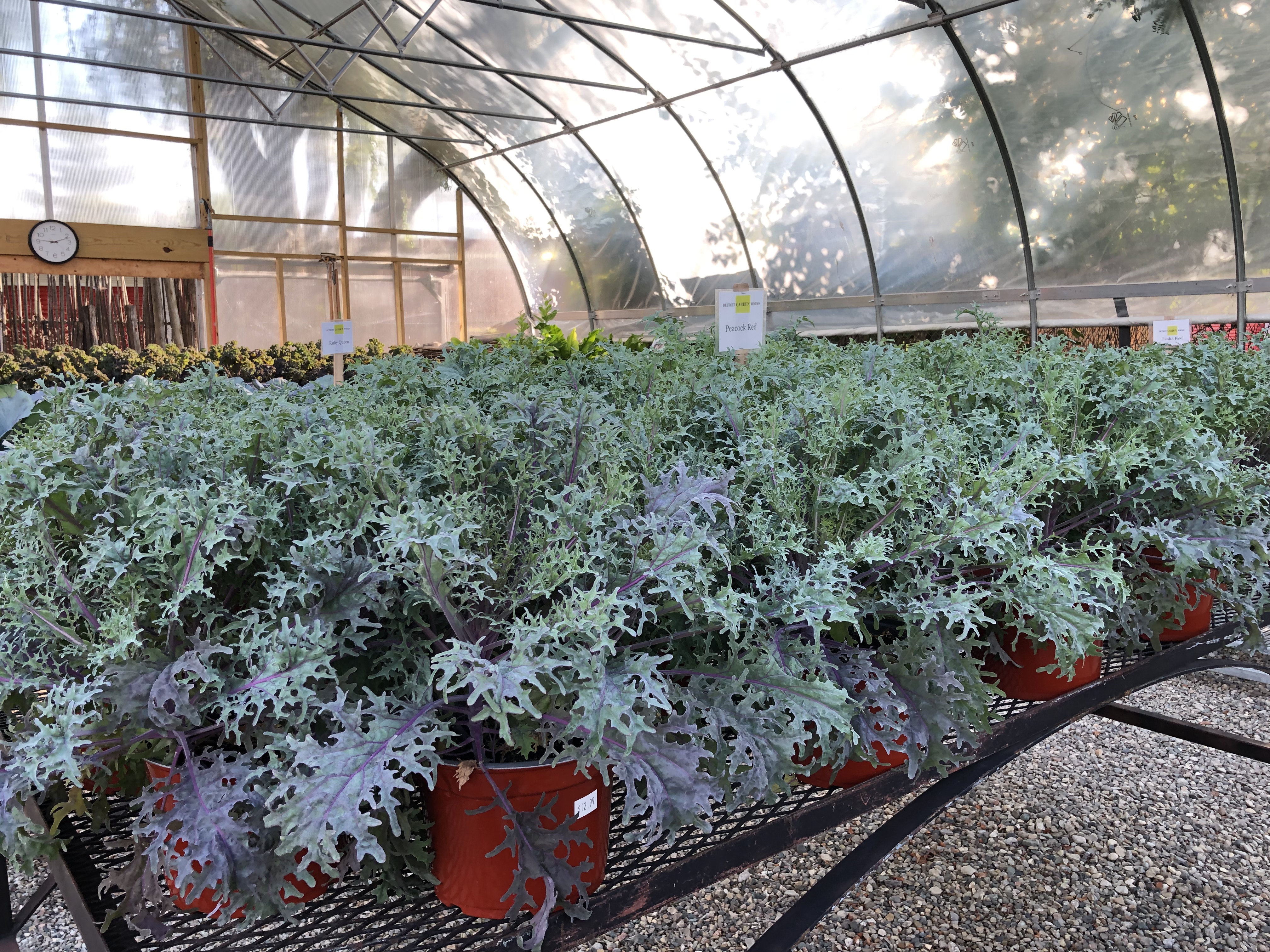
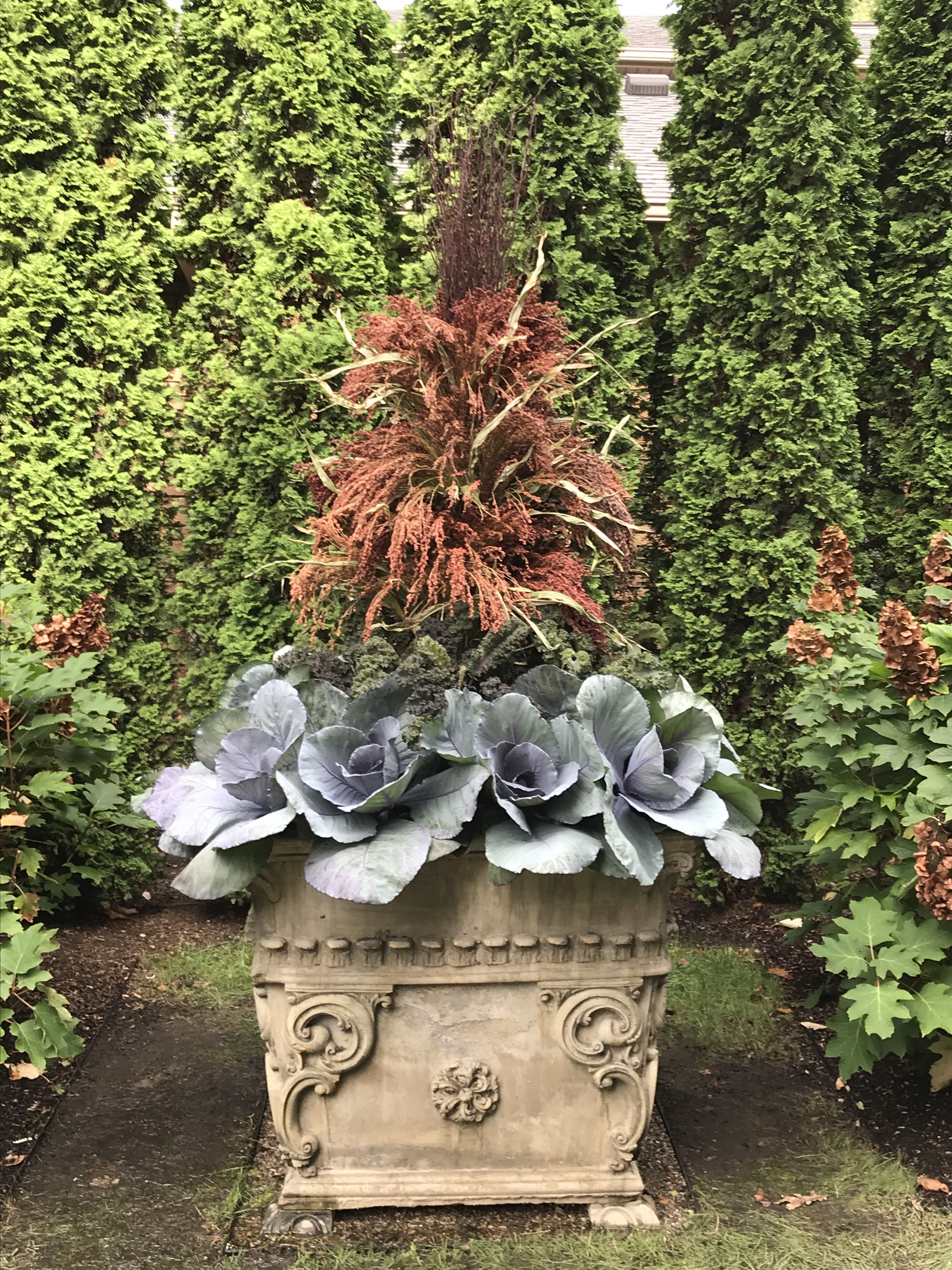
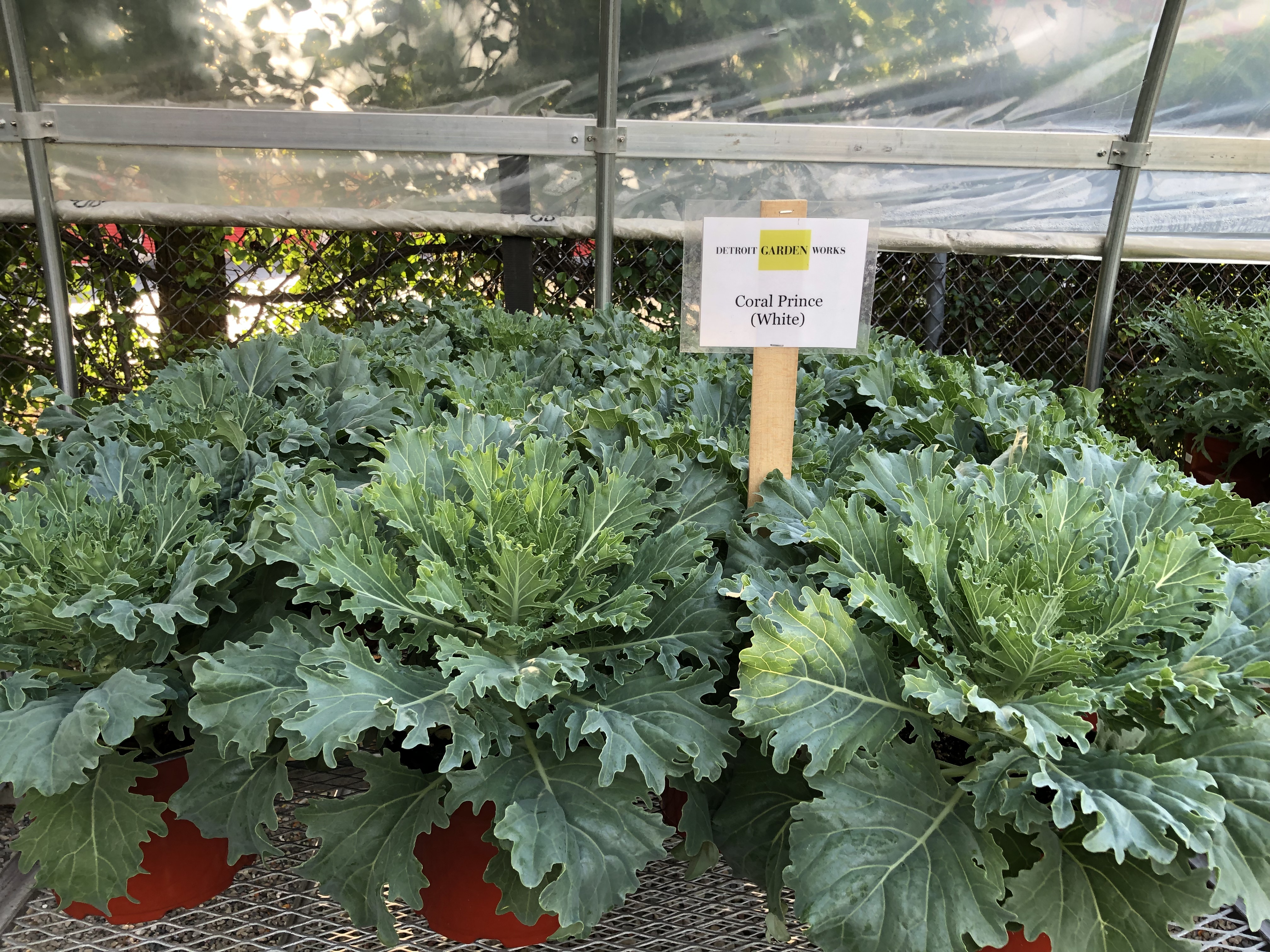
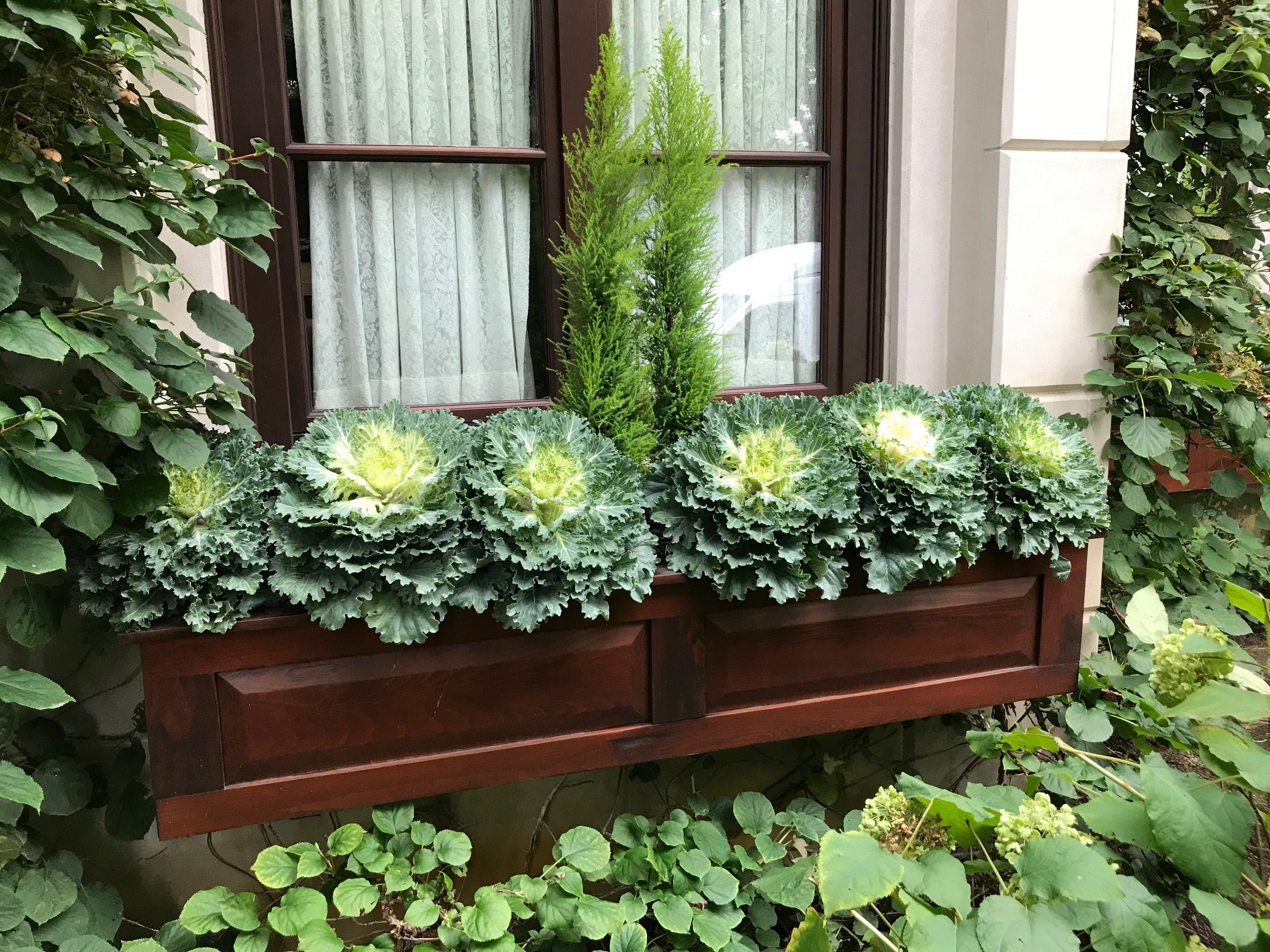
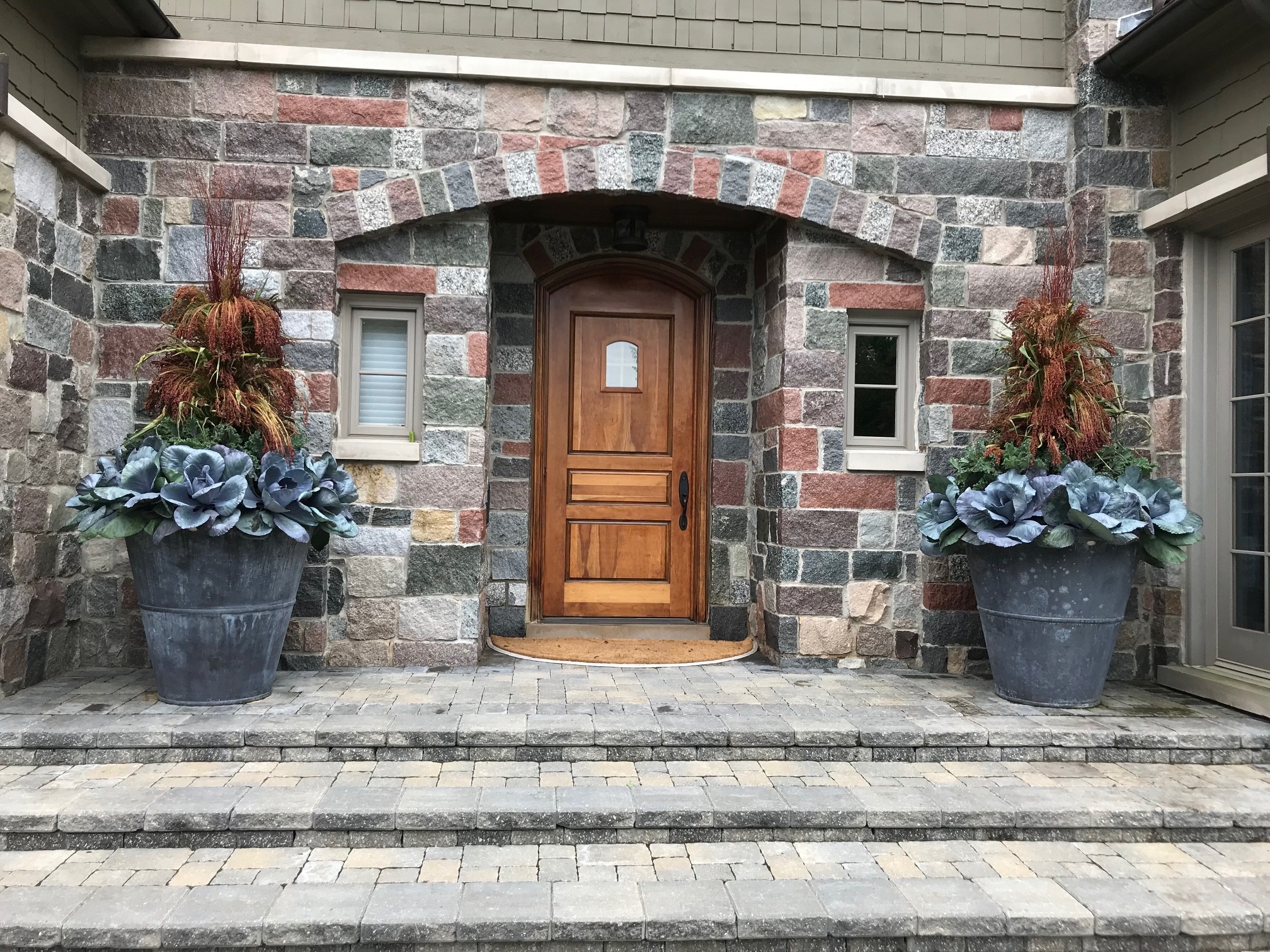
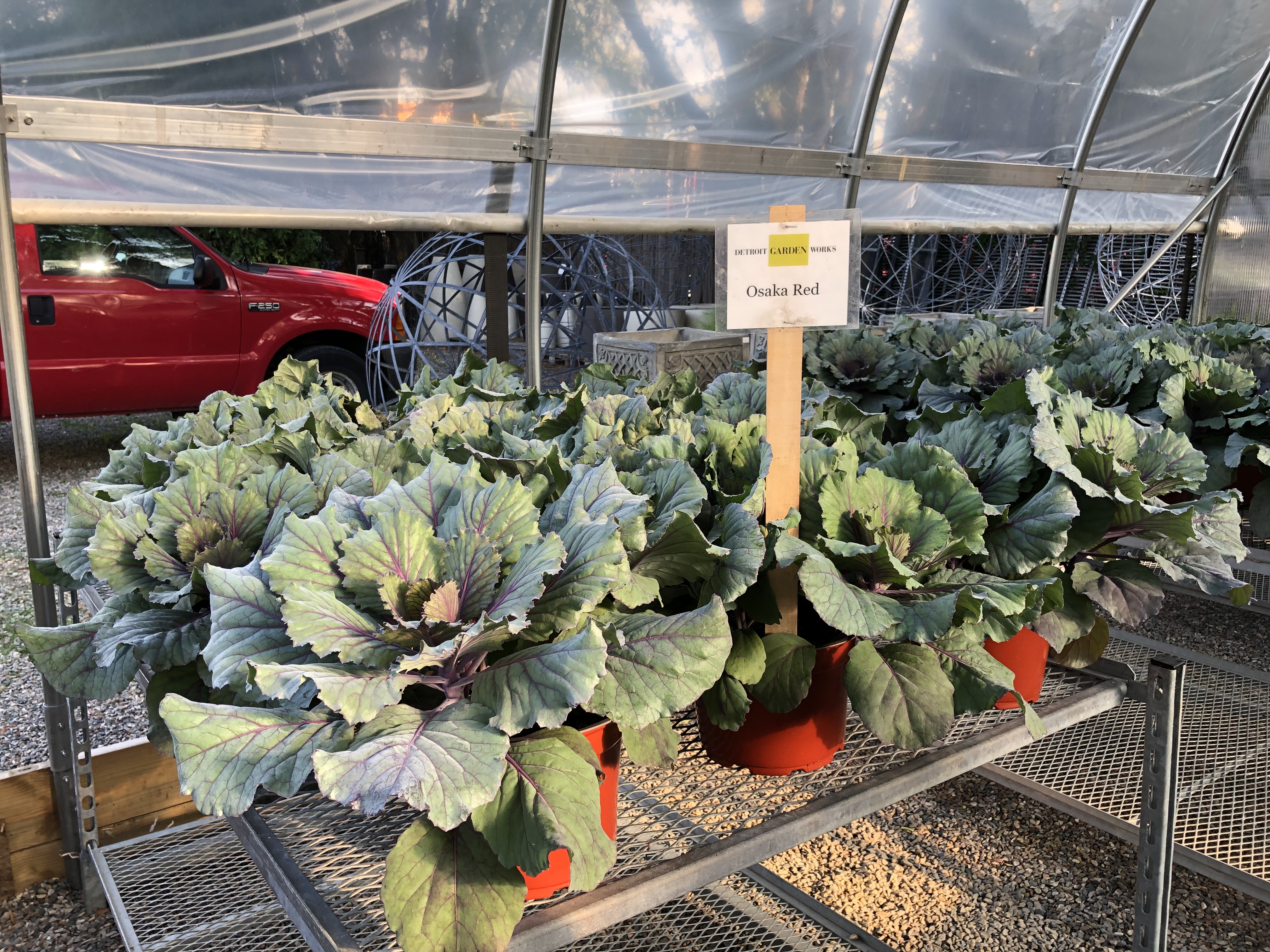
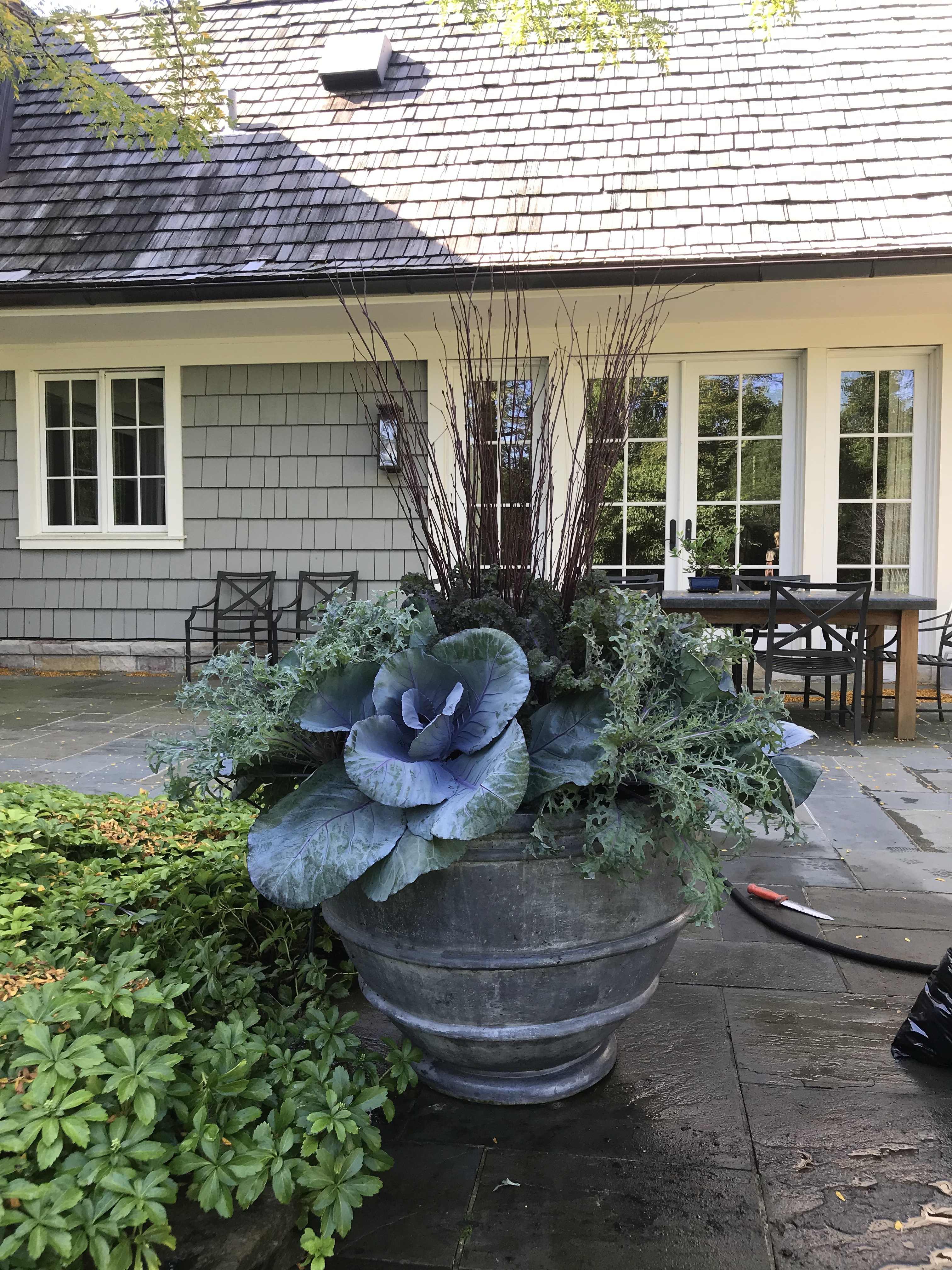
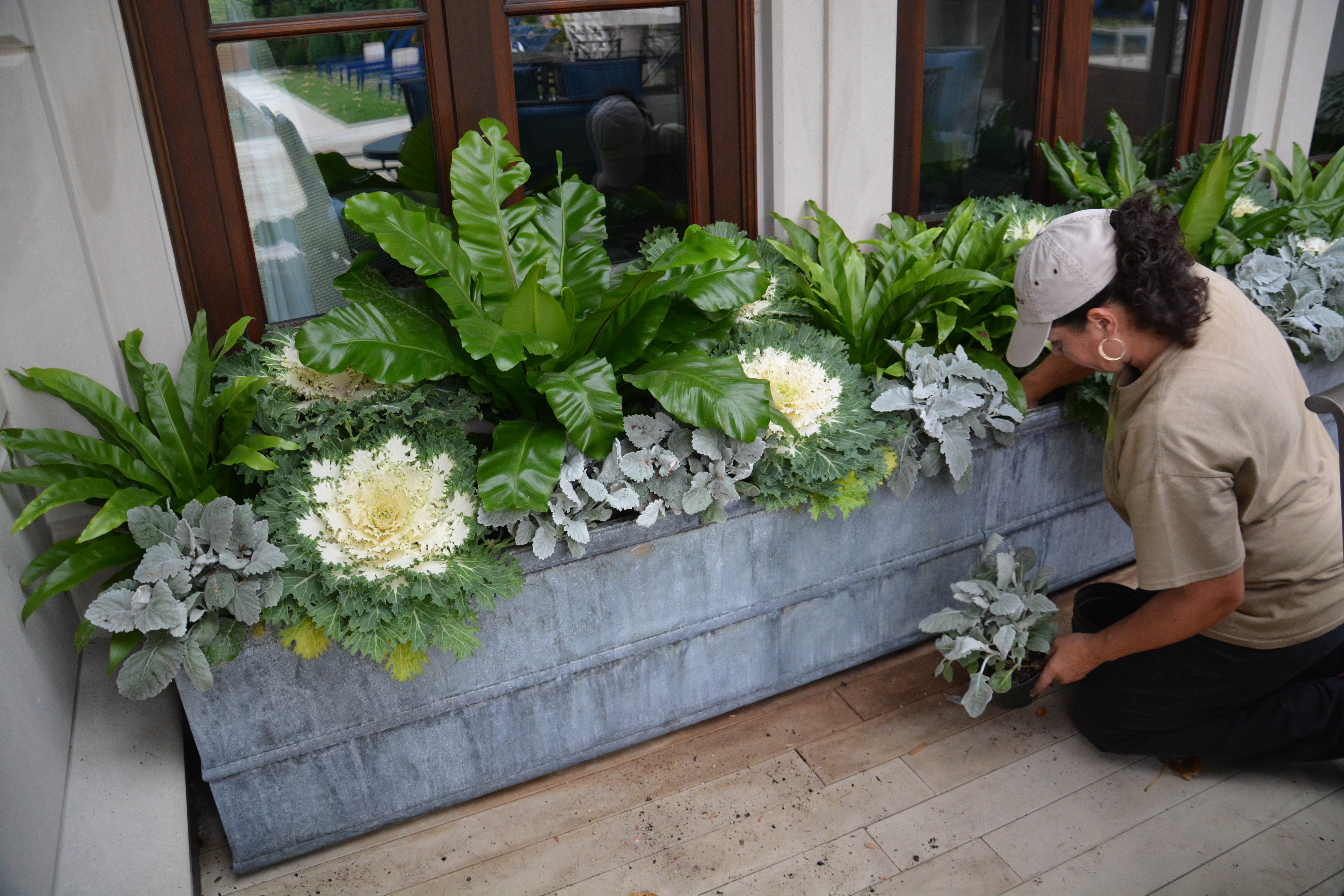
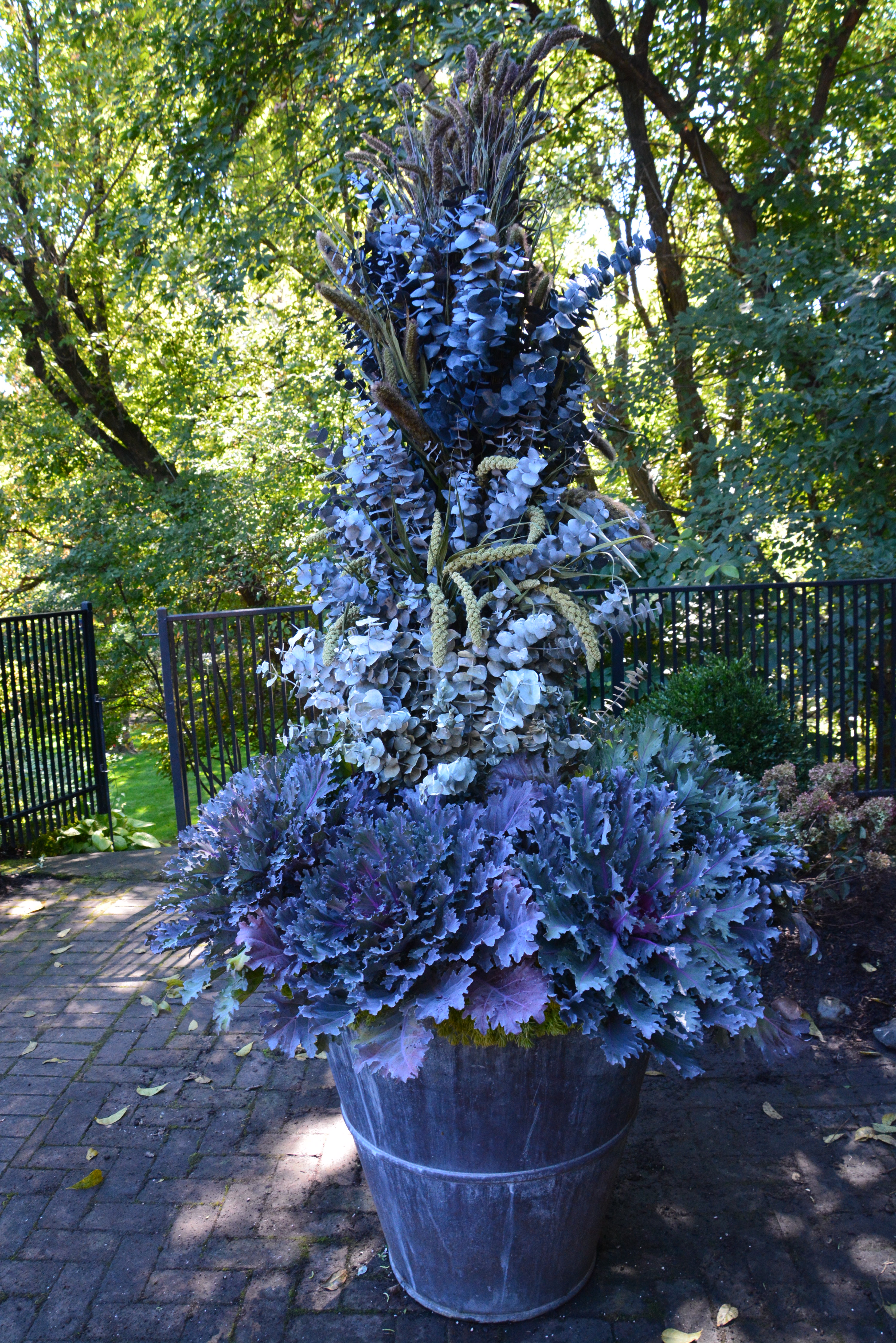
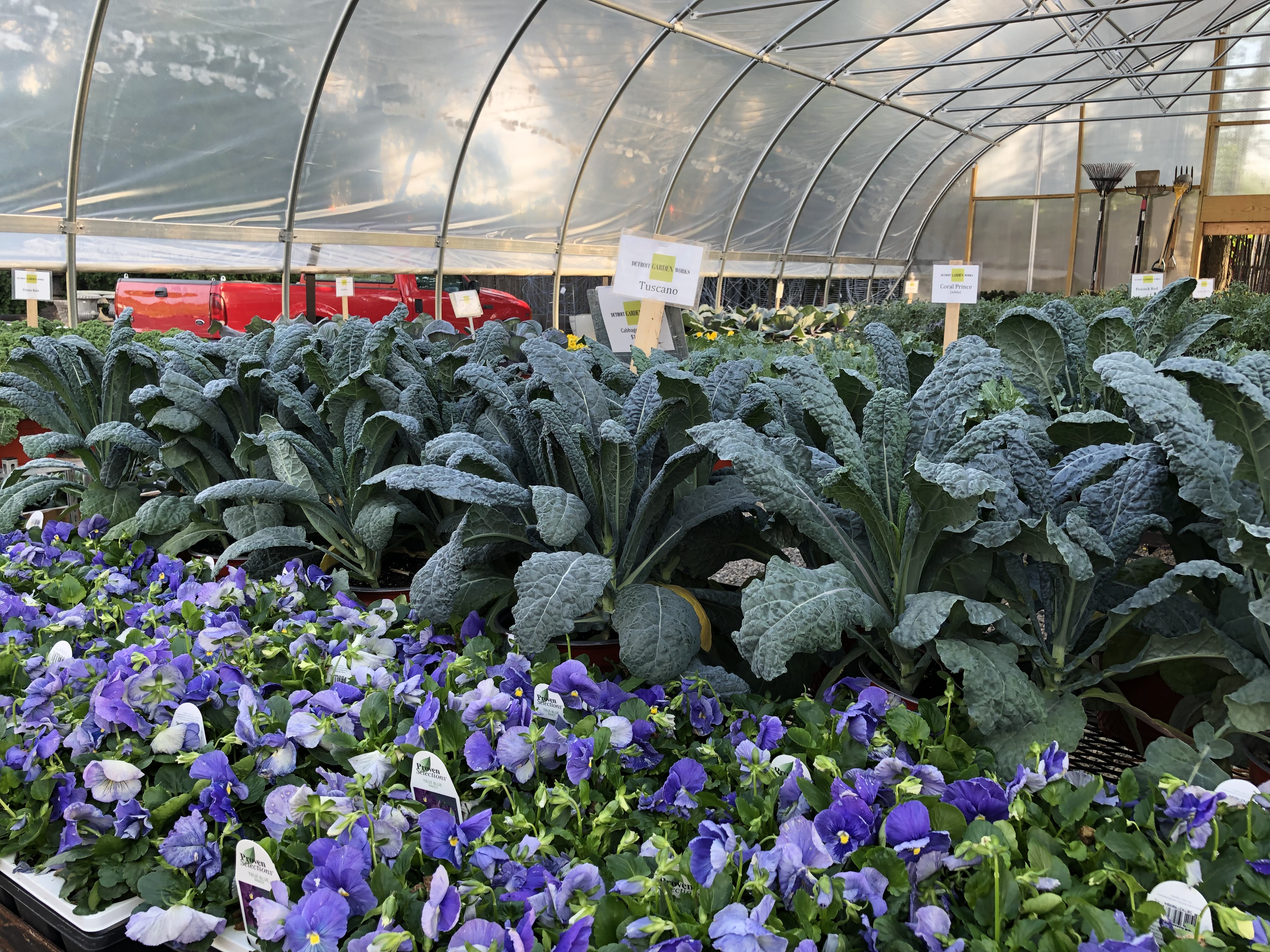
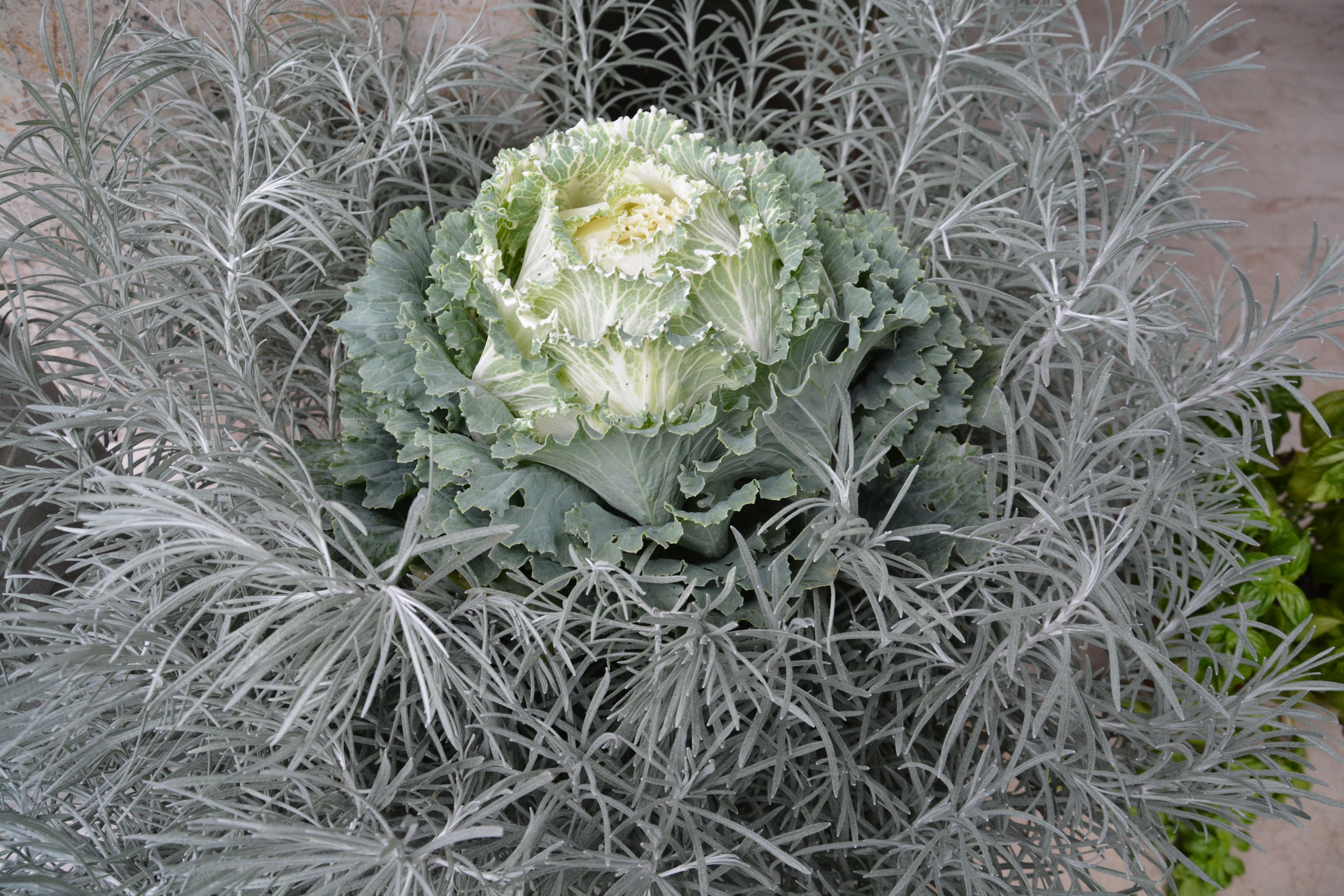
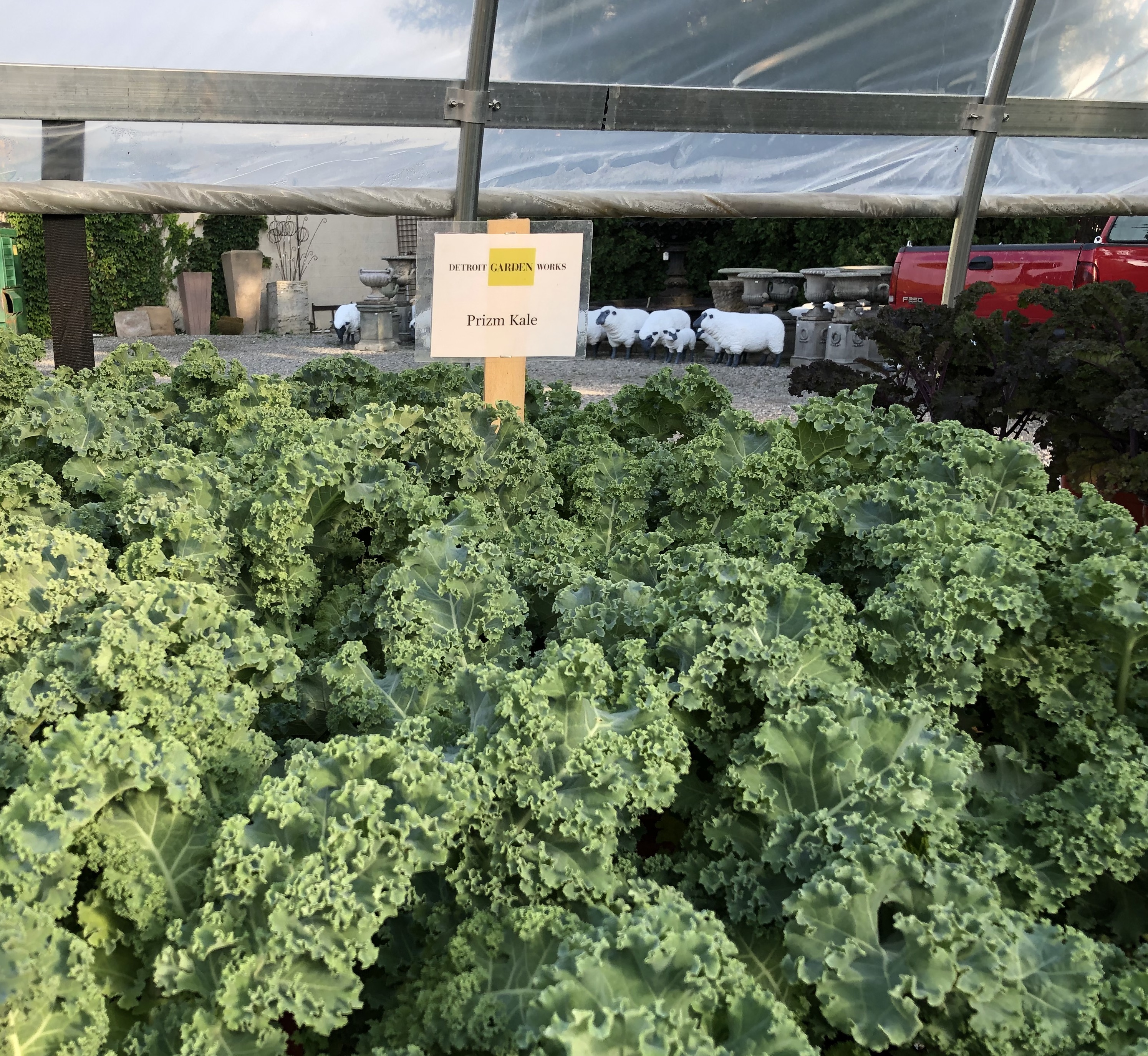
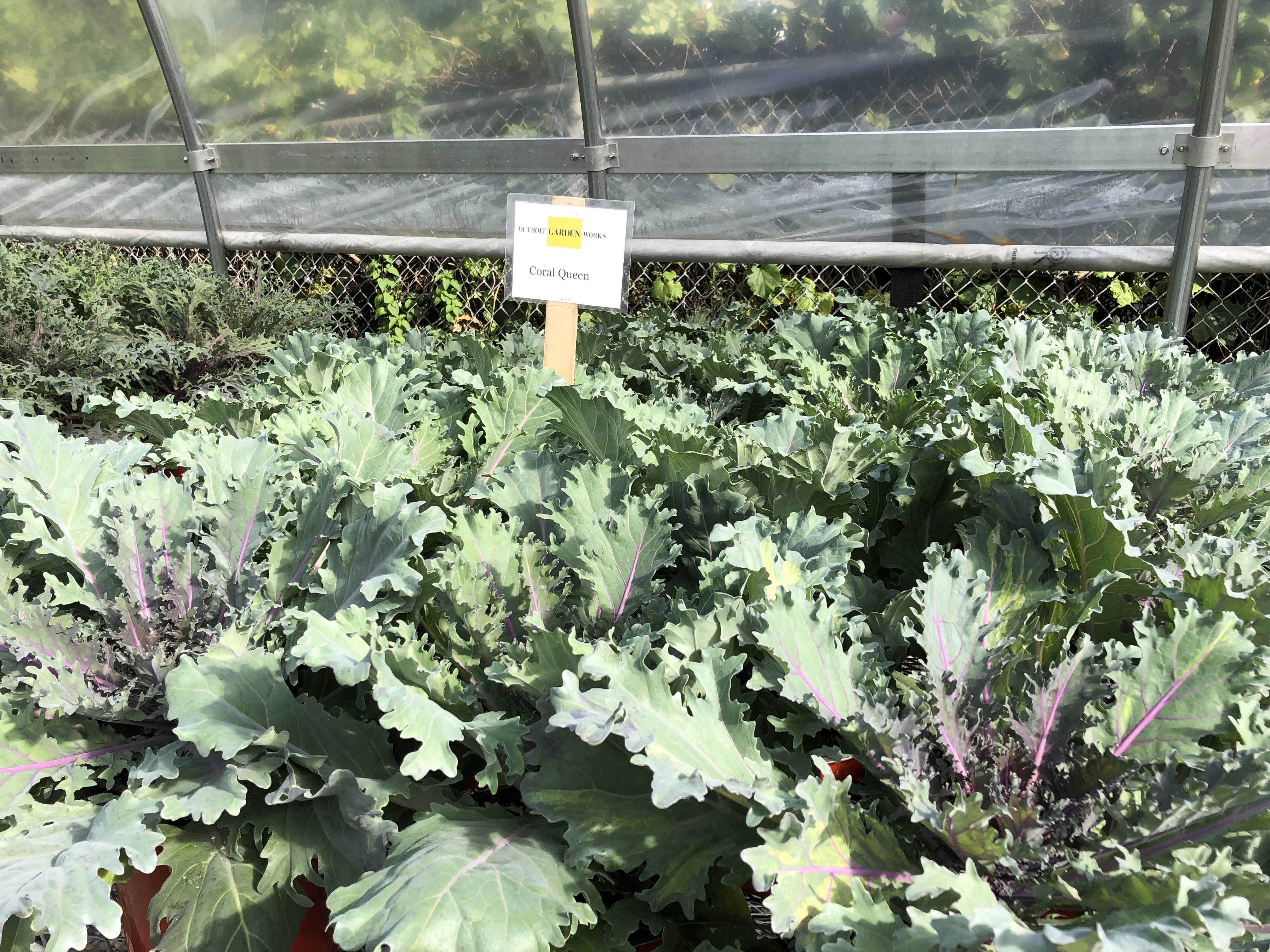
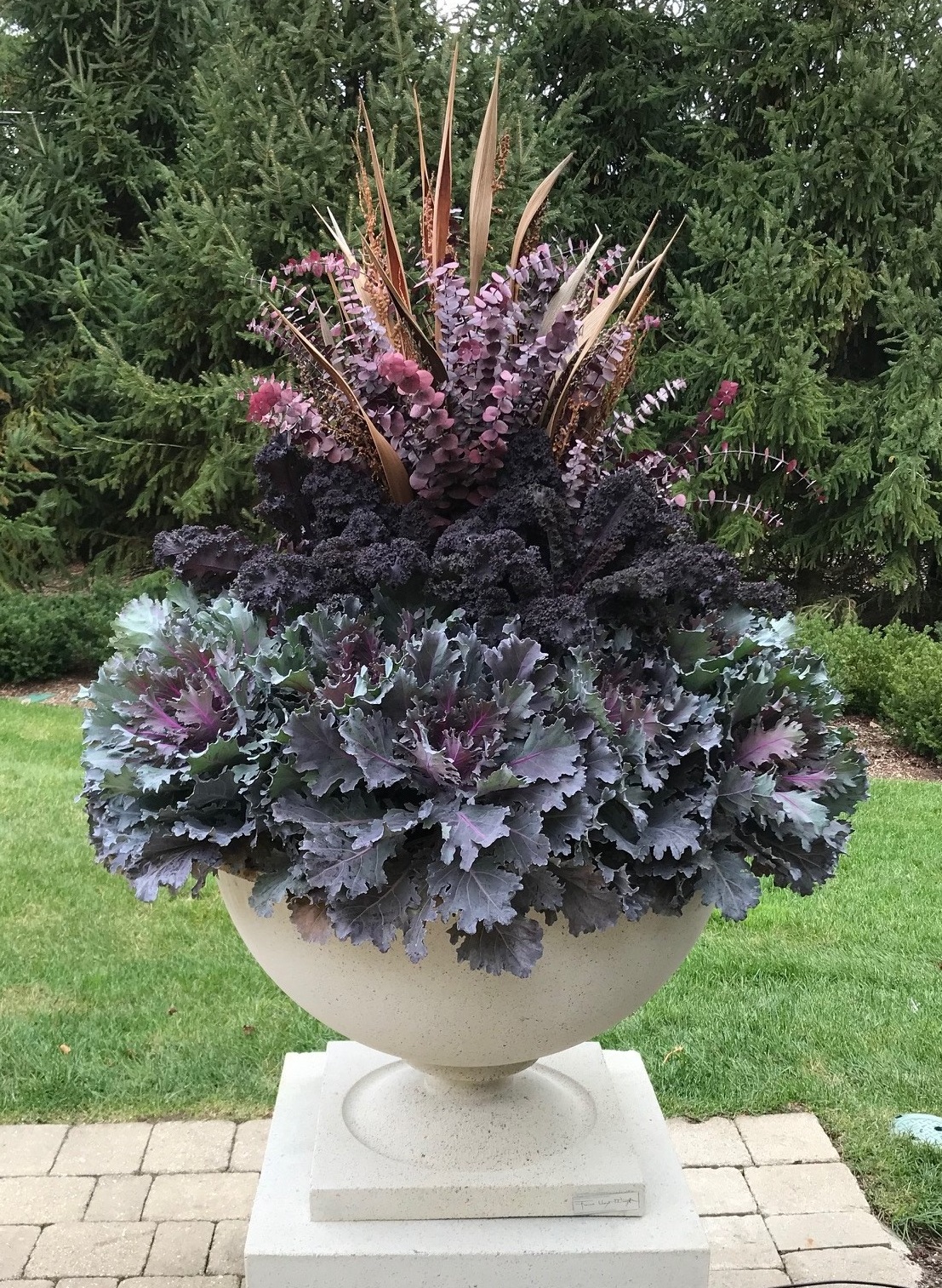
I am a big fan of the ornamental cabbage and kale for fall containers. They tolerate the late summer and early fall heat, and they endure the coming of the cold. Cool weather initiates a brilliant coloration in the leaves. The kale pictured above will eventually sport leaves of turquoise, purple and cerise pink.  I have had ornamental cabbage and kale looking great in to January. Our crop this year is exceptional.

Container plantings are quite unlike garden and landscape installations. They express the beauty of the moment.
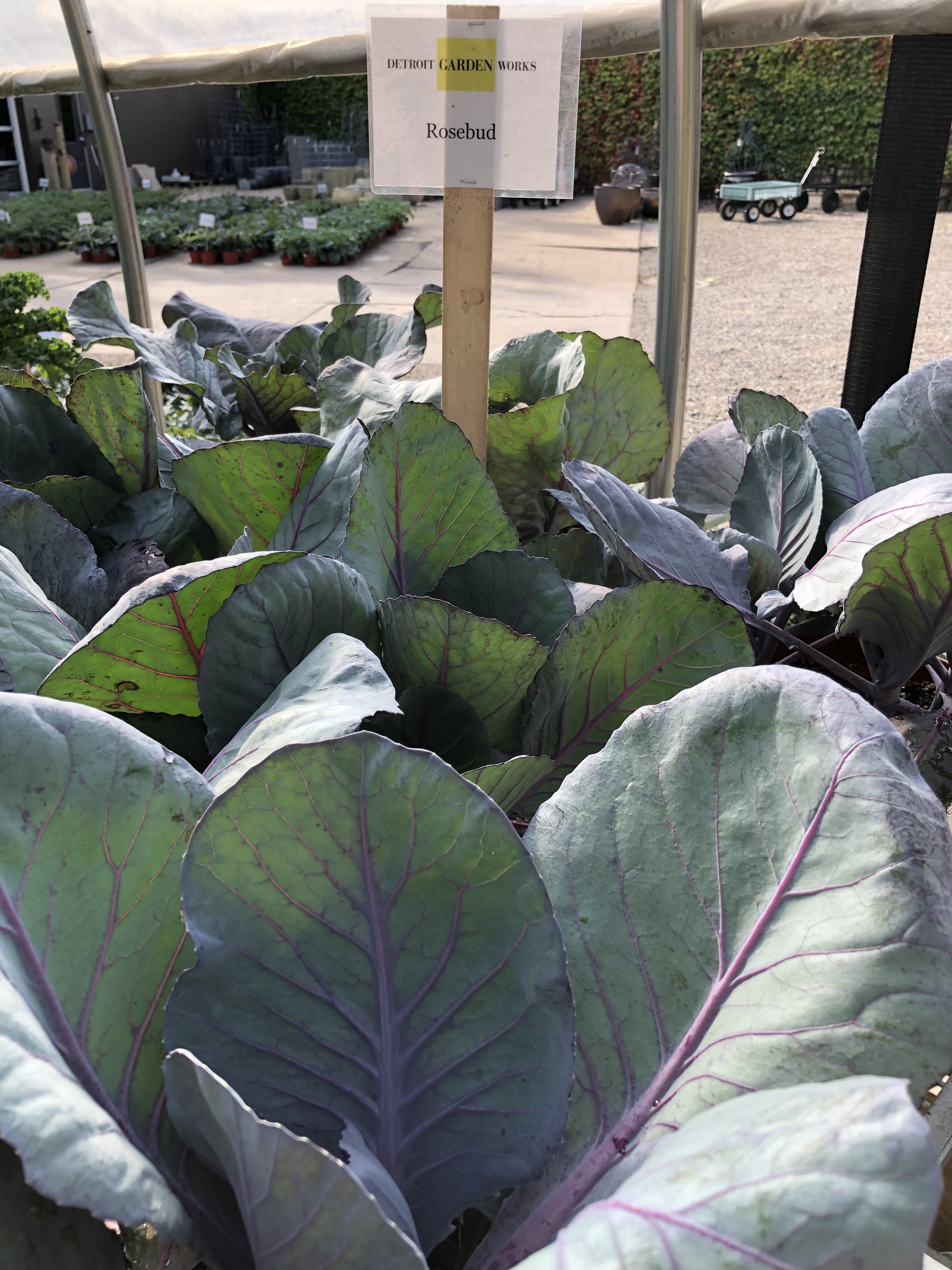
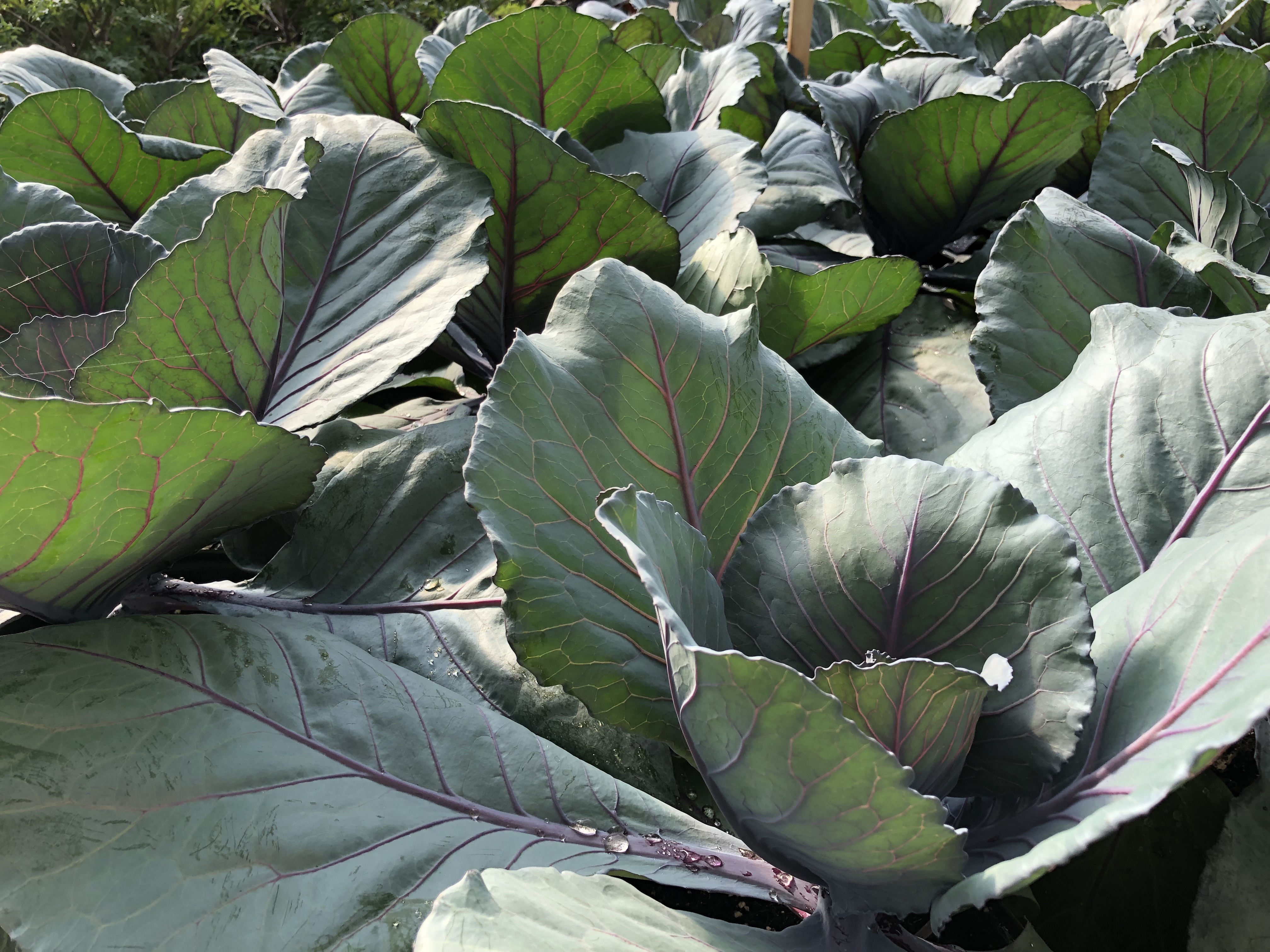
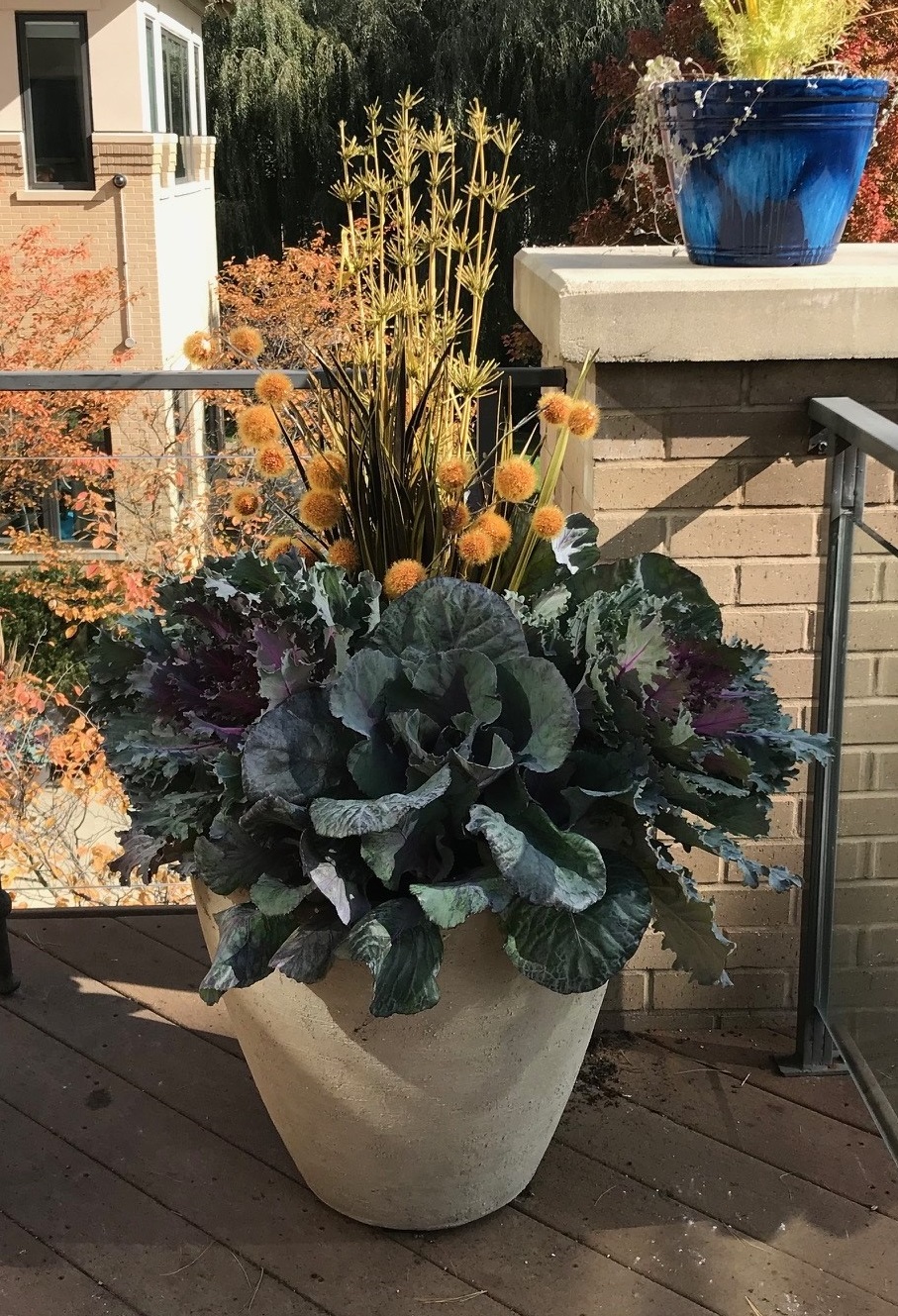
cabbage “Rosebud”

cabbage, kale and broomcorn

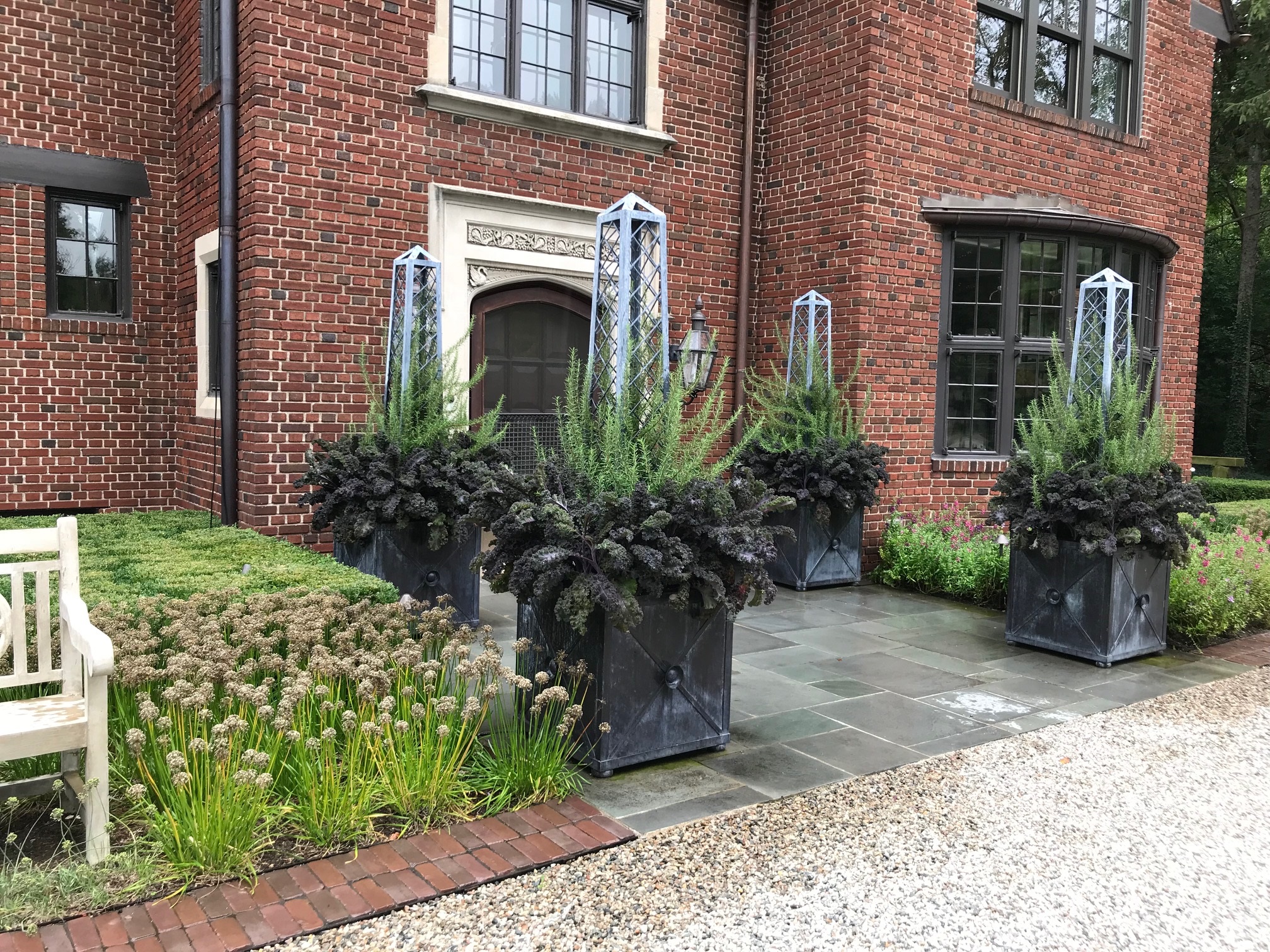
Redbor kale

welcome to fall.
Flowers For A Wedding

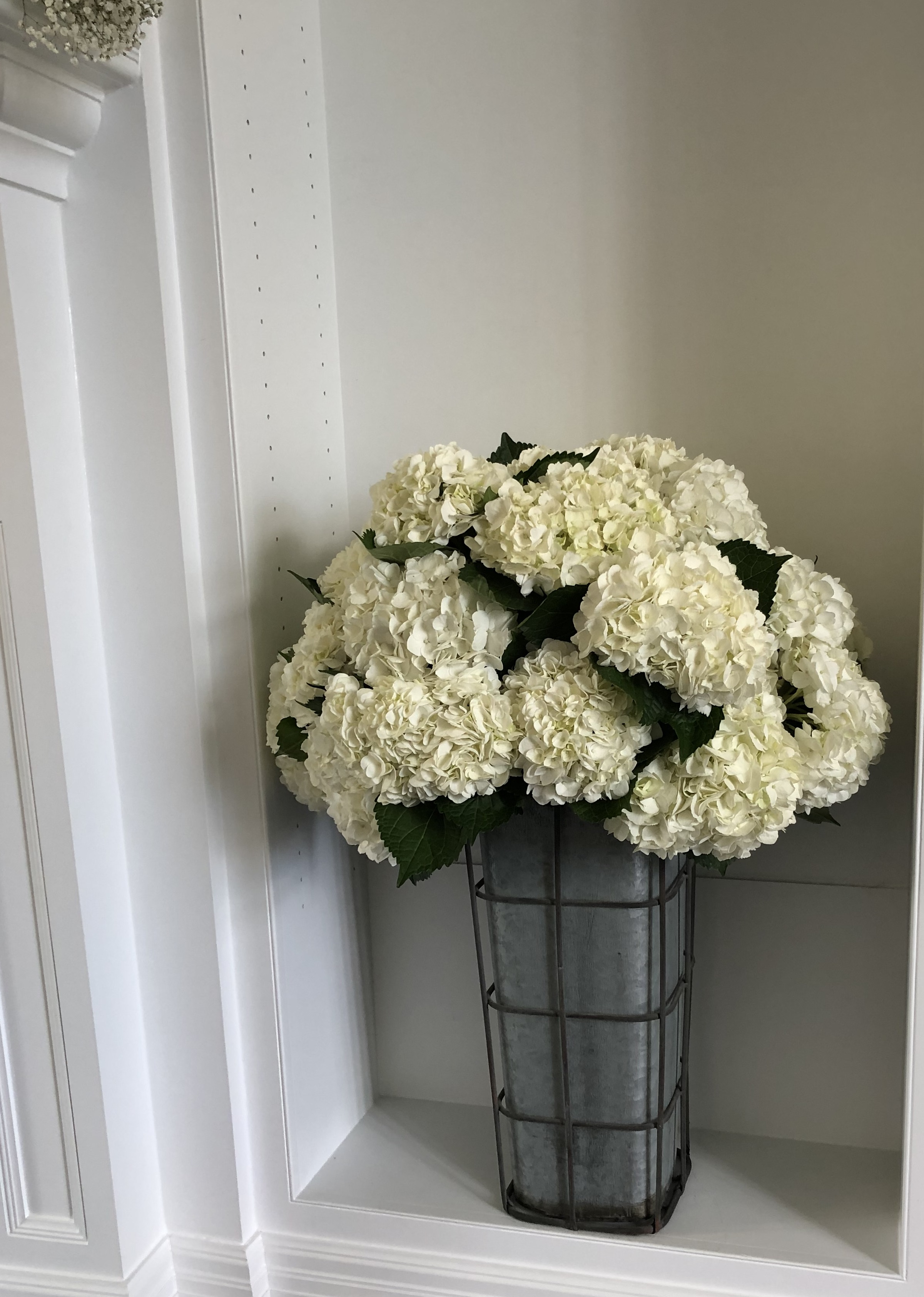
When I was young, I did a fair number of weddings. The cut flower part, that is. It is a job for a young person. It is a do it right and do it now  situation.  Bridal floral work come in all sizes and shapes, but all of it comes with a substantial dose of angst and anxiety. There is a deadline. Despite the best care, cut flowers can wilt and go down at the most inopportune moment. Every florist has opened a box of roses of a color other than what they ordered. Floral work is not especially conducive to learning on the job. It is physically demanding work. Moving and carrying buckets and vases full of water and cut flowers takes strength. Arranging flowers has its creative and romantic aspect, but there is a lot of just plain hard work. That backache has to be from standing and holding flowers aloft for hours at a time. Most of that work has to be done last minute. This is all by way of saying I am reluctant to take on a wedding now. But this was a client I have known for years. She lost her beloved to a lengthy, terrible, and cruel illness. Many years later and just a few months ago, she came in to say she had met someone she planned to marry, and would I do the flowers? I met with her at the venue of both the wedding and reception, and tried to dissuade her. I made several suggestions about where she might find a good florist. She wasn’t having that. She wanted me to do the flowers, would I?  Her only request was for hydrangeas. And that she would leave the rest of it up to me. How could I not say yes?

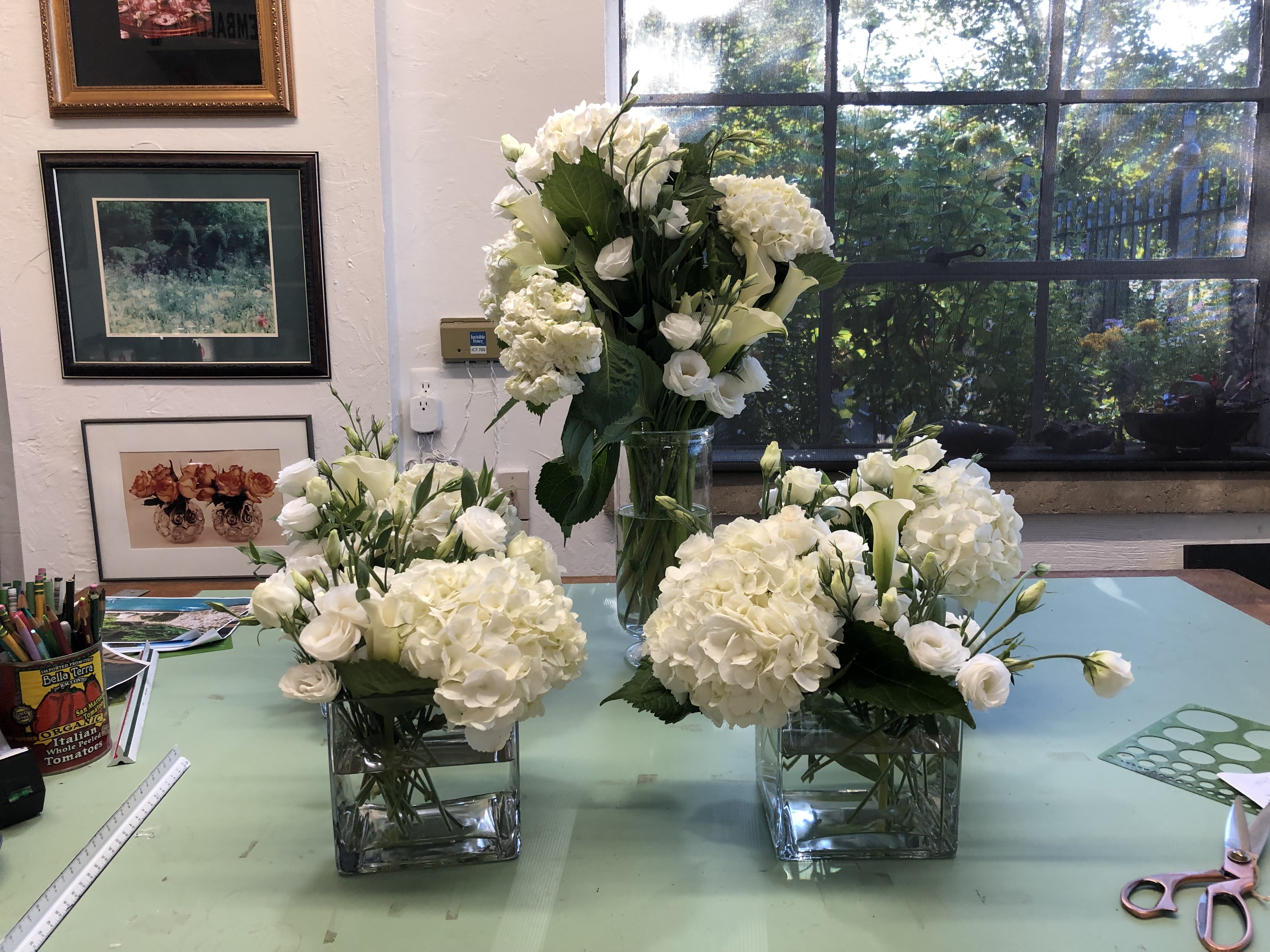
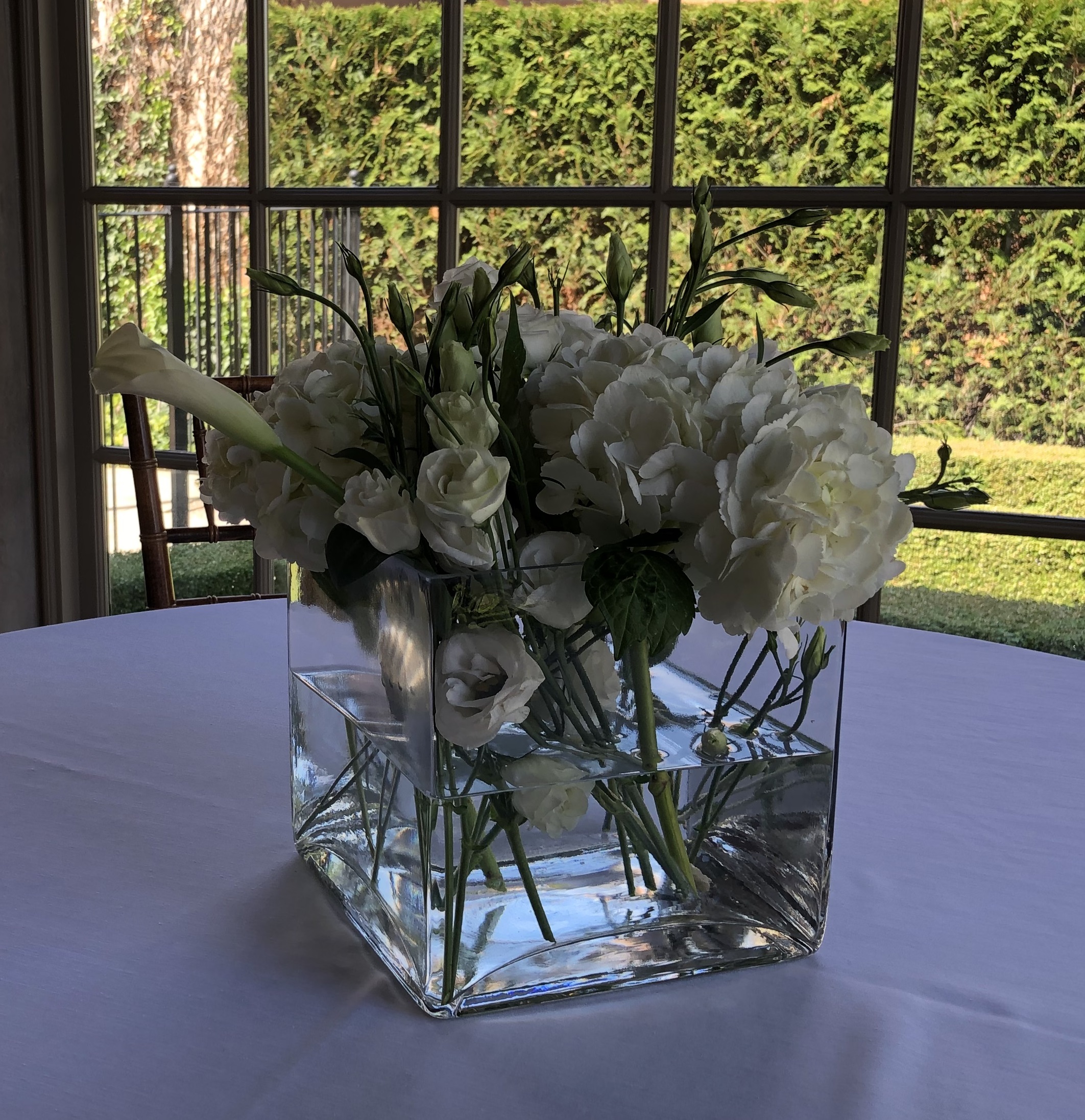
I ordered in a selection of flowers that I thought would be beautiful weeks ahead of time. I wanted to show her my selections, and I wanted to make a test run.  Hydrangeas are notorious for wilting soon after they are cut. I ordered the hydrangea “Florists White”. This cultivar is grown for the cut flower trade, as it holds better than most in a vase. 100 stems of white hydrangeas does not seem like that many, but each one had a water bag on the stem and an acetate hat that needed removal. Each stem got a fresh cut, and an immediate immersion in a bucket of clean lukewarm water. The flowers and leaves were sprayed with AquaFinish Clear – which hydrates and seals moisture in to both flowers and foliage. One of the miracle products of modern floristry. I could have skipped that step, but I would have needed to order more flowers. The flowers then have to sit, untouched, until they dry. Only then can they be placed in a floral cooler. This prep work is known as conditioning. I like to condition them overnight before I arrange them.  Lots of work is required to get cut flowers ready to arrange. Amni majus “Green Mist” was a wild card, but the airy texture of the leaves and flowers would be a great addition to the flower selections. As much as I love the reference to the late summer garden, it was a worry if they would hold. So I ordered extra bunches. The mini calla lilies would provide great curves and mass, and were a favorite of my client.

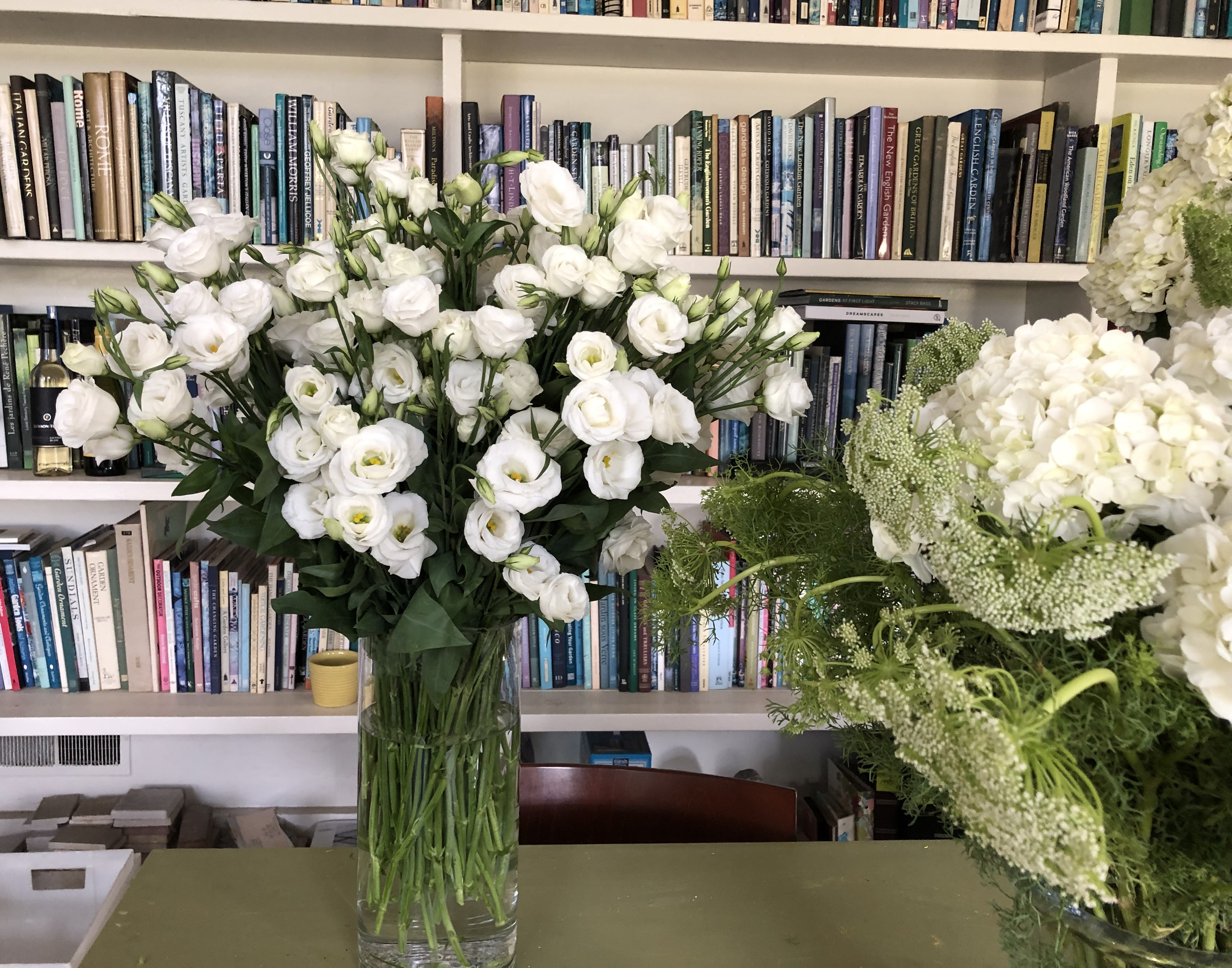
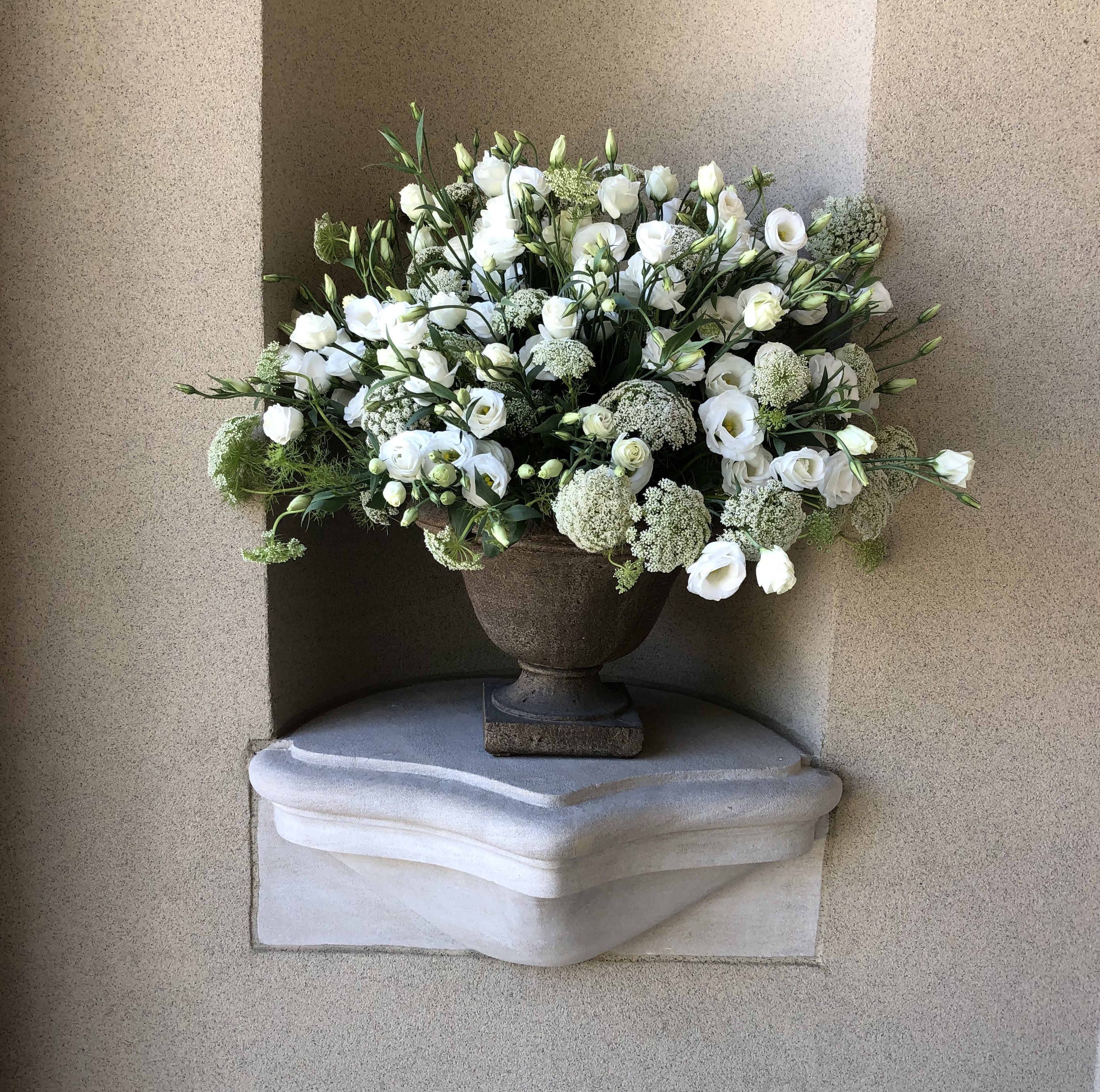
Of course I ordered in white lisianthus. This long stemmed multiflowered cut stem is the best antidote to wedding florist worry that I know of. The large flowers stay fresh for days. They are happy out of water for better than the duration of a wedding. The petals survive anxious handling. The buds are a gorgeous greenish color. They are a beautiful foil for the open flowers. The long stems make them suitably versatile for both tall and compact arrangements.

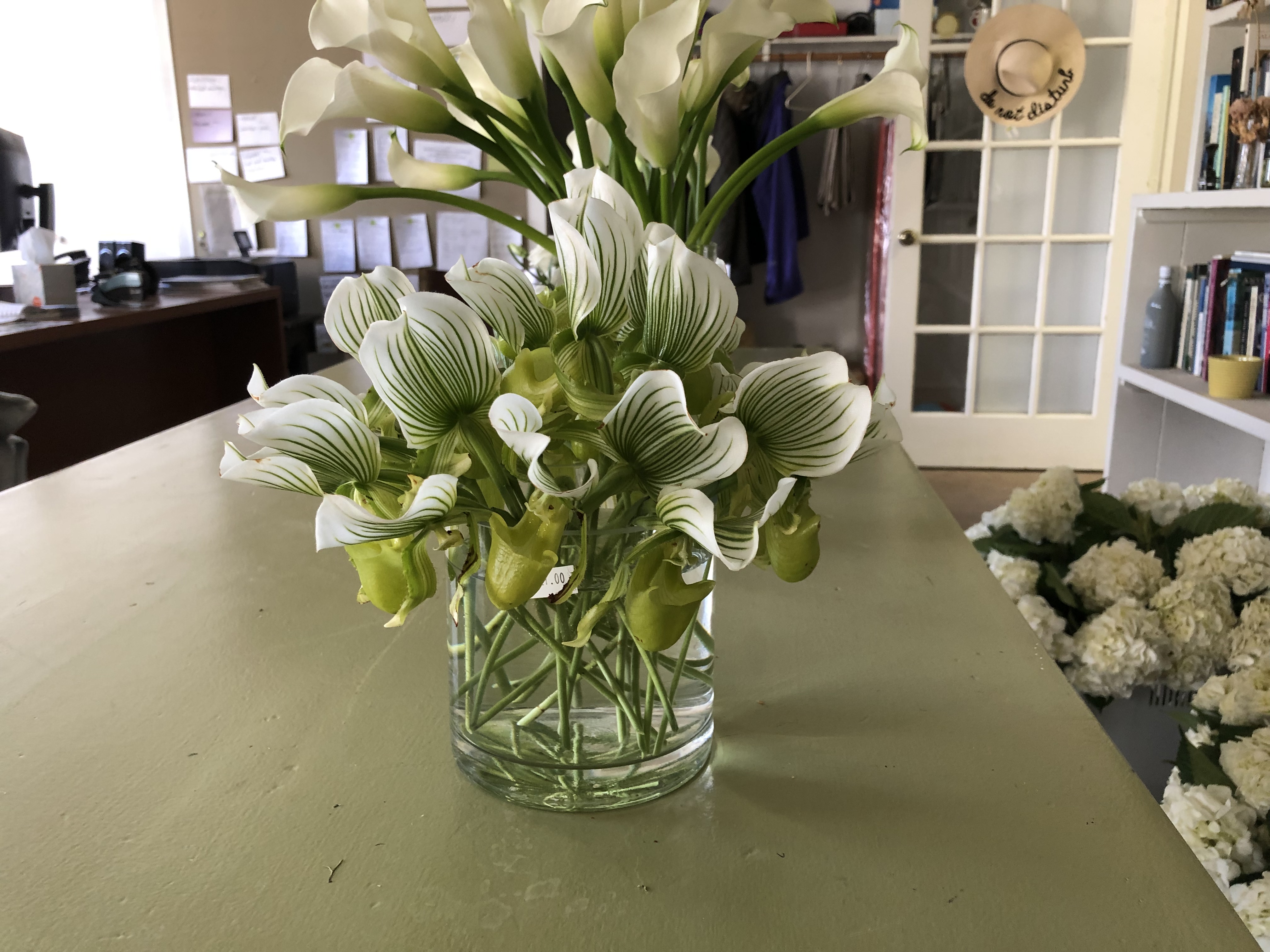
My client thought a wedding bouquet for her was not necessary. I thought differently. Once she told me her dress was olive green, I ordered in a clutch of green and white slipper orchids. I would capture these 25 stems with some olive green silk ribbon. As delicate as they are, they all held up perfectly in water. The bouquet would be kept in water until the last second. She had but to pat the stems dry, and go. I hoped that when it came time, this simple arrangement would appeal to her enough to carry them. At least she would have the option.

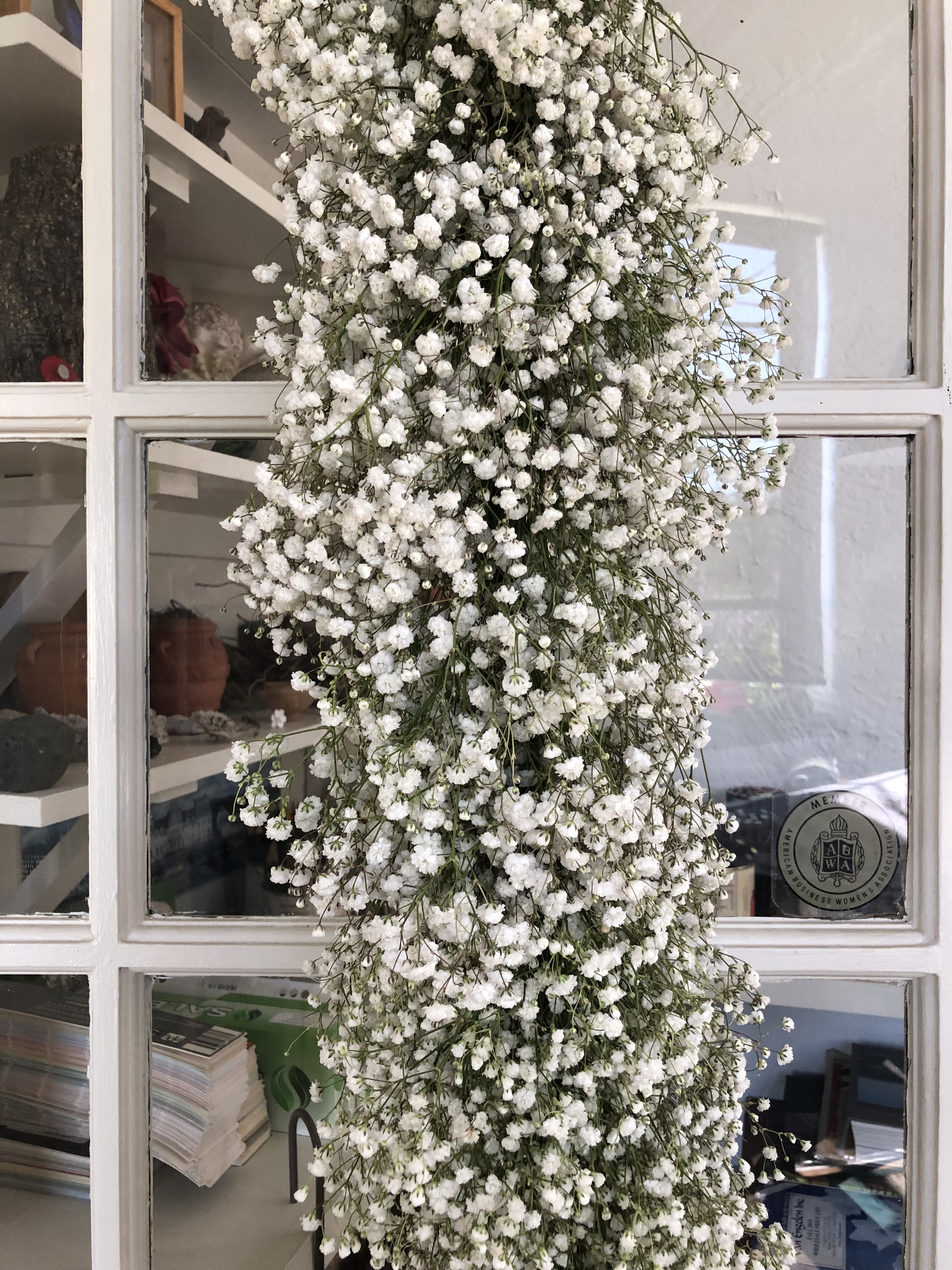
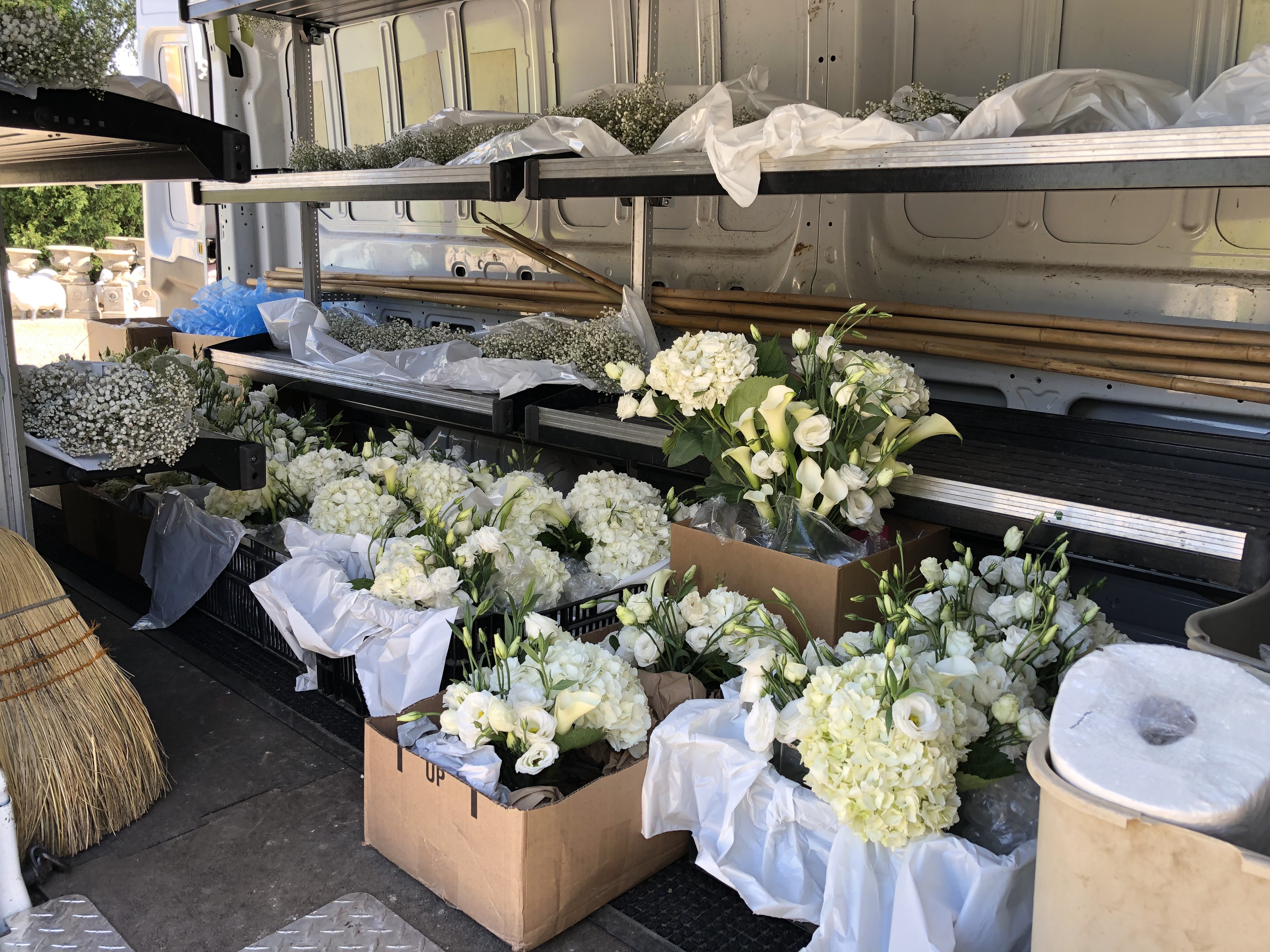
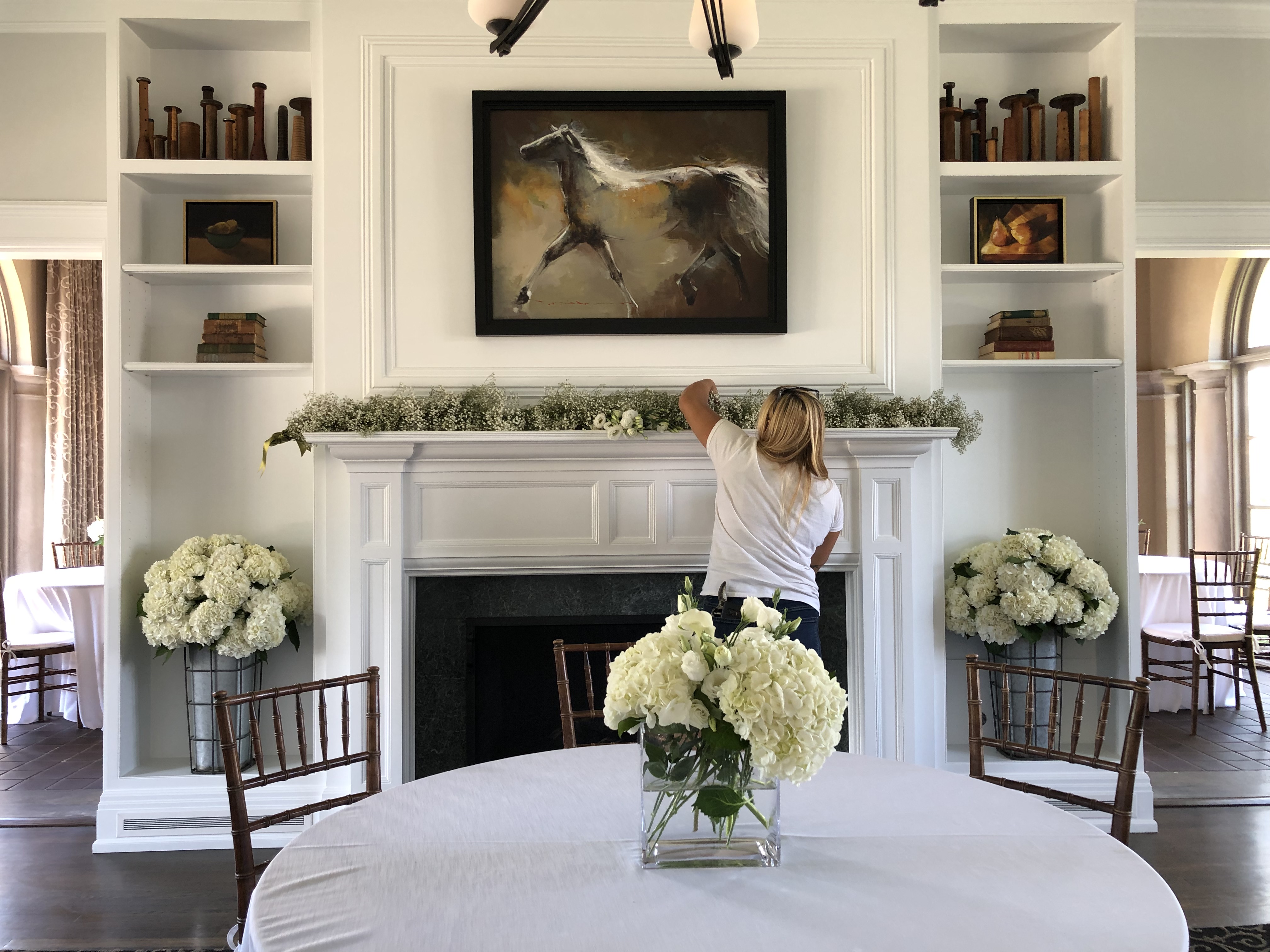
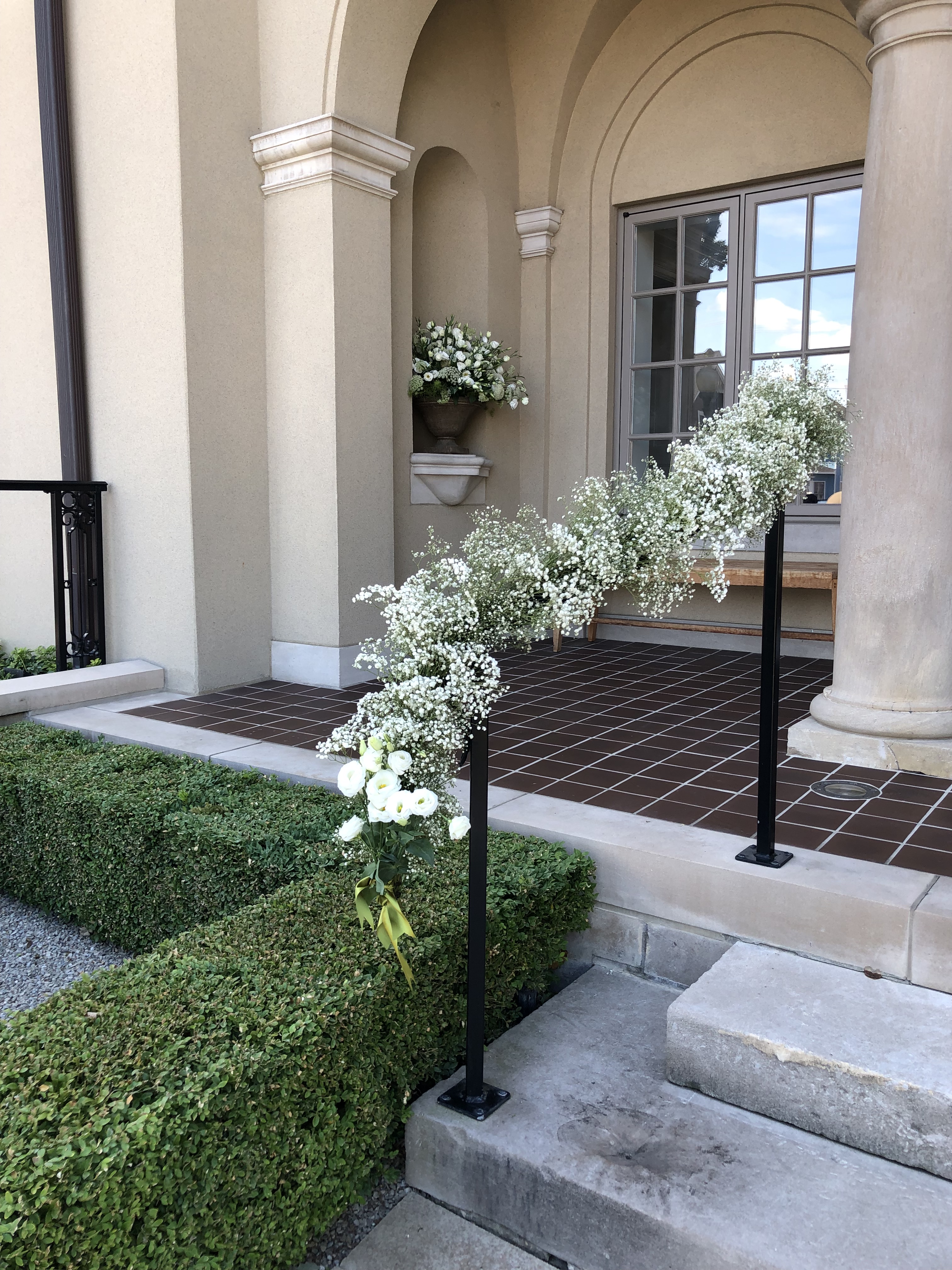
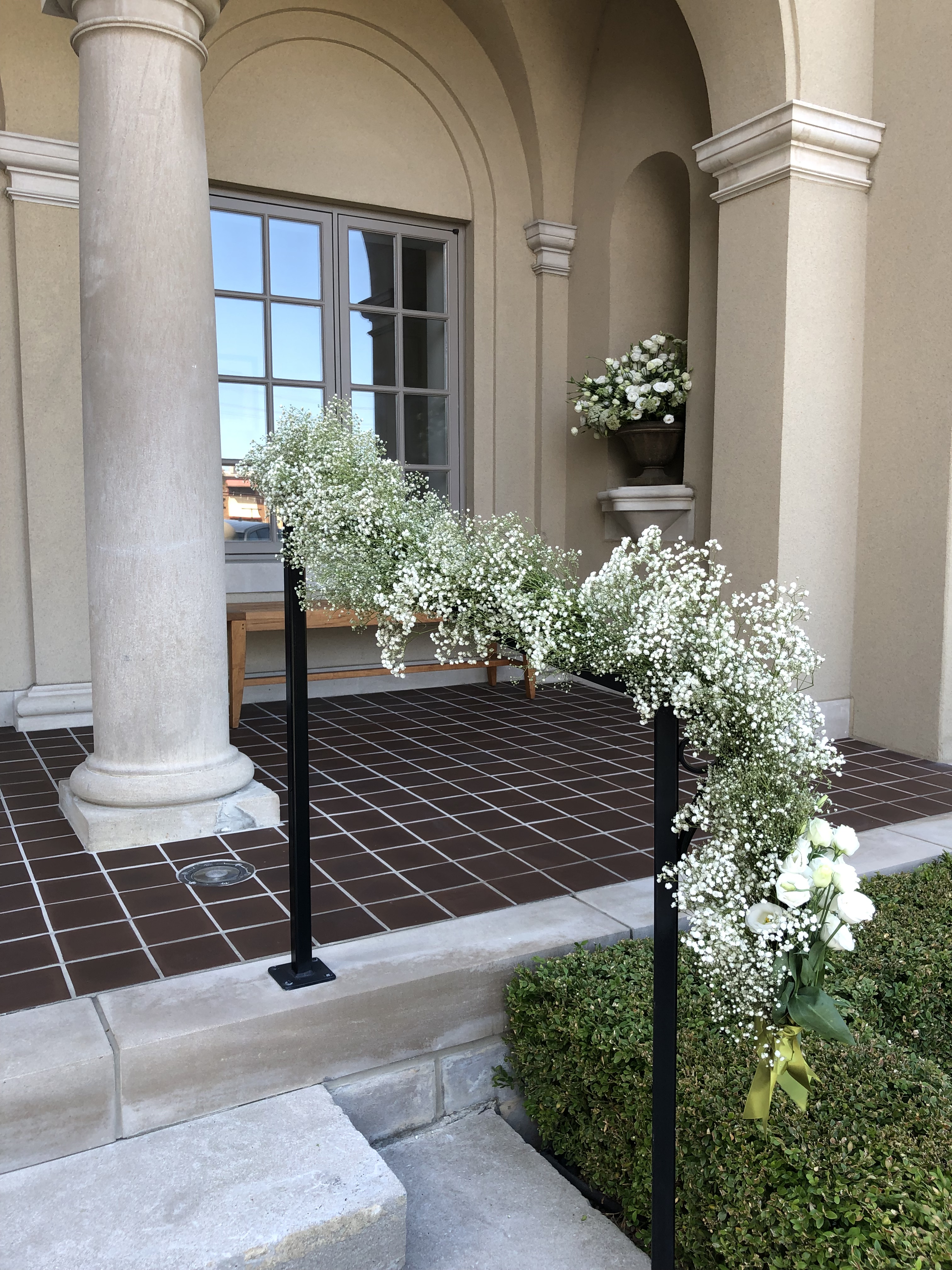
Weddings ask for flower arrangements here and there, but garlands can do a great job of knitting all of the individual pieces together. There were a number of places the garland would look great. Though baby’s breath is a traditional flower, en mass it can have a fresh and contemporary look. I bought in 4 kinds of baby’s breath garland, and tested their width, density and holding power. I ordered in the best quality of these garlands, and kept my fingers crossed. They arrived 2 days before the wedding, at Sunne’s insistence. If FedEx failed to show on Thursday, a Friday delivery would be in time for the Saturday wedding. We opened the plastic, and let the garlands air out. A local florist agreed to let me park these garlands in their cooler until I needed them on Saturday.

On Friday I did all of the 14 arrangements save two. As much as I like everything done before an installation, it would be so much easier to arrange the hydrangeas on site, and put them in place.

The packing up, transport, and installation is the second part of the job.  They boxed all of the arrangements, with an eye to protecting all of the petals. They laid the baby’s breath garlands flat on the truck shelves, as they had been stored rolled up. This is a very low tech delivery system perfect for a once in a great while florist. Three of my staff did the packing, driving, placing, tying, fluffing and cleanup. Most of my work had been done the previous two days.

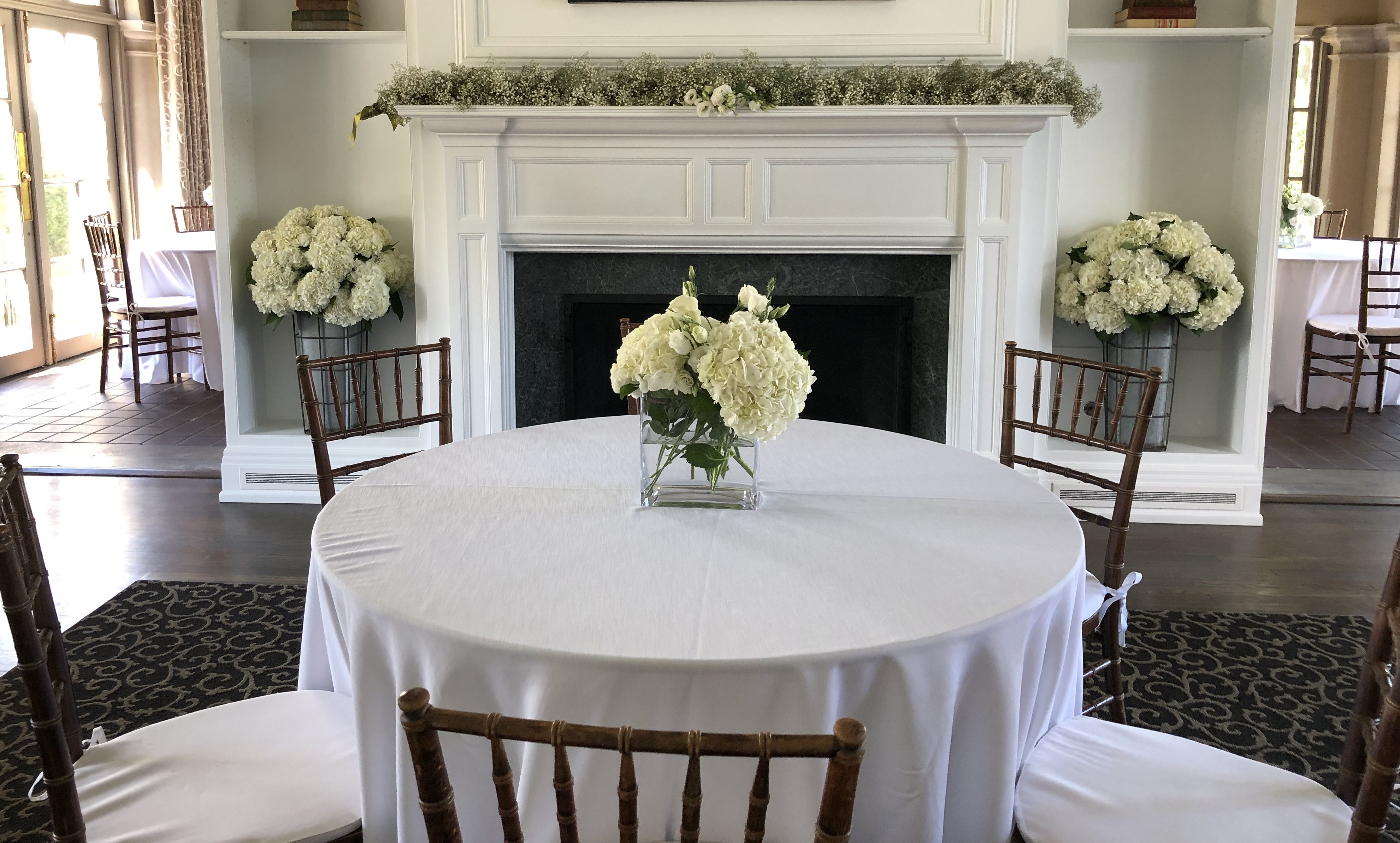
Three tables got moved outdoors at the last minute. Cut flowers arranged in water can handle this sunny exterior location.  I like to arrange flowers in water as much as possible.

The garland needed a good shaking, and a little fluffing, once it was in place. The lisianthus on the mantle were kept in water until it was time for them to be added to the garland.

This was a small wedding – a perfect size for having the time to attend to all the details.

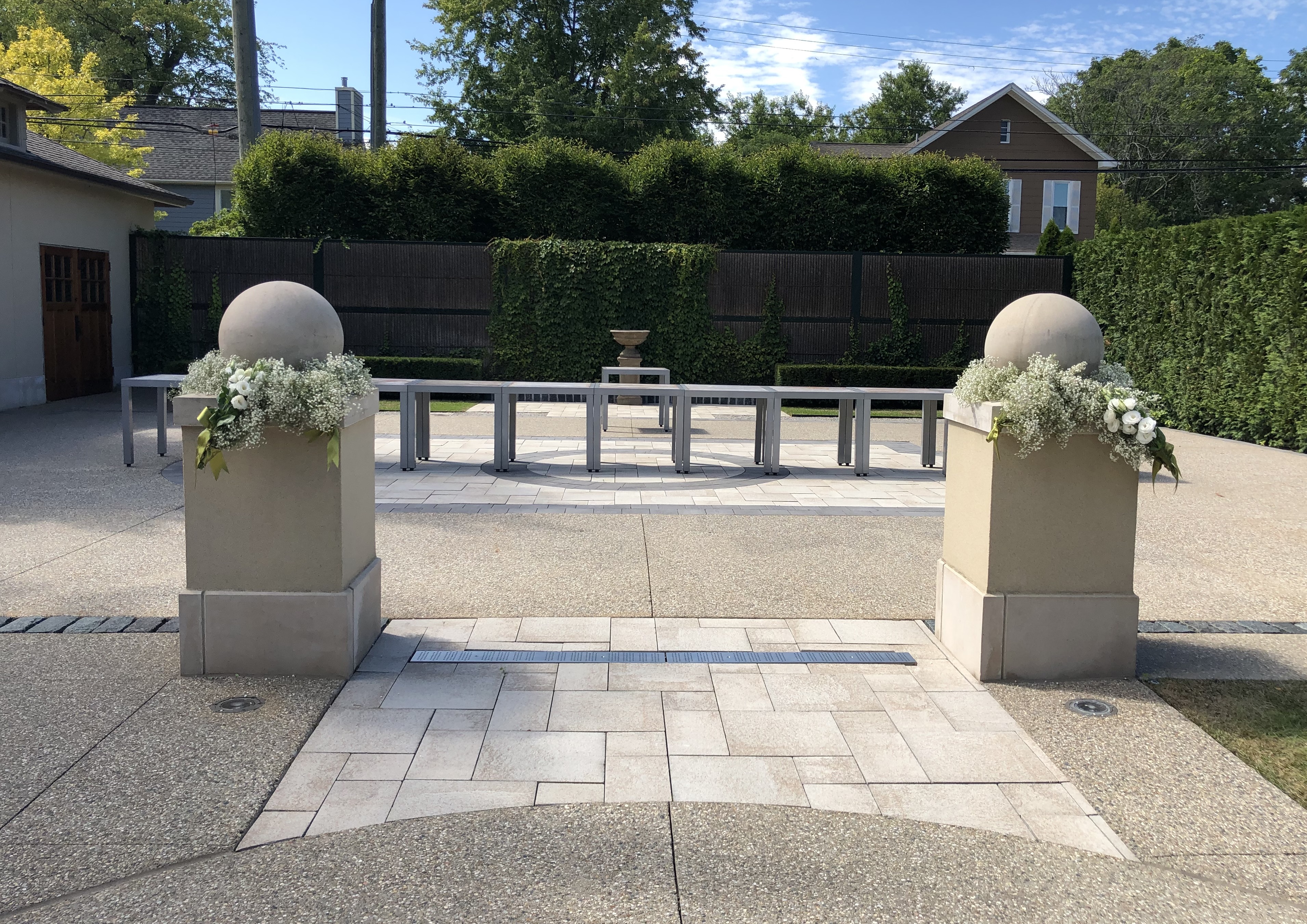
The wedding took place outdoors, between this pair of pillars.


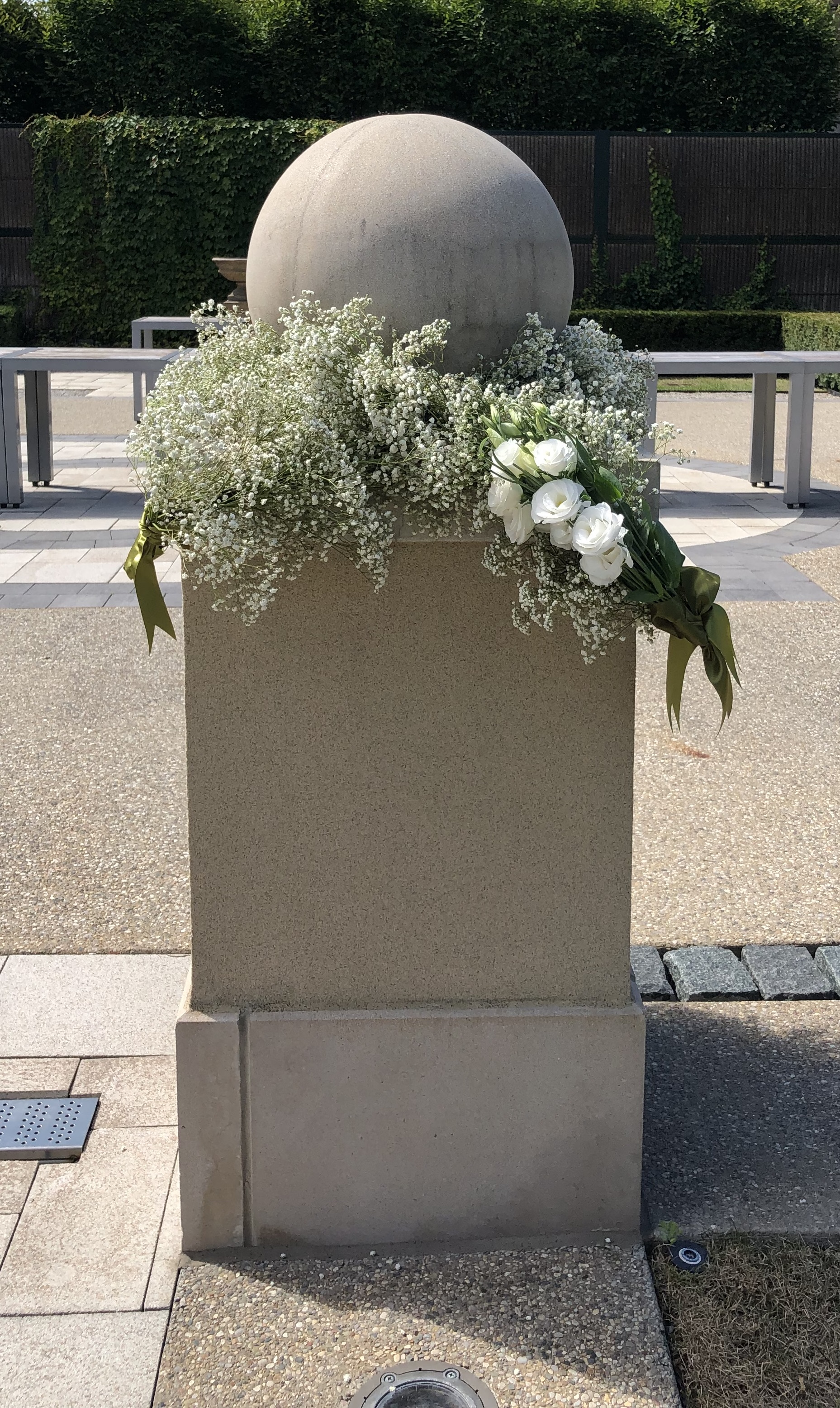
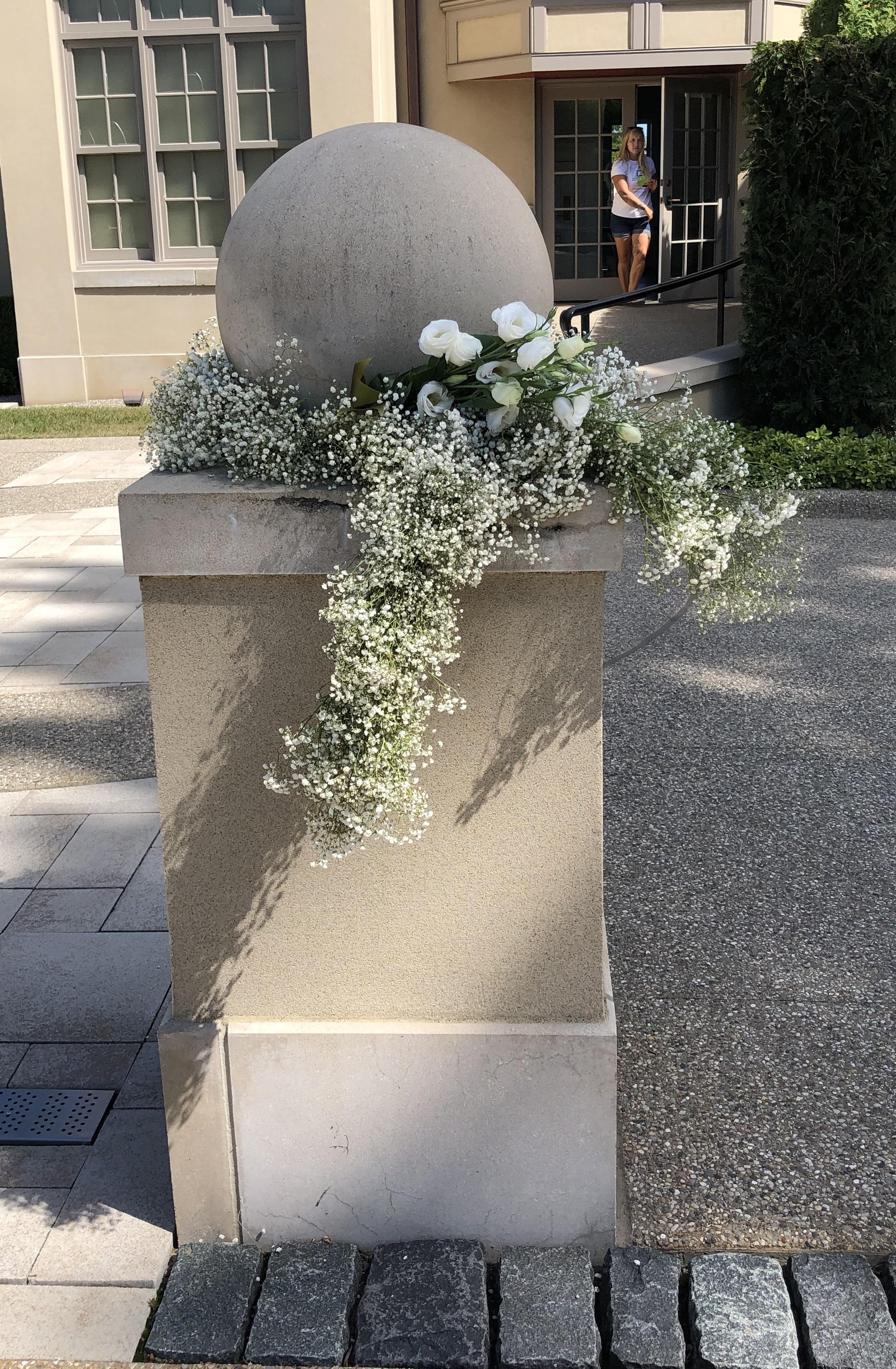
The pillars needed to look dressed up from both sides.

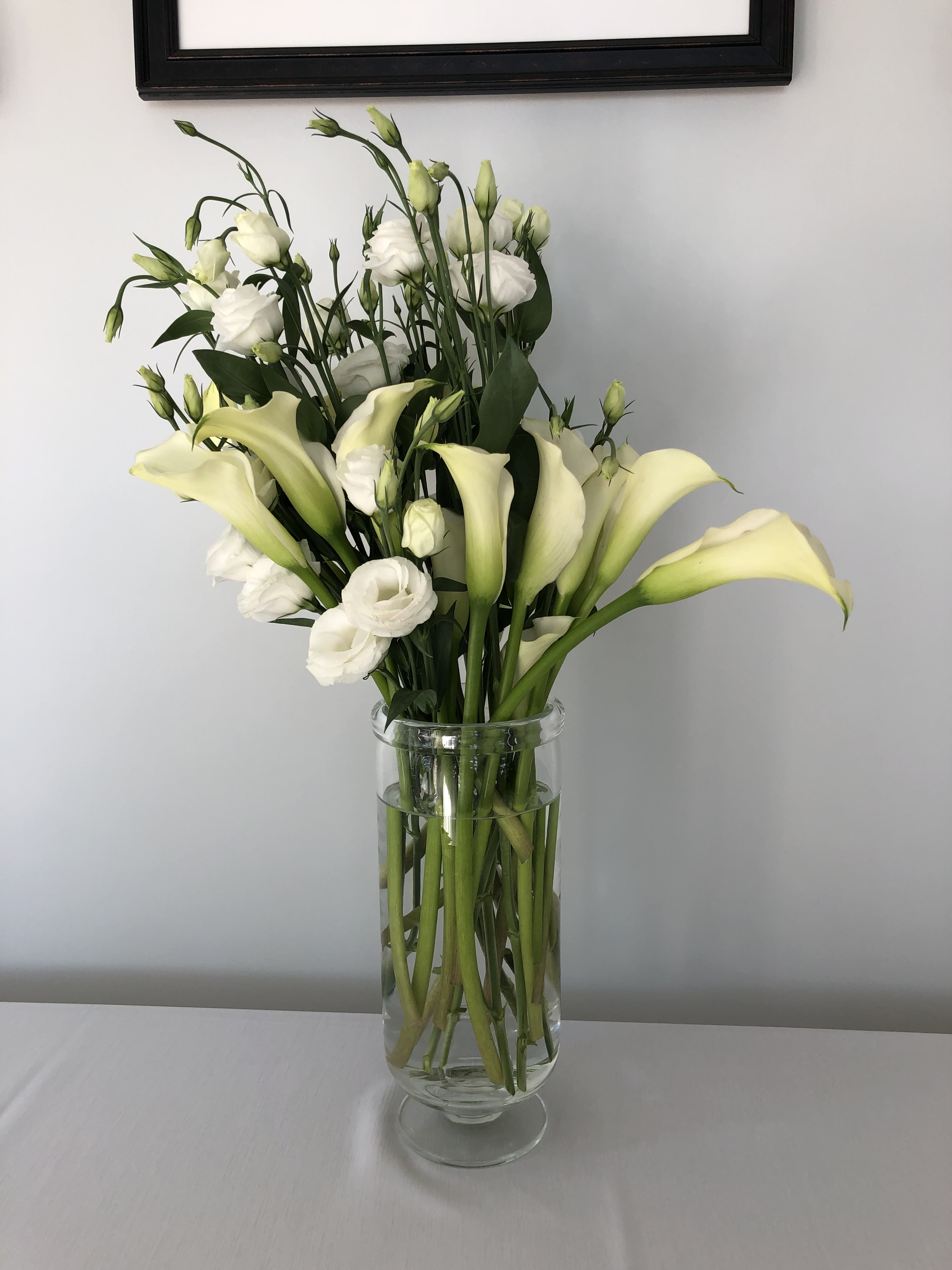
a simple arrangement for the dessert table

I did hear from my client about the flowers this morning. She thanked me for all, and for insisting she have a bouquet. She thought it was beautiful and it was perfect with her dress. Happiest of all about this.

The Landscape Finish

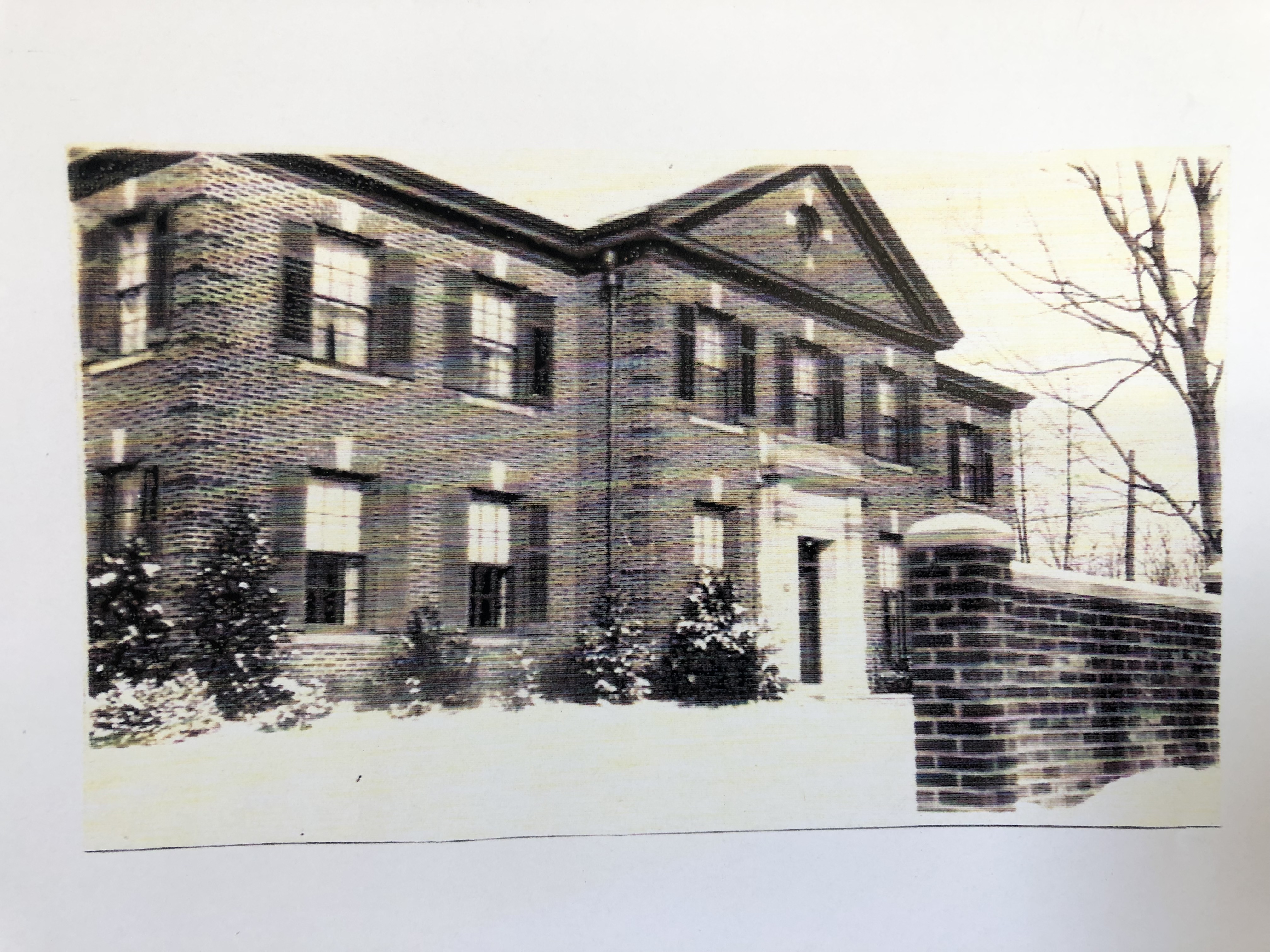
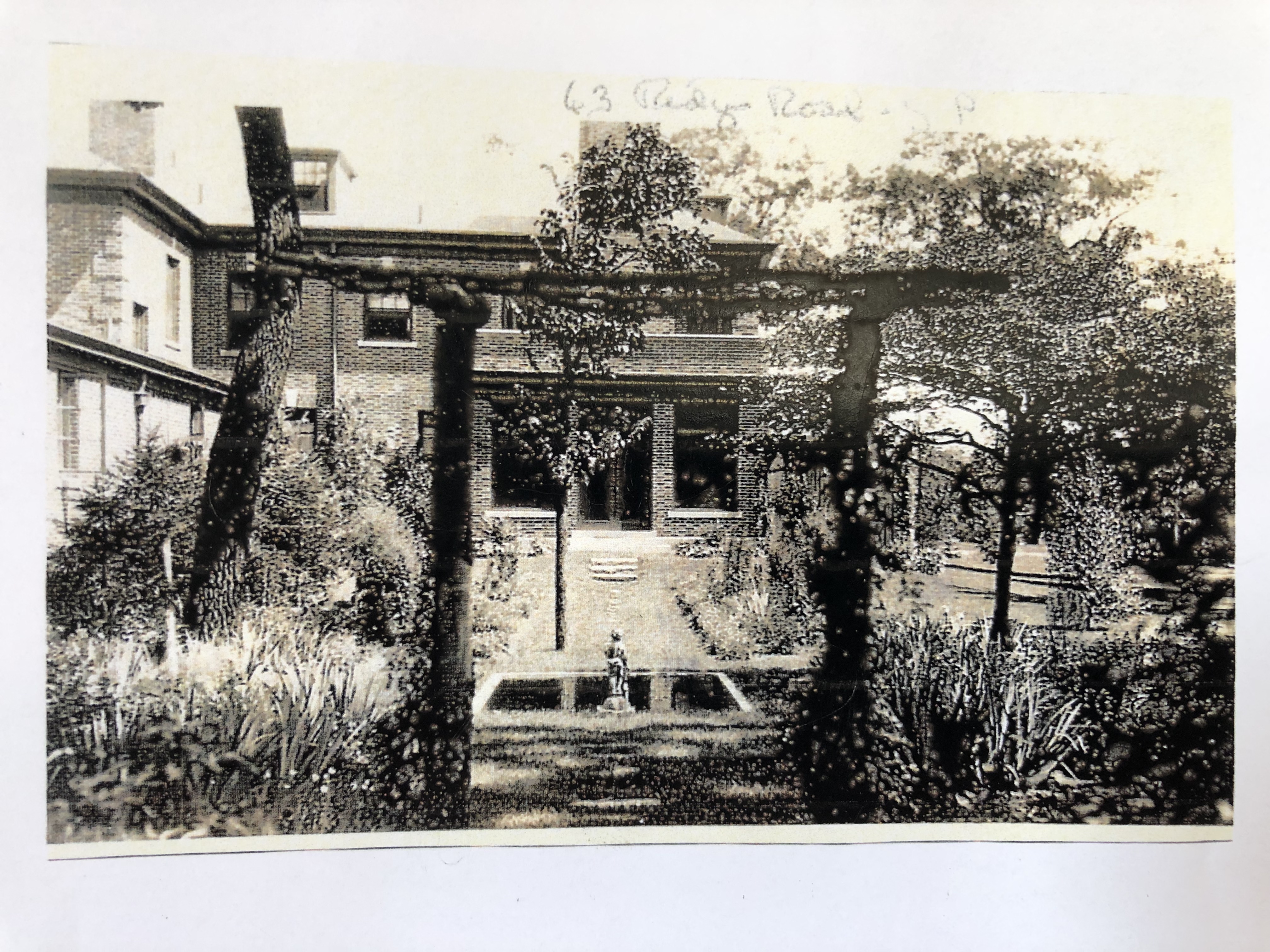
I have written a number of posts about this very special project that has taken better than a year to complete. I have saved the landscape finish for last, as that part had to wait for the walls, terraces, stairs, driveway and pergolas to at least be underway before we could begin. A close friend suggested that I post before and after pictures. When designing a landscape for a period home such as this, the outcome needs to be convincingly tuned in to the aura created by the architecture. Meaning it should be tough to differentiate between what was, and what is new. So before and after pictures can help illustrate that process. My client discovered a stack of old photographs in the basement after she purchased the home. The above picture she dates around 1925.

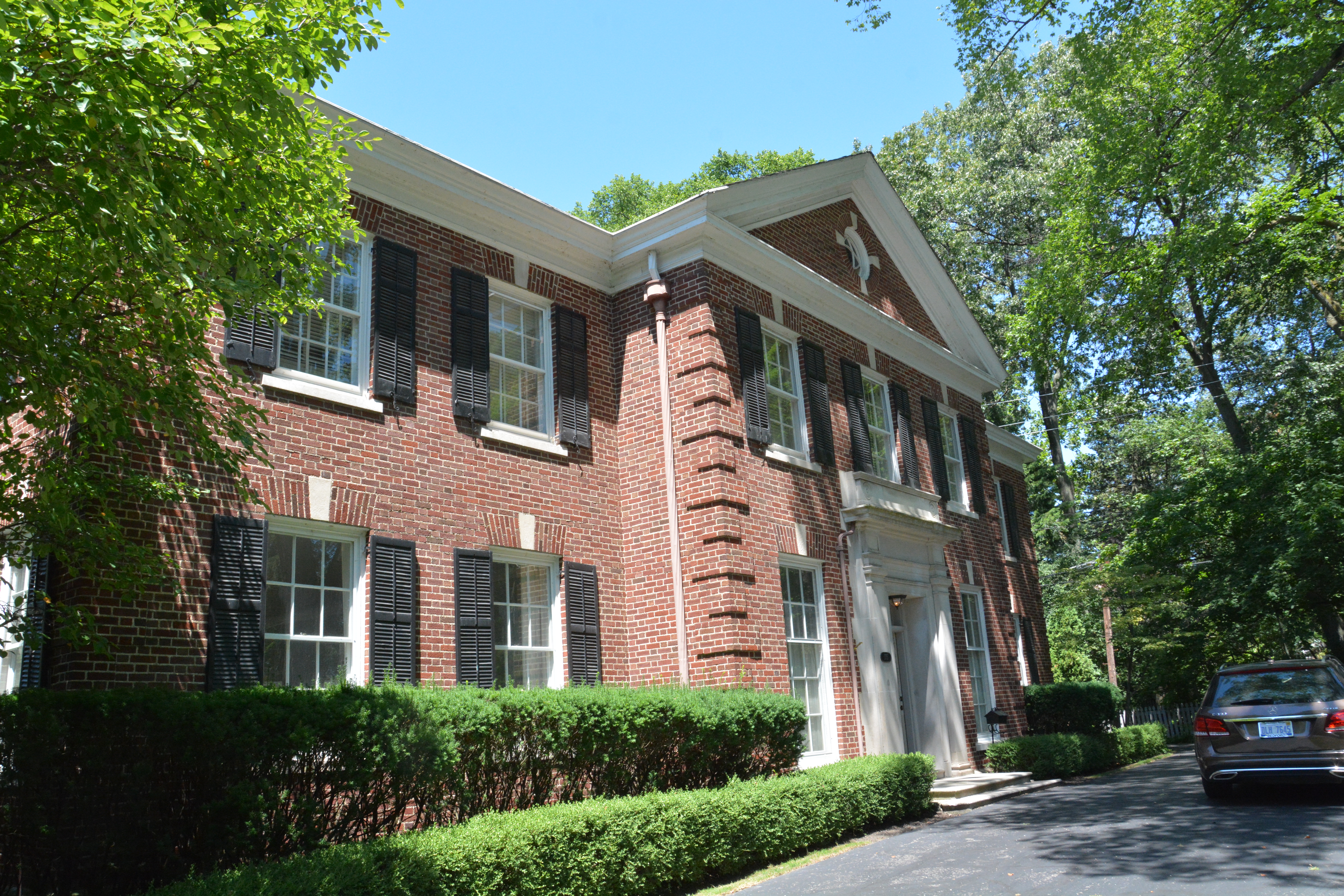
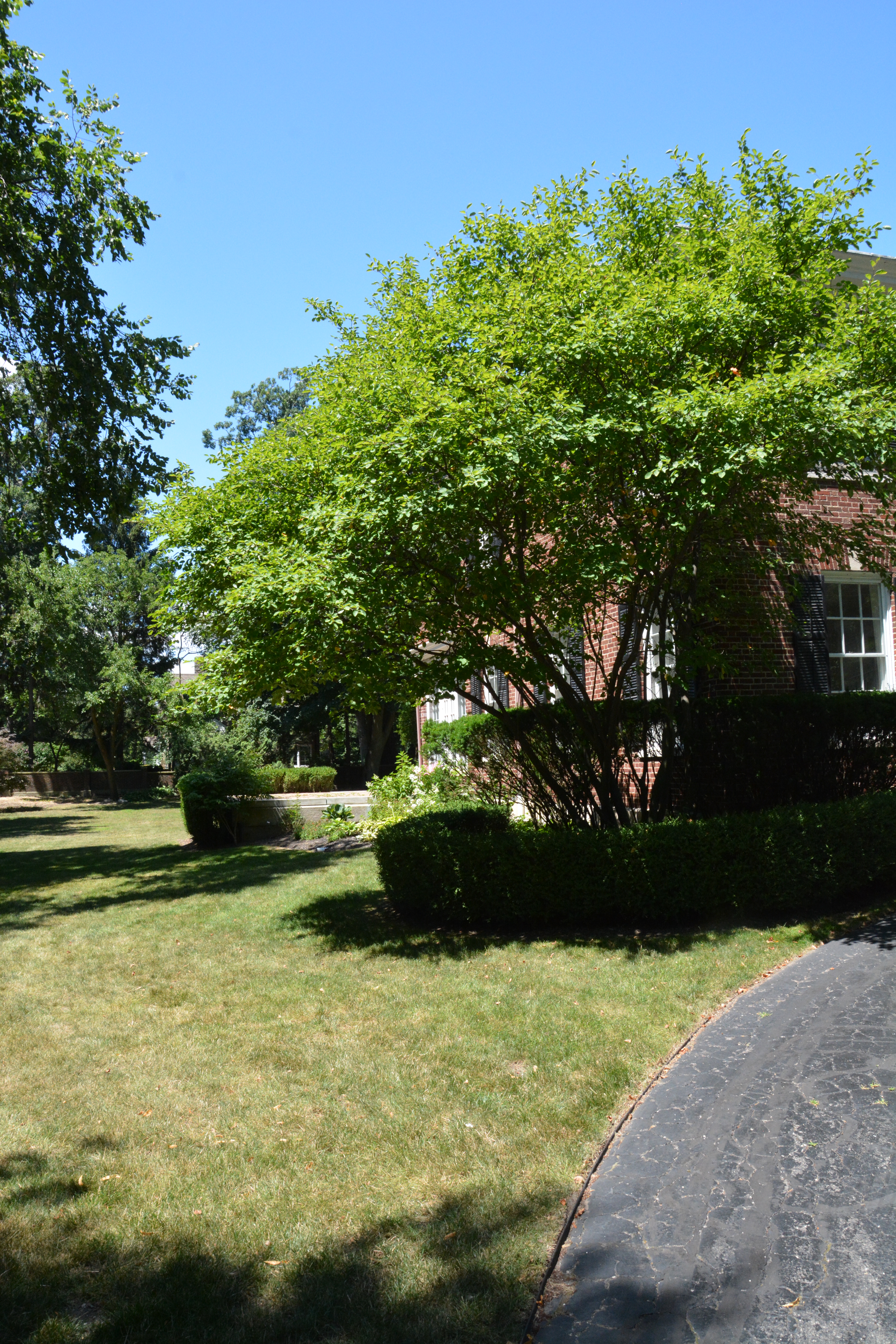
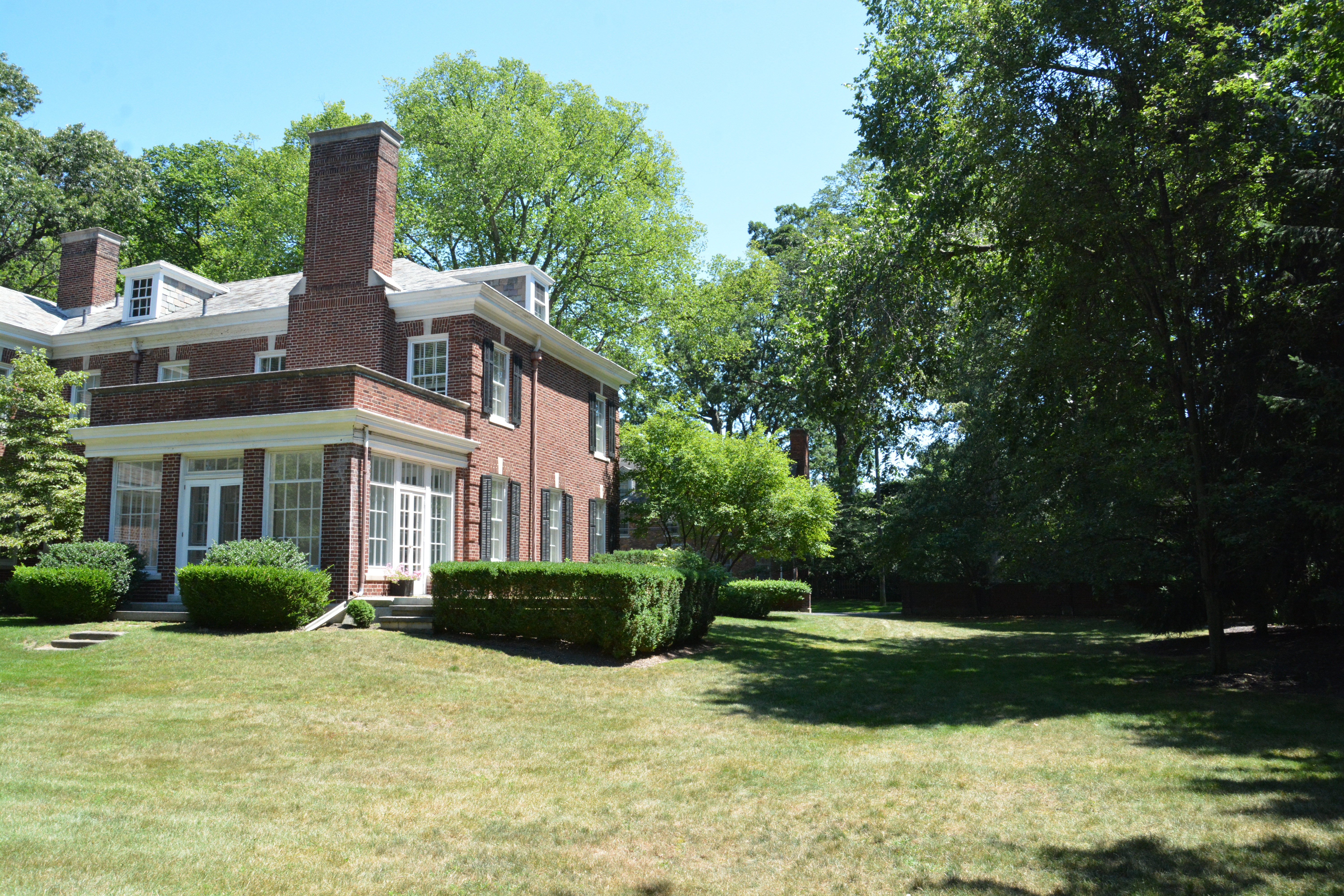
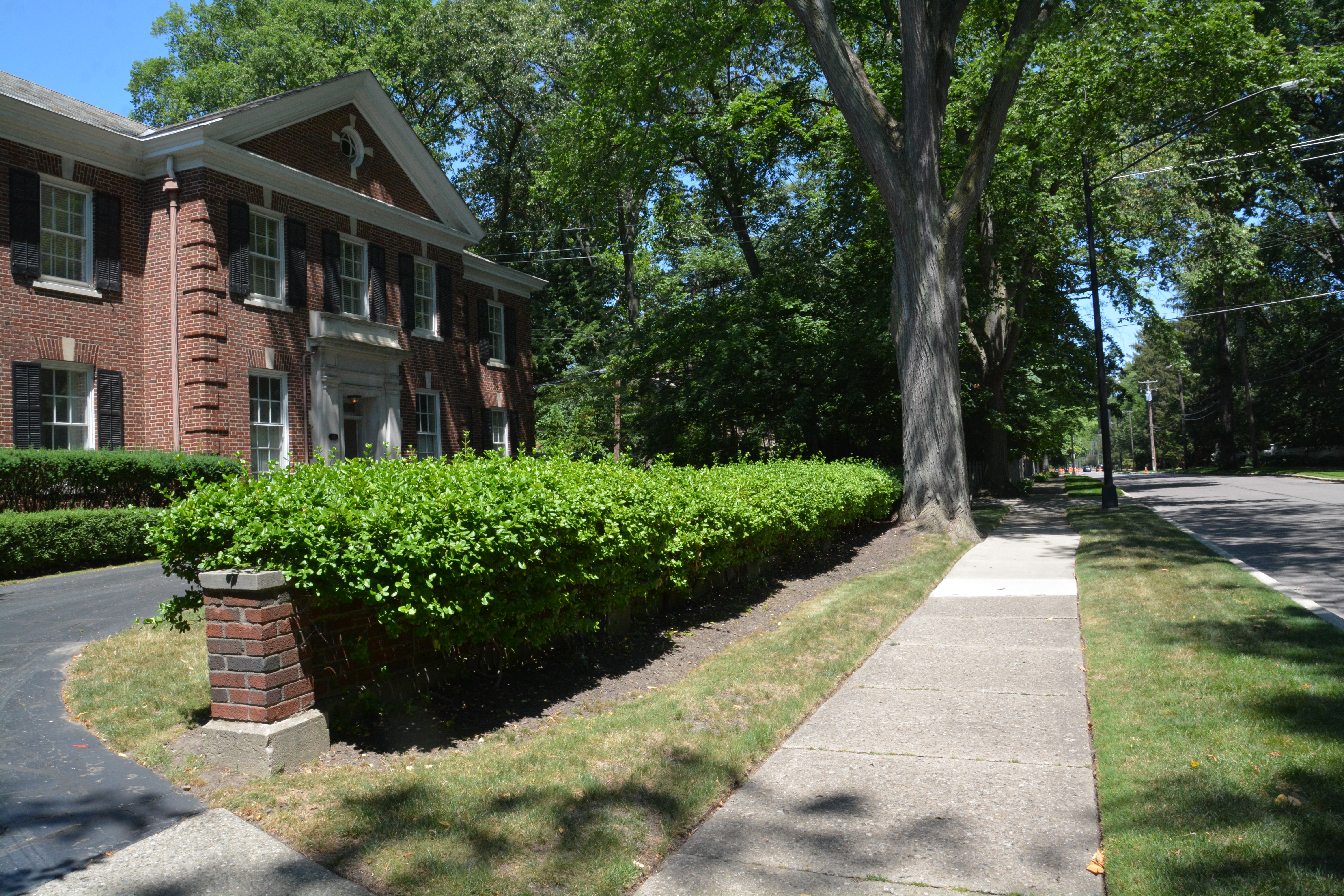
My first visit to her new house revealed a stately old home with an aging landscape. The driveway was very close to the front door. A limited planting space in front of the house years after planting produced a hedge of yews well over the bottom of the ground floor windows.

A brick wall between the sidewalk and the drive was covered with euonymus sarcoxie. Planted between the driveway and the walk, an ailing maple whose girdling roots had heaved itself and the sidewalk out of level.

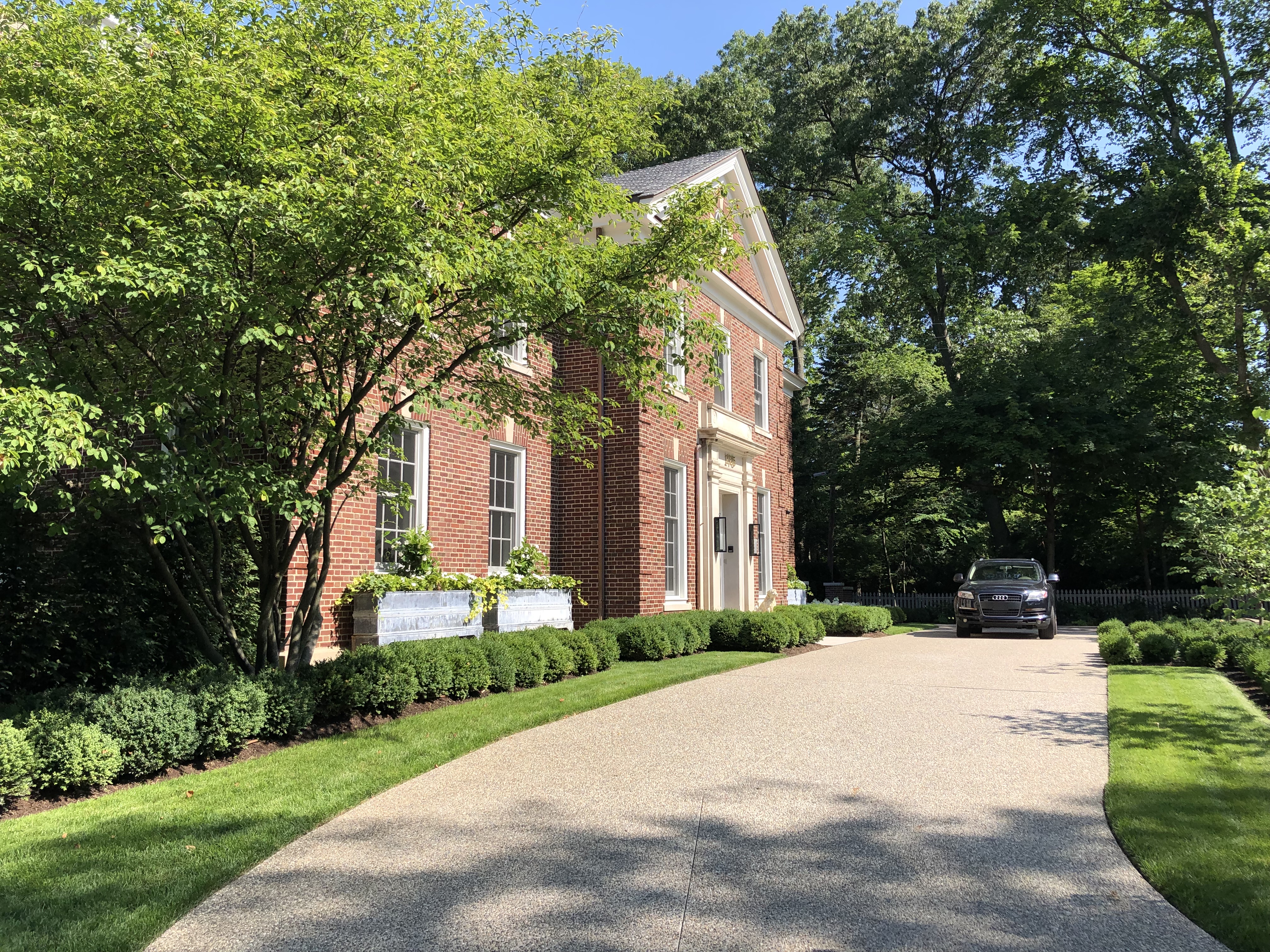
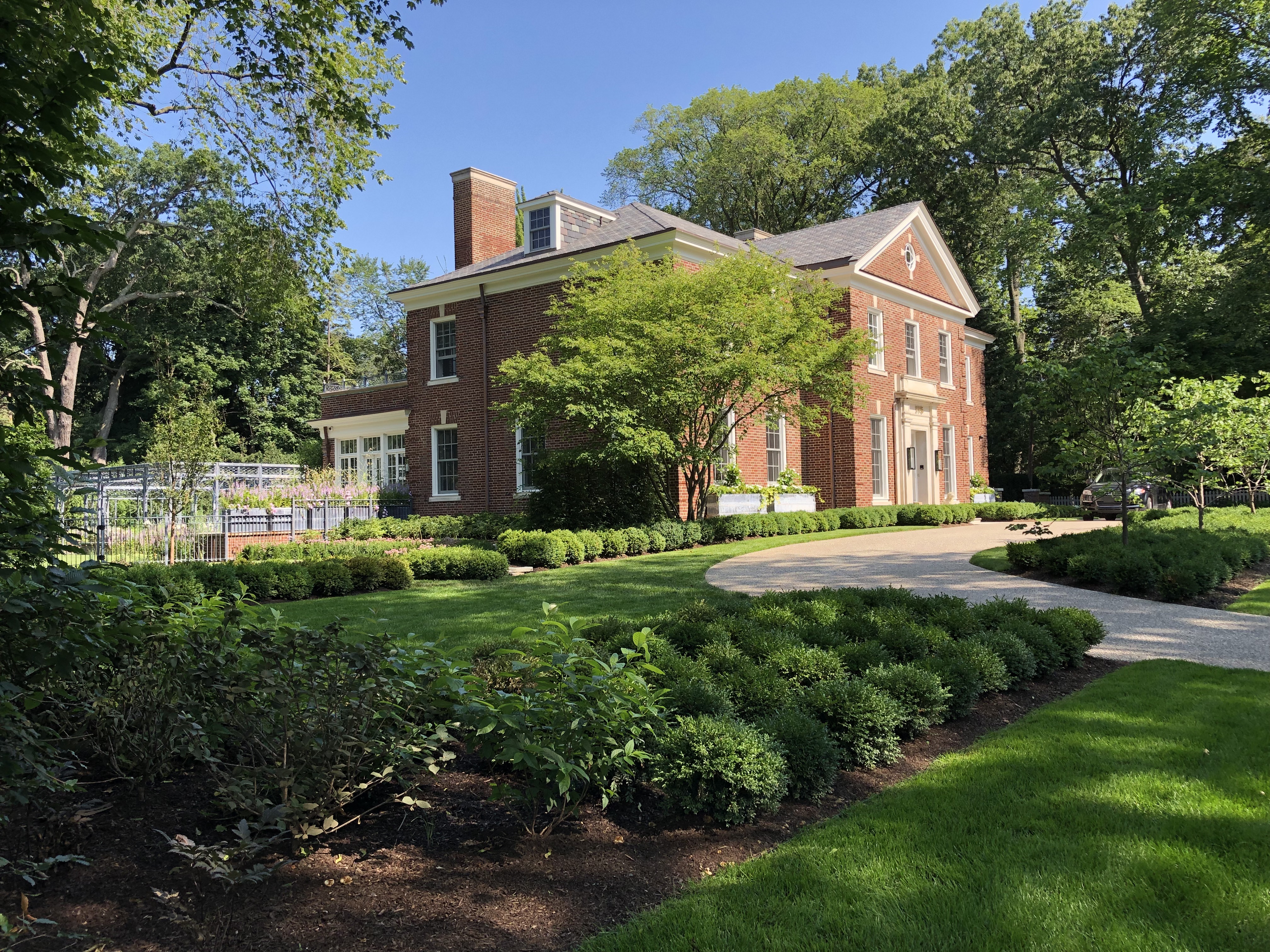
A new drive positioned a more generous distance from the front door enabled room for planter boxes under the windows, and some breathing room for landscape and lawn. The house has become the focal point of the landscape, and there is sun at the front door given the removal of the maple. A lovely and existing multi stemmed serviceberry at the corner was preserved, and integrated into the new landscape.

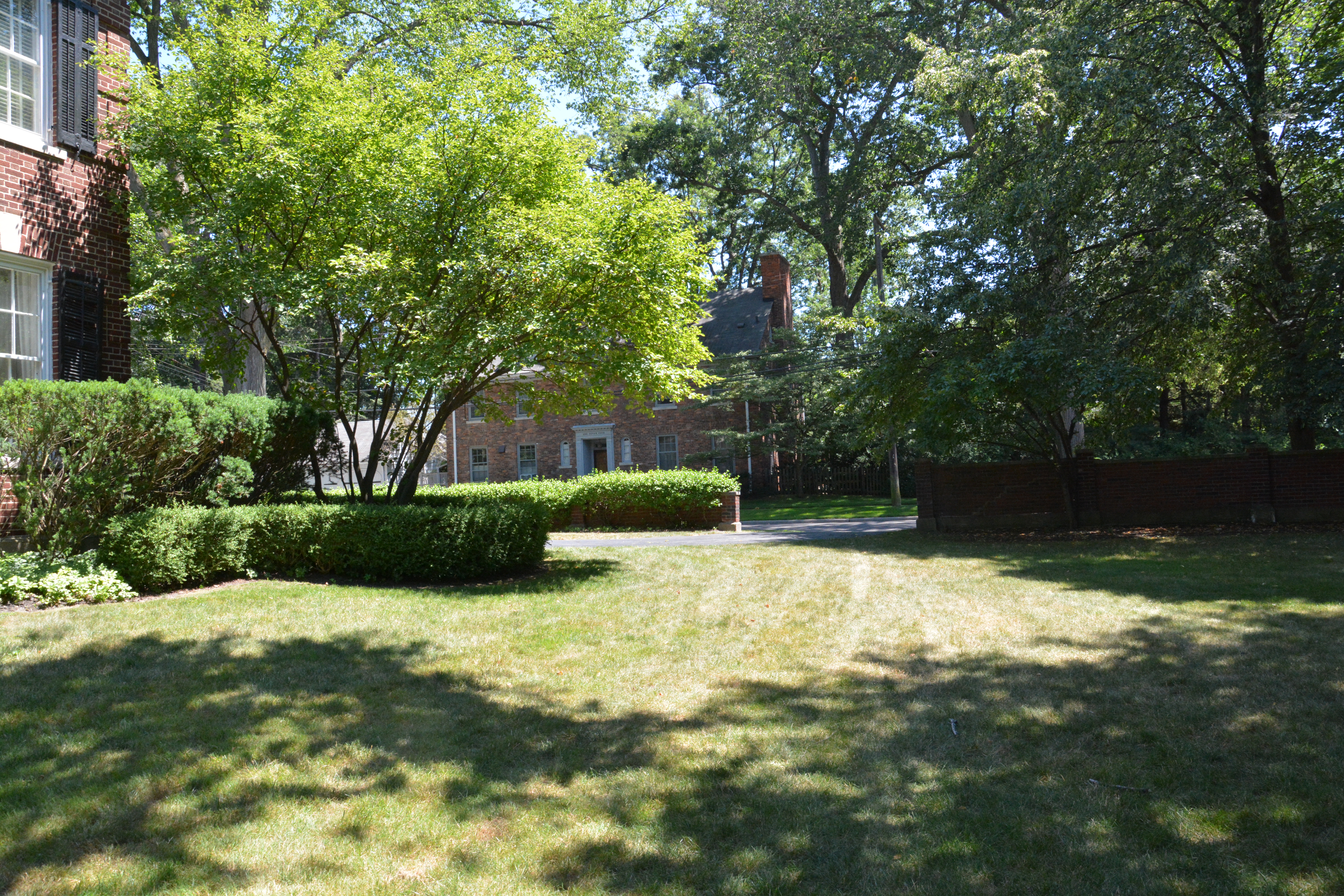
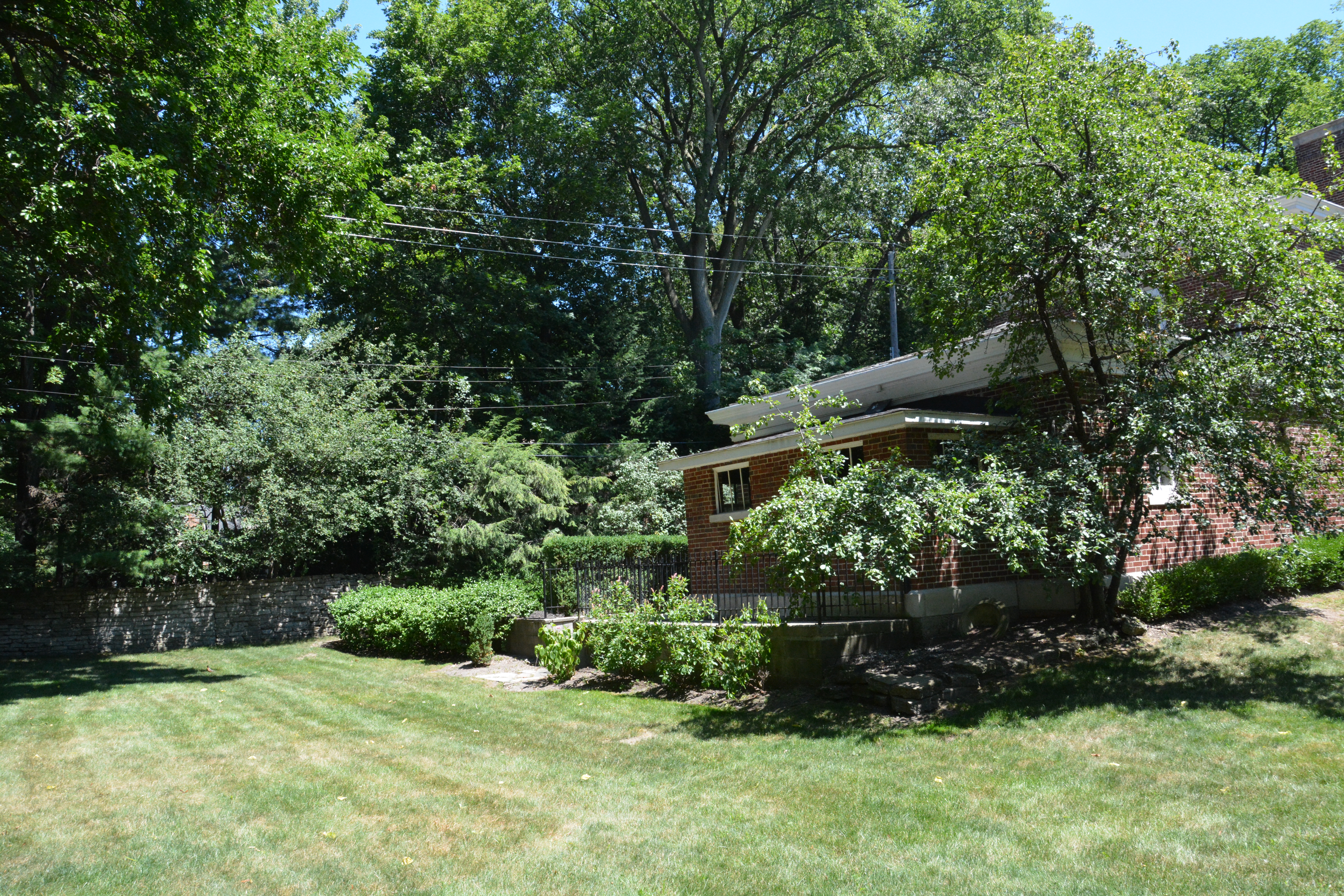
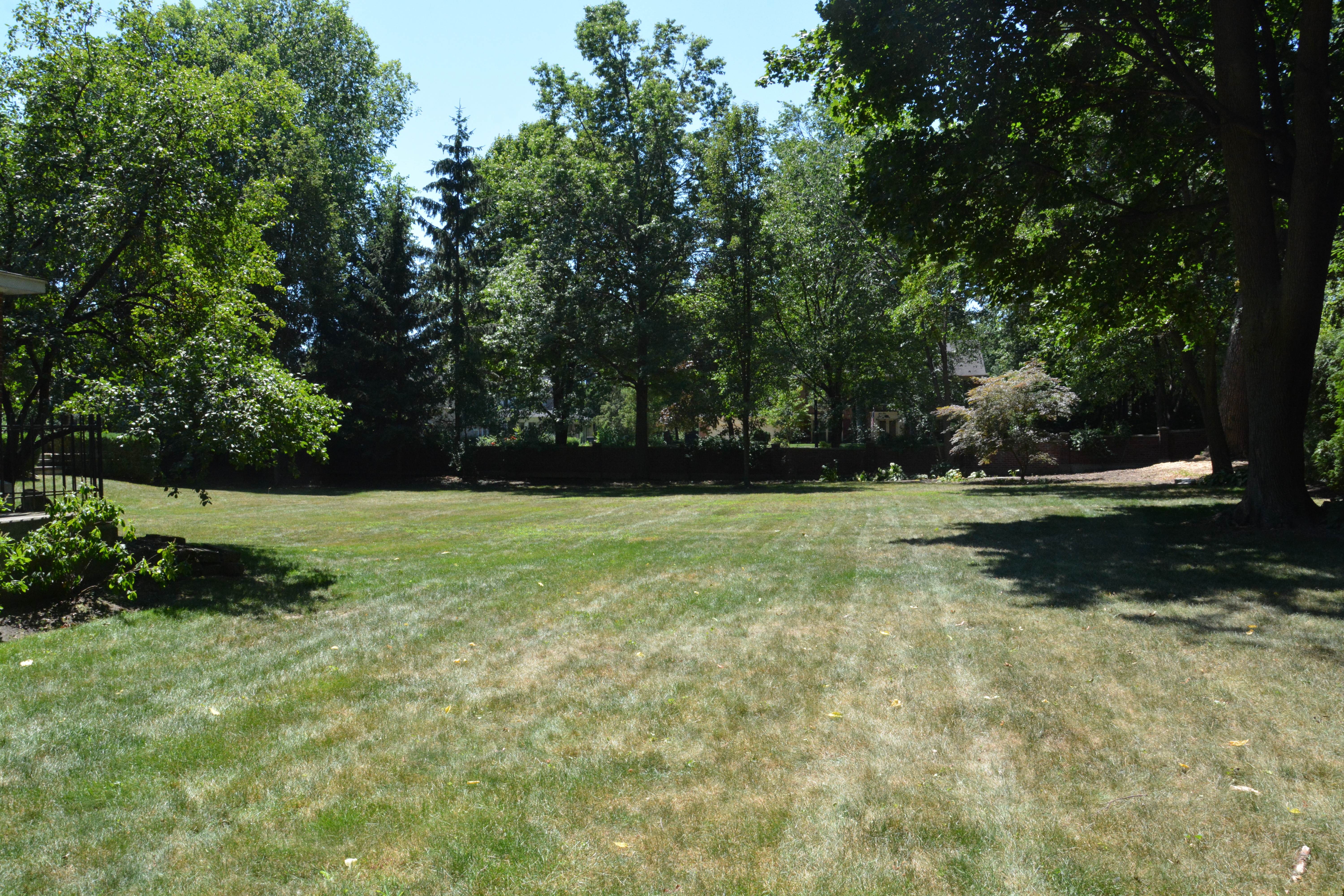
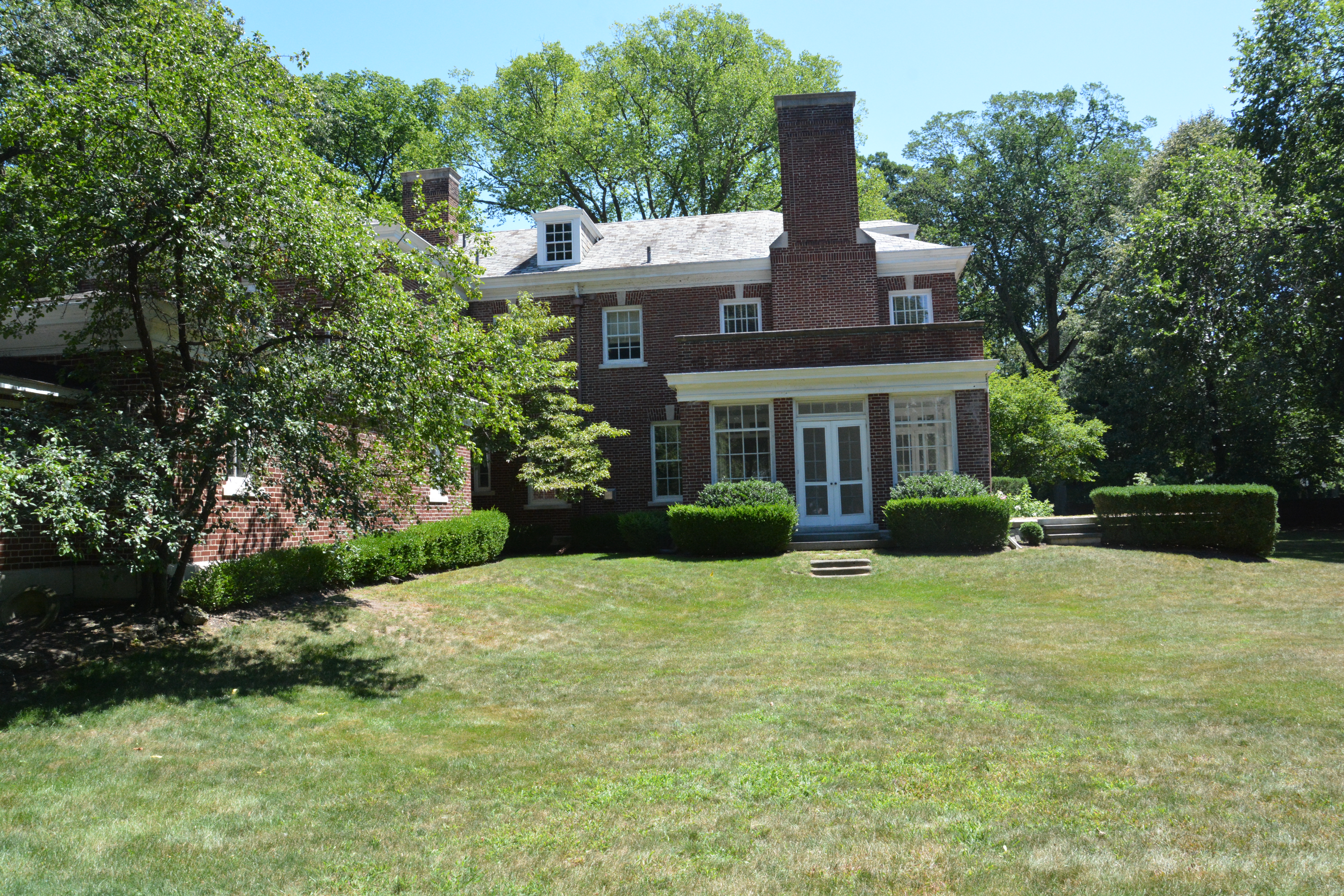
The view into the side yard was typical of an old landscape. More than likely some plants had died over the years, and not been replaced. As the trees grew, the advancing shade proved difficult for plants in their vicinity to thrive. The ground sloped dramatically away from the house.

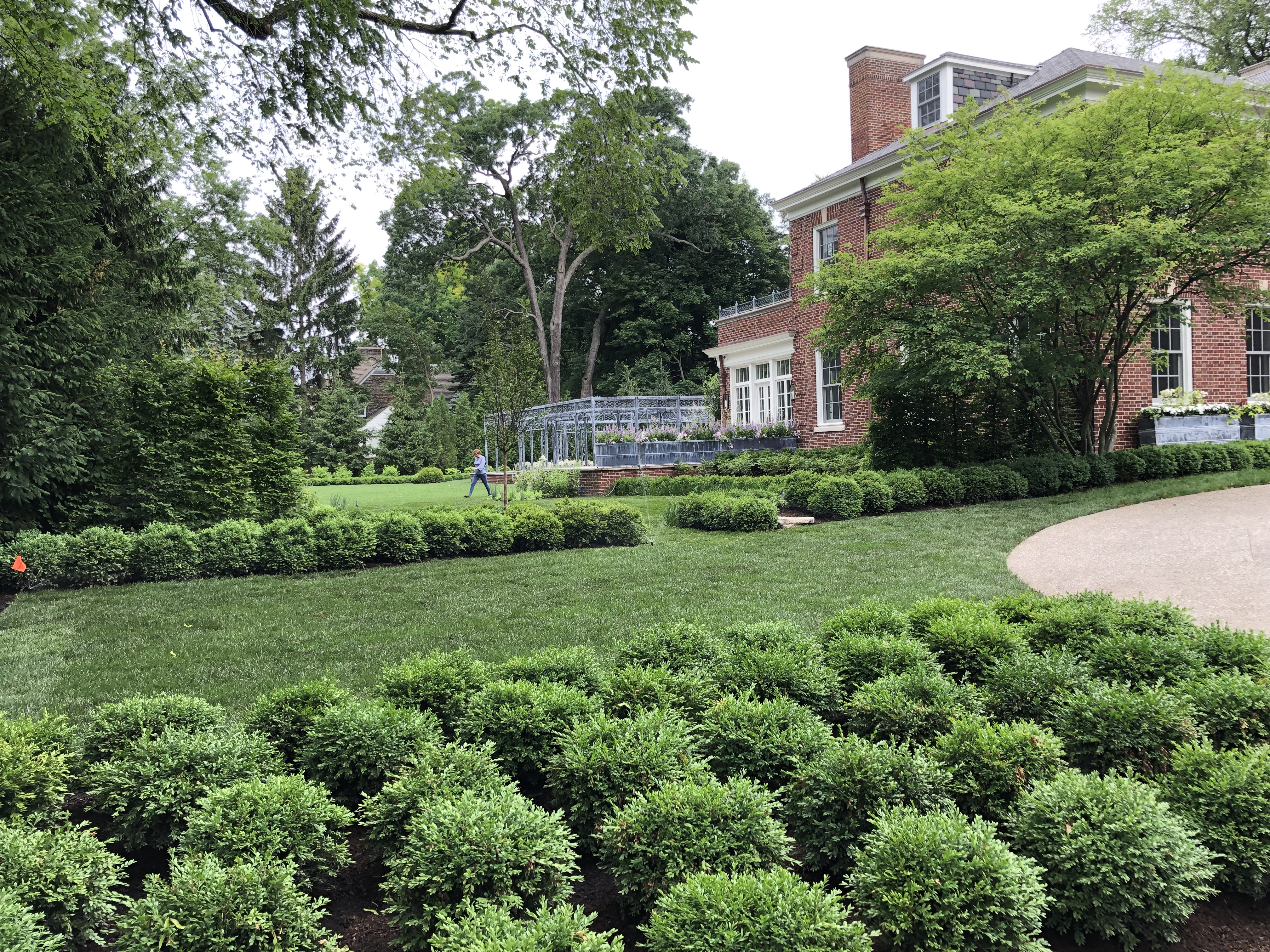
The finished front yard landscape renovation features that serviceberry tree. And a reconfigured grade. The replacement of the existing driveway meant its location could be changed, and the abrupt change of grade from the house to the property line could be softened. The boxwood planted across the front of the house was extended all the way across to the lot line. That placement visually extends the front yard landscape. In the center, a large break in the boxwood signaled the entry into the side garden. That side garden would become its own room with a view from a restored terrace off the sun porch. It would also serve as a transition space from the front to the back yard. The house sits on a corner, which present both problems and opportunities.

The idea was to respect the period, age and architecture of the house in such a way that it also reflected my client’s somewhat more modern aesthetic. A restricted palette of plants, and a massed planting can be both both classical and contemporary in feeling.

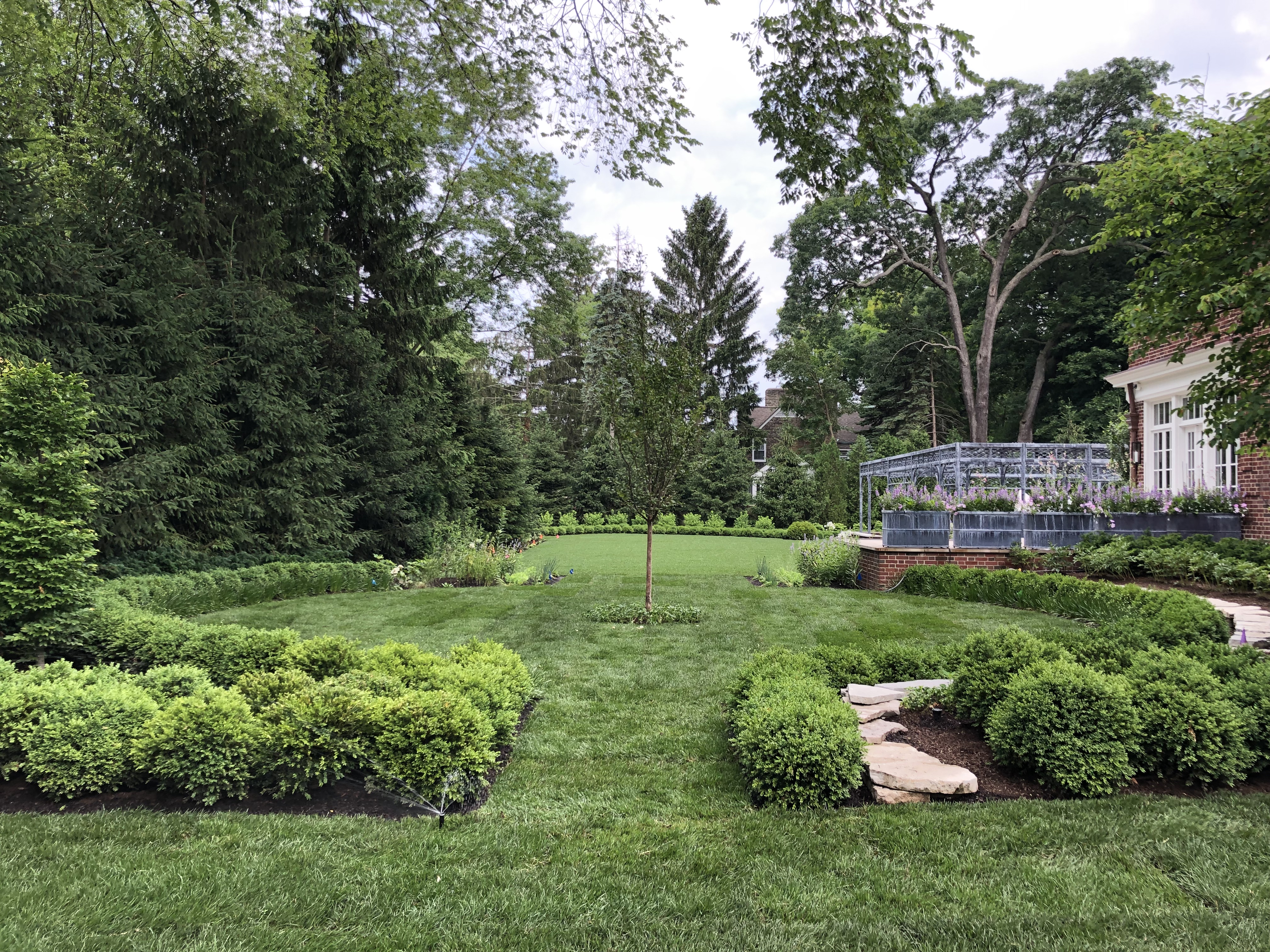
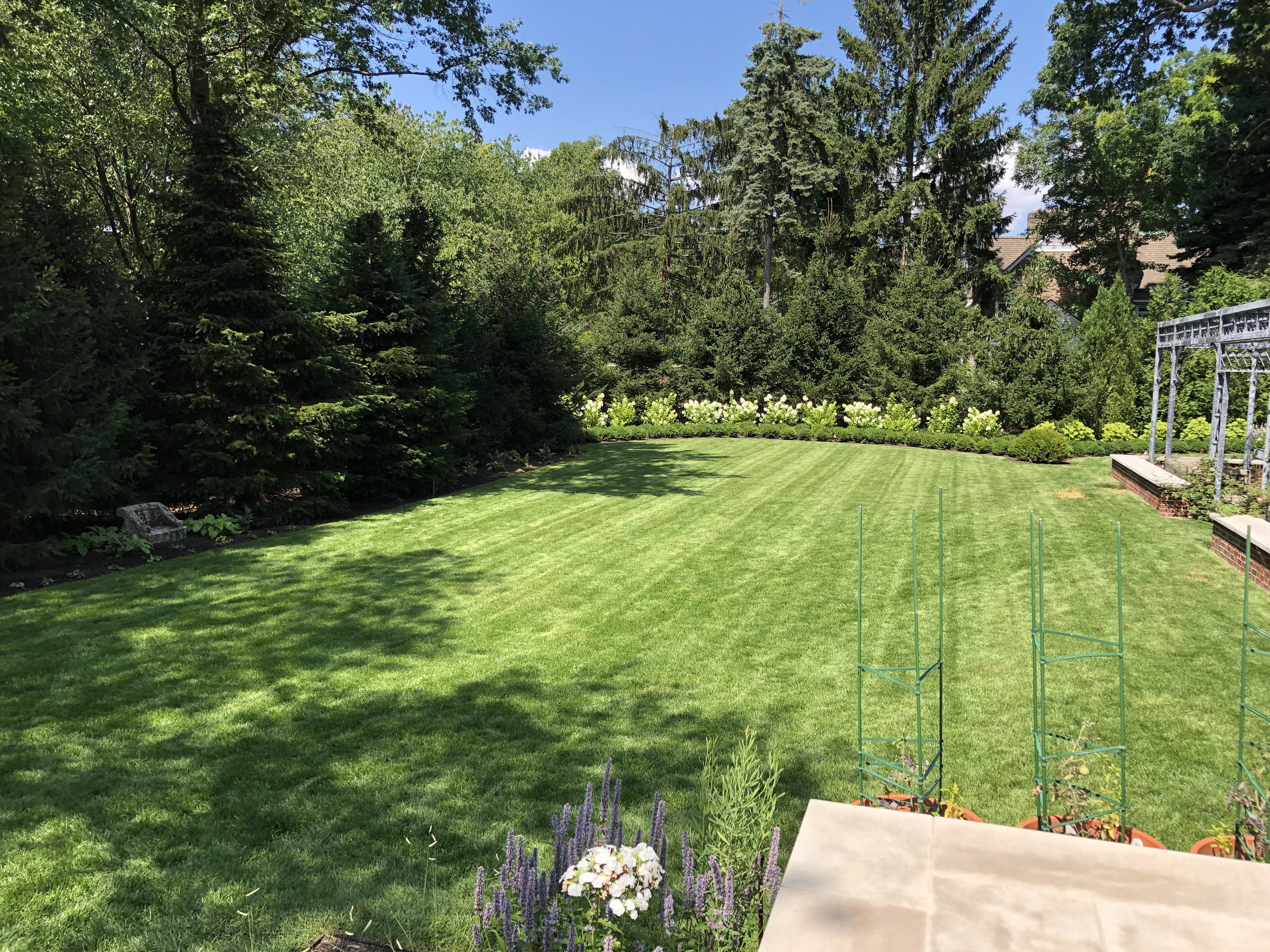
The side yard finish reveals the concession made to the original grade at the house.  A flagstone retaining wall 20″ high allowed for a flat surface on which to walk. I do not know how many yards of sand and soil were added to create the flat lawn areas you see in the above picture, but it was a huge number.

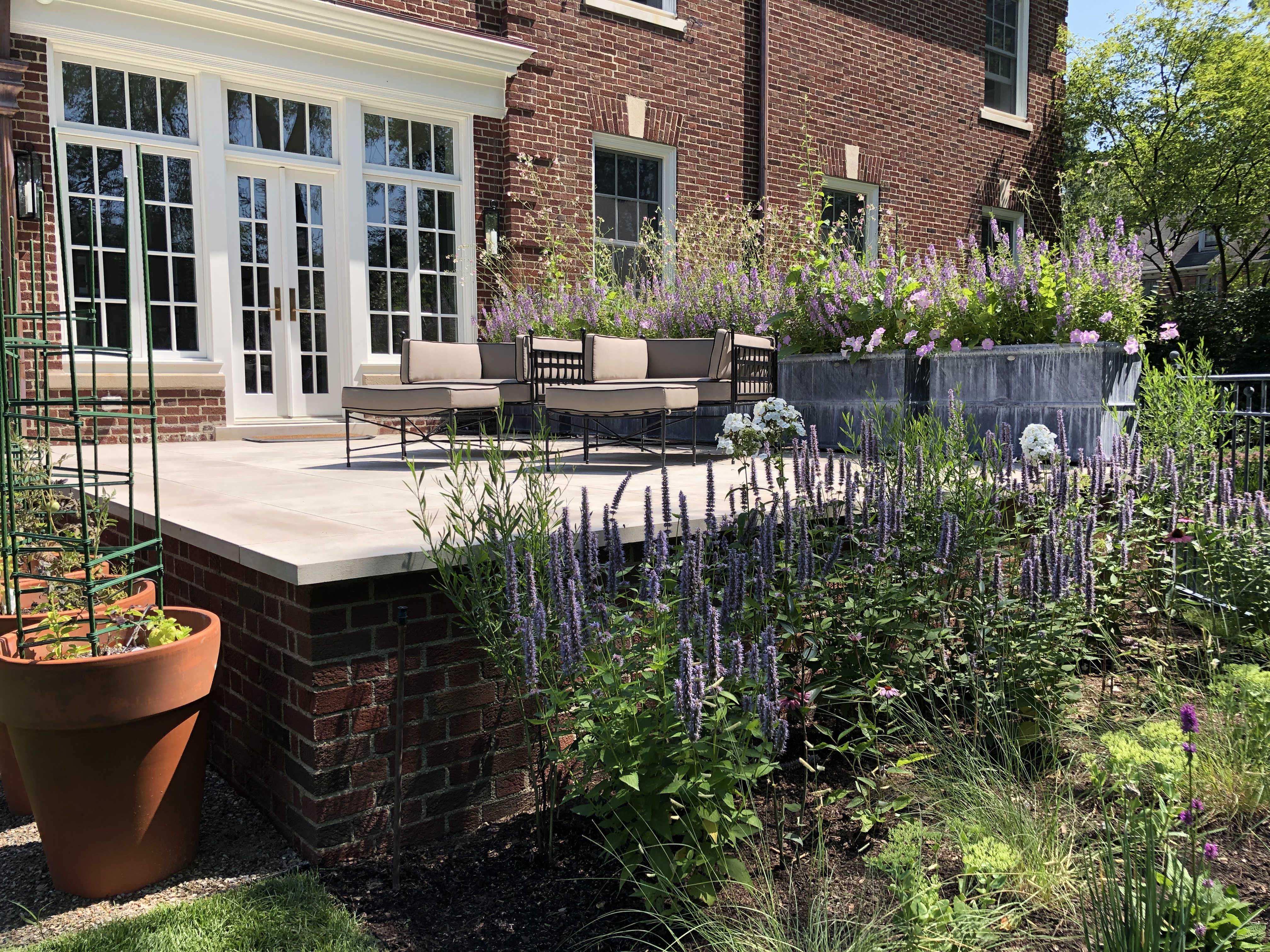
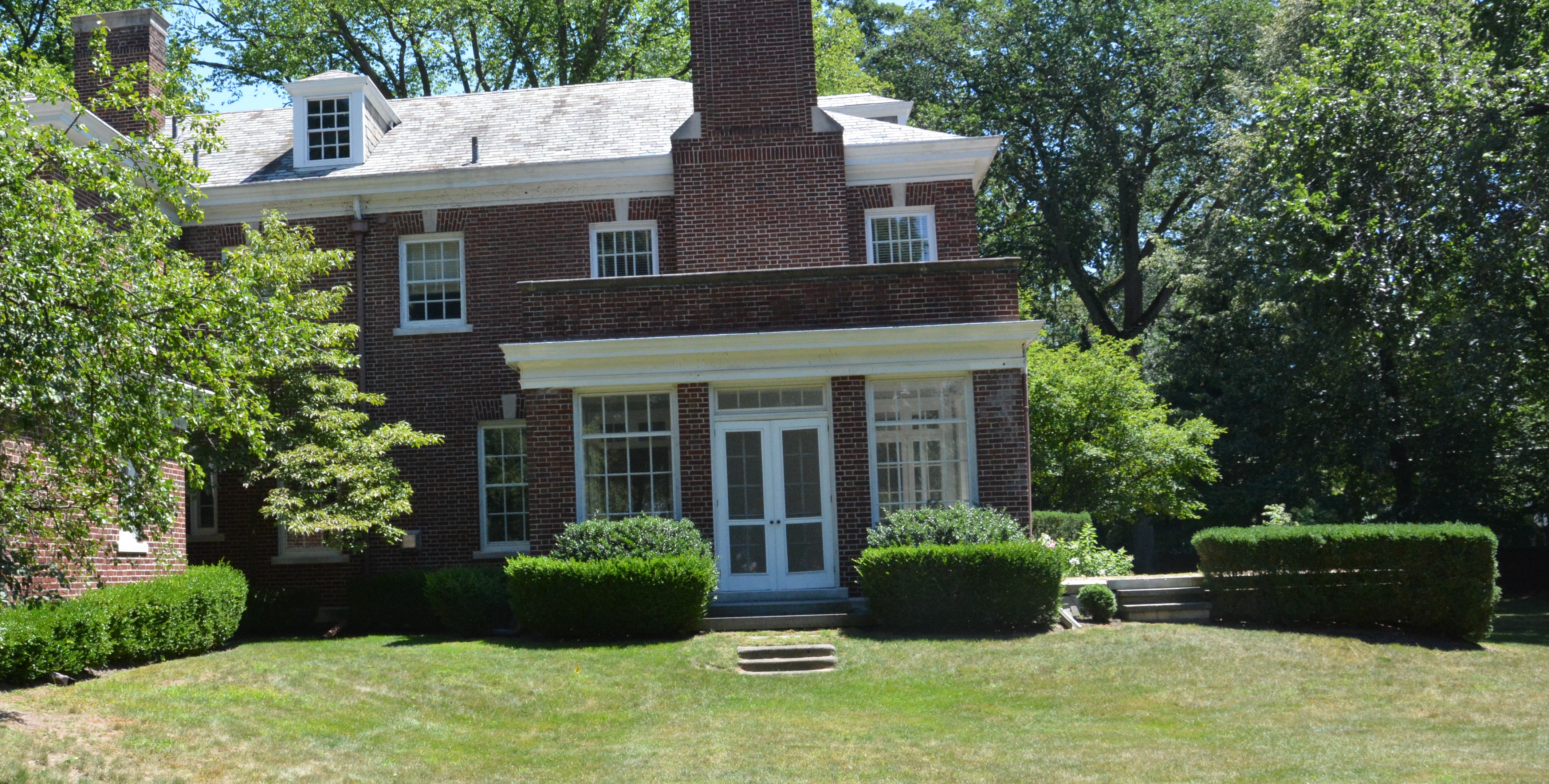
restored version of original side yard terrace off the sun porch

This side yard photo from my first visit dramatically illustrates the sloping grade.

detail  of that area 2017

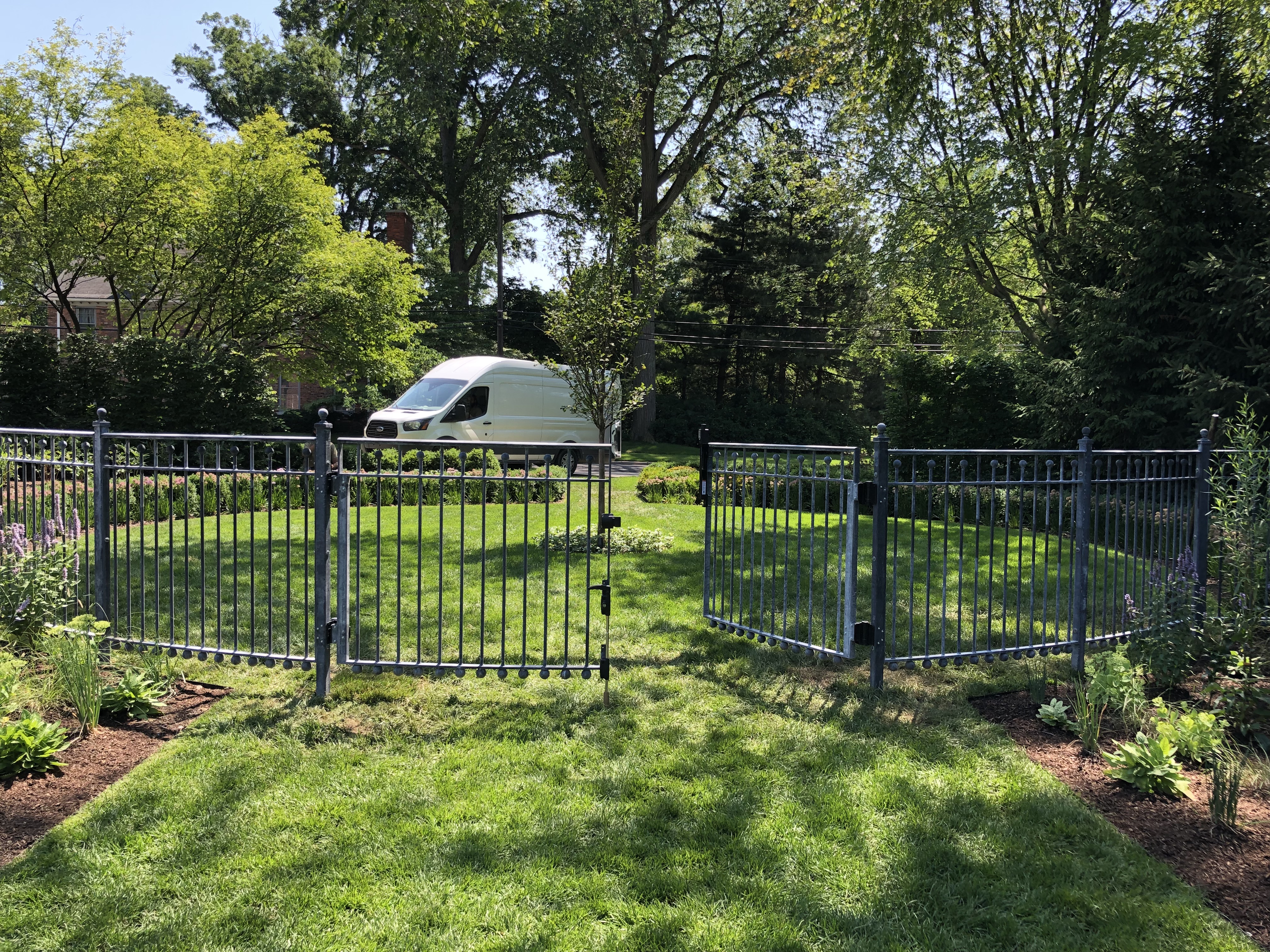
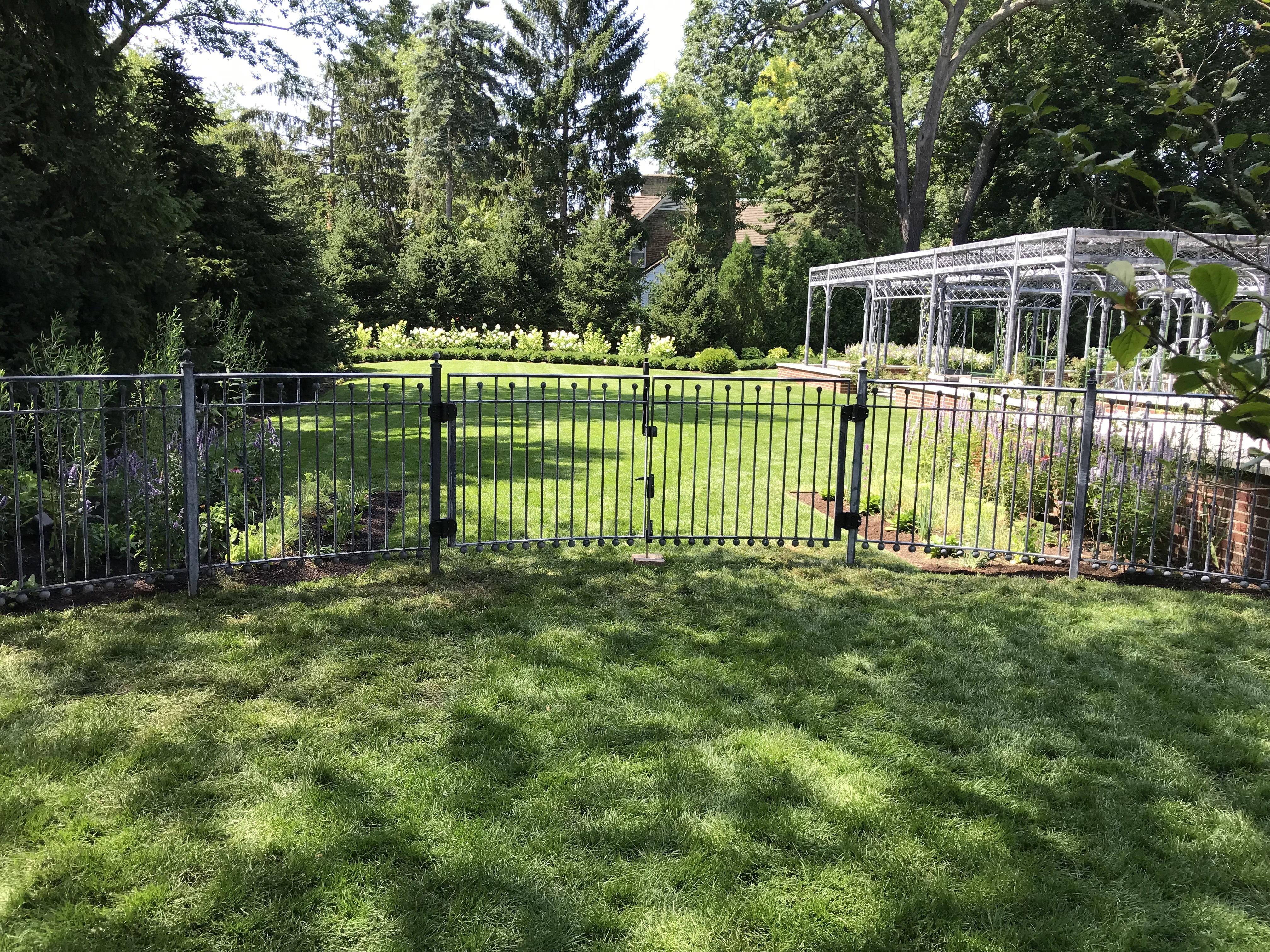
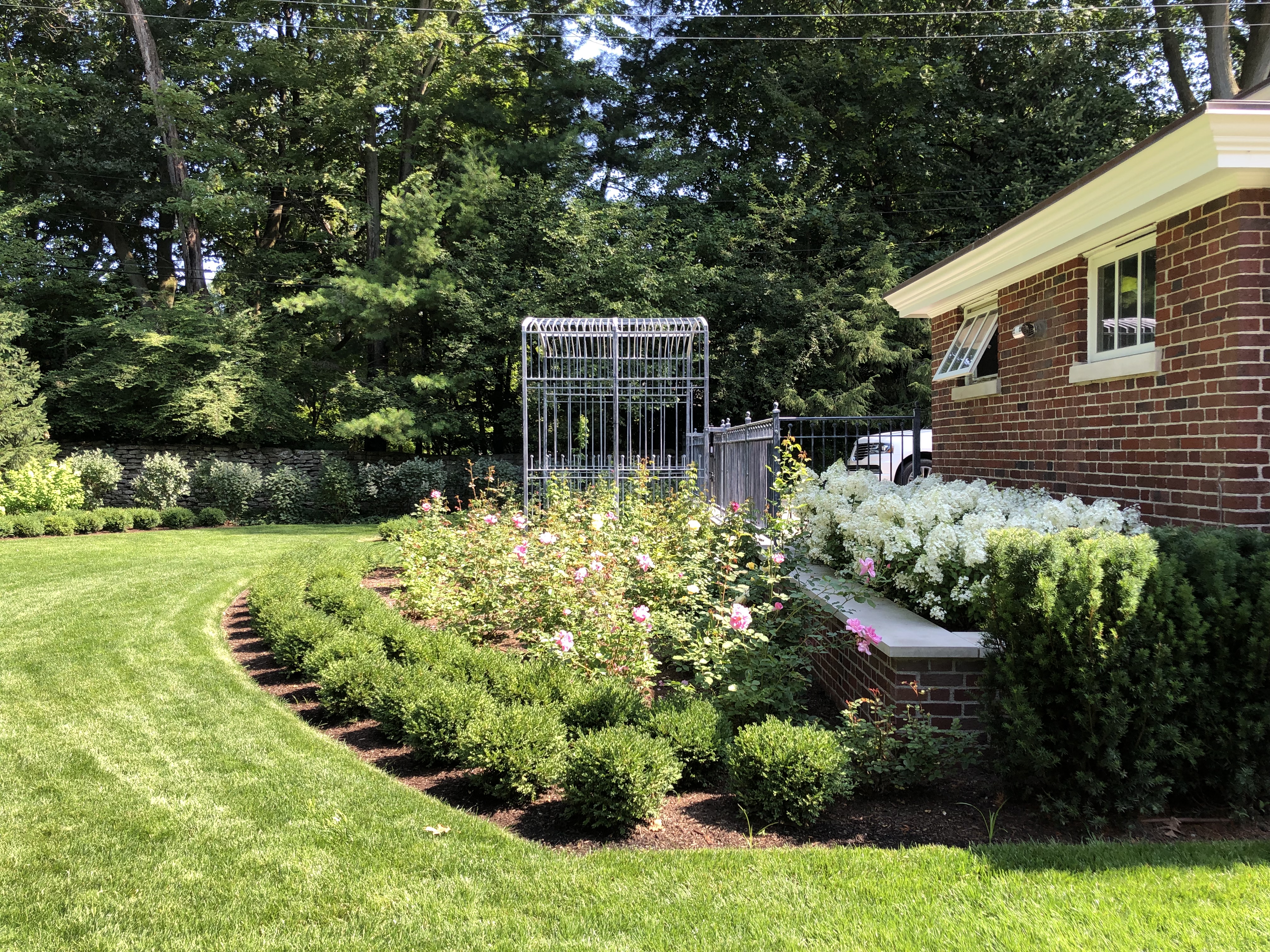
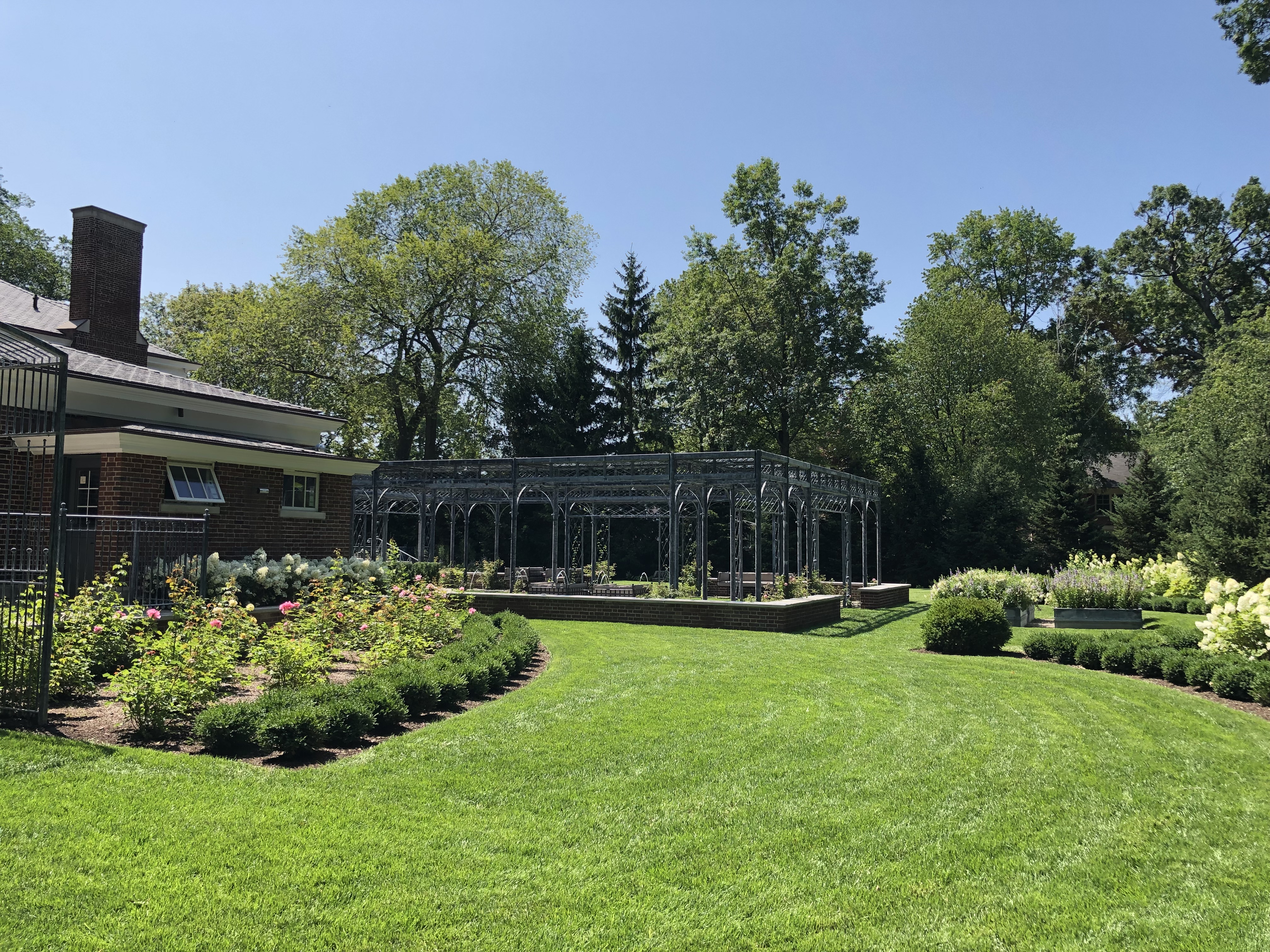
This recent picture of the side garden was taken just after the installation of the fence and gates.The curved sections of fencing repeat the circular shape of the lawn panel, and then proceed straight to a terminus at the house, and the brick wall on the property line.

2019

2019

2017

lawn panel rear yard, 2019

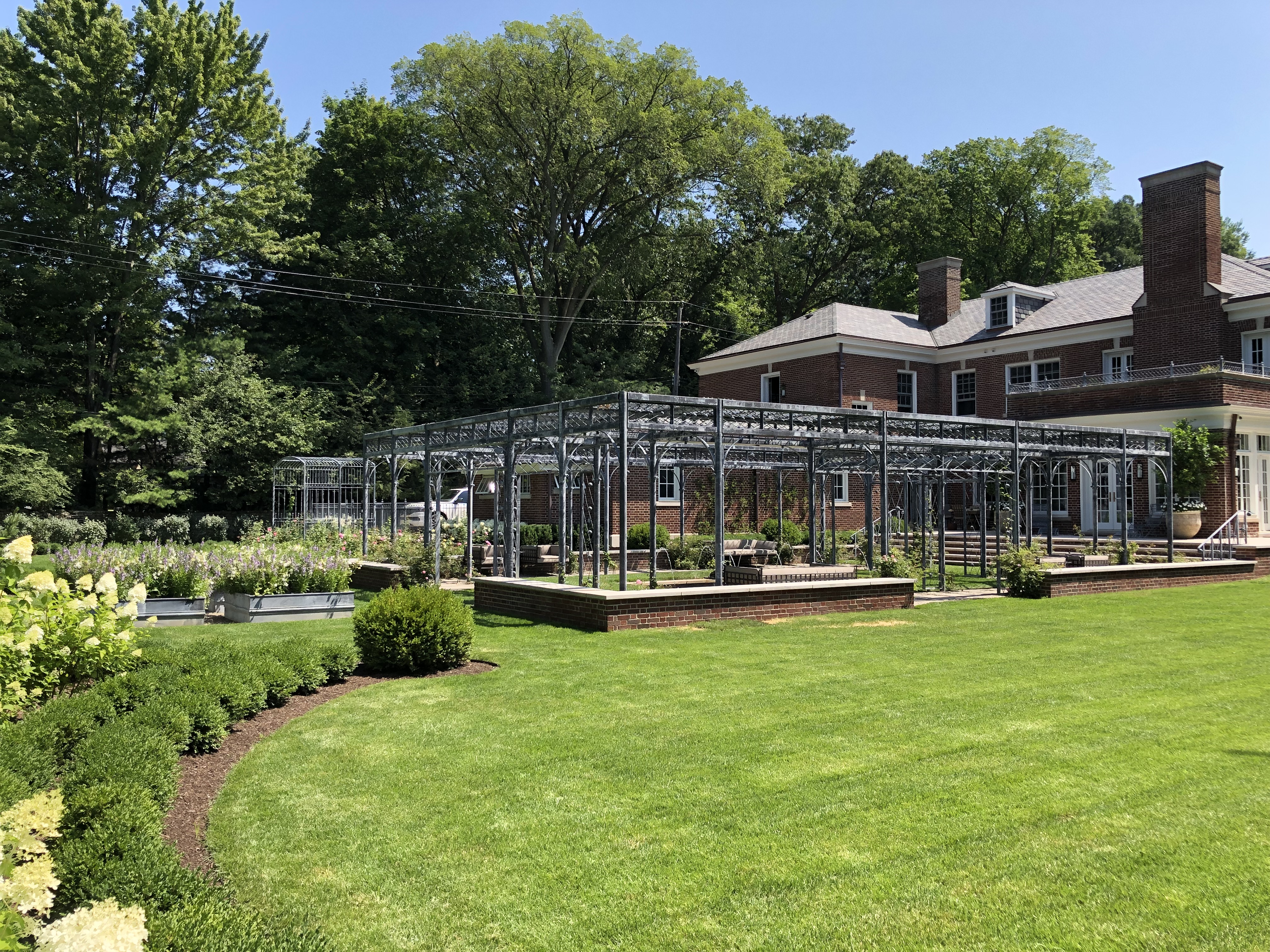
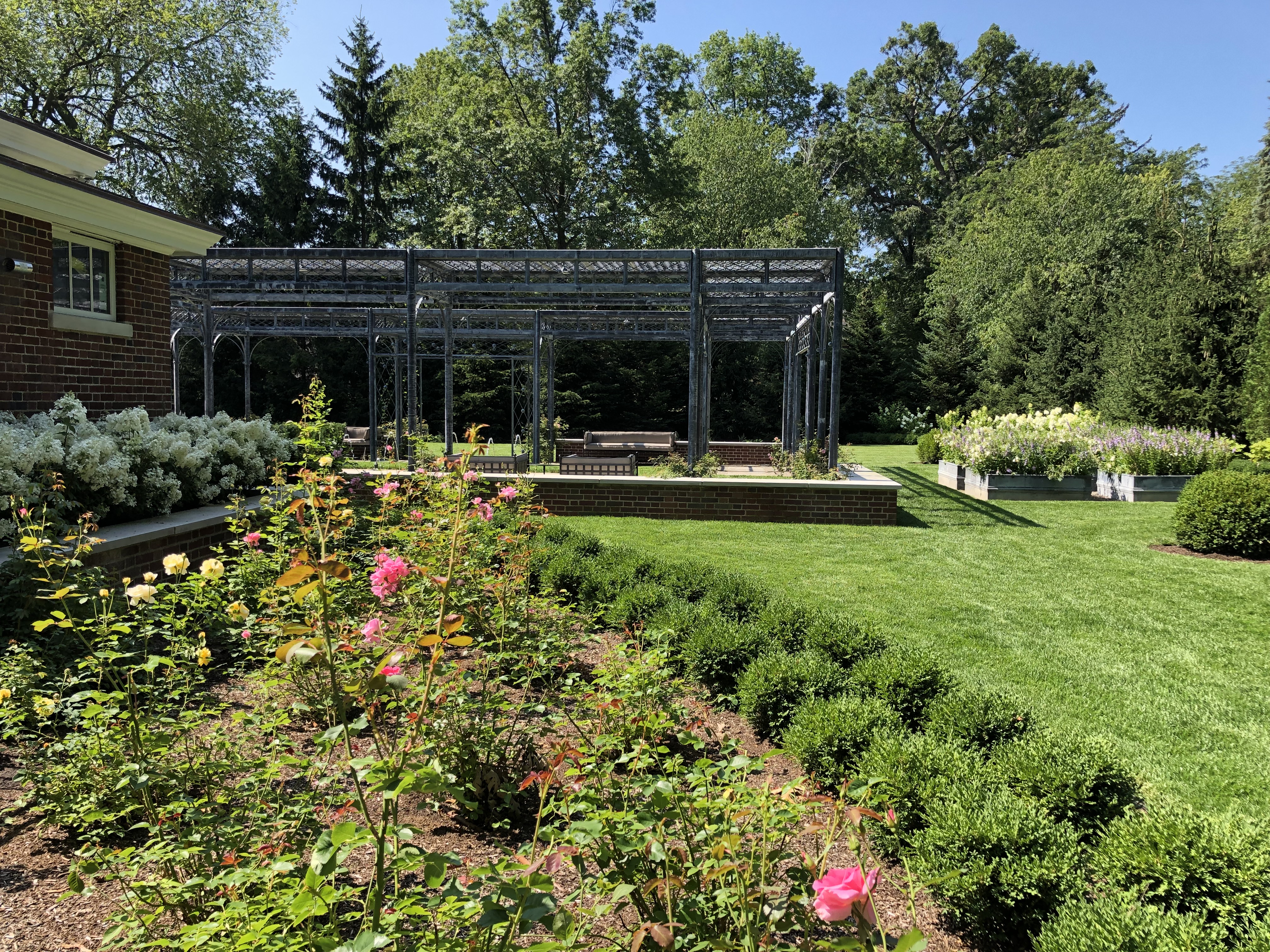
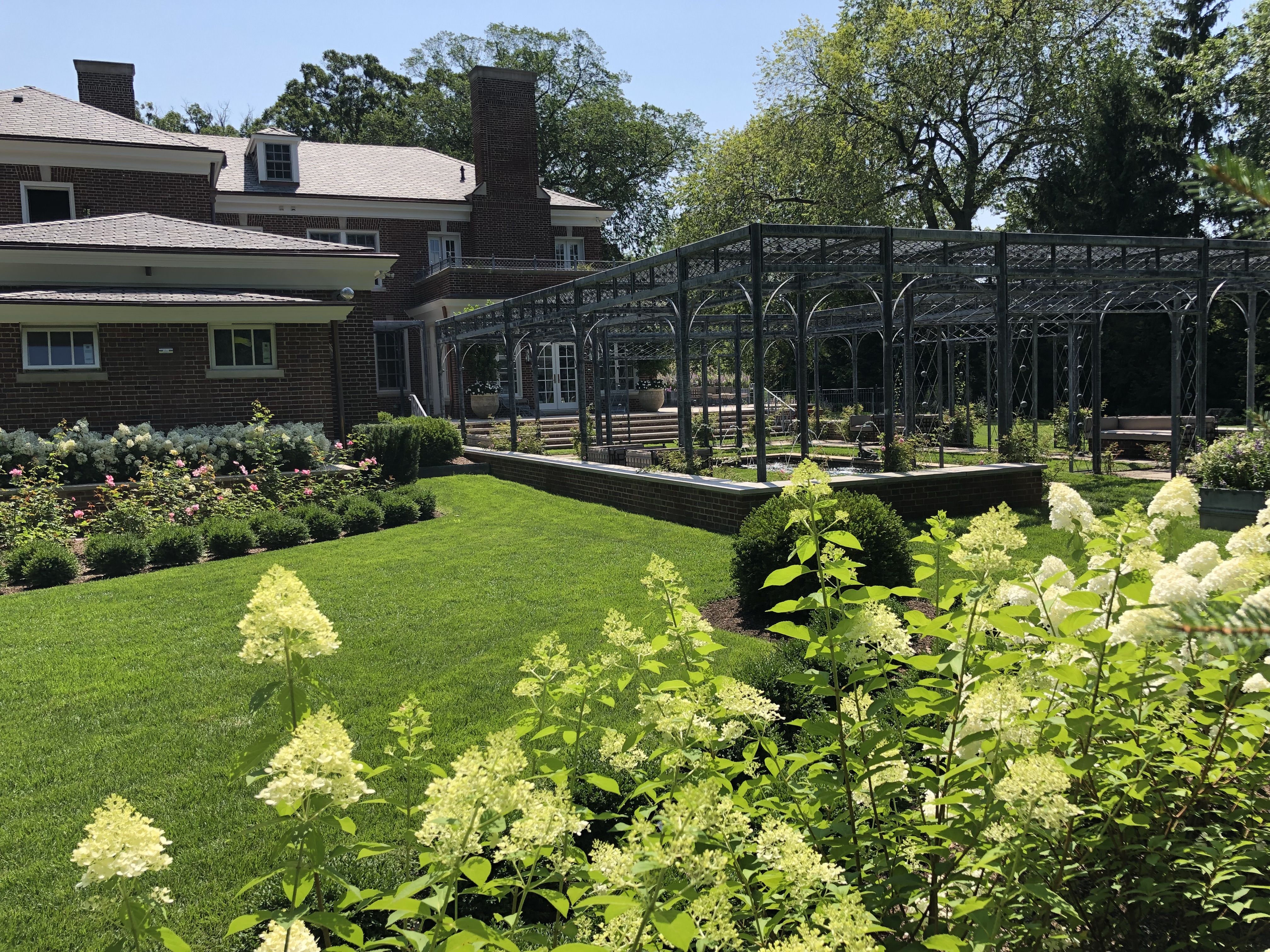
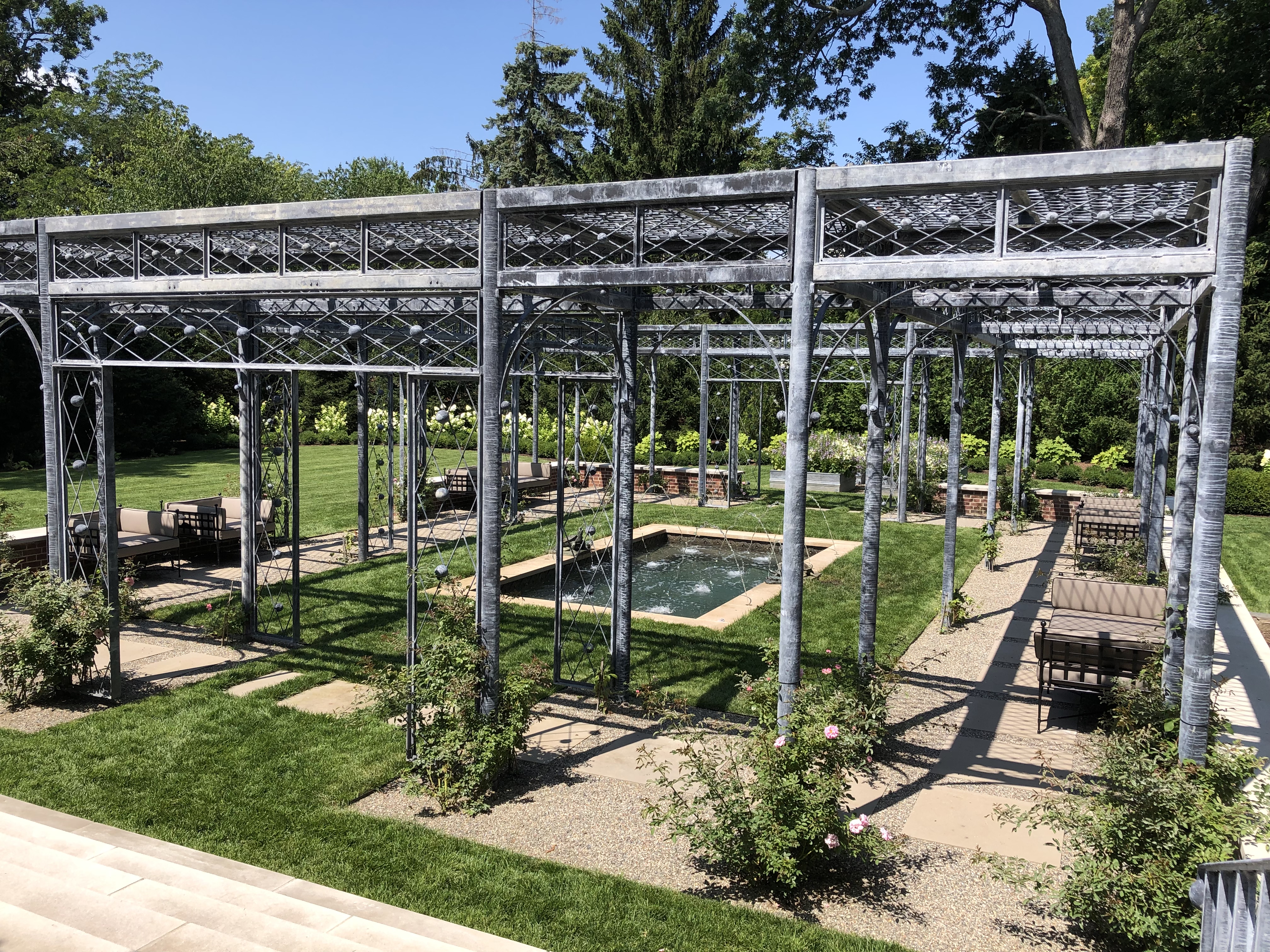
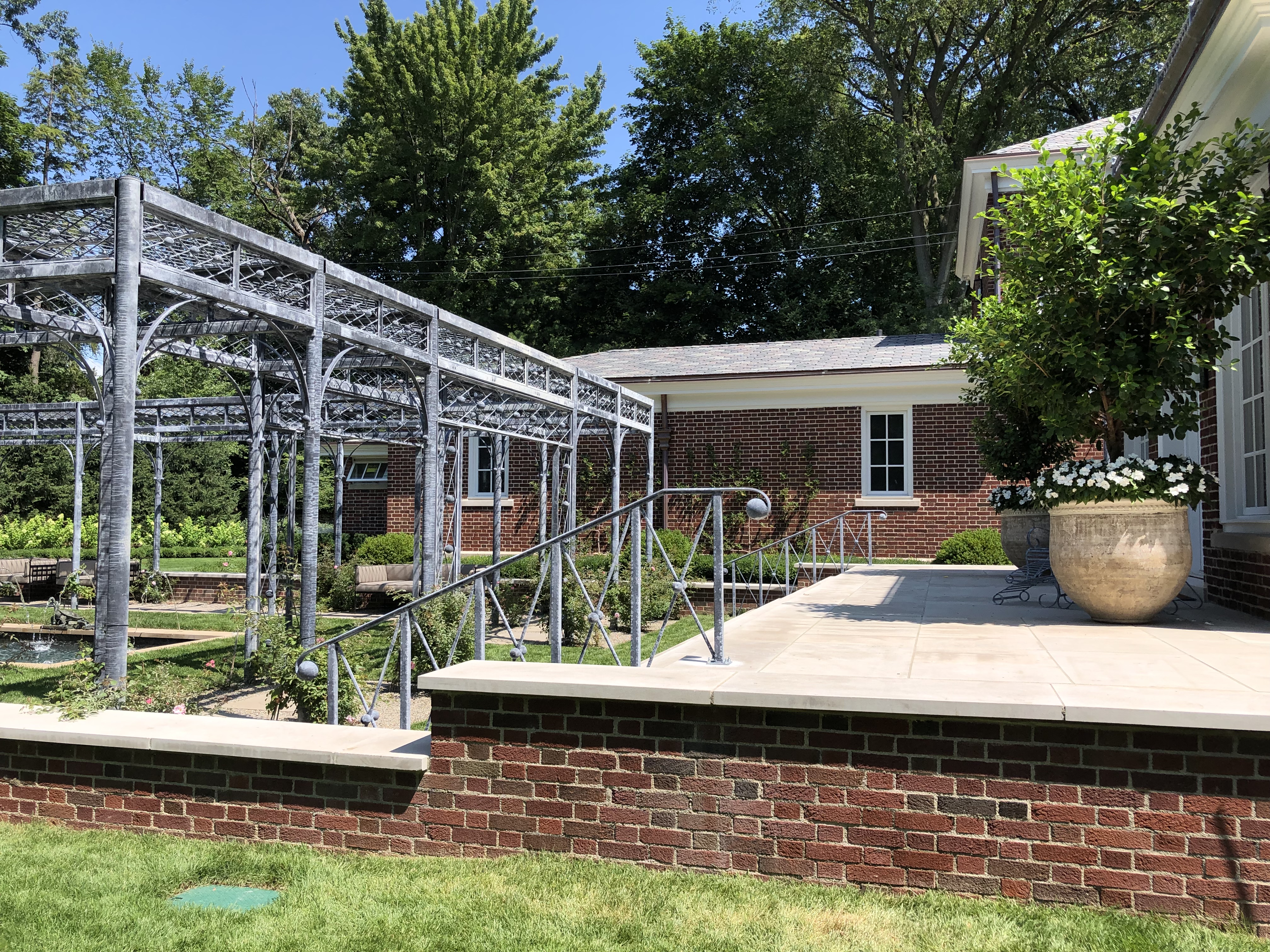
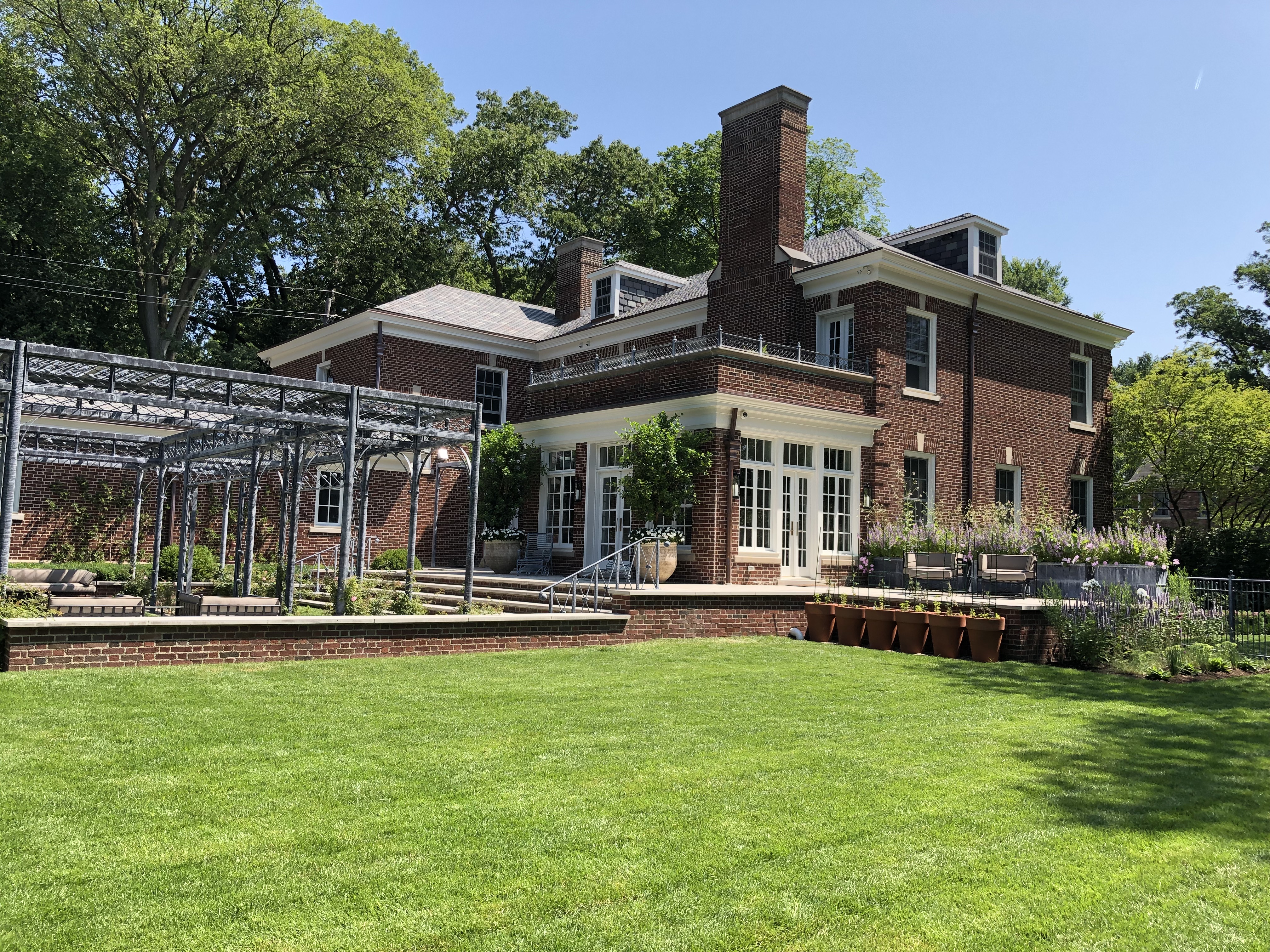
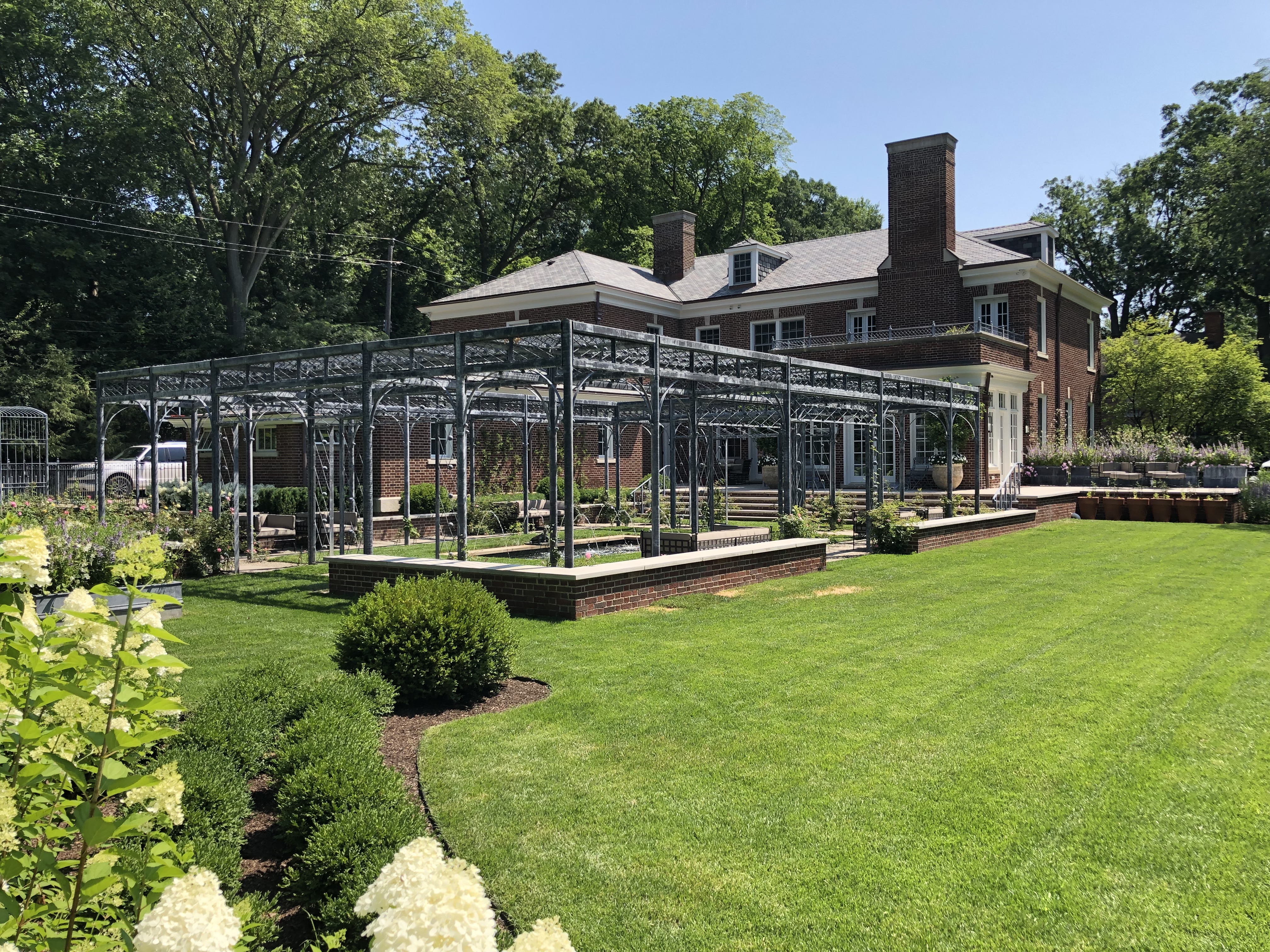
This photo illustrates how the original terrace on the right side of this picture was enlarged to encompass all three sides of the sun porch. A wide flight of limestone stairs down to the fountain garden and cloister deals with the abrupt change of grade in a graceful way.  The seat height brick walls with limestone caps repeats and mirrors the exterior details of the house. This new part of the landscape looks as though it had always been there.

The cloister style pergola has been planted with John Davis and Jeanne LeJoie roses, and Guernsey Cream clematis.

2017

2019

2019

2017

2019

rose garden arbor, fence and gates at the end of the driveway.

2017

2019

2019

2019

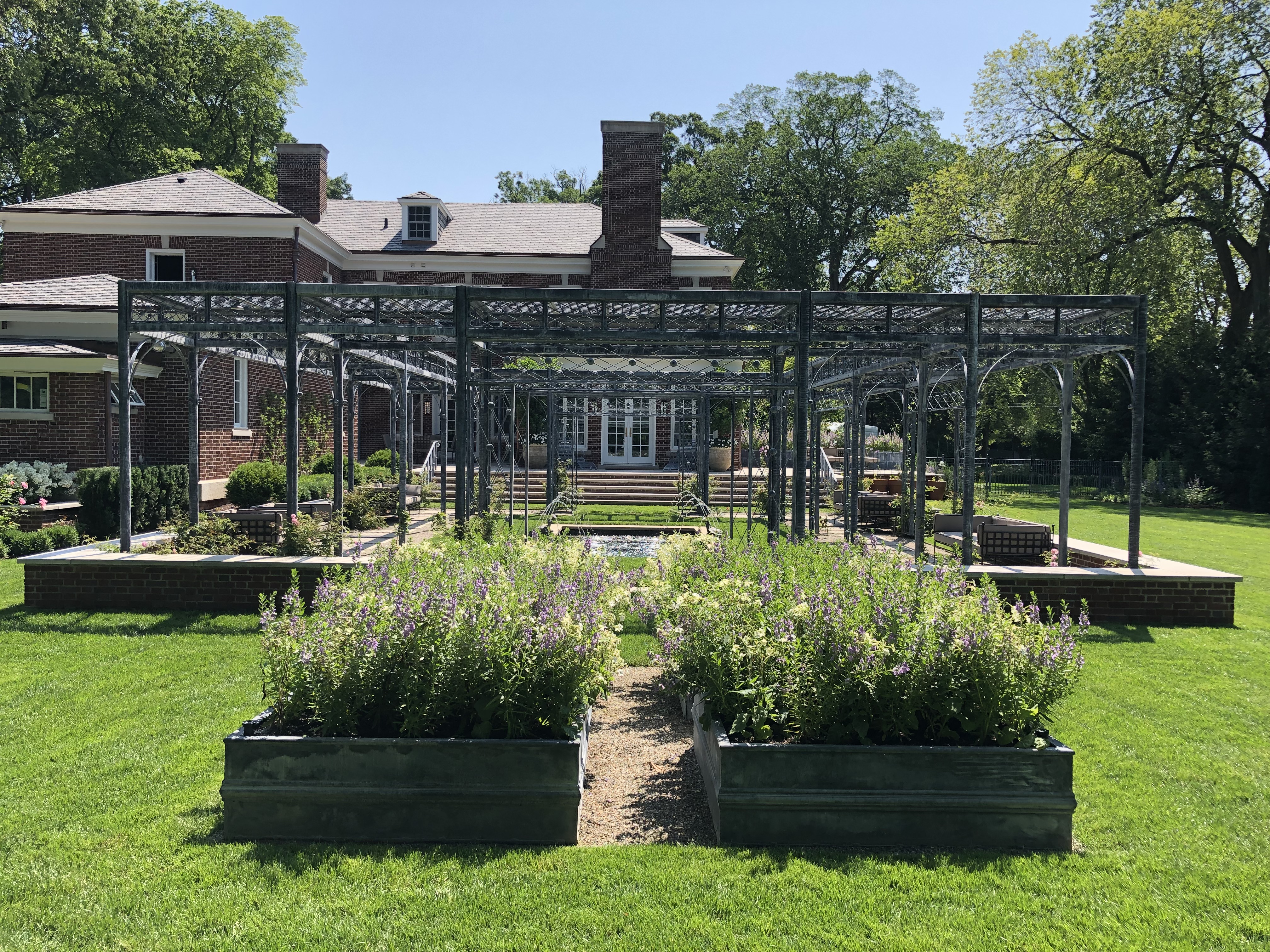
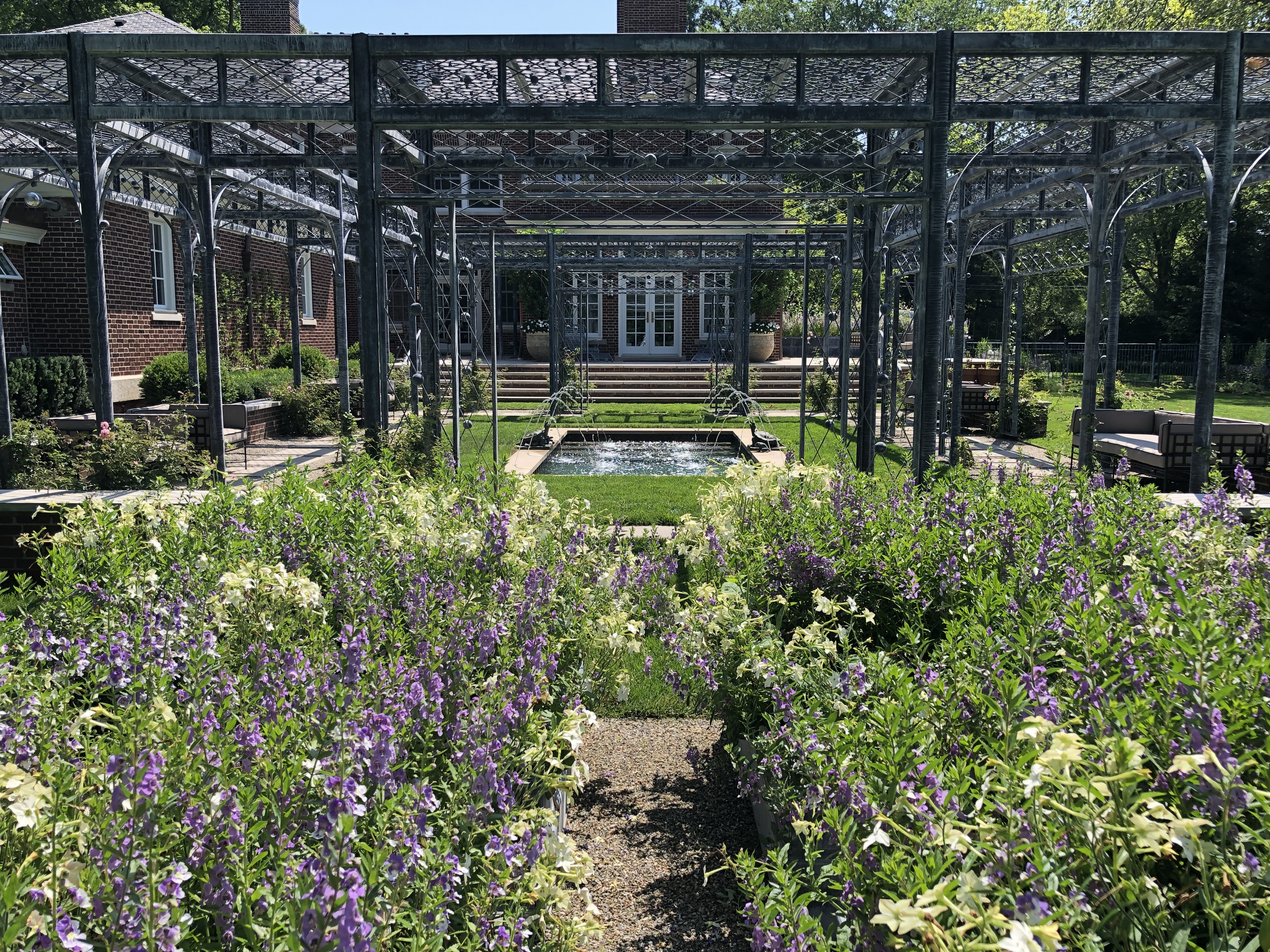
After I had made my presentation to my client about a plan for her landscape, she shared several photographs with me. In the 1920’s, the landscape off the rear yard sun porch featured a fountain with a pergola overhead. I was shocked to see that the original landscape in 1920 was a close and original version of the landscape I proposed to my client. That shock gave way to a thought on my part that the design properly respected the history of this property.

2017 sun porch landscape

the view to the house, 2017

the view into the house, 2019.

2019

the view out and away from the house, 1920.

the view out, 2019

the reflecting pool

I am so pleased with the outcome of this project, and even more grateful for that once in a blue moon client that was on board for each and every detail.


Cultivating Hydrangeas

Hydrangeas of varying types have to be the most widely grown summer flowering shrubs of all. How so? The numbers of cultivars bred from the species serrata, macrophylla, paniculata, arborescens, anomala (climbing hydrangea) and quercifolia (oakleaf hydrangea) surely number in the hundreds. The numbers of those hybrids and cultivars commonly available for sale are staggering. And it seems that every year new cultivars are offered for sale. Should you be interested in hydrangeas for your garden, there are many from which to choose. I am by no means complaining. A warm sunny late July day in my zone featuring a blue sky and the hydrangeas in bloom is one definition of a Michigan summer garden. The spring in Michigan is breathtaking for the sheer number and diversity of plants that break dormancy, come on, and bloom. And of course the June garden features the peonies, roses and delphiniums, and countless other perennials. The July and August garden is ruled by the hydrangeas, much to my delight. I do love these robust growing shrubs that grow and bloom profusely. My hydrangeas make me look like an accomplished gardener, and ask for little in return.       That said, I am fairly selective in what varieties I plant. The short version is that I avoid any hydrangea that blooms on the previous year’s growth. Michigan winters can and will kill the latent flower buds. Pink and blue hydrangeas may do well for you, but they are underwhelming for me. I tend to stick with just a few of the available white blooming cultivars. Hydrangea paniculata, notably Limelight, and its compact relative Bobo, is hardy as can be. These cultivars are overwhelmingly generous with their flowers. They are solidly hardy in my zone. My Limelight hydrangeas in my front yard have been there over 20 years, and endured every one of my pruning experiments. I try to dust them with Hollytone in the spring – but if I forget, they grow and bloom anyway. If I am late with the water, the wilted leaves let you know to get out the hose and use it. Should I cut the blooms, they are gorgeous in a vase. The aftermath of a vase full of hydrangeas is a vase full of dry hydrangeas.
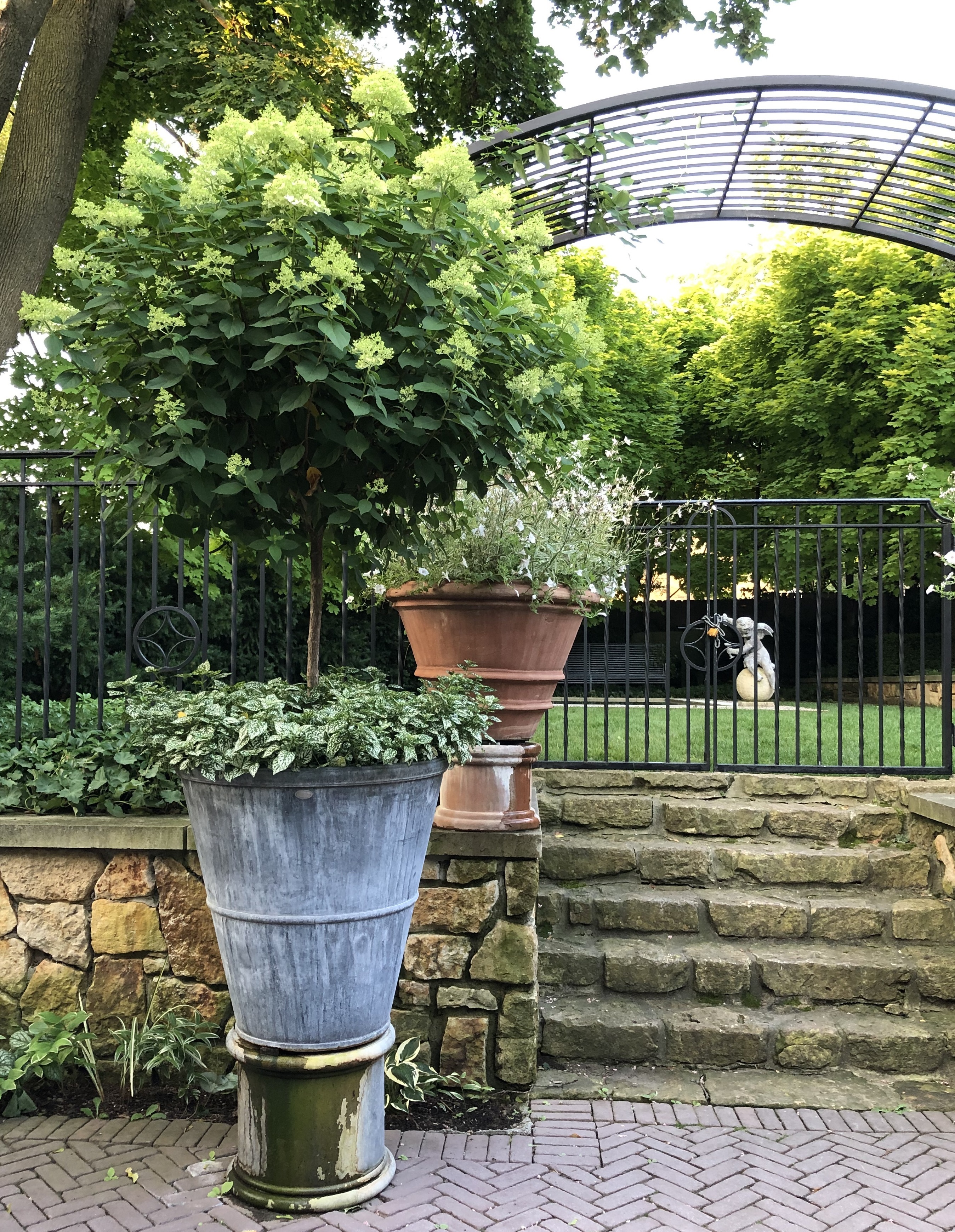
I have a number of clients with Limelight hydrangeas on standard in containers. A number of them choose to overwinter them in their pots, against my advice. I am not a fan of overwintering any plants in pots in my zone. Very few plants can tolerate their roots being above ground during our winter. My worries were unfounded. All of those hydrangeas spending the winter in pots came on without skipping a beat. Our past winter dealt a lot of damage to woody plants. I lost the entire top of a picea mucrunata – shocking, this. Four boxwood burned and died near my front walk. It was a sleeper tough winter. I was shocked at the extent of the winter damage this spring. But the hydrangeas in pots did not skip a beat. One pair has been in pots for 8 years now. Really? That is what I call the willingness to be. I decided to try them myself, both at the shop, and at home. Our grower prunes them after they flower, in July, and again early the following spring.  This routine keeps the heads compact and dense.

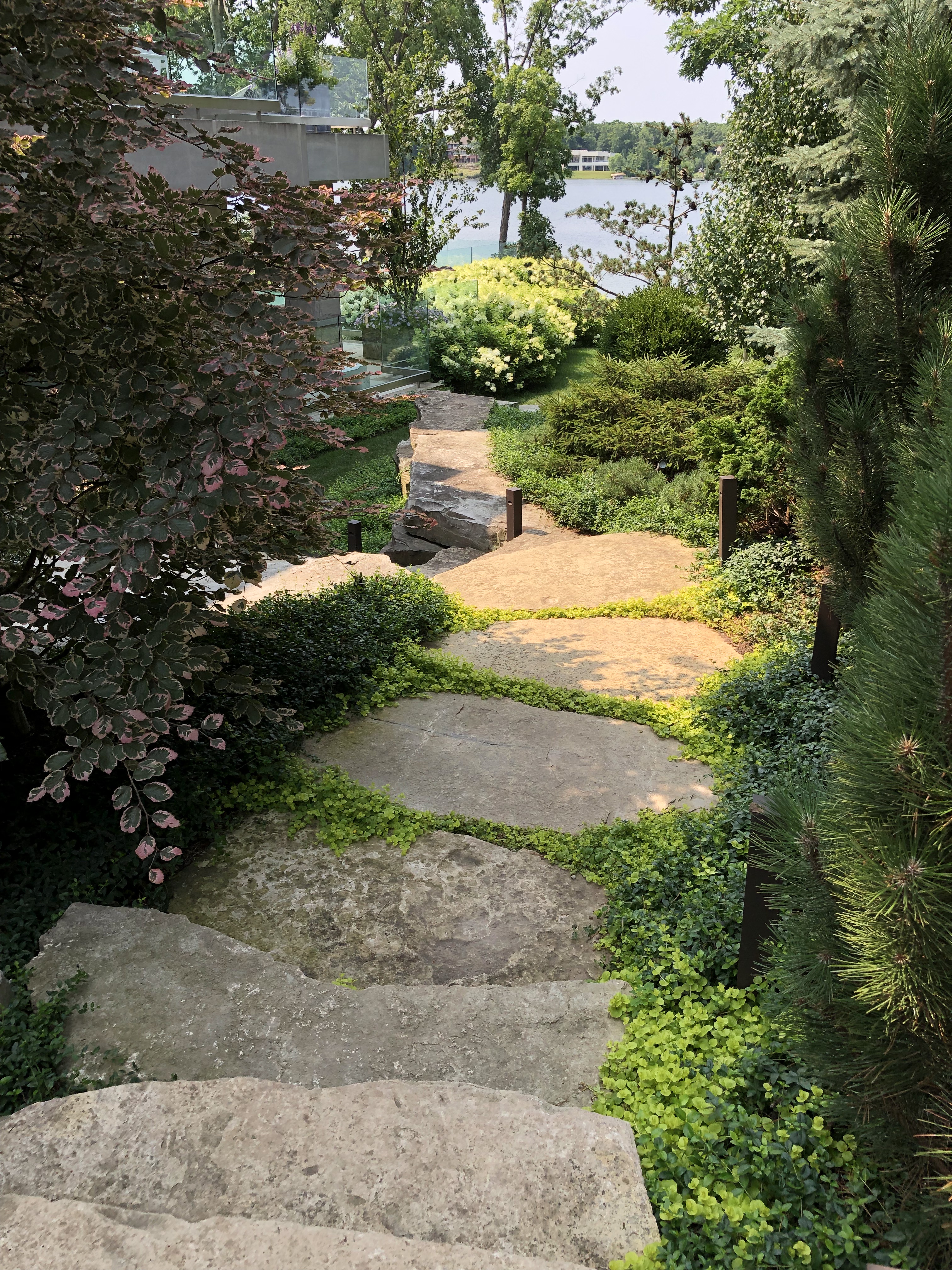
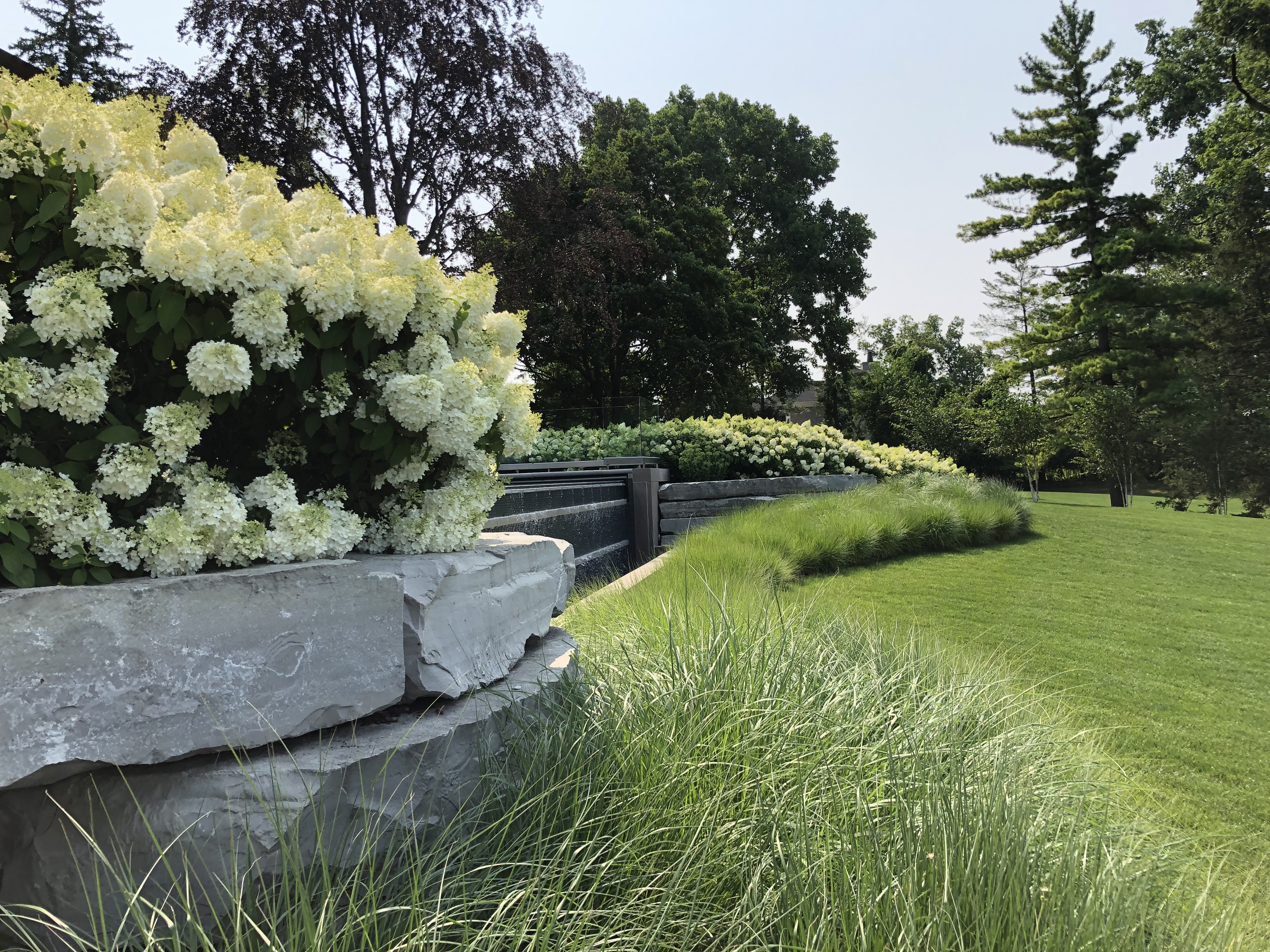
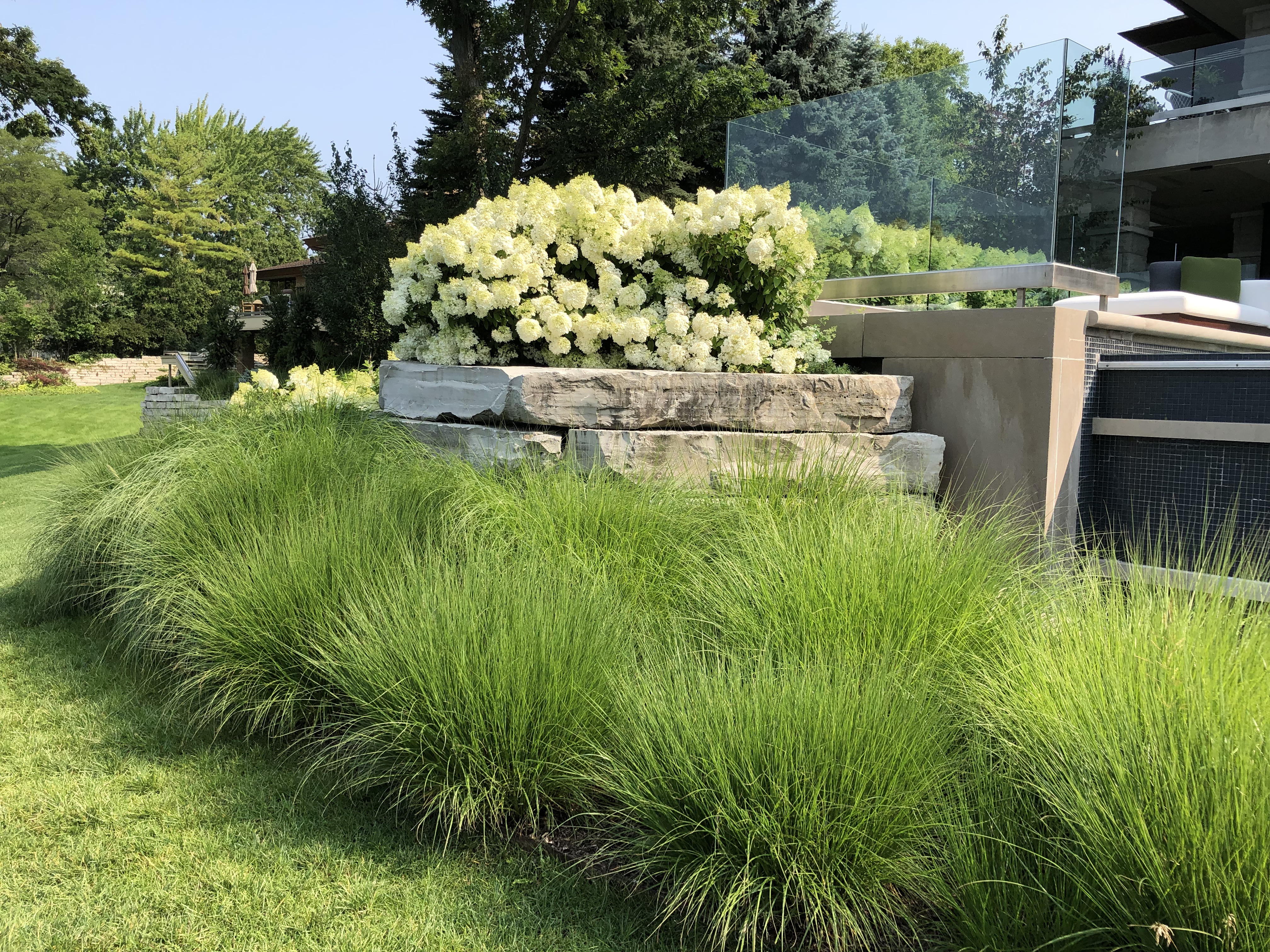
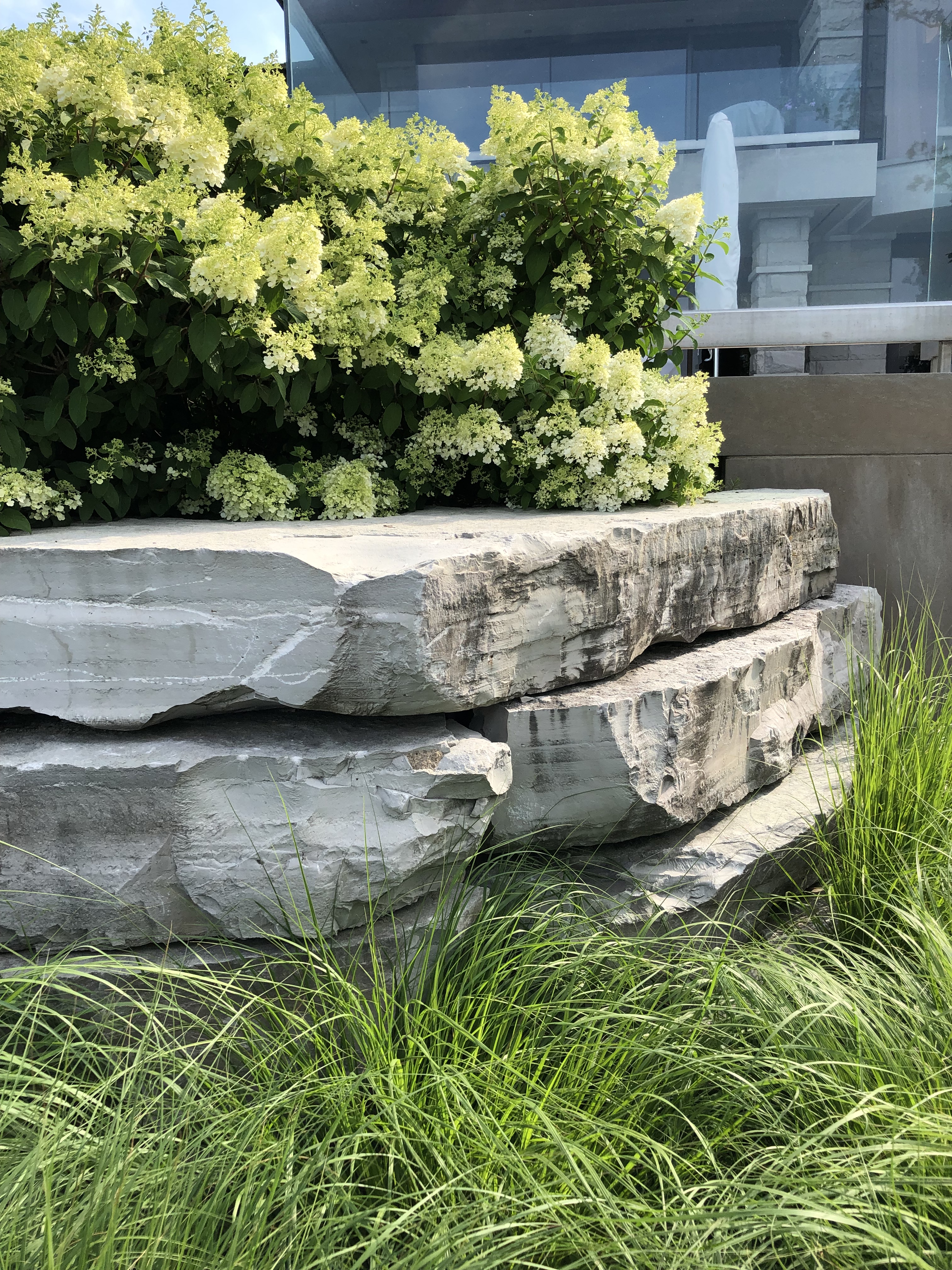
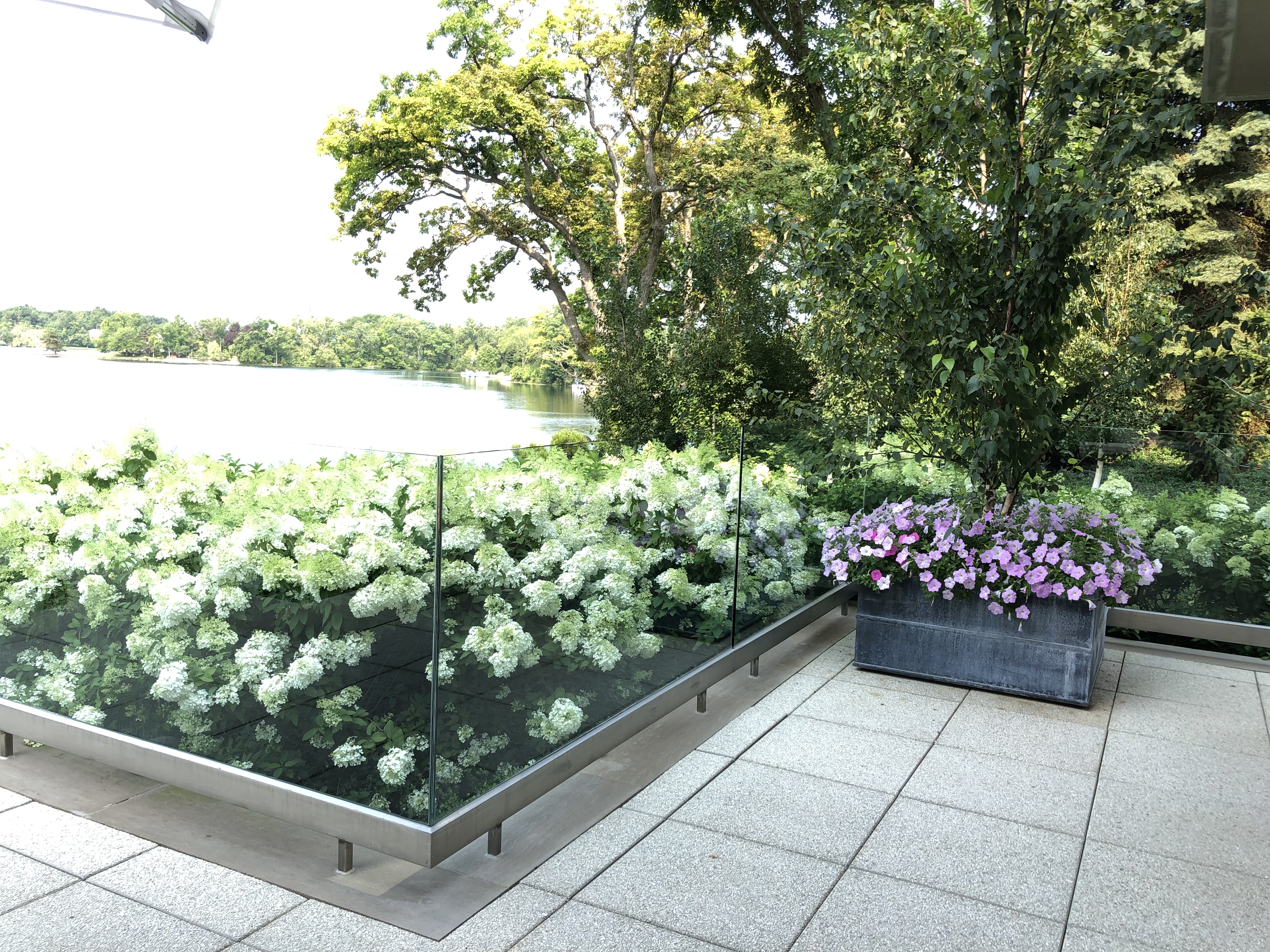
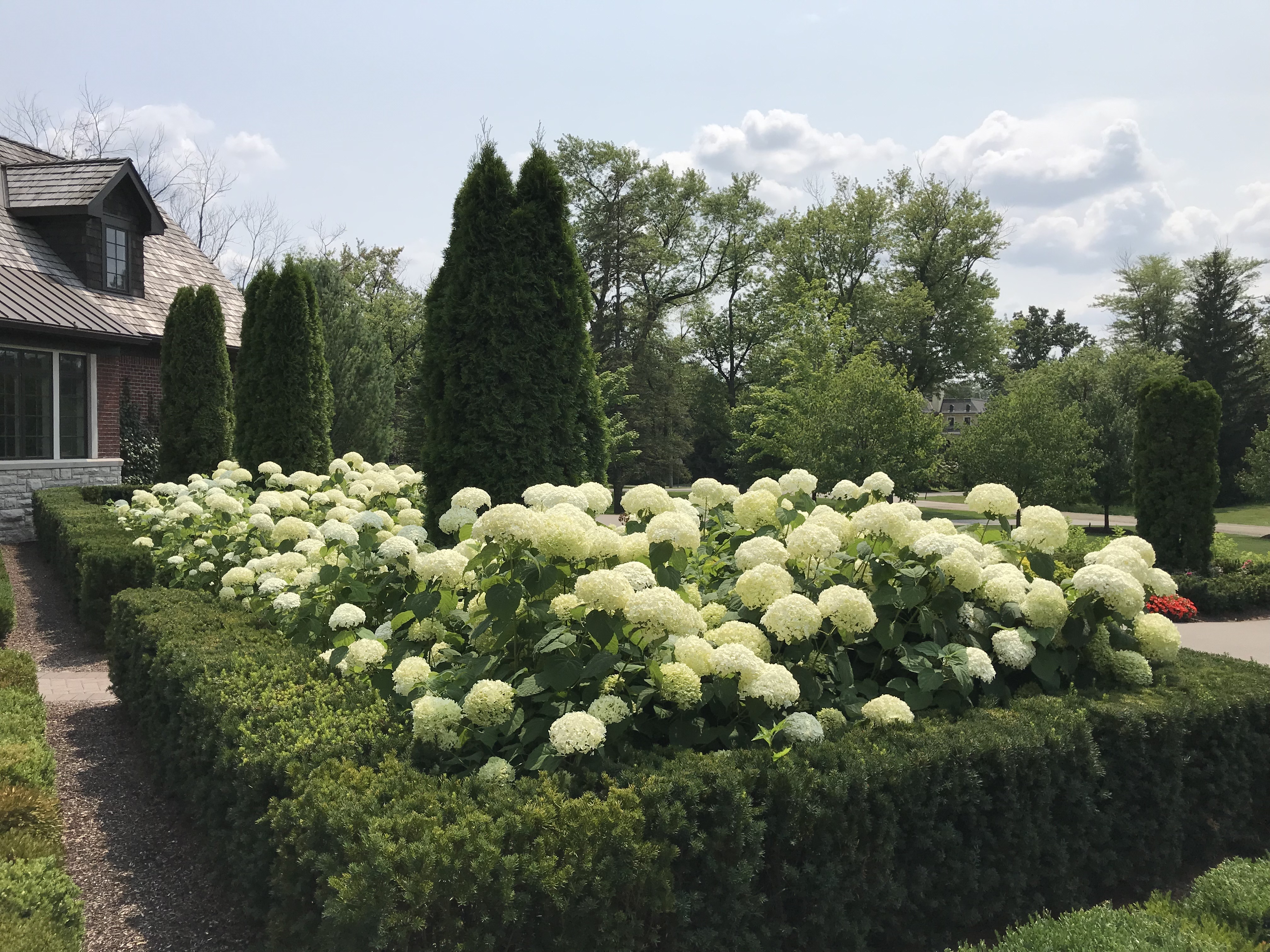
Cultivating hydrangeas is not that difficult. Site them with more sun than not-meaning 6 hours a day of good sun. . They do like that sun to bloom well. Hydrangeas can be quite shade tolerant, but those in a lot of shade have weak stems and sparse flowering. Have a lot of shade? Try the oak leaf hydrangea. All of the cultivars of Hydrangea quercifolia are very tolerant of low light. The oak leafs are reputed to do very well in southern US locations. They are easy going about the soil composition, but soil that is enriched with organic matter is optimal.  Being large shrubs with a full complement of large leaves, they need a regular supply of water. Don’t be fooled by their wilting leaves on a very hot day. Those big leaves are thin, and they wilt from heat. If they perk up once the sun goes down, and the weather cools, leave the watering for another time. Hydrangeas of one kind or another in my zone have been blooming or are about to bloom for several weeks. Annabelle hydrangeas typically bloom in June here. A very cold spring set the bloom date back a bit, but all of the rain attending that chill resulted in luxuriant growth. The cultivars known as Bobo (a dwarf relative of Limelight) and Incrediball (a more upright and strong stemmed version of Annabelle). The Little Lime hydrangeas are budding up, and will be in bloom soon. As much as my clients might want pink or blue hydrangeas, I discourage planting hydrangeas in my zone that bloom on old wood. Our winters can be breathtakingly cold and hard. The shrubs will survive. The flowers not so much. The Bobo hydrangeas pictured above bloom profusely. The white florets have a decidedly greenish cast. The color of the creeping jenny on these stone stairs echoes that green.
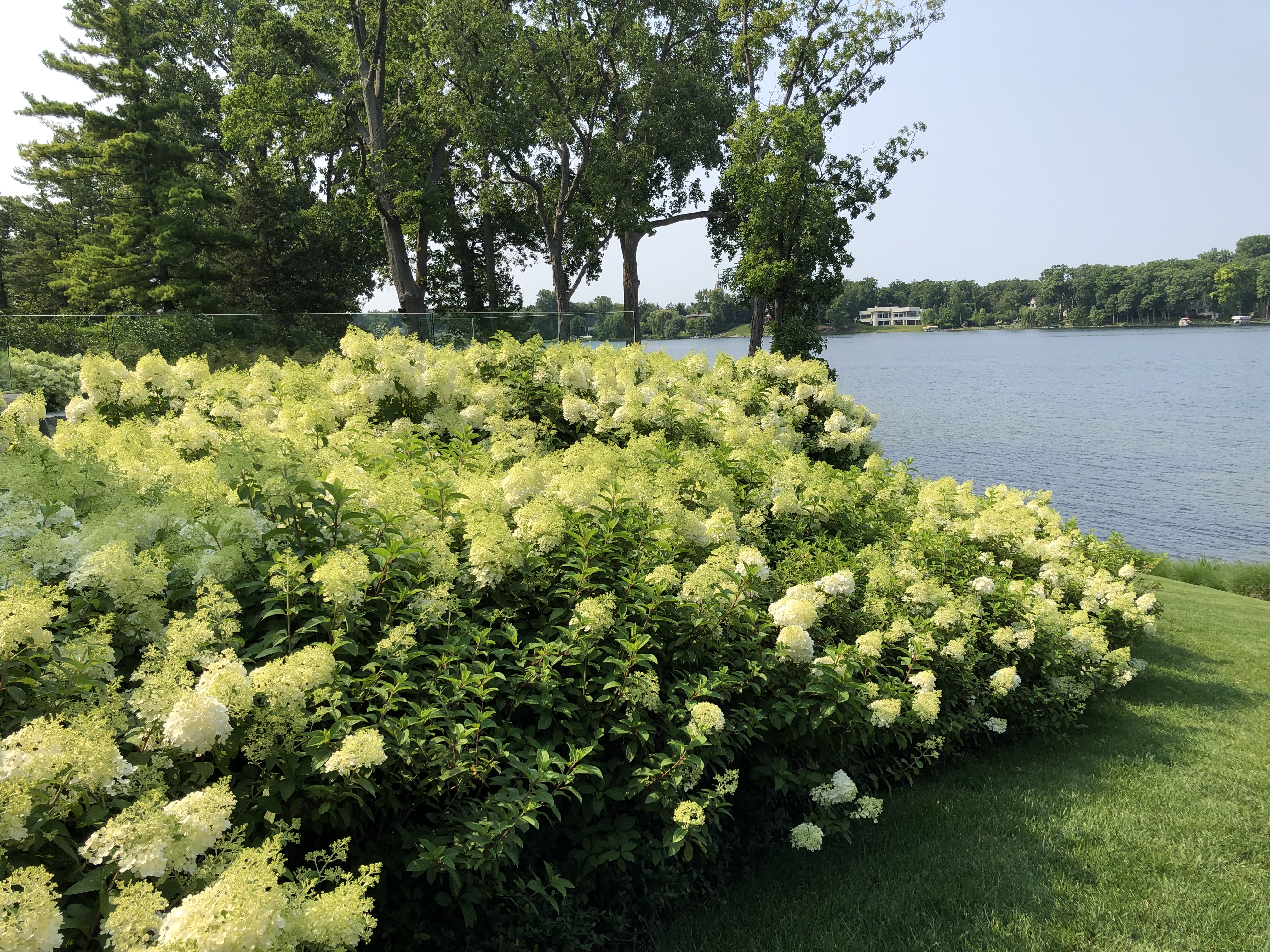
These Bobos are planted in full sun. Do not try this at home unless you have the patience and dedication to monitor the water closely. The flowers will burn and go brown if the plant lacks for water. Some afternoon shade is a good idea. If you have the room, massing hydrangeas can be an especially dramatic look. Their are no hard and fast rules about the spacing. The mature size of a Bobo is 3′-5′, so spacing them at 4′ apart will result in a billowy and undulating hedge. Spacing them at 36″-42″ inches on center refers to the distance from the center of one plant to the center of the next. This spacing will produce a denser hedge or mass. There are pros and cons to every spacing decision. But it is worthwhile to note that hydrangeas grow very fast.

A hydrangea of decent size in a nursery pot means the plants are most likely root bound. This means they will need to be watered faithfully, maybe daily, until they settle in. That water needs to be applied directly to the root ball. A newly planted hydrangea that goes dry can react with singed leaves and flowers.

Enough sun and water and some moisture retentive soil is all they ask for.

A mass of Bobo hydrangea

Even the north sides of these south facing hydrangeas bloom well.

mass of hydrangea Incrediball

On my driveway, a Limelight hydrangea on standard is getting ready to bloom.