 Once a year we have spring in Michigan, and this is it. Ha. Let that big talk on my part sink in a little. I am not at all sure we are having spring yet. Maybe what we have now is just a cold, rainy, and off putting version of pre-spring. Maybe I missed it – could our spring be just about over? Or is the real spring due here any minute. There are always caveats that come with any discussion of the change from one season to the next. Especially our spring. It was 35 degrees at my house this morning. It can safely be said that the interminable winter has shown some signs of moderating, and there have been tantalizing albeit brief instances of remarkably warm weather and blue skies. Nothing decisive yet. A cautious assessment is prudent. Nature can have a very hard time deciding to finally let go and get on with it. But all of the fits, starts and stalling make for some adult fun. Delayed gratification, they call this.
The hellebores are blooming emphatically, as they always do. They shrug off bad weather. Many of the small spring flowering bulbs have appeared, bloomed and already vanished. The eranthis, galanthus, chionodoxa, scilla, crocus, adonis, puschkinia, muscari, and a considerable cast of others, appear on their own schedule, and brave the stormy weather for better or worse. Some years the flowering is stingy, and other years profuse. You don’t know which way that world will turn until the day before.
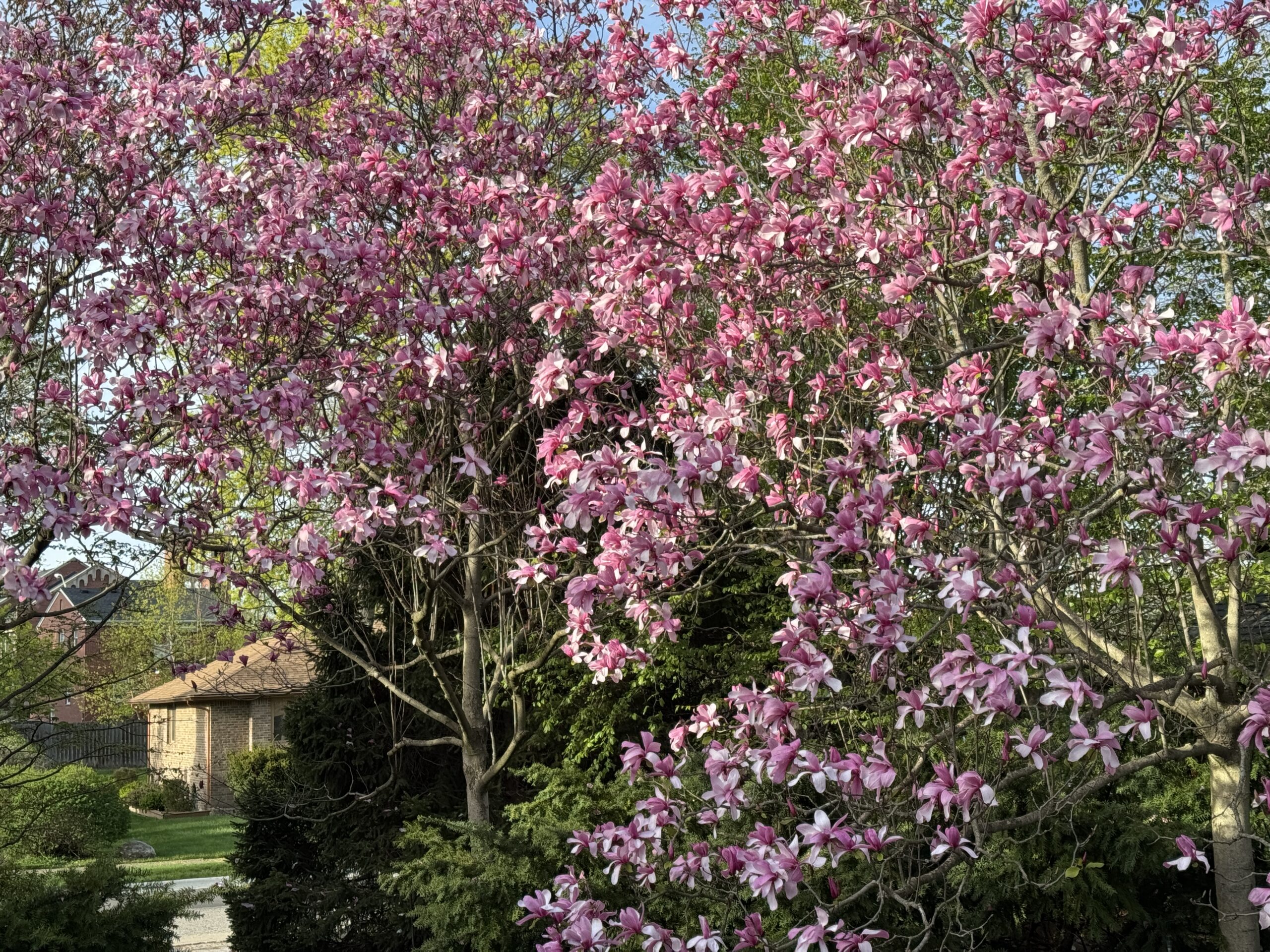
One of my favorite spring moments are the magnolias. Their habit of growth is quite architectural, as are the branches, bark, buds, flowers, leaves, and seed pods. Visually stunning in every aspect, in all the seasons. They make a beautiful specimen tree. There are a number of magnolia soulangiana in my neighborhood – a community which dates back to the early 20th century. It was a popular tree then, and the old trees I see now are still beautiful and healthy. But their flowers can be a victim of a bumpy spring season. A late frost can can damage the blooms, or worse yet, reduce them to puddles of brown mush. A flash frost can leave brown petals dangling from the tree branches. This is a very unattractive and disappointing outcome. Magnolia Stellata is another victim. Mine blooms generously and over a goodly number of weeks only one year out of three or four.
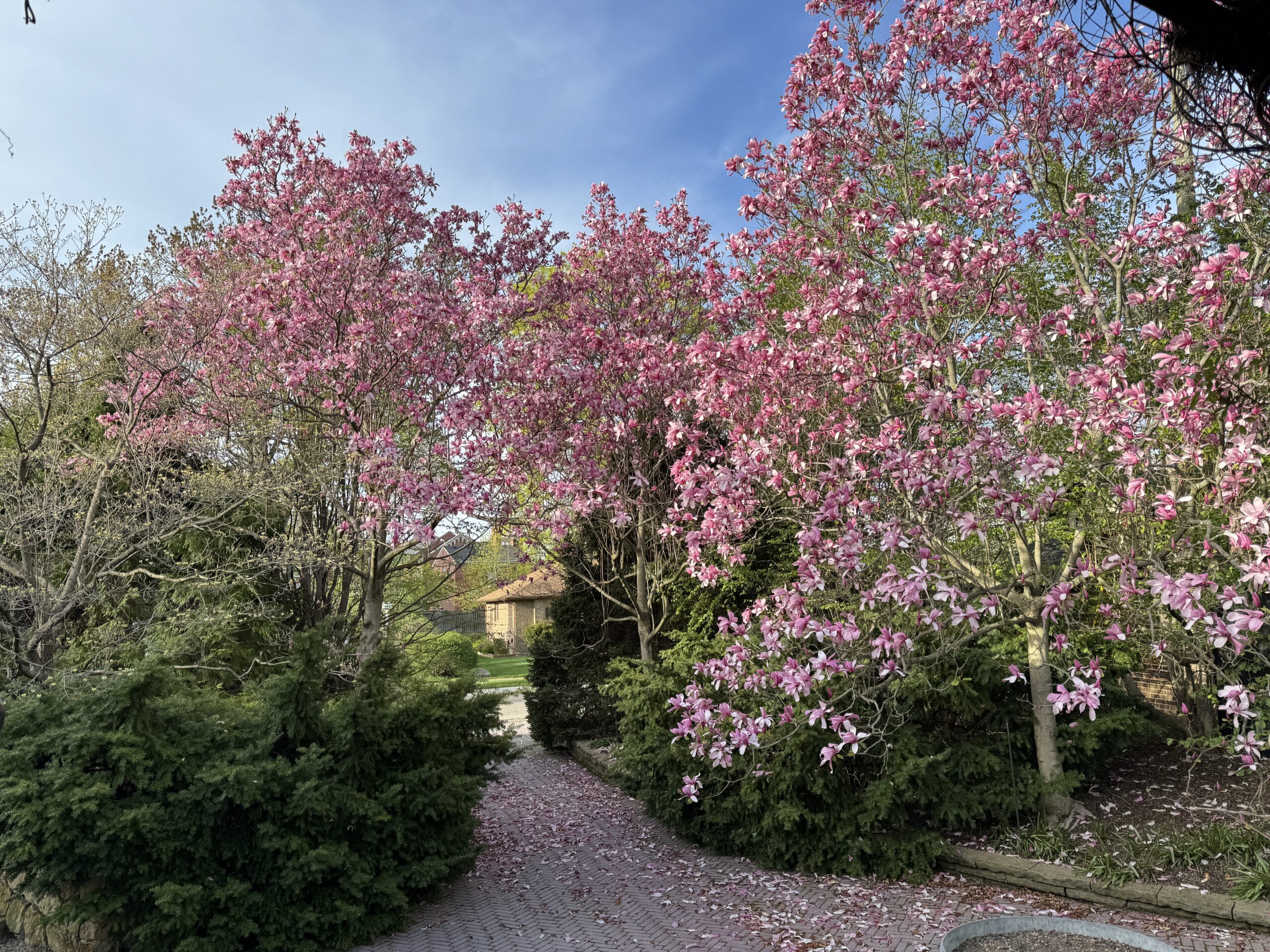
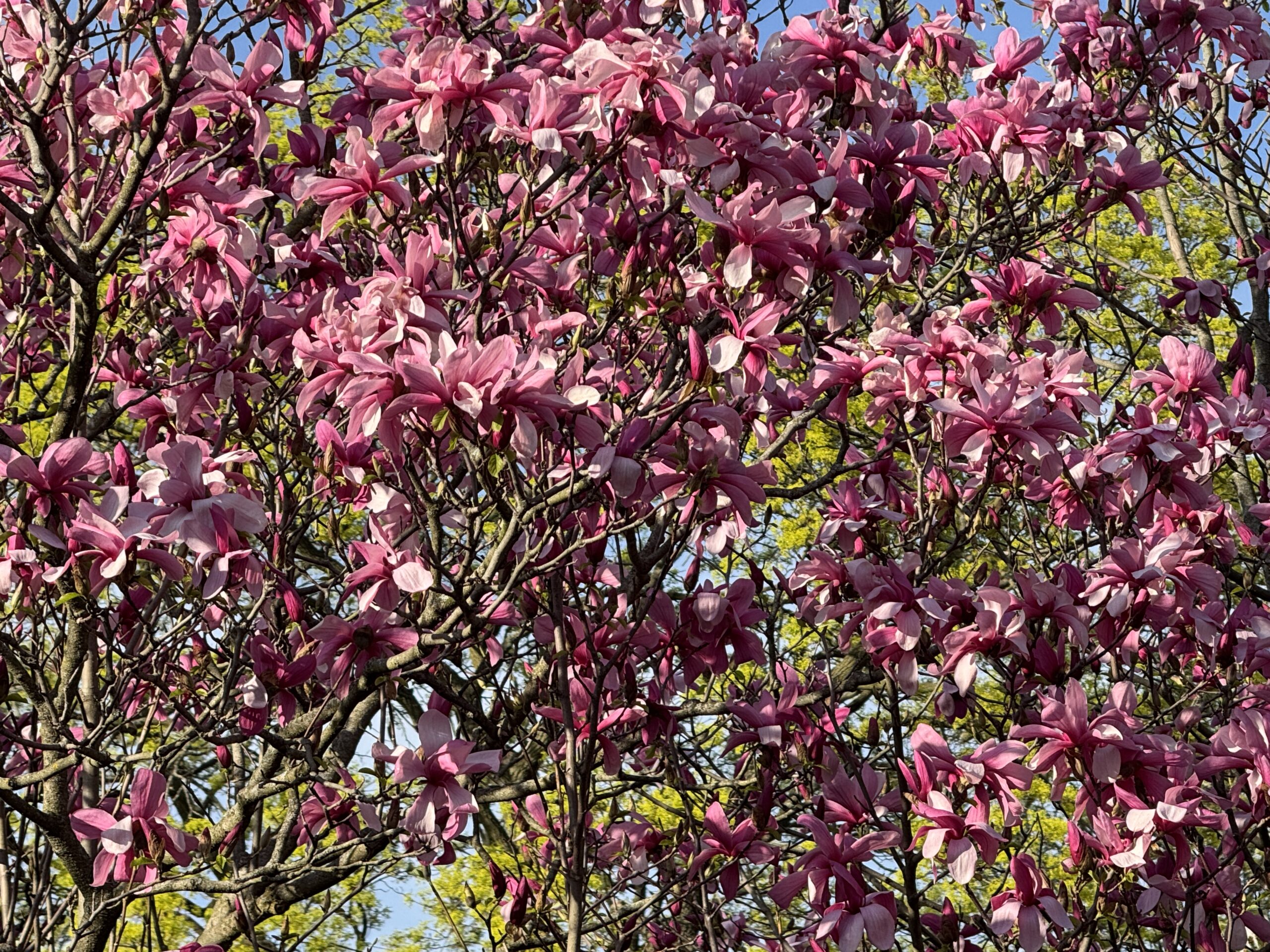 I have three magnolias in my yard which are surely 20 years old by now. The cultivar is named “Galaxy”, which is a National Arboretum plant introduction. The following is from their website: ‘Galaxy’ is an F1 hybrid selection resulting from a 1963 cross between Magnolia liliiflora ‘Nigra’ and M. sprengeri ‘Diva’. ‘Galaxy’ first flowered at 9 years of age from seed. The cultivar name ‘Galaxy’ is registered with the American Magnolia Society. Released in 1980. Magnolia ‘Galaxy’ is unique in form and flower among cultivated magnolias. It is a single stemmed, pyramidal, tree-form magnolia with excellent, ascending branching habit. ‘Galaxy’ flowers 2 weeks after its early parent M.‘Diva’, late enough to avoid most late spring frost damage. Adaptable to a wide range of soil conditions” The late flowering is almost an essential condition for a good choice of magnolia in my zone. The other condition this tree favorably adapts to is its upright habit of growth. I live on a very small city property without the room necessary for a wide growing tree. Even the neighborhood shade trees in the right of way look unhappy, having been jammed into a space that is too small.
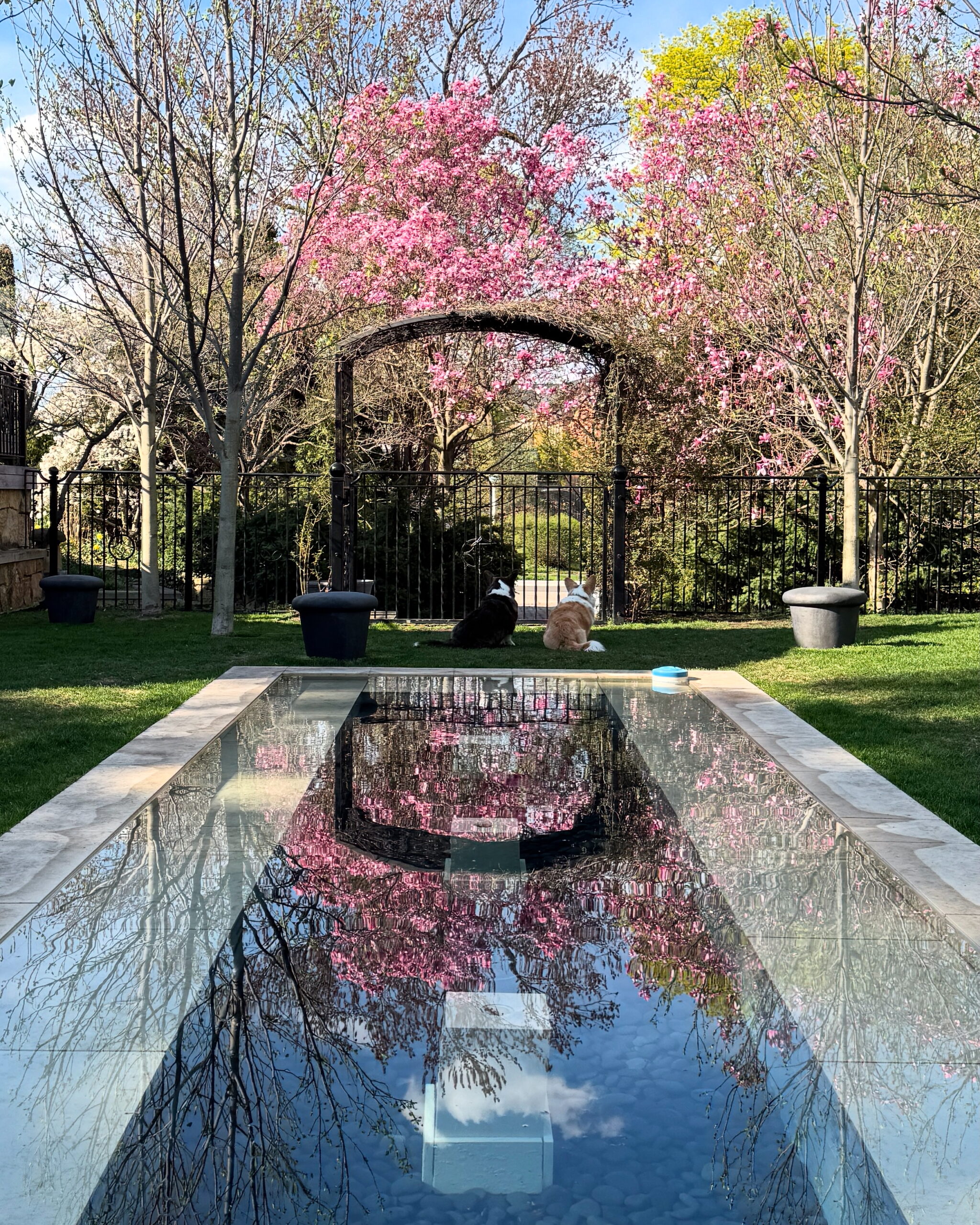
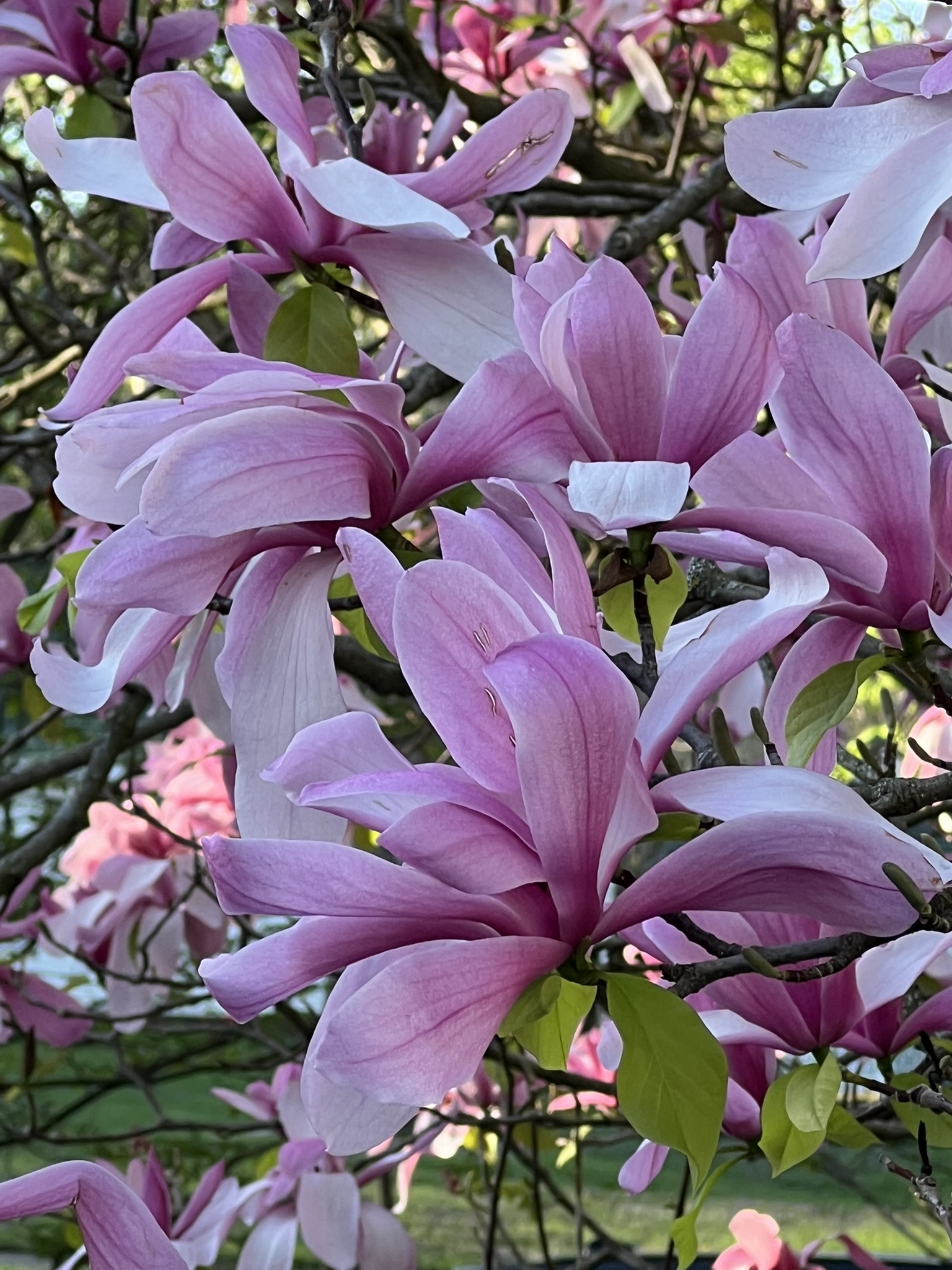 As for the flowers, when they are good, they are glorious. The oversized multi petal blooms are the showgirls of the tree flowering world. No other tree can compare, no matter which cultivar you plant. This year, the flowers are beyond fabulous. Not only are the flowers large and robust, the branches of all 3 trees are covered with flowers. They started to open 3 weeks ago, and I could watch that process unfolding day after day. The chilly weather played a big part in creating a lengthy blooming season. Much like cut flowers held in a refrigerated room, cool air temperatures prolong flower life. Once the flowers have been in bloom for a while, the branches begin to leaf out. There is that brief moment where flowers and leaves are vying for attention.
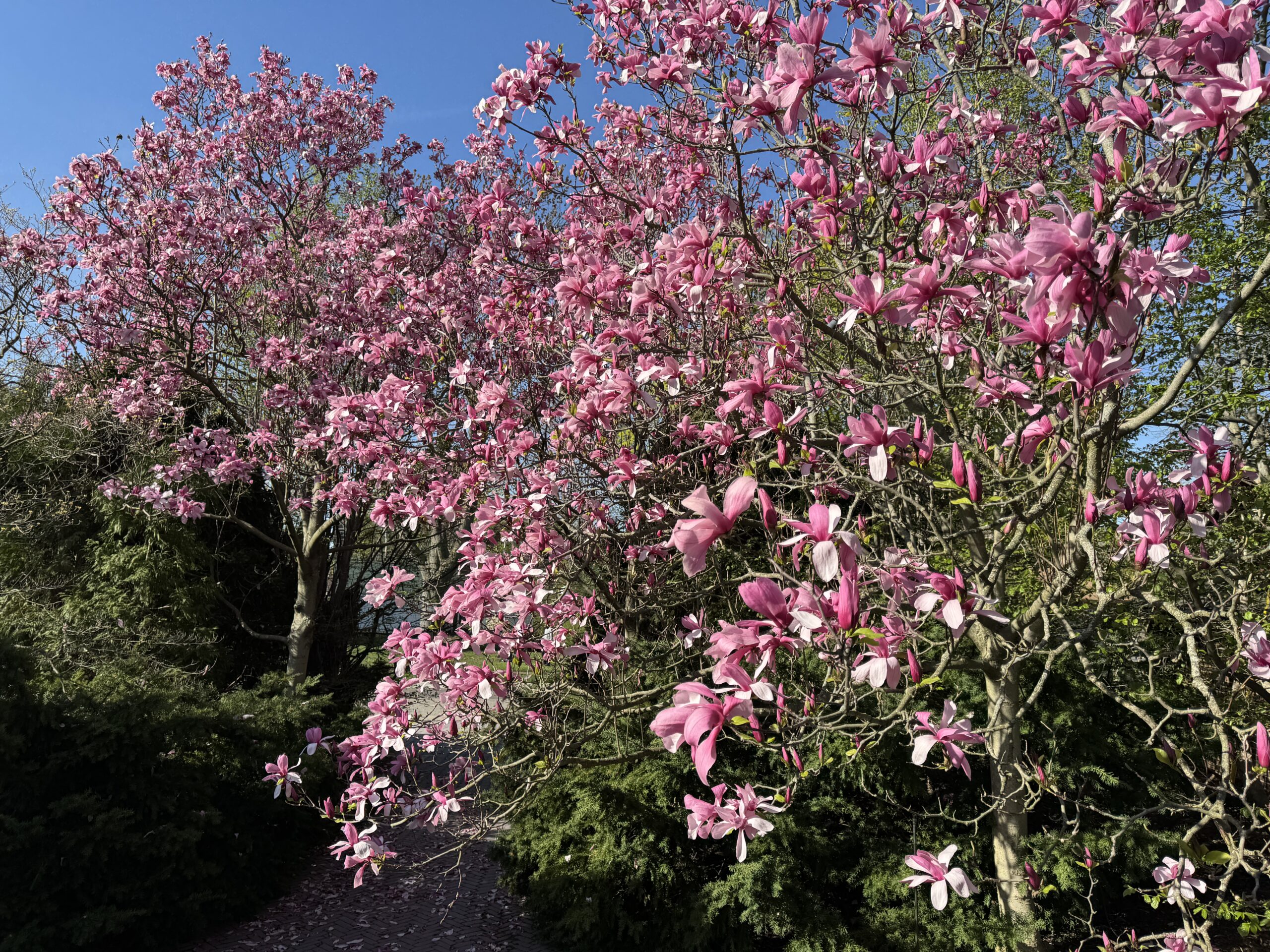
All trees flower. Some tree flowers go unnoticed, they are so small or otherwise inconspicuous. These magnolias are interplanted with three Parrotia Persica. Related to witch hazel, parrotias produce small red tassel like flowers along the branches in early spring. The red color is equally subtle. I rarely notice the flowers, unless it is a heavy blooming year, and I am standing nearby. Some flowering trees alternate heavy bloom years, as if the recovery from all the energy expended to put on that show takes a long time. Dogwoods and Yellowwoods have a blooming routine like this.
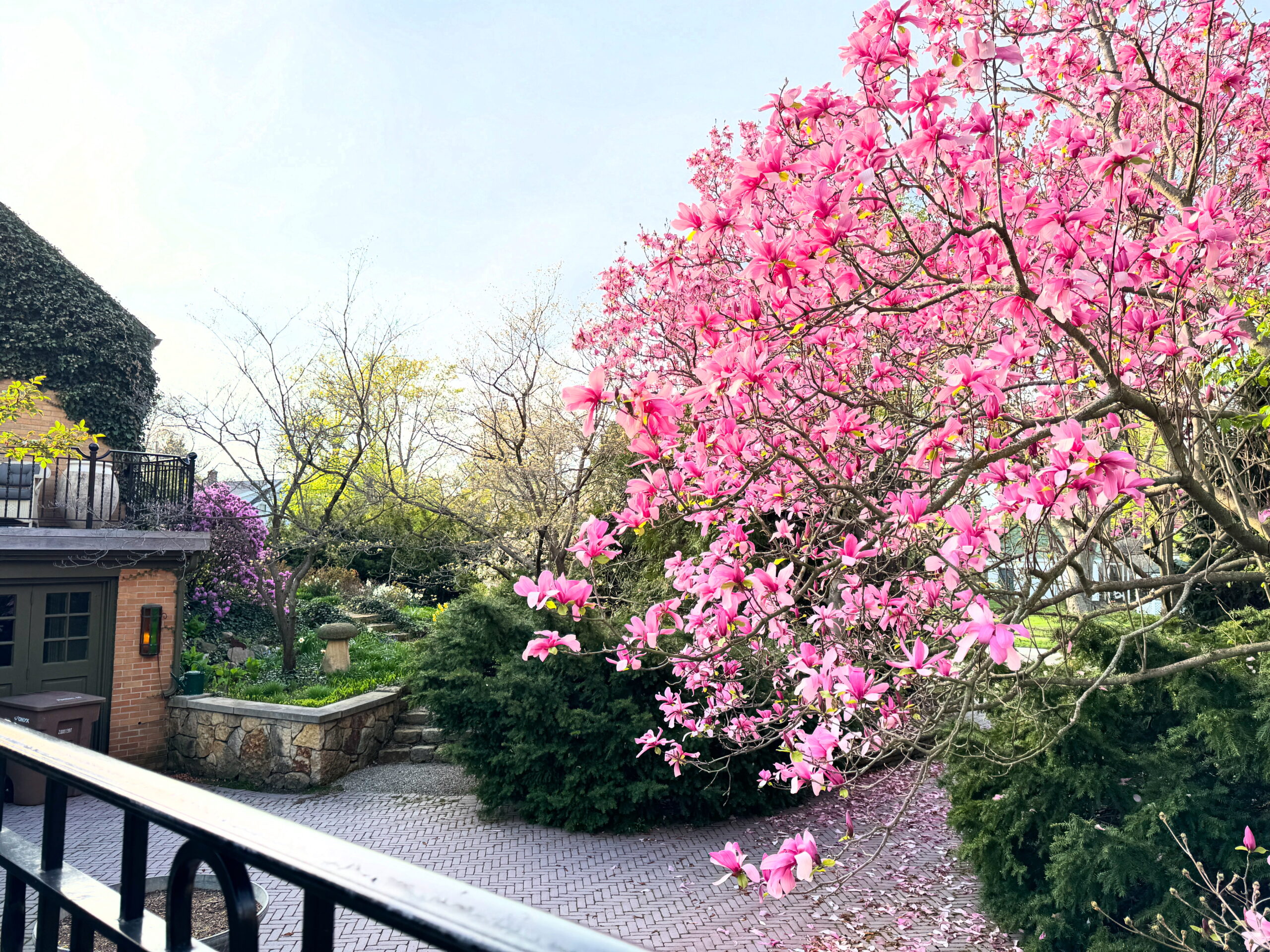 It’s easy to feel ambivalent about spring flowering trees. Do I like them? Some years they all seem breathtaking and gorgeous, like the most beautifully orchestrated and dramatically choreographed ballet ever staged. Other years I avert my eyes at the silliness. How can any plant as stately and serious as a tree have pink flowers? I must be having an on year; I am thoroughly enjoying my trees, and all the other spring flowering trees I am seeing in lavish bloom. The lavish part plays a significant role in this. Conditions favorable to significant bud set the past growing season has resulted in a bumper crop of flowers this spring season. Any plant blooming its heart out is just cause for celebration.
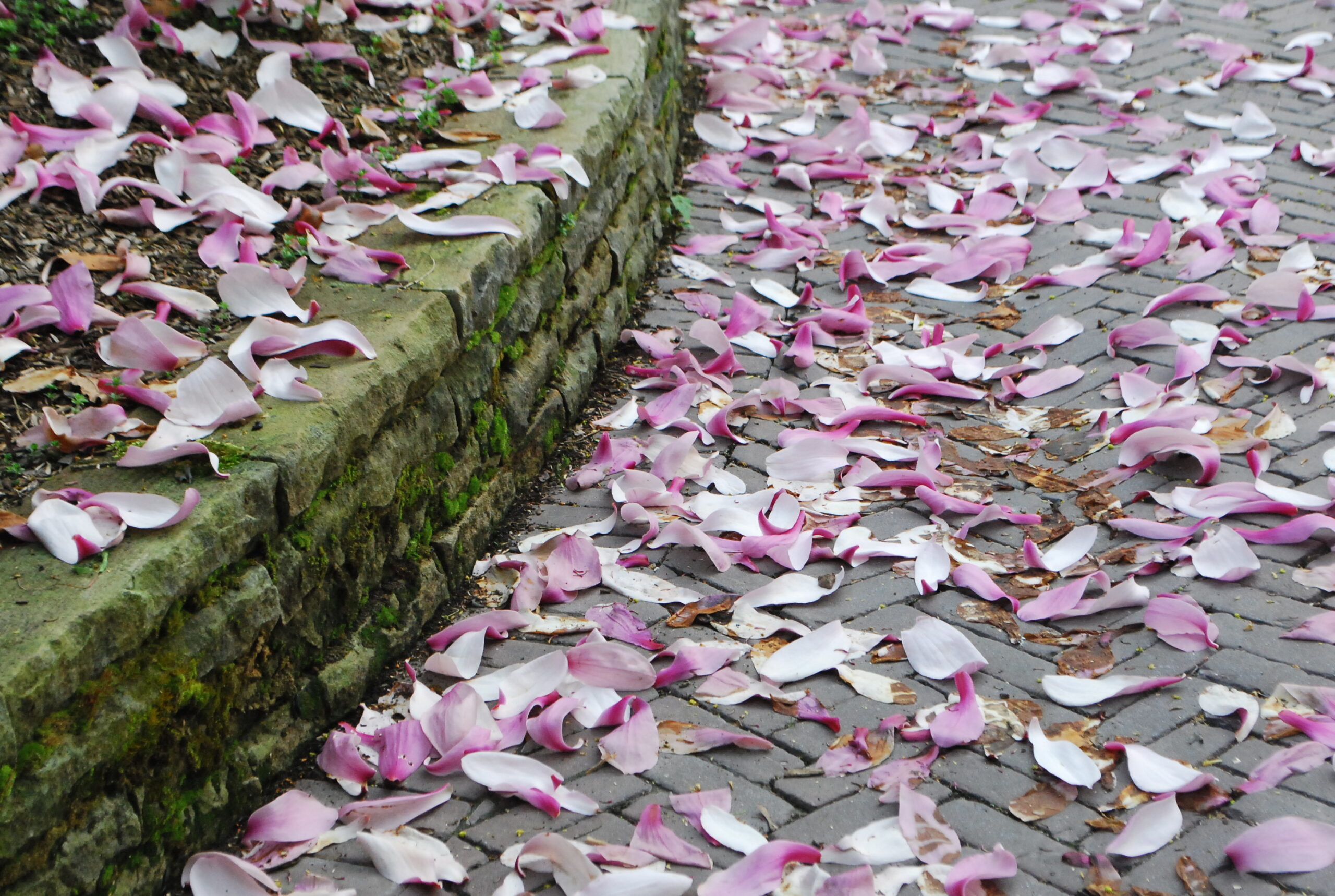 This first week of May is the beginning of the end of it. The subtle sound of the petals dropping on my driveway can be heard, should I make a point to listen. As the petals pile up, so do the memories.
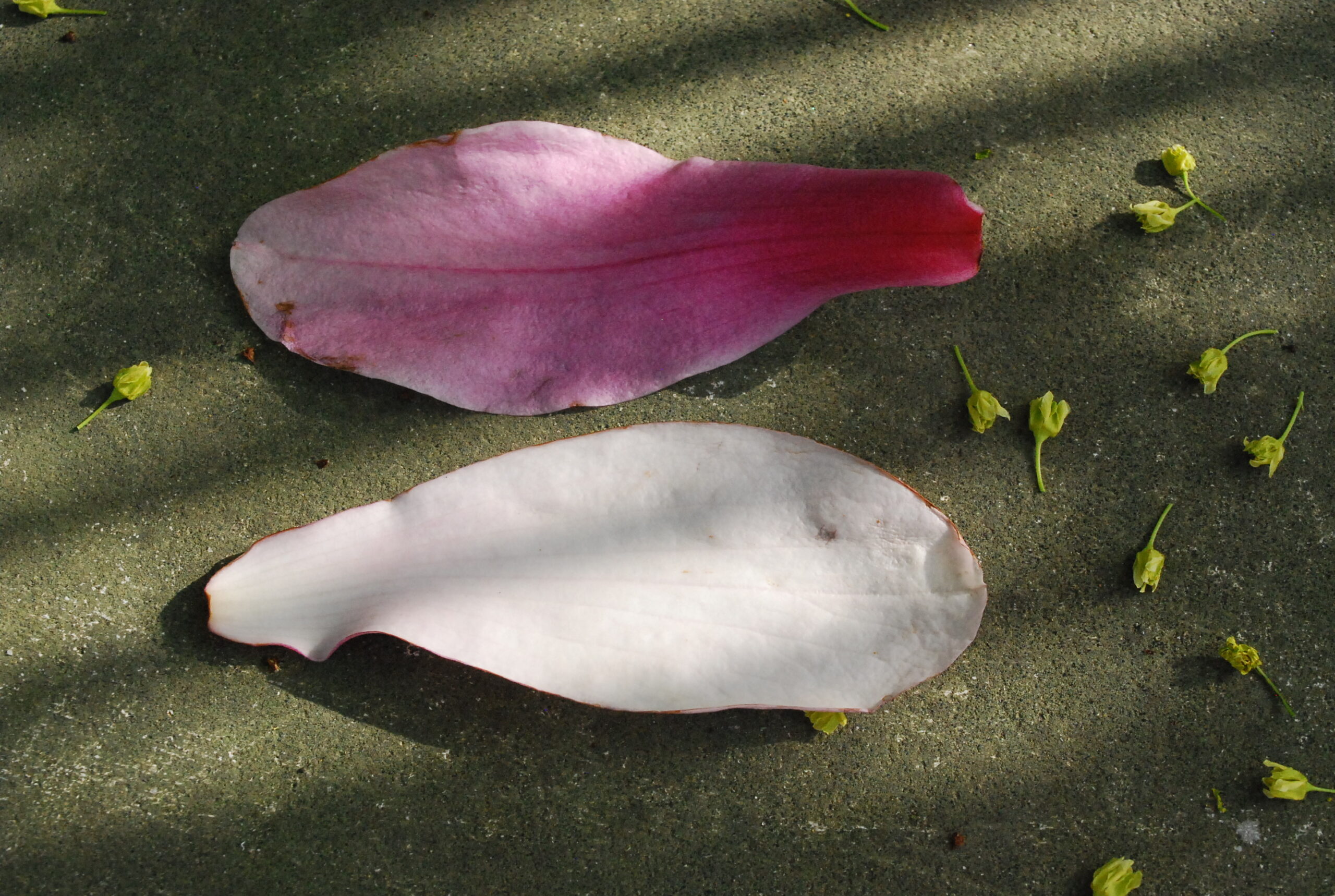 Spring. This is it.
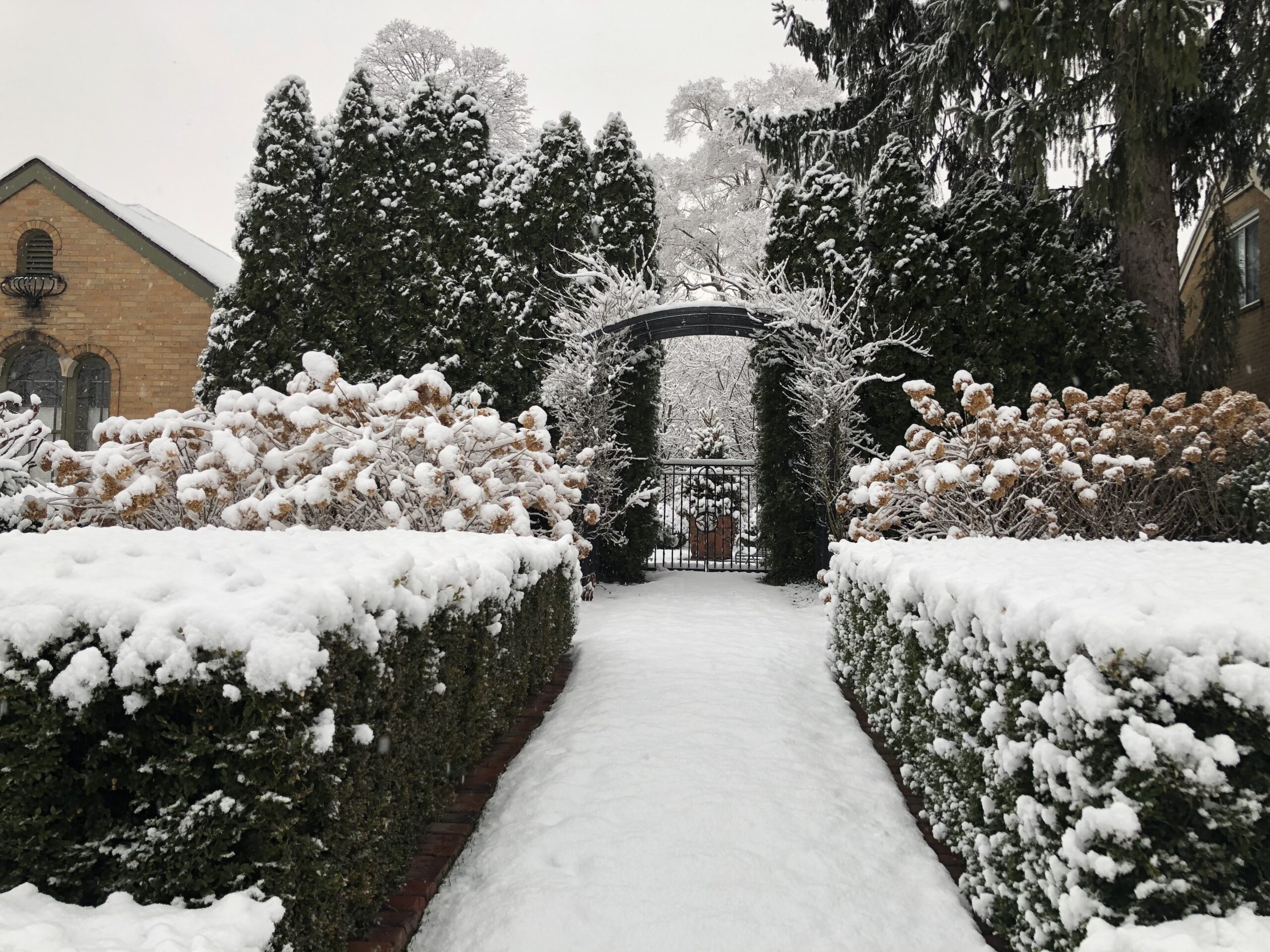 The picture above was taken in the early morning of Jan 3, 2021. I remember waking up well before dawn to a landscape whose every surface was transformed by mounds of snow. Giant snowflakes floated downward on the still air like feathers, and stuck to whatever surface they touched first. The quiet was disconcerting. My yard was truly a fairyland – the first time ever quite like this. Every shape in the landscape was faithfully described and added to by this extraordinary snow. Within minutes of opening my eyes, I was dressed, out the door, and marveling. I took photographs for several hours, and several hours after that the snow had completely melted and was gone. This was an incredible weather event of breathtakingly striking and shocking beauty, the likes of which I had never seen before.
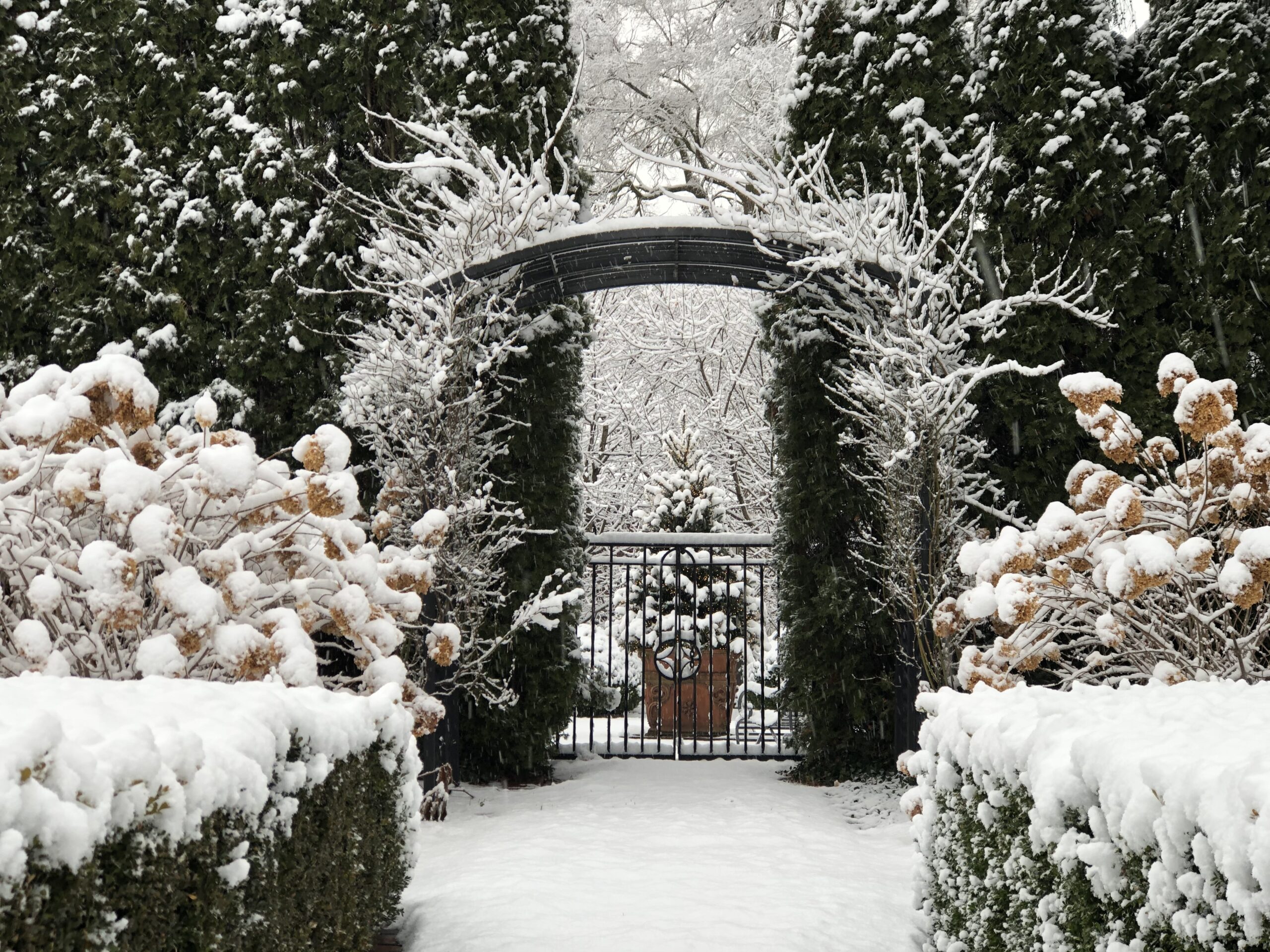 That snow dispassionately described the landscape design. I was happy about what that revealed. A good landscape composition celebrates the depth of a space by beautifully revealing its background, mid ground and foreground. Of course a landscape is a sculpture – a three-dimensional object, if you will. Great landscape design explores that uniquely spatial quality created by land and sky-and edges. I can’t really explain what I mean by edges, except to say that everything and everyone has them. Expressing depth in a composition fuels the means by which a landscape space can be wrought and experienced. A design. Depth in a landscape composition creates mystery, and reveals surprising outcomes at unexpected or opportune moments. Some designers describe this as flow. Others describe this as rooms with transitions in between. The background space above is a thicket of tree branches indicating trees that are a ways away. The focal point of that background space is a a centrally located container with a cut evergreen tree inside. That planter box is in the front of the back – ha. The mid ground space is defined by the hedge of arborvitae that is open in the center to permit travel and views through. The gate marking that entrance and exit is overseen by a steel arbor wreathed in a pair of John Davis roses. That gate explains how the end of the mid ground space becomes the beginning of the foreground space. That arbor is centered in the transition between the front and the back. It also separates the public space from the private. The structure of those climbing roses in the snow is every bit as beautiful here as they are in bloom in June. I mean this. The foreground space features Limelight hydrangeas, faced down by hedges of clipped boxwood, and opens up to a widening path of snow covered grass. This composition features layer after layer of plants from front to back. What is it that makes the relationships established by this design so dramatic and clear? The weather.
 Our most recent snow was not nearly as spectacular as the 2021 storm, but it was good nonetheless. The skirt of this container is set with cut evergreen boughs that radiate out from the center. A second set of evergreen boughs are set on end against the centerpiece. Separating the vertical fir from the horizontal is a loosely defined ring of green and white pine cones in a nest of lights. A single evergreen material has special visual interest given its multi-dimensional placement. This simple arrangement with only a few elements is all the more striking given the landscape around it. The snow tells that story.
 A different year in this location, the container sparkled with an abundance of lights. An unusually textural snow cover produced yet another visual version of this landscape. Over the course of a year or a gardening season, the weather should play a major role in the landscape design. I am an advocate of landscape design which takes a sweeping bow to that element we call nature.
 That same night, the snow illustrated the transition between the driveway and the fountain garden. The pots, arbor and fence occupy that mid ground. That middle ground space can be the most difficult to define and develop in a landscape. It sometimes involves putting an idea or an object or a plant out there in the middle and building from there. Starting a design at the front or the leading edge or the beginning is not necessarily the best or only way forward. A landscape will speak back, if you give it sufficient time. This mid ground space took many years to establish. There is no substitute for age on a landscape.
 This is as close as I have been to that extraordinary snow in 2021. I am happy for it. Beautiful snow is a hallmark of our winter. Having a well designed landscape on which beautiful snow can act makes the winter season welcome, yes. The fence pictured above, punctuated by a gated arbor and flanking pots, is not that unusual a treatment of an outdoor space – but the considerable change of level does give pause. But the simple arrangement of bold and thoughtful forms emphasizes the main idea. The legibility of intent is key to good landscape design.
 Most of my landscape is going on 28 years old. That age has enriched design decisions made decades ago. Sometimes it is good to stay the course, and see what grows.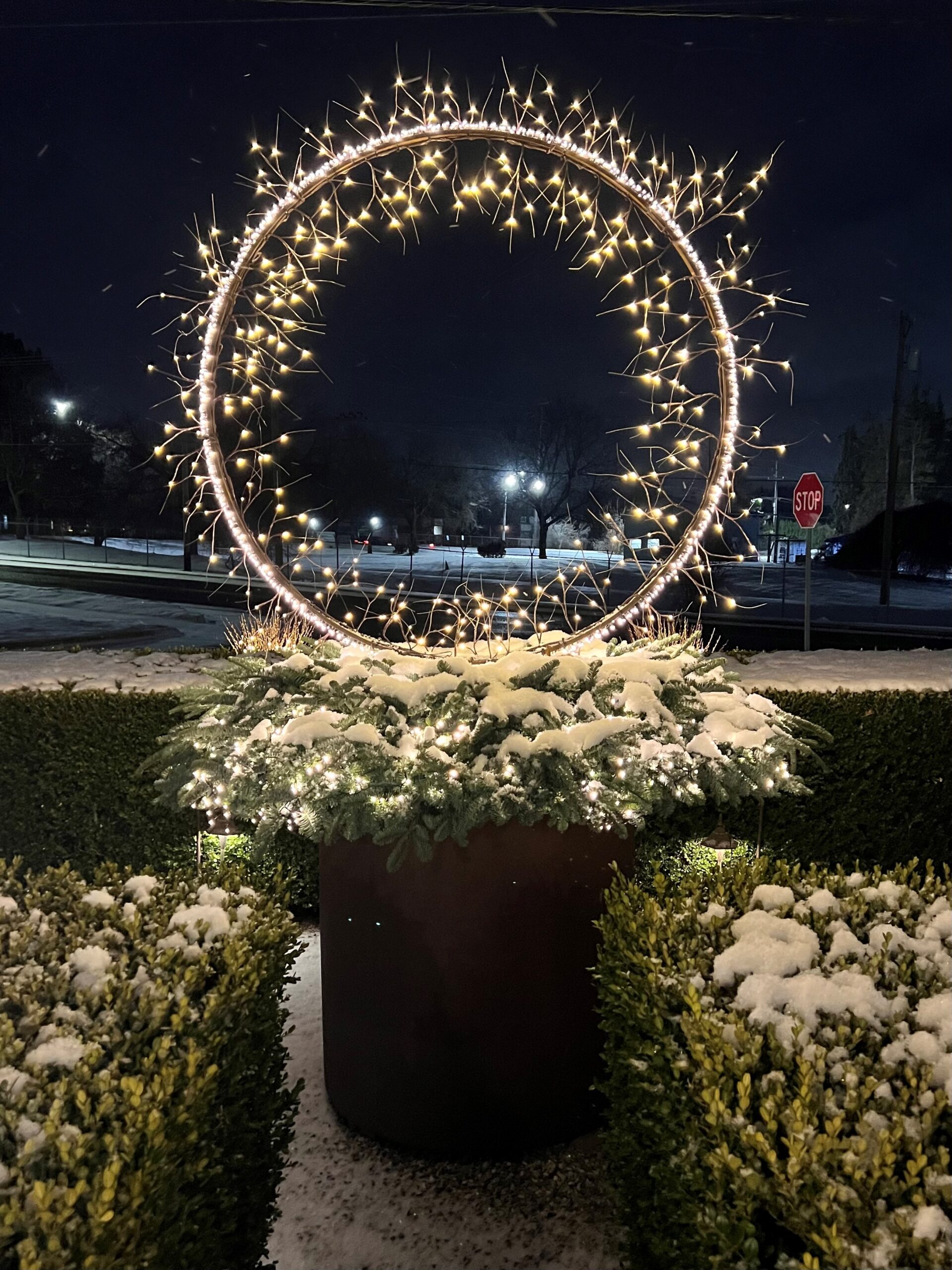

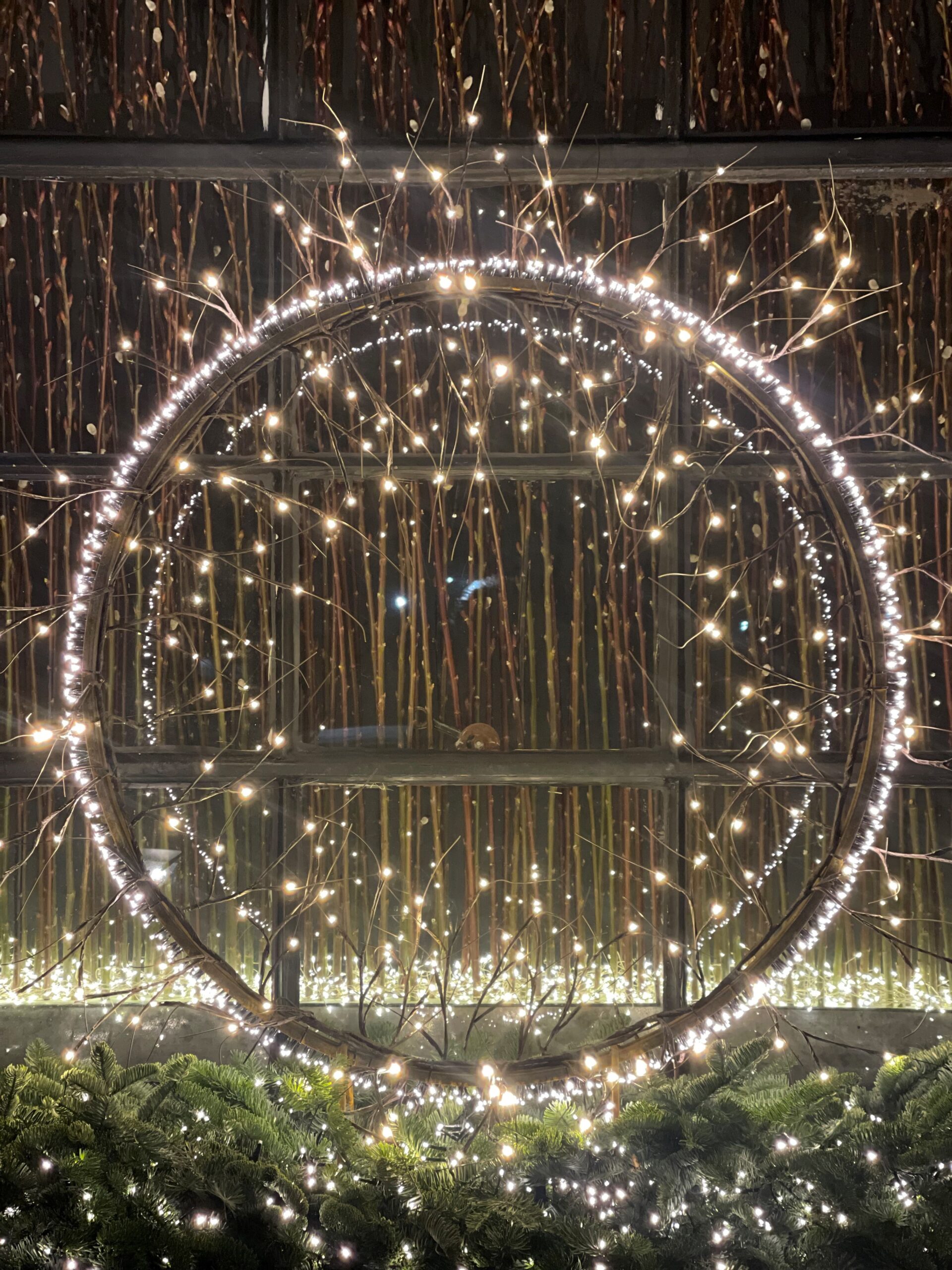
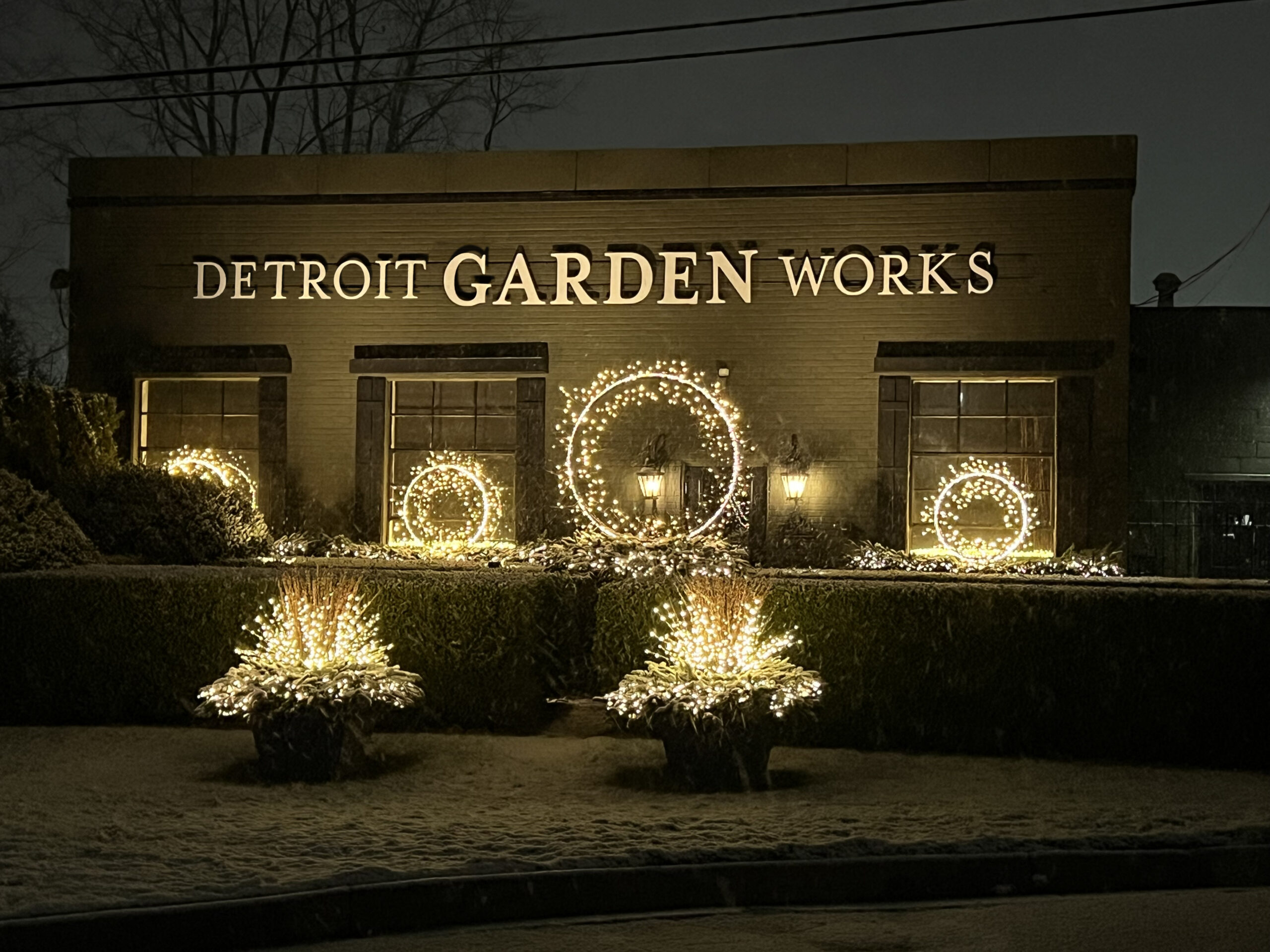
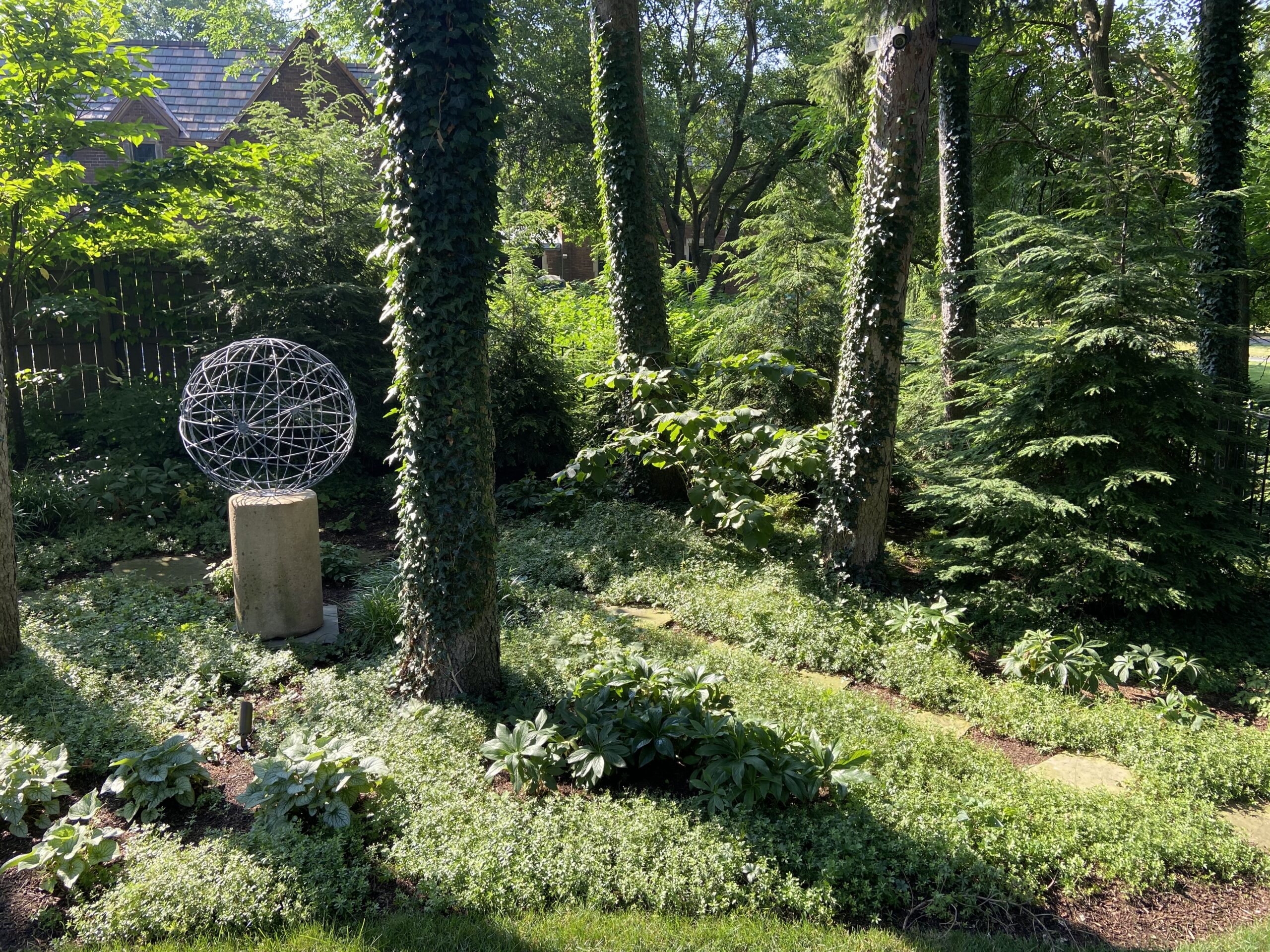
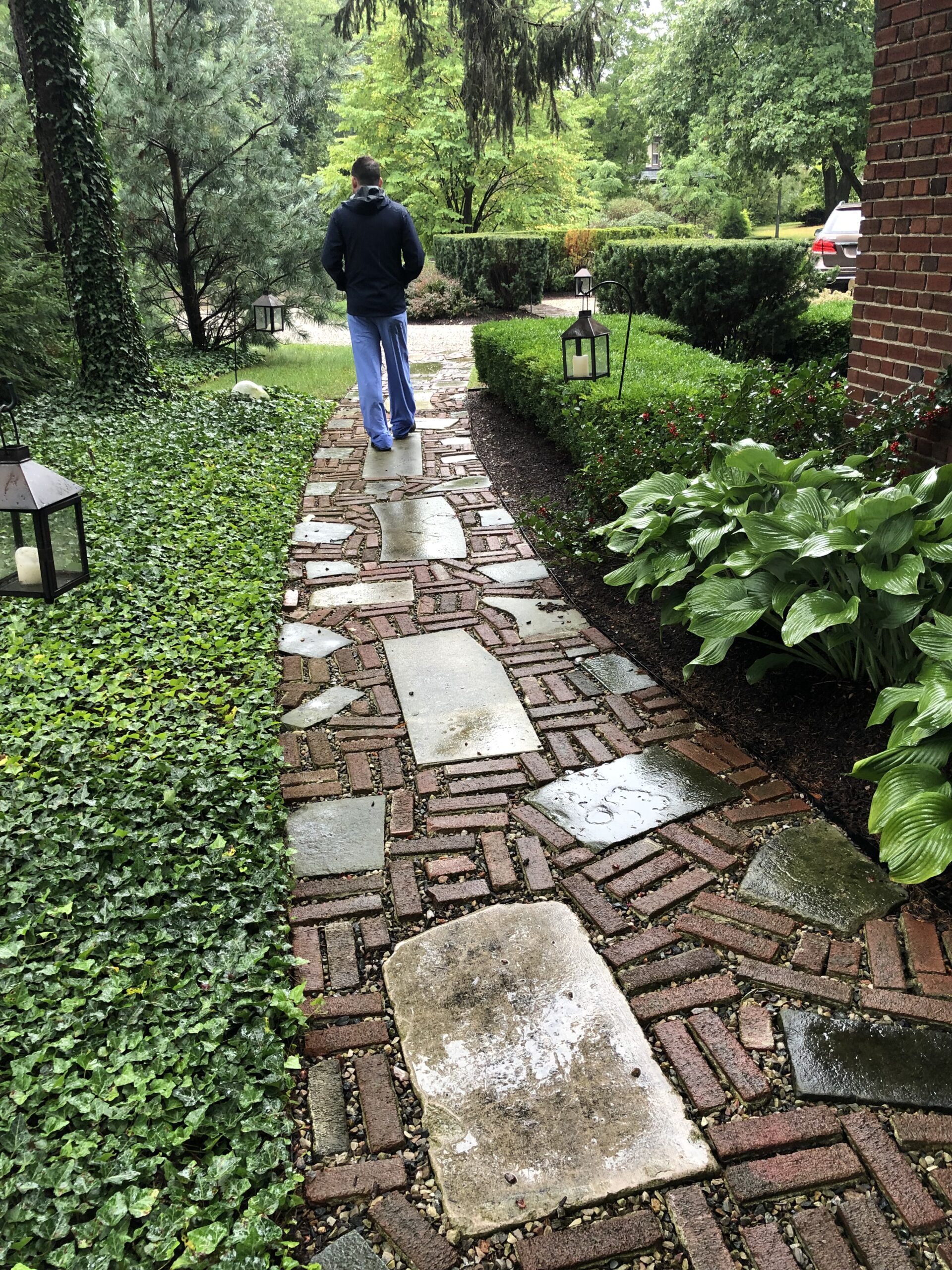
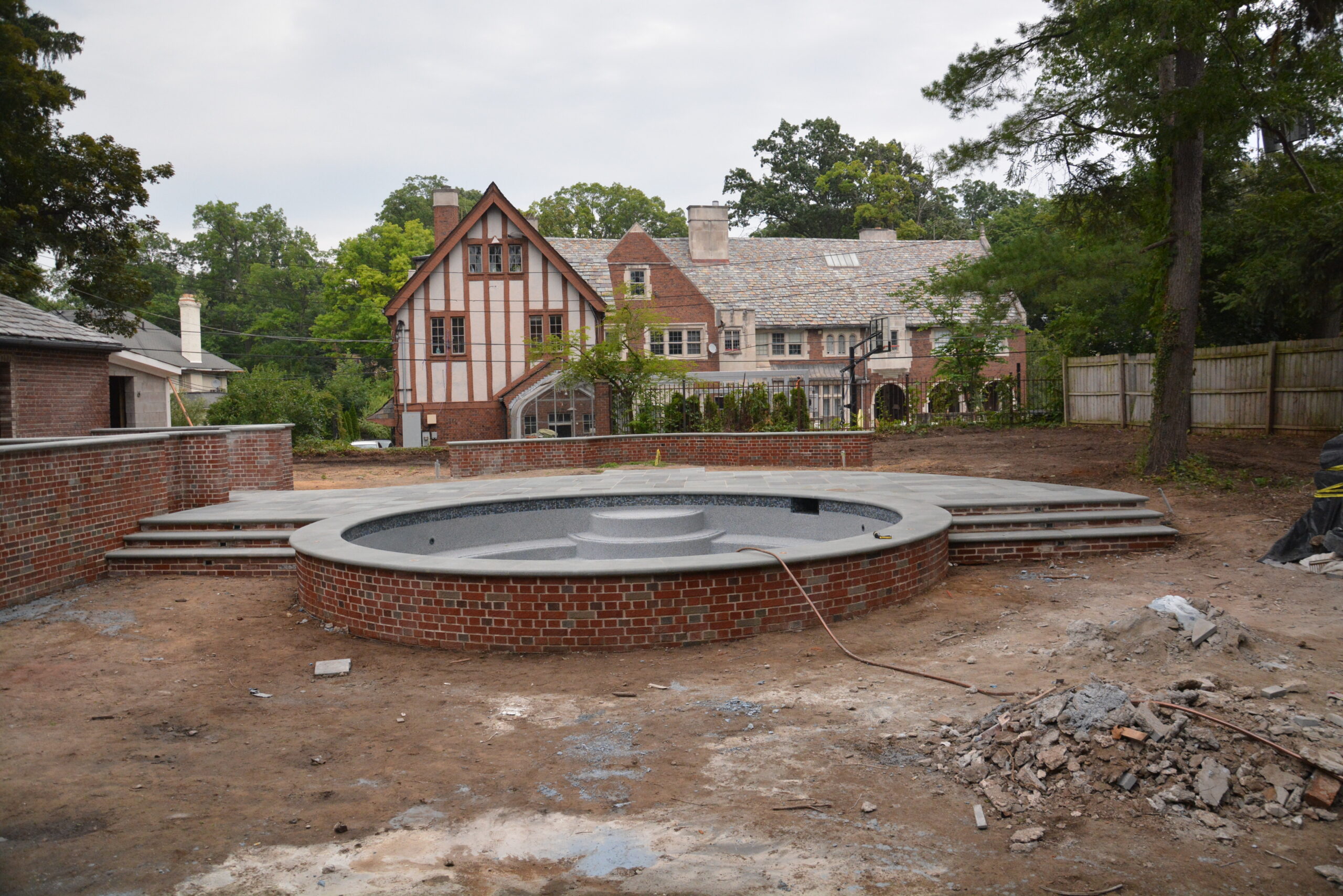
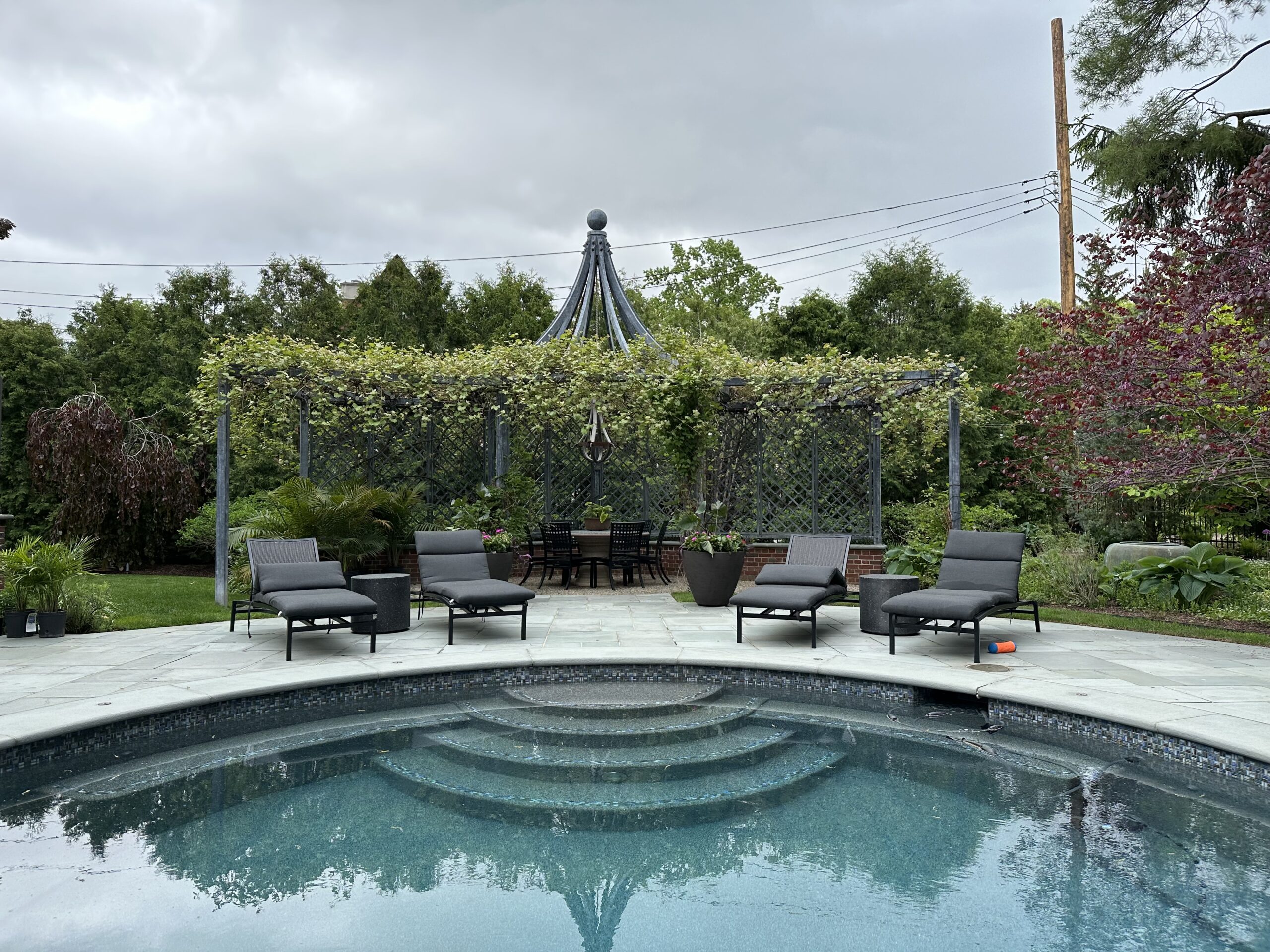
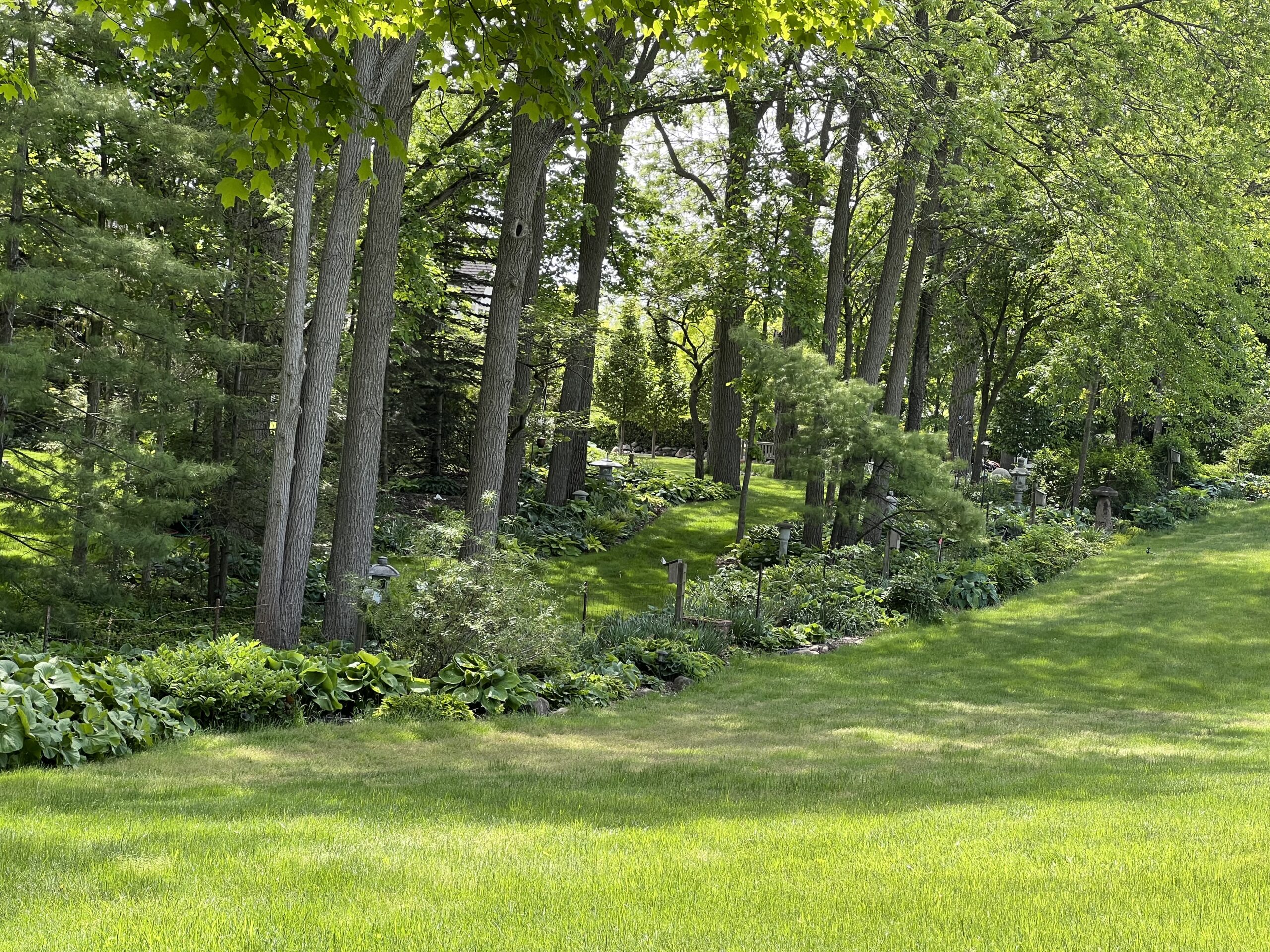
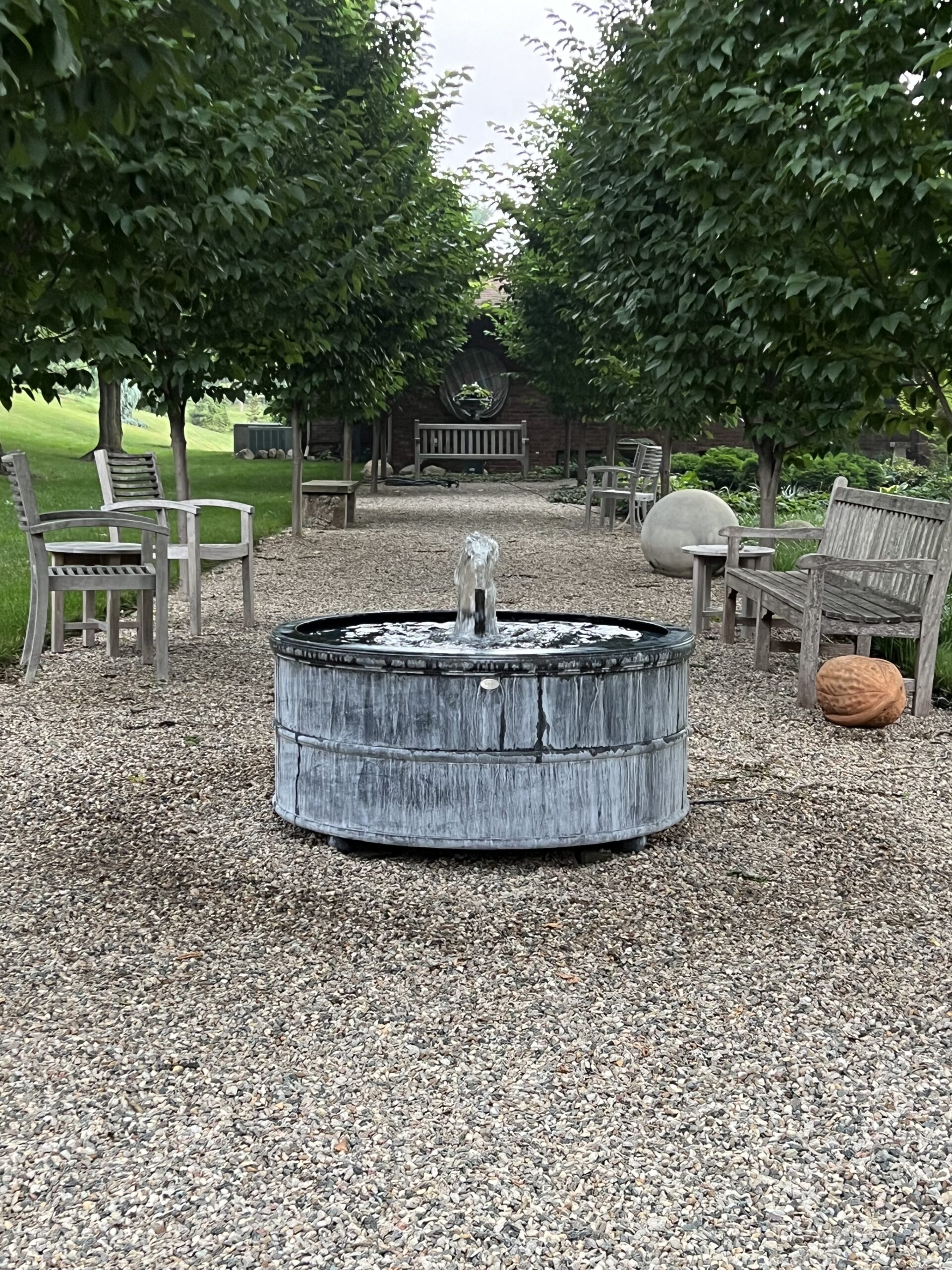
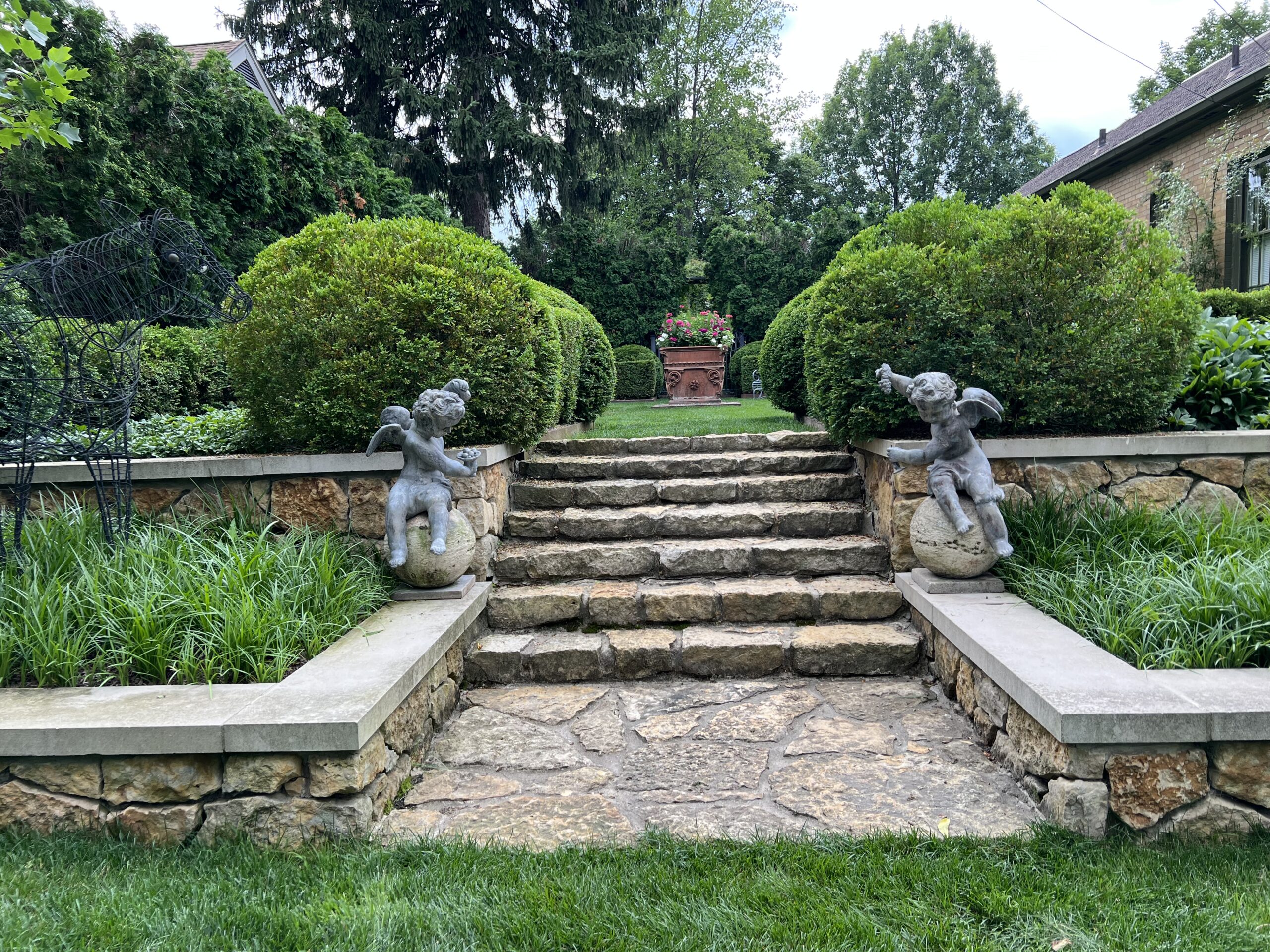 I am not posting any pictures of the fountain garden. Better that you see it in person. It is completely and shockingly different than it once was. Everything has a life span, including a landscape and garden. This part of my landscape has only been in 2 years.