At A Glance: A Collection Of Fall Containers

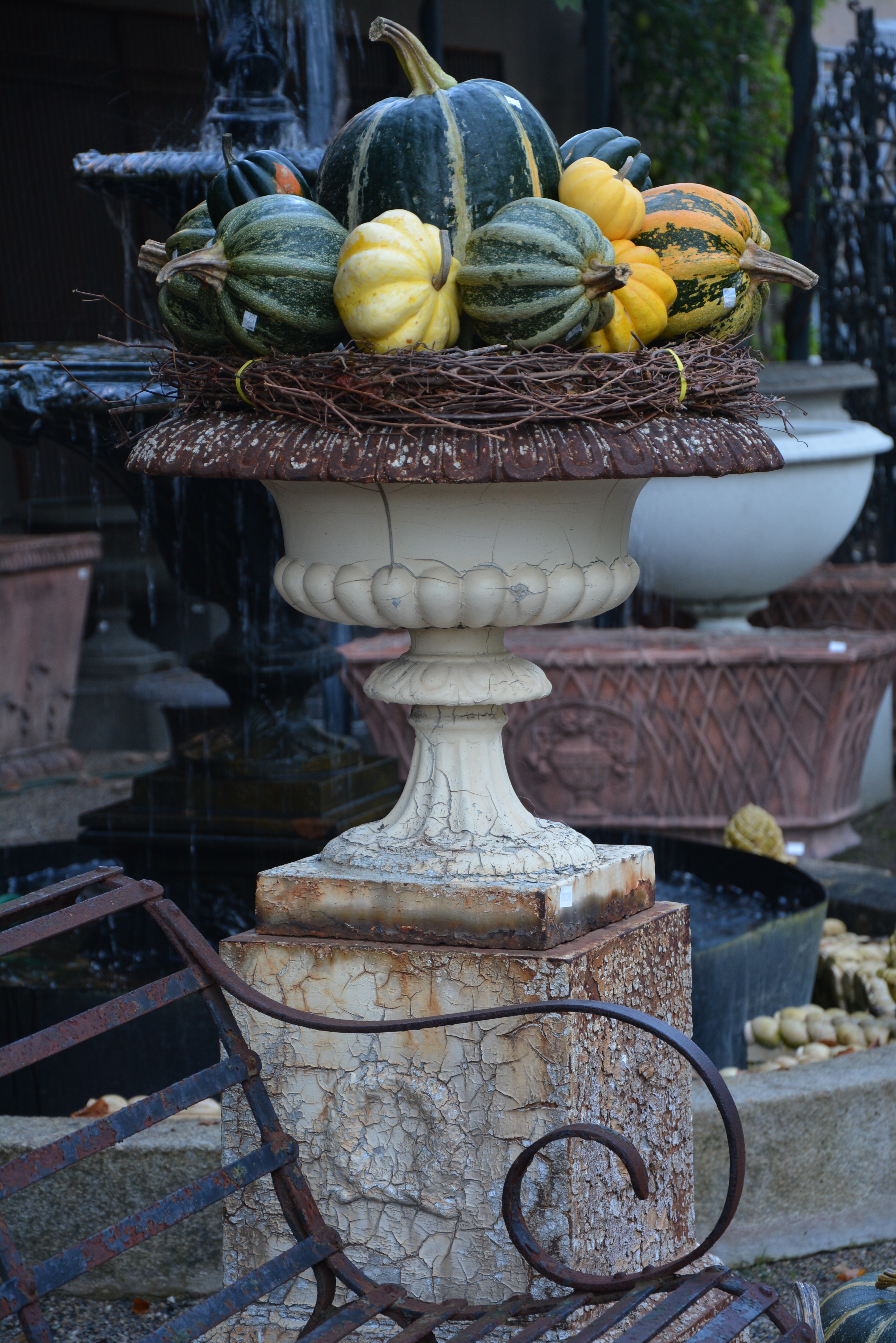
pumpkins and gourds 2013 (39)bok choy, violas and pansies

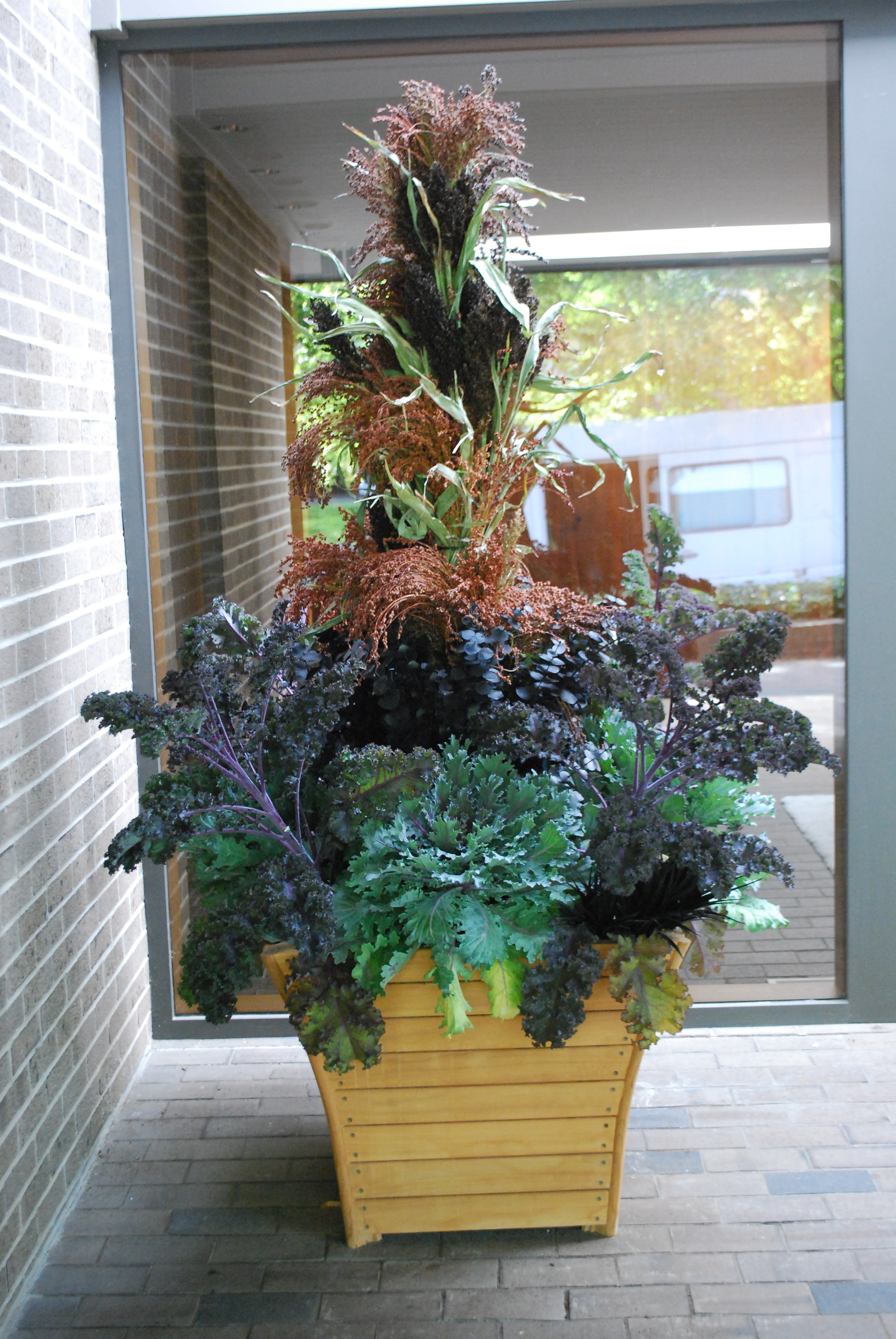
October container 2eucalyptus, broom corn, cabbage, and kale
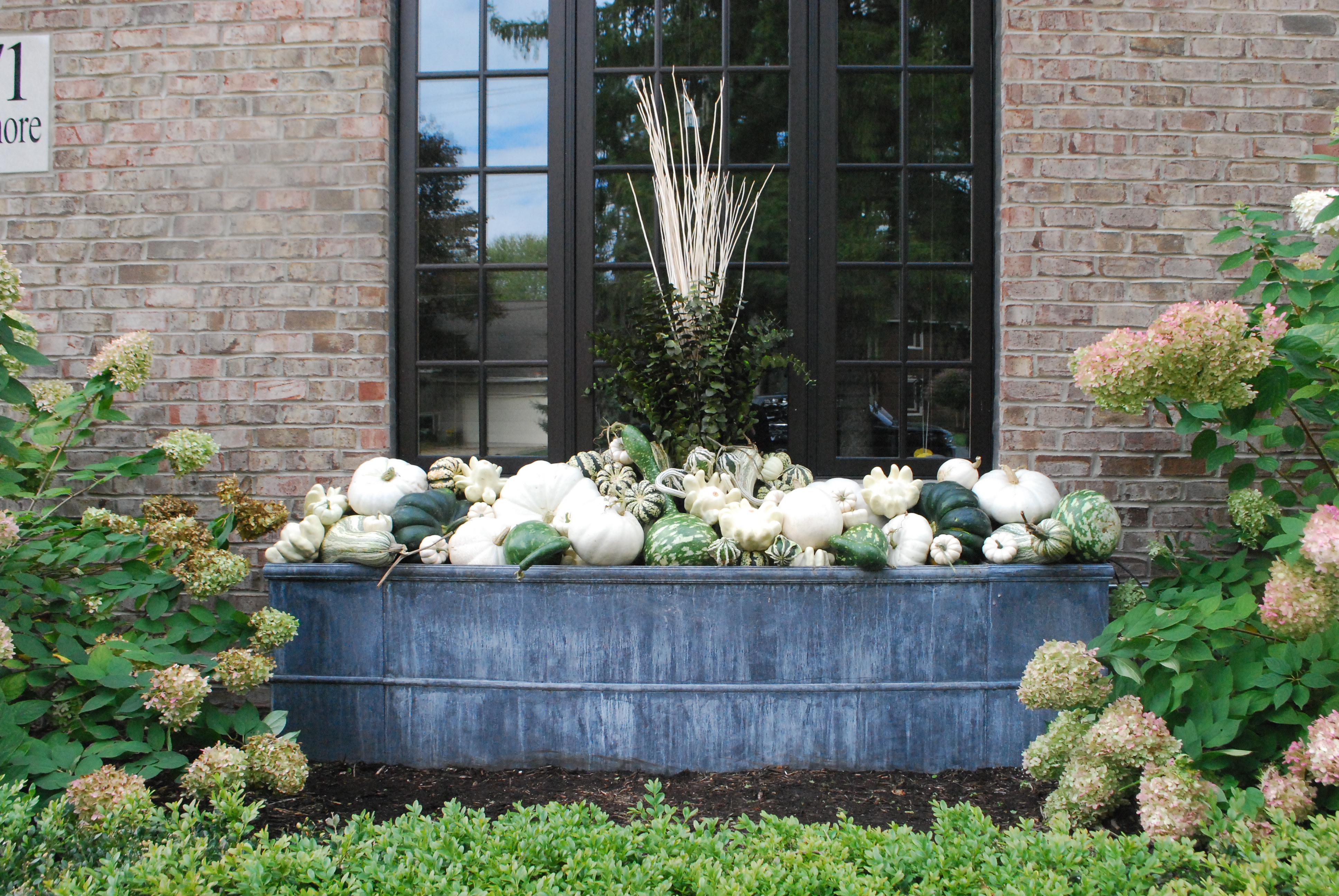
fall containers 019bleached sticks, eucalyptus, green and white pumpkins and gourds

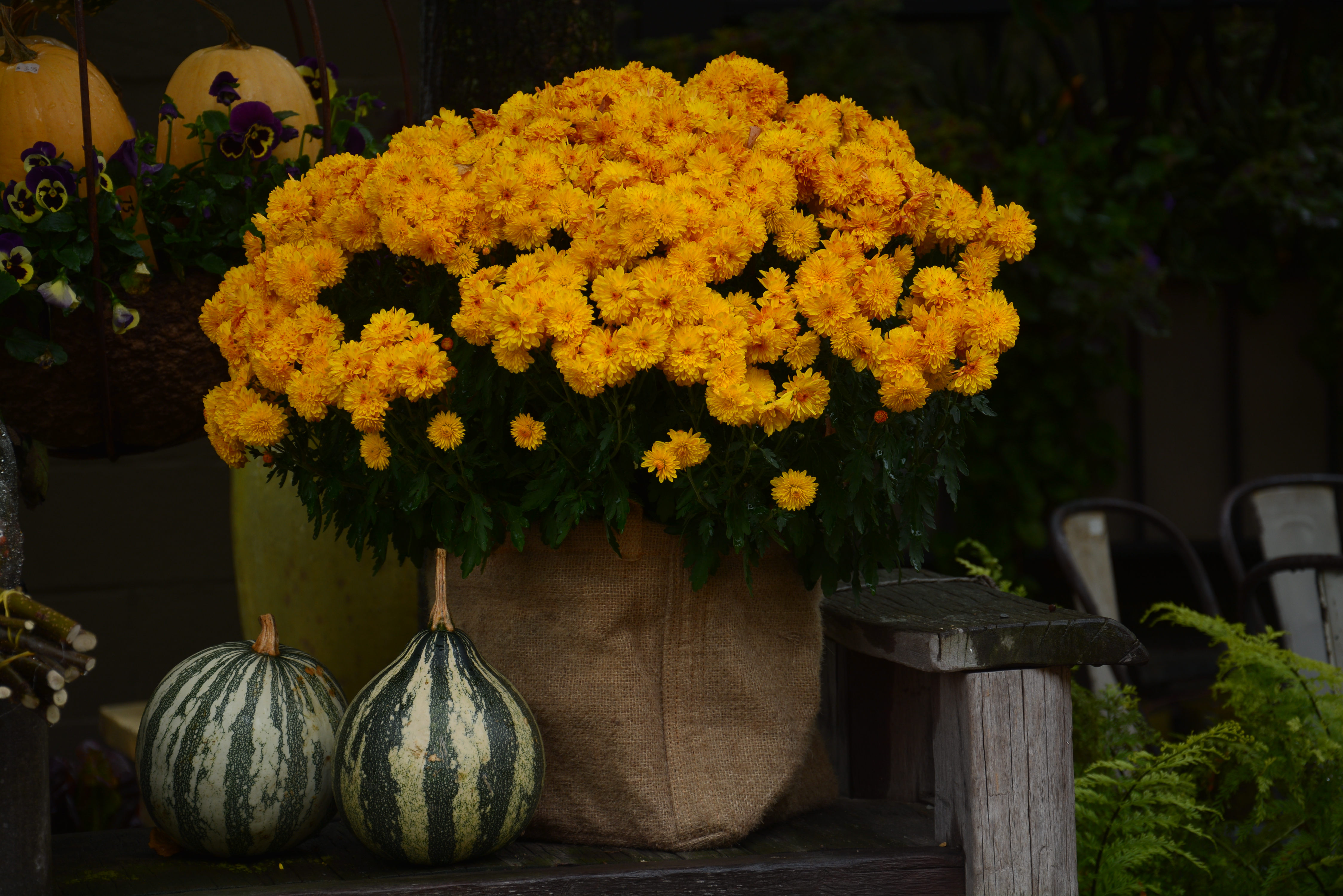
Oct 11 2013 (3)chrysanthemums and pansies

burlap-sack-pot.jpgstriped gourds

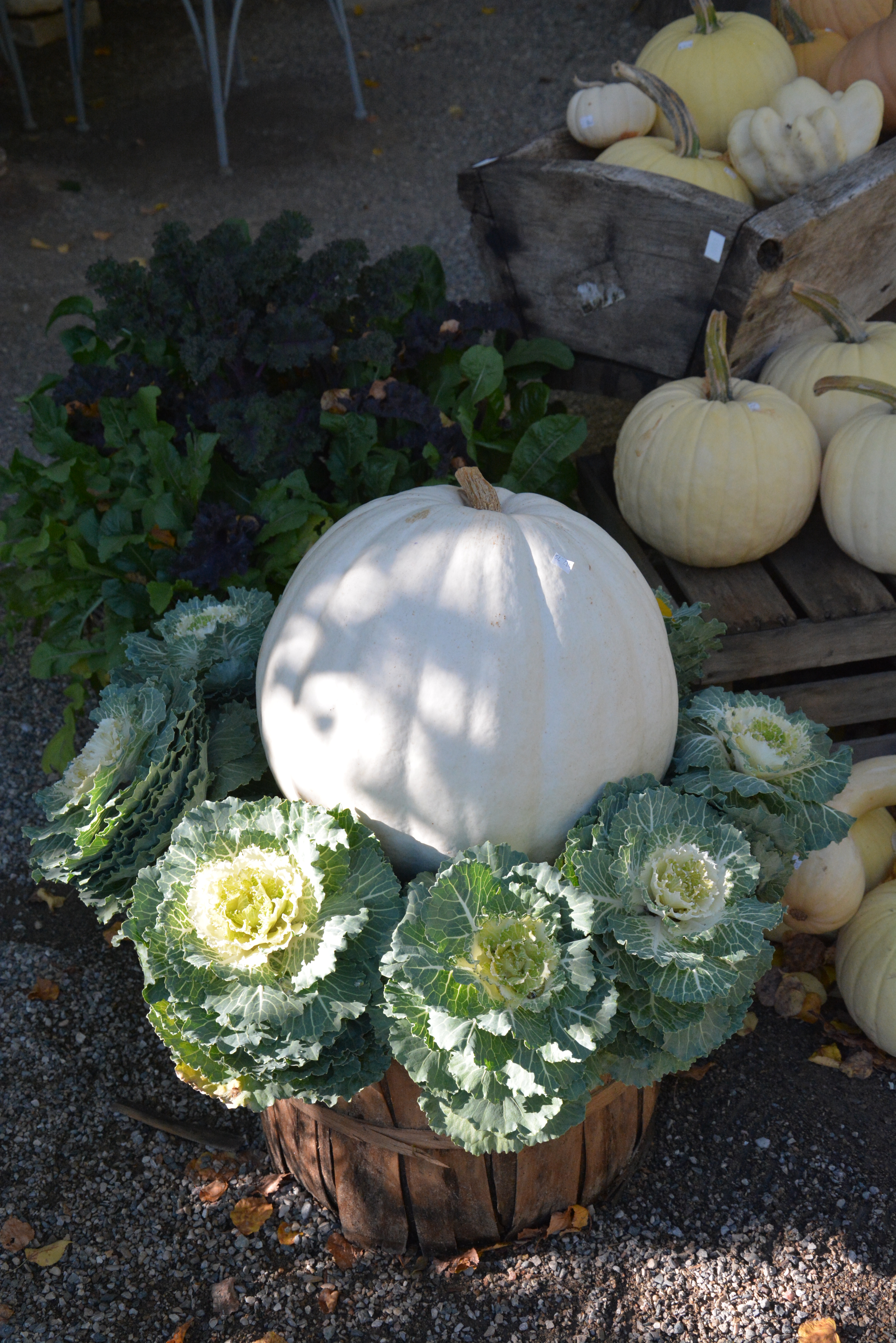
white-pumpkin.jpgwhite pumpkin with white cabbage in a bushel basket

flame-willow.jpgflame willow

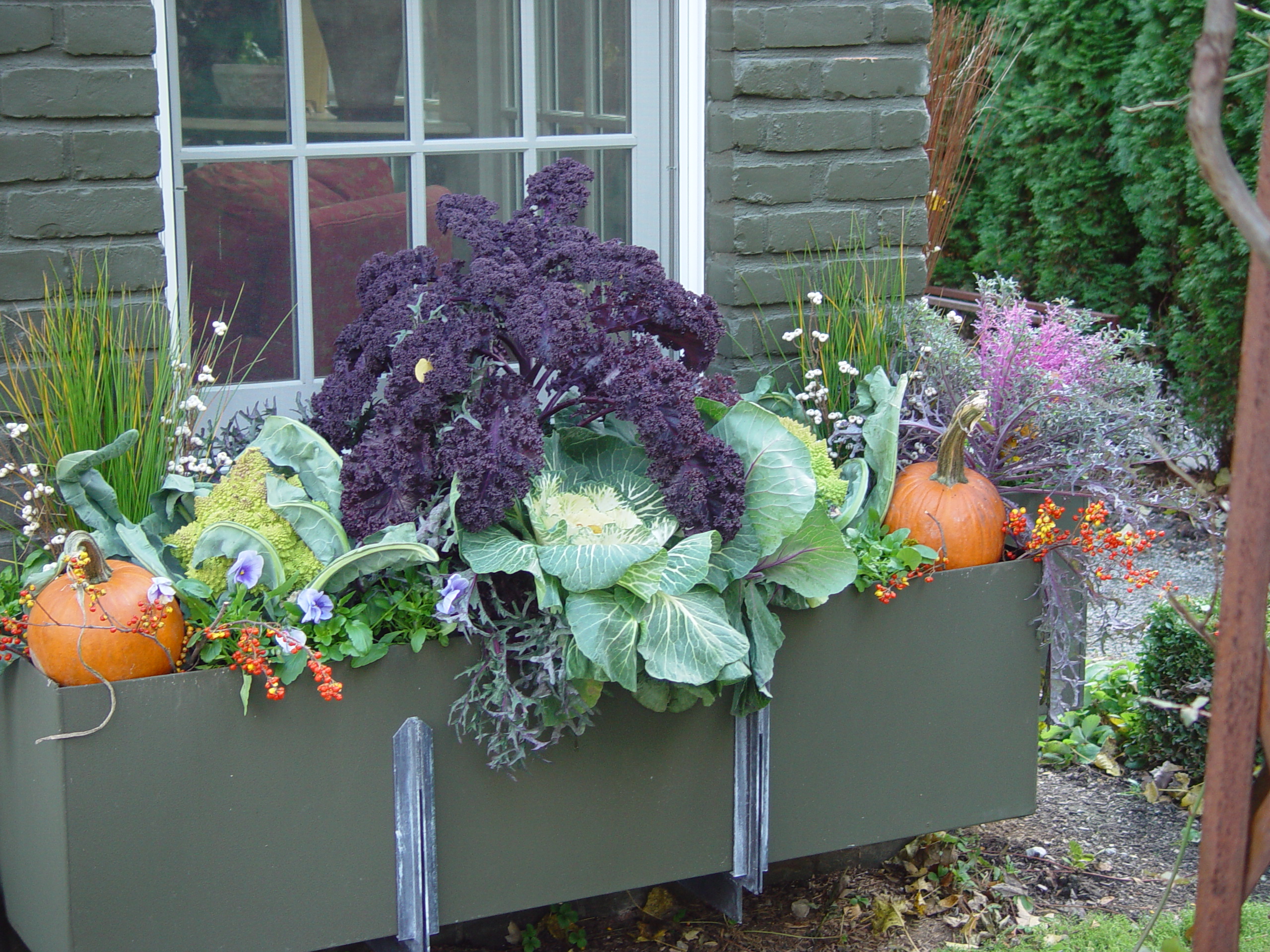
fall window boxa mix of fall materials

Oct 11 2013 (17)striped pumpkins and squash on grapevine

Oct 11a 021fall pots with big pumpkins and gourds

Oct 14 2011 023burdock seed heads, bleached plastic grass and peacock kale
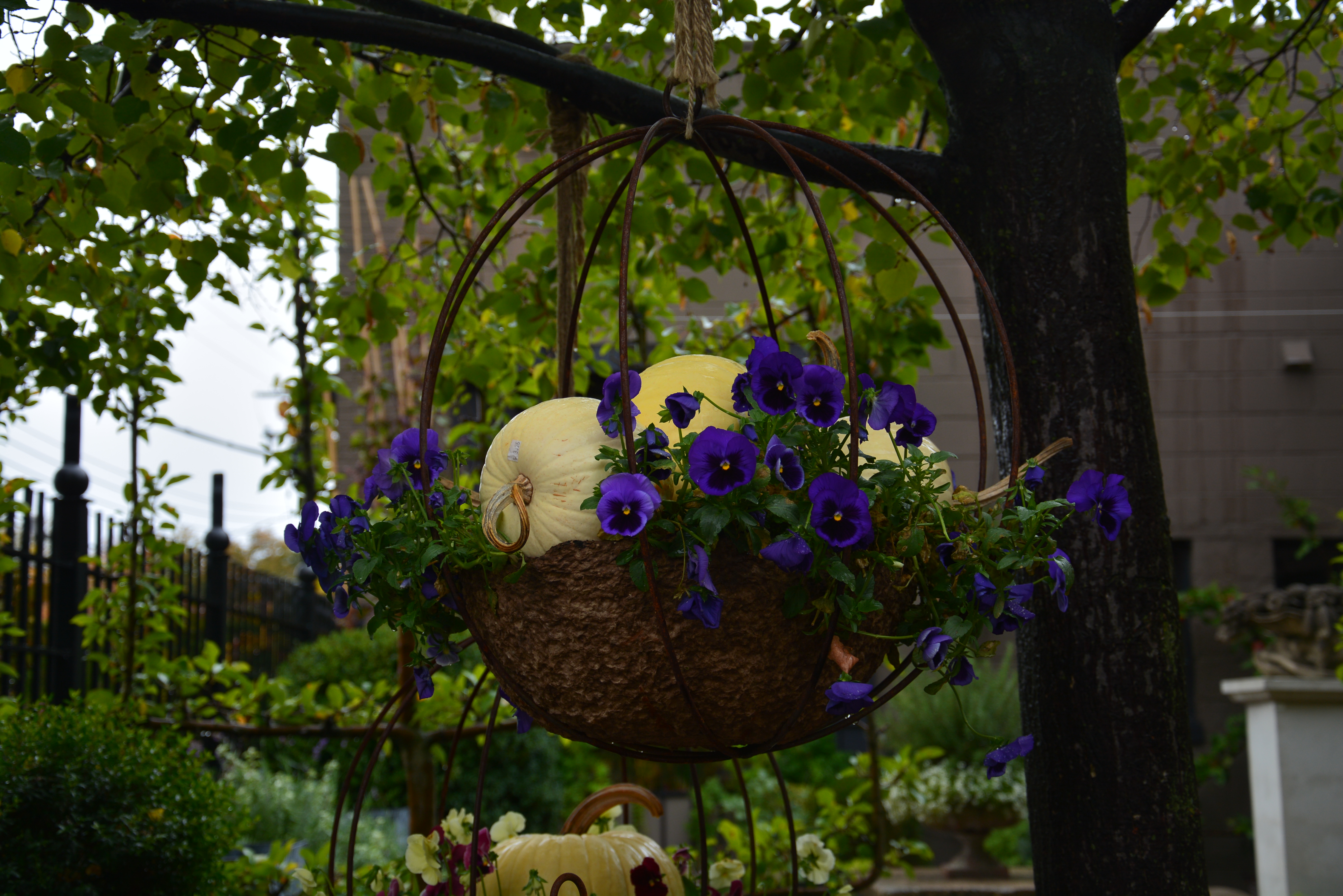
October 19a 2013 (10)Rob’s grow-sphere with yellow pumpkins and pansies
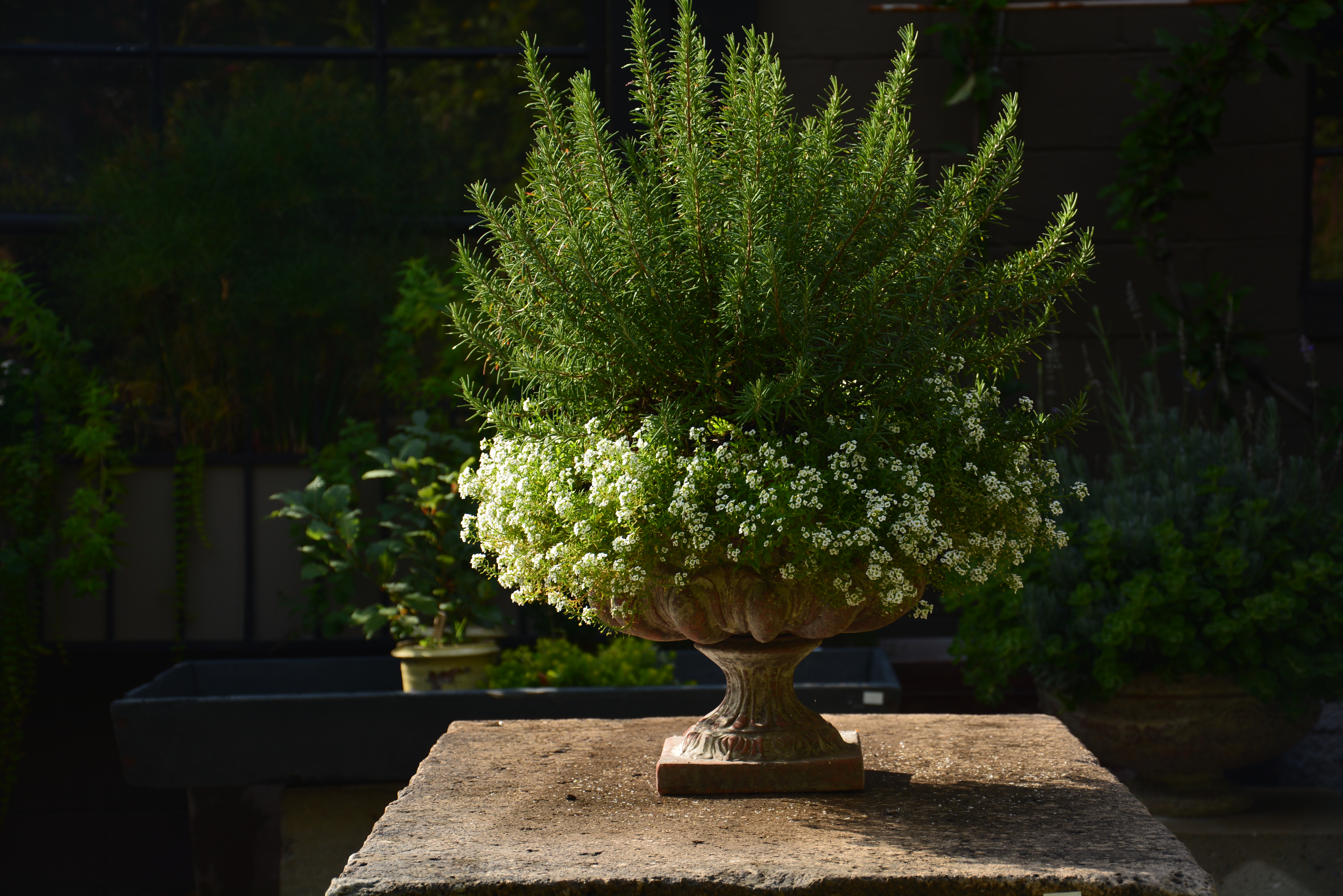
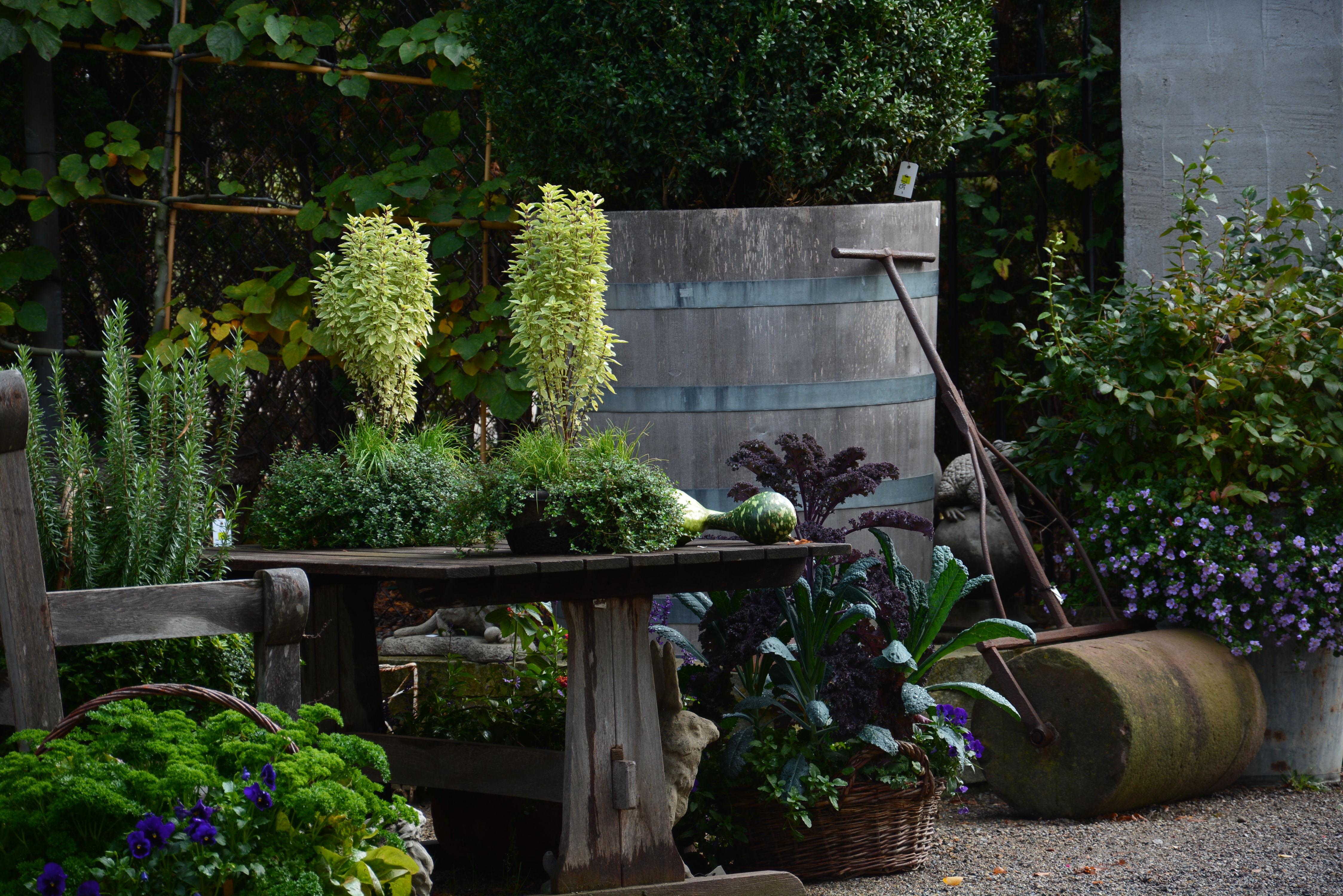
fall-container.jpgrosemary and alyssum

variegated-basil.jpgpair of fall pots with variegated basil
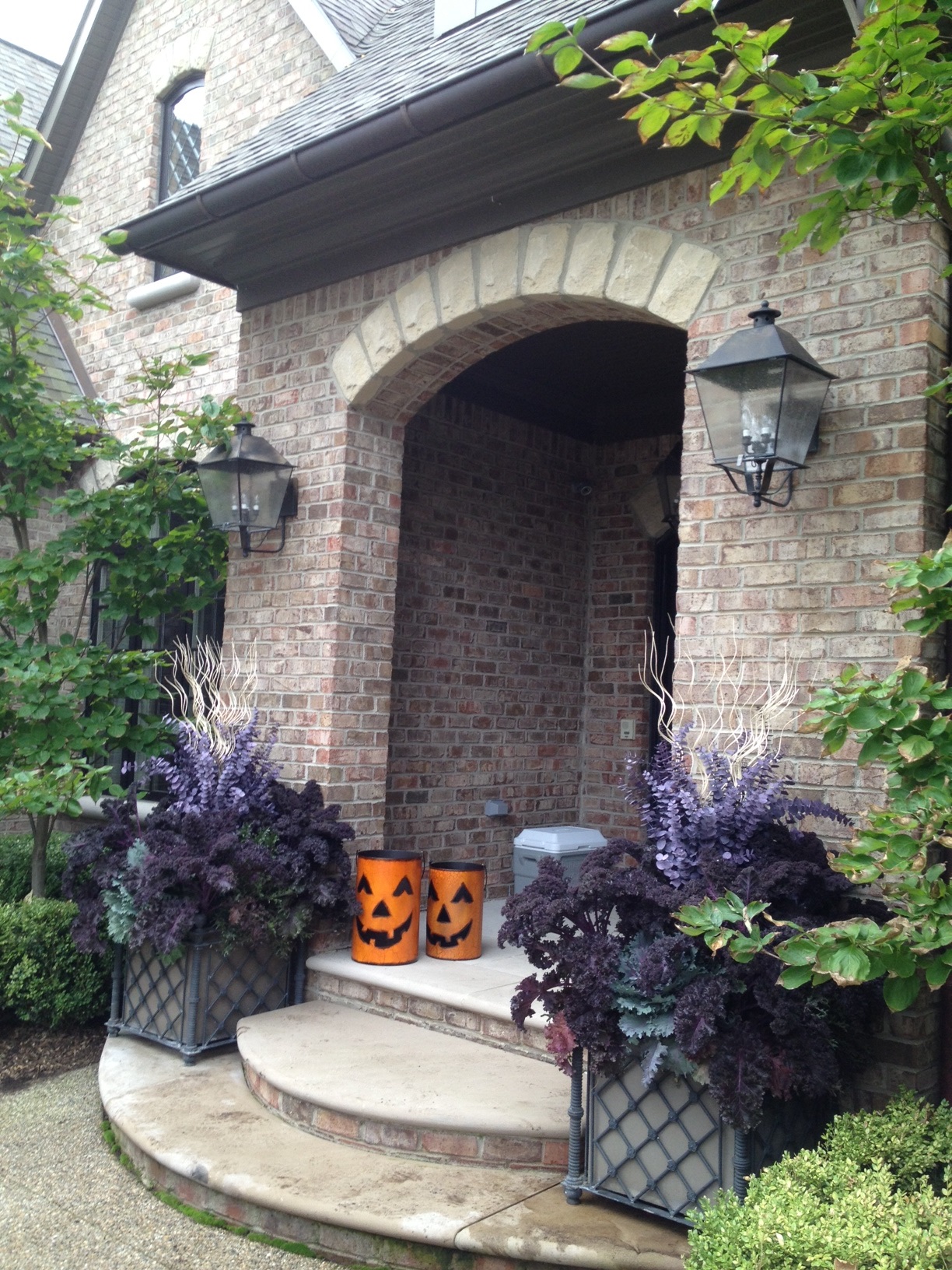
planters-for-fall.jpgfall containers

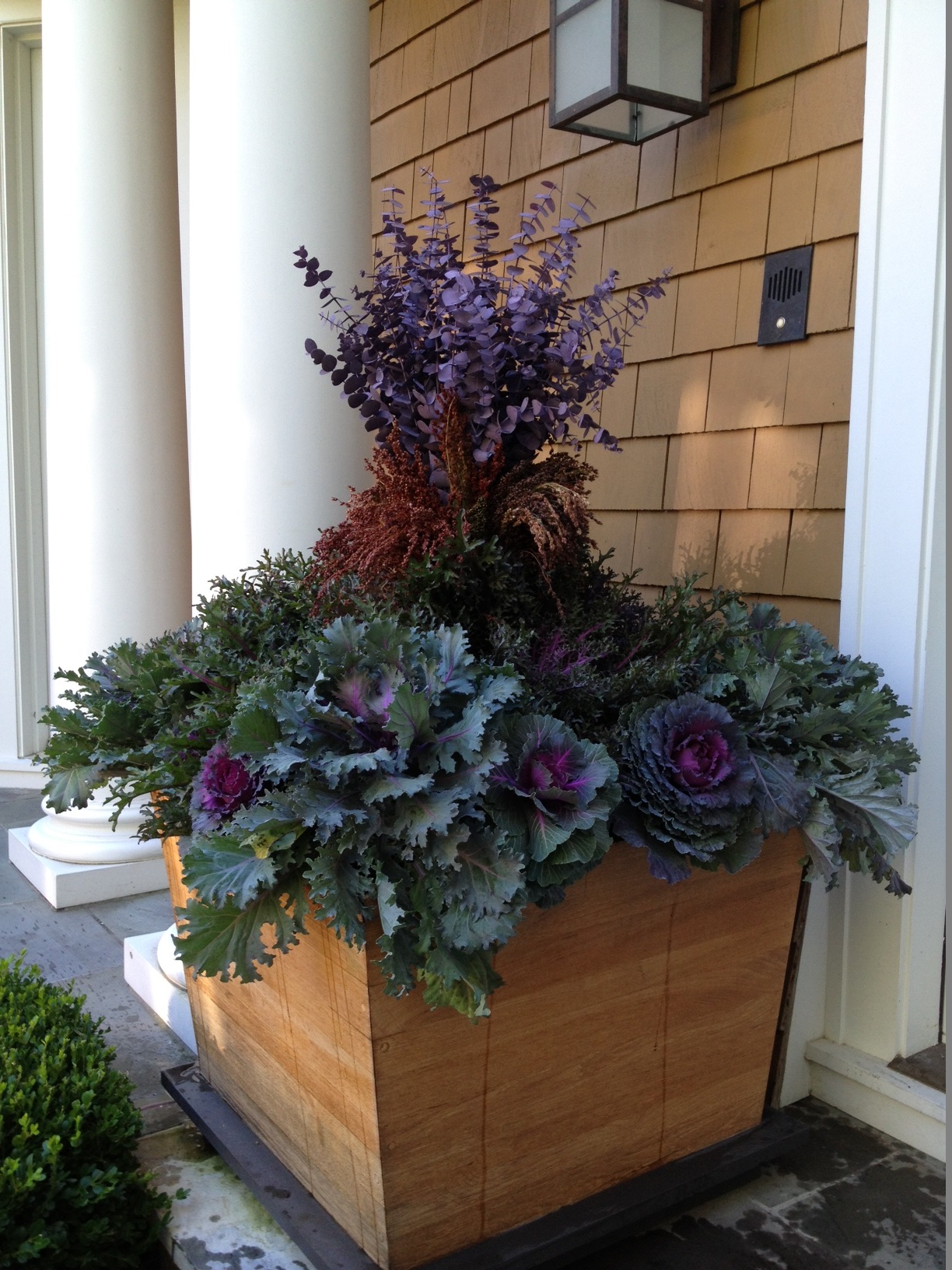
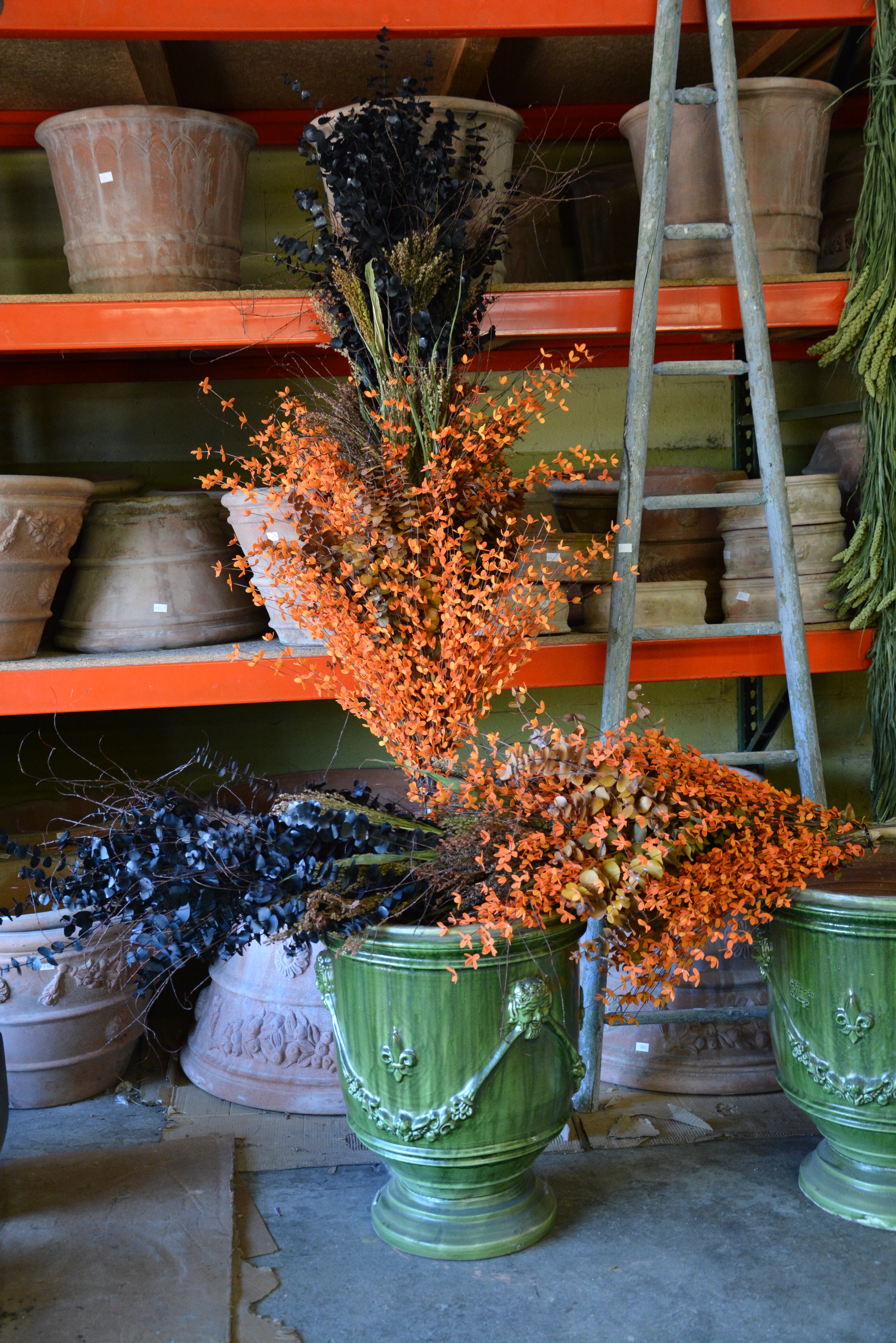
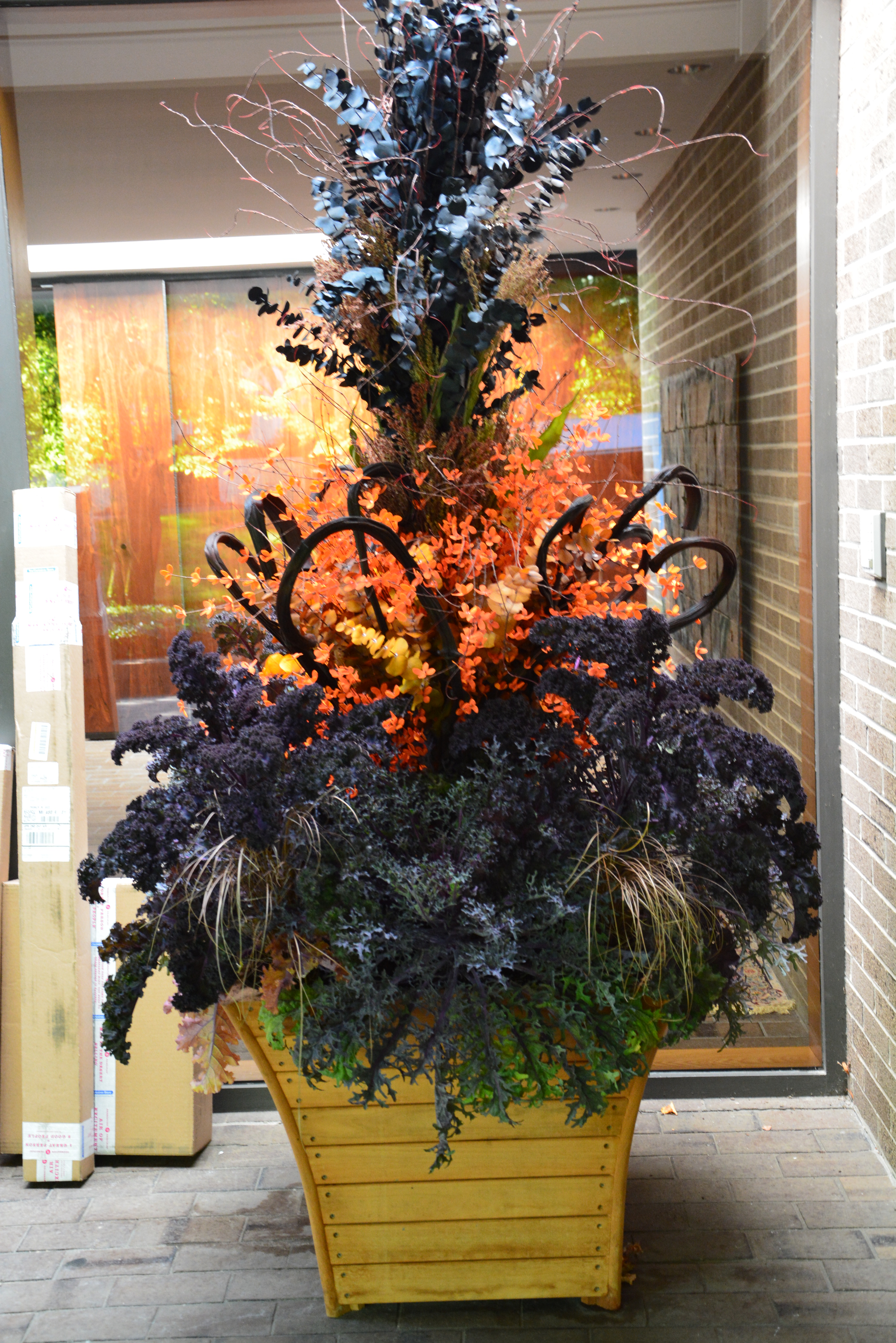
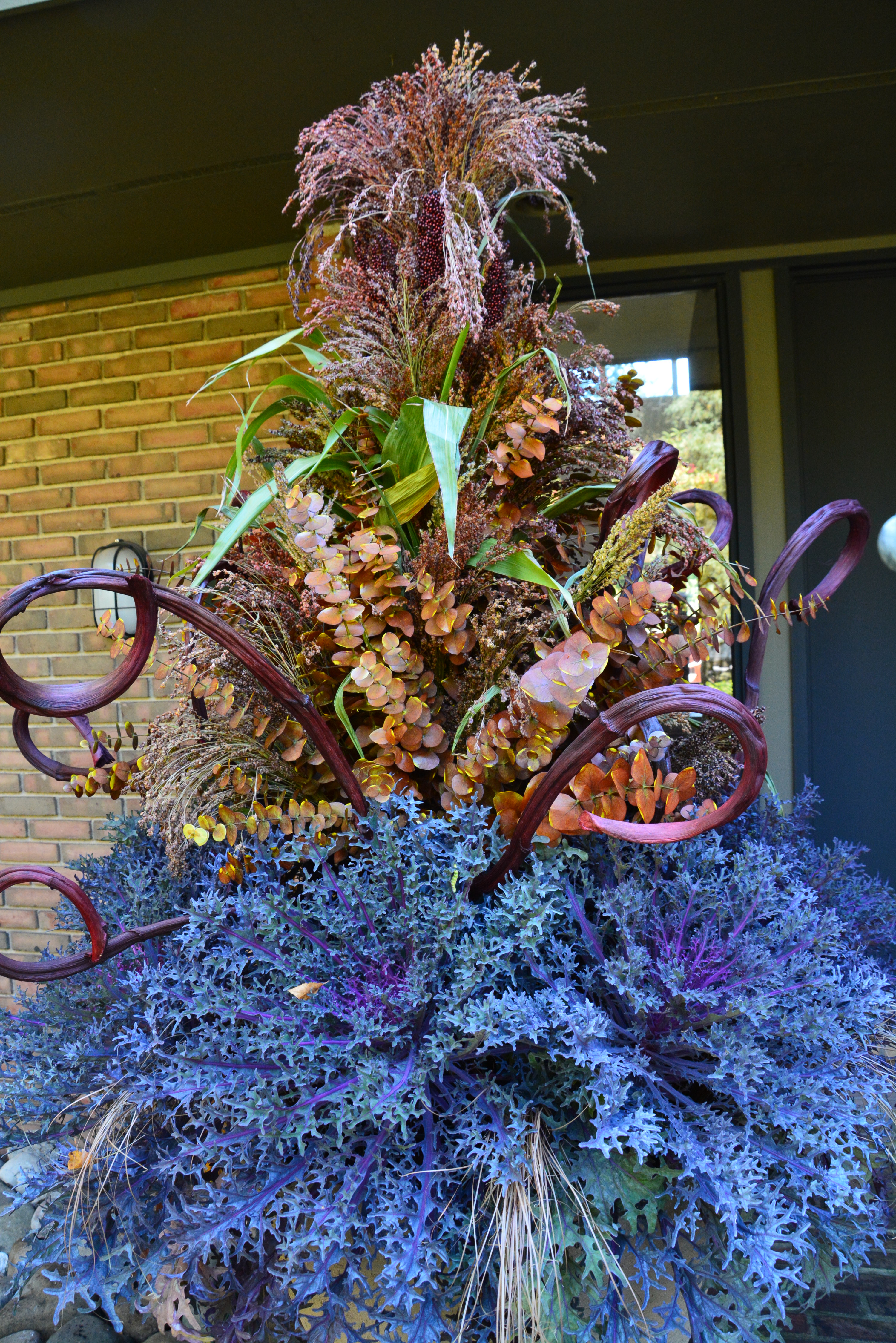
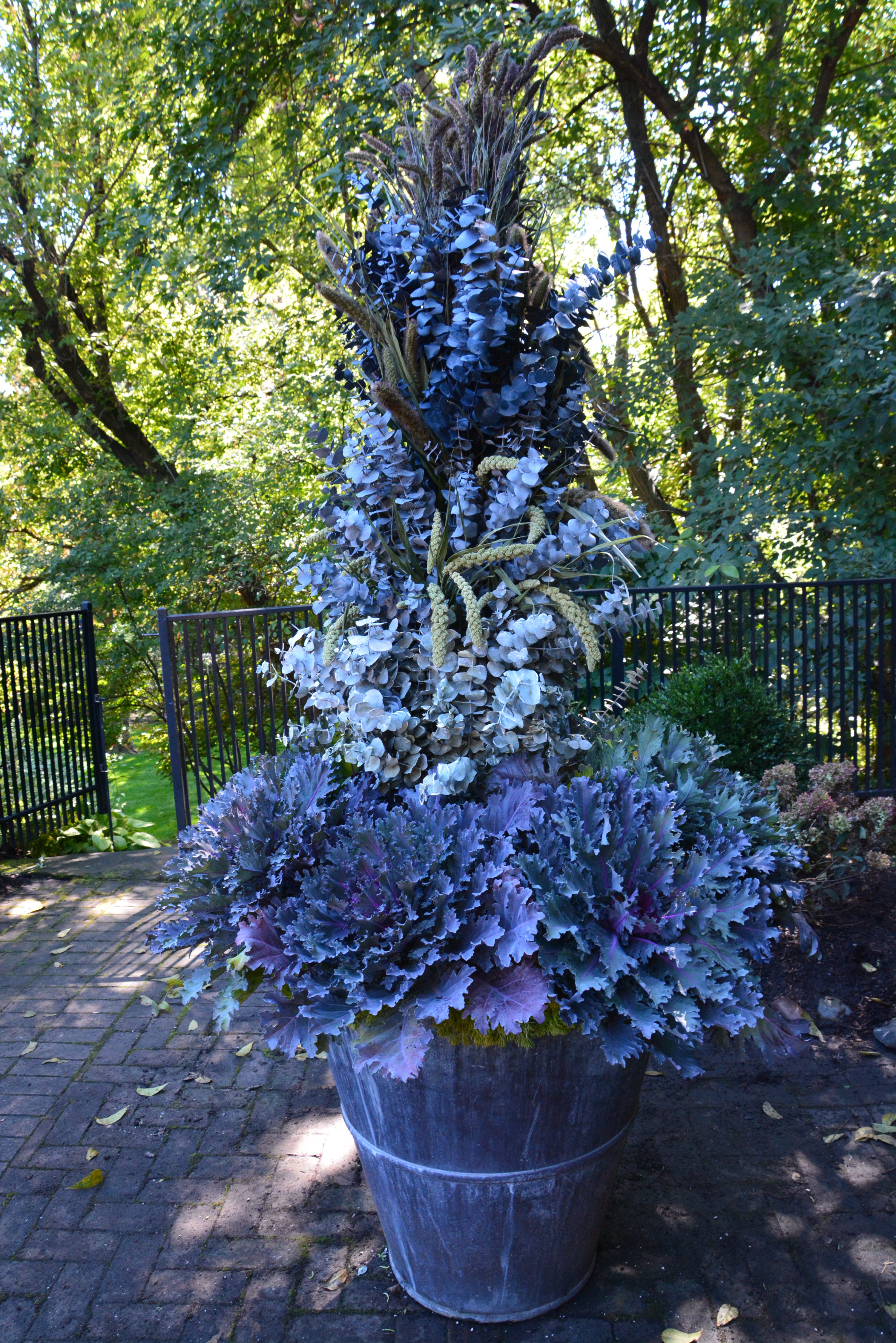
fall-container-with-broomcorn.jpgfall container with broom corn, black eucalyptus, and ornamental kale
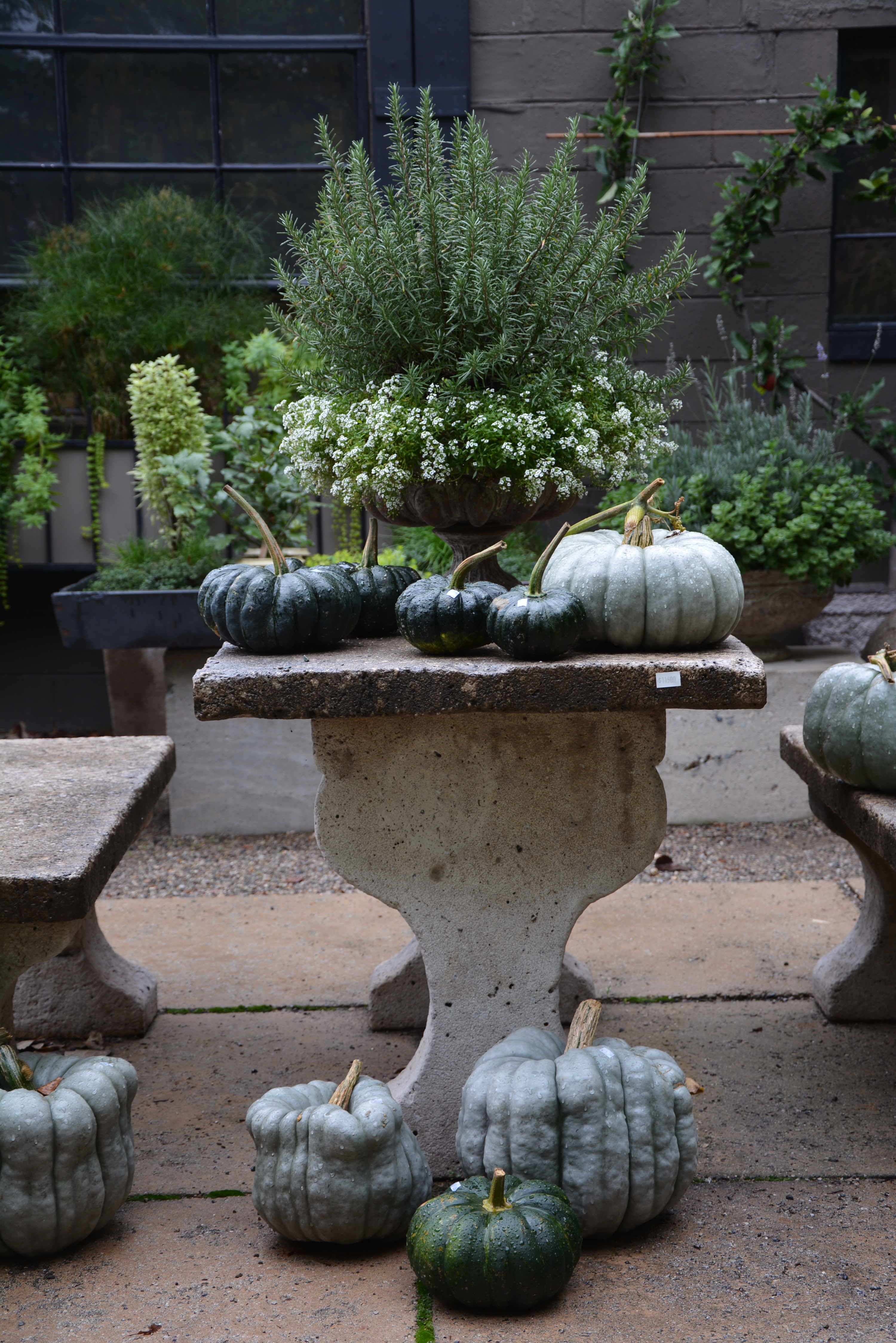
pumpkins and gourds 2013 (15)The fall season provides an embarrassment of riches in materials great for fall containers. In a pinch, faux materials can provide just what a container needs in form or color. That material may be fake, but I am a real person putting the whole thing together.  As for you-plant for fall in a way that expresses your take on the season.  I try to exercise a little good sense.  If I put the stems of weeds in containers, I try to put every last seed in the trash, first.  Dry thistle stems are gorgeous in fall pots, but those seeds will spread a terrible weed that is tough to eradicate. That said, I use the intact seed pods of butterfly weed everywhere I can, in hopes it will seed with abandon. If weed seeds must be part of the display, I will encase them on the stem with floral sealer.  I wait until the weather gets good and cool to pile pumpkins and gourds in pots.  Set in place too early in the fall, they will rot.  Outside of that, I’ll stuff pots with anything that looks good.  It makes no sense to exercise restraint at the time of the harvest, does it?


Fall Container Plantings

fall-container-planting.jpgThough most of my work involves landscape design and installation, I have a big love for container plantings. They can be different every year – what a relief to let go of something that didn’t work out so well.   Best of all, they can be planted for every season.  The beginning of any new gardening season sets me to thinking about how I would like to plant the pots. Unlike my landscape, which changes only incrementally from year to year, my containers are empty and waiting at the start of every new season.  In Michigan, we have four seasons every year, each lasting about 3 months, give or take. Four times a year,  I have the opportunity to start over.

fall-centerpiece.jpgHow I choose to design and plant pots is a process I look forward to.  Certain plants that I may have never given a moment’s notice suddenly interest me.  Certain plants or materials that I have never seen or used become available. Growers of all kinds give a special gift-a vocabulary from which a container planting is eventually able to speak. A color combination that suddenly strikes my fancy. There was a time when I dreaded the coming of the fall.  All I could think about was the beginning of the end of the garden. What a silly notion.  Fall is a great time to plant in a landscape or garden. The temperatures are moderate, and the rainfall more regular.  Fall is also a great time to plant containers.

DSC_4793The leaves of the trees maturing, turning color, and dropping, is a spectacular event. The sun low in the sky endows everything in the garden with a special glow.  The cutting flowers and vegetables at my local farmer’s market speak to the abundance of the harvest. Every color from the sky to the kale to the red peppers is completely saturated. The ornamental grasses are never more beautiful  than they are in the fall.  Caring for fall containers is easy.  Cool temperatures means infrequent watering.  Trouble with bugs-not so much.

DSC_4799  The summer annuals are slowing down, and showing signs of displeasure with the cool nights. The coleus and non stop begonias in my containers are the first to show signs that their season is coming to a close.  They like hot sunny weather.  Nights in the 40’s are not to their liking.  I am reluctant to give up my summer containers; they have provided me with so much color, texture, and form all season long.  My containers are always their best in September.  They have grown in, and grown up.  The dahlias are never better than they are in September and October.

DSC_4877However, it is but a short time from the peak, to the decline.  That said, the decline of the summer summer loving plants does not mean the decline of the garden.  We have a fall season, dead ahead.  Summer containers can be switched out for fall.  Local nurseries, garden centers and farmer’s markets carry all kinds of fall blooming and cold tolerant plants. Pansies and asters are great in fall containers.  Dwarf evergreens shine in fall pots. Succulents, even tropical succulents, are tolerant of cooler weather.  Foliage plants are especially gorgeous in the fall.  The ornamental cabbage and kale are extraordinarily beautiful. I like heucheras better in the fall than the summer. So many of the ornamental grasses are suited for a planting in a fall container.  Chrysanthemums have their place-they thrive and bloom in cool weather.  There are lots of choices, if you decide to go ahead and choose.

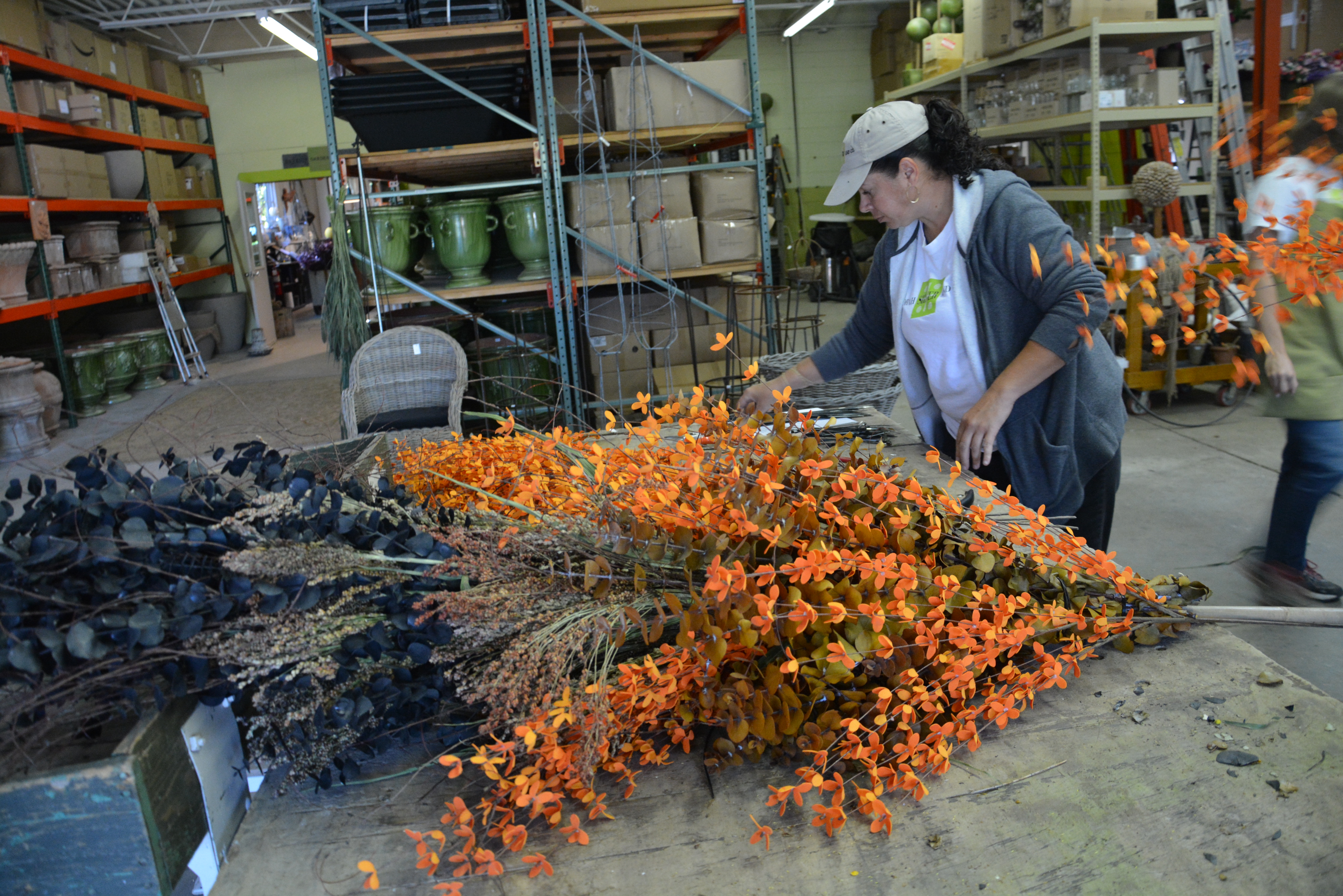
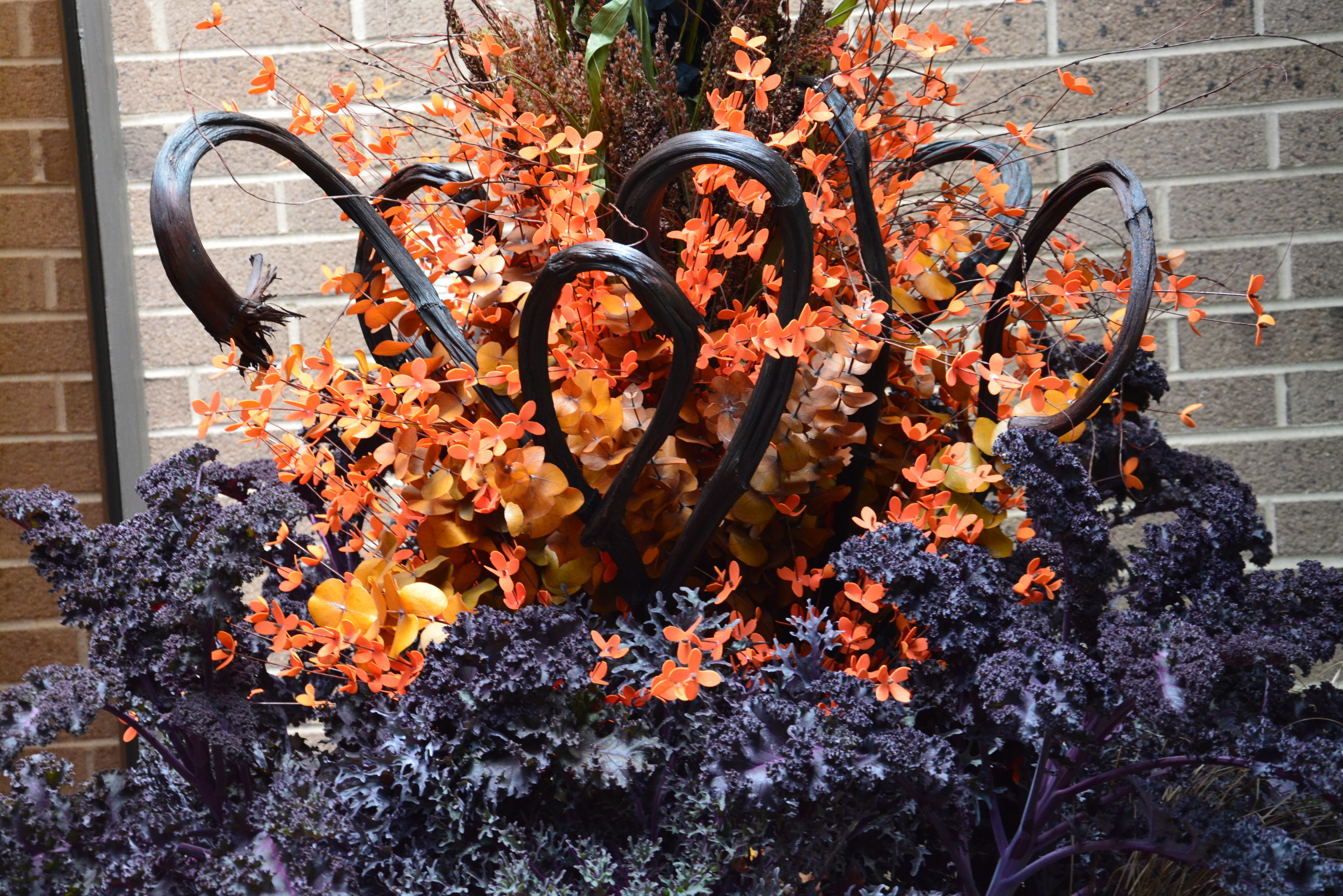
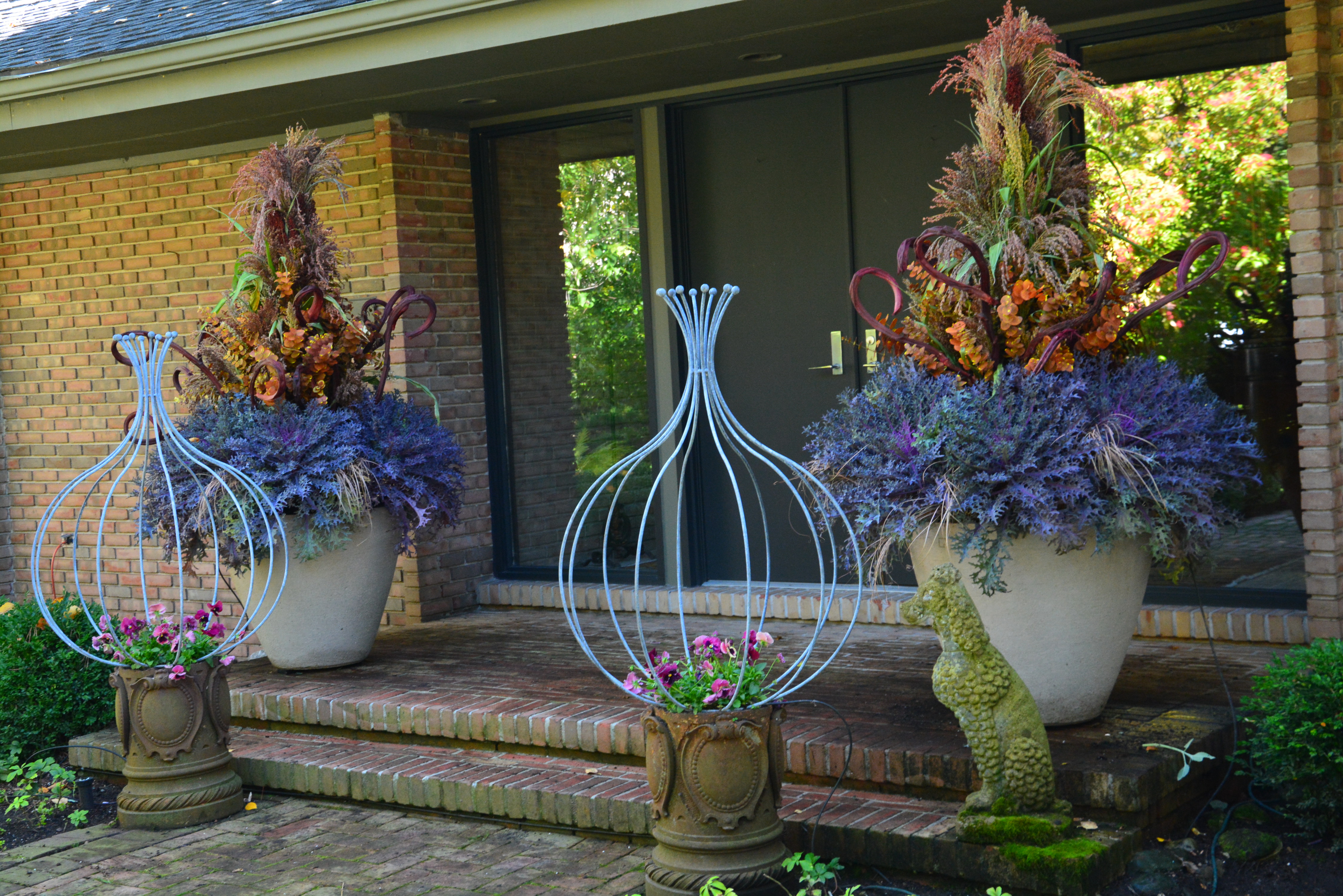
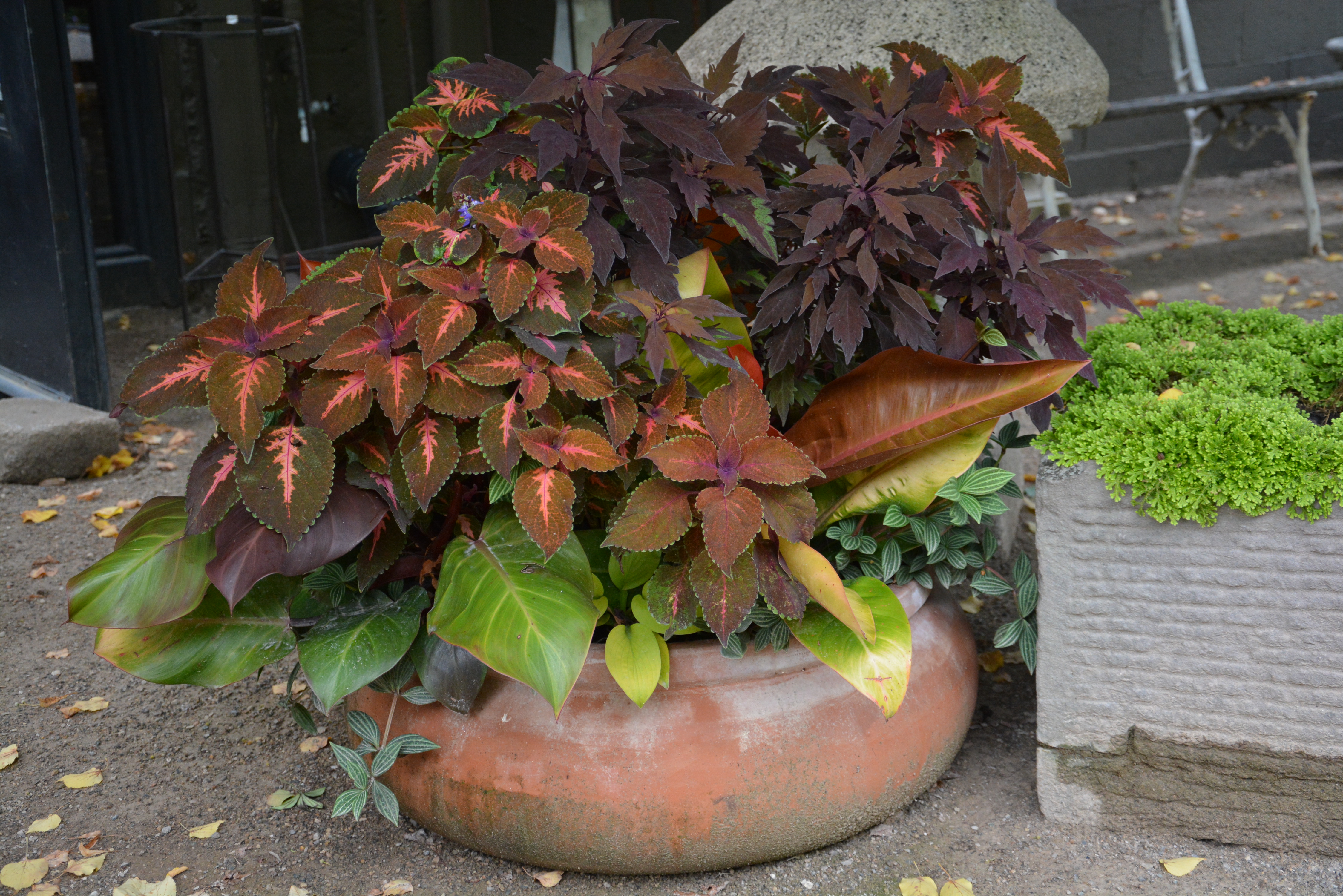
DSC_4878I like adding fresh cut and preserved or dry natural materials to fall pots.  Why not?  They provide me with the option of going taller and wider. They have the potential to provide a sculptural quality to fall containers that is hard to obtain otherwise.  Faux materials, as in the orange suede floret stems in this pot, can add a lot of color. There will not be so much in the way of growth from the fall pots unless the weather stays moderately warm and sunny-just like the weather we are having right now.  The ornamental grasses that are available can add some height and rhythm to fall containers. This is welcome, given the static quality of chrysanthemums, asters, and ornamental cabbage and kale.

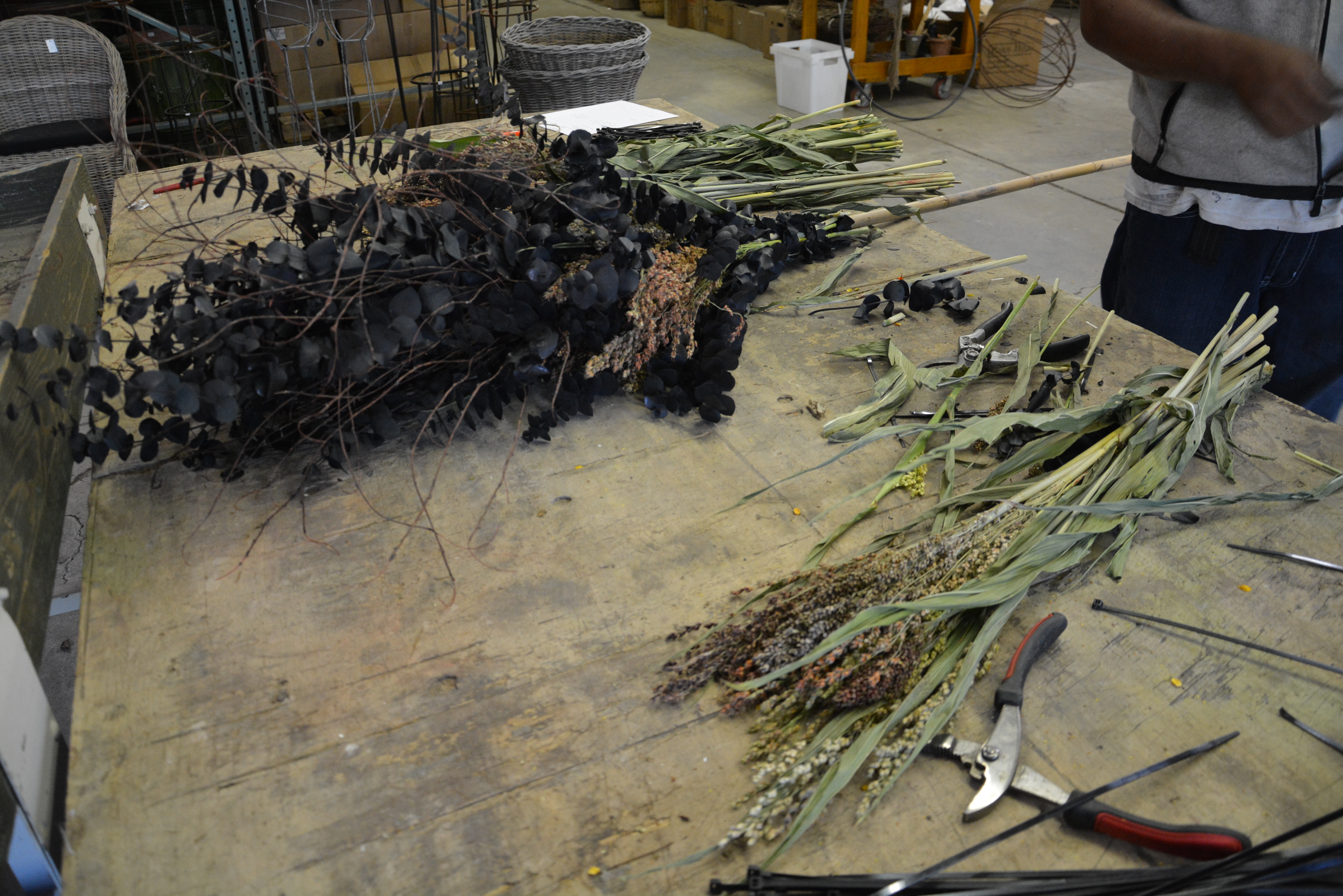
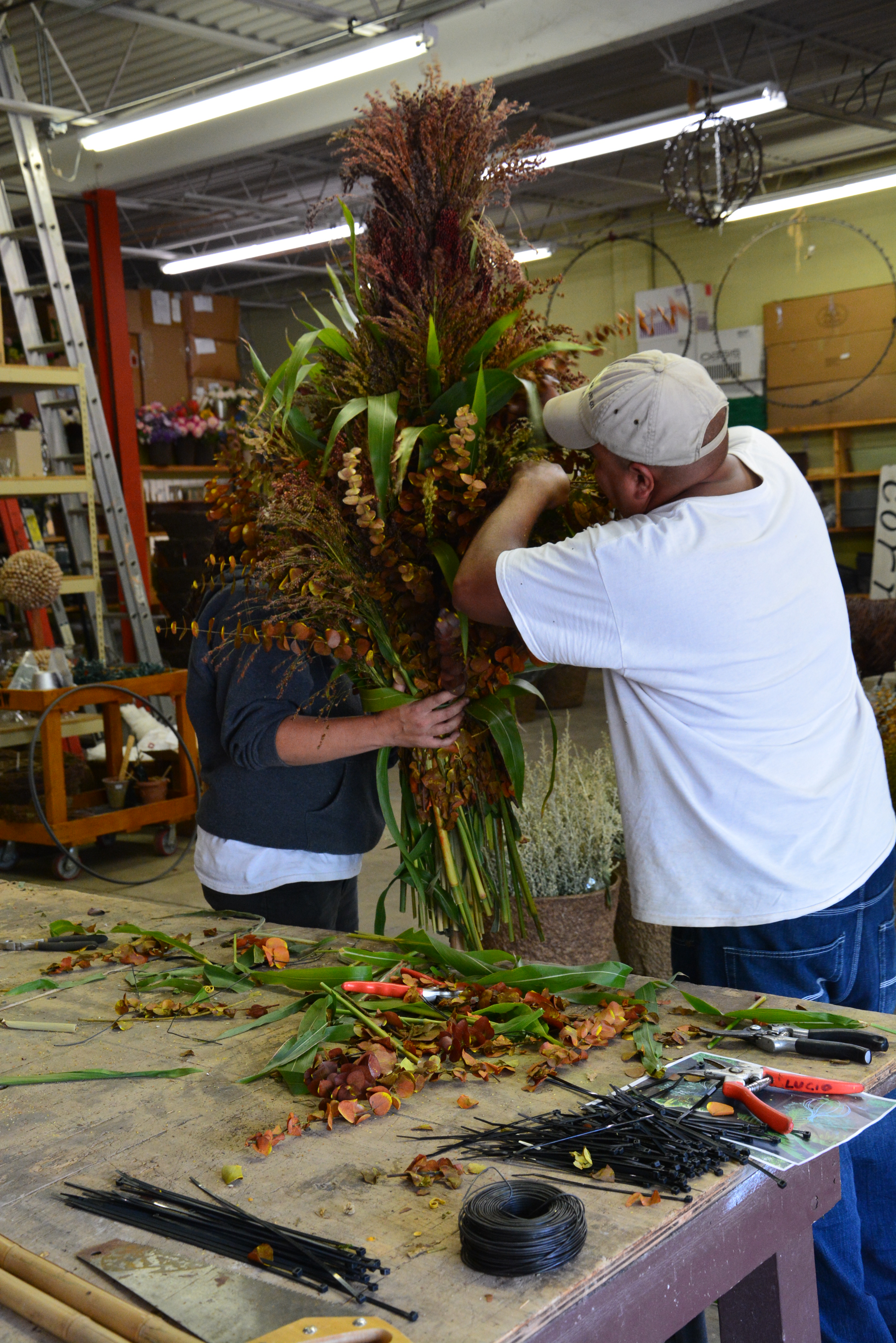
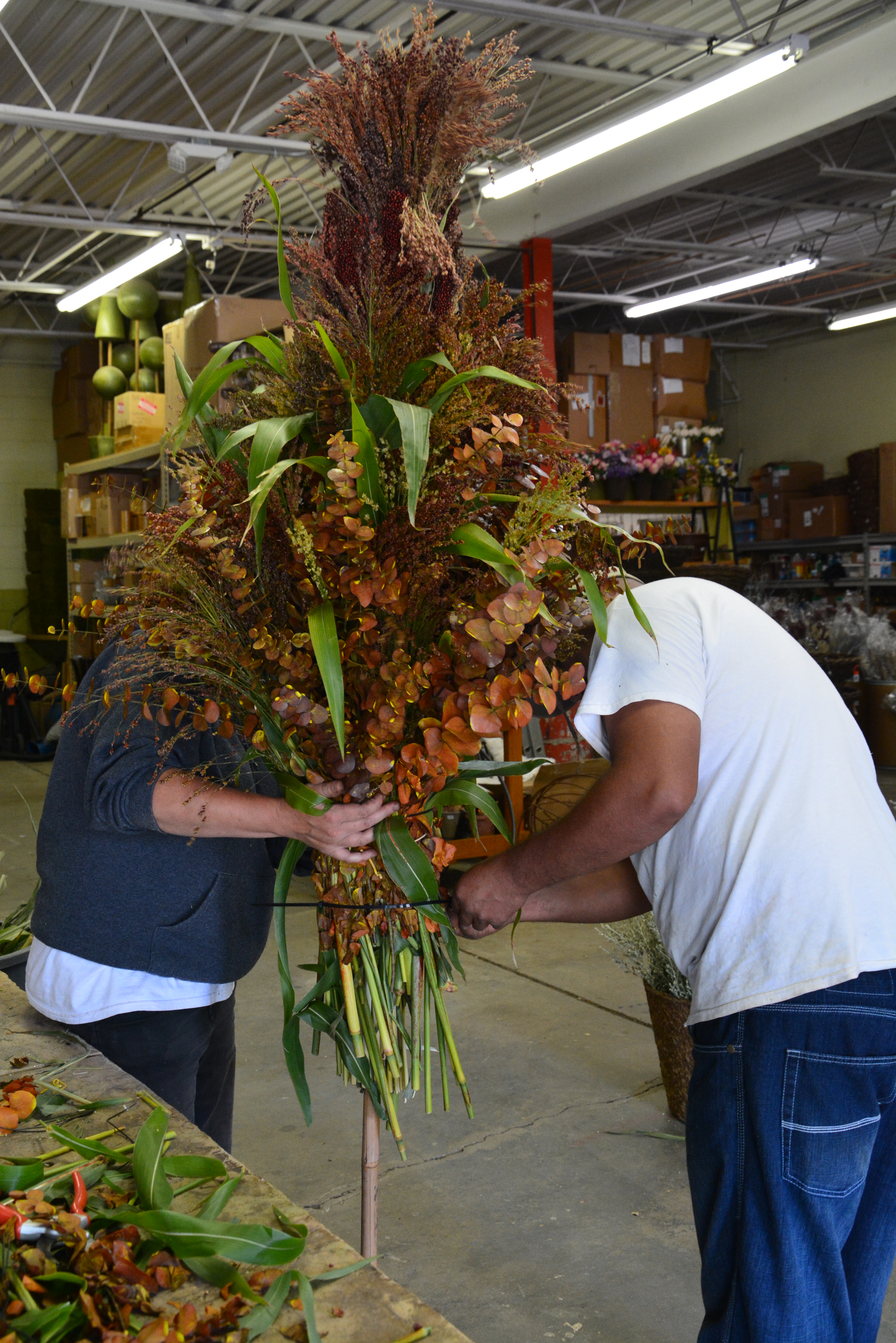
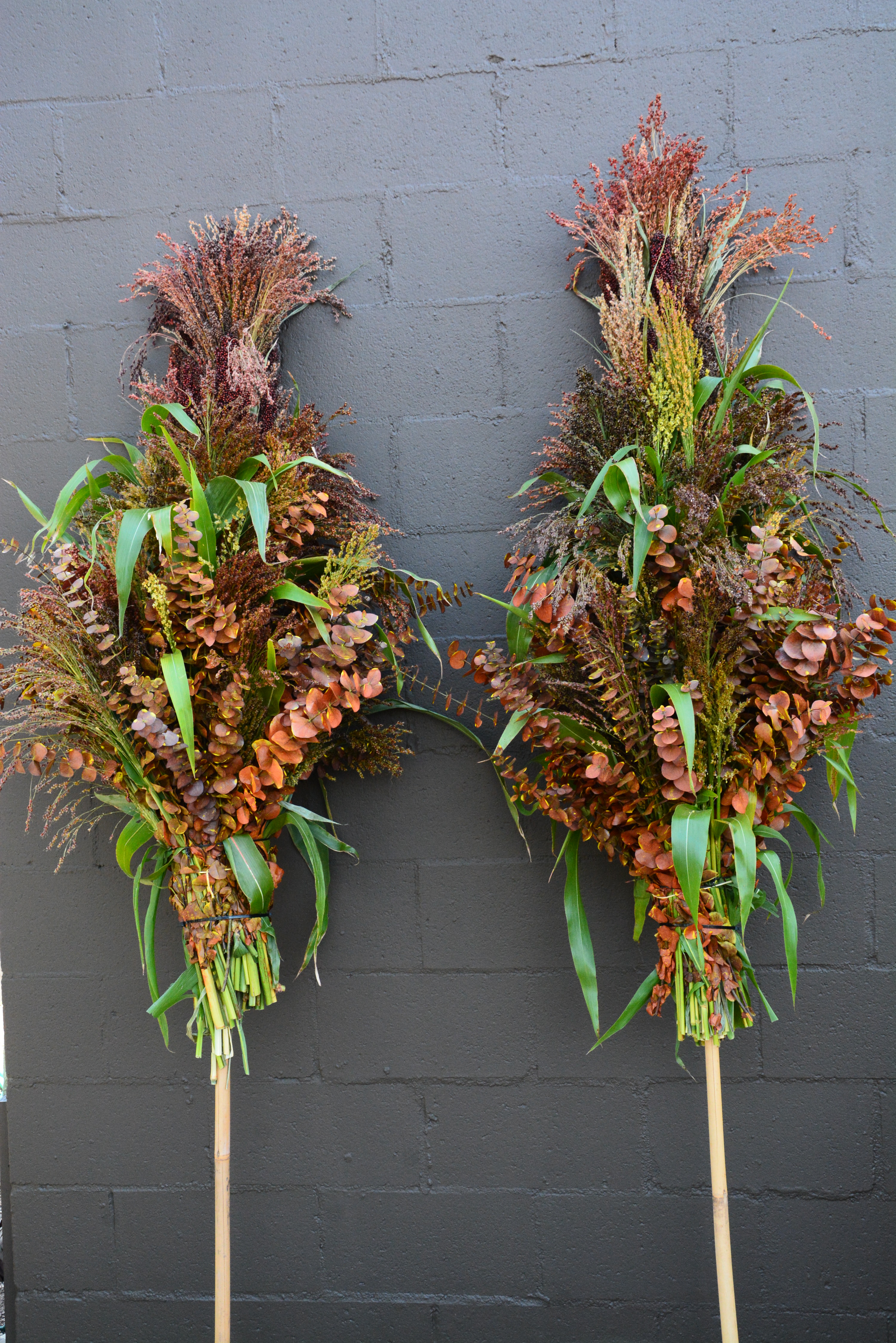
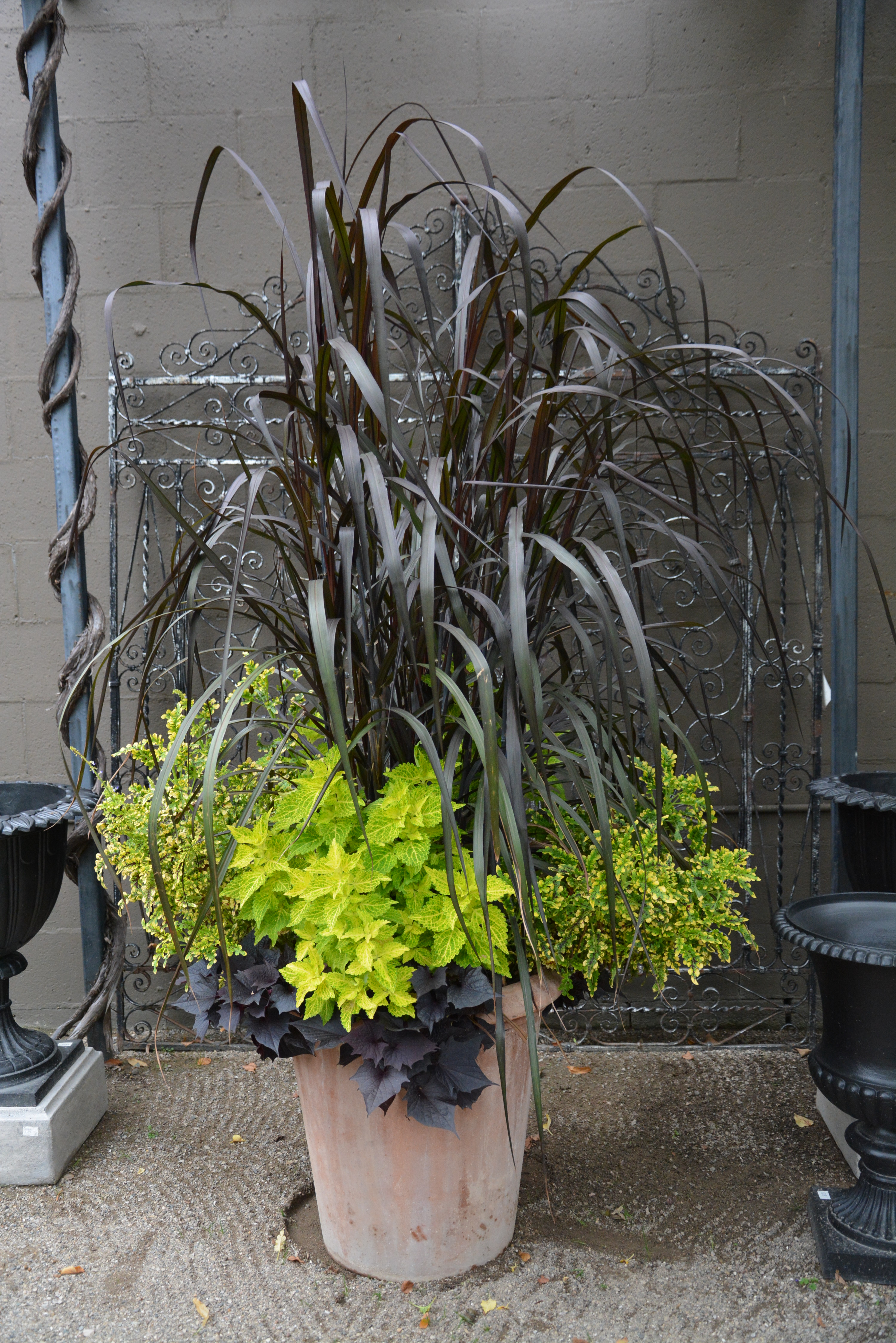
DSC_4892The only draw back of the ornamental grasses is the size of their rootballs.  Big grasses have even bigger root systems.  A six foot tall grass is likely to take up a lot of space in a pot. An ornamental grass transplanted into a pot is not rooted in.  A good wind or hard rain can knock them over.  It is possible to get all of what is good about a grass or a grain by cutting them, and securing them to a bamboo pole.  A stout 8′ bamboo pole only takes up one inch of space in a container.

DSC_4893In addition to ornamental grasses, broom corn and millet dry beautifully.  The colors mix well with preserved eucalyptus, twigs,  the ripe seed pods of butterfly weed, gomphrena, Chinese lanterns, mature echinacea stems and thistle. Any garden has plenty of materials that can be harvested for a fall container.  If the roadside weeds suit you, be sure you shake out all of the ripe seeds before you use them.

DSC_4895Some materials I turn upside down and hang for a few days prior to use.  If you need an element to be upright, let gravity do the work of drying it in that position.  Other materials look better in a casually draped state. I do dry the grains indoors.  Once they are outside, and the seeds mature, you will have gold finches swarming your pots.  This is an experience of fall that is pure pleasure.

Sept 26 2014 (2)New to me this year-dry banana stalks.  They curl as they dry in a way that only nature could create.  They are quite heavy, so we attach them to bamboo stakes in two places before we use them in pots. If you use any preserved or cut materials in pots, they need anchoring.  You need to supply what the roots once did.  Rob does a great job of finding great dried and preserved materials for pots.

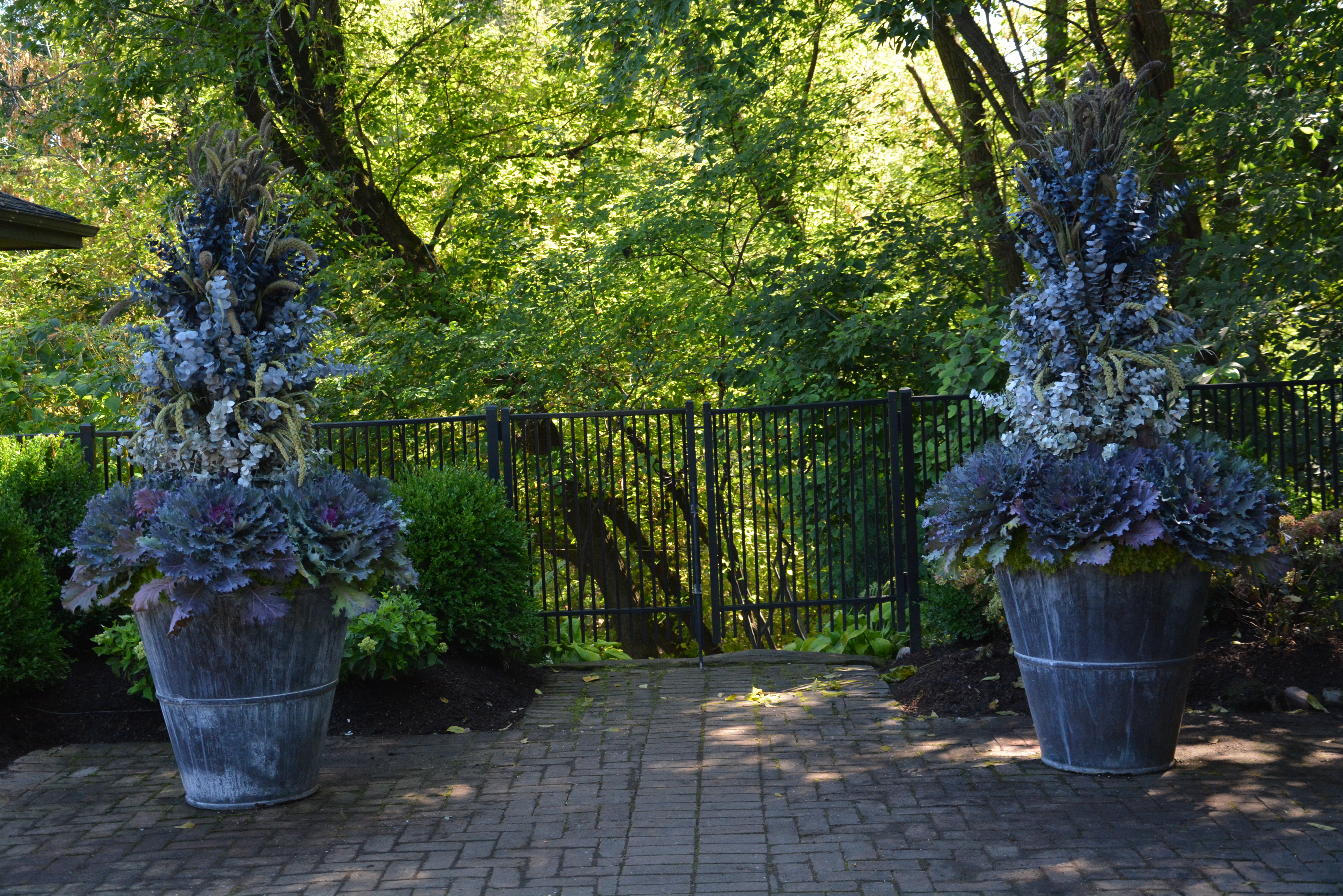
Sept 26 2014 (1)These pots are quite large, and ask for an arrangement proportional to that size.  The centerpieces provide a lot of height, and a lot of visual interest.  The kale and cabbage are enormous this year-thanks to the cool summer.  If you do use them in containers, be sure to water at the soil line, and not over the leaves.  The leaves shed water, and can leave the soil dry. The leaves of some varieties are arranged densely around the stalks-if they do get wet, and do not have a chance to dry out, the plants can develop mold.

DSC_4905The most important part is to exercise your imagination, and enjoy the experience of fall gardening.  Though my pots at home still look good, I am thinking ahead to what I might want to see for fall.  I have plenty of trees and shrubs that are getting ready to turn color.  My fall pots will look right at home.

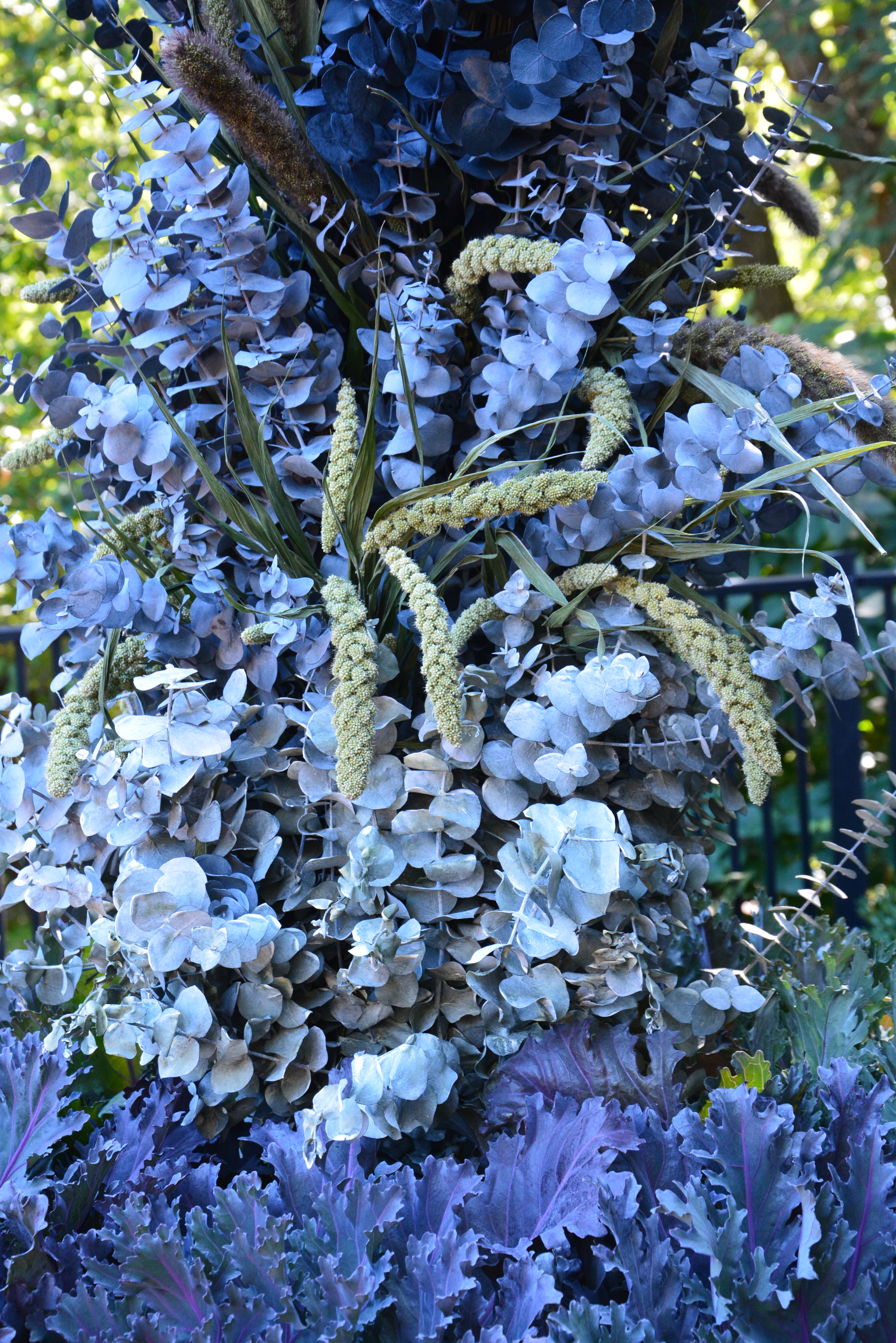
Sept 26 2014 (4)eucalyptus, black and green millet, and “Coral Queen” kale

Sept 26 2014 (3)finished fall arrangement

Sept 26 2014 (6)ready and representing the fall


At A Glance: Labor Day

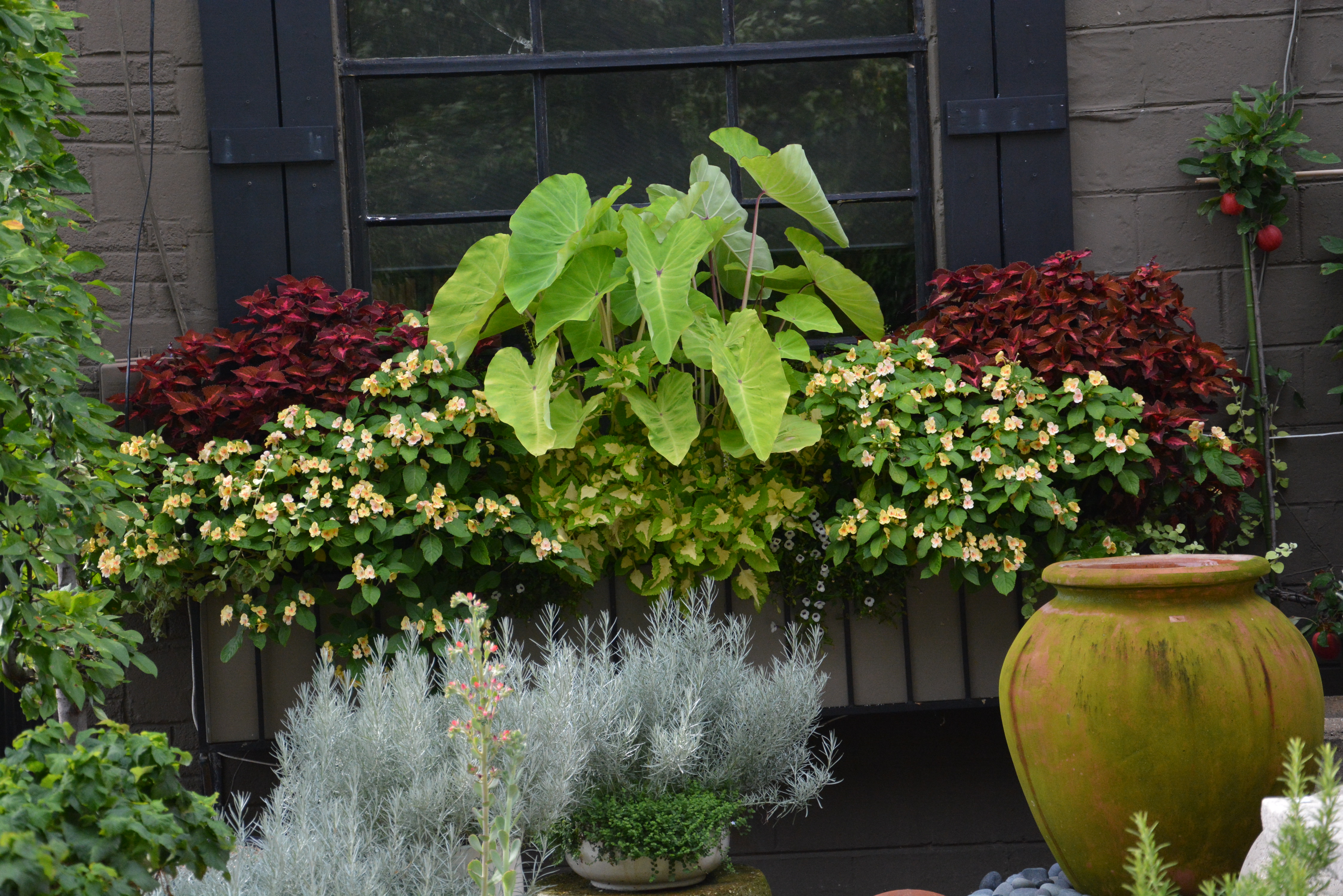
September 1, 2014 (17)window box with lime alocasia

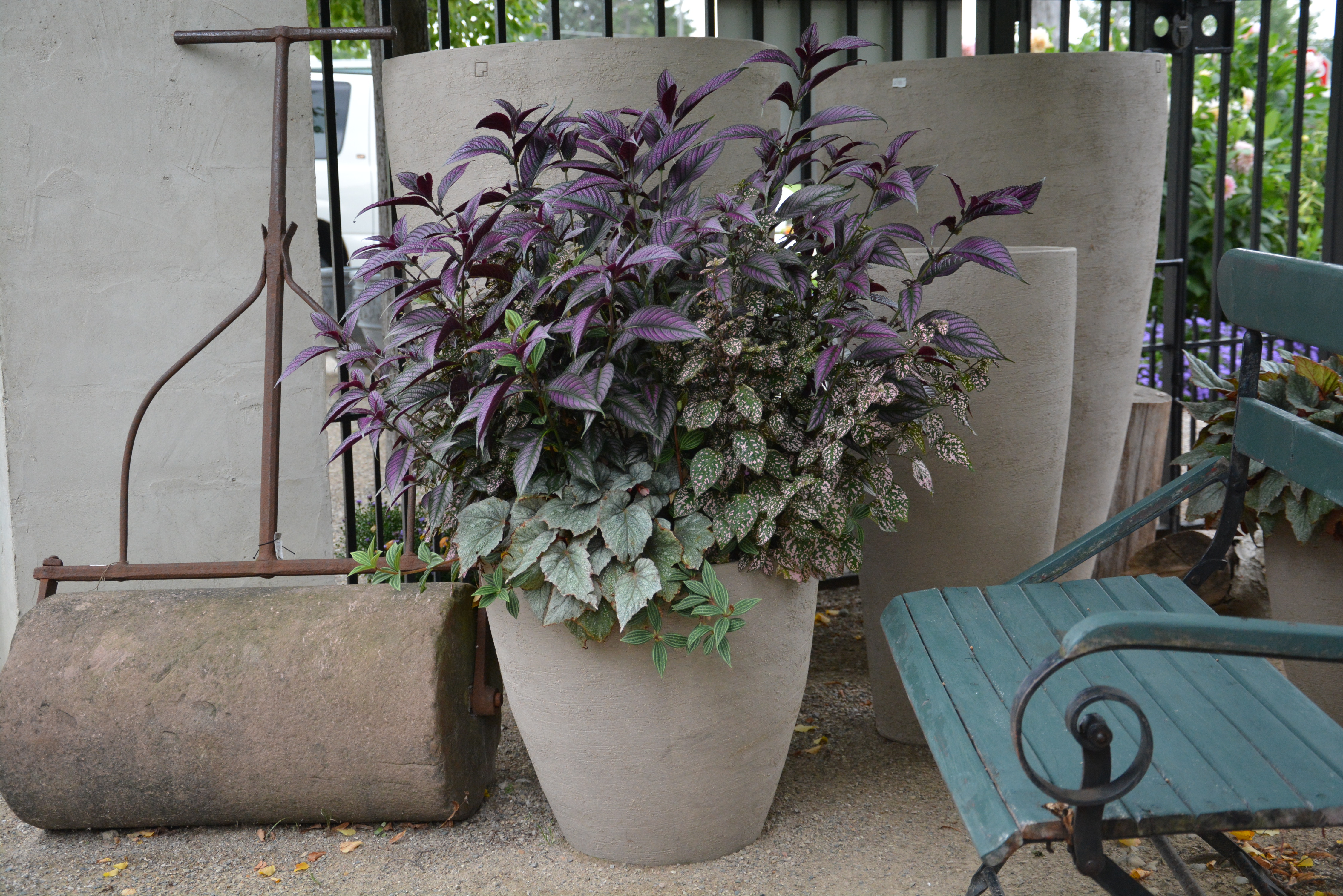
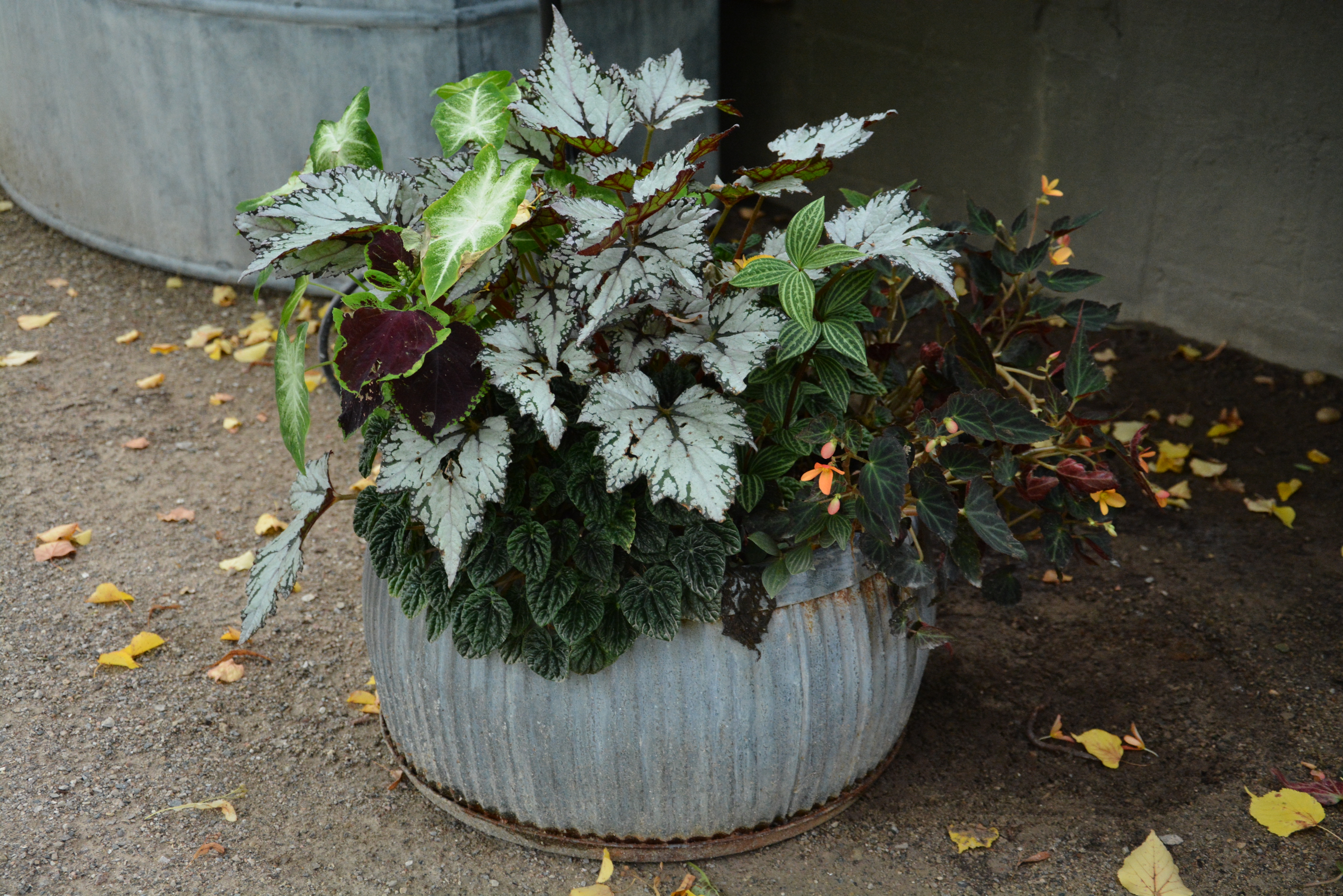
Sept. 1a 2014 (1)Belgian stoneware planted with Persian Shield, polka dot plant, and King begonias

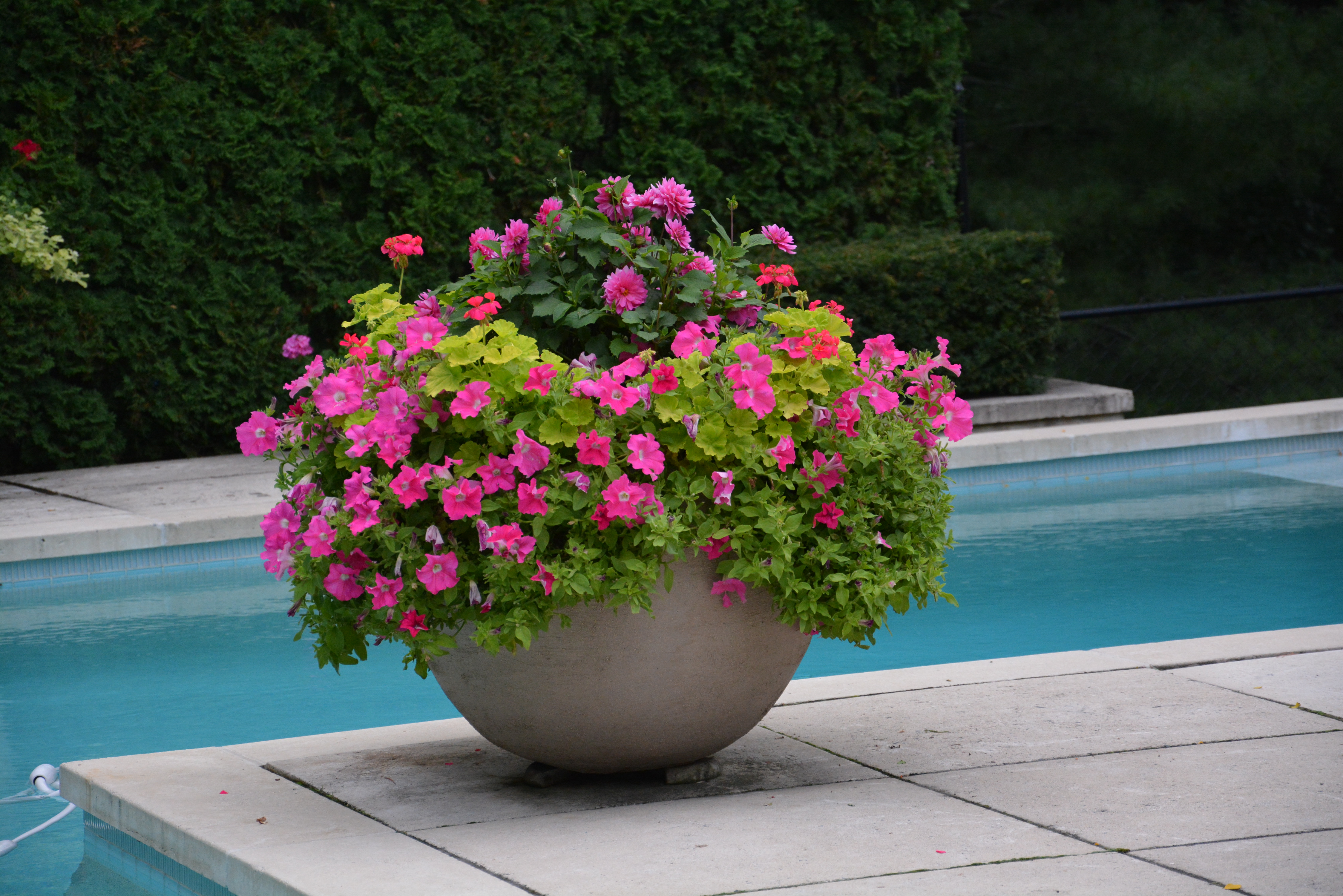
DSC_3987pink dahlias, Persian Queen geraniums, and petunias

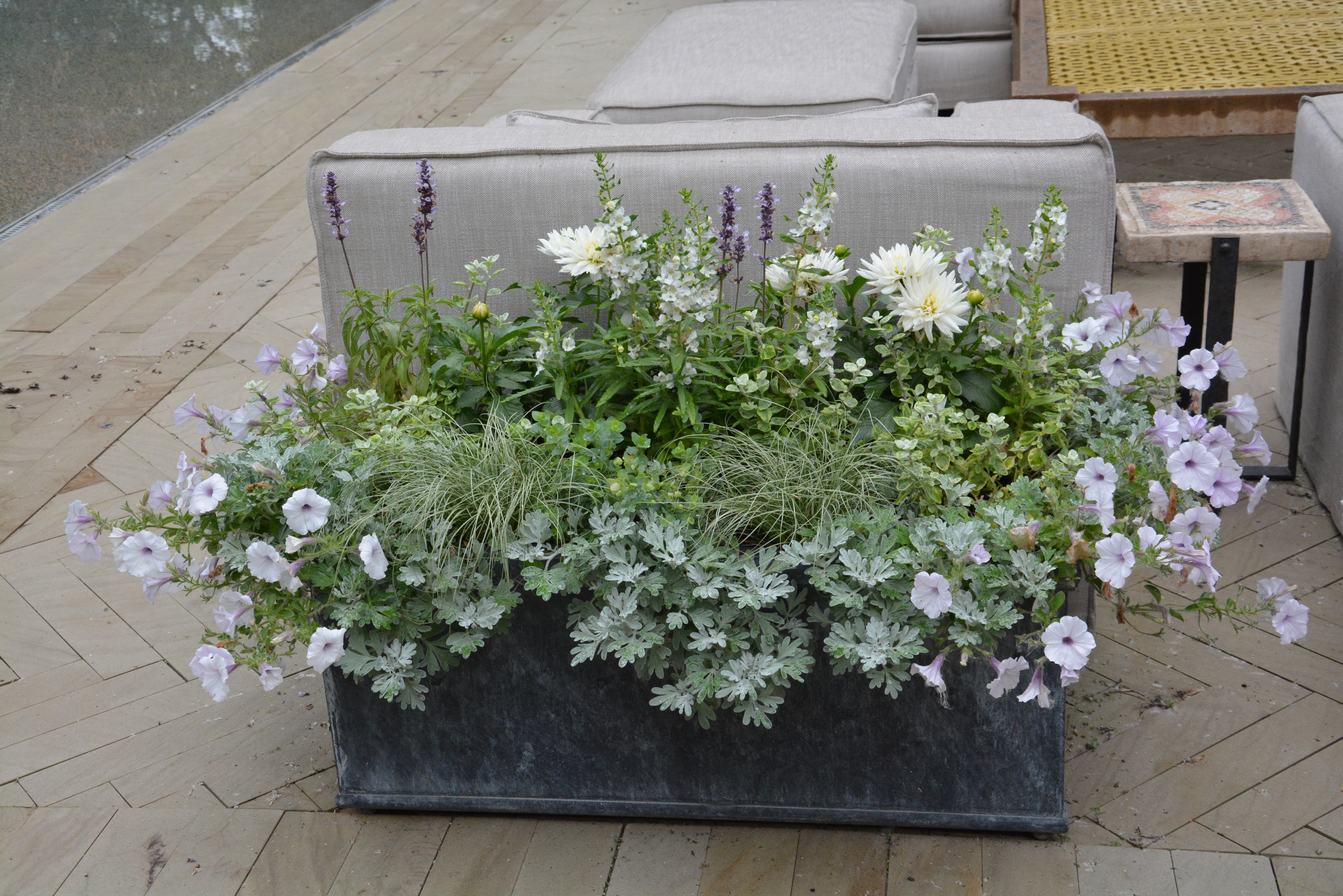
June 24 2014 (4)white dahlias, blue salvia, angelonia, showy oregano, frosted curls grass, and petunias

September 1, 2014 (3)shade pot

Sept. 1a 2014 (16)black and limeSept. 1a 2014 (3)window box

Sept. 1a 2014 (18)shade pot

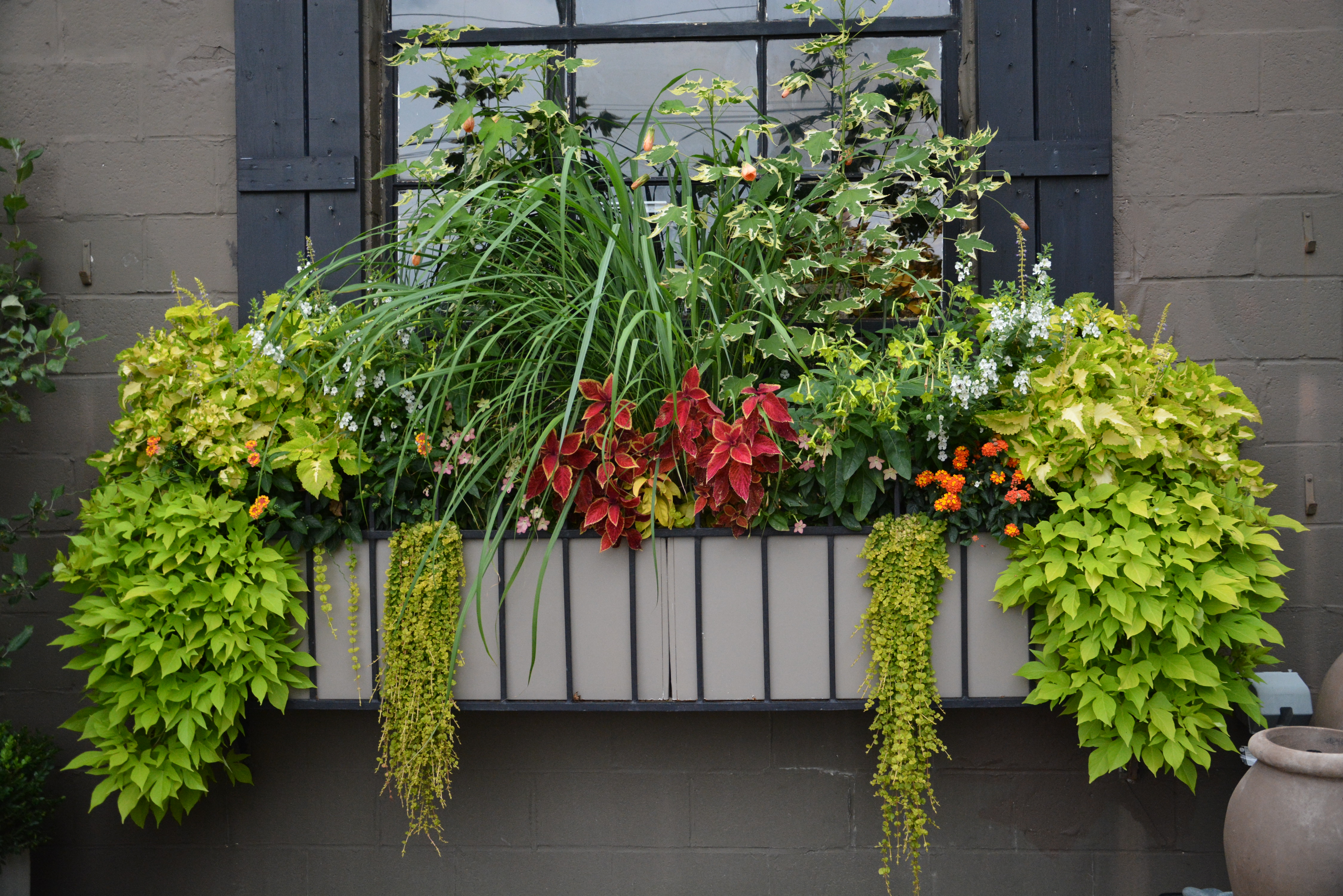
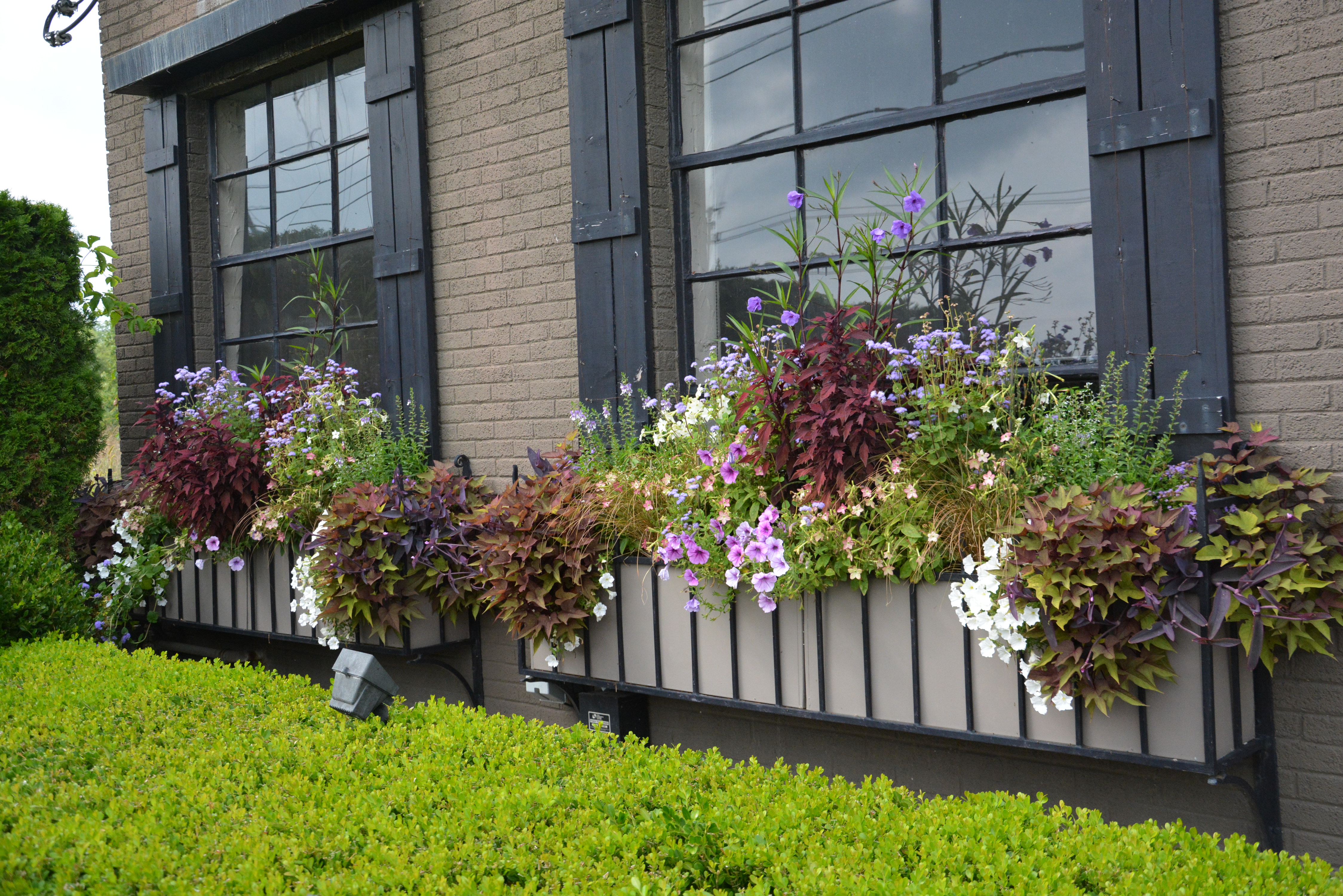
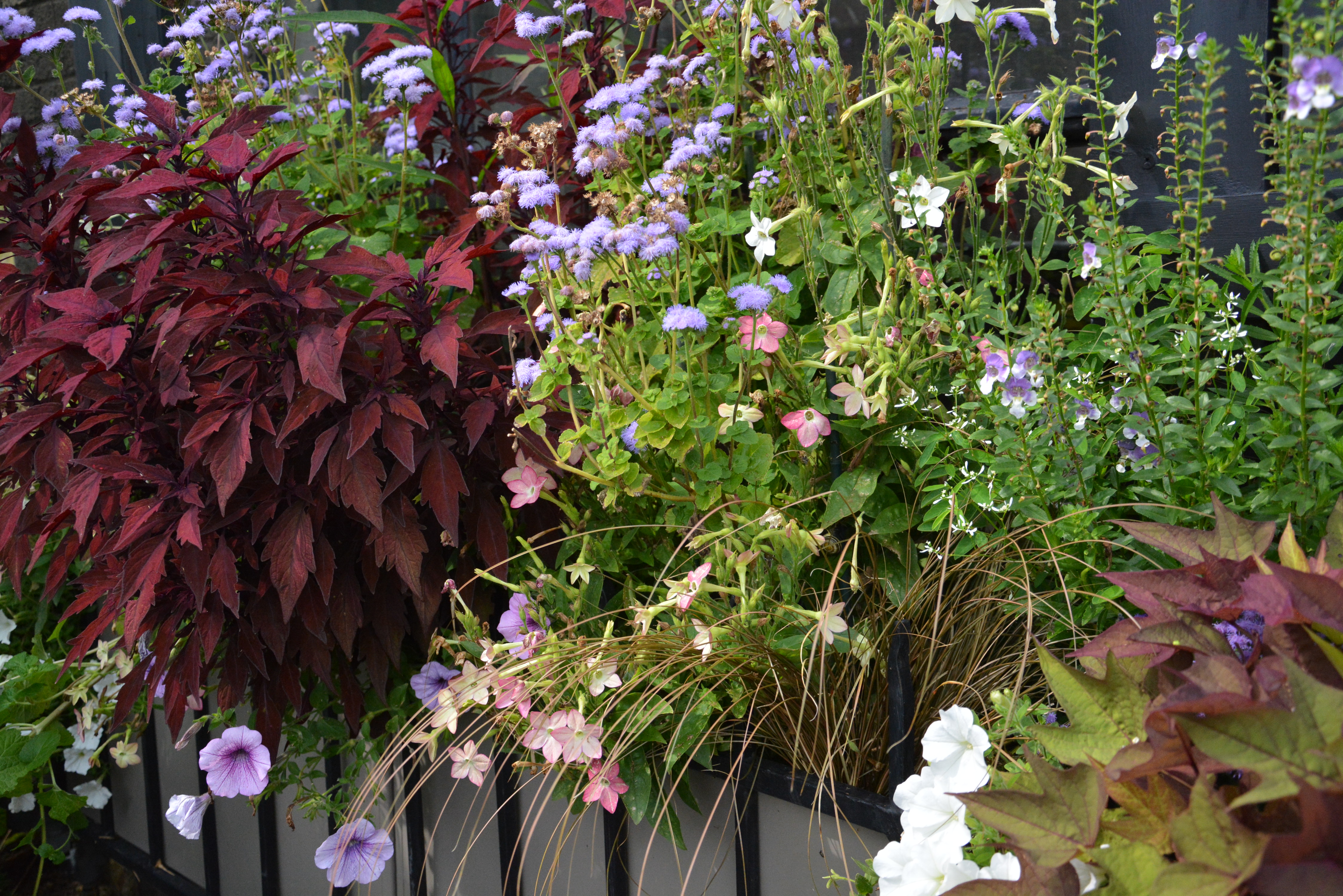
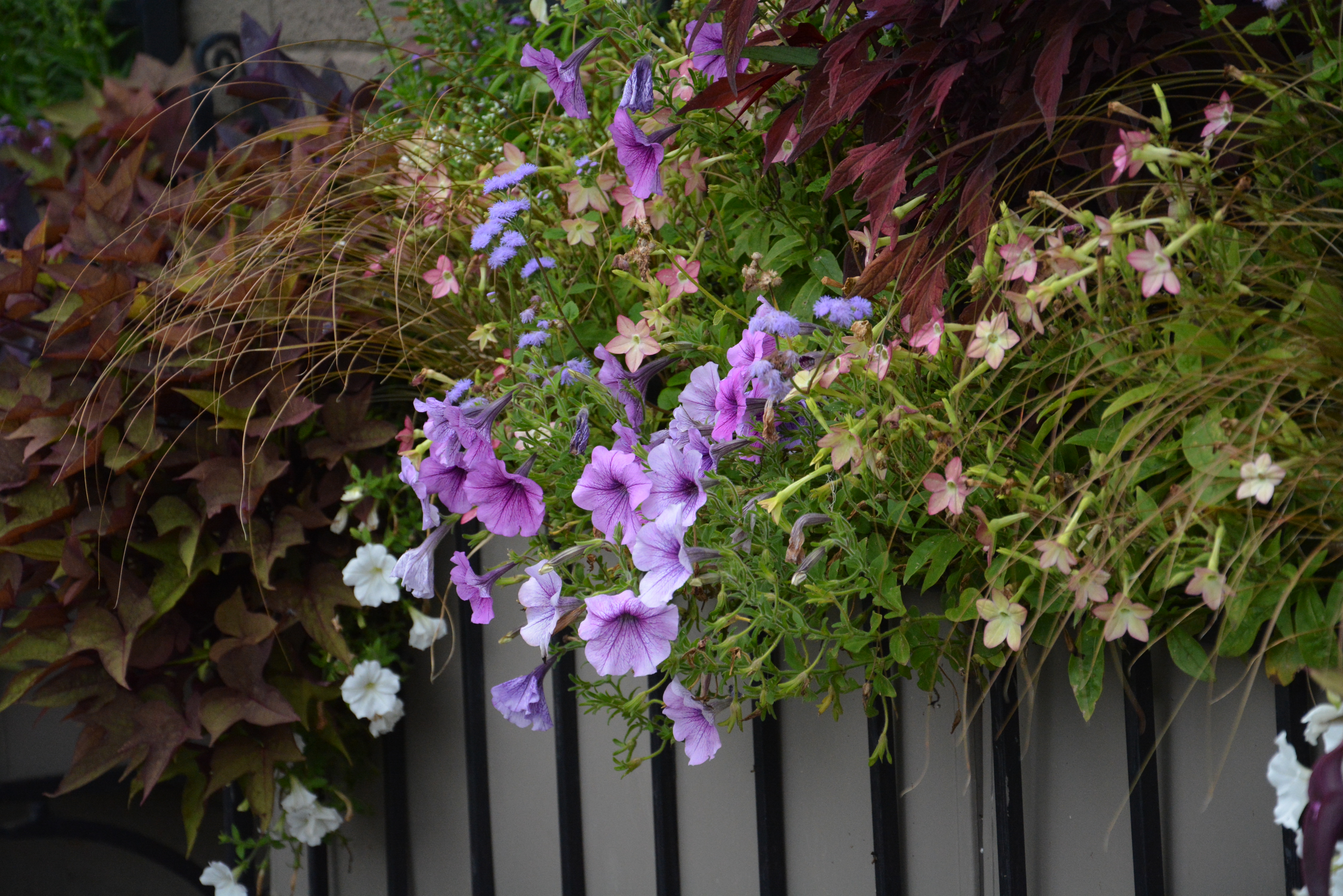
September 1, 2014 (44)window boxes at the shop

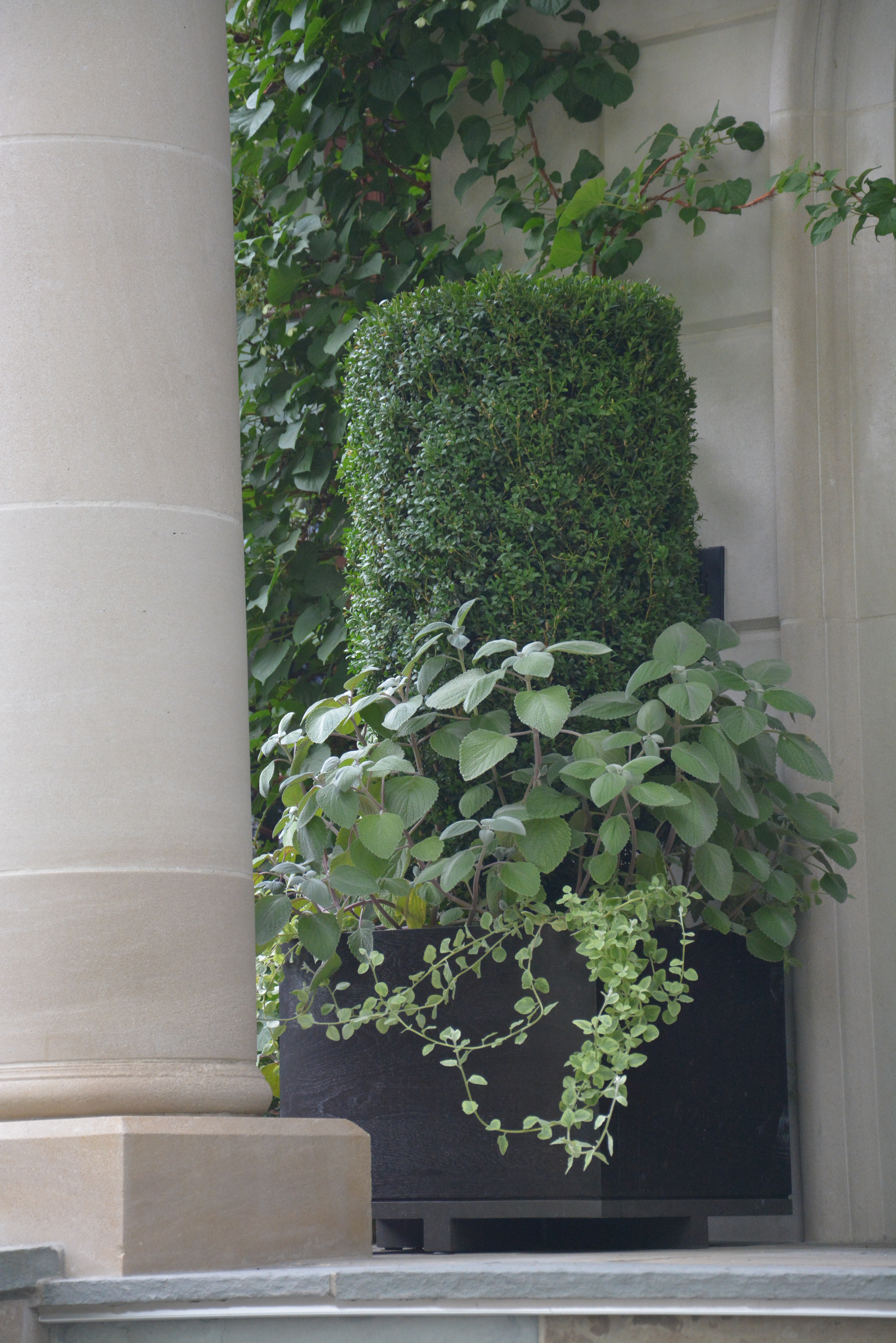
August 1, 2014 (64)boxwood, silver shield plectranthus, and variegated licorice

September 1, 2014 (48)late summer

September 1, 2014 (50)Gardening is a whomping lot of work.  But there are the fruits that come from that labor.

Mixed Greens

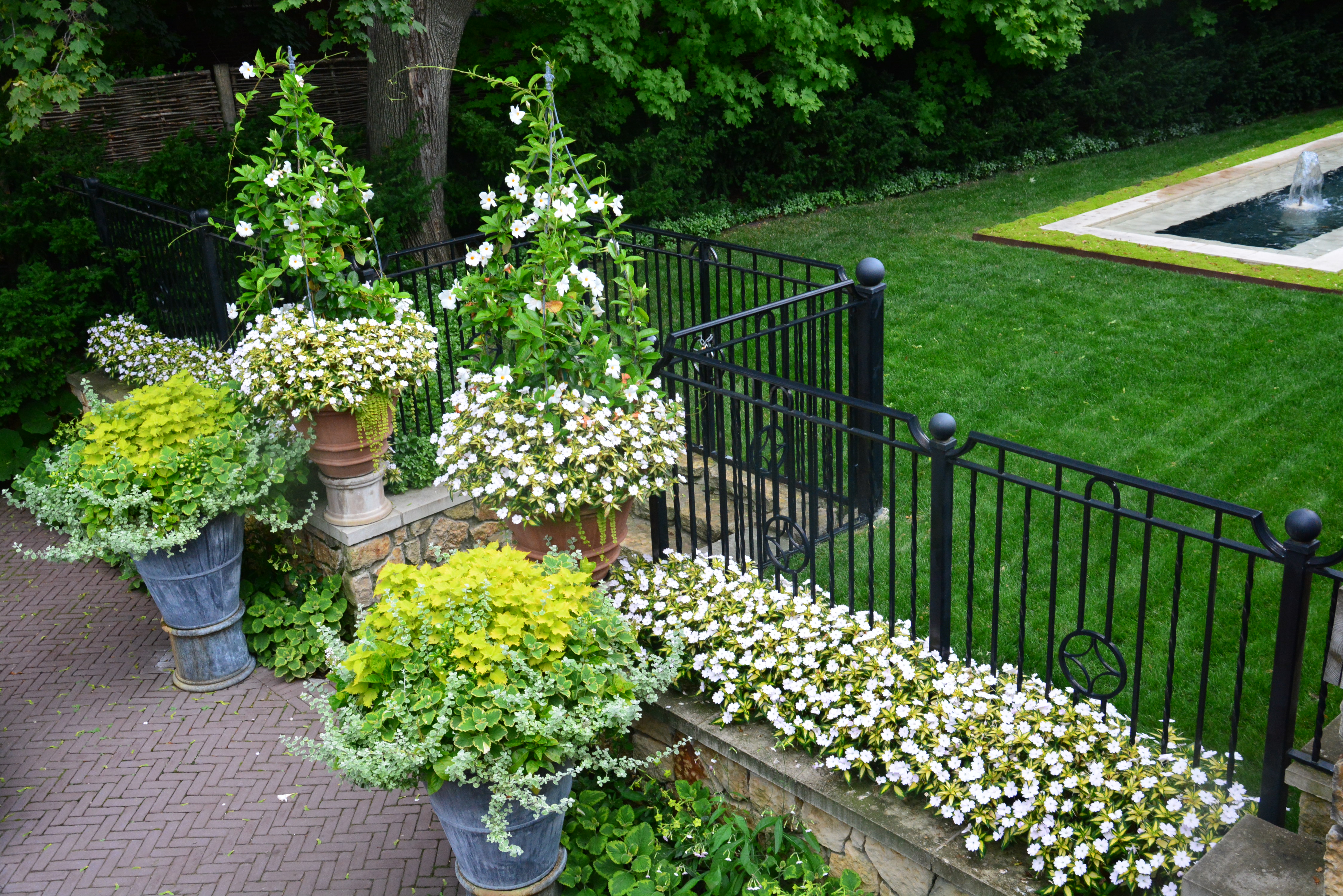
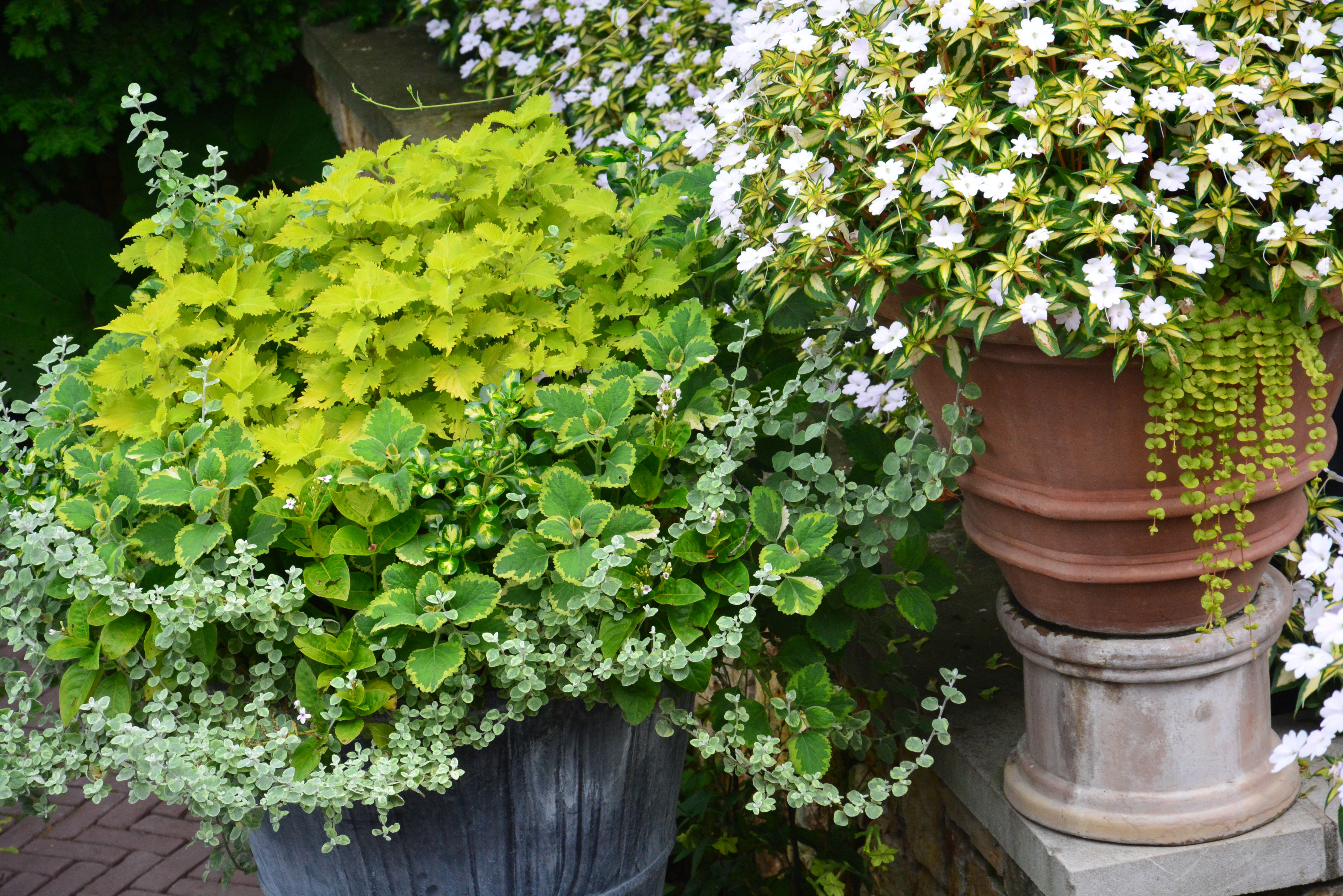
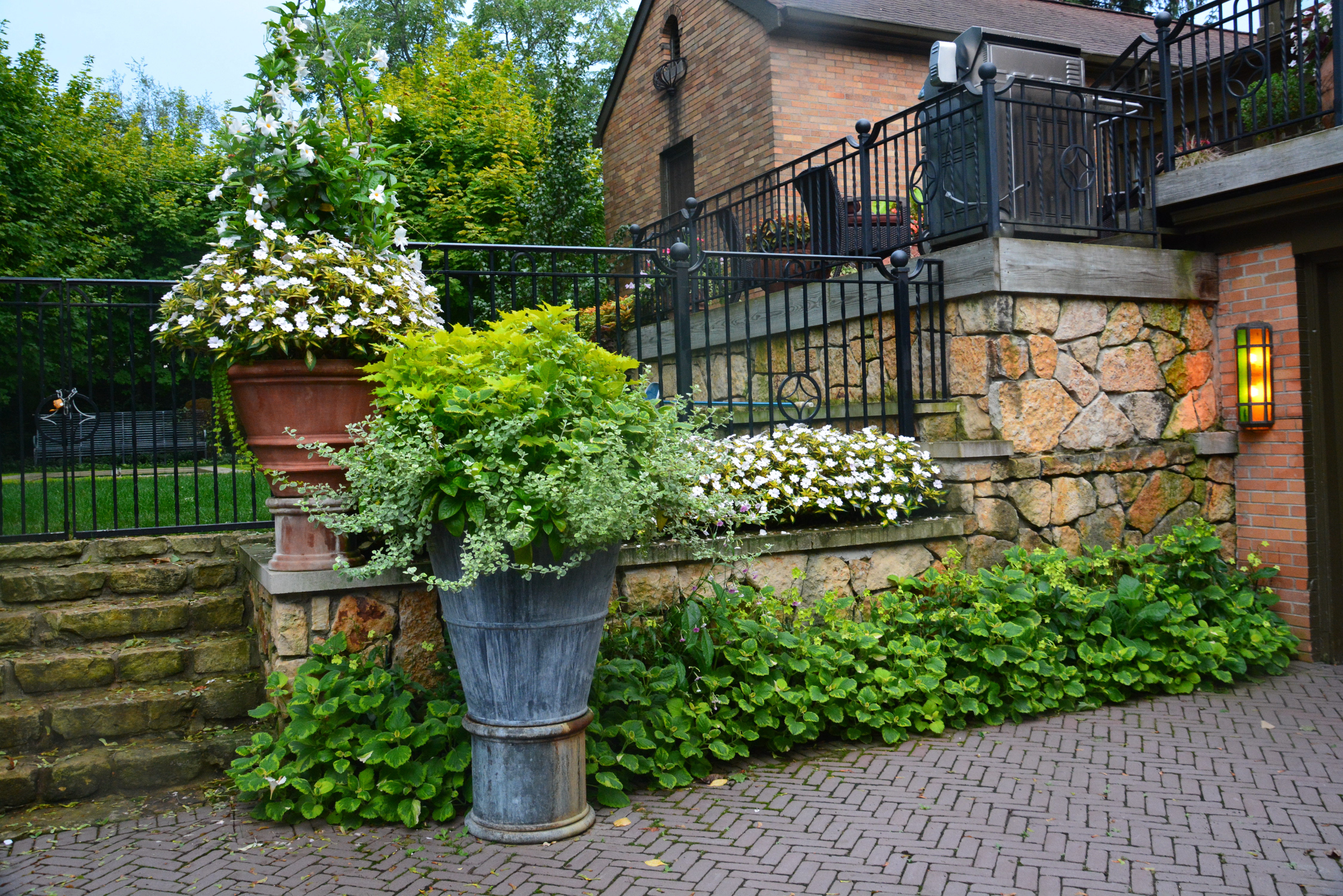
August 16 2014 023My summer driveway garden has only one flowering plant-a white sunpatiens with a variegated leaf.  Lots of them.  I am astonished at how well this plant has performed, given less than ideal sun, chilly temperatures, and relentless rain. The plants have grown at an astonishing rate, and shrug off troublesome weather.  The Japanese beetles did not touch them-I like to think that is because they wouldn’t dare attack a plant this robust. The white mandevillea vine is not flowering profusely, but it is flowering enough to suit me.  All of the other plants are various shades of green.  Green plants in pots have one big visual advantage.  They never look like they are missing something.

August 16 2014 025The flowering plants on my deck are making a strong comeback from the cold and torrential rains. A big pot of lilac New Guinea impatiens is budding-but is missing all of its flowers.  Likewise the pots of geraniums.  Both geraniums and New Guineas have beautiful foliage, but I do not grow them with that in mind.  I grow them for the flowers-the color.  They been missing flowers for several weeks now.  The driveway garden looks perfectly happy.

August 16 2014 024 These green plants took the hostile weather in stride, and have grown steadily.  No rotting flower heads to contend with.  Every one of the plants in these pots is a different shade of green, a different texture, and a different shape.  I have not touched these pots except to water when necessary.  The pots are large, and the soil is completely shaded by plants. I have watered twice in the past 2 weeks.  Now that our temperatures are climbing into the 80’s, I will water accordingly.  I suppose I could pinch the plants in these pots, but I am more interested to see how they will sort things out for themselves.

August 16 2014 038Plants in annual contrainers should be planted with an eye to the eventual overall shape.  The lower pots do not have a vertical growing centerpiece. This pot looks like a big salad-delicious enough to eat.  Like all of the plants in my landscape, they have appreciated the cooler weather and ample rain.  No pouting going on here.

DSC_3735This planting looks good with my butterburrs, the Princeton Gold maples in the background, and hosta behind me. The choice of plants for these containers has a lot to do with the plants in the vicinity.  The drive court is large; the plant palette is limited to the moss between the bricks. These green plants recall and reinforce the overall landscape.

DSC_3726An errant nicotiana mutabilis in a sea of green and gold plectranthus, and some nicotiana alata lime has a few pink flowers.  Should it grow strongly over the fall, I doubt I will mind the interruption. A plant that would breach the strongly horizontal lines would be welcome.

DSC_3736In a spot where five different hard materials come together-the wall stone, the limestone cap, the wood, the wall brick, and the driveway brick – the repetition of a limited number of plants is a softening gesture.

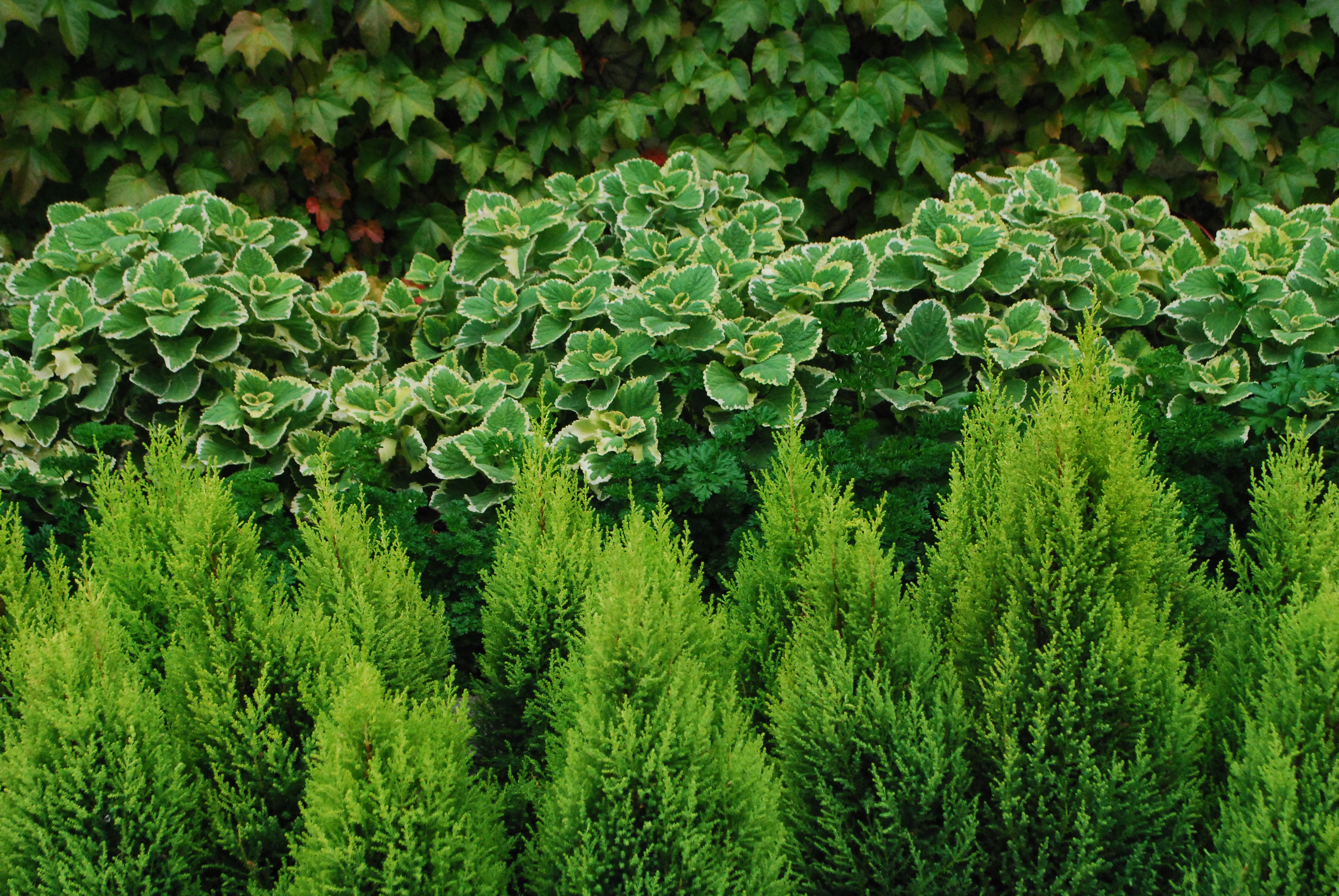
green-plants.jpgGreens done well are hard to beat. The three plants in the above picture, though formally arranged in rows, contrast in shape, surface, form, mass and texture. Variation on a green color scheme provide plenty of visual interest.

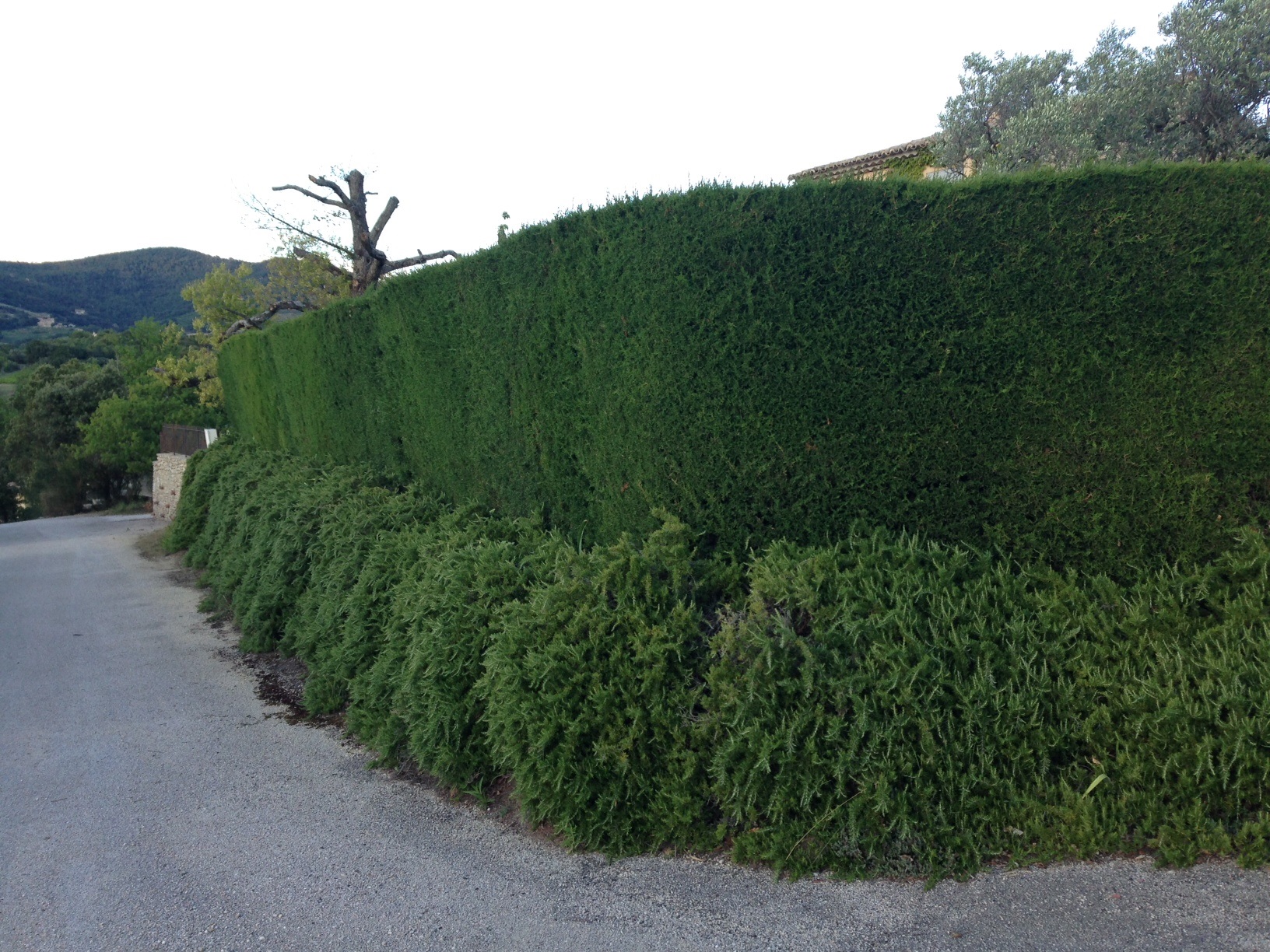
rosemary-and-juniper.jpgA friend traveling in France a month ago sent me this picture of a formally pruned juniper hedge, under planted with a skirt of trailing rosemary. The pairing of two needle-foliaged plants of very similar color and form is taken to another dimension all together by a decision to selectively prune. There is a gardener with a point of view at work here.  The elements of good design may begin with the shapes of spaces, and architectural elements, but a green vocabulary never hurts.