![100_2166[1]](https://deborahsilver.com/wp-content/uploads/2010/02/100_216611-475x356.jpg "100_2166[1]") One of the better parts of my work is buying trees; I buy lots of them. They may come from Oregon, or North Carolina, or Tennessee, or Macomb township just a few minutes from me. I do not own a nursery; I buy trees for specific projects. I choose based on what a client space and environment demands. The branch structure on these beech give me a great idea of their eventual shape. Jim’s son in the picture-I have a good idea of the size of these trees. As much as I would want to have one gorgeous specimen of every tree hardy in my zone, I have to make choices. These oval growing beech-perfect for a spot I am looking to plant.
One of the better parts of my work is buying trees; I buy lots of them. They may come from Oregon, or North Carolina, or Tennessee, or Macomb township just a few minutes from me. I do not own a nursery; I buy trees for specific projects. I choose based on what a client space and environment demands. The branch structure on these beech give me a great idea of their eventual shape. Jim’s son in the picture-I have a good idea of the size of these trees. As much as I would want to have one gorgeous specimen of every tree hardy in my zone, I have to make choices. These oval growing beech-perfect for a spot I am looking to plant.
![100_2191[1]](https://deborahsilver.com/wp-content/uploads/2010/02/100_21911-475x633.jpg "100_2191[1]") Some trees can screen an untoward view. Other trees provide shade from the summer sun. Trees have function; a well placed tree can cut the temperature inside a home by plenty on a hot July day. Trees also delight the eye in a landscape, via their shape, stature, bark, blooms, leaves, berries. They are the giants of the garden-proper placement is essential. These cooly columnar European green beech would do a great service screening a neighboring play structure in a very narrow space-their architectural shape and bearing-a big plus. A straight European green beech-step aside, and provide lots and lots of room, and an equal amount of time.
Some trees can screen an untoward view. Other trees provide shade from the summer sun. Trees have function; a well placed tree can cut the temperature inside a home by plenty on a hot July day. Trees also delight the eye in a landscape, via their shape, stature, bark, blooms, leaves, berries. They are the giants of the garden-proper placement is essential. These cooly columnar European green beech would do a great service screening a neighboring play structure in a very narrow space-their architectural shape and bearing-a big plus. A straight European green beech-step aside, and provide lots and lots of room, and an equal amount of time.
![DSC_5337[1]](https://deborahsilver.com/wp-content/uploads/2010/02/DSC_53371-475x317.jpg "DSC_5337[1]") White pine is the state tree of Michigan. In woods of age in the Upper Peninsula of Michigan, their open growth and gorgeous towering shapes are all anyone would ever need in a tree. Should you have acreage, that is. Sheared native white pine is just that-sheared. Columnar white pine is very unlike our native species. Elegantly tall and narrow, they can give a garden stature without bulk. I have seen white pines in Michigan that could easily shade my entire property-they are not for me. This edited version I could much more easily find a home for.
White pine is the state tree of Michigan. In woods of age in the Upper Peninsula of Michigan, their open growth and gorgeous towering shapes are all anyone would ever need in a tree. Should you have acreage, that is. Sheared native white pine is just that-sheared. Columnar white pine is very unlike our native species. Elegantly tall and narrow, they can give a garden stature without bulk. I have seen white pines in Michigan that could easily shade my entire property-they are not for me. This edited version I could much more easily find a home for.
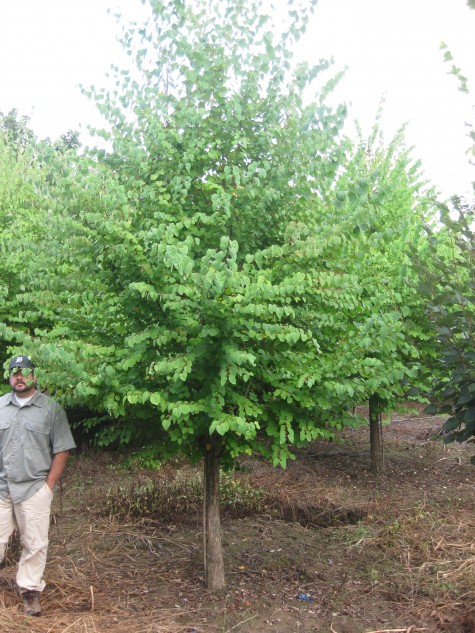 I have a great fondness for Katsura trees. Known formally as Cercidiphyllum Japonicum, their shape and quiet density make them one of my favorite trees. They have no blooms of note, but they do have extraordinary heart shaped leaves that are blue green, with veins decidedly purple. This coloration is unique to this species. These trees have been pruned; the effect is dense, and topiary-like.
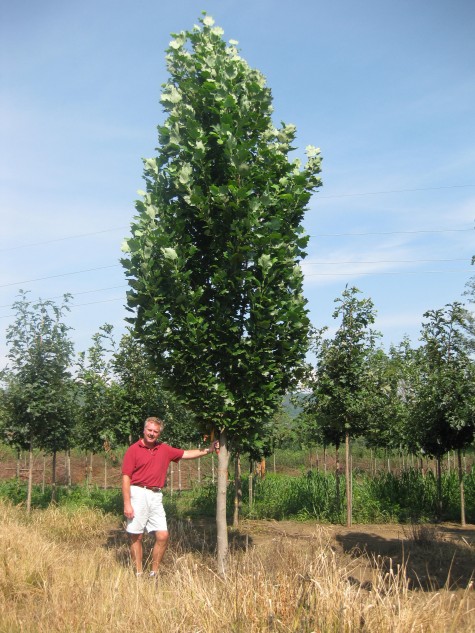 Liriodendron tulipfera, or tulip tree, is one of the largest growing trees in North America. Their green and orange tulip shaped blooms are lost on most. The trees do not begin blooming until they are old, and very tall. You need to stand off, with a spyglass, to appreciate this blooming part. I have a client with screened porches high in the air-I should talk to her about these trees. The columnar tulip tree you might be able to handle. The same smooth grey bark, the same luscious palmate leaves-in a narrow version.
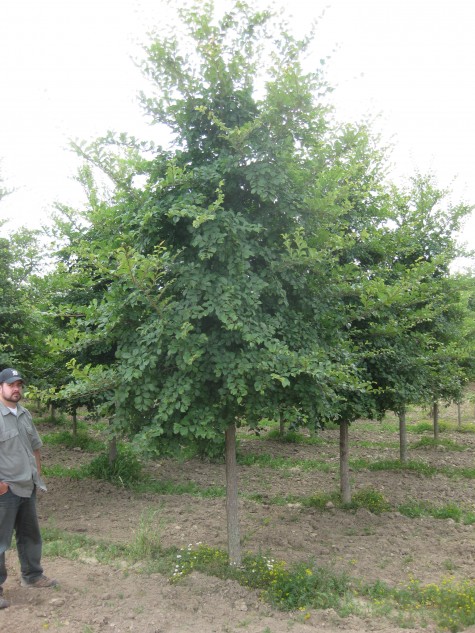 This untrimmed katsura presents very differently than those that are pruned. Many trees are seed grown, producing great variation from tree to tree. If you are looking for a tree, look in person. Even a young tree will give you a hint as to what it will become. Make friends, then buy.
![securedownload[2]](https://deborahsilver.com/wp-content/uploads/2010/02/securedownload2-475x315.jpg "securedownload[2]") These espaliered Bradford pears I am considering buying-with no project in mind. I think I might just have to have them. They are old enough to stand on their own-no structure needed. This winter aspect makes my heart pound. How they catch the snow-so beautiful. It is a sign, when you don’t think you can live without something. These trees have that feeling.
These espaliered Bradford pears I am considering buying-with no project in mind. I think I might just have to have them. They are old enough to stand on their own-no structure needed. This winter aspect makes my heart pound. How they catch the snow-so beautiful. It is a sign, when you don’t think you can live without something. These trees have that feeling.
![securedownload[1]](https://deborahsilver.com/wp-content/uploads/2010/02/securedownload1-475x315.jpg "securedownload[1]")
Come spring, they will enchant a space. Most of the trees I have pictured here would work in small gardens, or tight spaces. No need to deny yourself trees. Gardeners can be so funny. First off, they want the plants they can’t have. Take the time to figure out exactly what it is you like. Once you figure out what it is that moves you about a plant, or a tree, I am sure there is something out there that will be just perfect.
 This ironwork is actually the floor of a bridge that traverses the Rouge River to Zug Island in Detroit. Old industrial sites are landscapes of a different sort, but they are remarkable in how the the most utilitarian structures-factories, bridges, water stations and the like- were designed and built with no small attention to an aesthetic sense. This goes back to a time when there were no designers per se, just craftspeople whose work expressed a belief in the beauty of the materials.
 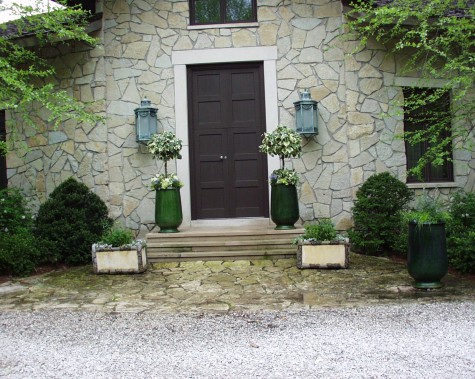 I have admired this stone house designed by Michael Willoughby for a long time. The stone surface you see on the facade is the same stone he used on the ground, and on the interior walls. This irregular flagstone is native to Michigan, and adapts quite well to the modern design of this house. The green glazed French pots bring that landscape green up and onto the entrance porch. The early twentieth century French concrete faux bois boxes refer to the craftsmanship of the stone work.
 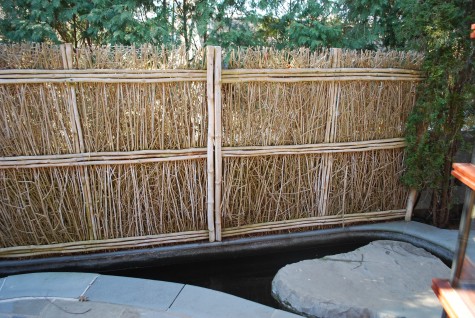 This branch fence functions as screening for a space that had no room for screening plants. Massive rocks set in a koi pond, and a bluestone terrace asked for a lighter more textured companion material. It is entirely possible that this screen is handmade; I have never seen anything quite like it.
 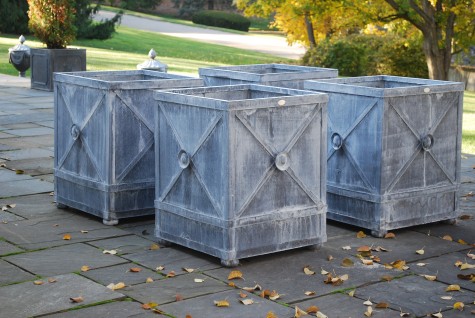 Galvanized and acid washed steel is a favorite material of mine. It has the graceful and dignified look I associate with lead. The white bloom of the finish suggests age.