 A discussion of space and flow in a garden is not just about one’s eye-it is also about providing clear passage and respite for people you like. How I move in, use, work and relax in my garden is easy for me-I live there. I know the shortcuts. It does not take so much to entertain me-sometimes flopping down on the grass works just fine. As much as I love the solitary aspect of my garden, friends visit. They need places to be, and be comfortable.
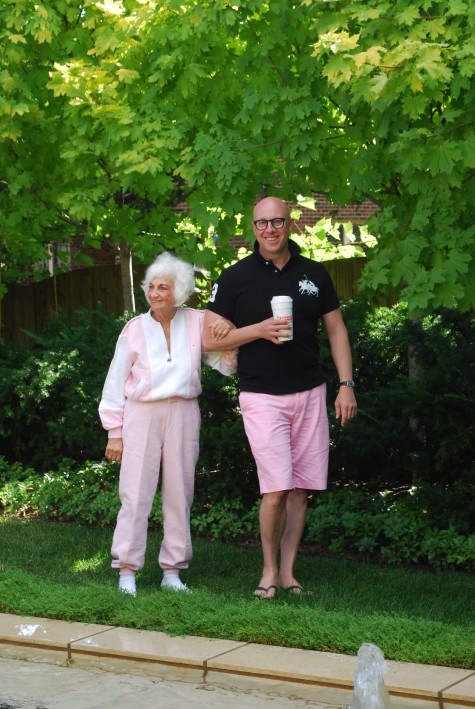 Should you have one friend, or many-should you have older relatives, and a slew of kids, the issues are the same. Should you be interested in company enjoying your garden, planning for them to be there comfortably is important.
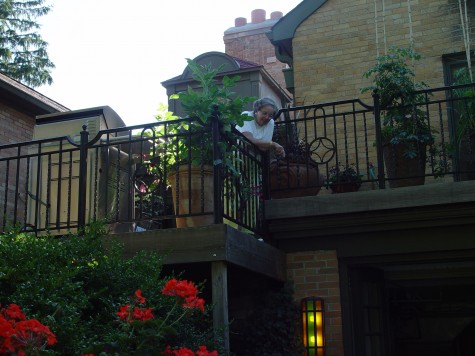 I invite my clients to visit their own home in disguise. Be a guest in your garden for an hour. Where do you park? Can you see the house number? Are you clearly directed to the door? Is the porch large enough for two of you to stand side by side? If there are stairs, are they easy to negotiate? Are the walks and stairs lit in the evening? Your questions will be better than mine-you live there.
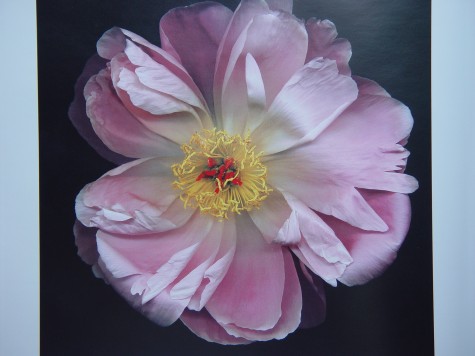
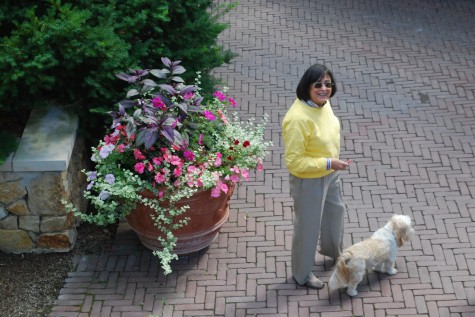 Hard flat surfaces are friendly to people. Slopes and uneven surfaces make people focus their attention on maintaining their balance, instead of enjoying your peonies in bloom. My car park doubles as a terrace when I have company-I put my car in the street.
 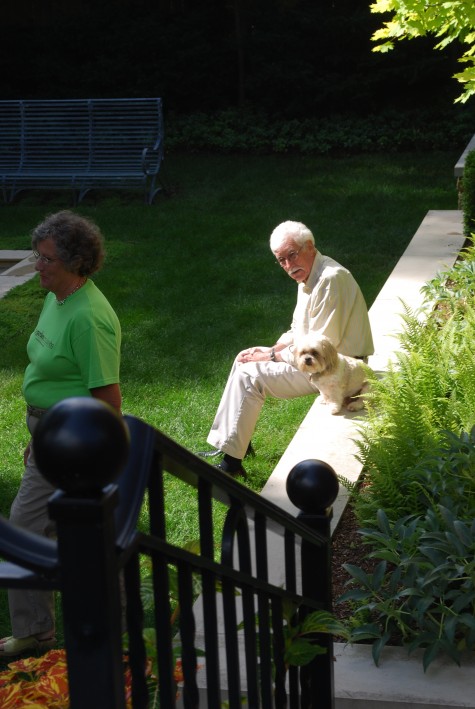 Though my fountain garden has a bench, it also has higher than chair height seat walls. It’s easy to sit down in a number of places; it is equally easy for a number of people to casually congregate as they see fit. Even the little dogs like this.
 My deck terrace is large enough for dining furniture, a few lounge chairs, the barbeque-and my pots. I bring the garden upstairs; some nights I am too tired go into the garden. Wherever people might be in my garden, there are places to sit, to talk, to linger.
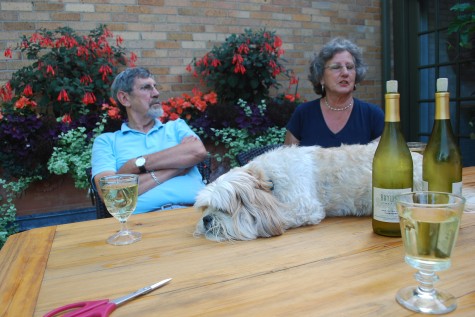 Thomas Church wrote a book entitled “Gardens are for People”. This idea has inspired many a beautiful walkway, bench, pool, terrace, pergola, dining table, croquet lawn-you get the idea. How your friend, or your party of 60 will enter your property, enjoy the garden, have a cocktail and sit down to dinner-this is worth planning for. Sharing a garden is one of the better reasons to own one.

All your friends will appreciate your efforts.
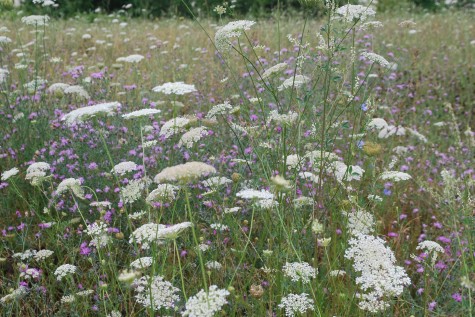 It is preaching to the choir to suggest that gardeners are inspired by plants-of course they are. No one would put up with the work, the unfriendly weather, the failures that hang on forever and the joys that are fleeting, should they did not feel compelled to grow plants. It is not preaching to the choir to suggest that some designers are not interested in plants. You can instantly spot a project where plants are treated as an architectural side note, rather than a living thing that needs proper siting and care. The plants are the language that enables a garden to speak clearly. The plants can also be as important an inspiration for good design as any idea.
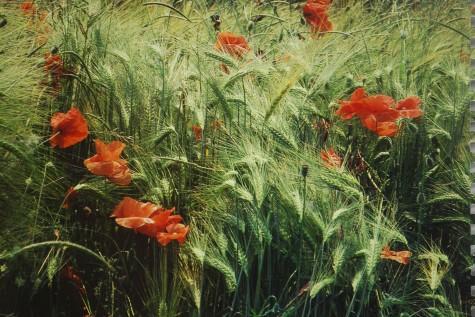
 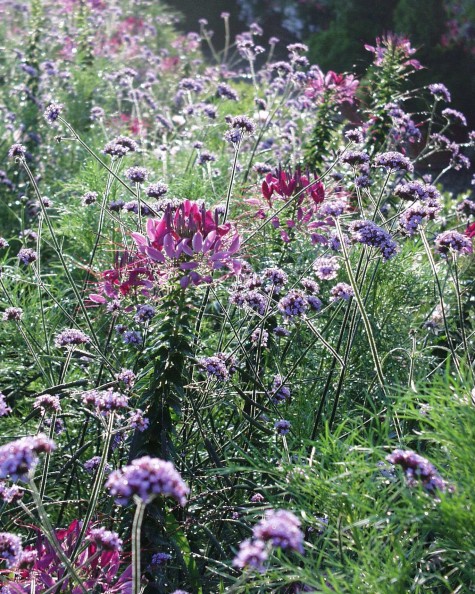 Though I favor landscapes that are structured, I love any flower that reminds me of a meadow. Who knows why. A meadow was never part of my experience growing up, as I have always lived in urban areas. Perhaps a big flowering meadow is one of those gardens of my dreams. The habit of certain plants favor that meadow. If the flowers that look like they have come straight from God’s hands – and by this I mean as simple as a species, not big and overwrought like a 5th generation hybrid dahlia-how they inspire and enchant you can gift your design.
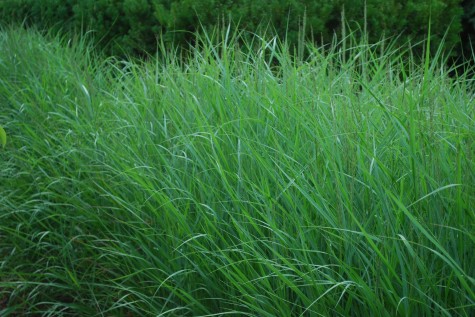
 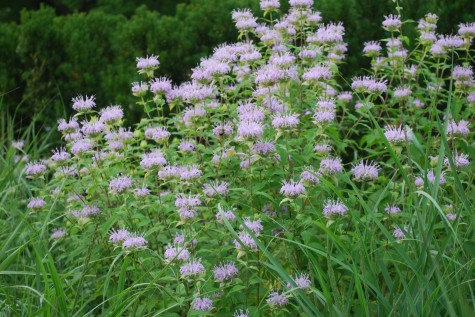 This first generation hybrid of Monarda fistulosa is named Claire Grace. How appropriate. It thrives for me in unamended soil; I do not feed, and I barely water what are now large thriving stands. They wave in the slightest breeze. They share this habit with my panicum virgatum-panic grass. They both are tall and sturdy growing; I have space on my urban lot for them. They are what I see out my kitchen window-who wants architecture glaring back at them from the kitchen window? Wanting in the worst way to grow these plants fueled the design for this spot.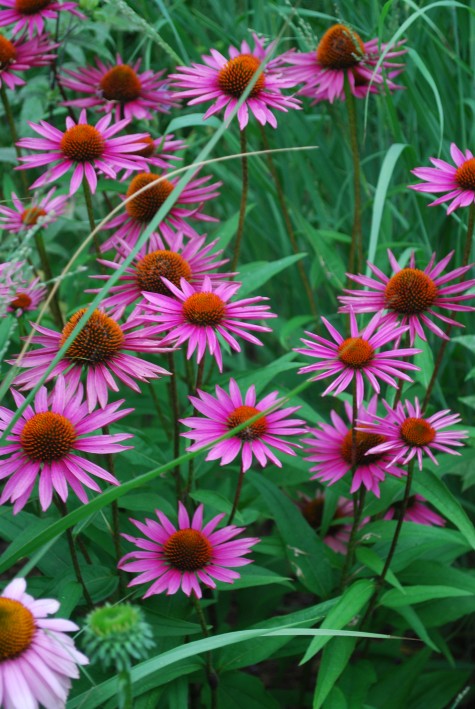
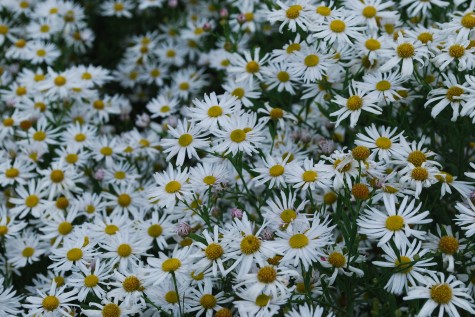 Boltonia asteroides is a fancy name for a late blooming New England aster. Should a plant like this represent your idea of beautiful, then design in this direction. This vigorous native plant is perfect if open, loosely defined spaces are for you. A garden that is always robustly ahead of you-do you like this? If you like it in small doses, is there one place you might be comfortable with this level of abandon?
 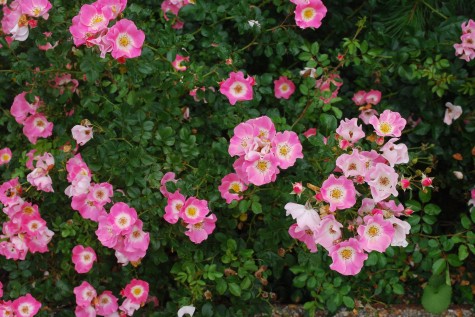 It amuses me how the “new” landscape roses so look like old roses. The name landscape roses refers of course to roses not so demanding. This Carefree Delight rose delivers in spades for any gardener wanting the delight of profusion, without profuse care. These roses are sited in partial shade, in a windy location. They always look happy.
 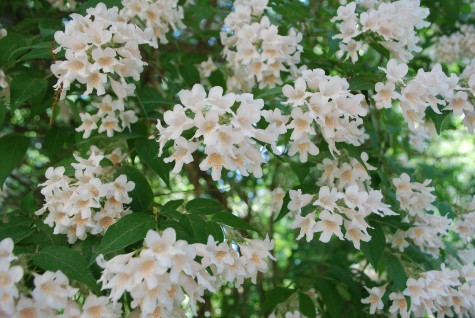 I did a consultation last summer to clients building a new house on an old property. This beauty bush was laden with its characteristic cascading blooms. Formally known as Kolwitzia, I do not see it so often anymore. It needs great space to grow, and weep. Most pruning ruins it; take the old stems out all the way to the ground, if you must. It is in bloom for the wink of an eye; out of bloom, beauty bush would never interest you. But it is one of those old fashioned, easy going shrubs that makes a visual statement.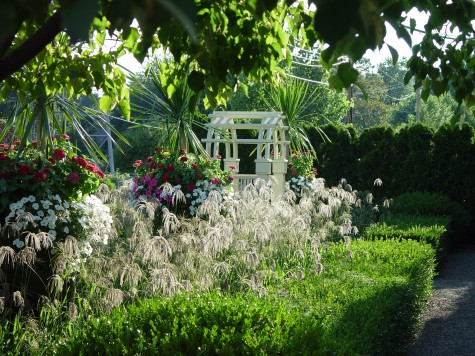

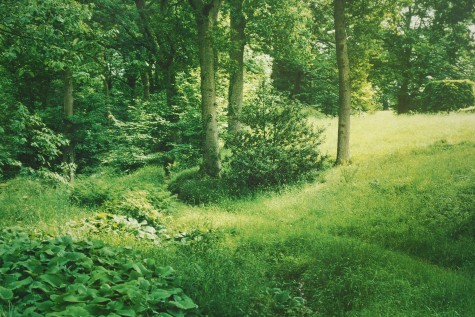
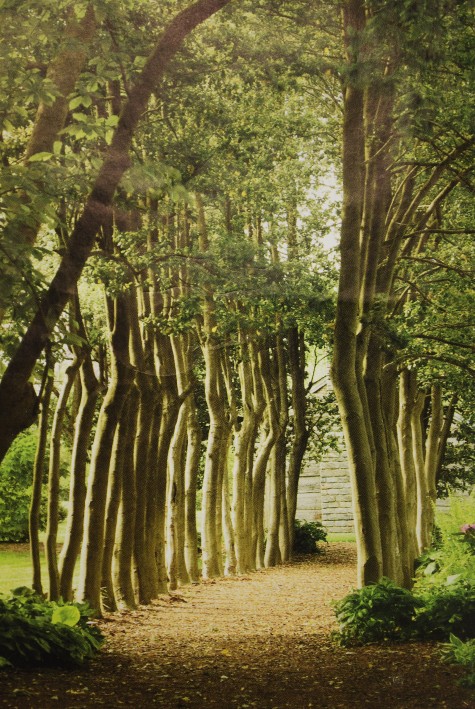 What inspires me in this picture is the story behind it. Yew Dell Gardens is a botanical garden just outside of Louisville Kentucky. Theodore Klein and his wife had a commercial nursery on these 33 acres, growing countless plants here until his death in 1998. The property was purchased, and reinvented as a botanic garden. The above pictured allee is in fact a pair of adjacent nursery rows of American holly, now very old. How the nursery rows became a beautiful landscape feature inspires me. I am keenly interested in the intersection of landscape and agriculture. I am equally interested in how people steward the land entrusted to their care.
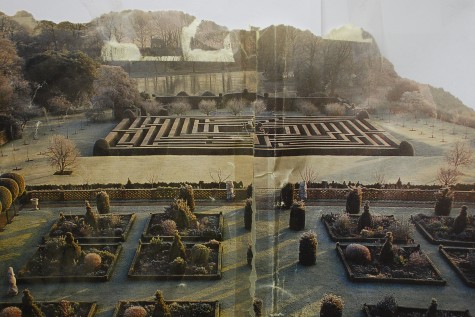
 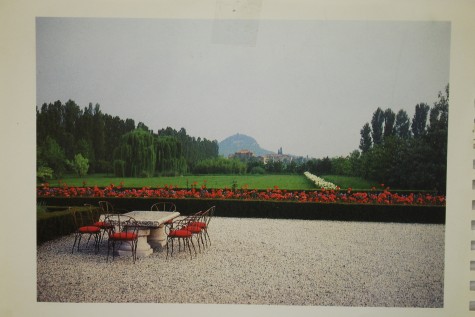 This is an image from an old garden journal which now survives as a collection of images I treasure. The landscape is simple, striking, and very spatially composed. Elements both contemporary and traditional interact in a worthy way. There are so many ways to put the design elements working here to good use.
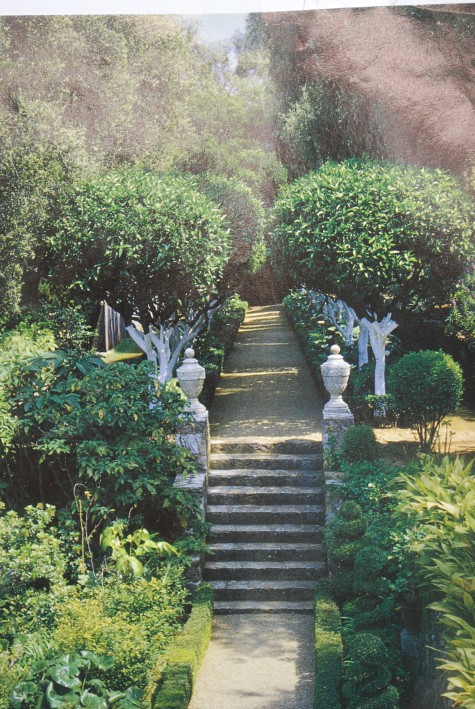 These trees with whitewashed trunks in a garden in the south of France make another reference to agriculture. Fruit trees would sometimes have their trunks whitewashed with a kaolin compound, to deter insects. Kaolin, the same clay which is the basis for face powder, is a benign and useful compound. The visual appearance-gorgeous. I encourage clients to cut and collect any image that gets their attention-even if it is not clear what attracts them. Sooner or later some thread that connects all of them will become clear.