How people respond to color is so individual. This person will like pastels only, that person can’t get enough red, yellow and fuchsia. I myself tried hard for a while to warm up to white-but without much success. Its chilly. I myself prefer saturated and intense colors-no matter what they might be.
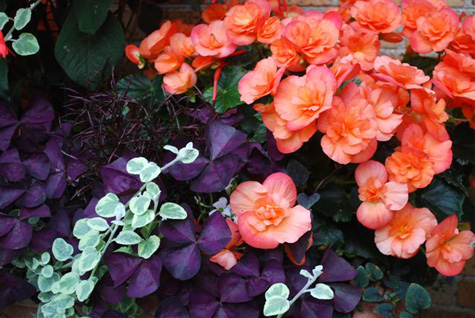
But I think the key aspect to designing with color is to look carefully at the relationship of one color to another. The black/purple oxalis and alternanthera in this combination makes the orange seem even more intensely orange. The green of variagated helicrysum is cooly contrasting.
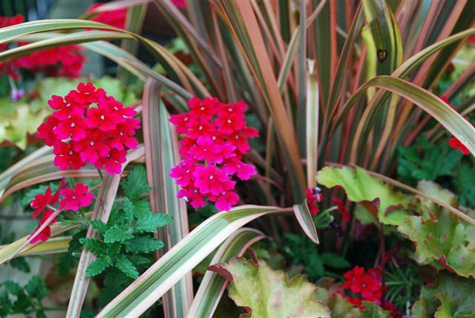
The pink leaning towards violet in this trailing verbena is subtly repeated in the phormium and the undersides of the heuchera leaf. I think pairing foliage that has color additional to green is hard to do. The green leaf of this vebena is so small, that it does not provide a jarring departure from the colors of the foliages.
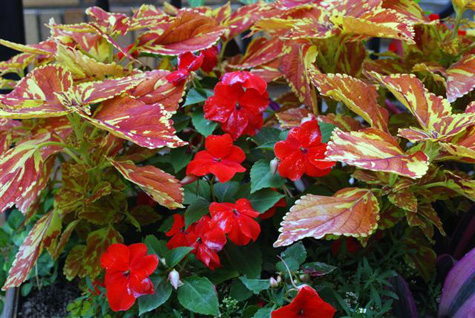 The burnt orange/carmine and chartreuse leaf of the coleus “Freckles” is a study in color contrast in and of itself. The orange impatiens does a good job of the harmony for this tune.
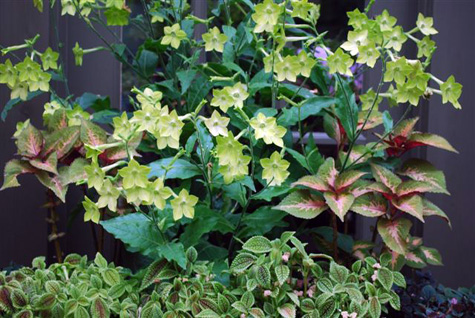 Every year I grow nicotiana alata lime. The color of the flower takes on a different aura, when paired with other colors. With other greens the flowers are soft and subtle. A little pale carmine in the coleus leaf, and pilea, is an echo, not a trumpet blast.
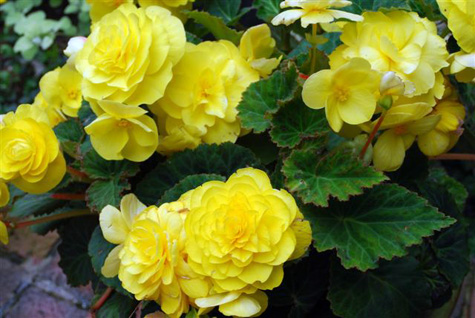
Yellow lights up a shady spot. For that reason, I like yellow begonias, lime irisine, wild lime coleus, and Sum and Substance hosta. Its the relationship of the yellow to the shade that creates the color interest. The shady green here is so rich looking.
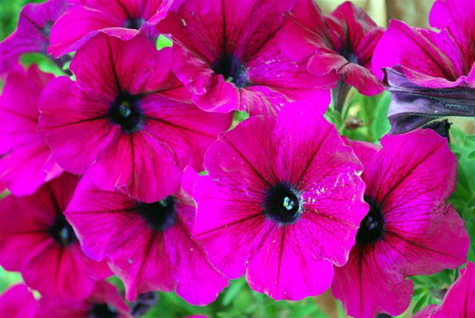 I am having a carmine and orange season, and enjoying it immensely. Carmine alone sometimes has the effect of setting one’s teeth on edge; the addition of the orange makes for a very warm pleasing glow. When I get home in the evening, the overcast light makes all the color appear even more saturated. The design idea here-figure out what time of day you will be in your garden, or what time of day you best like to be in your garden. You’ll have an idea of what the light will be; choose your color accordingly.
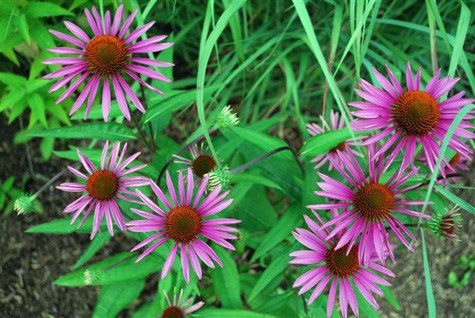
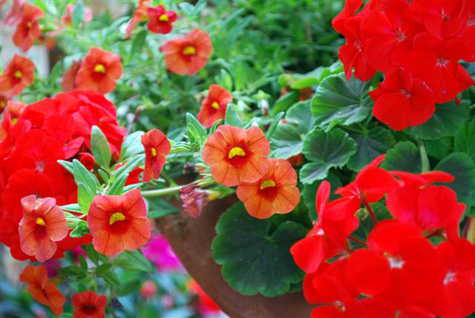 I like here the relationship of the green to the orange. Zesty!
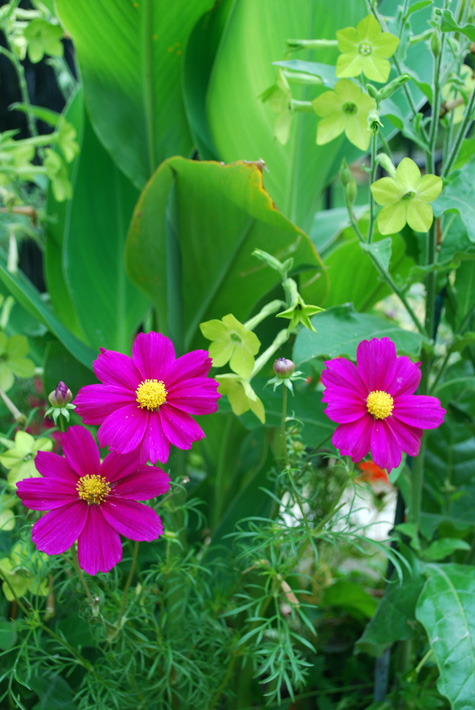 Lime and carmine together I simply find appealing-all understanding of the science of color aside. The color of live flowers or plants-they call this a special kind of color-living color. I wouldn’t be without it.
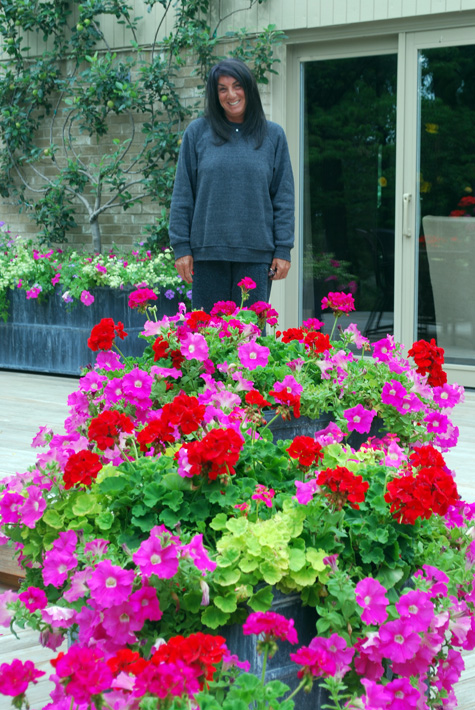
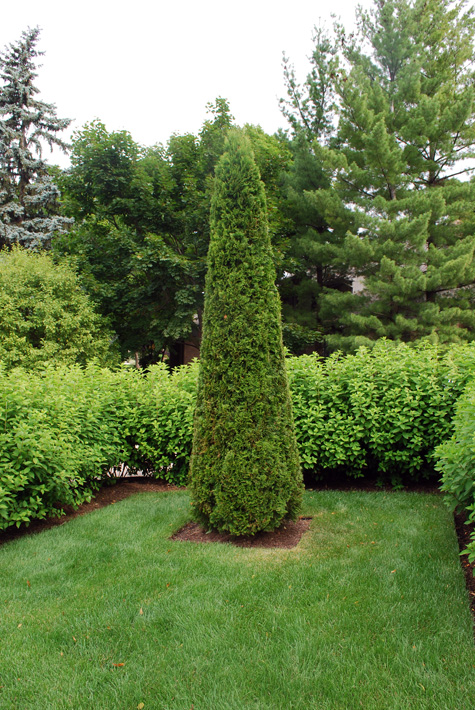
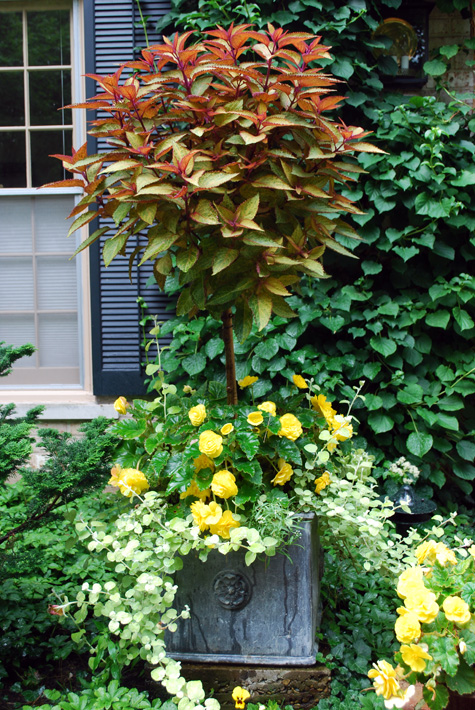
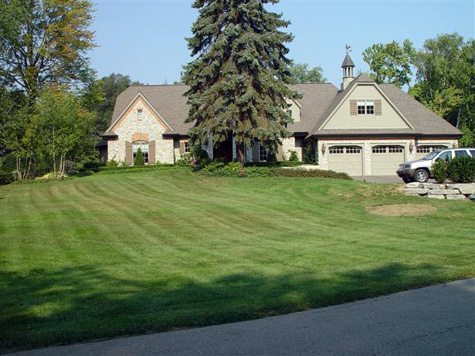
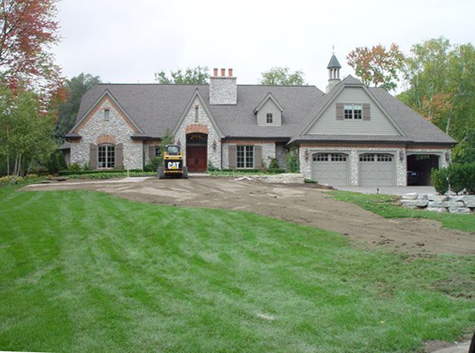
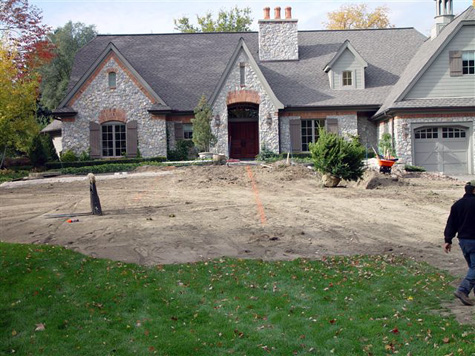 The property had steep grades, and drainage issues both. I made use of a bulldozer. That machine of mine can make quick work of a lot of ills. Just being able to see the front door was a big improvement.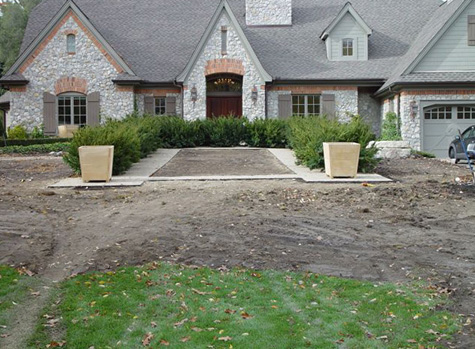
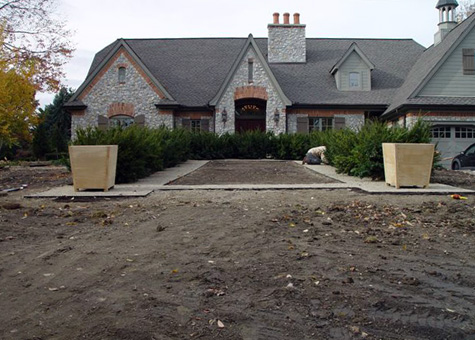
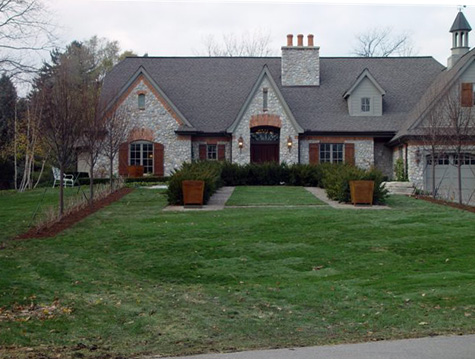 The lawn panels are formal, no doubt. They are softened by the plantings in the Belgian boxes, and the wildly representing yews. This scheme makes a presentation of the house that I think represents the feelings of my clients. In my view, success is all about the serious interaction I have with clients. There is a moment, a chunk of time, in which we have a serious exchange. Whatever came before, whatever looms ahead, we had our moment. Notice the finish on the boxes-and a new finish on the shutters.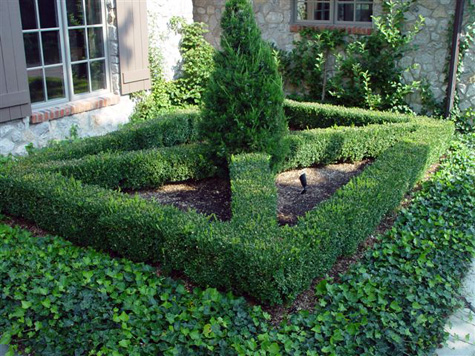
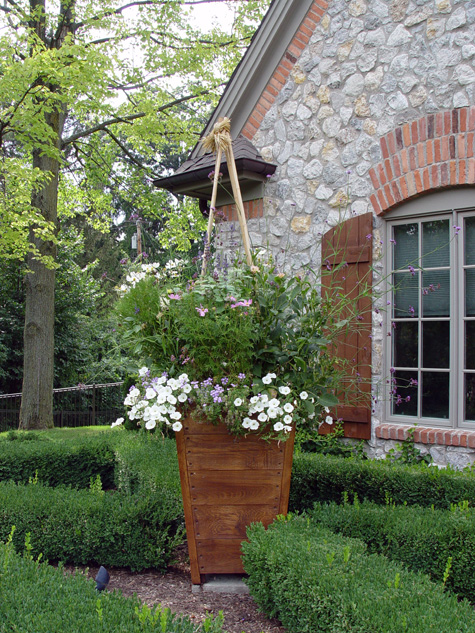 These boxes overflowing with flowers make a big statement. Wood in the landscape is a natural. In this case we lined the boxes with sheet metal liners, to improve the longevity of the boxes. The entire scheme is friendly and pleasing to the eye.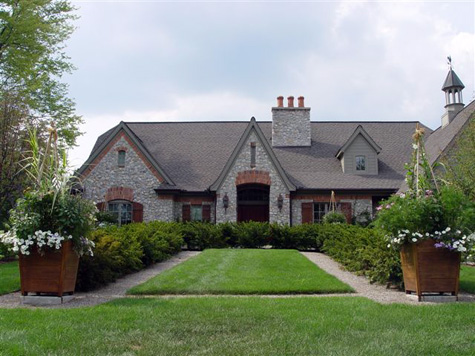
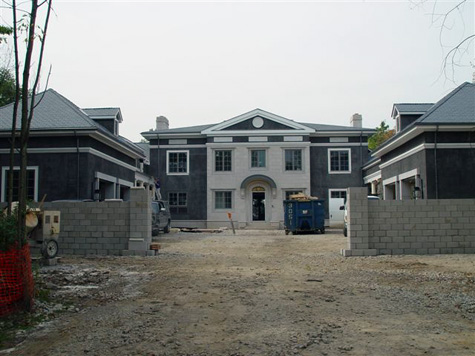 This contemporary American version of a classic French chateau includes garage wings on either side of the main house. What a beautiful architectural detail- visually treating the garages as living space. This gives the house a very European flavor. The design challenge was providing enough space to turn cars into the garages, and guest parking, without the landscape looking like a commercial parking lot.
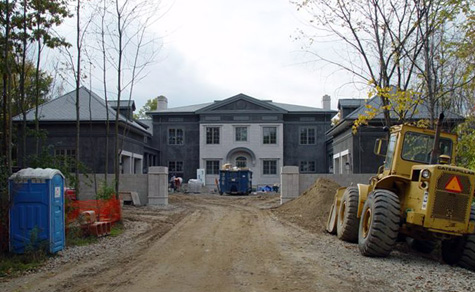 The wing walls, finished in large columns add another hard architectural feature to the mix. As there is no hiding so many hard surfaces of this size, why not celebrate them? Selecting a primary material for the drive and drive court came first. The clients decided they liked concrete aggregate as a surface. Though their first choice was gravel, they had legitimate concerns about snowplow damage. Good looking concrete aggregate requires a very skilled contractor; be sure you see samples of work before you sign up.
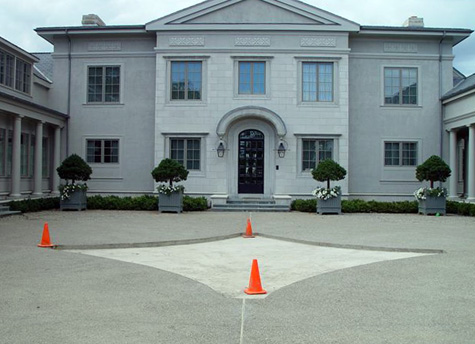
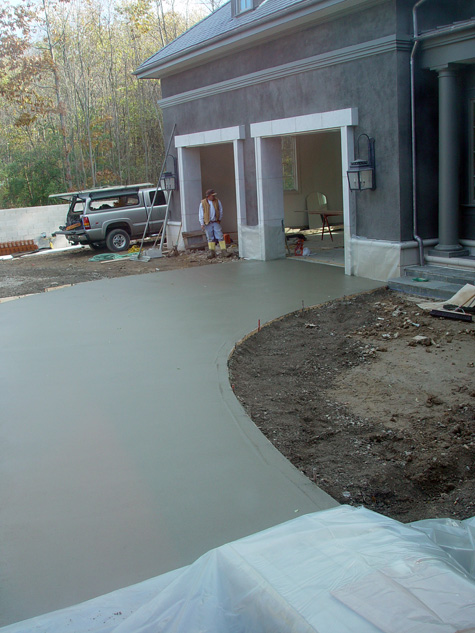 The concrete aggregate in the drive court was comprised of four sections, based on the turning radius into the garage, and the reverse radius corresponding to the surface needed to back out of the garage. This picture illustrates the aggregate surface I thought necessary to back out gracefully. Four quadrants made it easy to sawcut the aggregate every 100 square feet or so. Large surfaces of concrete require expansion joints, so if there is to be any cracking, the cracking occurs in these joints. The area immediately to the right of the freshly poured concrete in this picture was surfaced in decomposed granite. This change of material is a subtle one, in terms of its texture and color, but definitely a change. This created four curved shapes on the ground, in contrast to the rectilinear shapes of the house. They also repeat the curved roof over the front porch.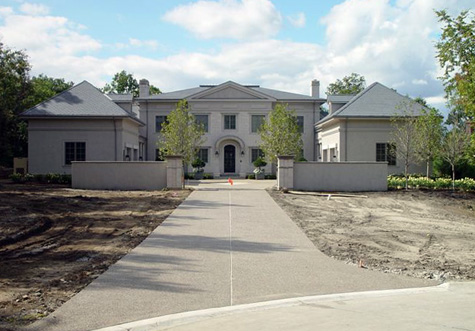
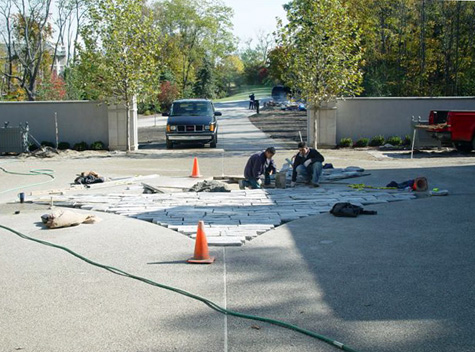 Each stone was individually set in mortar, as the thickness of each stone varied a good deal. Natural stone takes so much longer to set, as it is never completely or predictably the same thickness from stone to stone.
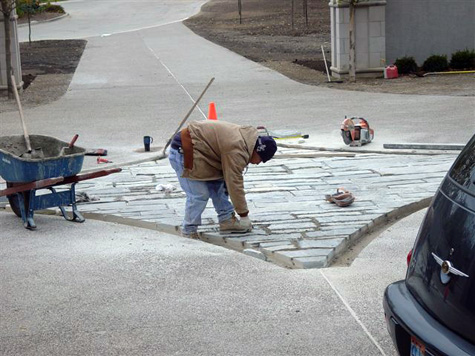 The roughness of this stone seemed to ask for a frame. To cut limestone to fit perfectly here would have been very problematic. So we poured a border of mortar, finished to resemble the limestone on the house.
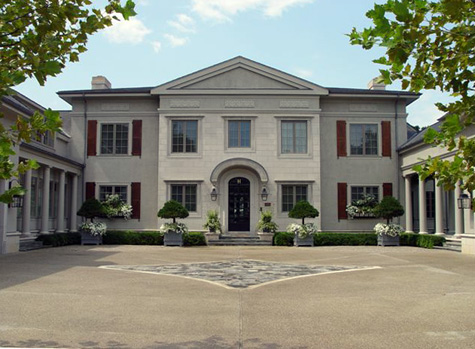 The finished drivecourt is an interested study in shapes and textures, as well as a utilitarian solution for parking.
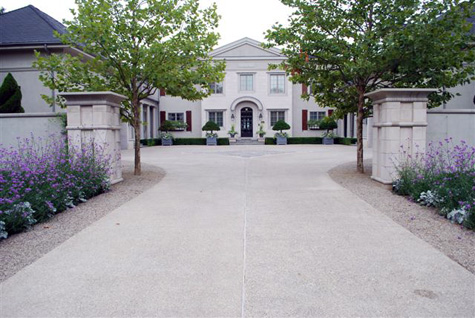 The decomposed granite was brought outside the wing walls, to better visually integrate the drive and drivecourt. I think the end result is not just austere, but beautifully austere.