I owe the idea for this post to Nanne; she commented a few days ago about a sculpture of mine she thought exhibited imagination and precision. What about it? Imagination may be defined as the ability to form a mental image of something which does not yet exist in any other form other that a thought. No one will ever hire me to write a dictionary, or teach a course in philosophy, but the word imagination does suggest an activity that floats like a cloud above that stormy sea I call the Sea of Execution.
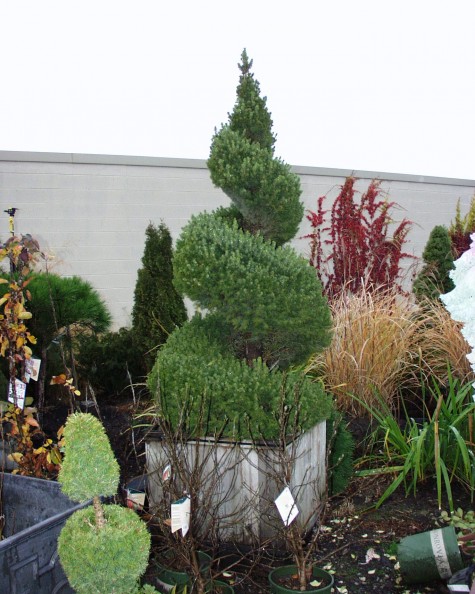
I am in the process of a series of sculptures about the landscape I believe no one will ever hire me to build. Why would I do this? I like making things, whether they be terraces, pinetums, bouquets, or paintings. But more importantly, the idea of designing an object that could represent the landscape free of responsibility to make it work, live and go on growing seemed like so much fun. At the top of my top ten list of mistakes gardeners make-and this includes me-is the expectation that a plant will obligingly represent an idea. An idea about space, beauty, gardens, or landscapes. My Honorine Jobert anemone flowers are making me pretty happy right now, but my happiness is the last thing on their blooming minds. They have their own agenda; I just get to tag along. They do not look the same as they did last year. They are older; the summer weather is different this year. Nothing stays the same with them; what stubbornly stays the same is my effort to get them to represent my design. The lilac planted right next to the kitchen window in hopes that the fragrance will fill that room does not account for the 20′ rangy shrub that comes with that fragrance. A perfectly good plant in the wrong spot is a product of the idea that design will prevail over biological destiny. Junipers pruned into spirals, cloud pruned boxwood, stick like burning bushes with a thin frosting of leaves on top, my pollarded Palabin lilacs on standard-they tell a story much like a fairy tale. Giant shrubs pruned down to half their mature size to fit a space-not so sweet a tale. Making these sculptureswould circumvent all of the frustration of imagining a design, and making it work; it would never have to work.
Every landscape designer has design work that never escapes escapes the page, and breathes. Pieces of that work may go on to become part of another project-like my sculptures. Or it gets the saucing up it needs to really taste good. Every design relationship is precisely that-a relationship. Maybe the design work has not met its intended yet. Perhaps it wasn’t worth a hoot anyway, and I should feel relieved I was never asked to transform a pig’s ear of a design into a functional landscape.
But I do know that the sum total of my imaginative worth needs a different measure than the the sum total of my bank account. If I spent every day of the next 100 days giving my imagination free rein, I would still have just as much of it available to me on the hundredth day as I do today. You need and should have this confidence in what you imagine, as you will need that energy to transform an idea into a living space. Some ideas won’t stand for being transplanted into a landscape. It is good to know this beforehand. The day comes when what I have imagined has to settle up precisely with what and how it will work. The best design work in the world cannot circumvent this. Once I buy plants in fulfillment of a design, my bank account does get involved. Putting money to something only to find that it will not or does not work is no fun at all.
Some issues are a matter of inches. A bench 4 inches inches higher may be more comforatble; 8 inches is the difference between a garden and a sunken garden. A tree planted 8 inches above grade may thrive or die, based on soil and water conditions. A garden gate off center by 7 inches will always look wrongly placed. A step riser taller than 8 inches is a pain to negotiate. Paying attention to inches implies a certain precision.
The sculpture of plastic grass that Nanne referred to in her comment was very precisely constructed. The materials made it possible for that to work. Had they been covered in sod-oh my. I guess I try with my design work to make big simple gestures, as the plants that I will ask to be a party to what I imagine need the room to be what they do best-grow. The big surprise of the construction of my sculptures-they do need to work. I am stopped dead, trying to imagine precisely where to take them next.
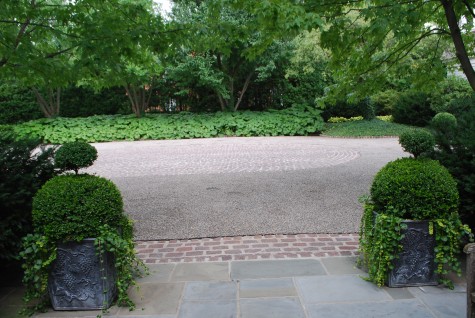
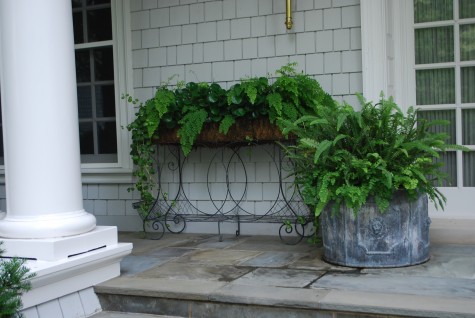
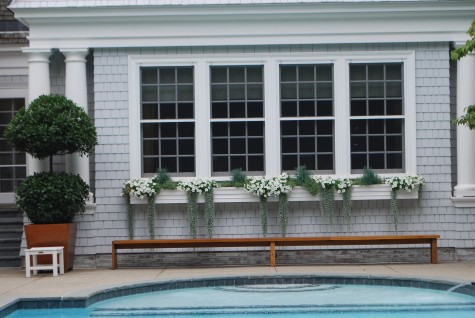
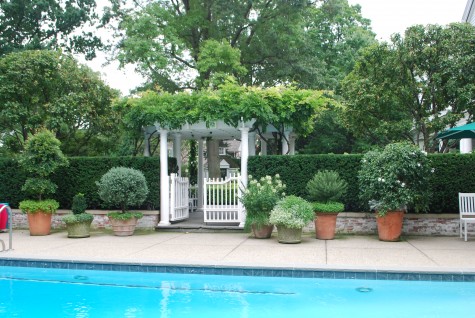
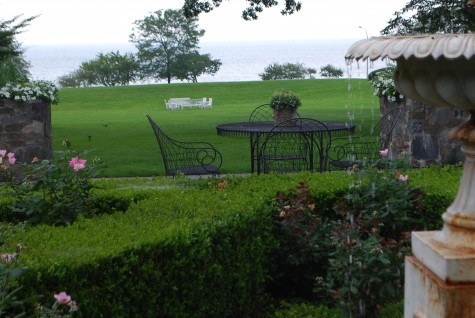
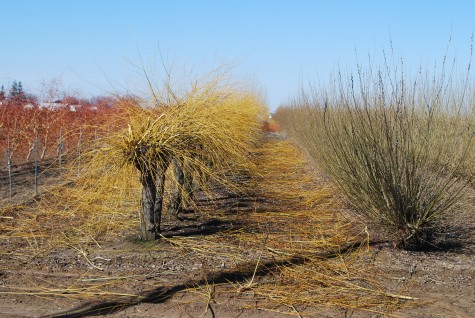
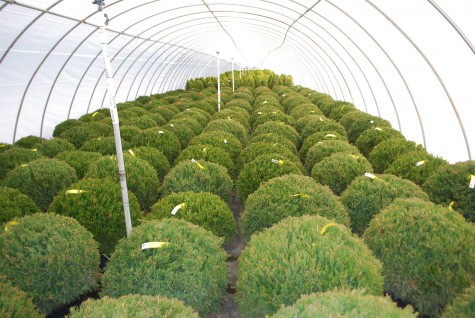
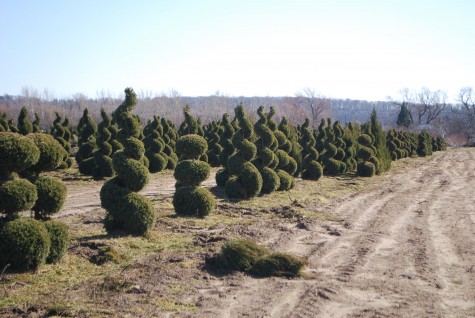
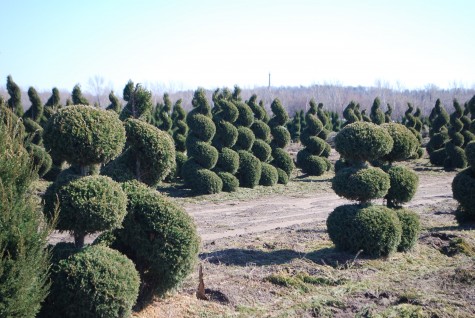
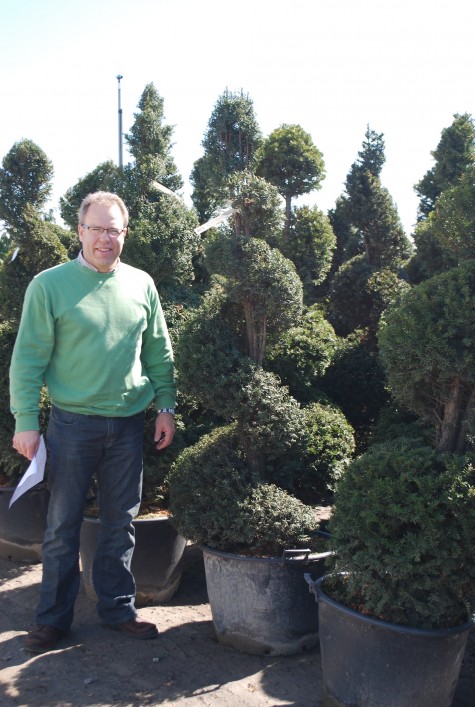
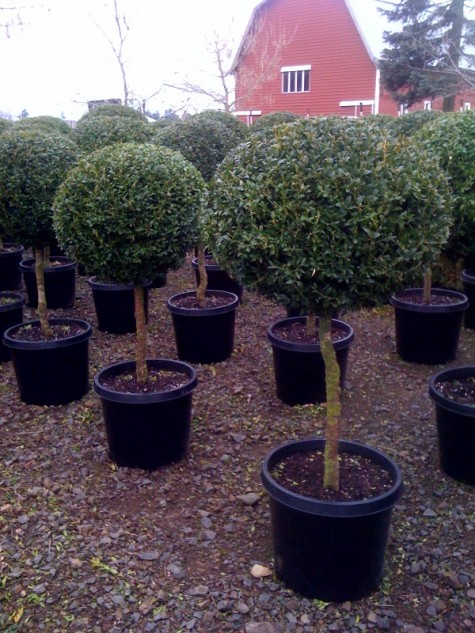
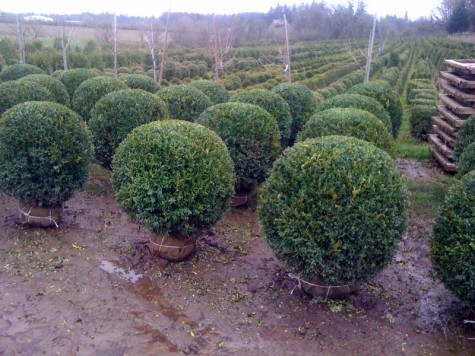
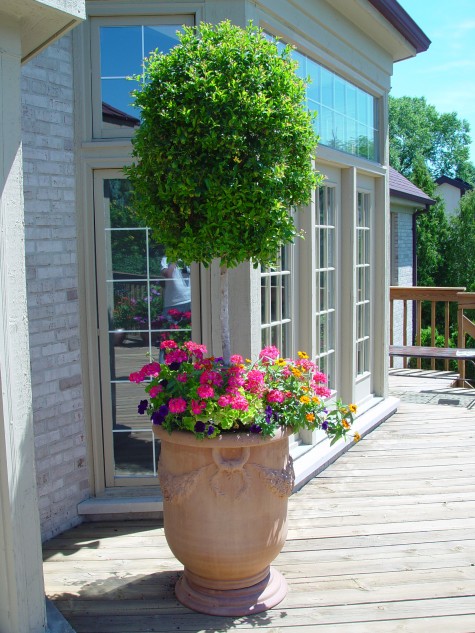
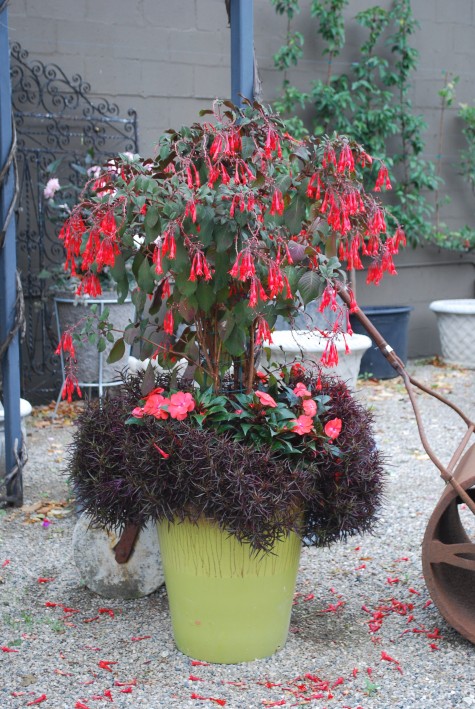
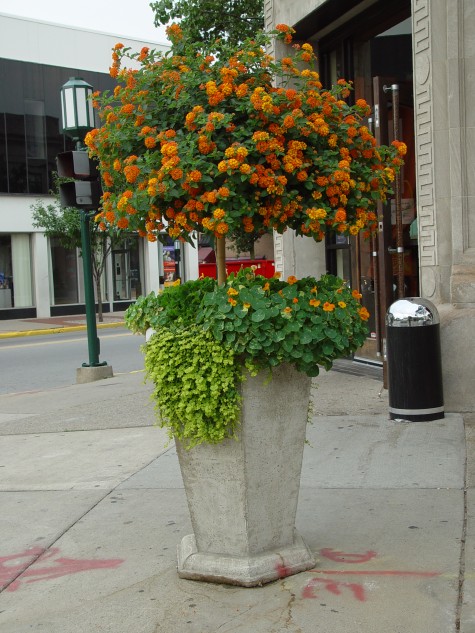 Topiary is the art of pruning, and training a plant to grow in whatever shape you might fancy. Plenty of plant species lend themselves to this kind of treatment. The above pictured lantana is seven years old. It began as a small plant, whose side branches were removed until the primary trunk was about four feet tall. A devoted grower then pinched back the main leader-the first step in the formation of the top. As I like slightly flattened spherical shapes in topiary, we keep the top pruned, and grow the side shoots wide. Lantana flowers profusely in hot weather, it makes a strikingly statuesque topiary plant. In the fall, I cut the head of the plant back by two-thirds,, strip all the remaining leaves off, and stash it in the greenhouse. I strip the leaves off, as lantana is a magnet for whitefly-and they multiply like lightening in a green house environment. What they require is plenty of trouble, but it is glorious in form and flower.
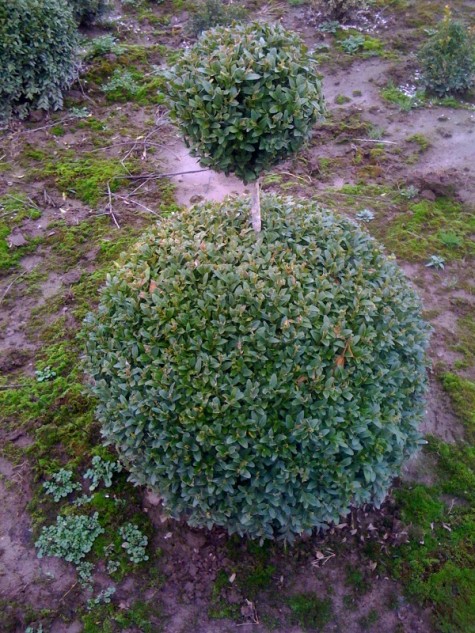
 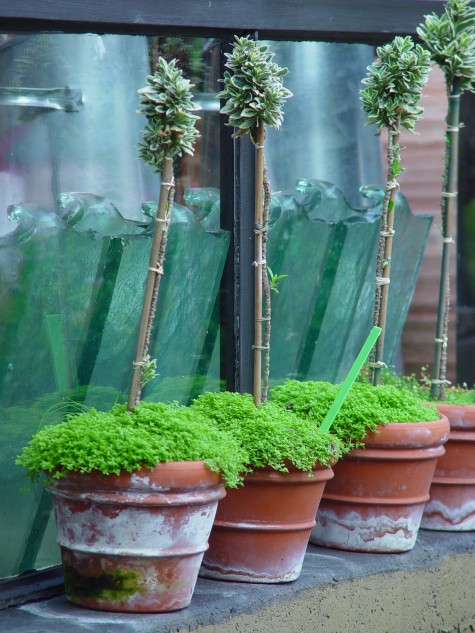 Well grown large topiary plants are expensive. It takes a lot of time to grow them on-sometimes years go by before a plant can be sold. This dwarf variegated euonymus with a batch of leaves atop a stem tells the story. In ten years, this plant will not be much taller-just much stockier, with a full head of leafy branches. As euonymus is a hardy shrub, they like to be wintered in a cool light place.
 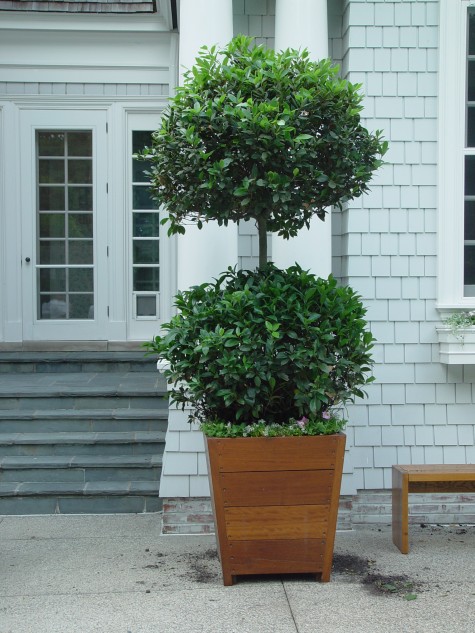 Bay Laurel is not hardy here, unfortunately-so a greenhouse is a necessity in the winter. This plant is 14 years old. This single ball topiary suckered at the base so persistently, I finally just let it grow. The formal shape is easy to keep up; you can see it needs a little haircut right now. There are many kinds of topiary shears available-I like short bladed snips, so I can cut branches without slicing into the leaves. Any leaf that is cut will show that telltale browing on that cut edge within days. �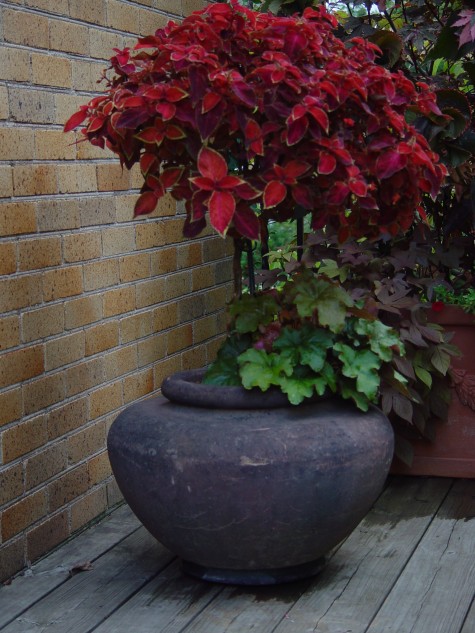
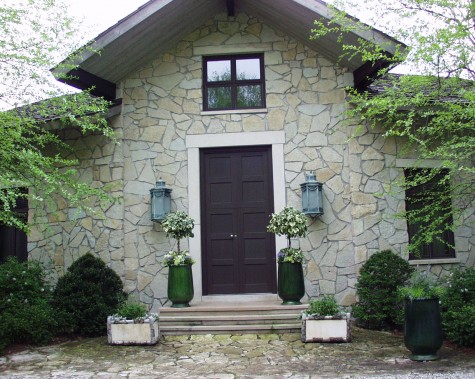 Ivy can be readily be trained over a wire form. This makes it an ideal subject for fast growing. The vines are tied to the form to provide completely coverage, and the vines are clipped as needed. Hedera algeriensis ” Gloire de Marengo”, or variegated Algerian ivy, has large glossy leaves, and a prominent white variegation; old topiaries grown from this plant are striking. A bonus-it is possible to winter ivy topiaries over in the house.
 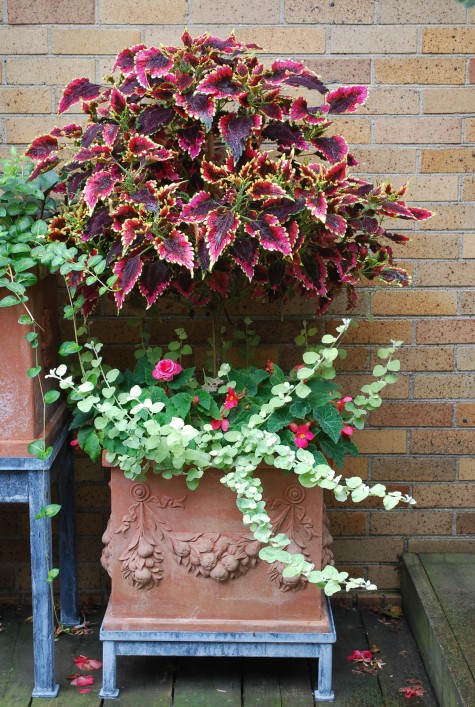 The coleus topiary I let go after two seasons-they seem to loose vigor. The minute you decide to grow a plant in any form which is not its natural form, there will be maintenance problems down the road. Plants tolerate being fooled with by people-they rarely love it. Plants that naturally lend themselves to this treatment are easier to look after.