Sculpture in the Garden-an Addendum

sculpture1
Sculpture in a garden is a big topic, which I am sure will surface again and again in my writings.  Defining a sculpture can be very much about the environment in which it is placed.  It is my opinion that some sculpture absolutely relies on its environment,  in order to earn the the honored designation-sculpture.  Some sculpture I see in galleries, or museums, I would never see as sculpture-but for the gallery or museum address. Some landscape sculpture has been documented in photographs- often this sculpture is more about the moment of the photograph, than the sculpture itself. I own every book ever published about the work of Andy Goldsworthy-but many of his sculptures are ephemeral such that they are not really sculpture in a classical sense.  The photographs of his works are as much art as the works themselves. But his work makes me rethink my definitions-this is a good thing to come from looking at art.   I buy books regularly, and I read a lot.  Its exciting to see contemporary garden sculpture-what a departure it is from classical sculpture. As I am willing to be surprised, I try to temper my sense of sculpture with a big dose of what I see, and what I am asked to do.  This seems to work.   
 

sculpture3

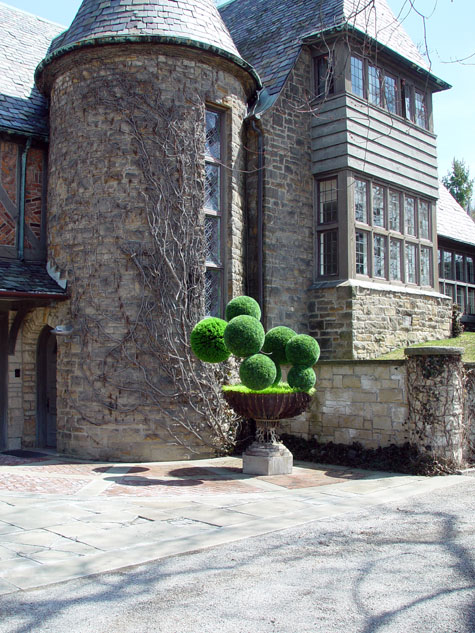
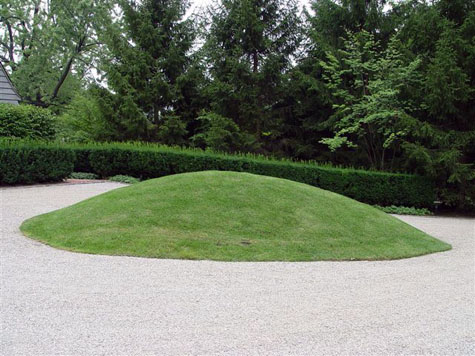
Earth sculptures have a huge history; what gardener does not know something about crop circles?  What 20th century landscape designer has not given serious thought to sculptures of earth, covered in some living skin?  What landscape designer, since the day that someone thought to design landscapes, doesn’t see when the landscape transcends horticulture and becomes sculpture?  What gardener has not been interested in Stonehenge, and every Stonehedge counterpart documented world wide?   I am not a first rate scholar on the history of garden sculpture-I am just a somewhat educated landscape designer with a big interest in garden sculpture.
sculpture4

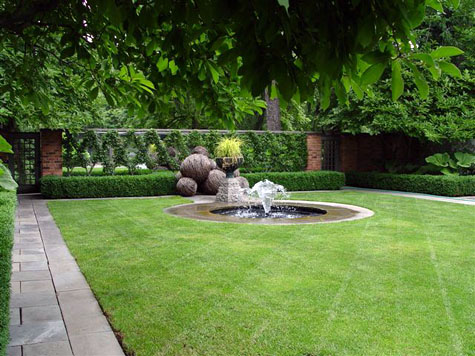
I am strictly a supporting cast, where the sculpture of my clients is concerned.  I look at what they buy, and if I am lucky, they will pile things up, move things around-and talk about what moves them. 
sculpture5

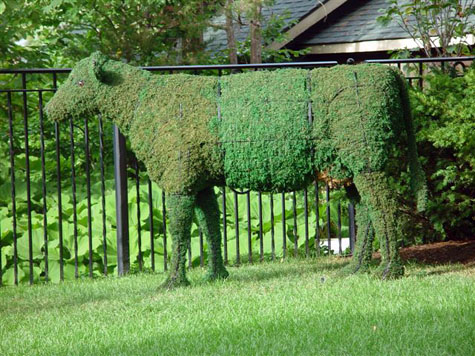
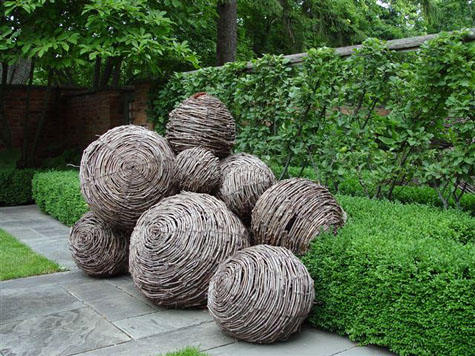
Contrary to the garden sculpture placed in Europe ever since the formal garden got its name, some sculptures are ephemeral, moveable-here today-elsewhere tomorrow. These Belgian hazelwood spheres, piled up into a boxwood hedge-who does not appreciate the gesture?
 

sculpture6

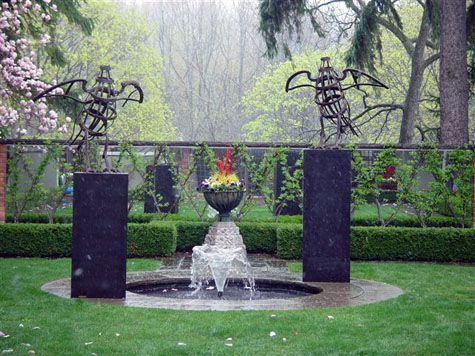
These birds once graced the roof of the Palais Royale in Paris. This would be the better part of two centuries ago.  What remains of them is their wrought iron armatures, and their hand-wrought feet.  This pair of ancient birds are the most spectacular sculptures I have ever seen.  They have such incredible presence, though little remains of their original shape.  They are so powerful in their shape and their bearing , though little of their ornament remains.  What landscape would do justice to them?
Garden Sculpture

dsc06798
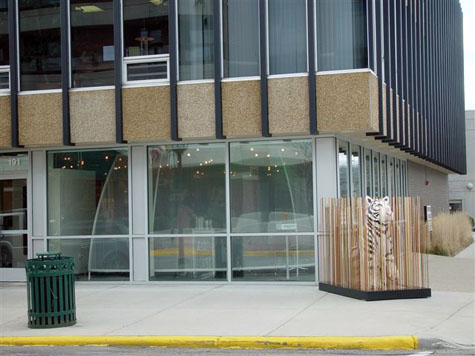
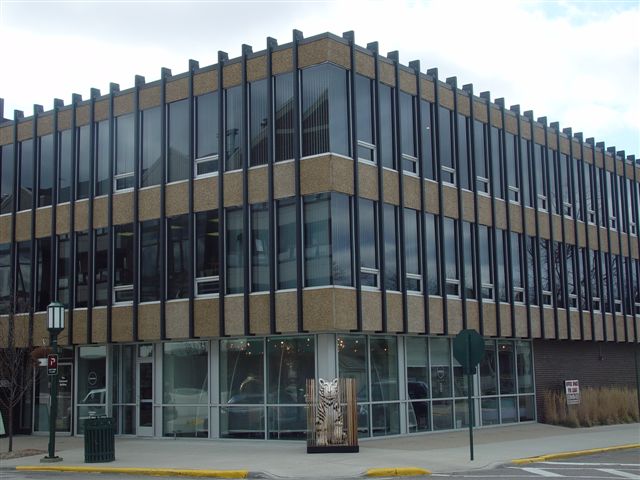
I love sculpture in a garden. Plants in a landscape, beautifully grown, can evoke awe, pleasure and respect for the beauty of nature. But like no other element of a landscape , sculpture is a product of human intelligence, imagination, and emotion, in a physical form.  This sculpture I made  for a community fundraiser;  each participant was given a fiberglas tiger as a starting point for a sculpture, which would then be auctioned. I looked at the building-its color and its form, for an idea that would help me place it in that particular landscape.  jun5

My tiger is camouflaged in varying heights of tall, grass-like, enameled steel rods. It looks right at home sitting in that ocean of steel and concrete-or does it?  There is the additional  suggestion that an urban landscape can imprison, or send running for shelter,  all manner of living things-not just tigers.   This is my imaginative construct, not a process of nature.
dsc07884
Thus I try to design spaces for sculpture that augment gracefully whatever feeling they elicit from me. I may design a small perennial meadow for a client who remembers growing up in a rural area, and has good memories of their relationship to that landscape-but one  small sculpture may have the power to conjure that time , and imbue the landscape around it with that memory.   I always ask clients what resonated with them, what precipitated their choice of sculpture. This helps to design the space for them in a way that has emotional meaning-not just horticultural meaning.
dsc08383
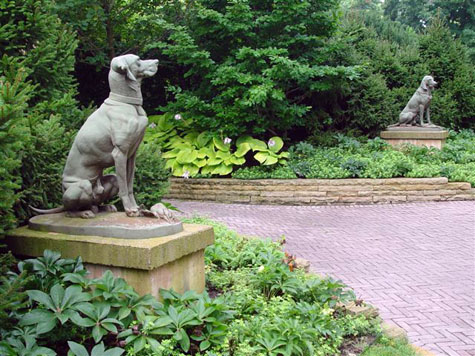
This beautiful pair of 19th century iron bloodhounds, cast by Alfred Jacquemart for Barbezat & Cie at the Val D’Osne foundry in France, circa 1865, are regal and elegant in their own right.  The landscape designed for them is is tall, and thickly planted; the property is screened from any view, save straight up the drive.  This pair stands watch at the driveway entrance; they speak to the emotional issues of refuge, privacy, and the safety of home.

The table and chairs reminiscent of gingko leaves and steel twigs and vines go far beyond utility to sculpture. Sculpted of steel, concrete and mortar,  this is not just a place to sit.  The viewer can imagine who might sit there, and for what reason.   A crisply and simply designed landscape , with a beautiful shape of lawn, gives space to a sculpture that lets us see the world through the eyes of that artist.  A table for 2, waiting for company and conversation-that’s a good description of of sculpture in a garden.
furn_002

Garden Under Construction

under1
under2
I am late getting to the posting today-but I did manage to get planted all 32 giant pots for the City of Birmingham.  Not that my crew isn’t eminently capable of this; I am always the lame one.  This year I was determined to get every pot designed, transfer that design to a piece of paper in a readable form,  assemble the material, and help load.  Diana and her crew take care of the rest-I did not  hear from her all day.  Except at 4:30-her call that everything was done.  She rocks.  under3
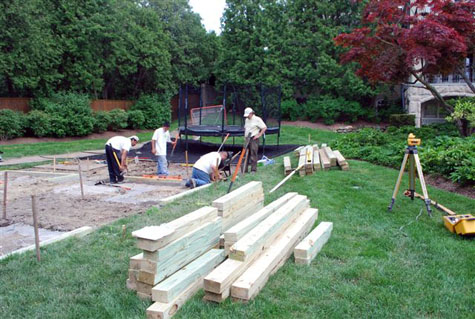
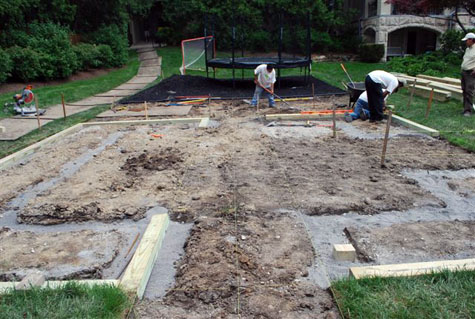
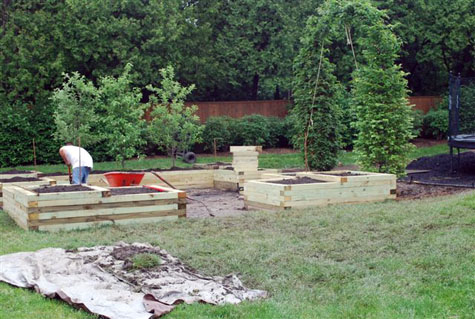
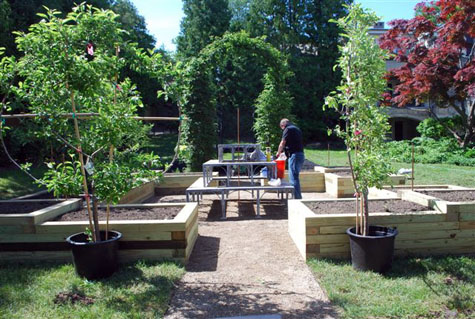
This vegetable garden, with a must complete date of June 6 is coming to a construction close .  We have set the 14 foot tall beech arbor, underplanted it with asparagus, (put your imagination to work about how this will look in 3 years) built the vegetable boxes, and planted the columnar apple trees from Henry Luthardt.  We installed drain tile, excavated soil and installed a  decomposed granite surface to walk on.   How I love the sound of gravel underfoot-and this 3/8 inch and down decomposed granite compacts hard enough to take a pair of Jimmie Choo 4 inch heels without the slightest dent. In the center, an herb theatre, with steel arches reminiscent of the Roman aquaducts.  Tomorrow we plant the “wild at heart” apple espaliers, install the tomato cage/obelisks, and the tomatoes,  plant the vegetables, rhubarb and strawberries.  We need to doll up the grade in one spot, and resod.  Today, the irrigation is getting installed.  Copper, with spray risers.  I like the look of overhead irrigation-its beautiful.  I hate drip irrigation-it clogs, and malfunctions-you can’t spot any malfunction until things are crisp.  And the water is never where you want it, with drip. Drip irrigation is a great idea that the reality is not where it should be. For now,   I like water when I can see it.  And I like how this garden is at the fun tune-up stage.  My most favorite part of a job coming to a close, is washing off the walks, and terraces.  Washing off the digging, the sweating, the agonizing over this choice or that.  This feeling lasts the better part of 3 seconds, as every gardener knows no garden is ever finished.  It is either going backwards or going forwards.  No neutral. under4

Made in Michigan

steel
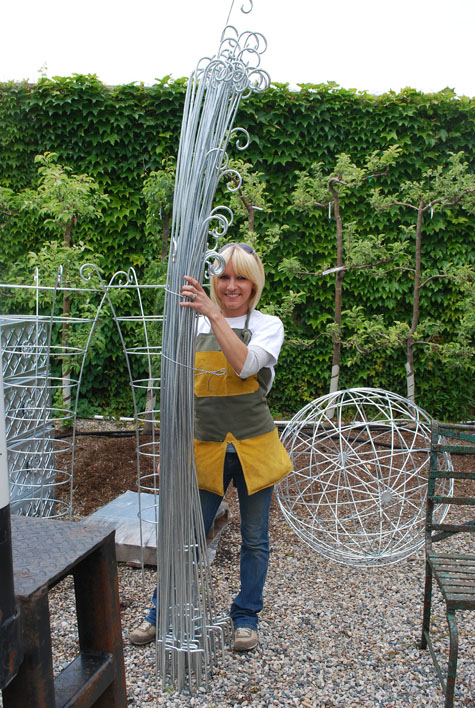
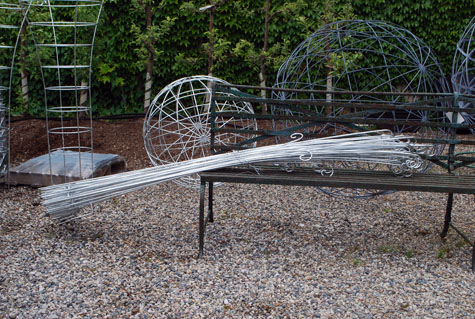
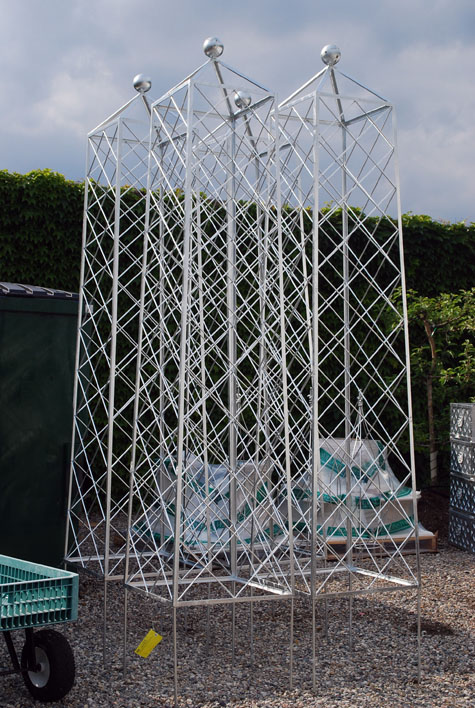
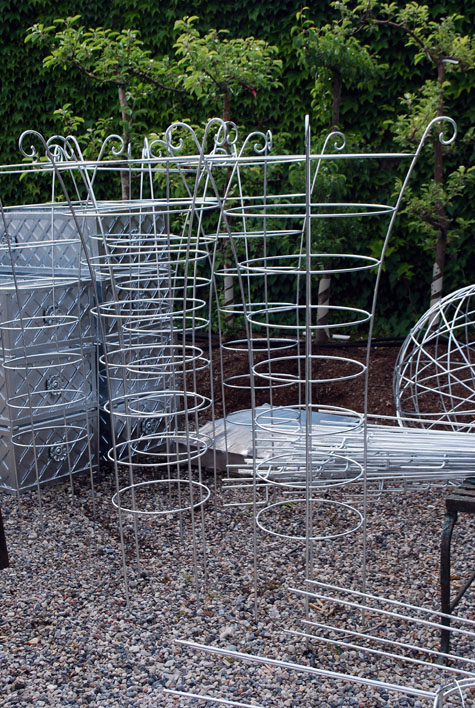
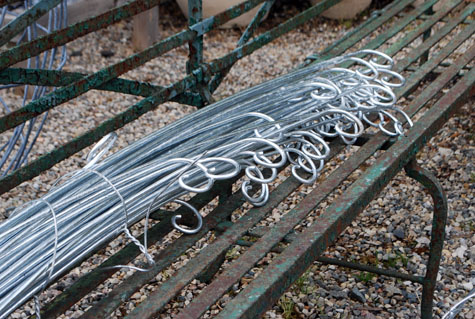
My exasperation with UPS shipping regulations partially fueled my decision to make garden ornament.  They have a 105 inch rule: the length of a box, plus the diameter of its width, cannot exceed 105 inches.  What vine trellis is tall enough at 105 inches? What plant stake is tall enough?  Anything bigger has to be shipped motor freight, at much greater expense.  The other part of my decision was feeling like the design of such structures was not the best-could a tuteur not be beautiful with nothing on it?  Or holiday lights on it for the winter? Why are all plant supports invariably straight sided?  Most of the plants I think need support are small coming out of the ground, and floppy at the top.  Why are plant stakes only 4 feet tall, with no length to put below ground for stability?  steel7

Why are they straight poles-with no arc that mimics the natural growth of a plant? A pole in the ground twists with the wind; why don’t plant stakes have prongs at the bottom?

steel8Why do plant stakes come to a point that could poke you,  if you aren’t watching what you are doing? Why aren’t the tuteurs beautiful shapes??�
steel2
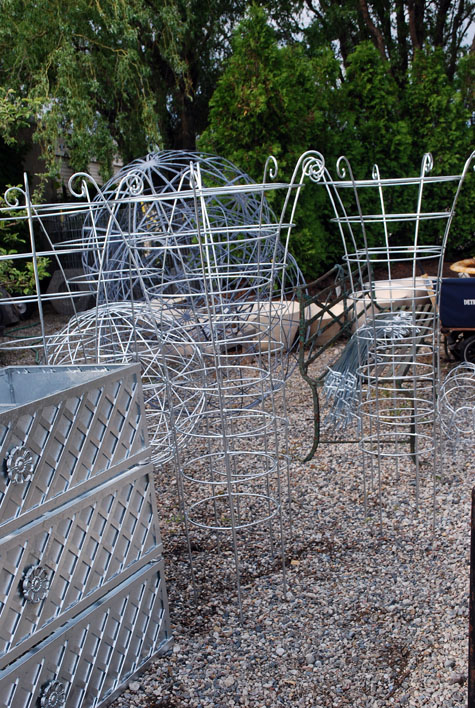
Some clematis grow to 10 feet,others much taller.  Peonies need a different size suport system than a cherry tomato. Asparagus in my garden needs three rings, not two.  My local clients, not needing UPS shipping, get properly scaled plant climbers and towers that fit their plants.  And tuteurs that I think are beautiful and sculptural in their own right. �
steel3
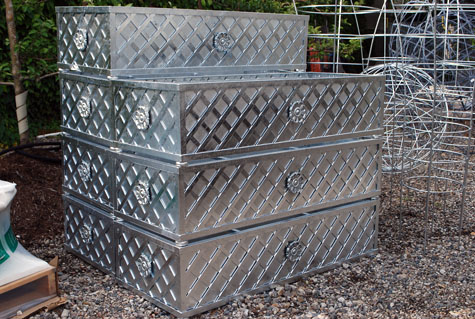
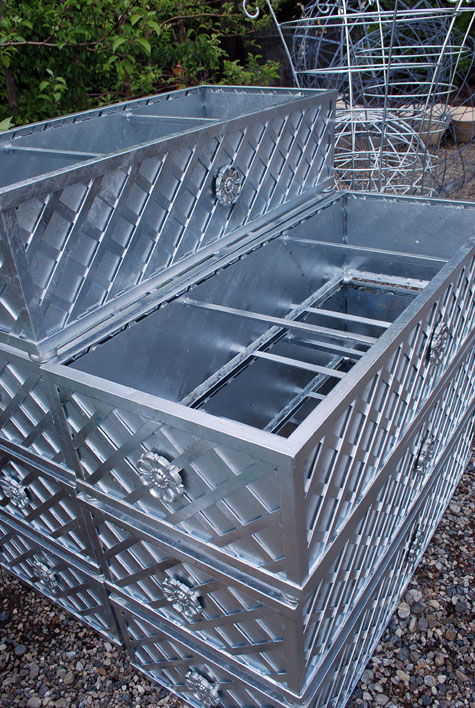
Rectangular boxes can be a perfect shape for certain locations.  But ready made ones are always too long, or too short, or too tall, or too low.  Designing ornament allows me to have control over that oft forgotten landscape element with regard to a specific space or garden.
steel4
Steel and weather makes for a bad mix-unless you have a penchant for rust.  A case in point, the Mackinac Bridge which spans the Upper and Lower Peninsula of Michigan , is perpetually being painted.  Every day, every year.  The paint is a rust inhibitor, not a rust proofing.  Rust can weaken steel-not a good thing for a bridge 5 miles long. The worst effects of rust in a garden is stains on your khakis, or your limestone caps.  So our first step towards a virtually maintenance free finish on steel is to haul our things to a galvanizing plant.  Each item is attached with hooks to a rack; this assembly is then lowered into a bath of molten zinc.  Thus the term “hot dip ” galvanizing.
steel5
The galvanizing is protection only insofar at the item is completely immersed, so it coats every surface entirely.  We have our tricks for spot finishing those areas that sometimes get left uncoated.  This is the stage that gleams bright, and looks brand spanking new.   Our final coat involves acid; this treatment turns the silver to a streaky black-gray color, very reminiscent of lead.  This color helps fit the object into the landscape-as if it had always been there.�
steel6