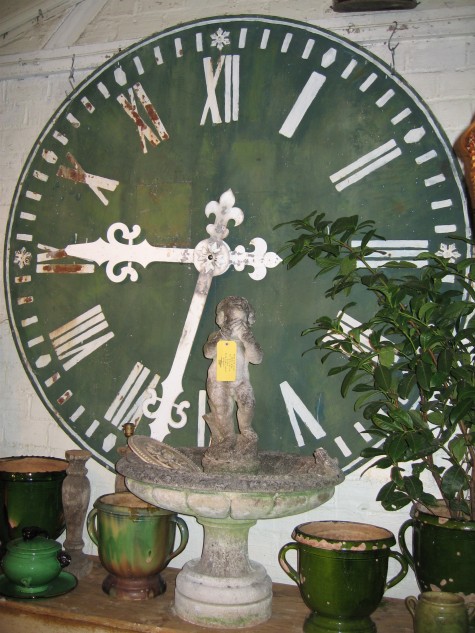
 The watch I have had strapped to my wrist my entire working life is a marvel. In spite of the heat sweat water and dirt, it churns on. This little workhorse enables me to to organize and schedule any number of things. Being off or behind schedule can be trouble; ahead of schedule-this I like. Around January 15, I take it off for 6 weeks, and let my internal clock handle the day. Landscapes have long been host to various mechanisms for telling time. The old clock face pictured above was salvaged from a monumental public timepiece in a Belgian town square, due for refurbishment after many years of service.
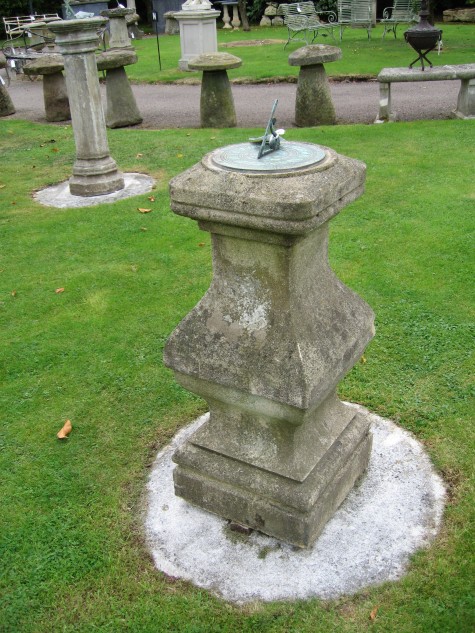 Sundials vastly predate the invention of watches and clocks; ancient cultures told time via the position of the sun in the sky. The device needed to be positioned in a sunny place in the landscape. As they are big chunky scientific instruments, people constructed them to be beautiful, as well as utilitarian. The dial portion of a sundial is small and unassuming. A flat plate was engraved or otherwise etched with a clock face. The triangular shaped gnomen set into the plate would cast a shadow from the sun, onto a different mark on the plate for every hour, or portion of an hour, of any given sunny day.
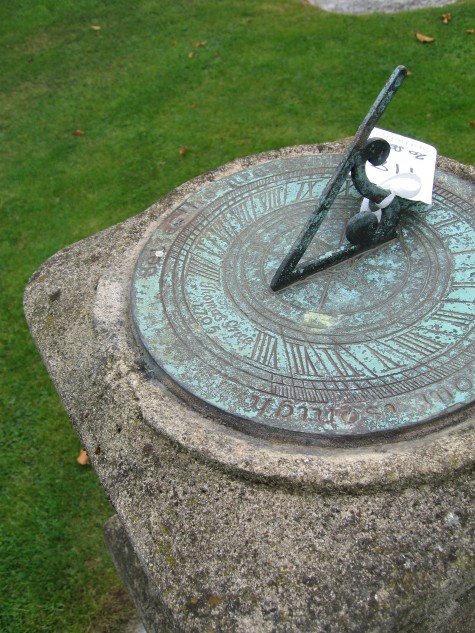 The engraving on the plates was often quite elaborate. This plate is engraved with the hours in Roman numerals; each numeral is further subdivided into increments of an hour. This plate is a beautiful drawing about time. The name and date- Thomas Grice,1705 might refer to the artist who engraved the plate, or the person’s garden to whom this sundial belonged.
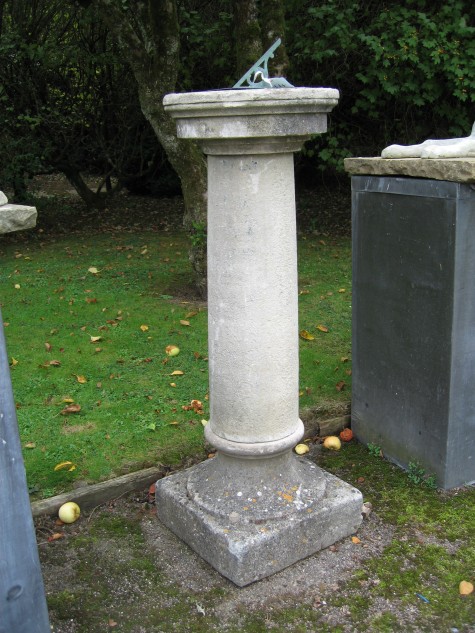 As the sundial needed to be placed in a level spot with the gnomen, or needle, set due north when the sun was directly overhead, the base needed to be sturdy, stable, and equally as lovely as the plate. This handcarved stone baluster sets the plate at 50 inches above grade-right at my eye level. Inscribed in spidery script, ” Let others tell of storms and showers/I’ll only tell your sunny hours”.
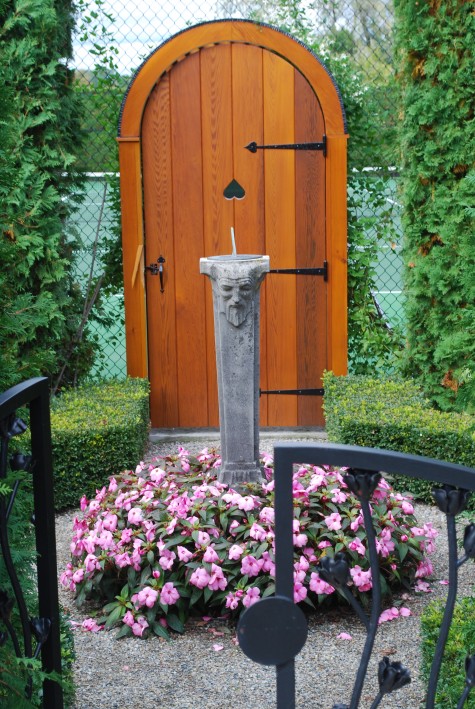
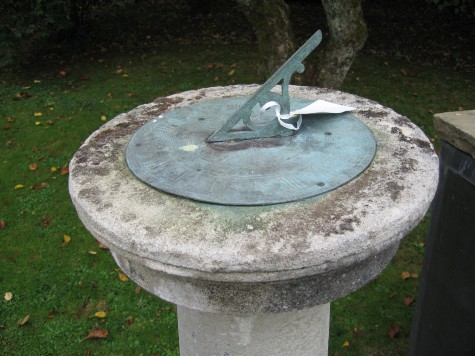 As a time telling device, a sundial has become obsolete. As a garden ornament, they are unmatched for their quiet beauty and dignity. They are as at home in a kitchen garden as a formal boxwood parterre. They refer to the ephemeral nature of life, and the repeating cycle of nature. I have never seen them made of materials that did not suggest permanence. Modern makers have expanded upon the traditional materials to include stainless steel, glass and mirror, but my favorites are the pieces dating from an age when they were still in use.
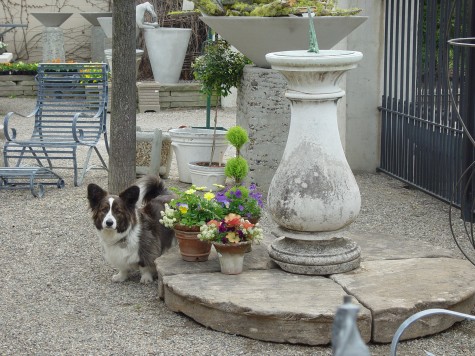
It is hard for me to believe that this sundial and base graced an English garden in the mid nineteenth century. It seems so unfazed by the 160 years it has been recording the movement of the sun in the sky. Michigan is not know for its sunny days; sunny winter days are scarce indeed. I have no need of a sunny day to appreciate a garden ornament of this caliber. I am also interested in how this object was part of another place and another time; there are days when I long for just that state of being. Garden spaces made from that longing have a special atmosphere about them that resonates with me.
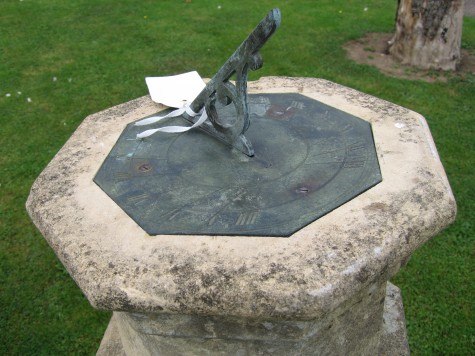 This collection of English sundials vary greatly in their details, but all of them are remarkably intact, considering their age, and exposure to weather. I am sure they will all find a new home in a treasured garden space.
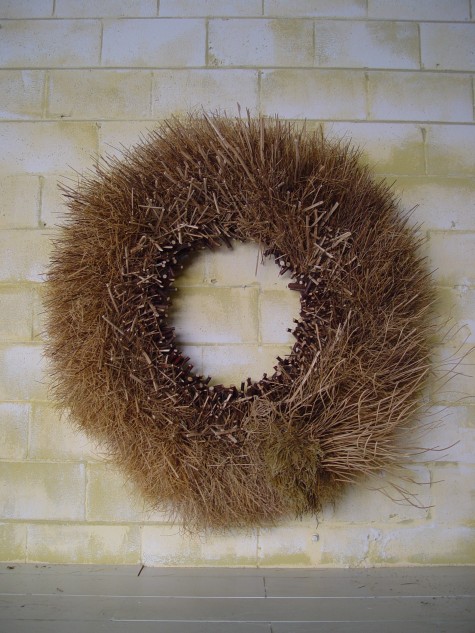
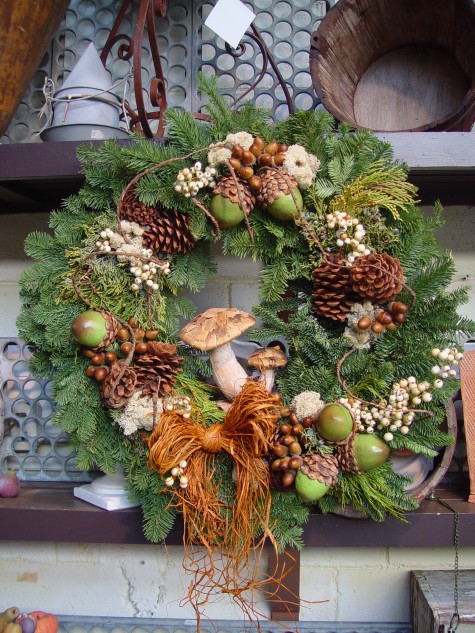
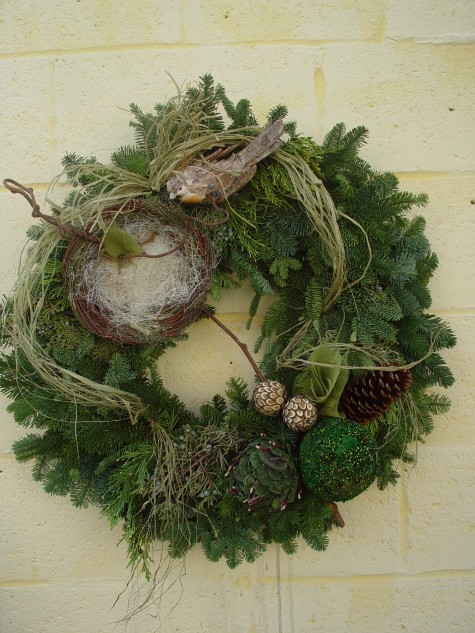
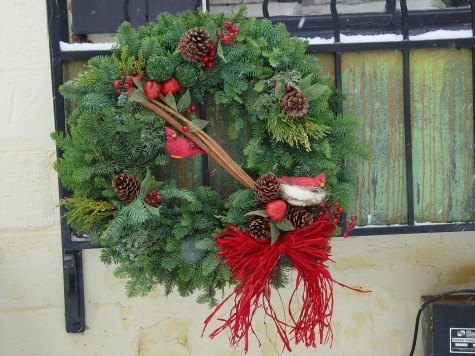 The grocery store is a great source for natural materials; you can find cinnamon sticks this time of year in the spice department. Nuts and dried fruits, sprigs of fresh rosemary-all these things look great. Artichokes and pomogranites are easy to wire and attach fresh, and dry just fine. I avoid piercing any fresh material if I can; there is no need to invite rot. Forest floor litter can be a good source of materials as well-bracket fungus, cones, moss bits and twigs-all these things endow a wreath with a garden feeling.
 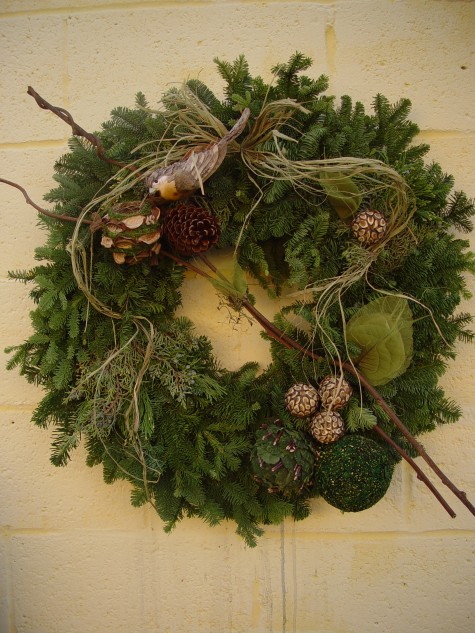 Some faux material is too awkward to wire. In the case of this nest, and the bark birds, I pierce the back of the object, and glue in a florist’s skewer; kitchen skewers would work just as well. Transparent materials, such as these skeletal leaves, gain visual weight when used in numbers. I can wedge the skewer into the woody branches of the evergreens. I try not to push the skewer in too far; avoid making your birds look pasted on the greens. Transparent materials, such as these skeletel leaves, gain visual weight when used in numbers; these are wired and glued on a short skewer. Loose and airy looks good.
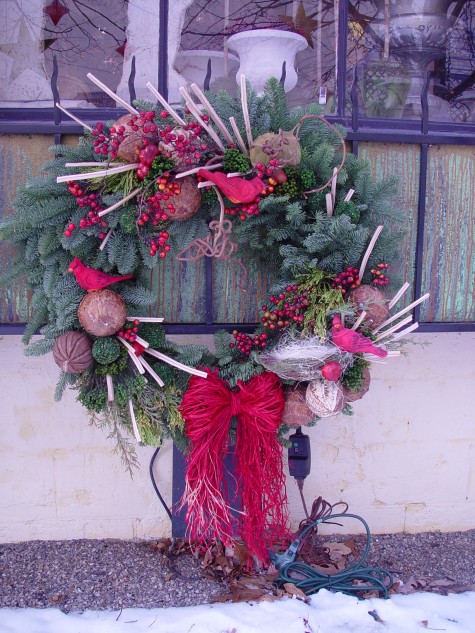 Any faux berry stem needs to be tested for water resistance before it is used. I learned this the hard way; five window boxes full of white styrofoam berries, gel coated in a clear red acetate, dissolved all over the greens and pavement in front of the store of one of my commercial clients. What a mess. A short piece of dried kiwi vine chosen for its curl as a loose element to the mix.
 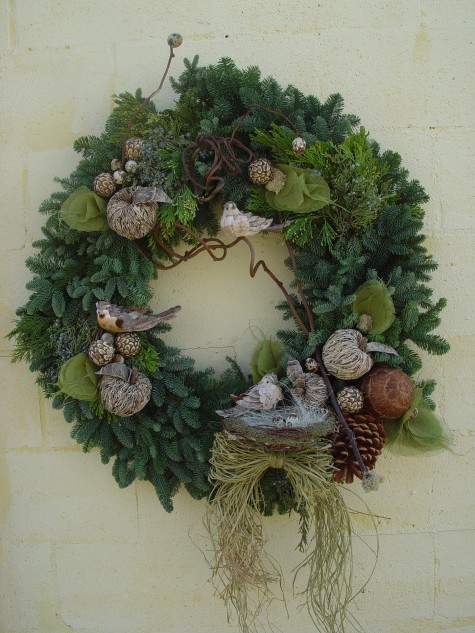 Ornaments made from natural materials are readily available. As with any ornament or stem, I deconstruct some things so the proportions are good with the size of the wreath. Sometimes I only need a wedge cut from a ball, or a portion of a stem. A wreath is a little world that needs to be built accordingly.
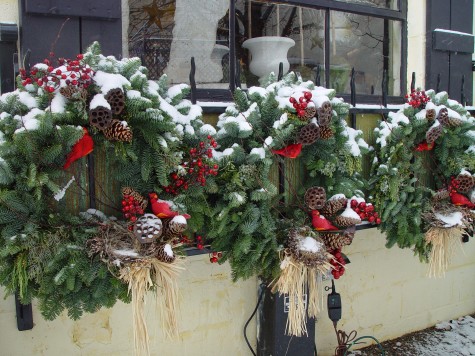
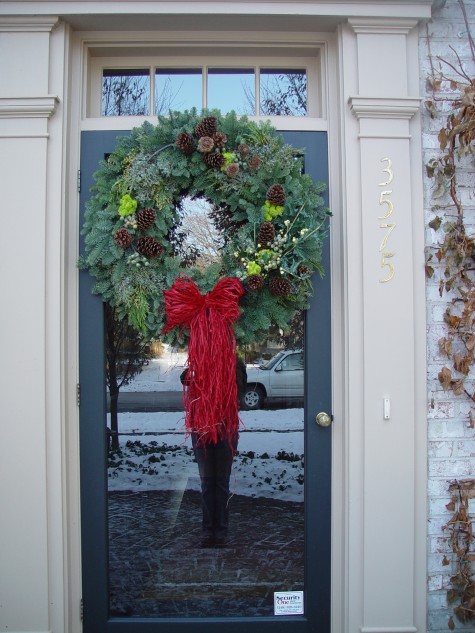 When the front door is a long way from the street, a shot of bright red makes a cheery statement from a distance. Raffia bows have great texture and resilience to the weather. The worst enemy of any wreath is not snow-it is rain. A wreath subjected to a lot of rain can have a good bit of its original shape restored. Take the wreath to a dry place, and dry up side down, and face down; gravity will do wonders.