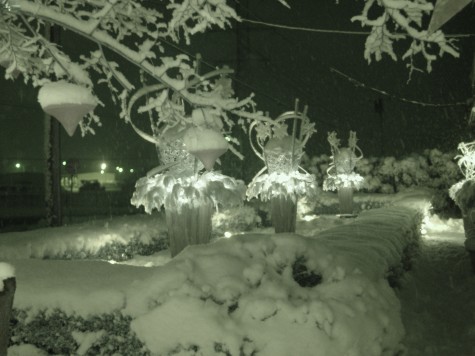
 en grisaille: to paint in a limited palette, light in value, and monochromatic-usually grey
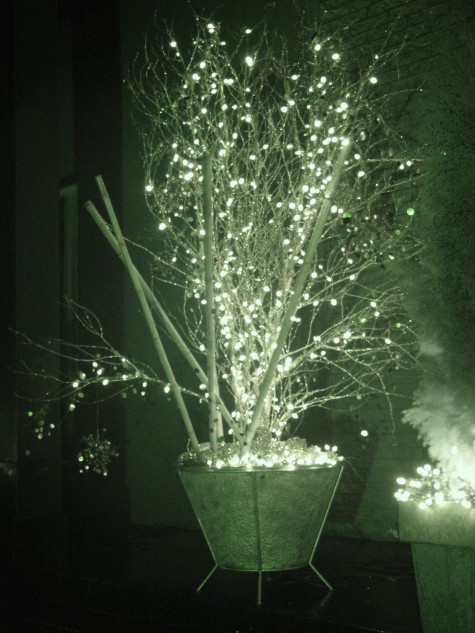
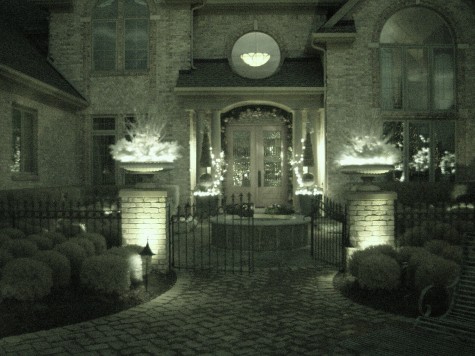
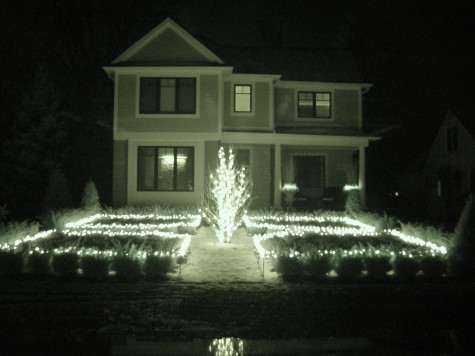
Deborah Silver is an accomplished and experienced landscape and garden designer whose firm first opened its doors in 1986.
en grisaille: to paint in a limited palette, light in value, and monochromatic-usually grey
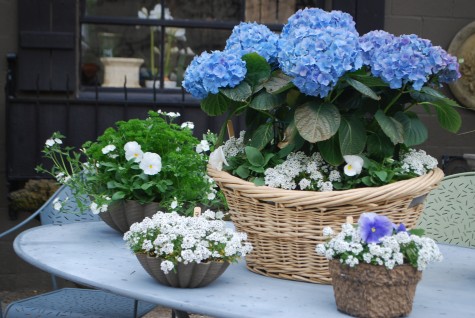
These startlingly blue hydrangeas make their appearance around Easter, where I live. When I spot these blue flowers, my heart skips beats, and then doubles them up. This source of this arrhythmia-I do not live in a true blue zone. It shocks me to see this color in a flower. I have had gardening friends try to grow meconopsis-that breathtakingly beautiful Himalyan blue poppy-pitiful, their efforts. Several years ago I happened to be in Texas at blubonnet season-wow. Did not Lady Bird Johnson do a very good thing for the Texas highways? Those four foot tall blue lupines one sees flourishing upstate in New York do not grow here. Even the bachelor buttons grow leggy, and languish. My big blue comes mostly from the sky.
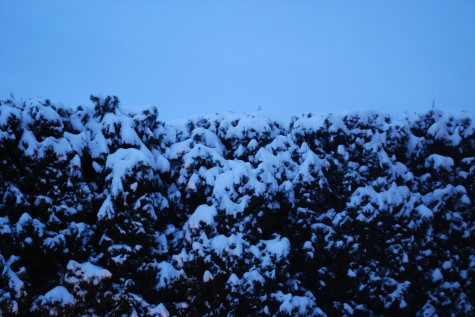 I have grown serviceable, if short lived stands of delphinium belladonna and bellamosa, but blue is brief in my garden; pansies, violas, lobelia, and phlox divaricata. My big blue garden season is the winter. The combination of snow, sky, and dark turns everything in the landscape blue.
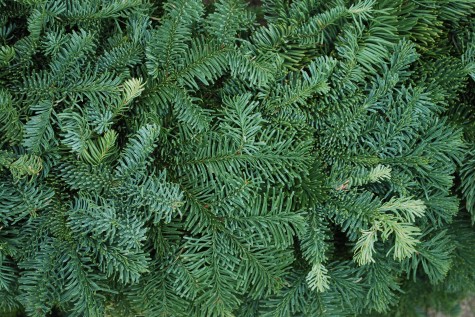 Our climate supports many evergreens whose green needles have a distinctively bluish cast. Frazier fir is a blue green color. The stately giant Concolor Fir is a pale blue grey. The color stands out such that I have never known how to place them in a landscape where they seemed beautiful, and not theatrical-except at a great distance from the eye.
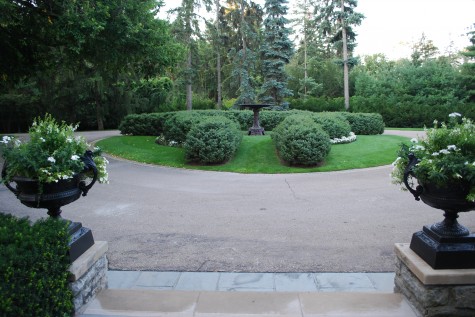 Blue spruce is a very popular evergreen to plant, though I have never done so. I find most properties I deal with are too small to carry that blue color convincingly. When I think blue in a landscape, I think about mountains, hazy with evergreens, very far away. These dwarf Serbian spruce are not quite as blue as the spruce in the background, but they quietly reference the color blue.
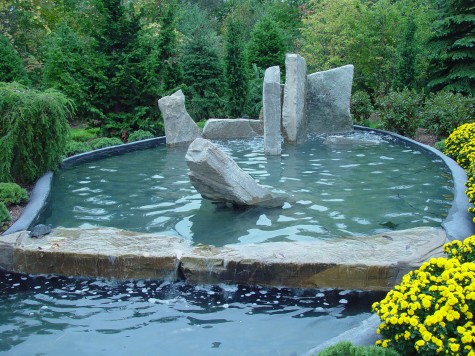 We have the blue of the sky and the water. Michigan is home to the great, the medium, and the small lakes-all of them beautiful. Years ago I never thought about water in a garden; I would not do without the color and the sound of water now.
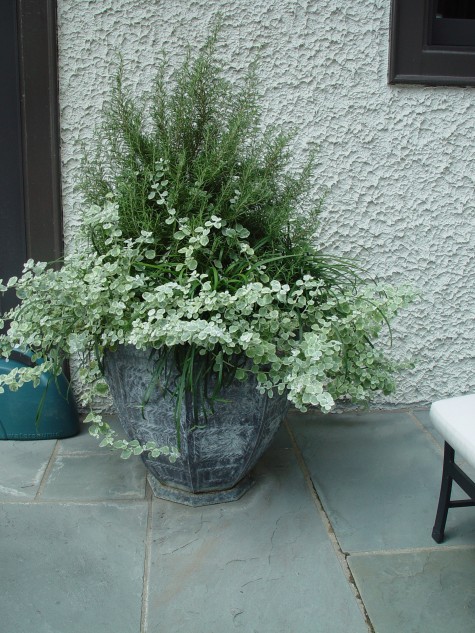 I grow lots of plants that are blue green. Rosemary, curly liriope, and variegated licorice-my favorite combination this past summer. Planted in an English lead pot, set on a bluestone terrace-a modest celebration of blue.
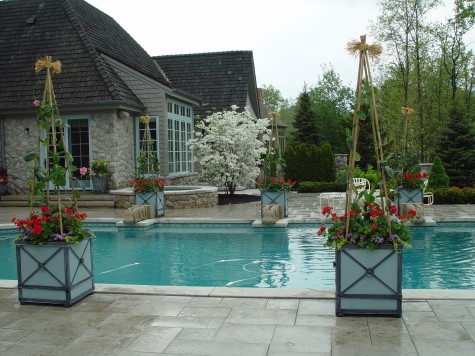 I do have clients who like their swimming pools Florida blue. Fine. She had such a thing for that blue, we painted the inserts in her steel boxes blue, to match the frames on her windows. This may not appeal to everyone, but it doesn’t need to. I like seeing people pursue what makes them happy.
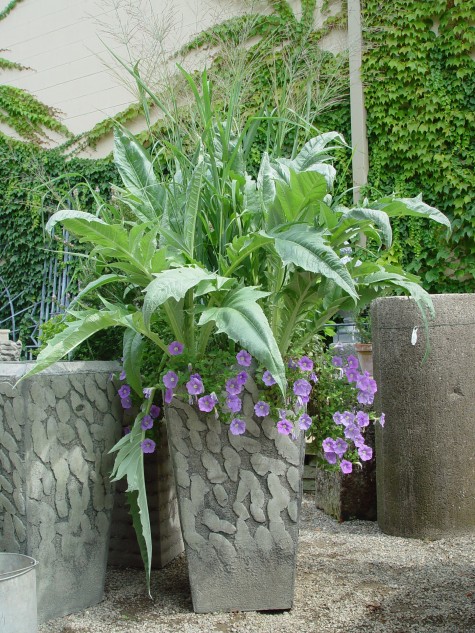 Silver foliaged plants are a good source of blue. This cardoon makes subtle reference to blue-as do lamb’s ears, achillea Moonshine, thyme lanuginosus, silver plectranthus, and so on. Any number of non-hardy succulents make a bigger visual deal of blue-if drop dead blue pleases you.
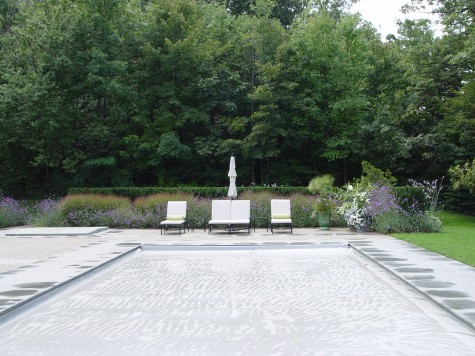 Our natural blues are those moody grey blues. This color is easy to work with. White is great. Red is striking. Pink is sweet. Green is a natural. Yellow is friendly and outgoing. Lime green is cool and sophisticated. Orange and blue attract attention. You get the idea.
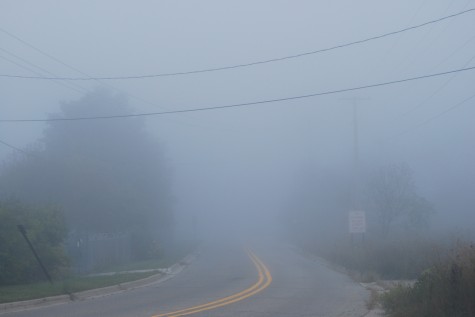
Atmospheric blue, whether it comes from the sky, the air, the lead, the water, the stone, or the light-these are my home town blues.
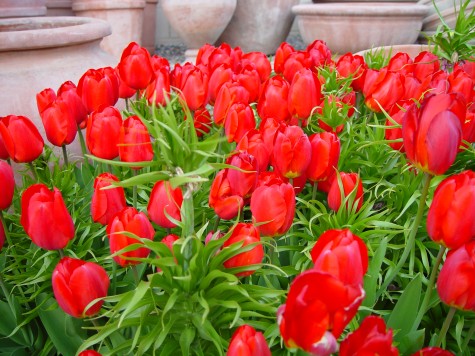 A mass of red tulips in the spring is enough to get any gardener’s juices flowing again. That red is as densely saturated as a brand new lipstick. Lit from the front, these red tulips read vibrantly for another important reason-their companion color is green. The primary color red, and the secondary color green, are opposite each other on the color wheel. This opposition translates as maximum contrast. Red will never seem redder than when it is viewed next to green. Black/red and lime green-a great color combination.
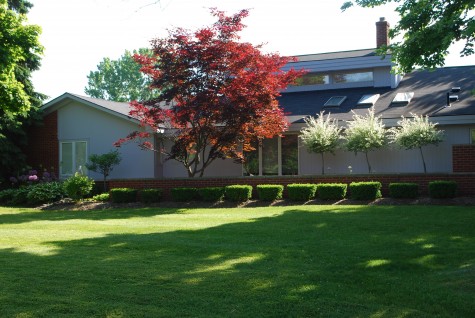
Red foliage in the landscape is an entirely different experience. The red pigment in leaves has green pigment underneath, or in conjunction with that red. Though contrasting red and green make for visual fireworks, mixing red and green makes at best dark red, and at worst mud. Though this landscape is in sore need of renovation, the placement of this standard size acer palmatum is better than most I see. The tree is placed with a white or sky background and in a fairly sunny area; the red leaves read red. Notice that the foliage in shade, or backed up by the grey roof has gone brown. Backlit locations where red and green foliage are mixed and overlaid also produces a muddy appearance.
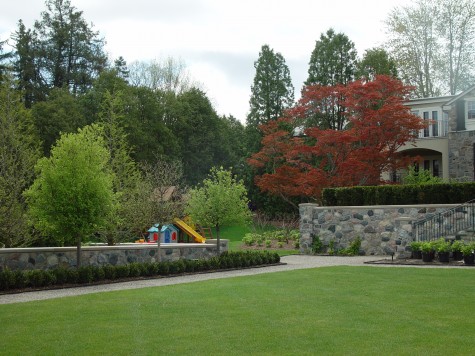 Not that muddy can’t be pleasing; the subdued red leaves of this very old Japanese maple make for an interesting variation in this landscape. The red is mixing and relating to other greens in the landscape in a subtle, not a jarring way. What is it about a dwarf red Japanese maple that makes it de rigueur in so many suburban landscapes? If it is the red color, then I see many plantings that do not present that red in a striking or thoughtful way.
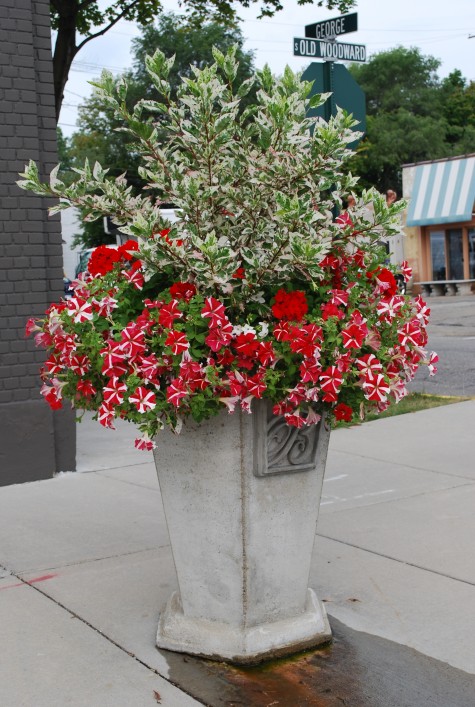 How red reads gets a big boost from white, or gray. Pale companionship or background helps red to hold its own. This green and white variegated hibiscus is grown primarily for its foliage. I used it as a centerpiece in this pot primarily to showcase the red. A thriving planting of petunias is much more about the flowers than the foliage-not much petunia foliage showing here. The white variegation on the hibiscus similarly reduces the amount of green. The red color is the star of the show. A red Japanese maple underplanted with Lamium “White Nancy”, or a dwarf low white variegated hosta might benefit in a likewise way.
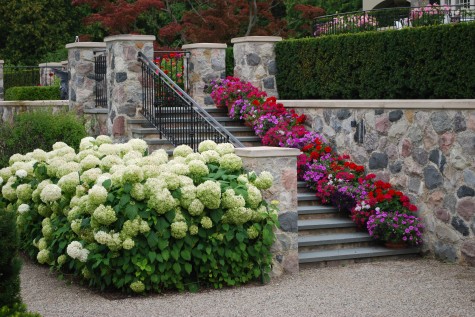 Mixing red with hot or magenta pink can add dimension, and sparkle, when the intent is to wow with red. The white of these Annabelle hydrangeas doesn’t hurt; the color all around seems lively.
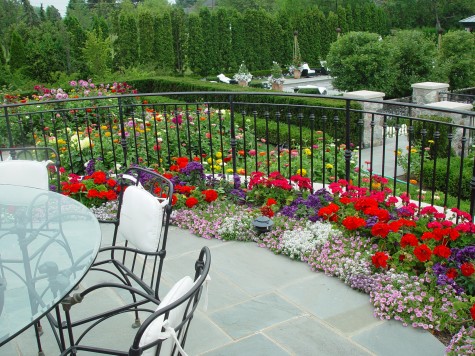 Intense or dark colors read best up close. To me, every composition has a foreground, a mid ground-and the background. These red geraniums are fiery, up close to the eye. The red dahlias in this mid ground-they seem much muted, even though they are the same red color as the geraniums. Lighting conditions and distance greatly influence the effect of color.
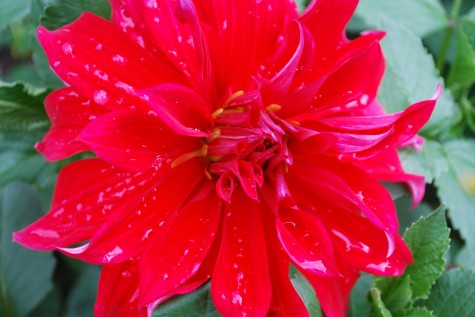 Dinner plate dahlias are something else-whether you love them or reach for your sunglasses, they are the most dramatic representation of red in the garden I can imagine. Were I interested in taking that red as red as I might manage, I would tuck them in between plants in a stand of arundo donax variegata. Red and white-so striking.
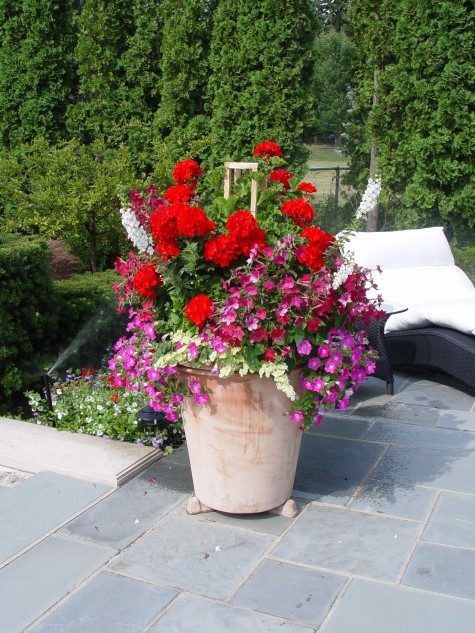 Some of my clients turn their noses up and roll their eyes should I use the word geranium. I look at them at the little black dress of the annual world; they can be stunning, in an expected way-but nonetheless, stunning. What you pair with red geraniums makes all the difference in the world. Whether by way of contrast, or by way of intensifying that fiery color, the idea here is to be purposeful. Whatever effect is in your heart or mind’s eye, understanding how color works will help make your idea visual.
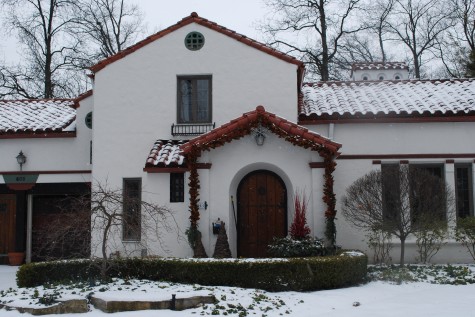
Not all the red in a landscape comes from plants. This red/orange clay tile roof makes a big statement about color off the bat. Some homes are red orange brick, or have wood trim which is mahogany red. Any element of design only works if you are looking and thinking it through. Dealing with red in the landscape can seem like a full time job some days-but who would want to do without red?
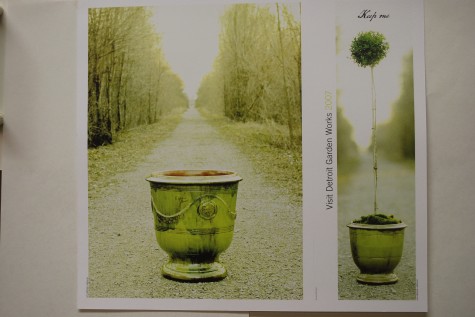
Though my post several days ago on glazed French terra cotta was intended as an introduction to a discussion of color in the landscape, Delphine, author of that fine French landscape and garden blog Paradis Express (www.paradisexpress.blogspot.com) published some of my photographs. She was clearly pleased than an American landscape designer knew, placed and planted French garden pots. The piece pictured above, featuring two pots from Les Enfant de Boisset, ran as an insert in the New York Times Sunday paper just before Mother’s Day in 2007.
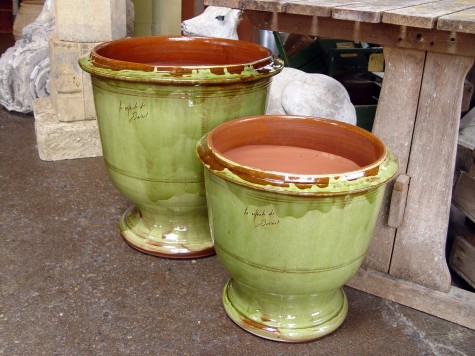 I have been importing garden pots handmade at a number of French potteries since 1992-I am as crazy about them today as I was 18 years ago. My very first purchase-a pallet of gorgeous cream colored clay pots from the Poterie Provencale in Biot. I am convinced a mutual love of beautiful objects for the garden overcame our language difficulties; I was so thrilled to get those pots. Les Enfant de Boisset does not produce an olive green pot. It was entirely Rob’s asking and their willingness to make a collection especially for us in this great color.
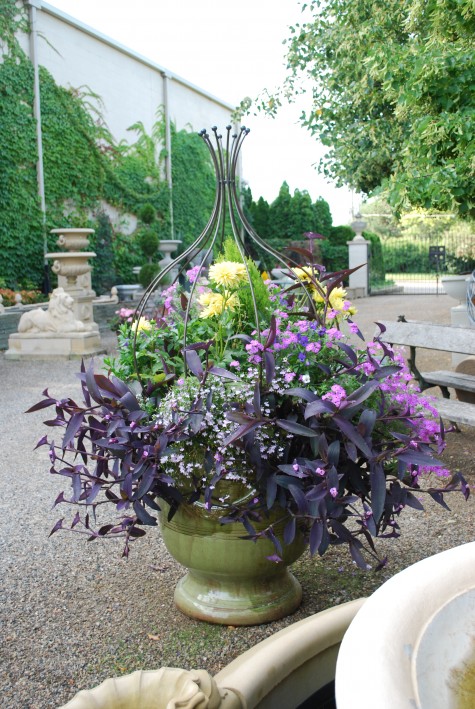 Planted up, these pots make for an entire landscape in a very small space. French garden pots are made today in much the same way, and with many of the same designs that have existed for centuries. They clearly show evidence of the human hand, and speak to their long history of landscape and garden. Some French poteries have added more modern designs, to round out their collections.
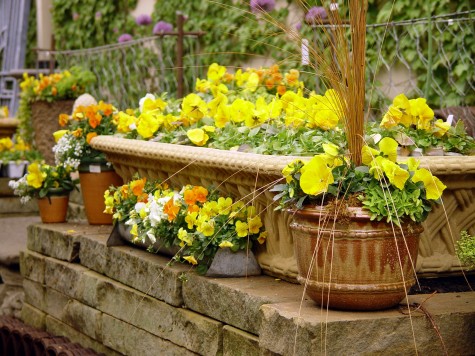 This yellow/brown glazed pot came from the Poterie De Cliousclat, a French pottery whose beginnings date back to the 16th century. Rob once brought me a small book detailing the history of the pots; the pages of the book had absorbed the smell of the clay from the dirt floors of the pottery. Though Cliousclat is no longer, I will never forget their pots, or the smell of the poterie inseparable from that book.
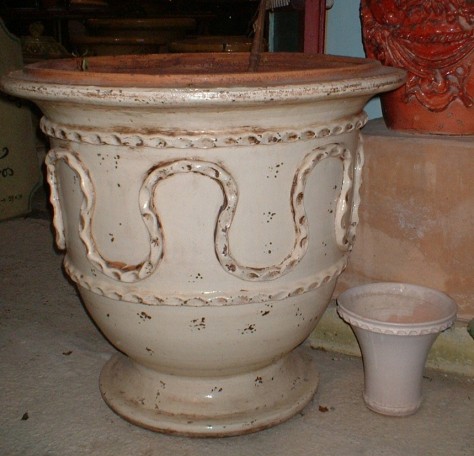
This white glazed pot is from the Poterie St. Jean de Fos, and is shown in the guarland pattern. This particular pattern features a rope garland.
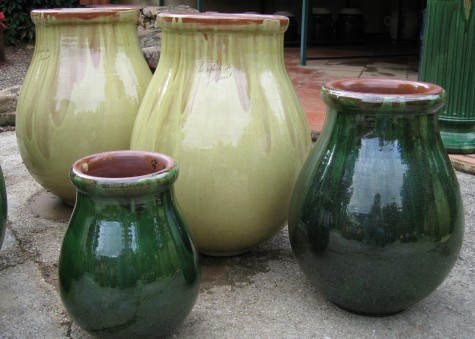
The classic jarre from the Poterie Les Enfant de Boisset
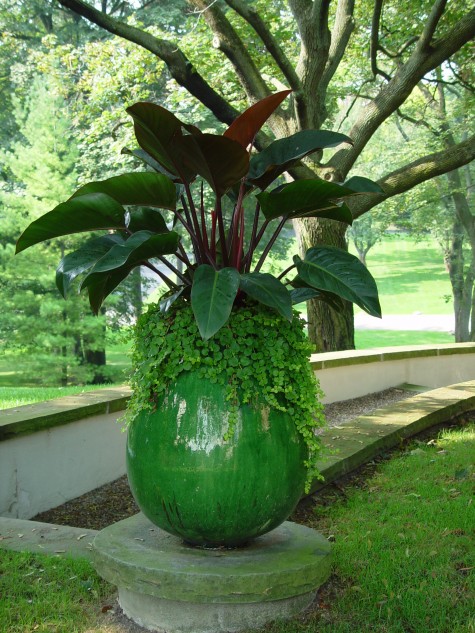
Classic jarre, planted
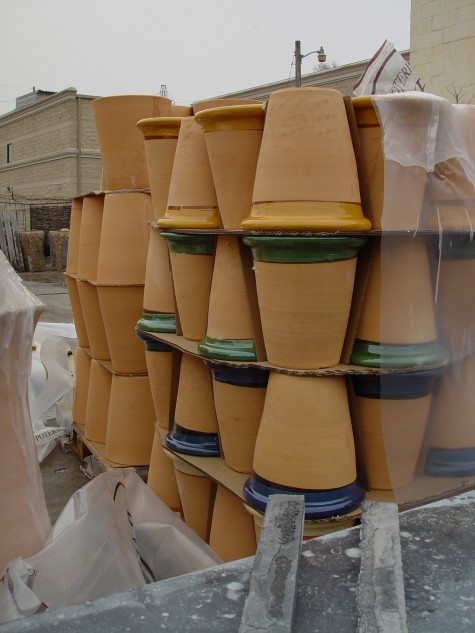
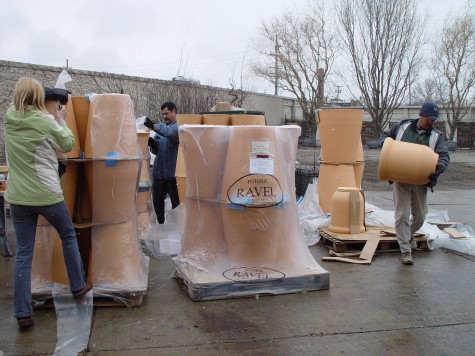 Arrival of a shipment of pots from the Poterie Ravel
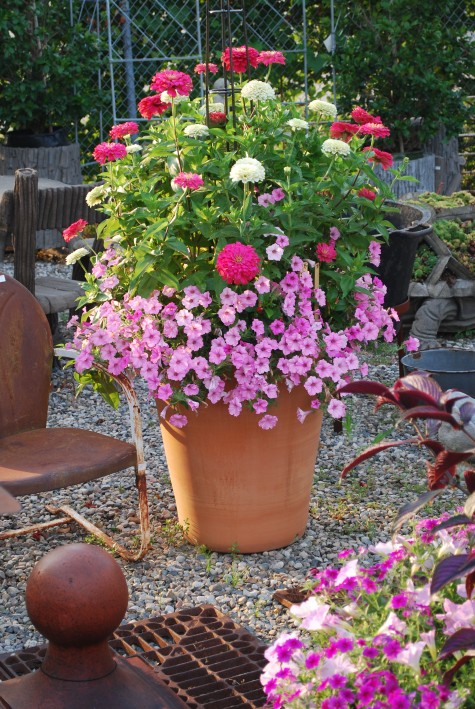 Large Ravel pot, planted
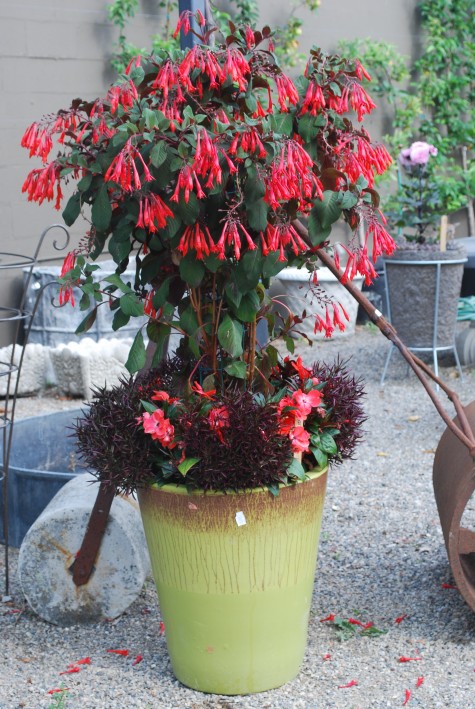
Ravel clay pot, painted and planted
Ravel “Violetta” pots
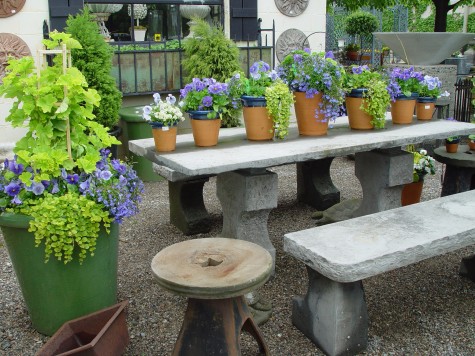 Planted Violetta pots
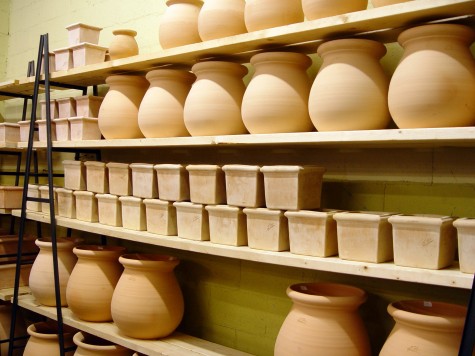
petit pots lisse from the Poterie Goicoechea, located in the Basque country of France
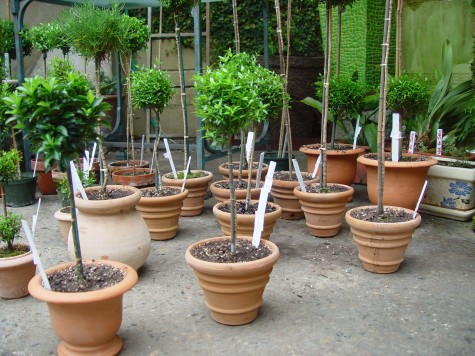
Planted pots from Goicoechea
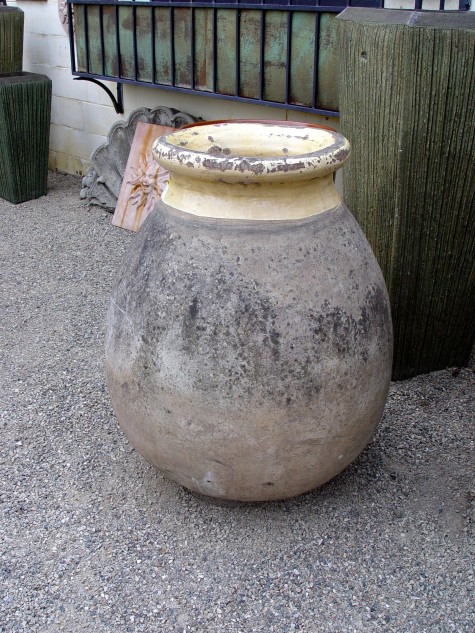
Jarre de Biot, from the Poterie Provencale, circa 1920
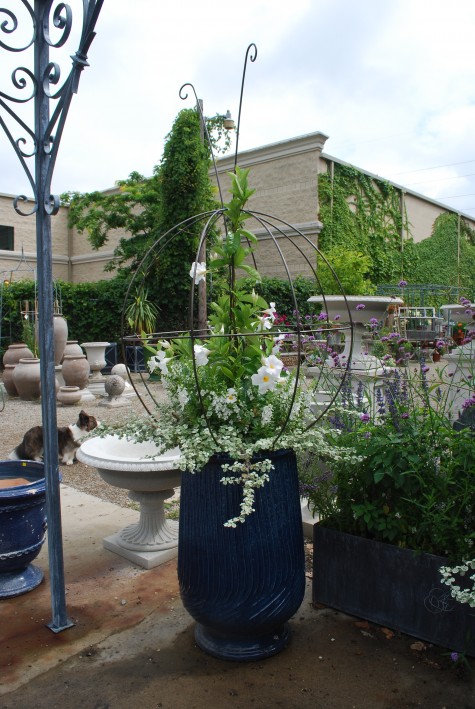 blue strie huile, from the Poterie de la Madeleine, in Anduze, planted
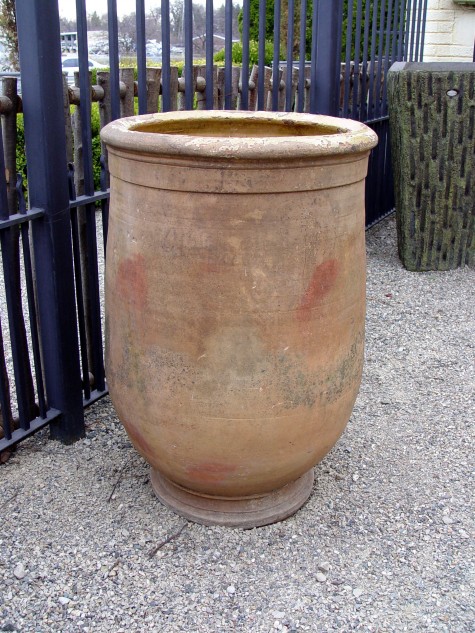 French huile, circa 1920
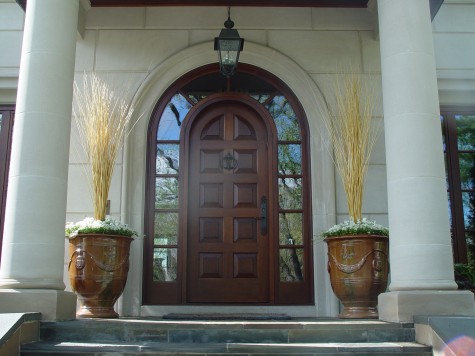 Classic Anduze pot, Poterie de la Madeleine, in the flamme finish
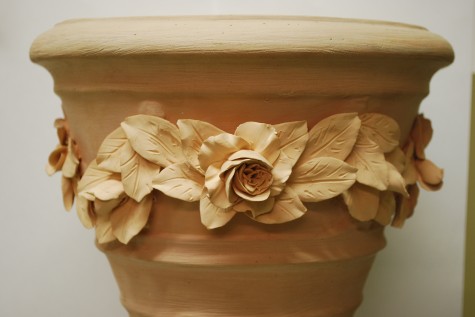
terra cotta jardiniere from Espace Buffon, Paris
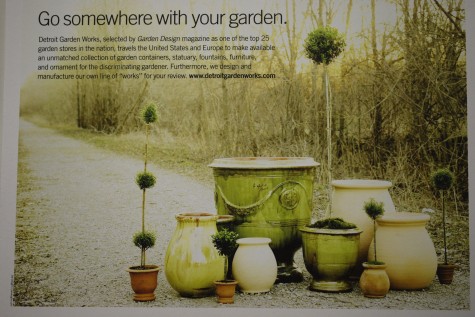
I greatly admire the French garden pots. Though not pictured, we have bought many beautiful pots and ceramic garden pieces from the Poterie Provencale in Biot, Poterie du Mesnil de Bavant, Poterie Sampigny, salt glazed pots from Noron, gorgeous pots by Claudine Essautier at Raison de Plus, Jane Norbury-our list is long. I am sure there are others I do not know-yet. I hope each and every one of them goes on making beautiful things for the garden, for all the gardeners everywhere who so appreciate them.