Lady Miss Deadly, Datura Metel

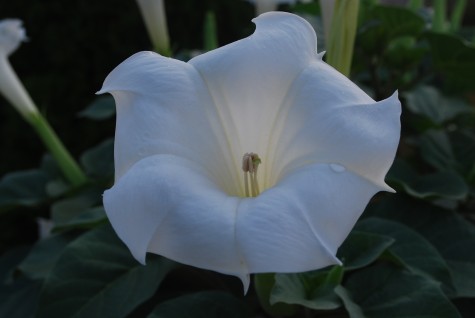
Datura metel is classified as an herb growing to three feet tall.  This description does not begin to describe the plant.  The upfacing flowers are incredibly beautiful; they open late, and fade early in the heat of the following day.  Lots of flowers have this habit-morning glories, moonflowers and daylilies are but a few.  None of the aforementioned have the size, substance or presence of datura metel, but they are easy to care for.  Cultivating datura metel is not for the faint of heart.  Should you handle this plant-wash your hands.  
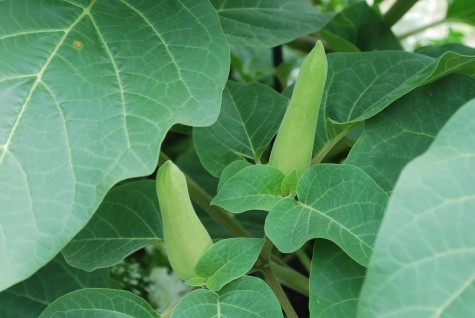
Their  felted leaves are large; the plants love the heat.  A summer planting asking for considerable scale and enormous impact-datura comes to mind.  Though there is a hybrid known as Belle Blanche, I favor the species.  It grows vigorously, and sometimes survives my Michigan weather. 
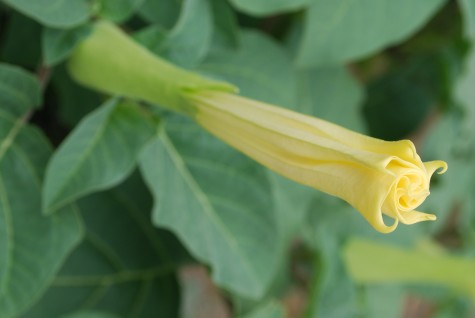

The giant and elongated buds-I would think a photographic essay about datura would certainly merit a book.  The flowers interest me, no matter the stage.  I would not describe any annual flowers in terms of their drama-save datura.  The Sarah Bernstein of annual plants-datura could be best described as pure beauty.  This pure beauty comes with a price tag.   
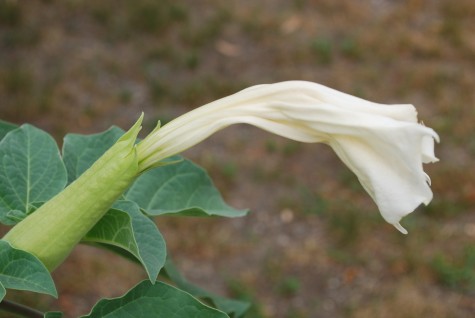

How eloquent, this faded blossom.  Deadheading datura-dangerous.  Every part of the plant is highly toxic.   Infused with the poisonous tropane alkyloid; if you grow datura, you are aware you need to wash thoroughly after handling this plant.   Taking off a leaf results in a foul and scary smell  that says all.  Danger Miss Deadly-that would be datura. 
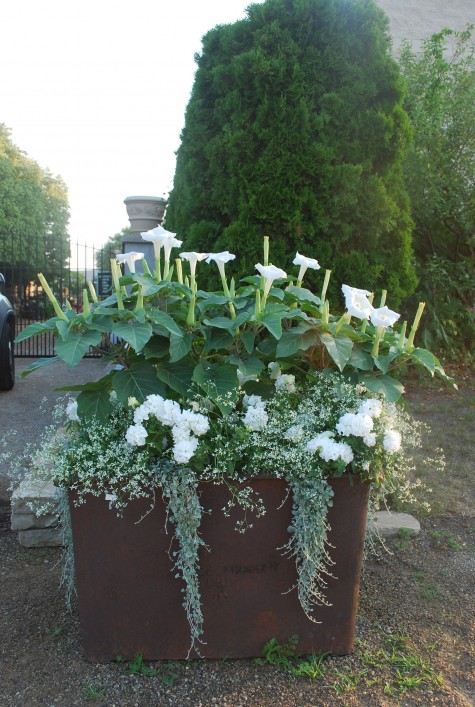
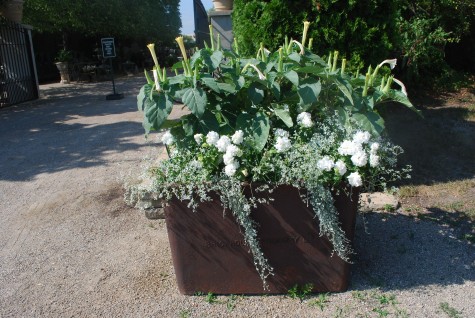
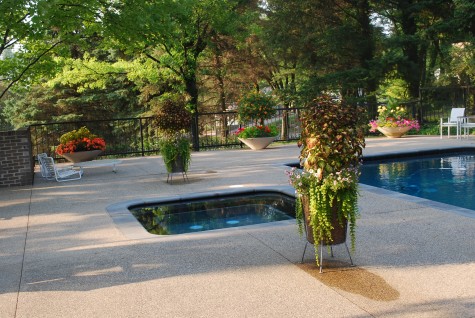
The danger does not deter me from growing datura.  I am able to keep my hands out of my mouth after handling them, and keep every dead bloom off the ground.  The foul smell of the leaves speaking of danger is more than offset by the delicious perfume of the flowers.  This old English iron cistern we placed at the road; the daturas say hello and welcome.  The sun at 7am will soon influence the blooms to close, and drop.  By 9am, the late afternoon early morning display is finished.  
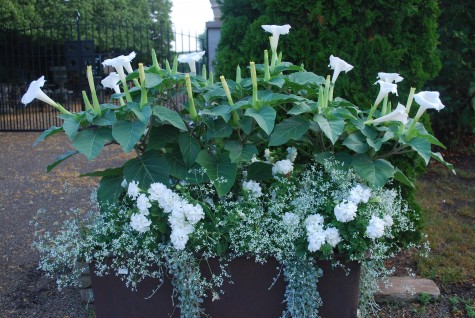
I took this photograph of the cistern at 5:45 am.  In full sun, the daturas handle the light and the heat.  The foliage is medium green; the leaves hairy.   Very early on, they look engagingly bluish. Does not your garden read so differently, given the time of day?  I so like plants that respond to light; datura, entirely light reactive.  
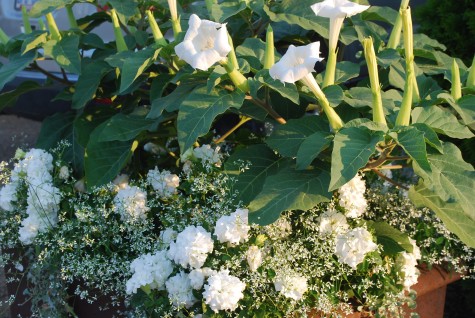
A sunny morning-they are not deterred.  Rob moved this cistern to the road, and planted these datura.  Every day, this chunk of a cistern pot loaded with datura, double petunias and euphorbia says hi when I pull up.  I would be hard pressed to ignore this.  A big and bold herb that can deal with heat-my kind of plant. 
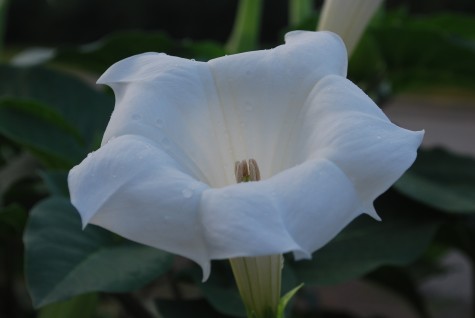

The flowers-incredible.  Really incredible. A datura shrub in full bloom-who would not take time to marvel about the miracle that is nature?
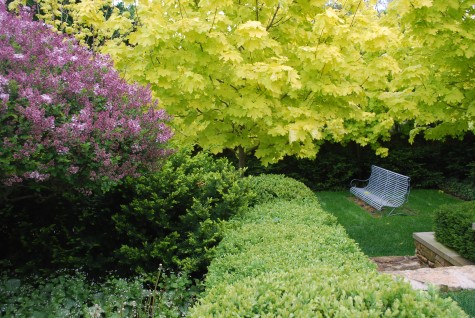
Pollarded


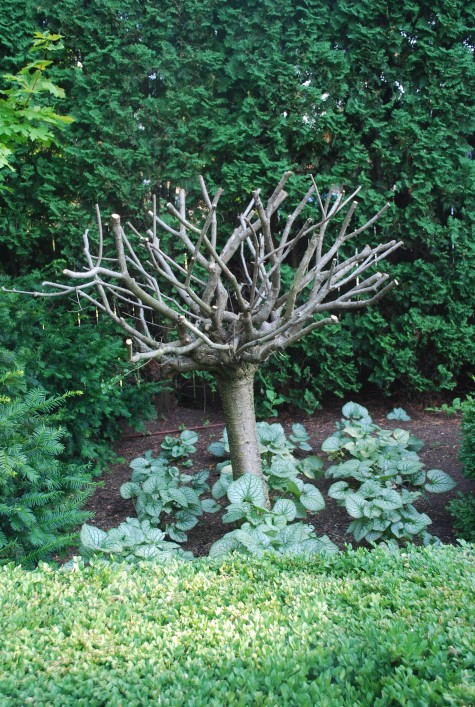
I am sure I have written before on the subject of pollarding. Pollarding refers to the practice of cutting back the branches of a tree to within close proximity of the main trunk.  Pollarding originally had much to do with practicality-home fireplaces needed wood to burn-for cooking, and for heat.  Americans are used to the sea from shining sea-endless land.  In Europe, space was precious.  Fuel-even more precious.  Cutting trees back to their main trunks for firewood was not an aesthetic decision-it was a life decision.  In many European countries, pollarded trees enabled large growing trees to thrive in small spaces, along narrow streets.    American gardeners are not used to seeing this type of pruning as our country is vast.  There is rarely need for any American gardener to cut trees back this hard.      

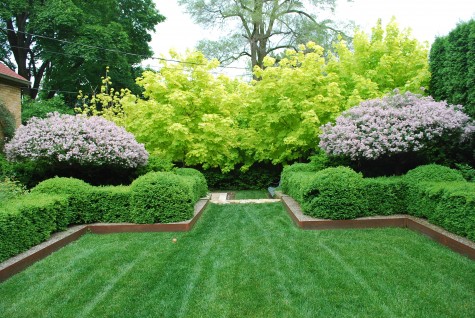
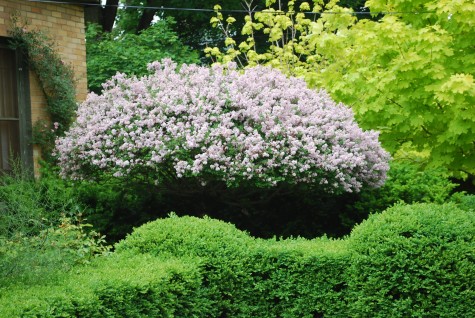
My Palabin lilacs on standard were in place when I bought my house some fifteen years ago.  For the first nine years I lived here, I did nothing to the landscape, save planting some 6 foot arborvitaes and in one moment of garden angst, 100 Hicks yews.  The Palabin lilacs on standard kept growing, despite my neglect.   

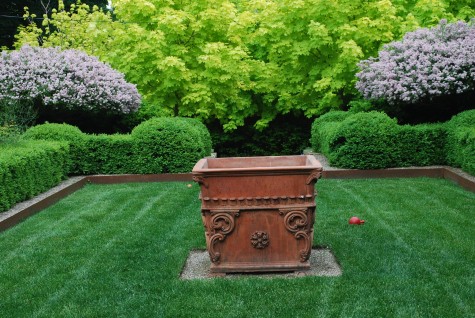
Not that I minded their growing. Every year they put on a show of pale grey violet blooms that made my heart pound.  When they are in season, they are dramatically in season. I plant Palabin lilacs regularly; they deliver much, and ask for little. But having planted a slew of boxwoods, and 11 Princeton Gold maples, the available space for the lilacs-diminishing.   


In recent years, I have pruned after their bloom, pruned again-and pruned more.  I wanted a low oval profile-not a ball shape.  In retrospect, I realize that I was bold in my mind, but timid in my pruning.  I posted about pollarded trees, and these lilacs some time ago.  A reader encouraged me to go ahead and cut them back; he was quite sure I needed a push.  He was right-I needed a push.  

The better part of two weeks ago, I cut these old Palabins back hard.  I have not heard one word from them, to date.  I am sure they are shocked, outraged, and disgusted with me.  I have not seen one bud push forth on these giant stems.  The jury is still out-no doubt. Some times I am spot on with aesthetic decisions, to the betterment my entire property.  Other moves I make that are dicey-all I can do now is wait.   Should you wonder if I am chewing my nails-pretty much.  Should they decide to leaf out around these thick old branches, I will be thrilled.

Blistering

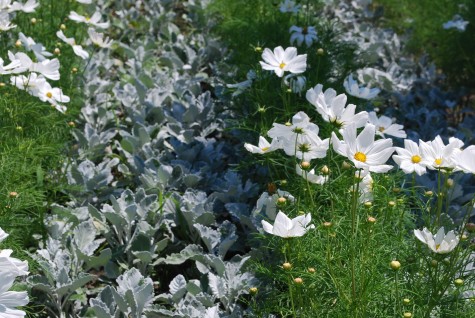
I am hard pressed to remember an early July with a string of days over ninety degrees, and going on to push one hundred degrees.   For five days now, our weather has been blistering hot.  Of course every gardener’s attention turns to the well being of the plants, when the weather goes haywire.  The obvious medication for relentless heat-water.  OK, watering is essential, but informed watering puts your efforts where it counts.  Water does not solve every high temperature  issue.  Annual plants-they love the heat.  Most are native to tropical climates where high temperatures are the norm.  I have no idea off the bat where cosmos originate, but those needle like leaves mean they are drought tolerant.  Why is this?  Plants take up water, and the leaves sweat.  A plant with a minimal leaf square footage transpires slowly.  The giant leaved ligularias and butterburrs have enormous leaf surface; in the sun, or at the end of a hot day, their leaves are alarmingly droopy.  Don’t sound the SOS yet.  Heat makes all of us sweat.  But heat does not necessarily mean they need more water.  You can overwater plants, trying to cool them off. 

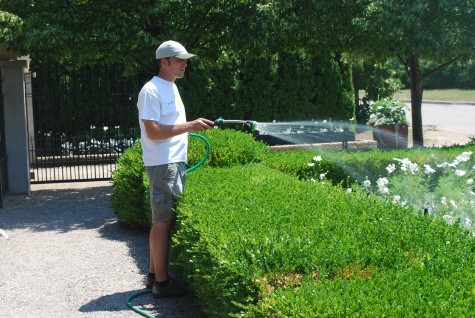
Rob has had a hose in his hand for the better part of a week.  Hot and dry conditions affect our trees, our container plantings, our boxwood-he waters.  The extreme heat-I am seeing him in a baseball cap for the first time in 18 years.  He looks like someone I never met-disconcerting. This astonishing tail end of June excruciatingly high heat makes the job of watering a critically important job.  People and plants alike suffer-proper hydration is key.  

This photograph taken in full sun does not much speak to heat.  White flowers look fresh, no matter the temperature.  The silver dichondra is waving to the right-your only visual clue that this 95 degree day was accompanied by a strong, drying breeze. Every plant in this old cistern is heat resistant.   The burgeoning datura centerpiece is immune to the high temperatures.  The thick leaves that transpire slowly-an ace in the hole.  Petunias-so drought resistant.  Euphorbia Diamond Frost-should you want to grow giant euphorbia, water sparingly.    

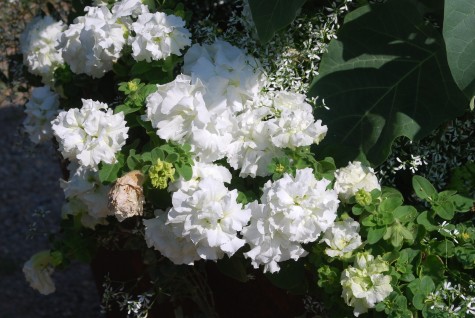
These ultra double white petunias grow long-it is their only fault.  Should you plant them with company that disguises their leggy arms-they shine. Never mind the withering heat. 

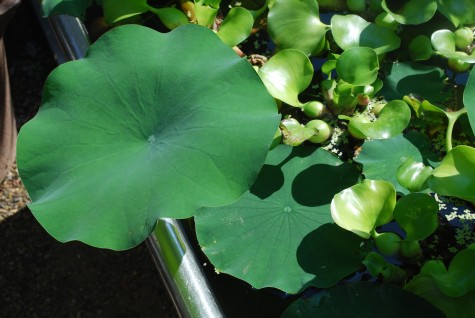
Lotus-they love the heat. Those giant leaves never wilt- why would they?  Submerged or just above the water’s surface every day, they look juicy no matter what the temperature.   Clients that have no time to water- a container stuffed with water loving plants and lots of water-this might be an idea worth pursuing.   

Junipers-even people who do not really garden know the word.  They thrive on neglect-meaning, the less water, the less of everything, the better.  Like the annual cosmos, their needle like foliage presents little surface area from which to transpire. 95 plus degrees-the junipers are unfazed.  Should you have really high heat, sort out what needs water, and what is wilting from heat.  If your trees and shrubs need water, soak thoroughly.        

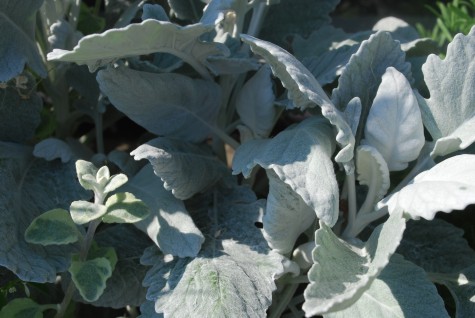
The cirrus dusty miller-no one grows this plant but my grower-at my request. The large silver felted leaves are so much more beautiful than the serrated dusty miller-would you not agree? These large hairy leaves are heat resistant-but big leaves need your hose when the going gets tough. 

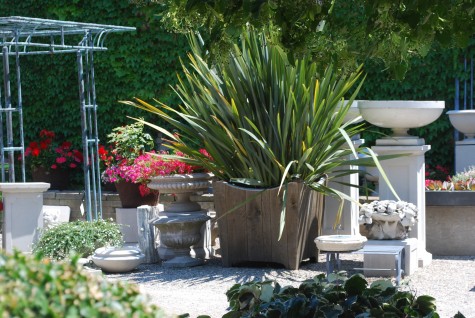
Phormiums-New Zealand phormiums-are immune to high temperatures and dry conditions.  This plant-I have had it for the better part of ten years.  I have never seen it wilt.  If you garden in intense heat and dry conditions, get some phormiums going on in your garden.  They look fresh and great, when it is one hundred degrees.   

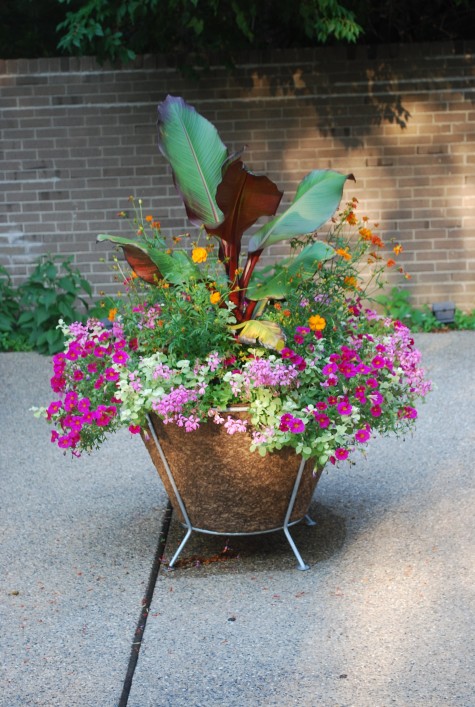
Most tropical plants love the heat-this banana centerpiece is no exception. Should extreme heat be sweeping through your neighborhood, remove those leaves at the soil level that threaten to rot. Encourage good air circulation. Clean culture is a good idea.  I water the surface of the soil-and not the leaves.  Heat and water provide an ideal climate for mildew and other fungal infections.  Just like you, I have the idea to put as much as I can to a distress call; this weather makes me want to shower everything with cool water.   I have desperation watered plenty of times.  Should you get a garden SOS, think before you act.    

Late day comes, sooner or later.  What you were sure would flop over and expire lives to see another day.   


It is appallingly hot-no gardener in my region questions this. Nature-she has a way of making everything in a garden a challenge.  My annual plants are loving this heat, and growing like crazy.  Keeping them watered is like adding a part time job when I already work full time. But when I look at my plants, all in all I like what I see.

Sunday Opinion: Safe To Come Home

Sometimes Buck will call and say he has taken care of some problem or another.  He will say, “I have already watered the pots; it is safe to come home”, or “I have cleared the fallen branches from the drive; it is safe to come home”.  Once he called to say  “They got the guy who was breaking into cars on the street; it’s safe to come home”.  I was thinking about this yesterday, on the occasion of the 4th of July holiday.  I like this holiday, as I think it is important to celebrate the qualities that made Americans go to to war to be free,  and the day that independence was secured 234 years ago. Americans are intelligent, imaginiative and hard working. They lend a hand, when a hand is needed.  I would not want to live any where else than exactly where I live.  Americans that came long before me made it possible for me to grow up safe, and be free from oppression.  I went to school, I worked, I pursued a career-you know, life, liberty and the pursuit of happiness.  I own a small urban property and a small house-that ownership is very important to me.  I may only own one zillionith of all the land covering the face of the earth, but it is mine.  Mine to be responsible for, but also mine to do with what I please. 

I live in a neighborhood where lots of other people own their own property.  They may paint their front door a color I find unappealing, or grow roses and lilies in the most vulgar colors I have ever seen, but I put little time to my disapproval beyond wrinkling my nose.  Why is that? I was raised to value my freedom, and the freedom of others.  Everyone in my neighborhood is free to decorate their property, raise their kids, attend the church or their choice, or not-in short, they are free from me, and anything or anyone else that threatens to oppress them.  I am old enough to have recited the Pledge of Allegiance every morning in grade school.  Having recited “one nation, under God,  indivisible, with liberty and justice for all” thousands of times, it is safe to assume that as an adult American I still believe in it.

My favorite part of the 4th of July weekend was actually Saturday night.  Buck and I were home, in the garden. We had our own quiet plans for the evening.  The neighbors to the south and the west were celebrating the holiday with big parties.  The street was jammed with cars.  My yard is completely enclosed from any views to my neighbors, but I could hear them.  The laughter, the music, the kids, the dogs-the sound of celebrations going on. It all seemed amiable, and lively.  I enjoyed hearing it all;  I liked being exposed to something I was not party to.  I like that I live in a community-we all mow our lawns, pay our taxes, and wave to our neighbors.  We live our own individual lives, but we are a group.  We get our street plowed in the winter, the mail comes every day, we share access to help from police and fire, we support the schools, the parks, and the library.  In return for fulfilling our obligations as citizens, we are free.  This is a situation I feel safe to come home to.

I suppose this has much to do with why I have done contemporary landscapes, revised and updated mid century modern landscapes, planted perennial gardens stuffed with every perennial that thrives in Michigan, designed all green gardens.  People have very different views about what constitutes a beautiful landscape, and they are free to express that. I have no interest in my landscape being anything other than what I come home to.  Part of the challenge of the shop is insuring that no matter your taste or period, you will find something to like.  This means buying with an eye not just your own, but with the eyes of others in mind.  It is not tough to appreciate a beautiful garden-even one you would not want to own.  My neighbor’s freedom is as important as my own. The real music behind the 4th of July celebration?  Let freedom ring.