Evergreen, Ever Lovely

Being Labor Day weekend, I knew I could expect the weather to change. Sure enough, it was 51 degrees when I came to work this morning, and I hear I can expect 48 degrees overnight.  Our British born Christine who works weekends came in today in shorts-and a sweatshirt-grumbling about how “perishing cold” it was.  The onset of fall gets me to thinking about reworking the garden-so it might be better next season.  But fall also has a way of bringing the issue of planting evergreens to the fore-as we have a very long leafless winter season ahead. Norway spruce thrive in our climate; should you have the space, they are brave and comforting against the winter skies. 
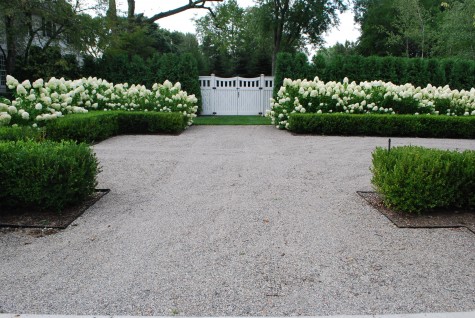
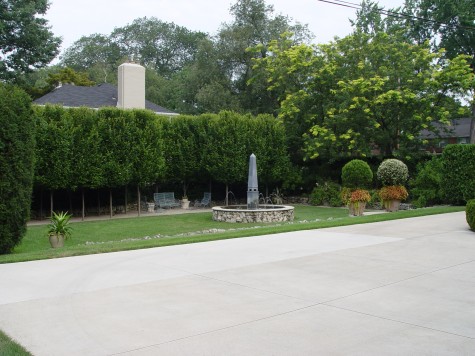
There are many cultivars of thuja; they can be very effective in providing year round privacy. Thuja Smaragd, or Emerald Green arborvitae, takes up little space on the ground compared to the big growing pines. Thuja Nigra is bigger growing, but still fairly vertical.  I could not do without them in my small urban garden.  In this landscape, thuja Pyramidalis provides privacy on a grand scale.    
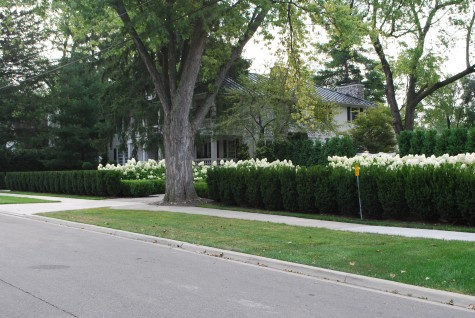
Taxus media “Moon” is an upright growing yew that rarely needs any side pruning.  Taxus media “Hicks” is the old standby for vertical yews, but they are much more open in growth.  Choosing the right cultivar of evergreen for your purpose is important.  The natural habit of a plant  is a vastly superior to that too heavily pruned look.     
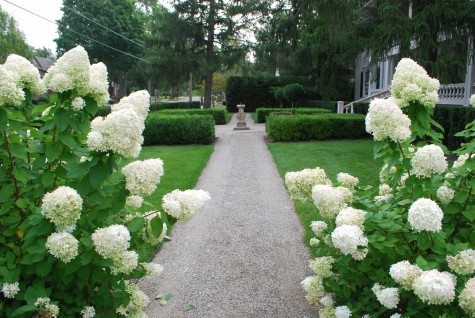
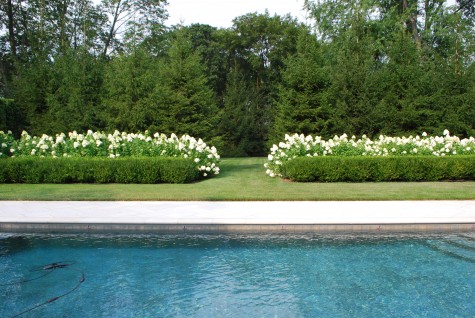
I use Green Velvet boxood almost exclusively-as it keeps its color and performs well even when we have terrible winters. It tolerates shearing well.  Should I need boxwood that grows taller, or bigger than 3′ by 3′, Buxus microphylla var koreana is a good choice.  It is much more open growing than Green Velvet, but sometimes the eventual scale of a plant is the most important issue.  The foliage of Green Mountain boxwood is very close in appearance to Green Velvet, and matures at 4′ by 3′. Vardar Valley boxwood has a beautiful blue cast.  Faced down with Japanese painted ferns-really beautiful.  Boxwood is handy as a companion planting to deciduous shrubs. It helps to relieve that twiggy look, or that cut to the ground perennial garden look-in the winter.  
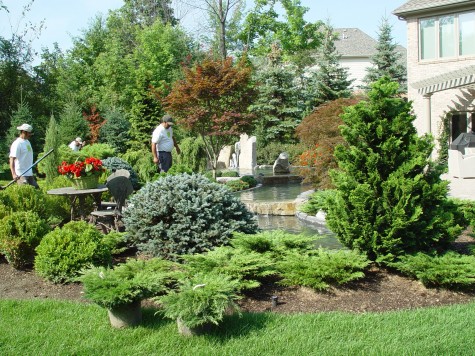
There are no end of interesting and visually arresting cultivars of dwarf evergreens. Though I am neither a connoisseur nor collector, I know a beautiful and well grown evergreen when I see one.  People who love dwarf conifers really really love them.  Designing a landscape for a collection is great fun.  For each specimen plant or plant grouping I may choose a companion evergreen that will showcase that specimen.  The juniper “Calgary Carpet” is a juniper I can take to.  This prostrate evergreen has needles with a silvery sheen that is very attractive.      
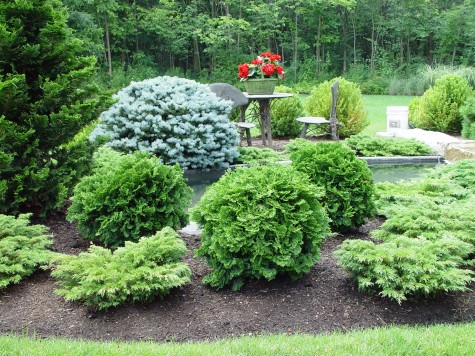
Given my druthers, I would only plant blue needled evergreens far in the distance.  Everything at a great distance in a landscape has that far away blue cast.  The color blue seems so natural-far off. But creating an informal tapestry of various shades of green  can be very appealing.   
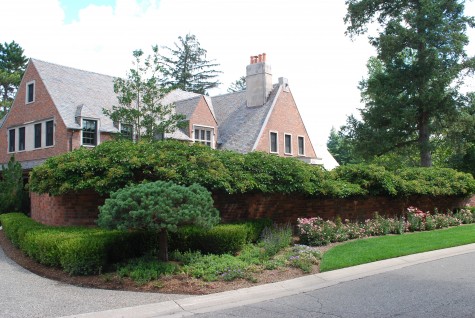
This old dwarf scotch pine on standard rules this view-never mind a climbing hydrangea  that has been draped over this wall for decades. All of the attending horizontal elements make much of the singular shape of this specimen evergreen. 
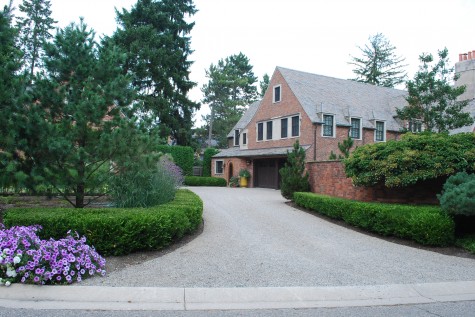

The most commonly planted evergreens in my area represent but a fraction of what is available to plant. In the above photograph, Pinus Flexilis “Vanderwolf’s” on the left, and Pinus Heldreichii Leucodermis further down the drive.  One of the nurseries where I buy plants lists 42 cultivars of Chamaecyparis alone. This is more than enough to replace one’s regret at the passing of the summer with an interest in making some new friends.
Small Spaces


The dowager queen French vase from yesterday’s post has a home waiting for her-but not the home I expected.  An object of this size would need an even bigger space, wouldn’t you think?  What evolved was anything but.    

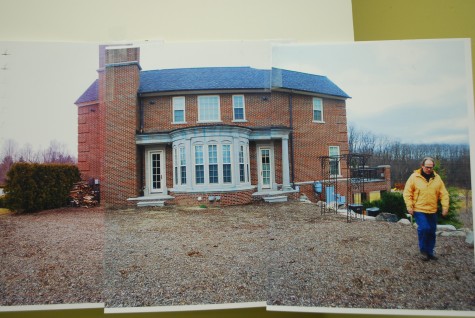
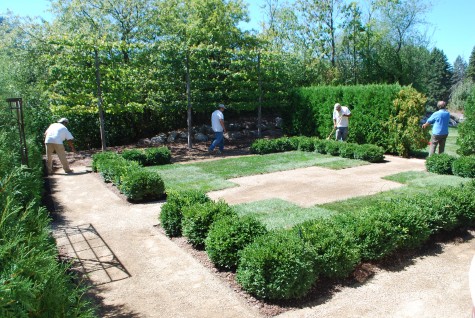
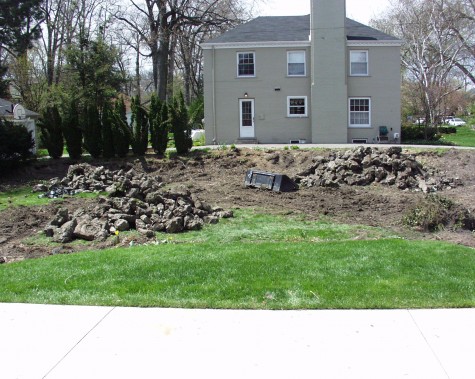
My clients bought a house that had never really been finished.  The landscape was much the same; unfinished.  My client referred to the property on the side of the house as “the music room mulch garden”.  It was bleak.  This very small space functioned as a transition space between the front of the property, and the rear-a sheer 8′ foot drop in grade. A boulder retaining wall at grade barely visible in this picture was punctuated by a staircase down with 16 stone steps-maybe more.  This left the area with an edge that was in fact a precipice.  At the base of the precipice, multiple air conditioning units, and a collection of meters apparent in this picture.     

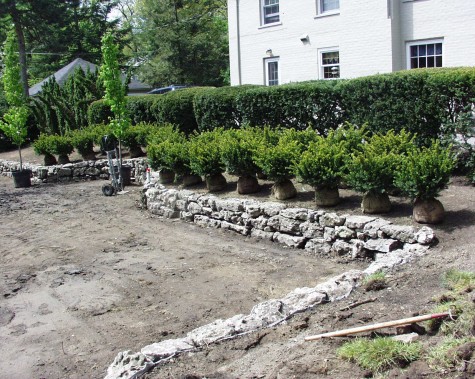
My first design, they flat out rejected; I had missed some important information. My first design did not take into account that they spent their summers at a home on the East Coast.  OK, my plan for a cutting garden and whatever went with that was way off the mark.  Plan 2-a landscape that would function and look beautiful early and late, and especially over the winter.  A small landscaped area that would have big impact. A healthy hedge of Thuja Nigra sporting one lone out of place Thuja Pyramidalis was a starting point.  

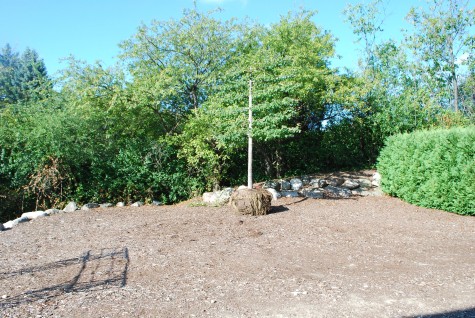
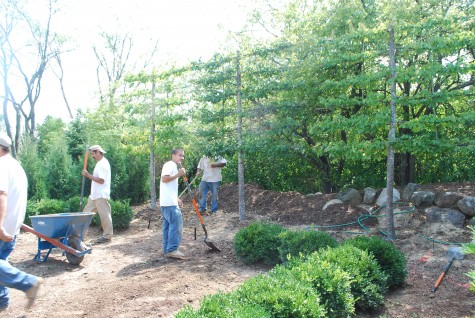
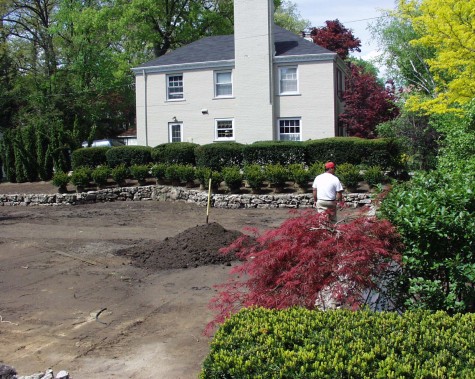
Three linden espaliers of great age would form a backdrop to this small garden.  The green wall they would provide would take up little space, and would screen the clunky boulders and grade changes from view.  Enclosing a small space makes for a feeling of intimacy.  And the room would need some furnishing.  

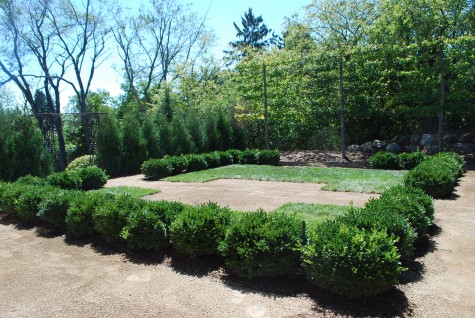
Three linden espaliers, each about 10 feet wide, completely covered the back.  It would be up to my client to decide whether to maintain the horizontal pattern of the branches, or let the the twiggy growth make a solid wall of leaves. Green velvet boxwood organizes the ground plane.  The precipitous drop to the rear yard is shielded from view by a hedge of Thuja Nigra that matched the hedge already in place on the street side.  Flat and safe spaces are friendly to people. As for the mulch pile we had scraped up-that would be used to mulch the new plantings.  

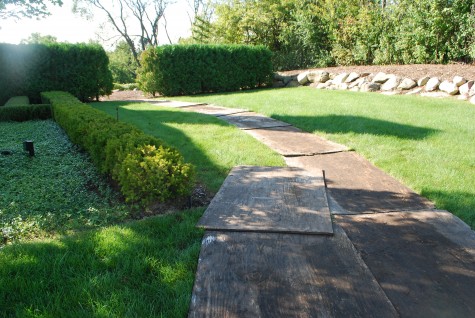
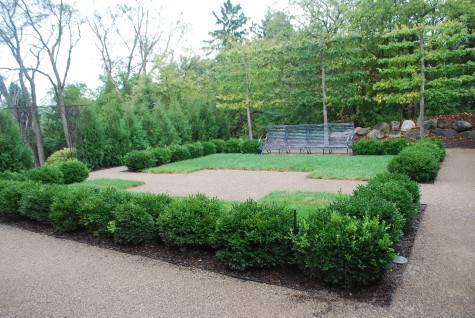
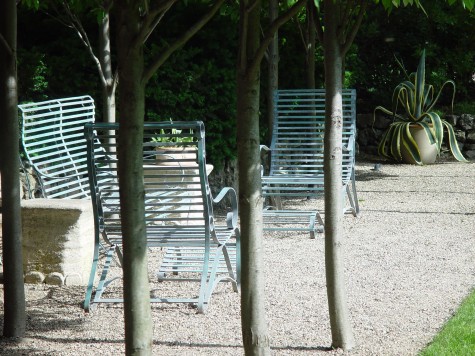
Decomposed granite walkways make it easy to navigate the space. The color is easy on the eye, but provides strong contrast to the green elements.  There is no reason a small space cannot be a lively and interesting space.

A simple arrangement of plant material and gravel finishes the landscaping portion of the project.  Now what? 

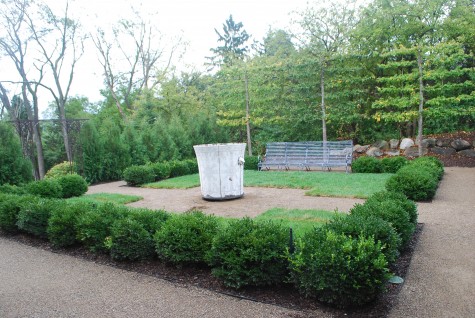
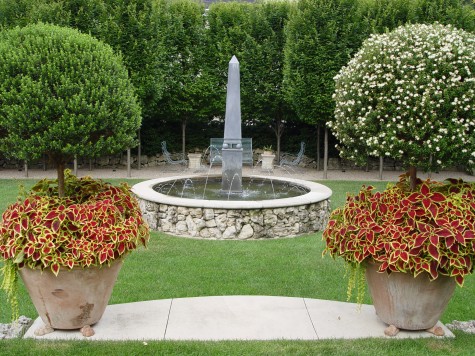
From inside the house, a generously proportioned bench makes the space look inviting. The placement of the bench implies there will be something of interest to see.  I thought that old French vase might be just the thing.  

The colors of each compliment one another. The placement of a large element in a small space can be dramatic.


The view from the bench side is in scale with the size of the house.   Should I plant very tall? Short and wide? With what? It will take some time and thought to get the planting just right.

A Restoration

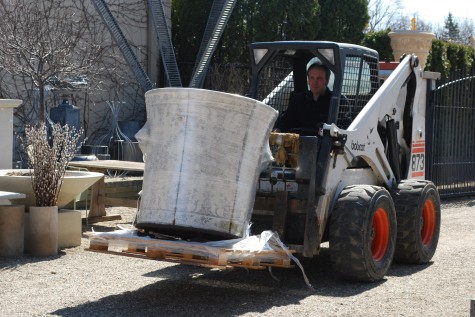
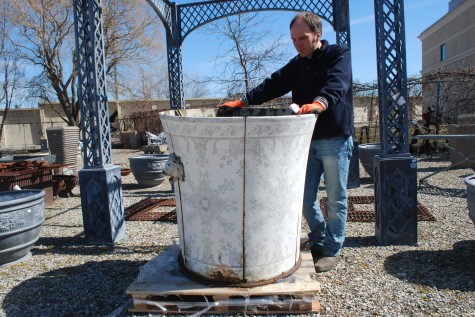
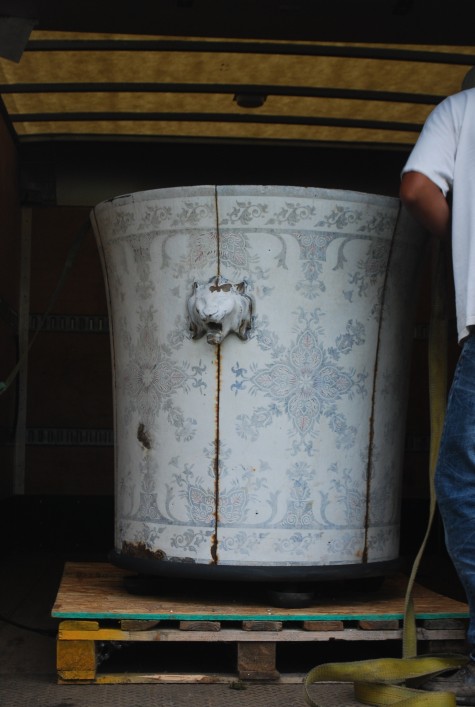
Some garden ornament is so irresistable that you don’t mind doing some restoration. This very old French cast iron and porcelain vase is dated on the side-Paris, 1827. That it was 183 years old, of great size, and unusual in its construction and surface-this made it a very intrigueing and compelling object.  I arranged to purchase and ship it to Michigan from Florida-having only seen pictures. 


Though I expected to see considerable evidence of its age, pictures do not tell everything.  I was enchanted with its worn porcelain surface; the original pattern is so beautifully faded.  I had visions of it placed and planted in a landscape such that the benefit would be to everyone’s mutual satisfaction.  The sheer scale of it was exciting.  One of Rob’s pictures from Italy is of a massive Italian olive jar that served as a prop to an old climbing rose planted next to it. This vase brought the possibility of that level of romance to mind again. 


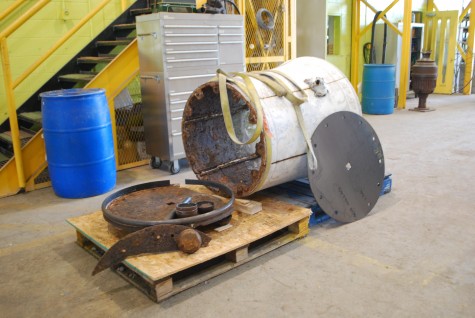
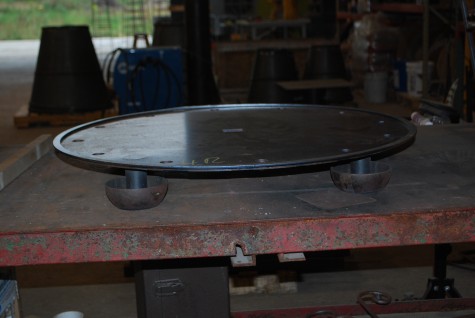
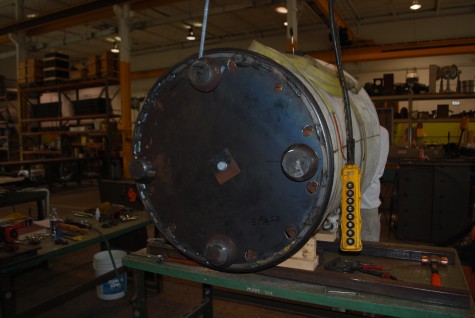
However, the vase had issues. The thick cast iron base plate had deteriorated considerably over its very long life.  Buck doubted that the trip from Florida had anything to do with the fact that the base was in pieces.  The bolts which fastened the base to the top had completely rusted through. It was just very old, and in need of some restoration. It took four people to get this piece over to the Branch studio.  Buck had a 1/4 inch thick piece of steel cut to make a new base; the restoration project would have to get in his queue-at the end of the line.  

He had the base drilled with holes, hoping that he could weld what was left of the bolts to the new base.  He  would work on it as he had time; the new base and feet got completed in fairly short order.  What was to come would take a lot more time, and be quite involved. It would have to wait until there was time.  Early this summer a landscape project came along that was calling for this vase. My client fell for it just as fast as I had; the restoration process picked up speed. 

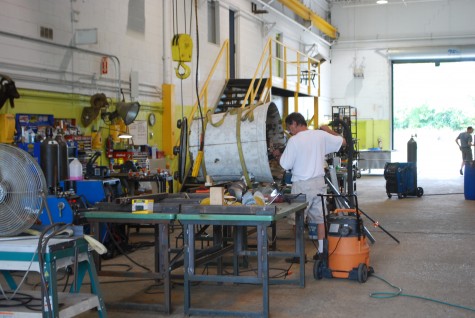
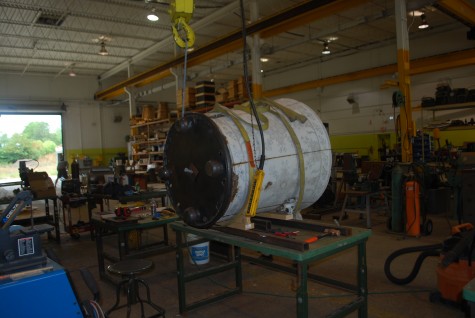
The first order of business-getting the vase in a position and at a height where he could work on it. A bridge crane in his studio which can lift and move up to five tons at a time is a handy gizmo at a time like this.  He was able to thread straps through the bottomless pot, and set it on a work surface.    

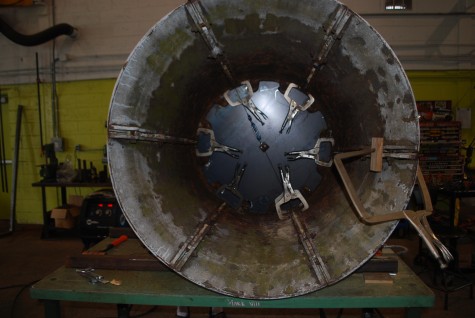
The vase is comprised of six separate cast iron panels.  Each panel had two flanges which allowed each piece to be bolted to the next.  Construction of course was dependent on the technology of the time.  The inevitable spaces between adjacent flanges were stuffed with some kind of caulk which had dried, shrunk and otherwise deteriorated to an alarming degree.  Once the vase no longer had a bottom, realigning all the panels to recreate the original round shape was a challenge.    

With the pot stabilized on the table, the bridge crane would help him maneuver the base into place.  The process of fitting the new base to this piece took what seemed like days. 


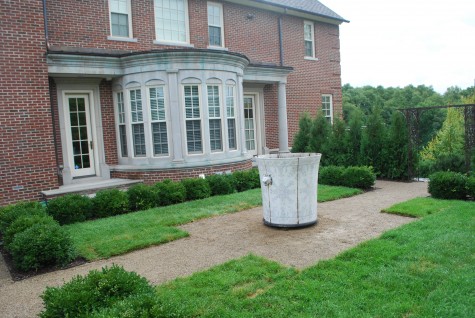
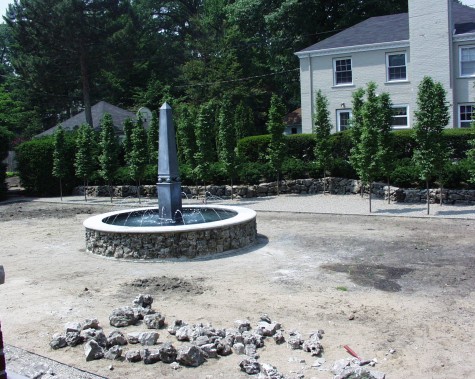
Buck finally called this morning to say vase and base were one again. He was able later to weld the old rusted stubs of the fastening bolts to the new base.  He plans to finish the steel in dark grey automobile primer.  I know it will be beautiful.  The landscape installation is finished, and ready for the delivery and planting of this vase.  I cannot wait.

Some Thoughts on Spacing

Once there is a landscape plan in place, there is the matter of the plant count.  Determining a plant count has much to do with spacing.  I have read much about rules for spacing plants properly for optimal growth, but the issue is more complex than that.  For instance, if I am planting pachysandra, and space them at a foot apart, I need one plant per square foot.  For 500 square feet, I will need 500 plants, or about 10 48 count flats.  If I space them at 6″ apart, I need 4 plants per square foot, or 2000 plants, or about 40 48 count flats.  Option A asks for a modest up front investment, but I see a lot of time ahead devoted to weeding, the purchase and spreading of a lot of mulch, and a lot of water thrown on bare ground.  I also see a grim looking space for probably 3 years.  My solution?  Start a groundcover bed small and plant densely.   Enlarge it next year, or the following season- only that number of square feet you can plant densely.  My mature, healthy beds of pachysandra-individual plants are much less than an inch apart.

Spacing evergreens has everything to do with the desired outcome.  Should I plant a taxus densiformis in the middle of the lawn, and give it 50 years to grow, I will have a single plant of considerable size.  A hedge, or a mass of yews is more about a community. Sometimes I look at the distance between the rootballs.  The big idea here-everybody has their own subterranean digs. This may mean that the foliage touches.   

Plants are much more sociable than I.  I want my space. I was never so conscious of the need for my own space than after my knee replacement.  I was less than stable on my feet, and was not interested in an enthusiastic Golden Retriever broaching my borders. But plenty of plants do well planted in close quarters.  They are completely happy to relinquish their individuality, and become a part of a larger community.

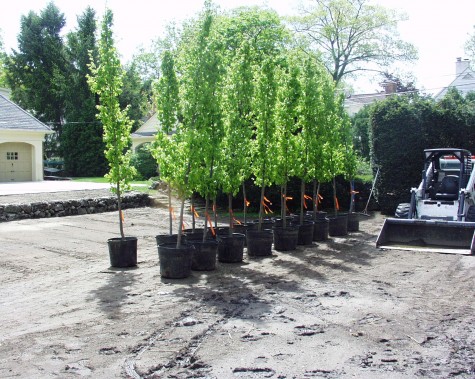
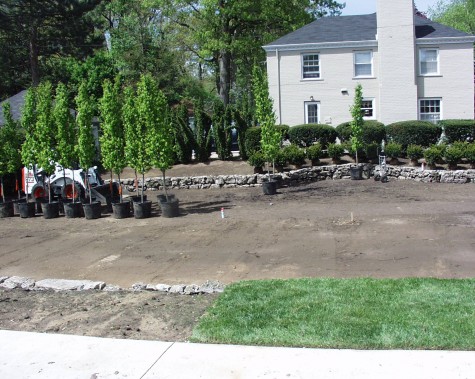
One of my most favorite landscape moments-the arrival of the plants.  These 1.5″ caliper fastigiate hornbeams in 25 gallon pots would be planted as if they were the poles of a pergola. Carpinus betulus “Frans Fontaine” is a culitvar of fastigiate hornbeam which is slower and more densely growing than the species.  Even so, it will grow 30′-35′ tall, and 15′-18′ wide. I spaced them at 8′ on center, knowing they would grow together.  Someday there would be a green roof under which there would be shade.   

I had other reasons which influenced my spacing.  The house next door loomed over this side yard property.  Evergreens would have provided year round screening, but they occupy a lot of space at the ground plane.  My clients wanted to entertain in this space.  Given enough time, and spaced close together, they would eliminate this view of the neighbor.   

Carpinus are also very tolerant of pruning.  Decisions about spacing are specific to the species in question.  The vast majority of green spaces have not been planted by a person.  There are those wild places densely populated by plants.  No natural forest or meadow is at equilibrium; some plants are coming on as others are in eclipse.  Perhaps a lighting strike will “prune” a giant tree such that new plants can take hold around it.  Should you be interested in the exceptions to any gardening rule, visit any wild and untended space. 

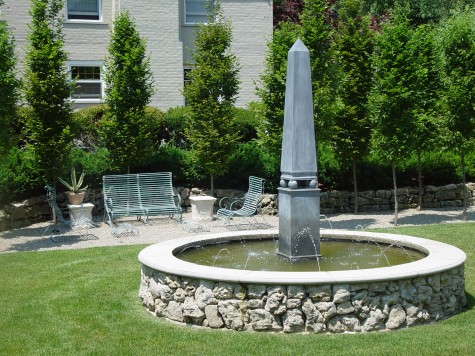
Five years later, the new yews have grown together to make a mass.  The topmost row of yews had been transplanted from the front of the house; the new yews will eventually cover their bare lower limbs.  It sometimes makes more sense to underplant an old and ungainly shrub rather than tear it out.  These big old yews will eventually become part of a simple mass.Eight years later, the house next door has all but disappeared. As the carpinus grow taller, they can be selectively pruned on the underside to permit easy passage beneath them. 


The yews planted behind the carpinus are planted on a gentle slope that rises to the neighboring driveway. Though the shade has become considerable, they are green and well needled from top to bottom.  Allowing those densiformis yews to keep their natural shape is in large part responsible for their continuing health.  Yews do not respond so well to hard formal pruning.  Once all light is blocked to the interior of the shrub by a proliferation of growth on the exterior, those inner branches will go bare.  I have begun planting Taxus media Moonii in place of Hicks yews, as their natural growth is much more upright and formal. 


This is a great spot to sit.