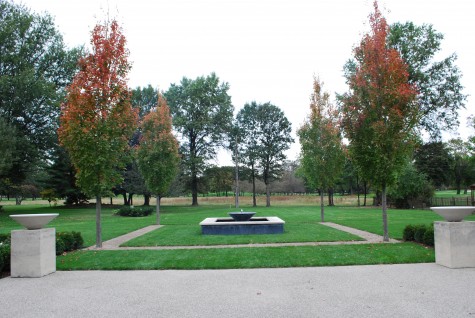
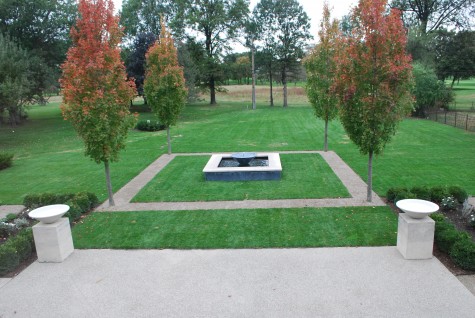
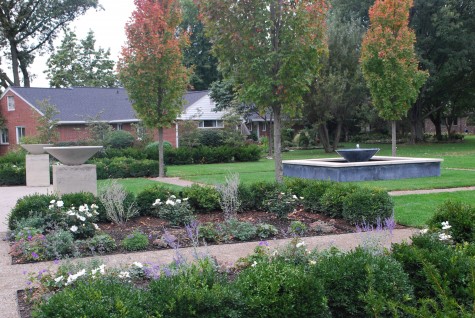
 My last Sunday opinion post I entirely owe to Nanne-she made me think long and hard about the relationship of imagination to precision. Unbeknownst to her, she waded headlong into one of my stuck spots. I had this idea to make models of gardens I doubted anyone would ask me to build. Who knows where that idea came from, but when I have an idea, I try to play along. Fine so far. After clumsily trying to build them out of foam core, Buck waved my story off, and asked for drawings. Pretty soon, basswood in thicknesses between 1/16th and 1/32nd of an inch and in varying widths, began arriving via UPS.
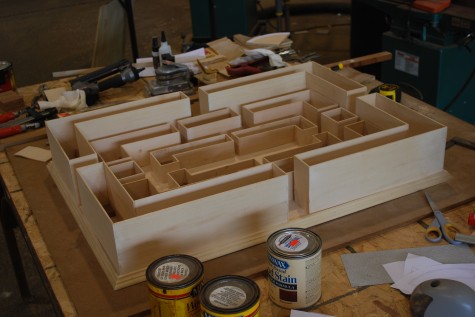 He wanted to build the models on a birch plywood base, finished on its four edges with molding. They could be set flat on a table, or floor-or hung on a wall. This construction reminded him of the slide wire potentiometers he collects. As you are probably a gardener, and not a collector of old scientific instruments, I will elaborate. Buck collects vintage instruments which were used to measure voltage; he thinks they are beautiful objects. Many of them were finely finished and presented in mohogany cabinets or cases; his office wall is covered with them. Some instruments were part of university laboratories. Some were commissioned for industry. To the last, they are very finely calibrated scientific instruments which were extremely expensive to purchase in their day. He buys those the looks of which interest him, takes them apart, cleans and restores them.
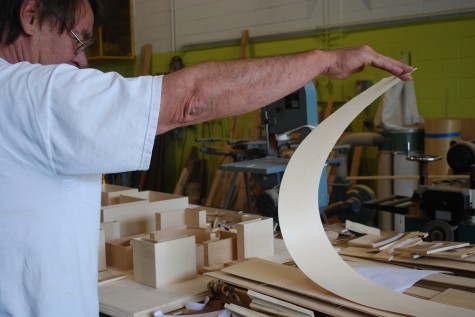
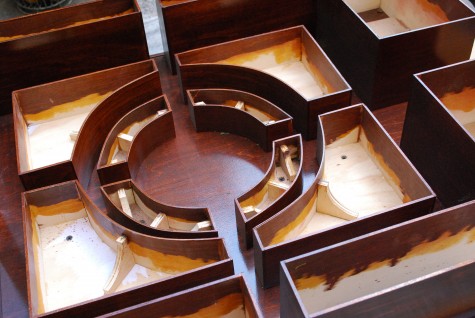
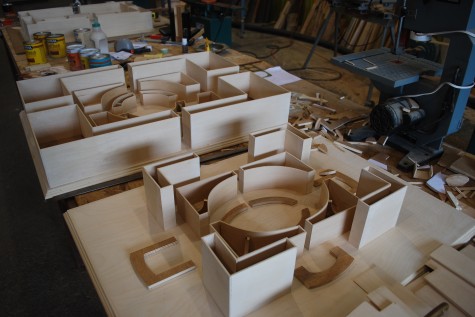 These instruments interested me when I saw them, but they did not enchant. Years later, I understand and appreciate his enchantment. There was some astonishingly imaginative person who designed and made a beautiful object which would in addition precisely measure volts. Very precisely. My garden models, and his love for old scientific instruments-an interesting mix. My drawings were about to be transformed from lines into shapes. Each model he painstakingly reproduced in basswood, from my drawings. His bench-littered with pieces of wood light enough and thin enough to float. They are clearly not landscapes-they are sculptures. There are four unfinished sculptures to date, each 24″ by 36″.
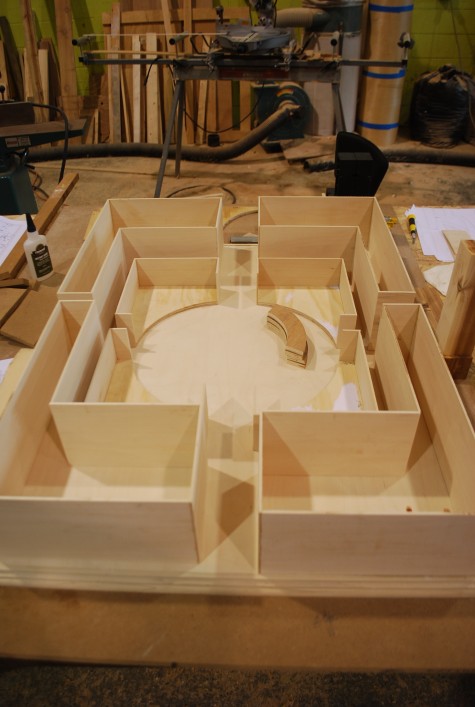 He fussed and fretted about the construction-much like I do, when I have a landscape project underway. When I am at home gardening, and have a problem or a full blown impasse, I back up, and fix myself a lemonade. When I am working, I fuss and fret, and fret a little more. It does not help to fix a lemonade, or go home. I have to stick with it. It could be a video about how Buck constructed these models is of vastly more interest than the sculptures themselves. Why? I am having trouble trying to figure out where to take his work next.
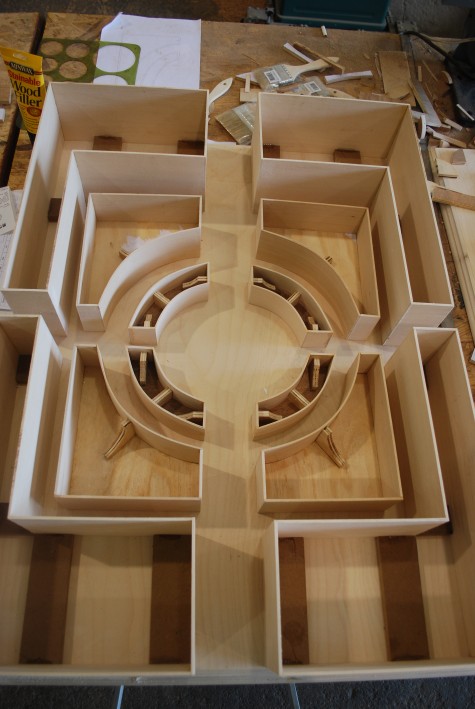 I imagine a landscape as a three dimensional sculpture. Everything about that sculpture occupies me like an army. Buck’s questions about the models-the eventual heights, distances and spaces-much like what I think about every day. But his precise questions regarding the length, width, depth, and height of elements in these sculptures forced me to think less about landscape and more about my intentions.
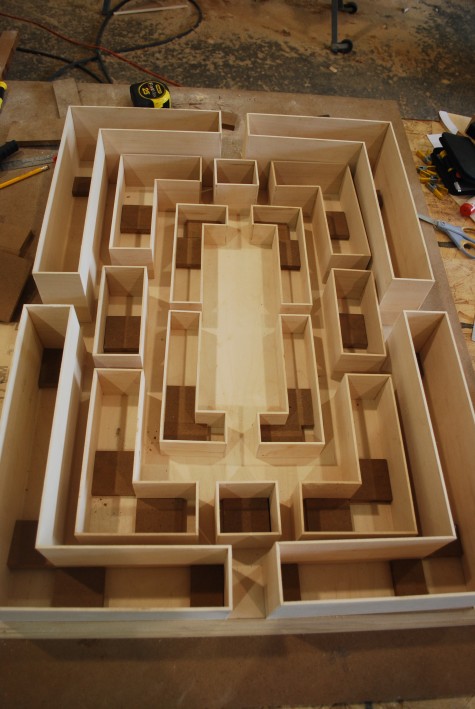 A property needing landscape can be forgiving of what you have not accounted for in a drawing. A big idea may leave out that space or this corner. This might make a landscape renovation more difficult than a landscape starting from scratch. Buck’s wood sculptures I would not need to keep alive. They need to be brought to a visual life.
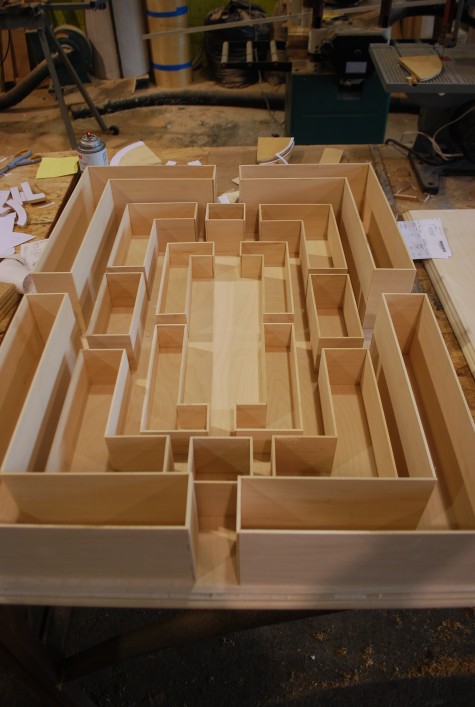
While Buck is absorbed constructing these sculptures, I have time to panic. What will I do to finish them, once he is done? What will go in all those spaces?
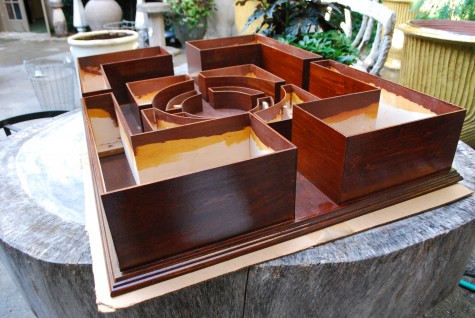
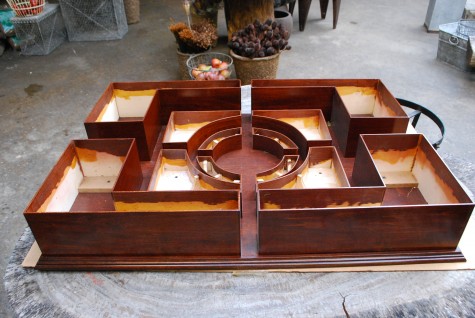 Two of the four sculptures have been done for 5 months. I have been scheming to provide an imaginative finish worthy of his precise effort. As much as I would like to have an answer, nothing is coming-yet. I had originally planned to fill my hedges with reindeer moss in different colors. Now I am not so sure. I could fill them with various sized wood spheres, stained the same mahogany color as the geometric shapes. I could stain the interiors of the spaces, and do nothing more. I could fill the shapes with seeds or dyed wool roving .
If you have ever made a change in a garden only to see that choice go on to change how you see everything around it, you will see my dilemma. Gardeners have to go on, and live with their choices. This tree over that tree. This perennial over a world of other perennials. This groundcover instead of that. There are so many plants from which to choose-all of them different, many with merit. All of this leads me to think about those treasured moments in my own garden which were much more about accident than by design. That chance nicotiana seeding and growing up in the gravel walk.
 I got involved with these models by design. It is looking like I may finish them by accident.