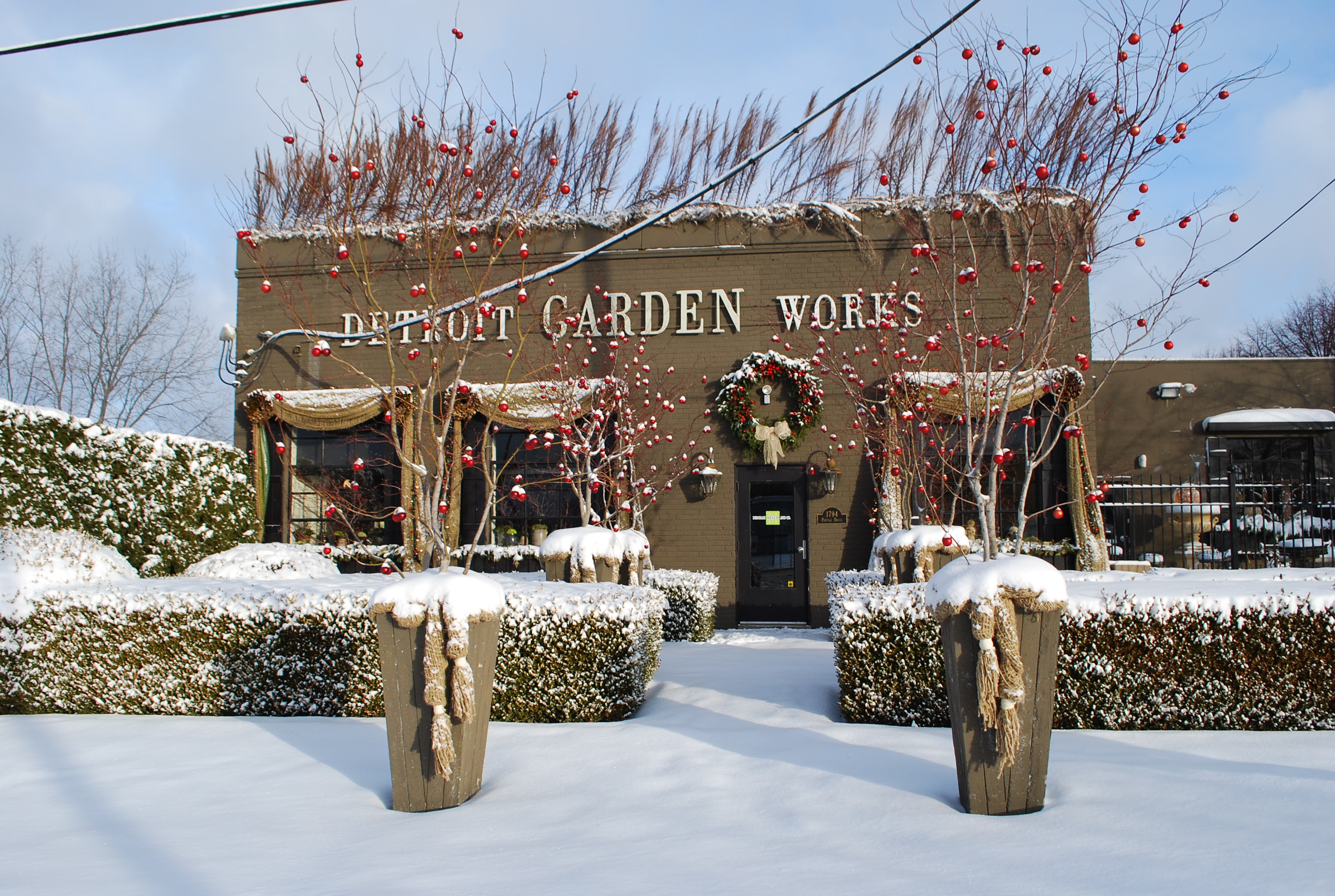
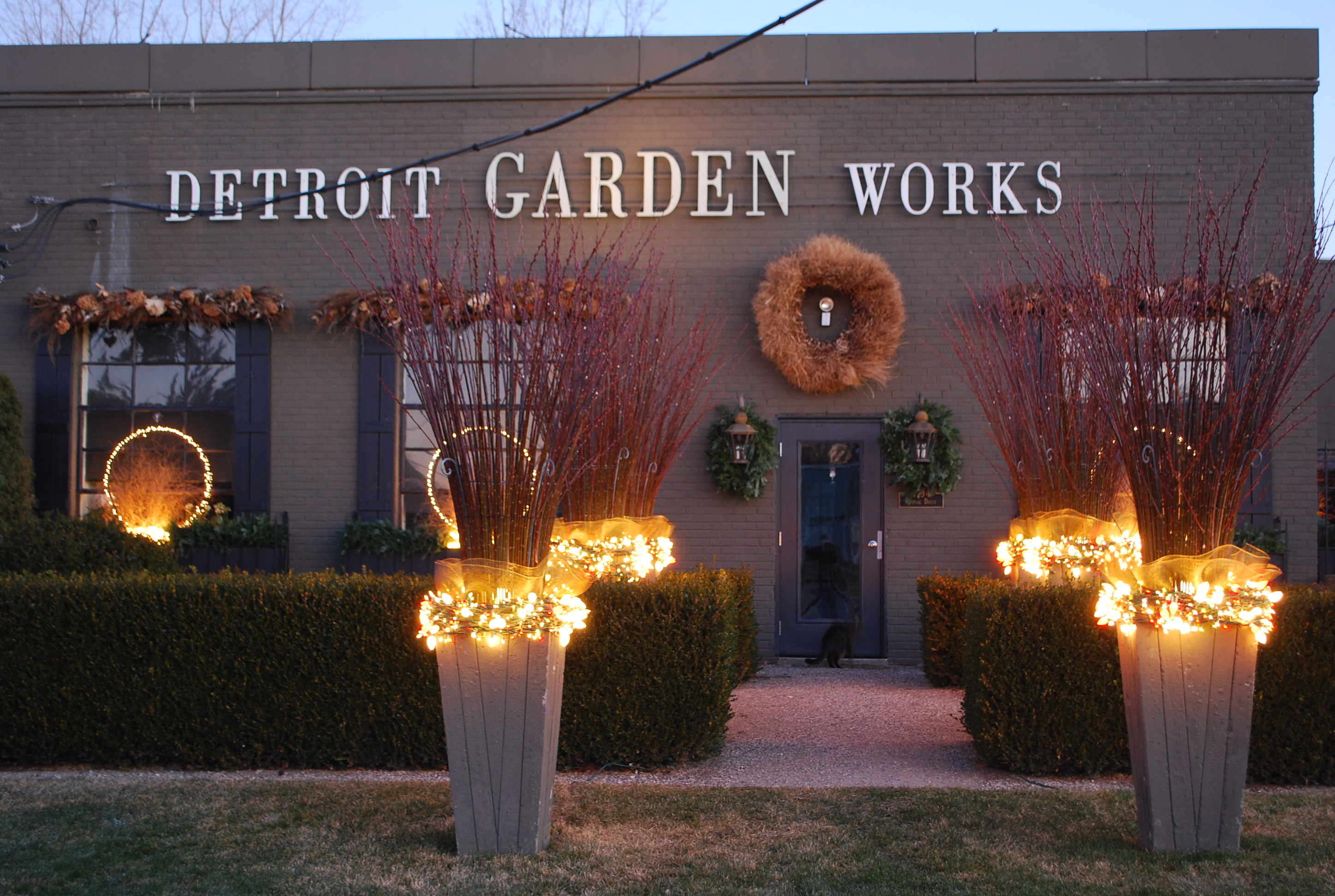
A Holiday Wreath


A wreath is first and foremost an expression of unity.  No matter the materials used or style, every wreath begins as a circle.  A circle is a complete, continuous, and visually satisfying form. That decorated shape displayed at the holidays expresses the sentiments of the season, as well as a point of view about beauty.  This simple grapevine wreath adorned with a few dried bits from the garden and a wired paper bow says hello and welcome.
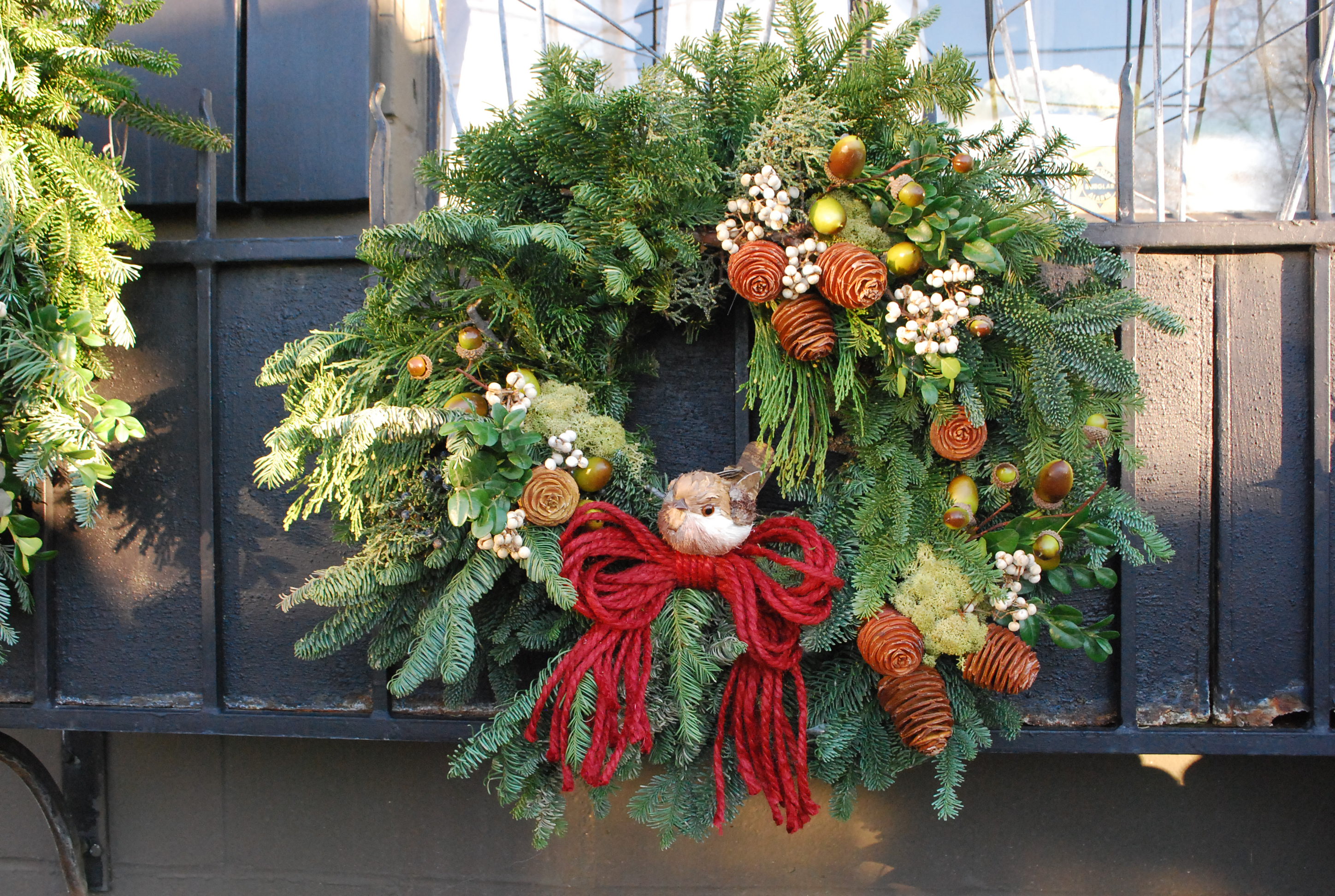
The history of wreath making is long, dating back centuries.  Holiday wreaths traditionally begin with a circle of evergreens.  The evergreens last a long time, despite being cut.  There is a strong element of hope associated with evergreen wreaths-that despite the quiet winter season, the natural world is still very much alive, and will persist through the winter. 
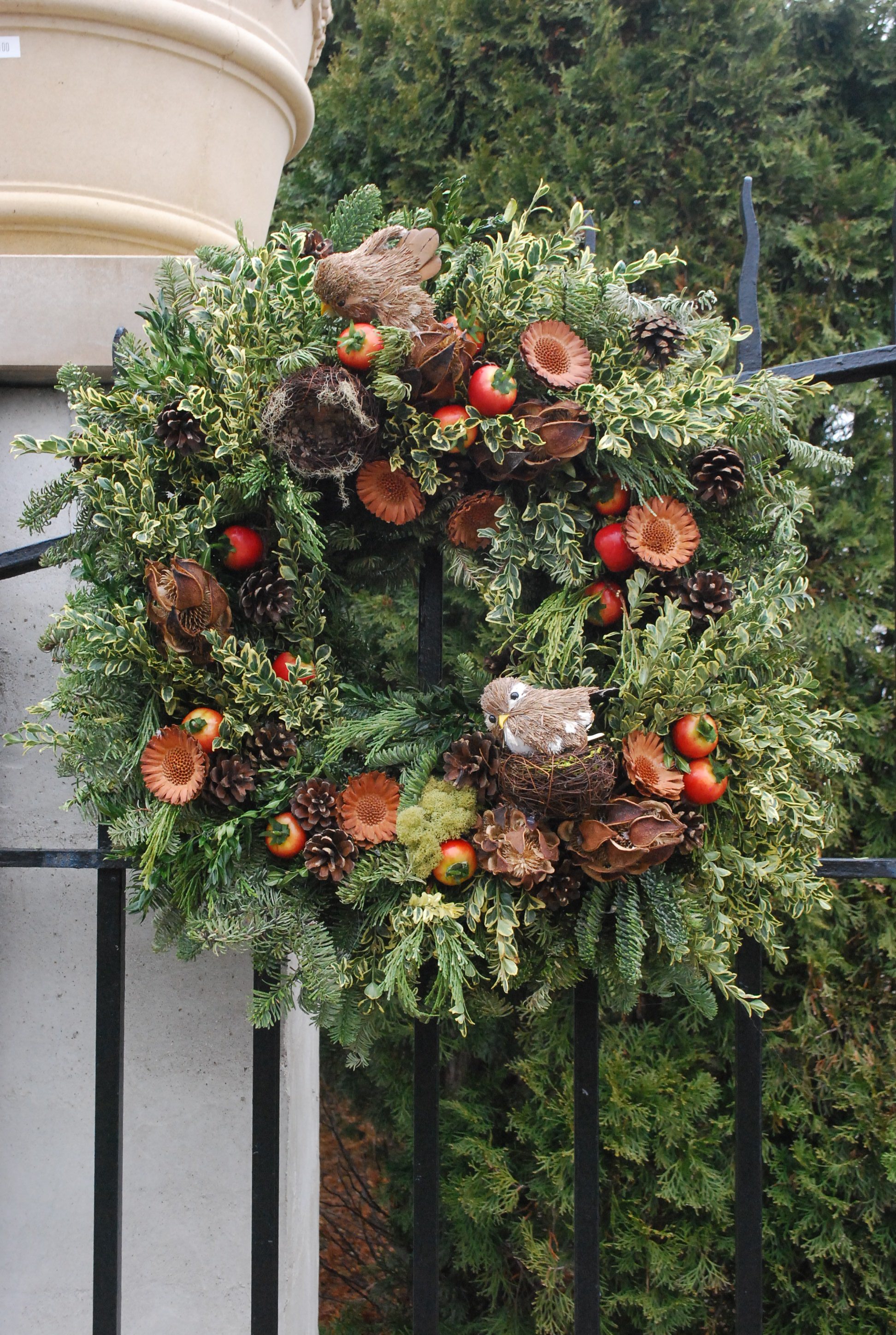
All of the evergreen wreaths at the shop are locally made to a certain size and heft that will keep its shape, no matter how much I may add to it.  The handmade part of them is obvious-they are not perfectly round, and they have a lively textured surface.
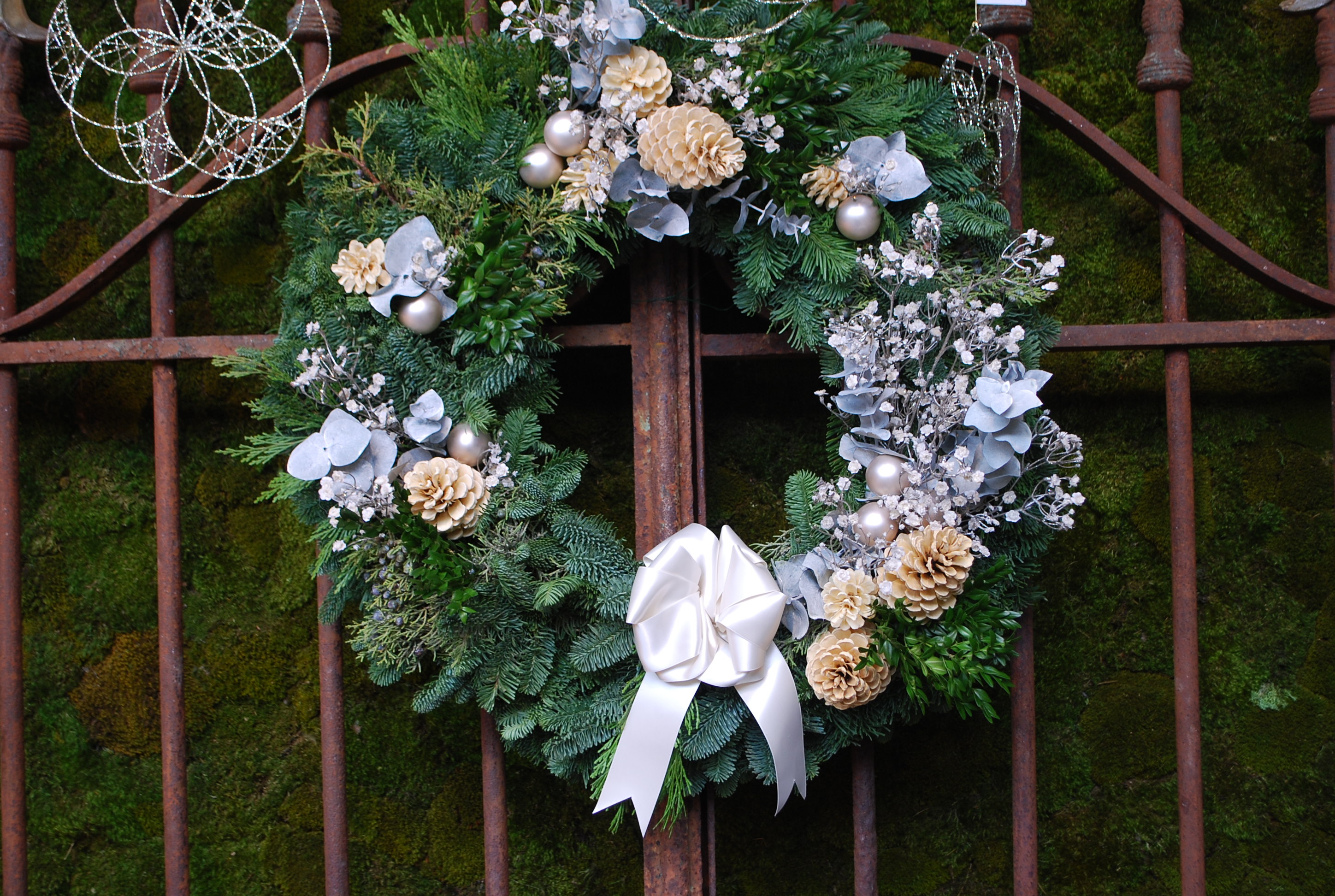
I like a basic mix of different types of fir.  Douglas, concolor, silver, noble and frazier fir stay fresh looking a long time.  Adding bits of other greens, such as boxwood, incense cedar, berried juniper and the like makes each wreath different-more personal.   

Decorating a wreath spices up the evergreen stew.  Natural materials-cones, mosses, dried berries, magnolia leaves, twigs, and eucalpytus provide color and texture of a different sort.  Arranging all of the materials-a satisfying and contemplative exercise in composition.    
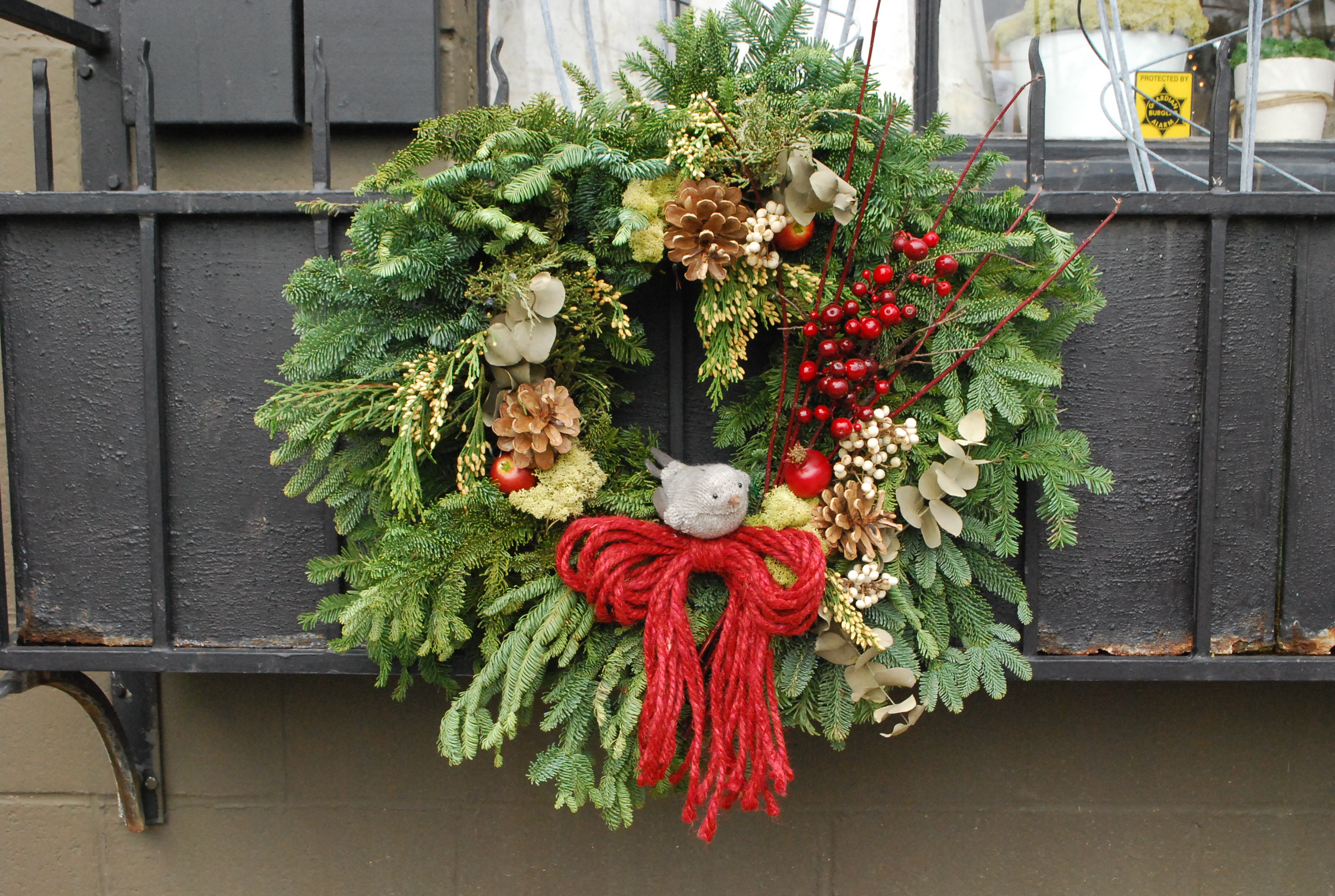
I probably make upwards of 50 wreaths a year-how I enjoy this.  Each client has a singular idea about what they like in terms of color, materials and style.  Some are quite formal-others more low key.   
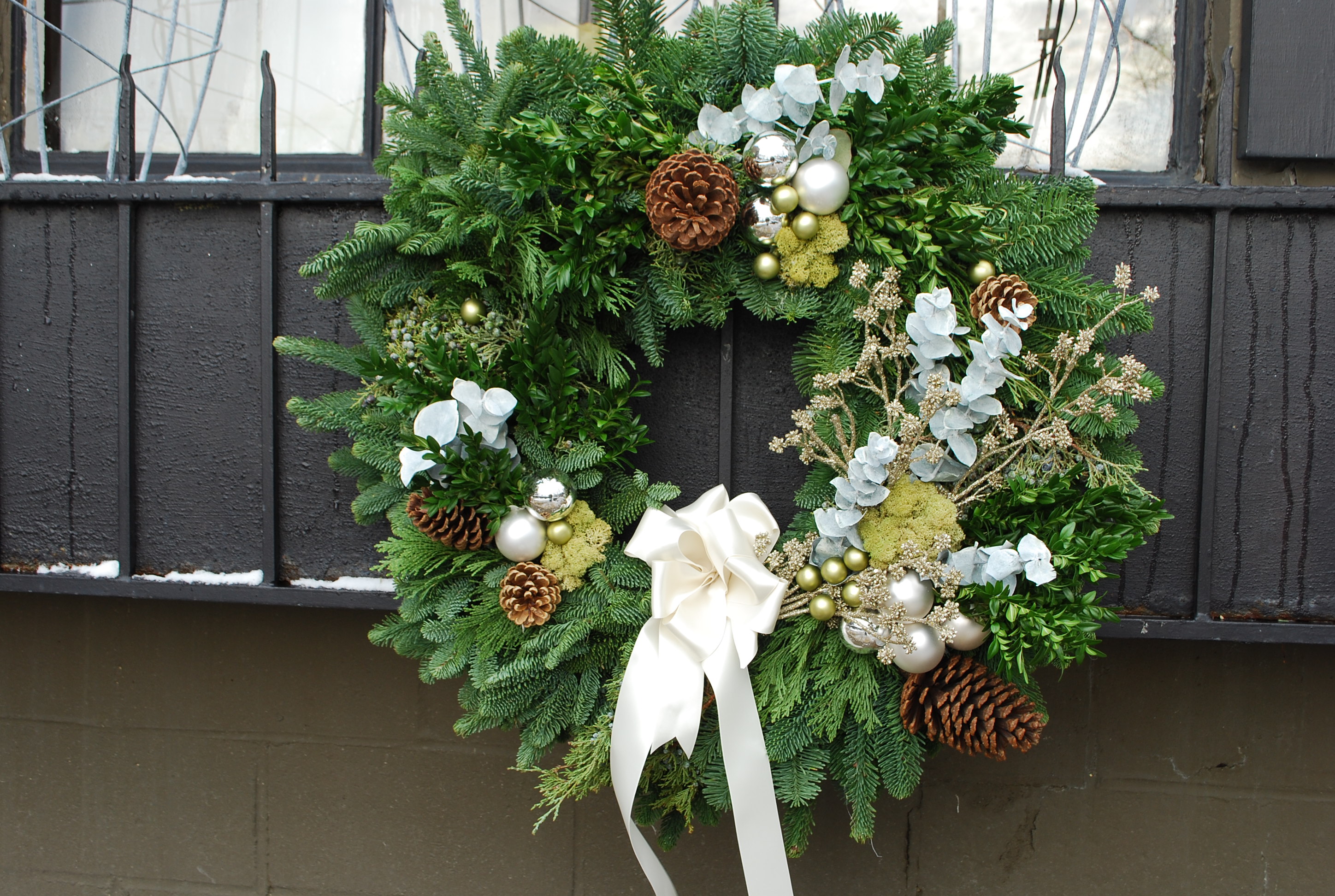
The mechanics of fastening has everything to do with the weight of the material and size of the material you are trying to attach.  Wire can be wrapped around the base of a pine cone, and poked through to the back of the wreath.  Anything that gets wired to the steel base of the wreath will stay put, no matter how blustery the weather.  I buy rolls of paddle wire.  The 22 gauge green wire is a continuous length wound round a paddle shaped spool.  I always have the perfect length of wire available.
Florist’s wire comes in different lengths and weights.  The advantage of this wire-it is straight.  A straight wire can be easier to poke through the evergreens.  Smaller materials like twig bunches can be easily fastened with a single piece of wire. 


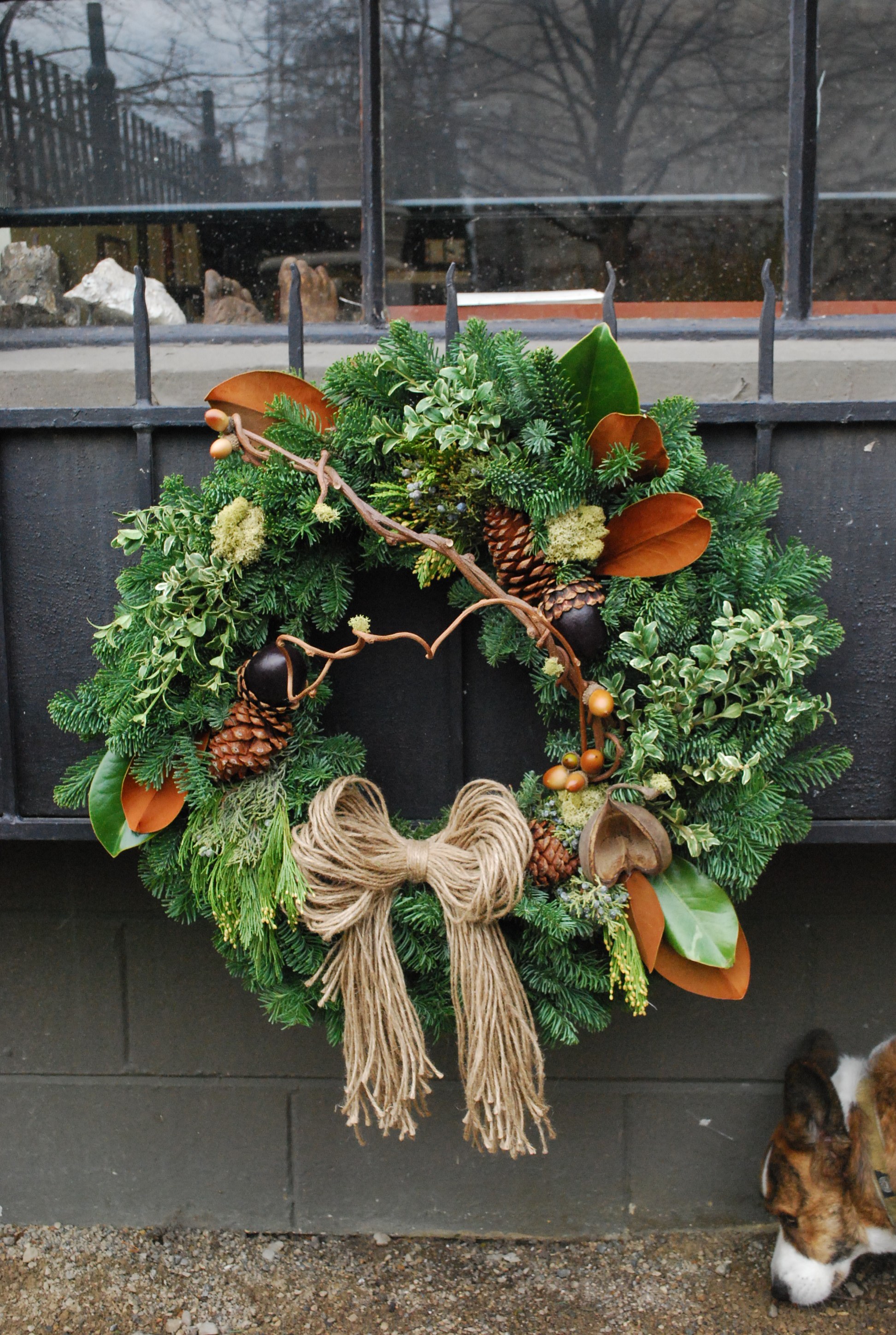
Some wreath materials are available already attached to heavy wire stems.  They can be wedged in between the evergreen branches. More often than not, I take the picks apart.  Many are just too large, or too long for the spot where I need them.  The acorn branches in the wreath pictured above came from a single pick.   
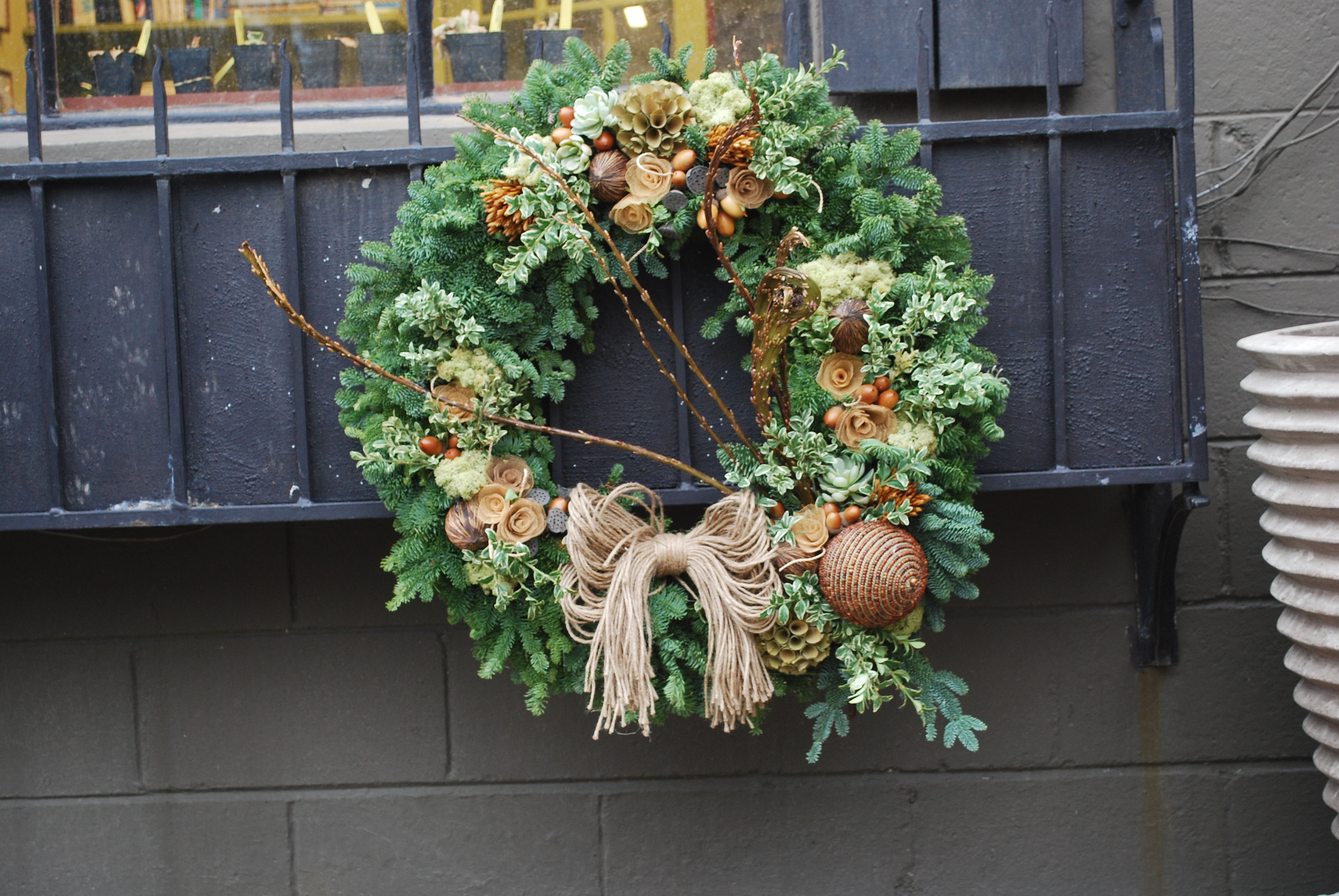
A jute bow is easy to attach with a zip tie that goes through the center knot, and around a stout branch.  Really heavy materials, such as faux fruit or ornaments like the bead ball pictured above need a fastening device that is both strong and rigid. Floral picks, or skewers come in various lengths, and can handle the heaviest ornament with ease.  Faux fruit is really tough skinned.  I pierce the surface with a steel awl,  butter the pick with hot melt glue, and insert the pick.  The wood pick can them be wired to the steel wreath frame.
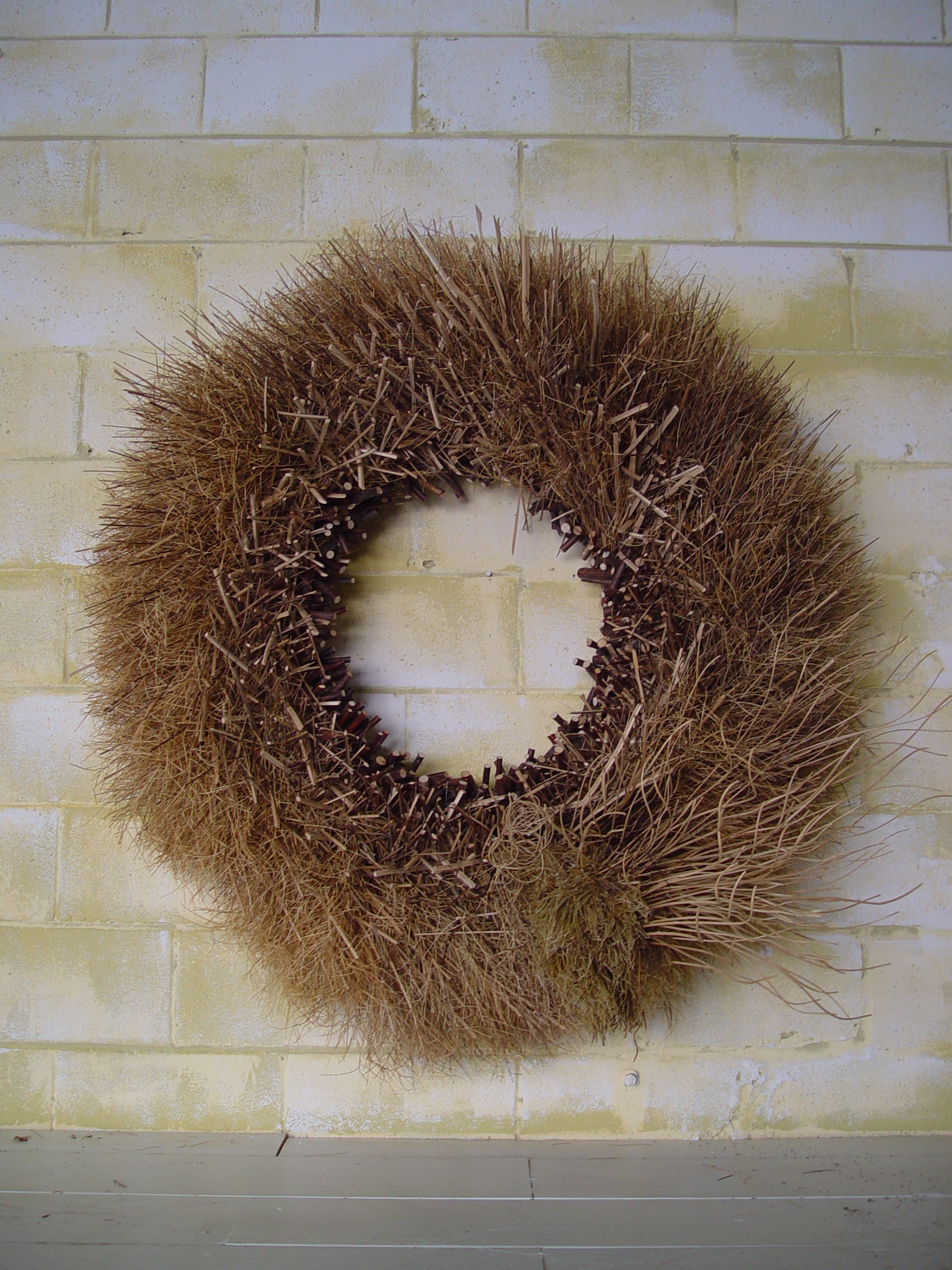
The hot melt glue gun is an indispensable, albeit dangerous tool.  Hot melt glue will stick to your skin just like anything else it touches.  My downfall almost always involves gluer dripping from the back of a piece of moss.  If you are using a glue gun more than 1 step from a sink, keep a bowl or glass of water handy, so you can put out the fire fast.  Gluing the sticks in the wreath above-not so dangerous.  The glue is at the other end.  This gluing project just took lots of time.  A wreath like this can last many years-and can be repaired if need be.   
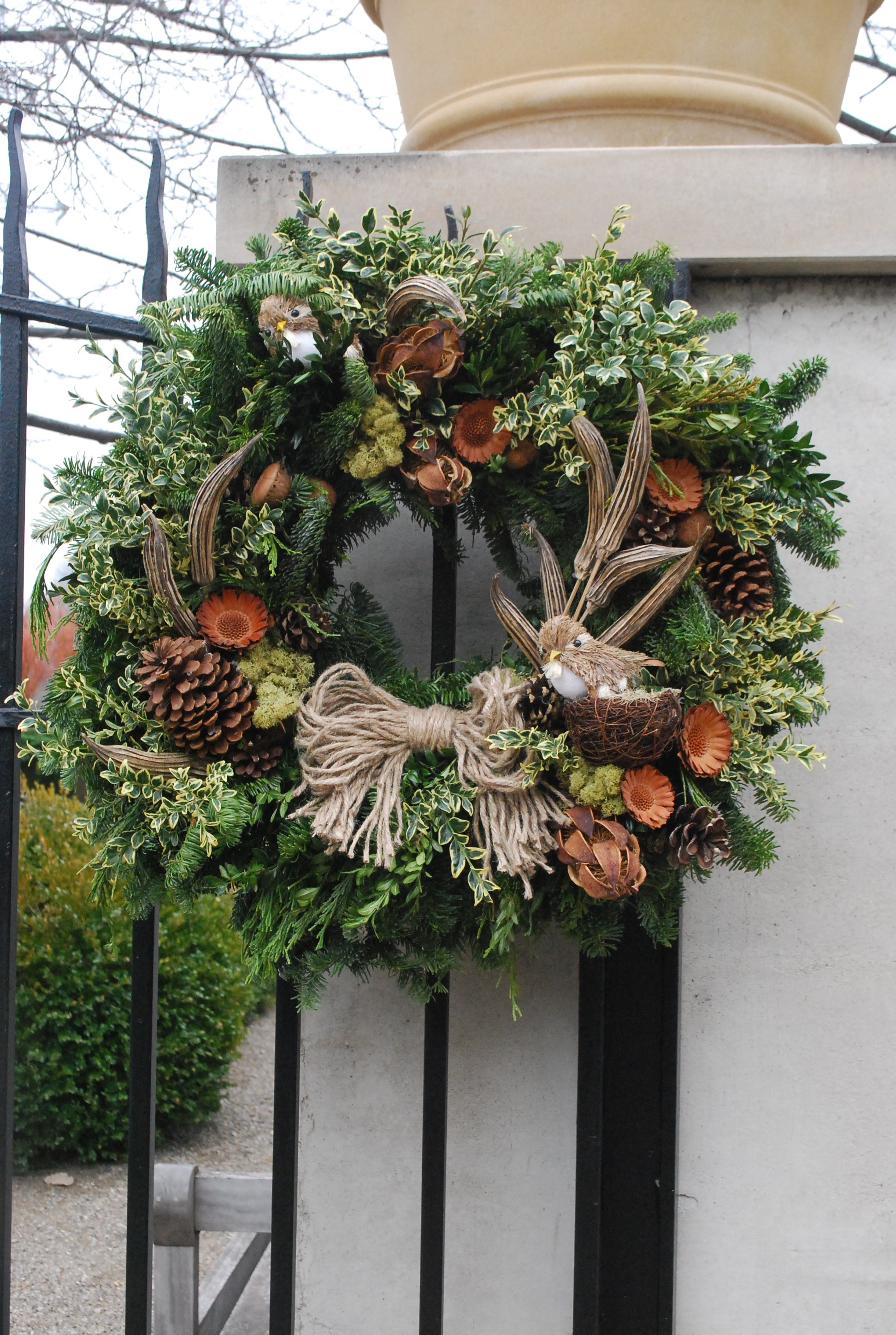
I don’t really have a favorite wreath.  The favorite part is in the making, not in the end result.  Having some time, and a good sized space to make a mess is a big help.  Wreath making-a primitive form of cutting and pasting.  Much more ends up on the floor or table, than on the wreath. 

Hand made holiday decorations have a very special feeling about them.


The Garden Designer’s Roundtable: Plants and Memory


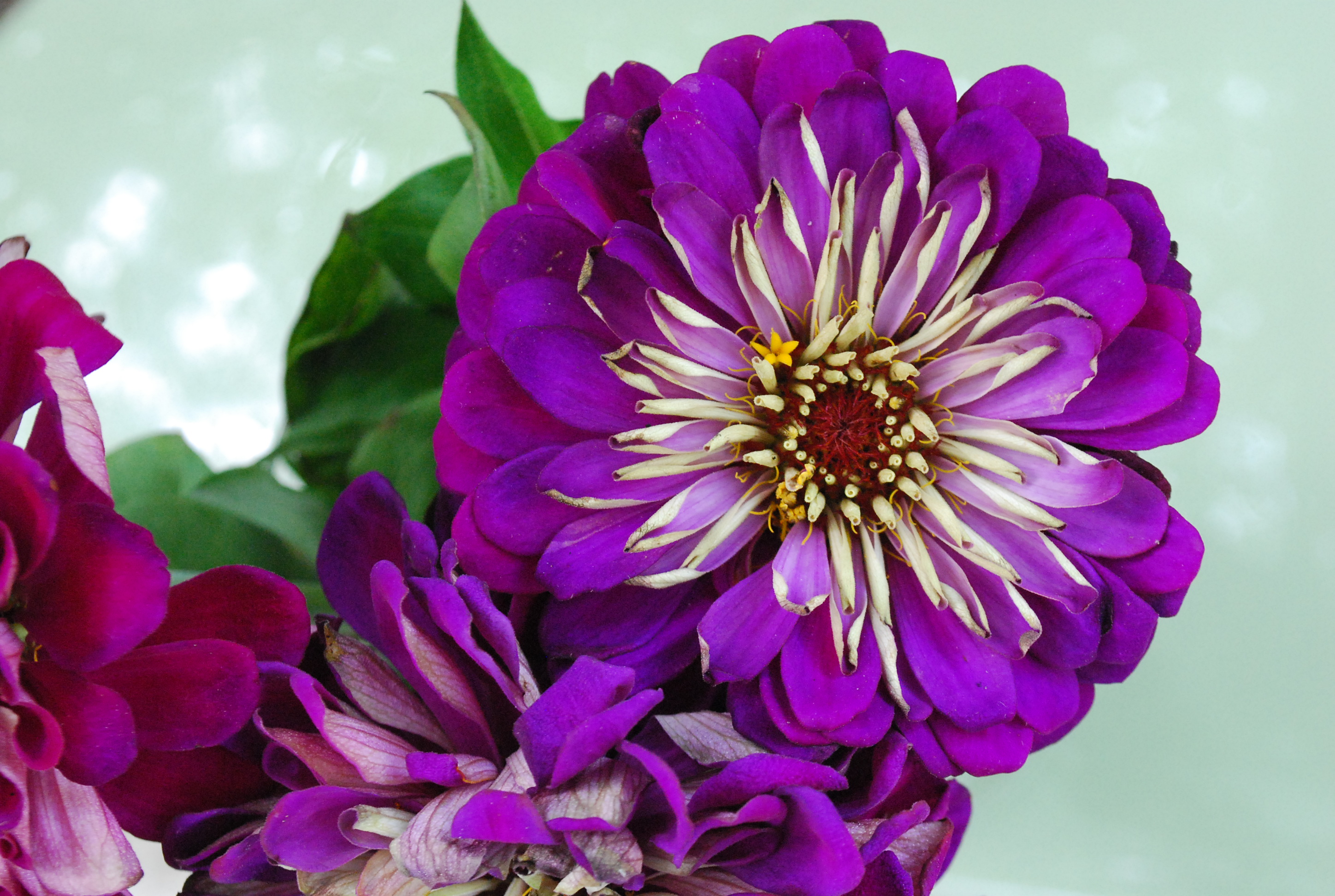
A memory can be triggered by many things.  The smell of lilacs in the spring.  The fragrance of a rose.  A mass of daisies, blooming.  Plants that bring memories flooding back to me mostly have to do with my mother’s garden.  Roses-oh yes, so many roses.  A gingko tree, grown from seed to a spectacular size.  Tomatoes, lettuce, and herbs in pots.  Orchids, hanging from the trees. And the zinnias she grew from seed.  I never see a zinnia without thinking of her. 

But my memories of her aside, the big old evergreen trees that it has been my pleasure to meet make me feel zero at the bone.  Zero at the bone?  A feeling which is primeval.  Elemental.  For me, giant old trees evoke memories that are not tied to specific events.  They may provoke memories of which I am only dimly aware. 

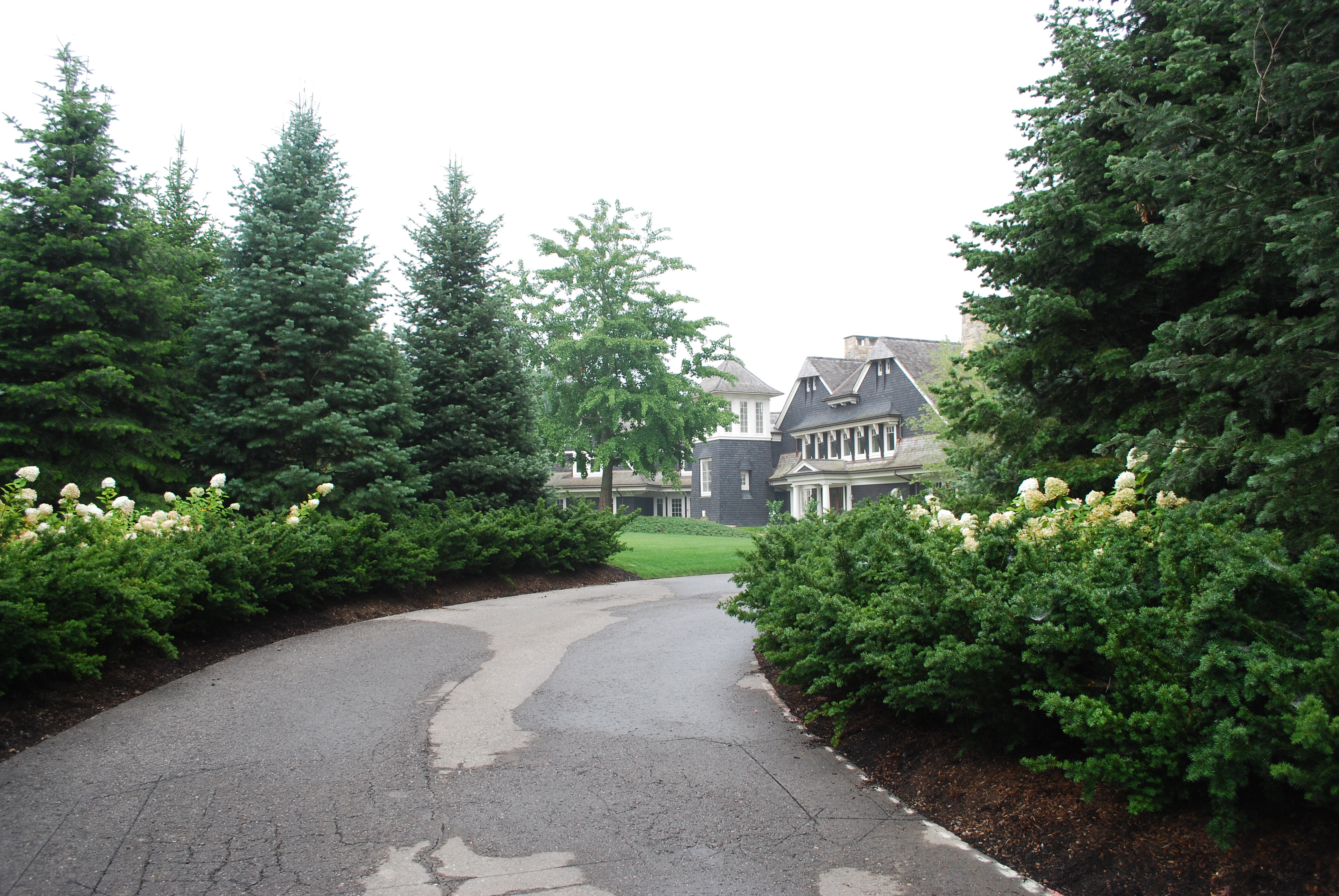
I am sure this sense of belonging to the primeval forest is why it is so difficult to take down a big tree.  Even a damaged or sick old tree.  This client was very attached to a pair of old and weary Norway spruce planted just a few feet from the foundation of the house.  Taking them down was not an option.  Planting more of them at the road, a fitting tribute.  I always admired her reluctance to interfere with with a chain saw.  The landscape had an aura that would not have been possible without those old trees.     


These trees may be many years away from  evoking a memory of the primeval forest, but the impulse was there to plant them. 

Giant old trees whose life spans many gererations of people are as rare in urban areas as they are revered.  Old large properties that have never been clear cut to make way for neighborhoods provide homes for old trees.  The steward-gardener who takes great pains to look after them is a person for whom those trees evoke a memory.  In my area, there are old cemeteries whose old trees are spectacular.  Many cities have parks, and for good reason.  Exposure to an old, natural or archetypal landscape is comforting, and thought provoking.

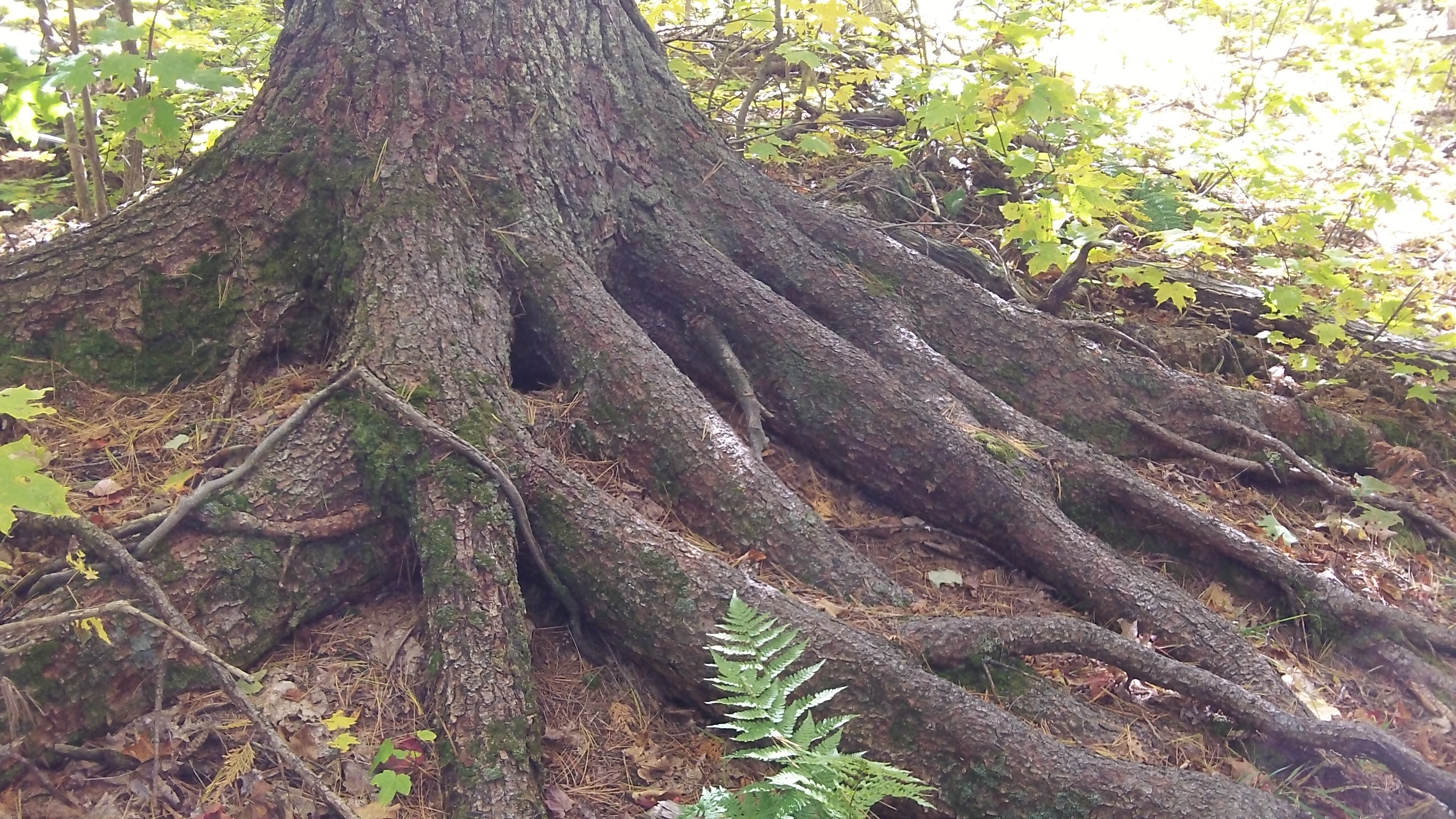
The Estivant Pines nature sanctuary on the Kewenaw Peninsula in the upper peninsula is a protected home to many old pines.  Pictured in the Michigan Nature Association blog, this is the trunk of one of the largest and oldest of those pines. The preservation of these old trees is the result of the work, patience and determination of many-all of whom have a memory that is important to nurture. 

This post is but one of many featured at the Garden Designer’s Roundtable today on the subject of memory and plants.  My special congratulations to Andrew Keys, whose book   Why Grow That When You Can Grow This   has just been published on this very topic.  If the book is as exuberant and sassy as he is, it should be a great read!    

Andrew Keys : Garden Smackdown : Boston, MA

Genevieve Schmidt : North Coast Gardening : Arcata, CA

Jocelyn Chilvers : The Art Garden : Denver, CO

Lesley Hegarty & Robert Webber : Hegarty Webber Partnership : Bristol, UK

Mary Gallagher Gray : Black Walnut Dispatch : Washington, D.C.

Rebecca Sweet : Gossip In The Garden : Los Altos, CA

Susan Cohan : Miss Rumphius’ Rules : Chatham, NJ

Susan Morrison : Blue Planet Garden Blog : East Bay, CA

Thomas Rainer : Grounded Design : Washington, D.C.

Rochelle Greayer : Studio ‘g’ : Boston, MA


Sunday Opinion: The Outer Limits

There are lots of things a competent garden or landscape designer can accomplish for a client.  Another pair of eyes, and a fresh point of view is usually a good idea.  What else does a good designer bring to a project?  The willingness to listen, and hear.  A working knowledge of design.  An ability to conceptualize.  Familiarity and experience growing a wide range of plants.  An understanding of good drainage, and grading.  The ability to place and plant properly.  A passable acquaintance with architctural forms.  I think a knowledge of the history of landscape and garden design is a plus. The designer should have the skills necessary to draw a plan, and make a presentation that clearly explains that plan.  A knowledge of available materials is essential.  A willingness to source materials difficult to find is a show of willingness that will help a project along.  A good sense of humor is always appreciated.

What else should you expect from a landscape designer?  Some designers have their own installation crews, as I do.  Some dsigners either subcontract, or recommend an installation contractor.  An extensive landscape project can require expertise from a lot of different fields.  You may need a topological survey, or a grading plan.  You may need an architect for an addition or a pool house.  An electrician, a site engineer, an irrigation contractor, an interior designer-I have seen projects needing all of the aforementioned.  You may simply need a stone mason to install walks or terraces.  A recommendation from a designer who has worked with lots of contractors can be of help.  You may need a different kind of mason for the installation of load or soil bearing walls.  A carpenter might be required for a pergola, a site engineer for a radical change of grade.  All of these trades on a project means there are permits to be pulled, and codes to be observed.  Small projects?  A small project does not imply that a designer with limited skills would be ok.  Small projects can require more imagination and problem solving ability than you might think.  But there are things a designer/contractor cannot do for you.

There is never any substitute for the touch that an individual gardener has to put to their project.  The best way I have to explain this is as follows.  I have had dinner at any number of restaurants-some of them extraordinarily good.  But was the best dinner I have ever had out, prepared by a professional chef, comparable to any number of dinners I have had at Julie’s, or Gerhardts,  or Julia’s, or Lauren’s or Jane’s, or Janet’s house?  Or at my own house-with Buck cooking?  No.  Not even close.  The best dinners I have ever had was by invitation, created and served by an individual that put every ounce of their time and energy to creating it. 

What is the idea here?  In the next three weeks, I have a daunting list of projects for landscape, winter and holiday containers, holiday lighting and decorating that have to be done.  I think the work will be good, and thoughtful-I take great pains to see to that.  But if I had only one project to finish over the next three weeks, I could do a truly extraordinary job of it-given that amount of time to think and plan, and construct.

I have seen private gardens-designed, engineered, planted and nurtured by individuals who have never consulted a professional designer- that take my breath away.  My best hope as a designer is to give a client a beautiful, solidly conceived and built framework.  We can rework or add to an older landscape, or install a new one.  The big gestures.  Gardens-yes.  Once a client takes ownership of that new landscape, the hope is that they will go on to make that landscape their own.  Those clients that have less time than I, I stand in for them in the best way I can. If you are an individual gardener who has created your own gorgeous garden-bravo.  If you are a client rushed by circumstance, every hint, magazine clipping or random idea you send my way- thanks.  Better gardens for all-I like this.

At A Glance: Other Holidays

 
2003


2004

2005

2005

 2006

2006

2007

2008

2009

2010

2011