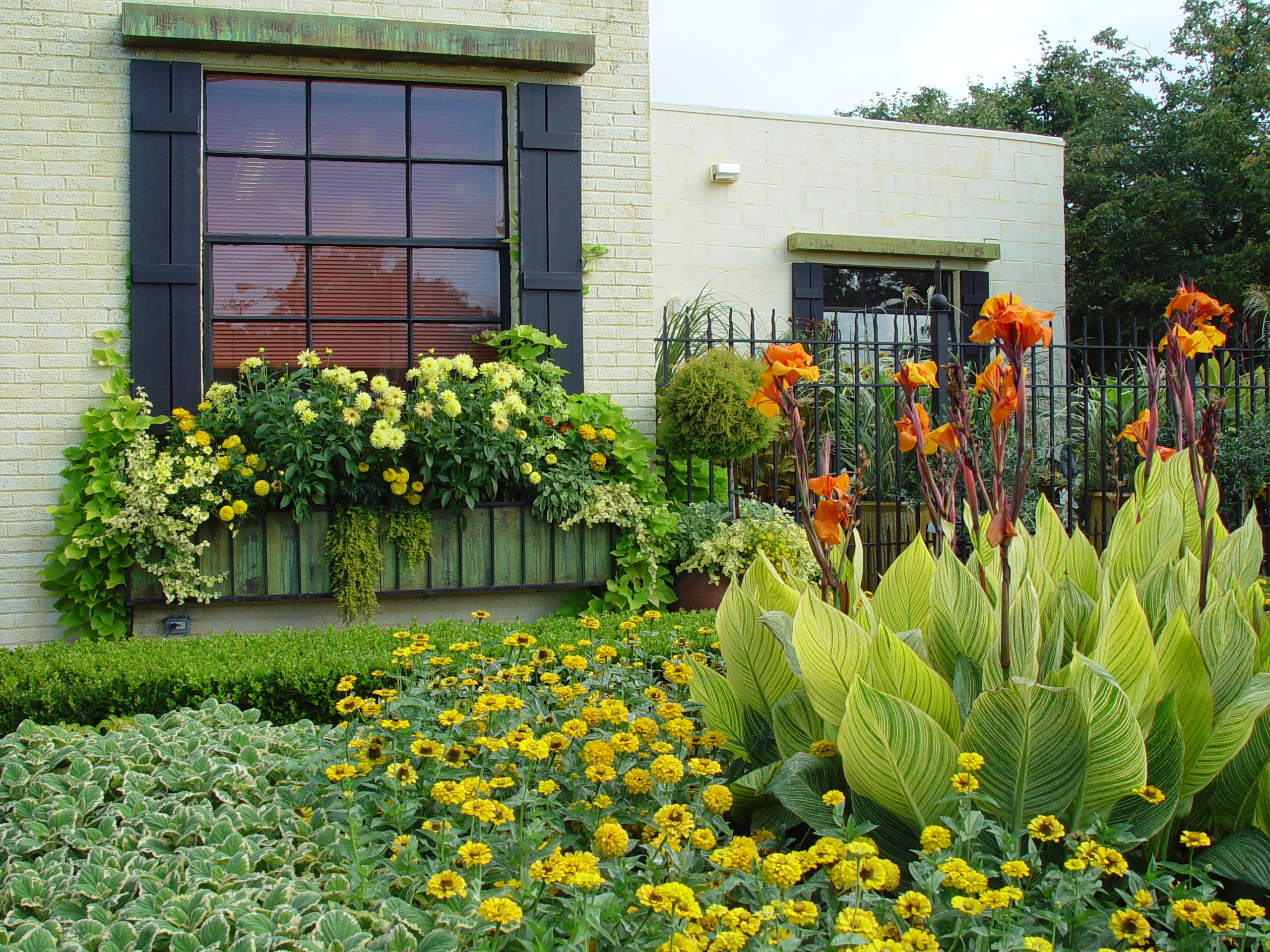
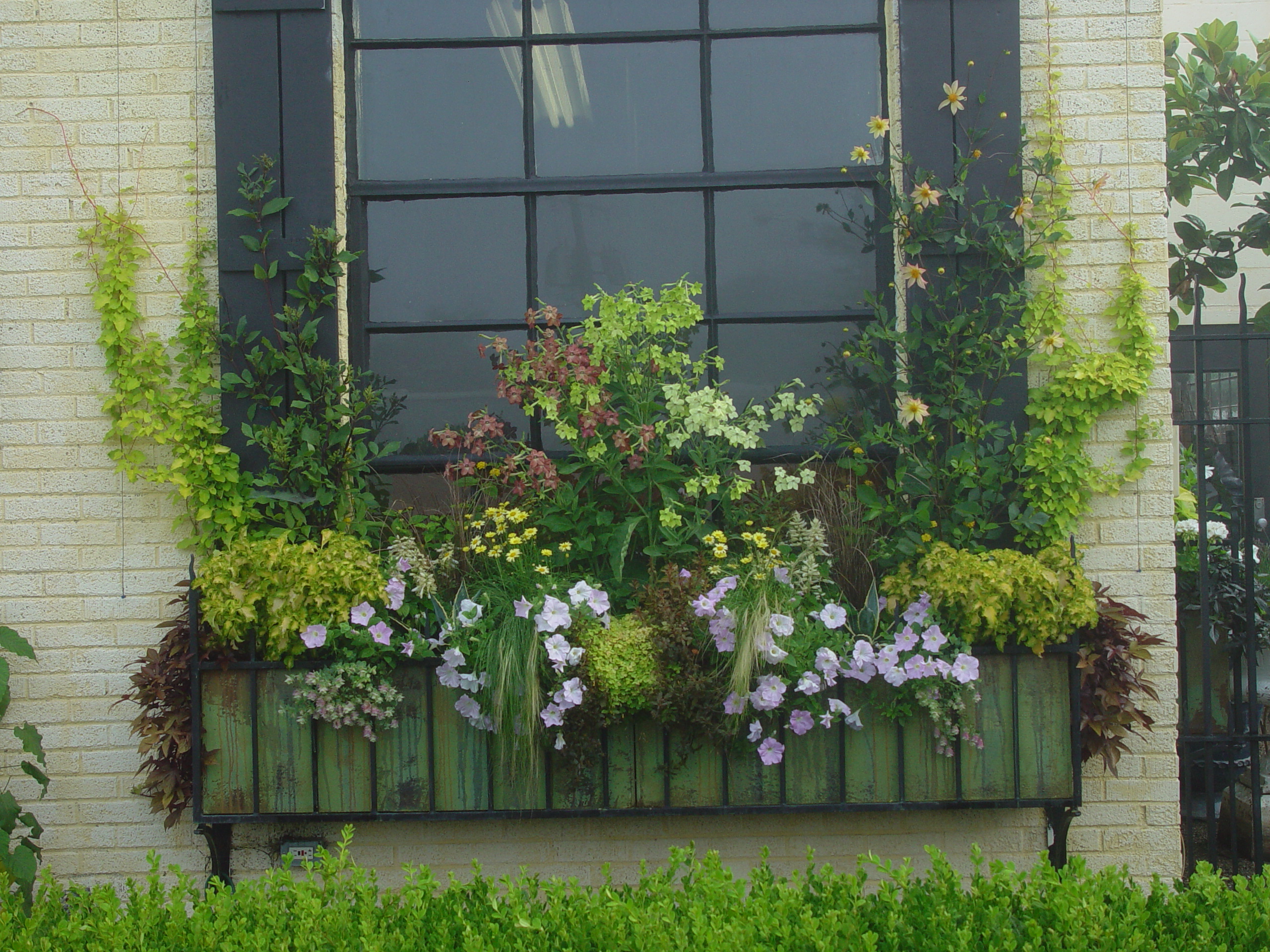
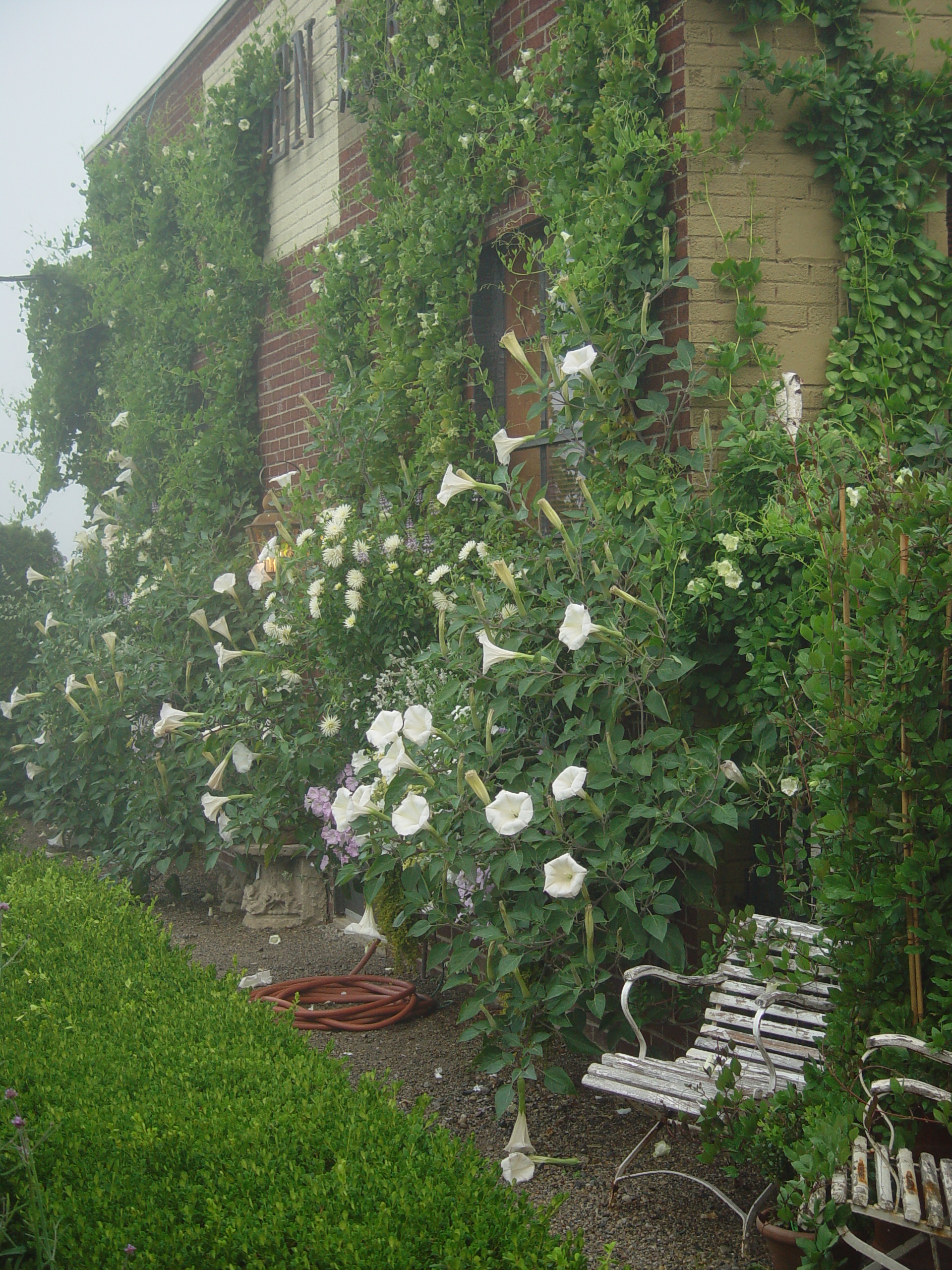
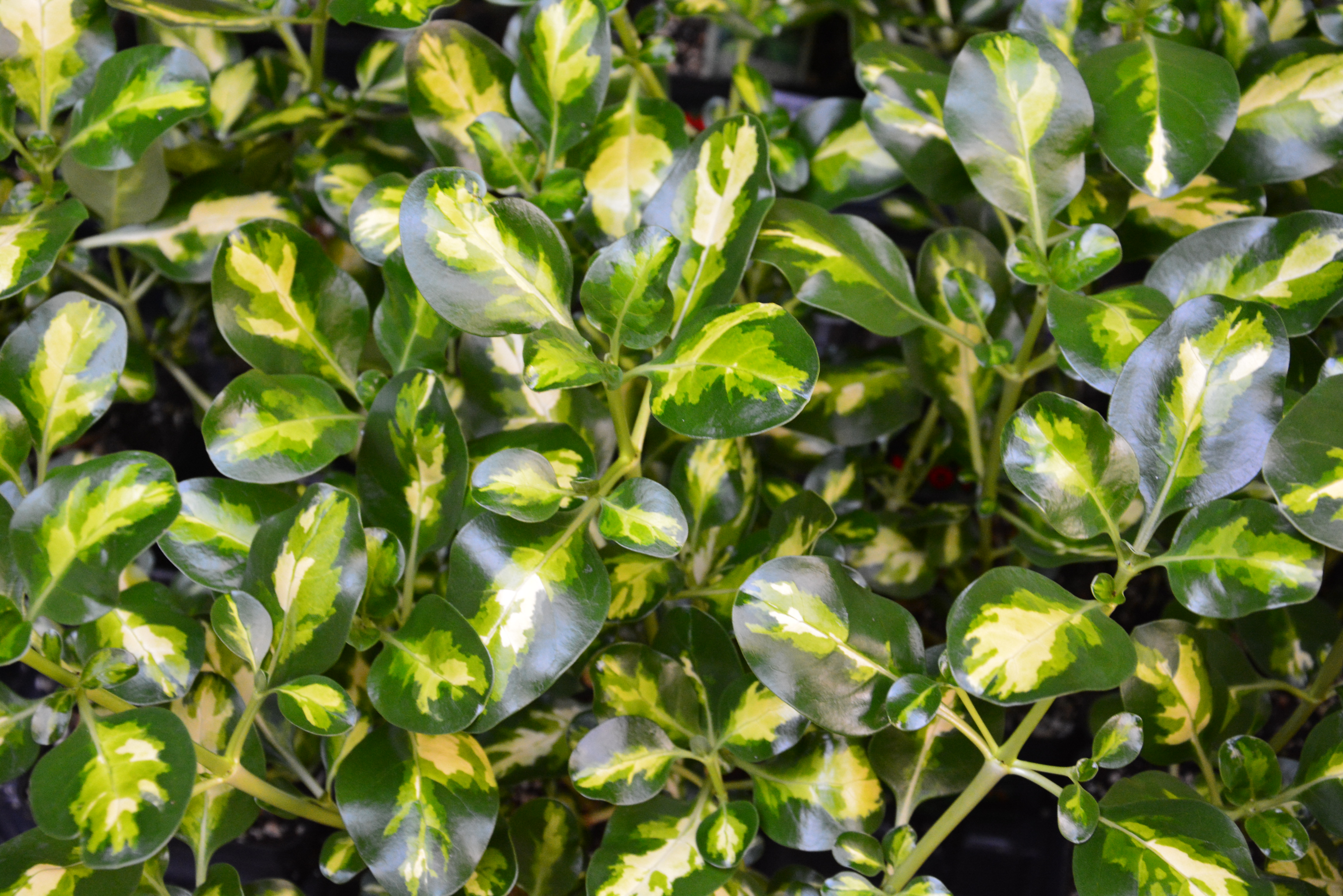
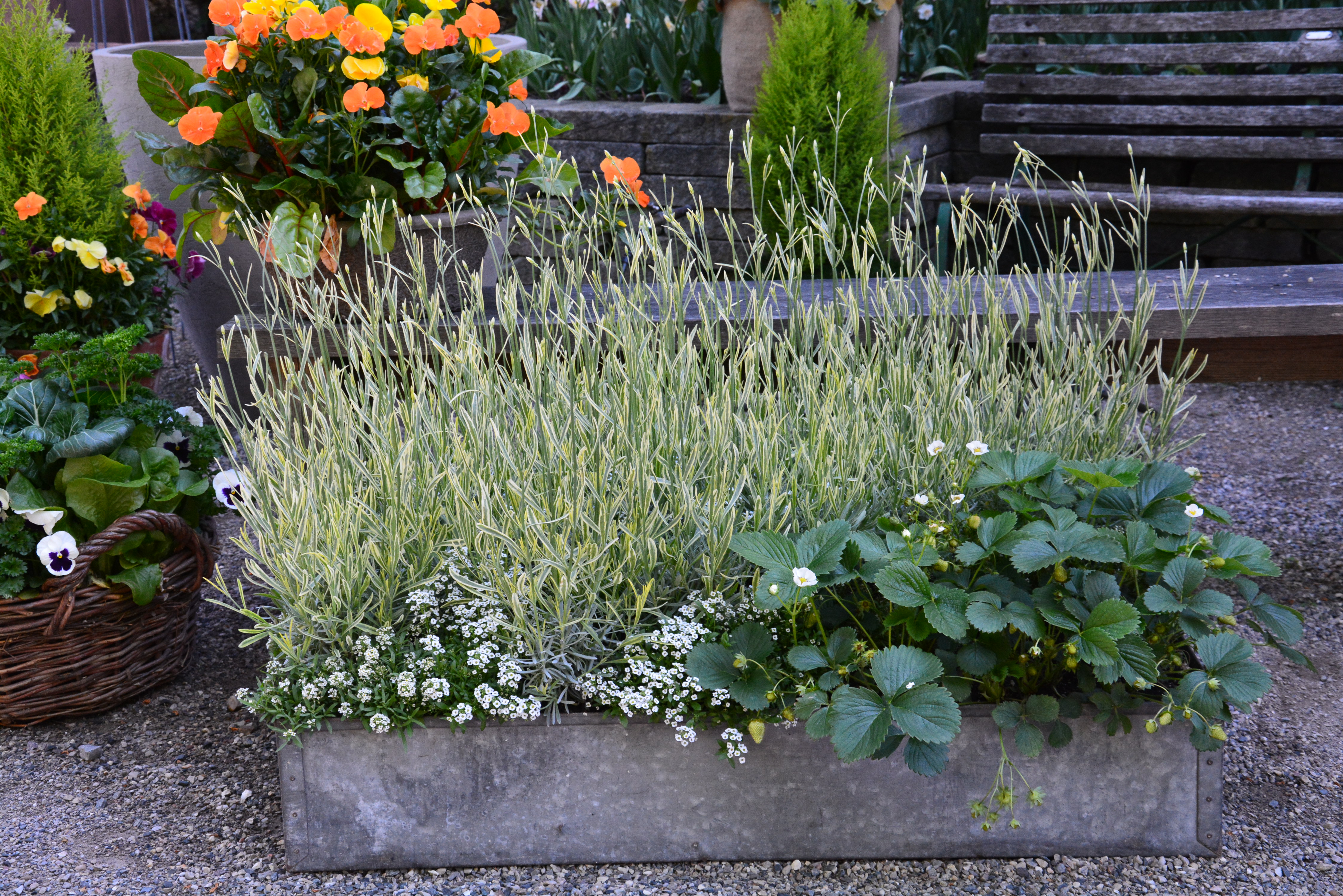
 Some gardeners come to a scheme for planting annuals based on favorite colors, or color combinations. Others like a certain style of planting. Others focus on the size of the flowers, or the color of the leaves. The best plantings involve scheming on as many different levels as possible. I plant the annuals in front of the shop in a different way every year. That way, sooner or later, everyone will see something they like. This is the best part of planting annuals. Every year, there is a chance to try something new.
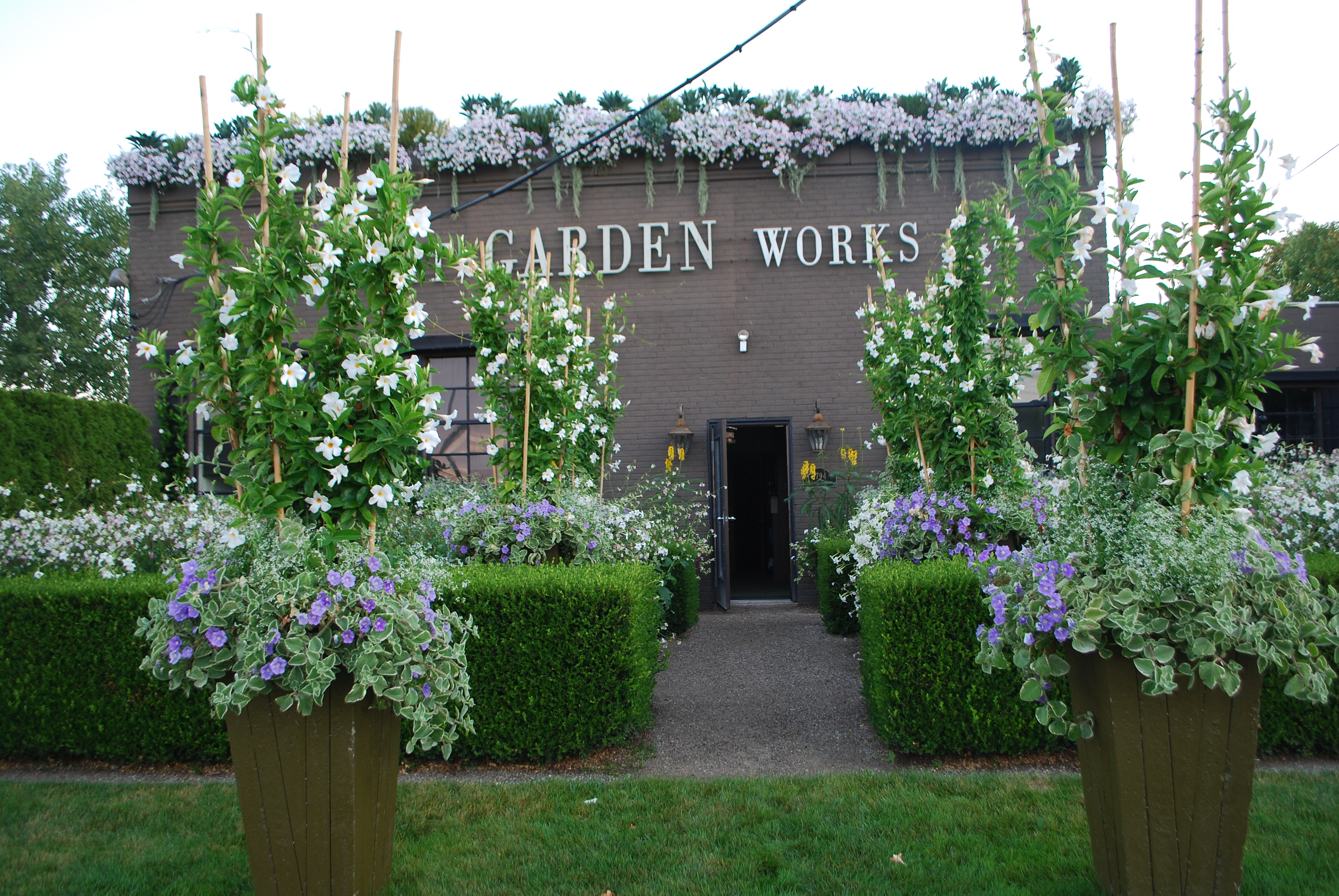
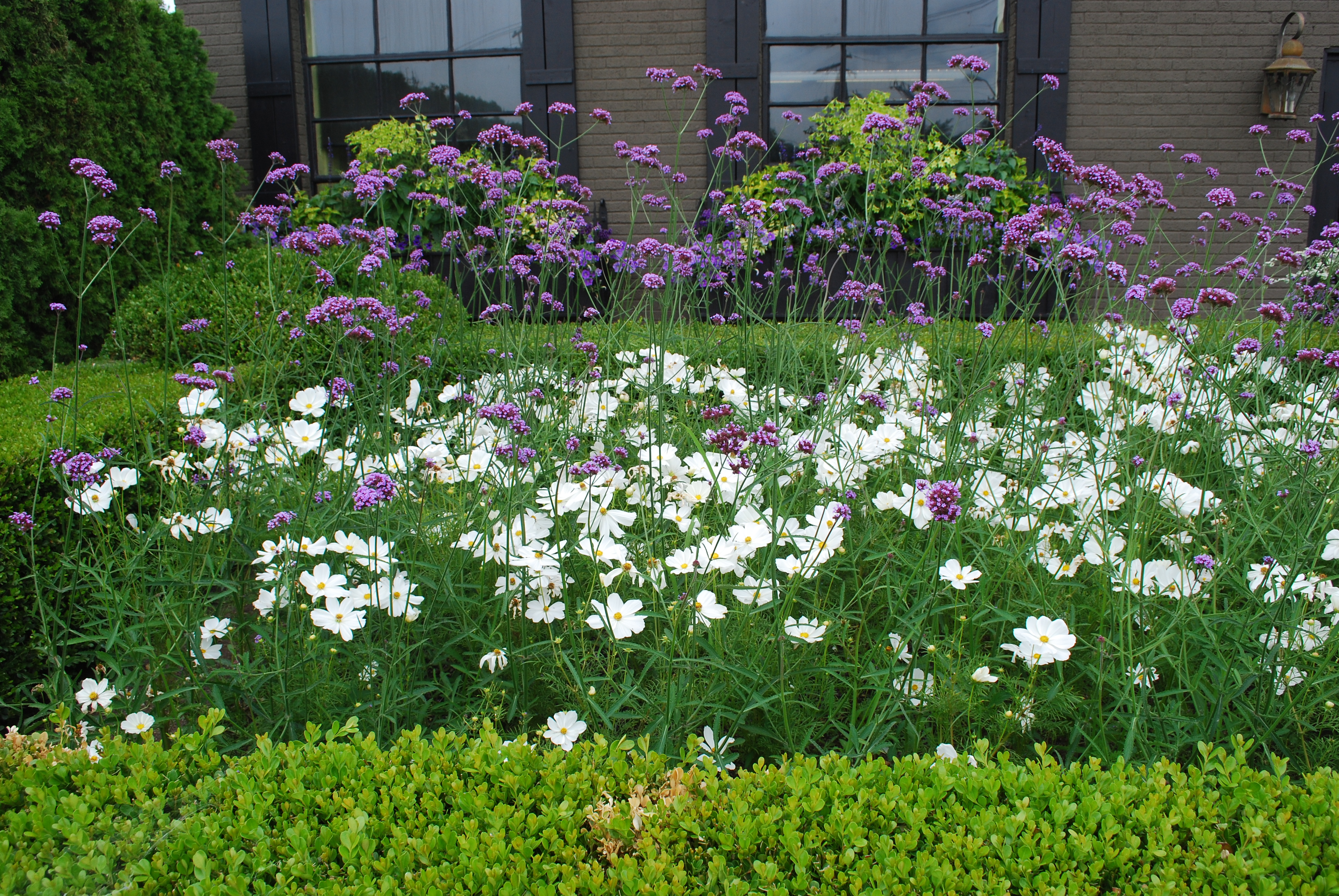
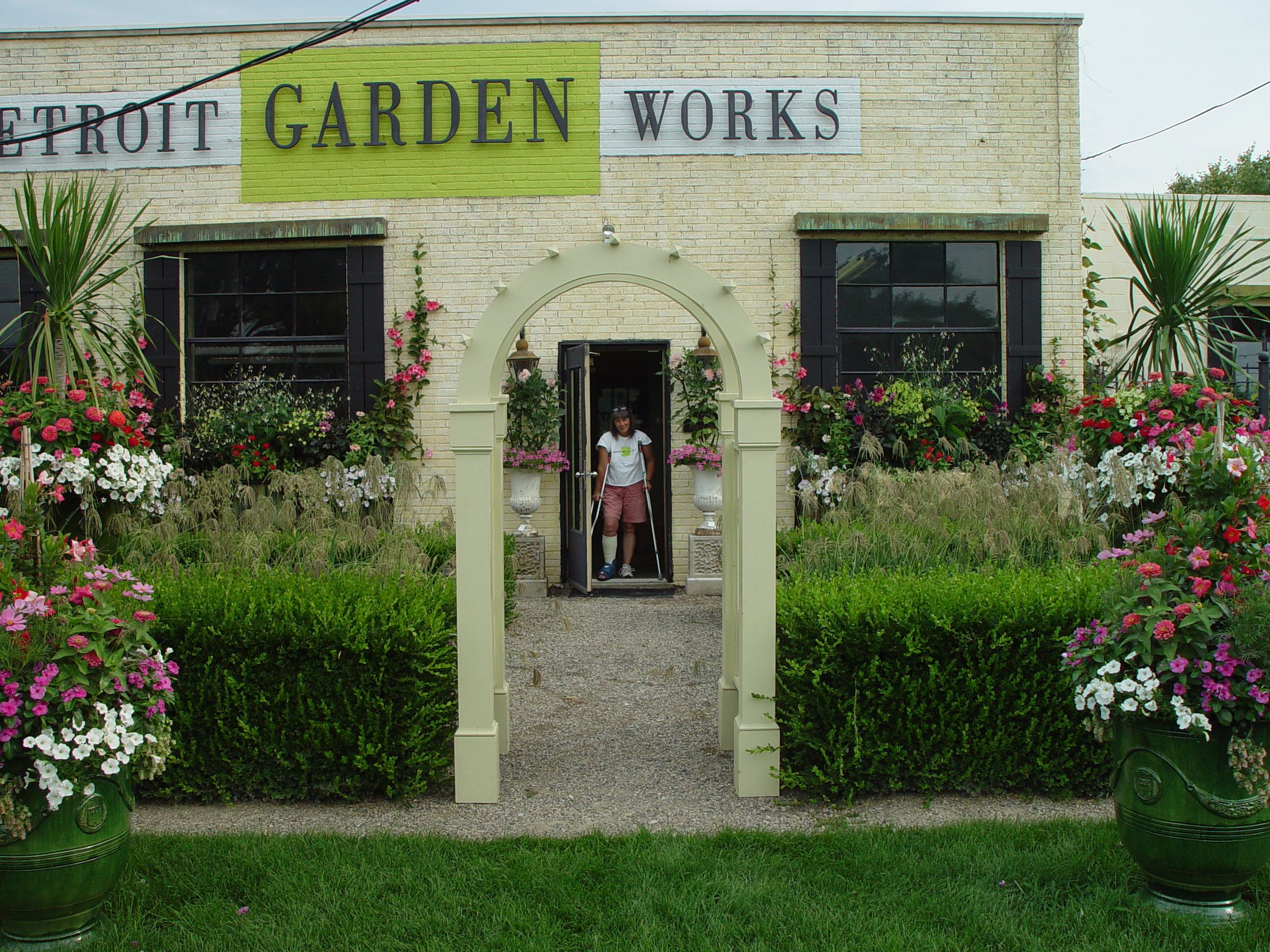
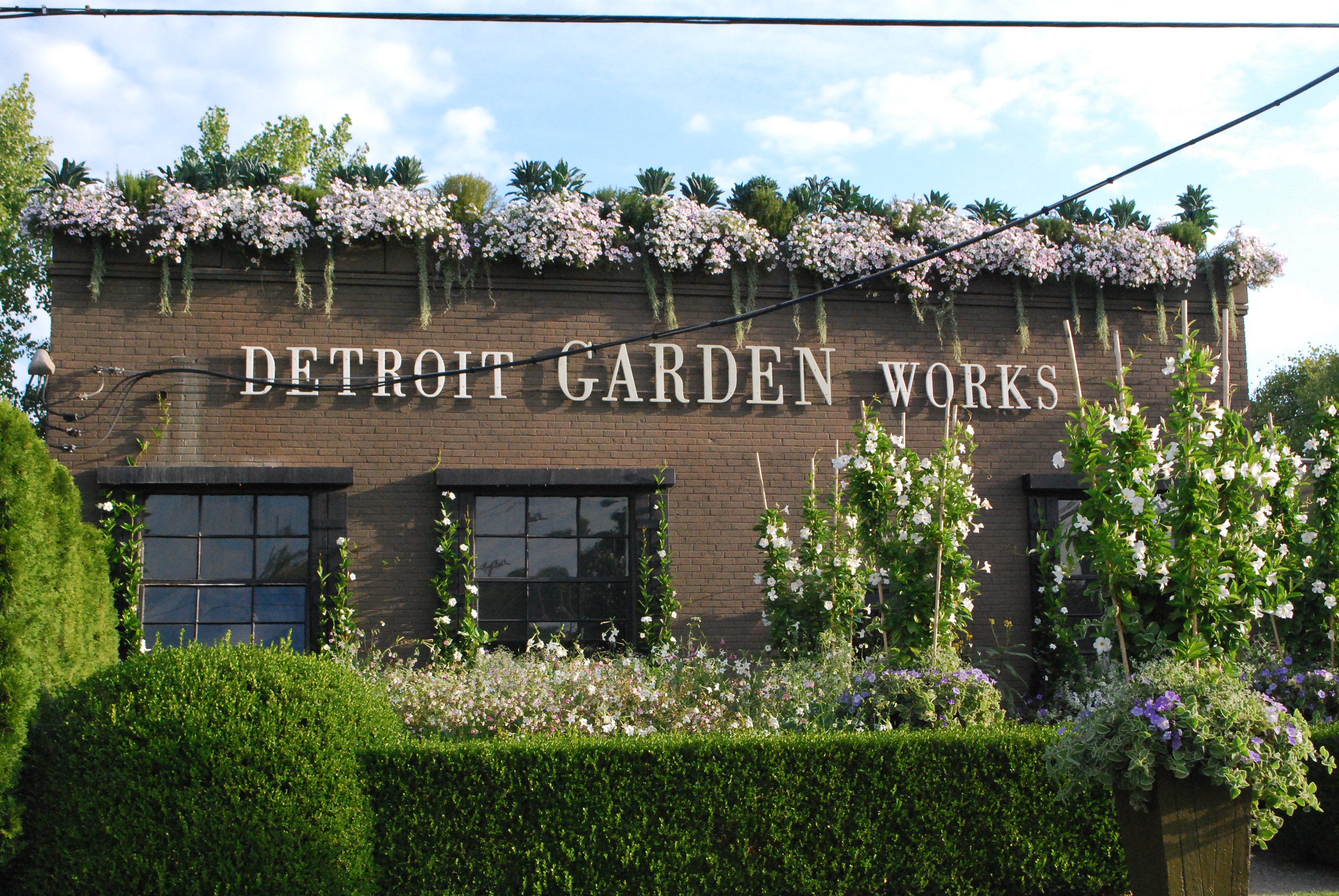
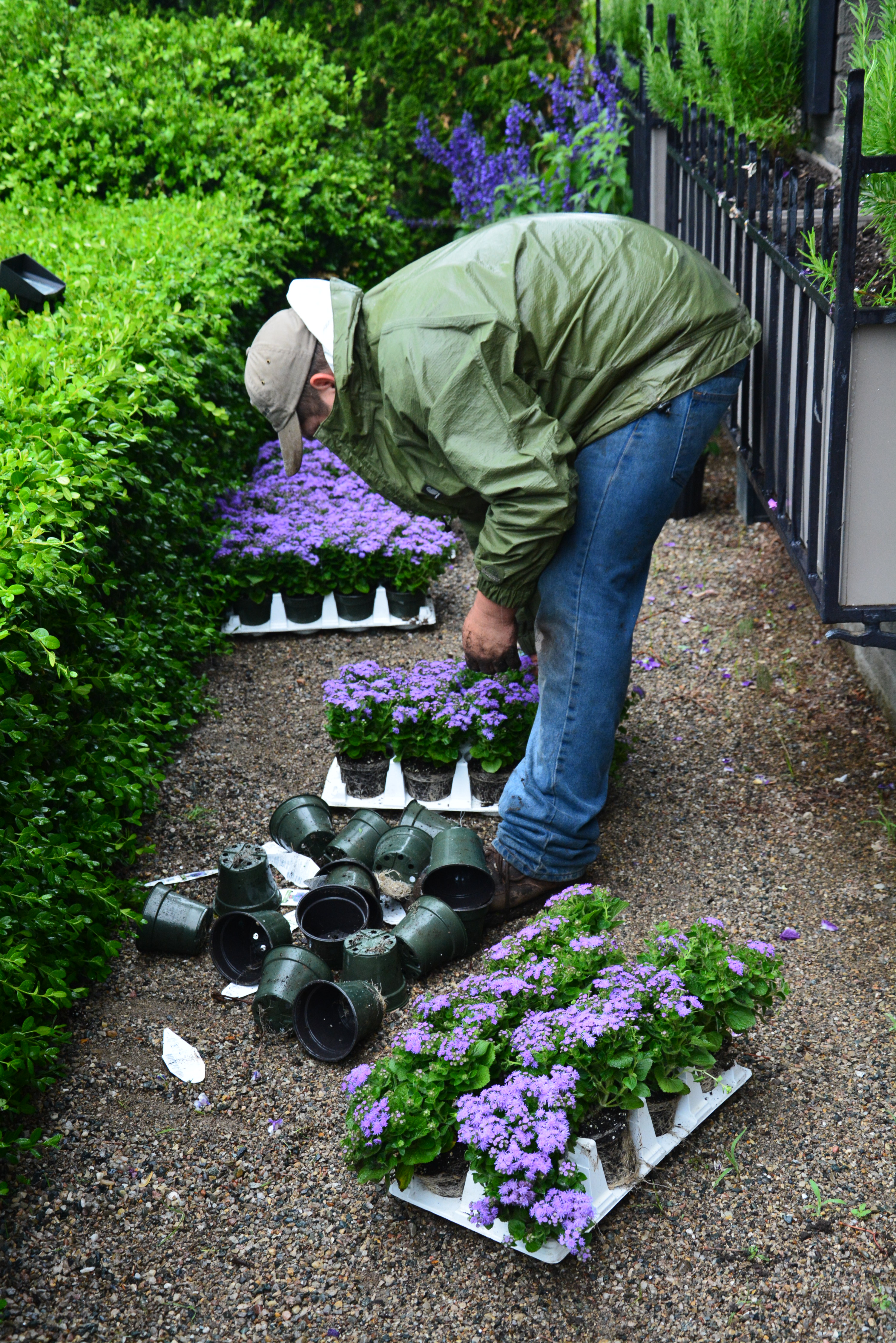
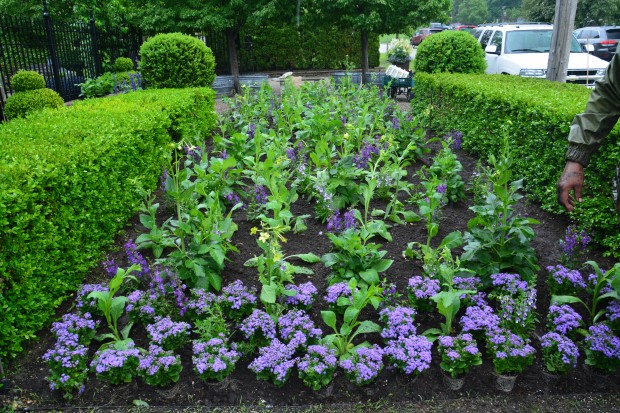 Last year’s scheme was all green. I planted panicum grass inside the boxwood. More than a few customers said it looked like we were going out of business, as we had not cut the grass. Like I say, everyone has a different idea of beautiful. I knew I wanted to do something with purple. The color of this ageratum artist is so luscious. It is a light blue/purple that I call heliotrope blue. Lots of blue with a big dose of lavender. Dark purple has a way of turning dull, if it does not have lively companions. The blue salvia mystic spires has gorgeous blue/purple flowers that are so striking up close. Plant it in a garden, and the color sinks into the background. In the mid and background of this picture, you can barely make out the purple angelonia.
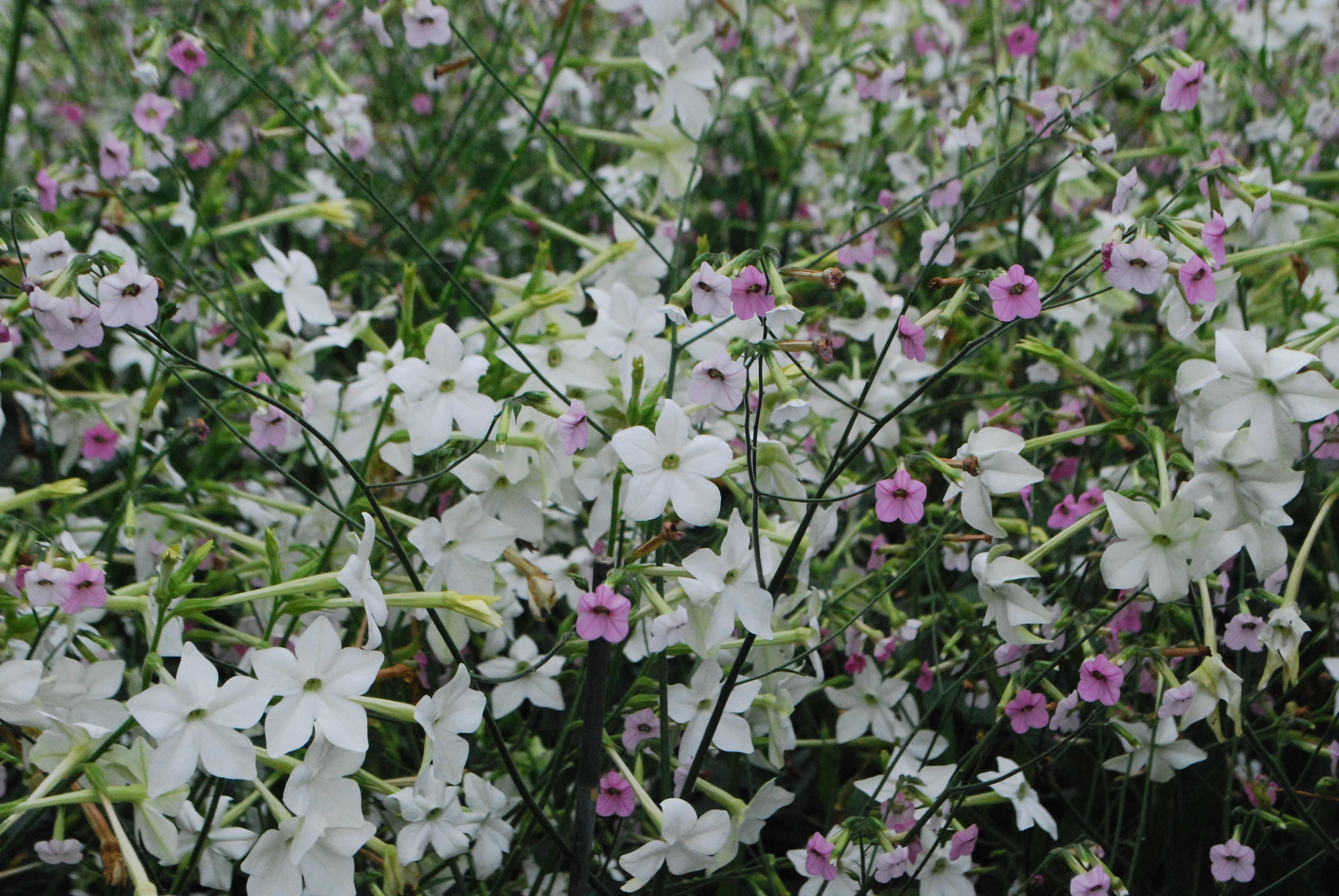
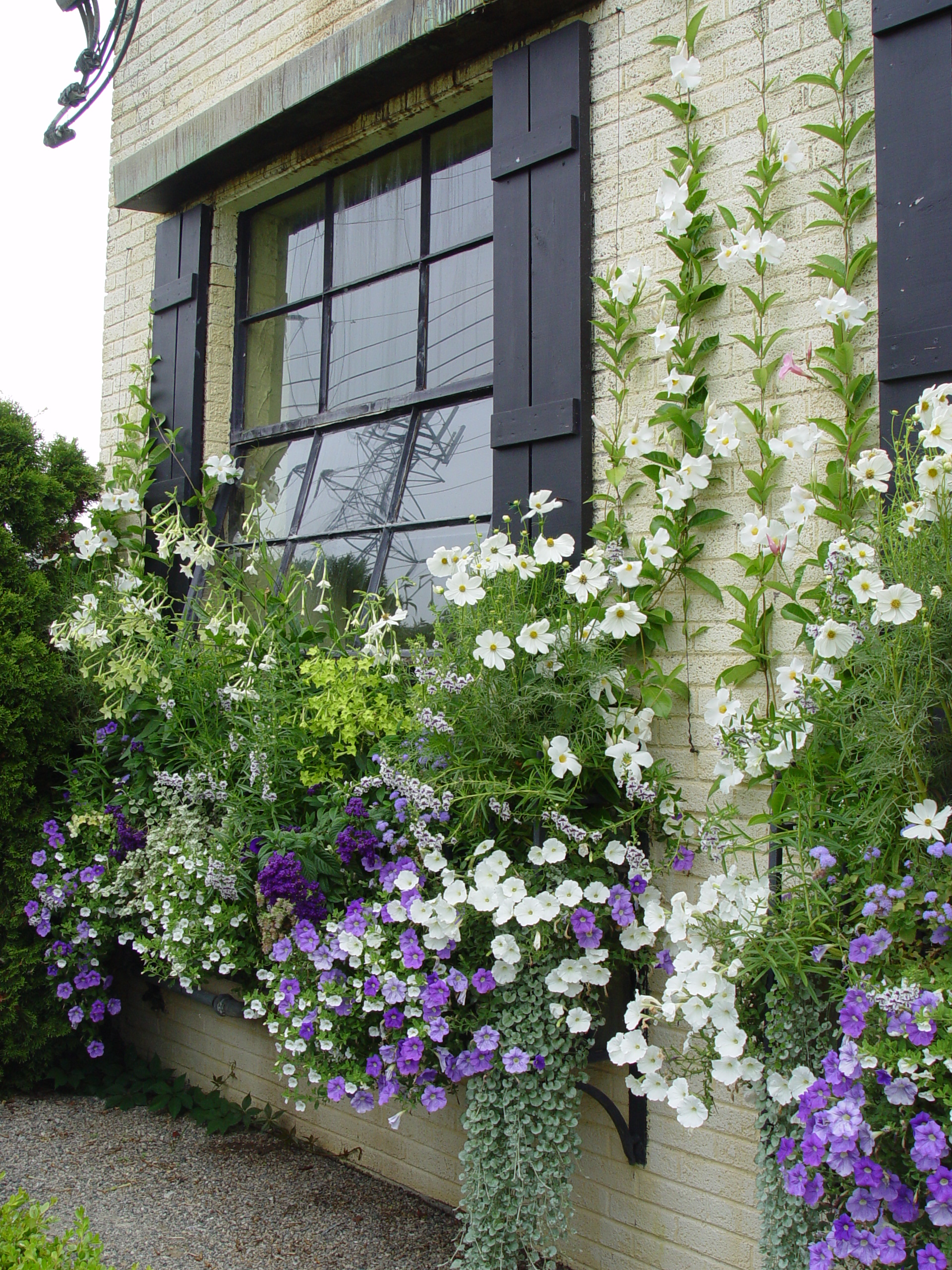
The planting needed some friends that would make that brooding dark purple more visually appealing. We added both lime and white nicotiana to the purple angelonia. This plant is airy growing, simple in flower, and sports big flat leaves. This will contrast beautifully with the narrow leaves, smaller stature and flower spikes of the angelonia. So far, the planting has three colors in the mix.
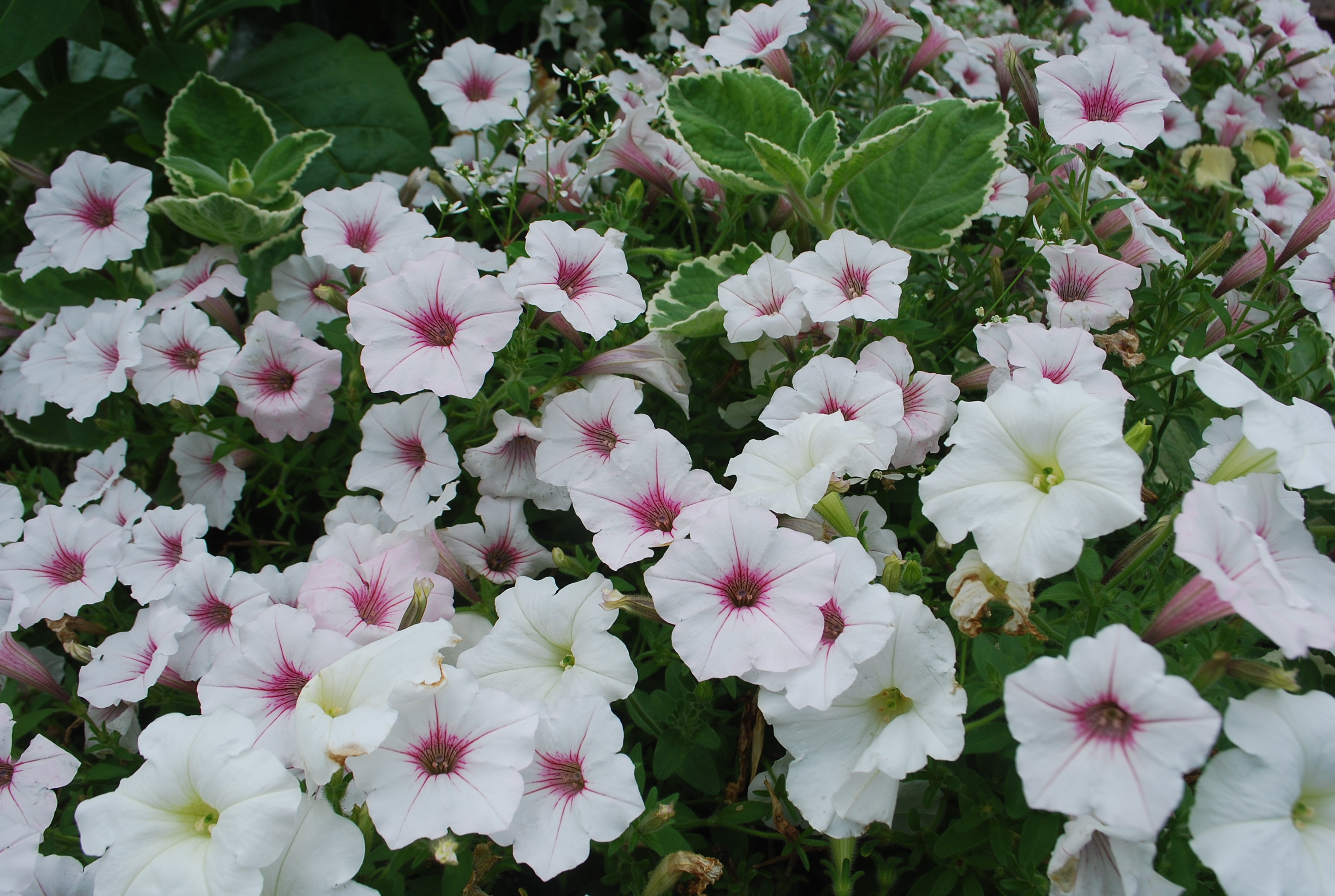
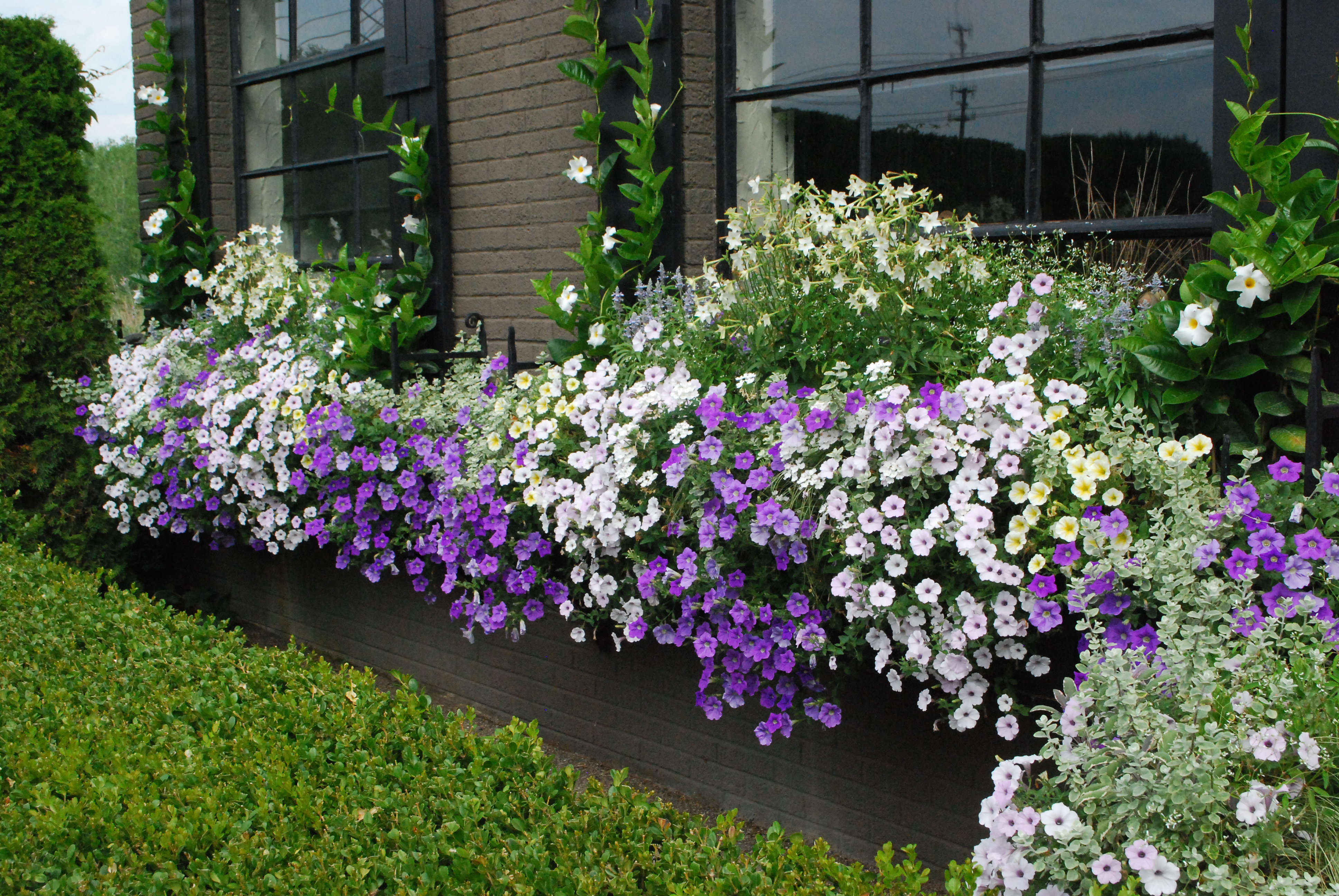
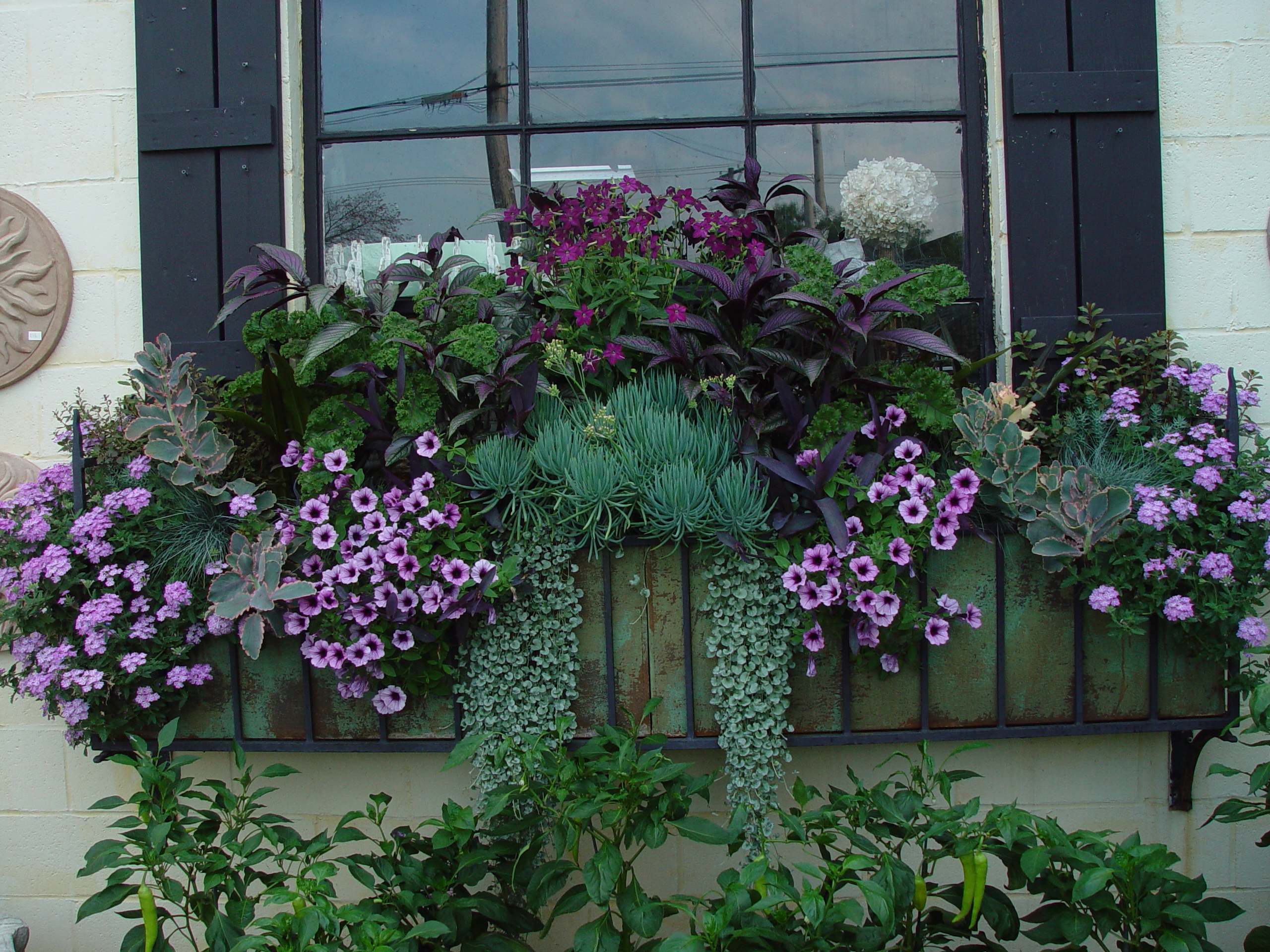
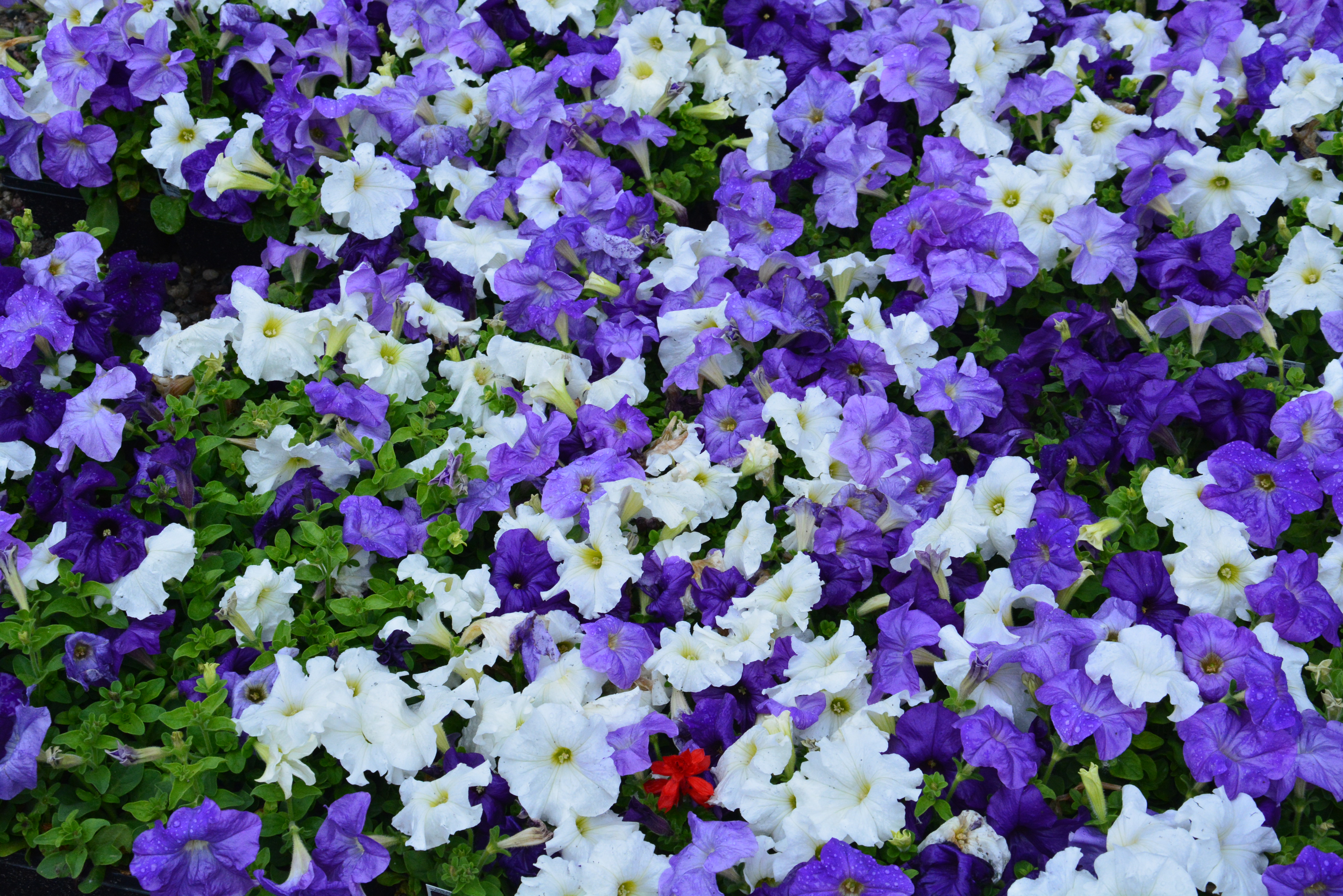 Mixing colors adds depth to a planting. Pictured above is a bedding petunia called “Great Lakes Mix”. The mix of white, medium blue/purple and dark purple petunias is a lively way to visually represent the idea of purple. A mass of white, or another light color can be quite striking. A mass of dark purple can look dull and flat. The value of the color purple, meaning its lightness or darkness, is very similar to the value of many greens in the landscape. Dark purple blends with green, rather than standing out from it. Determined to have lots of dark purple? Underplant it with lime or white. I dropped a floret of a red geranium onto this mix. This is a scheme I have planned for a client. The red will be all the more brilliant, given the purple mix. The purple mix is even more lively, given the red. Color in a garden is never about a color. It is about the relationships that define every individual color in a strong way.
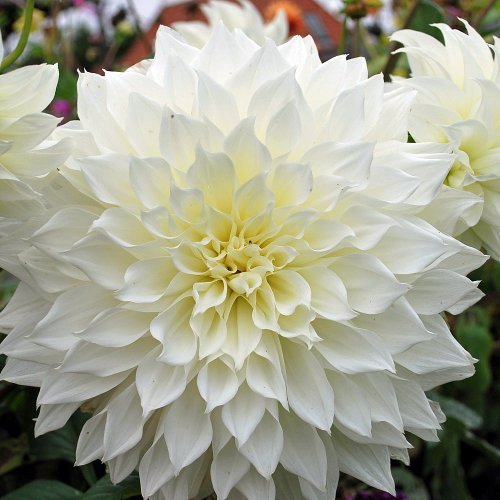 So far so good. But this is a big planting bed, with boxwood that is over 3 feet tall. The garden would need to be anchored by something. A four foot tall dahlia would certainly provide a visual anchor to the garden. This white dinnerplate dahlia called Fluerel has a pale yellow center, and pale yellow green buds. This secondary color will relate to the lime nicotiana. The big flowers will be visible from a car driving by. The nicotiana will soften the look of this stiffly growing upright plant. We will stake it securely, early on. We will do the same with the nicotiana. The stakes are not the best look, but plants will completely disguise them in short order. All there will be to do next is water and wait, and how the scheme is a good one. If the scheme is a good one, all the relationships will be both friendly and serious.
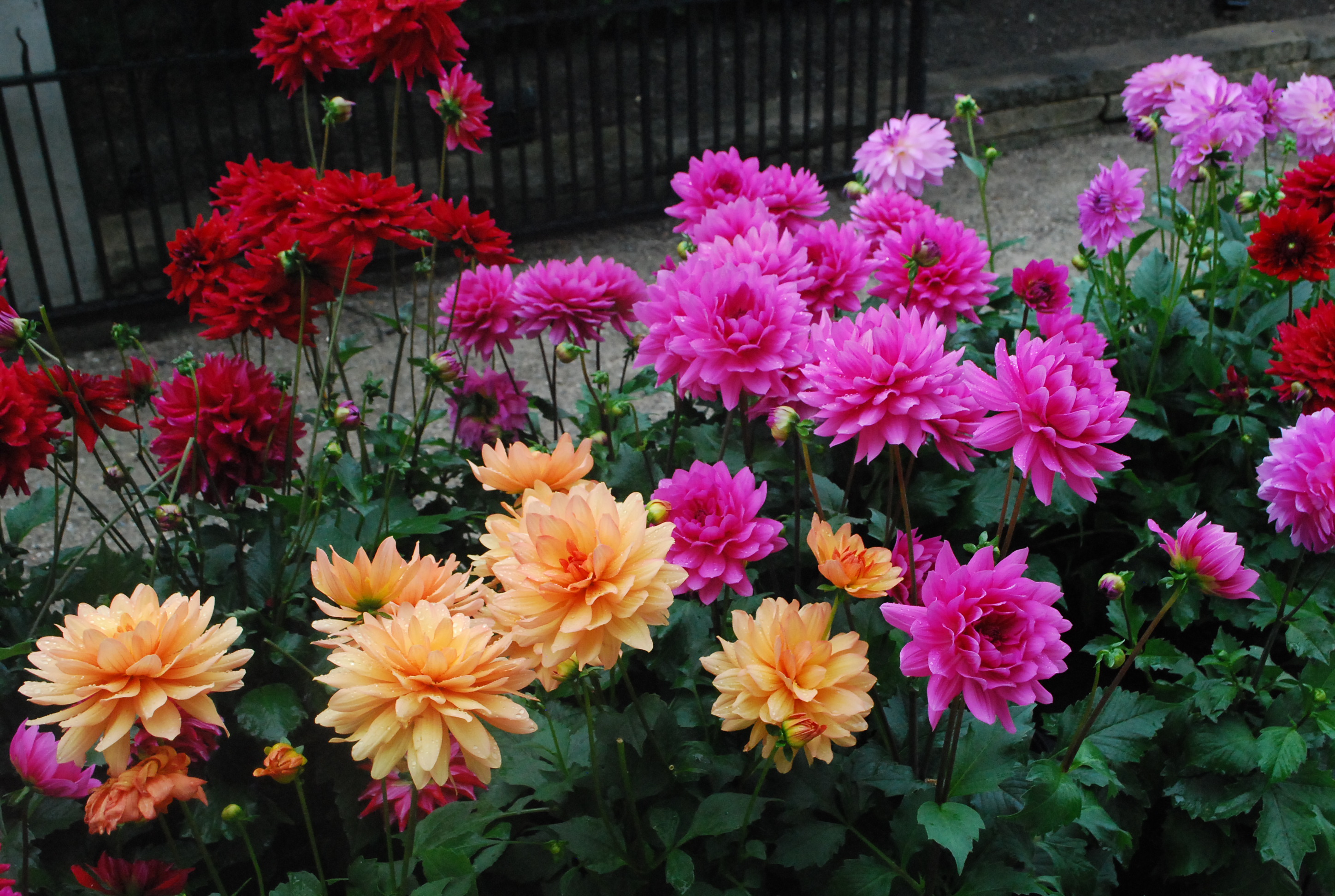
  I saved the beginning of the story about this garden for last. I read the garden blog Gardenista almost every day. Last winter they put up a post about a dinnerplate dahlia called “Cafe Au Lait”. The story came from a the blog of a florist who features home grown flowers. www.floretflowers.com, if you are interested. This dahlia features flowers the color of cafe au lait, naturally. Some flowers are more pink. Some are more towards the cream side. I have always been reluctant to grow these dahlias. They can be too tall, too stiff, and too ungainly. The blog post was very detailed in how and when to pinch them. The pinching early on results in more flowers with long stems. But it was the astonishing color that made me ask Mark from Bogie Lake Greenhouse to order 30 of them for me, and bring them on. The entire rest of the garden is an effort to feature these dahlias.

Tomorrow we will add more ageratum to the edge. I am after an 18″ wide rounded band of this color rolling down to the gravel to border the garden. That low carpet of ageratum may not be prominent for long, but when it does fill in, it will lighten the look of all of the other plants. There is a good while before the dahlias will have much to say. The ageratum border might be the best part of the garden, for a moment. I am still thinking about what will go in the window boxes. Having and taking the time to look at a garden before proceeding is part of the pleasure of the process.