I am having dinner tonight with the Baumgartners; I have designed and landscaped for them for 25 years. They have sold their house, and are moving out east to be near their children. Their new home will on the fourth floor-so no landscape responsibilities. A small balcony terrace will certainly not provide them with much of a garden. But what people need in their lives changes with circumstance. Though they will miss the house and garden they lived in, and enjoyed for so many years, it is time for something else. The extent to which they loved their place is exactly the extent to which it is proving difficult for them to let go. I have them nearby another 2 months-the time it will take to get their new place ready for them.
I have talked on the phone with the new owner; though she seemed to have a genuine appreciation for all that came with that house, I could tell in one instant there was a changing of the guard in progress. I doubt I will ever hear from her again. I regret having to let go of what took so long to accomplish, and so much effort to maintain-and what provided so much interaction between the B’s and I. I also understand that I am pouting about something that has even odds of never happening. The landscape under new stewardship may prosper, and enjoy a good future-who knows?
A month ago or so I was shocked beyond all belief to discover, driving by, that a client had ripped out a landscape of which I was very fond, and replaced it entirely. The shock stayed with me for a few days. The lesson: once the work is done, it no longer belongs to me. The only time that any project belongs to me is while I am designing and making it. I collect books with old plates and prints of gardens. Many of those gardens do not exist any more, except on the page. Sometimes I look at those prints with a magnifying glass, in the hopes they will seem more real. What is very real is my relationship of 25 years with the Baumgartners. That relationship is what really matters here-not the lead pots on the porch, or the katsura tree, or the magnolia now on a par with the upstairs bedroom windows. I hate to give them up worse than giving up the garden-of course. Its just easier to think about the loss of a landscape, than a loss of two good friends.
Another client this week finally lost a gigantic American elm to Dutch elm disease. She had battled the disease tooth and nail for many years. The generous bed of baltic ivy underneath its canopy had taken umpteen flats and more, and many years to establish. She asked me to come and look at the spot; the enormous dirt space looks like a stain. Every vestige of that tree and its ivy is gone. Though we will sod this area for the moment, it is clear something is missing. The old perimeter landscape most definitely looks shaped, and has grown in tandem with something which is no longer there. It will not be easy to design what should be now.
Beginnings and endings are an ordinary part of every landscape. Everything has a lifespan. My neighborhood is in excess of eighty years old now. The big maples in the right of way have been in serious decline since I moved there. Whenever there is a storm with high winds I am afraid to drive the last five blocks home. Sometimes I kill things in a matter of days; I forget to water, or some such thing. Sometimes I let go too easily, or conversely, I wait too long to let go. Though an ordinary thing in a life or landscape, it can be very tough to let go.
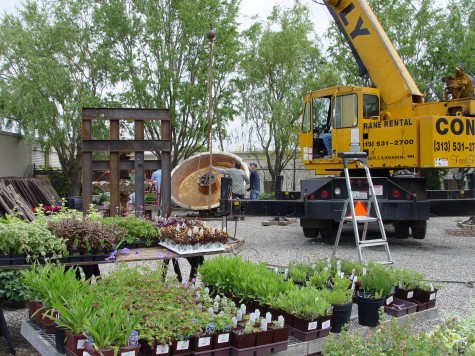
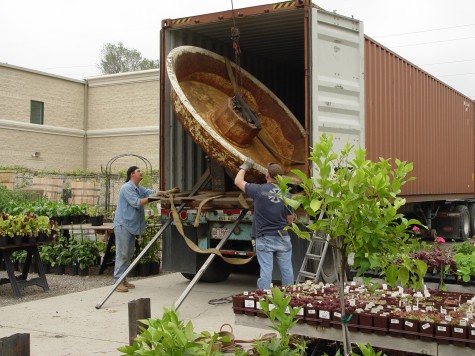 The biggest headache? The basin was too large to sit flat on the floor of the container that would bring it to the US. So, some 6 weeks and plenty of money later, cast iron crates had been welded up for the basin, and fountain. The fountain centerpiece had rusted tight to the basin; it was after all, 130 years old. The centerpiece was painstakingly removed with the help of an acetelyene torch, and then welded to its custom made steel crate.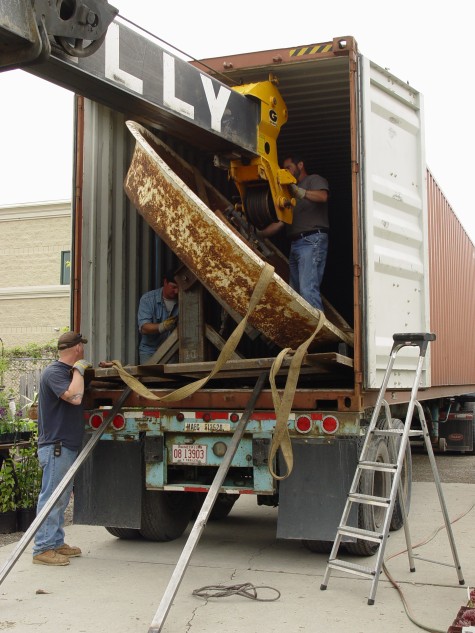
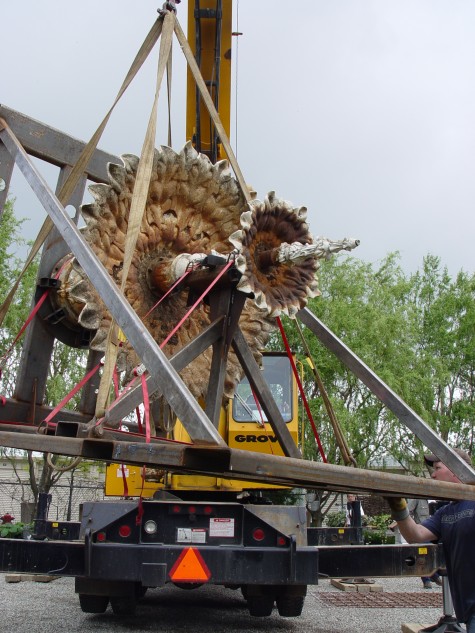 It was an operation the likes of which I have been involved in rarely; the entire day went to uncrating, and positioning that fountain. The crane people were incredibly professional and focused. At some point during the day I actually looked at what had been the center of so much commotion. It is one the most beautiful large scale fountains I had ever seen. The pattern of the cast iron leaves is as beautiful on the inside as they are on the outside-this a hallmark of very fine ironwork.
 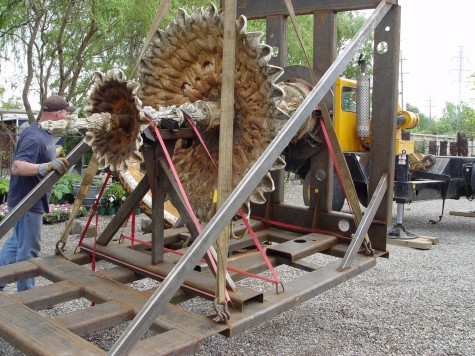 The torching and unbolted to free the pieces from their steel crates was slow and tedious.
 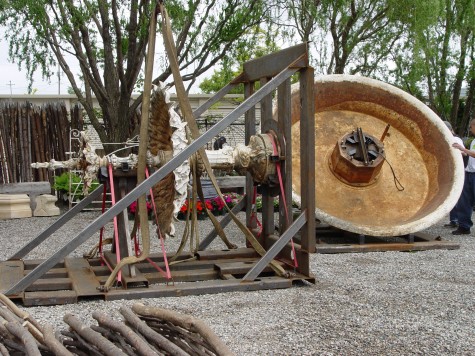 What was I thinking, that I had to have this? I had scared myself, no doubt. But today I would say once in a while something comes along that makes you feel like speaking up. Who wants to spend time contemplating their lost opportunities?
 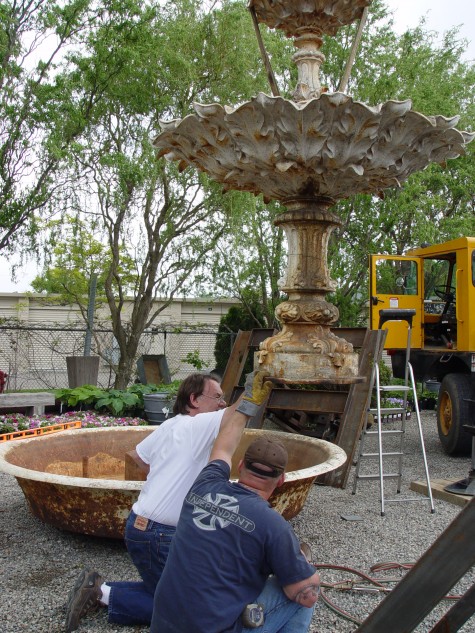 Buck helped out getting the basin set perfectly level, as we knew there would be no moving it once it was placed-except to a new home. The boom crane held the fountain piece aloft until both pieces were perfectly aligned.�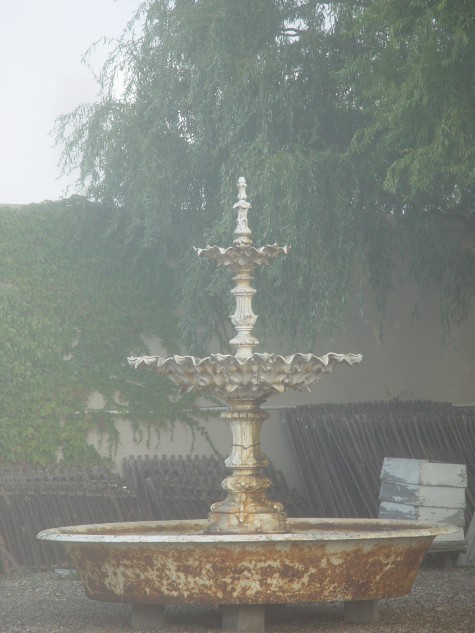
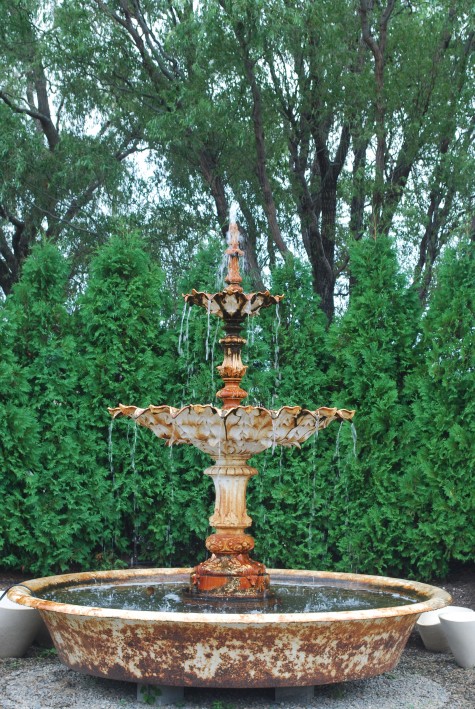 In the meantime, it is my pleasure to look at it every day. In spite of everything it took to get it to me, I know when the day comes, it will be very tough to give it up. Funny, that.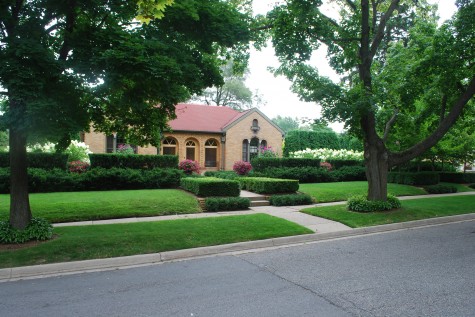
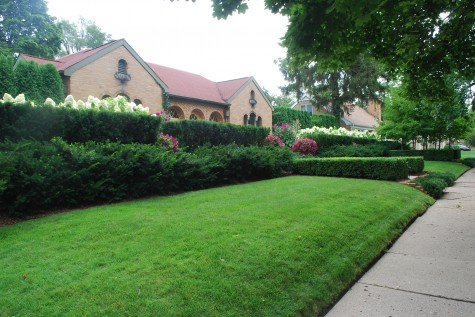 For the better part of six years I did nothing to this yard except bark the existing perennial beds, and mow the grass. It took all my energy to handle my work-or so it seemed. I am embarrassed to say that somewhere along the line I got an anonymous postcard in the mail: “It is hard to believe that a person whose career is landscape would have weeds six feet tall in her front yard”. No matter the delivery, the person had a point.
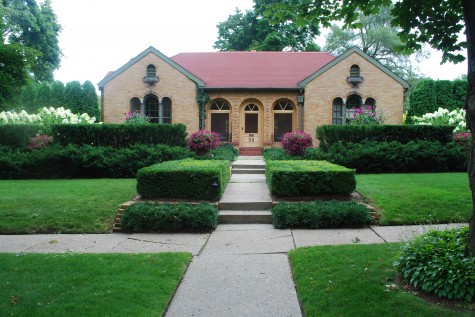 But perhaps even more importantly, I was ignoring the fact that whatever I did at home would need time to come of age-and that perhaps I would want to still be around to see that. Planning my own landscape was agonizingly slow. I had no problem designing for others; I was a wreck designing for myself. Slow turned out to be fine; who can do everything at once anyway? Getting started-that was the key.
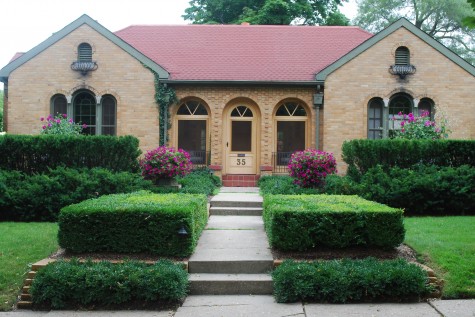 The one hundred Hicks yews across the west and down the north side came first. Given the slope of my property from the south to the north, time would prove to be an essential element. The hedge is 4 feet tall on the south side, and nine feet tall on the north side-but every one of them is level with the horizon. This hedge took eight years to grow in.
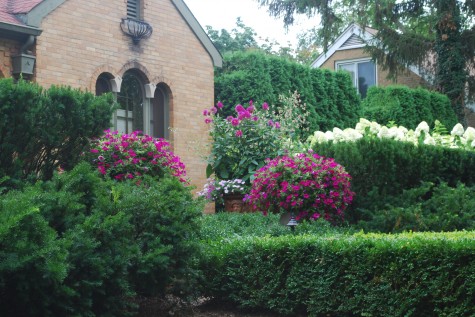 The boxwood was even slower growing; the 18″-24″ plants I put in the ground were already seven years old when I planted them. The shaggy densiformis yews are the newest evergreen addition; they have only been in four years. I like all this evergreen; I can successfully maintain it. I knew I could never devote the time needed to a big perennial garden-why come home and be frustrated about what isn’t done? Two giant blocks of Limelight hydrangeas, and 6 pots of flowers give me perennial garden pleasure, in a manageable form.
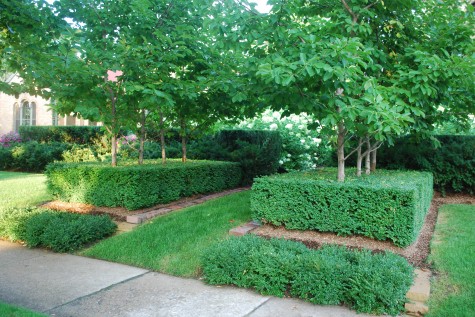 I planted this city-mini allee of Yellow Butterflies magnolias for Buck-he loves yellow. The boxwood is a big evergreen groundcover. The petals falling on this boxwood is one of my garden’s best spring moments. The mini-boxwood strips in the foreground-this year’s landscape project. The slope of the ground here made it difficult to mow the grass. The magnolias have grown considerably, and the shade they cast was not optimal for lawn. Wall stone behind them retains the soil, and in a few years, will be invisible.
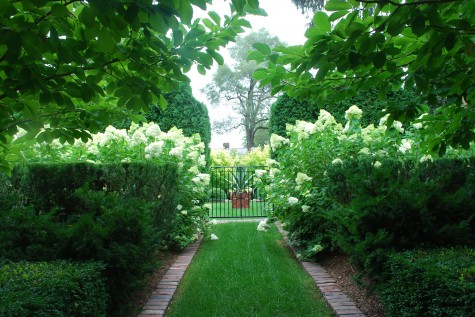 The magnolias were planted to frame the view to the side yard. It is hard arrange a long view on a city lot, making visual use of the neighbor’s mature elm adds much to the illusion of distance.
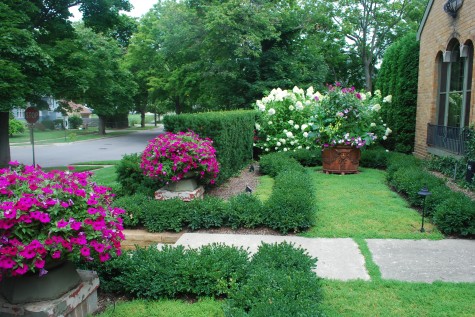 The big Yew hedge divides my public landscape, from the house landscape. The big pots are centered in front of big panels of windows; I have good views from inside. The ground is carpeted with herniaria glabra-rupturewort. This plant grows like thyme, but is much more water tolerant.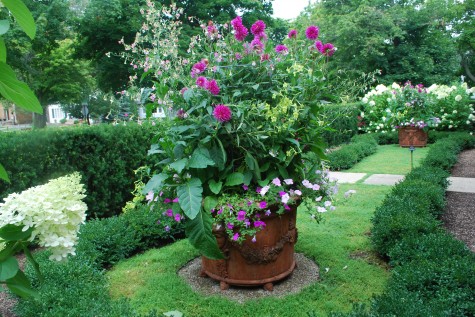
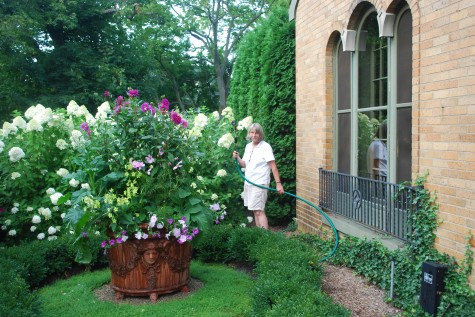
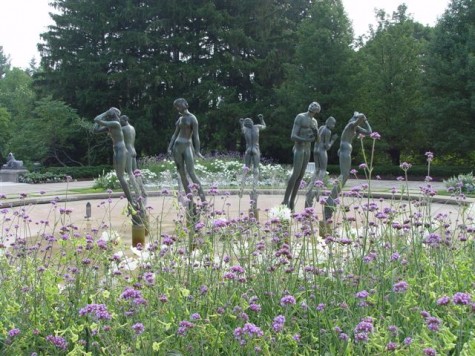
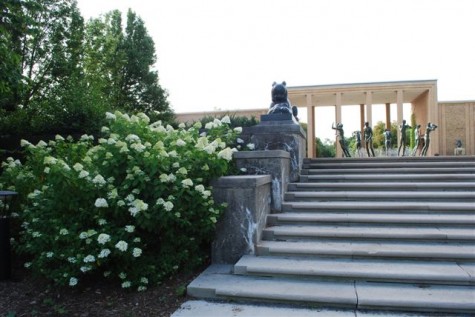 My last visit to the landscape at the Cranbrook Academy of Art was to deliver the flowers and decoration for a wedding and reception there in August of 2007. I had for several years prior donated the summer planting around the Orpheus fountain; this was a job I loved doing. This area adjacent to the stairs had been dirt and more dirt for some years; my client and I split the cost of a planting of a group of Limelight hydrangeas. I am happy to see they seem to be doing fine.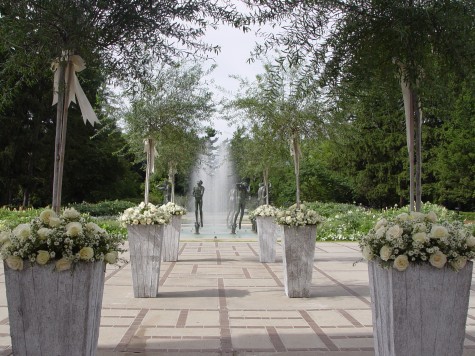
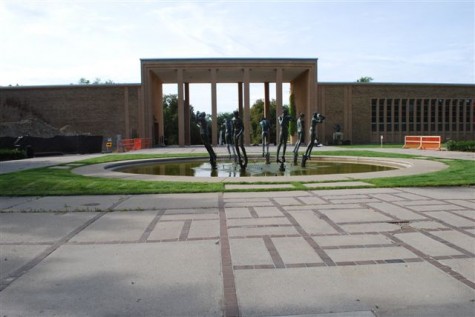 The Art Museum is under extensive renovation, so this year, the garden areas are sodded over. The fountain is closed.
 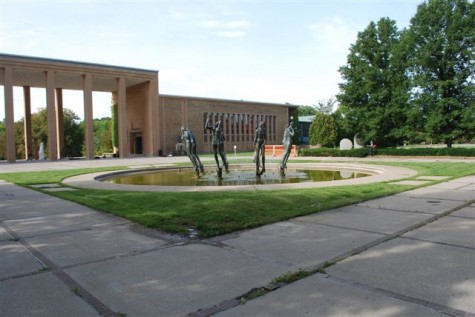 I try to tread lightly with the landscape where a sculpture is concerned. How easy it is to cross over the line trying to compliment a sculpture, and end up confusing the visual issues. Though I knew it would be closed, I was not prepared for how closed. But seeing it in its gardenless state, no water in the fountain, no sound and sparkle, had its good side. Its always a good idea to consider whether an area is all the better for your not touching it. The simple word for this is “editing”; some days I am better at this than others. Where flowers are concerned, I have a very tough time.
 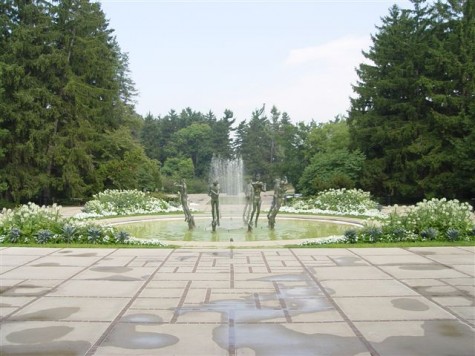 Planting white flowers is a good way to proceed cautiously. Interestingly enough, I was told the traditonal summer planting here involved a short red salvia. I had no problem ditching the red flower thing, but I thought a tall planting would compliment the sculpture and water better. I mitigated the risk with the white palette.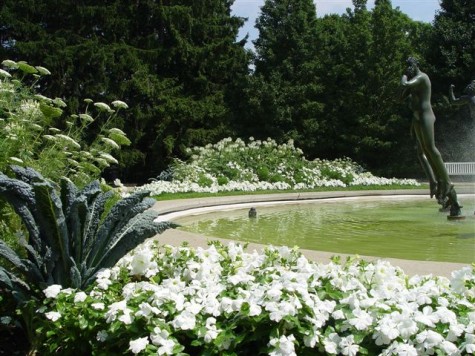
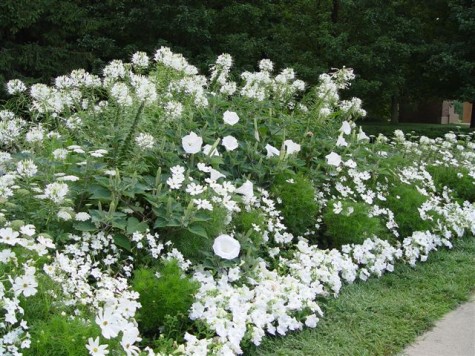 Another year I added an upright white datura, and white sonata cosmos to the mix. The white petunias did a better job of softening the lawn line.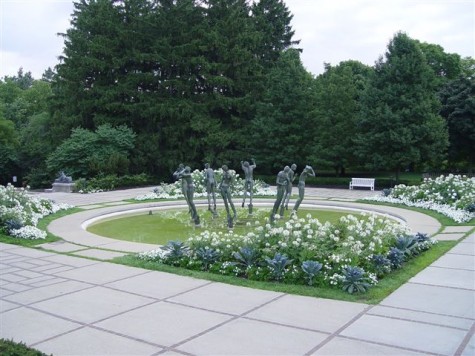
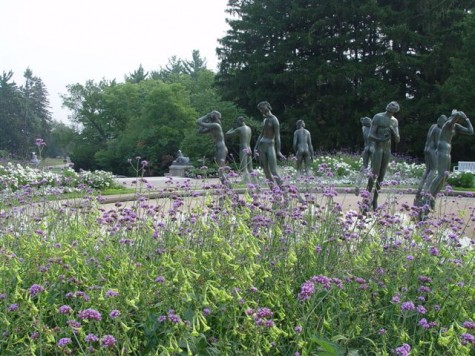 Yet another year, I added some verbena bonariensis, some nicotiana langsdorfii, and some grey cirrus dusty miller to the predominantly white mix. I do so like the cloud effect of the verbena flowers.
 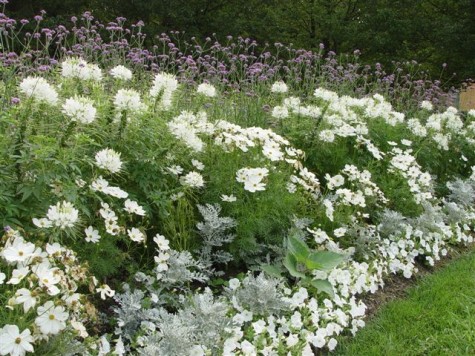 White gardens are however, unforgiving of a lack of maintenance. Dead white flower heads do have a distinctively brown-dead appearance. For this reason, I rarely plant white geraniums unless I am sure there is a maintenance fanatic waiting in the wings-and even then, a heavy rain will spoil the blooms in such a dramatic way. I knew the planting would not be the end of my involvement here.