A dinner party last night at which I was a guest proved to be a very lively affair indeed. Our host has an indisputable and long standing passion for gardening; it was her idea to invite a few others of like persuasion for the evening. Though her living room is spacious and elegantly proportioned, she sequestered the eight of us in the library for champagne and amuse bouche. This intimately sized room, enclosed by panelled walls lacquered tomato red, is furnished with art, books, and comfortable seating arranged to place us directly in the huddle, as her husband Arnold would say. It was not long before before the conversation got to simmering. Two gardening families represented are avid vegetable gardeners. Though I have no interest in growing food unless for ornamental reasons, I am very interested in the culture and community that revolves around growing, cooking, and sharing food. As my garden gets better in direct relationship to how well I listen, I listened. This discussion began, naturally, with the seeds.
One gardener is quietly and amiably obsessed, among other things, with the history of vegetable cultivars. He comes from a family who owned a working farm. That farm today is a historic site, owned, maintained by, and a resource available to, the surrounding community. He searches for seed of old and rarely grown varieties all over the world. A local grower takes these seeds, and produces small starts ready for planting out the minute the danger of frost has passed. He grows hundred of varieties of tomatoes alone-to astonishing size. His garden is sited under the high shade of mature oak trees, yet his vegetables prosper and fruit for him. I would not have thought this possible, but I have seen it. Though he is a business person with great responsibility, he draws intense satisfaction from growing his own food. In concert with his wife, who is equally passionate about design, they have created a landscape all of a piece, integrated on two neighborhood lots. Every decision was made with both their focused and thoughtful attention to materials, shapes, plants, and spaces. It is a world specific to their sensibilities.
To their right sat a gardener of equal skill and passion whose Italian heritage figures strongly in how she thinks, grows, cooks, and entertains. Her grandfather’s grape vines brought from his garden south of Rome thrive in her working garden. Infused with the history of a family life that regularly sat 25 to dinner-an affair that might last four hours or better, she expertly germinates the seed, plants and cares for her crop-all of which provides the raw materials for her cuisine. She takes on the work of producing fruits and vegetables for her own cooking in the belief that anything of any importance revolves around the exchange generated from family and friends sharing the dinner table. This is sowing seed of a different sort; insuring the preservation of values she grew up with by passing them on. Though her husband is unlikely to ever take up a gardening spade, he respects her committment, and shares her enthusiasm for good food, wine, and intelligent discourse. He is as self effacing as he is formidably talented; Buck and I and all others we have not met are lucky to know him. Though she is completely engaging, her ideas about how to grow come from long experimentation and experience; she is sure in her methodology. She has definite ideas about what constitutes good culture, good food and straight thinking; I admire this in her. He and I both sat out the discussion of how best to get one’s brussel sprouts to head properly, and how to get an artichoke to fruit despite its need for a very long growing season-as we are best with fork in hand, with appropriate appreciation to follow.
As some of us cook, and all of us eat, we all were able to discuss the regretfully brief season for baby Rome artichokes, the makeup of soil best condusive to successful root crops, the visual merits of various support structures for indeterminate tomatoes, and so on. Lest you think this idle talk, I would suggest that enough food, and good food is serious business. If you have never eaten a home-grown potato, you’ve never eaten a potato, period. Good sandy soil prep insures one’s roasted beets get ranked in the top ten of culinary experiences.From Lauren and Tom, I understand that the restored property at Monticello are as much about the history of the ingenuity of American farming as they are about the history of the Presidency, judging from last night’s exchange of views. The upshot of the library discussion-gardens are germane to life.
Dinner for eight was served in the breakfast room; an alternate top for the table made ample room for the lot of us. The first course- soup au Pistou. This Provencal favorite is made with summer vegetables and vermicelli. The pistou, or paste of garlic, fresh basil and olive oil, was served cold, and on the side, in the traditional manner. A dollop of pistou in the soup, followed by a generous dusting of grated fresh parmesan cheese-we ate. If you are skeptical that I would have any knowledge of such soup, you are entirely correct. I learned about the origin, history and preparation of this meal at the table. The soup course was followed by a steaming platter of baked beef bones. My understanding is that the recipe came originally from Michael Fields; his intent was to provide a meal from the bones and meat fragments left over from the beef roast that had been served on some previous occasion. We all dispensed with our knives and forks; there was no other way to eat them. As I was quickly and completely absorbed in the task at hand, I was not paying much attention to the discussion of the process. Bones, vinegar, and crumbs of some sort in rich concert, baked in an oven with slow, consistent and even heat-to a delicious end. The tart pink grapefruit sections which followed prepared us for a light lemon souffle, dressed with fresh strawberries.
At a certain point the conversation shifted away from providing good conditions for growing, harvesting and cooking, to garden making of a metaphorical sort. Under what conditions will our greater plot be healthy, and grow? How will we survive our stormy weather? What is important to plant? To whom do we entrust the vital work of maintaining and protecting the landscape? Informed and educated exchange from diverse backgrounds like this, properly composted, grows plenty of good food for thought. We are members of a group-Janet, Arnold, Lauren, Eddie, Buck, Tom, Jane and I-and we represented in a spirited way last night. The most important seed sown at dinner to my mind? Tom, quoting Frank Morgan, the Chaplain of the US Senate in 1947. “Give us the clear vision that we may know where to stand, and what to stand for, because unless we stand for something, we shall fall for anything.”. I held my breath, hearing this. Waking up in the middle of the night, I knew instantly-this is a seed well worth growing on.
 Tilia Cordata
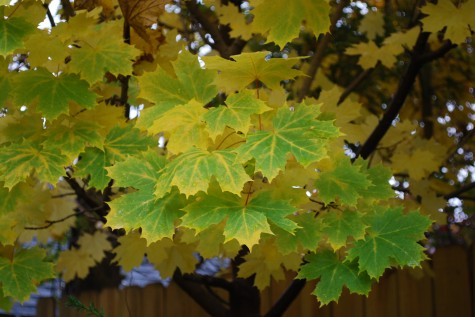 Acer Platanoides “Princeton Gold”
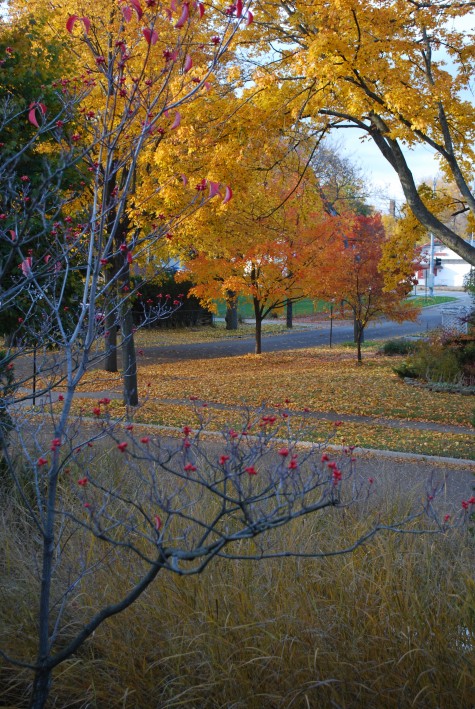 seeds Cornus Kousa
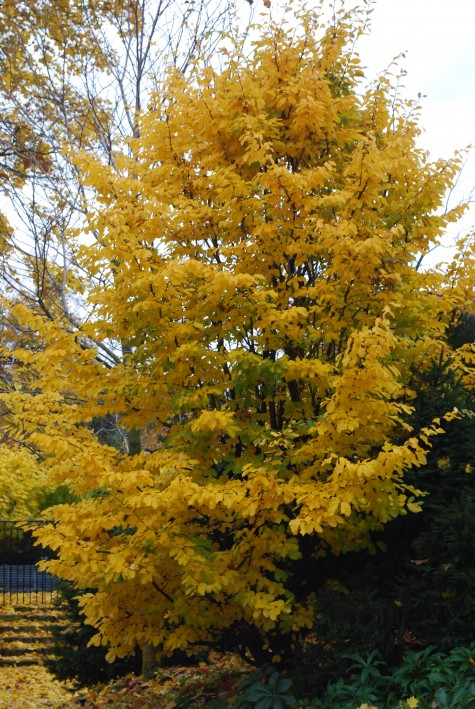 Parrotia Persica
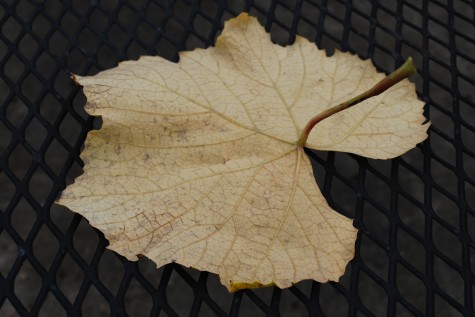 Vitis
Vitis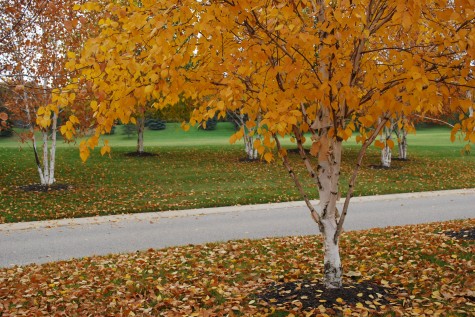 Betula Utilis var. Jacquemontii
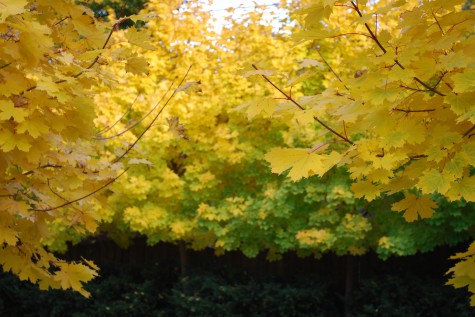 Acer Platanoides “Princeton Gold”
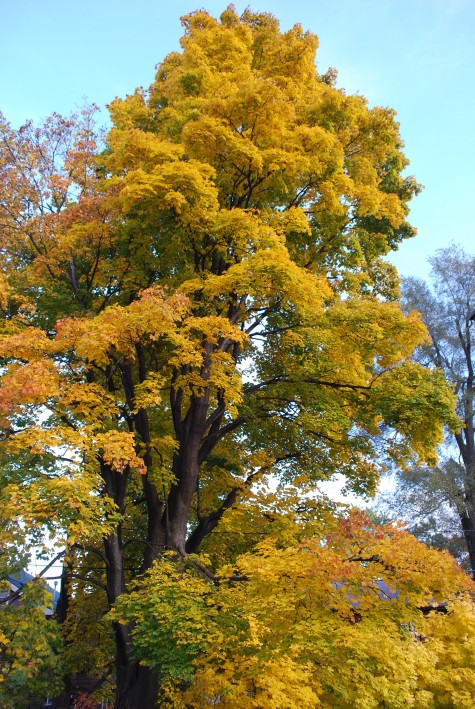 Acer Platanoides
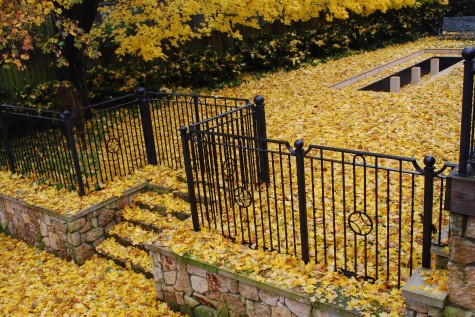 Acer Platanoides
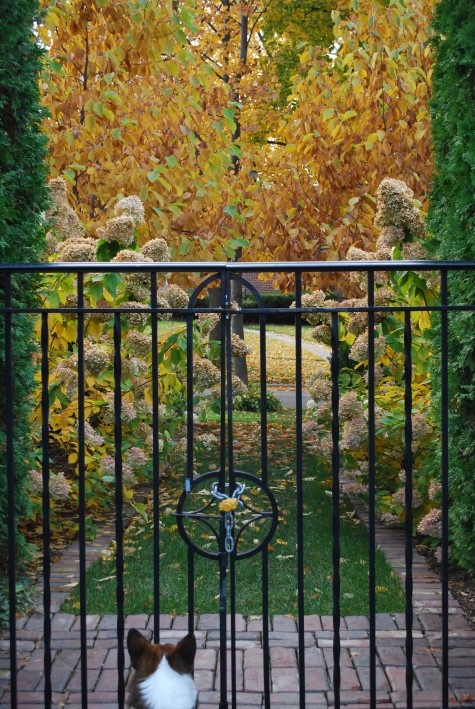 Magnolia x “Yellow Butterflies”
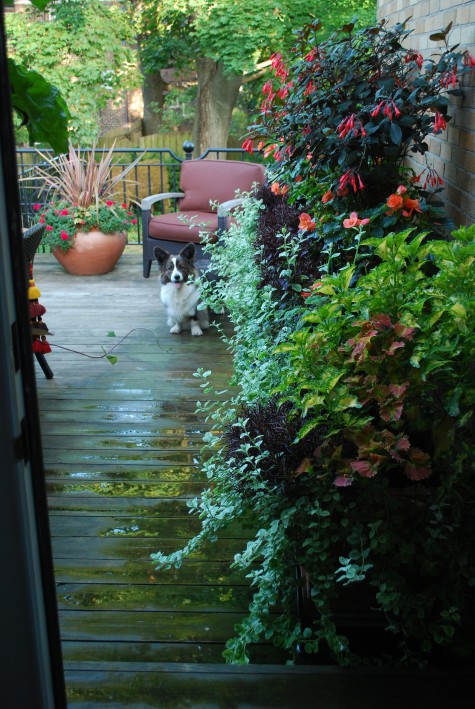 There are plenty of evenings during the course of the summer that I don’t have dinner outdoors-It could be too hot, or too buggy, or I might just be too tired to take everything outside only to have to bring it back in again. I also believe I have no end of summer days to choose from, but end they do. Yesterday it was benignly summer; today the weather is is cold and blustering towards fall. I know when I start coming to work in the dark, the close of summer can’t be far behind. As many nights as possible now, we all have dinner outdoors.
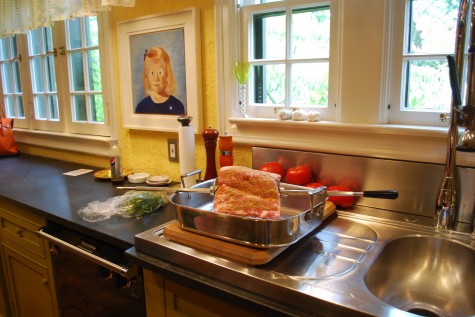 Buck does all the cooking-lucky for me. My idea of dinner on my own consists of cans of black olives, chick peas, tinned tuna, slabs of good cheese and chips of some sort. I am also likely to eat this over the sink; who would make the effort to set a table, and then wash dishes over this? On my own, I don’t cook, I survive. I take care of what needs doing in support of the cooking, and I am happy with this arrangement. Buck decides to do a roast on the grill for our close of summer dinner.
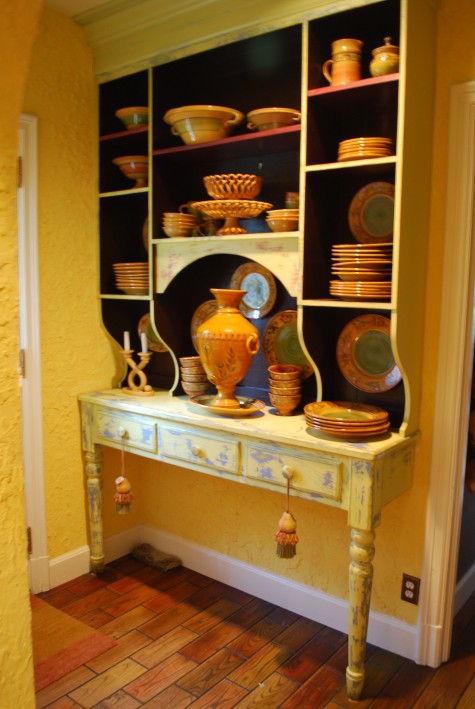 One doesn’t need to cook in order to appreciate great china. I could get out of hand easily; there are plenty of great china patterns out there. I get by with 2 sets; one is on permanent view on a shelf just sixteen inches below the ceiling in my kitchen. I take it down once a year to wash it; it’s out of the way, but always there for me to see. I built a painted Welsh cabinet for my other set. It took a long time to accumulate a service for eight, and even more time for the platters, breadbaskets and such. It was worth the wait; it is as much pleasure to look at as it is functional.
 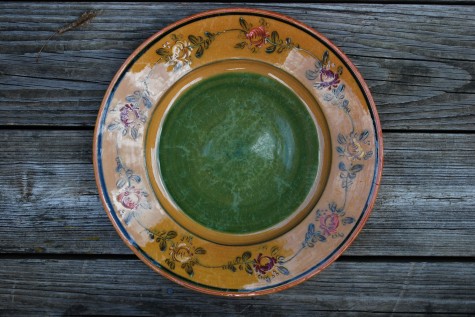 This French china is handmade by Veronique Pichon. None of her pieces have that perfect shape and repetition of design characteristic of machine made china. It is heavy, chunky and chip resistant-a good choice for china used outdoors. The green and ochre ground, with handpainted pink and rose flowers, looks good set in my garden.
 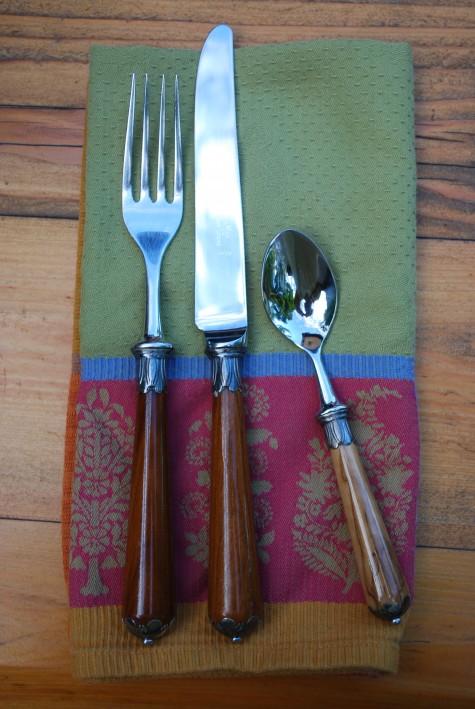 My stainless flatware has olivewood handles set in pewter ferrules. The color variation in the wood has everything to do with the dishwasher. The handles of the utensils I use every day have gone dark. As we only have dessert once in a great while, the olivewood is still pale colored. As much as I like limestone steps that are worn from all the walking, I like things that look like they have been used.
 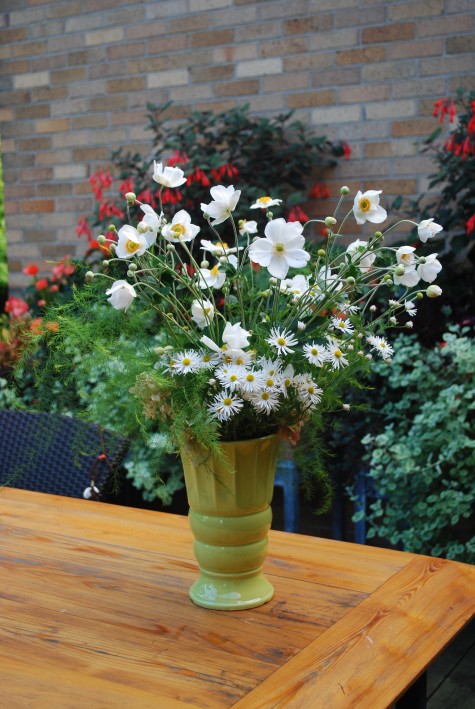 Of course we need flowers. The boltonia, Japanese anemone and asparagus from the garden look good in a McCoy ceramic vase from the forties. Cut flowers last such a long time outdoors-it must be the light. Cut flowers have a decidedly different feeling than flowers planted in the ground, as they are arranged.
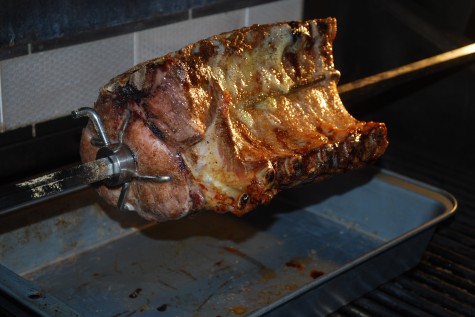 Buck loves to cook, and he says the rotisserie on the grill makes the work of it easy. If you are not a fan of cleaning the oven, cleaning a drip pan takes a lot less time and effort. The big design idea here-a terrace which is close to the kitchen makes it as easy to dine outside as it is to picnic-maybe easier. Good tools make quick work of the prep and cleanup. Sturdy china doesn’t mind being stacked for the trip back to the kitchen.
 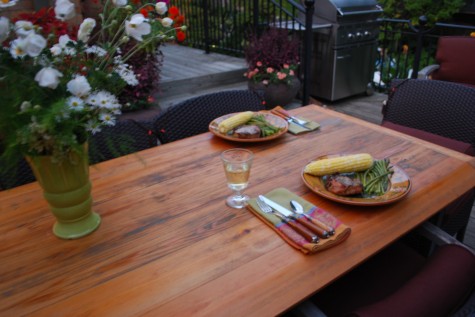 I like fresh food simply prepared-probably as I have been exposed to how good that can be. Food for me is not the main attraction-it is the place, the friends, the season and the weather and the food all rolled together that makes for a great time.
 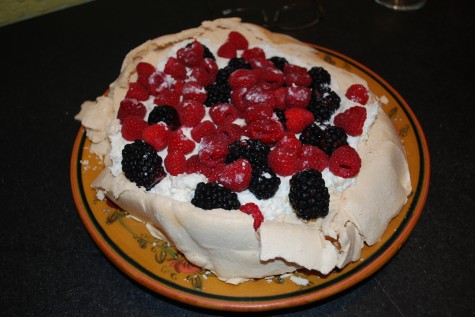 A pavlova for dessert-definitely out of the ordinary. A shell formed from a baked meringue is loaded with whipped cream and mascarpone cheese; this melt in your moth extravaganza is topped with a mix of the fruit of the season. Invented in New Zealand in honor of a visit by Anna Pavlova, it is my favorite summer dessert.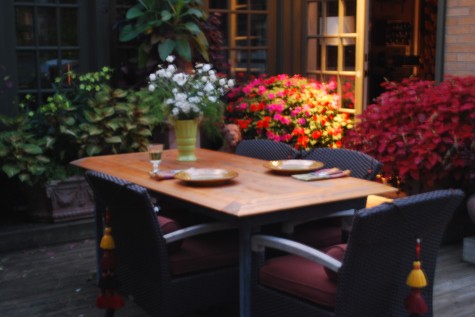
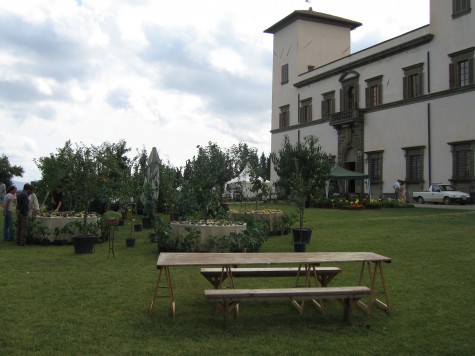
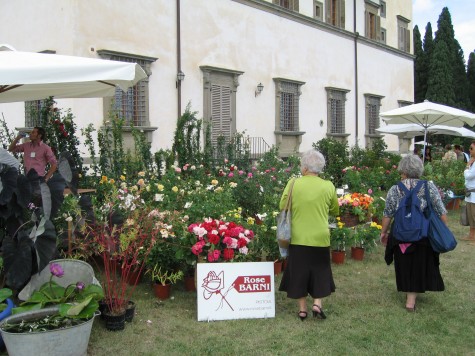
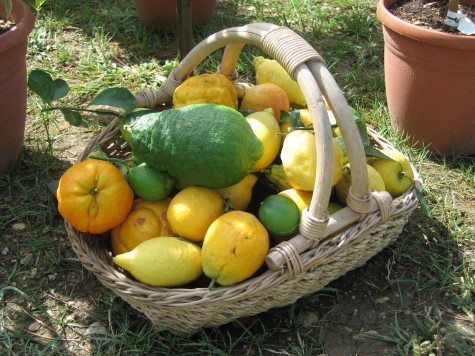
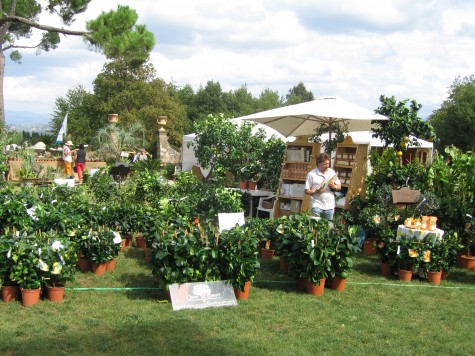 Fruit trees, fruiting shrubs and grape vines were represented in lots of varieties. We plan to offer fruiting trees, shrubs and grapevines at the store this coming spring, as Rob’s memory of this fair is a strong and good one. My favorite-the fruit cocktail trees, with 5 varieties of apples or pears, grafted onto a single rootstock. The idea of this appeals to my idea of gardening fun and festivity. I would have loved trees like this as a child, and I still do.
 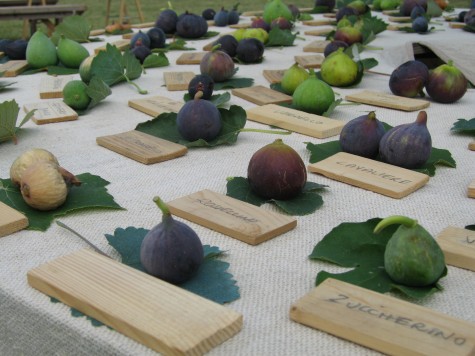 This display of different varieties of figs-more fun. How better to choose a fig tree than to have the fruit in front of you to hold, smell, and see? I do have a client of Italian descent growing fig trees; her love of gardening, growing food and cooking she inherited from her grandfather. One of his grapevines now grows in her garden. She is willing to bury her fig trees in compost for the winter-this tells you how much she wants them. How I envy the Italian climate such that they can grow figs, lemons and limes.
 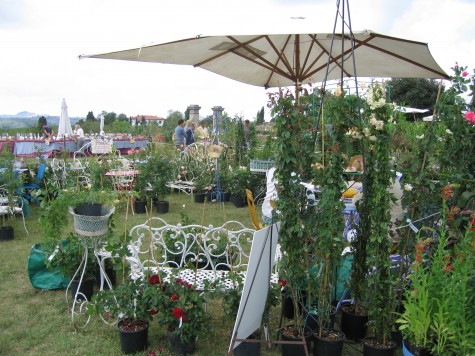 The little of this and some of that quality of this fair is engaging and charming. This is my favorite time of year for my own farmer’s market. The produce and fruit is as beautiful to look at, as it is to eat. The bunches of cut flowers, grass bouquet’s, the evidence of the summer harvest, speaks to much about why I garden. Making something grow is just plain satisfying.
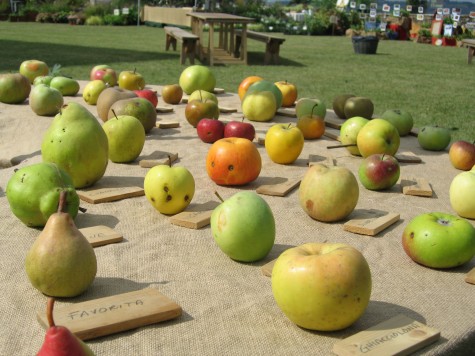 The apples and pears have the spots, dings and scars that come with naturally grown fruit. Years ago I owned five acres that came with 20 fruit trees. I would pick the fruit warm from the sun and eat right then and there-around the spots if need be. This is a version of fine dining that I like.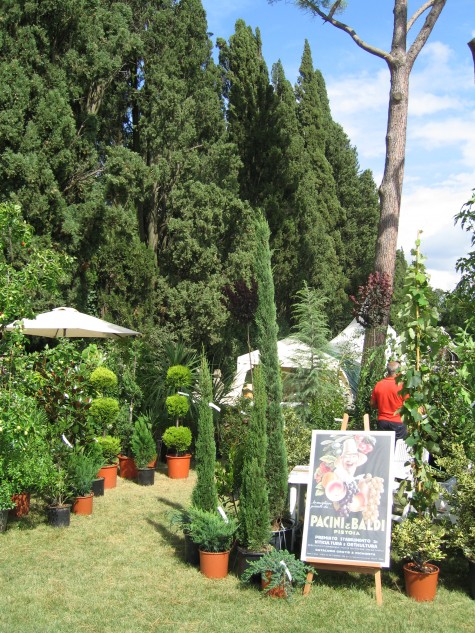
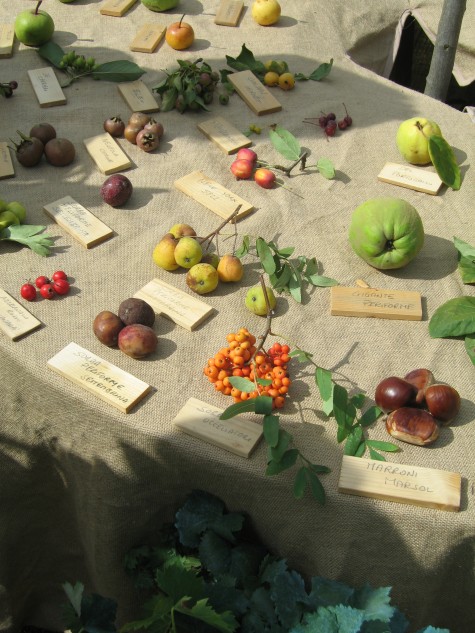 I am able to buy and eat food that cannot be grown where I live. I am glad I do not have to do without figs, lemons and mangoes. But Rob’s pictures make me wish I had been there.
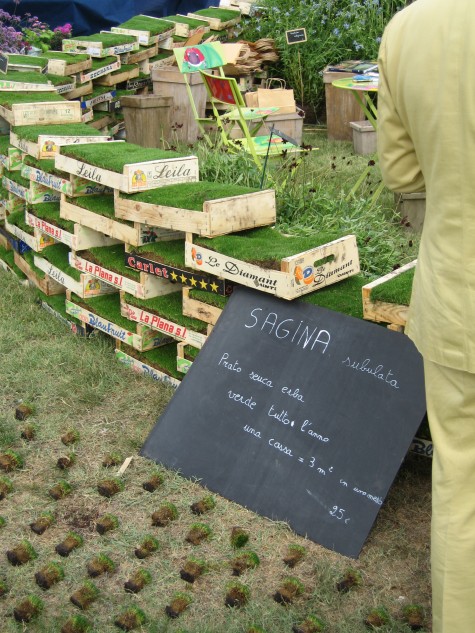 This is my favorite display-sagina subulata grown in fruit boxes. What a gorgeous look. This I could easily do. I might even like to just grow it in boxes. What would never occur to me to do-display the spacing layout on the ground. The sign says one box will get you three square meters of Sagina; if you don’t believe it, look here.