Sunday Opinion: The Promise

My life as a professional gardener is very much different than my home gardening life.  When I am at home gardening, I can stop every hour for an iced tea, or go take a nap, if I so desire.  I can make messes that have lifespans. I can leave a pile of sod in the driveway that I need to steer around for weeks.  I can leave a dead tree long enough for it to become a snag.  Once I finally take it down, that empty space might sit and stew for a year; it is my privilege to live with that tooth missing. I can throw around the French word deshabille with authority.

I can skip the fall cleanup; I can let everything lay in the spring and call it a composting day.  5 years running I can look at a clump of daffodils no longer blooming and resolve once again to divide them, and move on.  I can ignore the faded flowers on the rhododendrons long enough that the new growth breaks-shoot.  I can order five pounds of alyssum seed, and save instead of sow it.  I can trip over a brick that has heaved up in the walk every day long enough to be irritated, but never long enough to reset it. I can leave a perennial in its pot, in the spot where I want to plant it, until it perishes from lack of water.  I can leave my tools out, and scattered about, until they dull, rust and splinter-and call it my as yet uncollected vintage collection.

I can rip the leaves off the dandelions, and stuff the flowers in my pocket.  I can leave my roses unpruned-experimentally.  Unplanted cell packs and 4 inch pots of annuals strewn all over the deck in May- I can call that process. I can put my pruners away, in favor of that natural look. Or I can saw everything down to the ground, and call it revitalization. I can advise Buck to consider a new parking place on the street when a maple in the tree lawn is obviously hollow and punk-wooded.  I can count on the new growth of the sweet autumn clematis to cover the tangled mess of last year’s dead stems. 

I can walk by a weed until it falls over into my path. I can step over that fallen weed for a long time thereafter.  I can let colonies of weeds run amok, and put edges to their spread-as if that meant something.  I can walk up hill, and then down hill, and unexpectedly step into a corgi digout-and call that exercise good for me.  I can persist in my unwillingness to get rid of that Russian sage hedge-as no doubt it will be better next year. I can make a note to come back and reassess on a day and a time yet to be determined.

A new fence that needs to be installed in my fountain garden-this is a given.  It has been a given for an embarrassingly long time. On those days I need to blame, I blame the need for a permit for my delay.  Any gardener dealing with a self imposed delay understands this; any blip on the screen will do.  My work schedule is always good for an extended delay.  I work 7 days a week, and have done so for better than twenty years.  This said, no one is questioning me or faulting me about my propensity to delay on my home turf.  My delay days-I permit myself a less than perfect, a less than organized, home gardening life.  

It may be that the best I that I deliver to my clients is not the design, but the promise to help them treat their garden differently than I treat my own.

Sunday Opinion: Halloween Glee


My personal favorite-the cereal killer.


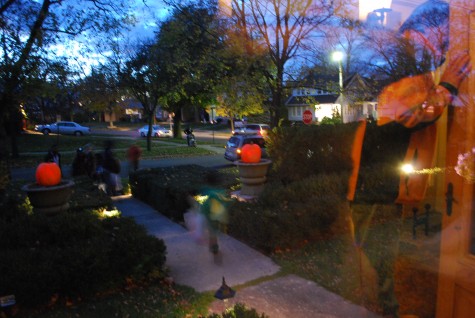
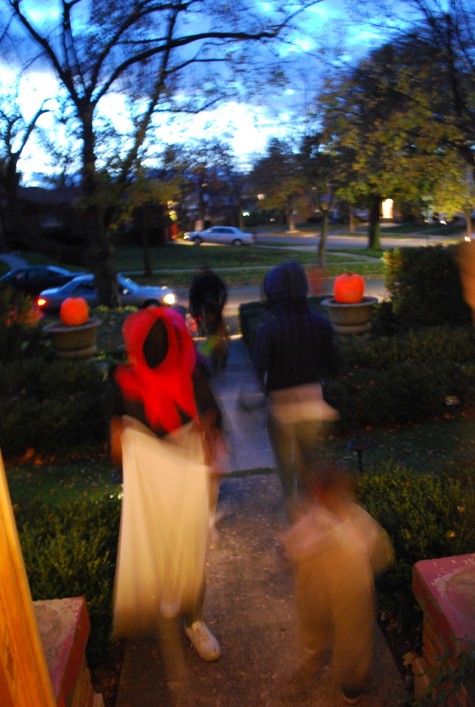
I had help from Buck and my friend Lynn dispersing 41 pounds of candy to what must have been several hundred trick or treaters.  A Halloween garden party featuring kids in costume, the fruits of the harvest, and chocolate-what could be better?

Sunday Opinion: Reading, Writing, and Arithmetic

I am a reader, as I was raised to be such.  My Mom read to me non stop until I learned to read.  I never had the good sense to ask her later about why she did this, so I can only assume she thought it was important for people to read.  Reading in its simplest form exposes people to new words; a decent vocabulary is a tool by which people attempt to communicate.  I use the word attempt, as no number of words strung together necessarily insures communication.  Communication is an art form, not necessarily covered in a grammar primer.  Gardeners nonetheless become better, given a better vocabulary.  The best way to acquire gardening skills is to garden, but reading about it can be great fun. 

I know the meaning of verge, bosquet, pergola, porcelain berry, (ok, ampleopsis brevipedunculata is the latin version which precisely communicates the plant in question) bond beam, espalier, species, compost, environment, tap root, topiary, tree lawn, perennial -you get the idea.  Every word relevant to gardening implies an idea.  Reading that exposes me to those words goes on to expose me to ideas from other countries, other gardeners, other times, other places, other eras, other environments, other points of view.  I have a considerable library for good reason-there is always something that is new to to learn.  Part of being a well rounded gardener implies being a good reader.  Not to mention that there are those times when I would rather sit and read than dig a hole or water plants. My magazines pile up all season long, in preparation for winter. I am a reader, not a skier.

I have many hundreds of books; I refer to them, and reread- regularly.  My library is my window on the world. My books do not go out of style.  They don’t wear out or break.  It is amazing how little of the information they contain is obsolete.  A two volume set of photographic plates, entitled Jardins de France, is a prized possession.  Published in 1925, there are places pictured that no longer exist-except on these pages.  The Encylopedia Brittanica that my parents spent so much money to make available for me to read has been replaced by the internet.  Any gardening vocabulary word you might type into the Google search engine will likely get you many more websites than you could possibly digest. But the idea is somewhat the same.  A book you can hold in your hands is a different experience than looking at a computer screen, just like the music you hear in person is completely unlike any recording of music. Clare Lockhart, a high school English teacher, was obsessed with teaching how to write an elegant paragraph. If you didn’t learn, you had to keep writing them until she was satisfied you had that skill in place.  I cannot help but think all that practice with paragraph construction has helped to make my computer searches better and faster. But no matter the source of your reading material-what you read will inform your gardening. My advice-read up.  I do find that I get far fewer questions about plant culture than I did years ago, as the computer has made asking questions easy and convenient. I am better able to field questions about fruit trees and tropical plants, as I can look them up.

I have a long history of writing.  Like my Mom and my grandmother Nana, I kept a journal.  Some parts of that journal were personal-other parts recorded the peony bloom, or the date of the spring thaw, or random thoughts about my gardening efforts. Everything I write down sticks with me. I hope you enjoy reading my essays as much I as enjoy writing them.  The process of writing is exploratory, and helps me to think things through. 

 What I write is a rich stew.  Nature is the meat-how I cook that meat directs my writing.  My experience can  flavor the stew with garlic, rosemary-or romance.  I would furthermore encourage everyone to keep a journal.  Most things I wrote in my journal in my twenties either make me smile, or wince.  At 45, I threw away 27 years worth of journals; it was a good decision.  What you have a mind to write about translates what you think about or experience into information you might use. It can also give you a better picture about weather cycles, plant hardiness-the nature of things.  What interested me about gardening twenty years ago is much different than what interests me now, so  I am back to writing.    

You may think that no gardener needs to think about arithemetic as using it comes so naturally.  Most of the skills I use I learned in elementary school.  I dilute my moss dye using a 1 to 5 ratio.  Mixing soil, calculating how many perennials I need for a project, the flats of groundcover, the yards of decomposed granite-simple arithmetic.  Figuring the numbers of tulips I need to fill a spot may be the least favorite part of the process of having tulips in the spring.  I usually err on the side of way too many, which works out fine in the end. There are other things I have too many of-too many pots, too many hydrangeas, too many ferns-too many plants on a small city lot.  I still scheme about how wedge more in.  This excess is about enthusiasm, not poor math skills. 

We are installing a circular pergola today that Buck made.  A good deal of my excitement about seeing it put together and in place is that my grasp of the mathematics that enabled him to construct it is a skill I do not have.  He saw this structure clearly in his mind long before he put the first two pieces of steel together.  My excitement is about seeing it for the first time. I am sure it will be a very elegant visual paragraph about the structure required to adequately handle growing grapes.  You’ll see.

What’s Possible.

Some things happen very slowly in a garden.  I once scarified some gingko tree seeds, stratified them in my refrigerator for 10 weeks, and planted them out in pots in the spring-with the help of a parent. I probably was 11. Who knows how long it was before I could plant the seedling in the ground-it could be my Mom did that part for me.  5 years ago I went to see the house where I grew up-that gingko tree had become a substantial tree.  Last year I made another visit-the gingko had been cut down.  45 years to grow a substantial and handsome tree from seed.  Other things happen very fast in a garden; I am sure it took less that four hours to get that gingko down and hauled away.  A vision of a climbing rose redolent and weighted down with thousands of blooms in June takes years to realize.  It takes plenty of additional time to feed and prune, deal with the blackspot and the Japanese beetles, encouraging a plant to stay the course long enough to make that vision a reality.  A tomato seed can become a ten foot tall rangy plant loaded with fruit in the blink of a season.  For a gardener, a season is a measure of time.  Not short, but not very long either.  It seems like my coleus just got good when it started dropping leaves from cold.

A landscape or garden plan can slowly consume what seems like an endless amount of time. Any amount of time accompanied by the wringing of hands and indecision can becomes an interminably long slow time. One can stubbornly hold out for the perfect plan, and suddenly find themselves out of time-I am a guilty party in this regard.  I had the good sense to plant some small evergreens, thinking it would buy me some time to get the rest of a scheme together.  At fifty I awoke from my working every waking moment stupor to maturing evergreens and weeds in their early twenties; obviously my time to make the garden of my dreams was running out. I needed to step on the gas.

When I design for a client, my first act is to stew.  I stew over what a client has told me about what they would like to see happen.  I stew even more over the site plan or mortgage survey.  The stewing takes a lot more time, compared to the drawing.  Once I sit down to draw, I have an idea in mind-a concept.  The drawing has to work within the confines of a lot of givens.  The lot lines.  The physical distance from the home to the street.  The location of the driveway may or may not be a given.  In the drawing stage, I see how much more time it will take to make what I conceptualize work. The drawing goes slow at first. Maybe the concept doesn’t work very well at all; it takes strength to ignore the clock and start over.  Should everything be working, the drawing goes fast.

Once a design is in place and set to go, slow sets in like the project is coming down with a cold.  Projects need to be organized, and staged.  Plant material needs to be located and shipped.  The stone mason needs to see the job and quote the work, and set a tentative date to start. There is a chain of events which is bound to get tangled up.  A client approaching me in September about a project needing to be finished the following June-one would think that would be enough time for just about anything.  The project will finally get underway Monday October 18, some 48 days post the decision to proceed.  Who knows what lies ahead that could slow things down even further.

Pine Knot Farms is one of my favorite sources for hellebores.  I was looking at the plants I bought from them two years ago just the other day.  I am hoping this coming spring I will see my first flowers.  Nothing happens very fast with baby hellebores.  I have a fruiting olive tree in a pot which spends the winter in the green house; it has not grown an inch in the past two years-well maybe, an inch.  What the hold up is, I have no idea.  Neither a garden nor a landscape happens overnight.

But plenty can happen overnight.  A client may have a garden that needs a new dress and a good hair do in time for an unexpected event.  A tree can be blown over, or struck by lightening; I have had both of these things happen. Some people fall in love with gardening very fast, and fall out of love even faster.  Some warm up to the idea very slowly, and then presto- the warm feeling becomes a fire burning.  All manner of circumstances can change in an instant.  It is easy to recognize an instant when it happens.  It is harder to keep that possibility in mind every day, and garden accordingly.