Potting Up

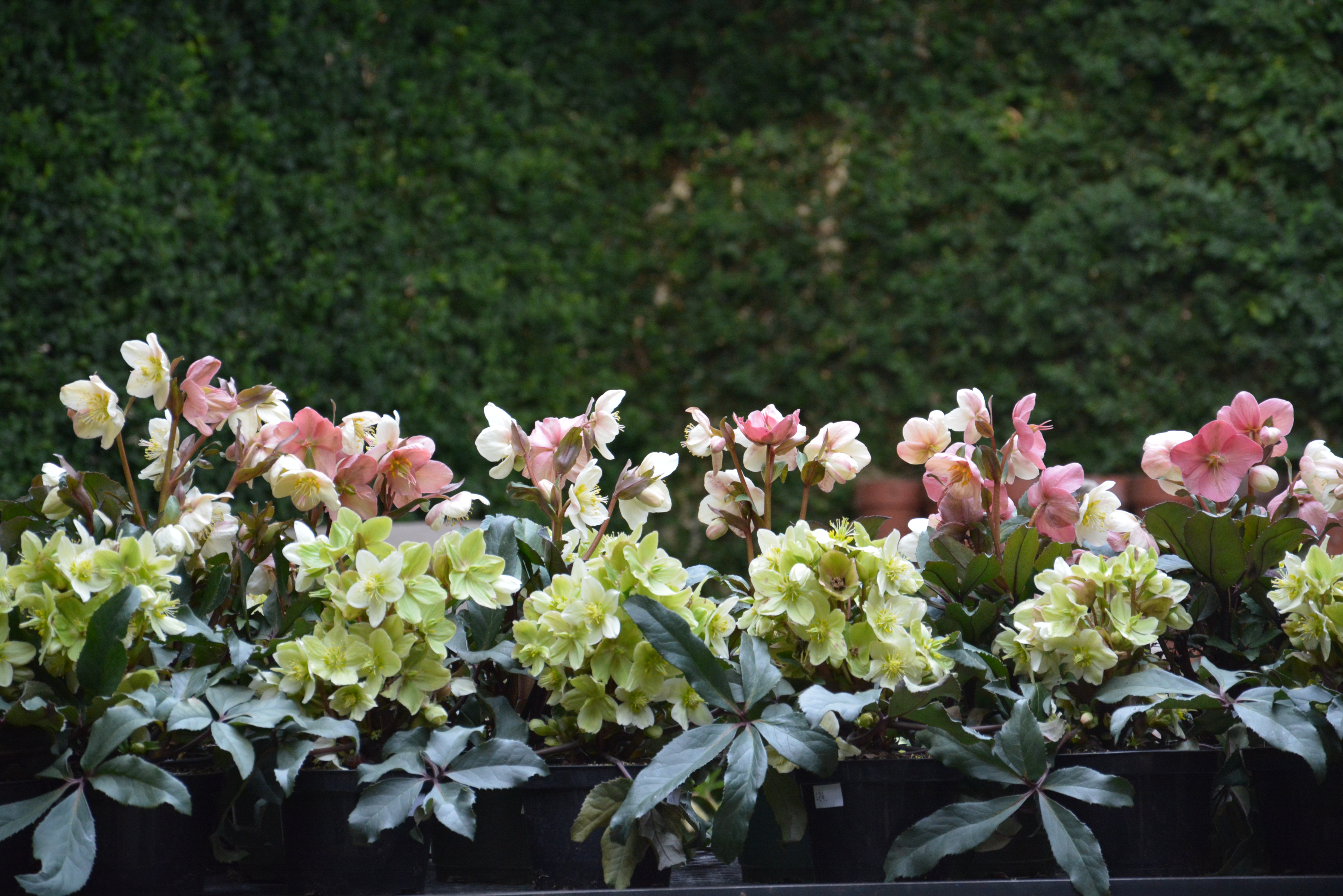
hellebores.jpgOur winter is stuck on repeat like a CD playing with a giant gouge-is it not?  If only nature would choose to bring this song to a close. If only the channel would change.  OK, I realize the timing of the change of the channel is out of my control.  The only thing keeping me on an even keel-a greenhouse full of hellebores.  I am on the verge of being afraid for spring.  The sun and slightly warmer temperatures today meant melted snow was streaming into the shop under the front door. What other disasters does this brutal winter have to visit upon our spring?  I don’t have any answers, just a lot of theories that are most likely off target or irrelevant.   March?  lion-like, so far. And no relief in sight.  But any gardener has the option of creating a little spring indoors.  I am beginning to see pots of spring flowering bulbs available at nurseries.
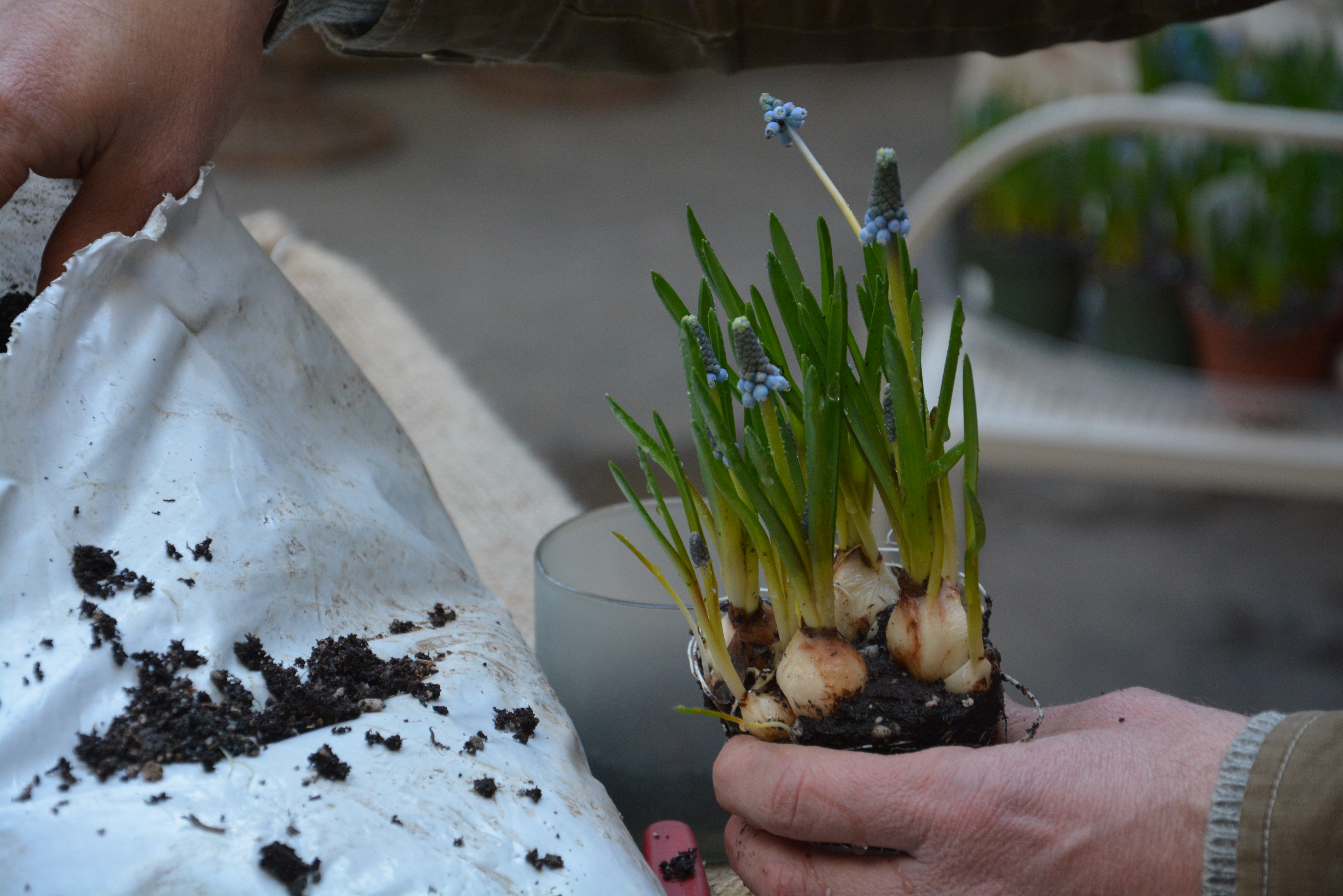
spring-flowering-bulbs.jpgThis pot of muscari came in a plastic pot.  No gardener should be dismayed by the nursery presentation.  What they do well is bring a plant on.  Representing the magic of spring is not their thing.  They grow.  What they grow is available at a very reasonable cost.  That bulb that has shot forth leaves and flowers is a miracle of nature.  Spring flowering bulbs have flowers and leaves stored in in those juicy orbs we call bulbs.  Given the proper temperature signs, those bulbs break dormancy and grow.
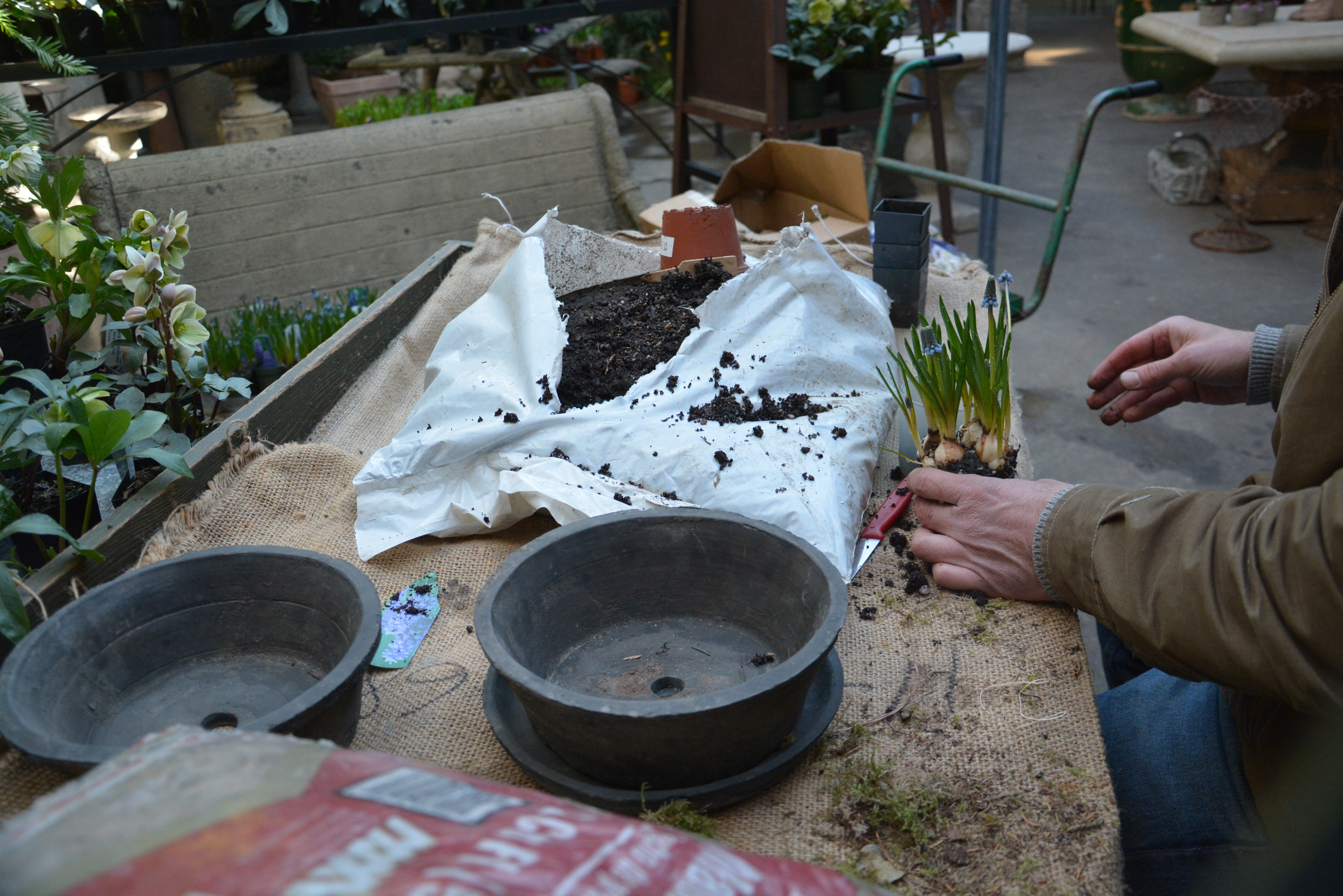
potting-spring-bulbs.jpgNot so much is required of a gardener to bring a spring flowering bulb into bloom.  Tulips, daffodils, hyacinths,and a whole host of small flowering bulbs will represent in the spring, if you can just manage to get them below ground before the ground freezes so hard it cannot be worked.  I am embarrassed to say that I have had to ditch plenty too many bulbs in my gardening life, as I did not make the deadline.  Happily, the fall planting deadlines need not apply, should you pot up.  Pots of bulbs wintered over in the garage will come on and bloom with as much vigor as bulbs planted on time in the fall.
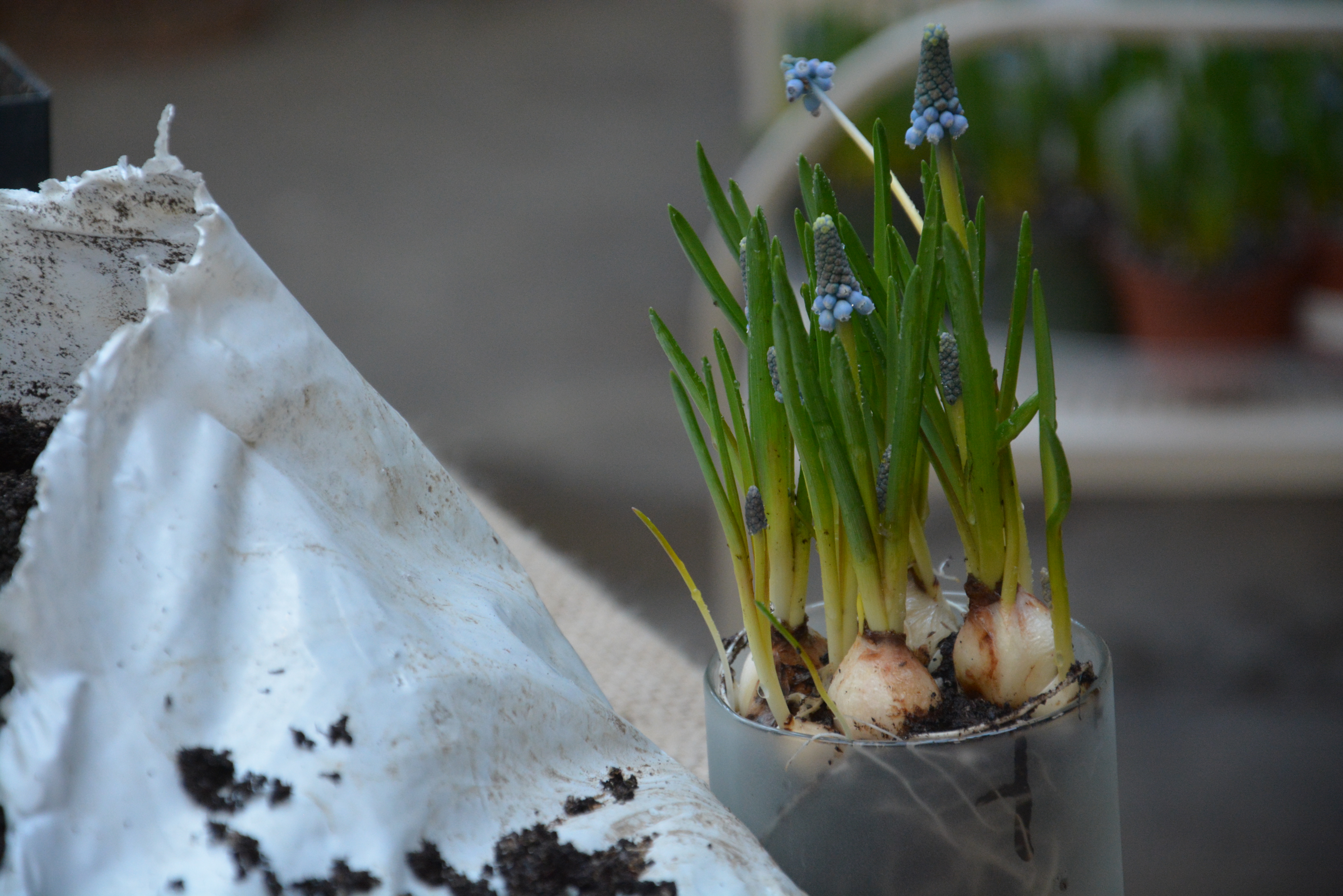
muscari.jpgShould you have no pots of spring flowering bulbs waiting for spring in your garage, shop your favorite garden store.  Rob spent the day transplanting muscari and cyclamen into containers.  How he transforms a nursery grown plastic pot loaded with muscari into a strong statement about spring might interest you.
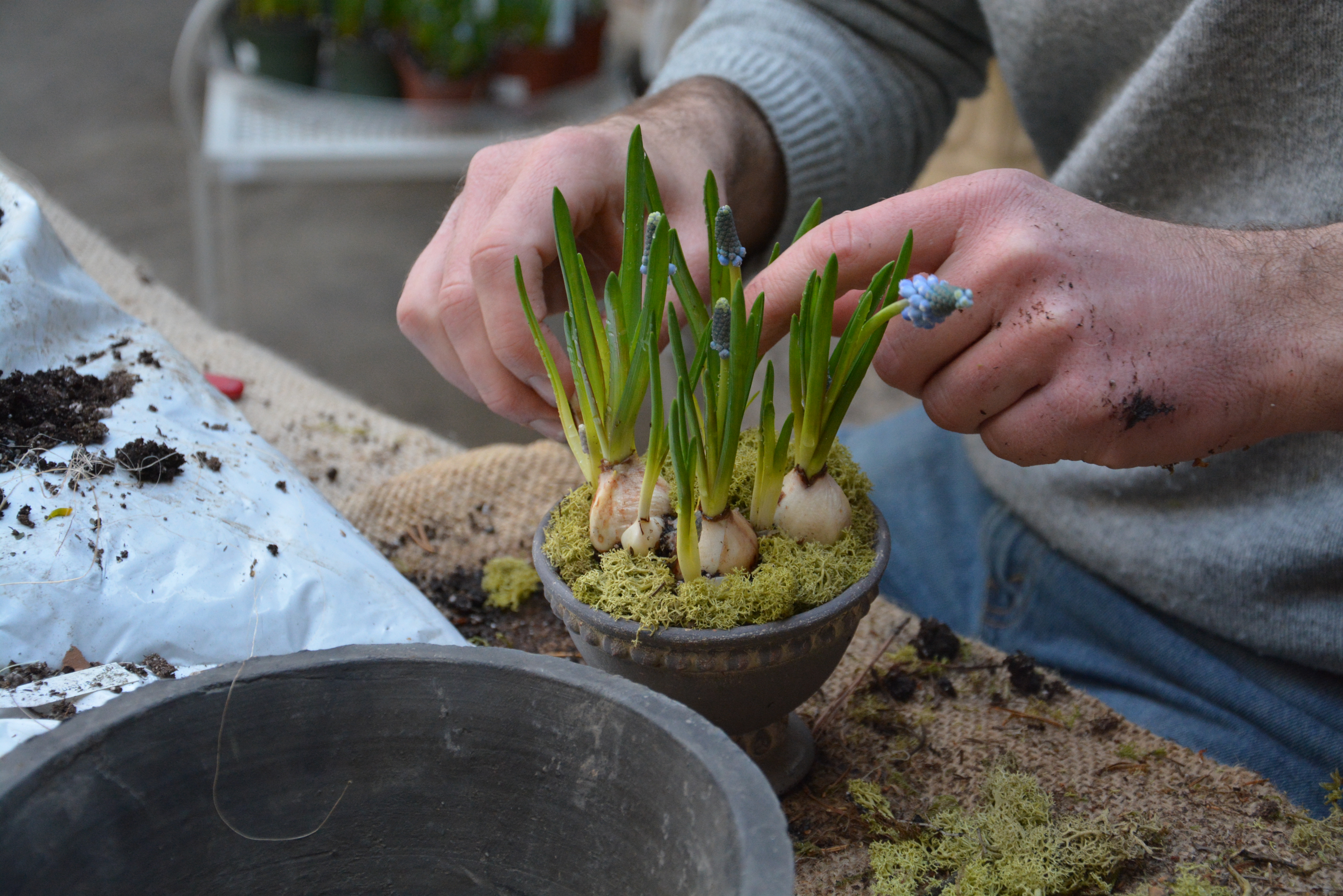
finishing-touches.jpgThe first time I saw him wash the soil off of the upper half of a spring flowering bulb, I worried.  Would a bulb exposed to view mean disaster?  That has never happened.  As he says, the bulb from which all that life springs is beautiful.  A statement about spring should surely include a view of that bulb that is part of the experience of spring.
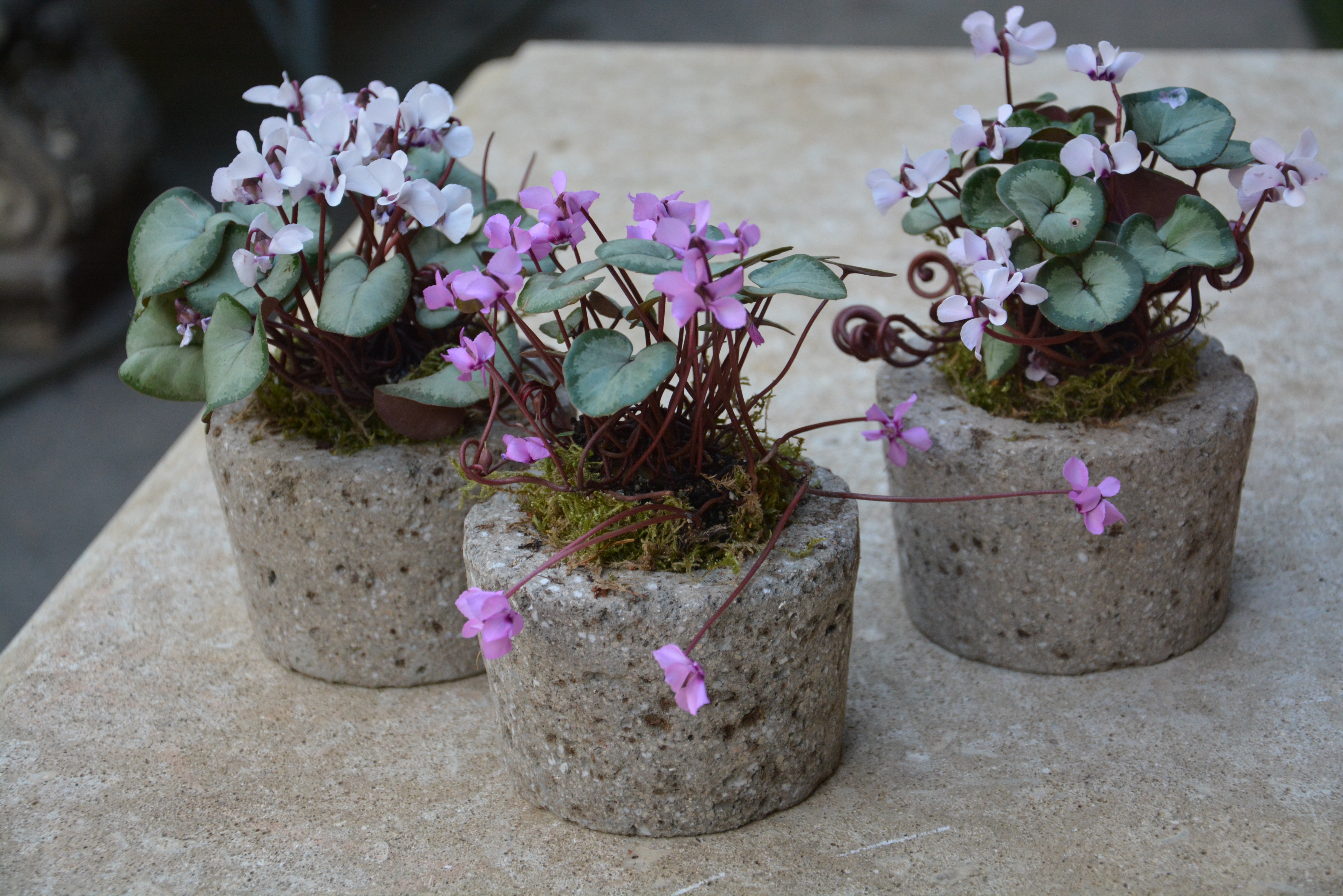
cyclamen.jpgHe has repotted cyclamen, taking great care to select a container of a proper scale.  I greatly admire how he subtly pairs plants with appropriate containers.
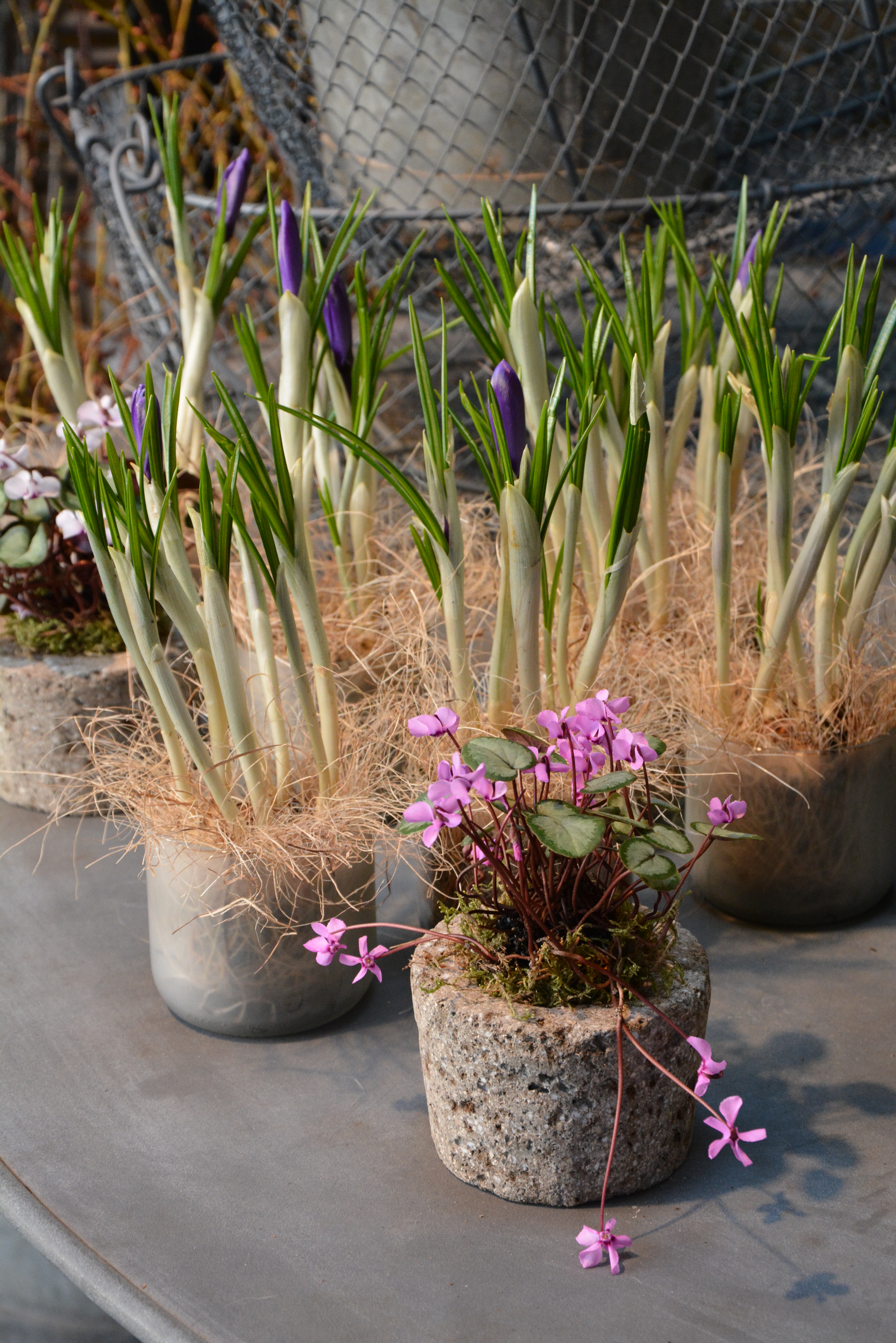
spring-pots.jpgThe only spring going on in my neighborhood is a direct result of the intervening hand of a passionate gardener.  In  our shop, those hands belong to Rob.  As anxious as I am about the length of this long and very hard winter, I appreciate his gestures towards the turn of the season.
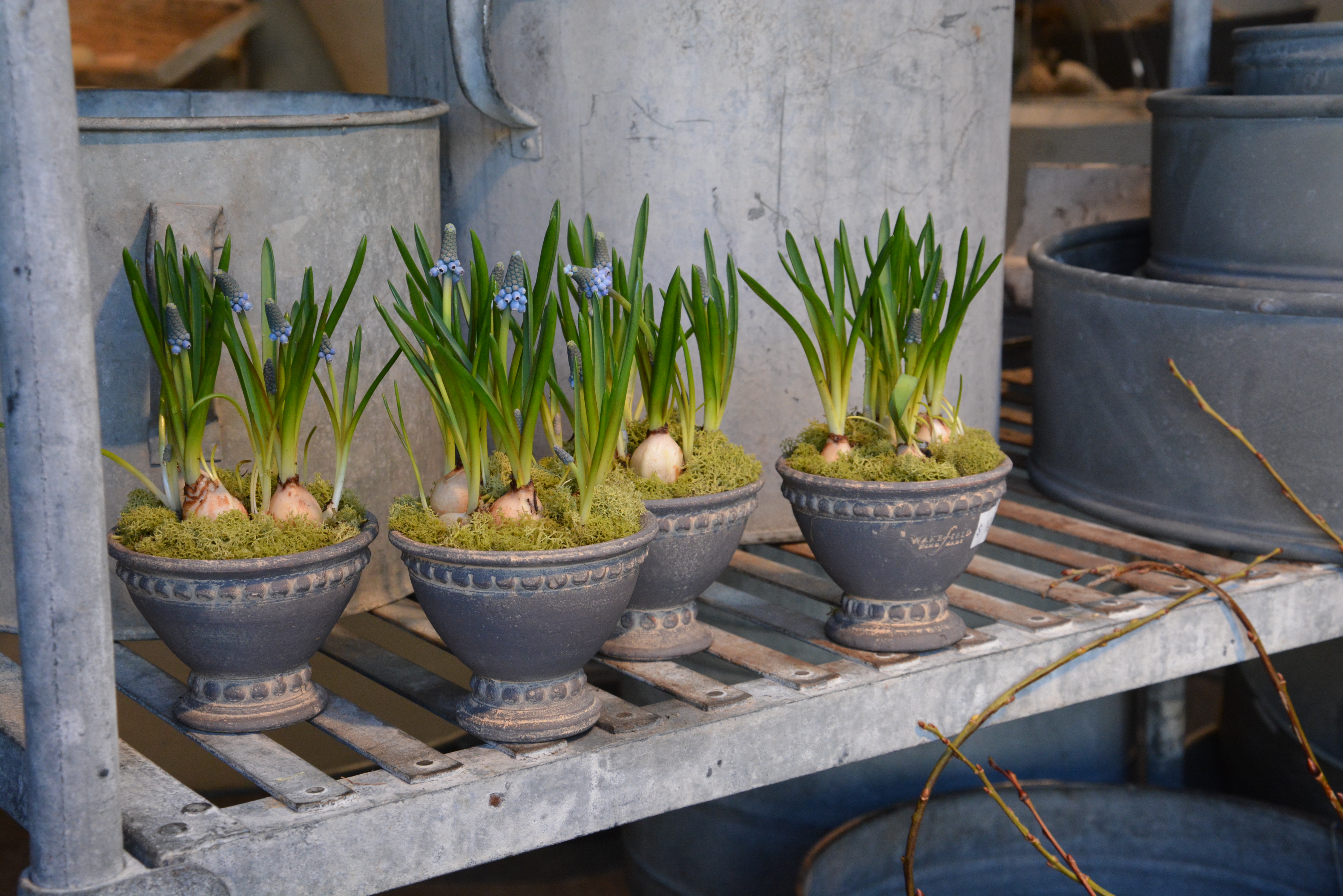
crocus-pots.jpgWe had customers in today taking the results of his potting up home.  Not near Detroit Garden Works?  Visit your local nursery, and bring home a few pots of spring flowering bulbs.  Then do what you can to make those pots a personal expression of spring.

spring-pots.jpgStuck in a zone  with no spring?

spring-pots.jpgCreate your own version of spring.  Add a few touches from the forest floor.  Take some pictures. Enjoy the process.


Hellebores: Recent Forms

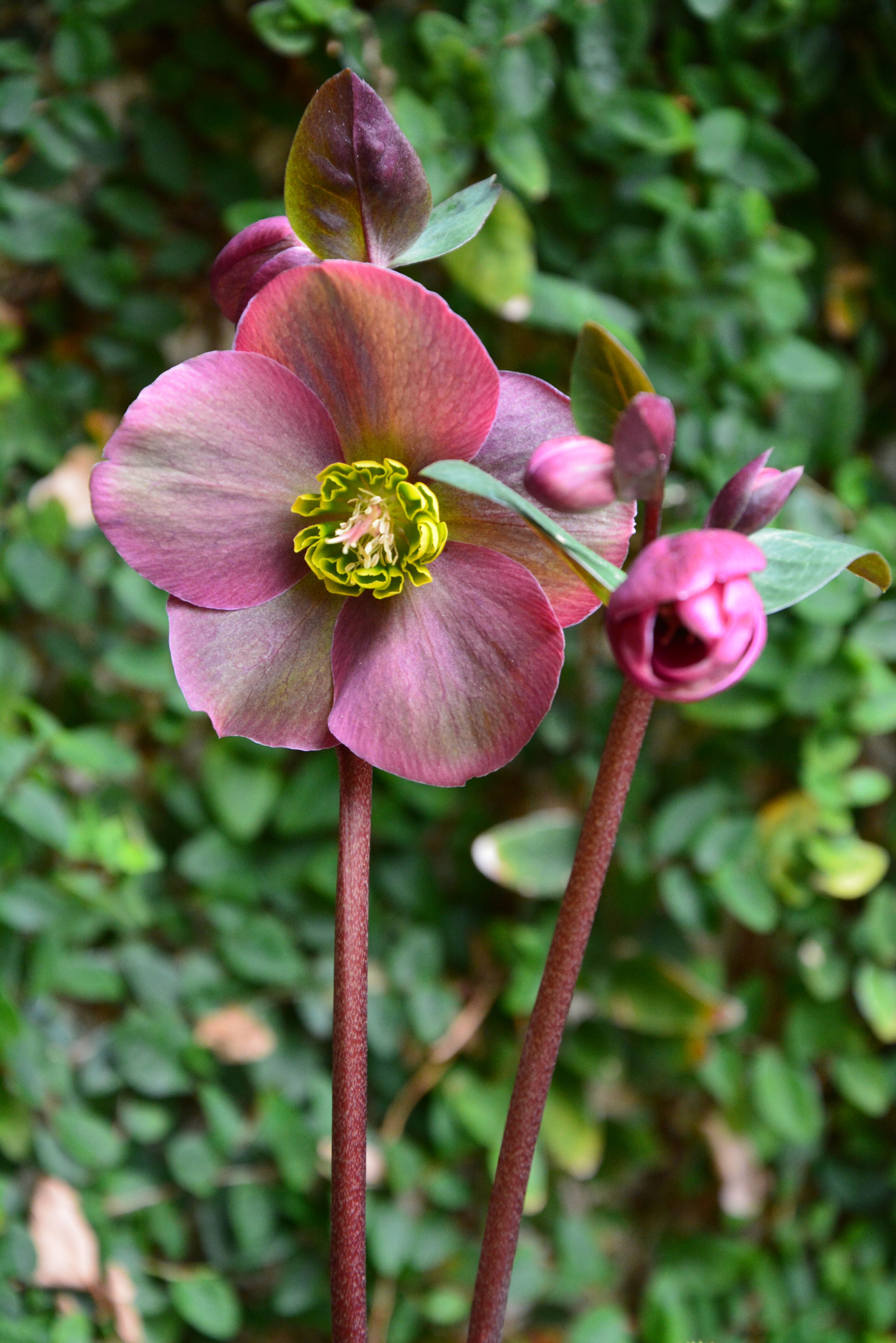
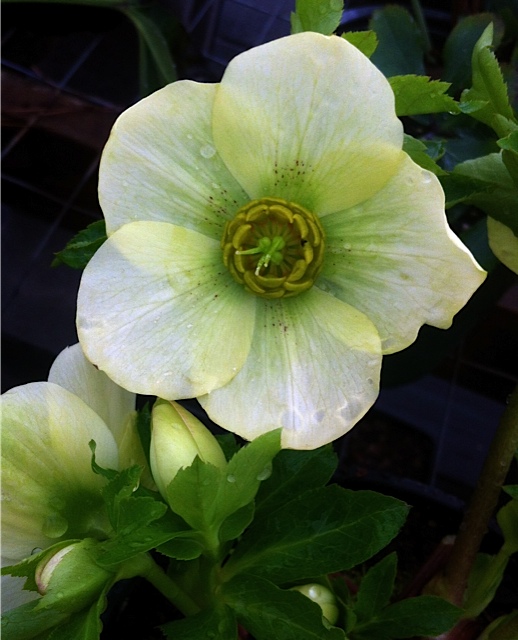
hellebores-2014.jpgI have only been growing helleborus orientalis in my garden for 10 years or so.  Why I was so late adding them to me garden is a mystery.  Perhaps they were done blooming by the time I started haunting nurseries for plants.  I may have missed them.  Perhaps the time it took a hellebore to grow into a decent sized blooming plant was too long to make commercial production widespread.  Whatever the reason, I am a fan now.  They are sturdy plants with thick leather like foliage.  Many of them are hardy in zone 4, which means very hardy. They thrive in light to medium shade, and like alkaline soil-perfect for my yard. In a mild winter, the foliage is evergreen.  The color of the petals eventually fade, but they hold onto the stalk for a long time after the flower is spent.  In June my plants will look like they are covered with green flowers.  My plants are a strain grown from seed called Royal Heritage mix.  This mix has been around for a fairly long time, and produces somewhat muted flowers from dark purple to pink, white and green.
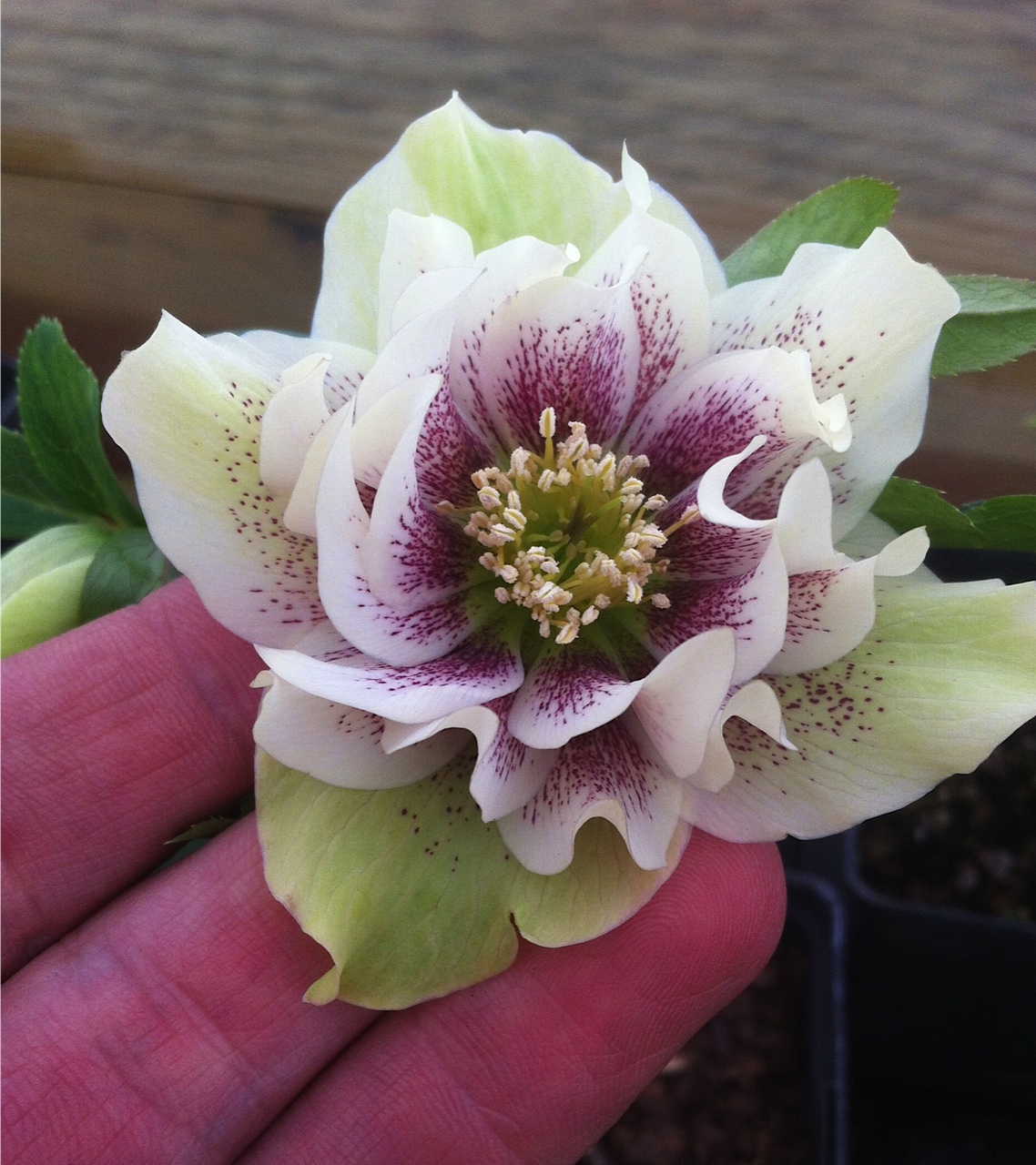
double hellebore.jpgHellebores increase in size slowly, so the prices for good size plants can be considerable.  The flowers emerge on leafless stalks in early spring-late March or early April in my yard.  The new season’s leaves come from the ground after the flowering cycle is over.  They are long lived, and make dense clumps some 18 inches tall or so.  They are willing seeders, should you have the mind to grow them on.  The species helleborus orientalis features nodding flowers,  meaning they face down.  You would have to get down on the ground to look up into their faces, or cut the flowers and float them in a bowl.

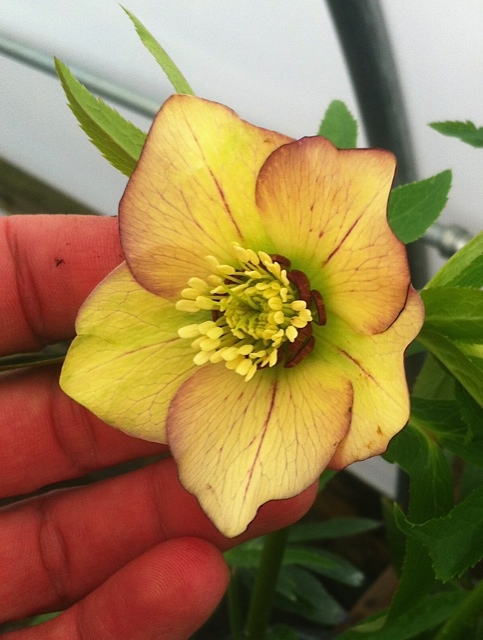
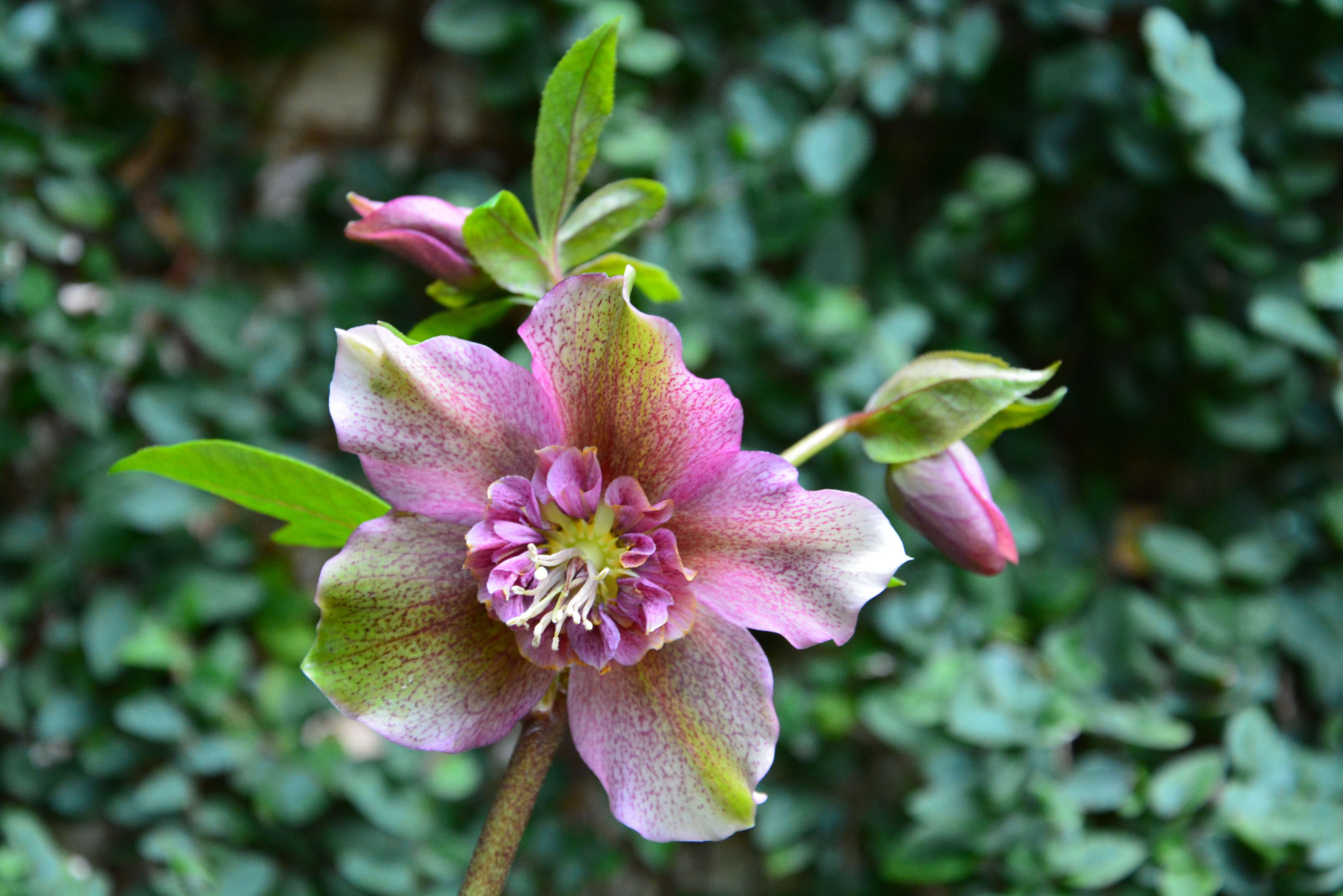
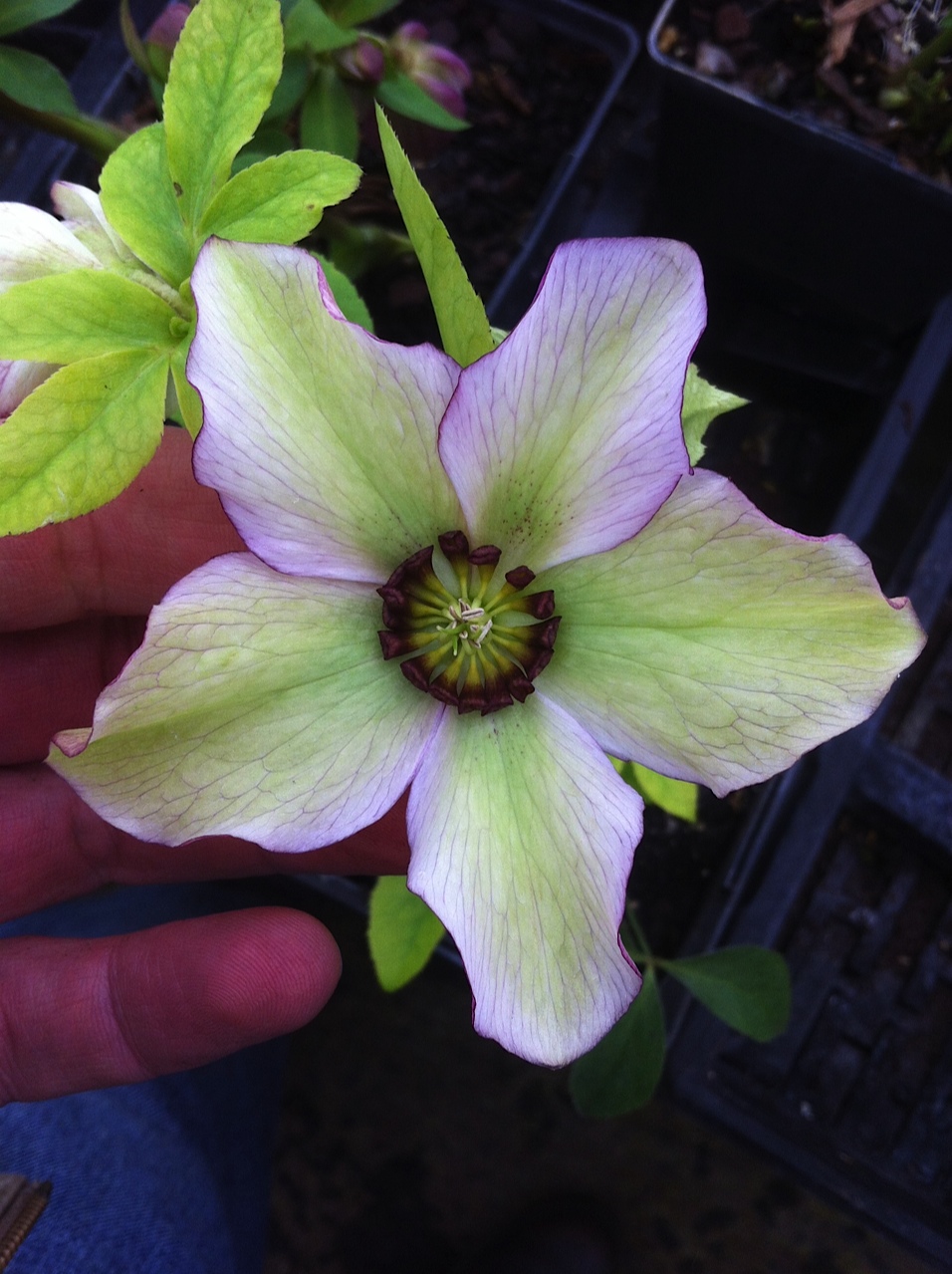
yellow hellebore.jpgOne can now find varieties with yellow flowers-shocking,  this development. The first yellow hellebore I ever saw in person-I could not take my eyes off of it. This development was only the beginning.  Breeders in Japan, England, Canada and the US  (and no doubt in many other countries) are breeding plants with double flowers. Spots.  picotee forms.  unusual colors. Helleborus Black Oddyssey is just that-an inky black.  Helleborus Ivory Price is a strong grower, and features flowers that face up.  Michigan hybridizer Chris Hansen is responsible for breeding a breathtakingly beautiful group of hellebores known as “Winter Thrillers”.  Improved flower color, flower size, plant vigor, and foliage are the trademark of these plants.  He has been breeding hellebores for over 15 years; his newer introductions are stunning.  There is a wealth of information about hellebores on line now.  If you are interested, make a cup of coffee, and explore.

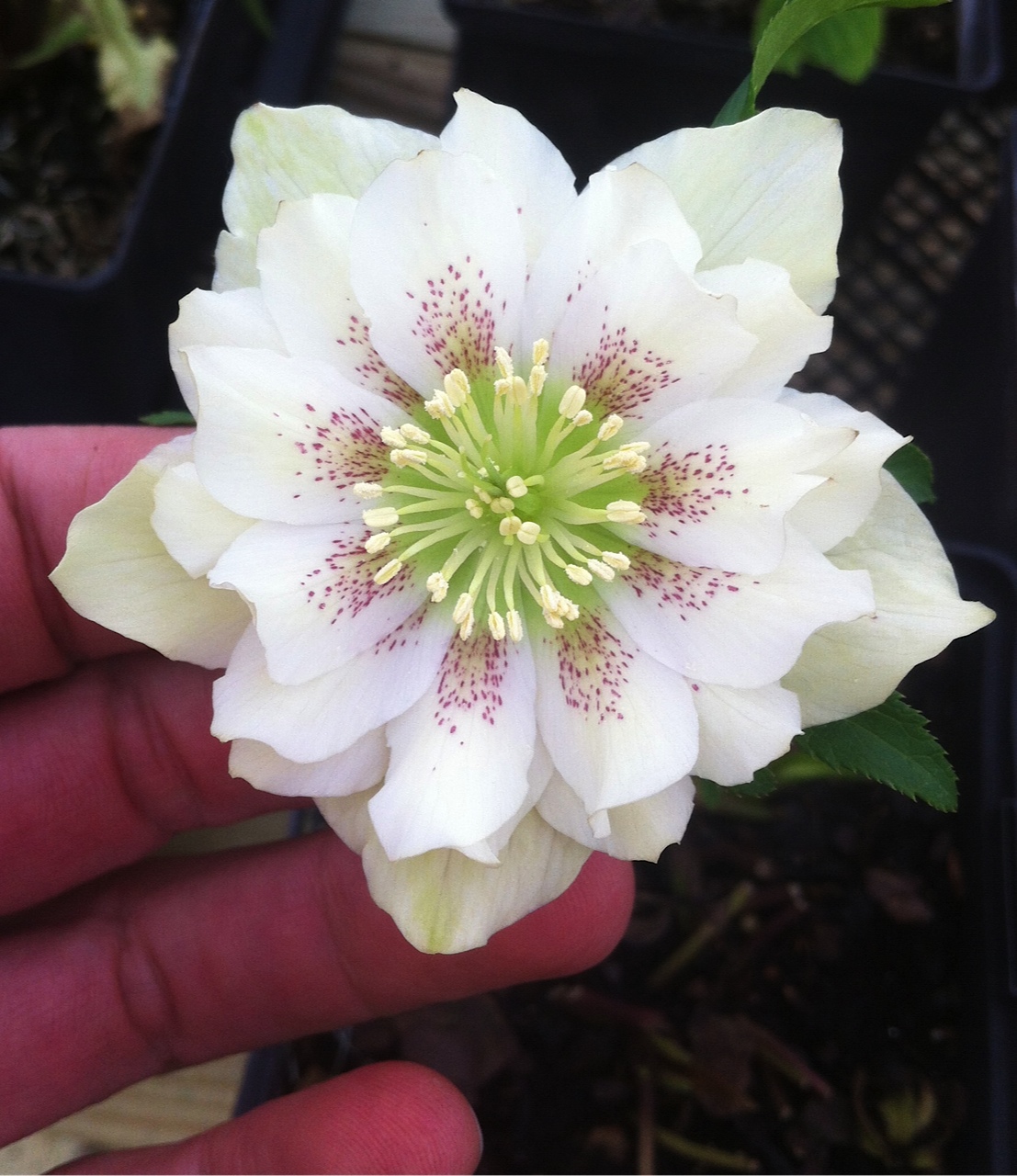
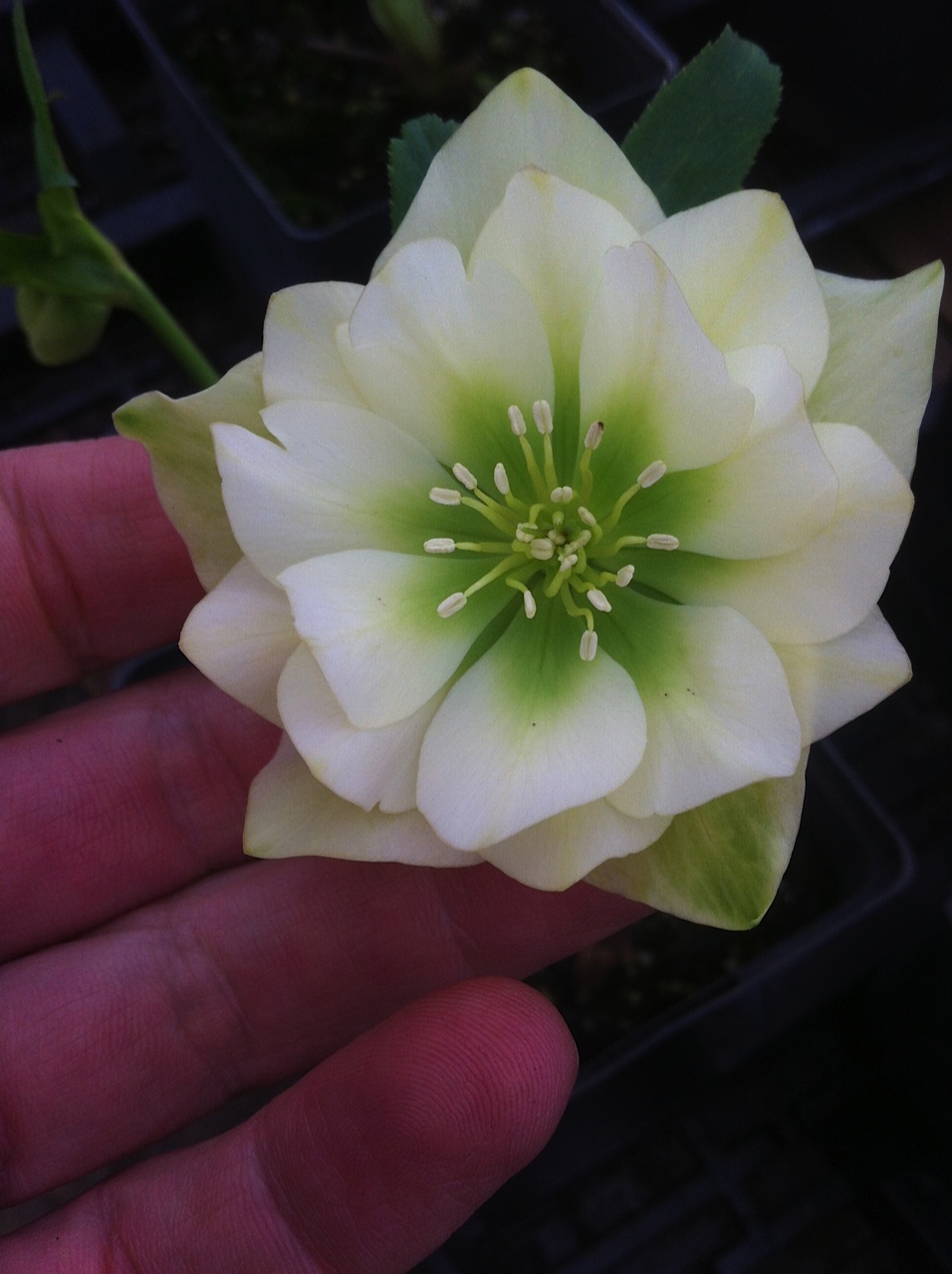
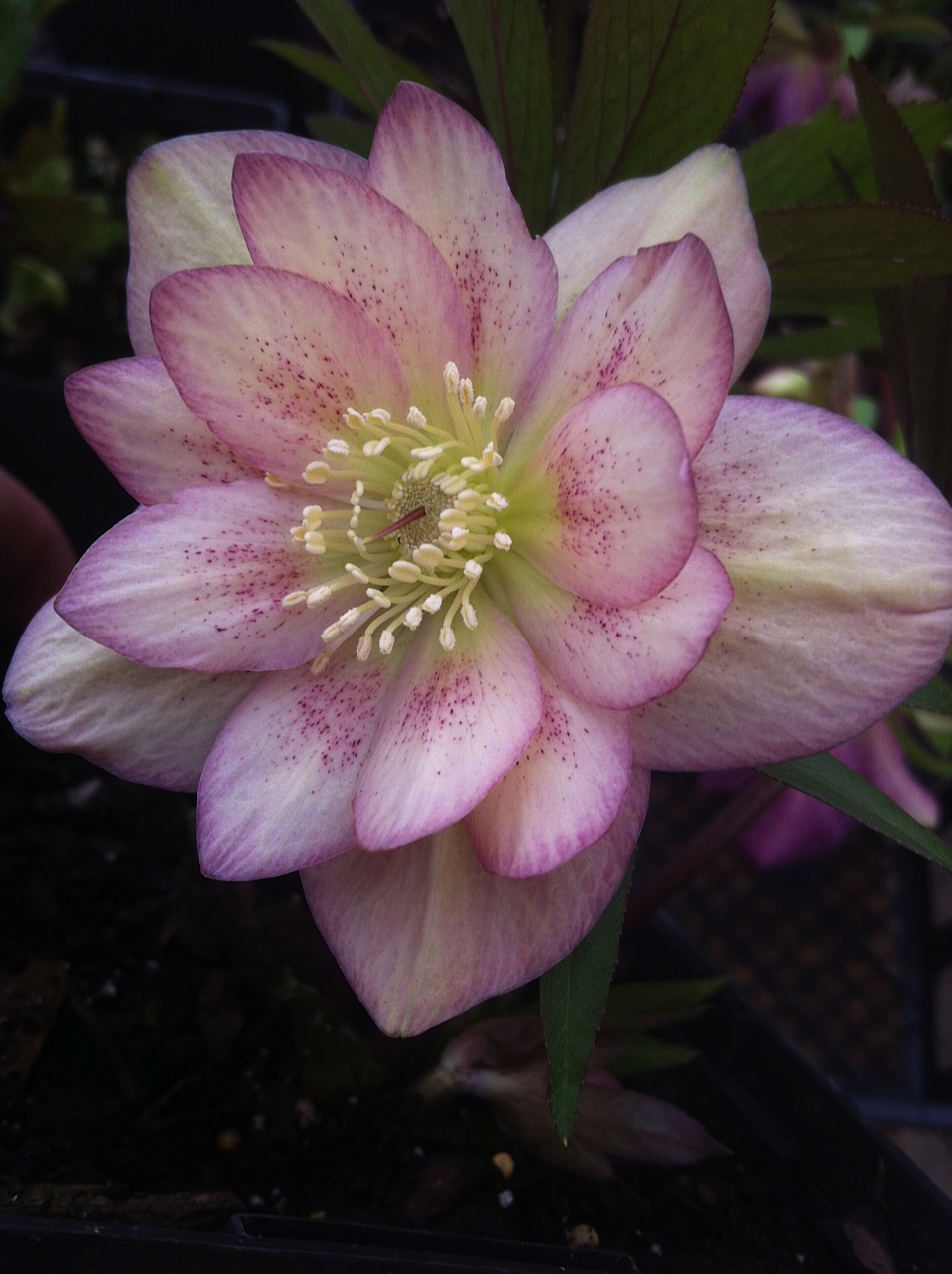
double hellebore.jpgI have never been so much a fan of double flowers.  The singles just appeal to me more.  This is a preference that is being challenged by the new varieties of double hellebores.  A flower such as this is very hard to pass by.  A fan of double bloodroot might well be taken with this hellebore.  Many of the newer named hellebores are available via the technology of tissue culture.  Helleborus orientalis hybrids of old were all seed strains.  No technology existed to exactly reproduce a particular plant.  Not that I do not treasure seed strains of hellebores.  There is always the chance of once in a lifetime spectacular plant.  No one discusses the beauty of seed strains better than Carolyn from Carolyn’s Shade Garden.

hellebore-Anna's-Red.jpgA love for seed strains of hellebores implies a gardener that can successfully bring on seedlings or grow successfully from seed (I am thinking Joseph Tychonievich who grows for Arrowhead Alpines in Michigan)-or that gardener who is intrigued by the prospect of a seedling that is yet to flower.  Not your thing?  Lots of hellebores are available true to name-meaning they are being reproduced by tissue culture.  I do have a few plants from my Royal heritage mix that are extraordinary in plant habit and bloom-others are not so swell.  This named cultivar, Anna’s Red, is an outstanding plant.  It was named after Anna Pavord, UK gardener and writer.

hybrid-hellebore.jpgNo matter what you might fancy, there is probably a hellebore that will appeal to you.  Hellebores, in my opinion, are part of that group of plants that I call fancy plants.  Fancy, as in new hybrids of hosta.  Fancy, as in unusual.  Like the Rembrandt tulips-although their news is now centuries old.  Lots of rare and gorgeous plants that gardeners are prone to become besotted over are not such great growers.  But I feel convinced that the new hybrids of hellebores are rugged plants. I feel confident in saying any effort you make to grow them will be rewarded.

anemone-flowered-hellebore.jpg I have never seen one that did not make my heart pound a little faster.  This single flower with an anemone center-wow.  Though I have always favored green or white single flowered hellebores, I see no good reason not to change my mind.   Interested further?  The book “Hellebores – A Comprehensive Guide”,  written by C. Colston Burrell and Judith Knott Tyler is a  classic.  Judith’s nursery, Pine Knott Farms, is a major supplier of fine hellebores.  Even a casual internet search will provide lots of information and sources for this stellar spring blooming perennial.

double-white-hellebore.jpgRob always has a fresh idea for Detroit Garden Works.  This winter has been so severe and so long, I doubt anyone will be turning over the dirt much in March.  The freezing and snowy landscape notwithstanding, every gardener will be ready to talk plants the first day we hit 40 degrees.  He has a plan for a big opportunity for some gardening conversation.  In late March, we will have over 600 hellebores available for review and purchase.  A helleborus Festivalis.

hellebore-hybrid.jpgEvery gardener has a big interest in plants.  The plants are a bridge where every gardener of every persuasion might meet.  That bridge is a place to be.  A chance to move from where we are, given a little conversation and exchange, to where or how we might want to be gardening.  We hope you are able to join us March 22nd and 23rd  at Detroit Garden Works for a little taste of the spring to come.

pink-double-hellebore.jpgA double pink hellebore might be just the thing to chase away the late winter blues.


A Belated Valentine

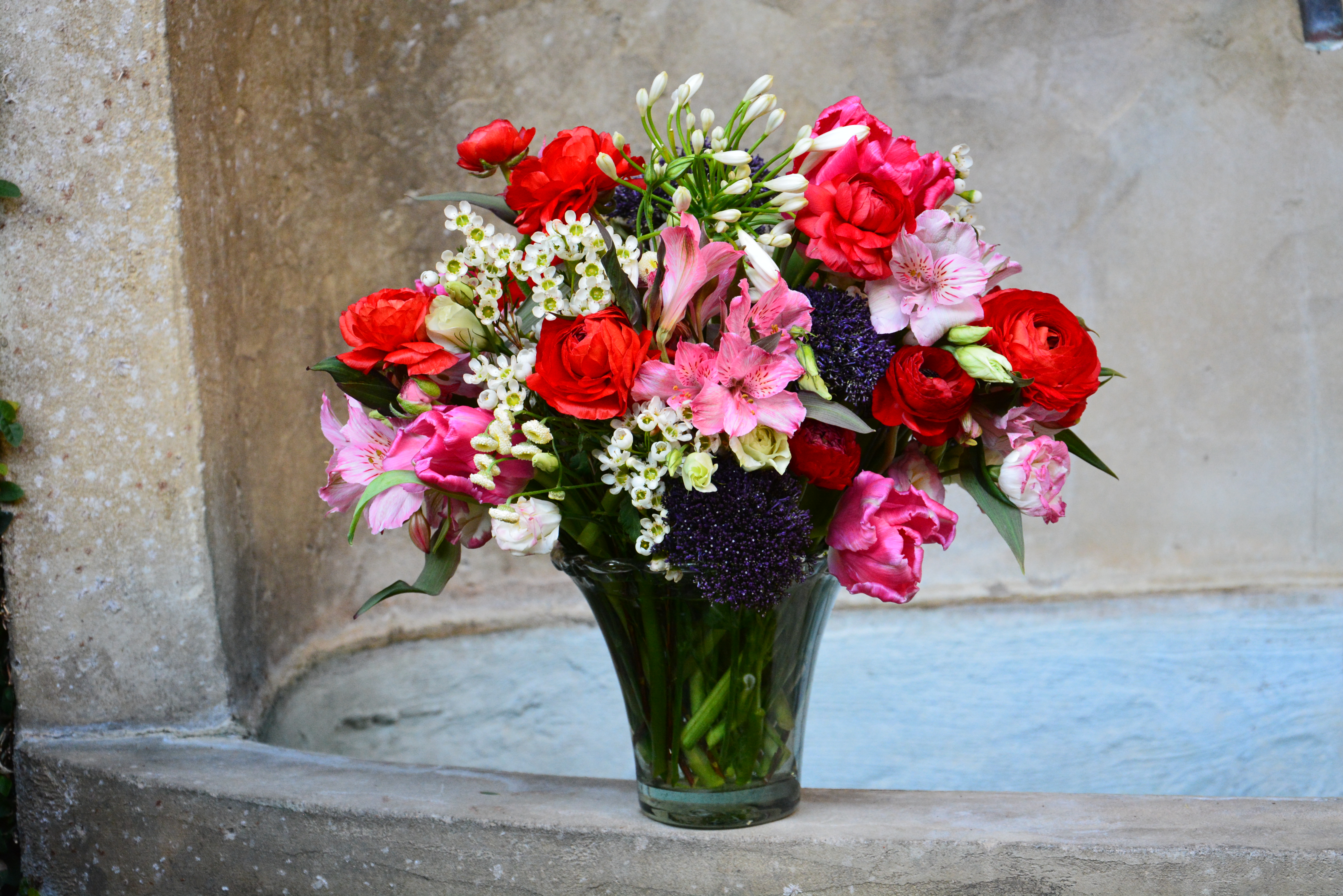
cut-flowers.jpgI did have Valentines flowers to arrange and deliver Friday, most of which got away from me before I could photograph them.  But the process of arranging gave me some time to think about them-the flowers, that is.  In the dead center of February, in the middle of a too cold snowy and icy winter, I had tulips, roses, alstromeria, waxflower, ranunculus, lisianthus, tracelium, white button pomps, black red carnations and godetia in my hands.  Just the smell of all of that fresh and living was pretty exciting.  Like most gardeners, I am used to the dirt that nature dishes out.  But this winter came early, and shows no sign of letting up, months later. I have to admit I am ready for a change of seasons.  No wonder Valentine’s Day comes at this time of year.

flowers.jpgThis winter began for us in November.  By Thanksgiving, the ground was well on its way to freezing, and we had snow.  We are closing in on three months in which we have had snow entirely covering the ground, and cold that penetrates to the bone in a matter of minutes.  Of course I am dreaming in color.  And thinking about flowers.  Nothing in my environment is green now, much less flowering.  The work I am doing now revolves around design.  This means black lines on white paper.  Ideas. Representations of places.  All of this work is abstract.  I am not standing on a patch of dirt, with the sky overhead.  I am not digging holes.  I have not one patch of green, anywhere.

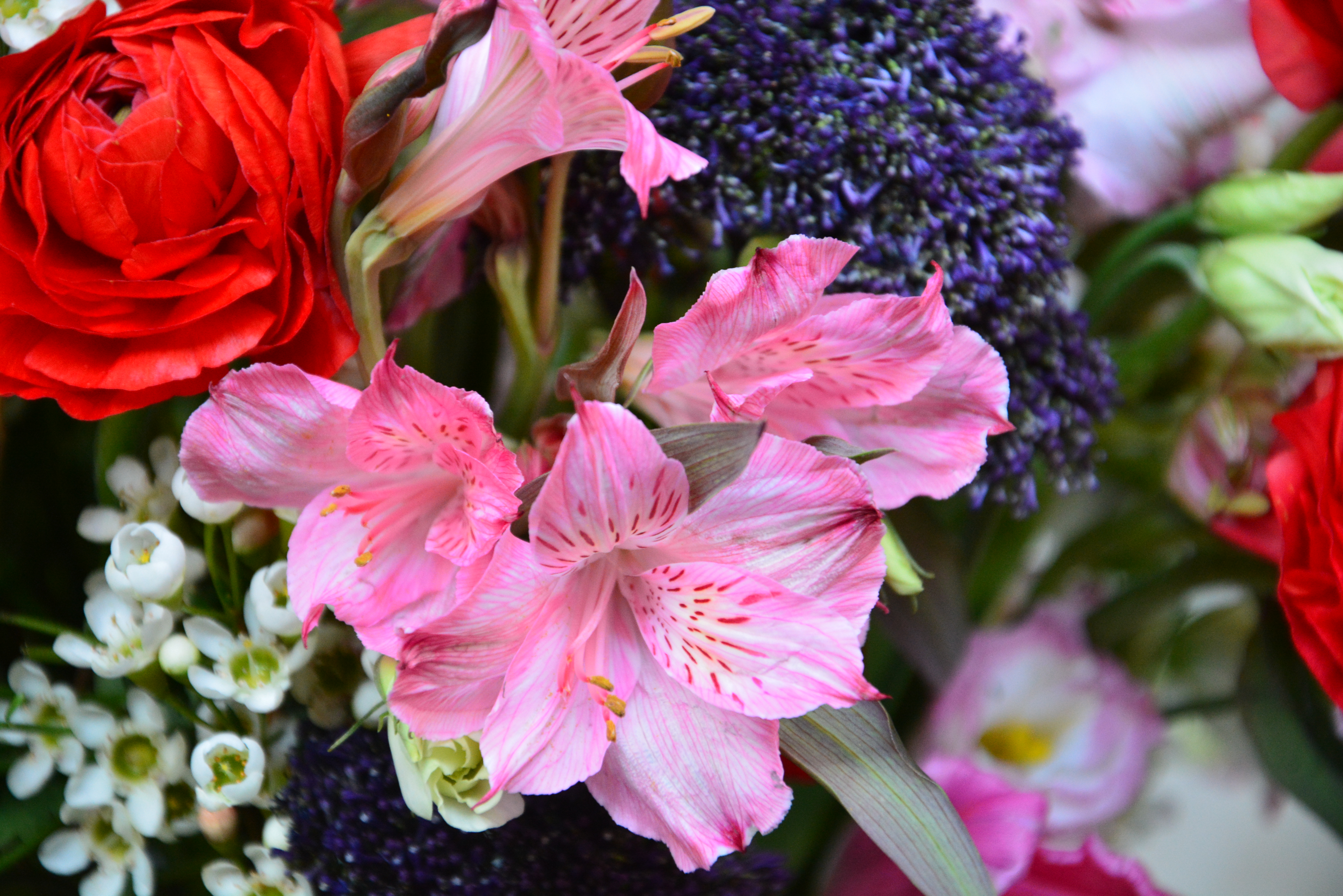
pink-alstromeria.jpgThis is as good a time as any to talk about flowers.  Did I evolve from a person to a person of gardening inclination from exposure to flowers?  It could be.  I am not a botanist, but my quick take is that flowers make the process of pollination and seeding a visually sexy affair.  Some flowers are irresistible to hummingbirds or bees, or moths.  That flowers might be attractive to me is not nature’s intent.  Some hybrid flowers are sterile.  Though they are beautiful beyond compare, there will be no babies.  Just me-I have been reduced to a baby state by the length and ferocious nature of this winter. I understand completely that plants do not flower to make my gardening life more beautiful.  But they do.   What they do for this garden starved person in February-enormous.

Hollywood rose 002There are many things about gardening that satisfy, beyond the flowers.  I am interested in outdoor spaces designed to embrace people.  I like grass to lay down on, after a long day.  I am awed by trees of age.  I am interested in texture, mass, motion, rhythm, line, color, and form-in the landscape.  There is a fondness and respect for every  green plant.  Is one better than another?  Not really.  I may like peonies better than delphiniums, but that is a matter of taste, not worth.

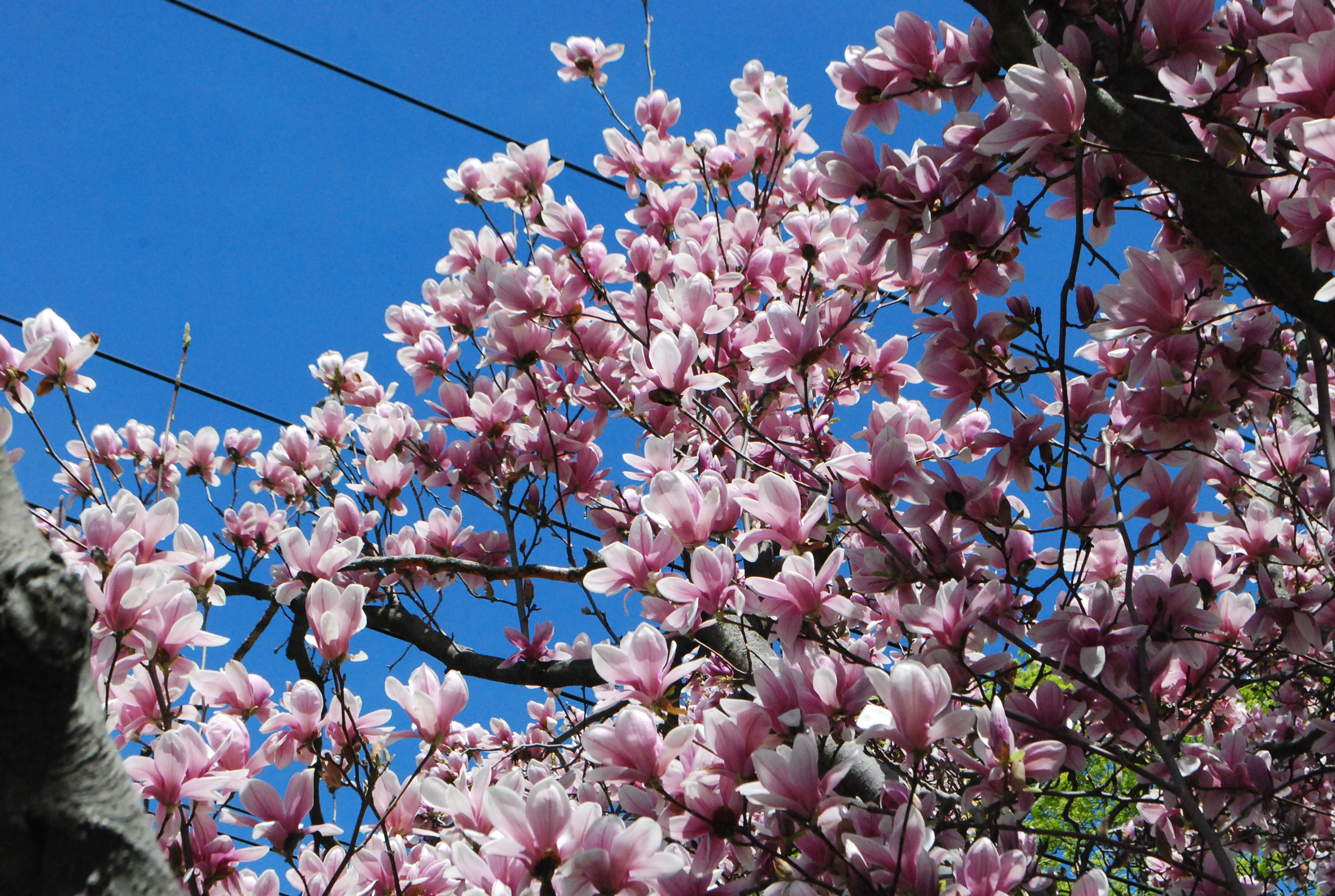
May 2 2013 (33)There are some years when the flowering trees enchant.  Last spring was the first spring in two seasons that this magnolia bloomed.  The previous year, every bud was frosted off by a long late spring cold snap.  I was so ready for those flowers to emerge.   Other years, I feel like flowers on trees look silly.  How could any tree as sculptural and majestic as a magnolia go the frivolous route of tarting themselves up with big blowsy pink flowers?  Are the big glossy leaves and pale gray bark not enough?  The magnolia stellata outside my window this morning is  making ready for spring.  How can I tell?  The snow this morning is accumulating on the enlarged buds.  The snowbuds tell me March is not so far away.

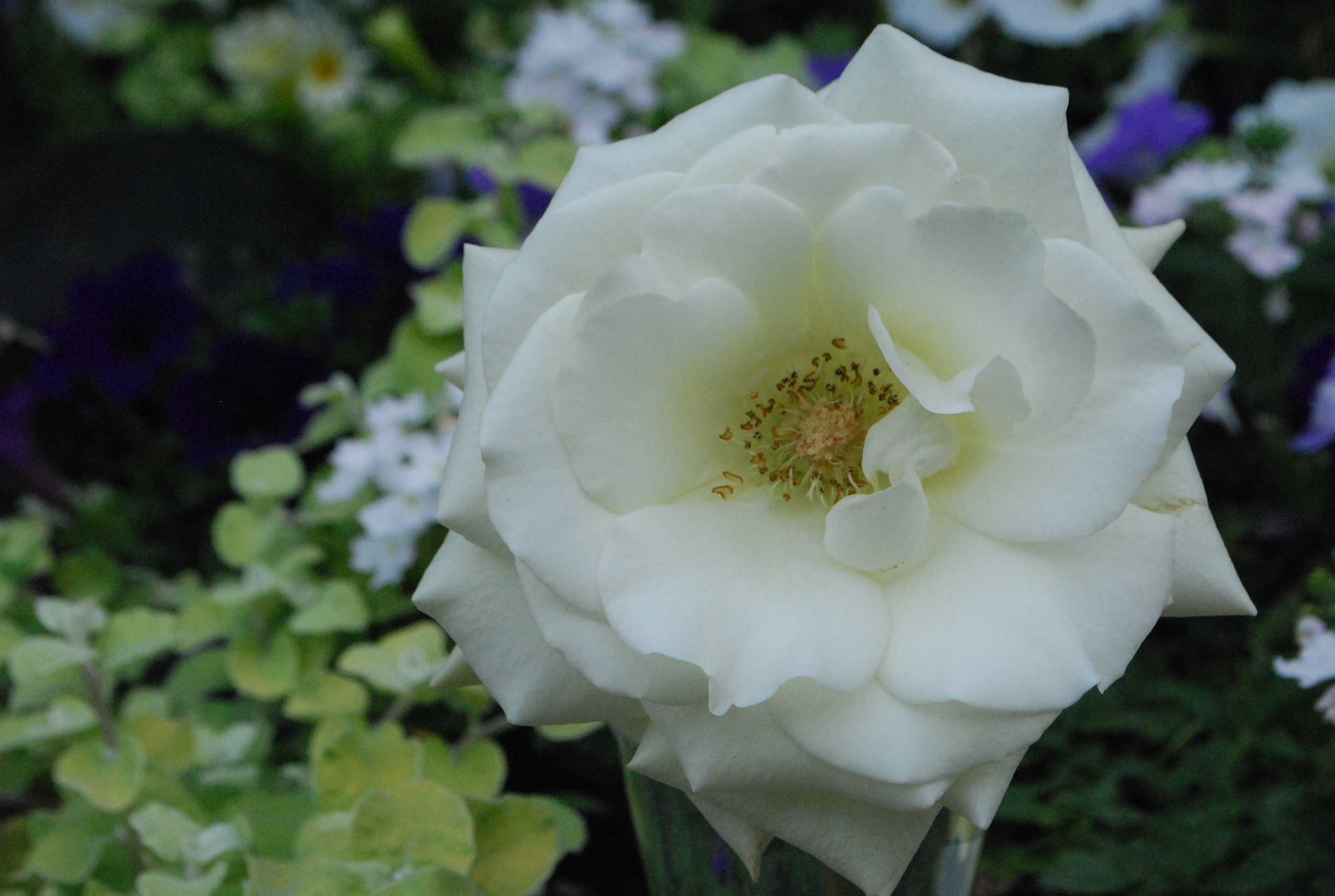
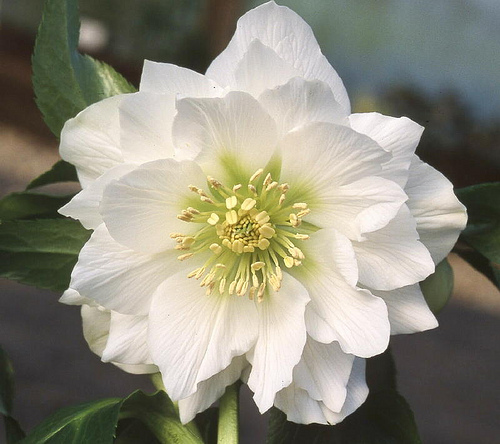
4284263358_538beec025White flowers are not tough to love.  They have a fresh and pristine look so unlike the dirt they came from.  The white of this double flowered hellebore is all the more striking, given the pale yellow stamens and green flares.  I like single flowered hellebores, but I would grow this double without hesitation. Why?  I like flowers.  Ugly flowers-could those two words ever be side by side?  The flowers of butterburrs, Dutchman’s pipe and American ginger are not exactly what I would call lovely, but they are flowers none the less.

July 28, 2011 028
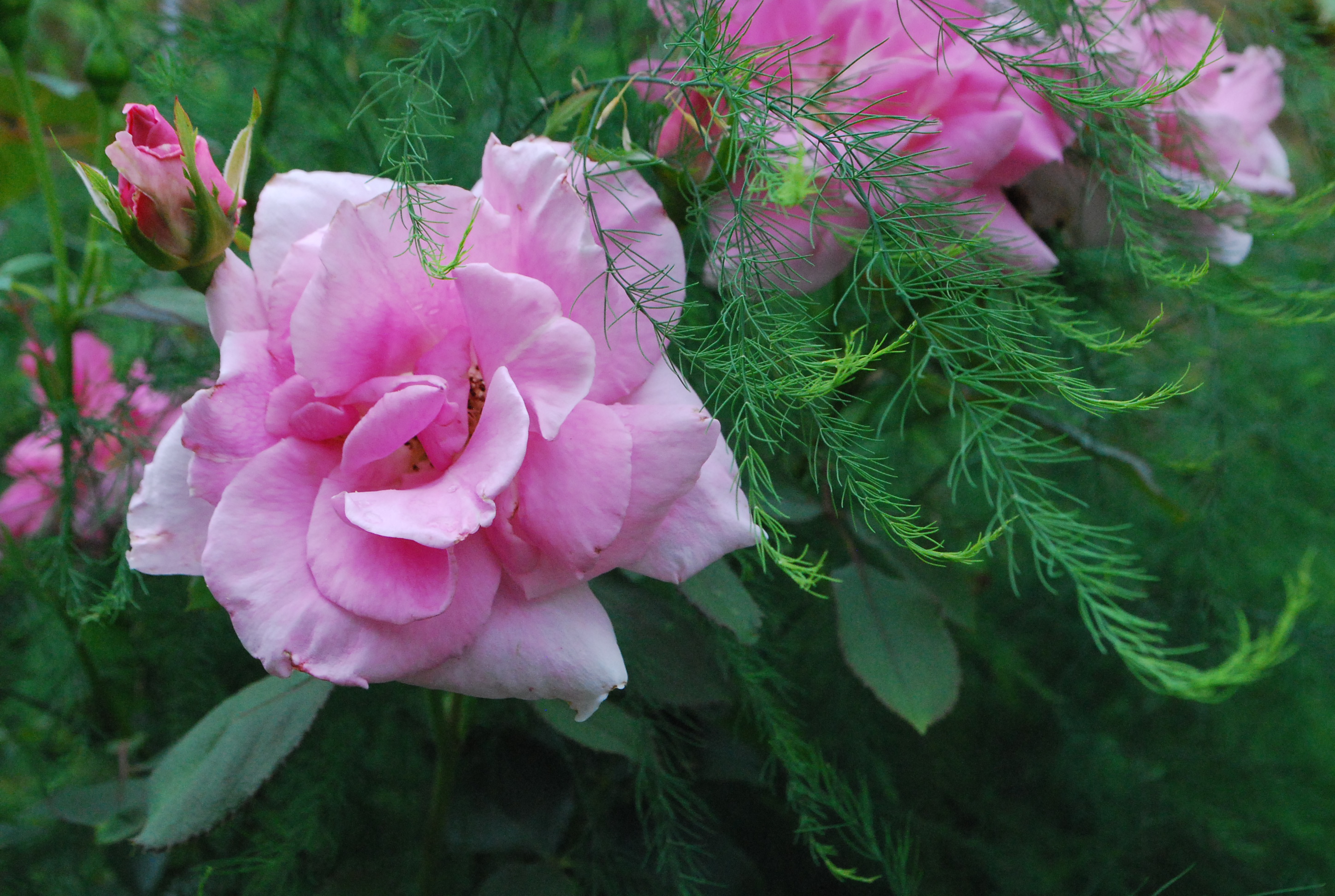
Roses fall in and out of favor so fast a gardener can hardly keep up. They can be easy to dismiss, given their ungainly habit of growth, their affinity for disease and Japanese beetles.  Not to mention that they are so, well, girly.  This overblown pink Carefree Beauty flower is not to everyone’s taste.  I grow this rose in spite of all the work they require because I like the flowers.

Aug 25 2013 (4)There are lots of other roses I cannot grow, that are only available to me as cut flowers, grown by someone else.  My Carefree Beauty roses would never be available as a cut flower.  They last no longer than a day or two when cut.  The history of the romance of the rose aside, a flower which can last for a week or better in water is especially welcome in mid February.

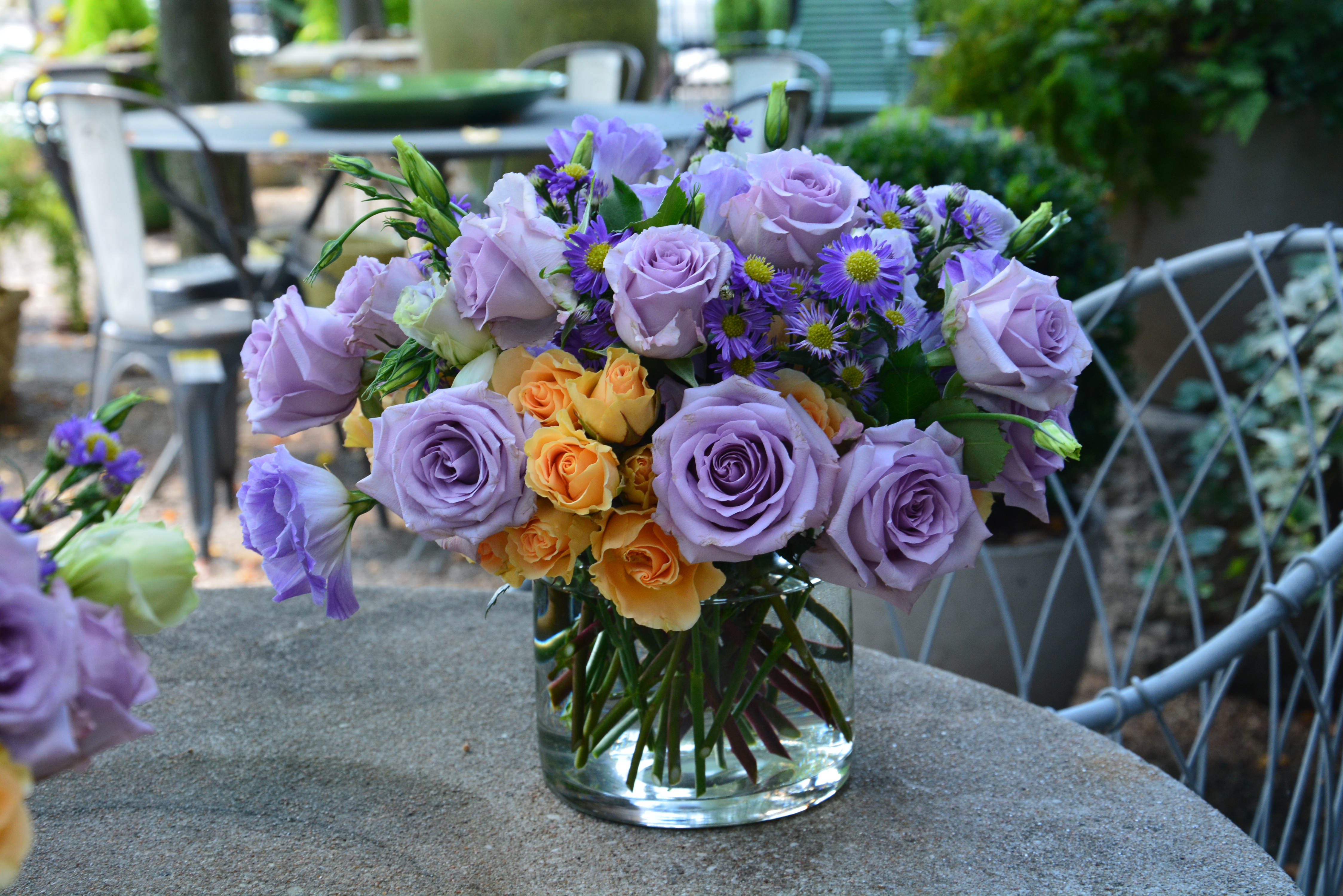
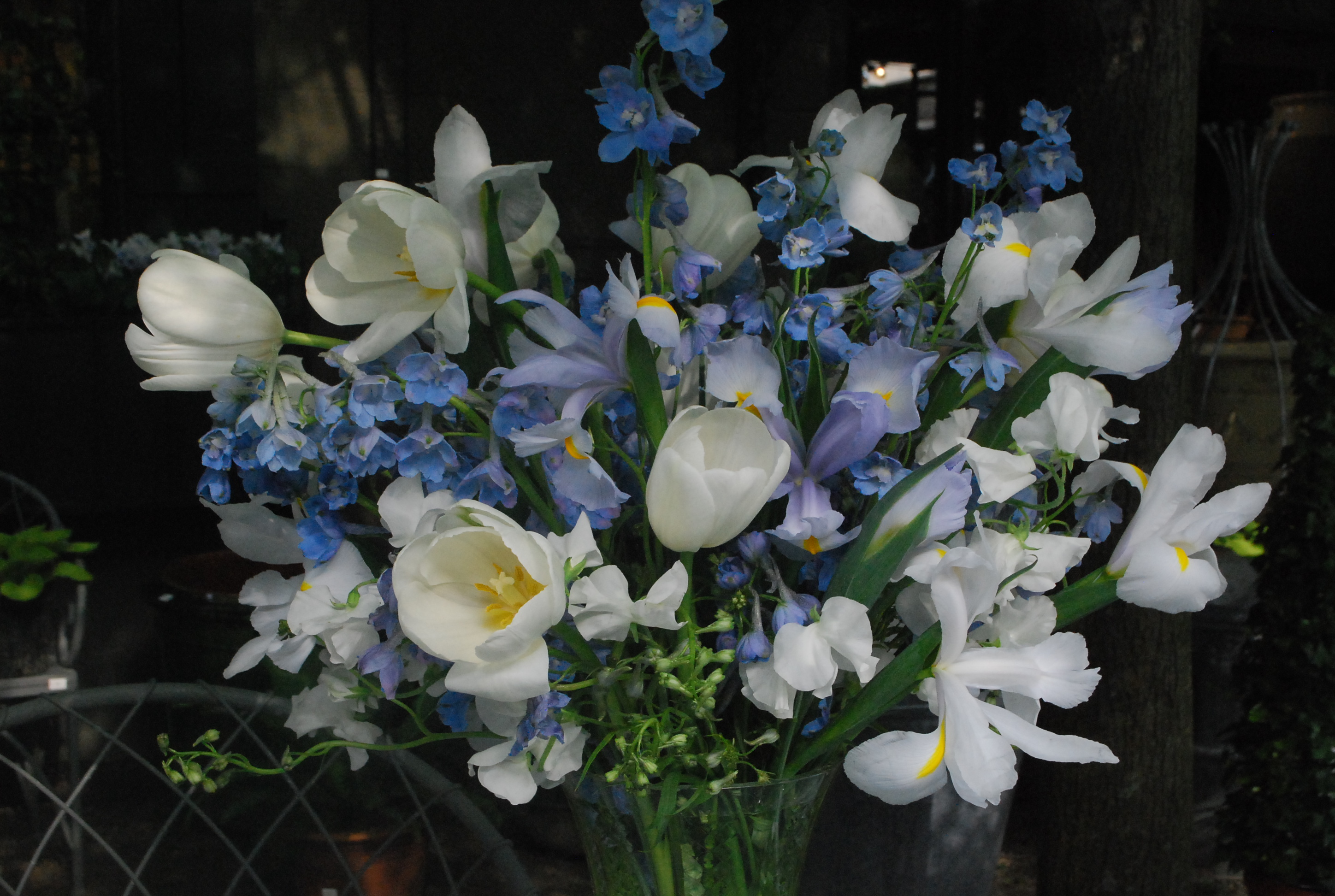
Mother's Day 2012 011I like cut flowers in season. When the tulips are in bloom, arrangements with cut tulips have that extra from the garden cache.  But there are no flowers of any description in season in my February.  How great it is to have the opportunity to put vegetables and flowers in a grocery cart in February. Tulips, Dutch iris, delphinium and sweet peas in February?  Bring them on.  Buck brought me a dozen Confetti roses for Valentines.  As much as I love the yellow flowers whose petals are edged in orangy red, I am most fond of how willing they are to open wide and flat – this a memory of the roses in my garden.  They look so beautiful this morning.

valentineOf course everyone has their own idea of what tugs at their heart strings, come February 14.


At A Glance: Leaf Deprived


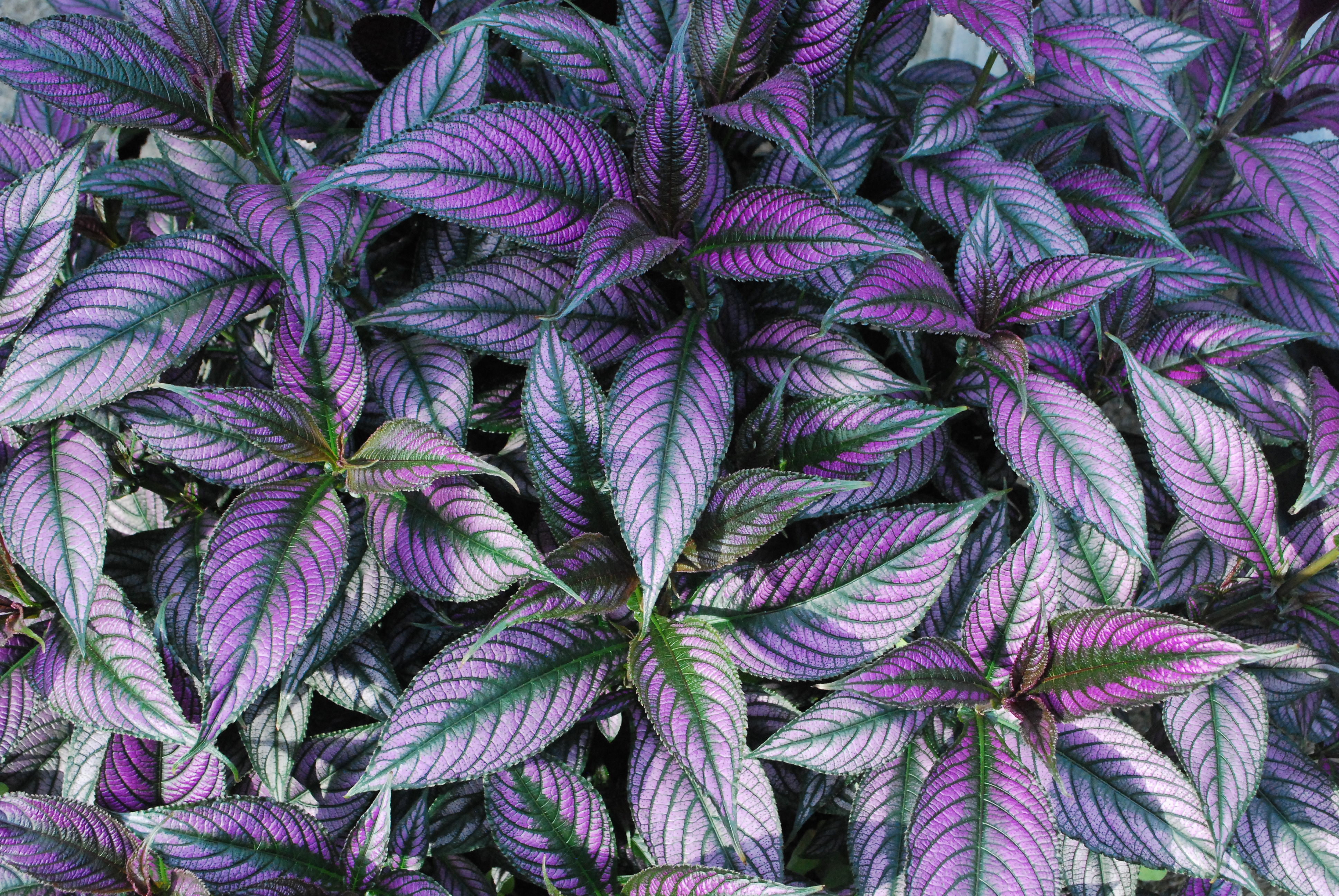
Sept 1b 2012 006The Michigan landscape has a decidedly arctic look to it right now.  I thought these pictures might be a comfort to leaf deprived northern gardeners, myself included.  Strobilanthes is commonly known as Persian shield.

Sept 1b 2012 003asclepias incarnata, orange sedge, and verbena bonariensis

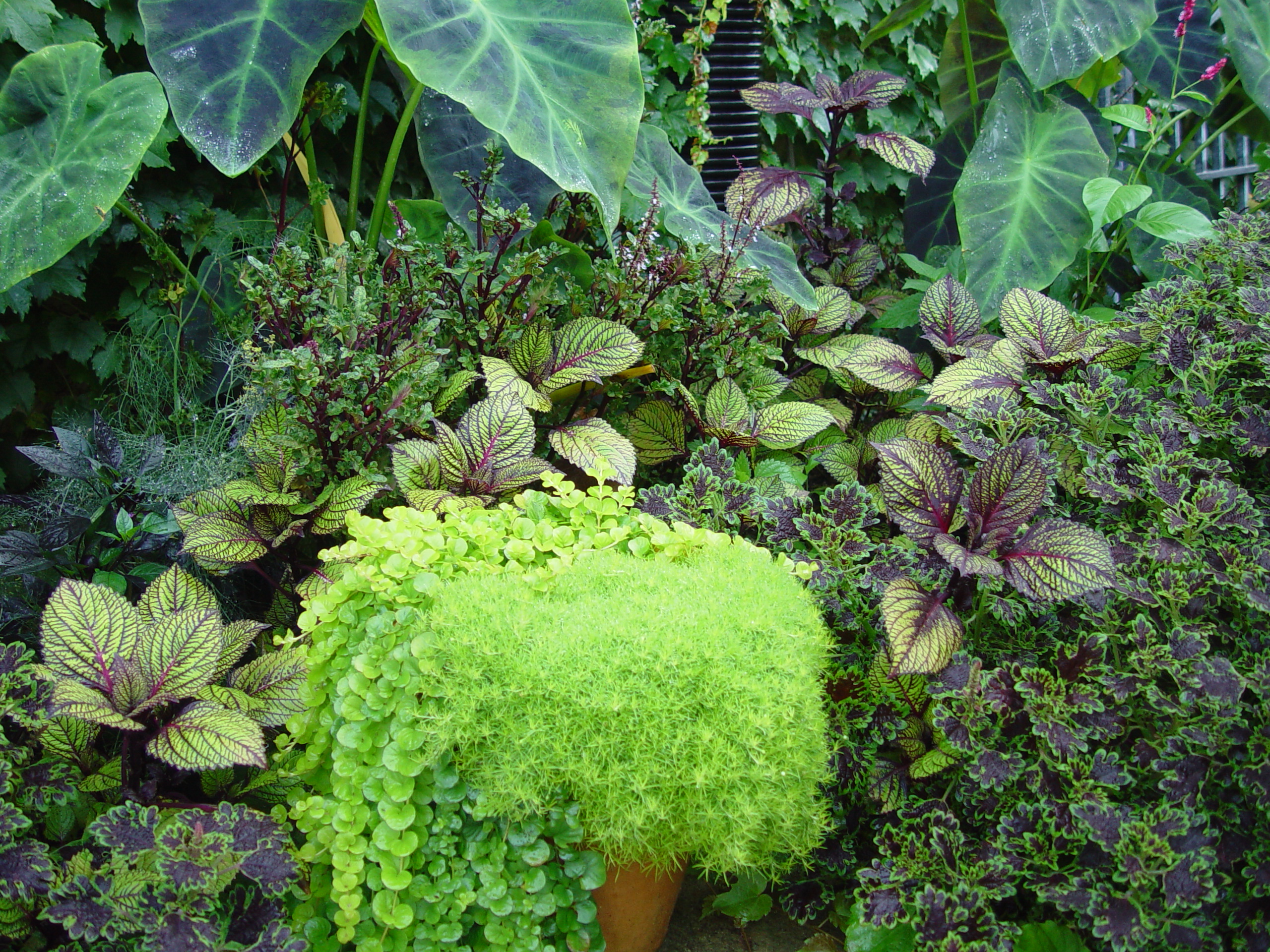
Annuals 2006_09_19 (7)calocasia, coleus, creeping jenny and scotch moss (sagina)

Sept 15, 2013 (65)plectranthus, dusty miller, and barbed wire plant

dgw c (2)hosta, lime green selaginella, and clear sky primrose pansies

DGW 2006_07_26 (31)
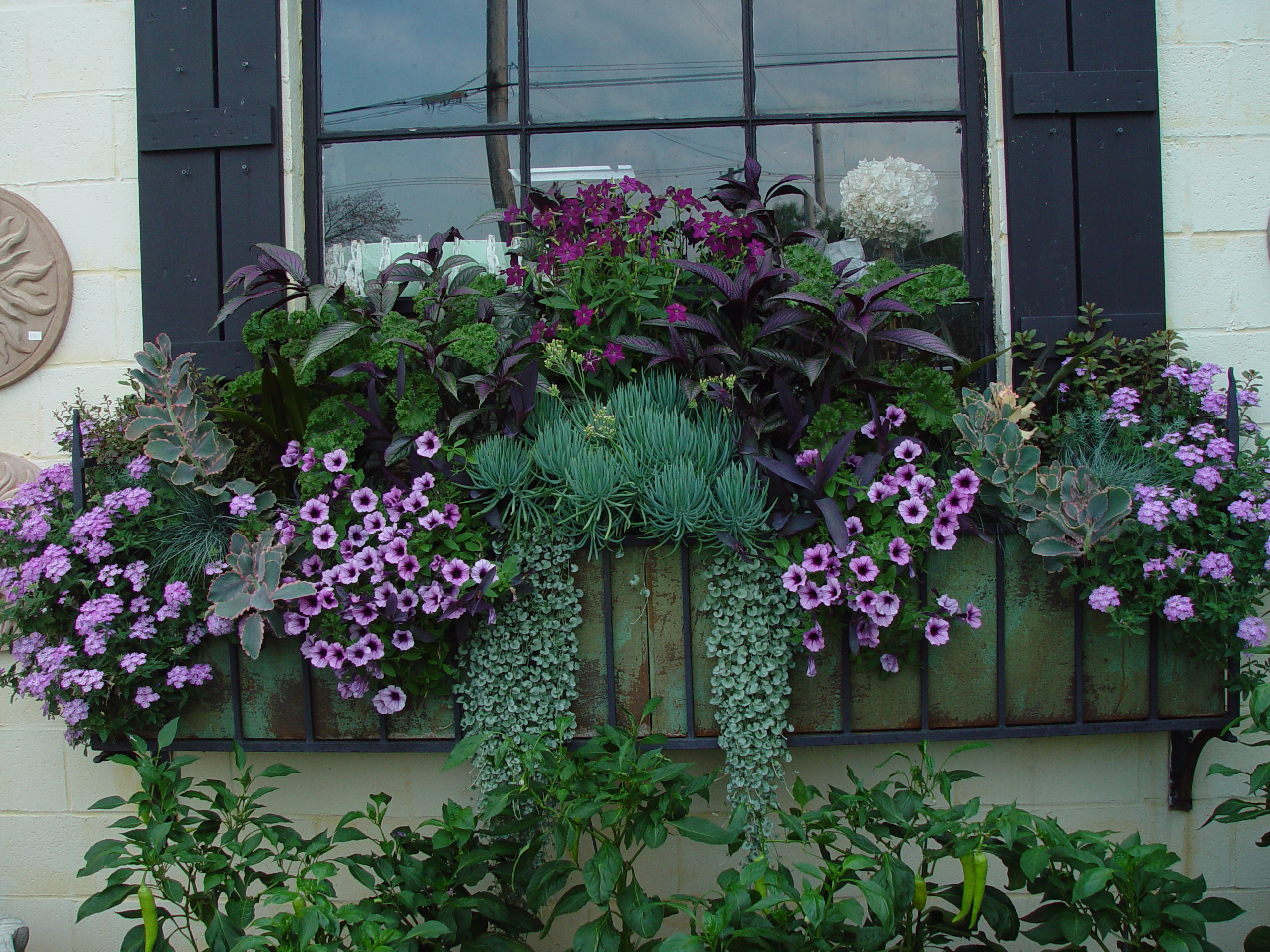
blue green and red-violet- Persian shield, perfume purple nicotiana, red bor kale, senecio “blue chalk”, lavender star verbena, silver falls dichondra, petunia

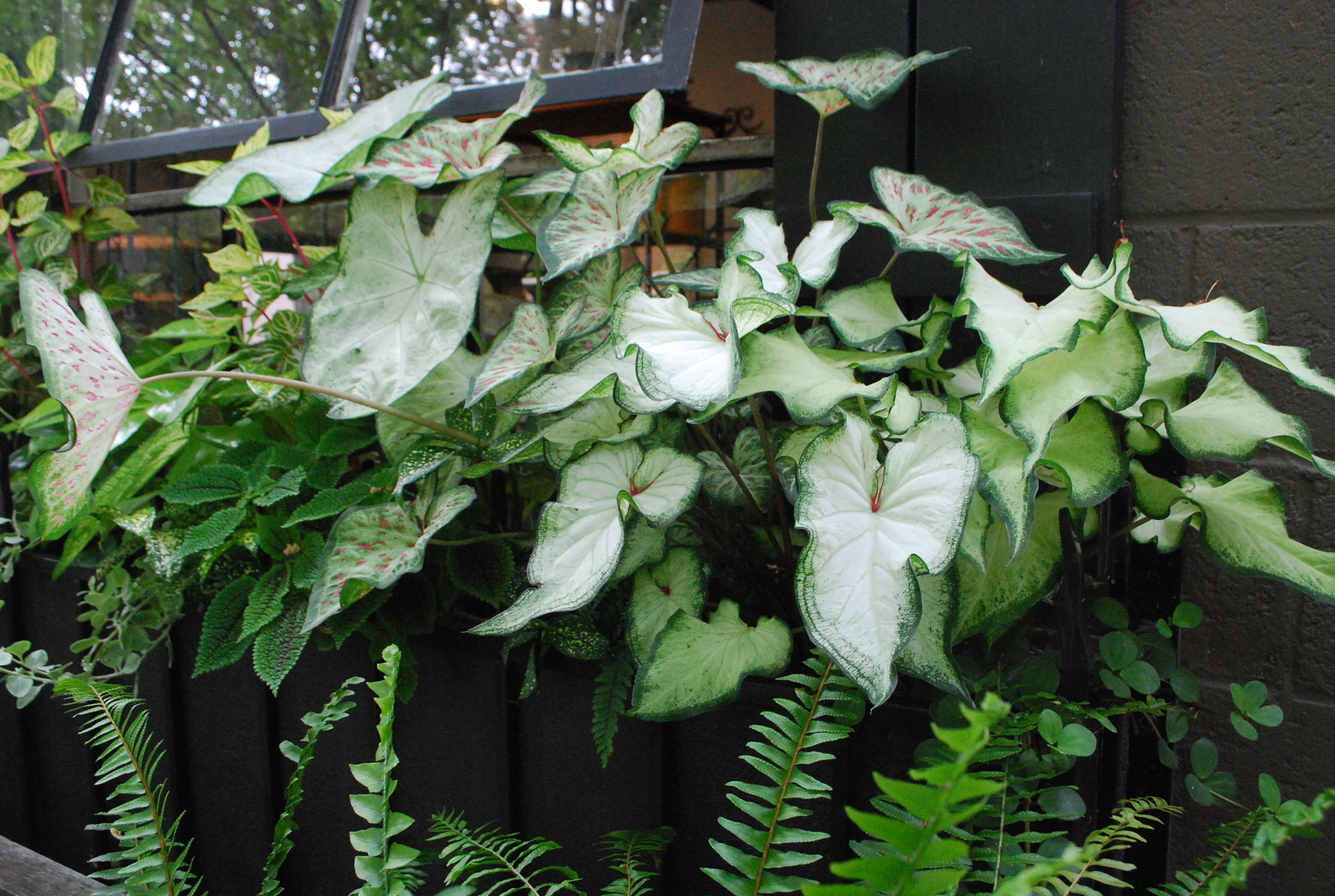
Aug 9, 2011 027caladiums

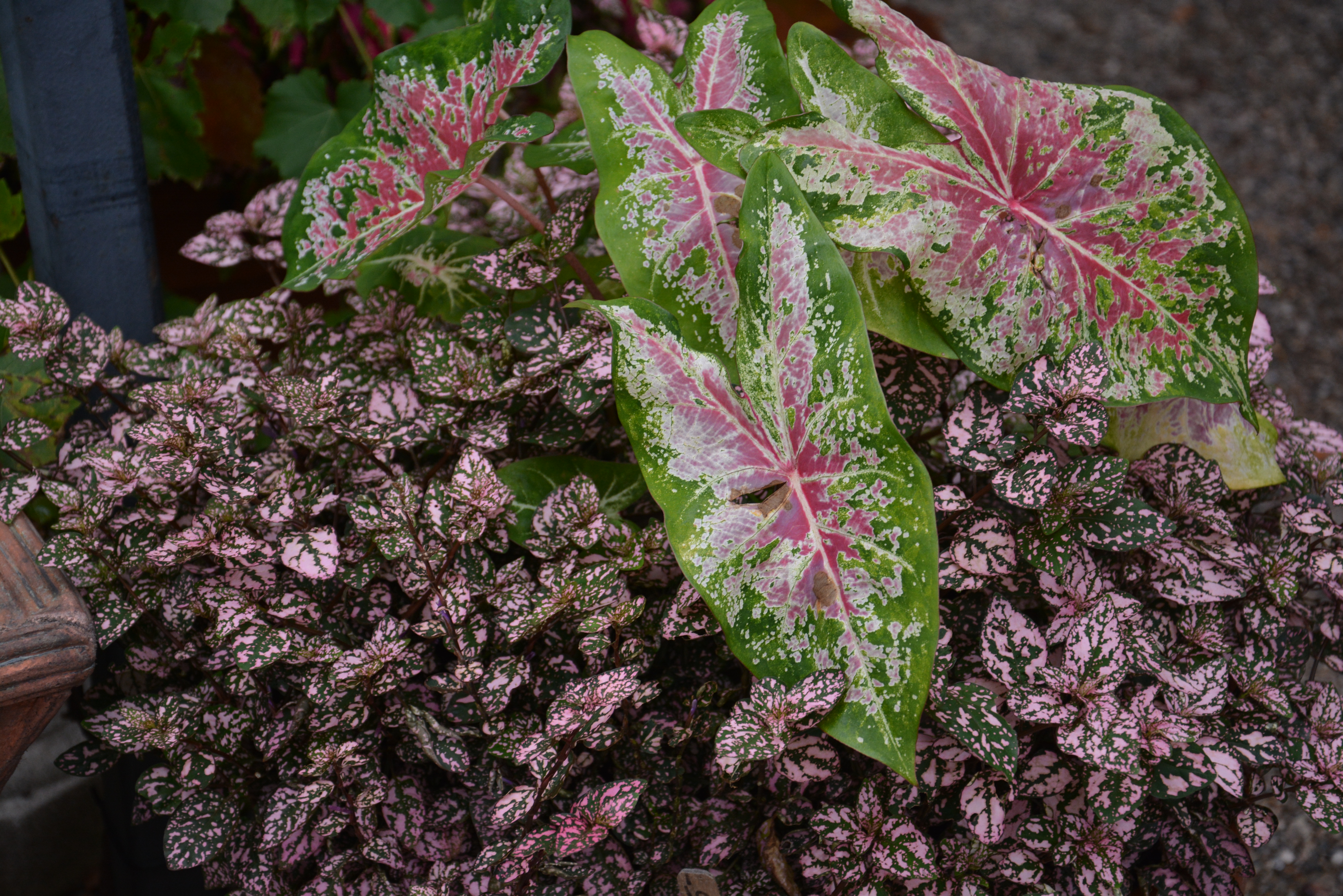
Sept 15, 2013 (78)caladiums and polka dot plant

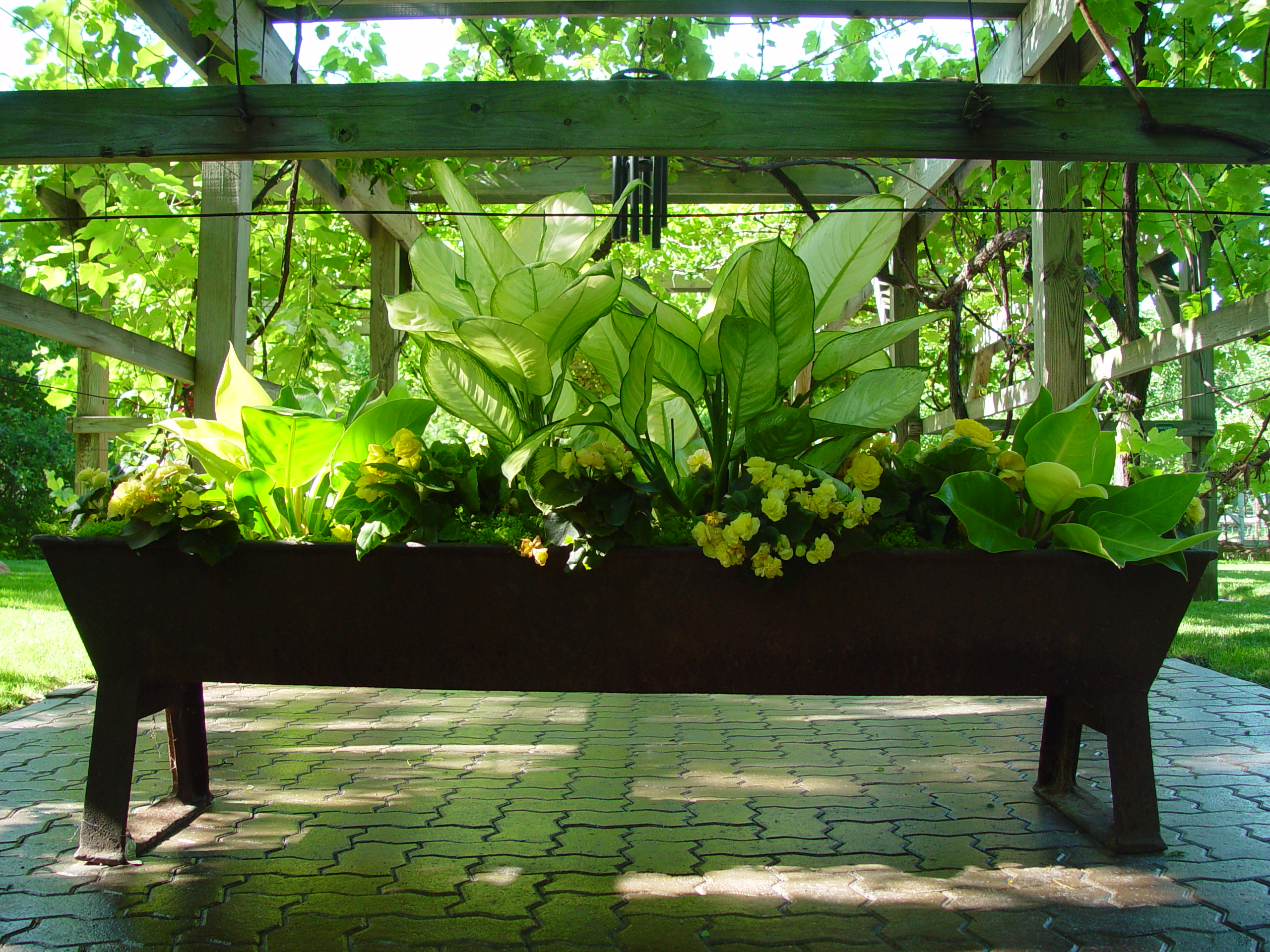
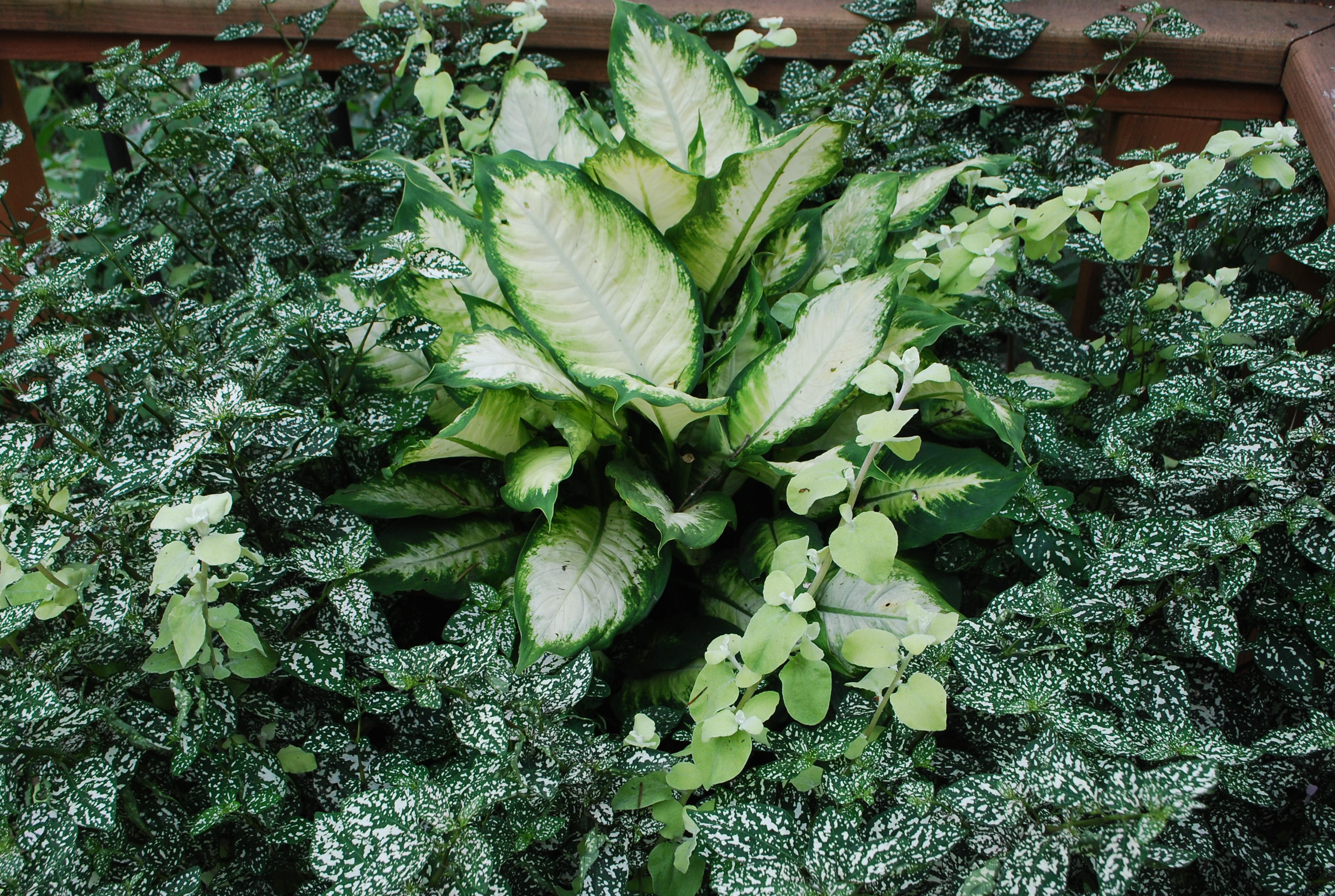
dieffenbachiadieffenbachia and company

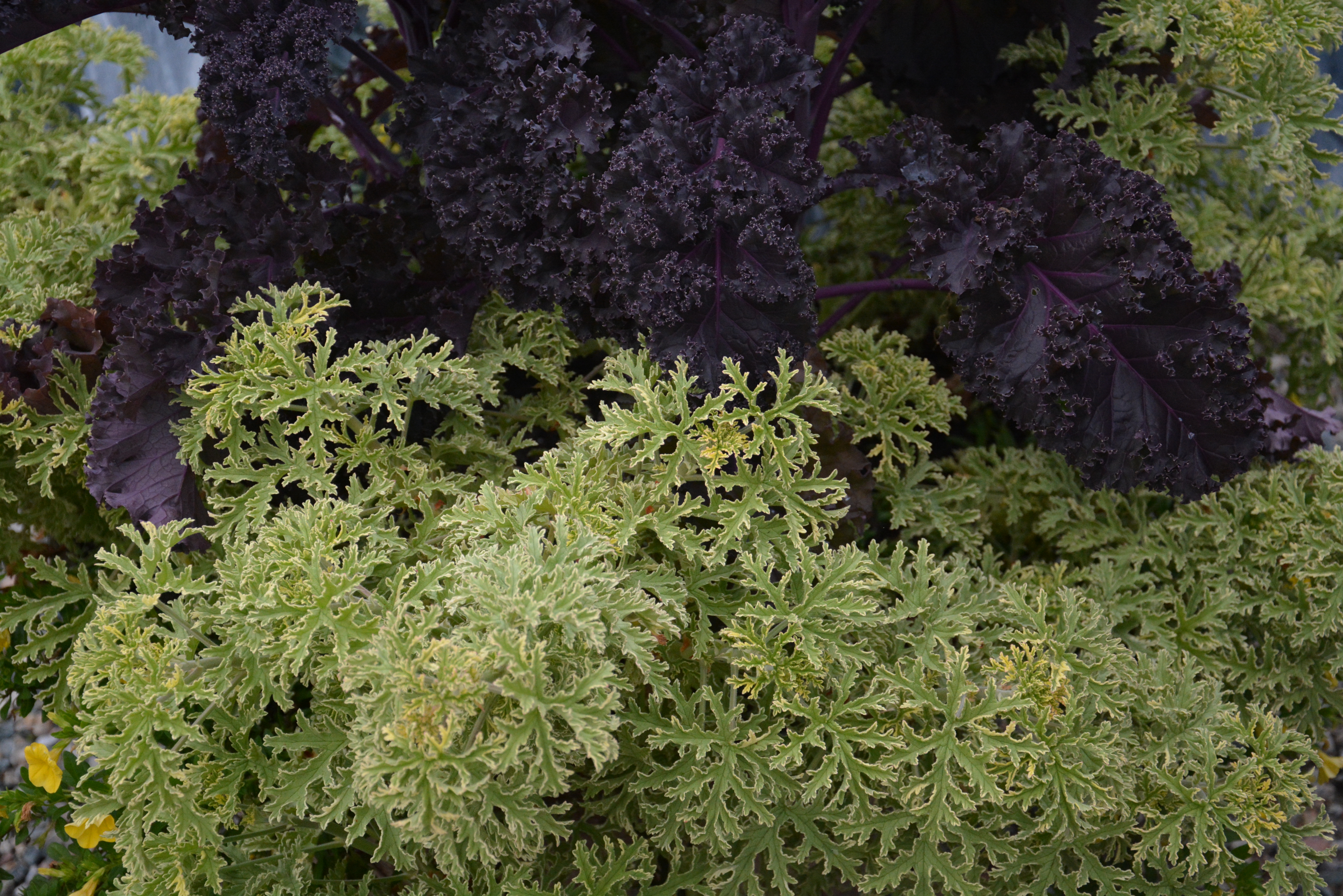
Sept 15, 2013 (68)red bore kale and variegated scented geranium

audi 027Can’t wait for the coming of the leaves.