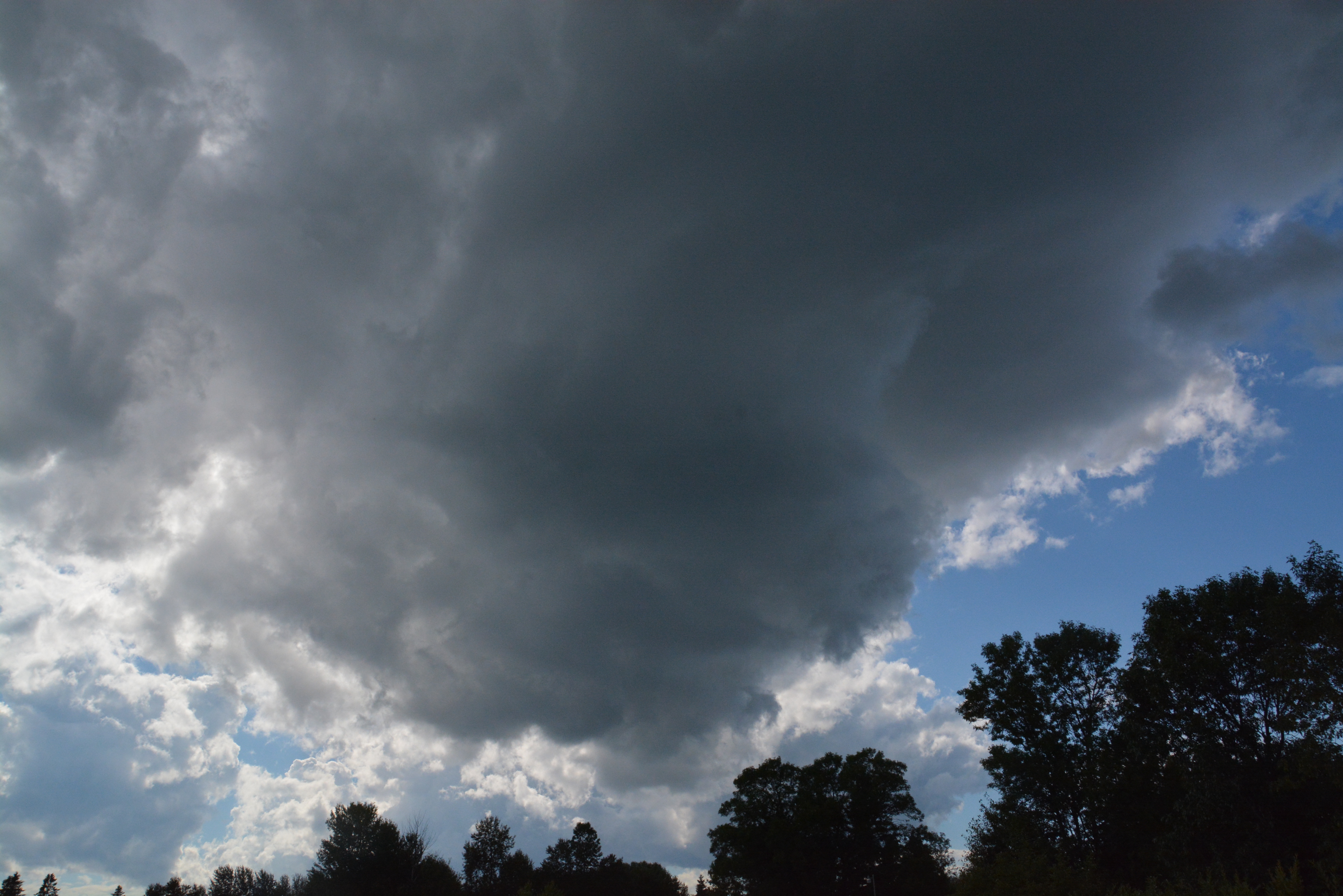
At A Glance: Looking At The Landscape

storm-clouds.jpg
My life revolves around designing the landscape.   Designing a landscape asks for 10 parts skill, and 110 parts observation, and 1100 parts intuition.  I would go so far as to say a great landscape design requires 110,000 parts history and memory.  It may require an additional 1,100,000 parts, contributed by nature.  My interest has been sustained, and challenged by nature.
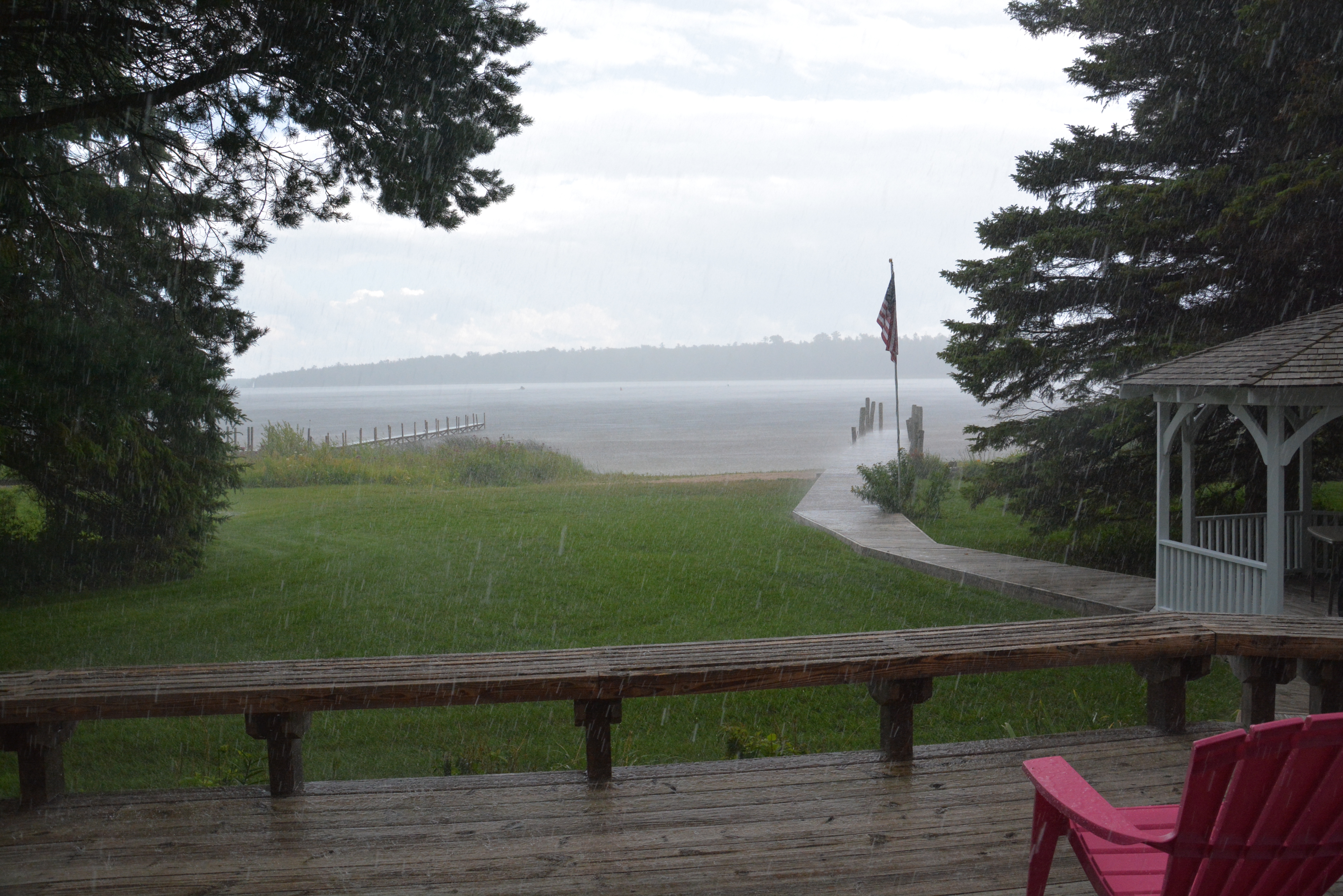
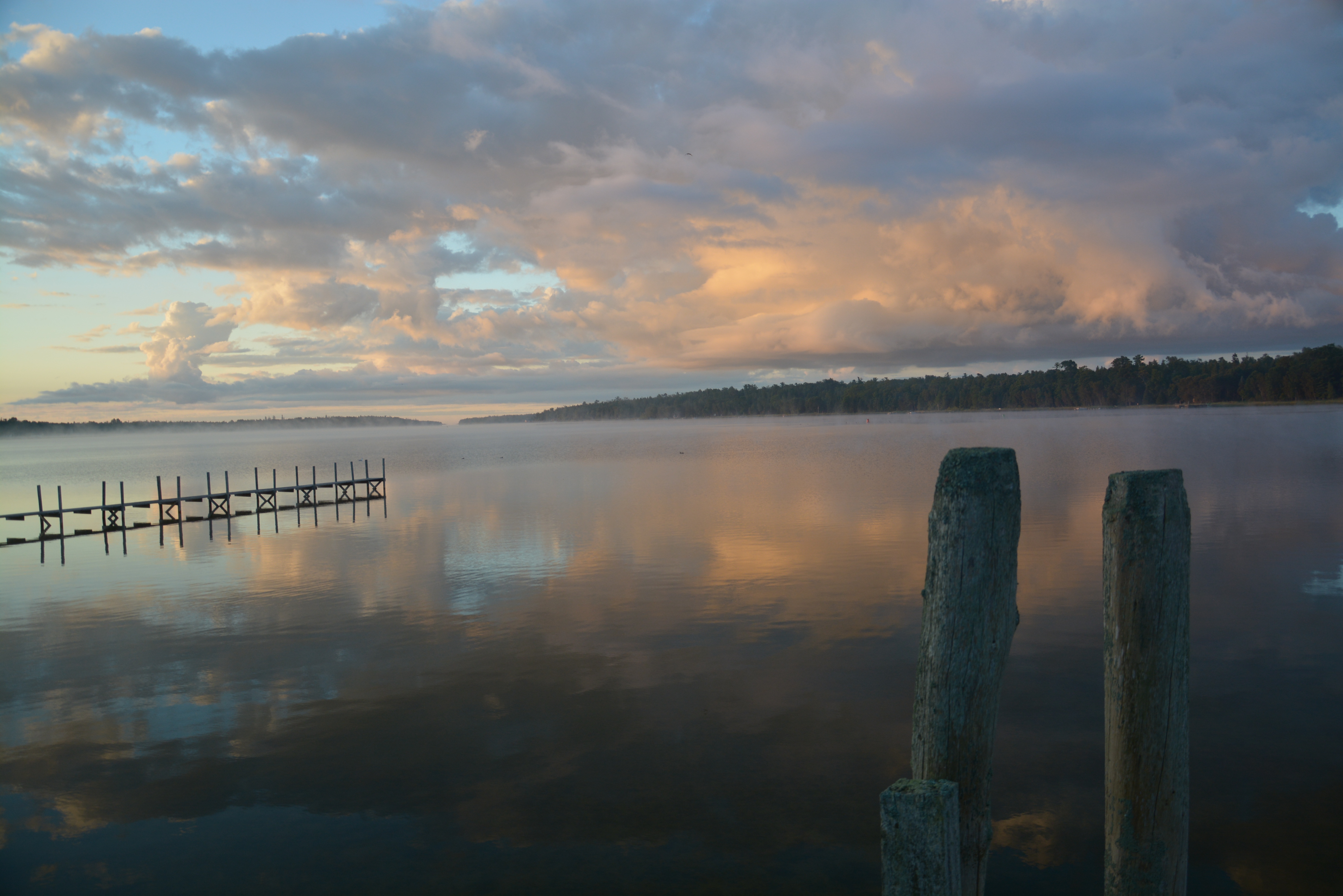
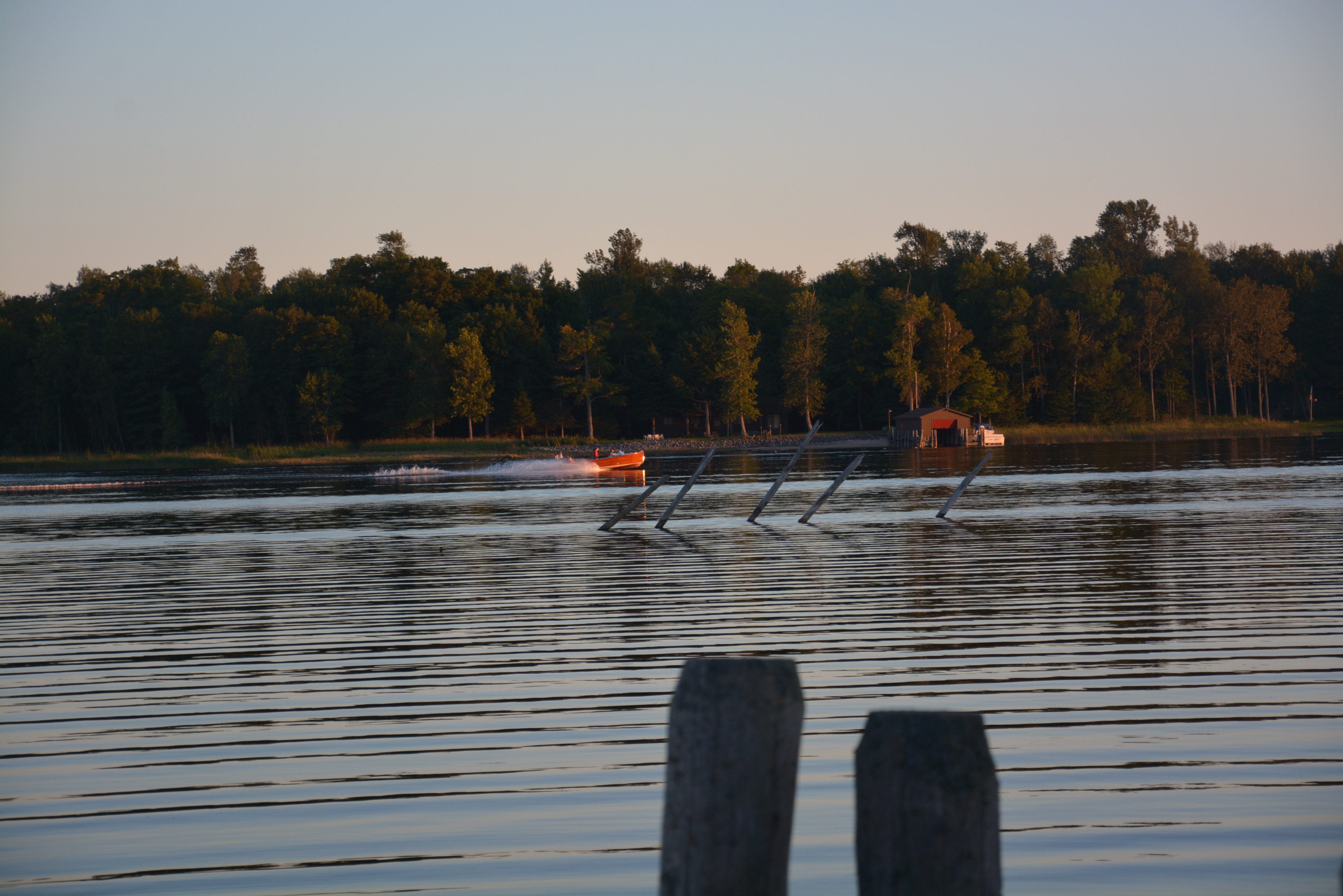
weekend-visit.jpgI met my brother Pete where we spent our childhood vacations this past week. Pete, Tine, Buck and I spent a few days just looking at the landscape.
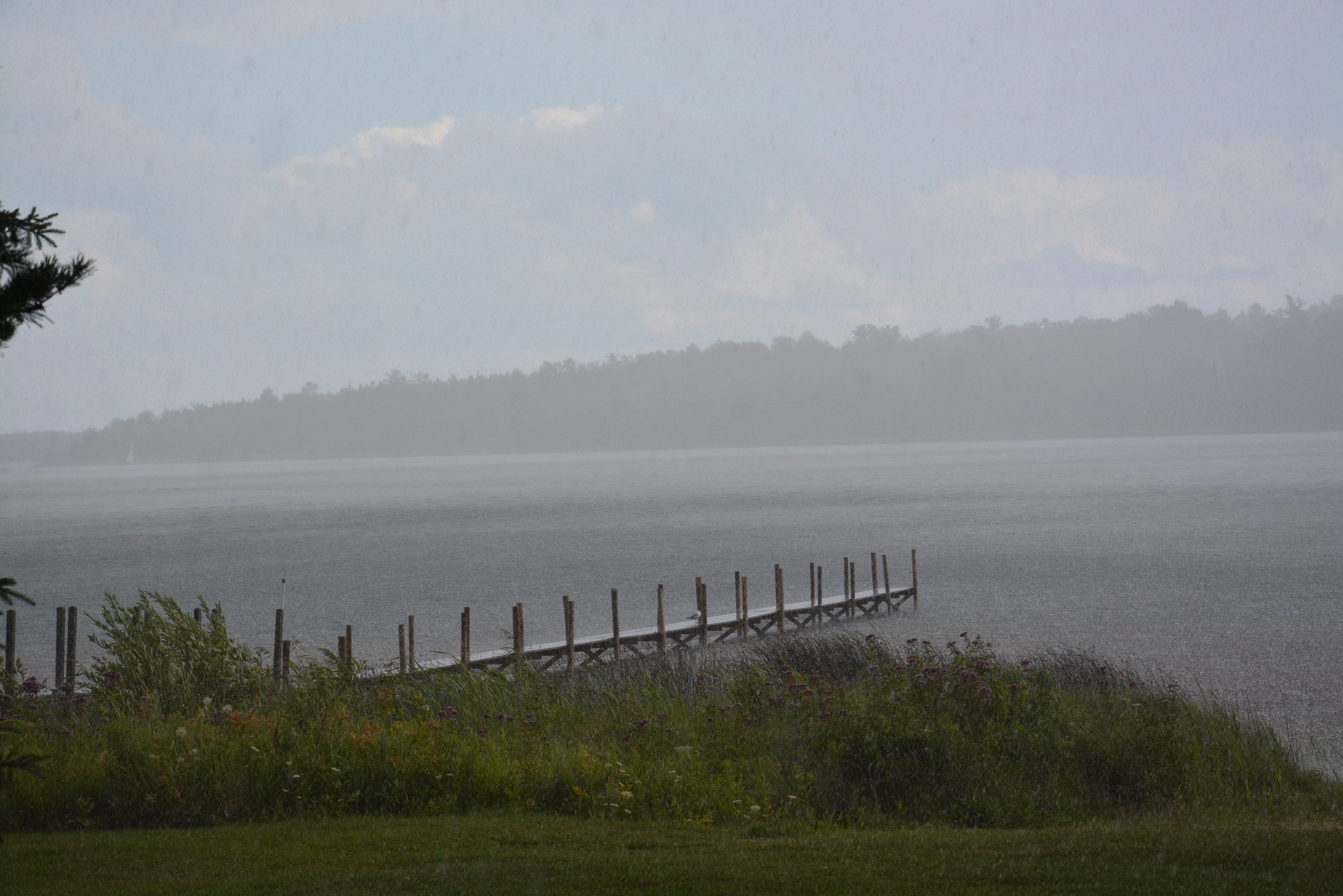
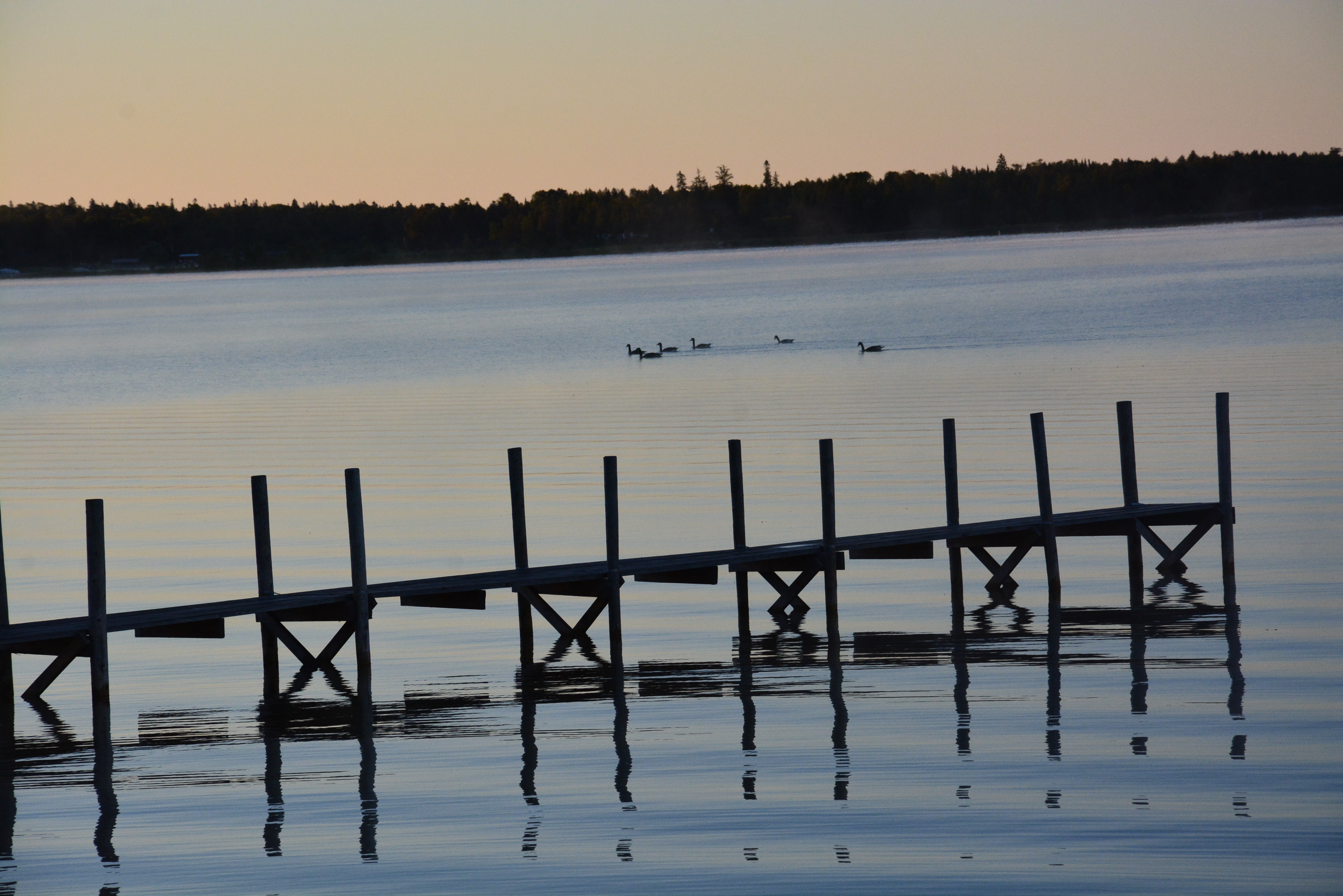
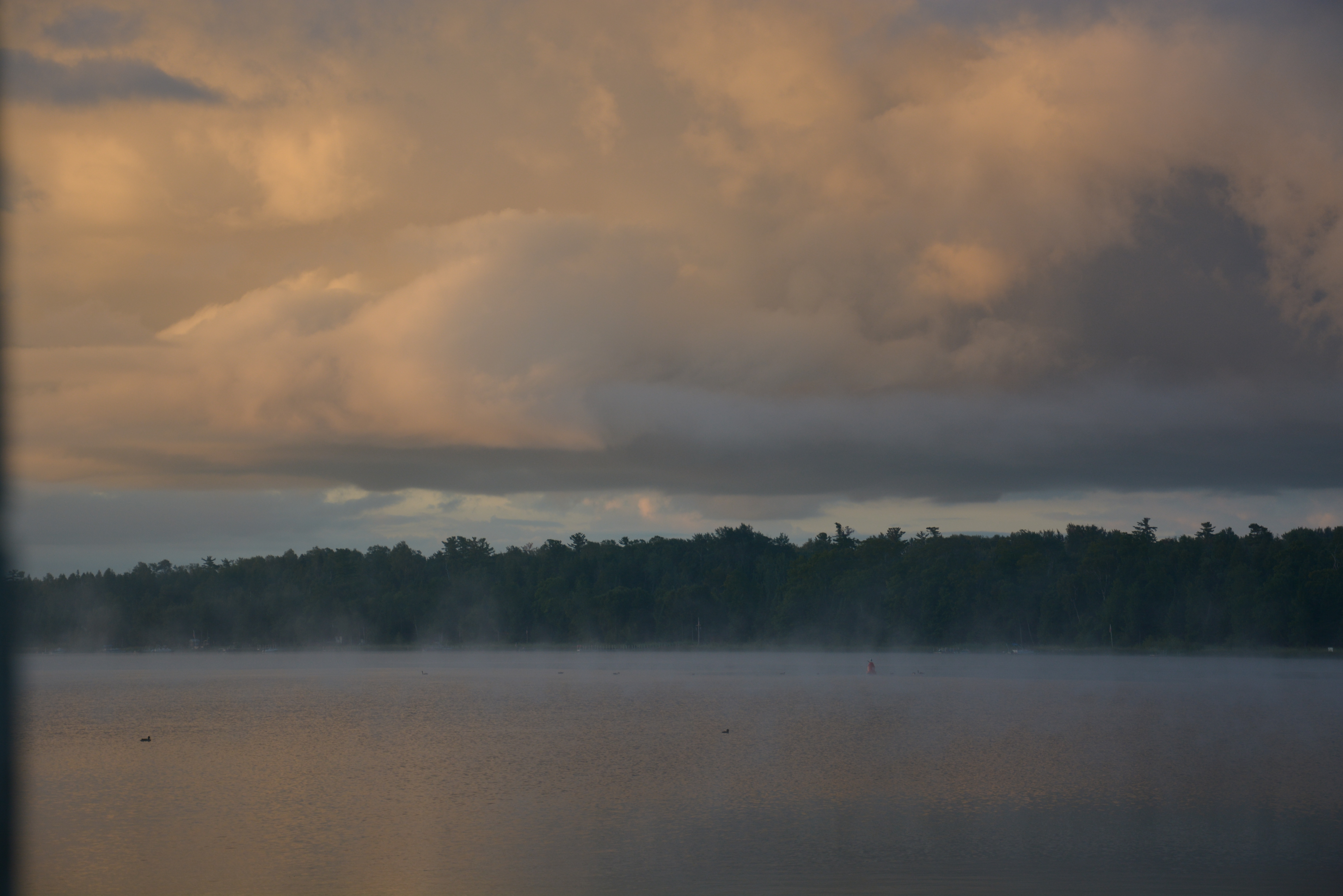
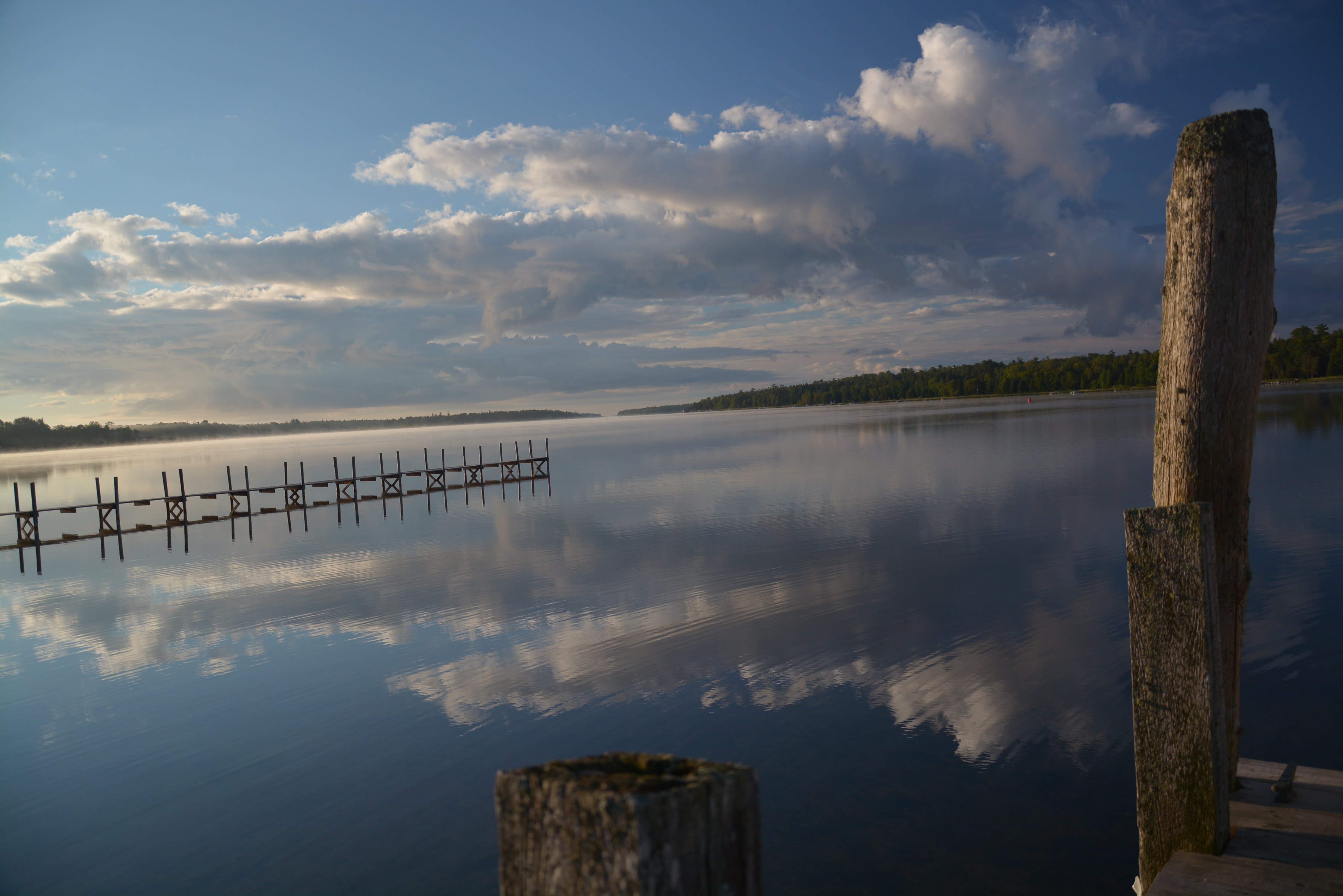
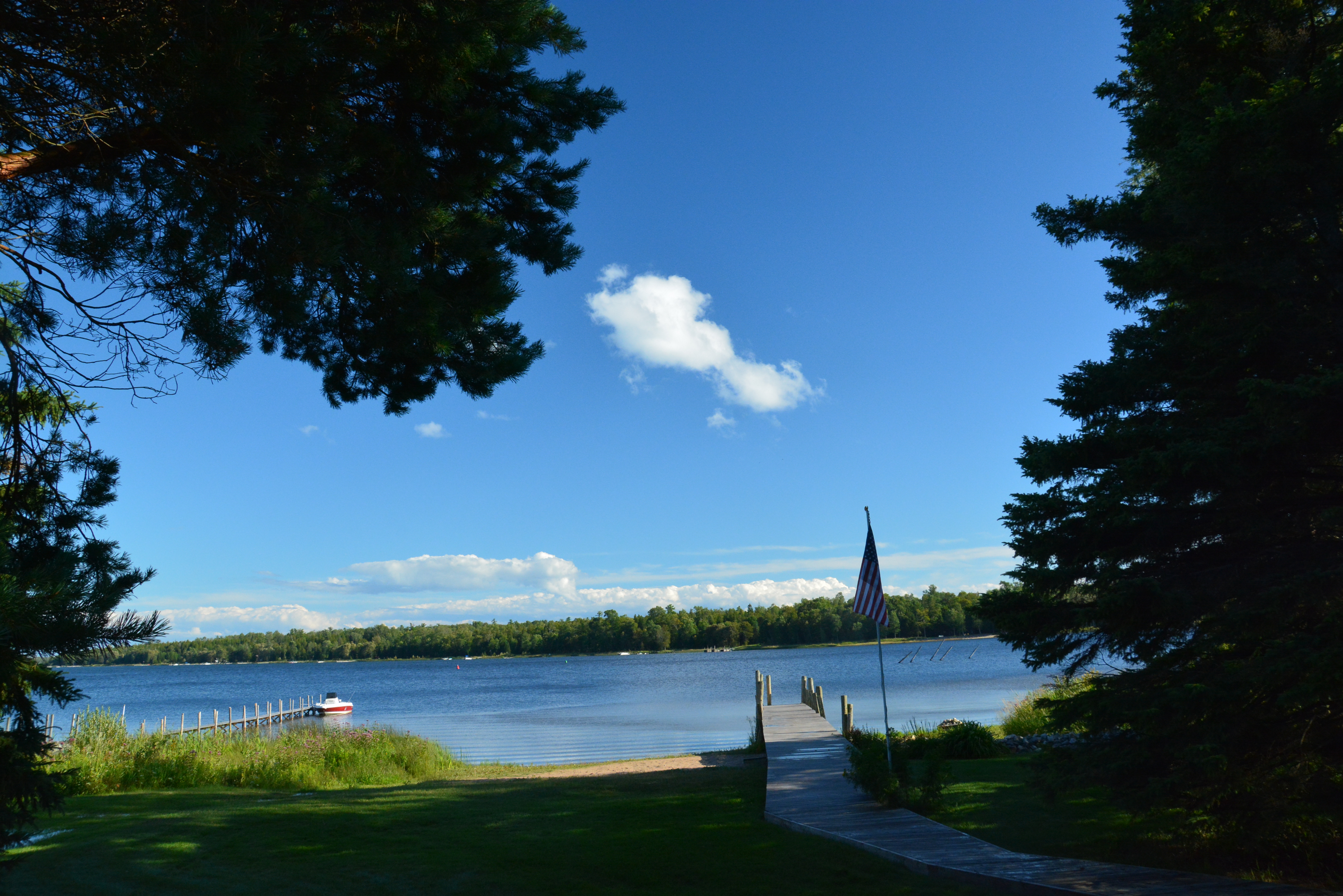
rain-storm.jpgCreating an landscape involves lots of work, lots of talk, lots more work-and much more of all of the aforementioned.  My recent visit to the upper peninsula of Michigan was not at all about creating.  It was about observation.  Being there.  The landscape there is very different than those I make.  There are no gardens to speak of.  Dead trees are left standing. Spaces occupied by people are mowed.  Wild spaces-they are as nature engineers them.  The docks that connect the land to the water-simple and serviceable.
sunny-day.jpg

My brief trip made a few things clear.  The natural world is spectacular-from the rivers to the lakes to the stars.  From the Sand hill cranes to the hummingbirds to the ducks. My place in all of this- midway, and small.
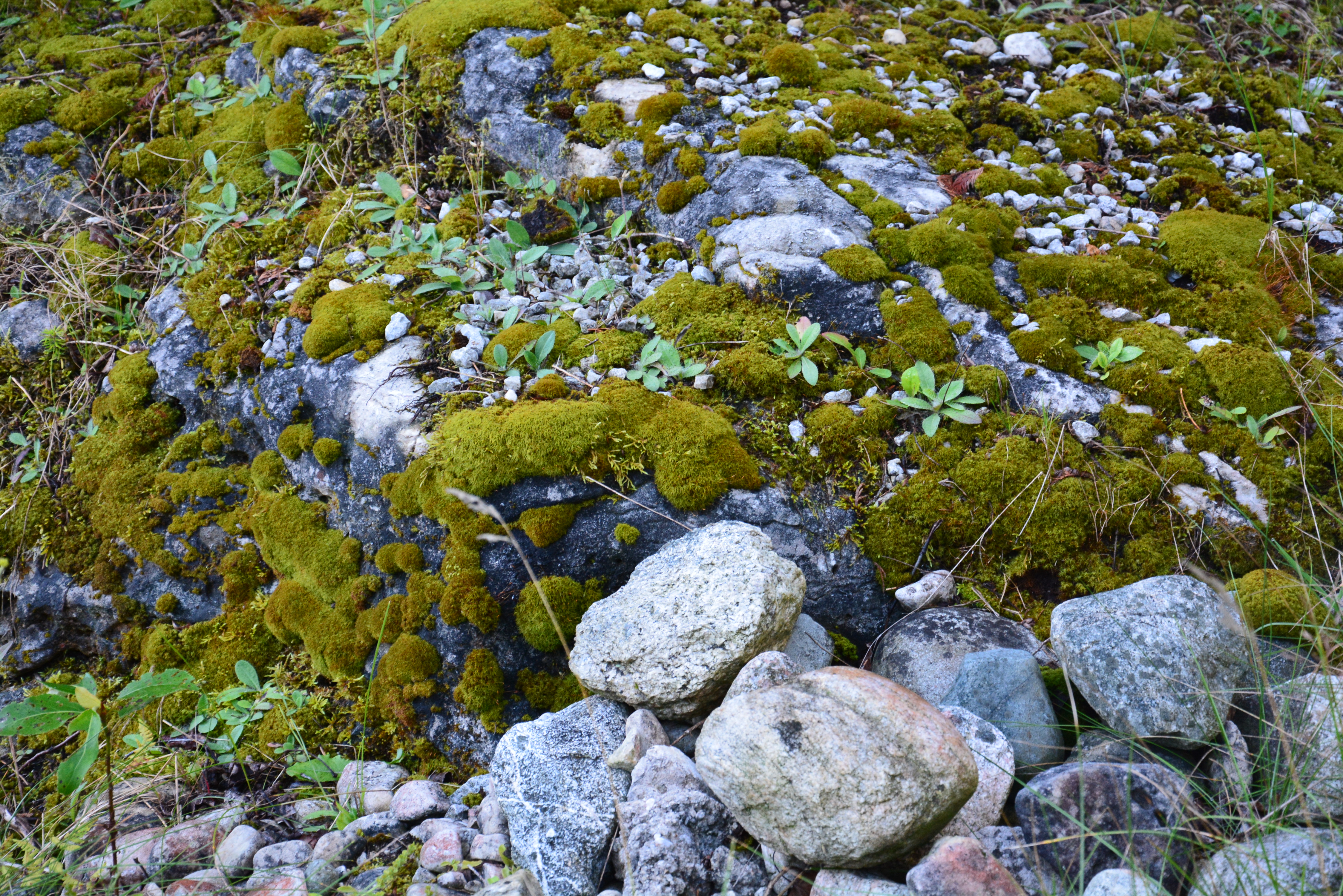
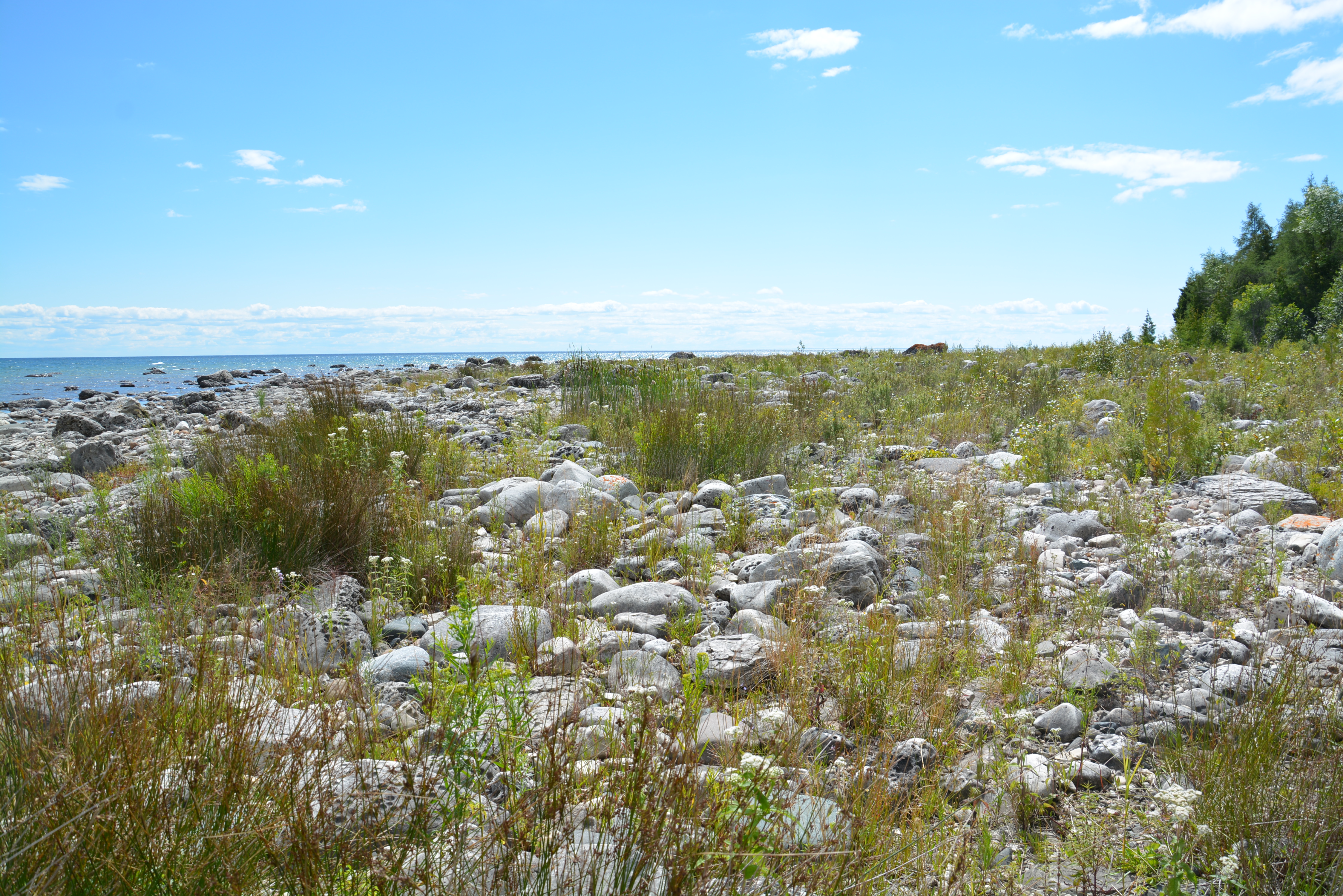
mossy-rocks.jpgThe upper peninsula of Michigan is beautiful, in its own spare and remote way.  There is not much in the way of soil.  Just little rocks, medium rocks, and big rocks.
the-woods.jpg
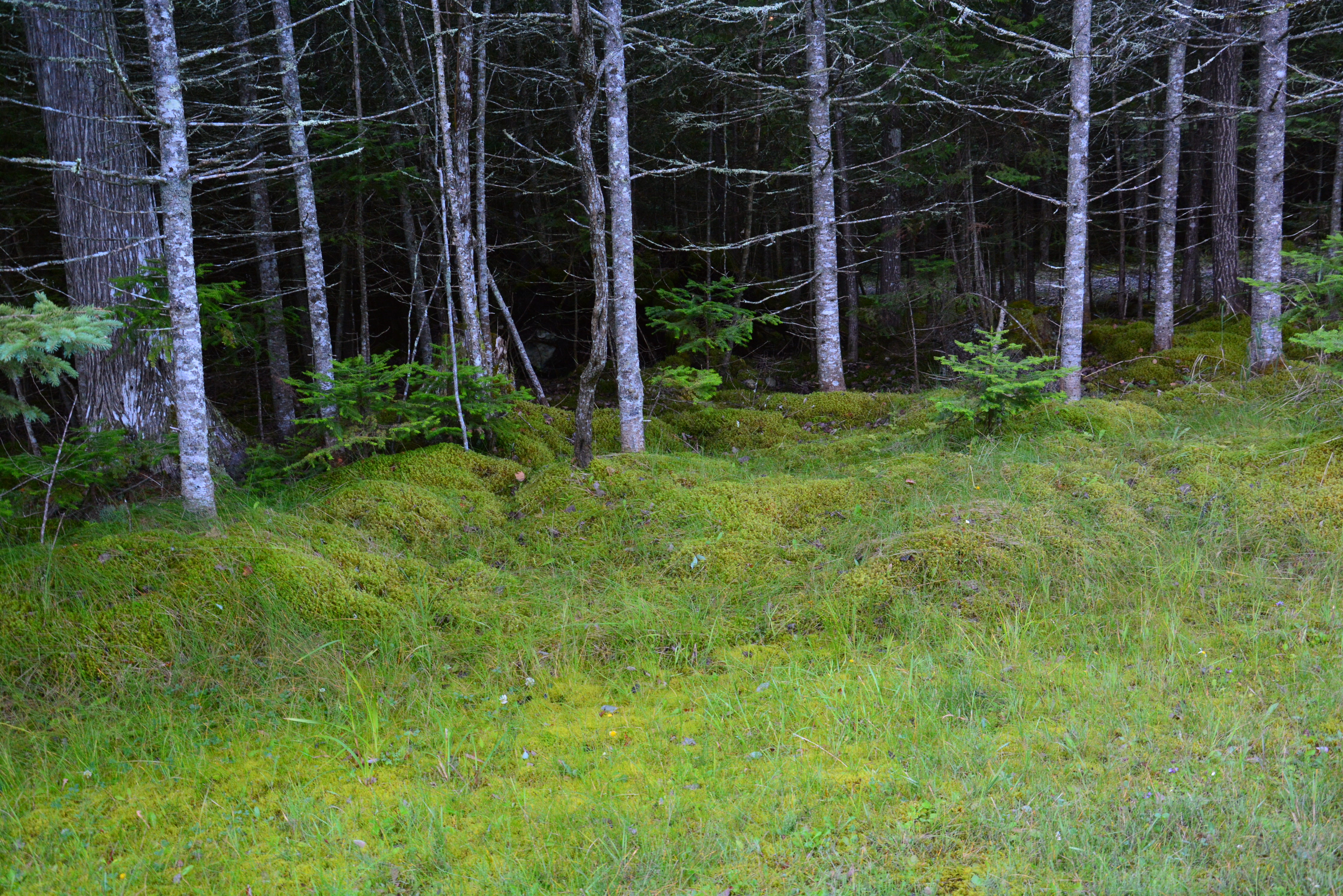
Plenty of plants thrive in this.  The landscape is thick with spruce and cedars.  The moss forms a soft carpet over the the rocks.
beavertail-point.jpg
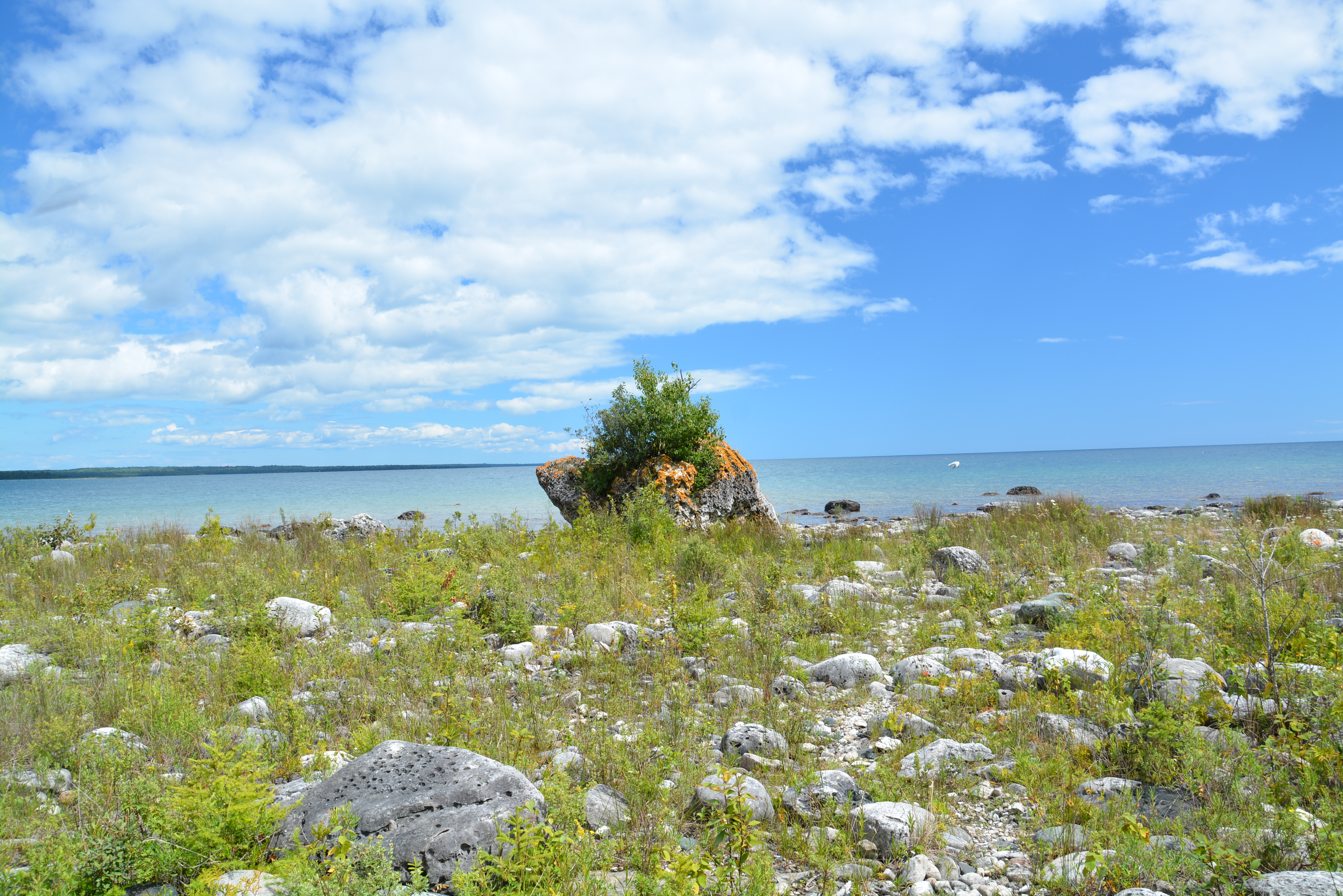
The end of Beavertail Point-my Mom’s most favorite place in the world. I understand her feeling about this landscape.
stony.jpg

Lake-Huron.jpg

dawn.jpg

dock-at-dawn.jpg

stormy-weather.jpg

early-morning.jpg

early-morning.jpg

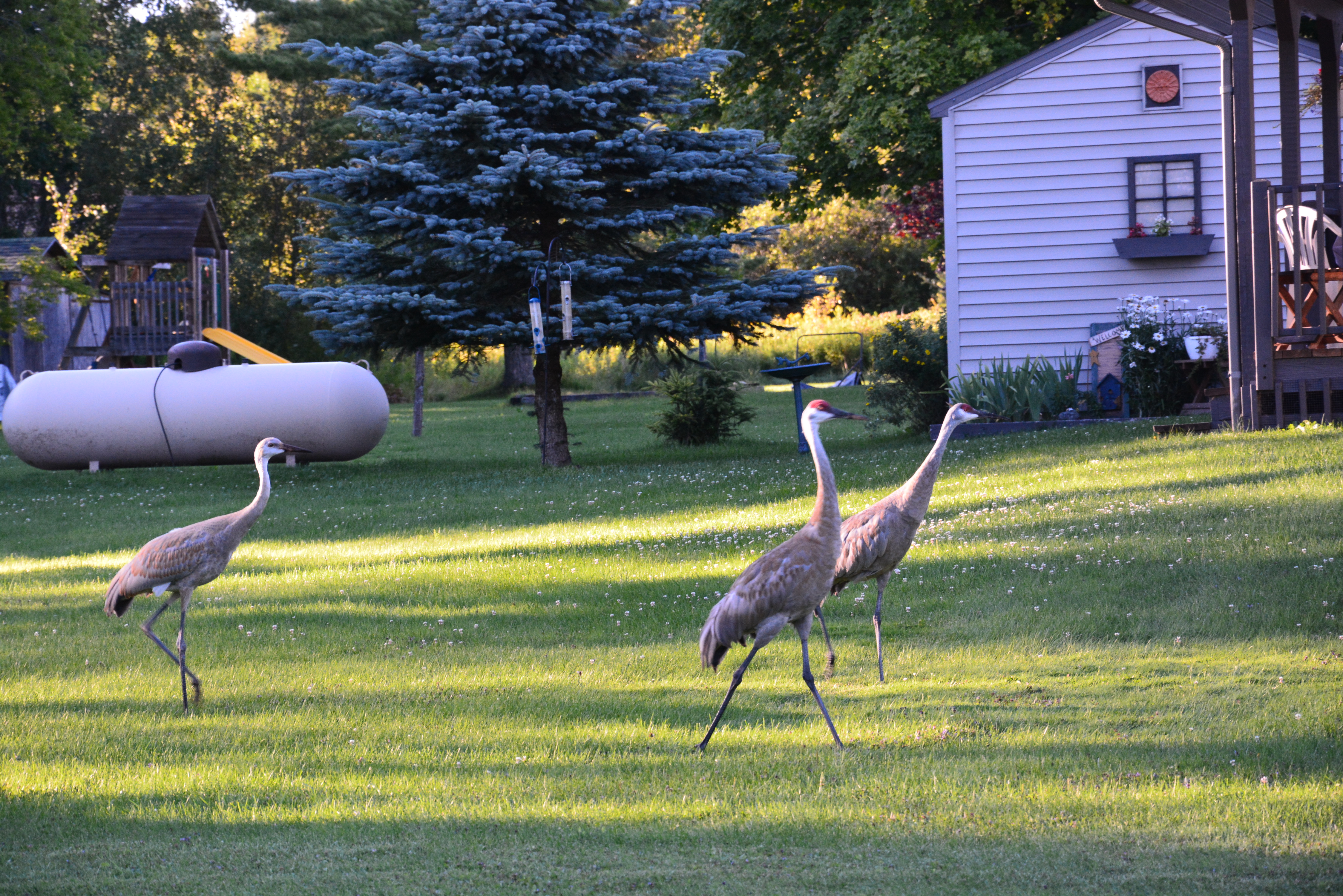
sandhill-cranes.jpgSand hill cranes in the yard, no kidding.
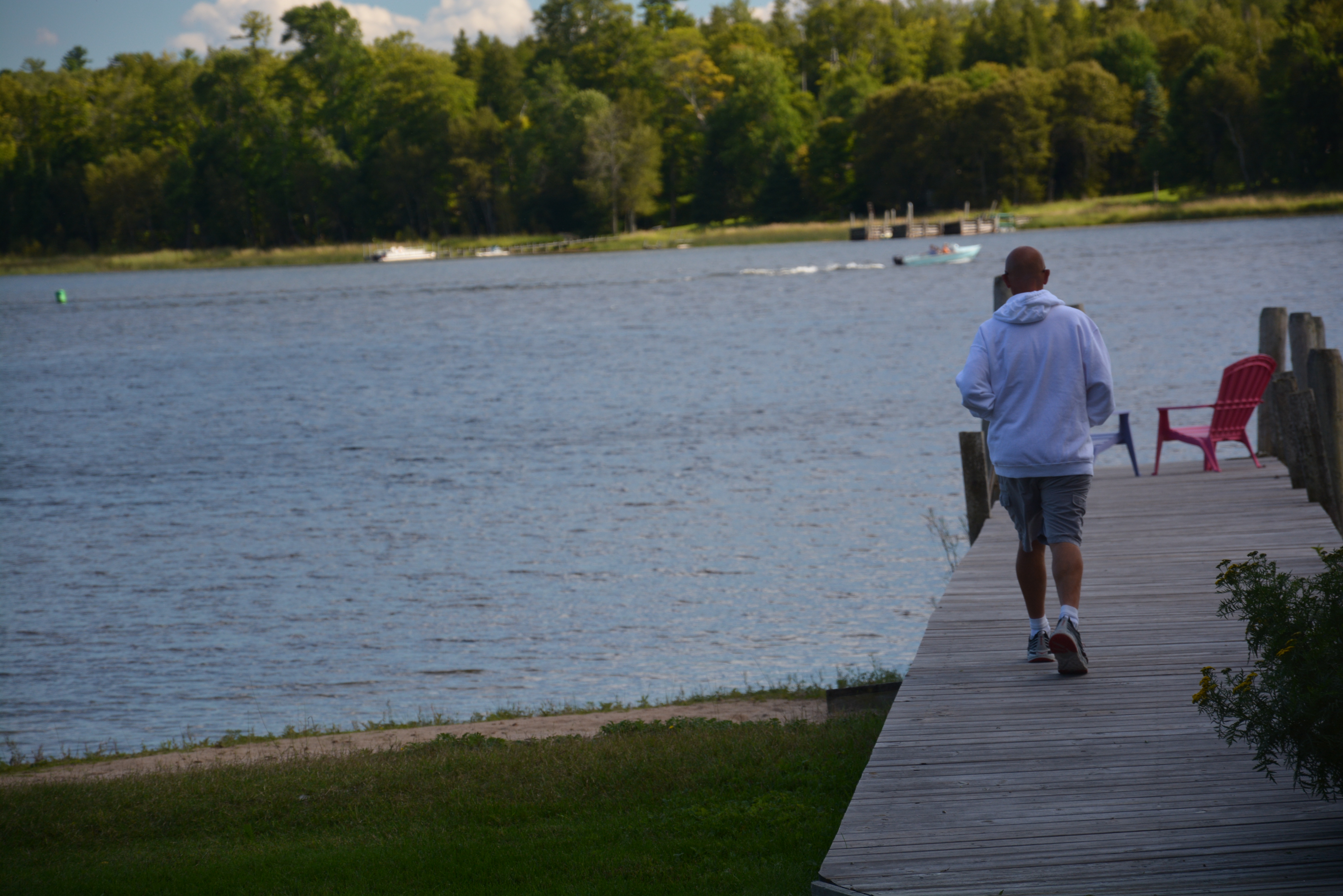
Pete-Markey.jpgI loved the time I spent over the past few days with my brother Pete. We talked over the landscape from 50 years ago-over and over.  We share a landscape, a part of which is this place.  My take?  The landscape is is so much more than a plot of land, and a collection of plants.  A landscape is first and foremost a story.  Are you thinking to create a landscape?  Tell your story.  This post?  Part of my story.


The Dogs At Chase Tower

Chase-Tower.jpg

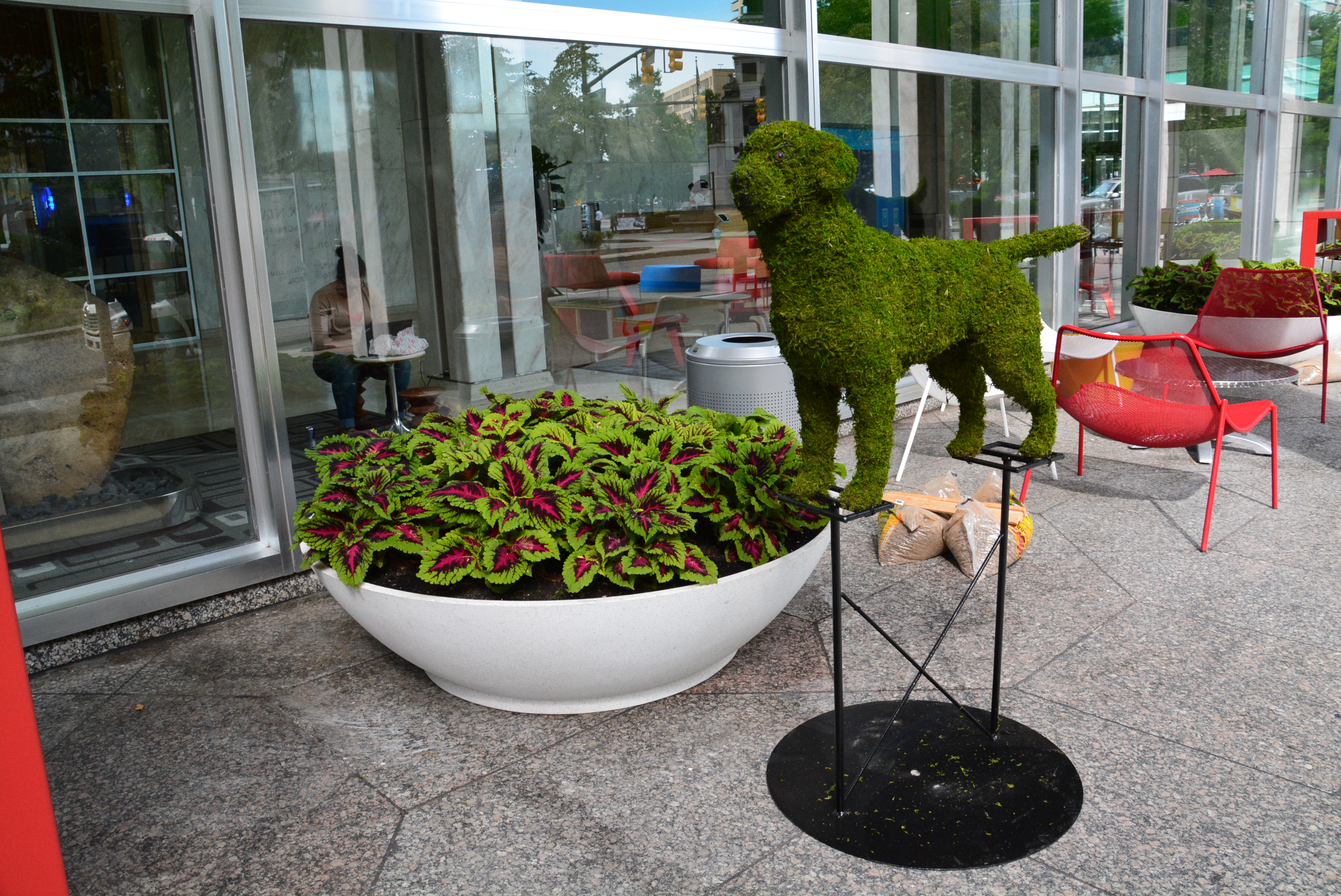
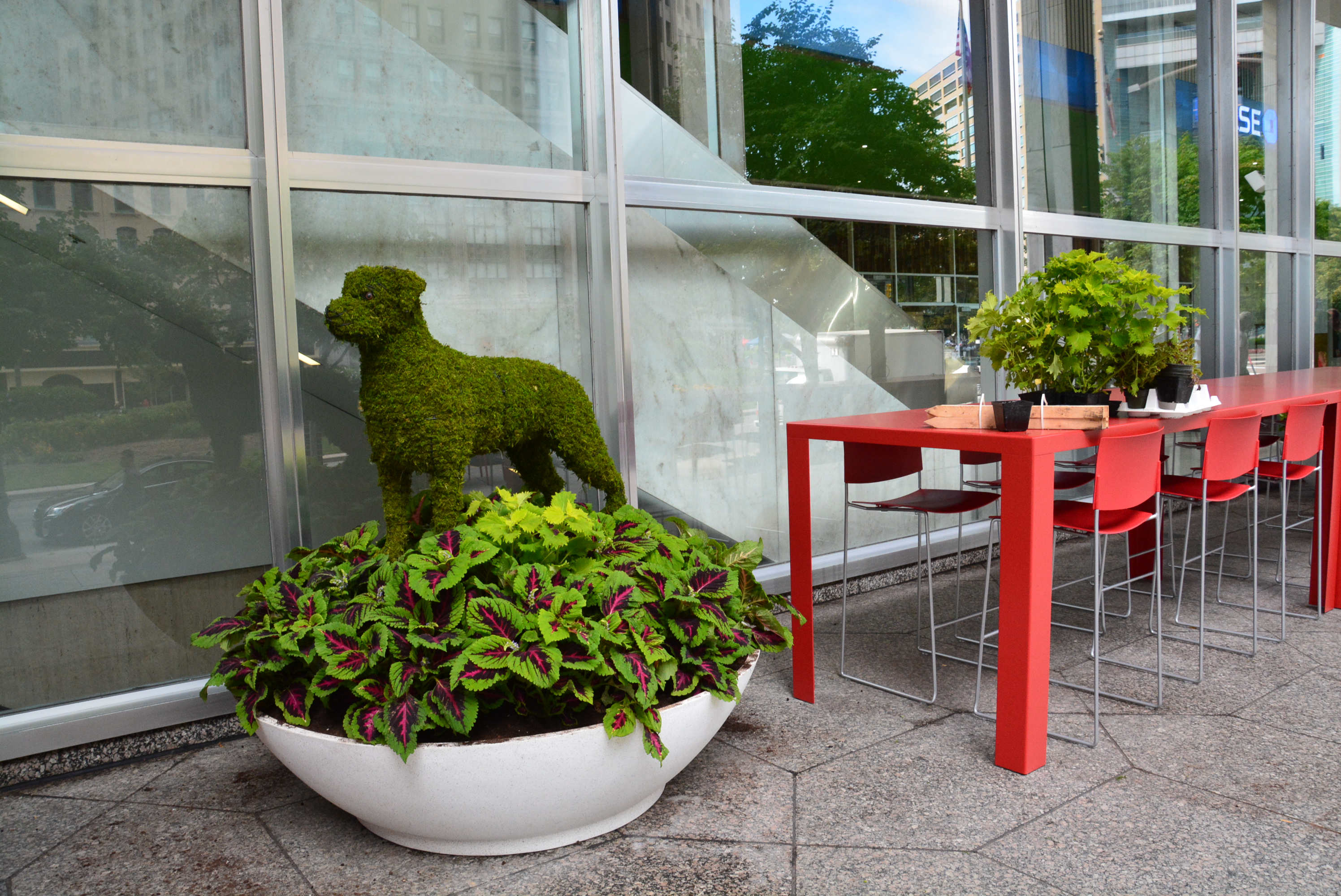
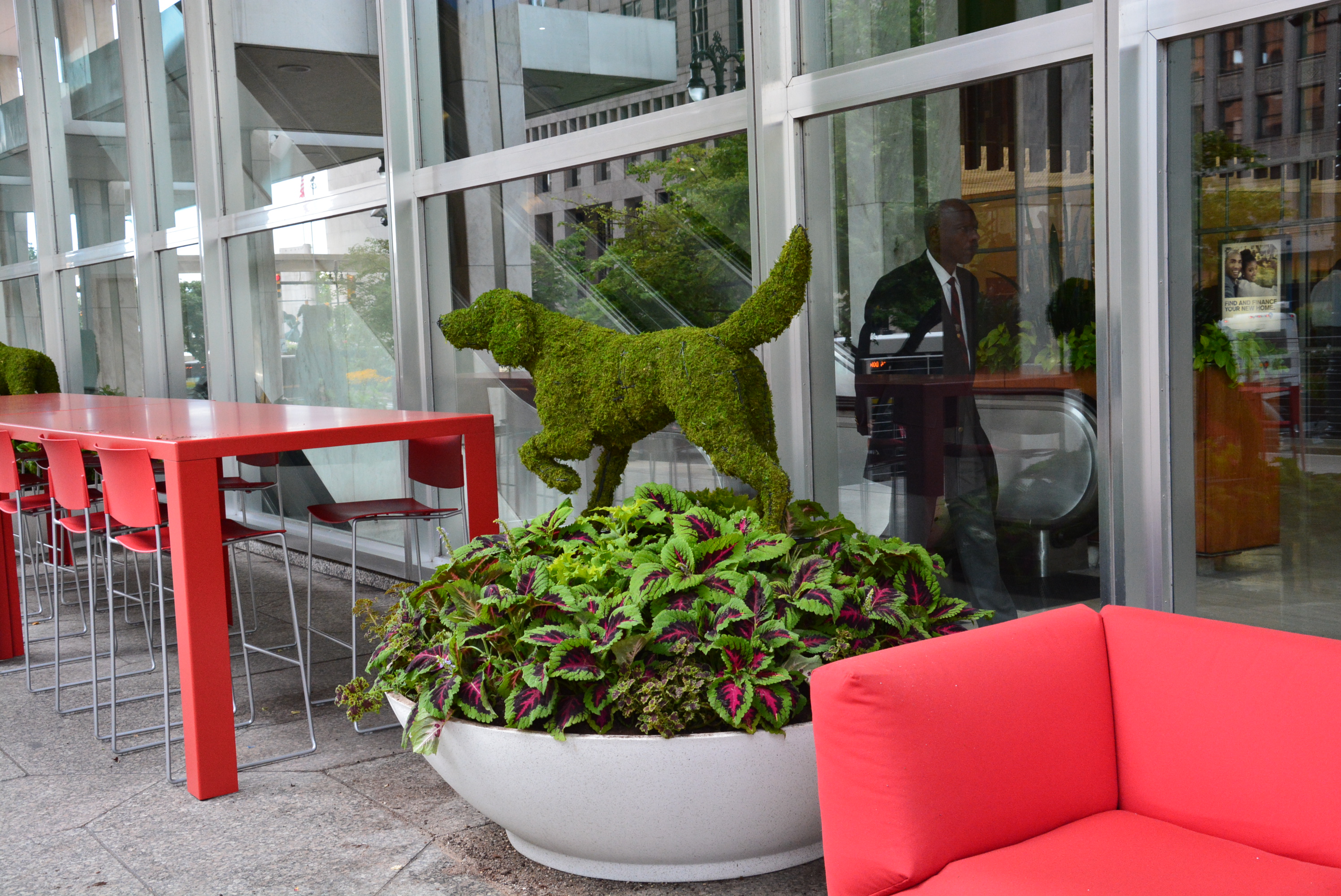
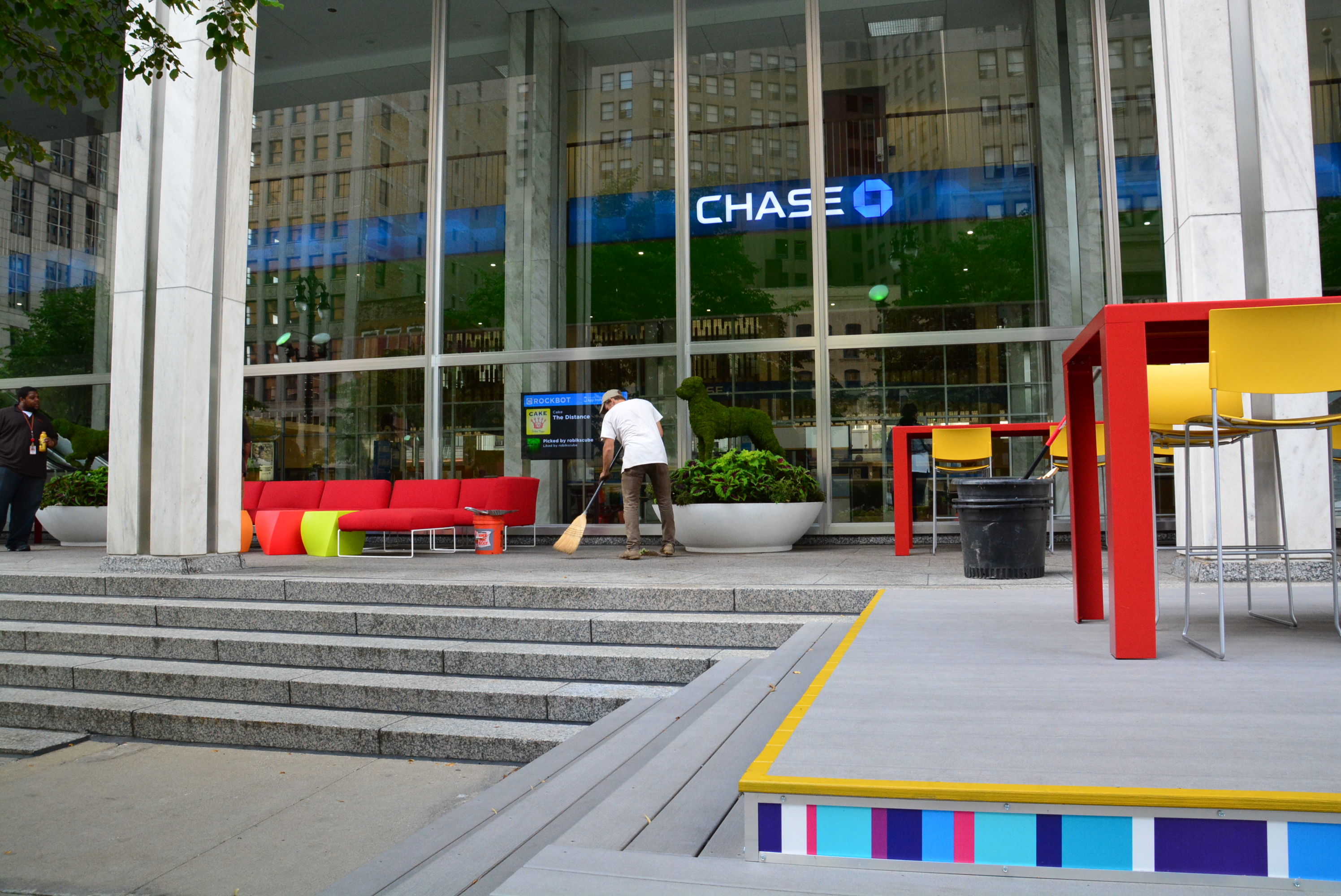
We were back downtown for our third installation for the Bedrock Realty Company in Detroit.  Today’s venue-the Chase Tower.  The loggia in front of the building has lots of great seating in bright colors, and enormous low white polystyrene planters loaded with King Kong Coleus.   Bedrock Designer Kelly Deines from Rossetti Architects had the idea that these containers needed  an imaginative element that would turn up the heat a little.  Animate the space.  As in, what about a moss dog sculpture for each pot?

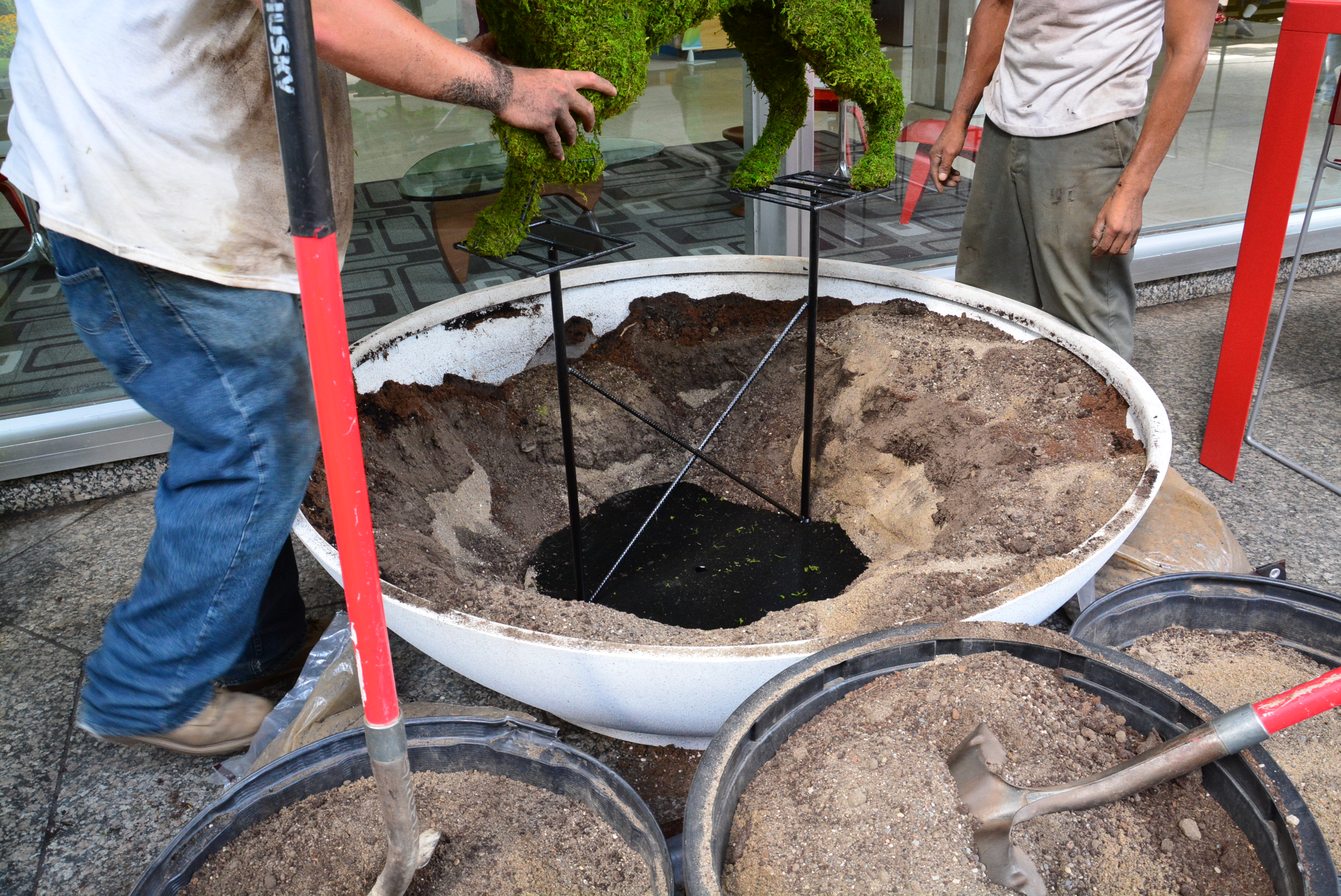
Bedrock.jpgEven though I couldn’t quite picture it, I was intrigued.  Once the dogs were delivered to us, Buck devised and built stands for all of them.  They had to be rock solid in the pots.

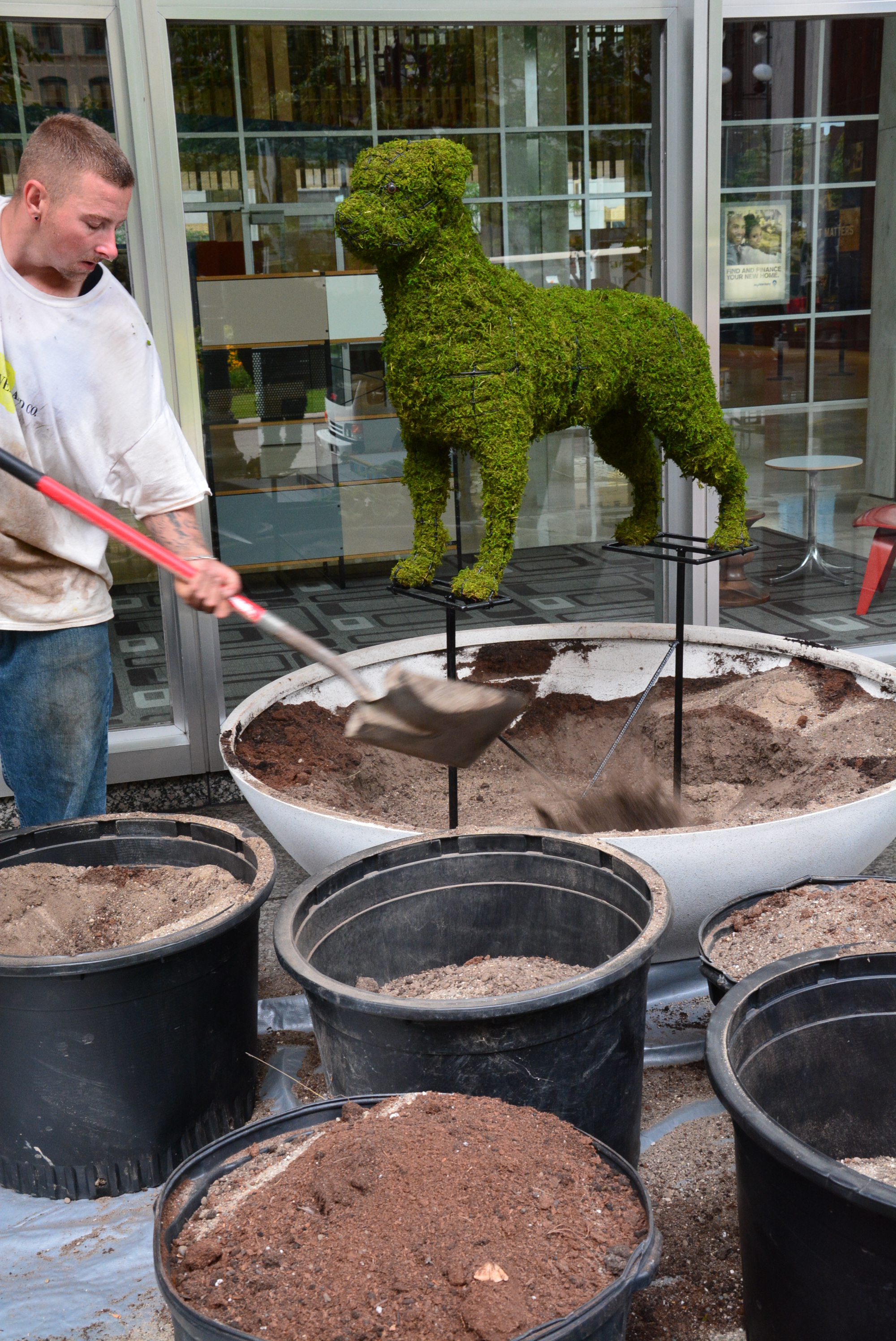
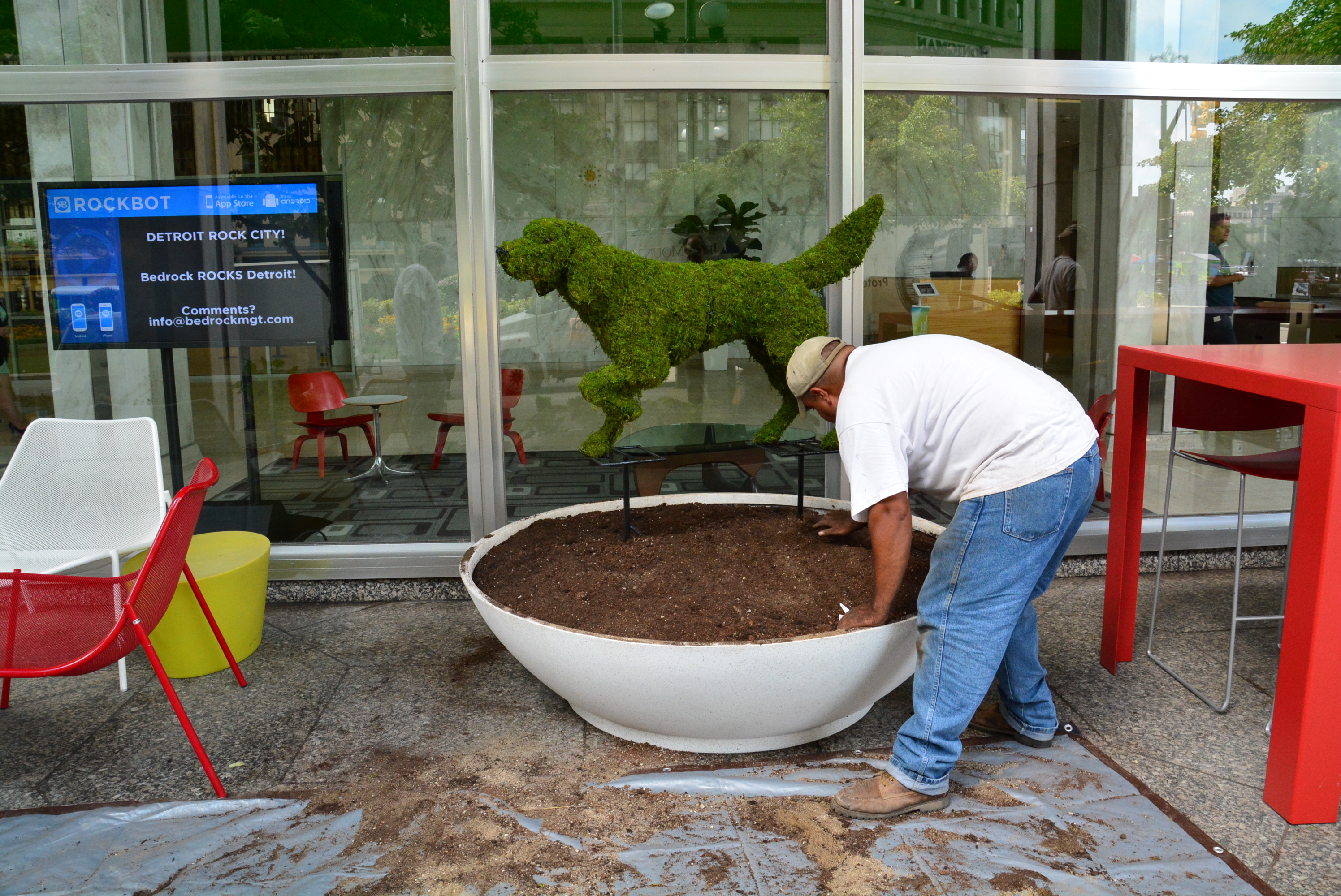
Chase-Tower-dogs.jpgWe carefully dug up all of the existing plants, and laid them on a tarp.  We had enough buckets that we could sort the good dirt from the sandy drainage material.  The thick 2′ diameter steel plate would rest just above the base of the pot.

setting-the-dogs.jpgOnce the dog was level, and positioned properly, we refilled the pots.

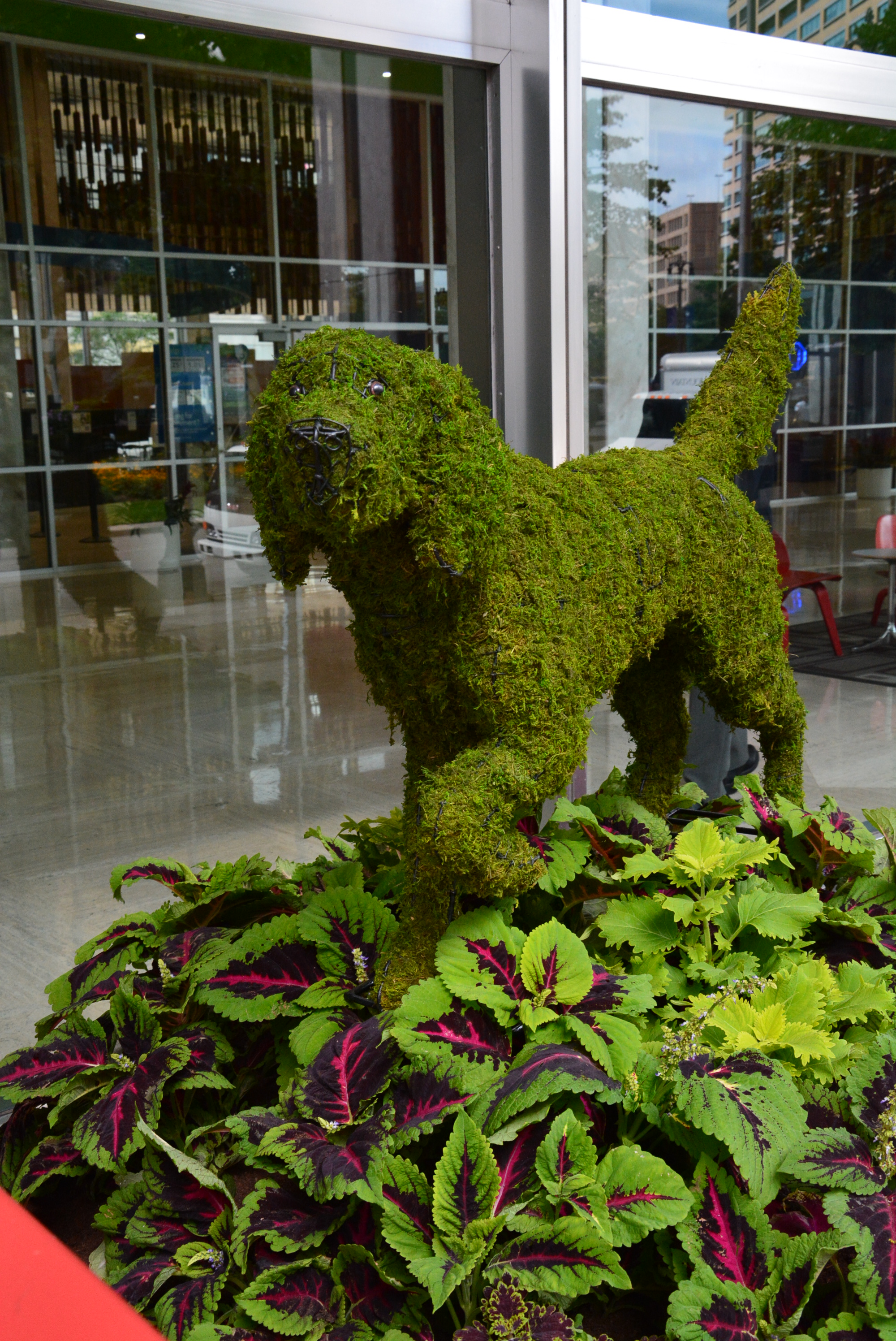
filling-the-pots.jpgI did try to pick dogs that had either a lot of attitude, or a sense of movement.

dog-and-coleus.jpg

We replanted the coleus, and added a few more here and there..  The Wasabi coleus front and center made the planting a little more like a party.

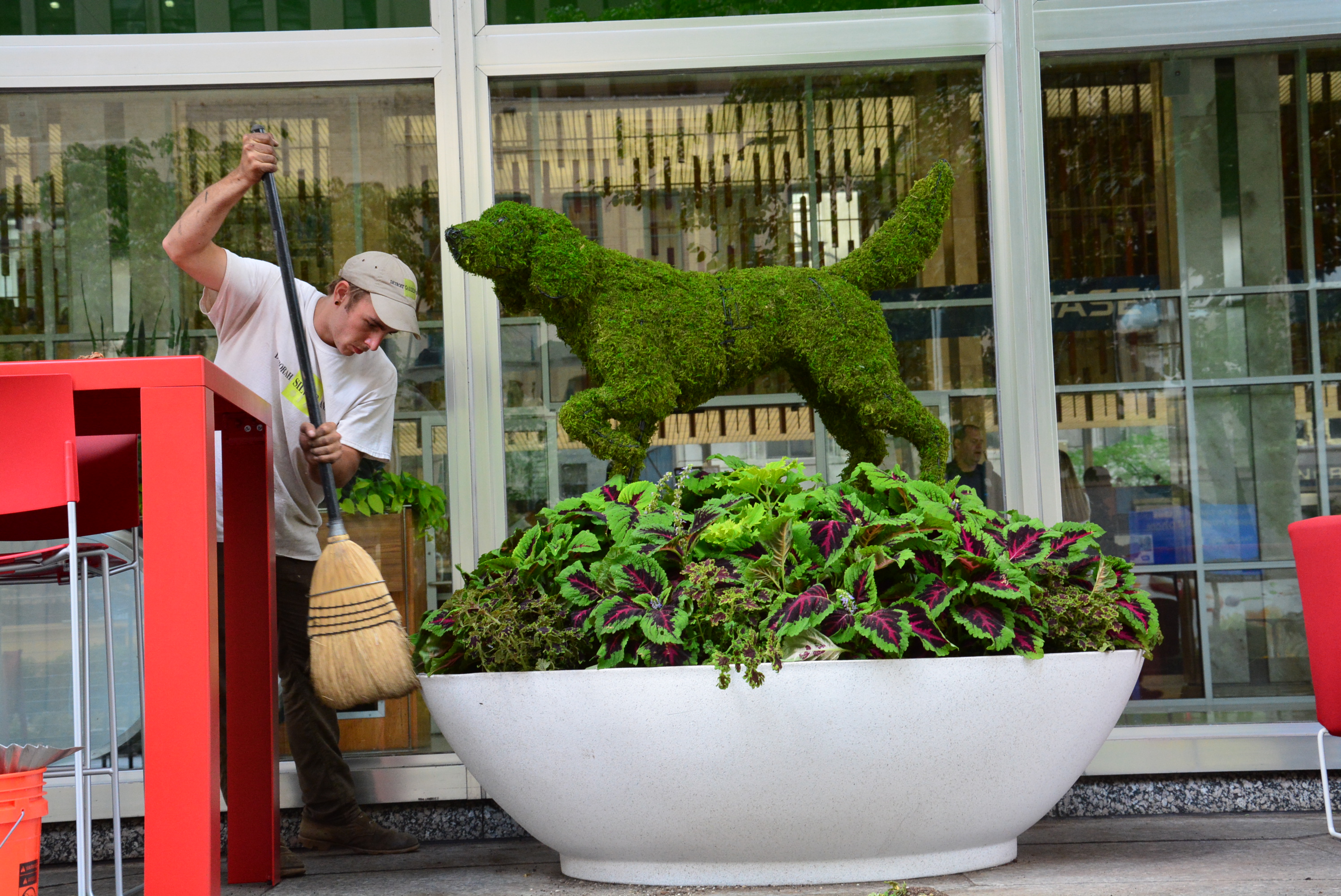
replanted-pot.jpgI was thoroughly smitten with the result.  People walking by were either smiling, or snapping pictures.  The pots had a center of interest which made them suddenly seem more personal, and personable.

the-clean-up.jpgThey made me smile too.  Great job Kelly Deines.  And thank you Bedrock for making us a part of something this positively fun.

moss-dogs.jpg

chase-tower-moss-dog

the-finish.jpg

Chase-Tower.jpg

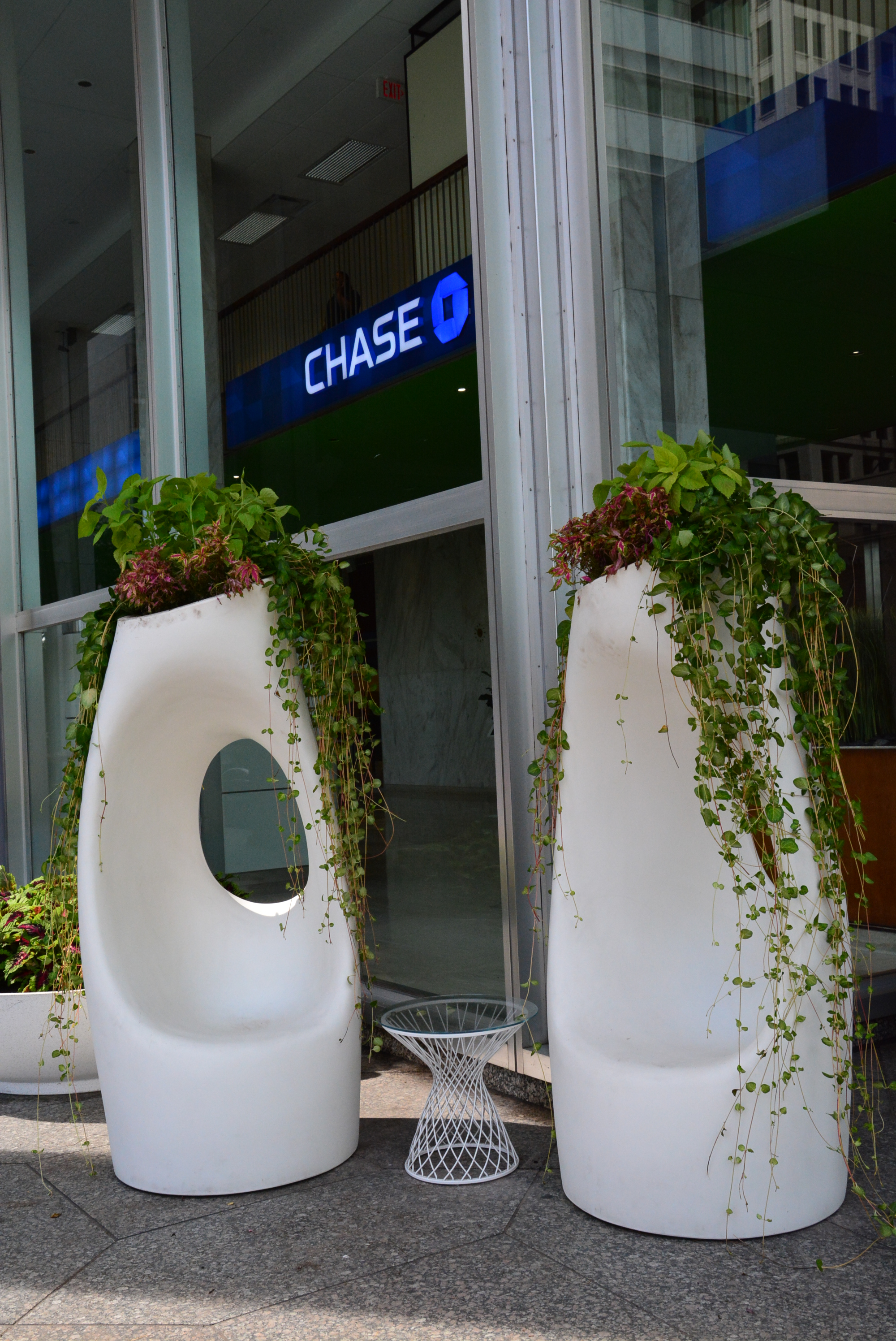
planted-chairs.jpgThese polystyrene chair planters have new hairdos.  Luckily, there were 5′ diameter drain holes in the bottom, so we could stuff the bases with bricks. This giant loggia was transformed by the addition of the dogs, and the planting of the chairs.  What fun!

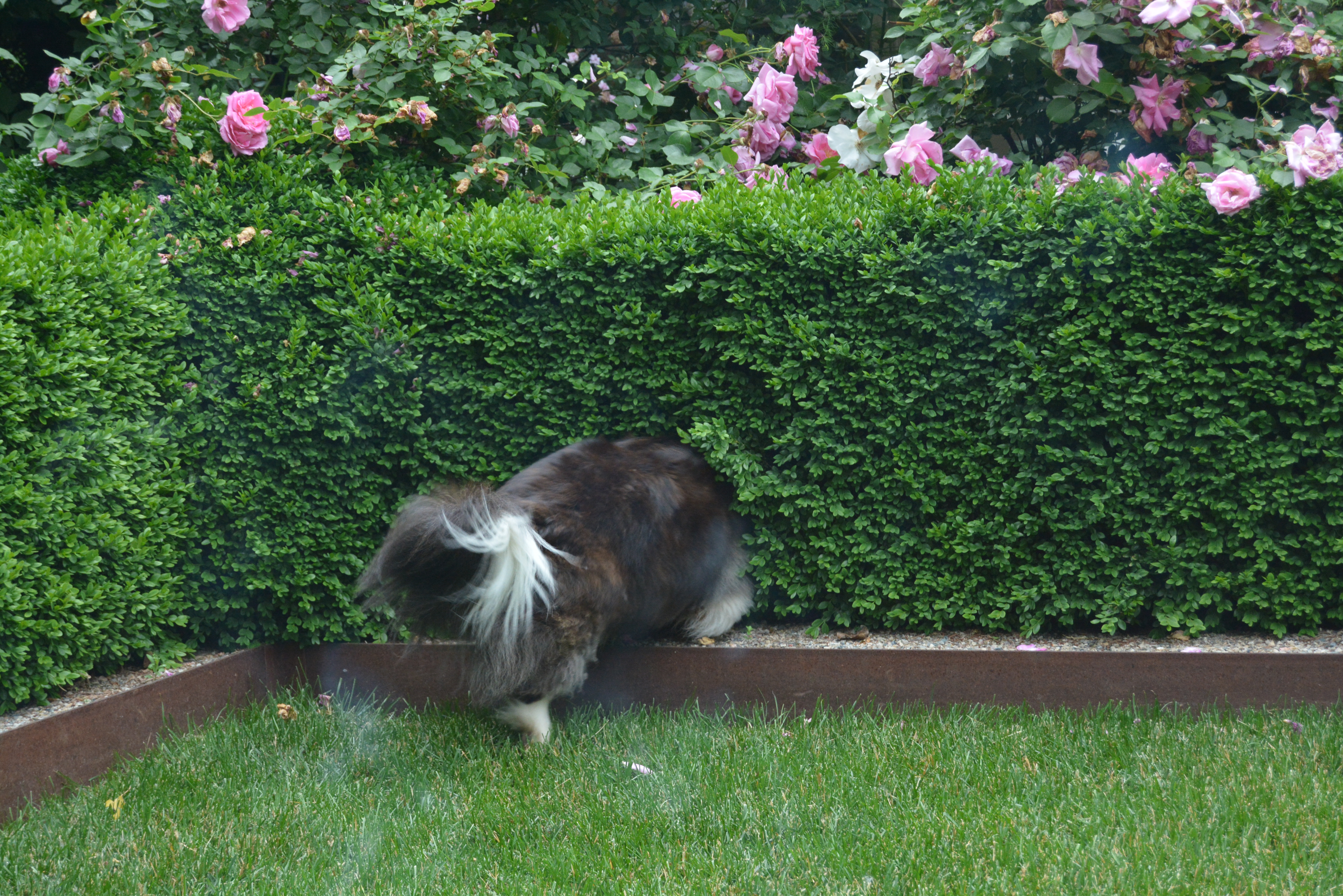
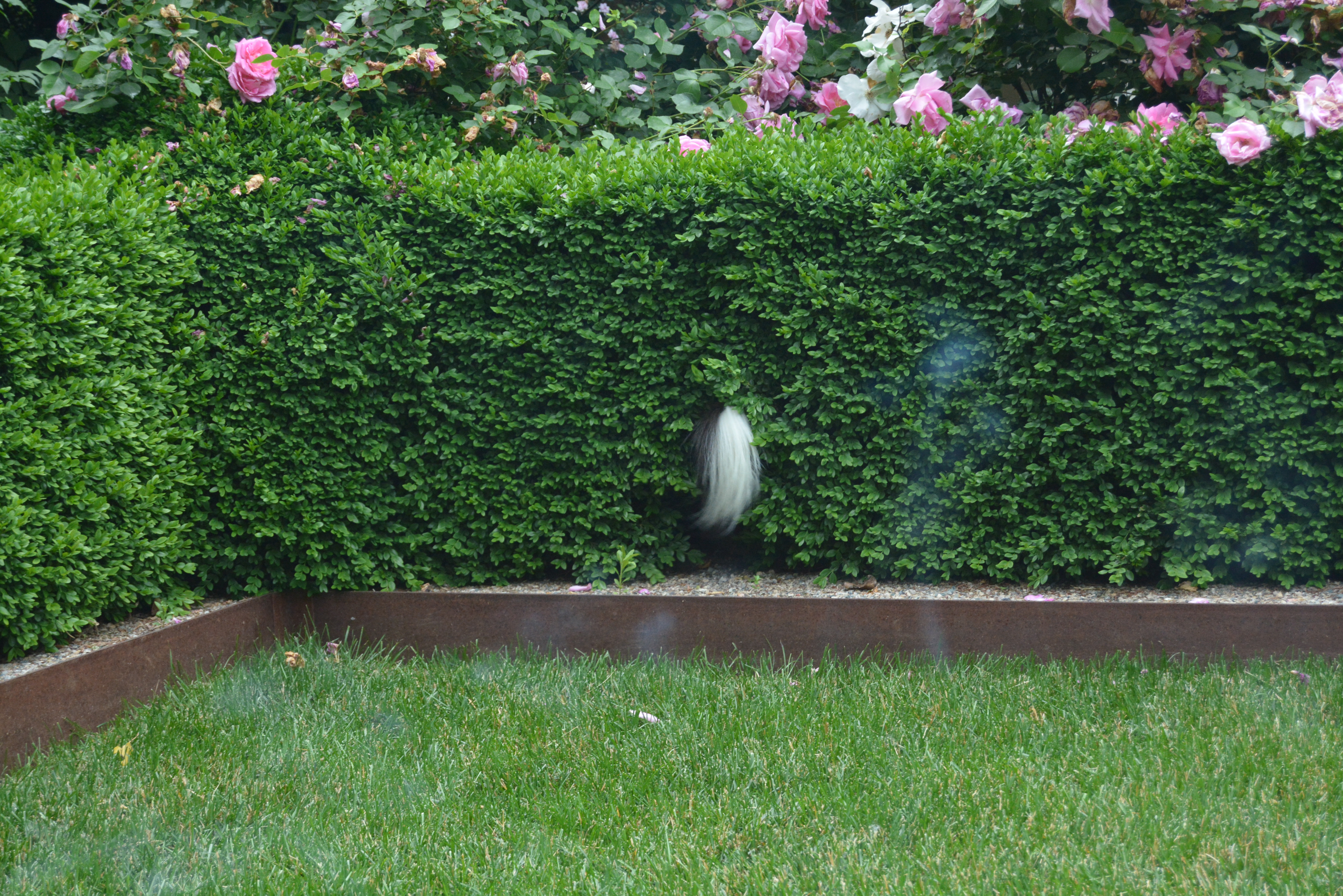
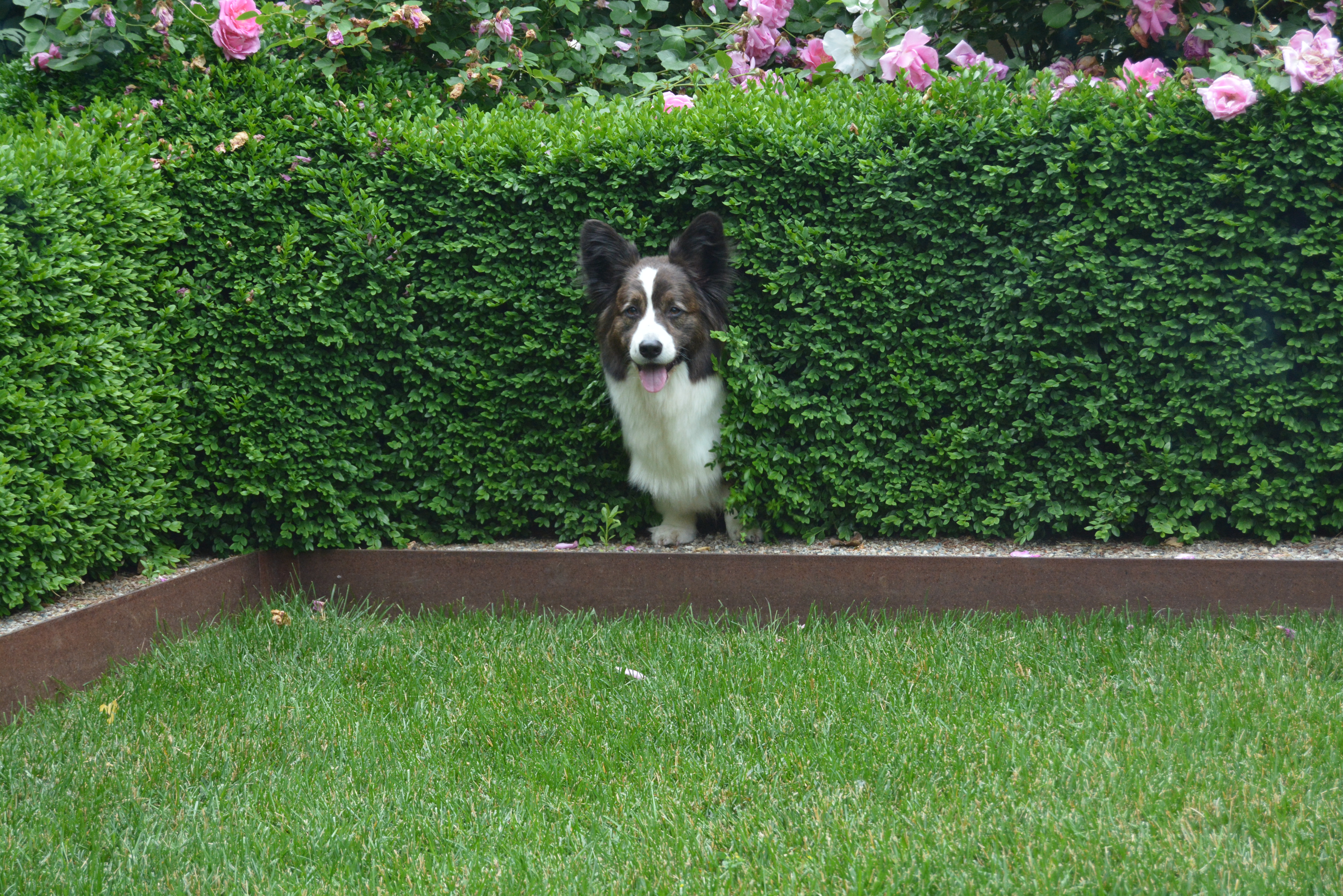
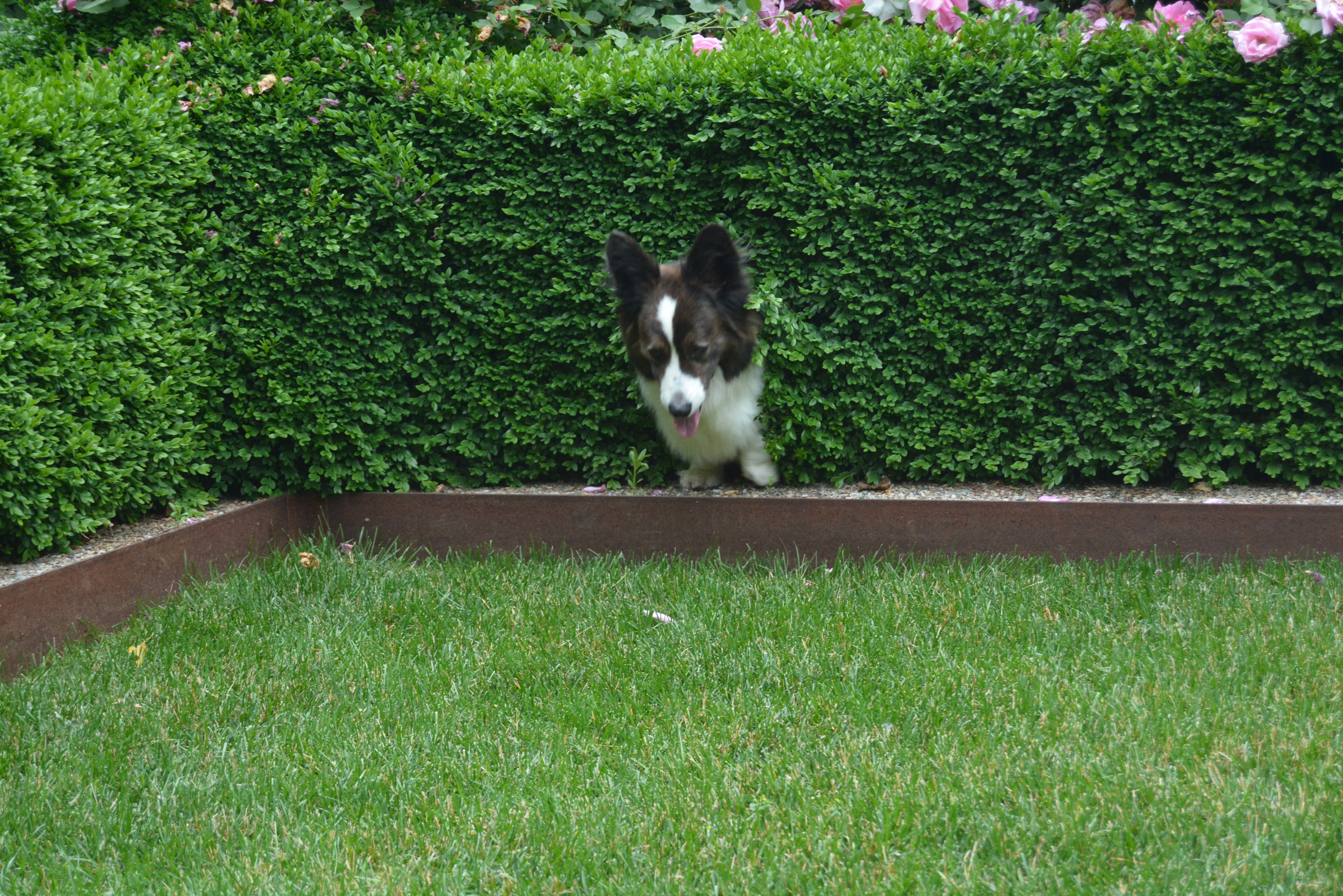
At A Glance: In And Out

boxwood-hedge.jpg

Milo.jpg

DSMilo.jpg

corgi-door.jpg

Milo.jpg

Milo.jpg
Milo.jpg

coming-out.jpg

The Spring Season

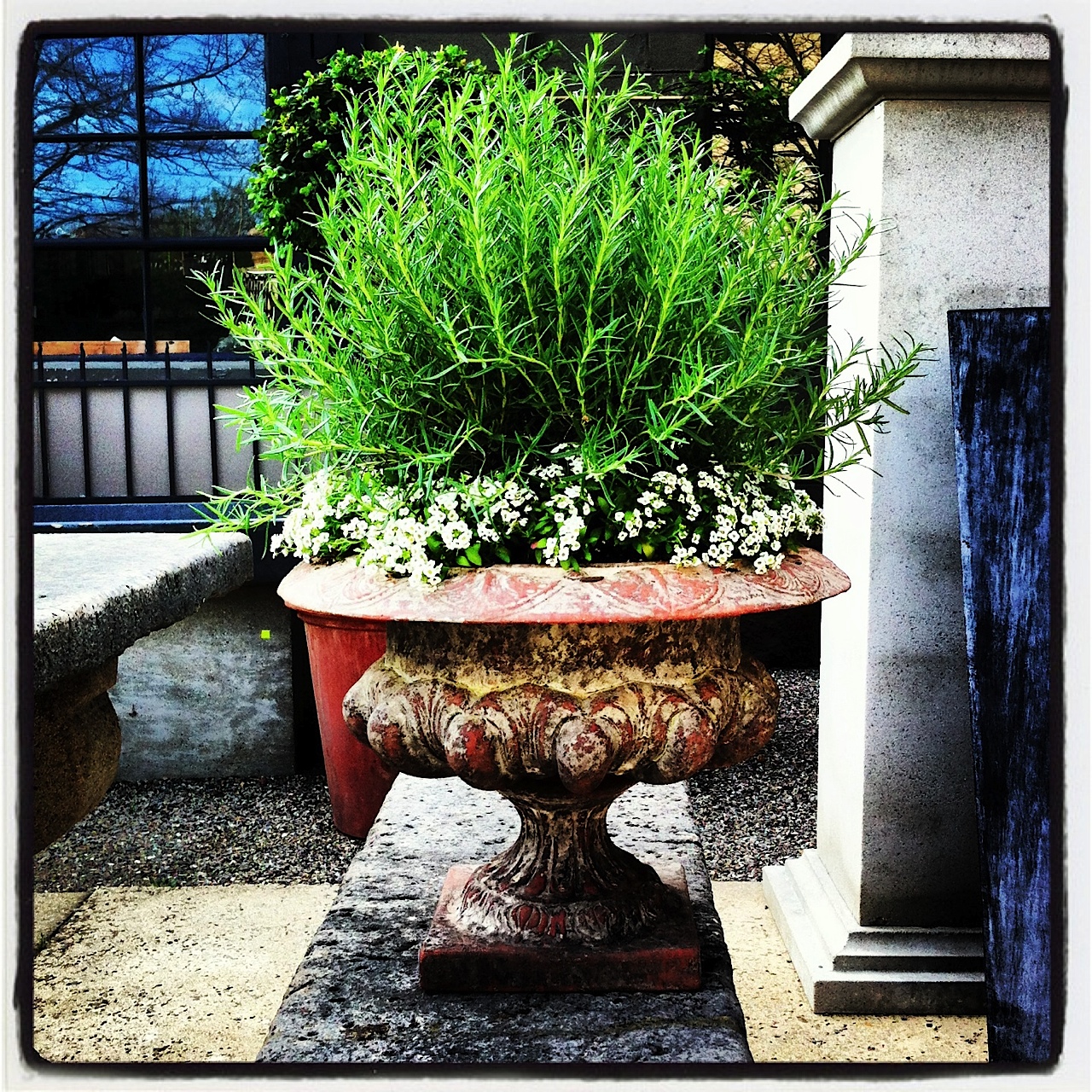
rosemary-planter.jpgIt’s hard to pick a favorite, but the spring season has an aura like no other.  Any plant, whether it be a tree or summer flowering shrub, a bulb or a perennial, responds to nature’s call to break dormancy, and grow.  From the biggest maple to the smallest hepatica, the plants are growing.  There is a lot of commotion in the air.  The plants are not pacing themselves, as they do in the heat of the summer.  They are not slowing down, as in the fall.  Or asleep, as in winter.  It’s full speed ahead.  The atmosphere in the garden is fully charged, electrified by all that energy being brought to bear-all at once- on the landscape. Rob has been taking instagram pictures the past few days.  The options for filtering and electrifying color makes this spring container really feel like spring.

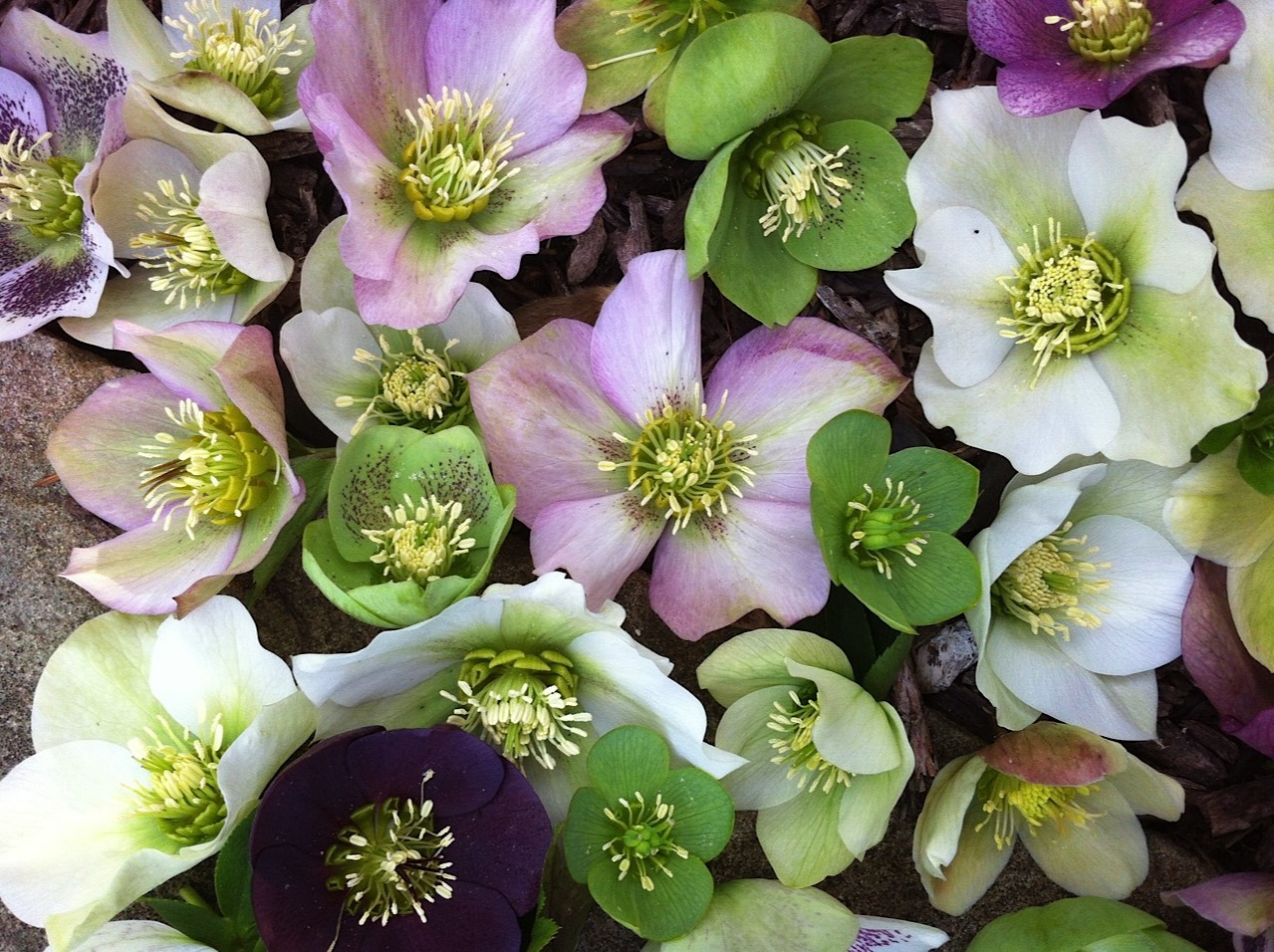
heritage-mix-hellebores.jpgEach of these hellebore flowers tells a story about my collection.  I have a fair number of plants.  I especially appreciate the form of the flowers.  But what I love about them the best is that they make a grand show in the spring.  The hellebores coming into bloom are like the bells of spring ringing out.  They are quite hardy.  Old clumps are large; the foliage is evergreen until mid winter for me.

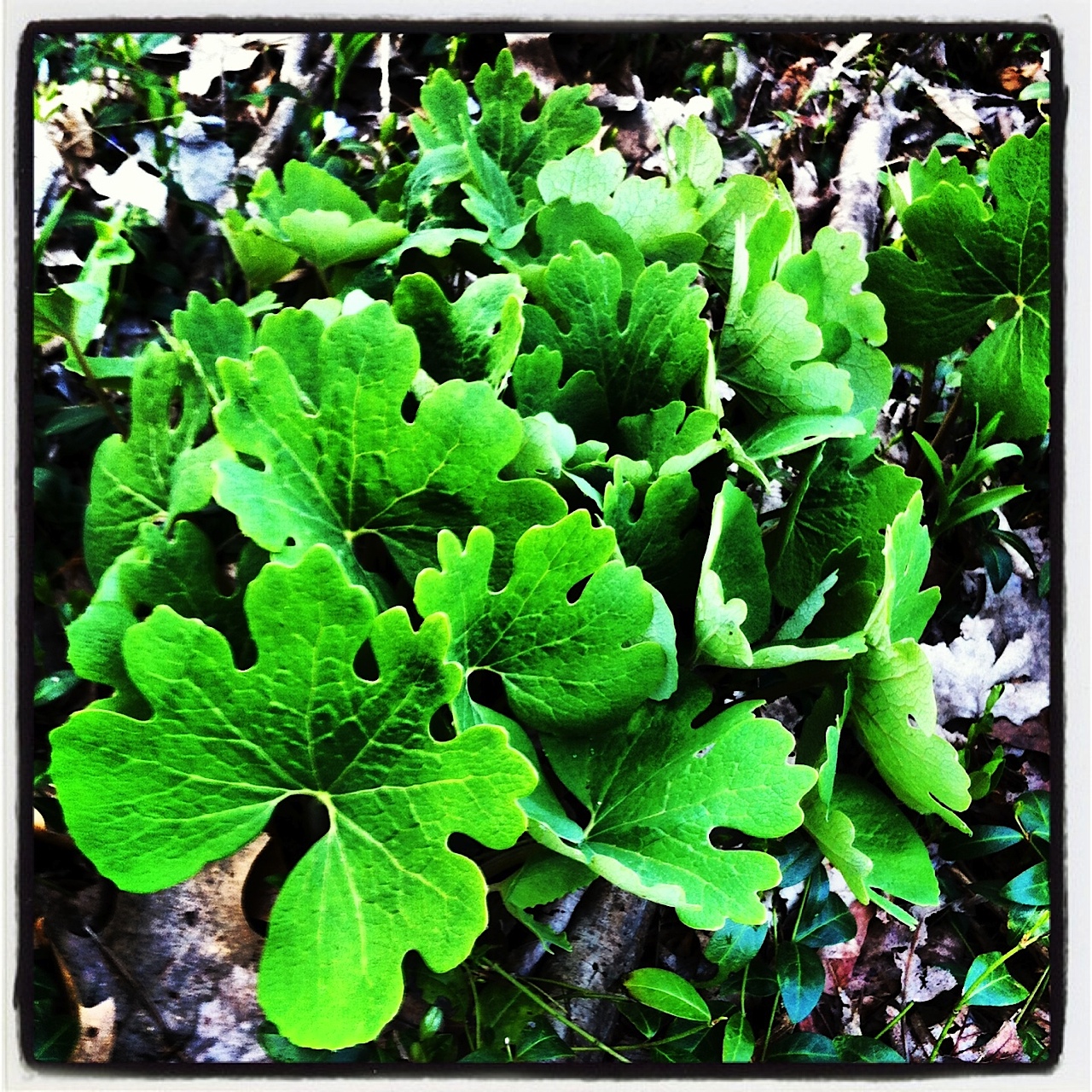
bloodrootSanguinaria, or bloodroot, is a native Michigan wildflower. A single leaf rises out of the ground, entirely curled around a single flower bud on its own leafless stalk. What a story this is, yes?  The single white flowers are open for a few days at best, before the petals drop.  If you do not check the emerging plant often in the spring, it could be you will miss the flower altogether.  The small leaves are strikingly shaped and veined. Soon after flowering, the plant will go dormant until the following year.  The spring season can be fraught with icy and windy weather.  Though it is the same length as all of the other seasons, spring seems to come and go in an instant.  The time of the bloodroot- hours.

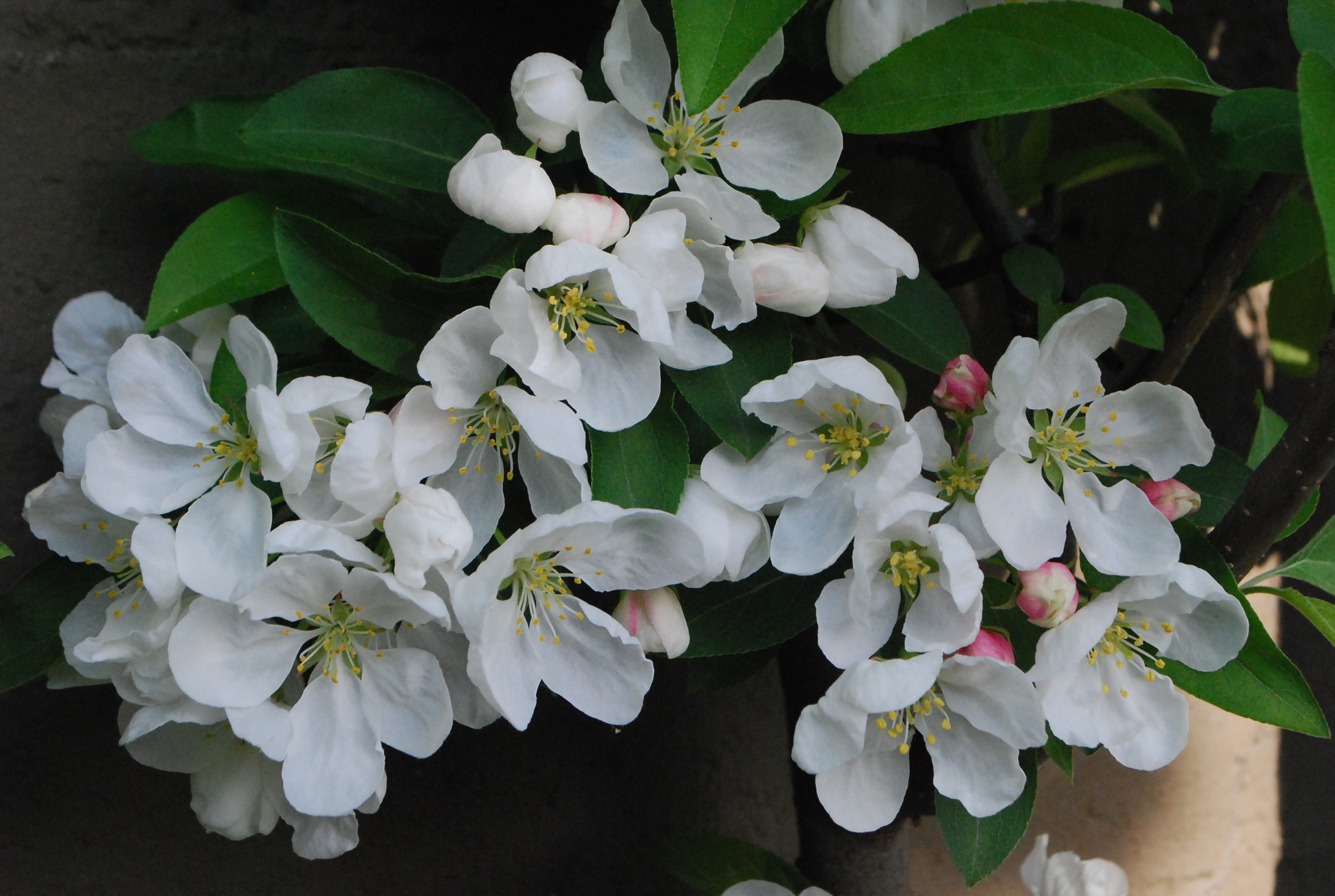
Donald-Wyman-crabapple.jpgThe crabapple “Donald Wyman” has bright pink buds, and a profusion of white flowers.  A crabapple blanketed in flowers is one of spring’s most breathtaking events.  In a cool spring season, they are a delight to the eye for a week or better.  The teardrop shaped petals-how do they manage to stay attached on a windy spring day?  Crabapples in bloom-glorious.

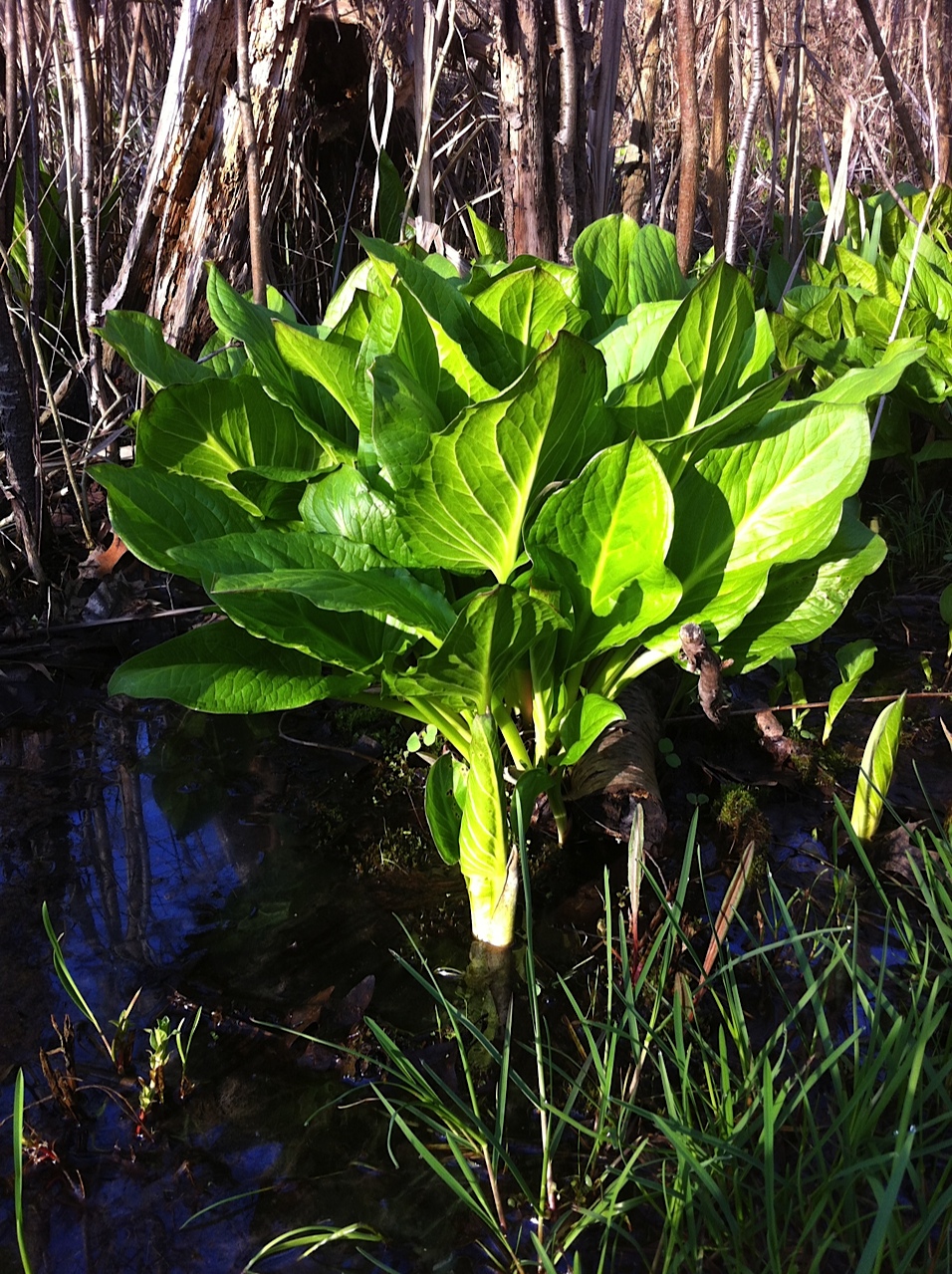
skunk-cabbage.jpgIn swampy areas, the skunk cabbage forms massive leafy clumps that look good enough to eat.  However, skunk cabbage is poisonous to mammals.  The plants will warn you.  The leaves when disturbed smell like rotten meat.  This spring beauty has luscious looks, but should be admired from afar.


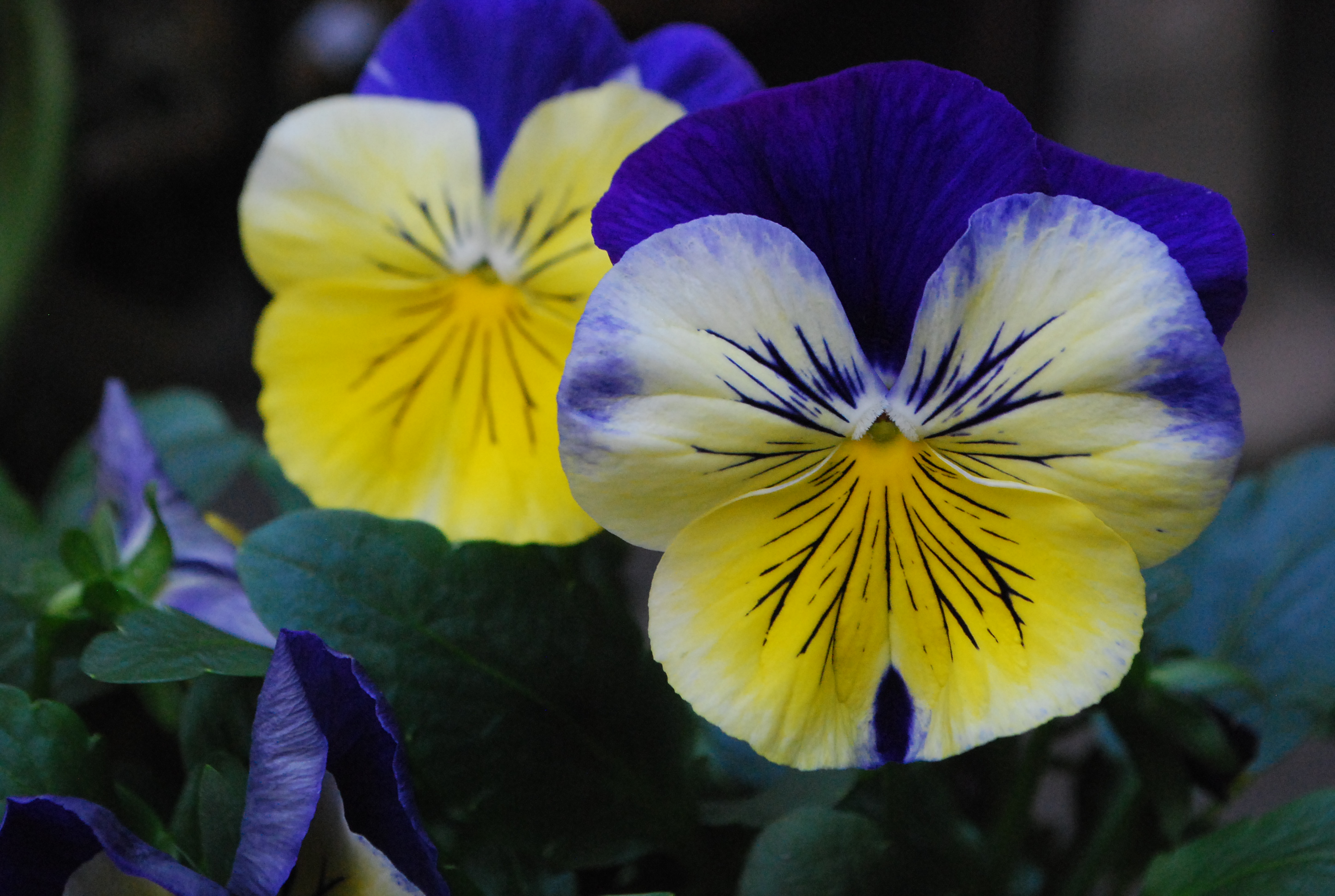
whiskered-pansy.jpgToday’s pansies and violas look much different than their more self effacing ancestors.  This particular bicolor pansy, with its distinctive dark whiskers, is saturated  with intense color. This is spring blooming at its most robust. Though the pansies and violas do not really pick up steam, and flower heavily until the beginning of June, each individual face announces the coming of spring in the most cheery way imaginable.  They are so unlike any other flower in form and color.  Fault me if you wish, but a pansy in August would be out of place.  They belong to spring.

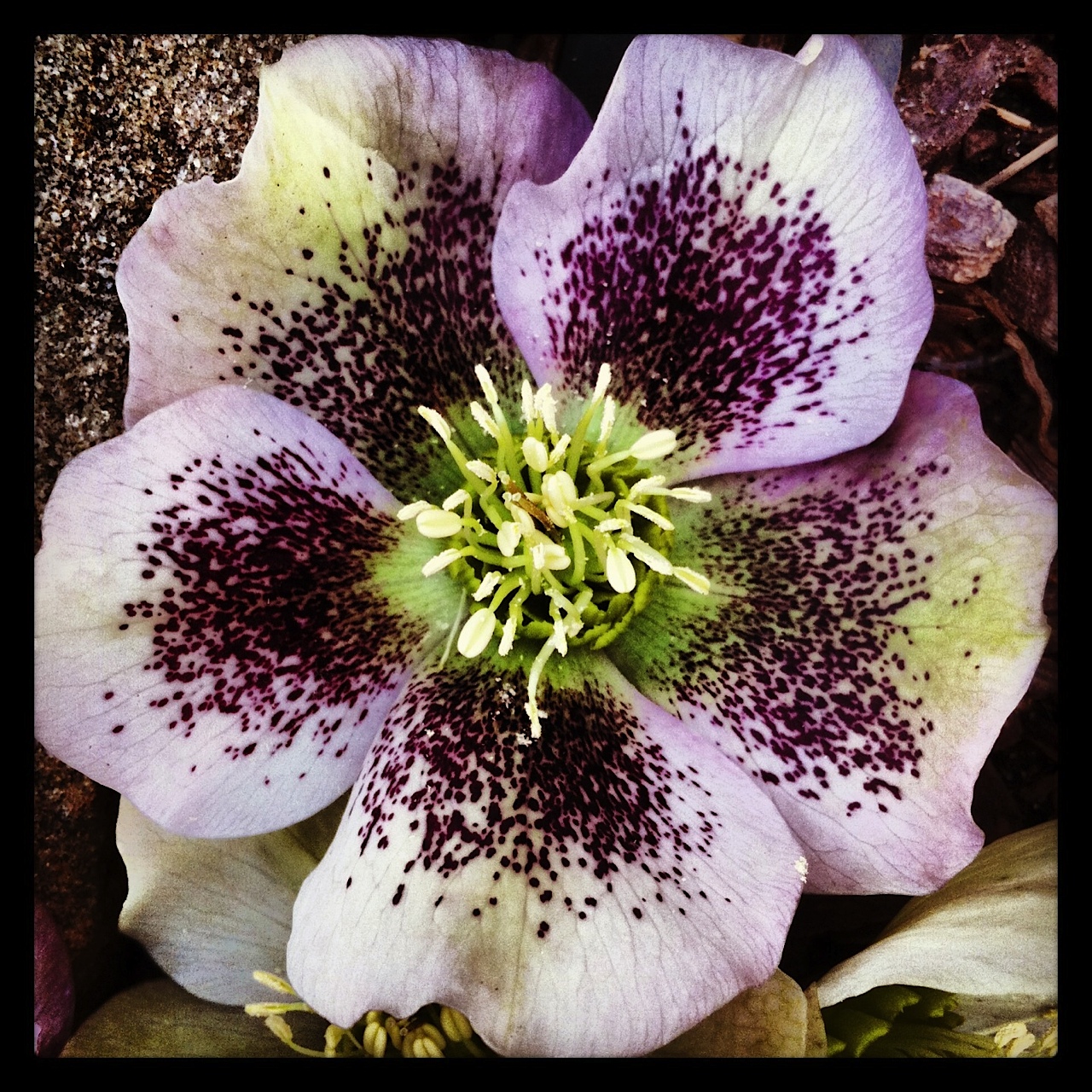
hellebore-bloom.jpgRob’s instagram photograph of a dark speckled hellebore proves that spring can also be moody and sultry . Rainy and chilly. It also makes the point loud and clear that the atmosphere of a landscape can be altered by light and color-to spectacular effect.  Creating a mood, or an atmosphere in a garden is one of the most difficult aspects of landscape design.  It cannot be taught, nor can it be forced.  It can be aspired to.  Spring is that season that every gardener can turn loose of the past, and start fresh.  The sap rises in the plants and the gardeners alike.

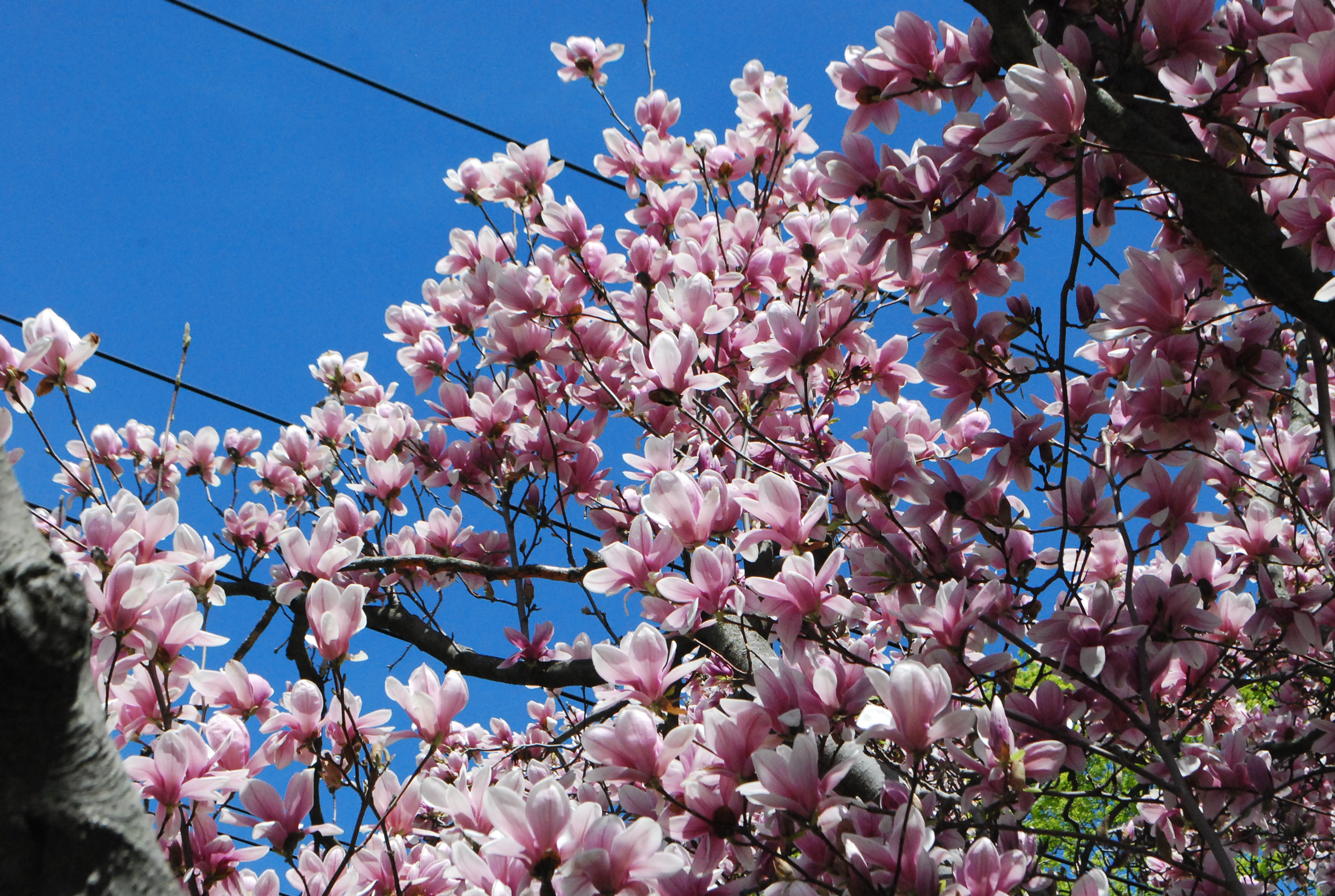
saucer-magnolia.jpgThe saucer magnolia features very large flowers of great substance.  The queen bee/Sarah Bernhardt of the spring flowering trees, this magnolia likes cool spring temperatures, but not too cool.  Warm spring temperatures, but not too warm.  A good bloom demands next to perfect conditions as if it were a God given right.  It seems like every Michigan spring features some weather element or another which causes all of the petals to fall to the ground in a heap.  A thick mulch of magnolia petals on the ground-that would be our spring.