Day And Night


 The shop this time of year is one of my favorite seasons-but that did not happen by accident.  For years I would watch the good gardening days winnow away, and dread the coming of the dark.  My late fall activites would center around cleaning up, putting away, cutting back, protecting-preparations for the desolation to come.  I still do this.  But there are ways to take the garden with you, when winter calls. 
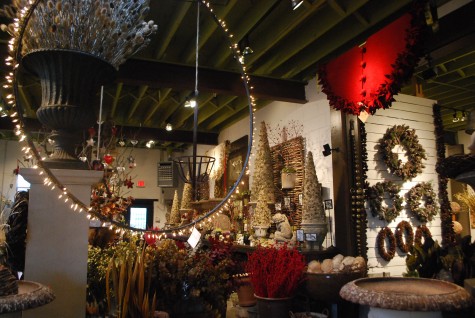
The shop makes no bones about it-all of our materials and ornament relate in some way to the garden.  Mossed topiary cones can cover a favorite pot brought into the foyer for winter.  Lots of kinds of pine cones can find their way into winter garlands and pots; a plain oval pine cone wreath with a burlap box says gardener in residence.  Rob’s steel rings wrapped with brown corded lights can be hung from a tree branch in a dark corner of the garden. 
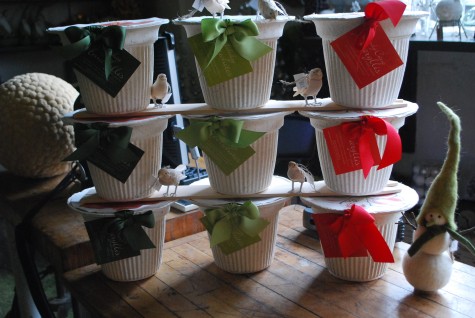
An amaryllis growing on a window sill is not only a comfort, they bloom spectacularly and triumphantly in the winter months.  We like them beautifully packaged in a growing kit for gift giving. 
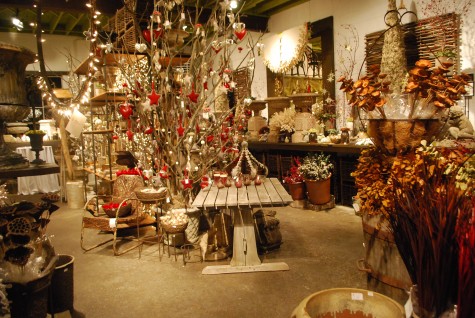
I wish we could be open day and night, at this time of year.  Some materials look so beautiful on a sunny day, but we are fast approaching the time when our sunny days will be at a premium.  What looks good on a gloomy day, or a day that goes dark at 4pm in afternoon?  Faux white berry stems, anything red,  whitewashed eucalyptus, and glass look great outdoors on a grey day.   
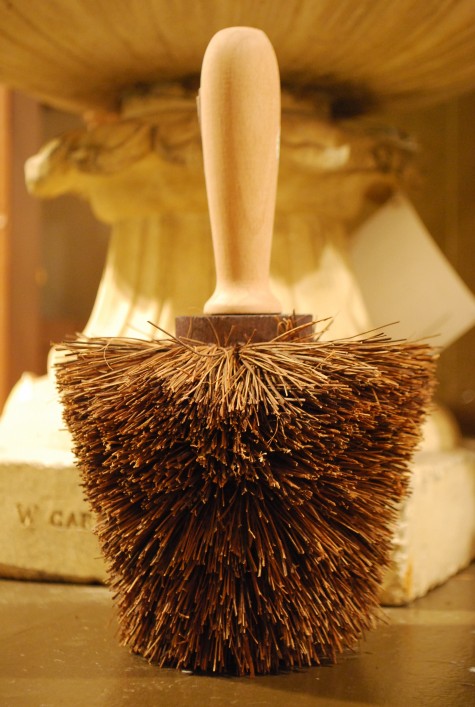
This English made pot brush makes specific reference to the garden.  It is a sturdily made handcrafted object that needs to do nothing more than sit there, and be admired.  It reminds me of a place I very much like to be-that is enough.  It would be a great centerpiece for a kitchen table-dressed up with a bow for the holidays.    
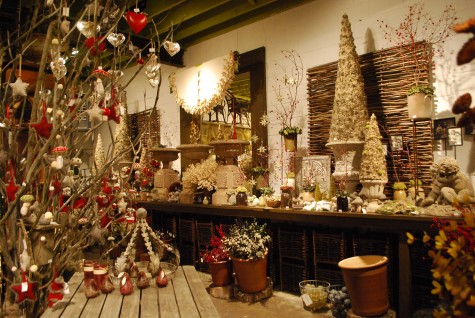
Dried natural materials, subtly colored in greys, creams and browns, can be dramatic in winter arrangments, provided they are used in big enough numbers, or dramatically lit. 
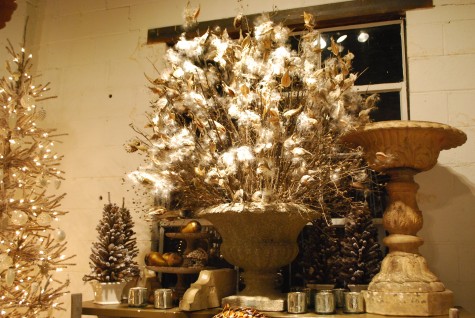
Rob walks Larry every day in fields nearby.  It took numerous trips to collect enough milkweed pods to create this stunning arrangement which he then lit dramatically in the shop.  A single milkweed pod in a glass bottle can be just as interesting.  If you collect the pods as the seeds are emerging, they need to be lightly sprayed with Dri-Seal-a sealer specifically made for natural materials.  Otherwise, you will have milkweed seeds floating in the air-everywhere.   
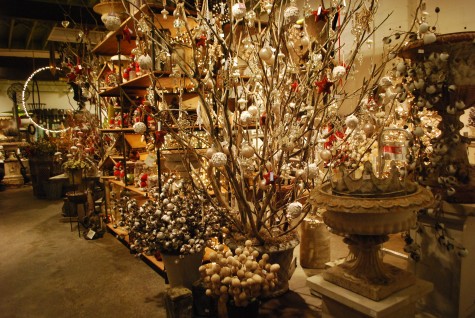
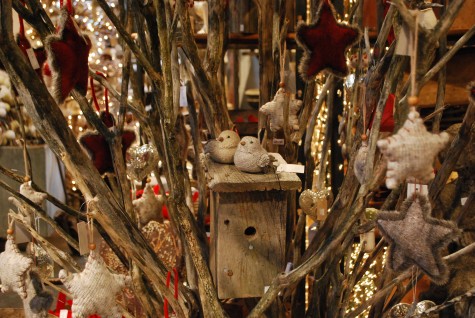
I took these pictures of all of the rooms in the shop last night.  I like to have a record of what we do; this does look like the garden to me.  Rob set giant natural bleached branches into big pots filled with white play sand.  The sand holds the branches exactly where he wants them.  They are hung with paper, wire, and felt snowflakes, felt mushrooms, and stars, felt owls and birch bark balls.  Our pots are full of twine ball picks, berries, and assorted natural materials.        
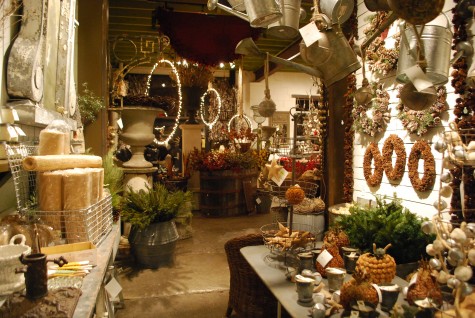
 

I know there are people who read here that cannot stop by.  I hope these pictures of the spaces give a sense of the look of the shop now..  It is to my mind and hands, a big space-almost 10,000 square feet.  The work of creating a holiday or winter display, whether in a shop or in a home, involves lots of small objects and lots of time.  I only have so much time in a day.  I would rather devote more time to creating something from the season, as this leaves less time for for mourning the passing of the garden. My butterburr garden is flat to the gound, and mulched for the winter.  It is a big brown blob of a space; there is nothing to be done for it.  But nothing on earth is more forlorn than empty pots in the winter, as there is a season to celebrate on its way.  There is no need for pots to sit idle all winter.   
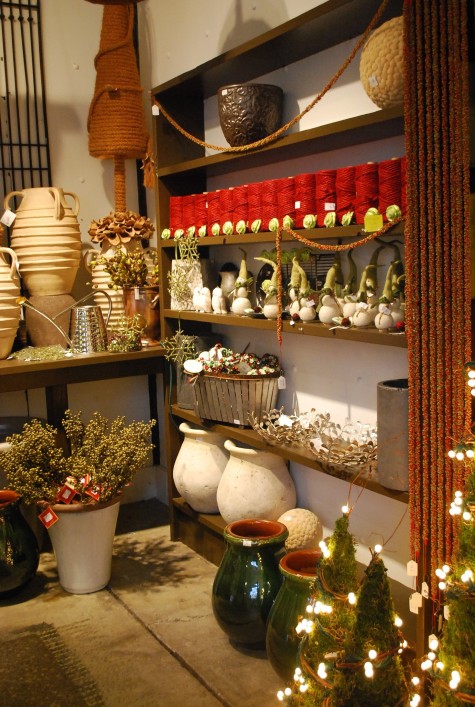
 I have said before that holiday and winter lighting is a form of landscaping-I stand by this.  I am not so concerned about the lighting in my summer garden, as the sun takes care of that until very late in the day.  But my winter landscape needs light.  How I choose to do that is part an alternate form of gardening. 
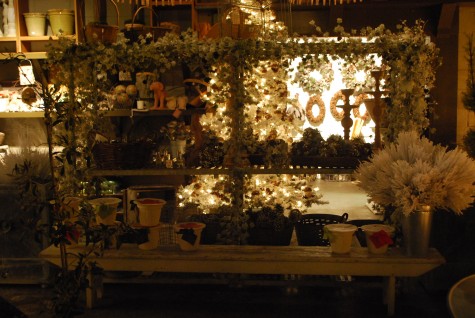
The shop greenhouse space goes quite dark in the late fall, given how low the sun is in the sky.  Rob takes special pains to light the  at space beautifully.  There is light directed from the top down.  There is light on the walls.  There are light garlands on the floor.  We have holiday trees that are lit from within.Every material can be transformed by the quality and intensity of the light put to it. 
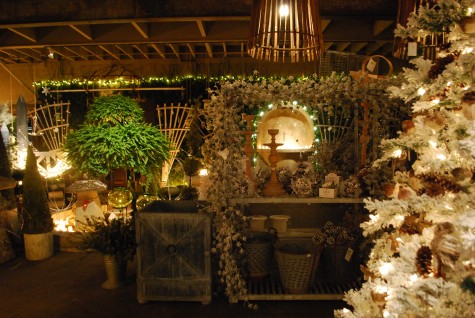
We are better ready for winter than we were a month ago, and looking forward to our winter gardening.
Warm And Woolly


 Clients are calling about their winter pots, and holiday decor-that season is coming up fast. How to express all of that is a big topic of discussion.  Having installed winter pots and decorated inside and out for the holidays for the better part of 25 years, I can attest to the fact that there are endless possibilities.  My best advice-in addition to every other job you have as a professional, a parent, or a gardener, take on the job of design editor in chief. Great design is about a clear underlying idea about what is important to you.  And subsequently, what beautifully expresses that idea.

We have a strong holiday materials thread going on at the shop that I call warm and woolly.  Our winters are fierce, and relentlessly cold.  The garden is silent, and we alternate between short grey days and long black nights.  This state of being brings plenty of ideas to mind.  Let’s address just one. I like to keep it simple, at this stage.  How can my idea to celebrate the holiday and winter season best block out the cold and dark?  I go right from the idea to the materials.   I never design without specific materials in mind.  If I want to stay warm, be warm, host my friends and family warmly, I choose my materials accordingly.

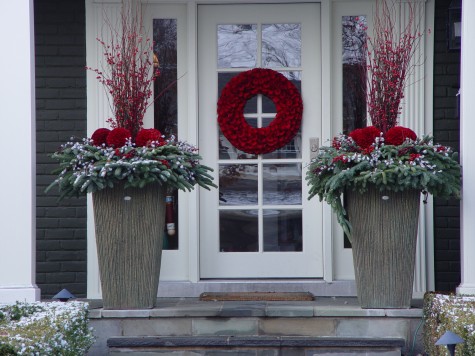
A winter pot ringed with a heavy blanket of greens looks warm.  A tree wrapped in burlap looks warmer.  A holiday tree decorated in pine cones and ornament from natural materials is warm.  The color red is warm; a garland draped over a door is a warm gesture.  The brown felted backs of magnolia leaves look warm.

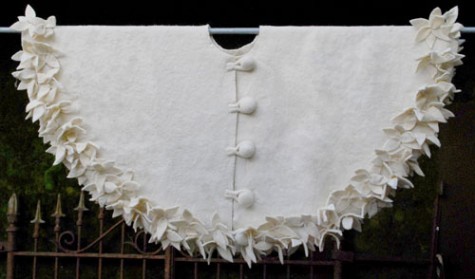
Felt in any form speaks to warm.  This tree skirt was handmade from from the thickest felt I have ever seen.  It is a natural for our warm for the holidays collection.  Wool is a natural material that wards off the cold.  Felting is a process prized by individual artists-much like the woman who designed and created these handmade tree skirts.  This skirt inspires all kinds of ideas about ornament and decor made from warm fabrics.

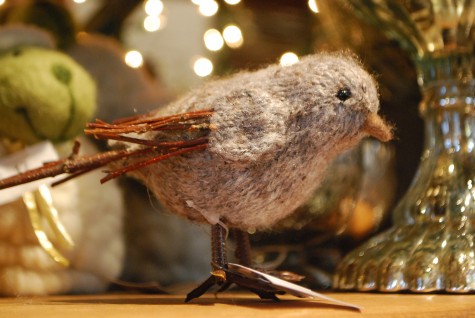
Jenny works in the shop.  Her collection of winter headgear is astonishing, and geared to warm.  Her winter hats-there’s an essay of its own there.  These felted birds remind us of someone we know and like. The Jenny birds-we have a good feeling about them, from the fake fur trimmed hats to the scarves to the felt beaks.  They are good humored, sturdy little birds.

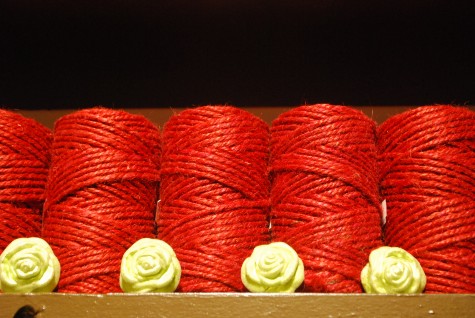
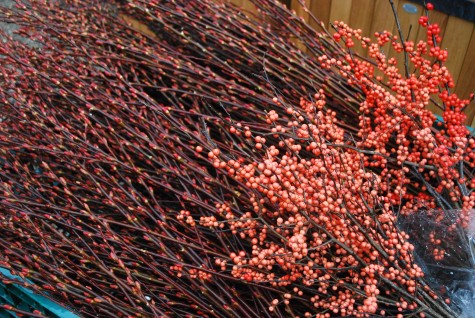
These spools of thick red twine look great.  Individual strands would provide a cheery and homespun look to a package, or garland. I could see a big red bow made from multiple strands.  I could see a plant climber wrapped with lights-and the cords covered with this twine.    Materials empower any design idea.  I shop the fields, and the hardware store.  I look around for homegrown inspiration.  Once I assemble a group of materials that represent the feeling I am strying to create, I tinker with putting them together in some coherent way. You can do the same.  This red bud pussy willow looks great with the orange ilex berries.  These materials are a sure bet to warm up a winter pot.

This knitted bird is very appealing.  A customer yesterday put that into words.  It looks like a child created it, she said.  Well said.  Should children figure in your holiday decorating, materials like this might work. 

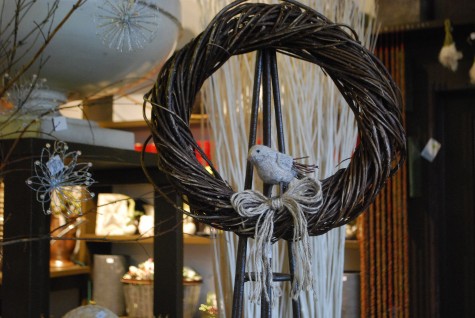
 Perched on a jute bow in a twig wreath-simply charming.   

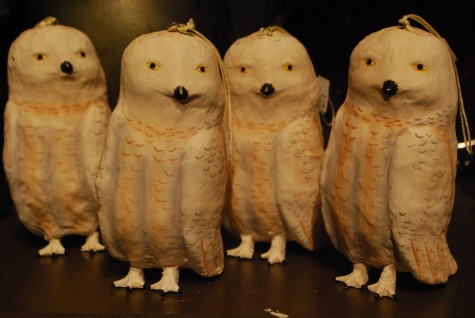
 These paper mache owls have an entirely different feeling to them. I think they look like a group of people-each one with its own sophisticated and complicated personality. They represent a grown up kind of warm.  

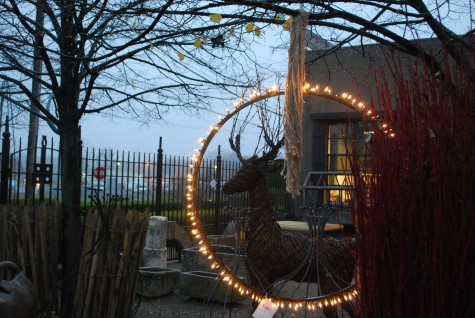
The dark and cold days are just about here. This steel hoop strung with brown corded lights-this is what I see first when I get to work.  Very warm, this. 


Drenched

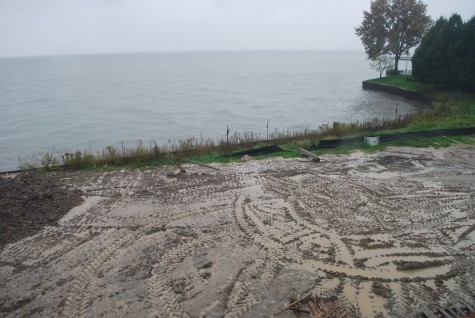
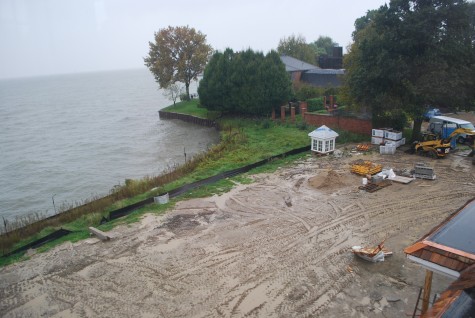
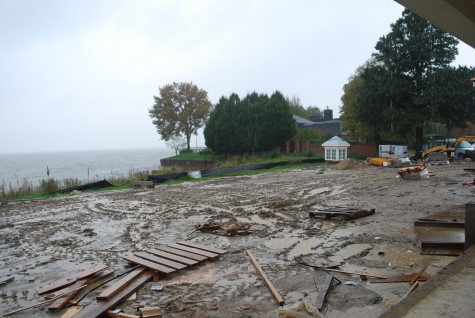
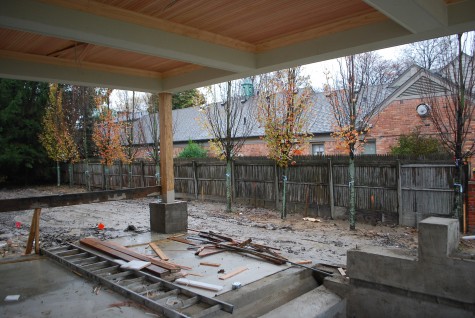
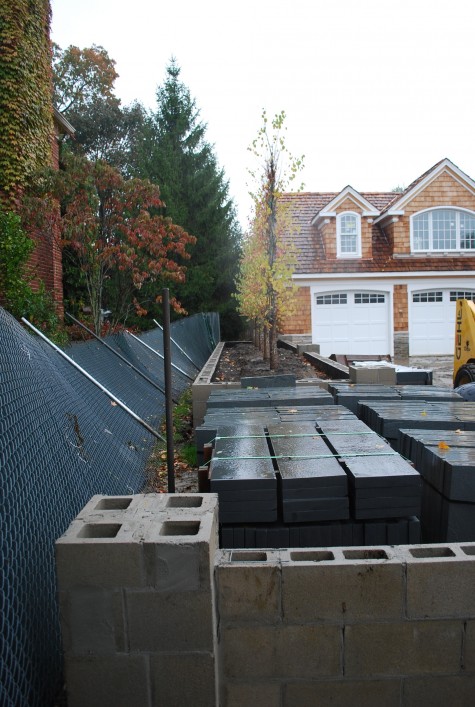
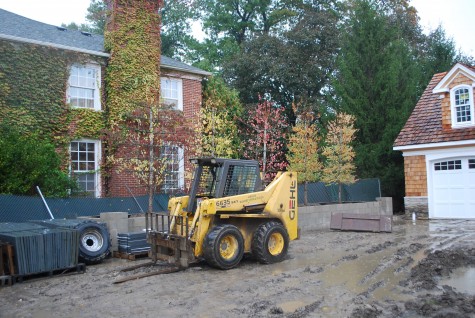
There is no other word for it-my world is drenched.  We have had steady rain 4 days out of every seven the last few weeks. We may have as much as 2 inches of rain before this day is over. No doubt this is wreaking havoc with the fall landscaping season.  Too wet to plough describes the situation  perfectly.  Soil that is sopping wet is too wet to work-unless your idea is to make clay pots. Clay mixed with water, and wedged until there is not one molecule of air left inside-perfect for making pots, but  terrible for planting.  The property has been driven over by all manner of trucks and equipment necessary to the building phase.

The compaction of soil by machines makes for a most inhospitable home for plants.  The roots of plants need oxygen.  Just walking on drenched soil is enough to squeeze all of the air out of it.  In the spring, I am really careful not to walk the garden until the winter snow and ice has drained out of the soil.  Any plant placed in heavy wet soil that has been compacted by footsteps or machinery will have a tougher time getting established.

That said, I have a project that needs a lot from me before the season closes for the winter.  As with many projects in a garden, the waiting can take just as much time as the work.  This project may be on hold for 3 or 4 days.  Judging from the look of the rain soaked land,  friable soil is a good many days away.

I need to finish grade this property before I can even think about planting. Sculpting soil, whether with a bulldozer or a grading rake is the foundation upon which the landscape will be built. It is very tough to sculpt soup.  Our first move with this new landscape-planting 12 six inch caliper Bowhall maples.  We bulldozed 2o yards of mud out of the area, to get down to dryer and more stable soil.  Setting big trees at the proper grade is critical to their survival.

 It does not matter if it is a big or a small landscape project, any installation needs to be staged.  This comes first, this comes next, this comes in the middle-and that comes last.  These giant trees needed lots of working space, and a big machine to get them planted.  There is one more tree to go in the ground.  Once it is planted, we will be able to work our way out from this end of the yard to the street.

I need for Scott from Albaugh Masonry to cover all of the porches and terraces with bluestone-he will need to move stone via loader to wherever he needs it.  He did get a large planter box blocked up; we have already planted it with five katsura espaliers.  The box will be finished in the same stone as the exterior of the house.  He has also blocked in some short walls with pillars that will be capped in limestone.  This will give the drivecourt a sense of enclosure.    I am used to this-a new house landscape means that my work comes last-in whatever days are leftover. The finishing touches on this part of the landscape I do not expect to accomplish until spring. 

I do hope for a much drier and companionable November.  I may get that-I may not.  We have had years when the ground froze solid in mid November-this makes me wince, just to write about it.  So many things in the landscape revolve around a situation over which I have no control. 

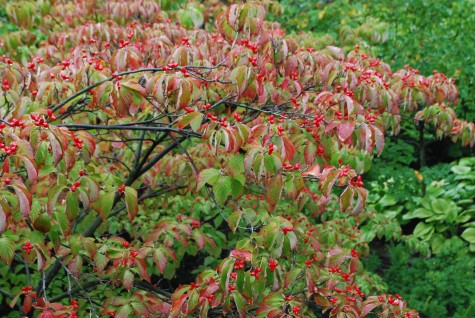
       Steady fall rains are not all bad.  My dogwoods set their flower buds in the fall-regular rain encourages a heavy spring yield. All three of my kousas are loaded with buds now.

Evergreens photosynthesize all winter long, on what energy they have on reserve from the fall.  Before the ground freezes, any evergreen greatly benefits from regular rain-even if that rain comes from the end of your hose.  Rain-whether there is lots, or a little, or enough, or none-the garden revolves around it.  I am happy to report that all of my tulips are in the ground, and getting a thorough soaking.  Were I to step on this gound now, I am sure I would be over my ankles in mud.  I am hoping for drier weather, soon.

In Anticipation


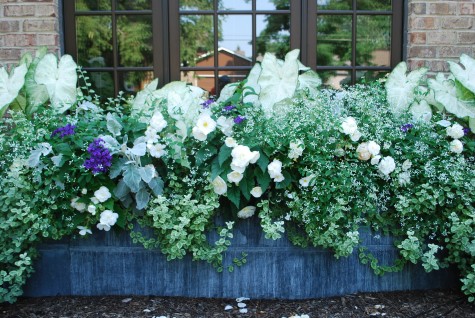
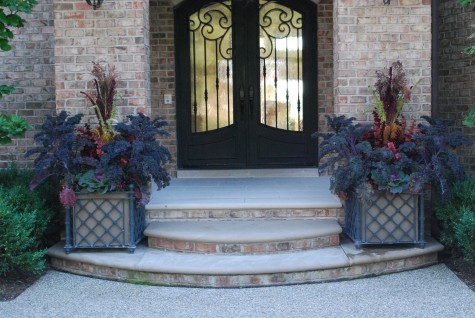
This client has a very distinct point of view about what she likes, and a sincere interest in the landscape.  She is a young person with a flock of young kids-how she manages to even think about it surprises me.  What we do for her is very low key and simple.  The hydrangeas on standard in her summer pots we winter over in the ground.  Most times we plant white, sometimes there is a little lavender or purple.   

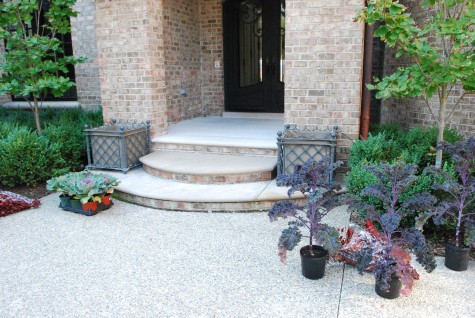
A few years ago we made these steel boxes for her; they sit on the ground, as her windows are very low.  I took this picture of one of those boxes September 5-this was the first time I had seen it since it was planted.  The white non-stop begonias were thriving; I was impressed.  They are not the easiest plant to grow. The heliotrope has faded from the picture, but the box by and large looked great.  June Bride caladiums, euphorbia Diamond Frost, cirrus dusty miller and variegated licorice have all grown together quite companionably.    

All good things must come to an end-I wonder if Chaucer’s summer pots were waning when he wrote this.  Can you hear me sighing?  Steve cleared out all but one of my deck pots yesterday-I cannot bear that look of decline.  I should do like this client.  When summer comes to an end, she moves on to the next season.  Having kids, she was interested in a containers that would look just right for Halloween. 

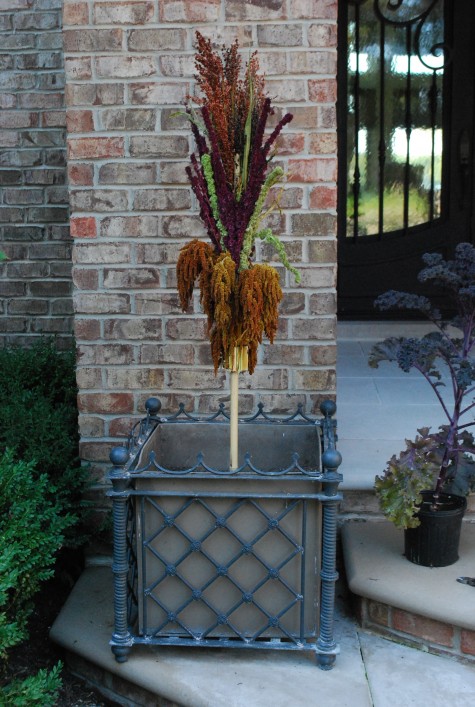
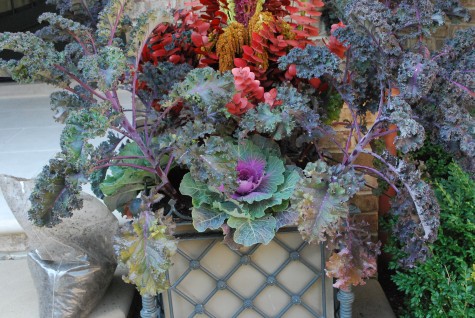
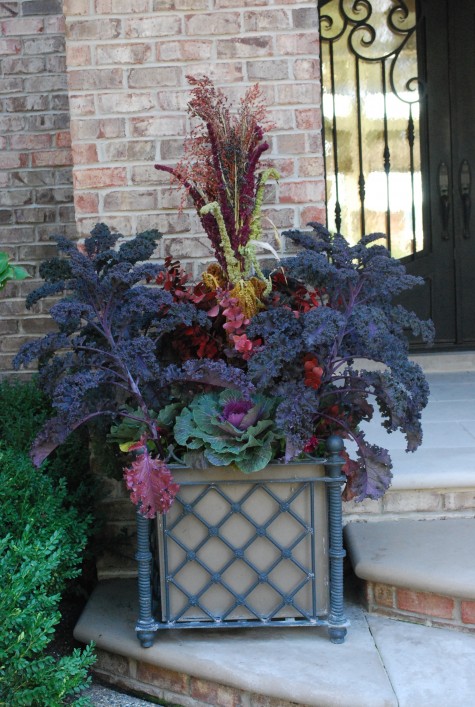
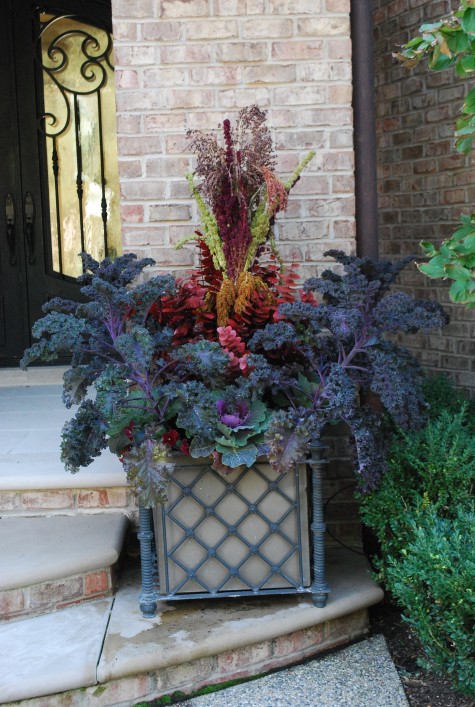
I like Halloween.  The best are all the kids that come to the door in costume.  Next best, I love any holiday that depends greatly on the plants and props native to the season, presented in a suitably holiday way. I could not engineer anything as horrifying as what the average 10 year old could dream up, so I focus on the plant part.  First up for these pots, a centerpiece of broomcorn, and 3 colors of amaranthus, zip tied to a stake that goes most of the way to the bottom of the box.  A good deal of the soil had been removed as part of the rootball of the hydrangea on standard.  We topped up the boxes with new soil. 

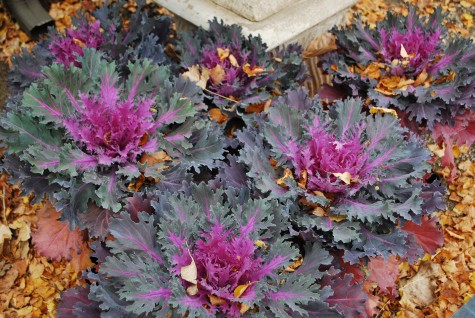
The cabbages and kales I have written about before.  There color only gets better, as fall progresses.  But when I am thinking Halloween, my kale of choice is Redbor.  Redbor kale is stalky growing, and krinkly leaved.   

The color of redbor is an amalgamation of grey, turquoise, purple and black.  As the night temperatures decline, that color gets a little more emphatically black.  Black for Halloween?  Perfect.

I planted the kales in the outermost corners of the box, and angled them out.  Tied around the bottom of the centerpiece-2 bunches of molten orange dyed eucalyptus. We like a little fire going on at the center.  The turquoise and cerise cabbage front and center is a little tame and off color,  but it will keep the planting looking great and full until Halloween.      

The orange eucalyptus appears to have pushed to redbor kale outwards.  This is a very easy way to be spooky-plant the plants out of kilter.  What might take the place of that cabbage in the front?  A lit pumpkin?  A skull?  A giant spider?  A skeleton hung over the side? A mummified hand dripping in plastic blood?    No doubt I will consult the kids about that.  In the meantime, my client is happy to have a lively planting in her boxes at the front door.   

Every nursery, farmer’s market, roadside stand, grocery store, garden and vacant land has materials that look great in fall pots.  As for the spiders, skulls and skeletons that need to be added that one night, any kid can help you get ghoulish.