These great photographs are courtesy of Rob Yedinak.
Deborah Silver is an accomplished and experienced landscape and garden designer whose firm first opened its doors in 1986.
These great photographs are courtesy of Rob Yedinak.
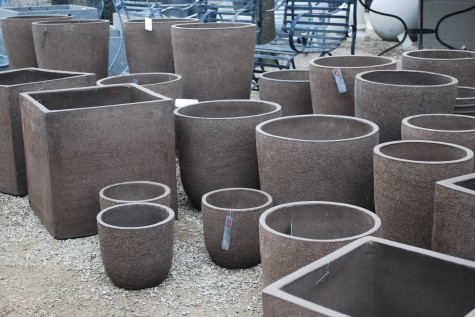 Creating and arranging a collection is a passion known to many, not just gardeners. Even the most hard line minimalist collects their empty spaces as if empty spaces were on the endangered list; yes? Gardeners collect seeds, tools, hellebore cultivars, rocks, birdfeeders, trees-you get the idea. I have amassed a collection of books in the past 25 years that must number over a thousand volumes by now. It is a long standing coherent collection documenting my adventures as a gardener. Putting together and arranging a coherent collection for my shop is a big part of being able to advise people about how to design their gardens.
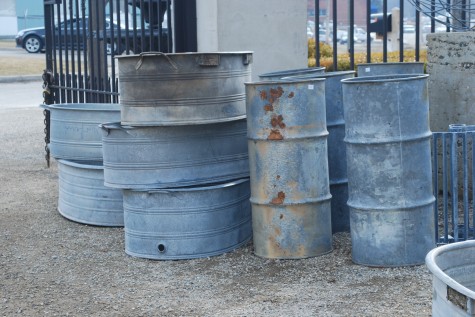 Every year’s collection for Detroit Garden Works is different. It might be based on one particular object whose size, surface, shape or style or aura proves to be a magnet for Rob’s attention. Alternately, his basis for a collection might be triggered by a place he has visited or an idea that’s surfacing. We made a conscious effort to shop the US for antique, vintage and new things a few years ago. Thus the collection always has a strong American element. An organizing metaphor-we like these. His point of view about what is beautiful is a catalyst for a constellation of pots, sculpture, prints, garden furnishings, fountains-any object which might evoke a little magic for a garden.
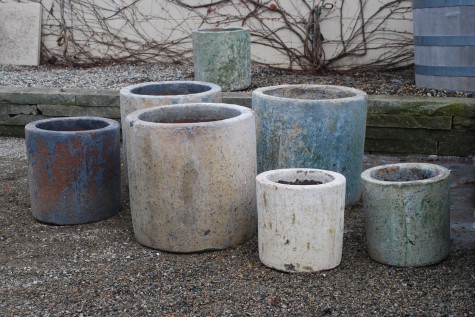
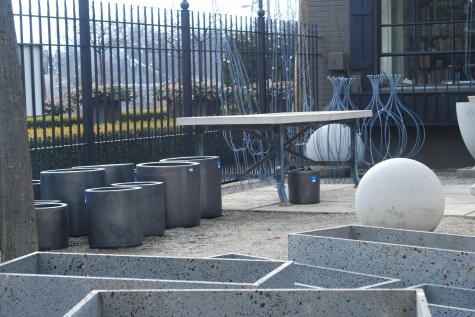
These clay cylinders are all about what Rob calls a chamaeleon surface. In addition to their gritty texture, the color changes given the light. After last night’s rain, the color was saturated and rich-different than their dry color. Mineral surfaces exploring color and texture such as this will be friendly to no end of different kinds of plants. Pots of simple shapes makes the color and texture the most important element. These pots will take on the atmosphere of its placement, and plants, and play a serious supporting role in big visual scheme of things.
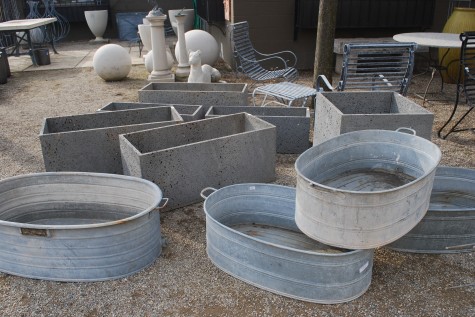 These rectangles made from thin slabs of volcanic rock are close in color, shape and size to these oval galvanized tubs. Their differences give the eye a workout. I am seeing his idea become tangible. A collection of objects of simple and varied shapes distinguished by their interesting surfaces are what I would call a visual variation on a theme.
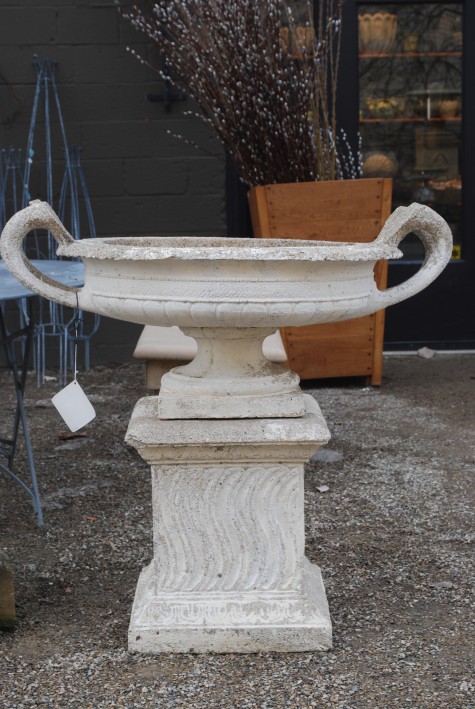 A pair of very old and fine American urns and pedestals dating from the early twentieth century focuses my attention on their shape and surface-and away from a historical label. In another context, I would see them as very traditional American garden ornament. In Rob’s context, kept company by a family I would not have imagined, I am looking at them in a different way. The impossibly wide and low shape of the urns, the simple swirls indented in the pedestals-I am thinking about the universality of beautiful objects for gardens-never mind their age, period, or label.
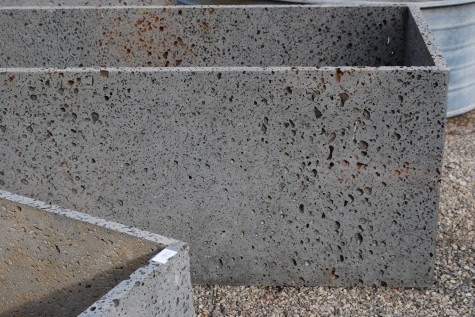 Volcanic rock in its natural state-this I am used to seeing. Volcanic rock slices are a product of modern technology. I have not seen this before. The intersection of ancient materials transformed by modern technology-Rob has gotten my interest. This I admire about him so much; he posits lots of questions to whomever might be interested- without fanfare. He assumes that gardeners are a group in touch with the physical world, and provides them beautiful choices. Alternative choices.
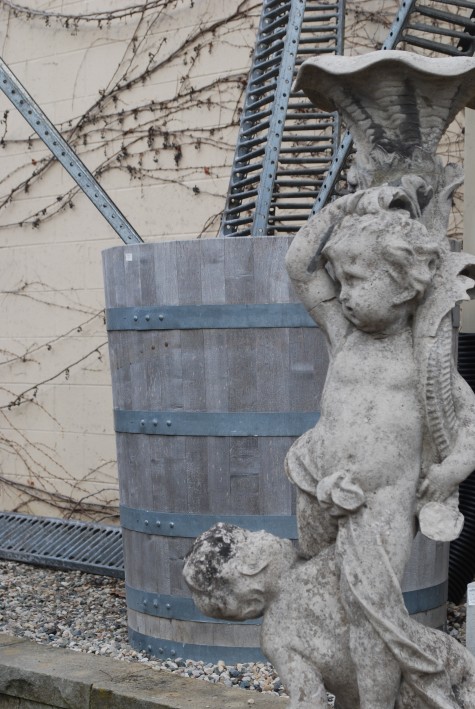 This Austin and Sealey sculpture from 19th century England was minutes from being moved as I took this picture. I liked the old hand carved stone backed up by a contemporary Belgian elm barrel-why would I go there? I am looking at shapes and surfaces without regard to the sentiment of a given period-many thanks to Rob. It is the best of what I have to offer as a designer-a gardeners point of view, without any predicatable baggage.
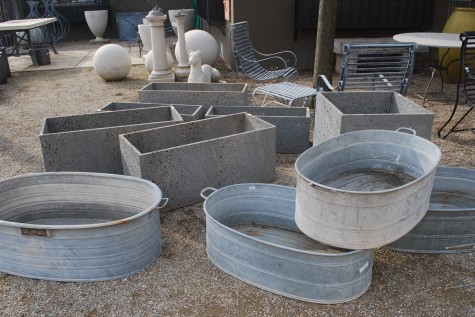
A major reconfiguration of the shop is a major effort. We do this every spring. Spaces get emptied, cleaned-raked and ready to redo and live new- a dream come true. Every new gardening season warrants new thinking-we try to oblige. The driveway is congested with things from this show or that, that source or this vintage shop in Virginia-if you have an interest in how Rob spent his winter, come and look around.
I do not have to do that much work to figure out where Rob is going; not really. No one could possibly love their I-phone as much as he does. The internet/photo capability of that phone has set him free. I get indundated by the photographs he takes-everywhere he goes. client’s homes. trips. vacations-ok, busman’s holidays. buying expeditions. random thoughts. By the time the winter is coming to a close, I have a huge photographic record of his collecting. He prints and posts the pictures he has sent me on a big wall in the workroom. I have advance warning. But this does not truly prepare me for what gets unloaded here in the spring . The evidence and impact of his collecting-it will take me a season to absorb.
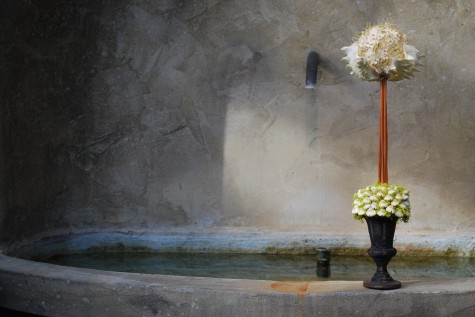
Some time ago I wrote about a client who told me that no matter how beautiful his house might be on the inside, in the end, it is his cave. I am quite sure he chose the word cave, as he feels his winter is tantamount to a forced hibernation. Garden people have strong feelings like this-me included. I do make an effort to live through the winter, as best I can; more to follow on that. The upshot-I move to a diferent kind of making- as in small sculptures from natural materials. Some of these bits are left over from other projects. The shells in this topiary were left from my shell tower construction. The trunk sticks came from a spring centerpiece I no longer needed, but couldn’t quite throw away. Some materials I buy specifically for interior arrangements for the home. I buy little pots all year long for these projects. Who doesn’t have a small space somewhere that could be enlivened by a little dose of nature? A little dose of nature- hand conceived and built-this helps brighten my winter.
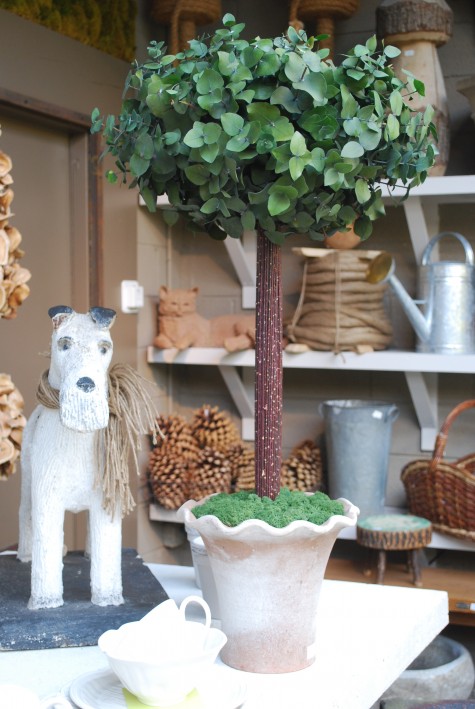 Eucalyptus is not native or hardy in Michigan, but its sturdy broad leaves remind me of boxwood- super sized, that is. Eucaylptus takes well to being preserved; the lush and lively look pictured above will last a very long time. The delicate cedar whip stems are arranged around a stout stick under a rubber band, and then glued. The trunk has interesting texture, does it not? Preserved reindeer moss covers the top of the clay pot. The moss is set low enough such that the terra cotta pie crust edge can still be seen.
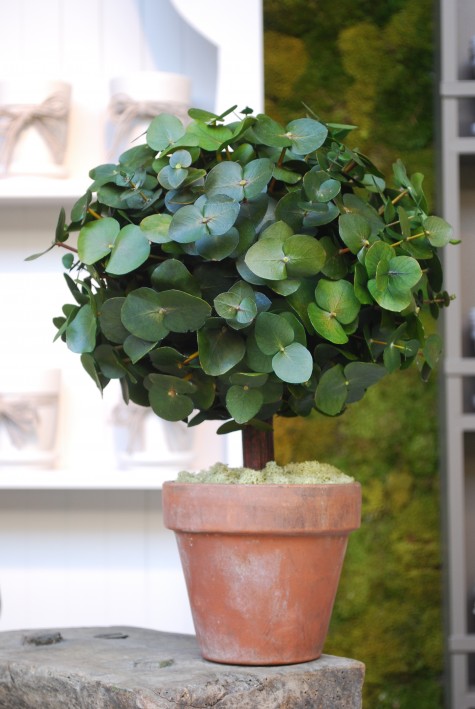 Making anything with one’s own hand is so satisfying. My friends Lauren, Buck, Marianna, Jane, Lynn, Julie and Janet-they cook. Fred’s twice a year chili extravanza-he runs a marathon for a solid two days over it; I have been a lucky recipient. Some sew, others compose. Gerhardt has not only resumed, but embraced his interrupted calling as an artist, after 30 years directing an Art Academy. At 70, he is just firing up. What and how all of them make things energizes me. Myself-I love what these small sculptures teach me about scale, proportion, texture, color, line, mass; what I put together stays with me, when I have a garden project to design.
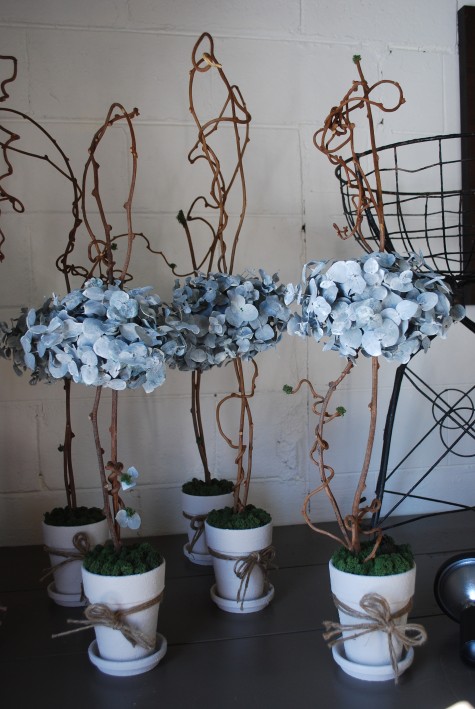 The hard wood of kiwi vine is extraordinarily beautiful. No two lengths are ever the same. Though I designed a number of these small sculptures with whitewashed eucalyptus and painted terra cotta pots, each one is different. As I compare them, I see the importance of line in a composition. I see that a signature, an arrangement of lines, is unique, and significant. Where I might apply this in my work-who knows. But I have seen this, and I will remember.
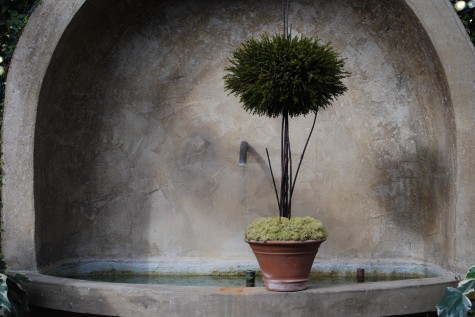
This delicate preserved foliage is the devil to work with-just ask Pam. But stuffed densely into a foam form, each individual wispy stem contributes to a mass and an overall form that engages the eye. The black dogwood stems are loosely gathered up and glued in. The lesson here- observing and working with the natural inclination of any natural material- makes for a graceful object.
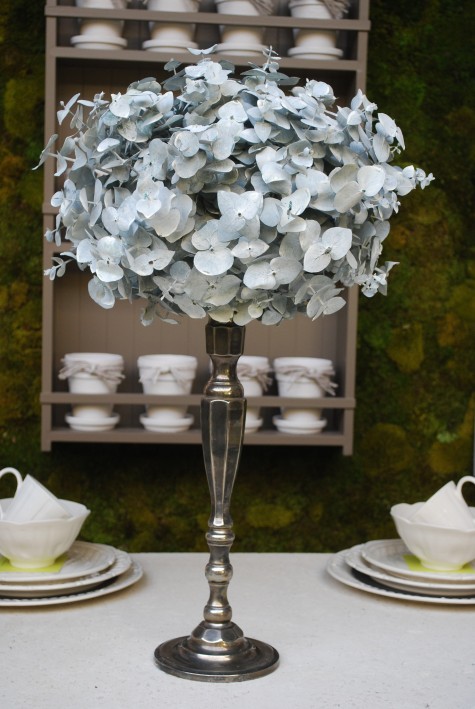 This lone silver plate candlestick I inherited-I do not remember why. For years it has been on a shelf, looking at me. The whitewashed eucalyptus unexpectedly looks good with this formal metal trunk. Every material needs the right spot to shine.
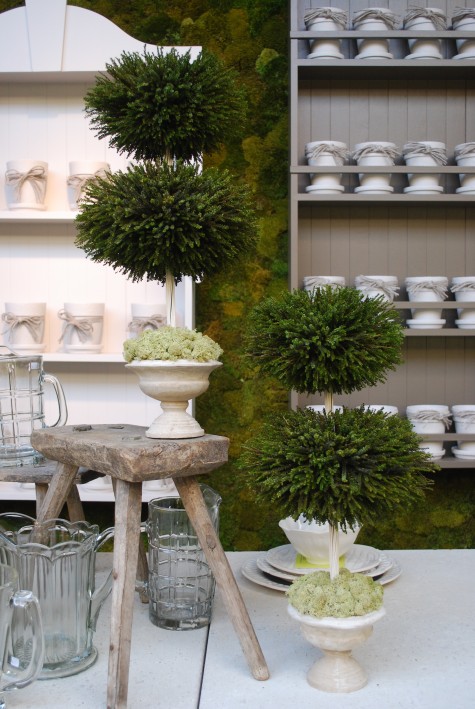 Rob will show up from a buying trip with pots in hand-these are actually densely fabricated paper mache. A wispy and dense natural material seemed like it might make a good companion. Though my first choice would be for a topiary plant firmly rooted in the ground, in a landscape, I don’t mind this slight and skillfully made interior bound reference. Making is much about doing justice to whatever greatly interests you.
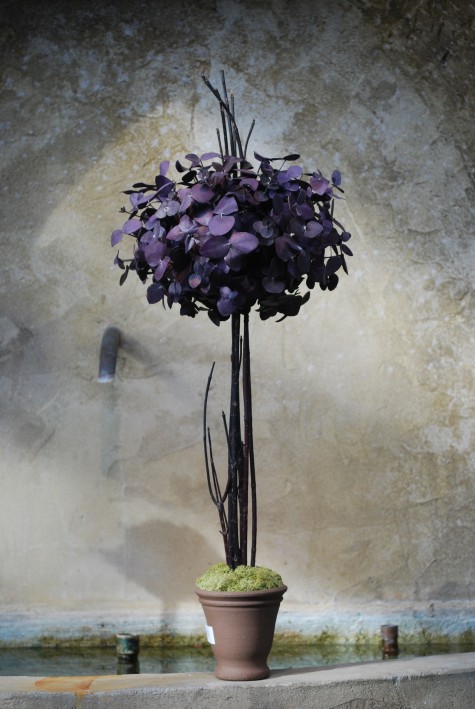
This deep purple is not a natural color in eucalyptus, but it does so celebrate the natural color of the black dogwood trunk. Have I ever seen black twig dogwood before this past fall-no! A first rate grower in Wisconsin sent me bunches of this dogwwod this past November. Regularly I see things from the natural world I have never seen before- my surprise and enchantment may fuel the winter crop of topiaries.
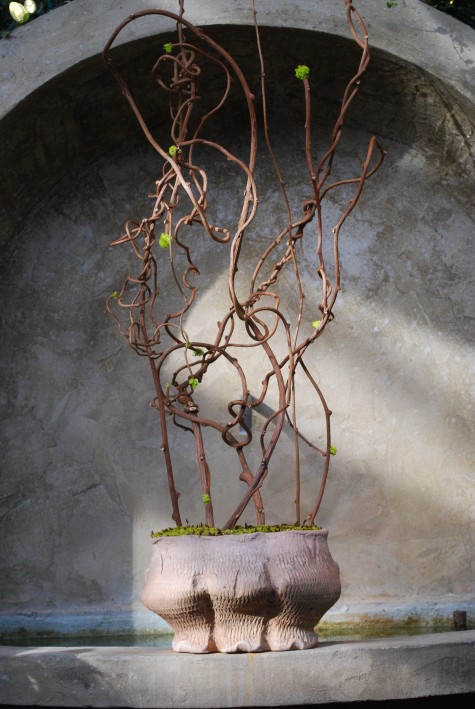
This winter, Pam constructed each and every one of our topiary sculptures. From my sketchy designs, she has created some very beautiful sculptures; she has a sure and an inspired hand. She is able to take an idea and confidently interpret from her own experience and eye. I am sure you can tell she is a first rate gardener, on winter leave.
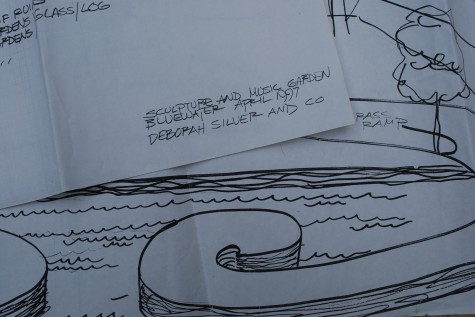 As my layout table has its first new coat of paint in 14 years, all the prints I’ve had stored there are piled up in my office. OK, I couldn’t resist taking a look before I put them back in storage. Some of them entertain me-I can see exactly what was influencing me at the time. The roll of drawings for the Bluewater project was just that-drawings. These unpolished sketches of landscape elements for a commercial project were highly conceptual-and certainly predate any computer programs that are now readily available to designers.
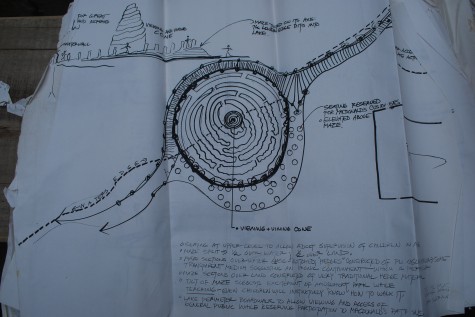 Land forms have always been of great interest to me. A big chunk of my library deals with mazes and labyrinths, land sculpture and earthworks. Robert Smithson’s 1970 sculpture “Spiral Jetty”, constructed in 6 days on a leased piece of the Great Salt Lake in Utah, is now completely landlocked as the lake is so low. The sculpture spent 20 years or better completely submerged. The sculpture has presented in many forms over the past 40 years. I have always admired it; no doubt this conceptual drawing of a maze half in and half out of some water was directly inspired by Smithson’s work.
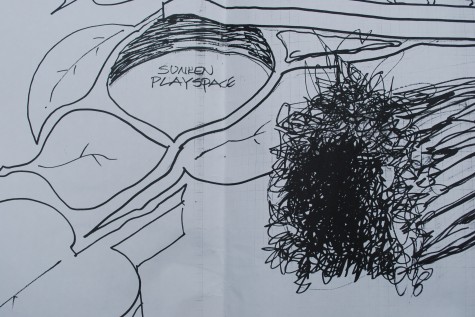 Another favorite-the land form drawings of Hans Dieter Schaal in his book “Landscape as Inspiration”. Inspired indeed. His sprawling and energetic drawings of natural forms exposed me to an entirely different way of thinking about dirt and nature. I had never seen landscape spaces rendered in this way before. I was equally taken with the beauty of the drawings. They are by no means scaled prints, they are gestural and interpretive marks on a page. This work inspired me to take up a marker and put it to a page, and see what happens. I refer to his book regularly.
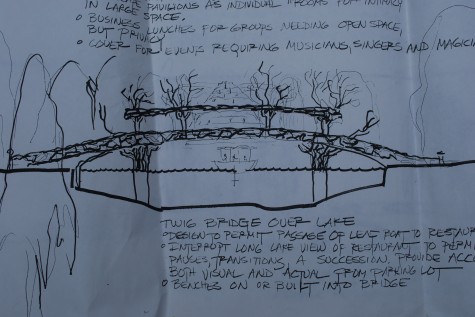 Any reference to natural forms intrigues me. A log twig bridge over Bluewater’s man-made lake seemed like just the right combination of architecture and natural materials. Buck shakes his finger at me when I design with no regard for construction, but I still think a little free spirited doodle drawing has its place. A sketch that seems to be going no where is easily discarded-provided you have not spent so much time with it that you have become attached. It is difficult to be objective about one’s own work-so I try to work fast at the conceptual stage. Anything I have invested a lot of time and work in can be hard to trash-even when trash it I should.
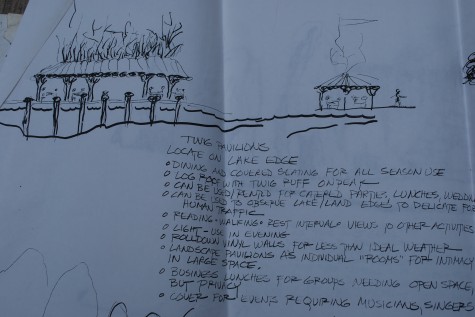 None of these drawings would convince a client to commit their time and money. But they might convince a client that there was a reservoir of ideas from which something of interest might emerge. If you don’t believe your designer is a person of interest, then a collaboration on your project is unlikely. If you are designing for yourself, drawings can bring ideas to the surface you didn’t know you had. Keeping a waste basket handy can be a comfort!
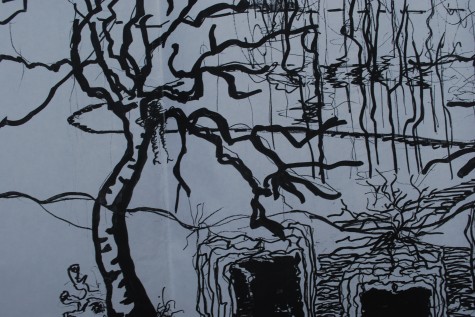 I am happy to have these drawings, not for their design, but for their energy. Being the fan of science that I am, I wholly subscribe to the notion that everything in motion tends to stay in motion-and what’s at rest tends to stay still. This applies as much to a design sensibility as it does to the physical world. Inertia being gravity that has gotten the upper hand, I make the effort to feed whatever energy I have regularly.
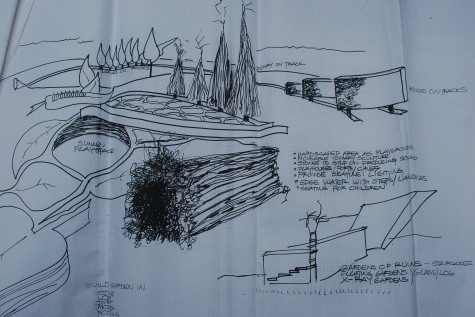 This drawing suggests at least 6 different ideas. They have similar elements, but are disconnected from each other. At the end of a series of drawings comes the integration phase. How visual and sculptural elements relate to each might be more important than any given piece. That relationship provides for good flow and rhythm. I see lots of landscapes that have good bits, but no flow. In the print, I plan for the transition between one space and another to have its own space.
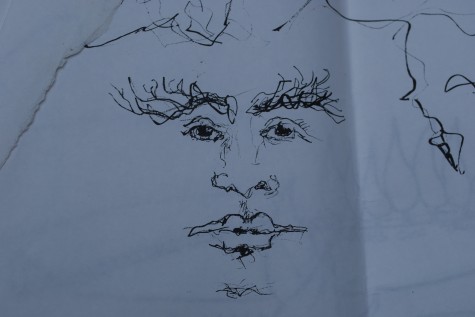
Once I was able to see that technically expert drawings did not necessarily imply expert concepts, I felt much more free to draw. The marks I make with the greatest confidence? My signature. Much of that confidence comes from having made those particular marks countless times. No one critiques a signature either-it is what it is. A series of drawings about your yard might need a little time to sit, before you review. It’s February-you have time.