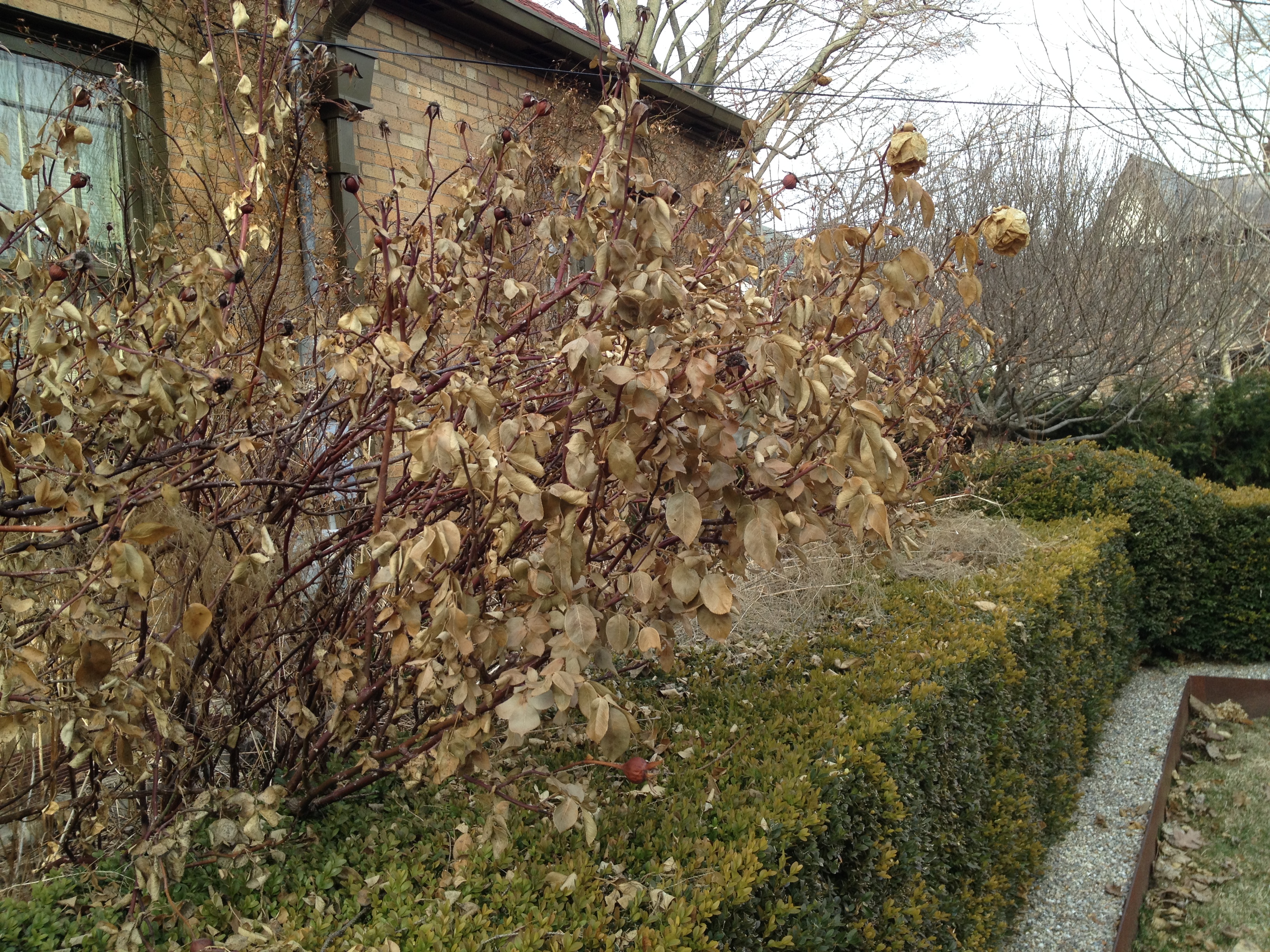
 Once the piles of snow melted this spring, the rose news was not so good. All of my roses were holding onto their dead leaves for dear life-as if our terrible winter caught them completely off guard. This scene just about broke my heart. A good part of the heartbreak was the uncertainty about the future. Were my roses dead? The early spring was cold and unfriendly. The garden was groggy, and slow to wake up. This story was a story about uncertainty that went on for weeks.
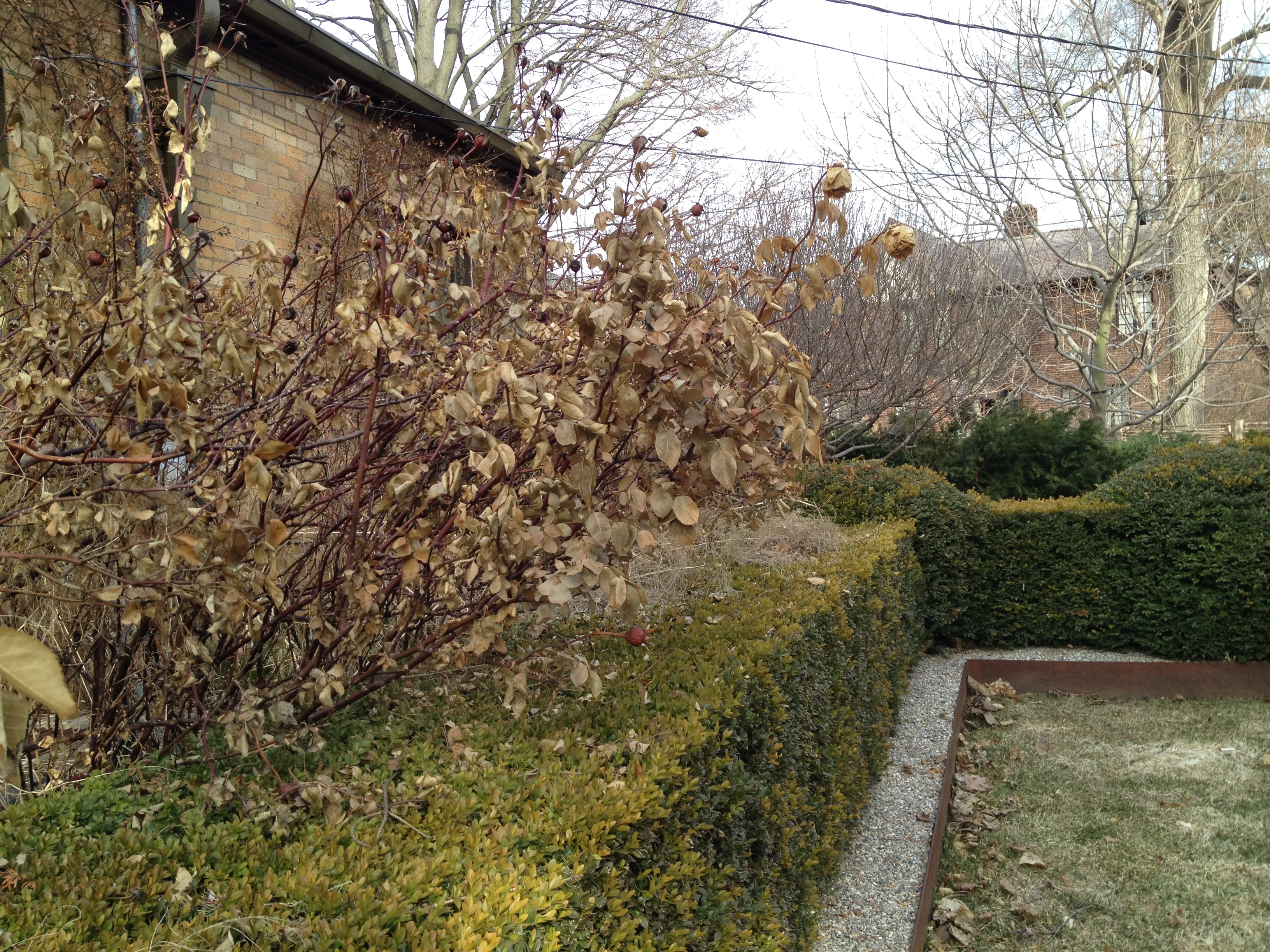 I did not touch them-that was pure instinct. It looked as though every cane was dead. The idea of giving up this old rose garden was very tough to take. The late spring meant we have had an incredibly busy spring at work. I quit looking at the roses, and hoped for a miracle. Hoping for a miracle-what else was there to be done?
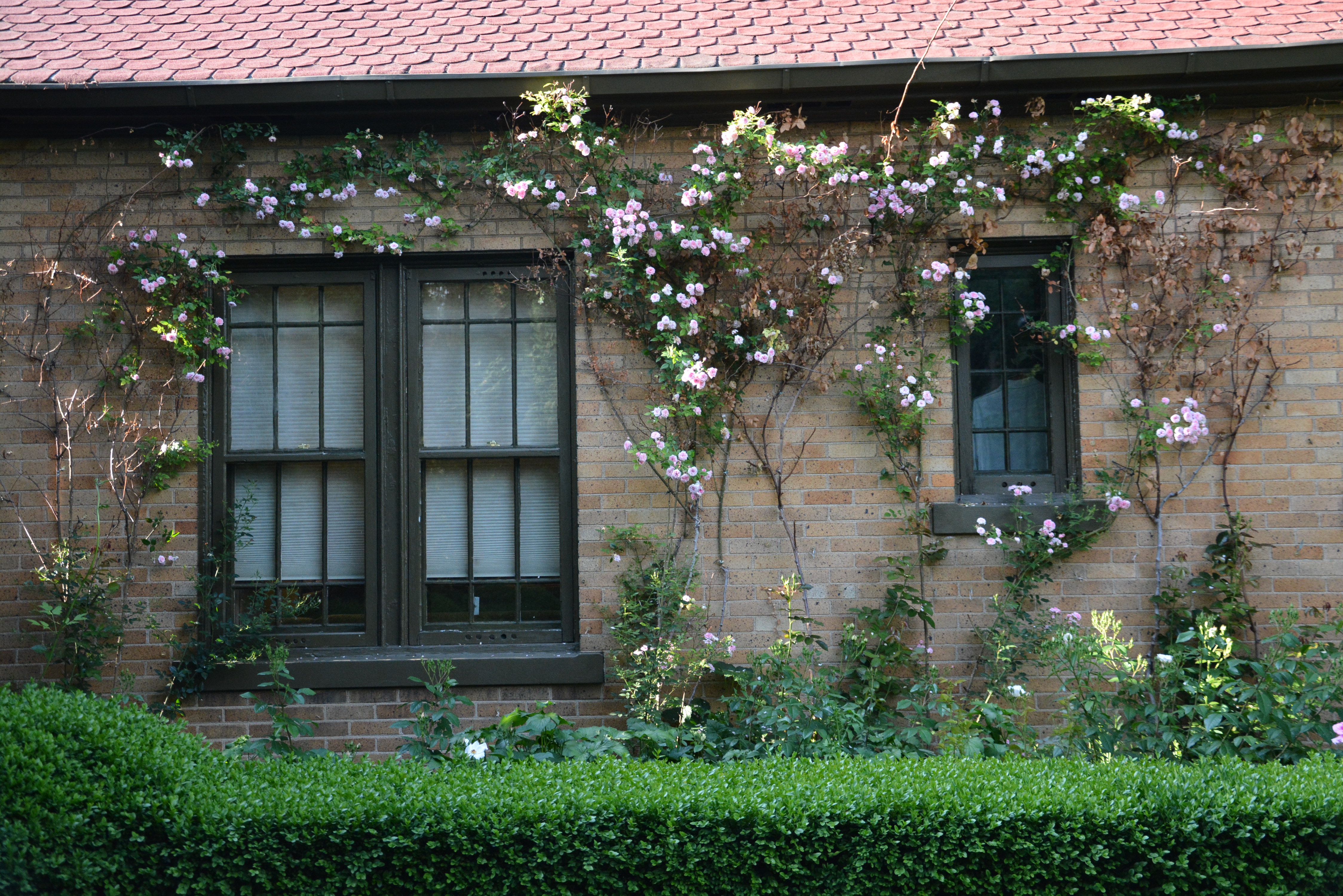 More than a few readers of this blog have suggested that our foul winter meant the roses got a rejuvenation pruning. This is polite talk for dead back to the ground. Dead back to the ground, I have learned, does not mean dead. I am glad I have been to busy to fuss over them. It took well into May to see what was gone for good, and what would survive. I watered deeply when it was hot and dry-that’s all. Today’s story? Most of the climbers died back to the ground. The few canes of Jeannie Le Joie that survived are bravely blooming. All of the climbers, including Eden, are coming back strong, from the root. Only one shrub rose is dead. Two of them I suspected were dead send up new canes jut a week ago. I decided not to cut back the dead climbing canes. My idea is to attach the new canes coming on from the ground to the trellis made by the old canes. How do those surviving canes look today? Not gorgeous. Just brave.
 My Carefree Beauty and Sally Holmes roses are coming back strong from below ground. The foliage is glossy green, and full sized. A scant month ago I was sure this garden would need to be replanted from start to finish. Not so. The will to live is a very strong will indeed. Any plant that is challenged by a brutal winter, or a lack of water, or a swarm of Japanese beetles-plants respond on their own schedule. The first and the last word belongs to nature. The Carefree Beauty roses I have blooming now are indeed a little miracle.
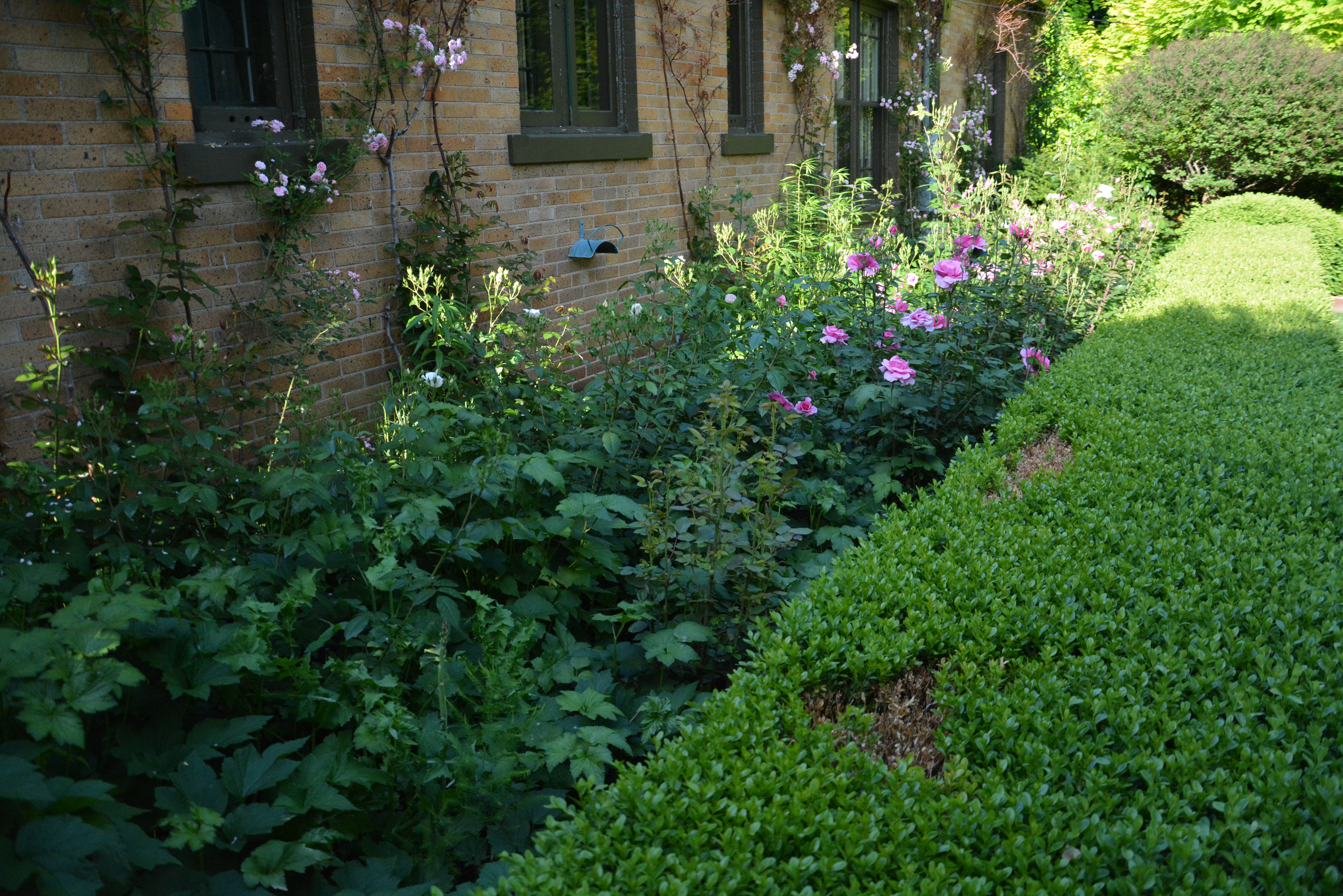 I am delighted about this turn of events. The two burned spots in the boxwood is the only winter damage I have to any of my boxwood. I was lucky in that regard. The roses are almost 5 feet tall. The Japanese anemone and boltonia are spreading their wings, with all the space and sun they have now.
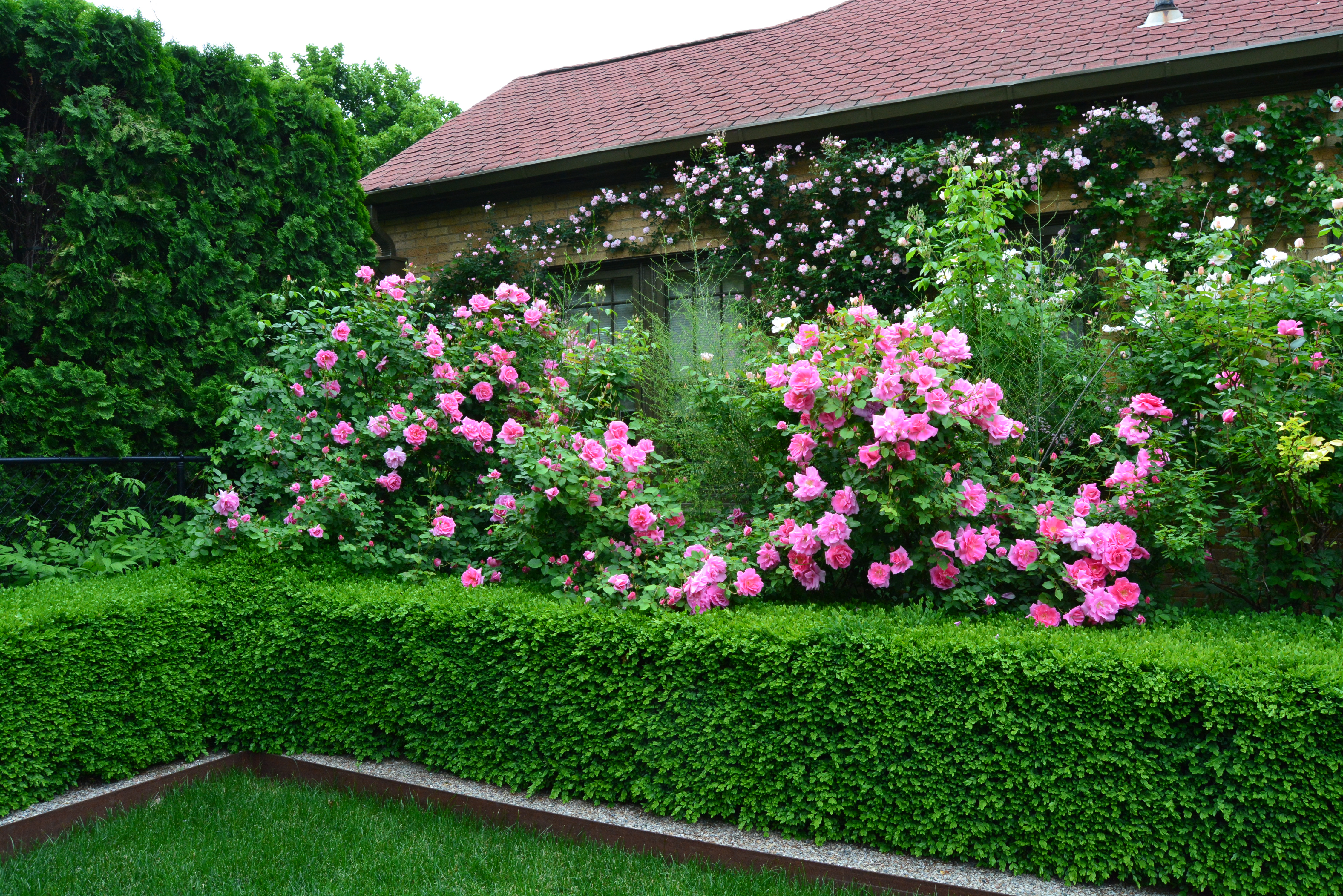 I took the following pictures last June. This June is remarkably different, but I wonder if that winter rejuvenation pruning to prove to be all for the better. I have the feeling I will have beautiful roses again. It just may take a while.
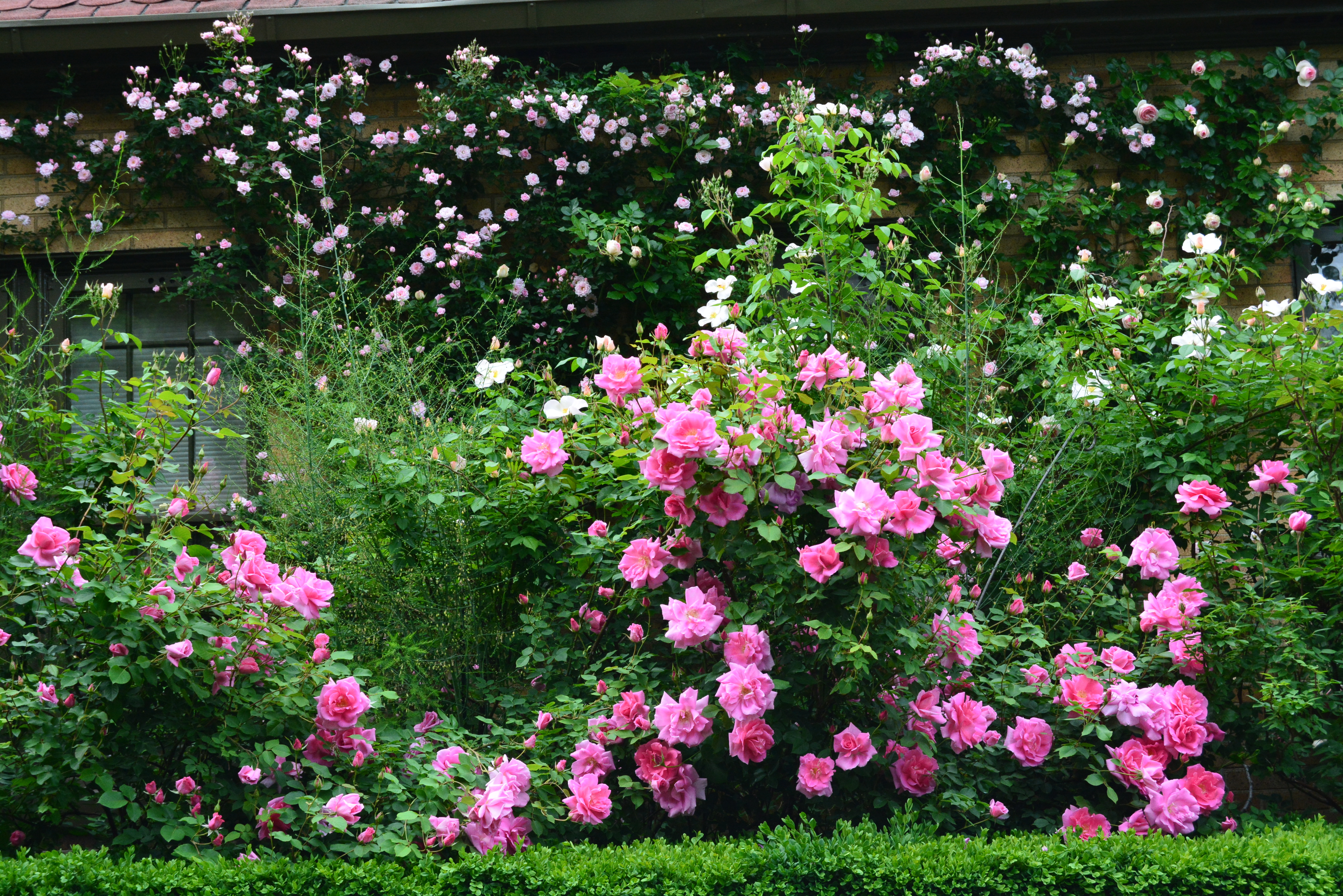 Roses blooming
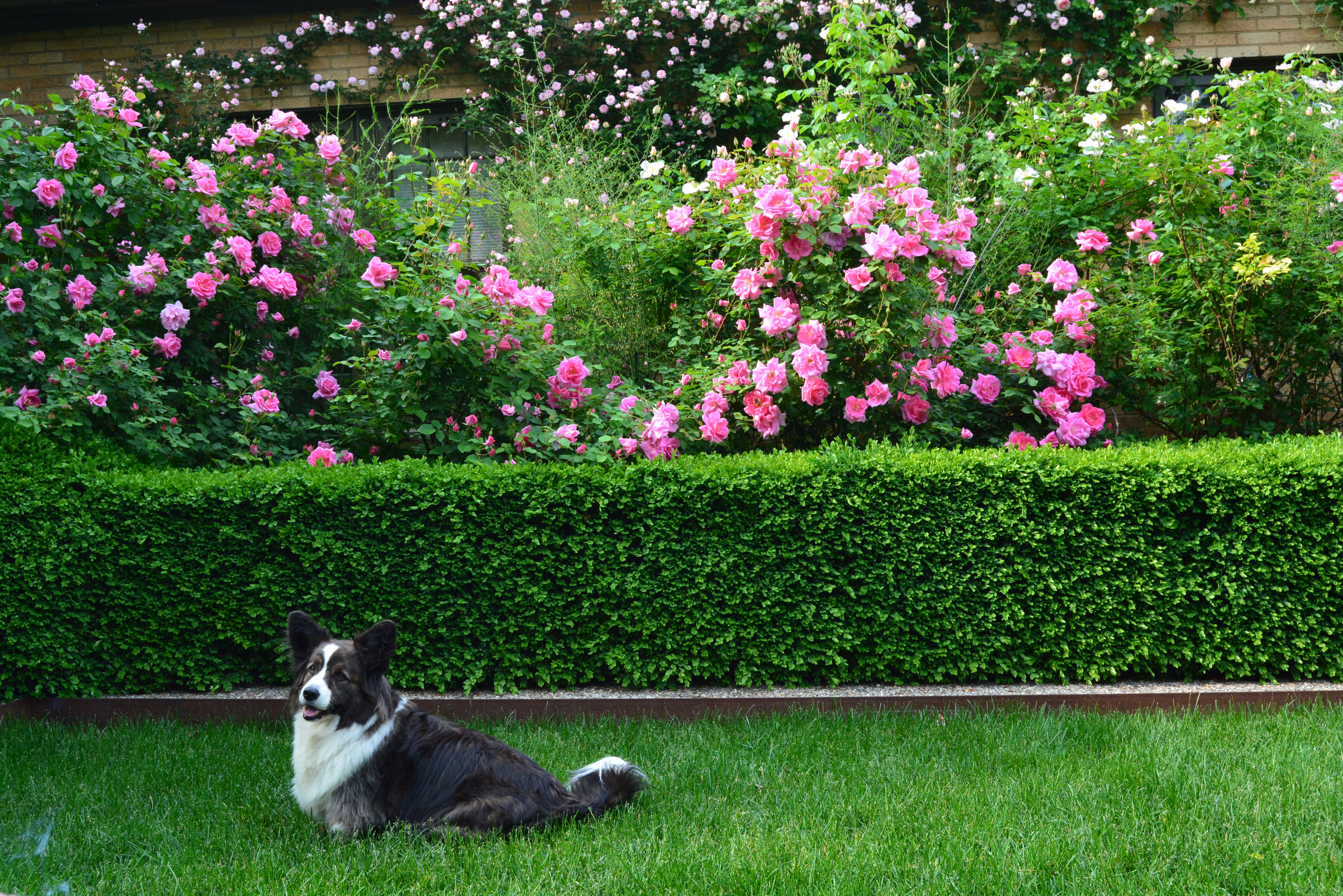 Roses
Roses
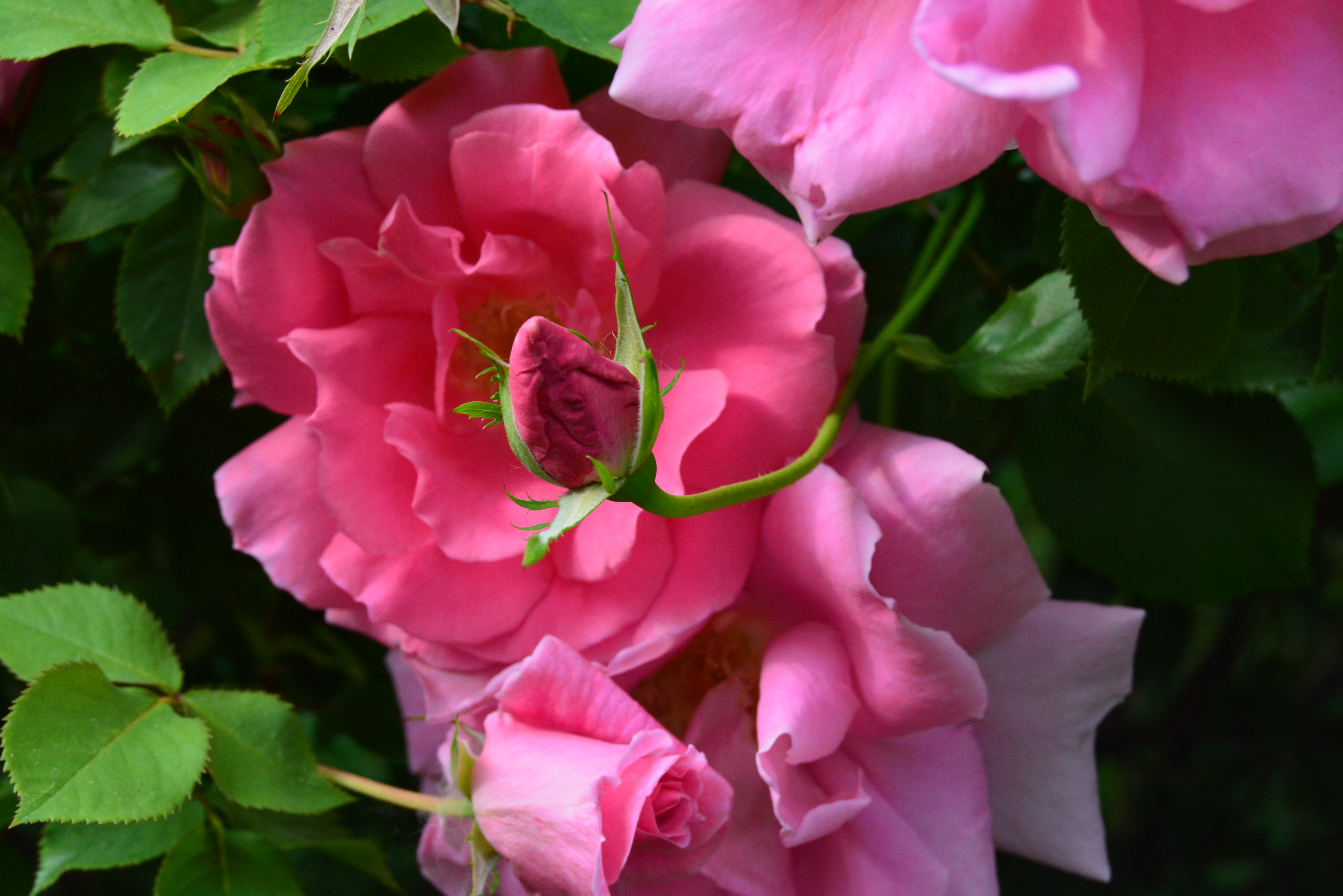 I am pleased the roses are on the mend.


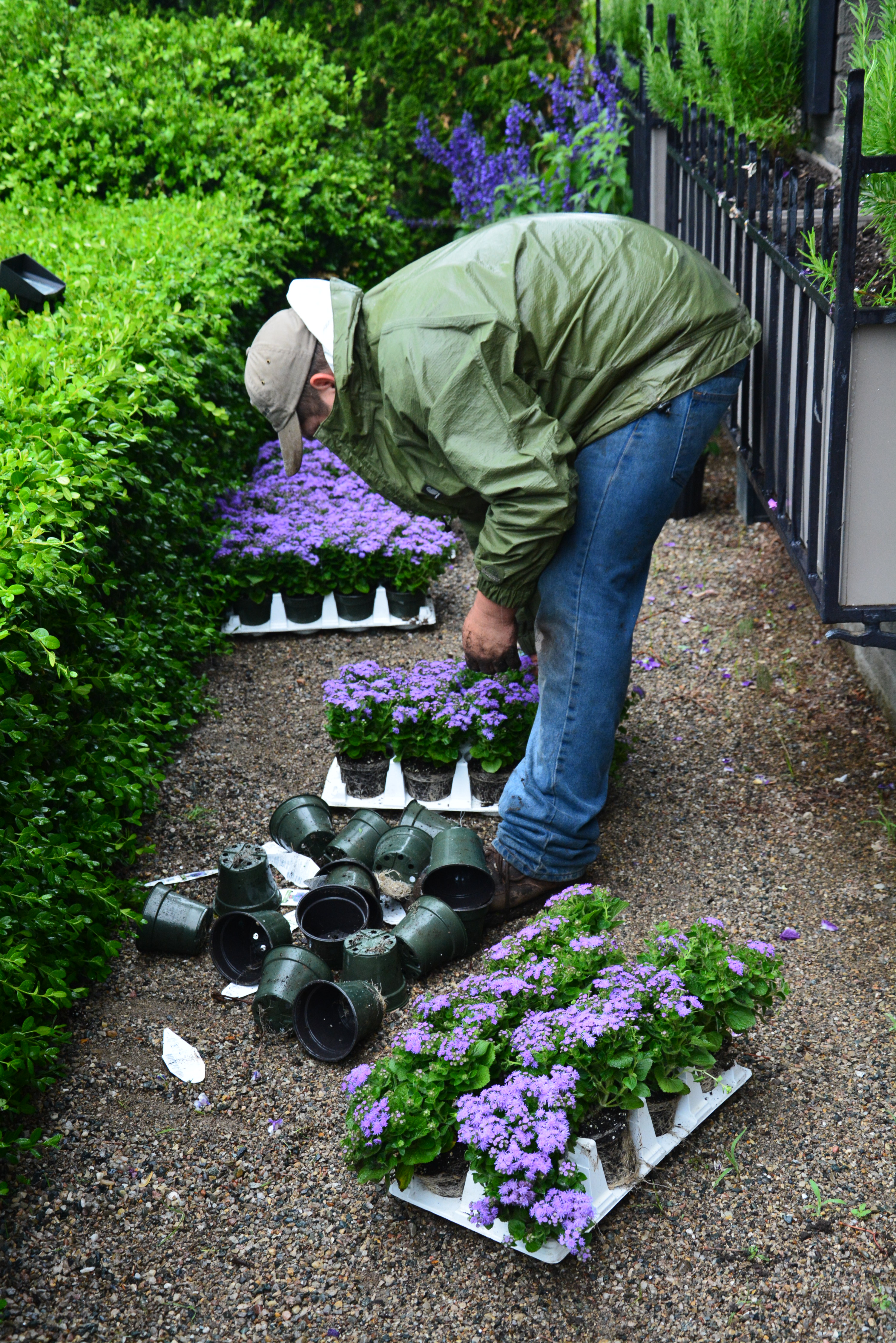
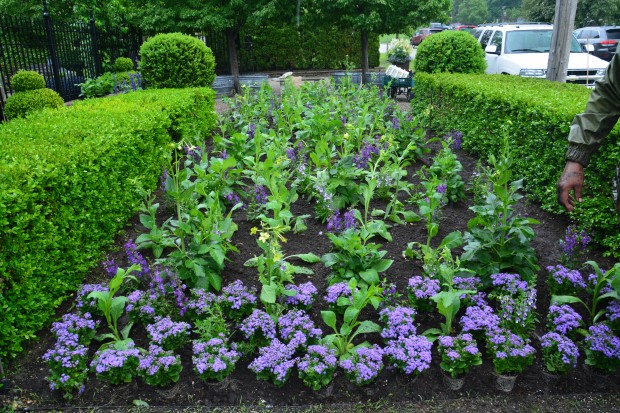 Last year’s scheme was all green. I planted panicum grass inside the boxwood. More than a few customers said it looked like we were going out of business, as we had not cut the grass. Like I say, everyone has a different idea of beautiful. I knew I wanted to do something with purple. The color of this ageratum artist is so luscious. It is a light blue/purple that I call heliotrope blue. Lots of blue with a big dose of lavender. Dark purple has a way of turning dull, if it does not have lively companions. The blue salvia mystic spires has gorgeous blue/purple flowers that are so striking up close. Plant it in a garden, and the color sinks into the background. In the mid and background of this picture, you can barely make out the purple angelonia.