Luca Della Robbia

Luca Della Robbia, an Italian sculptor from the 15th century, is somewhat responsible for my passion for decorating with fruit at the holidays.  Known for his glazed terra cotta rondels, he and his family sculpted voluptuous swags of fruit-the interpretations of which are still treasured by gardeners everywhere.  Hand made Italian terra cotta pots ornamented with lemon swoops and mixed fruit swags in his style- sign me up.      
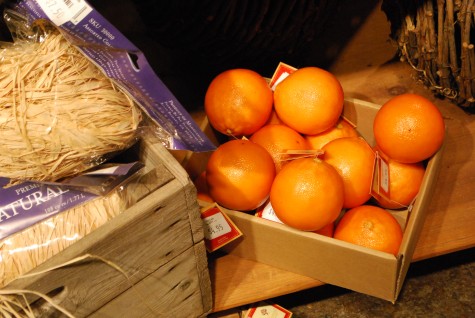
Perhaps more responsible for my love for the holiday fruits is Louise Fisher.  Put in charge of flowers and decor at Williamsburg in the mid 1930’s, she had a considerable hand in creating what I call the Williamsburg holiday look.  Colonial Williamsburg was decorated for the holidays for the first time in 1936.  Within a few few years, her research at the Library of Congress regarding American colonial holiday expression prompted her to sponsor a holiday decorating contest-the rest is history.     
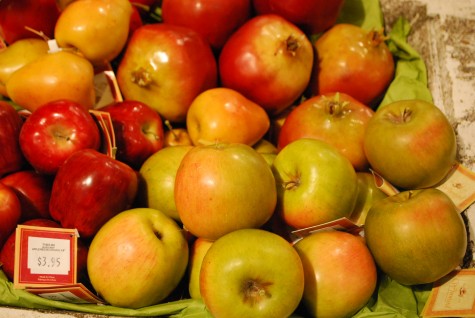
I grew up on those pictures of Williamsburg homes so beautifully decorated for the holidays.  Each display was hand made-each incredibly thoughtful and beautiful.  I was enchanted by the fresh garlands with tie backs of fresh fruit.  The evergreen wreaths with an in-circle of apples-gorgeous.  There is a long history of fruit ornament in this country.  Vintage beaded fruit, glittered or sugared fruit-a sure sweet sign of the holidays-American style.
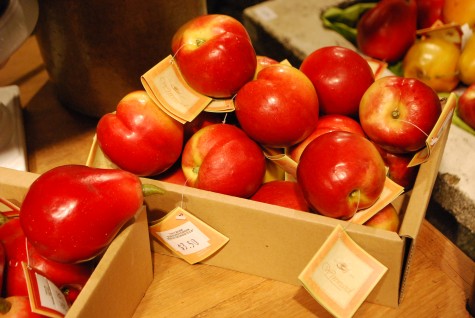
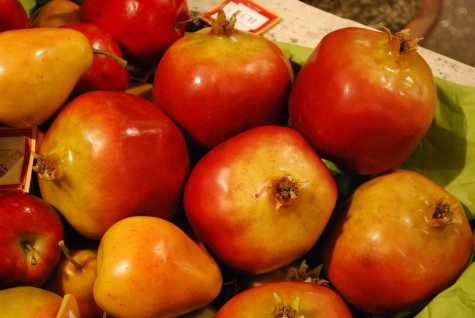
OK-I did make an evergreen wreath with fresh fruit for my front door.  The second I finished piercing and wiring on all of my fruits, I was pleased.  What came later was the dripping juice that froze on the porch-and the inevitable rot.  Fruit can last a very long time.  Once pierced, decay is initiated.  I do not have the time to replace the fruit in my della robbia wreath 4 times over the holidays.  I am thrilled that the faux fruit available to me now is incredibly beautifully done-convincing.  These fruits have a plaster core-for weight.  Who knows what material is used to create the surface.  Who knows how the color is done.  These faux fruits are astonishingly real in color and texture. 
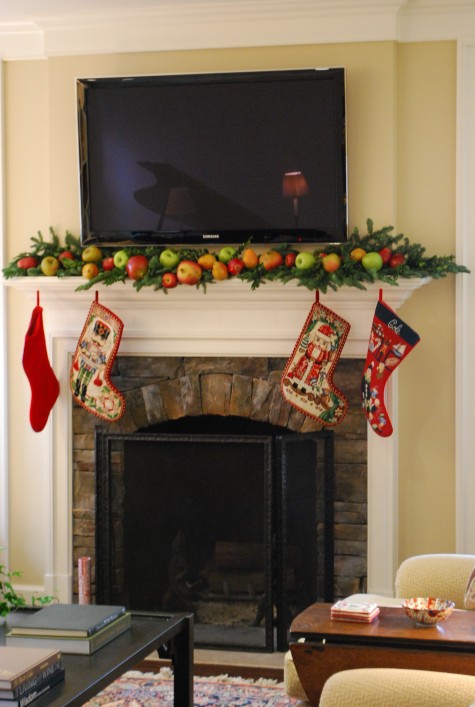
The fruits on this mantle will last the entire holiday season.  They can be boxed and stored-and used for any number of holidays to come. When I use the fruits on a mantle, I pierce the skin with a long pick-that pick provides ballast.  Each fruit is true to color and texture to a specific variety.  Granny Smith apples, and pomegranites, lemons, limes and plums-they look delicious.
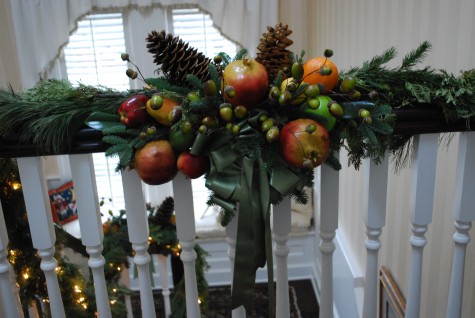
An evergreen garland attached to a stair rail-a beautiful and fragrant nod to the season. My fruits, acorns, pine cones and ribbon wired in now and then, and at the newel posts-a traditonal American holiday expression.    
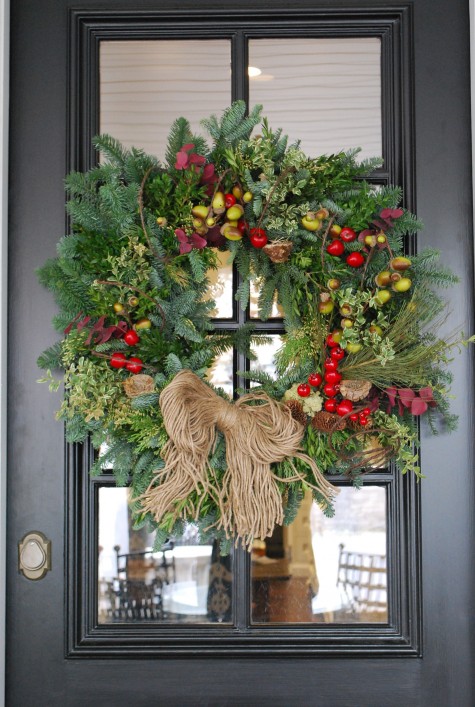
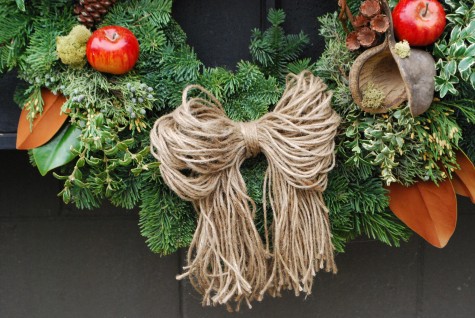
The back door wreath features mixed greens, a hemp rope bow, pine cones, red eucalyptus, reindeer moss, and bark wire garland.  My faux fruits-the cherries.  That red is intense.  That each cherry needs to be glued on individually speaks to hand made.  
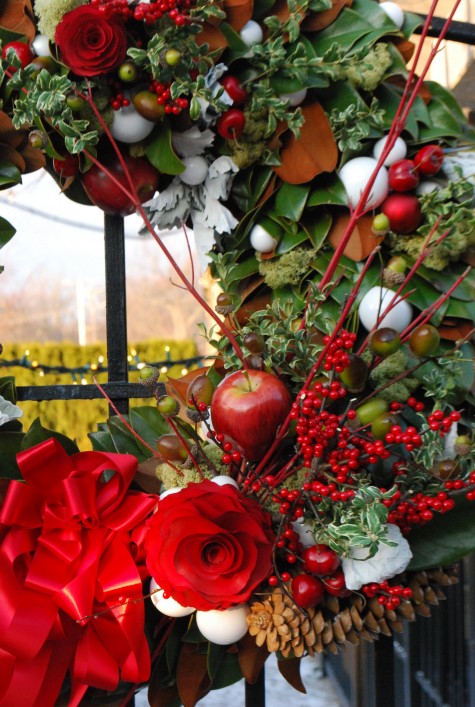
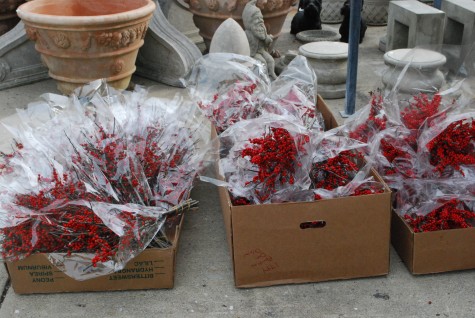
A red and white wreath for the front door-this my client requested.  The red comes from the Michigan holly stems, the cherries, a few red roses constructed from wood shavings, red twig dogwood, and some faux Washington apples.  A red double faced satin bow-beautiful.  The white-dried cirrus dusty miller and white glass ornaments.  The intermediary-white variegated oregonia, green reindeer moss, and green/brown acorns.
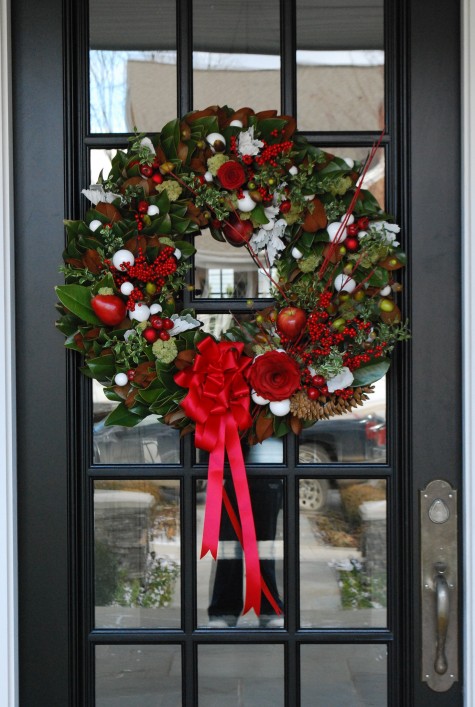

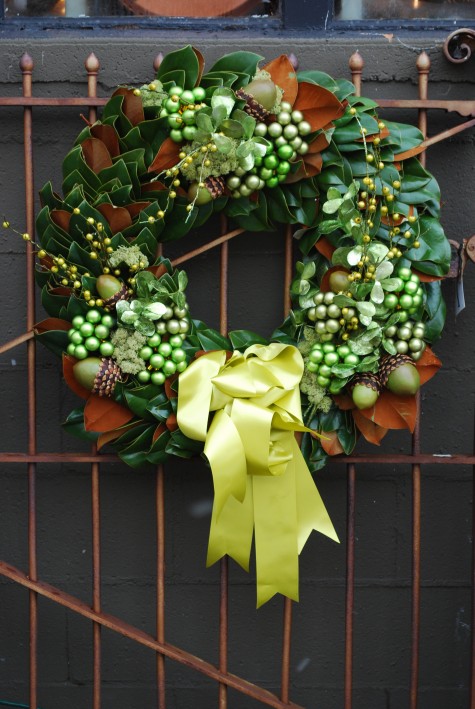
The faux apples and pears in this wreath-they do fine.  This holiday wreath has a broad mix of real, right from the garden, and faux. The double faced red satin ribbon has no problem handling the weather.  The magnolia wreath came from a long ways away, but seems perfectly at home here.  Faux fruits-they have come a long way too.  They are really convincing.  They do their part to help me express my admiration for Luca Della Robbia.
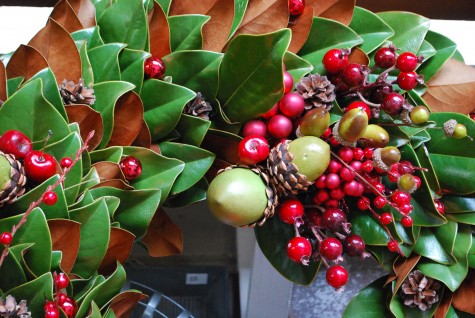
The Coming Of The Magnolia


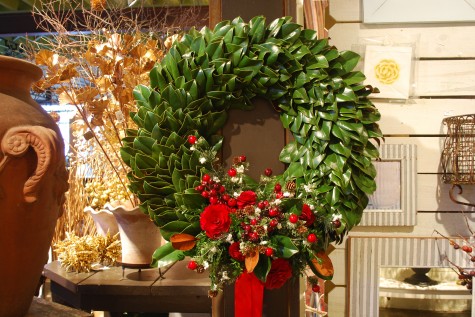
I know my holiday season is in full swing when the magnolia arrives. The wreaths that are three sizes, the garlands in two sizes-the branches in three sizes. I am in a gardener’s holiday heaven. I know I live and work in the midwest, and ought not to covet the leaves and branches from a tree that grows so far away from me-but I cannot help myself. I have told Buck, should I ever retire, I am moving where I can grow Magnolia Grandiflora. I am sure everything else will work itself out.


There are no end of beautiful magnolias that grow here. I have made it my business to plant them whenever it seems appropriate. The gorgeous bark and tree shape appeals to me the most. The astonishing and fleeting flowers I look forward to every spring. But all of the magnolias that grow here shed their leaves. The evergreen leaves of magnolia grandiflora are beautiful beyond belief. Please remember I am a gardener whose only source of reliably evergreen leaved plants runs to boxwood, and PJM rhododendrons. The big leaved rhodies do not do well here; the azaleas and hellebores are in ruins come spring.


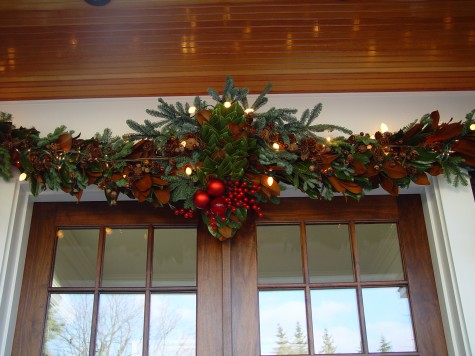
Each leaf of magnolia grandiflora is securely attached to its stem-it takes real effort to peel one off. No matter if the branch is fresh or dry-be prepared for some resistance. The front/sun sides of the leaves are a leatherly, glossy, healthy deep forest green.  The obverse-a felted cinnamon brown to die for.  These transplanted wreaths and garlands brave the vile Michigan winter incredibly well.  That saturated and deep forest green leaf will dry; that deep green color will eventually become a cross between platinum and pale olive.

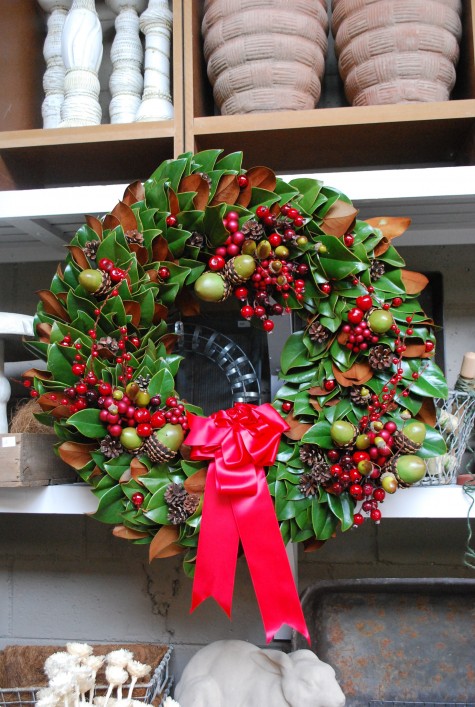
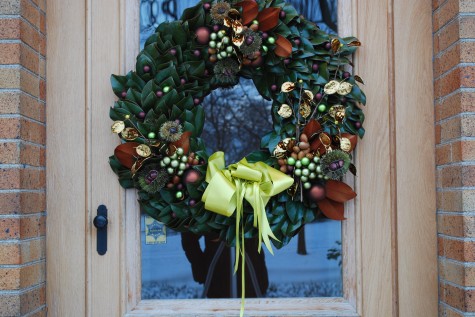
I buy the wreaths with all green faces, and a mix of the green and felted cinnamon obverse faces-I like both.  Magnolia is a fairly formal material at the holidays, I admit.  It makes for a wreath not one bit like the bits I collect from my garden, and assemble.  I am a dirt gardener-so why do I so like this rock star from out of town?  All my gardenering life I have been reading about and looking at the holiday decorations at Winterthur.  How they express the holiday is a consummate American expression.  I have faded sheets from magazines, books-I learned so much from looking at how they express the holiday.  This wreath, stuffed with every manner of an expression of green-juicy.  Classic.

Last year I had a client with a 14 foot Christmas tree to decorate.  I of course had not planned and shopped for this a year ago; I was on deck, and needed backup.  I took everything I had in boxes in the basement, and added to them; my collection trimmed her tree.  Don’t begin to feel sorry for me.  I was happy to have an opportunity for big change dropped in my lap.  The result-6 tall magnolia branches stuffed into a pot made for our Christmas tree.  No ornament-just some lights at the base.  These magnolia branches-all and everything I could have hoped for.  Buck and I loved our Christmas tree.


Magnolia wreaths can be tough to decorate.  Plan to skewer all of your ornament through the leaves.  No harm done, no kidding. Evergreen stems in a wreath leave gaps where a pick might slide in.  Magnolia arrives sleek, and flat.  Should you be looking for pockets i n which to tuck the treasure of the garden-let that wreath dry for a week.  Those flat leaved wreaths open up, and curl as they dry.

I buy all of my southern magnolia at the holidays from The Magnolia Company.  They do incredibly beautiful work.  They ship fast.  Should you be really far away from me-you can order on line. They farm magnolia branches and leaves-no kidding.  They sell their stock trees on occasion. Their magnolia at the holidays-a renewable resource.

Over the past 10 years or so, I am pleased to say I have placed no small amount of southern magnolia at the holidays.

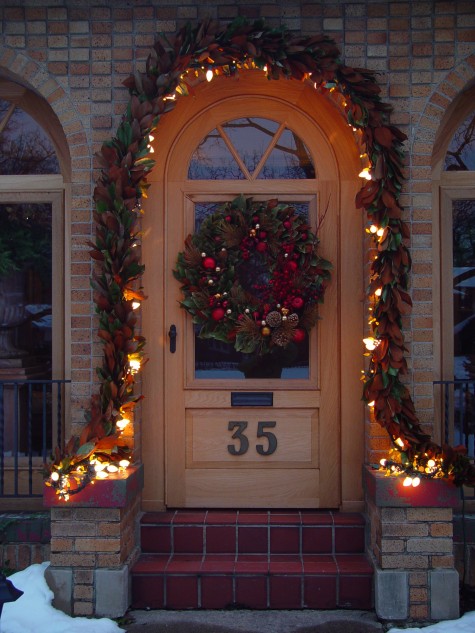
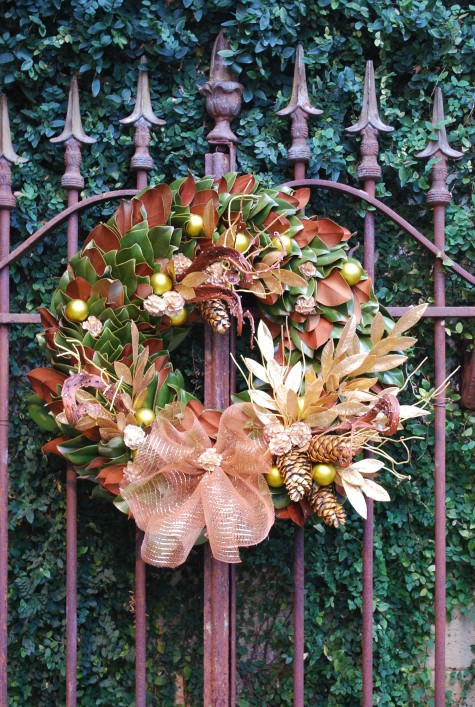
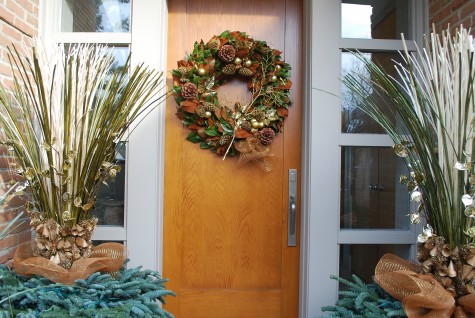
Visually rich and compelling-yes. The gold metallic sinamay is a beautiful foil for the leaves.  You may find a much less formal wreath treatment just as beautiful.  The big idea here-people make for compelling-not materials.  This magnolia wreath is a mix of front and back views of the leaves.  The brown green and gold color scheme is very pretty with the door.


It may need to wait until December 23rd, but there comes that day when I hang that southern magnolia holiday wreath on my front door.  I will persist with it-until the end of March.  The magnolia enriches my winter.

Shopping The Yard

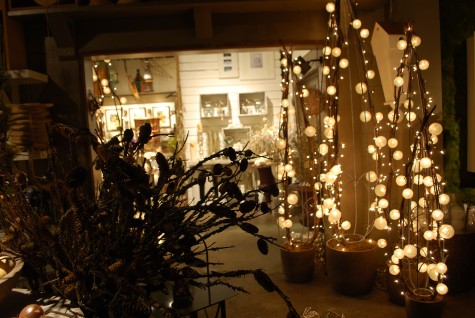
Rob shops the yard for the holidays.  This means he is tromping through the fields, the gardens, the roadside ditches, the 7 acres at Branch and the neighborhood park for inspiration for the holidays.  That which nature discarded, the perennials, annuals and roadside weeds that never got cleaned up or cut back-grist for his mill.  These steel plant climbers got covered in grapevine and brown corded lights and light covers-have you seen them?  The combination of the sturdy plant climber, the textural vine, and the light-they say Happy Holidays from the garden.   

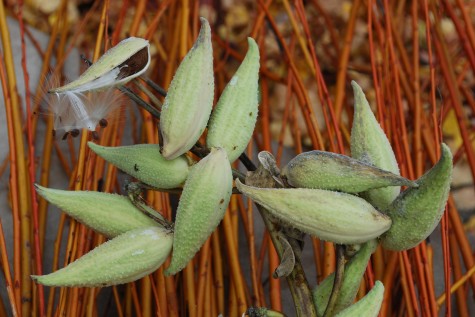
There are lots of perennials I have no problem passing by, but I do like butterfly weed.  The orange flower heads beloved of gardeners and butterflies alike are modestly good looking.  The stout stems and big leaves make the plants a standout in an uncultivated field populated with grasses and Queen Annes lace.  The seed pots are spectacular in shape and color; that celery green is delicious. 

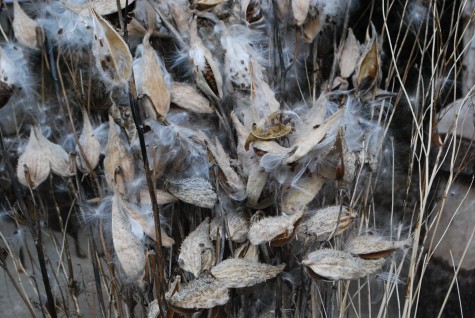
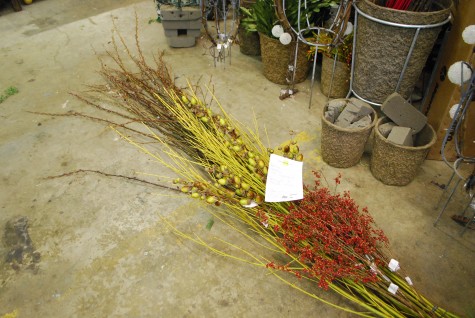
But by far and away my favorite state of butterfly weed being is the mature seed pods.  The seeds in the pod, each one attached to its own private kapok aircraft, hopes to become airborne, fly, and eventually land in a spot friendly to germination.  When I had land, one highlight of my gardening fall was the launching of the butterfly weed seeds.  Rob collected these stems for me from the far side of the guard rail on the exit ramp for Telegraph.  To preserve them in this state just preceding liftoff-a little artist’s fixative.  What fixes the pastel to the page will keep these seeds from flying all over the room every time the heat comes on.  This fixative works with other seedheads as well.  

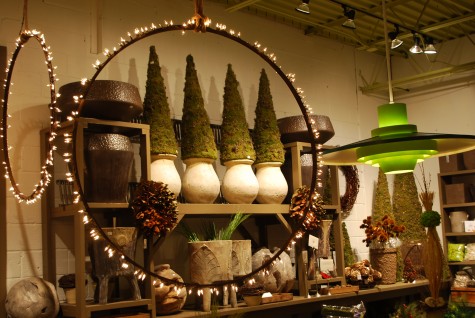
Butterfly weed is not all that Rob finds in the ditch.  A steel hoop from a farm wheel becomes a light ring.  A galvanized bucket that no longer holds water can certainly hold dry floral foam.  A garden shed is a good place to find tools and materials that might have a new life used in a decorative way.  A too rusted pair of pruners or shears, the old wood garden stakes you haven’t the heart to throw away,  the leather holster for your pruners that has never been used-these things have decorative possibilities. 

Multiple strand jute rope, makes a fine bow or tie-back for some holiday garland. A fresh garland from market can be made more generous and personal with the addition of twigs, cutting from a yew or holly, echinacea seed heads or rose hips, tufts of rosemary or moss. Would that fresh fruit would last outside the entire season, but dried orange slices and lemon wedges do just fine. Marlene had them at the Oakland County Farmer’s market last Saturday.   

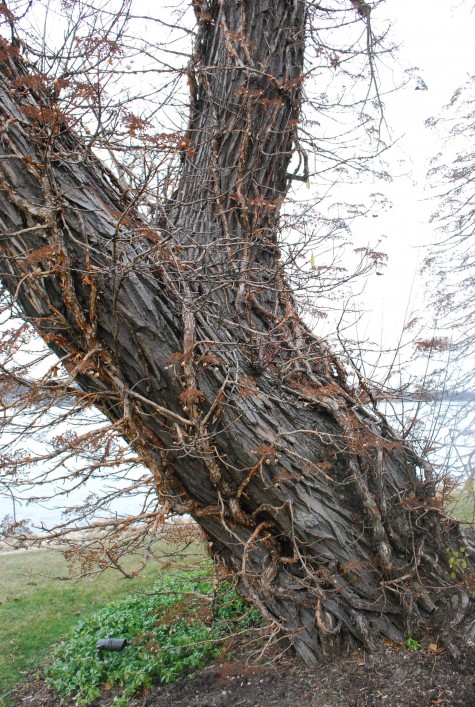
Nature has her own idea of decorative.  The deeply furrowed bark of this old willow is a home to a mature tutu of climbing hydrangea. I might like this seasonal display better than the summer-their living arrangement is beautiful to see.   No amount of engineering on my part could create this-but I do have the option of making a note to plant a tree with hydrangea first thing come spring.  I doubt the hydrangea would mind one bit, should you have the idea to snip a few branches for a wreath. 

There are times when I regret I turned in my five acres in for a city lot.  I would guess that the Ilex Verticillata still there is loaded with berries.  The advantage to my winter berry?  No wading through the swampy ground to cut them. The rosa multiflora way at the wild back of that property-I made many a wreath from their long supple red, green and red violet canes.  Ditto the rosa rubrifolia, and rosa complicata.  The London Plane has no doubt shed giant pieces of bark by now.  I am sure there are abandoned bird’s nests there, like always.  The gold finch nests-tiny and incredibly beautifully made. The apple tree twigs were perfect for making small tabletop trees; the multiple spurs make for plenty of places to hang little ornaments.  The poplar tree branches are equally spectacular for their smooth grey-green bark, and big green buds formed in anticipation of next spring.  �
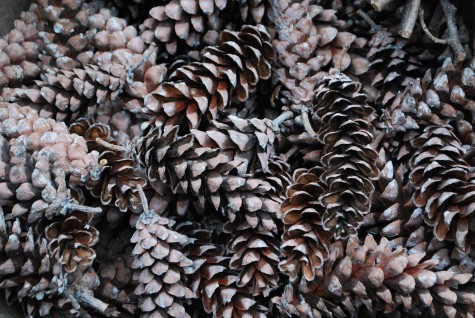
A park down the street from the shop is littered with thousands of white pine cones.  Their peachy cream color is distinctive, as is their long narrow and curving shape.  The resin you will no doubt get on your hands smells like the holidays-and I am sure the Parks and Rec people will be happy that you lent a hand to their cleanup efforts. 


The bleached stems of ornamental grasses make great decoration, although I spray the seedheads.  If you have grown chasmanthium, you know it will seed anywhere and everywhere-the seed heads drop at the slightest provocation.  A little fixature will keep them glued on, but still dangling like a charm. 

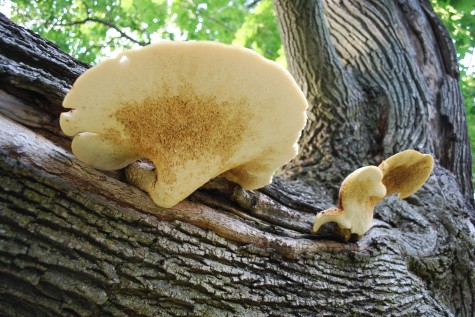
The fruiting body of this fungus spells terrible trouble for this tree.  By the time these appear, little can be done to cure the infection.  But deadly can also be beautiful.  I have quite a collection of bracket fungus; they dry rock hard.  Some are decades old-the appearance has not changed one bit. 


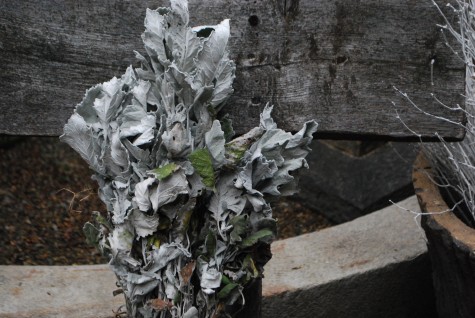
This bunch of cirrus dusty miller looks much the same as when it was alive; the leaves have dried a silvery, felted white.  One client for whom I planted these in the fall-his pots look great, although I am sure the dusty miller succumbed to the frost long ago.  There are so many materials to be had, should you shop your garden.  Switch on your visual vacuum cleaner-you never know what you might pick up.

Messing About

A good client whom I really like from Ypsilanti drove up this afternoon with his Mom.  He was after materials for both of their winter pots.  In the course of our conversation he told me he not only liked reading Dirt Simple, he was surprised and appreciative that I explain how I do things. No doubt how I do things is based on many years of experience with what does not work so well, interspersed now and then with a few good ideas.  My thought process, my construction process-I have no reason not to share that.   Should anyone decide to take on assembling their own winter pots based on my advice-this makes me feel like a useful human being.  Most people share and teach at one time or another in their lives-their kids, their friends, their family-doing this means something.  It means something to me too, and it feels great.  Gardening is a messy, dirty, exhausting business; should you be game, I am more than happy to coach.

I like selecting a palette of materials with a client.  We have a discussion-a relationship.  A little bit of me, and a lot of them makes for a good cocktail.  Whatever I have inside that prompts me to suggest putting this with that-I am happy to share that. Having a shop full of possibilities makes the process fun.  

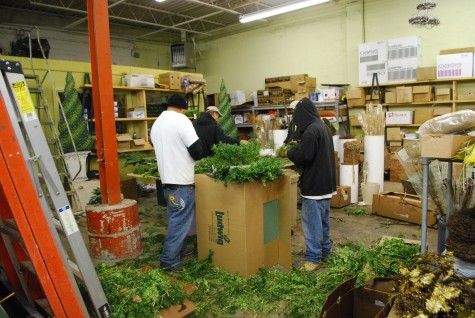
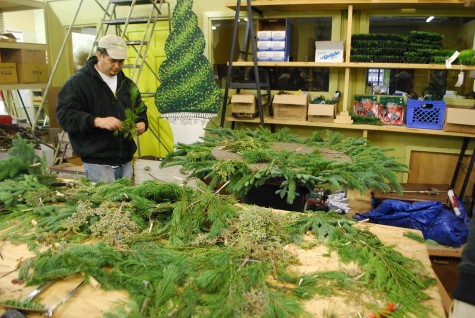
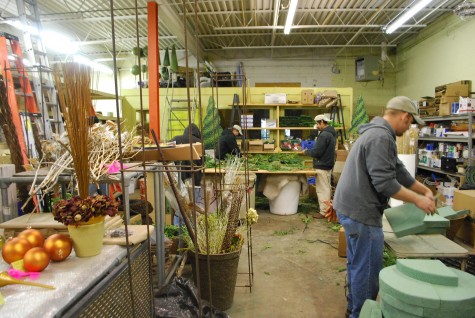
The reality of beautifully constructed winter containers can be daunting.  To follow are the facts.  I construct everything in my studio-garage; putting an arrangement together on site in freezing temperatures and late fall winds is tough to do promptly, and impossible to clean.  The mess of the green discards is enormous. We have giant surfaces set up for the season to hold all the materials; the concrete floor obligingly holds no end of trash-it can be knee deep by the end of the day.      

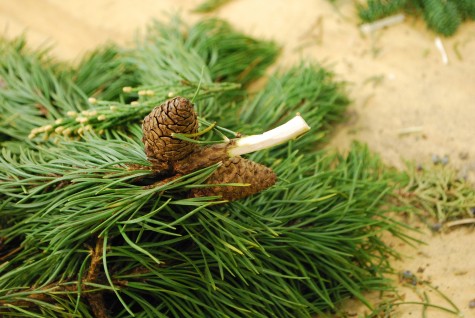
We whittle down every evergreen stem. This takes lots of time and effort. The big idea here?  The above ground representation is vastly more showy than the below ground anchoring.  How we anchor, and prepare a winter pot to last the six months until April requires what I would call work.  For a tight fit, we sharpen the stems.       

Everyone on my crews has a job. Forms, centerpiece construction, the stuffing of the greens-my two crews are 8 people.  They produce work astonishingly fast. They spend a lot of time planting shrubs; this knowledge furnishes their construction with cut greens with a finished product that looks natural and believable.    

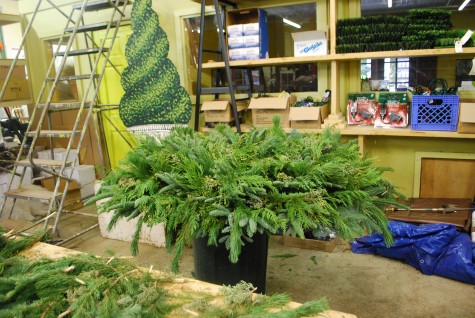
This mixed evergreen winter blanket destined to warm a large round pot-It is beautiful, is it not?  Should you have a mind to do it yourself, we observe these gweneral rules.  We buy greens that are boughs, not the short pieces that are great for holiday floral arrangements.  We aim for a low and wide overall shape-the greens are anywhere from 8-16 wider than the container all the way around. We green the edges of the form first, and work towards the center.  

Materials chosen for a centerpiece-our process is to collect materials, and tag them with a name.  The amounts needed for each element is based not only on the size, but the location of the container.    

The actual construction involves the numbers of bunches, the placement of picks, the overall shape. Relevant to the construction- great evergreen material, concrete wire, bamboo stakes, big zip ties, mini zip ties, foam forms.  A conterpiece of this size has a stout bamboo stake which goes deep into the container.  Additional anchoring with bamboo or steel is done during the installation.  


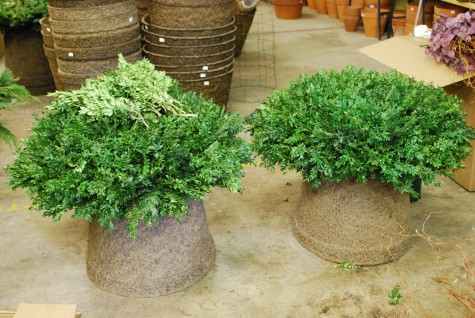
These boxwood sculptures have a lush look.  Once they are dropped into their winter pots, there will be not hint of all the mess and hard work-just a graceful reminder of the garden that will be handsome to look at during the winter months.