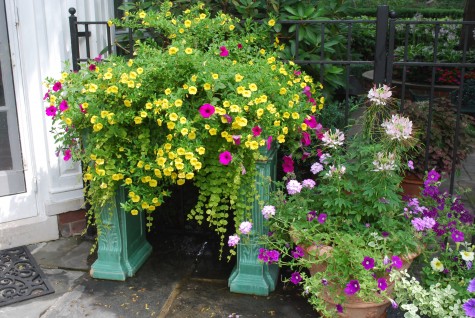
Deborah Silver is an accomplished and experienced landscape and garden designer whose firm first opened its doors in 1986.
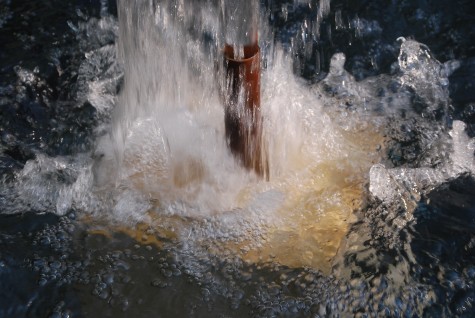 We have had quite a streak of 90 plus degree days in the past 3 weeks. It has been enough to make even the most passionate gardener wilt. Even the corgis want no part of it. Getting in my fountain at the end of the day has been a regular thing lately. Intense heat can play special havoc with gardens in containers, as technically speaking, their roots are above ground. They also are completely dependent upon you for water. But there are some things you can do to help your containers cope with the heat.
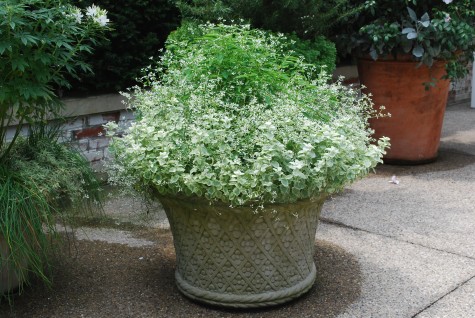 The obvious solution is to pick plants that like to be dry. Succulents, echeverias, agaves and other desert type plants can survive long periods without water. I am told that agaves have lived on the roof of the Vatican for 300 years-I am quite sure no one waters them. Plants native to desert like environments have adapted to do well with little water. Being from the Midwest, I am not such a fan of these plants. I would starve, only having succulents to look at in my pots, so I look for other solutions. Diamond Frost euphorbia and variegated licorice will not suffer the gardener that waters them too often. Once established, I only water when they are really dry.
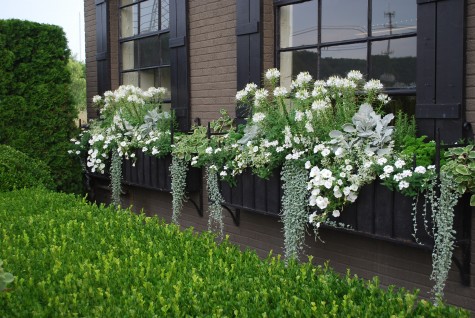 You can buy a little time if you grow annuals in window boxes. The big idea here-a giant soil mass dries out slowly, rather than twice a day. When soil heats up, the rate of evaporation of water from that soil gets to be speedy indeed. I have seen clients splash water on their pots from a watering can-this is not watering. I fill this window box to the top with water, let the water soak in, and fill the box again. I repeat this until I see water raining out the bottom. Water your pots thoroughly, not lightly. This box sometimes goes three days before I need to water again.
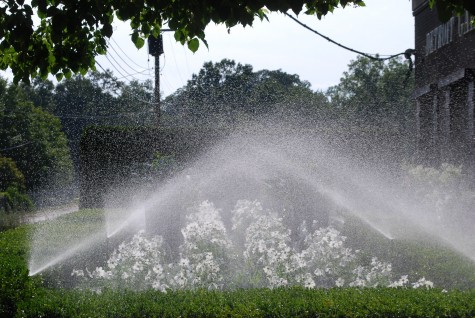 Automatic irrigation for annual plants can save you hours of time, but you have to be sensible with it. Water automatically when there is a need, not automatically. Patty at Bogie Lake has been watering annual crops for so long she can tell if something needs water by looking at the leaves. She says the green color will change when a plant is dry. Barring this type of watering skill, put your finger in the soil to see if it is dry. So many people plant impatiens in ground, as it is so tolerant of water from an irrigation system. The cosmos in this bed I let go to the dry side before I water. Most annual plants love the heat. 90 degrees they handle with aplomb; it is 90 degrees without water that is a problem.
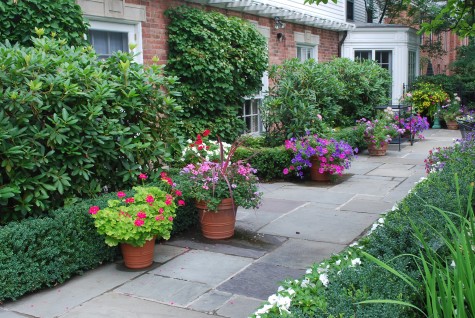
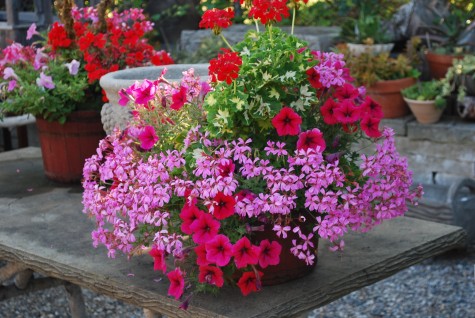 Small containers in full sun locations are not for everyone. Not everyone can water twice a day if the temperatures are over 90. If the time you have available to water is short, use fewer, and bigger containers. If you must have smaller containers, choose plants that don’t mind drying out, or plants of easy culture. The only thing that ever seems to bother petunias much is too much water. These mini cascade geraniums are amazingly tolerant of hot and dry conditions. They also bloom long into the fall. I wonder why I do not see them used more often.
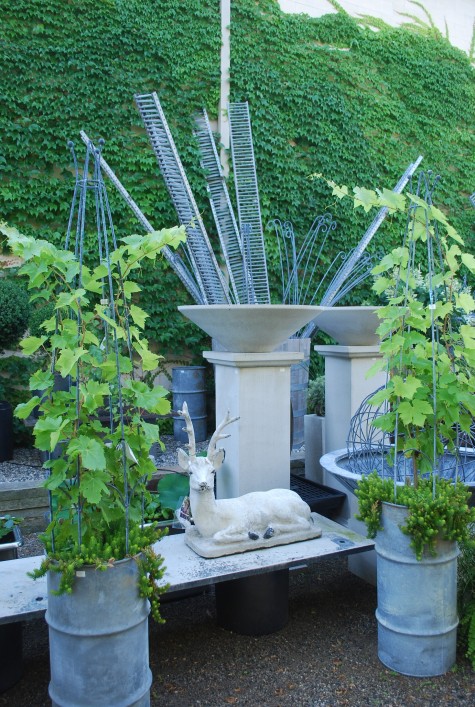 A grape vine and some angelina is a dry and hot tolerant combination, and much more verdant looking than hens and chicks. Plants liking a long root run, as do tomatoes and grapes, benefit from deep soil more than wide soil.
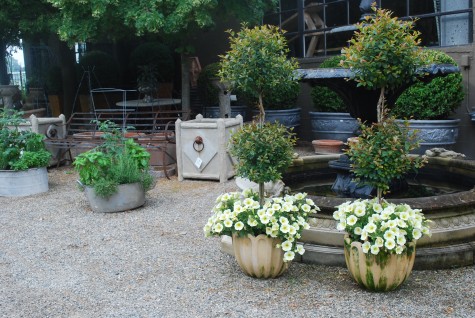 Topiaries grown from shrubby material such as these eugenias are not fussy either. They never seen to be bothered by heat, and they tolerate imperfect watering. Choosing plants that are native to hot and dry environments are perfect for your full sun terrace.
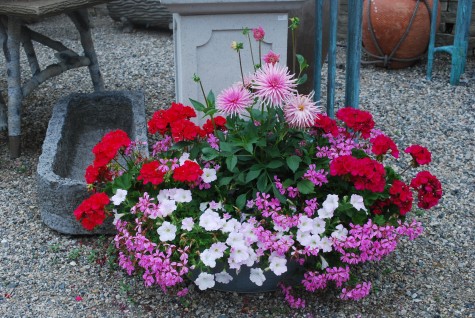 When plants grow together, they shade the soil. This slows the rate of evaporation from the soil much like mulch does. I may groom old leaves out in order to keep good air circulation, but I let the plants provide a shade barrier to the soil. A hanging basket that has gone bald on top and is showing soil will dry out very fast. Most plants do not like to be watered every day, but when the temperature soars, you may need to do just that, to keep them alive.
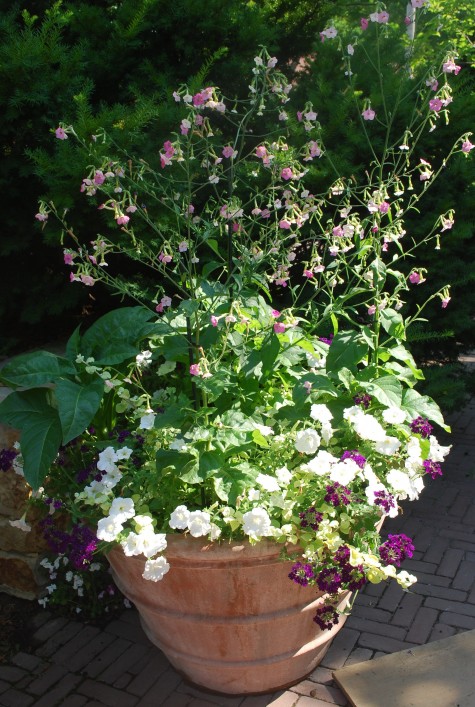
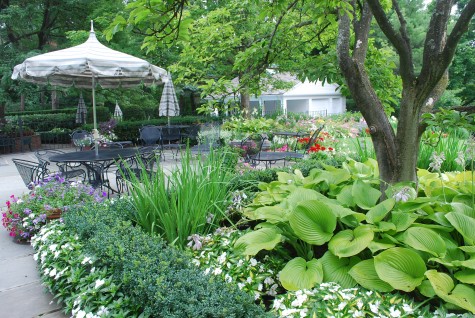
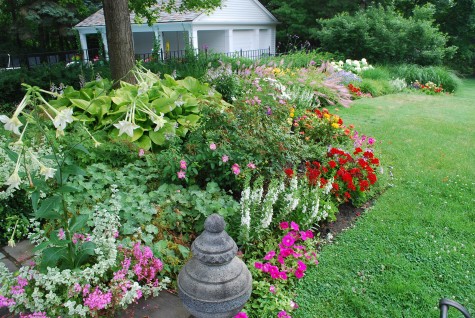
Be thoughtful about where you place your containers. A little shade from trees or shrubs can help your post stay good looking. This pot has enough exposure to the sun to stay good looking, but not so much exposure that they fry. Group pots together; one large pot planted with a topiary lantana can handle any amount of heat and sun. Other pots grouped with it will benefit from the umbrella. Other plants that make great umbrellas are datura, irisine, nicotiana mutabilis (pictured above) and grasses.
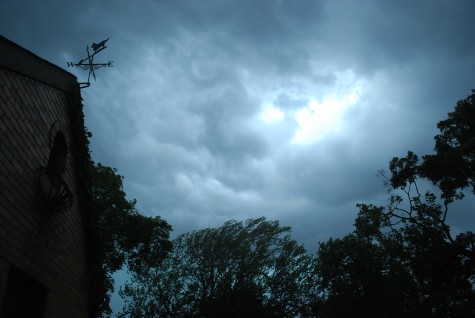
Seeing these rain clouds gather overhead was a gardening religious experience; we had 1.5 inches of rain last night. And relief from the heat. Some days you just get lucky.
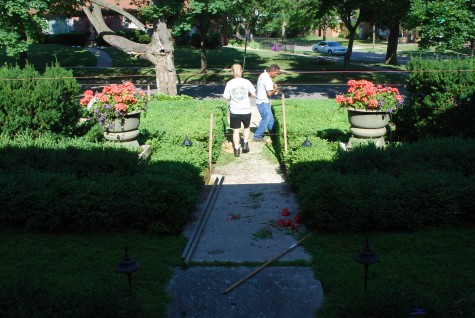 My favorite day of the gardening season is pruning day. I would not dream of taking on the job of pruning my evergreens-M and M Flowers has charge of this job. This very moment I am looking out my window past my computer to my hedge of Hicks yews-pruned perfectly level with the horizon. In front of those yews, my grasses waving in the breeze, and my coneflowers, and the branches of my kousa dogwood. This is a very good looking picture, believe me. They do the best pruning it has ever been my pleasure to witness. They come three or four times a season, and doll things up. I work seven days a week, and in return, all I want is a garden that enchants me when I get home. Their formal pruning is remarkably precise and thoughtful-I look forward to it every year.
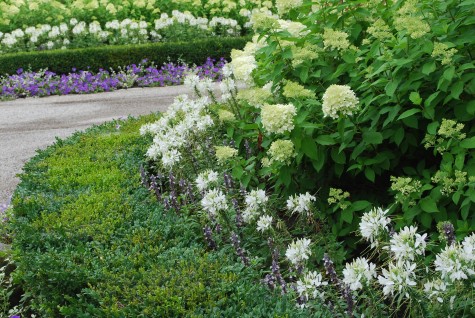
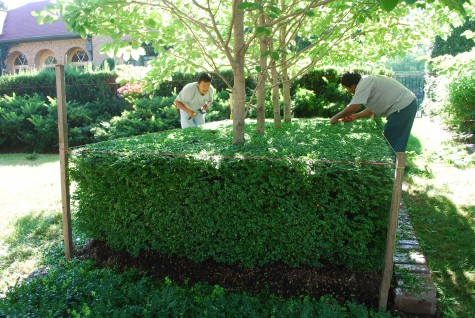 Every block of boxwood, every hedge, every shape is detailed with lines set with a level, on pruning day. They leave nothing to the eye. My ground swoops and drops and rises again-not so their pruning. Their trimming is exactly level with the horizon. Formal, and very precise. The look of it lowers my blood pressure. Pruning a hedgerow of viburnums, lilacs and miscellaneous flowering shrubs takes an eye with a gift for providing air and sun for each individual branch- and a gift for working in concert with the natural growth habit of the shrub in question. Formal hedges, on the other hand, demand the idea of level, level lines to go with, and a patient and persistent hand. They prune nothing with gasoline powered hedge clippers. This group clips by hand.
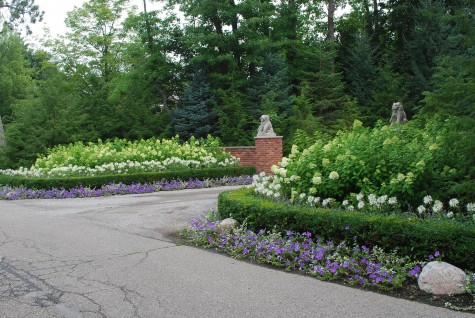
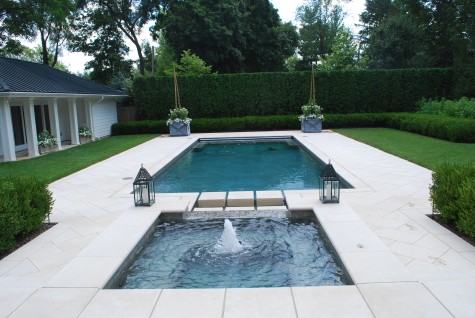 Mindy and her crew pruned these arborvitae, and their skirt of boxwood. What a gorgeous job. She assesses each plant-she never prunes too hard, if a hedge is not ready. She understands about the long haul. Properly and expertly pruned hedges can make a formal landscape shine. Invest in stakes, level lines, and hand shears-should it be your idea to maintain a formal landscape on your own. Trim carefully-some pruning ideas take years to finish. Trim slowly, regularly, and patiently.
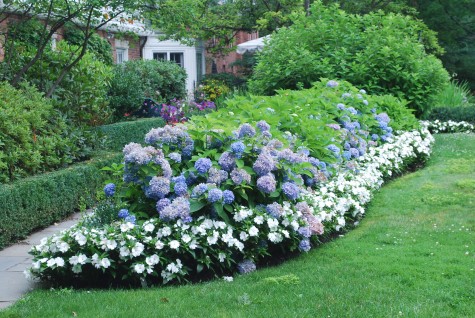
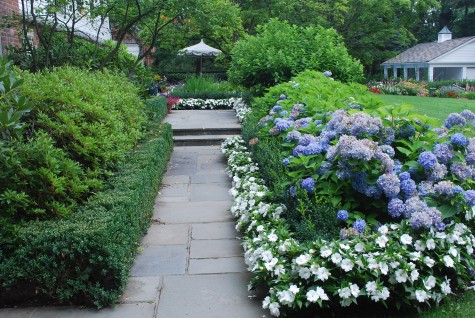
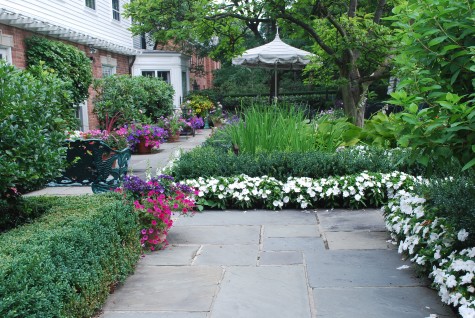
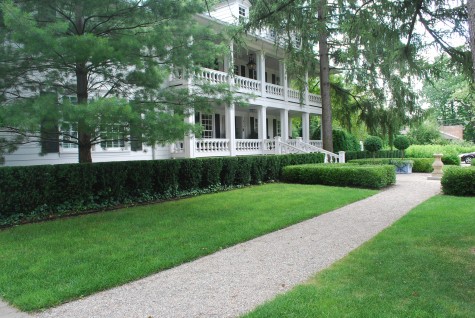 The boxwood in this photograph tells all. Short on the house side-taller on the path side. The horizon line exists independent of the grade of any given property. Formal landscapes do not repeat the up and down of the ground. They are all about level. Though pruning to level is a skill, it is easy to spot when a hedge is out of level. It takes great patience to let plants grow up to the height they need to be. I planted 100 Hicks yews on my property 10 years ago. The shortest plant on the south side is probably 4 feet tall. My tallest yew is close to 8 feet tall. There were more than a few years when none of them were tall enough to prune.
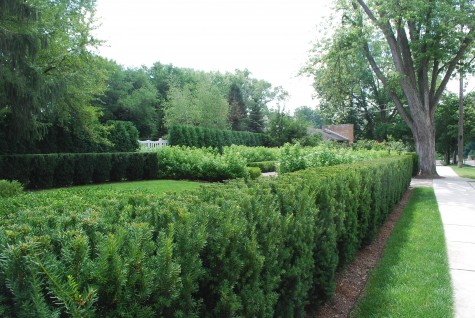 Whatever landscape element repeats the horizon line rests the eye. I like the idea of a landscape that is restful. I like quiet, order, santuary, organization, clean and simple, not necessarily in this order, when I come home. My work life is always a big, fluid, and sometimes messy situation. I like orderly when I get home. For clients, I favor a formal presentation on the street side, so the landscape looks beautiful in every season. The perennial garden, and the vegetables I invariably place in the back. I do not see the need to place any plant material that has the potential for poor performance in the front. Designing within the limits of one’s ability to maintain is important. It is of much interest to me-if the client is a gardener. I try to tailor design to a specific set of circumstances-human circumstances. Horticulture is not everything; people’s lives are everything. A formal landscape I find easier to maintain than an informal planting. Whenever I see an exuberant and lush perennial garden, I know a lot of committment and work is going on behind the scenes.
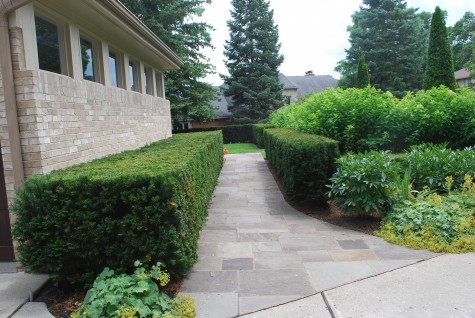 Vertical growing yews handle this type of trimming quite well; there are a number of good cultivars available beyond the trasitional Hicks yew. Boxwood tolerates shearing the best of all the evergreen plants. No plant loves to be sheared. Some evergreens tolerate this treatment better than others.
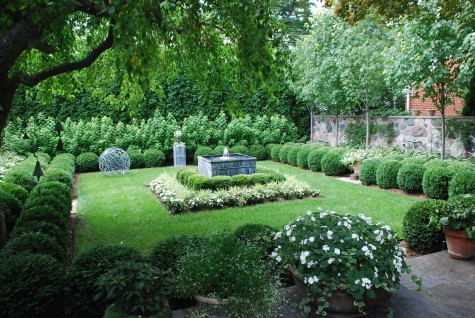 This landscape is but a few years old, though the boxwood have been here quite some time. We moved a lot of what was here into its current configuration. The square footage of this landscape is not so large, but its impact is considerable. This year, a pruning on the boxwood some two years in the planning, transforms the space. These boxwood spheres-beautiful. I was so delighted to see this space.
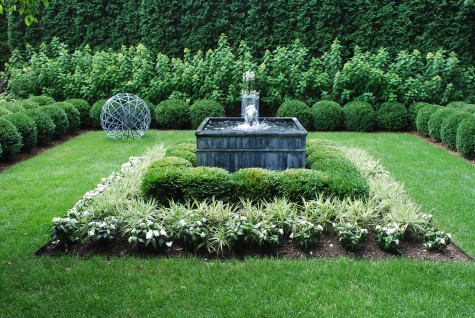
A gorgeous landscape is very much about an idea of the natural world that gets strongly expressed. No small amount of this expression has to do with how that landscape is cared for. It is one thing to choose plants that compliment one another, in forms that please the eye. But once that is done, the landscape is only beginning to grow. I tell clients to not let what they have worked so hard to achieve get away from the them. It is so important to stay ahead of what a garden needs.
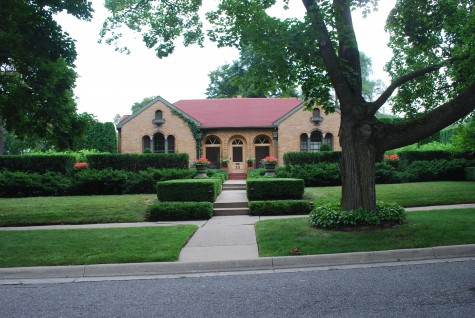
I like having this to come home to.