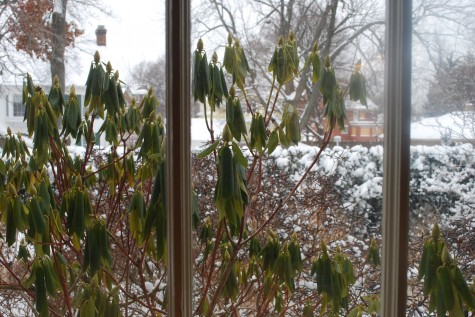
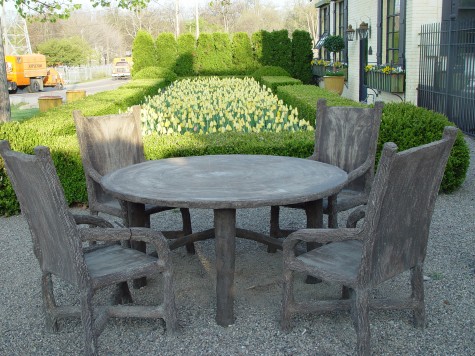
 Though the shop garden is very much frozen in time, there is work under way, under ground, in anticipation of spring. We planted 2600 tulips in this garden last fall. Each and every one of those bulbs is programmed to wake up and grow, come the spring thaw. Everything needed to grow and bloom is stored and waiting inside that bulb for that moment when the switch flips. Though it seems hard to believe, tulip bulbs do not freeze solid through and through. Planted some 8″ below the surface, they spend the winter chilled to right around 32 degrees. They need that hibernation time to properly spring forth.
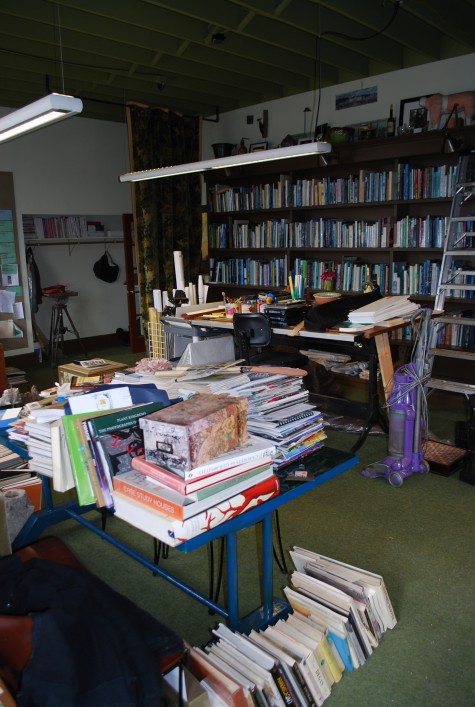 Inside the shop, it takes plenty to get ready for spring. We do a spring cleaning in February; once spring actually comes, there is no time for that. I do not mind that I have missed this part at all. Steve took every book off the library shelves, dusted them, cleaned the entire space, repainted the room, and put it all back together-all I had to do was choose the colors. Green for the walls of course-but a very light green this time. The room looks light and airy now. For the shelves and trim-what I call Belgian chocolate.
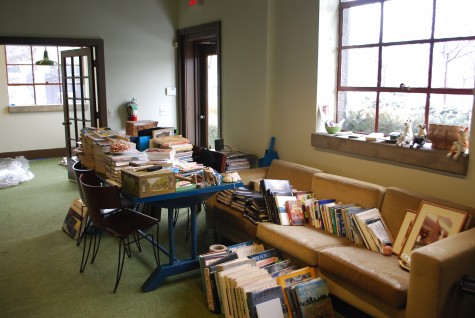 The floor of my office is courtesy of Flor-the company that makes carpet tiles in all kinds of colors and textures. This series is called house pet-it is so easy to pull up a stained square, and replace it with a new one. Gardening being the dirty business that it is, I think I am due for all new squares. Having a project indoors helps the winter fly by.
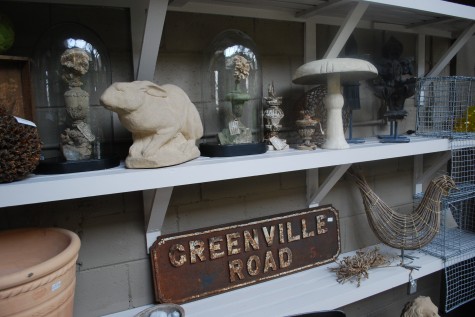
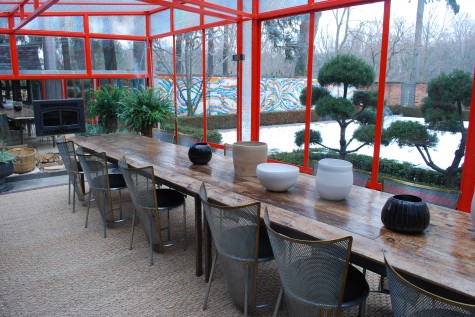
We repainted most of the shop as well. The room with the greenhouse roof got its first redo in 14 years. As I had originally faux-finished it with mossy water stains and dirt marks, it never did look its age. I repainted the walls a medium stone brown; the greenhouse ceiling is darker yet. The limestone colored shelves stuck out like a sore thumb, until they were covered with things.
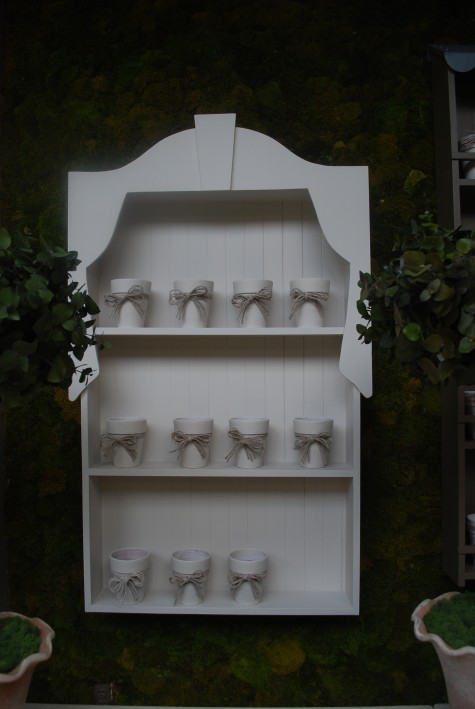 The auricula theatres got new outfits as well. The best fun was finishing the terra cotta pots. Each pot was primed in UGL basement waterproofing paint. This gave the pots a substantial gritty texture. This also keeps the top coat of paint from peeling off, once the pot is a home for wet soil. Each pot got a jute knot or bow. With the finish coat of ivory paint we soaked the bows in thinned paint; I like the look. I could see these pots planted with small growing herbs-or succulents-or even miniature ferns.
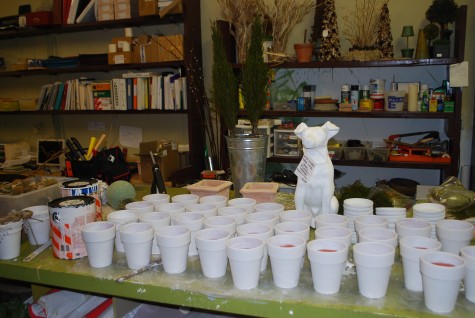 They layout table was handy for painting the pots. I could never again do without a table at a height comfortable for me to stand and work. This we made with a 4 by 8 foot sheet of exterior grade plywood. The top is held up by a pair of shelves four feet deep. These shelves hold long blueprints that I need to store.
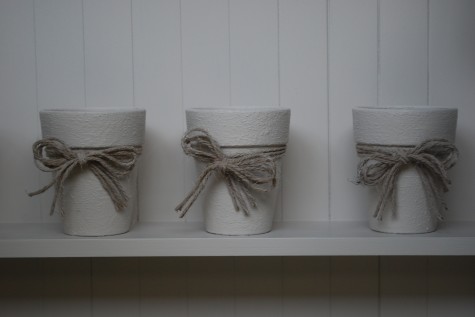 The little pots look great. Machine made terra cotta pots can be finished in so many ways, when you tire of that orange clay. This shape is called a rose pot-they are taller than standard terra cotta pots. They are great for growing plants with long root runs. Bareroot roses that are potted up for sale at nurseries are generally on the tall side. Large rose pots are also great for growing tomatoes. Rose pot and long tom are interchangeable common names for pots taller than they are wide.
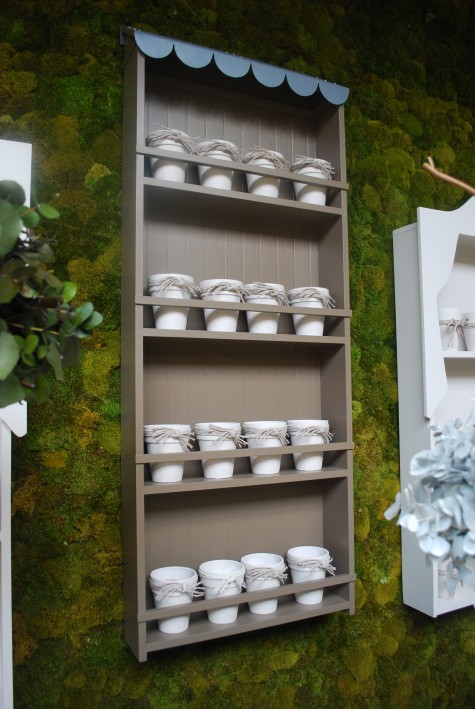 One of the plant theatres got a coat of Belgian chocolate paint.
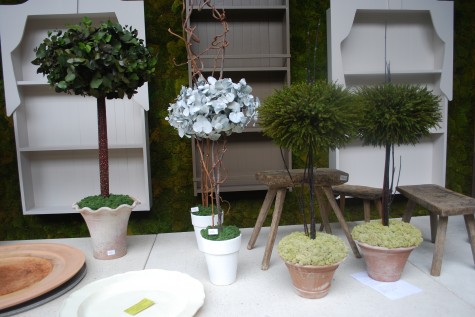 Pam has been making small topiary sculptures from preserved eucalyptus and other preserved greens. The trunks are made from cedar whips, kiwi vine, and fresh blacktwig dogwood. They are great for spots indoors asking for something soft, that will not support plant life. As I have no interest in house plants, these suit me fine.
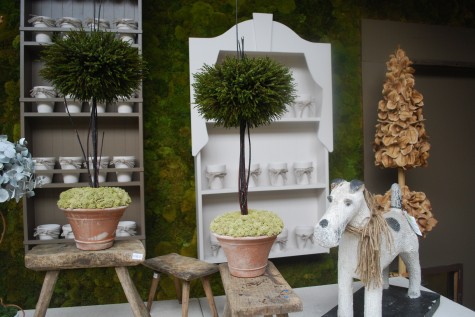
The newly painted rooms are ready for the arrival of our spring collection. When gardeners break their dormancy has nothing to do with the weather or temperature. One day it is winter, and the next, gardening people are out prowling around, wanting some sign that spring is not far behind. We’ll be ready, come March 1.
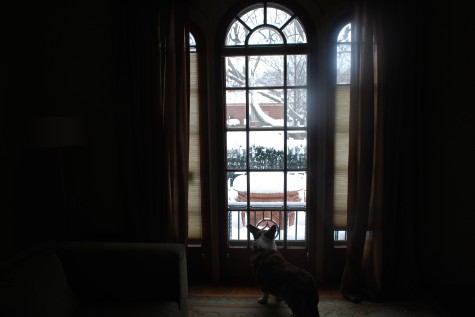 What does winter mean? Housebound. Even Howard gets stir crazy. The cold, the snow, the blustery winds-these things force me inside. My house, which usually seems large enough to live in, and more than large enough to clean, is the moral equivalent of a hamster cage in winter. I take three steps, and a wall looms. In self-defense, I am studying my views from inside out. I pace from one room to the next-this a condition from which there is little relief. But today I am not only pacing, but thinking about the views from my rooms. Placing a container that is good looking piled high with snow improves this view.
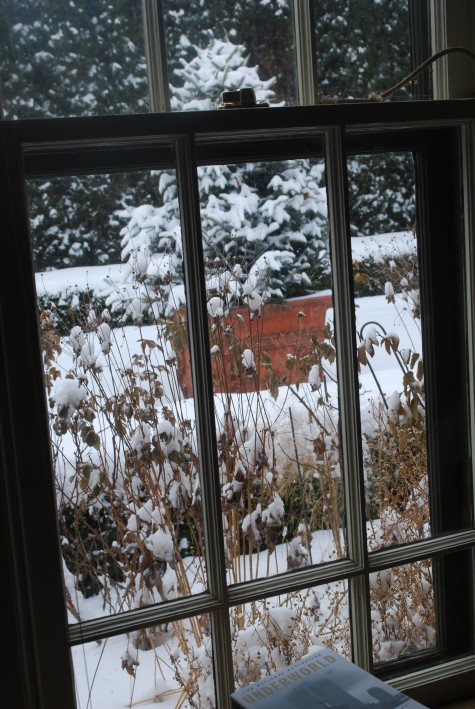 I am happy that my rose and perennial garden I thought to spare a full fall cut back. I like seeing the frail brown sticks out my window. My winter view has texture, mass, light and dark. I like a congested, visually lively, winter perennial landscape. I could write on like a fool about this. But suffice it to say, from indoors, I like to see something going on.
 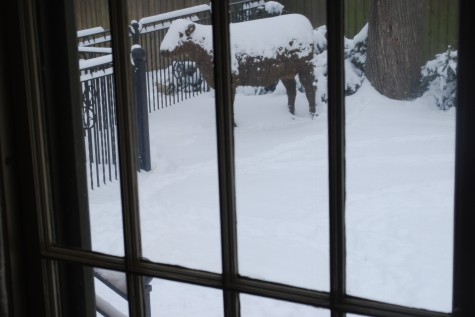 Lady Miss Bunny, my steel and moss sculpture patterned after a breed of English cow, stands out my bedroom window. She weathers. Every morning and every night I check her out-some winter days I wonder how she manages. I like seeing her there, on duty. Never mind the rain, the wind, the snow, the sleet-I see her the last before I climb into bed, and the first thing when I get up.
 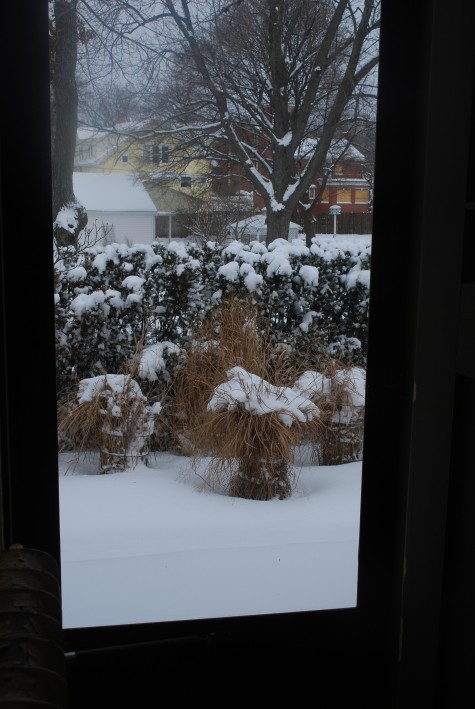 My kitchen door is full length glass- the largest uninterrupted view I have from indoors. A yew hedge is faced down with the thatched remains of some large clumps of panic grass, and not much else. This view could definitely stand some improvement. I am equally at ease choosing something that has great appeal, with no location in mind, as I am able to keep a spot in mind that needs something. Something center of interest that works well in the summer in this spot no doubt will improve my winter.
 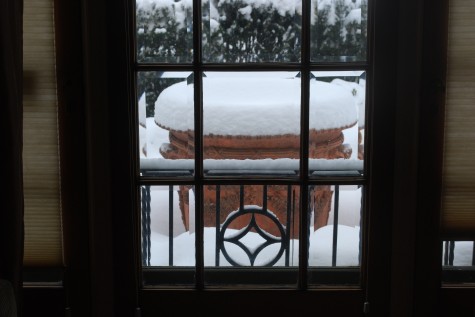 The pattern of the window panes figures in the view. What I see standing up is different than what I see sitting down. But what I see as the biggest issue-designing the views out such that privacy is maintained. I have been in homes with lots of windows, where the drapes are always drawn. Those drapes work to insure privacy inside, but they also keep people unnecessarily cooped up. I have designed my landscape such that I am able to see out, without being the object of someone’s attention from the street.
 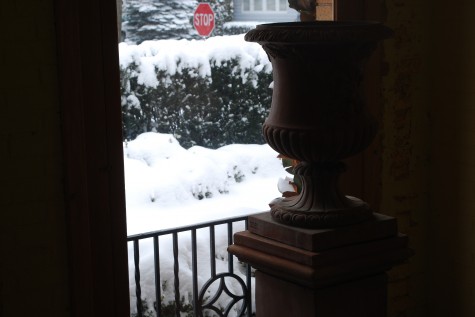 My enclosed front porch is almost entirely glass. One has to come through the porch door, to get to the front door. This architectural feature provides for privacy from the outside to the inside. In addition, my five foot tall yew hedge runs along the entire north and south side of my corner lot some 11 feet out from the house foundation. The hedge is the backdrop for the public presentation of the landscape from the street. It is likewise a backdrop for my view out. No one outdoors can see me standing in the window, nose pressed to the glass; this is a good thing.
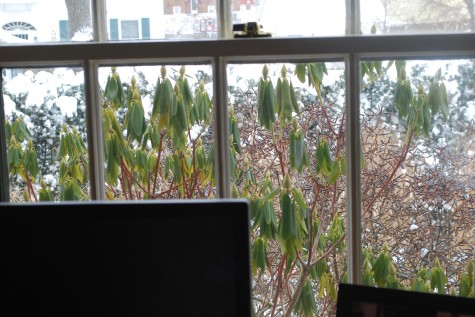 My office at home has windows on three sides; the space can be very chilly on a cold day. But I more value being able to see out. The landscape here is layers of yew, grasses, and rhododendron through which I can see. They screen my window from the outside. I am incidentally able to tell fairly well what the outside temperature is, based on the degree of droop of the rhododendron leaves.