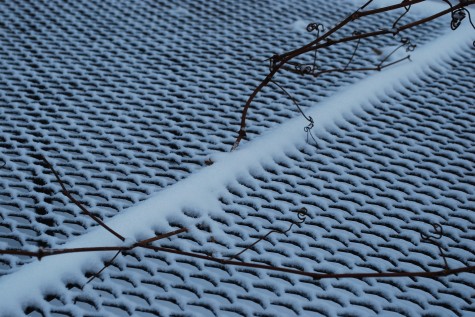
 Were I to ask you which of three wallpaper patterns appealed to you the most, or which person you have most patterned your life after, you would have no problem understanding and answering the questions. A written definition of pattern is not this easy. A paisley is a shape that is readily recognizable; a series of paisley shapes, that repeat in a certain order, that the eye can recognize, forms a pattern. My steel grate plant table tops, dusted with snow, bring the pattern of the extruded metal into focus.
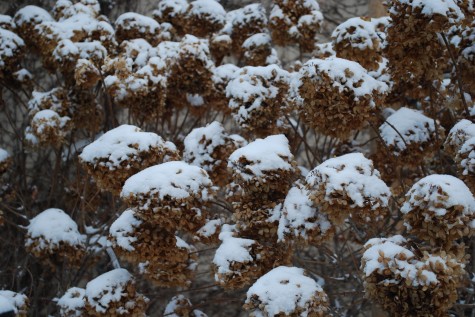 Many patterns exist in nature; early winter may be the best time to study them. The oval shaped dried flower heads of these hydrangeas make a visual pattern that repeats. They remind me of the old boxwoods at Dunbarton oaks that are pruned to resemble clouds. Cloud pruning is a gardening term gardeners recognize; the particular shaping and direction taken by an individual gardener makes a pattern. A distinctive pattern.
 Milo has a ball decorated with raised dots in an all over pattern. An all over pattern reads the same regularly, no matter what direction your view should take. There is no left or right, no up or down. The pattern of this light snow is very subtle; every diaphanous flake randomly covers the gravel in the drive. Nonetheless, the individual flakes make a pattern-a pattern I did not really pay attention to, until I saw the imprint of the ball dots-so regular and clear. The relationship of what came from the sky, with the pattern evidenced by that manufactured ball of his-on my mind today.
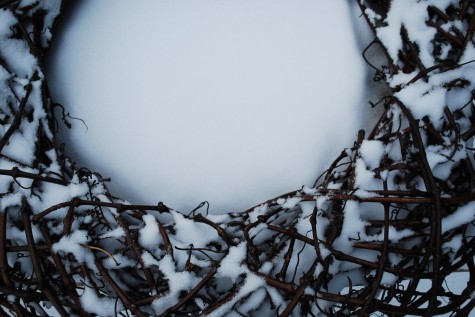
Individual lengths of grapevine make random patterns. Woven into a wreath shape, the circular pattern comes to the visual fore. It is on my mind today that natural random patterns in the landscape are subtle, graceful, rhythmic-you understand-natural. There is reward to taking the time to see nature’s patterns. How people pattern things is more hands on- orderly, more clear, sometimes too self conscious. Which is more beautiful-the grapevine run wild on my fence, or this gorgeous wreath? The answer has everything to do with a point of view, and nothing to do with the truth. What moves you?
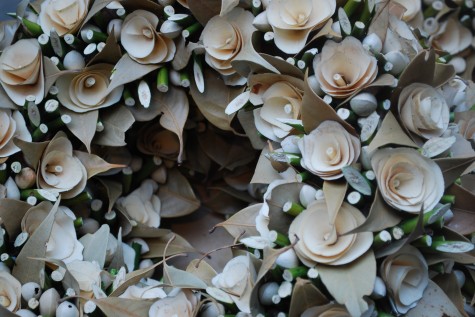 This wreath is comprised of small flower shapes constructed from wood shavings, twig stubs, and dried bay leaves. The pattern, to my eye, is all about the circle, repeating. A wreath is an ornament; the arrangement of organized shapes makes for a pattern. When I see pattern, I am at my most focused.
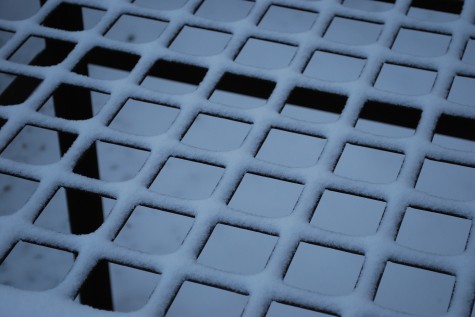
The regular repetition of a shape makes a pattern that pleases my eye. This gridded metal table has a cleanly contemporary pattern. Horizontal and vertical lines meeting make for stable shapes, and strikingly clean patterns. A classic X pattern trellis is a much more traditional look. Certain patterns have much history attached to them. Creating pattern that throws off history, definition, and any resulting cursory nod from an audience-designers of gardens, landscapes, fabrics, music, interiors, buildings, cars, ornament-anyone who designs spends time here.
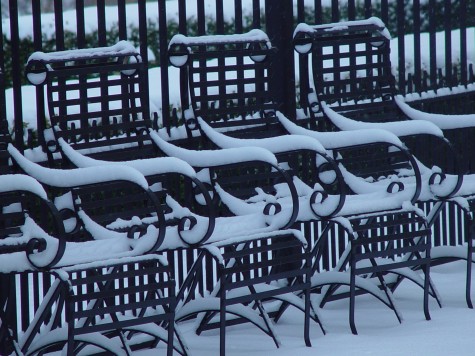 Early winter is the perfect time to think about pattern. The snow, the cold, and the low light, the absence of leaves and flowers that blur the patterns, presents me with a landscape graphically black and white. Now is the best time to see patterns. RobB just forwarded me a post from A Way to Garden (awaytogarden.com)-a doodle by Andre. His idea-to send a card to his garden. Thank you for all you have done for me, beloved garden. That post, and his card has been on my mind all day. My garden gives me so much; this quiet time gives me plenty of time to think about this. Though some years ago I was certain my gardening ended with the first killing frost-now I know different. These first early snows come with lively lessons, debate, original source material; I know to pay attention. Who knew there was so much to see, and think about in late December? I am looking, and listening. December-I welcome it. No kidding.
 Rob does a lot of the holiday display work in the shop. It may take me a while to figure it out, but usually there is some recurring theme in his work that finally surfaces. In addition to his light garlands, this year of his was all about the trees. Trunks, branches, and stems got taken apart, and put back together in some beautiful way. This spot in the shop is home to its third tree of his making. This collection of bare box elder branches was assembled as a multistemmed holiday tree-this one simply decorated in beaded snowflakes and glass birds. The others, hung with glass icicles, have new homes for the holidays.
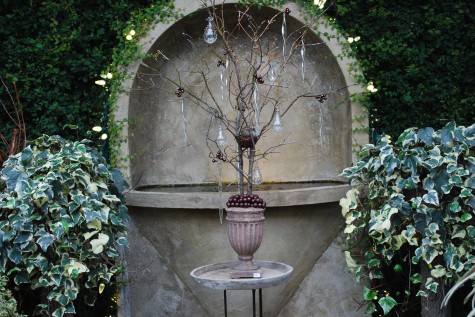 The idea of a holiday tree small enough for a sideboard or table is an appealing one. This “pear tree” is decorated with glass pear ornaments and icicles; the partridge is sitting in her brown glittered nest. This holiday tree is a one of a kind expression with a big visual impact.
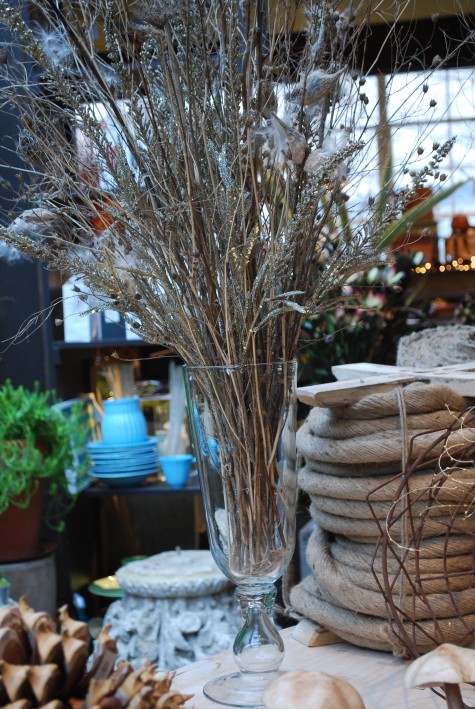 This glass vase he filled with the skeletal remnants of weeds from the field next door. The blown seed pots of asclepias tuberosa, or butterfly weed, softens the look of the sticks. A very subtle and unexpected addition? A few platinum glitter picks make what at first glance seems ordinary, sparkle softly.
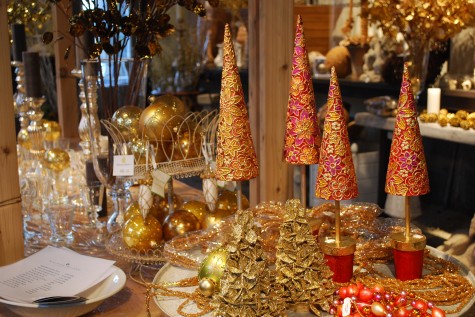 These very sparkly trees take up next to no room on a mantle or buffet. This Pucci-inspired version of a tree-great fun. The glittered seed pod trees have the same effect-very festive.
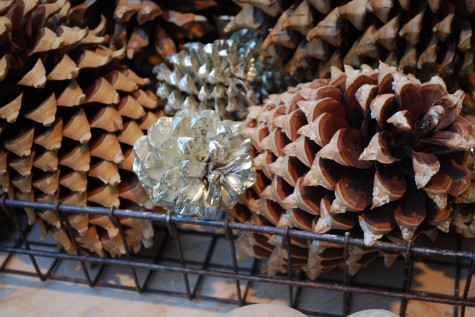 Coulter pine cones are the largest cones on the planet. They are little wood trees, in and of themselves. A very large Coulter cone which stands up on end, perfectly balanced, makes small but stunning holiday tree.
 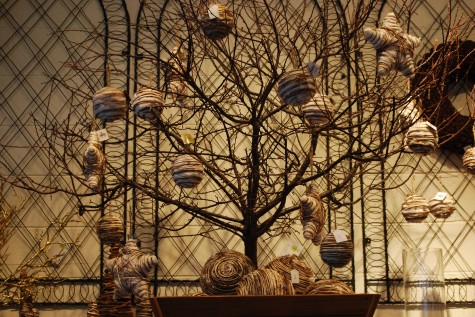 Rob frequently displays holiday ornament in tree branches. Many years ago I decorated a small deciduous tree from my property for the holidays. This does have an understated and spare look reminiscent of the feather trees so popular at the turn of the century. These ornaments from bark strips look right at home here.
 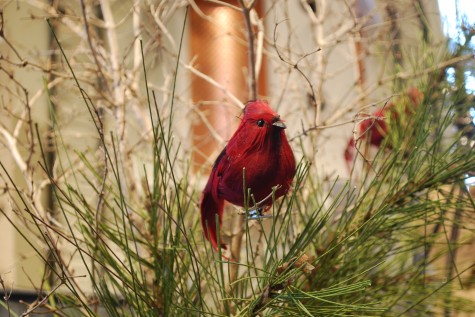 This vase with a tree comprised of a few pine boughs and field weeds gets some punch from a feathered cardinal ornament. It says holiday with the fewest words possible.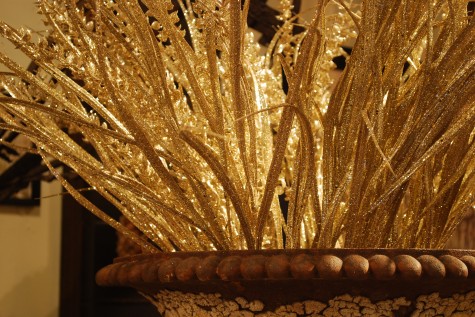
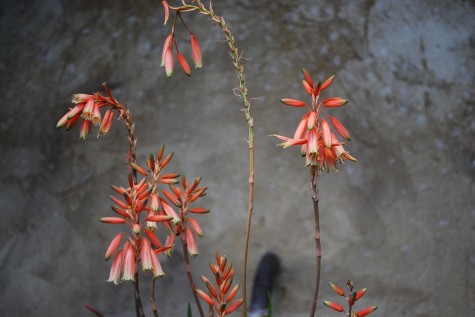
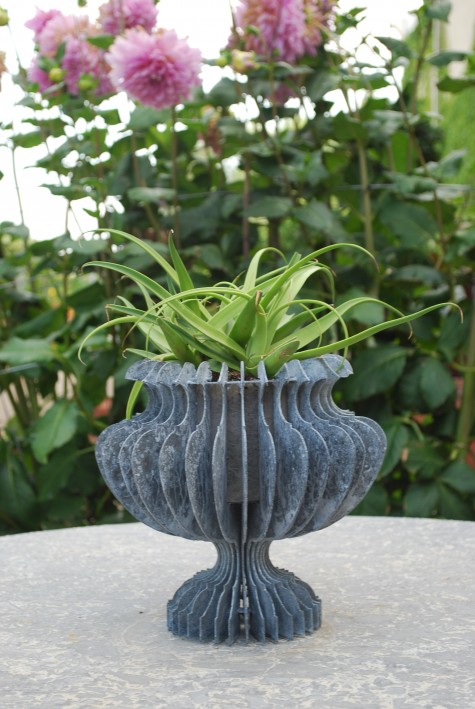 Last week there was some discussion of a plant pictured in my post on gifts for gardeners. What is it? Though the flowers bear a strong resemblance to kniphofia, this plant is an aloe.
 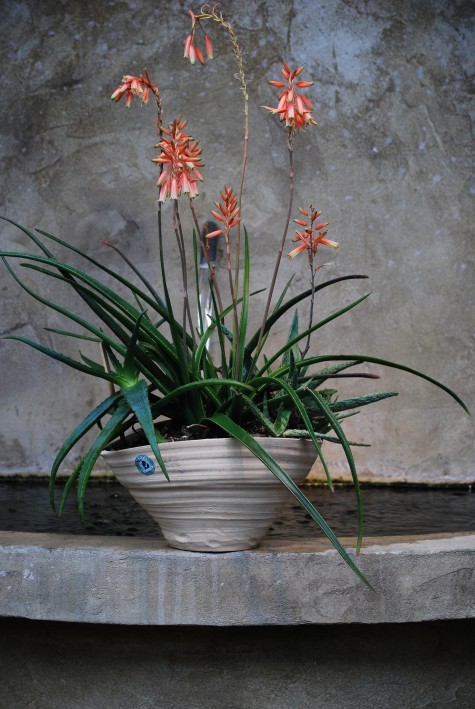 Grassie Lassie has long thin stiff leaves, barbed all along their edges. I water them once in only a great while. They started blooming a month ago. Peach and yellow bells on long brownish stems-good looking. Steve thinks it is a Proven Winners selection-maybe so. I just know I like it.