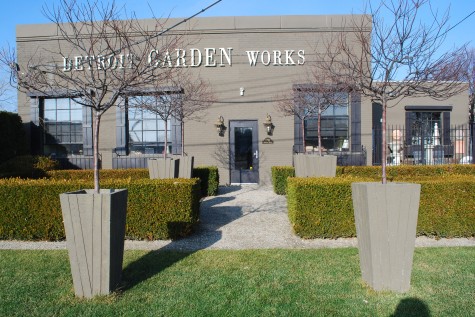
 I do so enjoy decorating the front of the shop for the winter. Ideas start surfacing in October, as it may take me six weeks to make up my mind. November first I planted these six crabapples in my pots-a first step. I took my further cue from Rob, and his client Claudia, this year. She has been collecting prisms for years; she hangs them from the branches of her trees in the winter. Glass lightcatchers. Her idea enchanted him such that he loaded the shop with all manner of chandelier prisms, raindrops and icicles.
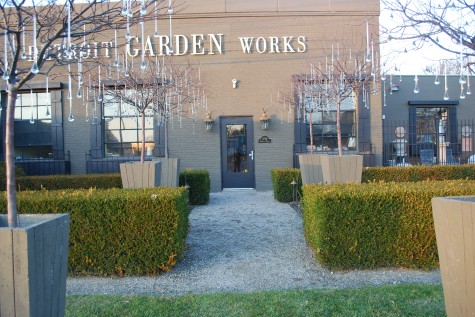 I fell in love with the idea of the glass drops. The 30 boxes of inch long glass drops I needed to dress these Coralburst crabs sold out in a matter of days. Most holiday ornament is manufactured to order; we place most of our orders in January for the following winter season. No one had these little glass blobs available, in spite of my idea to organize my winter pots around them.
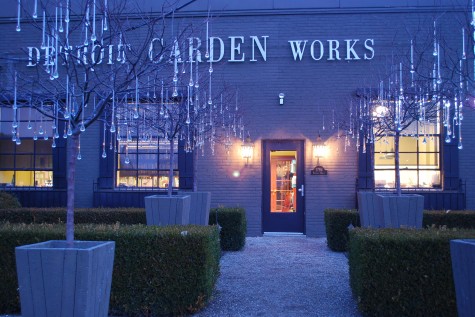 The only drops I could find after days of searching were nine inches long. At the moment I was willing to give up, a supplier had numbers of these very long drops in stock-I fretted for an hour about the long length; would they blow around and break? I fretted another hour, and then ordered a case-432. Funny how the only ornament available can sometimes turn out to be just the right thing. We attached 410 glass drops to these six trees; it was my job to cut off the tags, and attach long wires. Four of us spent three hours getting those raindrops up there.
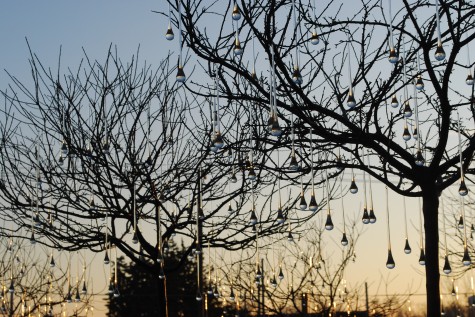 How they caught the late day light was beautiful. We did try to place them such that a big wind would result in not so many losses. Some design involves risk; who knows what nature might send my way. Should we loose some, so be it.
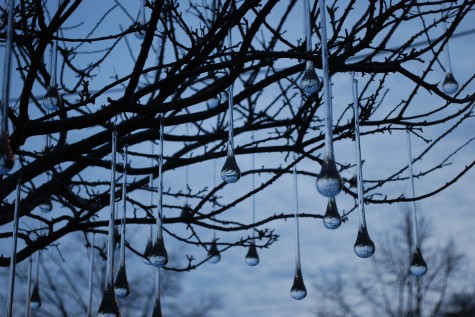 At 4:30 in the afternoon, these black and blue drops have my attention. At my request, Buck fished my Mom’s tripod out. The idea of a tripod for my camera bores me beyond all belief, but I knew I needed one now. A photographic record of how the available light would endow these drops would need a hand steadier than mine.
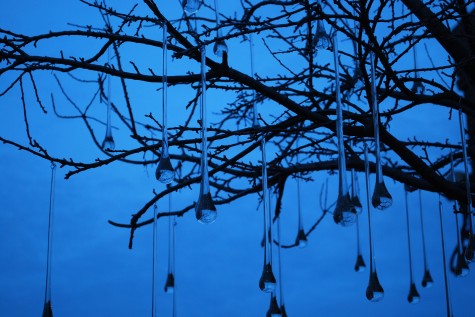 By 5:30 pm, my clear skies have gone blue. The drop stalks are almost invisible; the bulbs have gone a curvy black. What I am paying so much attention to outdoors now is singular to this time of year. I would suggest that if great design is on your mind, first and foremost,tune in to what is around you, and be persistent with what you see; something will come.
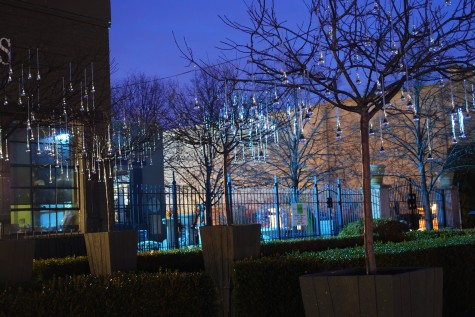
At 5:30 this morning, the shop was dark. I came in very early; I was so excited to see the full moon, and use the tripod. I could barely see to compose this photograph. I felt like I was talking to her- setting up, fussing and fuming. My camera was entirely still and stable on that tripod I inherited some years ago, but never until today, used. Thanks a lot, Mom. An impossibly long exposure recorded this. My fence was thrown blue from a security light; the cream colored block building next door makes even more of that blue. The purple sky-gorgeous. Make fun of me if you will, but what I saw this morning made me sing. Capturing the light-a garden activity I highly recommend.
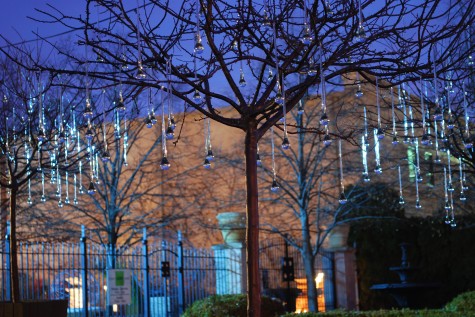
The drops are heliotrope blue and turquoise with a silver shimmer-what an outfit for these somber crabapples. Now, the tops of the pots need something-what thing?
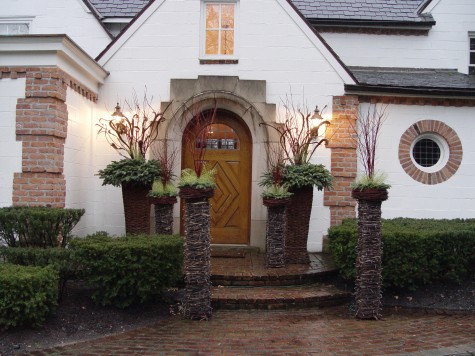 This sassy arrangement of winter pots reminds me much of the client to whom they belong. She has an eye all her own, and doesn’t mind using it; this makes it easy to design for her. Tall thin woven planters make a forest of the porch. The distinct curving silhouette of the fantail willow makes a saucy statement up top in the large willow baskets. Four smaller roughly woven grapevine planters get a topping of twigs, chubby grapevine wreaths and chartreuse netting. Smashing.
 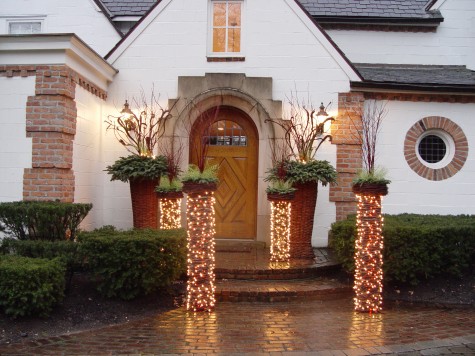 Lighting the twig baskets themselves is unexpected and very effective. Multiple strings of mini lights with brown cords make it clear even during the daytime, that strong seasonal lighting can create a special look all its own. This big dose of lighting fun can’t help but make one feel better.
 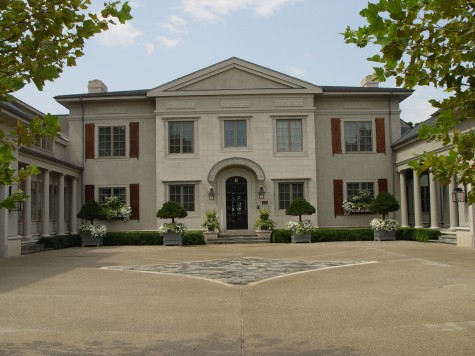 The summer plantings in these boxes, and pots are a welcome contrast to the stark and edited landscape. This picture makes me sigh just looking at it-this garden moment is a memory now.
 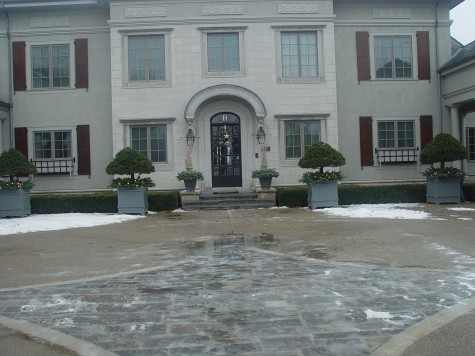 The winter demands a whole new set of materials. The effect is more formal, and more subtle. The landscape still looks finished, even though the garden has gone down. Having the energy to pursue a project at its end with the same energy evident that I had at the start has much to do with the success of a design.
 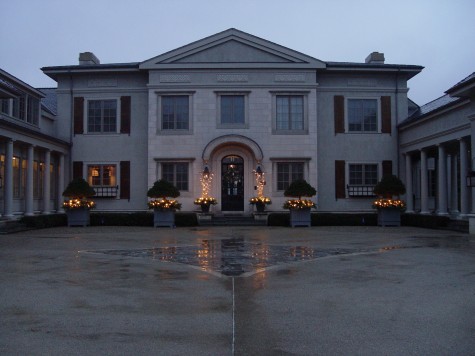 The lighting adds a dimension that responds to the fact of our quiet and dim winter season. Is there a need to give in-not so much.
 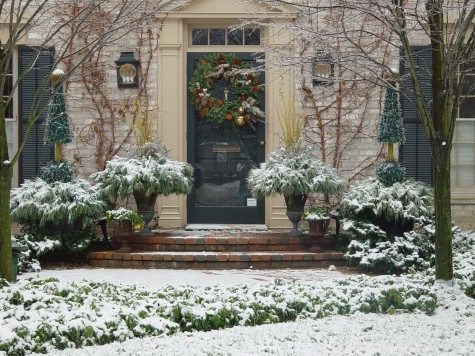 The quiet and graceful arrangements in these containers rely on an interplay of color and texture. The subtle reverie of pale blue eucalyptus and yellow twig dogwood contrast with the highly textured white pine. The dusting of snow is so beautiful. Weather plays just as important a role here as it does in the greater landscape.
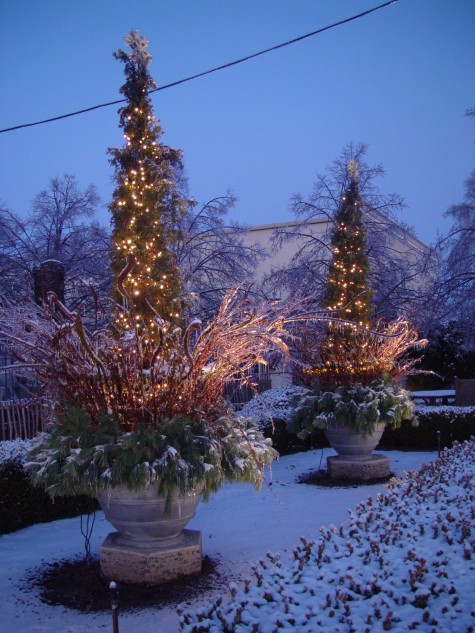
 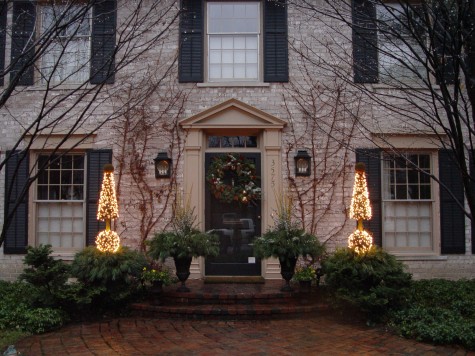 The lit topiary sculptures make another statement all together. Dressed for an evening out, these topiaries have the added bonus of bathing the entire porch area in a warm winter glow.
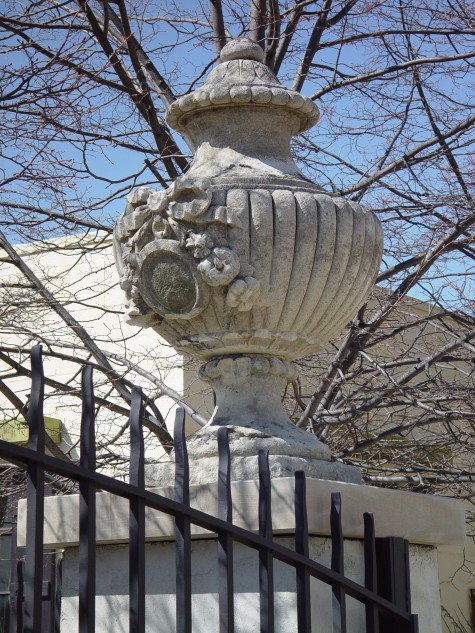 The transition from fall to winter can be a bleak one. This old finial looks chilly, now that the leaves have dropped from the lindens.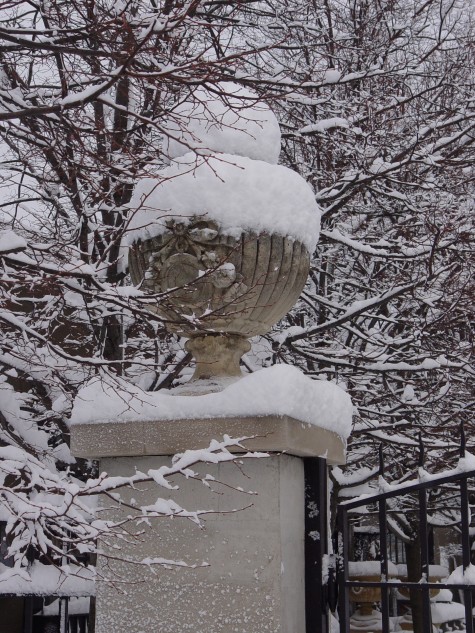
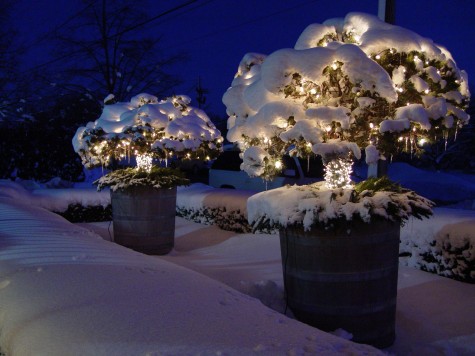 The Michigan skies go dark during our winter months. We have few sunny days; the winter solstice date, this year December 21st, is the shortest day of the entire year. The dark comes at 4pm, and is still around at 7am. The cold and the snow don’t bother me nearly as much as those gloomy skies. Should you not light your landscape, their will be precious little to see. Formally lighting the landscape is a topic all its own. I am interested today in how people garden with light. These scotch pine on standard in Belgian oak barrels outside my office window-a strong defense against the dark.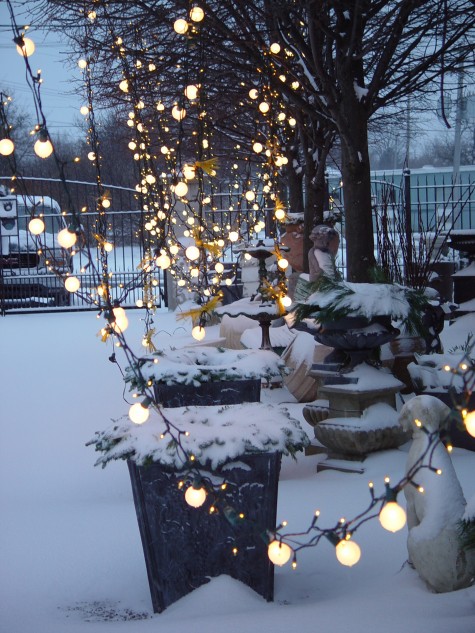
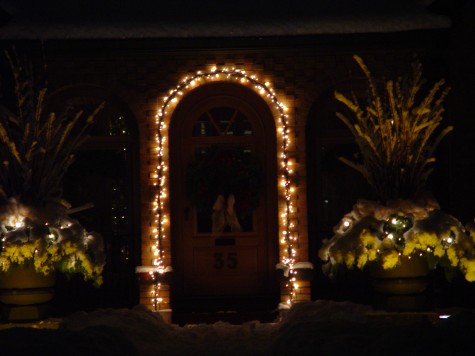
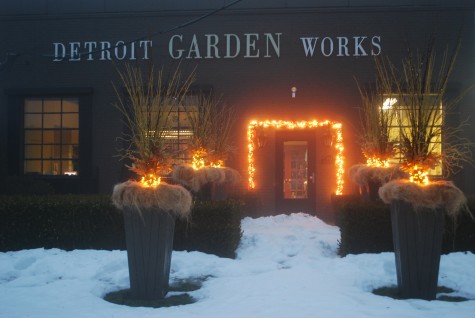 My native winter landscape is notable for its cold, its interminable length, and its relentless snow. The light garland over my door is a combination of white, amber, and yellow lights; the centerpieces in the pots wound round with gold frosted lights. The pots are stuffed with giant nests of raw hemp fiber. The effect is warm and cozy. I am all for turning the lights on.
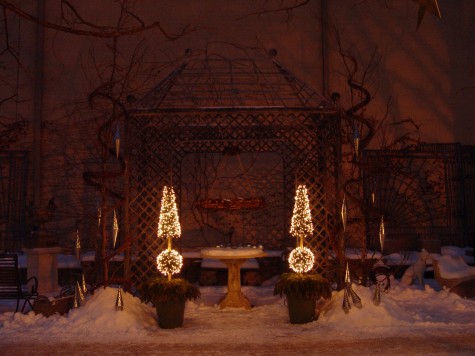 Light strings need not be confined to rooflines and Christmas trees. Urethane topiary forms densely wound with light strings cast their warm light in every direction. The biggest requirement for this project-the patience to wind and pin the wires with fern pins. A landscape focal point comes to life in a very different way, thus lighted.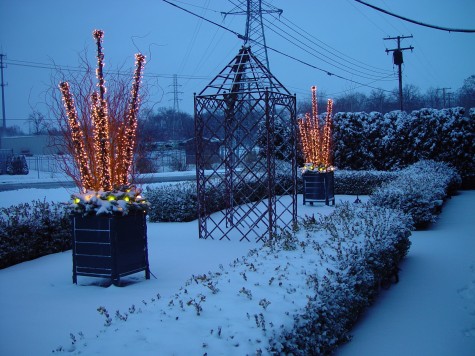
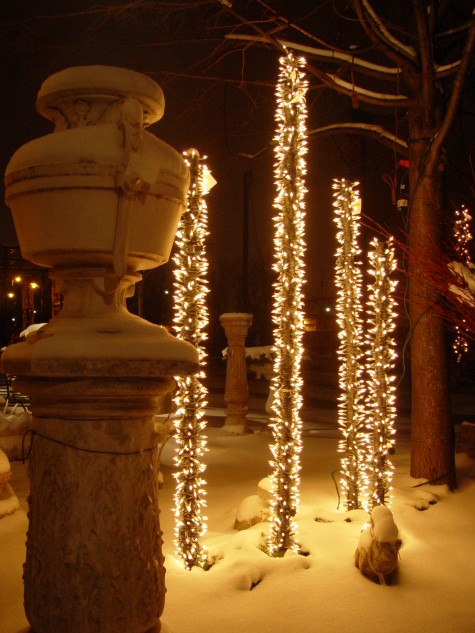 Rob invented these light bars. Wrapped closely around a galvanized pipe, and installed in the ground over steel rebar sunk in the ground, they shed light in every direction. They are beautifully sculptural in a contemporary setting.
 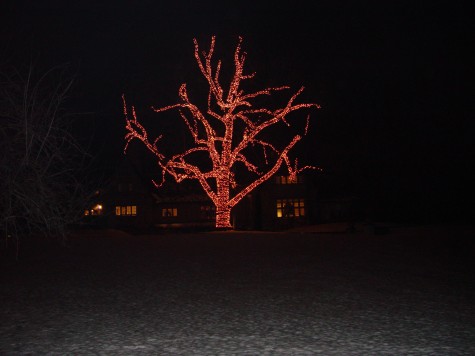 Many many light strings were needed to describe the shape of this old oak in lights. The structure of this tree is never more apparent than it is this time of year.