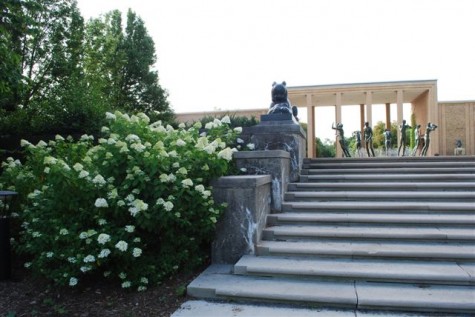
 My last visit to the landscape at the Cranbrook Academy of Art was to deliver the flowers and decoration for a wedding and reception there in August of 2007. I had for several years prior donated the summer planting around the Orpheus fountain; this was a job I loved doing. This area adjacent to the stairs had been dirt and more dirt for some years; my client and I split the cost of a planting of a group of Limelight hydrangeas. I am happy to see they seem to be doing fine.
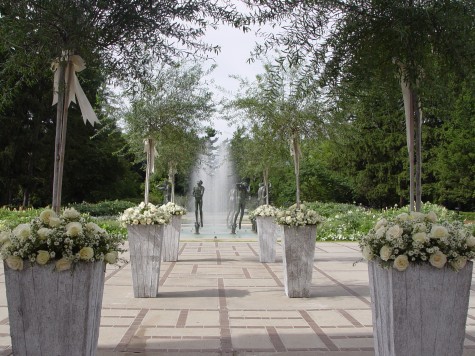
Six willows on standard in pots created an aisle for the bride and her wedding party. No one could tell the white Hollywood roses were not in water; they perform so beautifully for a wedding. Would that I could have been there the moment the bride stepped in front of that fountain.
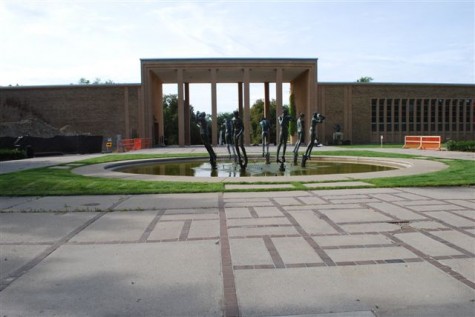 The Art Museum is under extensive renovation, so this year, the garden areas are sodded over. The fountain is closed.
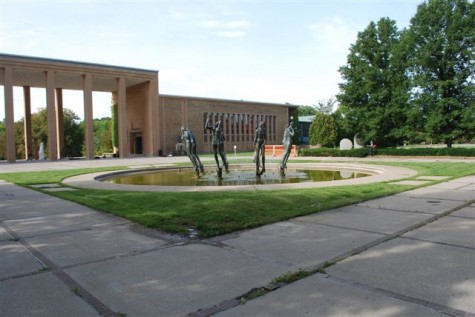 I try to tread lightly with the landscape where a sculpture is concerned. How easy it is to cross over the line trying to compliment a sculpture, and end up confusing the visual issues. Though I knew it would be closed, I was not prepared for how closed. But seeing it in its gardenless state, no water in the fountain, no sound and sparkle, had its good side. Its always a good idea to consider whether an area is all the better for your not touching it. The simple word for this is “editing”; some days I am better at this than others. Where flowers are concerned, I have a very tough time.
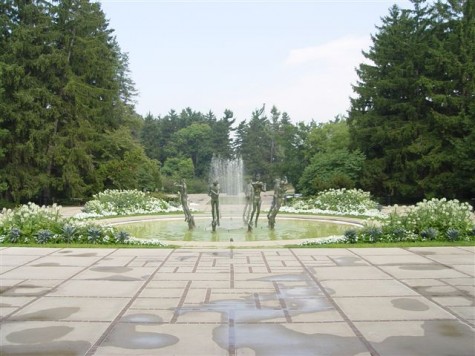 Planting white flowers is a good way to proceed cautiously. Interestingly enough, I was told the traditonal summer planting here involved a short red salvia. I had no problem ditching the red flower thing, but I thought a tall planting would compliment the sculpture and water better. I mitigated the risk with the white palette.
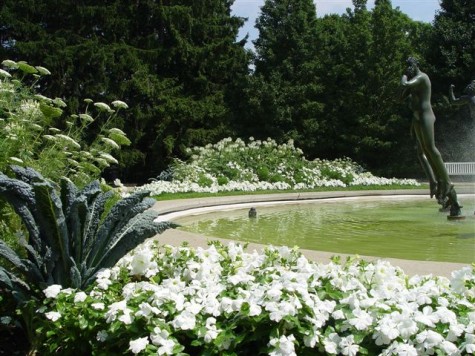
The white amni majus, cleome and impatiens are crisp; this area is incredible hot in the summer. The blistered kale Nero di Toscano is good with the smooth sleek black sculpture, and it seems to intensify the whites.
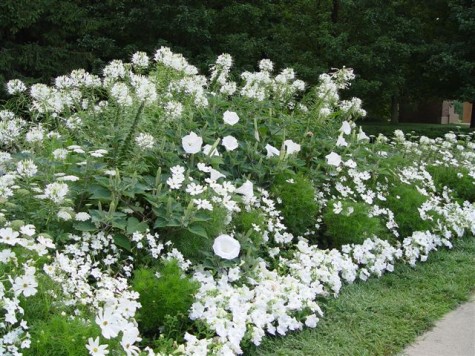 Another year I added an upright white datura, and white sonata cosmos to the mix. The white petunias did a better job of softening the lawn line.
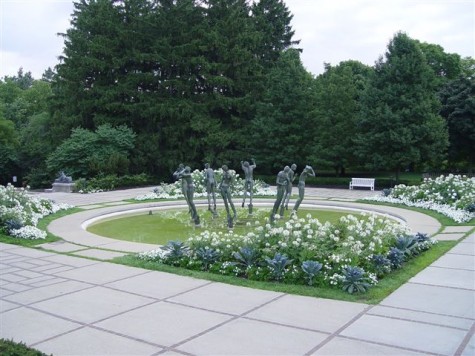
From this vantage point, the sculpture looks to have company, and good company at that. The height of the plants in each quadrant drops gracefully where there is physical access to the rim of the fountain; in no way do the plantings obstruct the important view. On an overcast day, the black figures appear a much softer blue-grey. The lawn panels are effective in making a formal presentation of the sculpture and its environment. However I mostly like how the lawn repeats the grid of the paving, and introduces the curve of the fountain rim. The figures themselves describe a small circle with their feet, and a large, expanding circle with their heads.
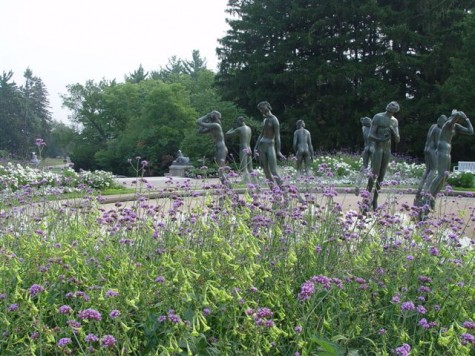 Yet another year, I added some verbena bonariensis, some nicotiana langsdorfii, and some grey cirrus dusty miller to the predominantly white mix. I do so like the cloud effect of the verbena flowers.
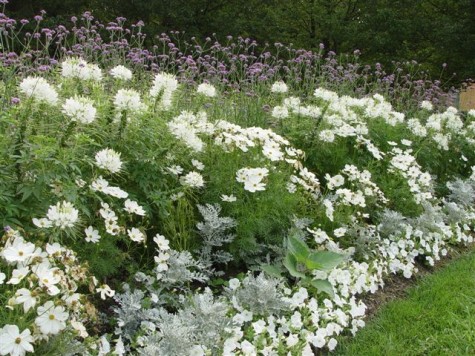 White gardens are however, unforgiving of a lack of maintenance. Dead white flower heads do have a distinctively brown-dead appearance. For this reason, I rarely plant white geraniums unless I am sure there is a maintenance fanatic waiting in the wings-and even then, a heavy rain will spoil the blooms in such a dramatic way. I knew the planting would not be the end of my involvement here.
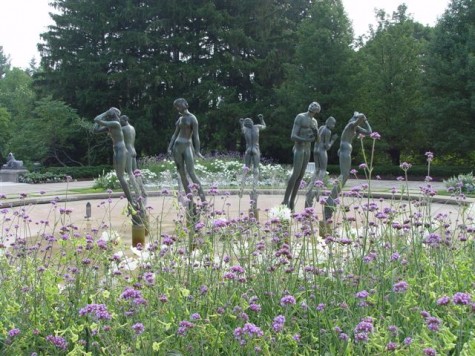
I did go back regularly to do maintenance here, as I liked having it look good when I visited. There was a day when every single nicotiana got its own stake. That tedious job gets forgotten, sooner or later. But the memory of all those dancing flower heads, those graceful figures,the water, and the white will stay with me a long time.
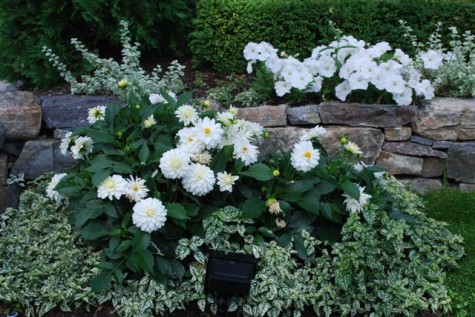
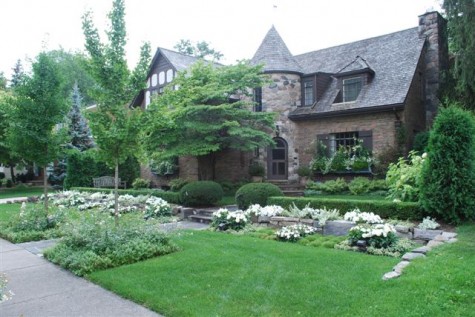 These clients have lived many years in a lovely old Tudor style house built in the 1920’s. However, they both have a love for clean, modern and edited lines. Working with them has produced a garden that has elements both friendly to the architecture of the house, and their point of view. They were both clear that a green and white garden would suit them best.
 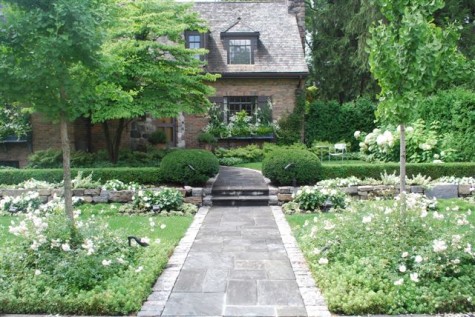 The landscape of the front of the house was already in place when I met them. My input involved the sizes of the flower beds, and the construction and installation of the window boxes. The profusion of flowers is decidedly English in feeling, but the green and white has a crisply contemporary flavor. The strong, dark green horizontal line of the boxwood hedge contrasts and compliments the mass of the oval yews. This element is balanced by the four columnar gingkos that frame the walk at the street. The simple steel windowbox is a focal point at the visual end of the walk.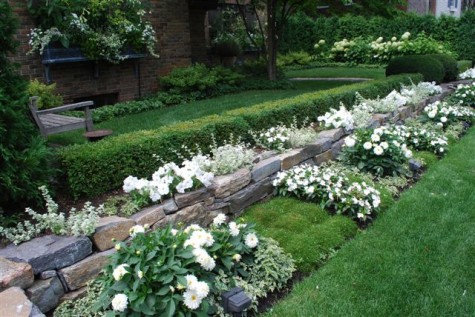
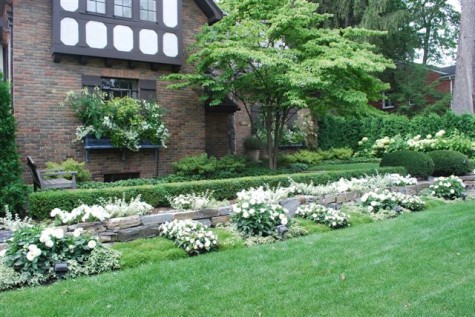 The upper level is planted more freely, with variegated licorice, white petunias and more polka dots. This bedding plant scheme derives more visual interest from its texture and layout than from the plant species.
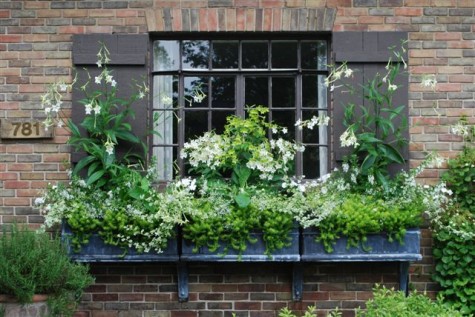 The window boxes are lush with green angelina, euphorbia, and licorice. The angular nicotiana alata white frames the more orderly growing Perfume nicotiana series in white and lime green.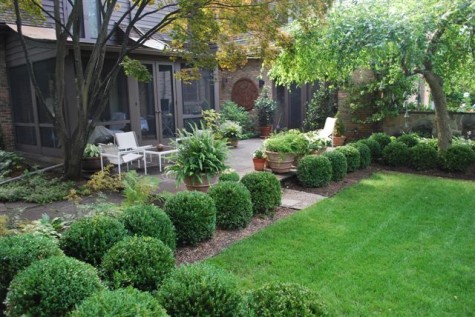
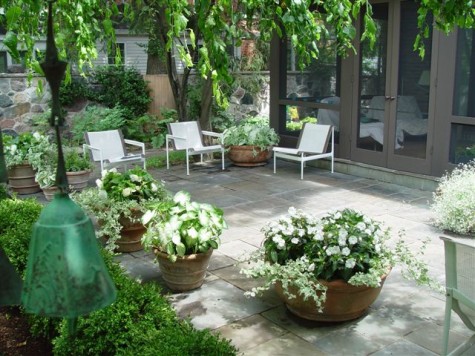
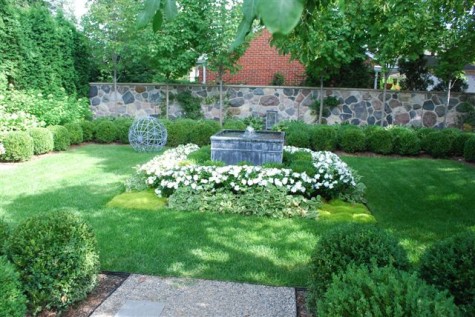
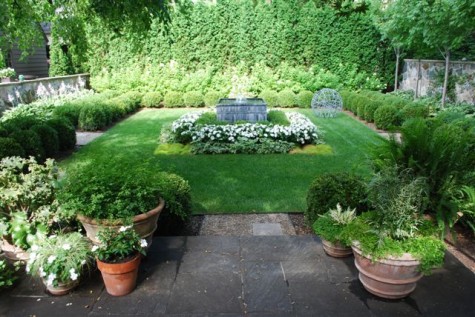 A custom made steel cistern positioned on axis to the porch, and the side walk organizes the space. It was constructed with legs tall enough to hide the fountain pump, but also to provide for the eventual height of the boxwood surrounding it. Bordered in boxwood, a run of limelight hydrangeas provides another level of interest against the green arborvitae wall.
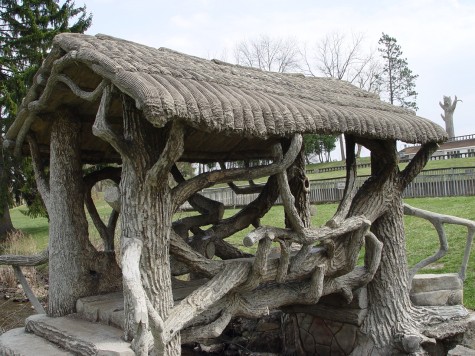
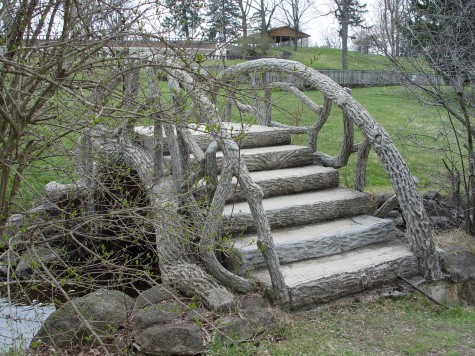
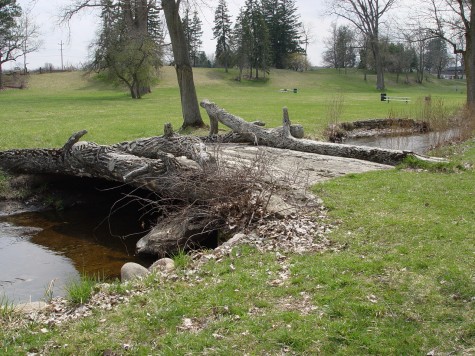
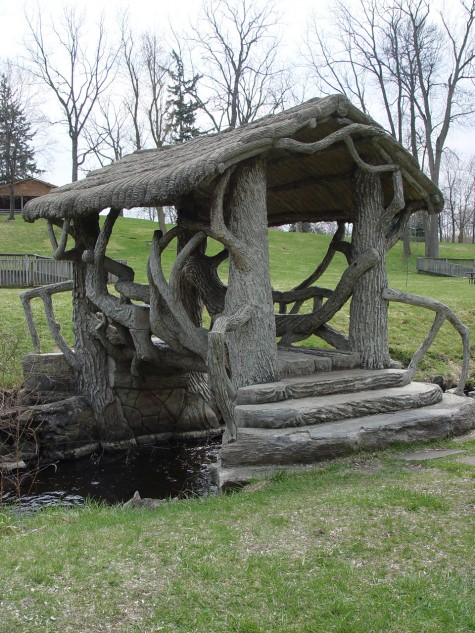
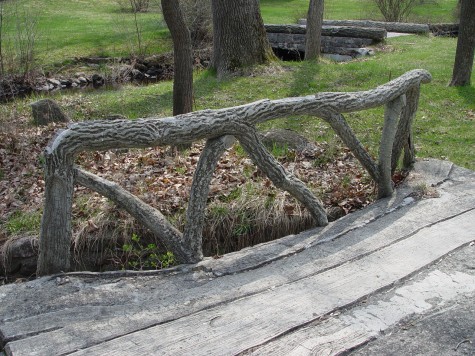 This bridge, constructed entirely of concrete carved to look like wood, is a good example of the sculpture form known as “faux bois”. Translated literally from the French words, examples of “false wood” can be found all over the world-even here in Michigan. There is a park in my greater neighborhood devoted to this art form; lucky for me. McCourtie Park, in Hillsdale County, in the Irish Hills, is a folly of the best sort-built in the 1930″s by a man who made his living in the cement business.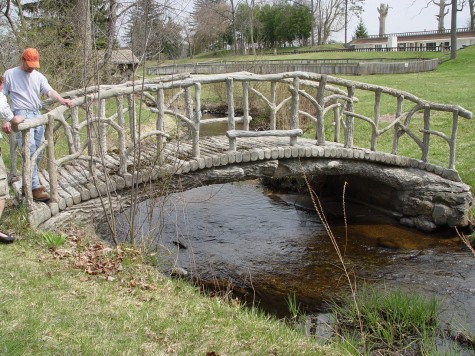
 covered bridge
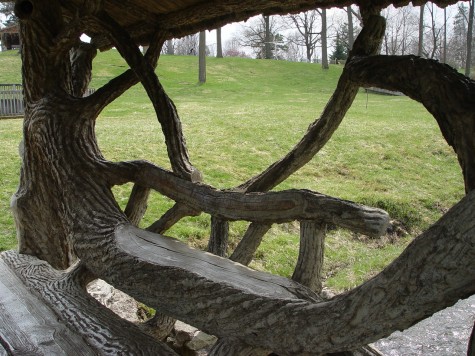 faux bois rails that become a bench
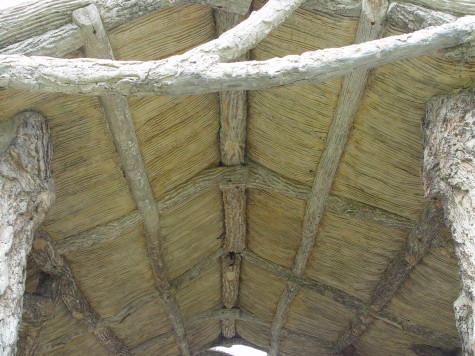 faux bois roof detail
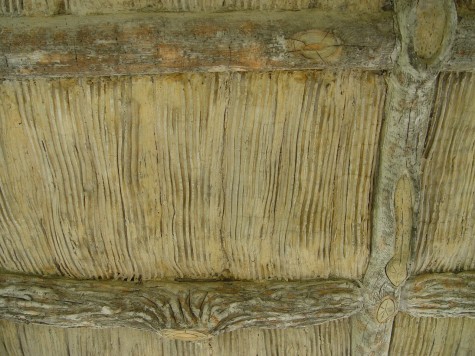 side detail
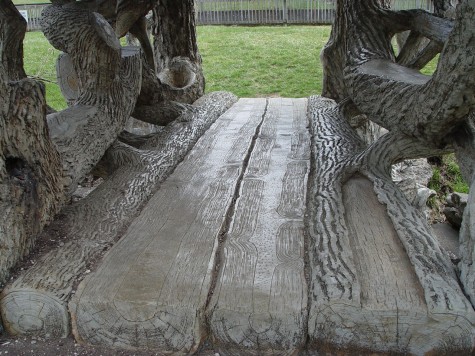 faux bois planks
 bridge
 flat bridge
 bridge house