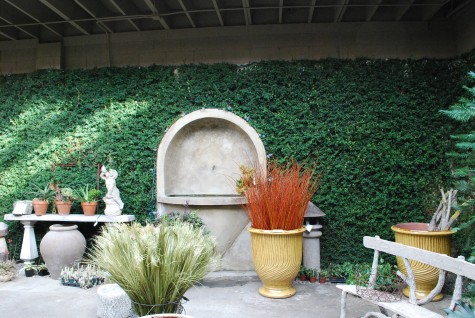
 I have one room in the shop from which I removed the solid roof, and installed the roof of an abandoned glass house. Many years later, 15 creeping fig plants have completely covered the walls. In early spring this space provides protection for tender plants. The summer sun shining down and through the glass roof endows this space with heat. This hot space encourages the fig, tender begonias, tropical ferns-not to mention all of the gardeners that appreciate this growing space. A concrete fountain built from an old French design sits on top of the one place we could not remove the concrete floor next to the wall for the fig; an old concrete waste oil tank sits below the surface. So we built over it; the sound of the water in the space is great. I have water, light and plants in this room, year round.
 When the growing season closes, Rob makes the moves it takes to move on. How can this green wall be transformed? He invariably has a big idea I do not see coming. Hundreds of white birch sticks have been stashed in the garage for better than a month-waiting to be transformed into a birch forest holiday diorama. If you are wondering if we really talk this way-holiday diorama-the answer is yes. What you give a name to helps to endow an idea with an identity. Brooklyn Botanical Garden is a name that says science; La Foce speaks to romance and magic.
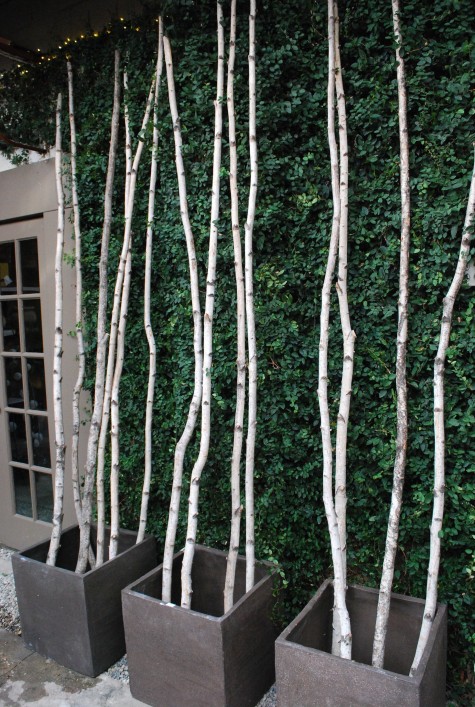 Chocolate terra cotta squares-they are Rob’s idea for a home for the birch. How can we get those heavy branches to sit up straight? My landscape superintendent Steve Bernard suggested Rob might sink those birch branches in washed sand. This worked perfectly. Every birch stick is standing tall; anyone wanting a birch stick for there own holiday will have no problem lifting out the sticks of their choice. Steve made his contribution to the display early on.
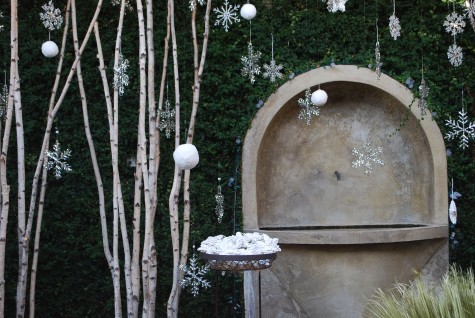
Rob knew to buy stout white birch poles, silver snowflakes in various materials and sizes, and snowballs. Putting them together in this particular way involves introuducing the materials to each other, and to a space. This is a romantic description of what is really about persistence. He hauls materials all over the place until he sees something that he likes. So much of successful design involves persistence and patience.
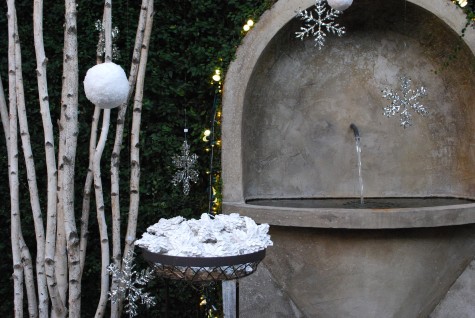
The relationship of the materials is easy to believe; where there are snowflakes, snow balls cannot be far behind. A visually successful arrangement is believable. I do have a neighbor down the street with a life size lighted palm tree in her front yard-this would not be for me. The contrast of texture, shape, and mass is pleasing. The white against the dark green of the fig wall looks good.
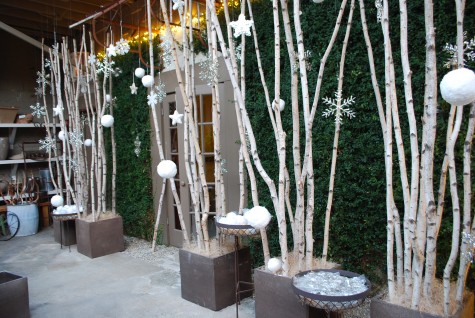 At the last minute, Rob had Catherine add stars to the mix. How this wall looks now could not be more unlike its summer appearance. The dramatic change is enchanting. Every person who sees it takes something away from it that is all their own. I had a lengthy discussion with one person about the cultural requirements of Himalayan white barked birch. Another person planned to use a birch stick as a rod over her kitchen window, and hang ornaments from it like a valance. Yet another planned to mass snowballs and snowflakes in a white washed vintage box on her front porch. Our discussion was primarily about how she would light it.
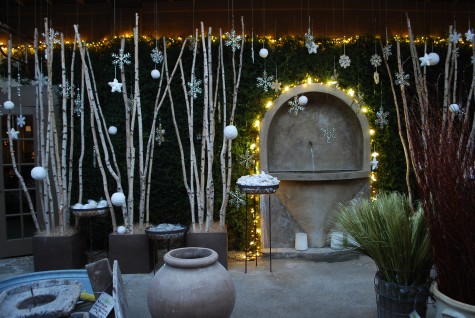 Of course we needed some lighting; daylight savings time means the dark comes early now. White and chartreuse light garlands warm up the space on a cold and gloomy afternoon. A midwestern summer garden can be sunny from dawn to very late in the day. A winter garden is divided between day and night, and always about not so many sunny days. A great holiday display takes lighting into consideration.
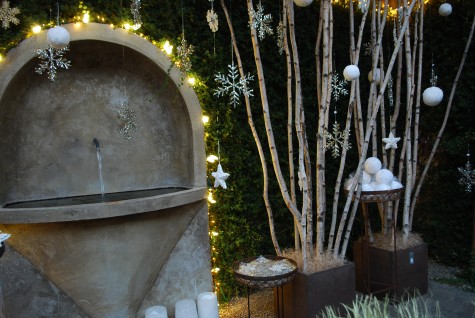
Anyone can garden in the winter. There are plenty of materials that can be arranged in those pots that held tree ferns over the summer. A favorite bench can be lit from the front with a spot light, or from below with strings of lights strewn on the ground. Decorating a garden with holiday or winter lighting is an alternative type of gardening, but gardening none the less. There are those gardeners that are relieved when a hard freeze puts an end to the season. There is something attractive about putting the spade and pruners away for a while, but I like to keep on gardening.
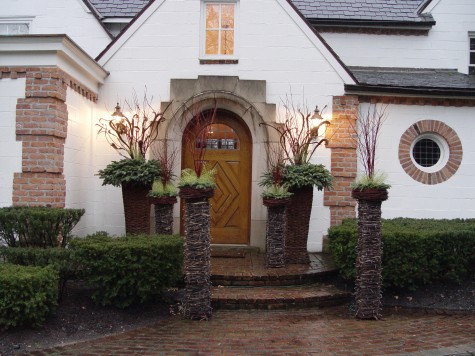 This sassy arrangement of winter pots reminds me much of the client to whom they belong. She has an eye all her own, and doesn’t mind using it; this makes it easy to design for her. Tall thin woven planters make a forest of the porch. The distinct curving silhouette of the fantail willow makes a saucy statement up top in the large willow baskets. Four smaller roughly woven grapevine planters get a topping of twigs, chubby grapevine wreaths and chartreuse netting. Smashing.
 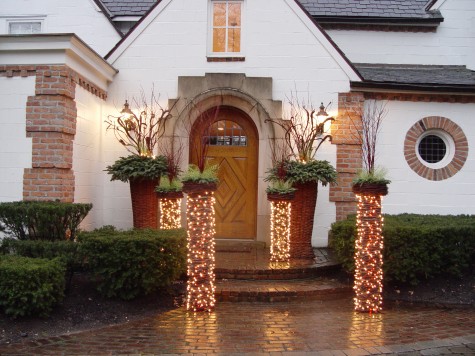 Lighting the twig baskets themselves is unexpected and very effective. Multiple strings of mini lights with brown cords make it clear even during the daytime, that strong seasonal lighting can create a special look all its own. This big dose of lighting fun can’t help but make one feel better.
  The summer plantings in these boxes, and pots are a welcome contrast to the stark and edited landscape. This picture makes me sigh just looking at it-this garden moment is a memory now.
 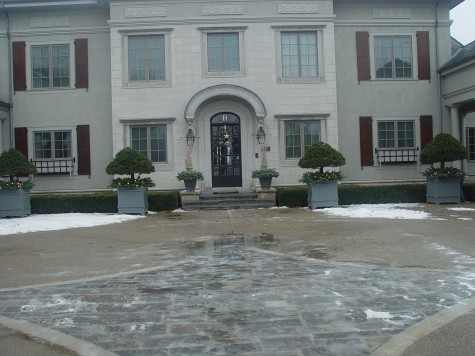 The winter demands a whole new set of materials. The effect is more formal, and more subtle. The landscape still looks finished, even though the garden has gone down. Having the energy to pursue a project at its end with the same energy evident that I had at the start has much to do with the success of a design.
 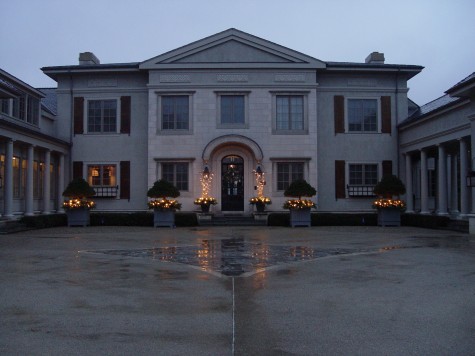 The lighting adds a dimension that responds to the fact of our quiet and dim winter season. Is there a need to give in-not so much.
 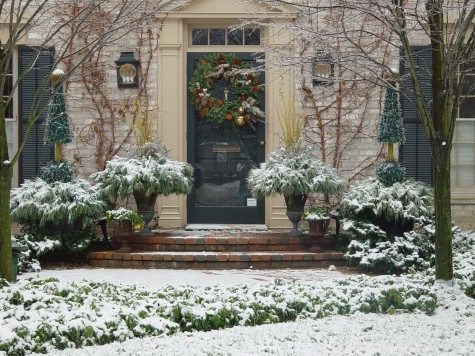 The quiet and graceful arrangements in these containers rely on an interplay of color and texture. The subtle reverie of pale blue eucalyptus and yellow twig dogwood contrast with the highly textured white pine. The dusting of snow is so beautiful. Weather plays just as important a role here as it does in the greater landscape.
 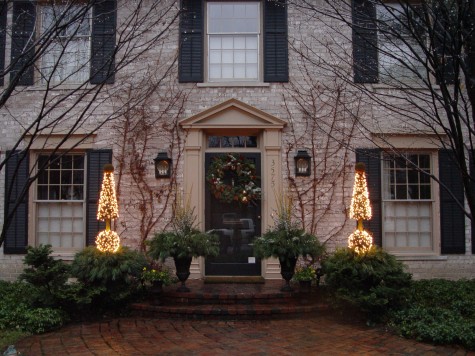 The lit topiary sculptures make another statement all together. Dressed for an evening out, these topiaries have the added bonus of bathing the entire porch area in a warm winter glow.
 The transition from fall to winter can be a bleak one. This old finial looks chilly, now that the leaves have dropped from the lindens.