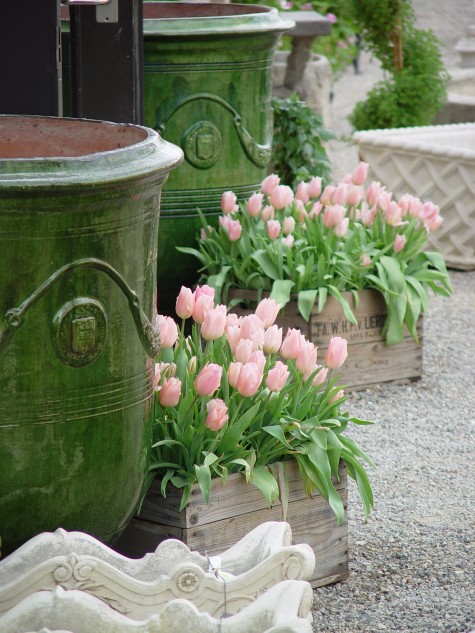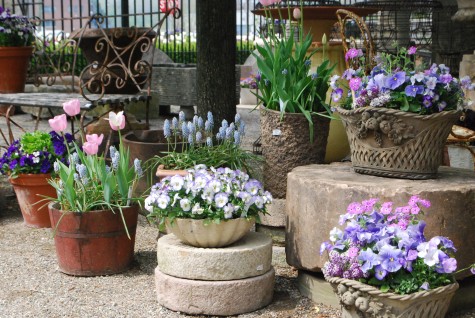
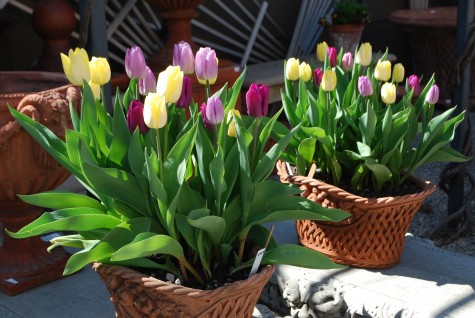
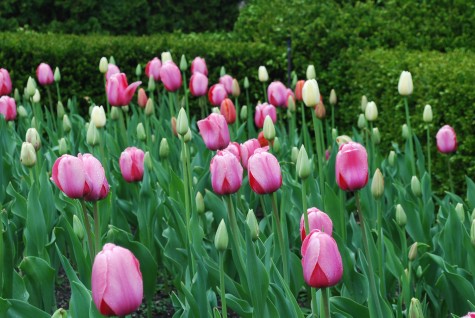
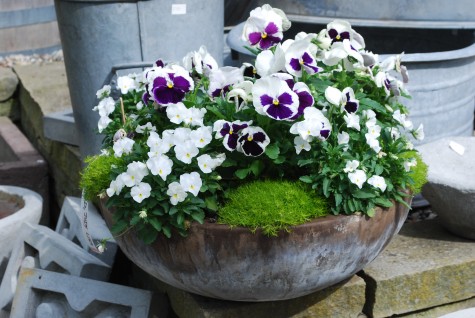
All of the cold tolerant spring flowers have their charms. The pansies and violas come in every attitude from dainty and demure to bold and sassy. The pale powder blue grape hyacinth pictured above, muscari Valerie Finnis, is a vigorous grower whose flowers last a long time. Phlox intensia will last even longer; I have had it thrive an entire season. But there is nothing quite like being treated to the tulips. The pale pink variety pictured-Pink Diamond.
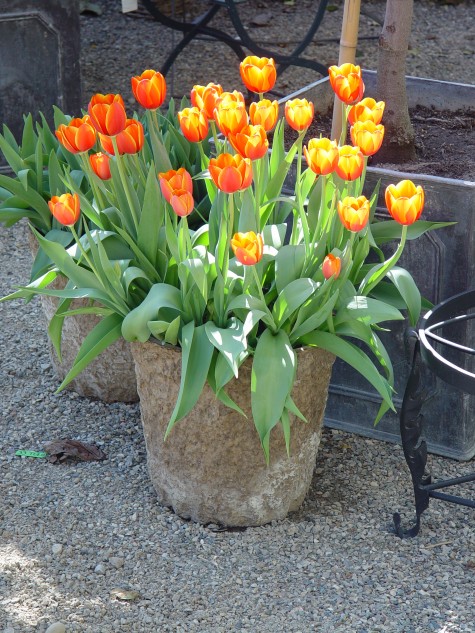
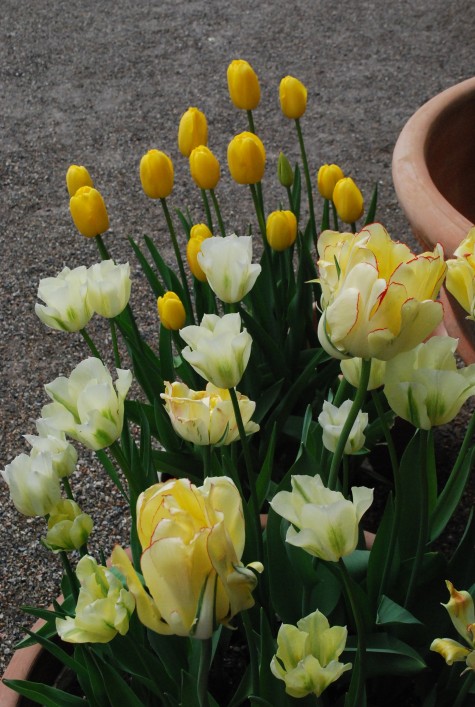 Their forms and colors are many. Their big simple shapes can make a big visual statement from just a few bulbs. Bulbs wintered in the garage in fiber pots make great centerpieces for spring containers. From the moment that the leaves emerge from the soil, to bloom is about three weeks. The thick strappy leaves are just about as beautiful as the flowers. The formation of seed pods, and the dying back of the foliage takes another month. The entire process is beautiful to watch. Pictured above, the multi-petalled Darwin hybrid Akebono, Spring Green, and the butter yellow Roi du Midi.
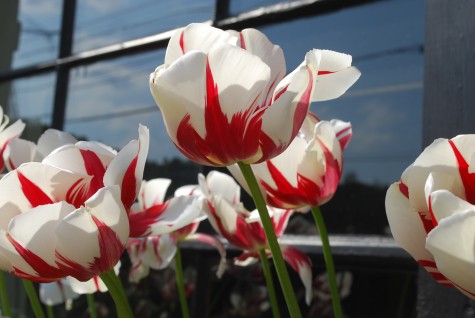
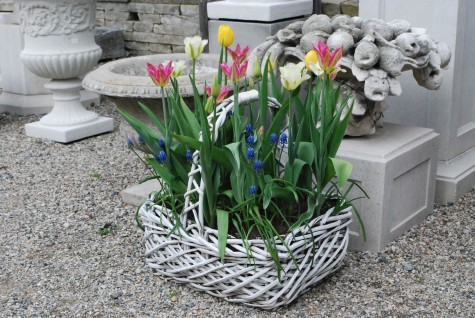 I do have a soft spot for viridiflora tulips. The white petals of the variety Spring Green are streaked with green. The pink and green variety in this basket is called Virichic. Green and pink chic, indeed. They bloom fashionably late in the spring, and their spiky shape is striking.
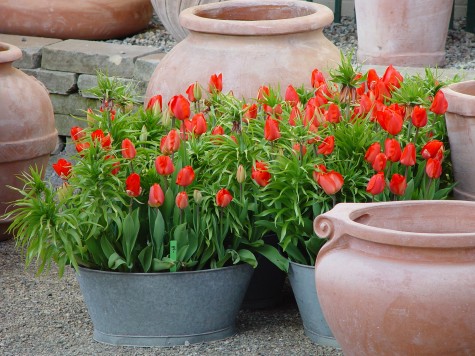
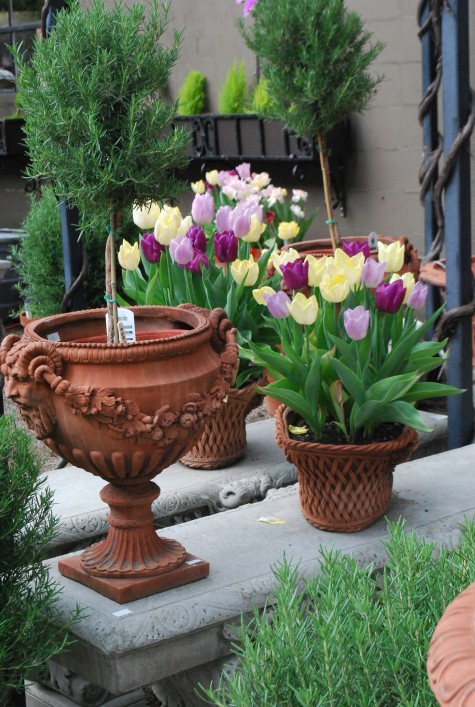 Though the color of Princely Mix is very sweet, their staying power is considerable. These compact clumps have been in bloom for better than 3 weeks. Their short height makes them perfect for small containers; they are also likely to weather the worst of the spring rain and wind without damage.
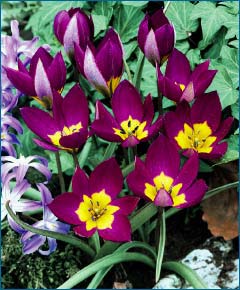
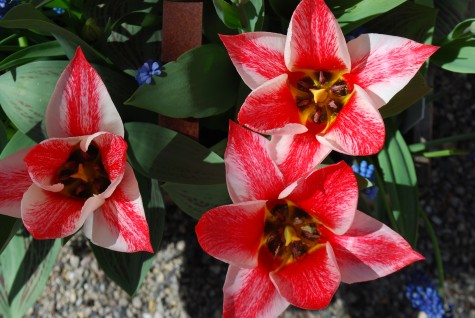
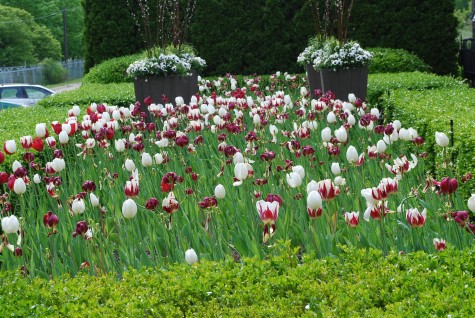
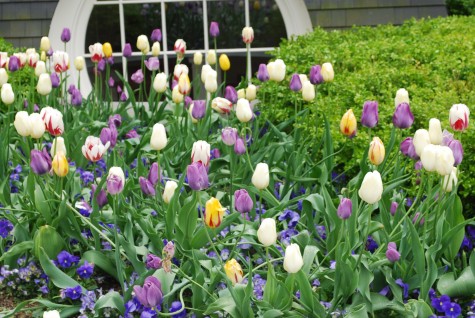
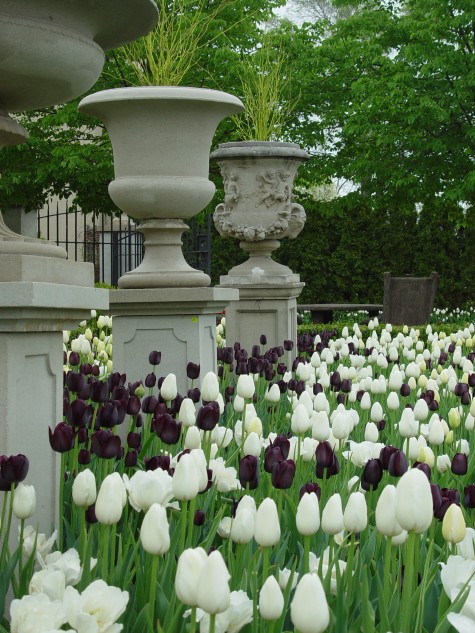
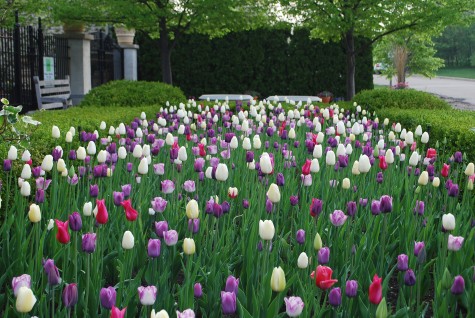 Choosing a mix of tulips for the big garden at the shop is great fun. What I like the best about a mix is the possibility of great variation in height. This gives you color at every level. Violet Beauty-18″ tall. The white tulip edged in violet is called Shirley; it grows 22″ tall. The random hot pink lily flowered tulip Mariette also grows 22 inches tall, but its rarer appearance in the mix makes it seem different from all of the other tulips. At 24″ tall, Cum Laude is the tallest of the purple tulips. The white single late tulips Maureen grows to 28 inches.
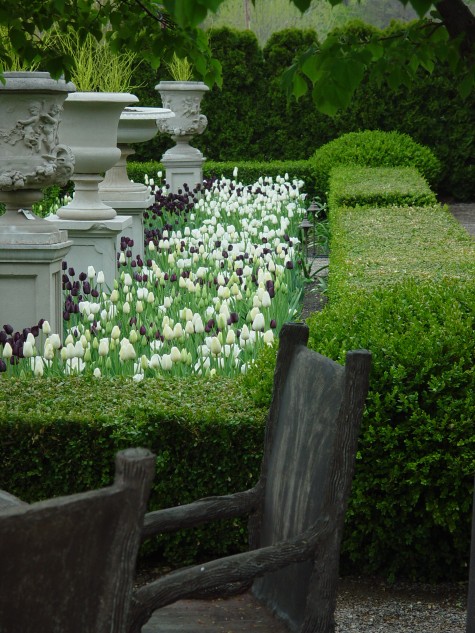
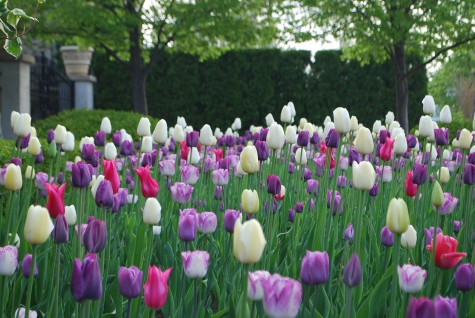 What would I do differently, if I had the chance? That is a question I am always asking. In this case, I would add a short white tulip. Pale colors do a great job of highlighting darker ones. So, 2 different heights of white tulips, 2 purples, one whte and purple bicolor,and the odd tulip out-a little hot pink seasoning here and there. Most flowers are beautiful in their own right, but how they are arranged can make them look all the more lovely. The tulips fields in the Netherlands in bloom-show stopping in a different way. Tulips being farmed have a much different appearance than tulips in a garden.
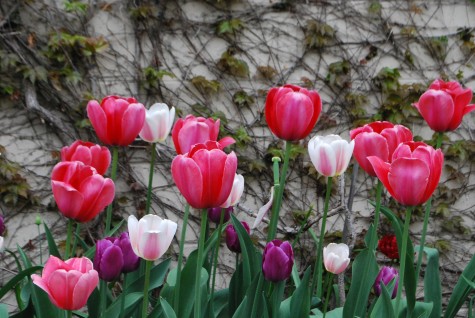 In this mix, flower size was equally as important as height. Every plant has characteristics worth considering when a design is taking shape. For example, it is easy to extend your tulip season greatly by choosing tulips from different classes. The species tulips bloom a month earlier than the single late tulips. I like the idea of having a spring that goes on for three months, in one form or another.
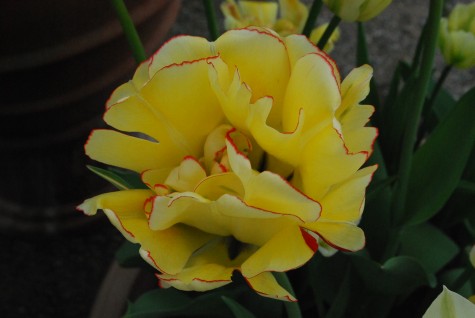
The Darwin hybrid tulip Akebono is a new one to me. No doubt I will have this again in bigger numbers. I like to try a small amount of lots of bulbs-there is nothing better than seeing them bloom in person. Choosing tulips can be tough. They get planted as small papery brown spheres that give no hint as to what will come the following spring. For that reason alone, I try to photograph all the tulips-so I have a record of what they can be. Pictures of bulbs in catalogues can be notoriously misleading. Photographic record keeping is an easy way to better inform your design. This tulip with a simply shaped, pale yellow firned and a spring green companion-that could be gorgeous. Paired with red, orange, and hot pink tulips-visually electric. All by itself-just plain stunning. If you are nearby, stop up for a look. It is peak tulip treat week.
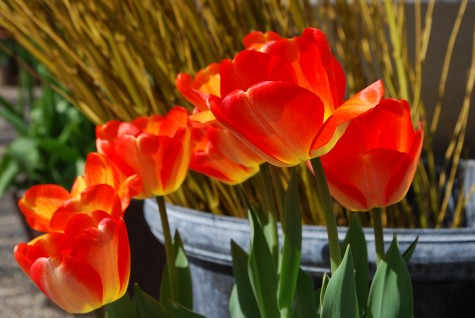
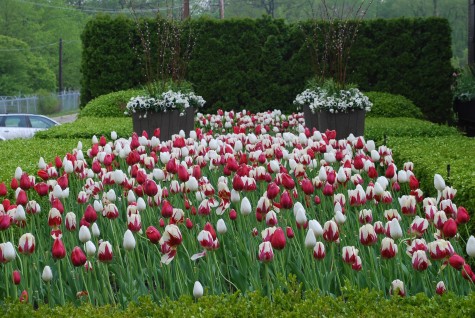
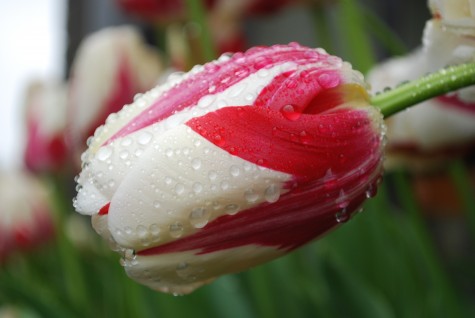
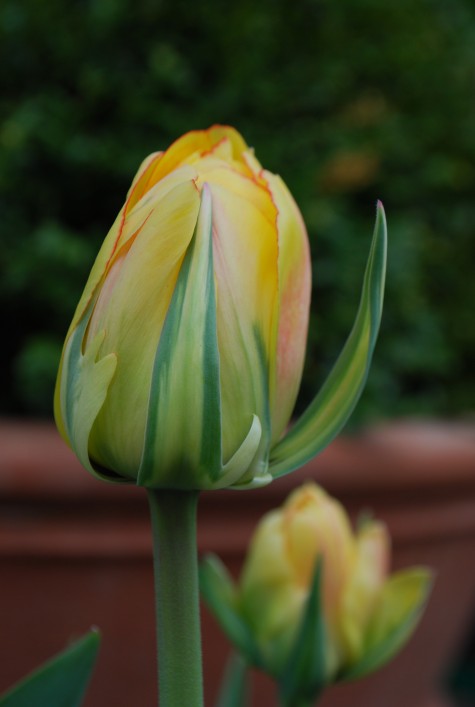
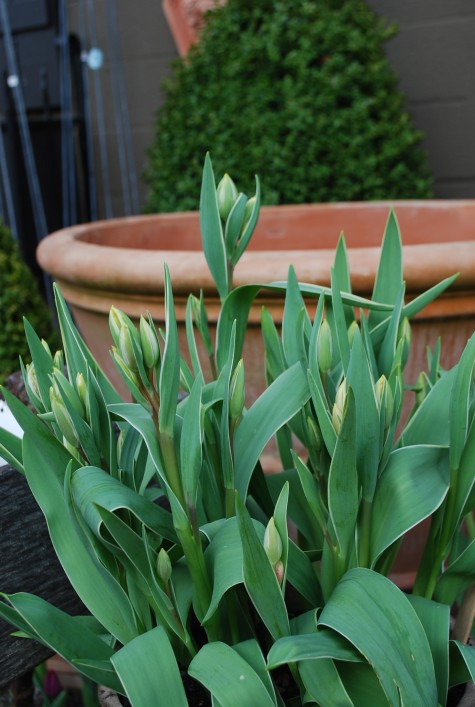
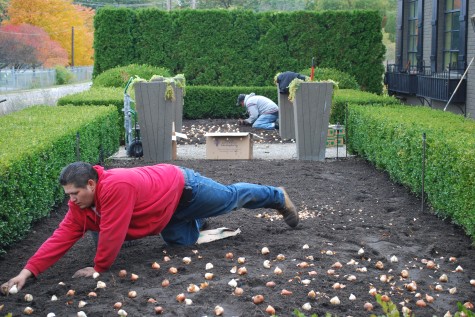
 They say delayed gratification is the most adult of all pleasures, so maybe I was being childish about the long hiatus between the planting and the blooming. But when spring finally comes, tulips deliver. It is no small miracle that those small white bulbs with their papery brown covers become a plant that can reach thirty inches tall or better, with strikingly large flowers. Even people whose vocabulary does not include the word “garden”, know the word tulip.
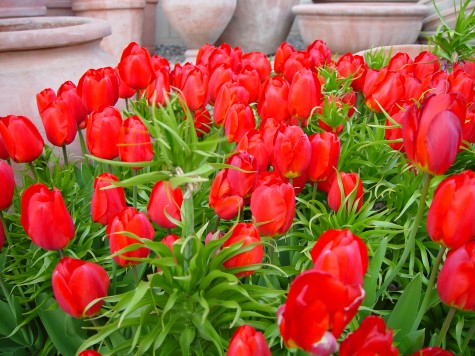
 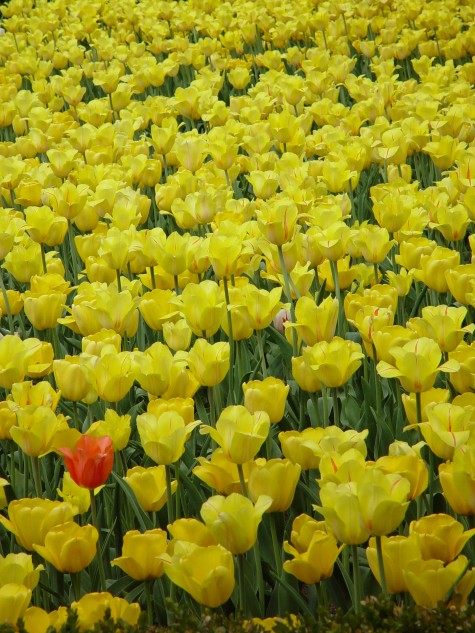 As is my habit, I welcome the one odd plant out in any mass planting. This ocean of Mrs. John Sheepers is all the better looking for it. The blooming of the tulips is one of those garden moments to be treasured. I certainly was not thinking about how cold it was the day I planted , on this spring day. My tulips shake off any late frost; most of any damage is to the leaves that appear early. They are remarkably resilient to rain and wind.
 Despite some literature to the contrary, I would not describe a tulip as a perennial. Once they flower, the top size bulb breaks down into smaller bulbs and bulbils. As flower size is directly related to the size of the bulb, a smaller bulb, or collection of will produce smaller flowers, or possibly, no flowers at all. In Holland, once the tulips have bloomed, the bulbs are dug up, sorted as to size and replanted for growing them back to top size. I do not want to dig tulips, separate the bulbs and replant; the Dutch do a much better job of this than I could. This is a long way of saying that I treat my tulips as annuals. When they are done flowering, I dig them and give them away, or compost them.
 Daffodils are a much better choice of a spring flowering bulb, should you have a requirement that your bulbs rebloom reliably. But they are not tulips. Treating the tulips as annuals permits me to plant them in places where I will later plant summer annuals. As I do not discriminate against summer flowering plants that are only able to grace my garden for one year, so why not have tulips?