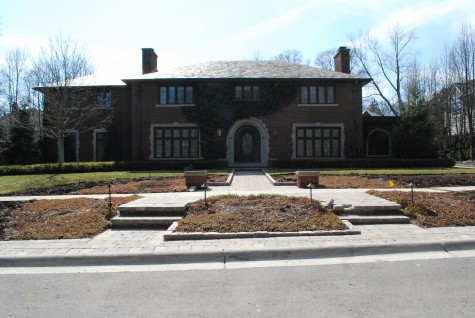
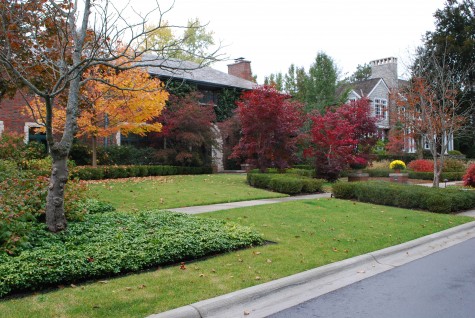
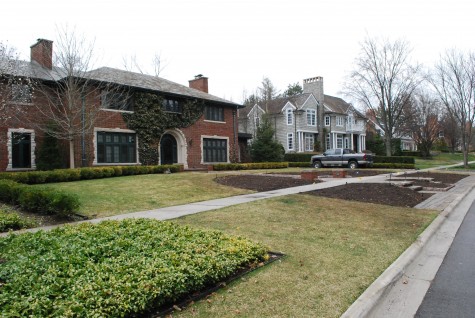
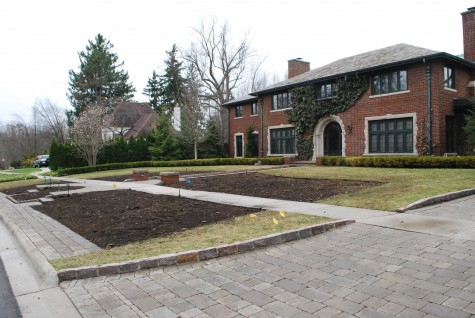
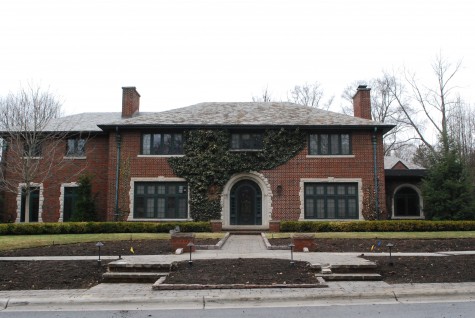
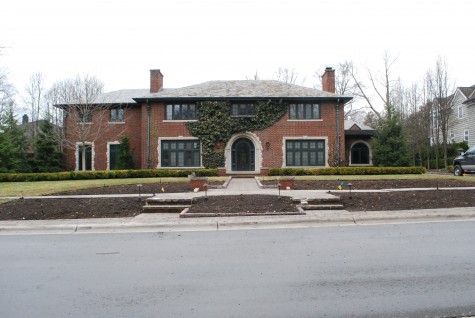
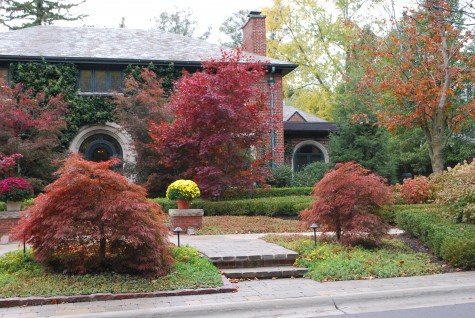
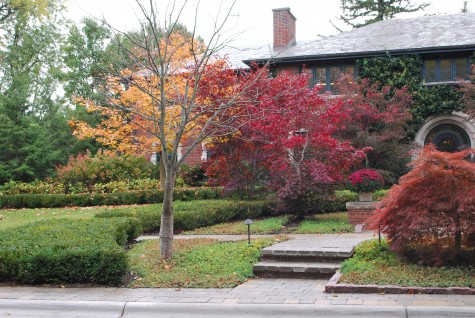
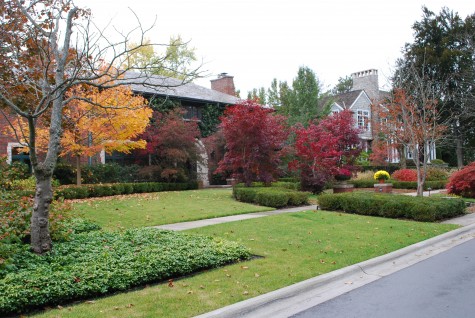
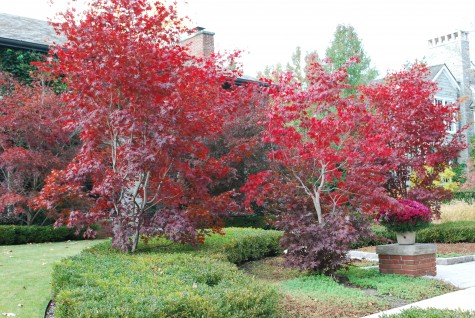
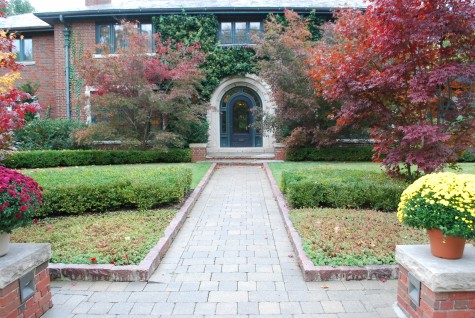
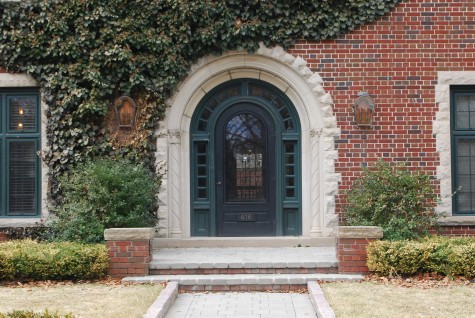
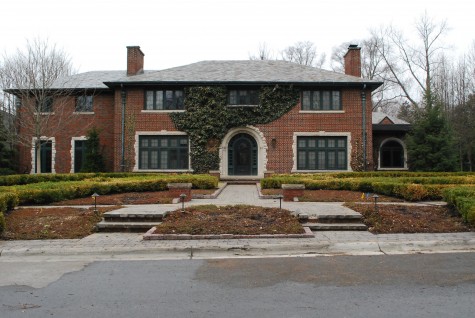
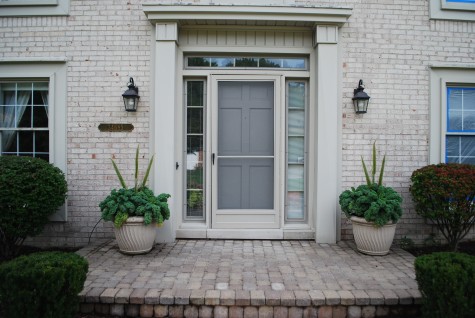
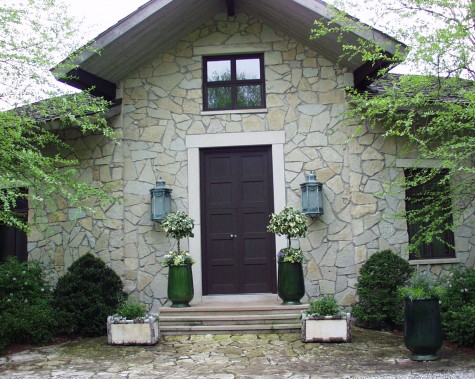
 I never use my front door-unless I am outside after work, watering my pots. If I am out there watering, the chances are very good that I will exchange hellos with people walking the neighborhood. When company comes, I am on the inside looking out. Why I would care how the landscape at my front door looks-simple. My friends are walking up that walk. We have a visit or a dinner planned. I have every interest in making that walk welcome them. It takes a little time to get to my front door from the street; any visitor has time to see what I have going on. The front door pictured above-my clients were interested in making a change.
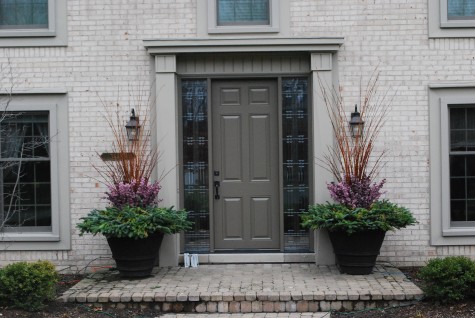 Making friends feel welcome is but one of the ways that my landscape gives me pleasure. My clients had the same idea. They changed the door and sidelights for the first time in twenty-some years. Their choice of a new door and sidelights-a beautiful update. Part of that update was a new pair of containers for the front porch. A porch generous enough in size to accomodate both pots and guests; I like the size of the porch. These chocolate stained concrete vase shaped pots, much larger, and much more emphatic-they make a statement. Purchased just in time for the winter season, we filled them with twigs, dyed eucalyptus, and a wide densely constructed nest of cut greens. The scale of the planters and plantings frames the front door in such a way to make the invitation read from the street. This also makes friends knocking on the front door feel welcome.
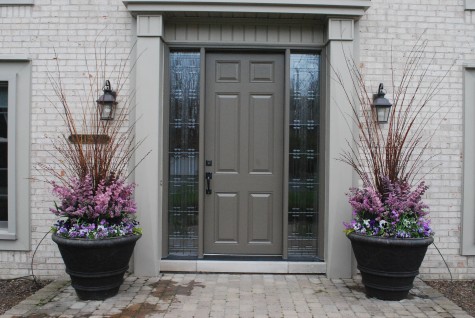 Just today, we planted these pots for spring. The winter centerpieces we kept. The height of the twigs, and the mass of the eucalyptus, are scaled properly with the size of the door, and the size of the porch. Guests approaching have a sense of the landscape at eye level-this is a friendly gesture. How I landscape places in my yard where friends come to visit-I like that landscape to put its arms around my friends, and say hello.
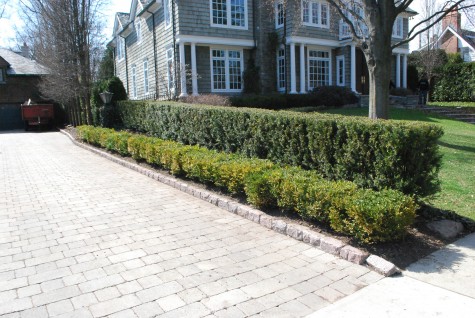
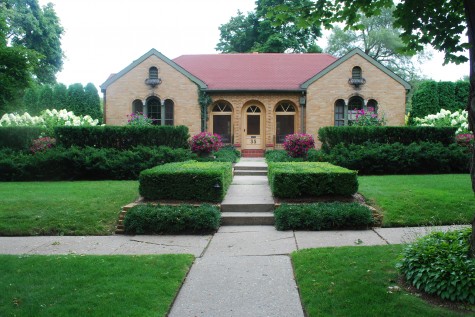
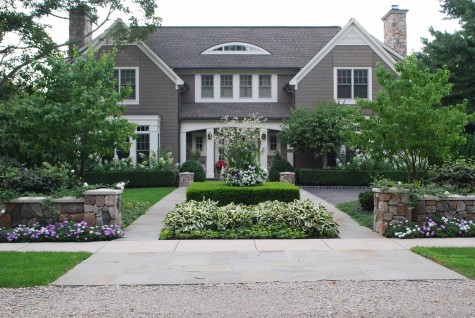 Some city gardens are built on very small properties. A conscious choice was made here-to block the view of the front door with a luxurious square of boxwood, dominated by an antique urn. I planted that urn very tall. How that planting obscures the front door makes the walk to the door an adventure. Front yard landscapes have much to do with the relationship between the public presentation from the street, and the welcome issued to family and friends.
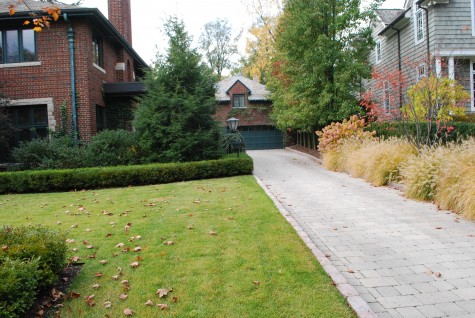
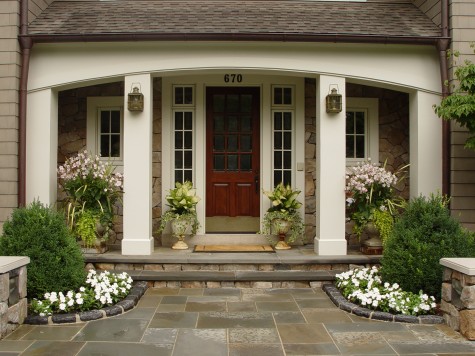 This front walkway behind that urn planted very tall is actually an extension of a drivecourt. A shallow porch benefits greatly from its overscaled width. I so like the decision to do four pots on a narrow porch. Everything about the numbers of pots, the placement and the planting influences to what extent you say hello, and welcome.
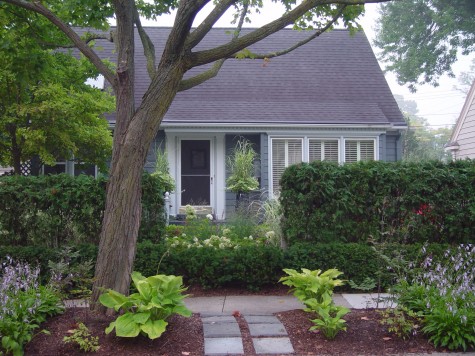 Some front doors are not symmetrically placed. A tall portion of wall existed to the right of this front door. A tall pot, barely visible here, is home to a planting of zebra grass and variegated plectranthus. The planting is at eye level from the street. The landscape successfully frames the front door.
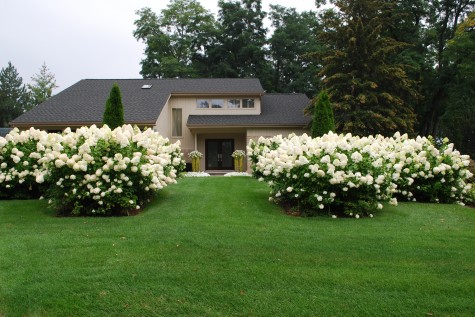 This client loves the big statement that her limelight hydrangeas make-they are glorious. The view from the street to the front door-a long view. Her contemporary faux bois selettes from France-they still read from a long ways away. Up close, a mass planting of white New Guinea impatiens is complimented by lime green creeping jenny-the creeping is almost 4 feet long, come mid July. There is no walk from here to there-but there is a view that engages the eye in a lively way.
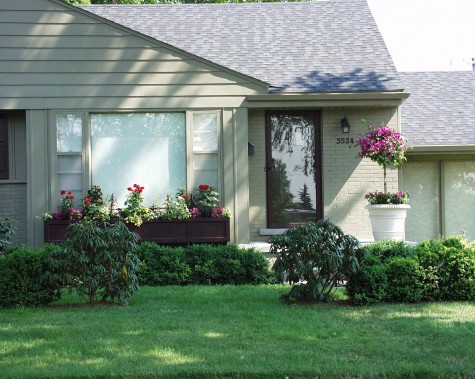 Not all porches permit pots placed symmetrically. One planter at the door can be every bit as strong as a pair. In this case, one giant planter is balanced by a substantial planter box. The landscape obscures the walk. This makes for a public presentation of the landscape separate from the private experience. I live in an urban neighborhood. This means I have concern about what I want to contribute to the beauty of the neighborhood, and how I might want to more personally welcome my guests.
The back door of my property sees lots of action. I load and unload the dogs every day-I park just 15 feet from the back door. We take the trash out. We come and go, and park here-all the time. Treasured friends come in the back door regularly. But my front door-the landscape and the pots-I have a thing about this special place. It is my obligation and pleasure to present as beautiful a presentation as I can. To the neighbors walking by. To casual visitors driving by. To special guests. On my mind is what people driving by, and guests coming up the walk-what do they see? What have I been so well mannered to put at their eye level.
Good manners? Any guest of mine, I do try to consider their experience first- before I consider my own. Beautiful pots, overflowing with plants, at the front door-this is no doubt a gesture of respect, and affection.