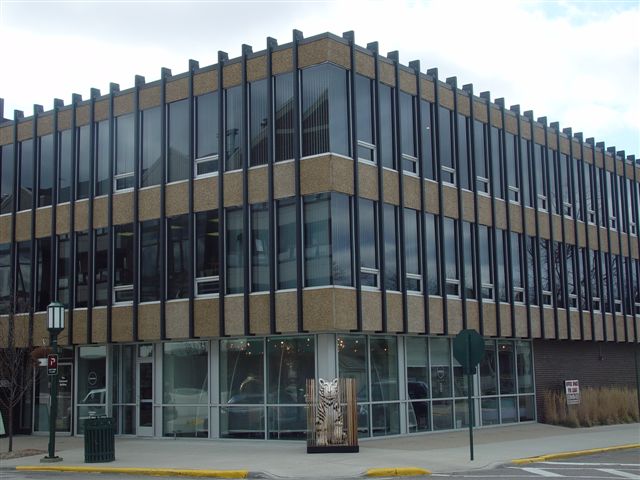
I love sculpture in a garden. Plants in a landscape, beautifully grown, can evoke awe, pleasure and respect for the beauty of nature. But like no other element of a landscape , sculpture is a product of human intelligence, imagination, and emotion, in a physical form. This sculpture I made for a community fundraiser; each participant was given a fiberglas tiger as a starting point for a sculpture, which would then be auctioned. I looked at the building-its color and its form, for an idea that would help me place it in that particular landscape. 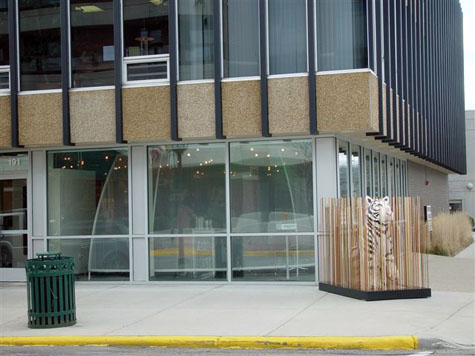
My tiger is camouflaged in varying heights of tall, grass-like, enameled steel rods. It looks right at home sitting in that ocean of steel and concrete-or does it? There is the additional suggestion that an urban landscape can imprison, or send running for shelter, all manner of living things-not just tigers. This is my imaginative construct, not a process of nature.
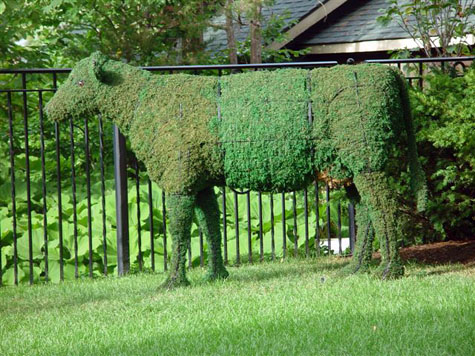
Thus I try to design spaces for sculpture that augment gracefully whatever feeling they elicit from me. I may design a small perennial meadow for a client who remembers growing up in a rural area, and has good memories of their relationship to that landscape-but one small sculpture may have the power to conjure that time , and imbue the landscape around it with that memory. I always ask clients what resonated with them, what precipitated their choice of sculpture. This helps to design the space for them in a way that has emotional meaning-not just horticultural meaning.
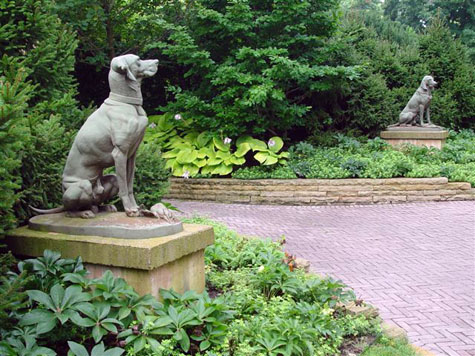
This beautiful pair of 19th century iron bloodhounds, cast by Alfred Jacquemart for Barbezat & Cie at the Val D’Osne foundry in France, circa 1865, are regal and elegant in their own right. The landscape designed for them is is tall, and thickly planted; the property is screened from any view, save straight up the drive. This pair stands watch at the driveway entrance; they speak to the emotional issues of refuge, privacy, and the safety of home.
The table and chairs reminiscent of gingko leaves and steel twigs and vines go far beyond utility to sculpture. Sculpted of steel, concrete and mortar, this is not just a place to sit. The viewer can imagine who might sit there, and for what reason. A crisply and simply designed landscape , with a beautiful shape of lawn, gives space to a sculpture that lets us see the world through the eyes of that artist. A table for 2, waiting for company and conversation-that’s a good description of of sculpture in a garden.

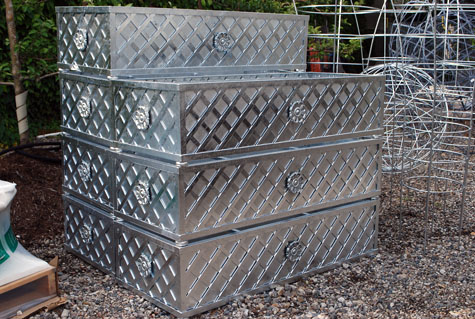
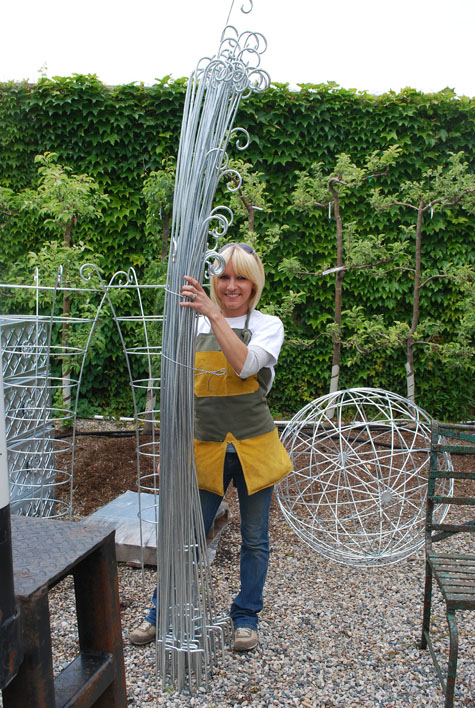
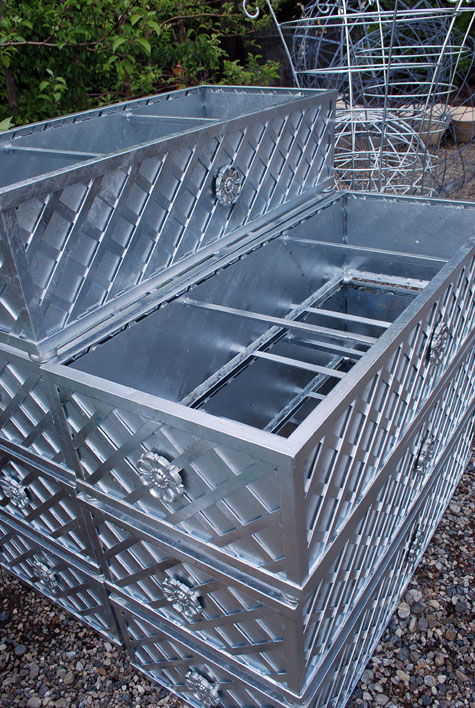
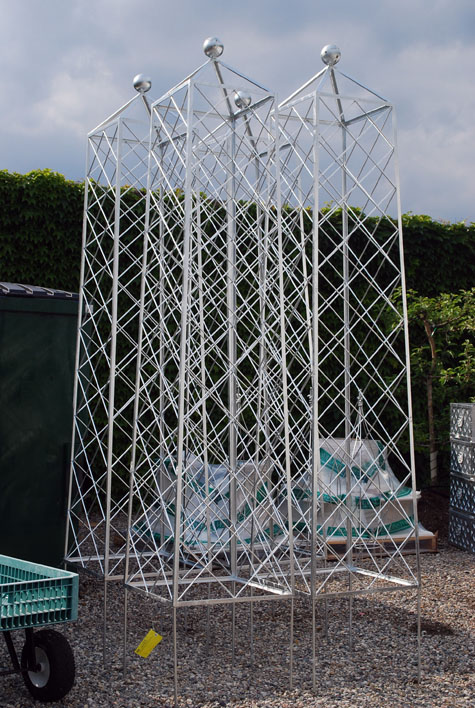
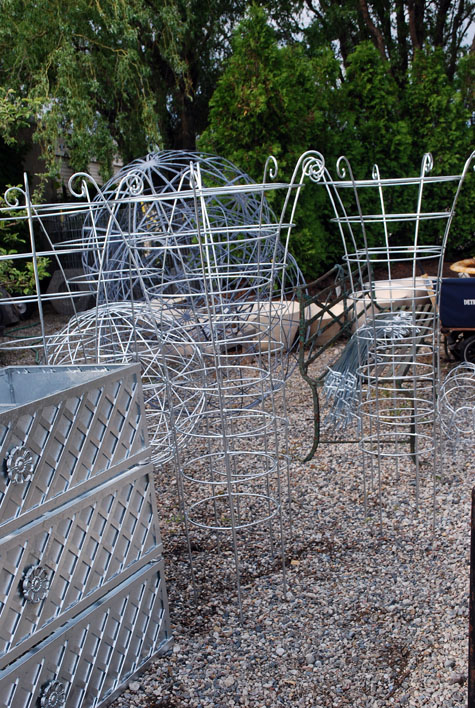
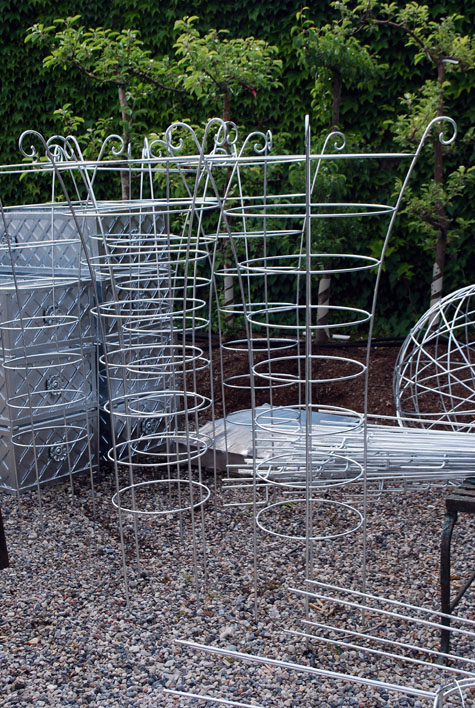
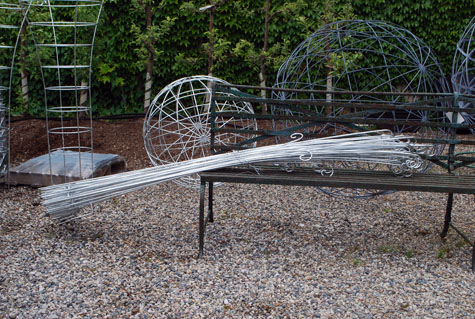 Why do plant stakes come to a point that could poke you, if you aren’t watching what you are doing? Why aren’t the tuteurs beautiful shapes??�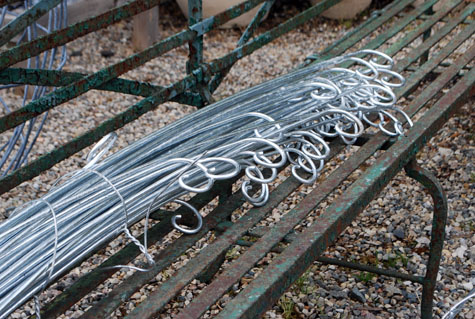
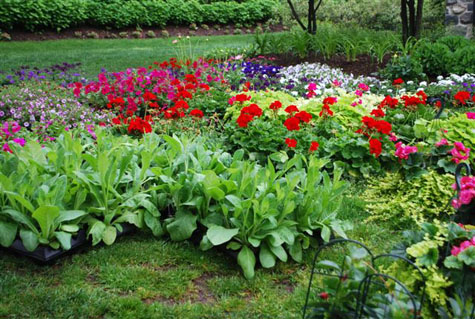 Thank heavens it has a different color scheme and feeling every year. My clients like tinkering with this as much as I do. Its plenty to plan-how many of this, and how many of that. Despite a fleet of trucks, we have plant material delivered. I invariably forget something, or think I have something reserved that’s not there. So we make changes.
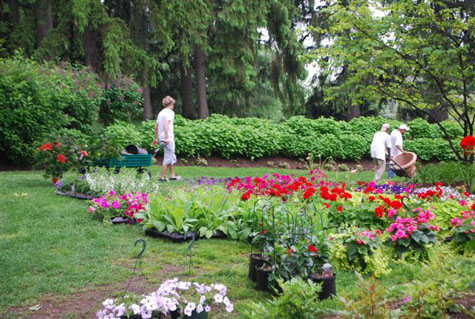 This works for us-photo copies of last years pots and beds have the new scheme written on them. I don’t need to do much for Diana after all her years, except list the plants. Should I leave something out, or have too much, she knows how to adjust.
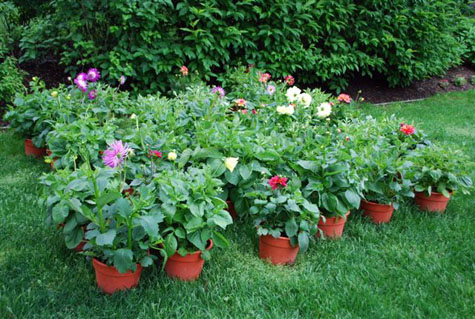 My client’s love of dahlias always presents transport troubles. This year Carlson’s greenhouse grew all the tall dahlias from cuttings. This makes the plant bushy from the start-as opposed to tall dahlias started from tubers. These short and chunky plants are easy to ship, and easier to plant. Let the sun and rain do the job of getting them tall, with those dinnerplate size flowers.
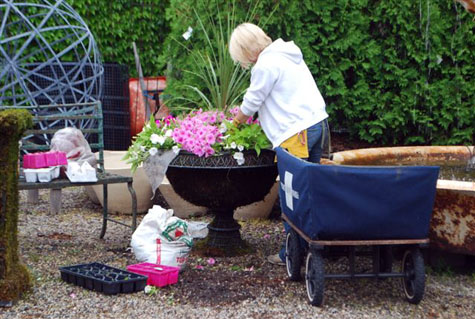 Giant wirework urns are mossed and planted at the shop; these get delivered, finished, and ready to place. As they are tall, and some are viewed at a distance, I plant simply, and with good contrast.
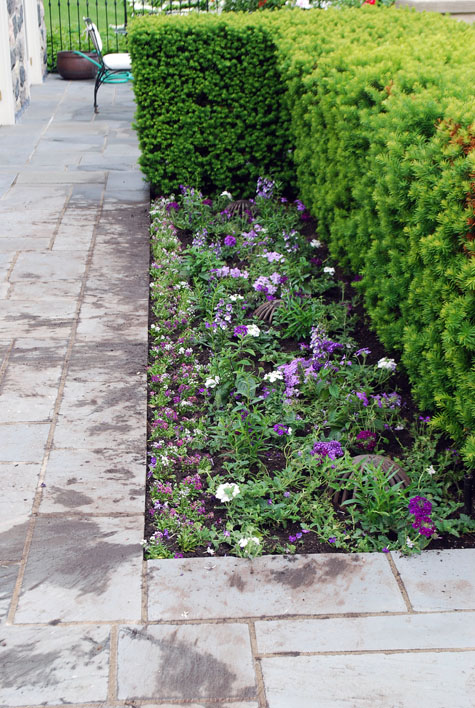 We plant beds backed up by mature and formal yew hedges with a low mix of annuals. The yews are not a backdrop; they are the feature. The little babble of trailing verbena and alyssum, heliotrope and angelonia is in stark contrast to those massive dark green yews.
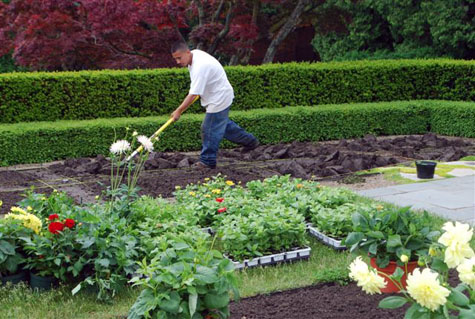 We plant mandevillea vines, tropical hibiscus trees on standard, zinnias, New Guinea impatiens, and the dahlias-all in response to my client’s love of big flowers.
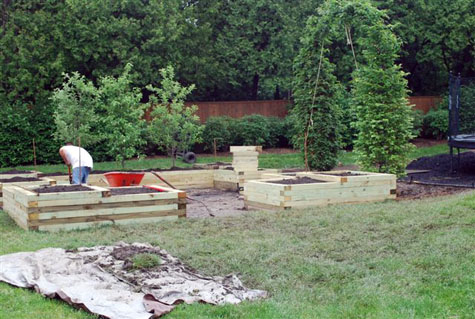 For years we have planted the vegetable garden in giant fiber pots. This year we have a formal vegetable garden under construction-the highlight of which is a European beech arbor 14 feet tall.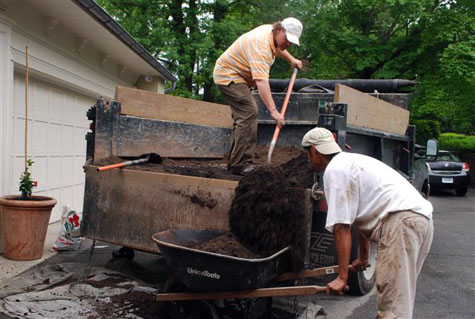
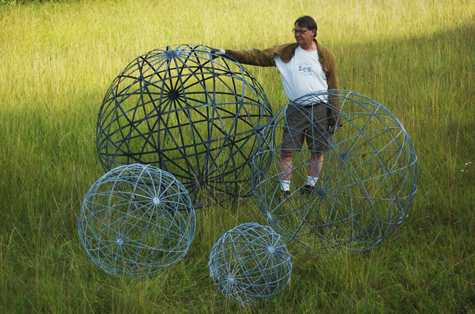
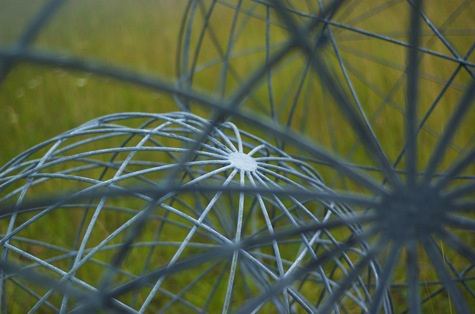
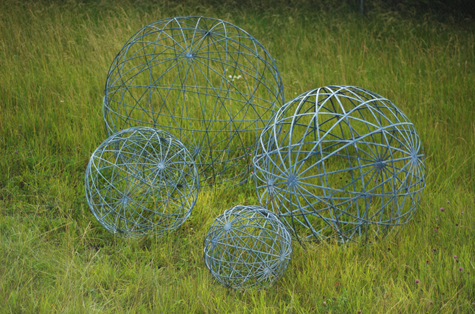
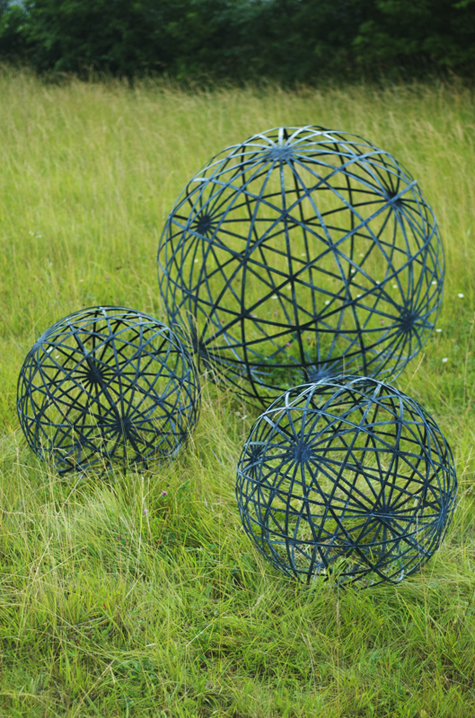
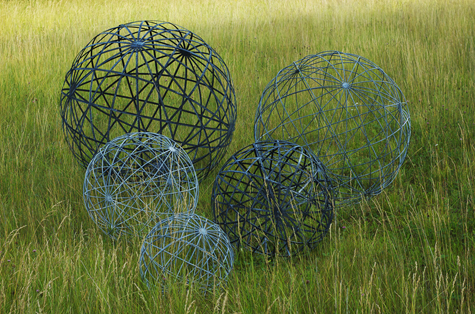
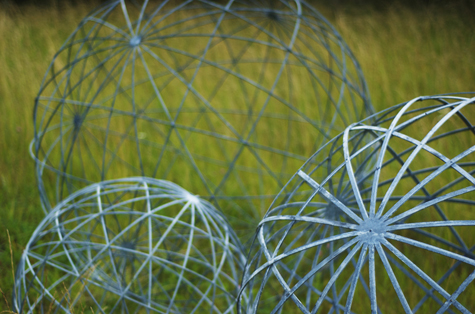
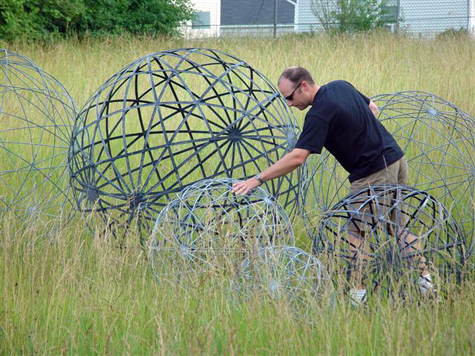
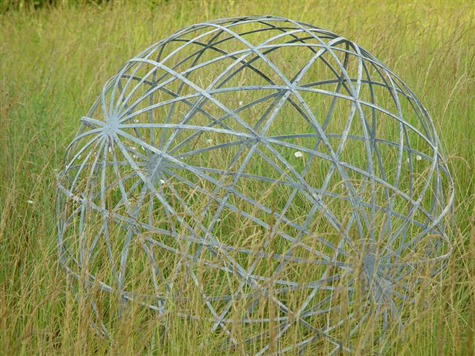
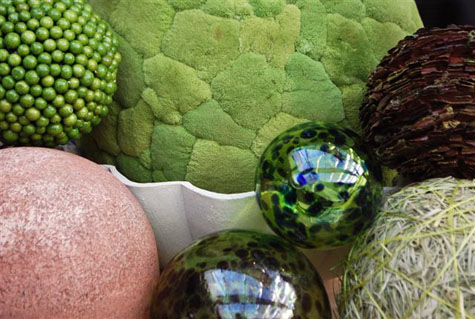 Though I am fond of almost every geometric shape, I am especially enamored of spheres. Spheres in any material or arrangement.