


Deborah Silver is an accomplished and experienced landscape and garden designer whose firm first opened its doors in 1986.
 We’ve had a run of unseasonably warm weather that has helped to make a major overhaul of the outdoor spaces a lot easier. We have another week yet to go on that giant project. But today the rain blustered its way in-not that I mind. The front gardens have tulips sprouting; I like to see them get a good drink once they break ground. Weather is an important design element in garden making-I feel lucky for this. Barring distructive weather, I like how nature changes the channel. It is so interesting to see what the rain makes of how we have put the collection together.
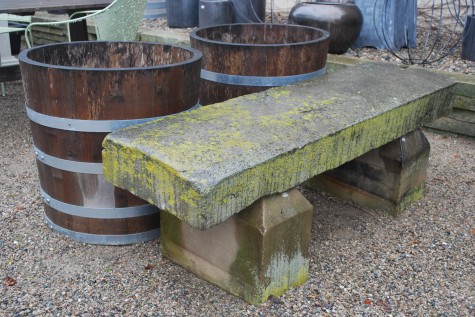
I am likely to keep writing for a while about collecting-its part of what I do. I also have a keen interest in how and what gardeners collect. Collections are somewhat about scale and emotional cache-100 beans of assorted varieties on display has a much less dramatic impact than 100 corgis running. This probably accounts for why I do not have a hellebore collection-I have masses of white and green hellebores of varying species and cultivars. The mass makes the statement, not the specific plant. I am sure you know by now I am not a plant collector-I have other things in mind. As in the relationship of these modern Belgian elm barrels, with this 19th century English stone bench. Round shapes versus rectangular-there is a face off right up front. New and old in proximity-interesting. The rain makes much of, and magnifies color relationships. The galvanized steel bands on these barrels repeat that wet limestone grey. A satisfying discourse here.
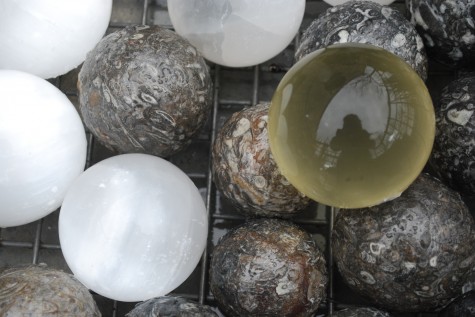 The music of the spheres-I am a fan. I collect them-to this I confess. What gardener could pass up an allium? I have spheres made of grass, steel, seed heads, limestone, boxwood, mineral; there is something about the stability and beauty of a sphere that makes them so satisfying in a garden. These stone and glass spheres-where might they find a home? In the landscape, or on the kitchen table-take your pick. Rain wet stone, by the way, is really beautiful.
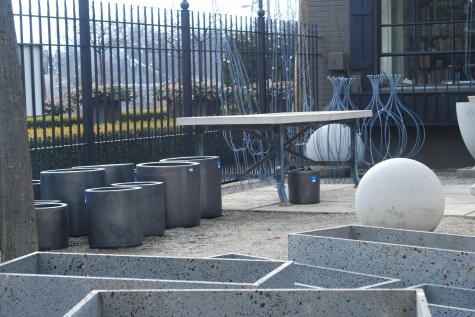
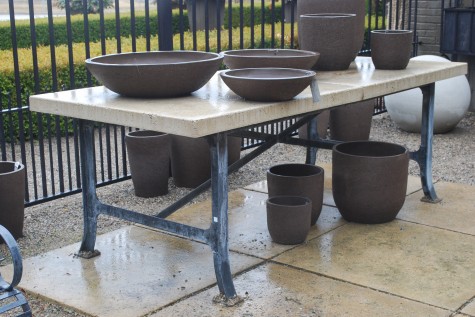 Some elements of the spring collection get here strictly on the basis of their presence-on their own. You shut your eyes, and cross your fingers, that when a collection of pots arrive, they make themselves at home, without going sleepy. I value anything that asks for my attention in a strong way. How they come to make friends at the shop is a process of trial and more trial. This Belgian steel garden table with a concrete top works with these dark and textured pots like I hope for things to work. The late light on the rims of these pots recall the blue steel. The relationships between the shapes-music. The drenching March rain makes every gesture look better.
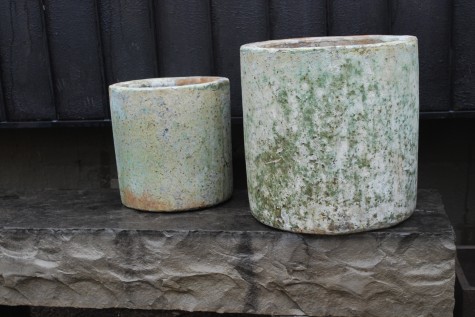 I have some very chunky and fluidly finished granite benches-from our neighbor, Canada. Stone so thick and expertly rock faced-beautiful. Those rustic cylinders I have been writing about-you are seeing their wet incarnation. These objects make for a relationship that will attract attention. Once I see a gardener fall for something, I understand the process of deciding how and where that object might fit.
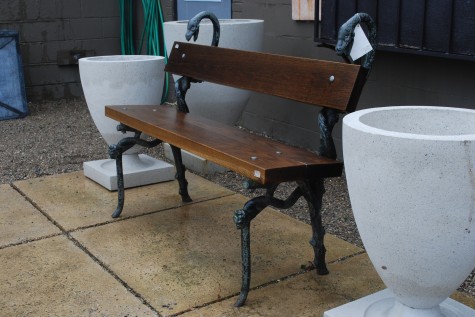 A pair of very old forged steel snake bench supports-I forget how I came by them. Buck made a new back and seat from white oak, and put back together what age and neglect threatened with a trip to the scrap yard. These old snakes look handsome in concert with these dry cast limestone deco urns-don’t you agree? Someone will come along, and love this look for their garden. There might be something about it that adds to their collection.
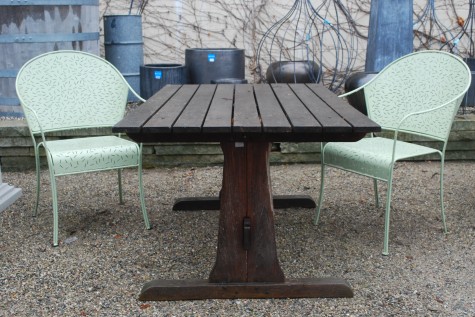
We have shopped for garden ornament in England regularly for the past 15 years. Their garden history I greatly admire and value. What we retrieve and bring over always seems to move in with us -without fanfare. This vintage English trestle table is home to plenty of diminuitive plant species of the lichen/moss sort-a gorgeous old garden table. Is this table appalled by its complement of French contemporary chairs-not in the least bit. The Brits-the gardening Brits-really friendly.
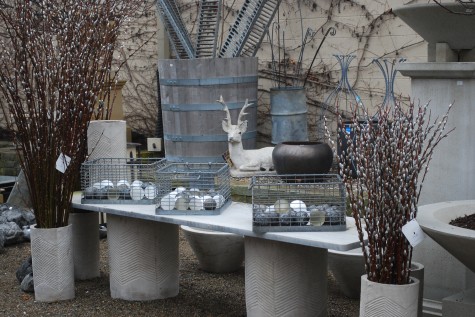
Anyone who collects devotes lots of time and thought to their collecting-I am no different. How a garden collection I put together gets integrated into a garden-this is all about what it is to have a relationship with other gardeners. My gardening community-I would not give it up for anything.
 Creating and arranging a collection is a passion known to many, not just gardeners. Even the most hard line minimalist collects their empty spaces as if empty spaces were on the endangered list; yes? Gardeners collect seeds, tools, hellebore cultivars, rocks, birdfeeders, trees-you get the idea. I have amassed a collection of books in the past 25 years that must number over a thousand volumes by now. It is a long standing coherent collection documenting my adventures as a gardener. Putting together and arranging a coherent collection for my shop is a big part of being able to advise people about how to design their gardens.
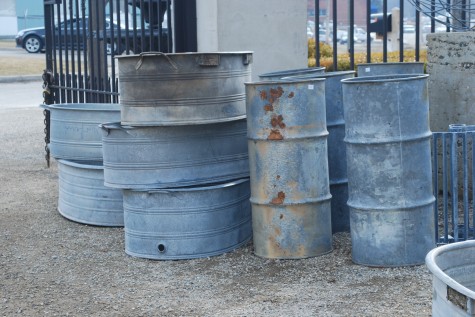 Every year’s collection for Detroit Garden Works is different. It might be based on one particular object whose size, surface, shape or style or aura proves to be a magnet for Rob’s attention. Alternately, his basis for a collection might be triggered by a place he has visited or an idea that’s surfacing. We made a conscious effort to shop the US for antique, vintage and new things a few years ago. Thus the collection always has a strong American element. An organizing metaphor-we like these. His point of view about what is beautiful is a catalyst for a constellation of pots, sculpture, prints, garden furnishings, fountains-any object which might evoke a little magic for a garden.
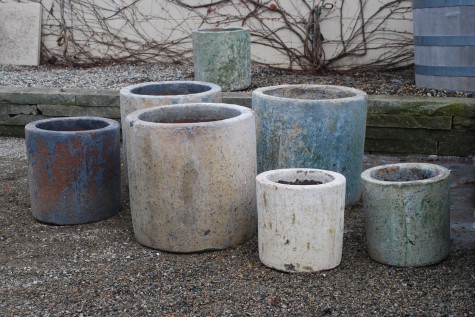
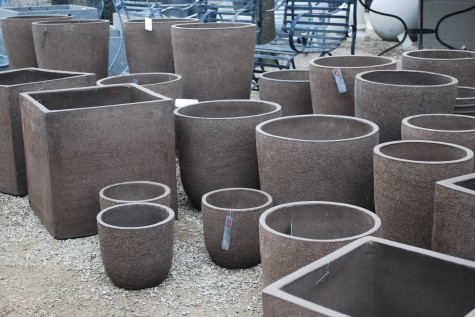
These clay cylinders are all about what Rob calls a chamaeleon surface. In addition to their gritty texture, the color changes given the light. After last night’s rain, the color was saturated and rich-different than their dry color. Mineral surfaces exploring color and texture such as this will be friendly to no end of different kinds of plants. Pots of simple shapes makes the color and texture the most important element. These pots will take on the atmosphere of its placement, and plants, and play a serious supporting role in big visual scheme of things.
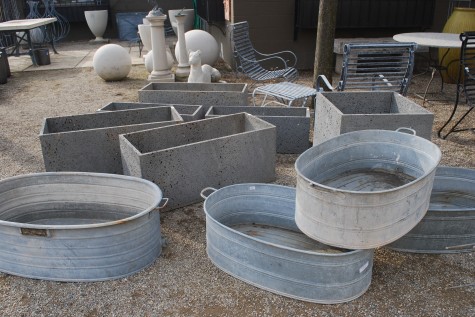 These rectangles made from thin slabs of volcanic rock are close in color, shape and size to these oval galvanized tubs. Their differences give the eye a workout. I am seeing his idea become tangible. A collection of objects of simple and varied shapes distinguished by their interesting surfaces are what I would call a visual variation on a theme.
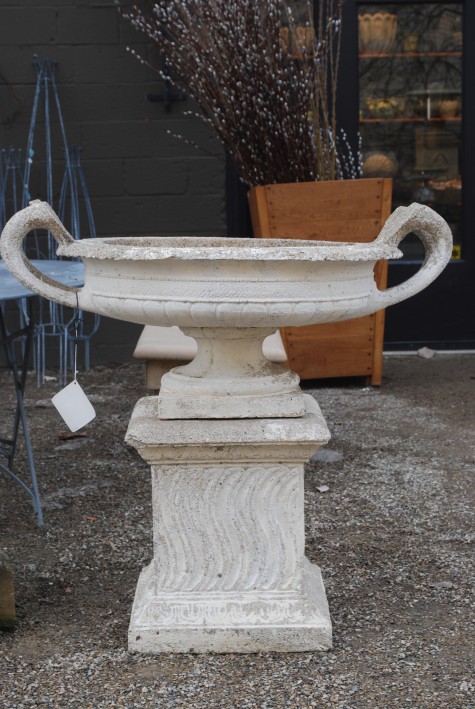 A pair of very old and fine American urns and pedestals dating from the early twentieth century focuses my attention on their shape and surface-and away from a historical label. In another context, I would see them as very traditional American garden ornament. In Rob’s context, kept company by a family I would not have imagined, I am looking at them in a different way. The impossibly wide and low shape of the urns, the simple swirls indented in the pedestals-I am thinking about the universality of beautiful objects for gardens-never mind their age, period, or label.
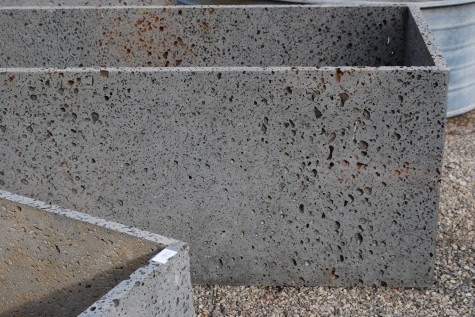 Volcanic rock in its natural state-this I am used to seeing. Volcanic rock slices are a product of modern technology. I have not seen this before. The intersection of ancient materials transformed by modern technology-Rob has gotten my interest. This I admire about him so much; he posits lots of questions to whomever might be interested- without fanfare. He assumes that gardeners are a group in touch with the physical world, and provides them beautiful choices. Alternative choices.
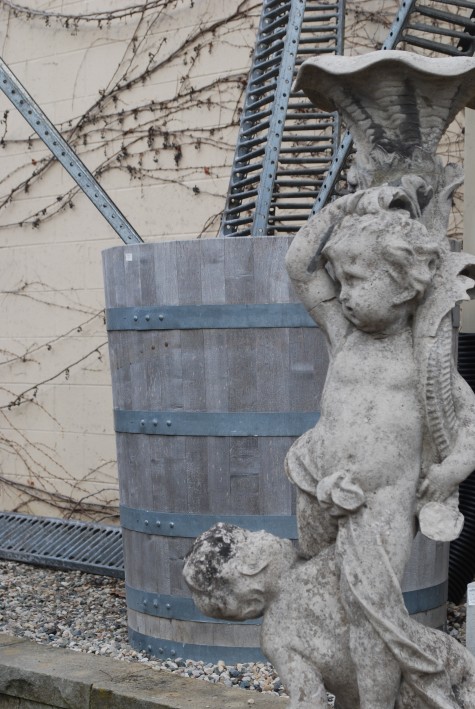 This Austin and Sealey sculpture from 19th century England was minutes from being moved as I took this picture. I liked the old hand carved stone backed up by a contemporary Belgian elm barrel-why would I go there? I am looking at shapes and surfaces without regard to the sentiment of a given period-many thanks to Rob. It is the best of what I have to offer as a designer-a gardeners point of view, without any predicatable baggage.
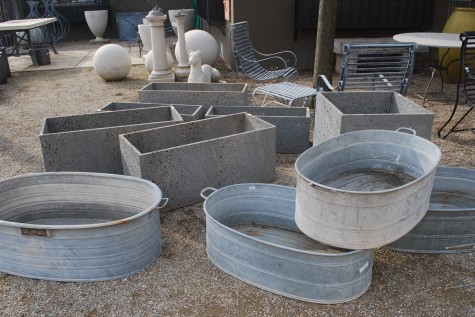
A major reconfiguration of the shop is a major effort. We do this every spring. Spaces get emptied, cleaned-raked and ready to redo and live new- a dream come true. Every new gardening season warrants new thinking-we try to oblige. The driveway is congested with things from this show or that, that source or this vintage shop in Virginia-if you have an interest in how Rob spent his winter, come and look around.
I do not have to do that much work to figure out where Rob is going; not really. No one could possibly love their I-phone as much as he does. The internet/photo capability of that phone has set him free. I get indundated by the photographs he takes-everywhere he goes. client’s homes. trips. vacations-ok, busman’s holidays. buying expeditions. random thoughts. By the time the winter is coming to a close, I have a huge photographic record of his collecting. He prints and posts the pictures he has sent me on a big wall in the workroom. I have advance warning. But this does not truly prepare me for what gets unloaded here in the spring . The evidence and impact of his collecting-it will take me a season to absorb.
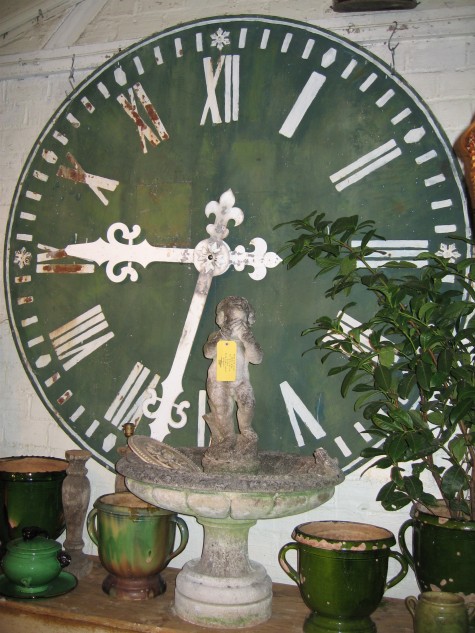 The watch I have had strapped to my wrist my entire working life is a marvel. In spite of the heat sweat water and dirt, it churns on. This little workhorse enables me to to organize and schedule any number of things. Being off or behind schedule can be trouble; ahead of schedule-this I like. Around January 15, I take it off for 6 weeks, and let my internal clock handle the day. Landscapes have long been host to various mechanisms for telling time. The old clock face pictured above was salvaged from a monumental public timepiece in a Belgian town square, due for refurbishment after many years of service.
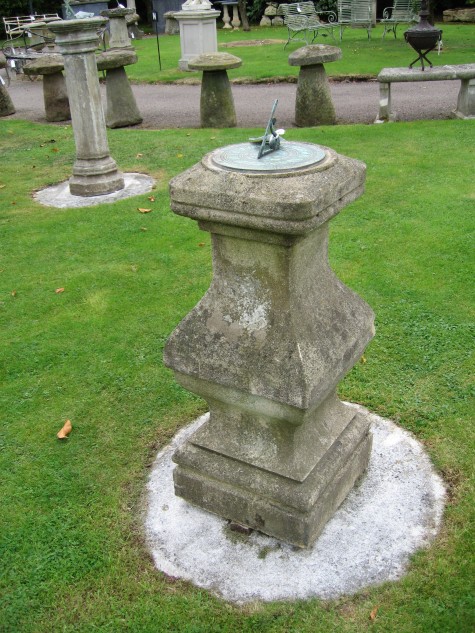 Sundials vastly predate the invention of watches and clocks; ancient cultures told time via the position of the sun in the sky. The device needed to be positioned in a sunny place in the landscape. As they are big chunky scientific instruments, people constructed them to be beautiful, as well as utilitarian. The dial portion of a sundial is small and unassuming. A flat plate was engraved or otherwise etched with a clock face. The triangular shaped gnomen set into the plate would cast a shadow from the sun, onto a different mark on the plate for every hour, or portion of an hour, of any given sunny day.
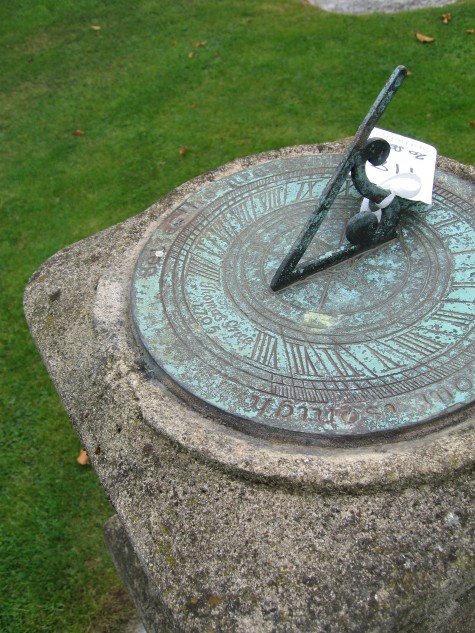 The engraving on the plates was often quite elaborate. This plate is engraved with the hours in Roman numerals; each numeral is further subdivided into increments of an hour. This plate is a beautiful drawing about time. The name and date- Thomas Grice,1705 might refer to the artist who engraved the plate, or the person’s garden to whom this sundial belonged.
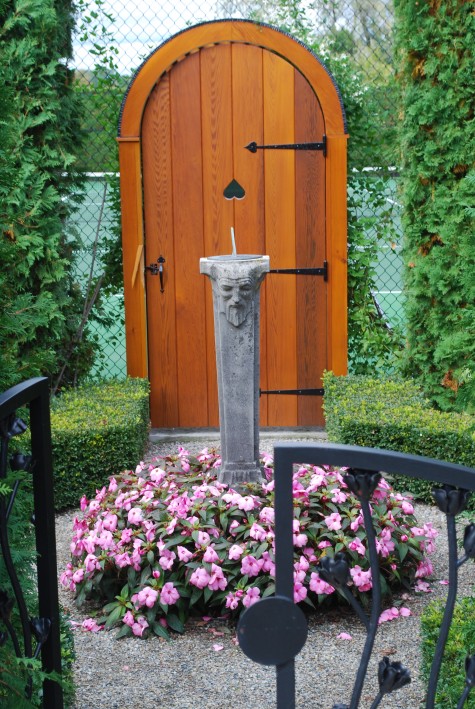
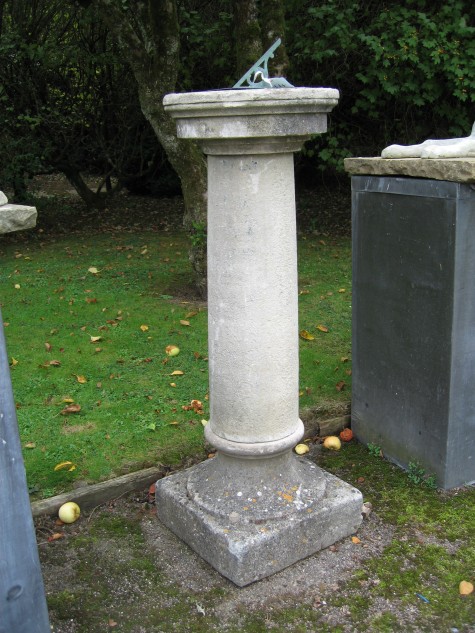 As the sundial needed to be placed in a level spot with the gnomen, or needle, set due north when the sun was directly overhead, the base needed to be sturdy, stable, and equally as lovely as the plate. This handcarved stone baluster sets the plate at 50 inches above grade-right at my eye level. Inscribed in spidery script, ” Let others tell of storms and showers/I’ll only tell your sunny hours”.
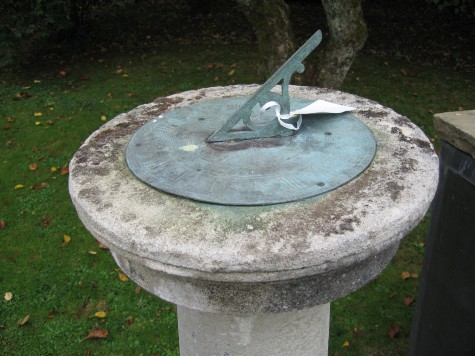 As a time telling device, a sundial has become obsolete. As a garden ornament, they are unmatched for their quiet beauty and dignity. They are as at home in a kitchen garden as a formal boxwood parterre. They refer to the ephemeral nature of life, and the repeating cycle of nature. I have never seen them made of materials that did not suggest permanence. Modern makers have expanded upon the traditional materials to include stainless steel, glass and mirror, but my favorites are the pieces dating from an age when they were still in use.
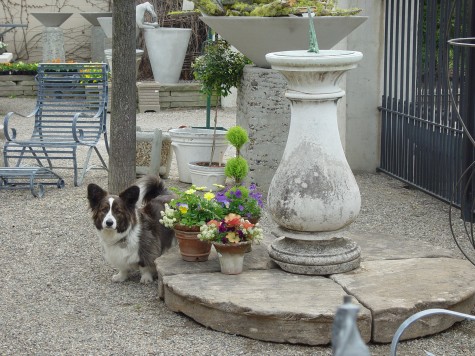
It is hard for me to believe that this sundial and base graced an English garden in the mid nineteenth century. It seems so unfazed by the 160 years it has been recording the movement of the sun in the sky. Michigan is not know for its sunny days; sunny winter days are scarce indeed. I have no need of a sunny day to appreciate a garden ornament of this caliber. I am also interested in how this object was part of another place and another time; there are days when I long for just that state of being. Garden spaces made from that longing have a special atmosphere about them that resonates with me.
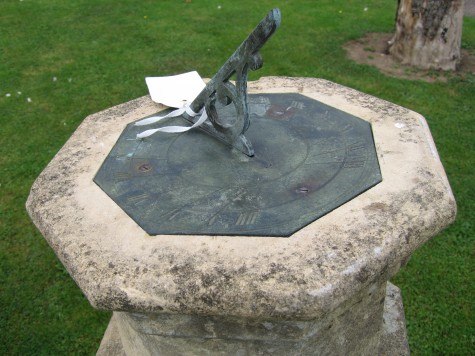 This collection of English sundials vary greatly in their details, but all of them are remarkably intact, considering their age, and exposure to weather. I am sure they will all find a new home in a treasured garden space.