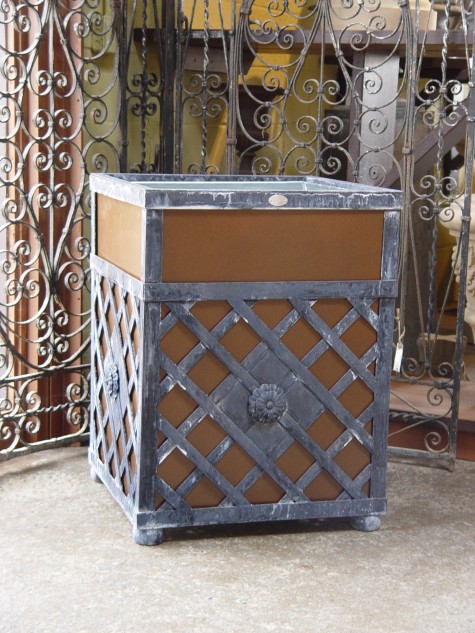
 Lattice refers to overlapping strips of wood or metal joined on the diagonal. That placement produces diamond shaped air, or empty spaces; the steel or wood forms a continuous series of X’s. How hard it is to describe in words a shape any gardener would instantly recognize in the garden. Lattice patterned fence panels, screens, and trellises have graced many a garden. That diagonal construction is strong. The large open spaces make it an ideal home for vines that benefit from having places from which to grow in and out. A lattice screen lets air get to the air conditioner while shielding its bulky steel from view. A lattice fence provides a kind of privacy that is casually airy. Why box yourself in, if you don’t need to? Of course I had a mind to design a lattice box. My first try featured a button medallion set in a solid diamond. Should you look carefully at this diamonds, they are perfectly scaled for the size of the panel, and perfectly constructed-all of that is Buck’s doing. The liner is made of extira board-that water repellant rot proof composite material from which signs are made.
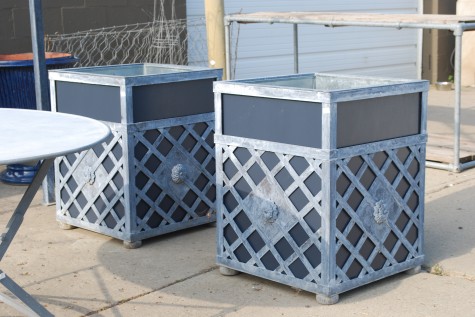 I know, that first box has something of the look of a Brownie camera-a steel framework around that Brownie camera brown board. The next boxes featured painted extira board. We always use Porter paint for any ornament outdoors-their 100% acrylic paint is tough as nails. The plain rectangular shape at the top did a good job of featuring the lattice pattern, without it becoming visually overwhelming.
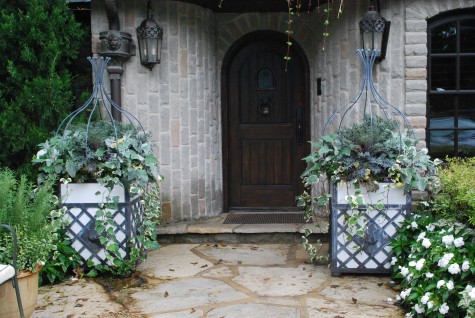 This client changes the color of his liners every few years. The ability to easily and entirely change the look of a container is appealing. I have one client who had us paint the reverse surface of her liners cranberry red-for the holidays. The liners are actually 4 separate pieces that drop in behind the lattice. A finished frame at the top covers the raw edges of the board, and makes for a completely finished appearance.
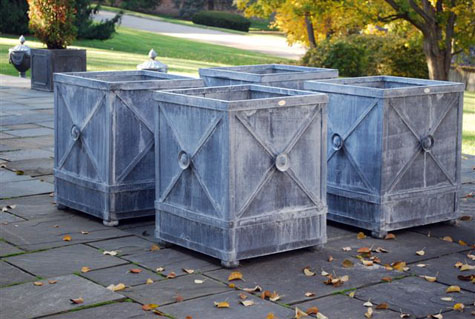
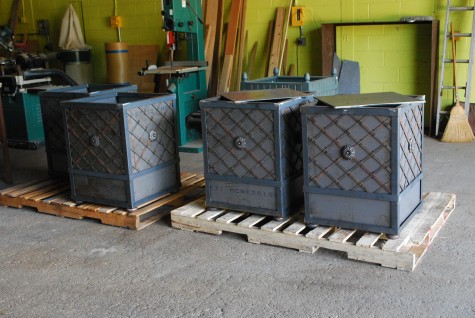 Years later, I have moved the plain rectangular planter to the bottom. I cannot explain why I like this so much better, but I do. These tall boxes look grounded, not top heavy. They have an elegant air, to my eye. We make square lattice boxes, but some gardens ask for a little height. This picture records the first four all steel lattice boxes Buck has made for the Branch Studio. He just finished them 2 weeks ago. There is a way in which these four boxes have been 7 years in the making. I can only say thoughful design takes time; the design and construction of this container has evolved over time.
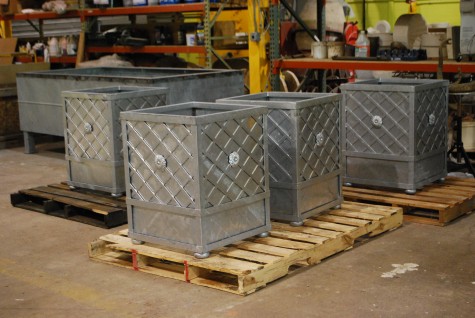 Buck welds what are called squashed ball feet to the bottoms of these boxes. The squashed balls give the visual impression that the box is very solid and very heavy. Those ball feet gone flat are one of my most favorite features of this box. They are what they appear to be-in the business of beautifully and strongly supporting the life of citrus trees, topiaries, or flowers.
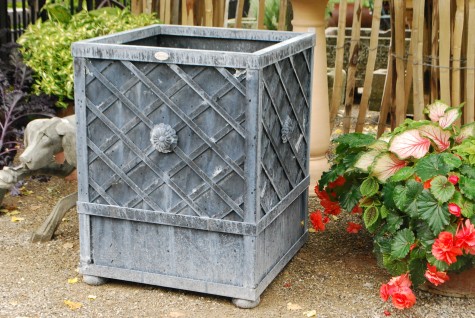 Once the box gets its final finish, I am pleased to be thinking about how they will outlast me. They will last my lifetime, and others beyond me. The fabrication of this box gives me the same pleasure that I get from planting a tree.
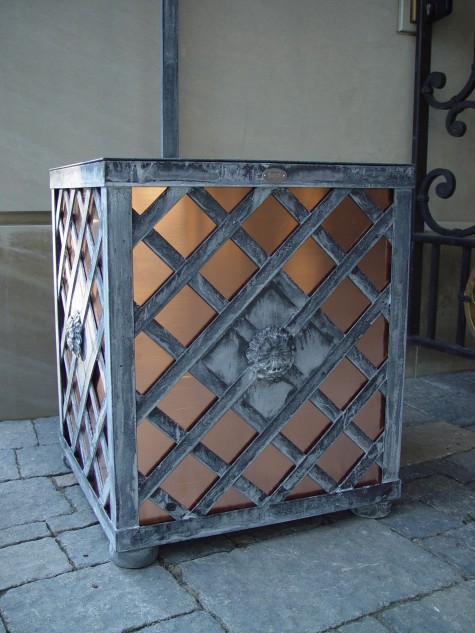 Buck did fabricate a number of steel lattice boxes with copper liners. All I can think about looking at this picture is a copper lattice box with a steel liner. How would that look? The very best part of gardening is how a garden evolves. The best part of the creative process is that the process is never finished.
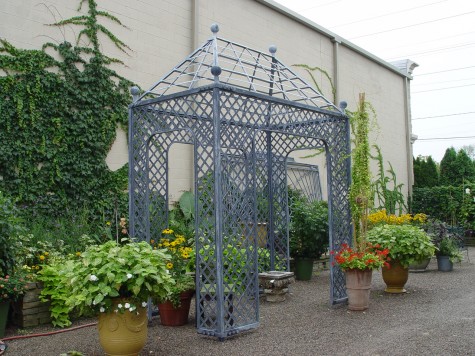 Buck made this steel pergola for the Branch Studio years ago. I am sure it looks much the same today as it did then. Sturdy and enduring objects for the landscape enchant me. I like any garden ornament draped in some kind of story, or history. My respect for the history of gardens and their ornaments fuels my design. I am always wondering where I might go from there.
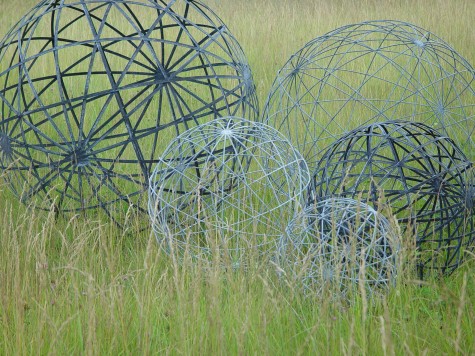 Buck went there, all on his own. He had a mind to construct a series of lattice spheres. They are amazing and beautiful structures. How he imagined and fabricated a lattice structure in the round-way beyond my ability.
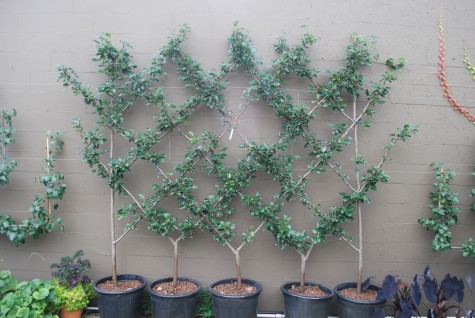 Since the fifteenth century, fruit trees have been grown in a two-dimensional lattice known as a Belgian fence. I sold and planted this group of five latticed pear trees two years ago. One cannot see the lattice structure at this moment-every tree is studded with pears. My gardening life-equally studded with pears.
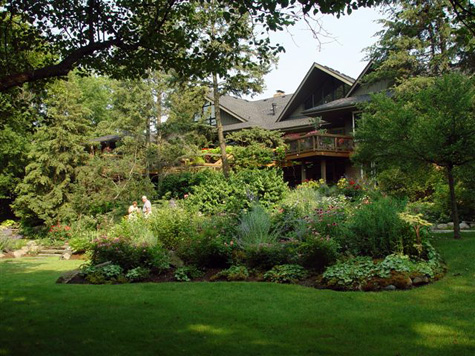
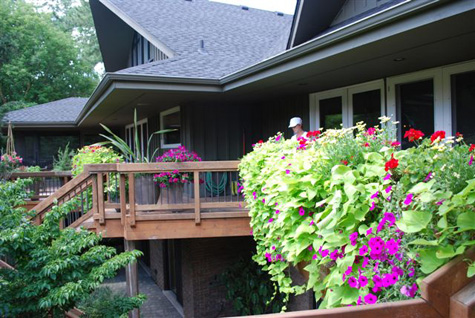
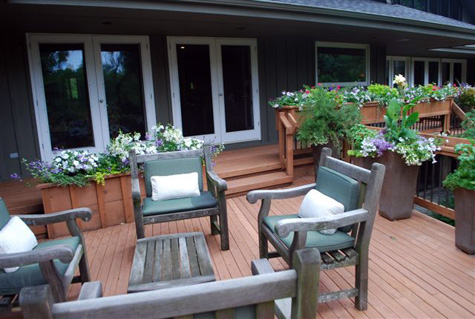
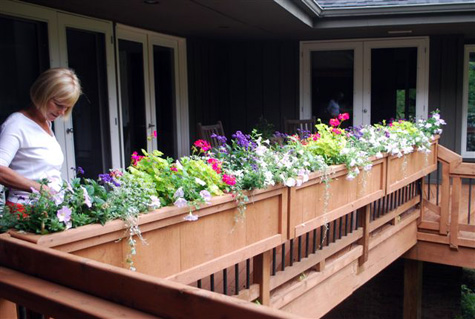 As I said, she is a client that encourages me to be the best I can be. I am a very lucky designer.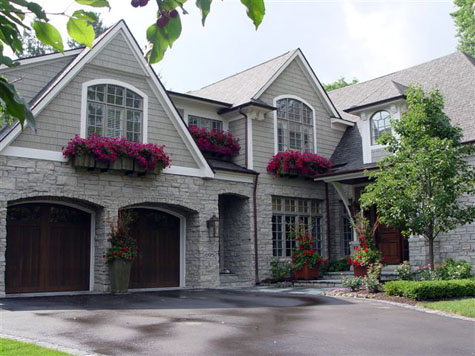
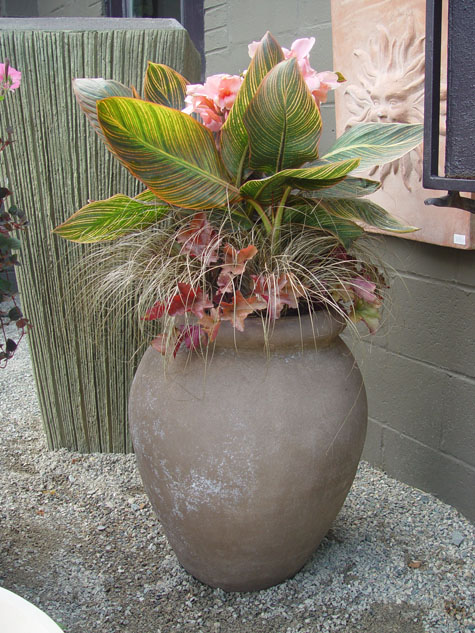
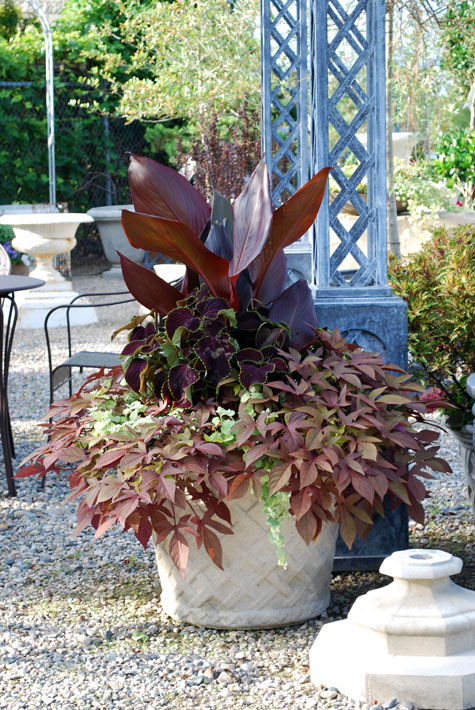
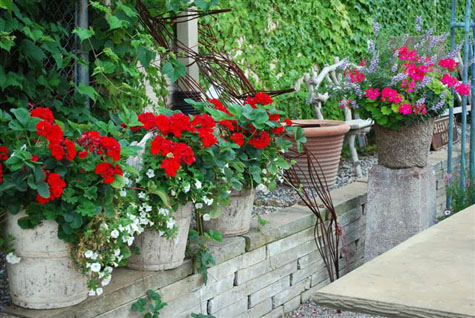 Once you plant an old galvanized bucket with geraniums and strawberries, the eye sees that object in a different way.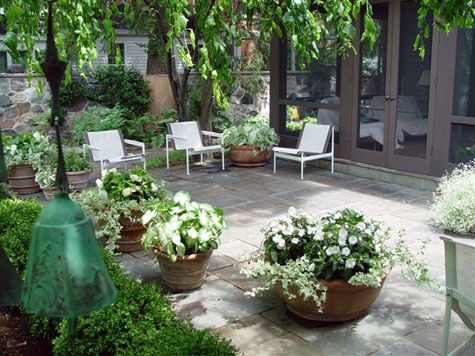
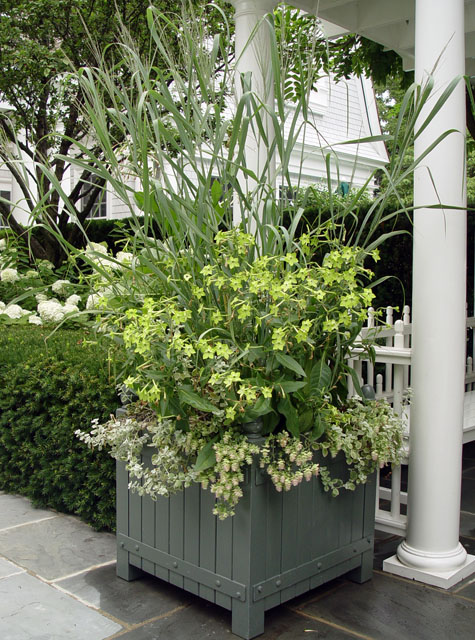
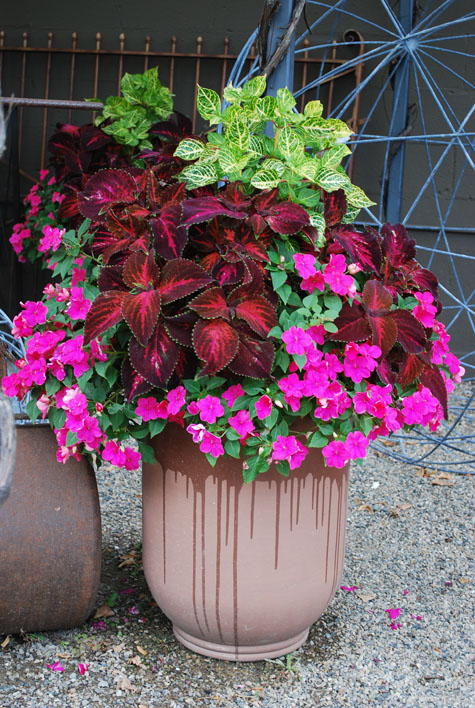
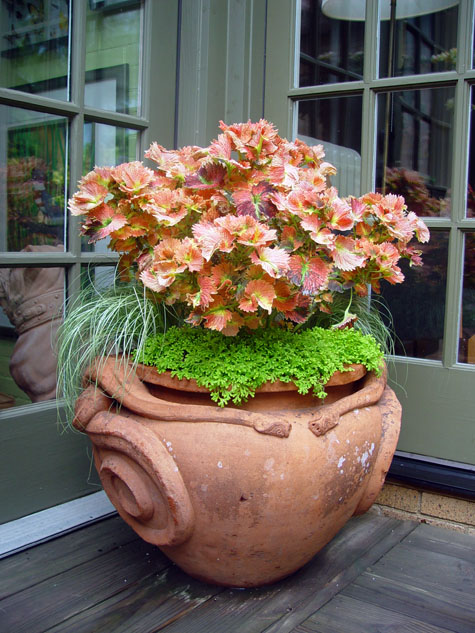 It was a 50th birthday present, from me, to me. Every time I look at it, I feel the history of the object, and my own garden making. It is the emotional equivalent of a trip to Europe, touring other gardens, whose pots tell me something about the gardeners who planted them.