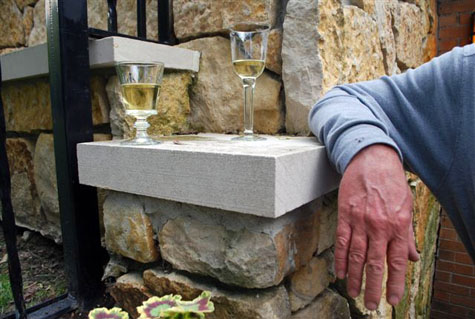
This time of year I multitask- meaning cocktail hour is also a planting hour. It takes a long time for me to plant one hour at a time-but I like this arrangement. I like taking the time to reflect on what I am doing-this is a luxury. Buck sometimes comes to keep me company, or help out a little .(how amusing to me that he does not like dirt on his hands or raindrops on his glasses; he’d rather walk on top of the low limestone walls than on the grass.) My architect is urban through and through-but he will help out if I ask; ask I did yesterday. One small bed I plant is always rife with wiry maple tree roots; its a headache digging those roots out before I plant. I managed to talk him into this job, as I had a new tool, a gift from a good friend and client. Buck cannot resist a new tool, still in its box, that he’s never tried before, so I knew he’d fall for it.
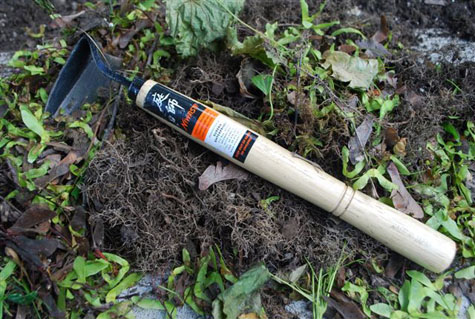
The Niwashi is an amazing tool. My friend bought one while on a trip to New Zealand-she says its the only tool she uses in her garden. She ordered one for me. It has turned out to be such a fabulous present. When I saw what fast work Buck was making of a tiresome chore, I had to try it myself. Obviously I have never gardened with a really sharp tool. Light, razor sharp, angled perfectly to cut weeds on top or roots underneath the soil surface-where has this tool been all my gardening life? �
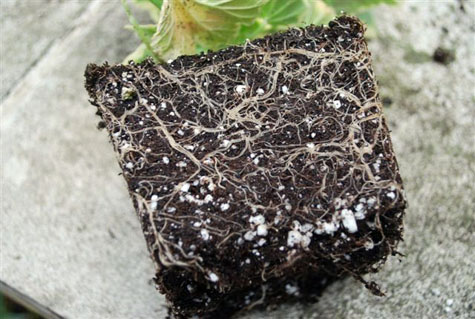
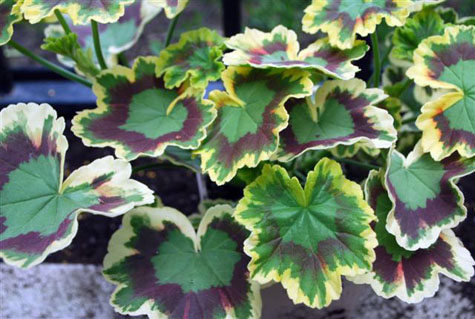
I was ready to plant in no time; the Niwashi made it possible for me to plant with my hands. I vastly prefer this method to using a trowel. So properly prepped soil is a must. This 4.5 inch tricolor geranium is rooted top to bottom, but not rootbound-perfect to plant. It will transplant easily, and readily take hold. Though my scheme this year is orange and red violet , I like a little leavening. This geranium has a gorgeous cream based leaf with hints of my colors. Some variegated foliage is difficult to pair with green leaved plants; not this one. The orange flower is a modest bonus-but its the leaves I love. I have seen it called “Skies of Italy”-there’s some romance.�
The driveway bottom bed is planted and watered, as is 1/2 of the top bed, in no time. Thanks a million, Jane. For those of you who might want to check out all of their tools, www.niwashi.co.nz.�
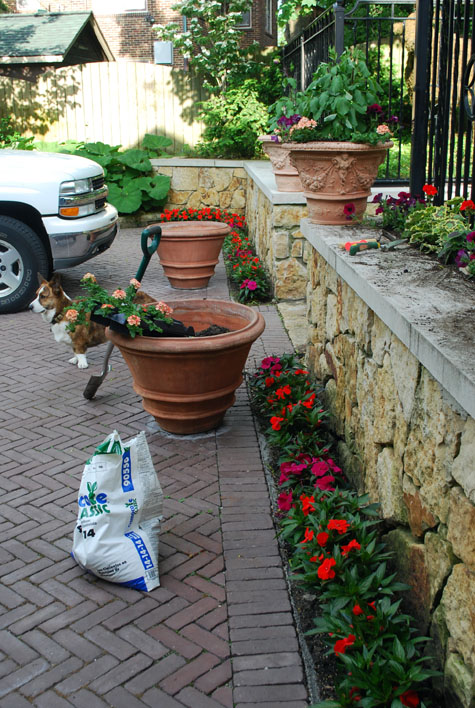
Last year’s scheme was entirely dictated by a pair of baby pink fuchsia standards called “Ballerina”. I liked the whole thing just fine. But what’s not to love about being able to do things differently?
The Niwashi
Forty-Four Degrees
It was 44 degrees when I got to work at 7 am this morning. Only the pansies, lettuce, annual phlox, snap peas,and a few others, go for this. The angelonia, sweet potato vine, New Guineas impatiens, lantana and a whole host of others, despise it. Many nurseries sell vegetables early, and then sell them over again after late frosts damage them or kill them. The cold spring weather is a perennially hot topic for Michigan gardeners.
Every year’s struggle to get everyone’s flowers planted in a very small time frame, is all the more complicated by the weather. The annual flowers we use are definitely not native to Michigan. Most of them come from warm, even hot tropical regions where the soil is never really cold. I don’t like to plant any of these plants until the night temperatures are reliably above 50. It is May 31st today; we have yet to get there. Should you put a finger in the soil today, it will be surprisingly chilly. Air warms up, and cools off, much more quickly than soil.
I am of the opinion that planting too early stunts the growth of tropical plants. I have seen impatiens and begonias never recover from too early planting; I hear regularly “this was not a good year for my impatiens”. Having a good year with flowers actually depends quite a bit on some good horticulture. People sabotage their plantings, as they have the option of deciding when to plant. It isn’t the weather; late May cold is a regular feature of our spring.
I often buy early, to get what I want, and hold. They say delayed gratification is an adult pleasure-but that doesn’t make it easier for me to wait. Vastly more difficult than waiting, is persuading my clients that they should wait. I have had occasion to ask a client to sign off on a planting I knew was too early, and I have planted a few of those gardens twice in one spring. I don’t like doing this, as its a waste of time and money-never mind that I can’t stand dead plants on my hands when I knew perfectly well how to keep them alive.
This part may be much more intuition than science. I believe a later planting pays off at the end of the season. By this I may mean a week later. I rarely plant my own annuals before June 15-nothwithstanding those people who think the summer is half over by June 15. My plants take hold faster, and perform in every way superior to plants put in too early. I am always taking my pots apart in November, not because the flowers have gone down, but because I am just tired of taking care of them. I don’t stress my annuals by planting too early, not watering sufficiently, not deadheading, grooming and fertilizing. I think I have them longer, given this treatment. I try not to worry my plants with too much of my own nonsense. Should I plant early, I know the result belongs to me, not the Michigan May weather.
At a Glance- Spring Blue
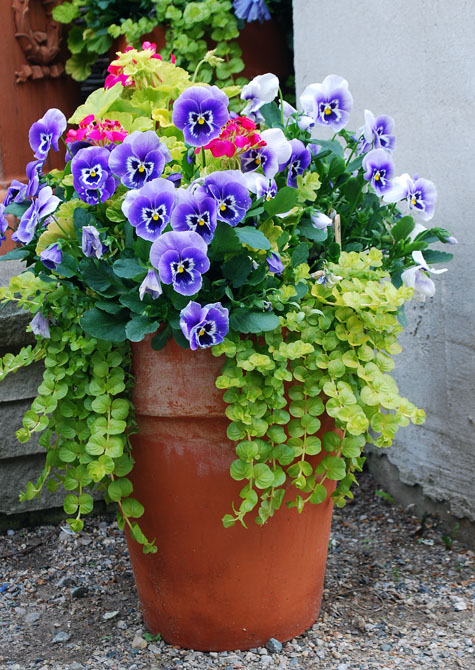
Blue Pansy
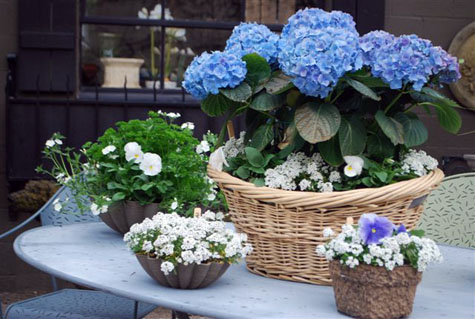
Hydrangea
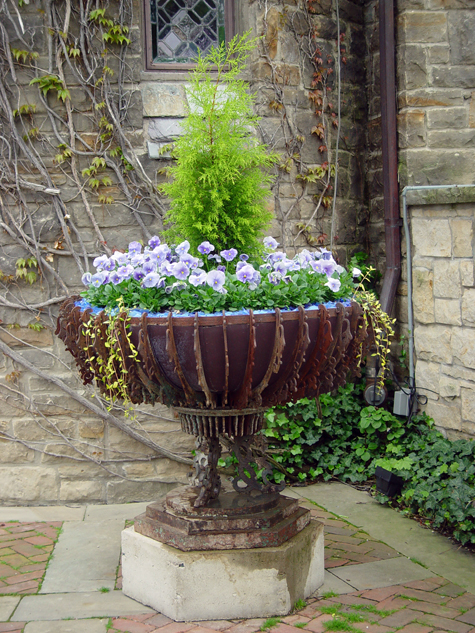
Pansy
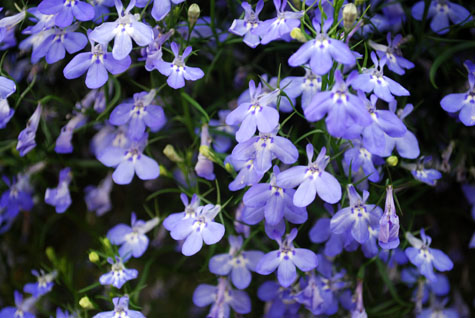
Lobelia
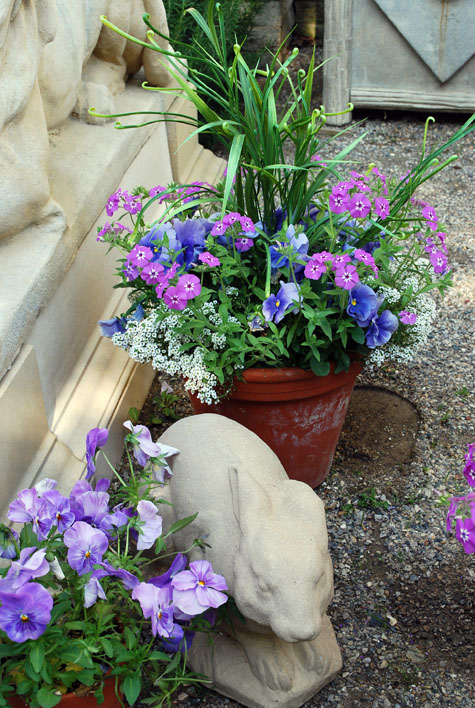
Blue Pansy
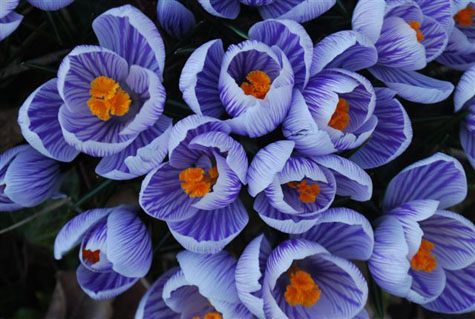
Crocus
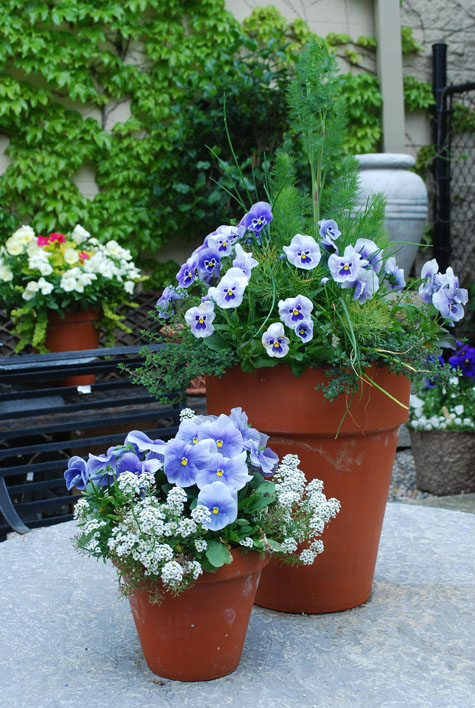
Blue Pansy Mix
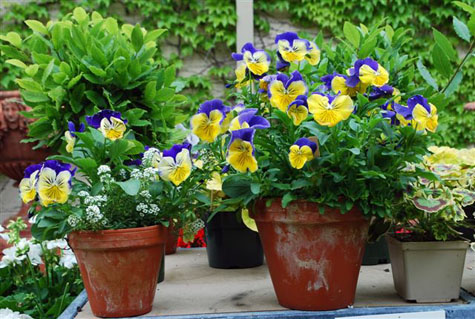
Blue and Yellow Pansy Mix
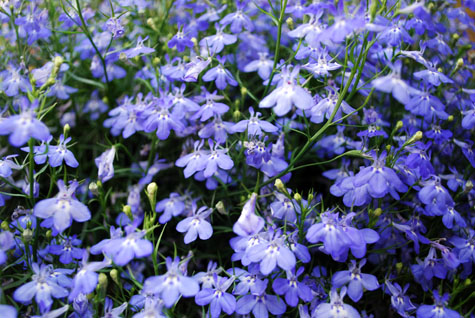
Lobelia
So, Where Are You Going Today?
Buck asks me this every morning. Some days the answer is simple, as in, “I don’t know yet”. It’s usually 5:30 am when I get the question-so not knowing where I will decide to be at 8 is not so hard to believe. But today I am in the thick of a large annual planting we do every year.
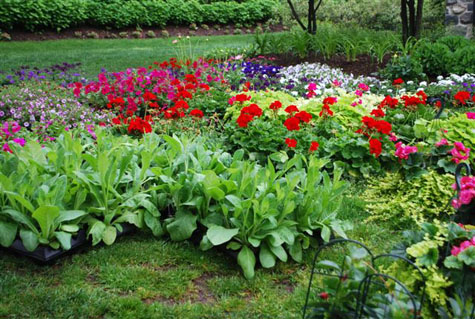 Thank heavens it has a different color scheme and feeling every year. My clients like tinkering with this as much as I do. Its plenty to plan-how many of this, and how many of that. Despite a fleet of trucks, we have plant material delivered. I invariably forget something, or think I have something reserved that’s not there. So we make changes.
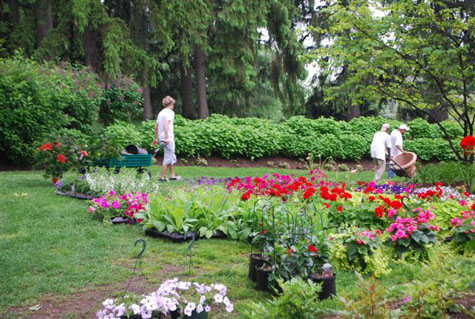 This works for us-photo copies of last years pots and beds have the new scheme written on them. I don’t need to do much for Diana after all her years, except list the plants. Should I leave something out, or have too much, she knows how to adjust.
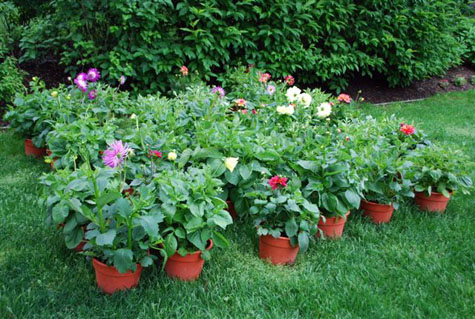 My client’s love of dahlias always presents transport troubles. This year Carlson’s greenhouse grew all the tall dahlias from cuttings. This makes the plant bushy from the start-as opposed to tall dahlias started from tubers. These short and chunky plants are easy to ship, and easier to plant. Let the sun and rain do the job of getting them tall, with those dinnerplate size flowers.
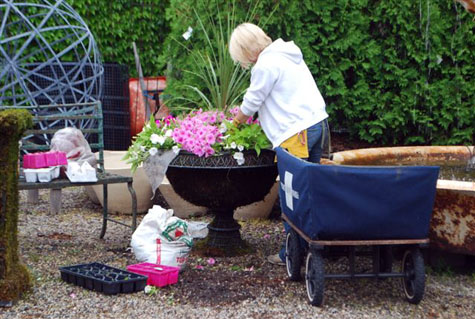 Giant wirework urns are mossed and planted at the shop; these get delivered, finished, and ready to place. As they are tall, and some are viewed at a distance, I plant simply, and with good contrast.
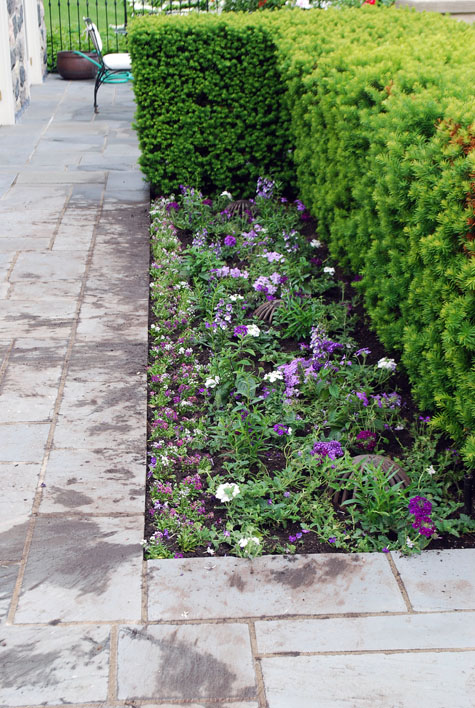 We plant beds backed up by mature and formal yew hedges with a low mix of annuals. The yews are not a backdrop; they are the feature. The little babble of trailing verbena and alyssum, heliotrope and angelonia is in stark contrast to those massive dark green yews.
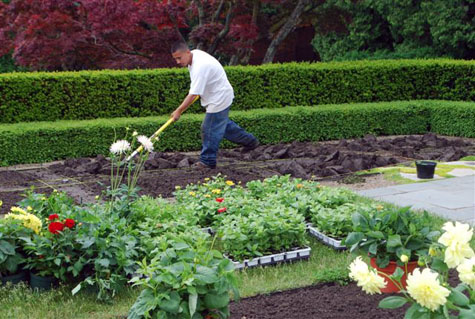 We plant mandevillea vines, tropical hibiscus trees on standard, zinnias, New Guinea impatiens, and the dahlias-all in response to my client’s love of big flowers.
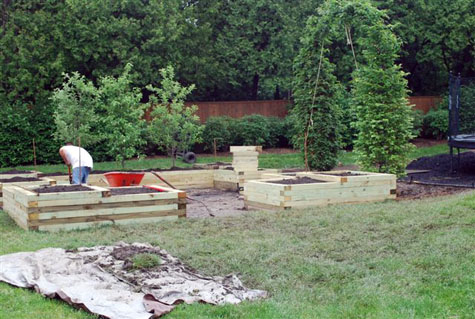 For years we have planted the vegetable garden in giant fiber pots. This year we have a formal vegetable garden under construction-the highlight of which is a European beech arbor 14 feet tall.
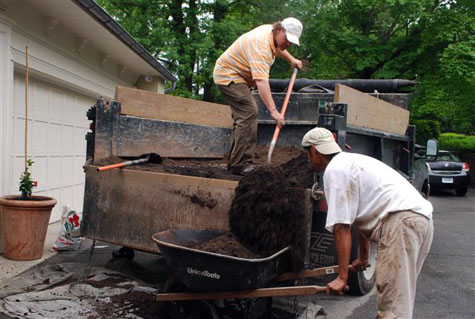
We are in the thick of it.