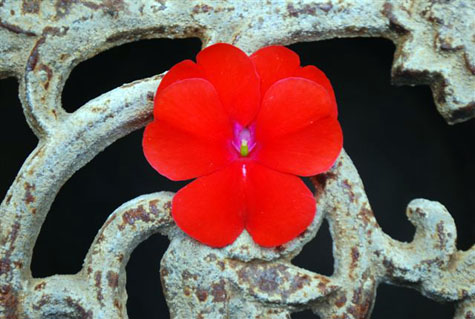
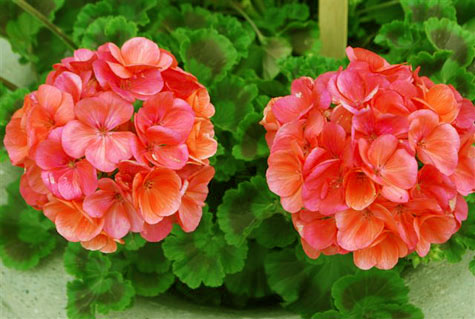
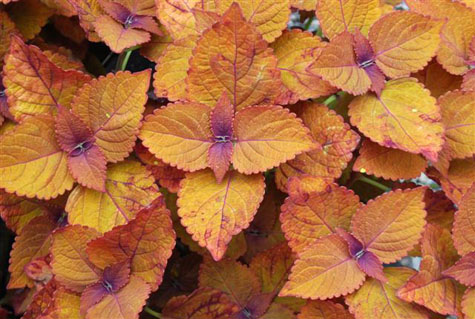
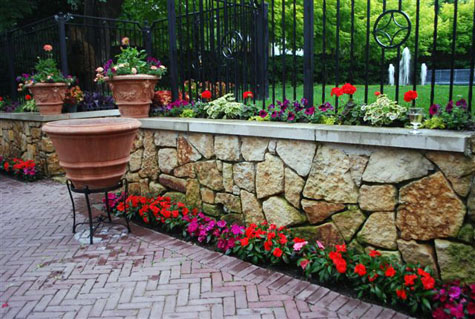
 I know I posted however many days ago, that I was planting my pots purple and orange. Sounds hideous, doesn’t it? I was cringing as much as I was looking forward to it. I got the first sonic orange New Guinea impatiens in the ground, and thought I would throw up. Someone years ago told me orange was the color of hysteria-and I was starting to believe it. Could I come home and be charmed by hysteria generated by my own hand?
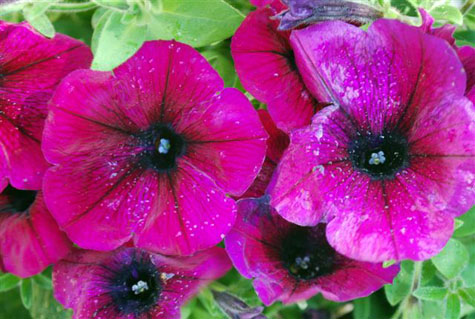
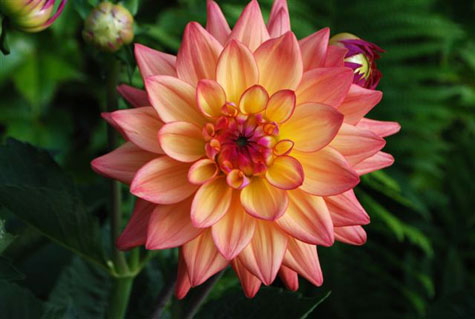
So tonight was the third after work night I have been planting. It only takes me 3 days of routine to settle into something and focus on it. So tonight I realize I am not planting the color purple at all with orange-the subject of my interest is the color I call carmine. Carmine Sonata cosmos-does the name alone not stir you? Purple callipets. Persian Shields. A certain carmine dinner plate dahlia whose name I cannot this minute recall. A trailing verbena-dark purple on the label-but carmine is the color.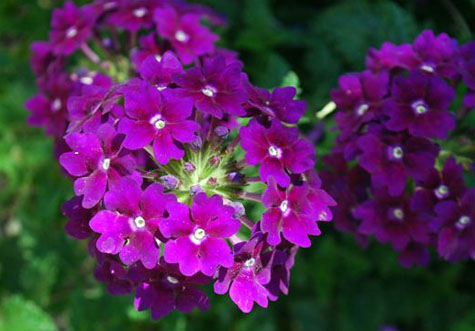
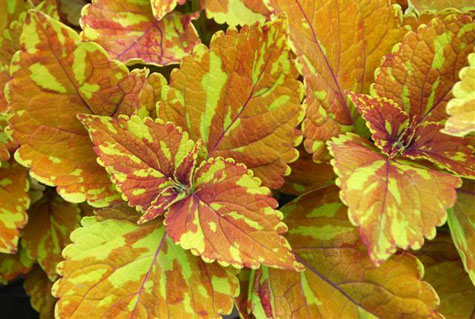
Carmine is a purple suffused with red. So much different than blue-purples-like heliotrope, verbena bonariensis, blue wave petunias, or purple angelonia. Carmine is a warm red-purple, to my eye. It is all the more intensely red-violet, when paired with brilliant oranges-true oranges, or peach. Maybe I would call these oranges on the blue side-rather than the yellow side. I could not say if color is my most favorite design element; there is a lot to love about every element of design. But I will admit the fact that I am able to see color delights me to no end.
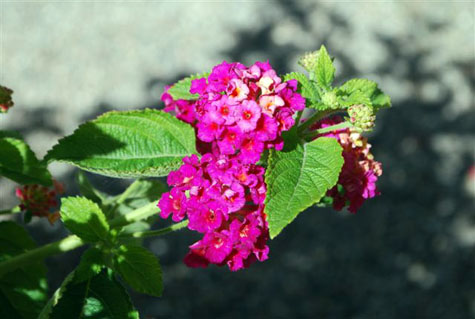
Some combinations of carmine and orange I had to see in person to know whether it enchanted me. Some combinations I knew from long experience I would like -but most of all of this I have been fretting over like its the first planting I have ever done. Its a life for me. Exposure to color in plants is a luxury for my clients-they have jobs, spouses, kids, dogs, volunteer commitments etc-so they look to me to see the color, and put it together for them. What they get from me is not much different than what they get from the mechanic who diagnoses the problem with a car, or an air conditioner, or a gate latch, or a washing machine. What is different is that what what works is what looks good to them-never mind understanding color relationships. I don’t repair things-I make things.
For me personally, I learn things about color and color relationships all the time. Every year, for as many years as I can remember. I think I am able to do this learning, as I am able to focus on something-and shut everything else out. This is a gift I do not know who to thank for; it came standard issue. 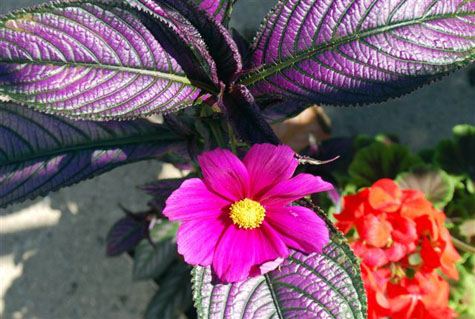
For anyone designing for themselves, I would recommend a routine-any small and modest routine is good. Haul plants around the nursery. Cut out pictures of plants in the colors you like. Put plants together in the cart-before you buy. If your idea seems cuckoo-don’t faint. Park your kids with a staff person. Put off anything that isn’t critical, and concentrate. Follow your ideas for a good while. If it seems not to be working, be confident enough to regroup-no tears. This is not foreign policy or brain surgery-this is about what is a happy and satisfying activity. Don’t give up until the last minute. In the last minute, should you change your mind-this is fine. 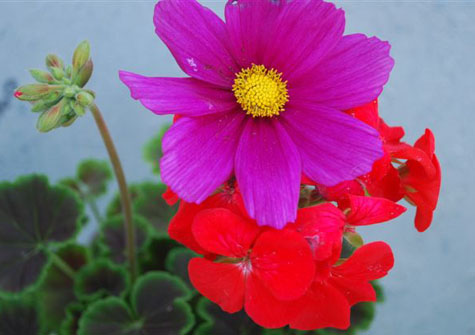
Most of all, steal a little time from all your other committments to focus on this gardening thing that means so much to you. I am still interested, after 25 years, in what means so much about a garden. As no one will ever care about your garden as much as you do-this means more than I do-make some time for what makes you happy. This will be time well spent.
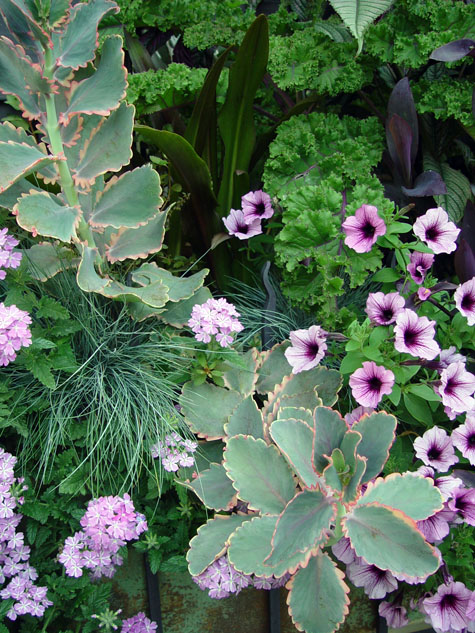 Texture is such an exciting element in plants-and plantings. Defined by Wikipedia as “an identifying quality”, or the “appearance and feel of a surface”, the texture of a plant can be about its appearance. Some plants are shiny leaved; some have felted leaves. Some leaves and flowers are thin (sometimes referred to as “substance”) and some are thick and juicy looking. Some leaves are wisy and airy looking-others are big and broad-and look as though even a big wind wouldn’t disturb them. This kale is ultra-crinkled-beautiful.
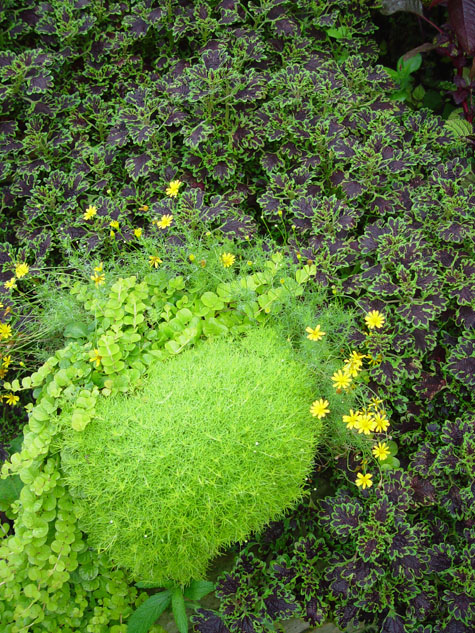 Texture can also refer to how a plant feels to the touch-who could resist touching this scotch moss? Contrasting textures can make for a lot of excitement in a planting-but even the relationship of one small texture to another can be interesting.
 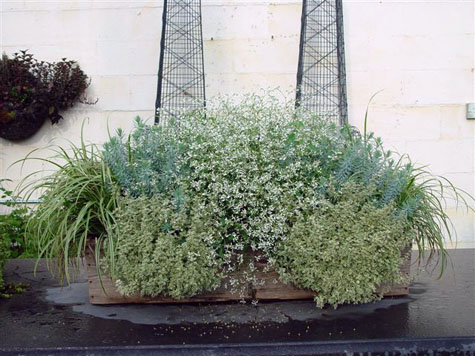 Some plantings where all the textures read similarly encourage focus on color, or mass. The choice of plants very much dictates what about a plant or planting becomes the dominant element. This box of grass, euphorbia Diamond Frost, thyme and sedum has that casual roadside weed look to it. You notice the blue of the sedum first off, as the textures of all the plants are so similar. There is a whole story here about little leaves.
 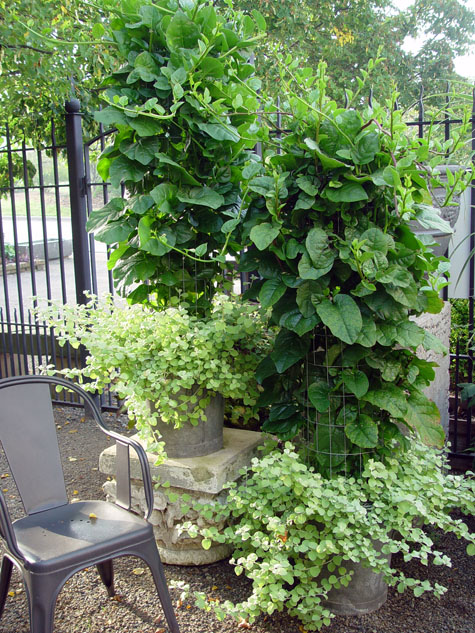 Malabar spinach has thick, substantial leaves that are glossy and wrinkled. This texture reads all the more strongly for its pairing with the diminuitive felted stems and leaves of lime licorice.
 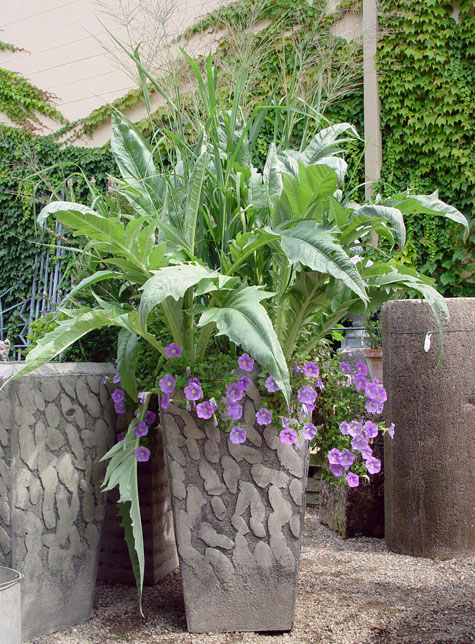 The hunky, toothy, slighting menacing leaves of this cardoon are softened by the much less architectural “Dallas Blues” panicum grass-and the so sweet blue petunias. The cardoon has a felted leaf-the panic grass is smooth and shiny. Those blue petunias are along for the ride-and soften much the architecture of the cardoon-and the pot.
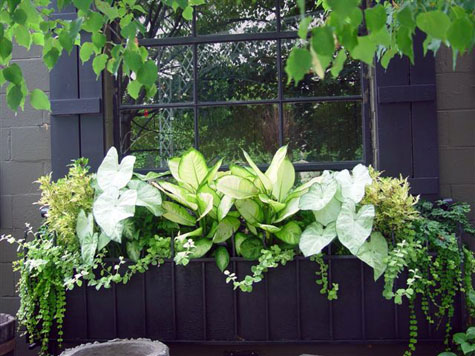
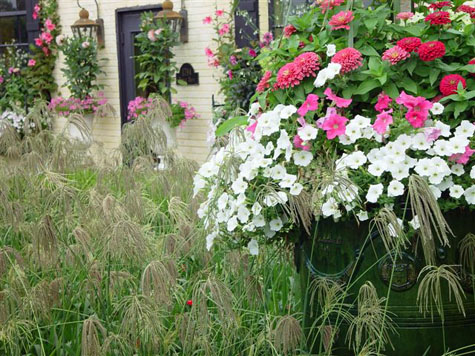 Large flowers like zinnias and petunias have a simple texture, while its companion grass has a complex, texture-like fireworks. Diametrically opposed to this delicately textured grass, caladiums and this lime dieffenbachia have leaves so thin and so wide the sun shines through them; it looks like the lights are on in this very shady spot. Identifying what about a particular plant you like will help a lot to inform your design with them. Everyone knows texture. Its the process of being conscious of it that can help make for inspired plantings .