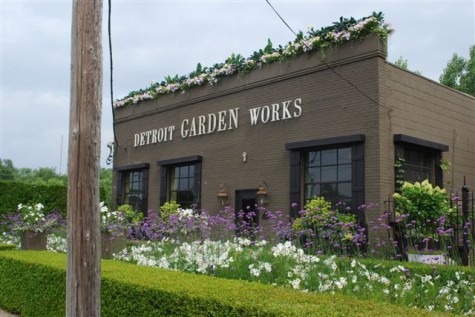
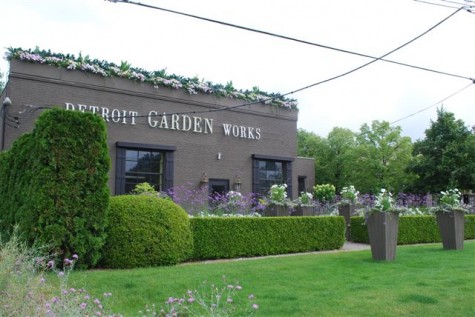
 Every year I plant the front of the store differently; this year I wanted the planting to feel like a meadow. The big bed of violet colored verbena bonariensis and white cosmos is almost always in motion. The marguerite daisies and petunias in the roof boxes are thriving, sheltered by a hedge of Nero di Toscano kale that will be the star of the show by fall. The kale does for the daisies what the boxwood does for the verbena; their respective relationships are good ones.
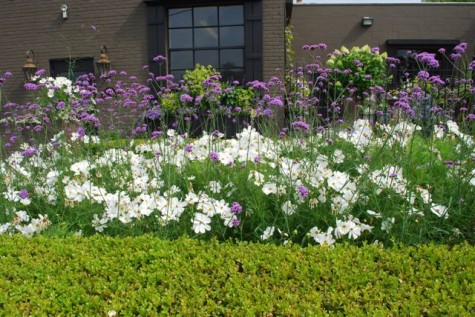
We will be inundated with verbena seedlings next spring, but how I love how it looks right now. It needs no staking, is drought tolerant, and doesn’t want much in the way of nutrition. This is one of those large growing annuals that do not show well in flats, so few nurseries grow it. I have always loved white cosmos-just not their ungainly habit of growth. Sonata cosmos is a dwarf version, perfect for giving me color at another level.
We have a meadow of another sort growing in the lot next door – in which I had no hand. The property was once home to a dilapidated and abandoned concrete factory; the county tore it down. Though the property was offered for sale, unbeknownst to me, at a tax sale, and sold, it has been sitting unattended for many years. The county is looking to recover the 90,000.00 it spent taking the factory down, and thus would be reluctant to approve a variance to build anything on a property that is too narrow to built on without that bill getting paid. So it sits.
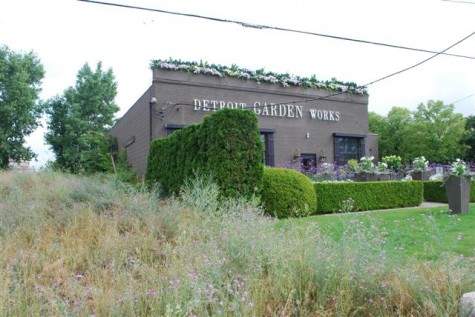 However, as any gardener knows, nature never sits. Someone once put it to me like so-nature abhors a vacuum. So this property is in phase one of its ecological evolution; disturbed ground is first colonized by grasses and other tenacious and vigorous plants, popularly known as weeds.
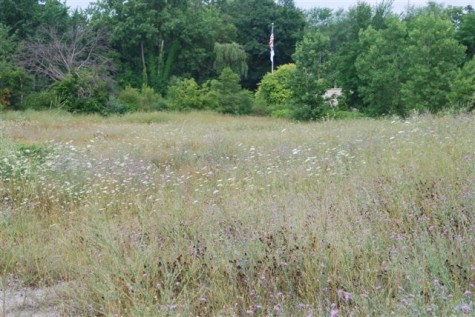
However, I think this weeded lot has plenty going for it. There are not so many species growing here, and they all seem to share the space equitably. The cream color of foliage gone dry, the dots of purple from the centaura and the white of annual clover is a beautiful color and texture mix. A breeze makes it all the more beautiful. The ground is completely covered with one big natural plant combination. The appearance of this meadow changes so much, given the weather, or the quality of the light.
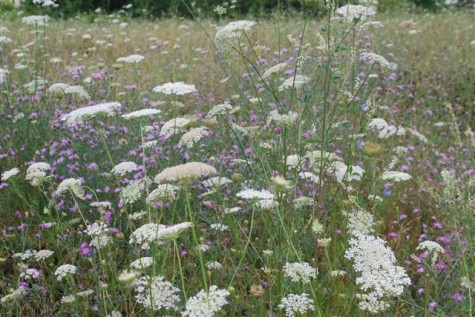 Queen Anne’s Lace is one of my favorite flowers. I buy bunches of it at market this time of year. Its tap-rooted vigor makes it a poor choice for a cultivated garden, but it vastly dignifies the look of vacant lots like this one. Its more civilized cousin, amni majus, can be grown in a garden to great effect; it is grown routinely for the cut flower trade. However, I am perfectly happy with this distant and unruly relative.
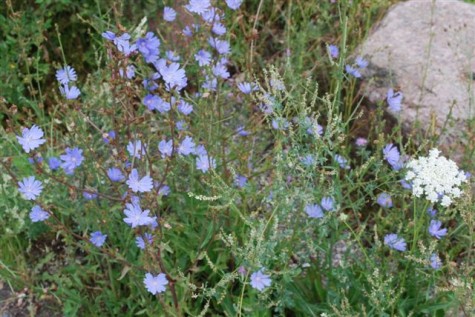 Chicory is the devil to get rid of; it is perfectly capable of worming its way through a crack in a concrete road. It is the most beautiful blue, a color not often seen in Michigan gardens.
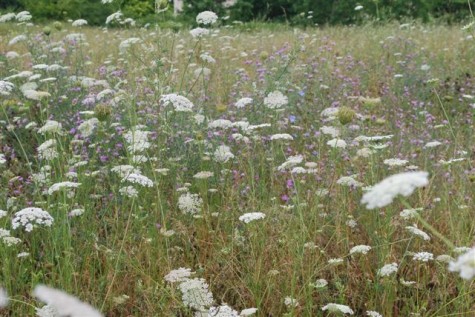 The mix of colors, the uniformly wispy textures, the motion of it all – breathtaking. There are garden flowers that have a meadow-like habit-panic grass, hyssop, bee balm, boltonia and so on-but there is no scripted garden that looks quite like this one.
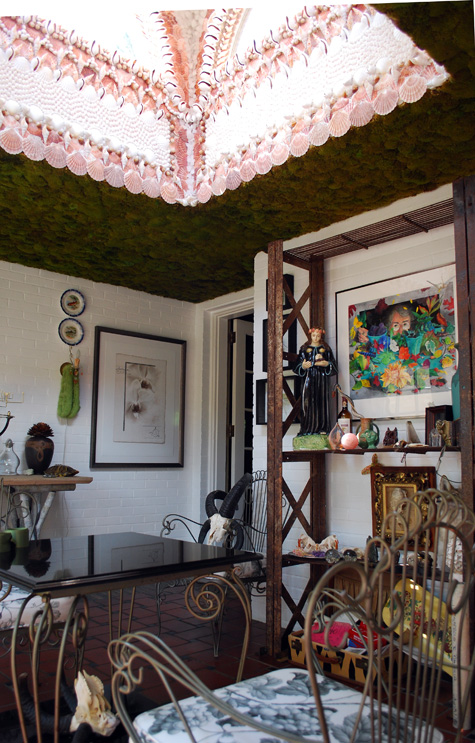
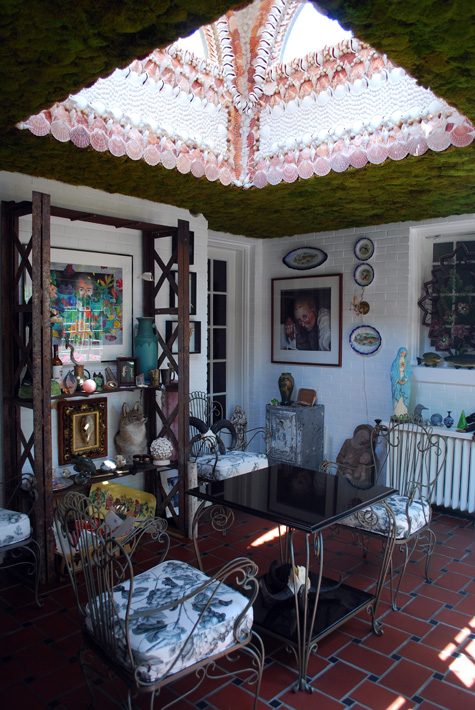 An old French wire garden table and chairs provide seating. A pastel self- portrait I did 30 years ago shares the wall space with specimens of butterflies, bugs and moths. Objects of meaning to me – as in, the clay bust I made of Julius Caesar in the third grade, letters from my Mom while I was in college, a collection of early twentieth century American fish plates-all the quirky things that have held my interest or been significant to me at one time or another, have a home together. The souvenirs of my life. Though the word souvenir now brings to mind postcards or paperweights from some tourist attraction, that was not always the case. The word souvenir, translated literally from the French, means “the act of remembering”, or “that which serves as a reminder”. There are times in my garden when the season or the light or the rain is just right such that memories will come strongly to mind.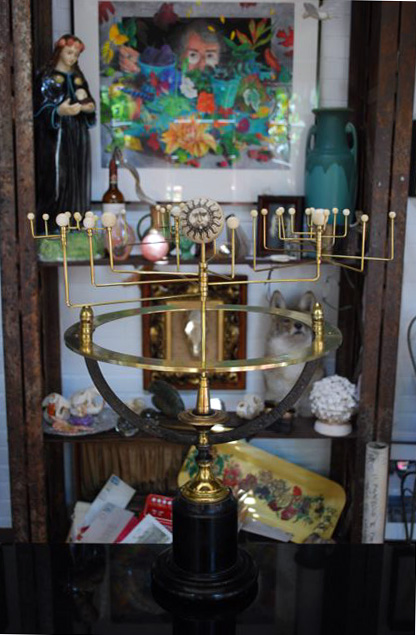
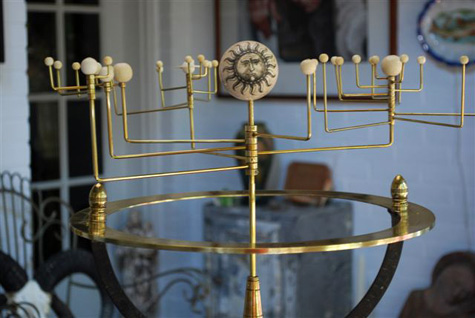 At the time of its making, only seven planets were known. Though it is a beautiful relic from a culture and time vastly different than mine, it is a reminder that one’s world is only as large as one sees to making it.
 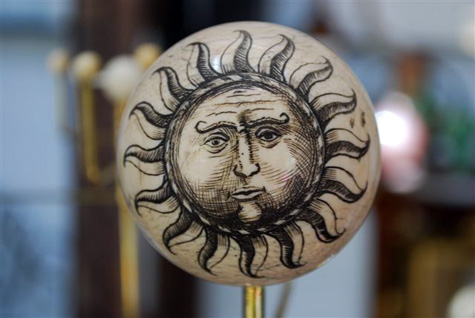 The sun, represented with a human face sporting a wry, quizzical , perhaps world weary expression, is as much a fine piece of art as it is some unknown person’s memory and concept of the natural world.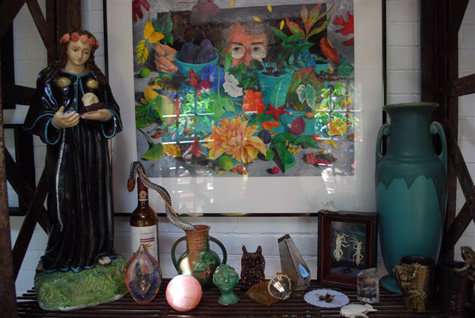
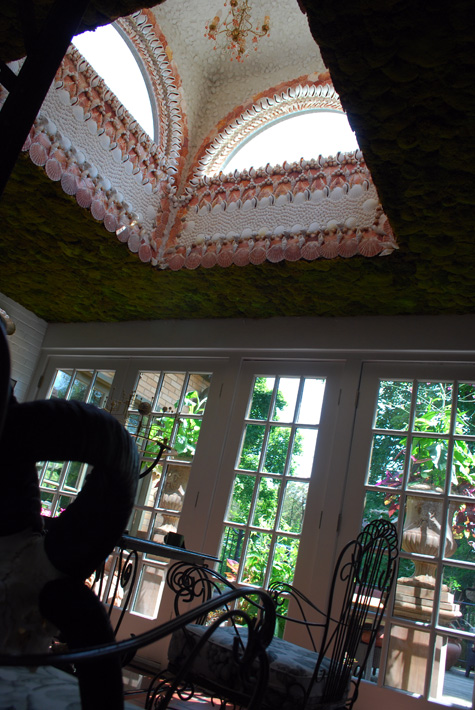
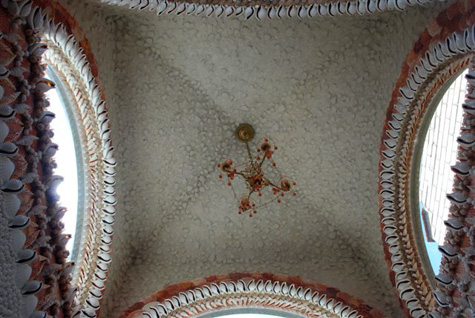
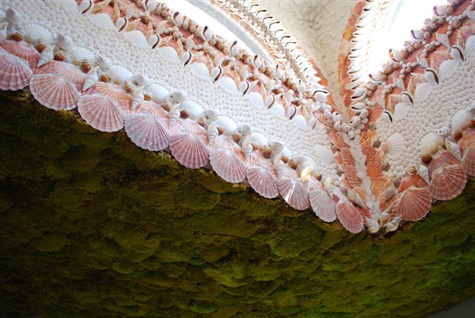
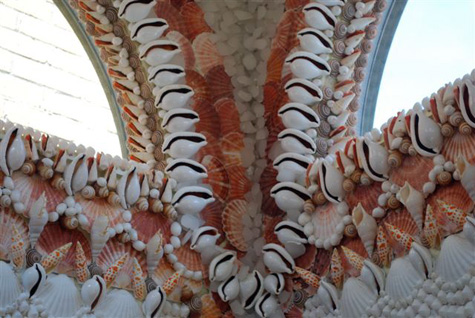
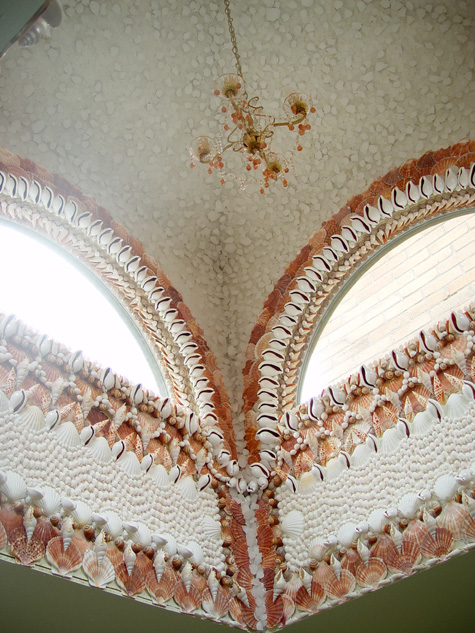
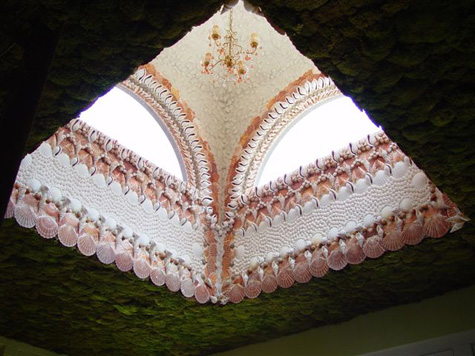 Happily I came to my senses when the tower was done. More shells on the ceiling would just distract from the tower, right? So I mossed the ceiling; a little construction pressure can jump start the imagination. Gluing dried moss onto sheets of foam core that could be stapled to the plywood in big sheets-the construction of this part of the folly took long-but not nearly as long as that tower.