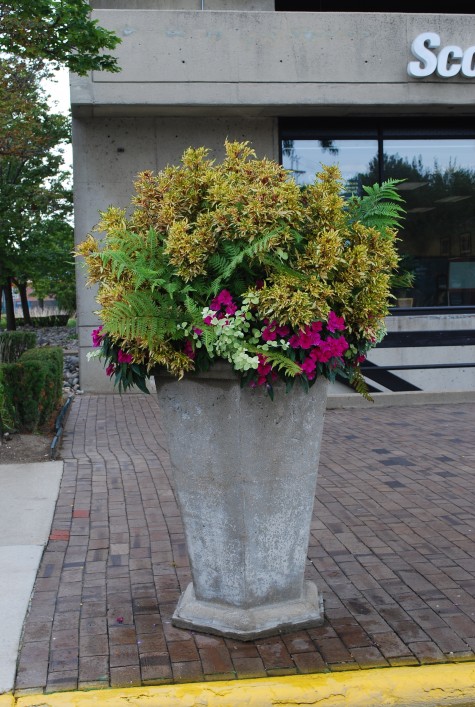
The Birmingham Pots

I cannot really remember how long ago it was that the city of Birmingham called, wanting to purchase planters for their sidewalks.  After considerable research into what was available, I decided to propose a custom made concrete pot-designed and fabricated by me.  I felt everything available was either too small, or had too big a footprint to fit gracefully on the walk.  Rob was mildy appalled that I would commit to making pots-I had, after all, never done it before.     
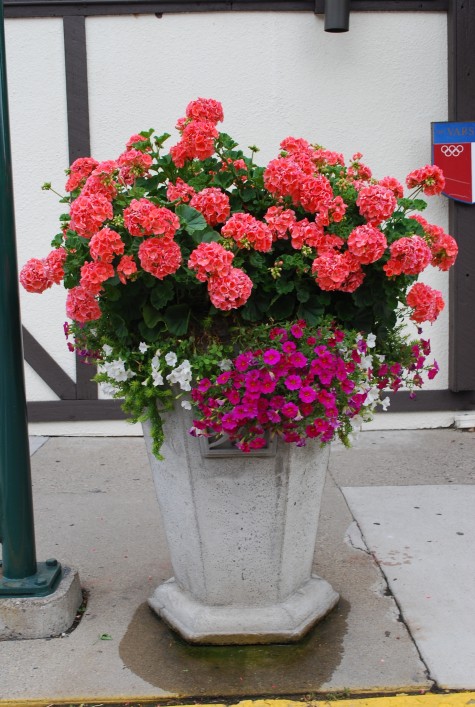
A contractor with whom I had done many projects assured me that I could make the pots.  After much review from this city agency and that, we were hired to make 30 pots.  The fabrication actually went quite well; my crew made them over a winter.  We submitted a proposal to fill the pots and plant them for the summer and winter; a three year contract was signed.
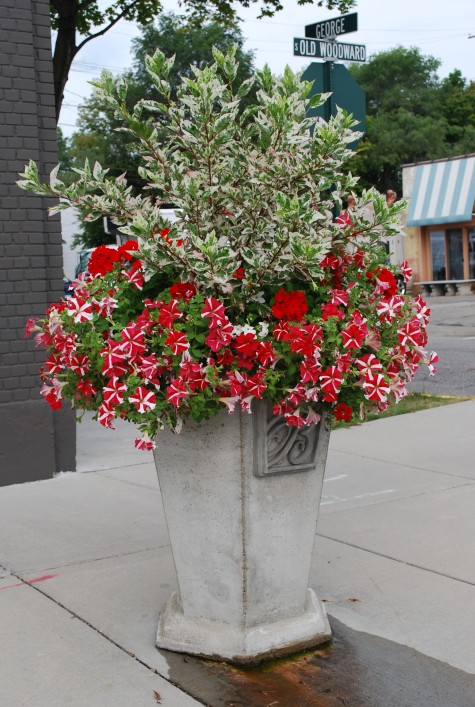
The city eventually awarded the winter pot contract to someone else.  I was disappointed-doing those pots for winter was lots of work and loads of fun. I planted the summer pots for many years-until this year.  The contract was awarded to someone else.  I so loved planting these pots-each and every one was different.  Though I am very disappointed not to be doing them, I did have the opportunity to do them for many years.  Here is a small collection of some of my favorites. This one was planted in celebration of the Wings winning the Stanley Cup.  The variegated hibiscus is handsome.  
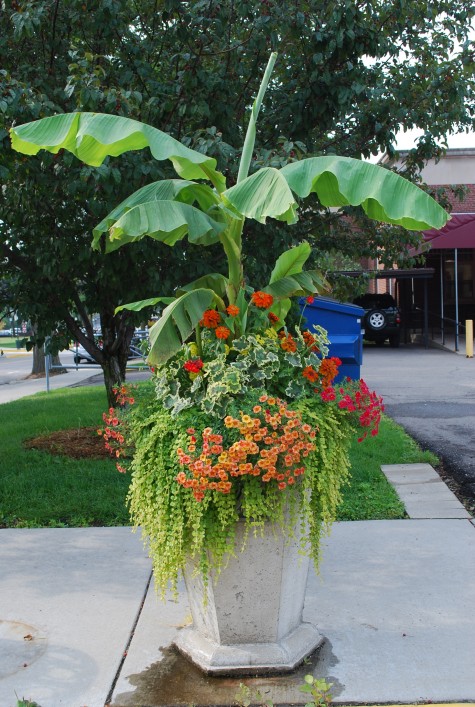
This insouciant number with its swaying banana looked  to me like a visual samba.  The pots are very large, and required materials that would grow even larger.  A banana is obliging in that regard.
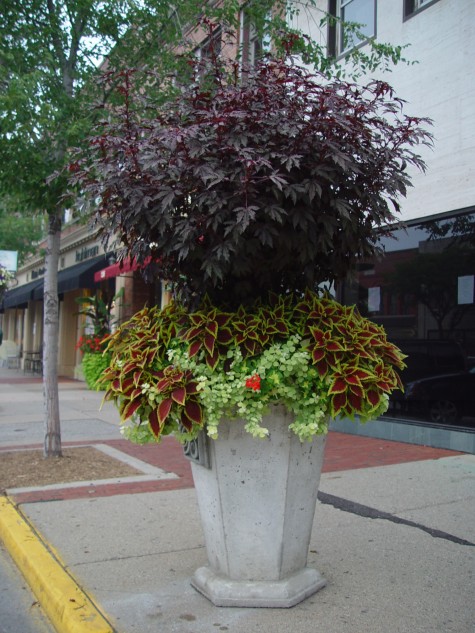
This red leaved hibiscus is notable for the color of its foliage-I have actually never seen one bloom.  It grew into an enormous shrub over the course of the summer; the skirt of coleus and lime licorice lights up the top.  The bullseye geraniums I planted in May are now completely engulfed by licorice-save for one red bloom.
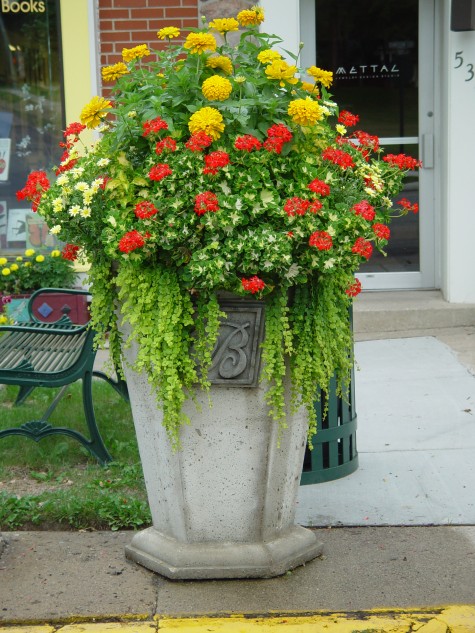

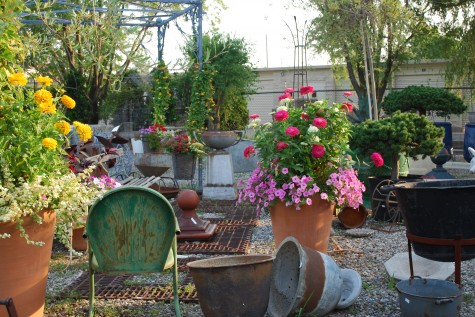
Yellow sun zinnias and red geraniums make a big splash.  That’s what you want, when a vast majority of your viewers are driving by, not lingering.
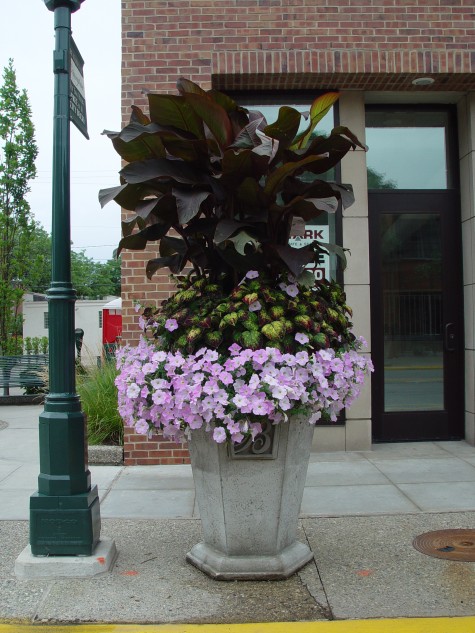
Cannas are happy in large pots and in hot weather.  The air temperature on a busy city street is bound to be cooking hot in August. Not every plant loves an environment like this.  Conversely, there are plants that will be happy in the environment you have-it is a matter of making their acquaintance.

One year I loaned the city some evergreen topiaries, and underplanted them. 
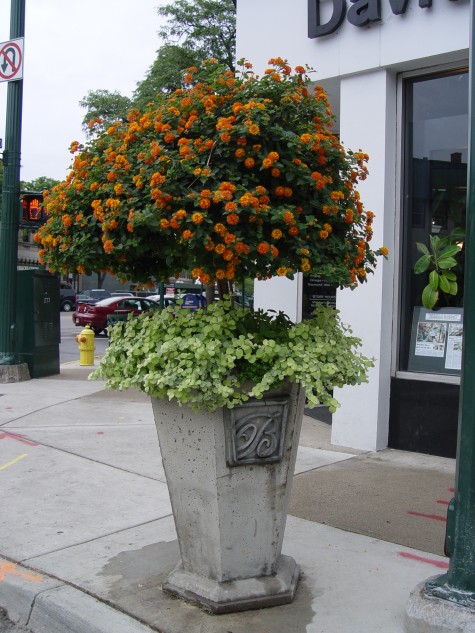
Also on loan, a topiary lantana that had belonged to me for years. It had gotten so large I no longer had space for it at home.  
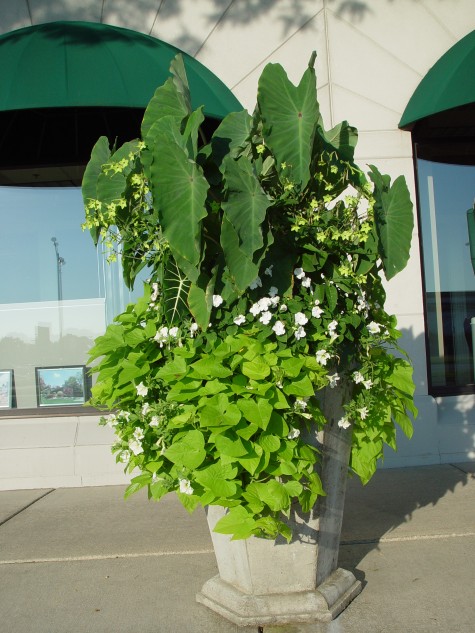

I have planted hundreds of different compositions in these pots over the years; it was a great job.
Some Like It Hot

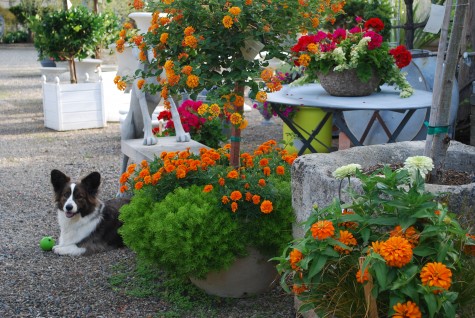
I have been a fan of orange, and every related warm, hot and striking color, my entire gardening life.  A client who once remarked that orange was a color that symbolized hysteria-I am sorry to say she had no appreciation for for sheer exuberance.  Some of us-including me-like it hot.  As I have said before, I love annual gardening for the fact that I can plant differently every season.  

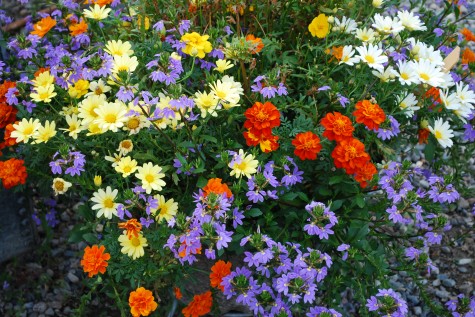
This combination of plants-Rob’s own.  Stellar-the syncopated beat of his color combination.  The idea of rhythm is very difficult to discuss in words-but so easy to photograph.  Hot and cool colors in graphic contrast will get attention from a long ways away.   Striking color contrast is but the first sentence from a  paragraph about what constitutes hot.  Looking to be blazing?  Think about orange, orange and hot pink and lime.  Think about any color, intensely represented.  

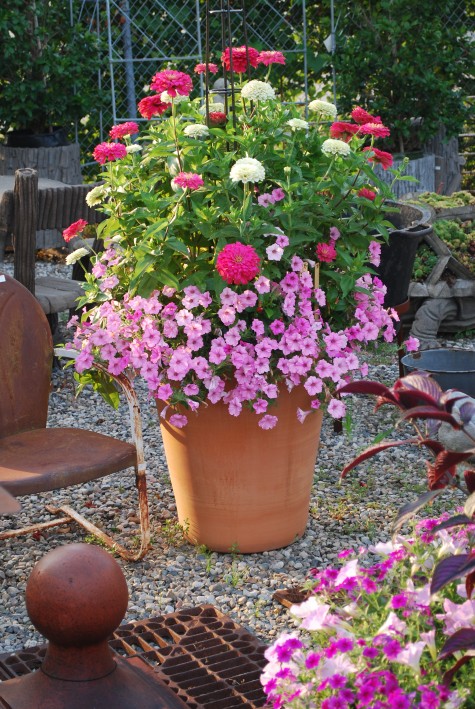
Hot pink and white zinnias, pink cotton candy petunias-these three plants can get a party going on.  I have been a fan of zinnias since was a kid. There is something boldly charming about their big flat faces.   Cannas, dahlias, bananas and other tropicals-all of these can bring loads of color to a planting.

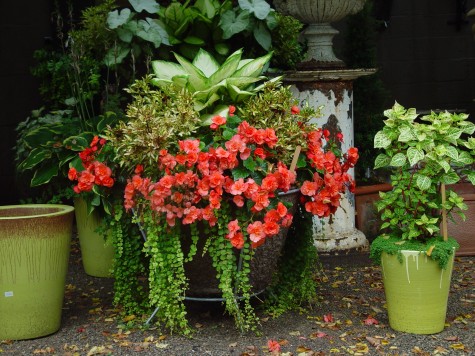
Solenia orange begonia is a great performer.  Properly watered, they will bloom heavily the entire summer.  They have succulent juicy stems that will rot if they are overwatered.  If you put your finger in the dirt-and the dirt sticks, wait to water.  Lime green is represented in the pots, creeping jenny, and the irisine in the right hand pot.  Lime and orange is a combination guaranteed to wake you up.

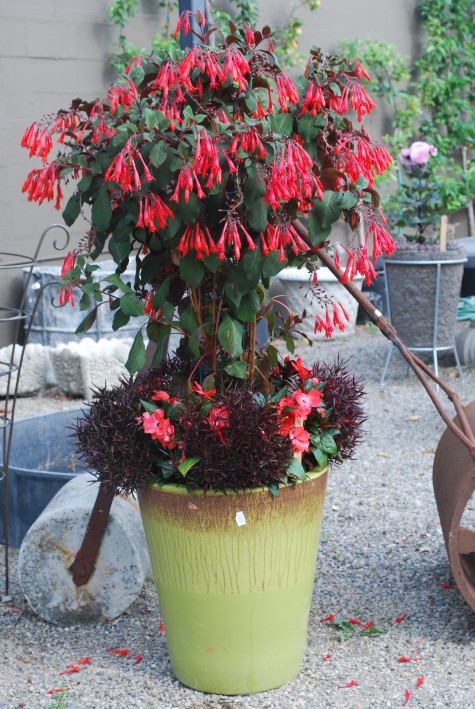
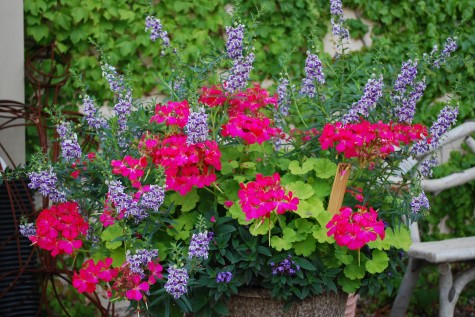
Gartenmeister fuchsia grows vigorously enough to make a great show as a flowering topiary.  As it is a lax grower, it needs secure staking from the beginning.  The dark red threadleaf amaranthus and orange New Guineas finish the arrangement.  Though that orange dominates, the overall impact is as much about form as color. 

Bicolor angelonia and Persian Qeen geraniums make a lively a color statement.  I plant lots of pots for the shop-when I see a combination grow up to make a beautiful bouquest, I try to make a note of it.  These two plants just seem made for each other.  The angelonia loosens up that stiffly growing geranium.  The geranium provides mass and substance to that wispy growing angelonia.  Hot pink, purple and lime-delicious.  That little bit of white in the angelonia keeps all the other color reading loud and clear.


A gardener has no end of plants to choose from.  How to organize what to choose?  I recommend as a first step-ignore what is in bloom May 10.  Too many people restrict their exposure to plants by insisting on “color” right off the bat.  There are other flowering plants in this world besides impatiens, wax leaf begonias, and red geraniums.  Big growing annuals do not make any kind of show in mid May; it takes time for them to mature.  Increasingly I see growers producing big plants in large tubs early.  I buy them when I am planting a client late-the tubs enable me to catch them up. But the pleasure of large growing plants has much to do with the patience to grow them on. Though it is June 3, I have no idea what I will do in my own pots. Maybe some hot color-maybe not.   I have time to dream it up-an entire season is still out there,  ahead of me. 

 No small part of the fun of gardening is planning, putting it all together, and  watching it grow up to be something.

Mary Starnes

Mary Starnes is a reader.  I know nothing of her, her life, or her garden. We have never met, nor have we corresponded.  But her comment on my blog yesterday (or was it the day before or last week?) struck a chord.  Facing flats of flowers on her drive, in blistering heat, she had the time to write to me.  I do not know how you do it, she said.  My first reaction-I am not sure I know how I do it either. With the first three weeks of June-the busiest and most intense weeks of my year-looming large on the horizon, I am under siege.  I am adamant about the design and installation being of quality.  This is in diametric opposition to the need for speed. Our annual planting season is short, and every client has a good reason why they would want their plantings done sooner, rather than later.  I wake up in the middle of the night with a discussion of this planting or that already underway.  I worry my way through the three weeks to come.  No kidding. 

Planting during annual season is loads of work.  Just making sure the proper plant material is on site for a job is a full time job some air traffic controller might want to take on, in the interest of some marginally less stress. Contact me, if this seems like a good idea-please.   I dream about that person coming into my life,-but in fact, I select all the material.  I travel, review, order, and arrange for.  I work 7 days a week most weeks of the year-but these particular seven days a week threatens to knock me to the ground. Designing, locating, and getting plant material delivered, instructing a crew on the installation-this seems to me the full time job of three people.      

No matter how carefully I plan, everything out of my control holds all the cards. Weather, plant availability, a crew person out due to a car accident, a client who changes their mind-the list of what I do not have control over is long and extensive.   Though it may appear that all goes smoothly for me, usually nothing goes as planned.  I can count on this.  Rough around the edges does not show particularly well in photographs-thank God. 

My clients-I cannot count on what they signed up for.  There are invariably extenuating circumstances. Being asked to shift gears midstream-this is my life. I can count on a big fluid situation.  I cannot count on what I contracted to have grown being ready and available-crop failures, mistaken sales to others, disease, too much heat, too much cold-this list of what is not ready and available to me is long. My job involves switching gears on a dime.  My job part two-I assess the big picture, and make a plan for what will work.  It is not my idea that a client needs to know about any problems.  They need to be pleased-satisfied. 

My crew superintendent forgets to charge his phone.  Construction traffic makes me 20 minutes late.  A crew person blacks out, and forgets to load a flat of pink polka dot plants. The heat soars to ninety for two weeks in late May.  The maintenance/watering issues for plants in four inch pots-huge right now. Much of what I had counted on has gone south.  Should this writing read to you as all over the map, I am  pleased.  My life in late spring as best I can represent it-as usual.

No pictures today-I would not dream of touching my camera given the dirt stuck to my hands.  Please just imagine; thanks.

A Perfect Moment

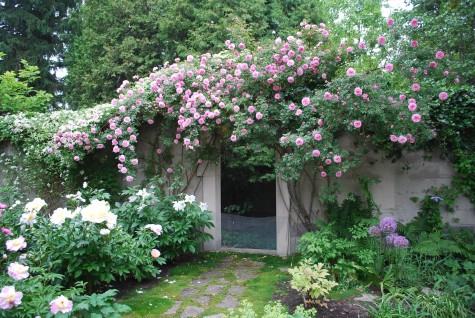
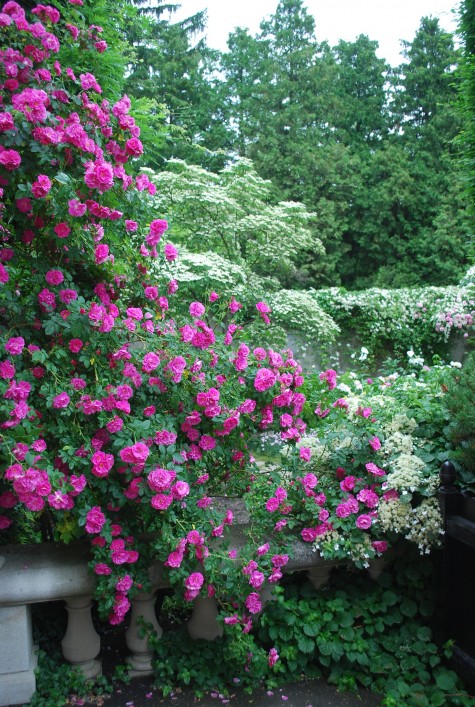
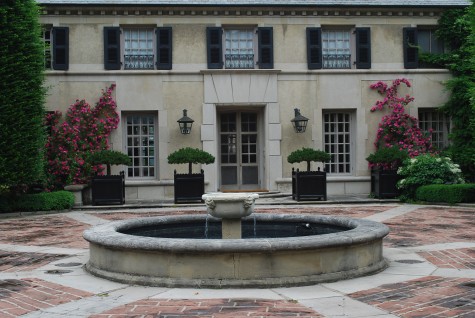
Janet has called twice in the past two days to invite me to come around for a look.  As she doesn’t invite unless there is something splendid to see, I stopped on my way home from work-around 6pm.  The skies had finally clouded over and looked stormy. Her courtyard-redolent with the fragrance of roses.  Thousands of roses.  Anyone who loves roses believes, works, and hopes for a moment like this.   

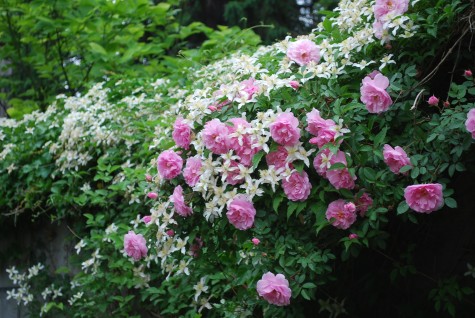
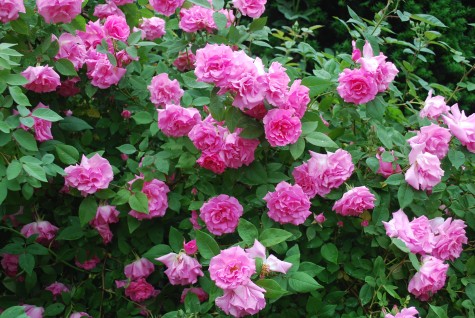
I spent perhaps a half hour there.  The first view as I drove in shocked me- it was so stunning. A mild winter, an unusually mild and rainy spring had given way to a relentless spell of hot weather.  Her early summer garden burst forth with a spectacular show of hands.  My second trip around the garden, I took the time to see everything.  The Canadian Explorer rose John Davis-perfection. Who knows how many years ago I planted this pair of roses.

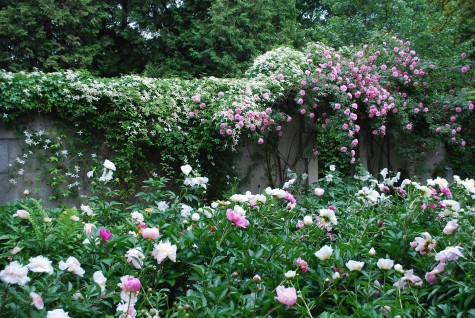
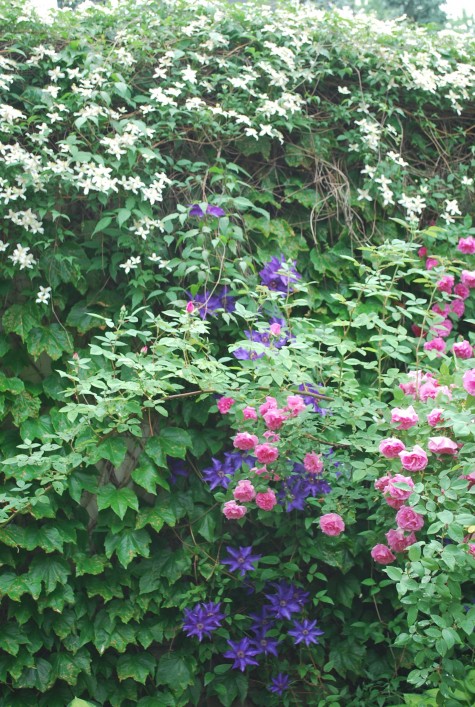
There was plenty to see.  The white clematis Montana rambling over the wall and into the roses-splendid. The peonies, mostly singles and Japanese types, are in all stages of bud and bloom.

Every plant looked perfectly happy, and beautifully tended.  Janet puts an incredible amount of time,thought and work to her garden-that was evident everywhere I looked.   

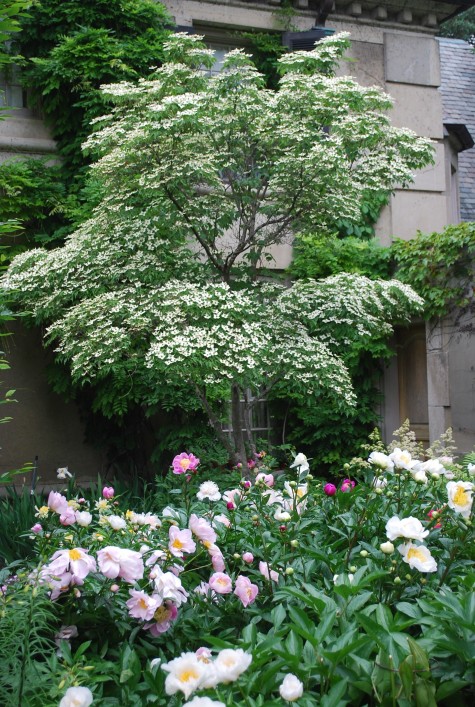
This kousa dogwood has been in her garden as long as I have known her-25 years.  I have never seen it bloom like this.  I am especially fond of Kousas, as they comes into bloom slowly enough to give you time to enjoy all of its stages.   

Roses and clematis are a heavenly combination. I spent a half hour in heaven at the end of a grueling day-thanks a million, Janet. I did spend some of that time thinking about all the work that has gone on in this garden over the years-at one point (when I was young) every square inch of this garden was double dug and loaded with all manner of compost.

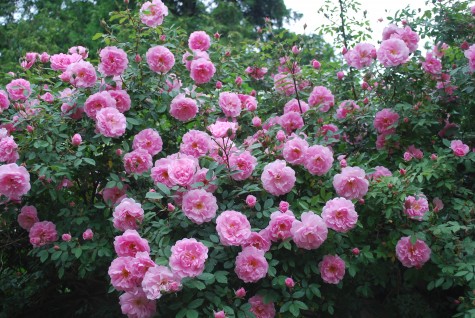
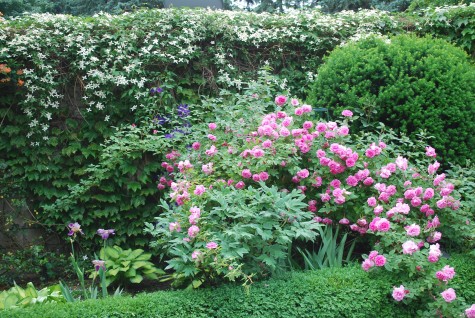
The explorer rose John Cabot was representing just as beautifully as John Davis.  These roses are tough and hardy in my zone.  They are also amazingly long lived.  I have planted a number of them over the years; those that were planted in front yard gardens I see they are still going strong. When I managed the perennial department for Al Goldner, he indulged my passion for roses.  In addition to the tea roses he was so fond of, we carried many varieties of shrub roses and rose species.  I have a memory of being pulled over at the US-Canadian border; I had been to Hortico, and had five hundred bareroot roses on my truck-and no phytosanitary certificate.  I never tried that again.   

This June flush is the best and the brightest we will have in a season.  That alone makes a strong and splendid display all the more precious. Of course I went home wanting to grow more roses.  The few I have are beautiful in their own right at the moment, and I am greatly enjoying them. 


These queen bees of the garden are worth the trouble, as when they are good, they are very very good.  They have a beauty and charm missing from the newer varieties of “landscape roses”-I cannot exactly explain why.  The knockout series of roses have their place-they are tough and disease resistant.  They lack a little of the romance I associate with roses.  I will plant them in places where no other rose will do-but what I saw here was everything I would ever want in a rose, and some years do not get.


Thanks for this, Janet.