Homing In On Winter: Part 2


Growing amaryllis in glass jars on a window sill is one way to keep the spirit of the garden going on in the winter months.  That said, gardeners like me are hard to persuade.   Those who insist that the garden is over at that moment we have a hard frost are selling their inclination to garden short.  Very short.  A gardener’s point of view is strong-all year long.  It doesn’t much matter whether you garden in Austin or Olympia or Chicago or Miami-a love of the garden can electrify a life.  Garden on-everyone.  If you garden in my zone, there are those “other six months”-like them or not. 

This might be my most favorite container I have ever planted at home.  For sure, it is my most favorite photograph of one of my containers.  How I loved how this looked, and how I regretted watching it succumb to the cold.  These Italian pots are in the basement now.  It is a quiet time for them.  Time for me to move on.
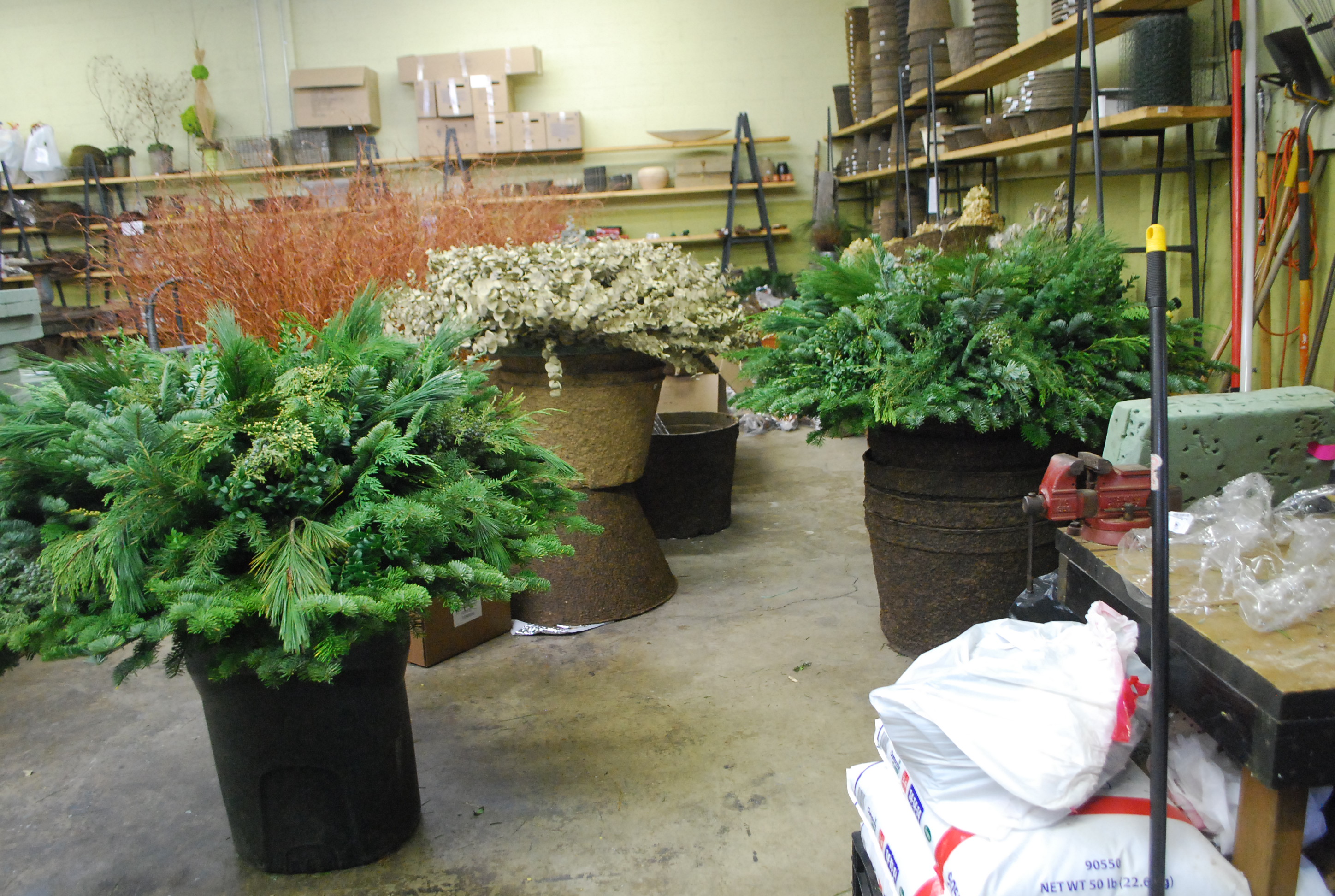
The winter season has its opportunities.  Winter arrangements in frostproof containers not only help stave off the off season blues, they are a delight to the eye.  Our shop is very busy-constructing winter gardens that reference the garden.  We produce an enormous amount of work for clients between mid November and mid December, but this post is not about my work.  I am interested in in passing along what all of that work, and all of that contact with people keenly interested in the garden, has taught me.  The upshot- every gardener has options.  All year round.  Every season.    
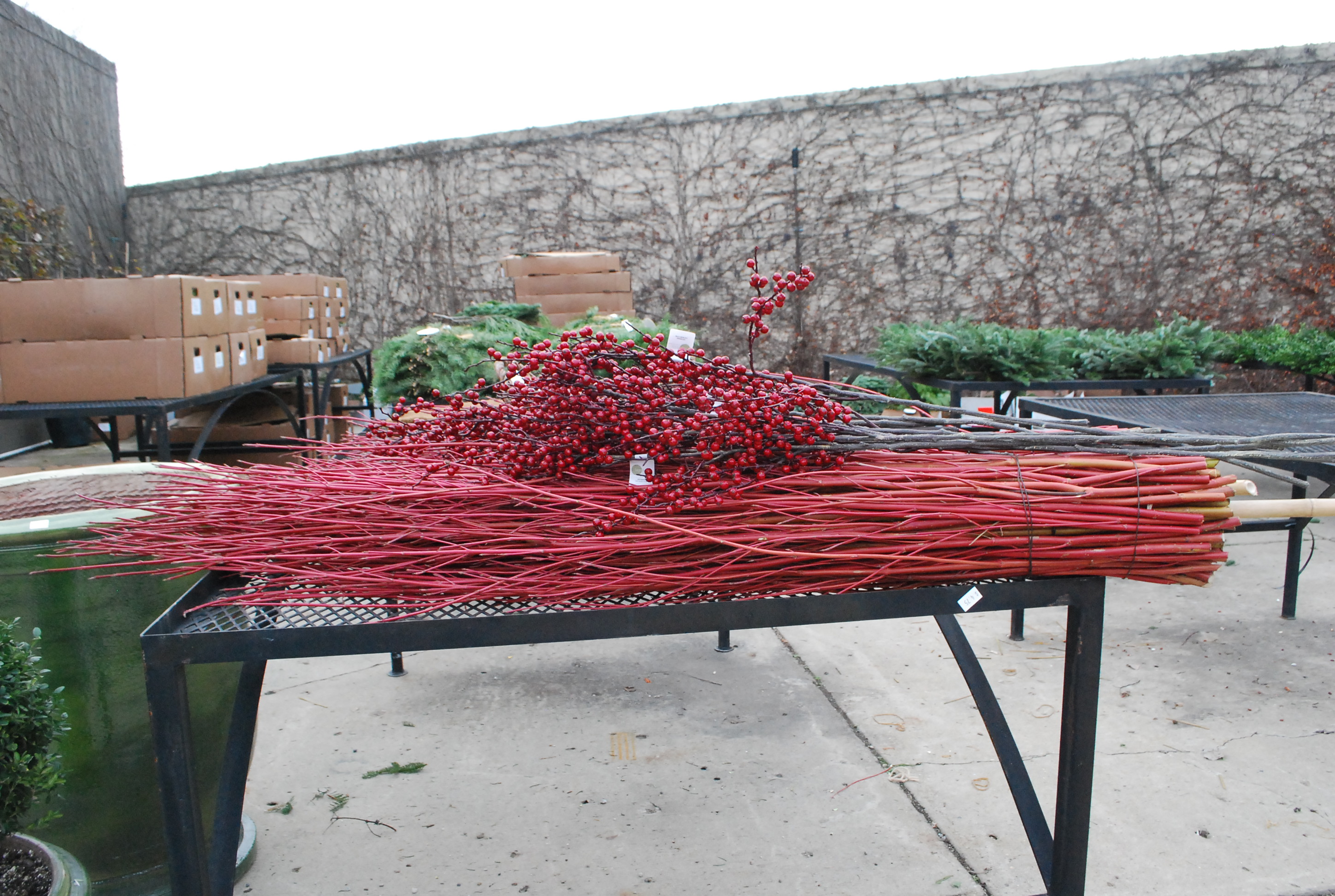
The moment any gardener decides to make something -and by this I mean envision, create, construct, edit, and install-is a good and satisfying series of moments.  As heartbreaking as it is to watch the garden go dormant, it is equally exciting to have a winter gardening season asking for a gardener’s best effort. Feeling low?  The best counter to that is to make something.  Make something be.  Make something happen.    

Winter container arrangements speak the language of the garden.  More importantly, they scoop up, engage, and occupy the heart of any serious gardener.  Be generous.  Go large.  
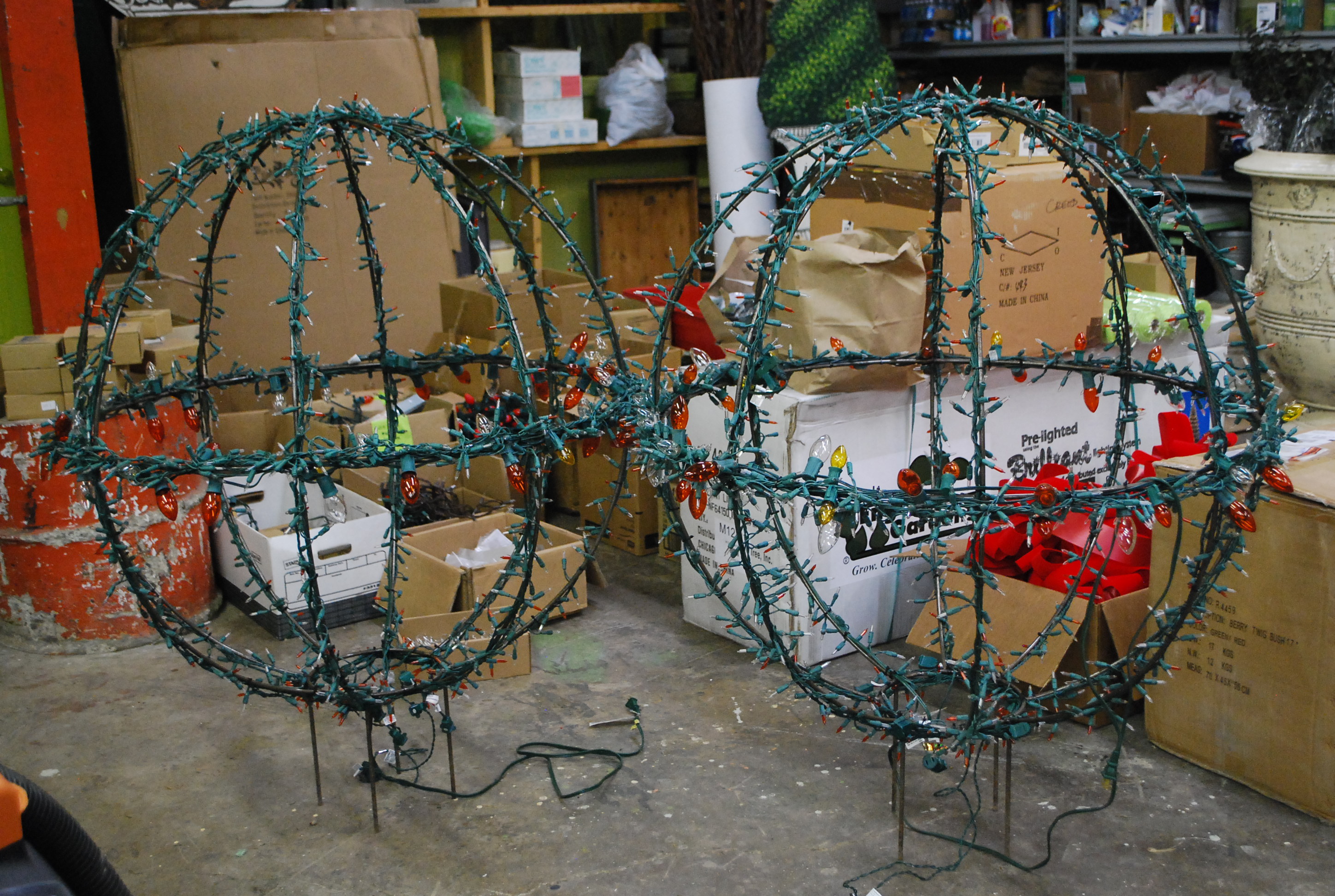
Those topiary forms that over the course of the summer that provide a form for hyacinth bean vines or mandevillea can provide a structure for winter lighting.   Lighting in the winter-essential.  Should you garden in my zone, the dark at 4pm is soon to come.  Light up the night.     

These pots are stuffed with greens.  Fresh evergreens.  In the center, variegated English boxwood.  The steel topiary forms are detailed with lights.  The time it takes to create a winter arrangement like this is time very well spent.  The process of coming to grips with the winter is every bit as important, maybe more important, than the passing of the summer garden.  Change is not so easy, but change is essential.

How do I handle the garden going dormant?  I get busy.  I decorate for the holiday-and the winter.  It helps sooth the sting that begins with the first hard frost.
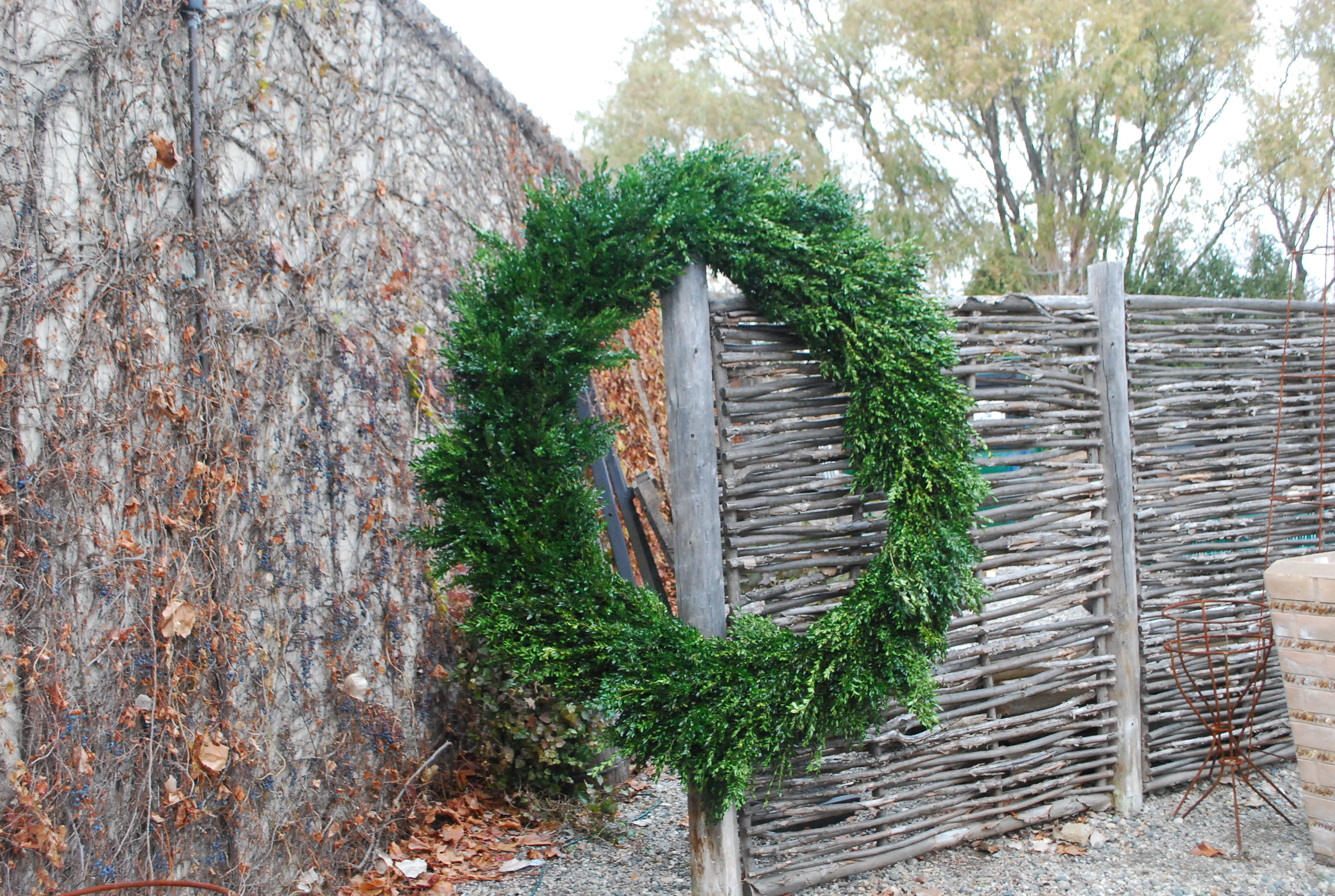
Fresh boxwood is available at your local farmer’s market.  This 54 inch wide boxwood wreath-a request from a client.  Hew plans to decorate his client’s home in a big and positive way.  Spend more time making your winter season beautiful. 
Whenever I am making something, I am happy.  My advice?  Get busy.  Make something.  Make something beautiful.  I promise-the winter will fly by. 
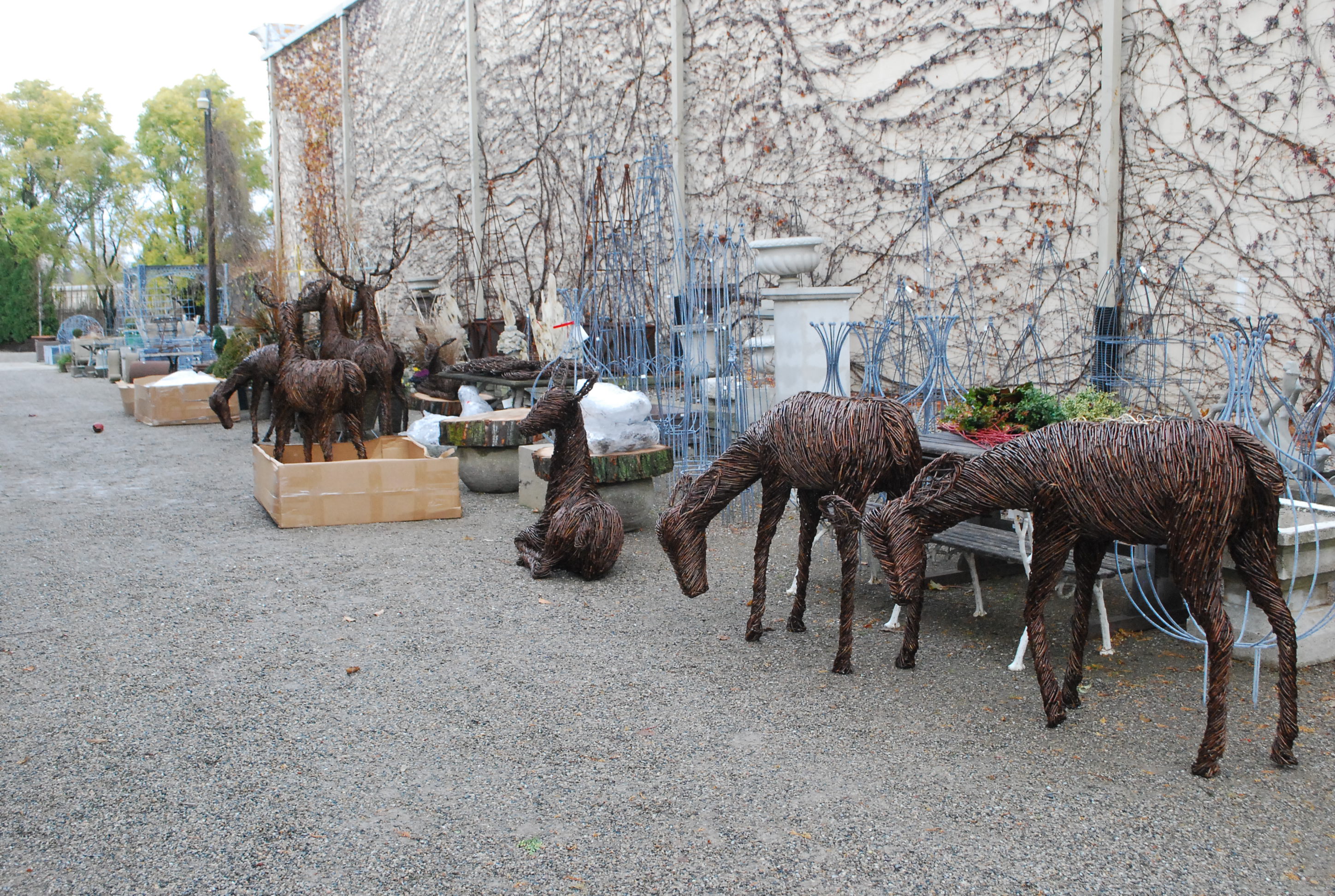


The Grapevine Deer 2012

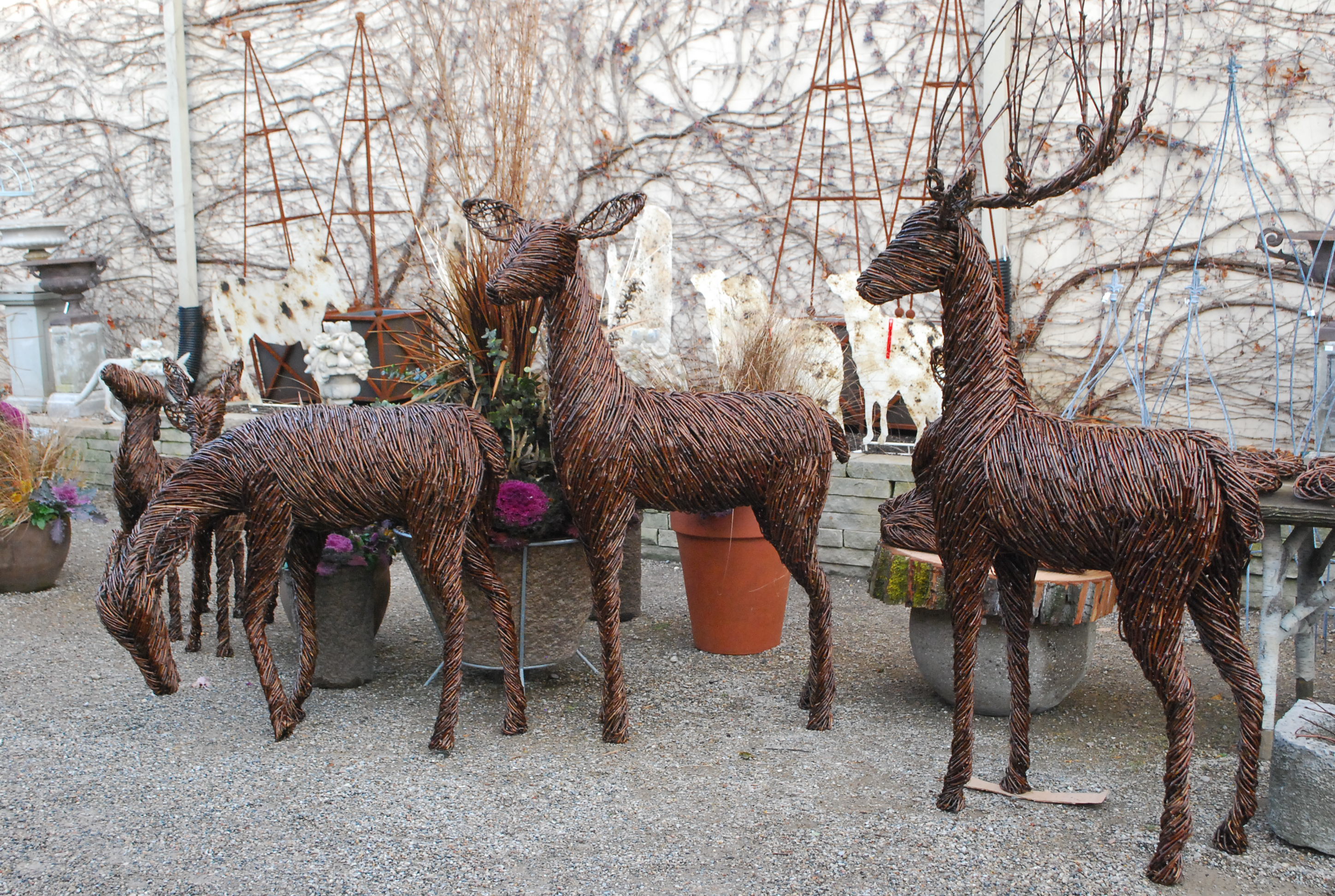
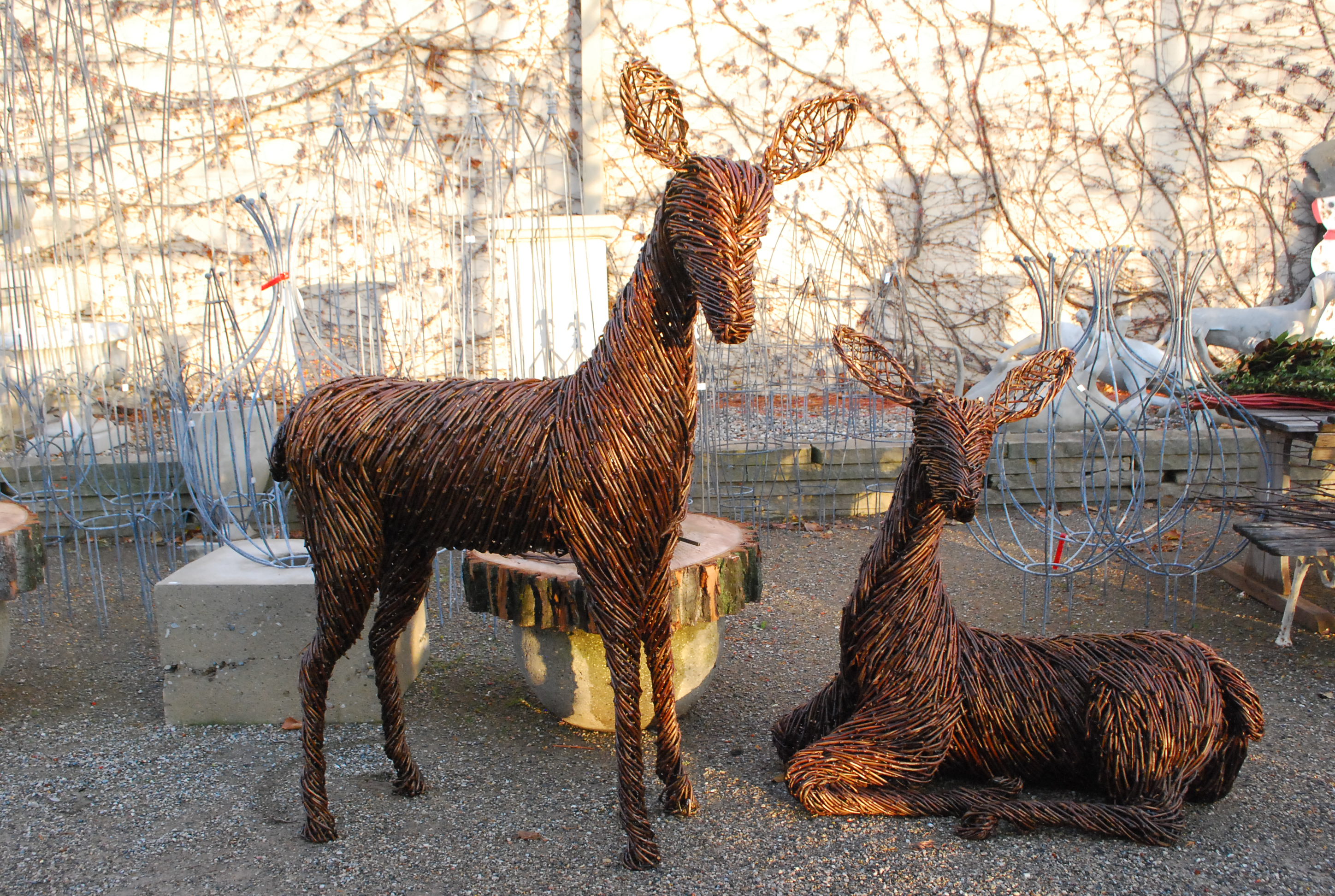
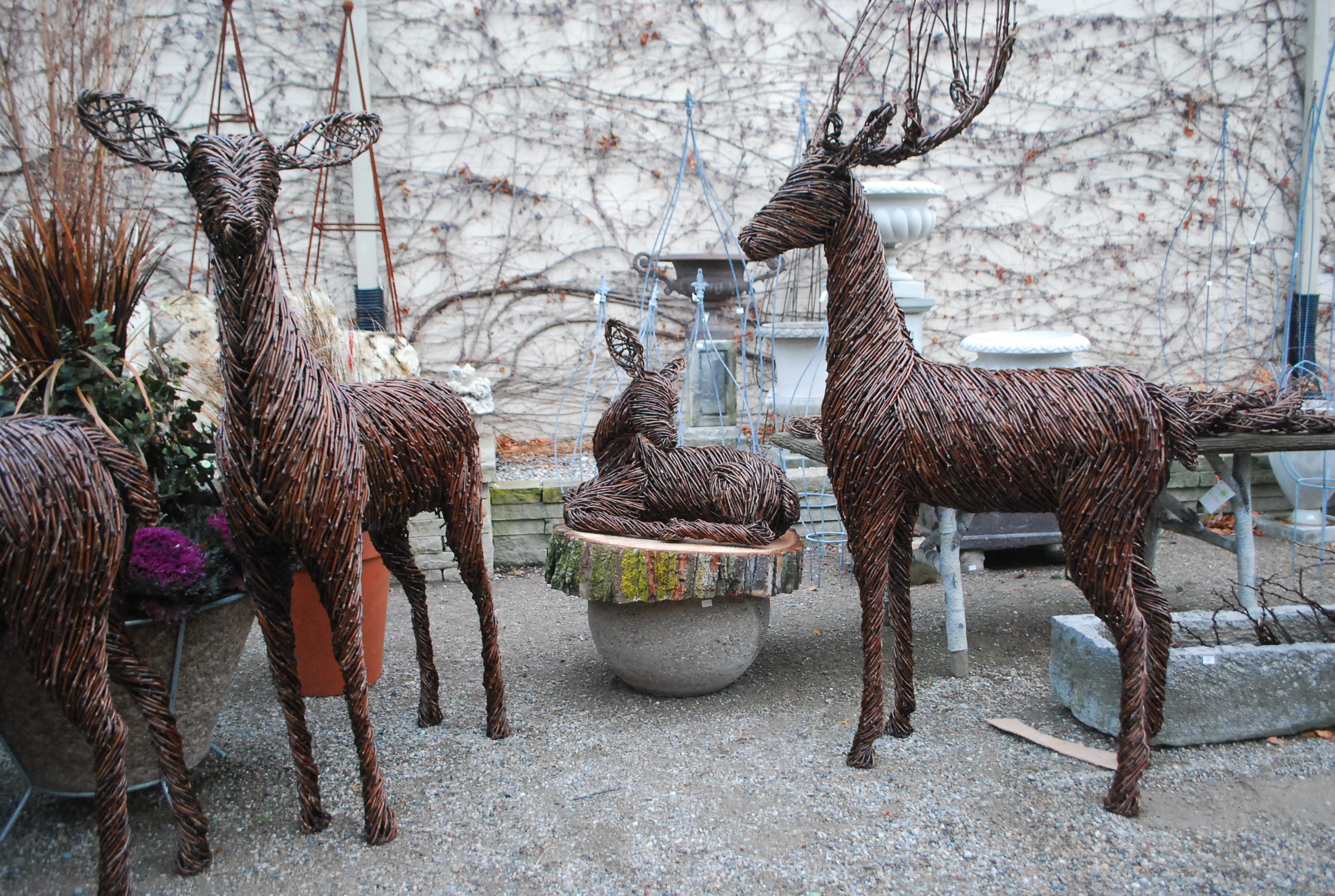
We have offered these life size grapeview deer sculptures at Detroit Garden Works for many years now-I never tire of them.  Unlike the deer that can devastate a bed of hostas, or chew the bark from treasured trees, these deer sculptures are beautiful in almost any landscape or garden.

On the inside, they are heavy gauge welded steel rod.  This makes them incredibly strong and sturdy.  If we place one in a landscape bed, we drive steel rebar deep into the ground next to each leg, and wire the steel frame of each foot to the rebar pins.  This keeps them in place and upright, in all kinds of weather.

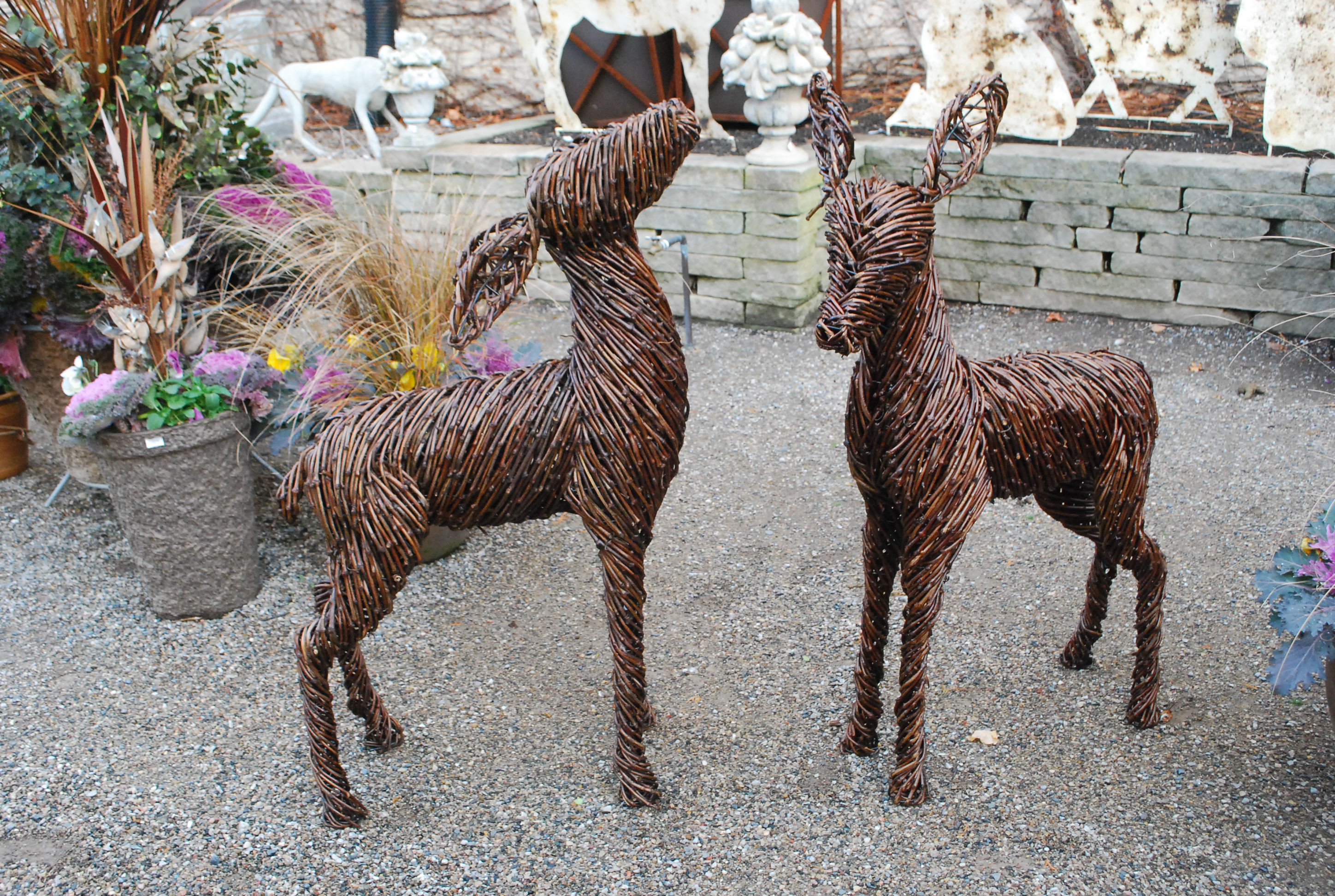
In spite of the steel inside, the sculptures are very graceful, and capture the spirit of the beast.  The long legs and overscaled ears of this pair instantly identifies them as fawns.

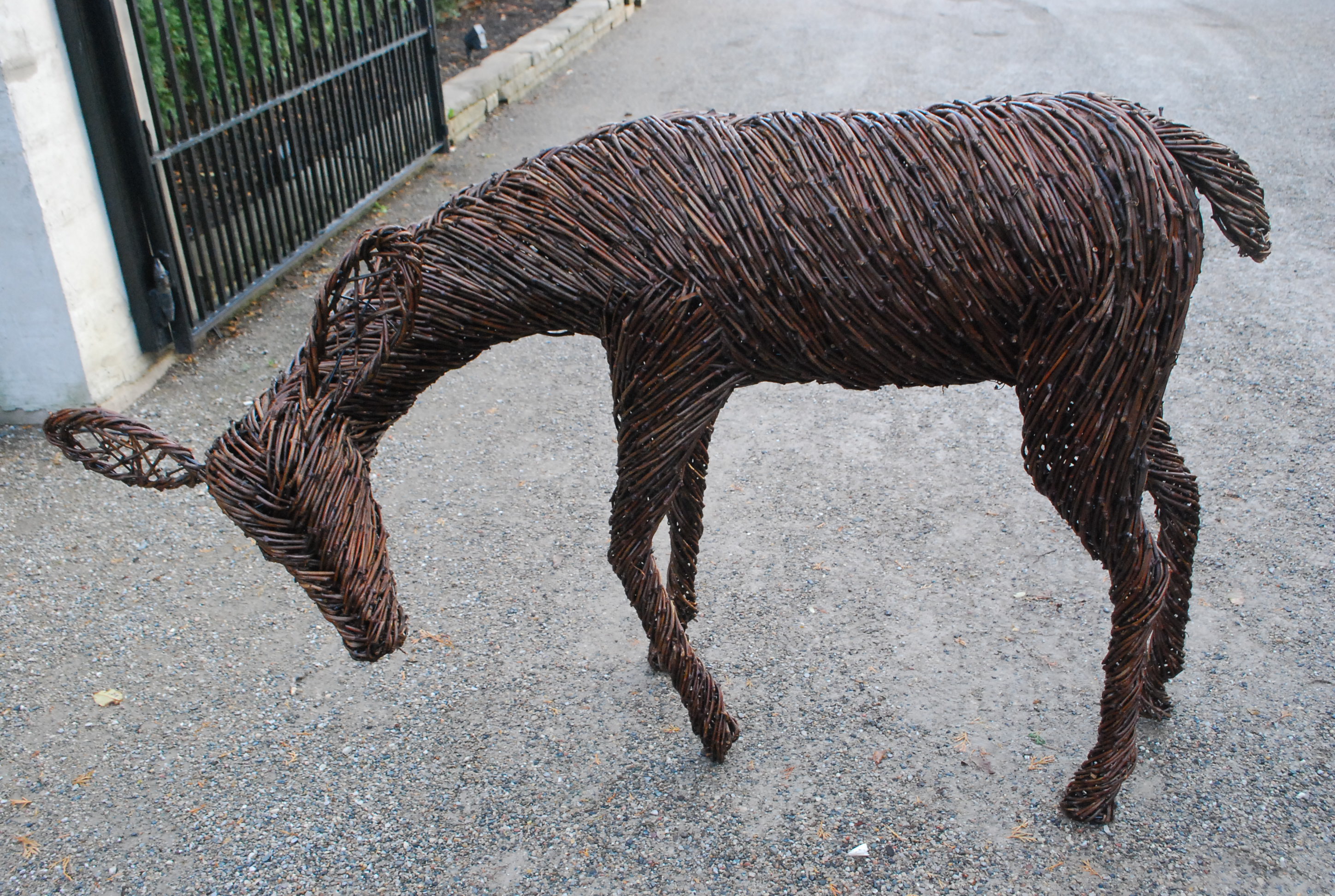
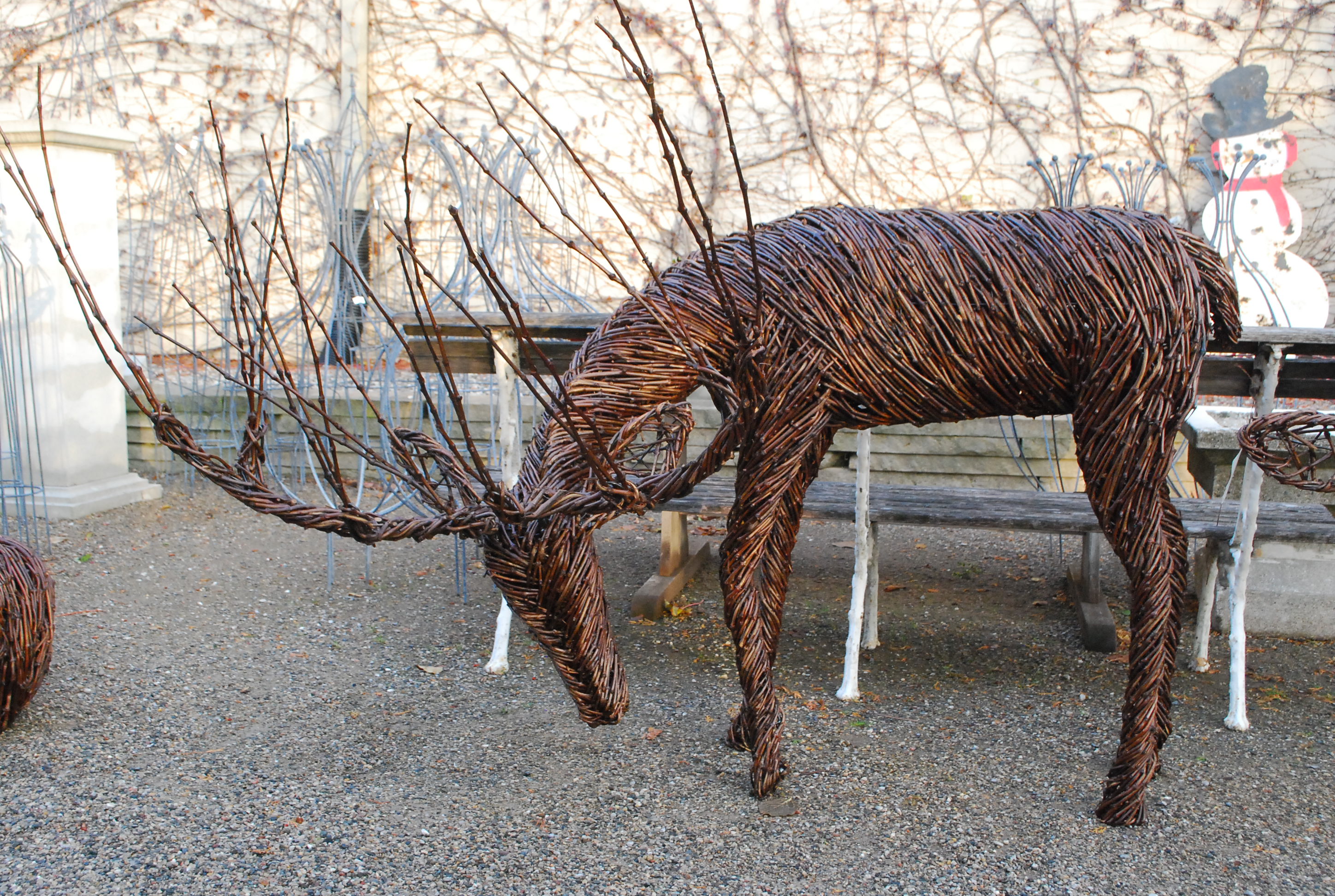
The grazing doe has a long graceful neck and petite sized legs.  The doe, buck and fawn are life size, and can be sculpted in a standing, grazing, or lying down position.  Whether a single deer, a trio,  or a herd, they are beautiful in a garden.  Some of that beauty has to do with the material itself.

Vitis, or grape, is hardy in many places in the US.  Wild concrod grapes are common in my area.  The vines, harvested after the leaves fall, are the basis for many natural sculptural forms.  We have had grapevine cones, spheres, garlands, baskets, trellises, plant climbers, rustic fencing and wreaths.  The vines dry a beautiful cinnamon brown color, and are amazingly durable.

We recommend sealing these sculptures once a year with WaterLox, or a similar sealer.  Properly sealed, they will give many years of service in the garden.  Only one client of mine has had one long enough to send it back to be redone

But the real beauty of the sculptures is the hand of the sculptor.  A small group of perople make these deer.  Once you see enough of them, you recognize the hand.  I do not know their process, but I would guess the vines are soaked until they are pliant, and then applied and worked around the forms one strand at a time.  Once vine section is parallel to the next, and very densely woven.

I feel sure the vines are sorted and graded.  The larger vines form the body of the deer.  Much smaller vines are used to finish the legs, and fashion the feet.  The forms are sinuous and rhythmic.

I am not sure what is so compelling about them, other than to say they are a story about nature in form, material and narrative.  They are not a graphic representation-they capture a certain wild spirit that is hard to ignore.

I still remember the year of the Christmas buck.


Winter Preview


The close of the gardening season in late fall means the winter gardening season is not far behind.  The winter season at Detroit Garden Works had a very simple beginning 10 years ago.  Why does any gardener need to look at and live with empty pots all winter? We began slowly, with a selection of coppice wood twigs, fresh cut greens of every description, and weatherproof berry picks.  People liked that idea, and were game for more.      

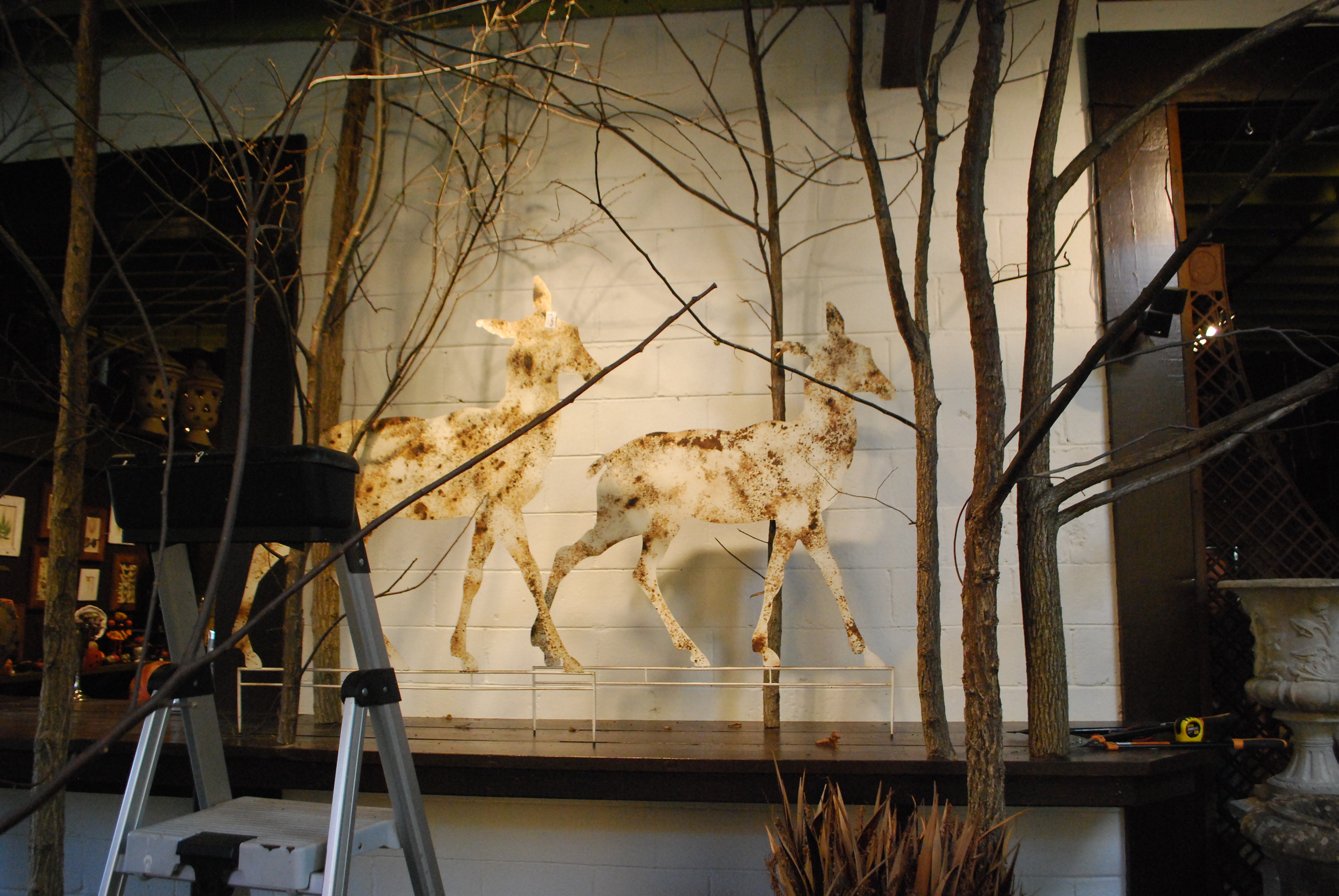
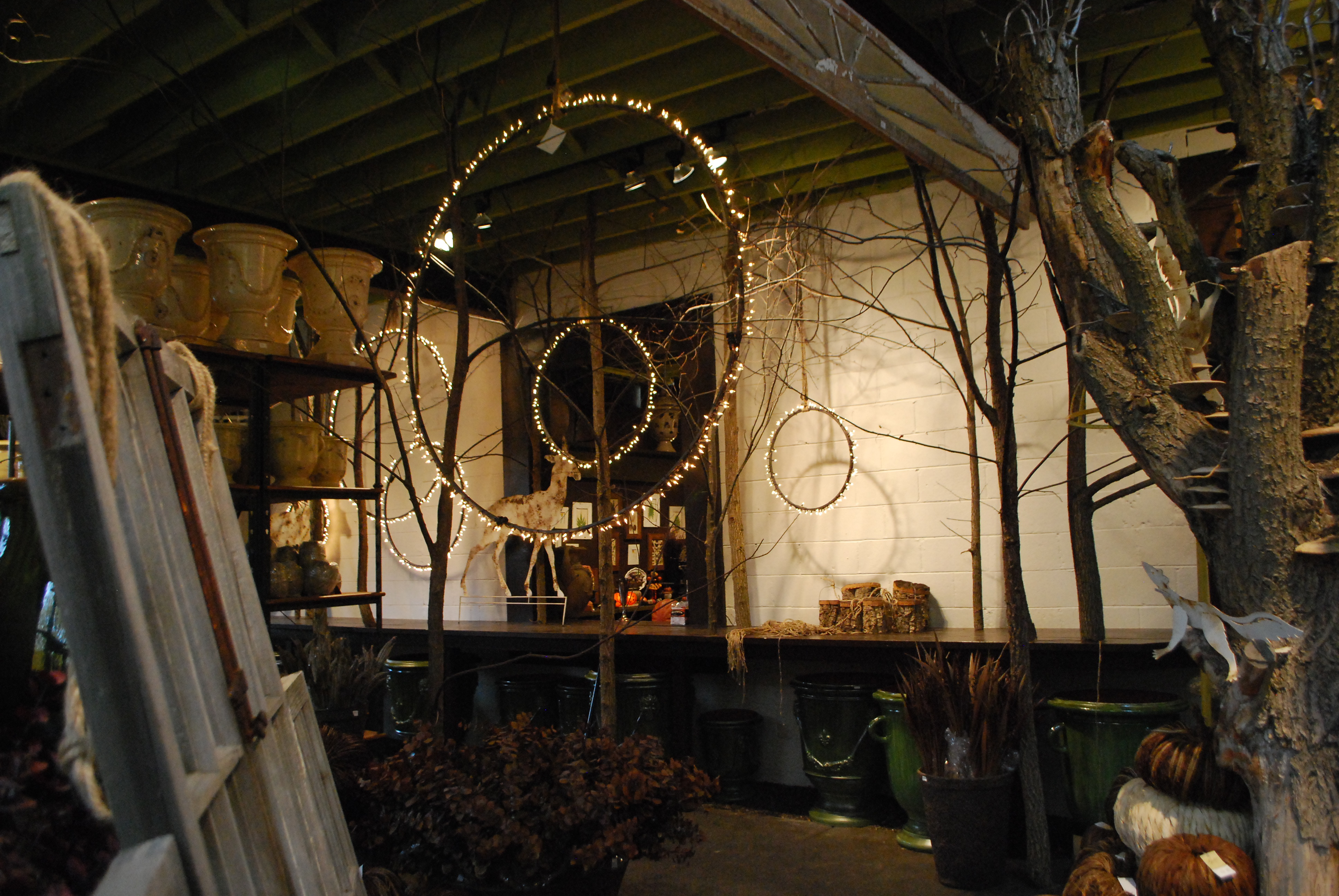
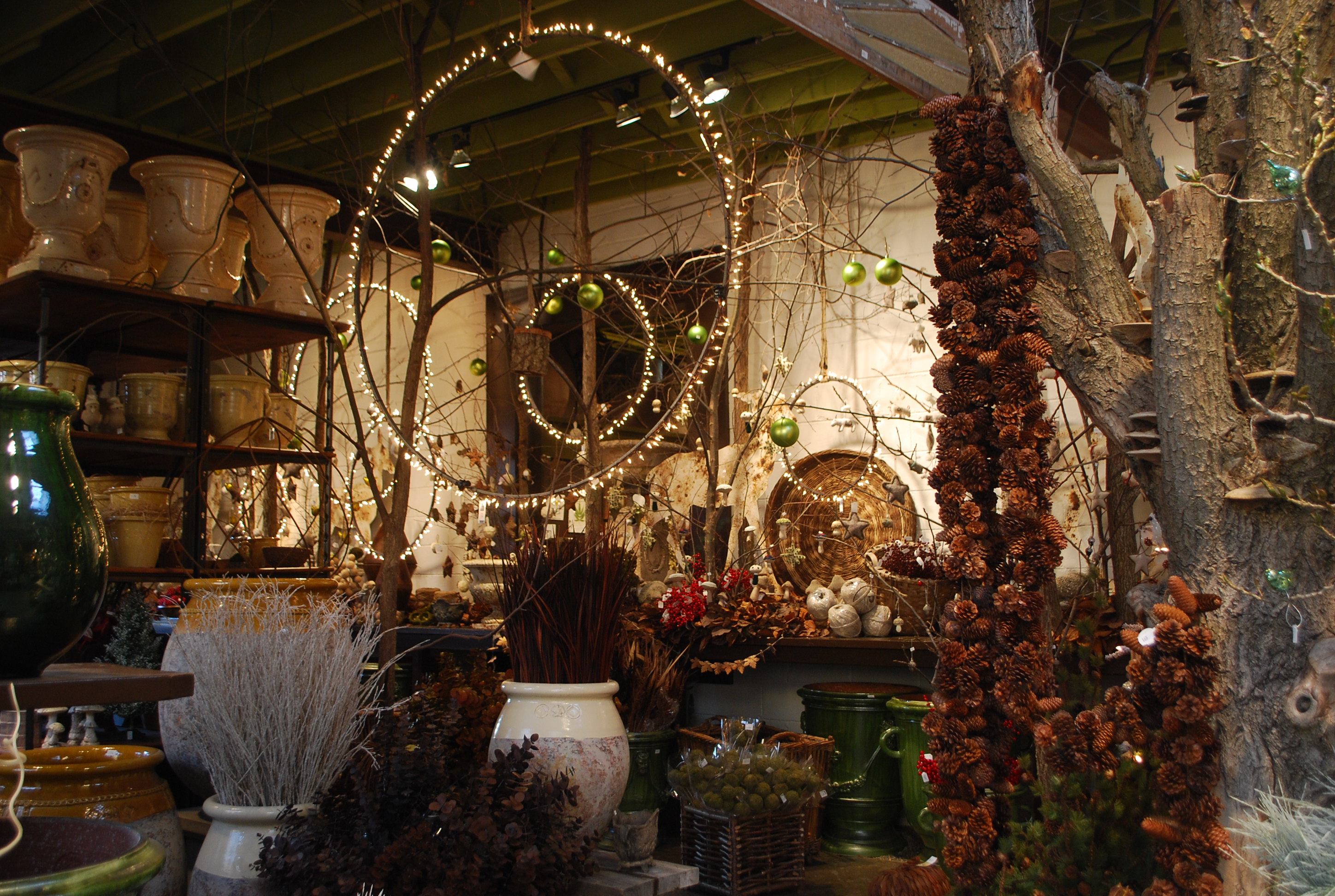
Now we offer a wide selection of materials for winter containers, both natural and weatherproof.  Materials for holiday and winter both inside and out fill the entire shop from the first week of November until the middle of January.  Though we try to carry a wide range of materials that appeal to gardeners of all kinds, we usually have an organizing metaphor or scheme for each season.  This year-the forest floor.  Lots of things get moved around, and every surface gets washed, before we set the stage.  This year, big branches were wedged or wired between the floor and the ceiling. The major and big items get placed. 

Weeks later, the details begin to fall into place.   

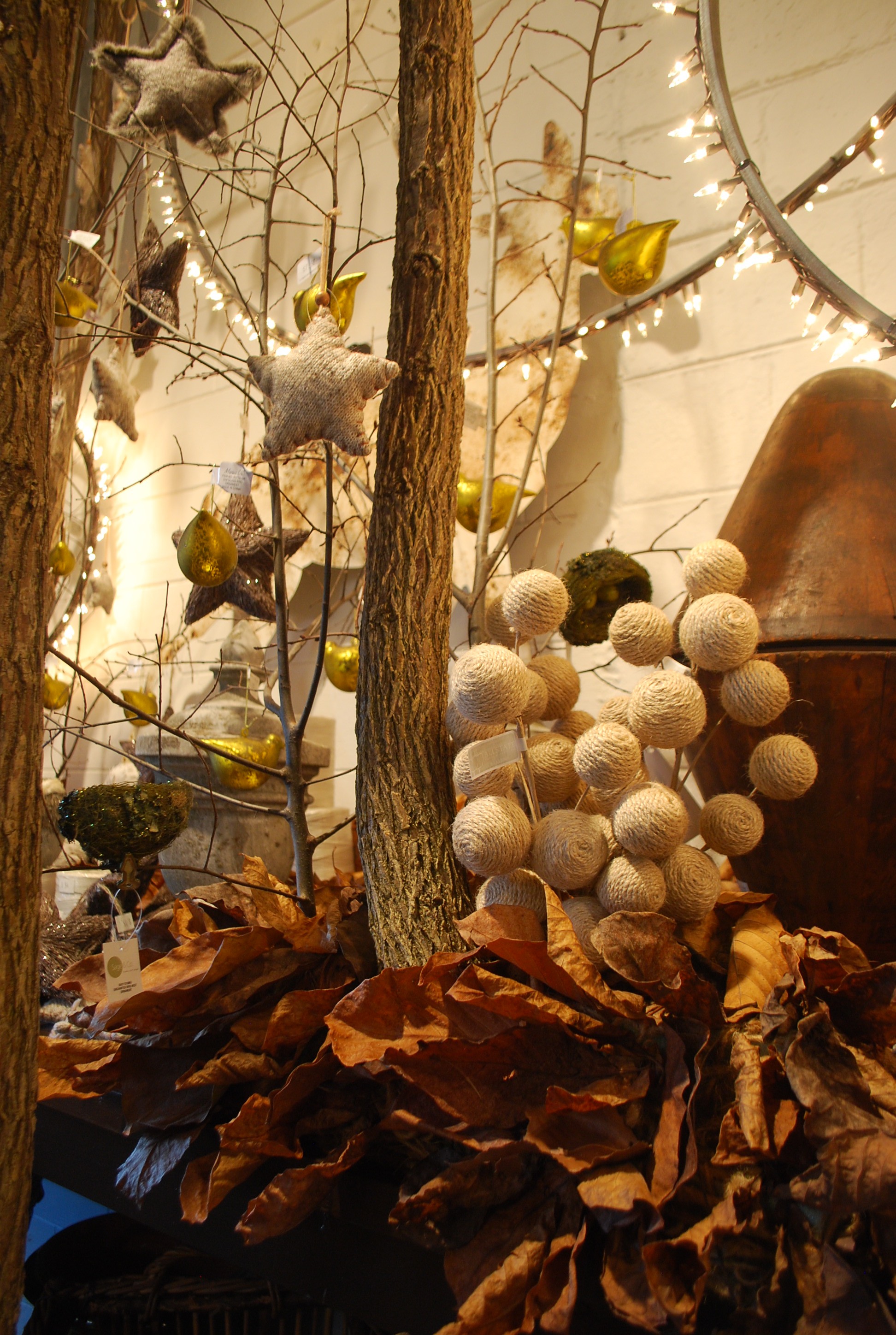
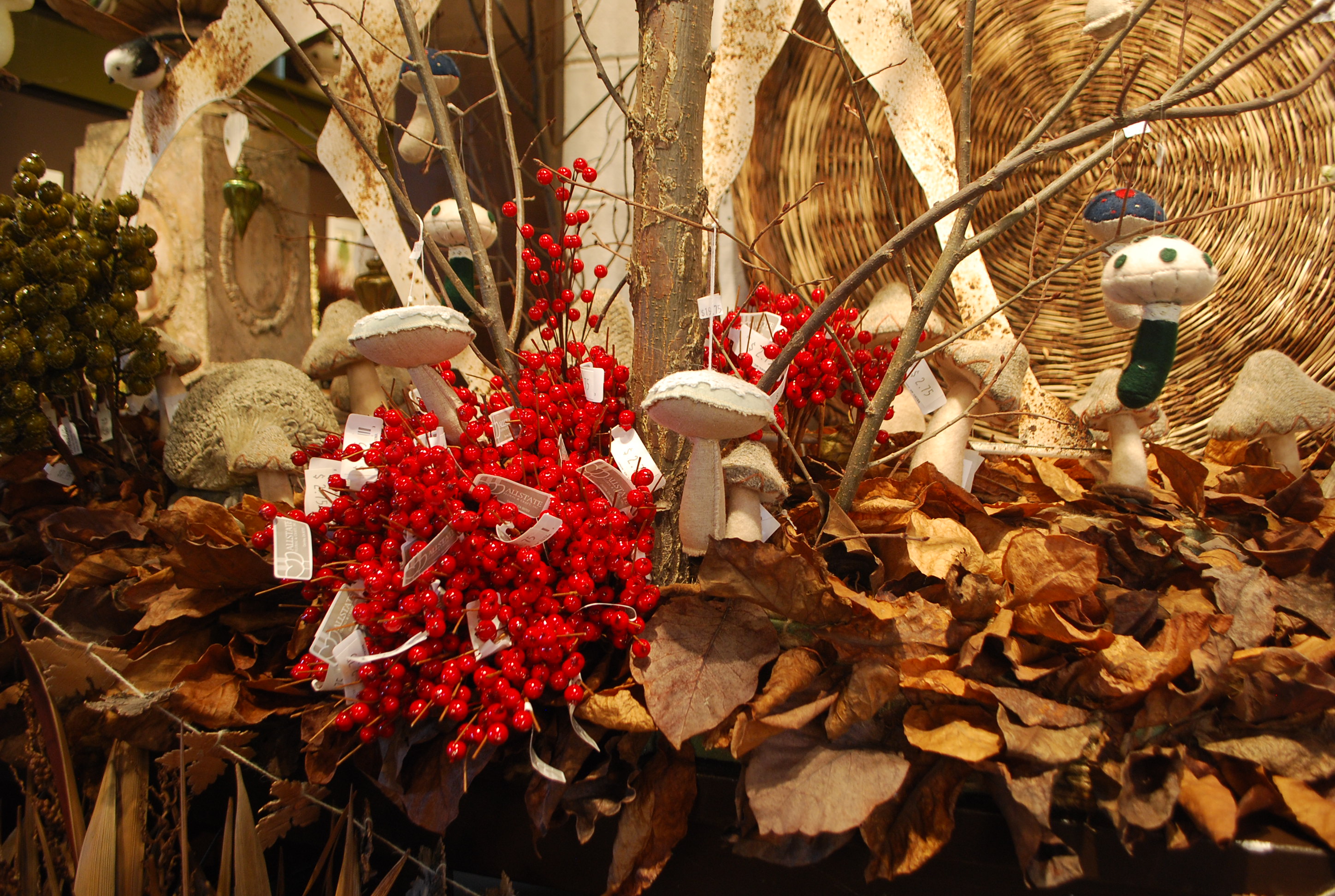
Once the trees were set in place, we needed a forest floor.  We collected the leaves that fell from my magnolias at home the day they fell.  Leaves that have just dropped still have moisture in them, and are flexible.  Of course we intended that our floor would flow over the edges of the shelves.  This meant that many of the leaves needed to be secured to our floor forms with fern pins.  Jenny and I must have gone through a box of a thousand.

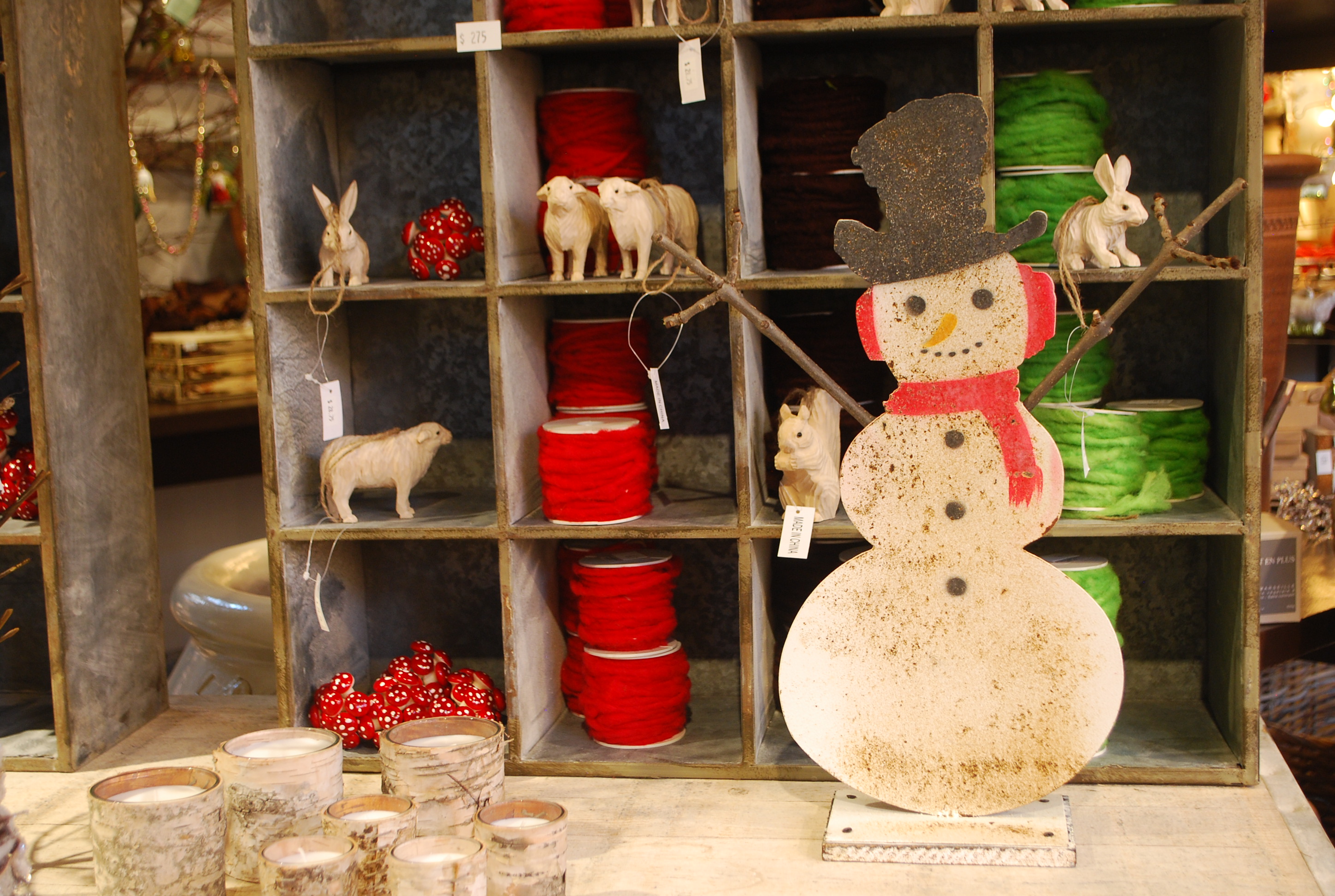
Why all this fuss?  The sourcing and cutting of a collection of giant branches and dragging them inside,  the collecting of the leaves and arranging them made a believable home for everything that we had shopped for.  The shop is not just a shop.  We hope it is an experience of the garden.  Though the short red berry picks and the muslin mushrooms came from different places, they both had a home to go to that made visual sense.

Though there is an incredible variety of objects, they all look as though they belong.  We never open a box, and set it out on a shelf.  The intent is to show how those materials can be used, and to what effect.  And that we celebrate each season in turn, as it deserves to be celebrated.

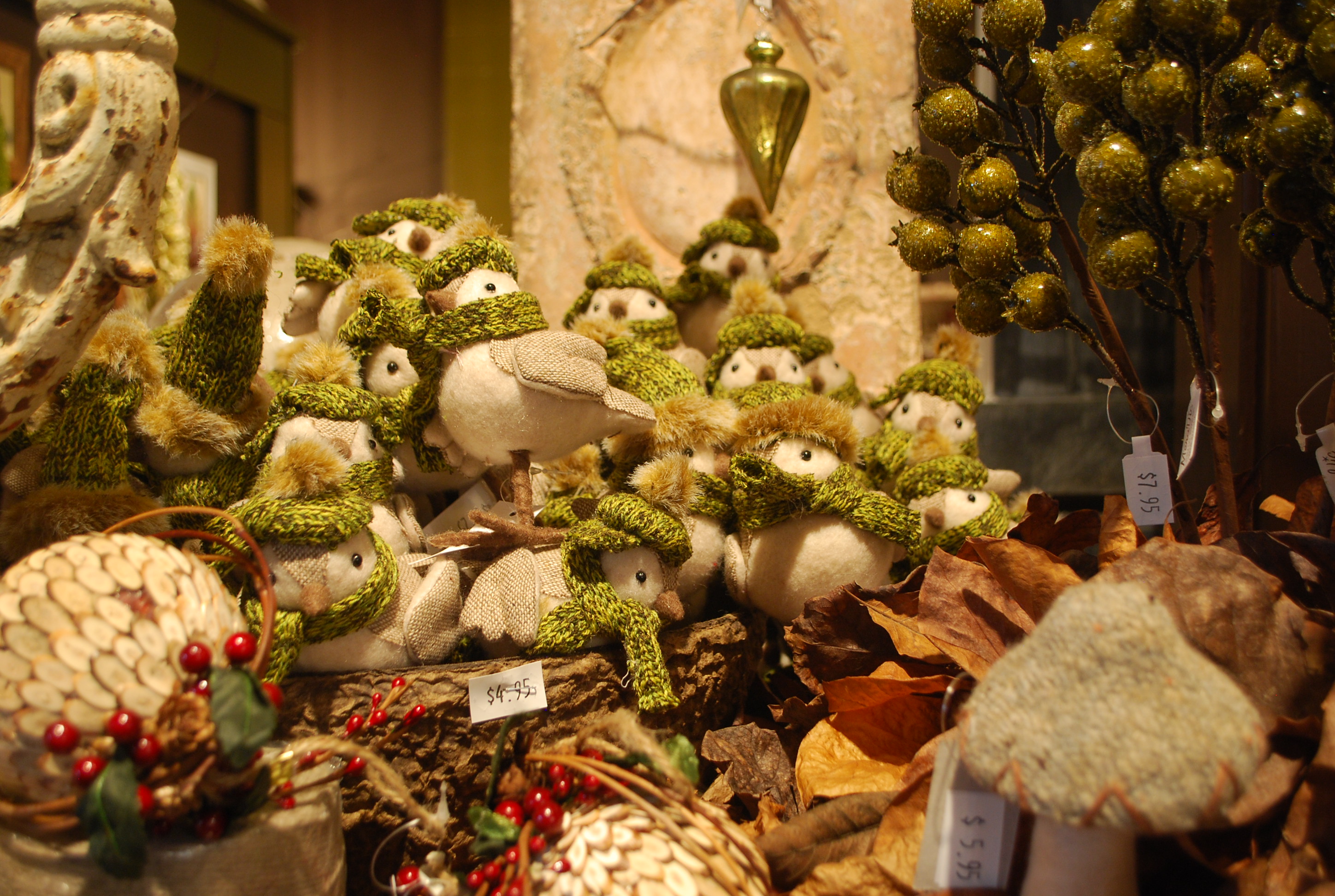
If you garden in Michigan, a sense of humor about the winter to come is a handy thing to have.  These felt birds with their caps and scarves make wry reference to the cold that is surely on the way.  Filling the front porch pots with an arrangement of materials, decorating a tree outside with lights and a tree inside with berry picks, making a wreath for the door-energizing, fun, creative-satisfying. 

Decorating my yard for the holidays is a form of gardening.  Though I am not digging holes, and watering, I am designing with the intent that my winter garden embraces the season, and be beautiful.  Good gardens have a lot going for them in the winter.  The evergreens are beautiful in the snow.  The dry heads of the hydrangeas will persist most of the winter.  The dark angular shapes of the trees in their bare state are striking against a moody winter sky.  To this I mean to add a little cheer.

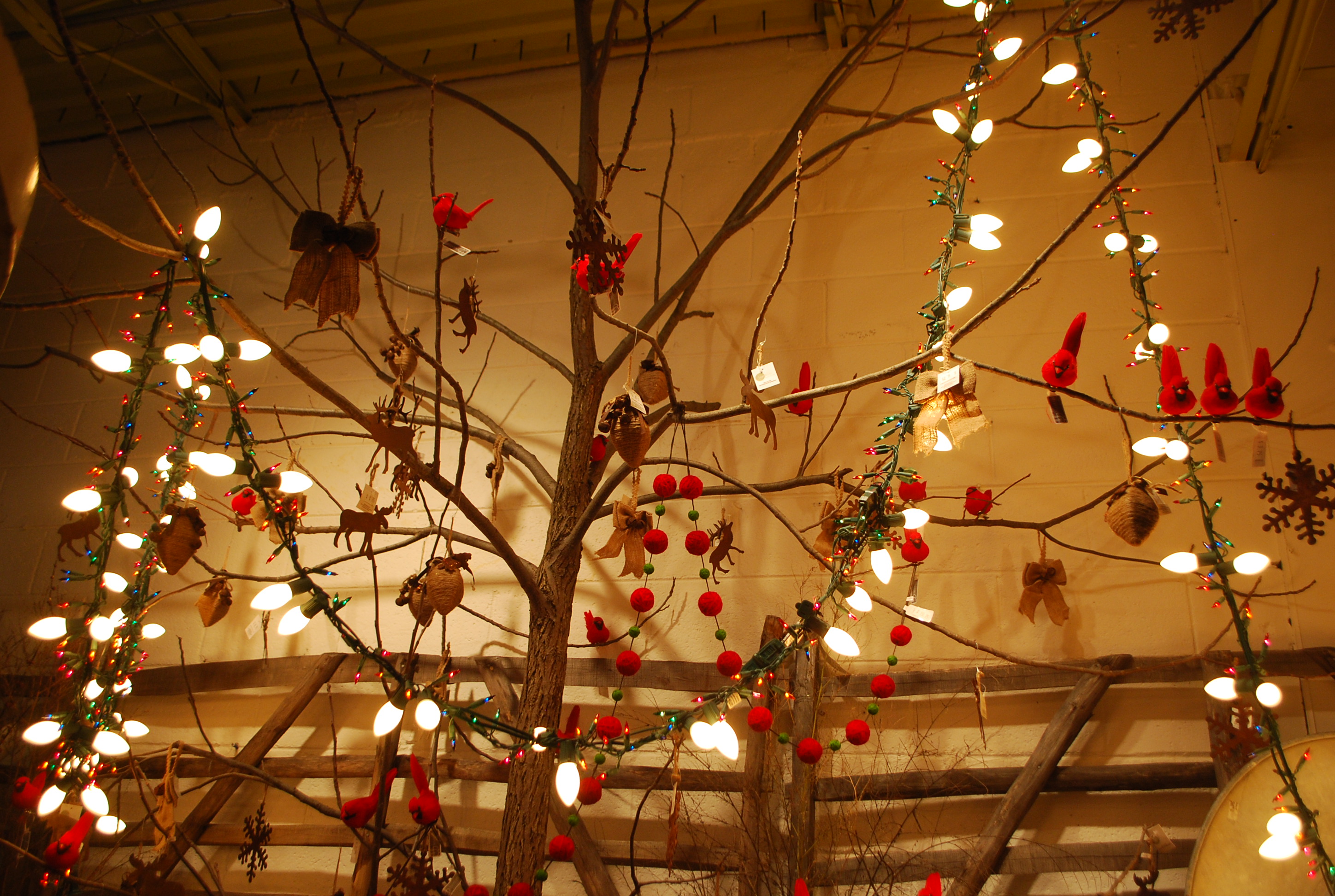
I am thinking I might want a big twiggy branch for a Christmas tree this year.  The bare branches are so easy to load with  lights, garland, and ornaments.  The shop this season is spectacularly twigged out.  Should you live nearby, our winter preview starts this coming Thursday evening at 5, and continues throughout the weekend.   

Our forest floor is by no means all of what we have going on.  It will take every bit of the time left between now and Thursday night for our group to get every last spot looking its winter best. Should you live too far away to visit, I will post lots of pictures in hopes you can get a feeling for our winter gardening ideas.

A celebration of the garden is always in order.


Coppice Wood

Coppicing is a traditional method of producing long straight woody stems by cutting a tree or a shrub back to the ground.  Many varieties of woody plants respond to this drastic treatment with vigorous growth-from the ground.  Coppice wood was used to provide firewood in European countries where the number of trees were vastly outnumbered by a large population requiring fire for cooking and heat.  Shrubby trees wre planted on the perimeters of farms; regular coppicing produced densely twiggy living fences.   

The new shoots emerging from the stump of a tree grow long and straight.  The juvenile growth is vigorous, and the color is vibrant.  In England, the coppice wood from the sweet chestnut tree is still used to make fencing and fence poles for livestock and poultry.  The sweet chestnut is coppicied on 12 to 18 year cycles, and then harvested to make fencing and gates.  The poles come from coppice wood which is allowed to grow upwards of 30 years before cutting. 

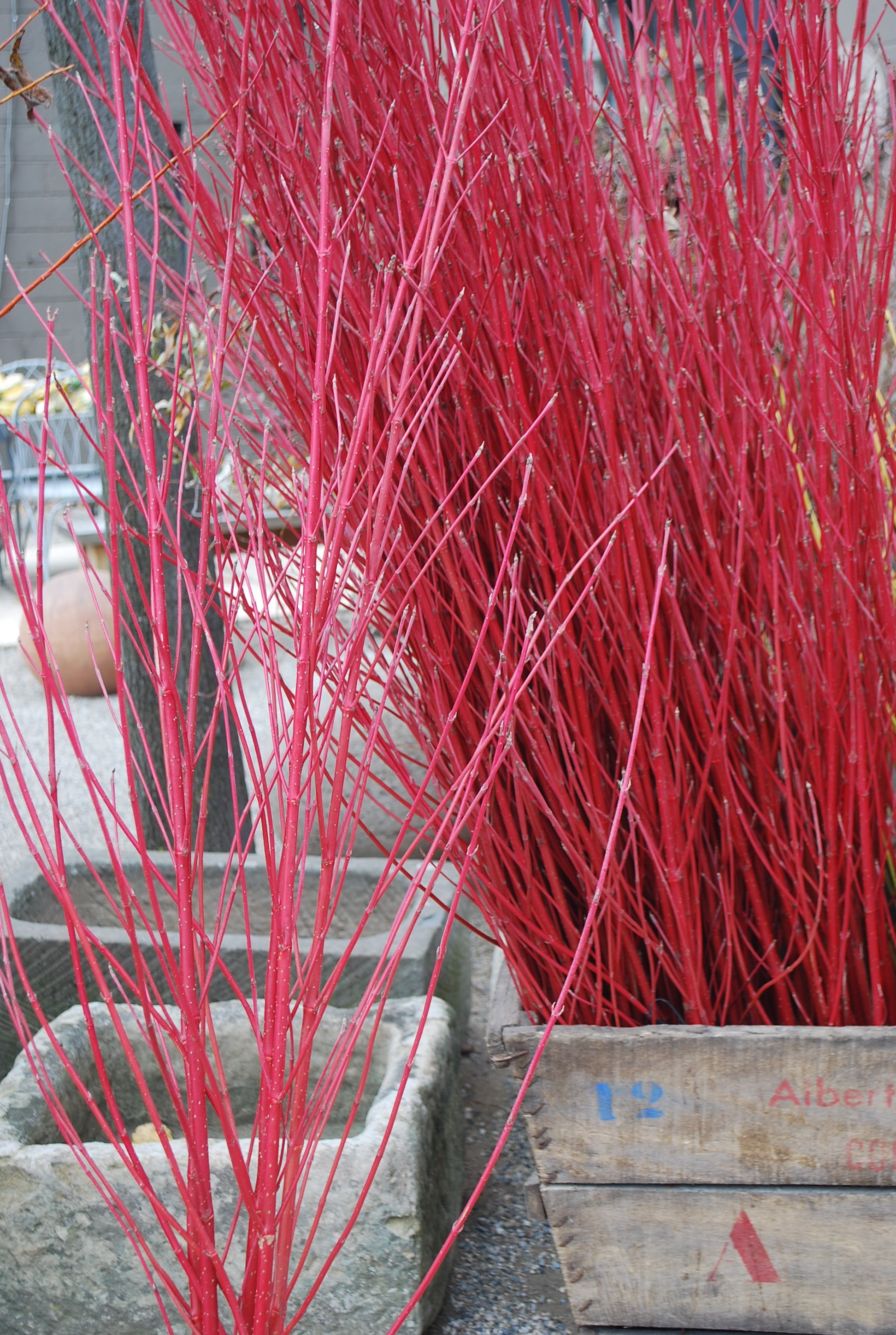
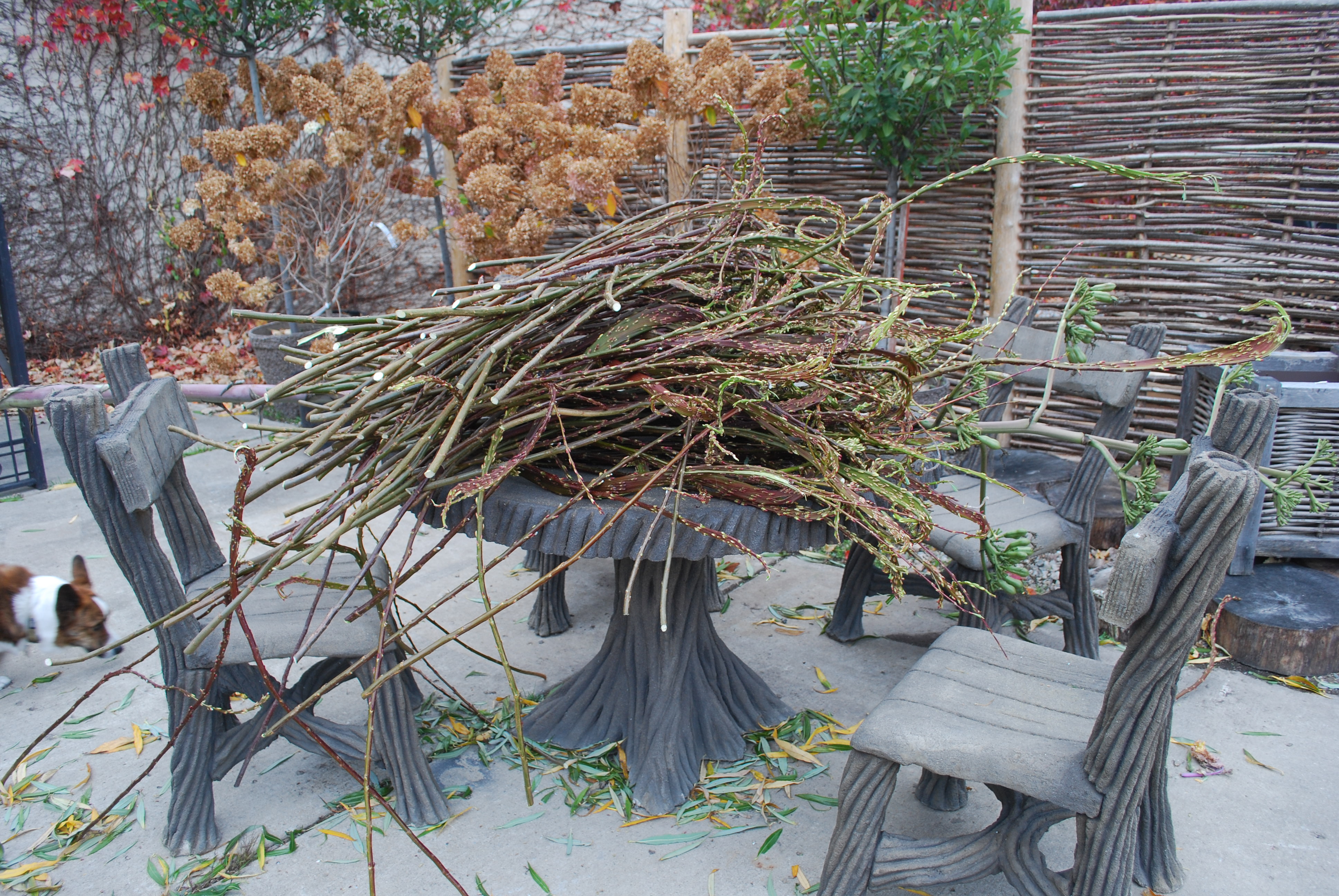
The fresh cut twigs which arrive at the shop in early November are grown by farmers who plant their shrubs in rows or blocks, like crops.  Large fields are harvested in rotation, so every year there is a crop of long straight stems.  Many of our twigs come from varieties of salix, or willow. Every gardener knows that the new or current year’s growth on a red twig dogwood shrub has the best color.  Mature stems become woody, and the color dull.  The new bark of coppice wood is lively.  Newer cultivars of the redtwig dogwood have better and brighter color.  The coppice wood of this redtwig dogwood cultivar is known for its especially brilliant color. 

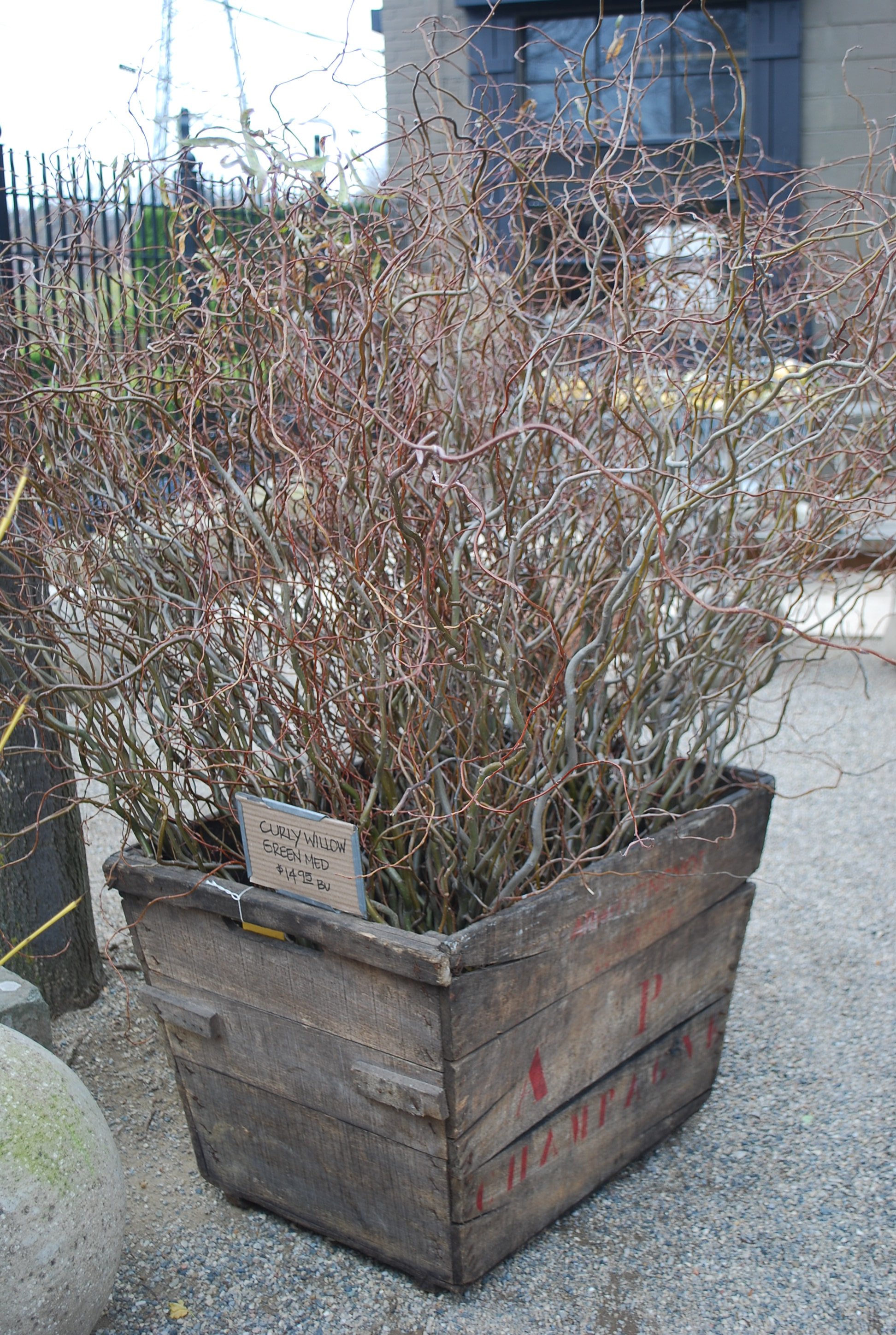
Once the leaves fall, those twigs which are ready are harvested, sorted by length, bundled and shipped.  Most bunches are 10 stems, except for the curly willow.  The winter color of curly willow stems is subtle, but no so its shape.  The curving and curling stems provide lots of volume-these voluminous bunches are usually 5 stems.  5 stems of this gracefully airy and unpredictably curving willow can endow a winter container arrangement with lots of rhythm and movement.

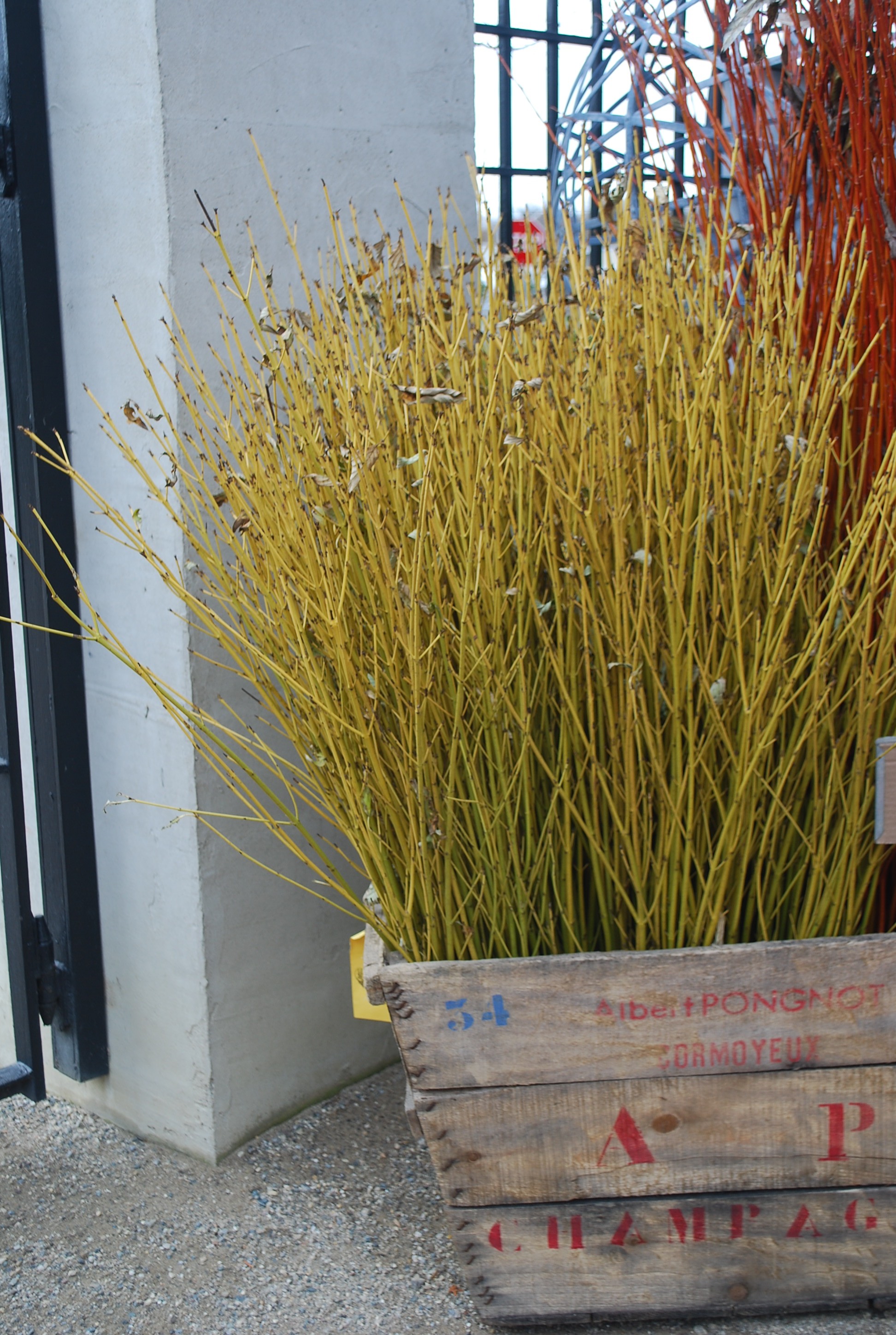
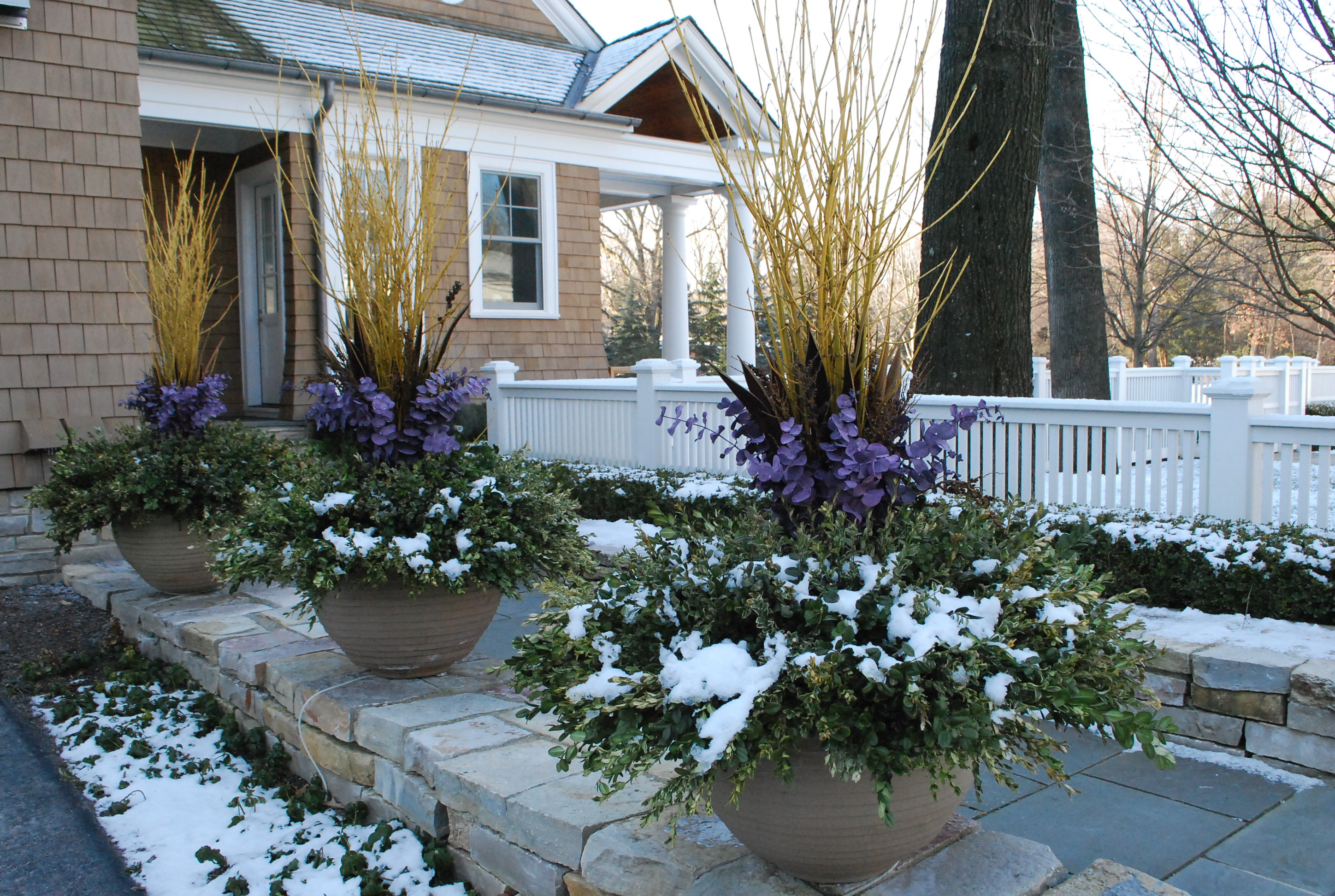
Coppiced yellow twig dogwood is brilliantly yellow green.  The twigs will be color fast the entire winter.  Used in a winter container, it is not unusual for the stems to root, and leaf out in the spring.  Though but a very few of the leaves are still clinging, the branches are vibrant at a time of year when most all else in the garden has gone dormant. 

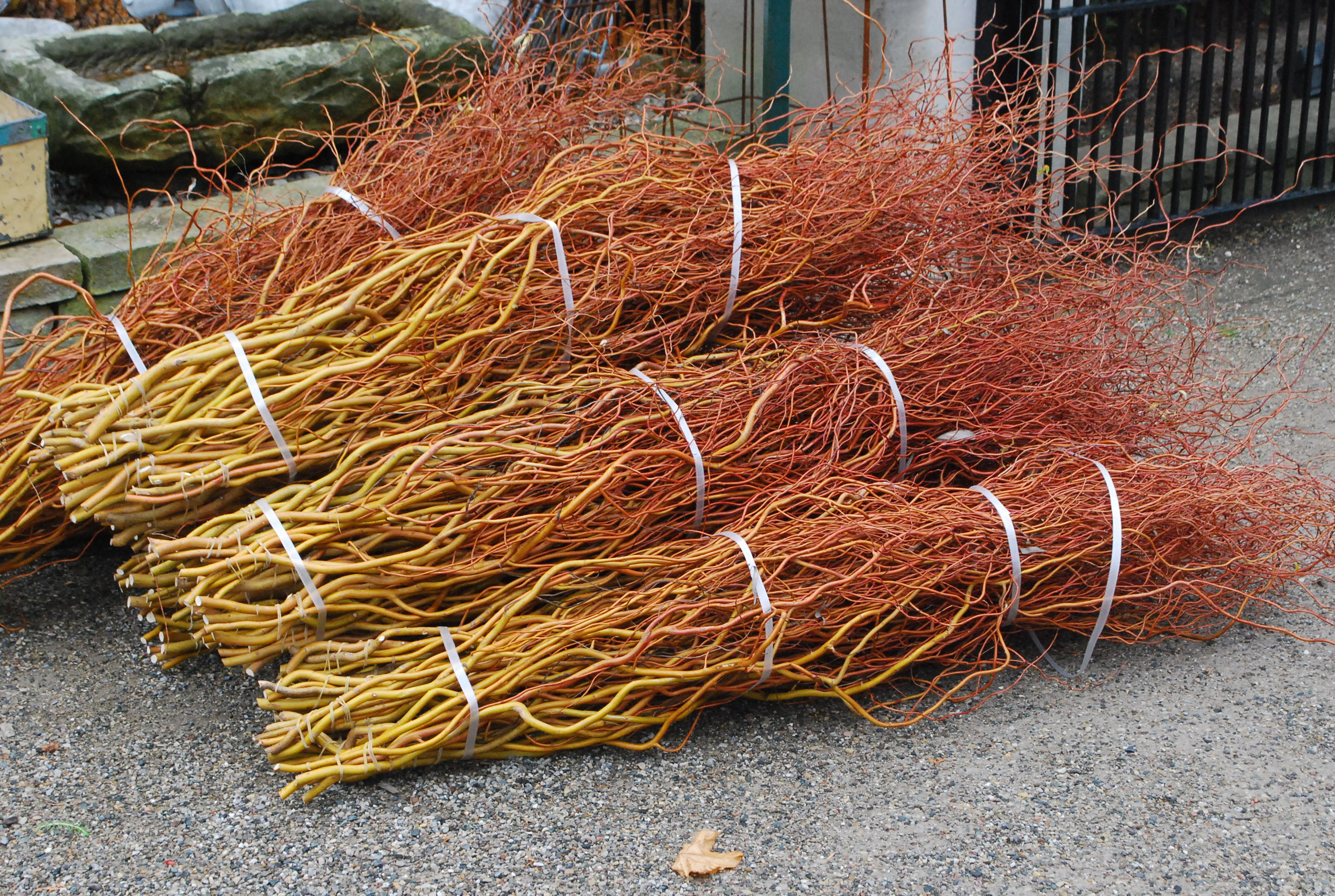
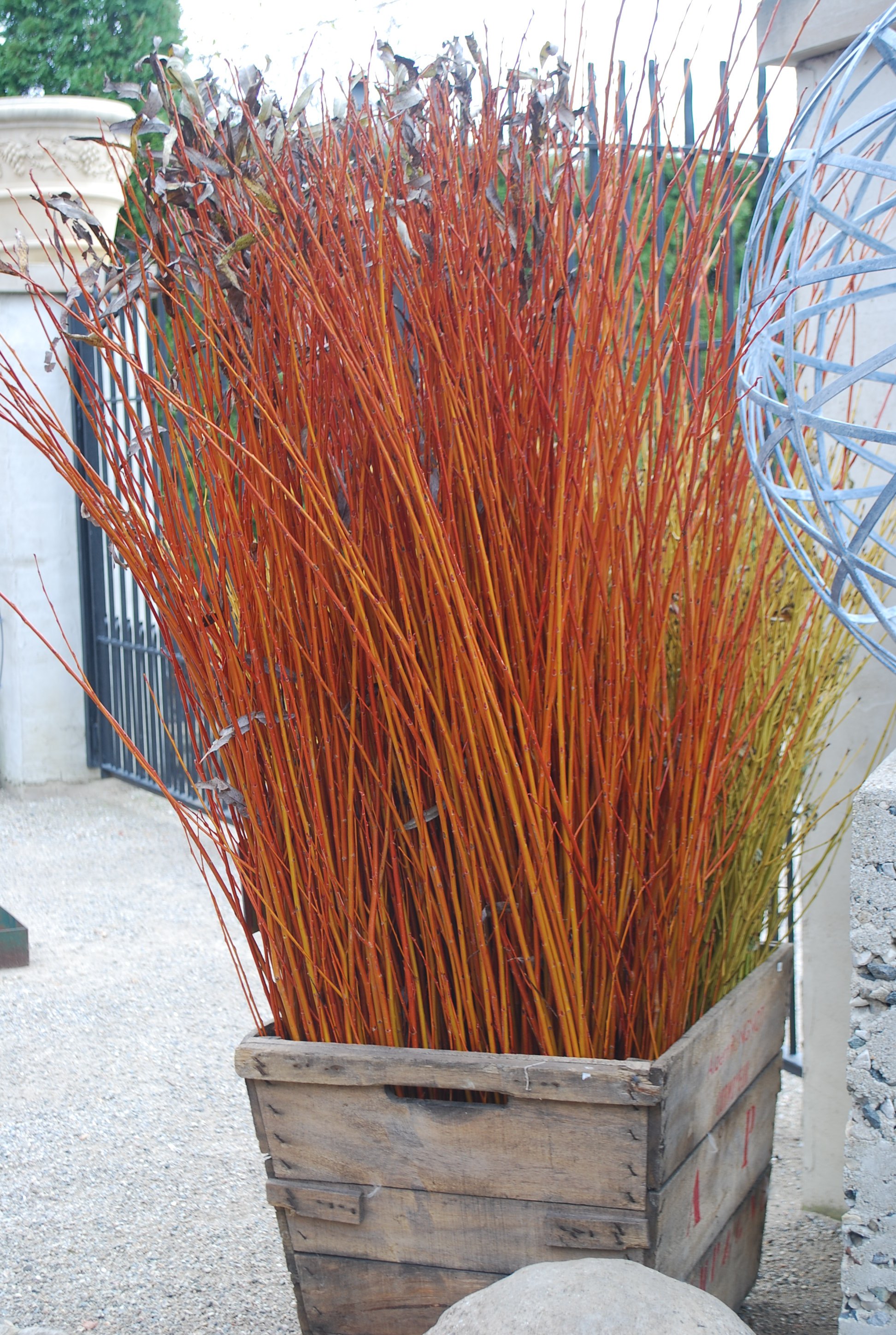
Flame willow is a striking coppery orange in color-quite unlike the bark of the trees and shrubs that grow in my garden.  This warm cinnamon color is a standout in snowy and gray weather.  This variety of willow is much more handsome in its twiggy state than it is as a green-leaved shrub. 

Japanese fan willow was cultivated from a fasciated, or flattened natural stem.  Many perennials and shrubs will exhibit this peculiar characteristic.  Some azaleas that exhibit densely twiggy growth were propagated originally from fasciated stems.  Fan willow is noted for its exotic shapes and forms.  No two branches ever look the same.

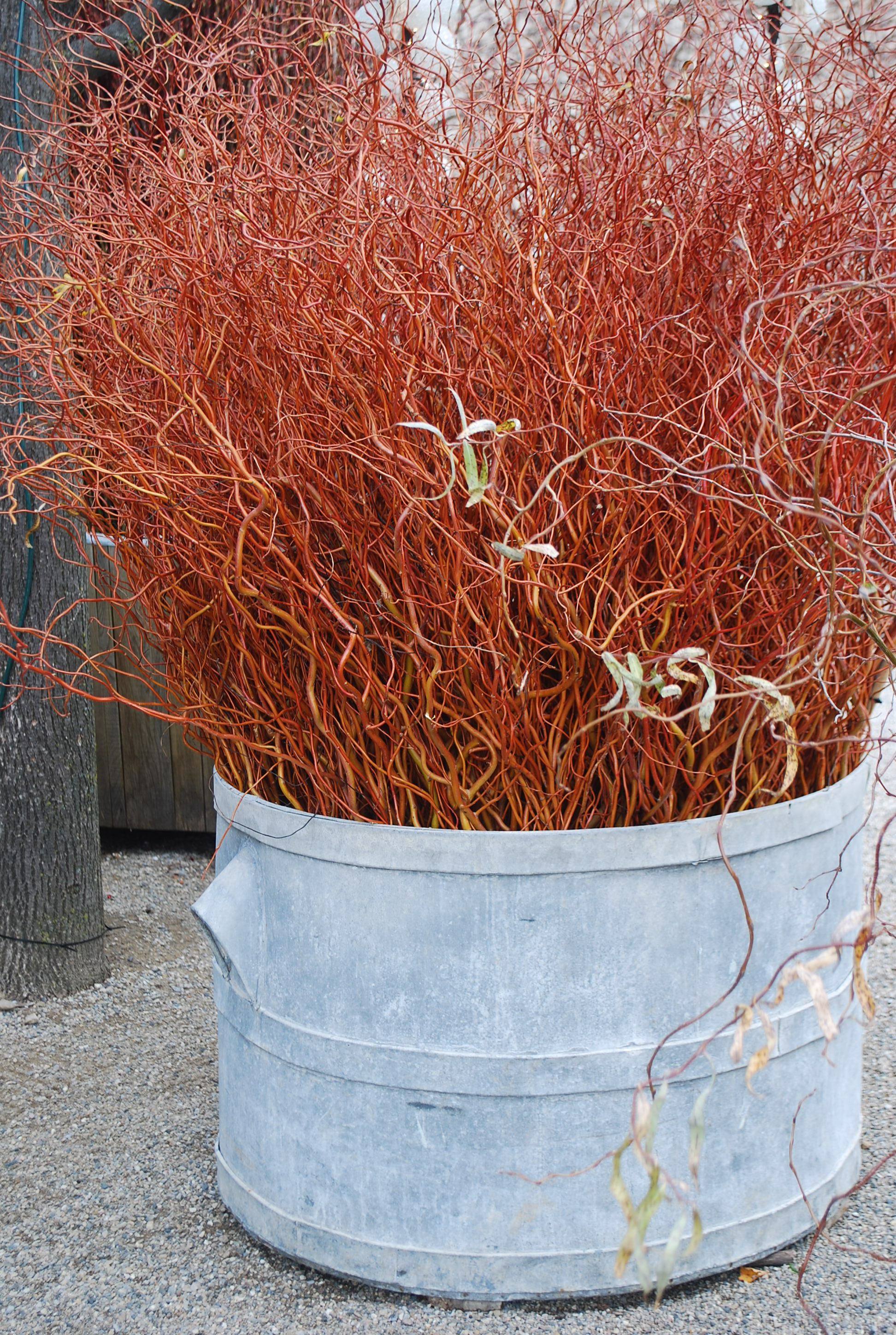
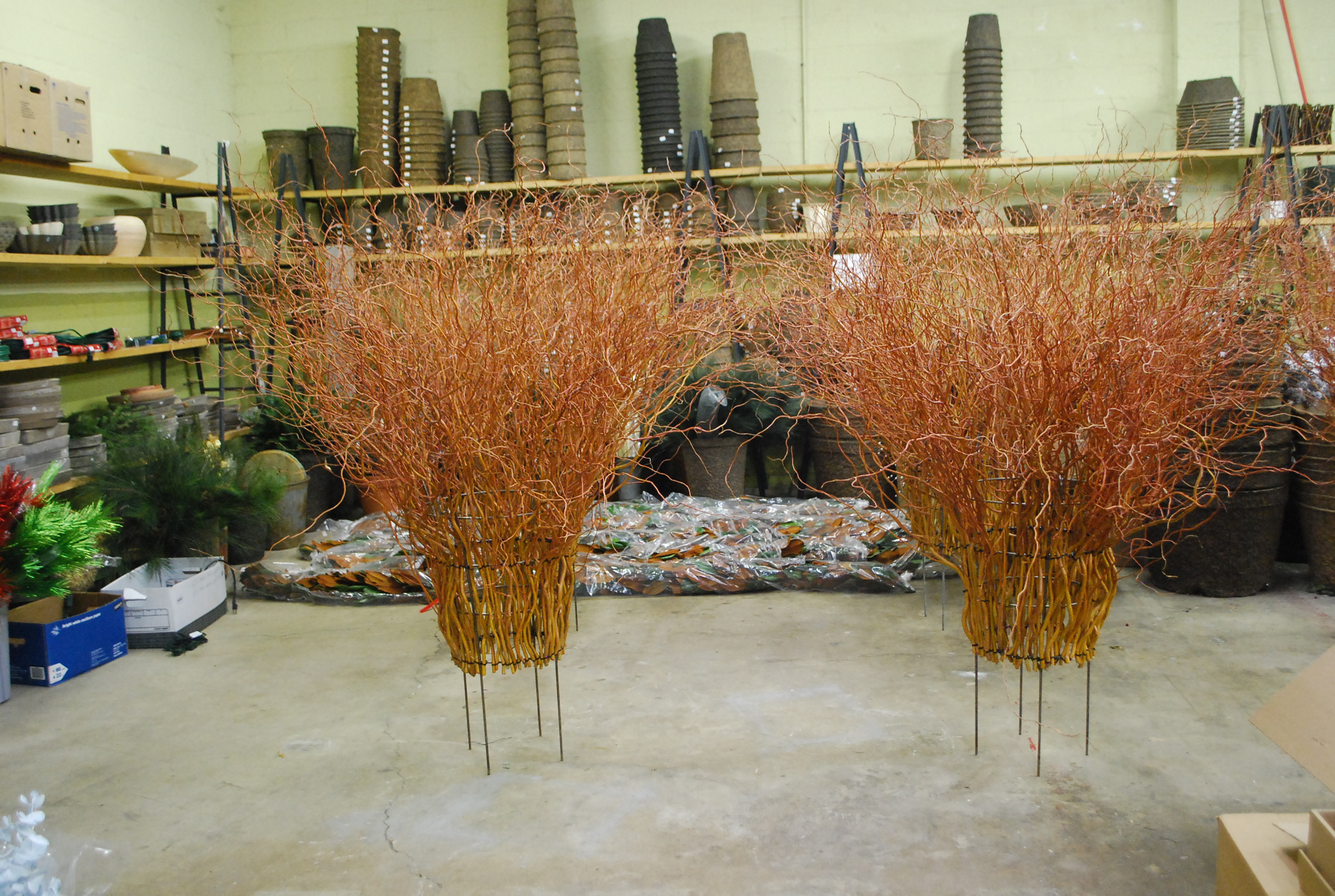
Curly copper willow exhibits much the same habit of growth as the green curly willow.  However the striking color means it will take fewer branches to make a statement in a winter container.  Our coppice wood has arrived at just the right time.  The cold temperatures outside will help keep them fresh, and the surface of the bark glossy.  Thought the color will survive the winter perfectly intact,  the warm weather in the spring will eventually dessicate and shrivel the stems. 

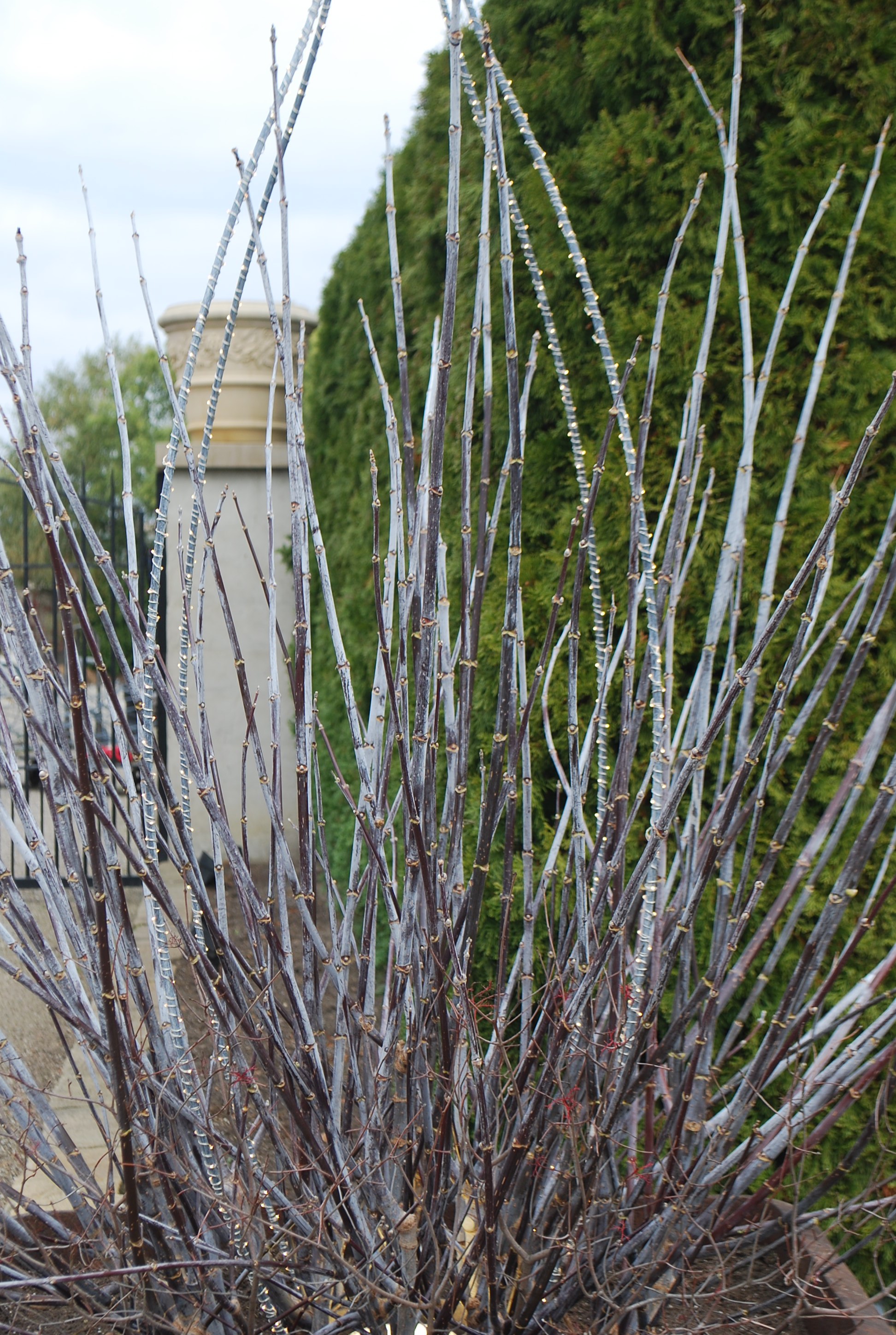
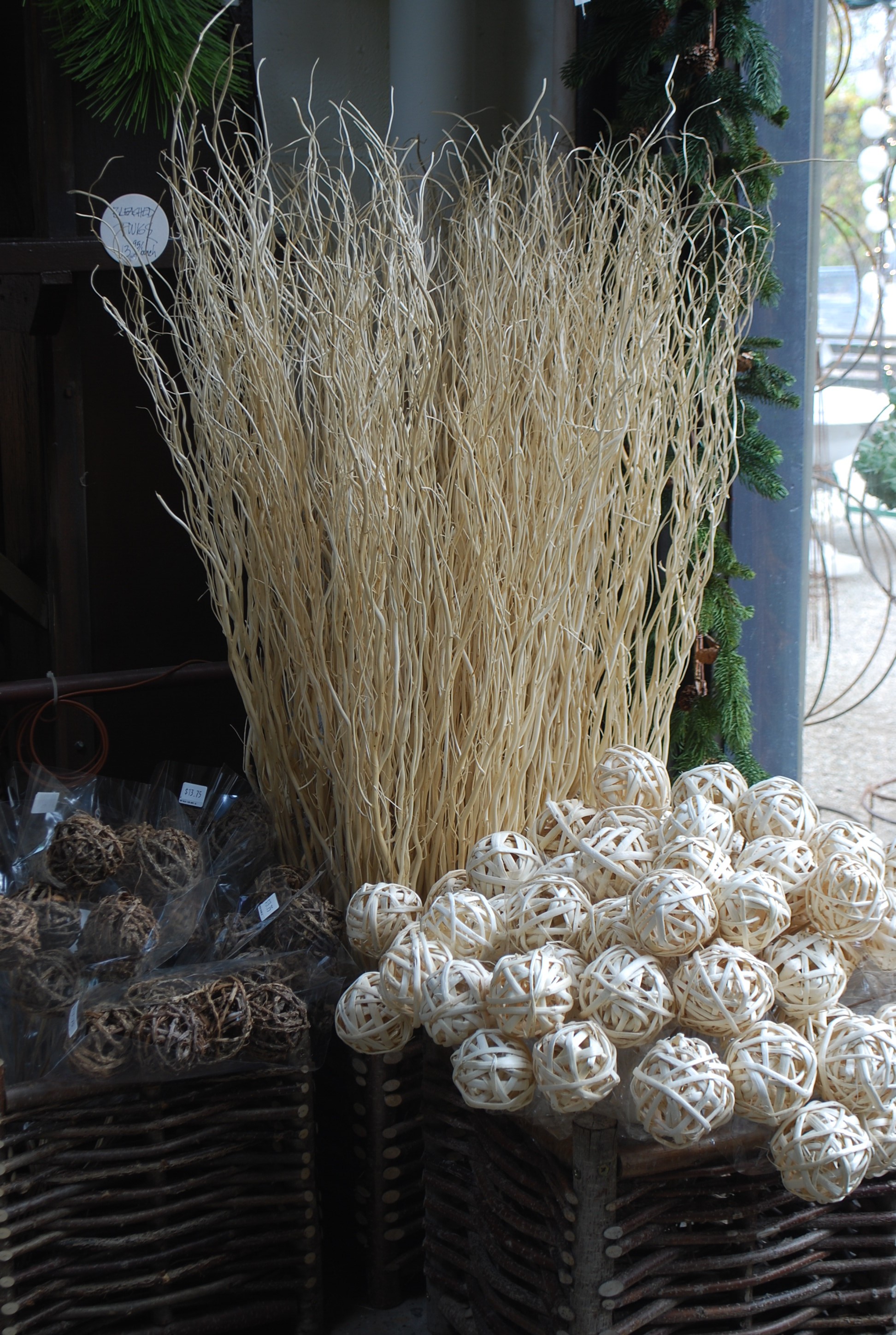
But there is a place for dry stems in winter containers.  Dead wood branches that have shed their bark can be beautiful in a winter arrangement.  Bleached natural branches are dramatically pale in color, and are visible from a great distance.  

The coppice wood-just one element of many that goes into a beautiful winter container arrangement.