 Viola tricolor is a very old garden species-known to most north American gardeners as Johnny Jump Ups. This weedy and equally cheery viola will seed with abandon, once you have it, and have it happy. It has many common names in England; “Pink of My John” is my favorite of those names. Many of the common names for violas have to do with the part of love that is pure folly-any gardener understands all about love and folly. Pink of My John may perfectly describe my relationship with my garden. I had a wild garden of considerable size many years ago-the grass in that area was overrun with every color of violet imaginable-how I loved this. Viola, violet, pansy-I am a fan of the entire range. In the early 19th century, Viola tricolor was crossed with a variety of other viola species, resulting in the hybrids viola x wittrockiana. Simply stated, the pansy.
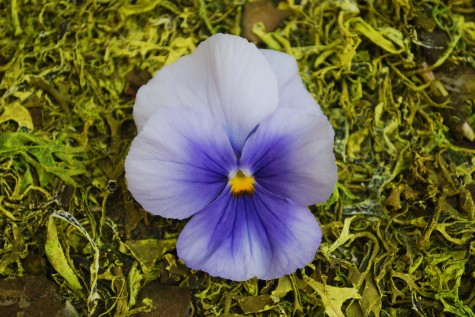 The word pansy derives in part from the French word “pensee”-which literally translates as “thought”. Pansies frequently have dark faces-thus the human reference. I myself am much more fond of pansies without faces-I like my spring color clear and strong. The “Clear Sky” series of pansies are remarkably floriferous, and come back reliably from a fall planting in my zone. This Clear Sky light blue, with its darker blue blush is so distinctively a sign of spring. I know of no other flower, in any other season, that has this color. Several years ago it was the thrill of a lifetime to be in Texas to see the blubonnets blooming everywhere in late March. For one wild moment I thought I would have to move to Texas, just to have that blue in my life.
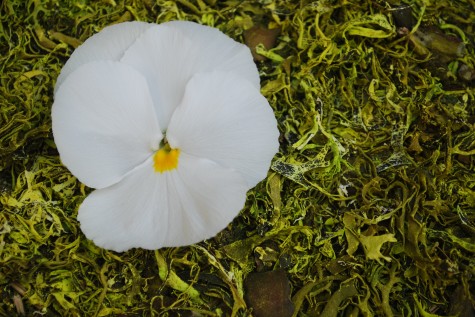 White flowers-I could write at least a dozen essays about their appeal. The white pansies are a little shy in their blooming until it warms up-but when they do bloom, you notice. A pansy flower does have the most beautiful form-does it not?
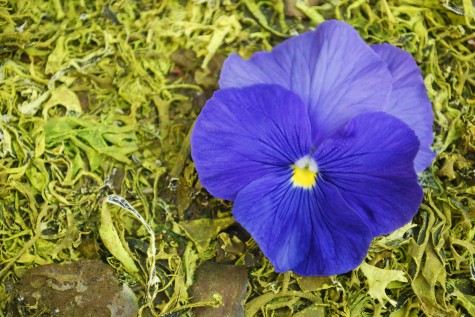 Clear Sky blue is just that-saturated sky blue. Pansy flowers have little substance; they are thin petalled. In the right situation, the sunlight coming through this pansy is an experience of color that no paint could ever deliver. Living blue. All of us who have endured a very long winter-the signs of life are more than welcome.
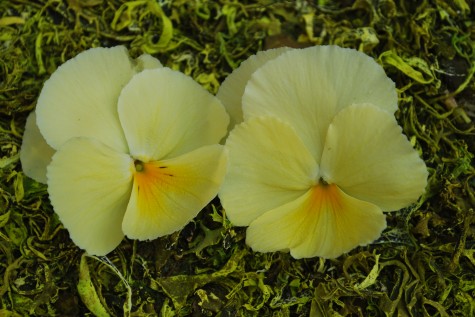 This viola is from the Sorbet series-Lemon Chiffon is an appropriate name. Plant hybridizers are those scientists behind the scenes that breed plants for great color, heavy flowering, disease resistance-and in the case of pansies, heat tolerance. The new hybrids of pansies can perform non-stop through the end of June in my zone. As I do not plant my summer pots until all of my clients pots are done, a spring planting tides me over.
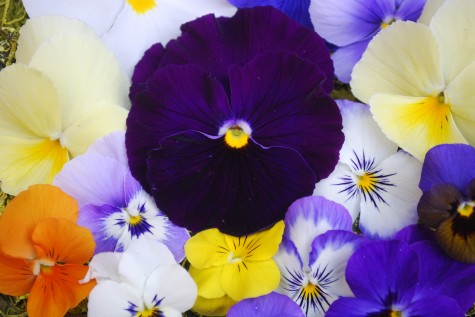
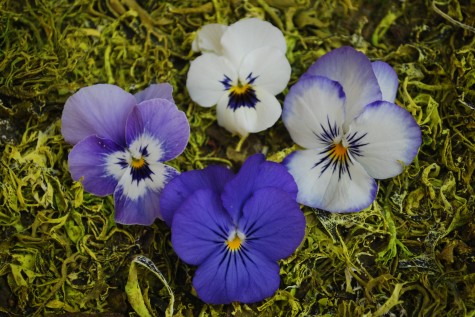 I like seeing hybridizers introducing color mixes. This mix called Ocean Breeze- has four related color groups-and everything in between. Masses of an identical color are dramatic. Masses of varying and related colors are charming and friendly. These violas are notable for their dark lines-known as whiskers. The whiskers-are they not beautiful?
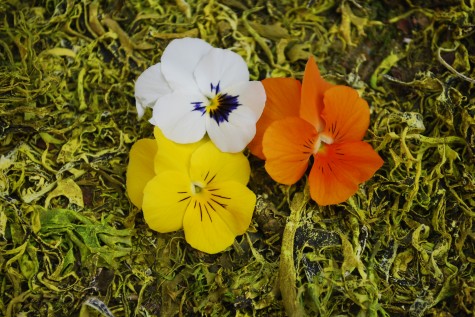 These violas represent another mix; the citrus mix comes on fast and blooms like crazy. Planted up, there is a rhythm and beat that is really tough to ignore. Such small flowers, organizing a following-I am impressed.
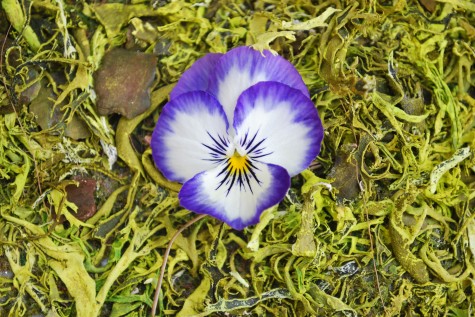 This purple picotee pansy is a new one for us this year. Mark assured me that he saw it perform well in trials. The whiskers, the white, the purple edges-a happening.
My advice; don’t skip the spring. Leap into it; you will not be sorry.
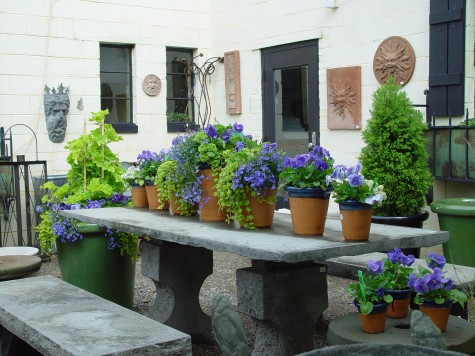
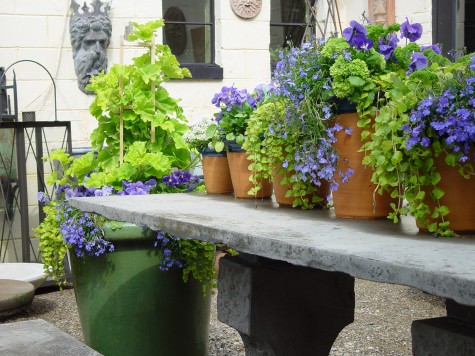
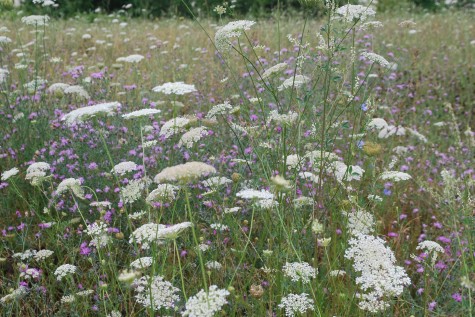 It is preaching to the choir to suggest that gardeners are inspired by plants-of course they are. No one would put up with the work, the unfriendly weather, the failures that hang on forever and the joys that are fleeting, should they did not feel compelled to grow plants. It is not preaching to the choir to suggest that some designers are not interested in plants. You can instantly spot a project where plants are treated as an architectural side note, rather than a living thing that needs proper siting and care. The plants are the language that enables a garden to speak clearly. The plants can also be as important an inspiration for good design as any idea.
 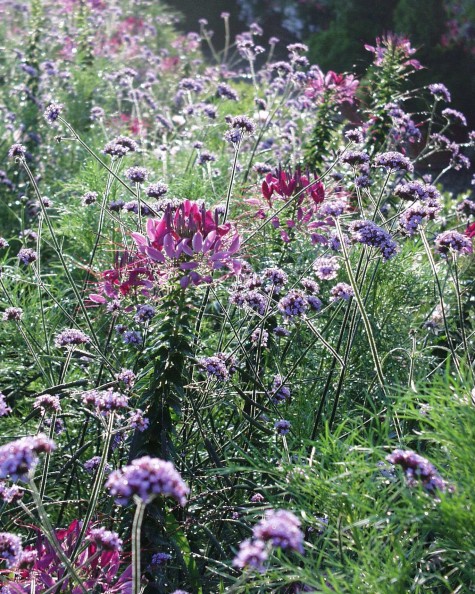 Though I favor landscapes that are structured, I love any flower that reminds me of a meadow. Who knows why. A meadow was never part of my experience growing up, as I have always lived in urban areas. Perhaps a big flowering meadow is one of those gardens of my dreams. The habit of certain plants favor that meadow. If the flowers that look like they have come straight from God’s hands – and by this I mean as simple as a species, not big and overwrought like a 5th generation hybrid dahlia-how they inspire and enchant you can gift your design.
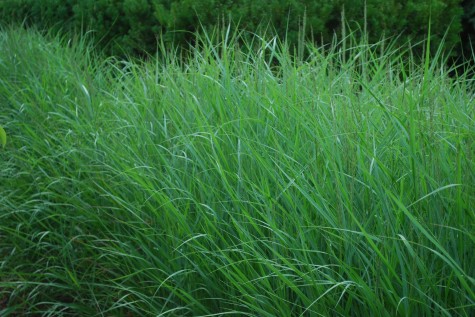
 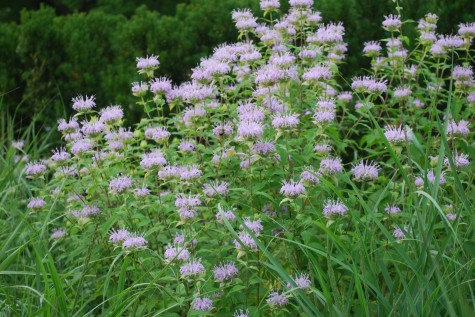 This first generation hybrid of Monarda fistulosa is named Claire Grace. How appropriate. It thrives for me in unamended soil; I do not feed, and I barely water what are now large thriving stands. They wave in the slightest breeze. They share this habit with my panicum virgatum-panic grass. They both are tall and sturdy growing; I have space on my urban lot for them. They are what I see out my kitchen window-who wants architecture glaring back at them from the kitchen window? Wanting in the worst way to grow these plants fueled the design for this spot.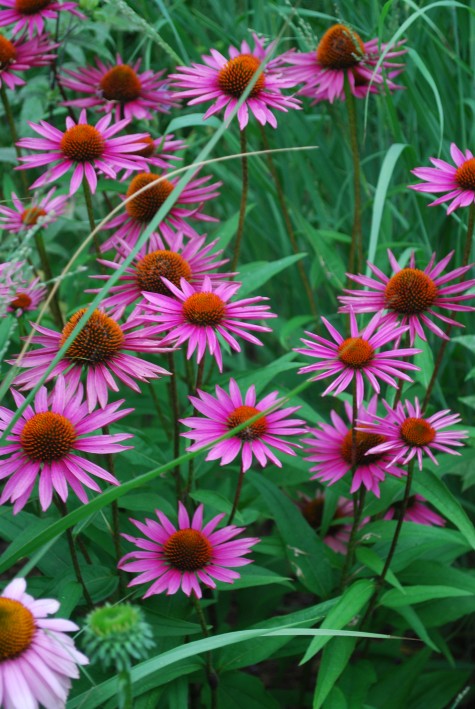
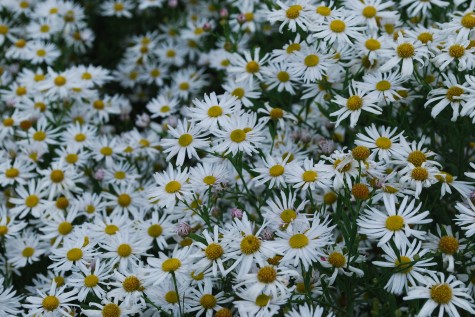 Boltonia asteroides is a fancy name for a late blooming New England aster. Should a plant like this represent your idea of beautiful, then design in this direction. This vigorous native plant is perfect if open, loosely defined spaces are for you. A garden that is always robustly ahead of you-do you like this? If you like it in small doses, is there one place you might be comfortable with this level of abandon?
 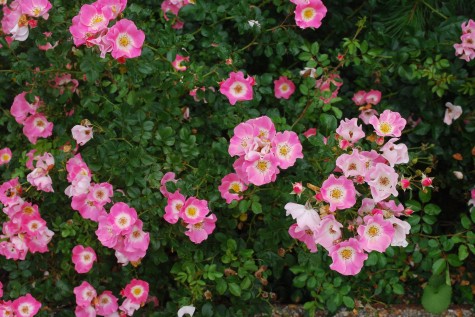 It amuses me how the “new” landscape roses so look like old roses. The name landscape roses refers of course to roses not so demanding. This Carefree Delight rose delivers in spades for any gardener wanting the delight of profusion, without profuse care. These roses are sited in partial shade, in a windy location. They always look happy.
 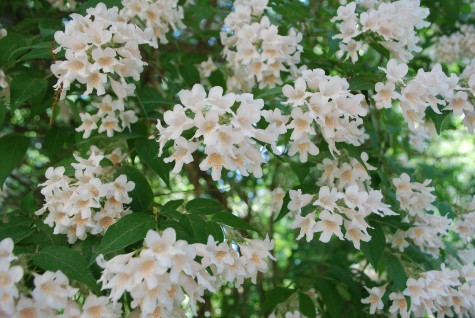 I did a consultation last summer to clients building a new house on an old property. This beauty bush was laden with its characteristic cascading blooms. Formally known as Kolwitzia, I do not see it so often anymore. It needs great space to grow, and weep. Most pruning ruins it; take the old stems out all the way to the ground, if you must. It is in bloom for the wink of an eye; out of bloom, beauty bush would never interest you. But it is one of those old fashioned, easy going shrubs that makes a visual statement.