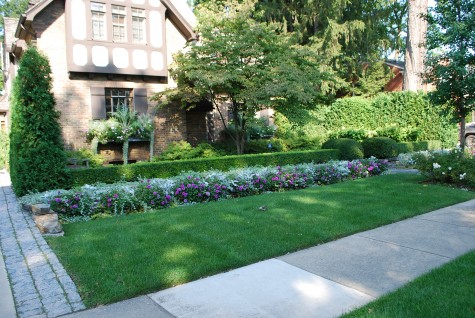
 I have not kept up as well as I would like with my spring plantings, but I am happy to report that this planting has prospered, and seems to be handling the fall well. I have not been here since late June, so I know this planting has been looked after. I had the chance to stop by, given a landscape call in the area. None of the purple dahlias in this mixed annual bed have succumbed to the mildew I have seen everywhere. I expected nothing less; my client is an afficianado and expert grower of dahlias. I have no other client that I would saddle with the time and trouble in a planting this extensive with lots of dahlias. I did lend him a hand; the dahlias are companion planted with silver licorice, cirrus dusty miller, grey plectanthus and silver dichondra. This supporting cast can hide trouble.
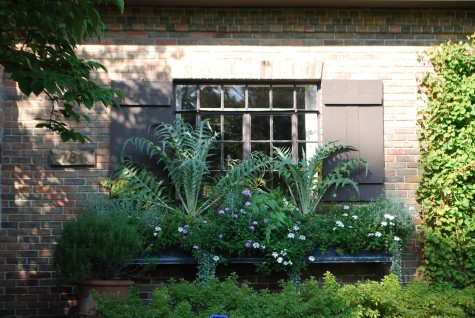 The windowbox cardoons have grown considerably. This box was planted with green and silver plants, punctuated by a few flowering plants. It still represents that intent, going on 4 months later.
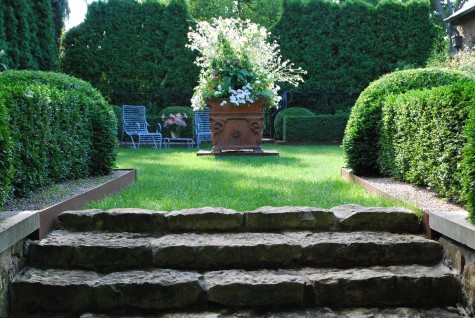
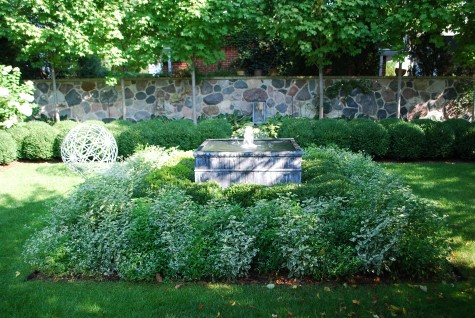 The rear yard fountain cistern is surrounded by boxwood-this will be a good look over our long winter. For the summer, a mix of Euphorbia diamond frost, and white polka dot plant has grown in around that boxwood like a warm stole. Both of these plants are so airy growing, they do not impact in any way the health of the boxwood. This is a place that a permanent fixture in this landscape has an interpretation particular to a given season. Next year, who knows what will take its place. Given that it is mid September, I am pleased with this healthy and billowy look.
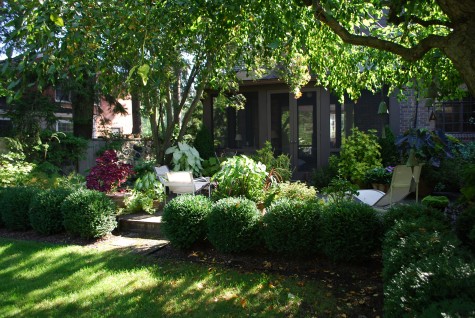 The rear terrace with a view to that fountain has lots of pots. The shade is fairly dense. I usually plant these pots with a green and white scheme. This year, a little dash of black/purple. A coleus, a black calocasia, and some wine purple spikes provide a little out of the ordinary interest.
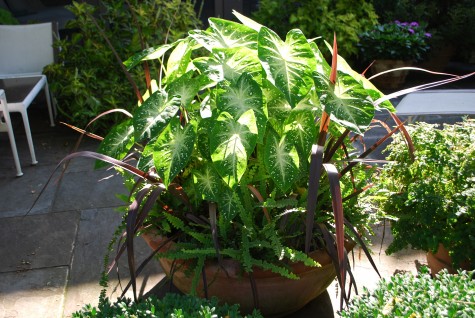 This was my favorite planting of the season. I knew this the second I finished it. The wine spikes usually tapped for the centerpiece of a planting-I planted them on the edge. The green and white caladiums I knew would round out. Between the black spikes-a spiky tropical button fern. It looked great today, with the morning sun filtering through the caladium leaves. In my opinion, this is a very good looking pot. The plants did all the work, you know.
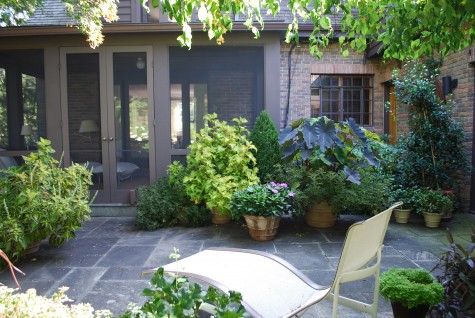 A grouping of pots with individual plantings have for all intents and purposes become a single entity. The entire group seems to be coexisting peaceably. I really like how the plants in wild places sort out their differences, and grow in to one another. The conical boxwood sandwiched in between an explosion of lime coleus and a black calocasia underplanted with inky fingers coleus-this is a good scene. There is a natural feeling here that contrasts with the stark lines and color of the vintage chaise.
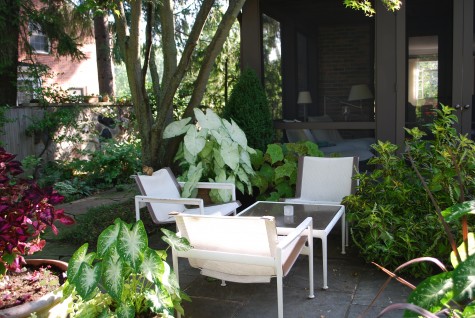 This intimate grouping of mid-century modern chairs designed by Richard Schultz has leafy company. I could live here.
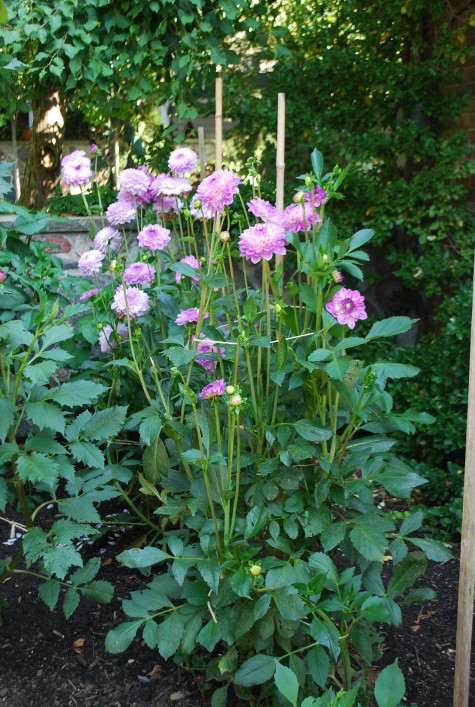 This post needs to acknowledge my client’s passion for dahlias. He winters over the tubers. He does not plant them out until late June. Every year I shrug, sure that they will never come to anything. Every year, in the late summer, they come roaring skyward. This very modest patch in a small garden is entirely devoted to dahlias.
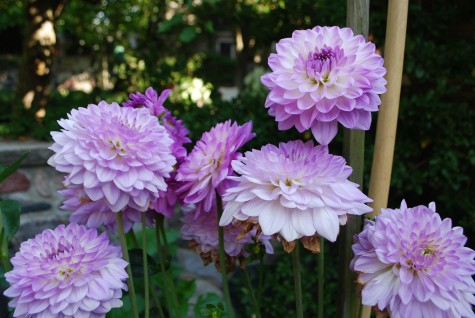
I will confess I buy giant dahlias for him when I see them looking good. As much as he loves growing them, I can’t resist bringing one home for him.
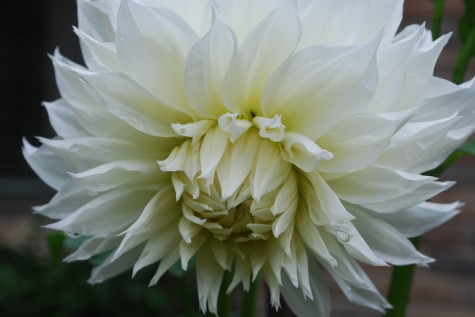 He grew this gift of a white dinnerplate dahlia to perfection. He knows what these showgirls require, and he delivers. The best part-how much he nurtures, respects, and enjoys his garden. Every inch of his property is taken care of. He has tomatoes and eggplants on the driveway-thriving in pots. He has rosemary plants-we winter them for him. He loves his European ginger, his snakeroot, his hydrangeas, and his hellebores. He is plain and simple-a gardener.
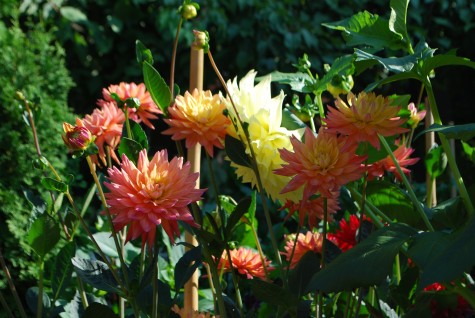 Green and white with a dash of purple-this years planting scheme. Does this mean the dahlia patch has only purple and white dahlias-absolutely not. The dahlia patch is not about a color scheme-it is about a love for dahlias. Mid September, that patch is thriving. Every place on his small urban property-thriving. What does this say to me? Gardener in residence.