Spring Thaw

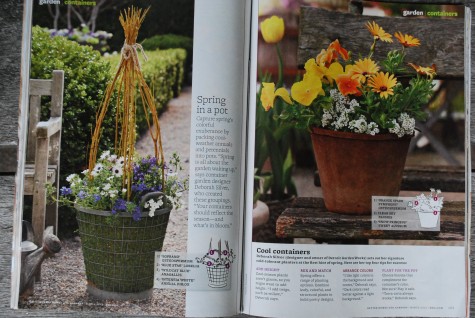
My March issue of Better Homes and Gardens arrived yesterday-as did the most bitter cold, windy, and snowy weather that we have had all winter.  Things even out, don’t they?  In early May of last year, the magazine send a crew out to Detroit Garden Works to shoot pictures of our spring container plantings-for this March 2012 issue.   
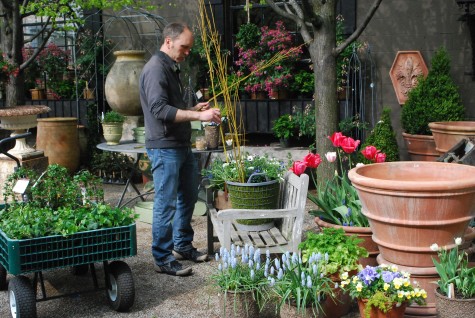
Rob and I both took plenty of time to get ready for their visit.  Who knew what would strike their fancy.  We did we do, and hoped for the best. 
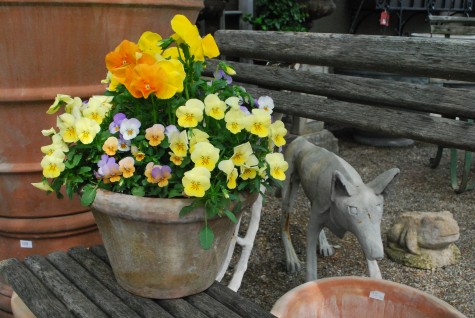
The spring season-that season when the garden wakes up-is rightly and greatly prized by gardeners everywhere.  Though we will never agree on the best slicing tomato variety, or the best tree planting technique, or the best way to prune roses, or the must have perennials, we all agree that the coming of the spring is a perfect moment. 
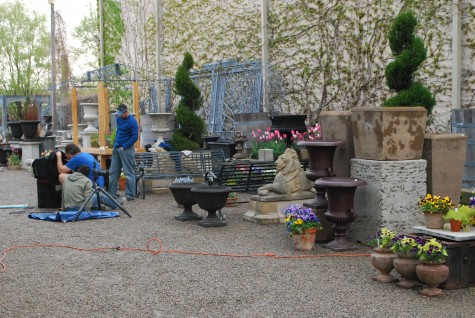
The Better Homes and Gardens film crew was very easy to work with.  An art director, a photographer, and a photographers assistant were focused and professional-all three of them. They also happened to be very personal-this means they took the time to introduce themselves, shoot the breeze, play with the dogs, ask questions, tour-it took them all of an hour to fit in, and dial down our worry about a visit from a publication with a huge history, and an equally huge readership.   
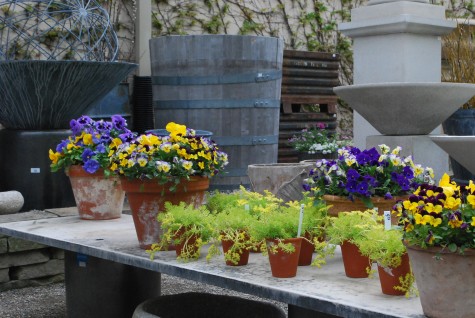
 

We plant pots for spring as we can’t help ourselves.  What gardener doesn’t anticipate that first spring moment when they can put their hands in the soil?  We are no different than most. 
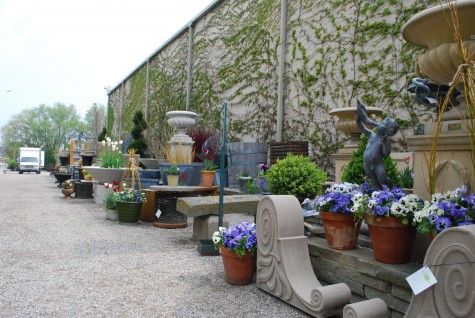
It may be we plant more pots in the spring than the summer.  The winter months can be very long.  The grey is endless.  This means the spring is just cause for celebration.  A big celebration. 
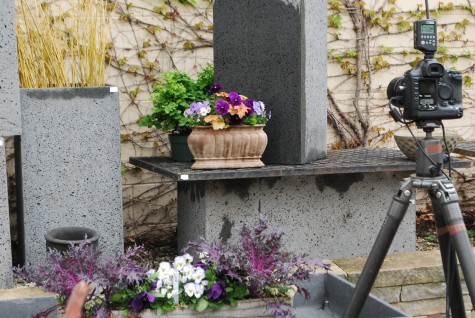
We did plant pots specifically for this photo shoot.  But they took to what interested them.  I was pleased we had lots from which to choose.  The subject of gardening is a big one; that umbrella is big enough to accomodate all different points of view.  
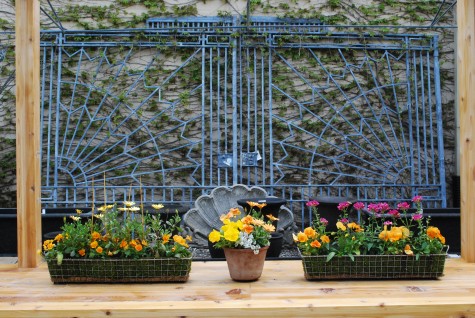
These simple plantings proved to be among their favorites-check out the article.  What I learned?  A very simple and modest container planting represents the garden as well as the most elaborate landscape design and installation.        
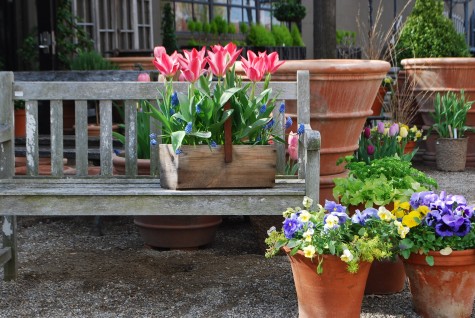
We spent two days moving pots and and all else associated with them around.  Yesterday’s issue was their take on what they saw-this I respect. They gravitated towards small and simple spring plants.  They liked a wide range of materials.  It was an education, watching them see, select, and work.  What they gravitated towards is of interest to me.  When I plant for clients, it is always with the idea that what they see might better encourage them to garden. And garden more.   
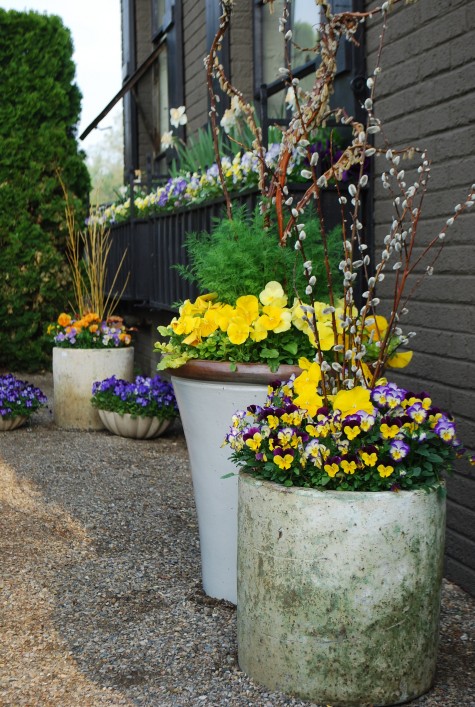
 

 I do so enjoy planting those first pots of the season.  I routinely plant them too early-hoping that spring will somehow come sooner than usually scheduled. These containers I planted, and moved to the south side of the building-hoping for some extra sun, and some extra heat.    
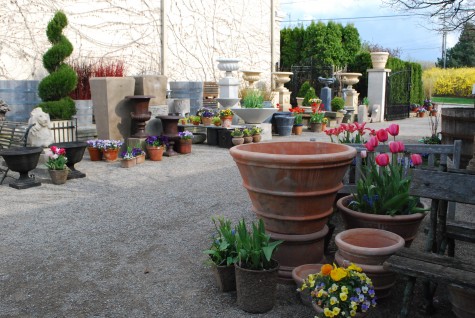
In retrospect, I am pleased with all of the color. The green months are but half of my year; no wonder I treasure them.    I can hardly wait for that day to come that looks like this one.
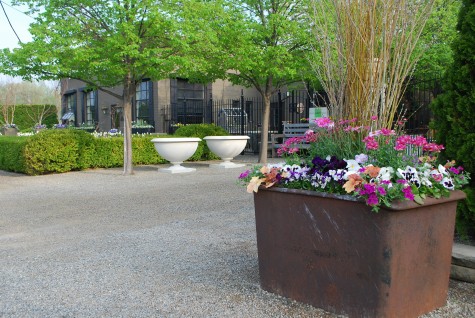
 We are every bit of 6 weeks, maybe 12 weeks in advance of the day this picture was taken.  This is longer than I would like.  But the March issue of Better Homes and Gardens is a sure sign that spring is on the way.

Holiday At Home

The Christmas holiday at our house is a low key affair-we like it that way. I worked Christmas Eve in the shop until 3 with Jenny.  I wrapped a few last packages in the laundry room. I was more or less ready for our celebration by 7.  A very leisurely evening was capped by homemade soup and bread. 

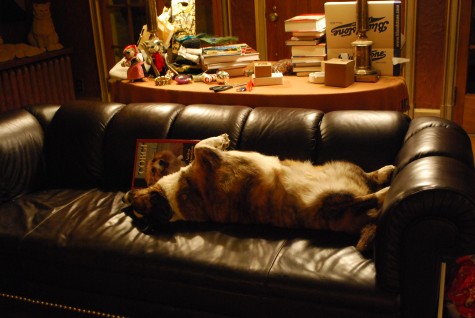
The sheer excitement of spending an entire evening in the living room with us proved to be exhausting for Howard.  He was out for the count about 8:30.  I like a quiet Christmas.  Gifts of books meant that Christmas Day could be spent reading-divine. 

I actually did no reading Christmas Day.  I spent the late morning with MCat at the shop-he deserves his Christmas too.  While he was enjoying his treats, I had coffee with half and half (a holiday luxury) and played ball with the corgis.  Buck brought left over soup for lunch.  Early in the afternoon, I knew I needed to go home, and finish decorating the Christmas tree.  Finish the tree?  The brown needled white flocked artificial tree constructed in the style of a Victorian feather tree enchanted me when I first saw them-I bought 4 of them for the shop in January of 2011.
 

Well, 3 for the shop, and one for me.  I had never had an artificial tree, but were I ever to have one, this would be it.  I thought it was great looking. It made no pretense of being a real tree. The short stiff needles were an olive brown; the white flocking was similarly unnatural.  The branches were sparse, making it ideal for decorating.  I took it home December 15, where it sat unattended; I had not one clue in the world about how to decorate it.  The days were flying by, with no scheme in mind.       

I finally went shopping for Christmas ornaments.  Not one thing in my shop was right for my version of that tree.  I am very keen for everything in my own shop, but this was my Christmas.  Luckily, English Gardens, on M-59 and Garfield Road, still had lots of holiday ornament-and some of the right sort.  I think I took 5 carts worth to the check out.     


Their giant glass ornaments in copper, chocolate and green were a perfect start for this tree.  I like the glow provided by matte glass ornaments.  This feather tree has lots of empty spaces that asks for a big gesture.  In a pinch, these would do. Next I studded the tree with lots of large dark pine cones.  The stiff branches captured them in whatever position I wanted.  Small glass ornaments in antique gold and cream from the shop described almost every branch. A few mercury glass acorns provided a little more ornate interest.  To finish, 180 feet of platinum bead garland.    

I learned the following things about decorating an artificial Christmas tree.  Once it comes out of the box, every single branch needs to be striaghtened out, and positioned properly.  Fluffing that tree before you take ornament one out of the box will make the decorating part vastly easier.  An artificial tree is perfectly symmetrical.  Arrange every branch such that each tier radiates in a perfect circle.  Not interested in this level of artifice?  No doubt there is nothing quite like the beauty of a natural tree.  But as I subscribe to the idea that just about anything can be done in a gorgeous way, I was interested in the challenge.  The beaded garland hung in almost symmetrical sweeps and swoops was the crowning glory of this tree.  I say almost, as I did not spend the time fluffing and arranging every branch that I needed to.  Once I had ornaments on this tree, it was too late to rearrange.  Next year I will be better prepared for what this tree can do best. 

The second chaallenge from this tree-the lights.  It had vastly more lights than I would string on a real tree.  That light was so strong that the view of the ornament almost disappeared.  But I did love how it illuminated this room with its dark chocolate walls.  All in all, my rookie tree looked just fine.  It was kept company by other treasured ornaments.  

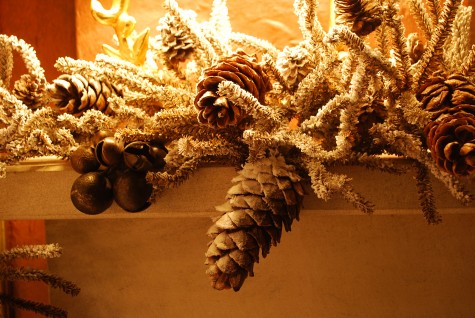
 The companion artificial garland to the tree I draped over the mantel.  I accented it with clusters of bronze bells my family sent me for Christmas. 

A beloved charcoal by Joseph Piccolo is specially lit with warm holiday light. 

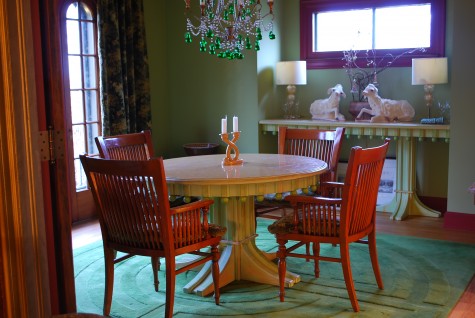
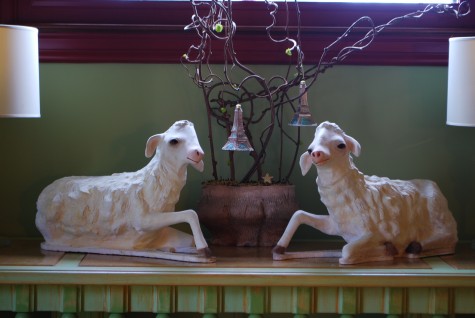
My dining room is not much decorated for the holidays beyond a topiary I made in an antique French pot.  Flanking the topiary, a pair of Italian paper mache goats.  Most certainly these were used in scenes of the nativity.  That said, the topiary and goats reside on this sideboard all year long. 

Tine, my sister-in-law, sent me an ornament of the Eiffel Tower last Christmas.  This year, a second  Eiffel Tower, and a tiny star ornament arrived just in time for Christmas.  This is my family tree – a Christmas tree not so much about how it looks, but much about what it means.     


Mystery Mum

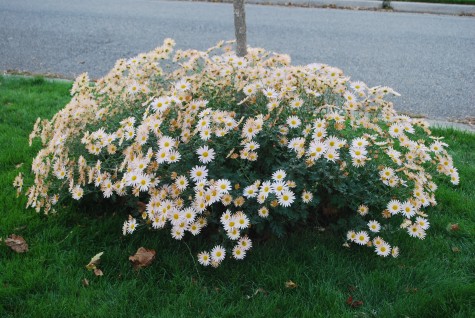
My next door neighbor has the most beautiful pair of chrysanthemums planted around a tree in her tree lawn. Every year, the end of September, it begins to bloom, and goes on blooming for weeks.  I never see it get any care or water, and I am sure it has been there 6 years.  There has been no deadheading, dividing, or weeding.  This plant appearts in the spring, grows all summer long on its own, and blooms like crazy for 4 to 6 weeks.  

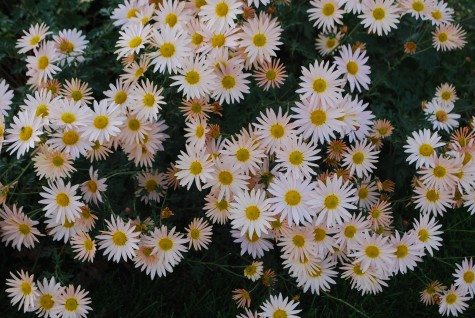
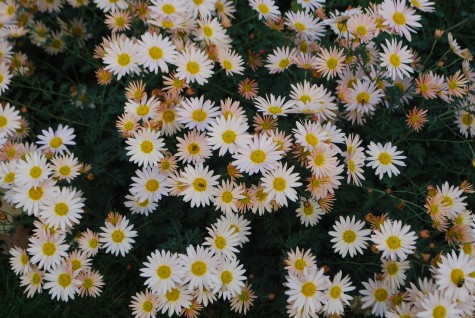
It is a beautiful peachy cream color.  The growth is loose and large. The flowers are single-this I like from the start.  The foliage is dark green, and shows no signs of damage from pests or fungus. It has been in bloom since late September.

To my mind, this is a first class perennial-low maintenance, easy to grow, and very long blooming.  Should you know the name of this chrysanthemum, will you write and tell me? Years ago, I remember perennial chrysanthemums in my Mom’s yard that looked very similar to this.  The closest relative I can think of is Clara Curtis.  Help me out please, should you have a mind.

Yard Dog

If you garden, I am sure you understand what it means to be a yard dog.  You dig the dirt, turn and spread the compost, wheel the mulch, prune the shrubs, drag the hose to the thirsty tree, plant new plants, divide old plants, pull the weeds, rake the leaves, and then start all over again.  All of the aforementioned jobs take place in the spring when it’s cold, in the summer when it’s 90, in the fall when it’s raining and very cold.     

Every landscape is threatened by trouble.  No rain, too much rain.  Weather that is too hot, or too cold, or too humid.  Woodchucks, deer, chipmunks, the neighbor’s children, Japanese beetles, anthracnose, fungus, white fly, spider mites, slugs, nematodes-even dogs.  There is ample evidence in my yard that I have two male dogs.  Can you hear me shrug??  I am always on patrol for trouble.  It makes much more sense to stay ahead of trouble, than be left in its wake. 

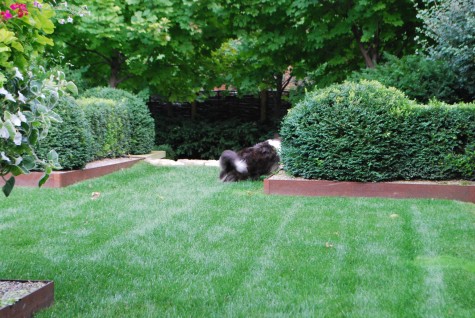
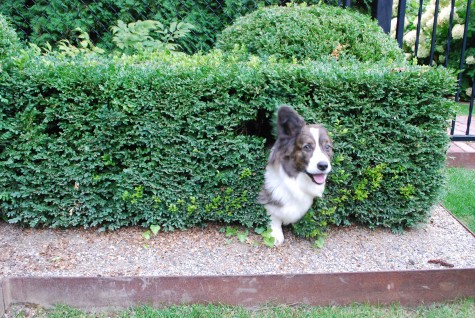
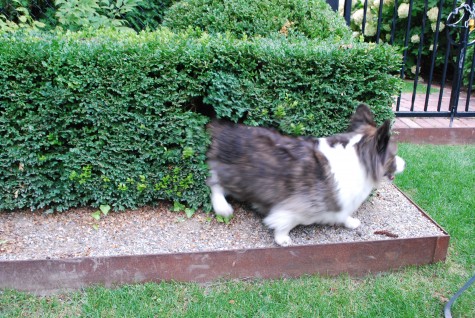
Some trouble pops right out in front of your face.  A shrub with leaves so green on the outside may be hiding trouble on the inside.  Scale-have you ever had it?  This revolting insect attaches itself to to the stems of magnolias, and euonymus.  A severely infected plant has stems covered in white; scale is very difficult to eradicate, once it has taken hold.  Be a great yard dog-inspect your plants regularly.  From top to bottom.   I like to hand water.  The time it takes to water deeply gives me time to see what is going on behind the scenes. I see Milo running in and out of the boxwood hedges-they do not seem to mind the intrusion.  I see the hummingbirds on the nicotiana.  I have lots of them right now-they must be on their way south.  I see the hydrangea flowers pinking up-who knew pink could be a verb? I can process a lot of trouble, and my plan to combat said trouble, while holding the hose.   

I see the hawks riding the updrafts. I see the clouds-are they not beautiful in the fall?  I see those giant messy structures I know to be squirrel’s nests in my big Norway maple.  The black tar fungus has decimated the foliage on this tree-this is trouble over which I have no control.  Whether on not I have control, I stand watch. 

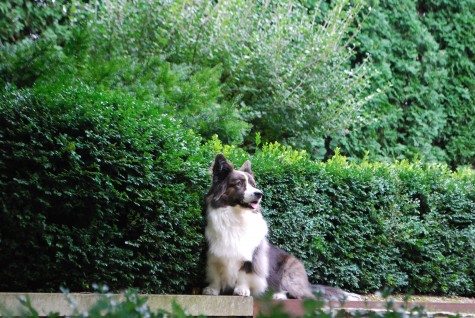
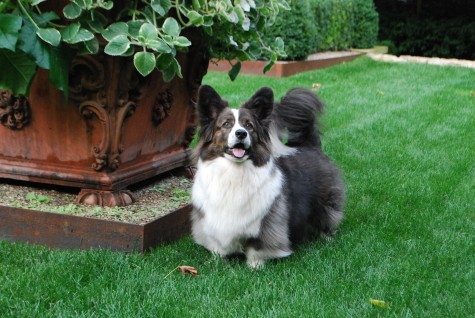
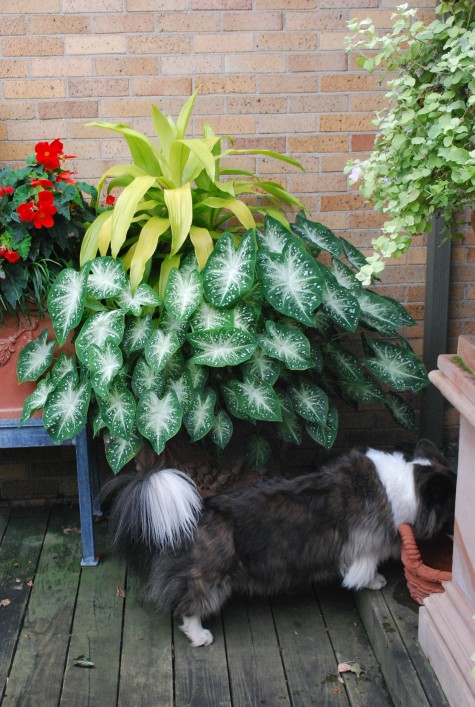
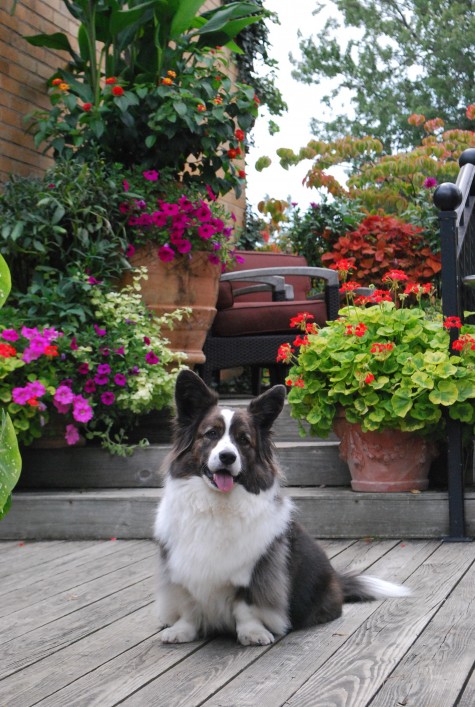
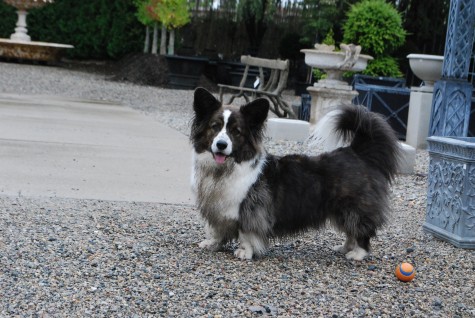
Milo has a squirrel friend.  This squirrel chatters at him, leaps and runs through the trees ringing the property.  Milo never takes his eyes off that squirrel.  His focus is an astonishing thing to behold.  They have quite the relationship.  My very low to the ground corgi, and that tree hopping bushy tailed rodent have a mutually satisfying relationship.   The same could be said for me and my garden.    

Milo works very hard, keeping up his end.  He may patrol the perimeter of the garden 10 times in any given evening.  His nemesis, that squirrel friend, is bound to show up sooner or later.  At some point, he will take a break, and get a drink.  I understand perfectly the responsibility involved.  Nature dishes out all kinds of  trouble.  Weather is to be watched, and cleaned up after.  There is no intervening in this.  I don’t intervene with bugs-I live through them.  I will treat a bacterial infection, and I will treat a fungus.  But no matter how little control I have, I have the yard dog gene. No doubt, there are those moments when I need a drink of water.  

The pleasure of a garden is considerable.  What it takes to have one, more than well worth the effort.  No matter what job needs doing once I get home, there are rewards.  Every dog has his day.  

Gardening is a dirty business. The dirt may be the best part of it.  Given 15 years of compost and ground bark turned into and returned to my soil, my plants thrive.  What could be more thrilling?  That dirt-in my socks and under my nails-part and parcel of being a yard dog.       


It’s a dirty job, but some of us have to do it.