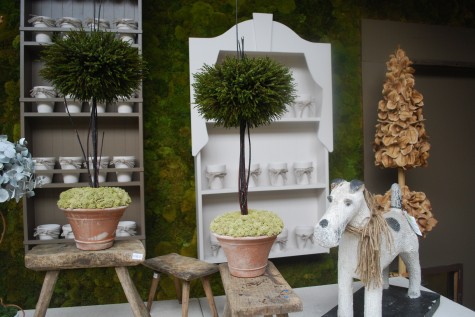
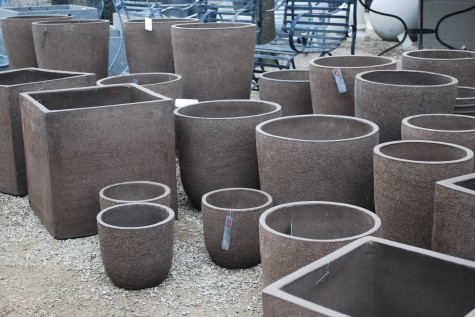
 Creating and arranging a collection is a passion known to many, not just gardeners. Even the most hard line minimalist collects their empty spaces as if empty spaces were on the endangered list; yes? Gardeners collect seeds, tools, hellebore cultivars, rocks, birdfeeders, trees-you get the idea. I have amassed a collection of books in the past 25 years that must number over a thousand volumes by now. It is a long standing coherent collection documenting my adventures as a gardener. Putting together and arranging a coherent collection for my shop is a big part of being able to advise people about how to design their gardens.
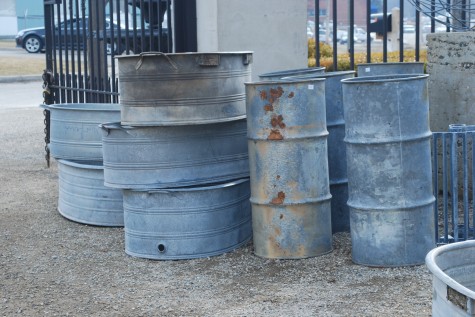 Every year’s collection for Detroit Garden Works is different. It might be based on one particular object whose size, surface, shape or style or aura proves to be a magnet for Rob’s attention. Alternately, his basis for a collection might be triggered by a place he has visited or an idea that’s surfacing. We made a conscious effort to shop the US for antique, vintage and new things a few years ago. Thus the collection always has a strong American element. An organizing metaphor-we like these. His point of view about what is beautiful is a catalyst for a constellation of pots, sculpture, prints, garden furnishings, fountains-any object which might evoke a little magic for a garden.
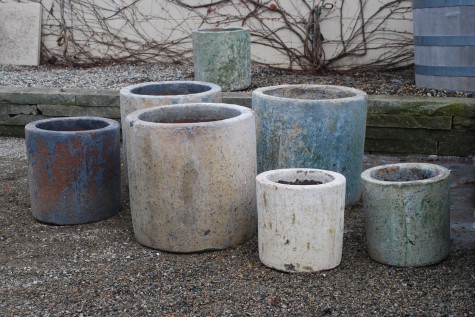
These clay cylinders are all about what Rob calls a chamaeleon surface. In addition to their gritty texture, the color changes given the light. After last night’s rain, the color was saturated and rich-different than their dry color. Mineral surfaces exploring color and texture such as this will be friendly to no end of different kinds of plants. Pots of simple shapes makes the color and texture the most important element. These pots will take on the atmosphere of its placement, and plants, and play a serious supporting role in big visual scheme of things.
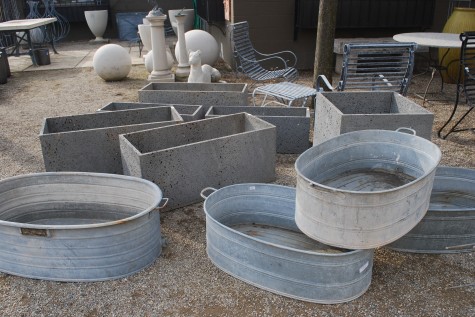 These rectangles made from thin slabs of volcanic rock are close in color, shape and size to these oval galvanized tubs. Their differences give the eye a workout. I am seeing his idea become tangible. A collection of objects of simple and varied shapes distinguished by their interesting surfaces are what I would call a visual variation on a theme.
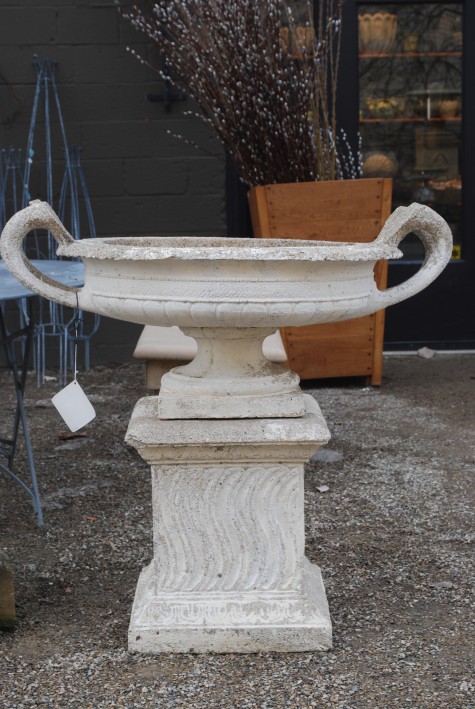 A pair of very old and fine American urns and pedestals dating from the early twentieth century focuses my attention on their shape and surface-and away from a historical label. In another context, I would see them as very traditional American garden ornament. In Rob’s context, kept company by a family I would not have imagined, I am looking at them in a different way. The impossibly wide and low shape of the urns, the simple swirls indented in the pedestals-I am thinking about the universality of beautiful objects for gardens-never mind their age, period, or label.
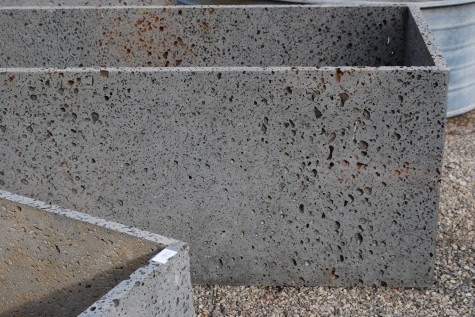 Volcanic rock in its natural state-this I am used to seeing. Volcanic rock slices are a product of modern technology. I have not seen this before. The intersection of ancient materials transformed by modern technology-Rob has gotten my interest. This I admire about him so much; he posits lots of questions to whomever might be interested- without fanfare. He assumes that gardeners are a group in touch with the physical world, and provides them beautiful choices. Alternative choices.
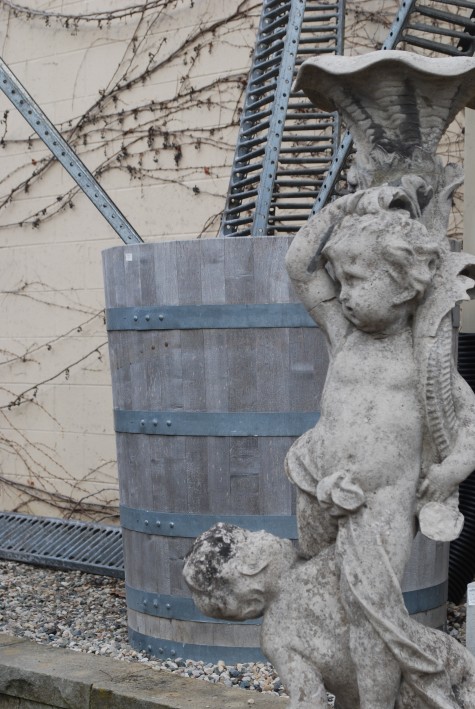 This Austin and Sealey sculpture from 19th century England was minutes from being moved as I took this picture. I liked the old hand carved stone backed up by a contemporary Belgian elm barrel-why would I go there? I am looking at shapes and surfaces without regard to the sentiment of a given period-many thanks to Rob. It is the best of what I have to offer as a designer-a gardeners point of view, without any predicatable baggage.
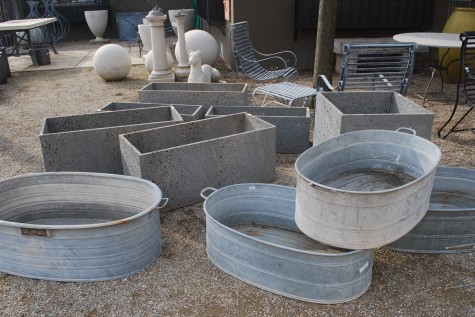
A major reconfiguration of the shop is a major effort. We do this every spring. Spaces get emptied, cleaned-raked and ready to redo and live new- a dream come true. Every new gardening season warrants new thinking-we try to oblige. The driveway is congested with things from this show or that, that source or this vintage shop in Virginia-if you have an interest in how Rob spent his winter, come and look around.
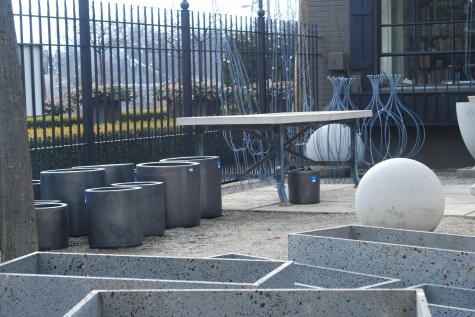
I do not have to do that much work to figure out where Rob is going; not really. No one could possibly love their I-phone as much as he does. The internet/photo capability of that phone has set him free. I get indundated by the photographs he takes-everywhere he goes. client’s homes. trips. vacations-ok, busman’s holidays. buying expeditions. random thoughts. By the time the winter is coming to a close, I have a huge photographic record of his collecting. He prints and posts the pictures he has sent me on a big wall in the workroom. I have advance warning. But this does not truly prepare me for what gets unloaded here in the spring . The evidence and impact of his collecting-it will take me a season to absorb.
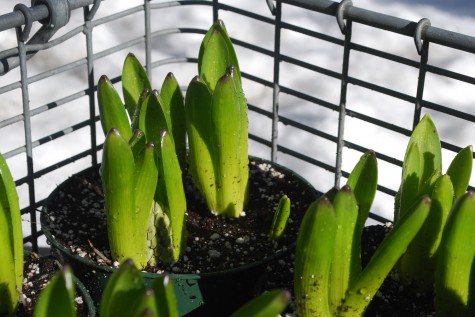
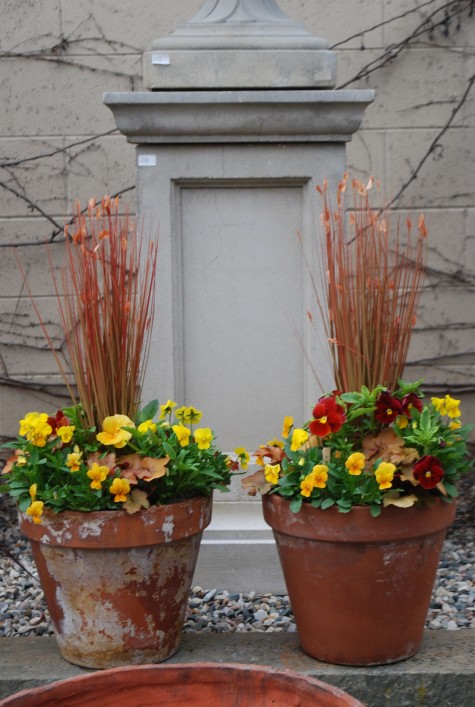
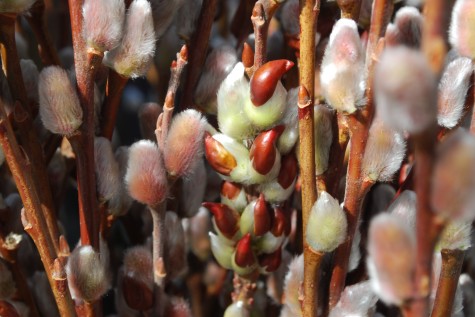
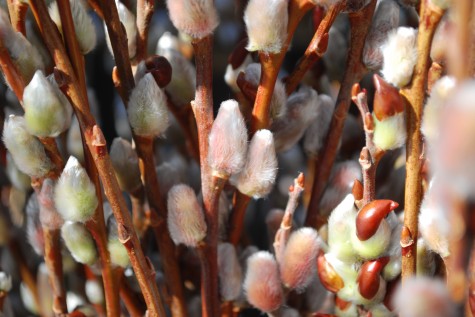
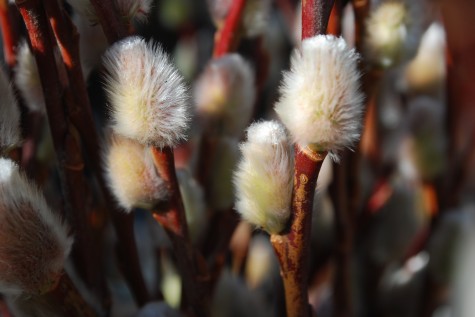
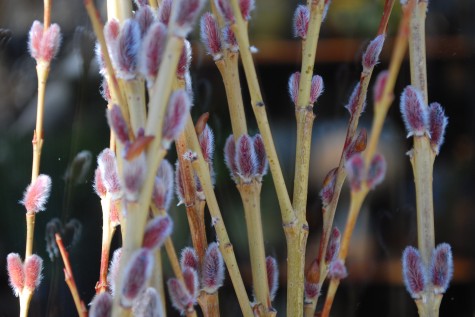
 Though the shop garden is very much frozen in time, there is work under way, under ground, in anticipation of spring. We planted 2600 tulips in this garden last fall. Each and every one of those bulbs is programmed to wake up and grow, come the spring thaw. Everything needed to grow and bloom is stored and waiting inside that bulb for that moment when the switch flips. Though it seems hard to believe, tulip bulbs do not freeze solid through and through. Planted some 8″ below the surface, they spend the winter chilled to right around 32 degrees. They need that hibernation time to properly spring forth.
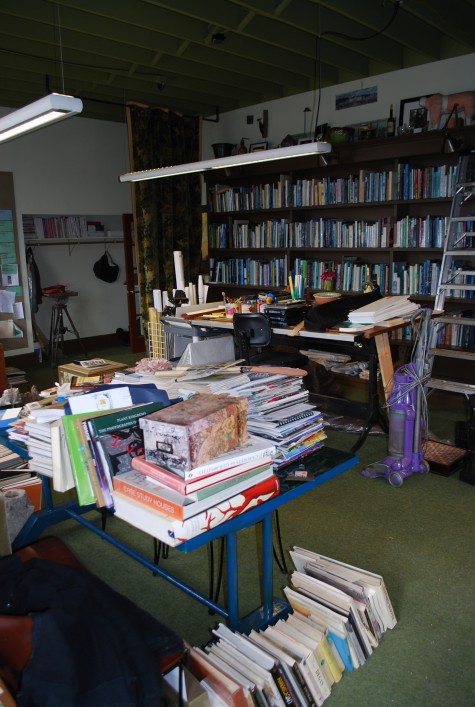 Inside the shop, it takes plenty to get ready for spring. We do a spring cleaning in February; once spring actually comes, there is no time for that. I do not mind that I have missed this part at all. Steve took every book off the library shelves, dusted them, cleaned the entire space, repainted the room, and put it all back together-all I had to do was choose the colors. Green for the walls of course-but a very light green this time. The room looks light and airy now. For the shelves and trim-what I call Belgian chocolate.
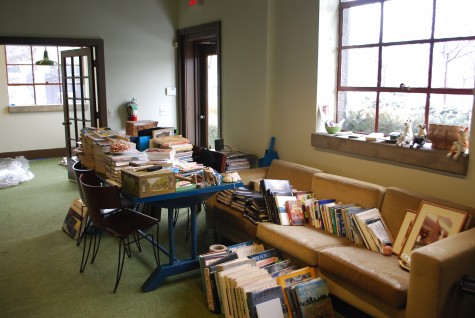 The floor of my office is courtesy of Flor-the company that makes carpet tiles in all kinds of colors and textures. This series is called house pet-it is so easy to pull up a stained square, and replace it with a new one. Gardening being the dirty business that it is, I think I am due for all new squares. Having a project indoors helps the winter fly by.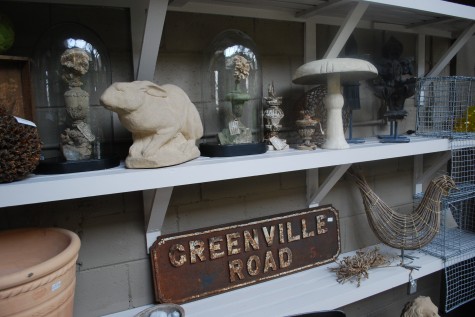
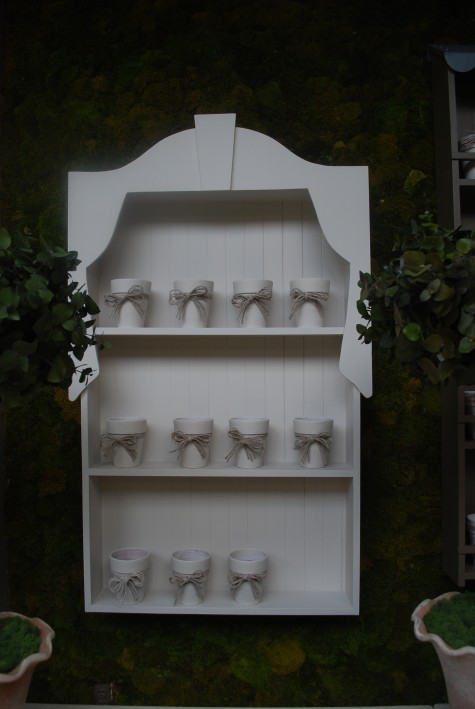 The auricula theatres got new outfits as well. The best fun was finishing the terra cotta pots. Each pot was primed in UGL basement waterproofing paint. This gave the pots a substantial gritty texture. This also keeps the top coat of paint from peeling off, once the pot is a home for wet soil. Each pot got a jute knot or bow. With the finish coat of ivory paint we soaked the bows in thinned paint; I like the look. I could see these pots planted with small growing herbs-or succulents-or even miniature ferns.
 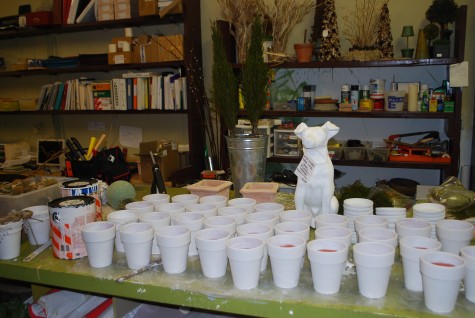 They layout table was handy for painting the pots. I could never again do without a table at a height comfortable for me to stand and work. This we made with a 4 by 8 foot sheet of exterior grade plywood. The top is held up by a pair of shelves four feet deep. These shelves hold long blueprints that I need to store.
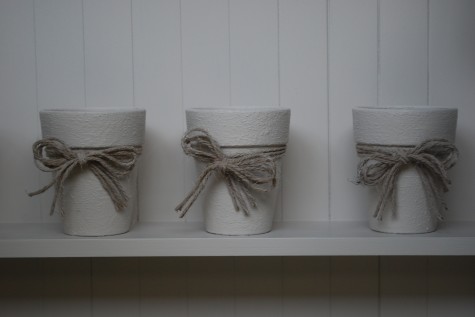 The little pots look great. Machine made terra cotta pots can be finished in so many ways, when you tire of that orange clay. This shape is called a rose pot-they are taller than standard terra cotta pots. They are great for growing plants with long root runs. Bareroot roses that are potted up for sale at nurseries are generally on the tall side. Large rose pots are also great for growing tomatoes. Rose pot and long tom are interchangeable common names for pots taller than they are wide.
 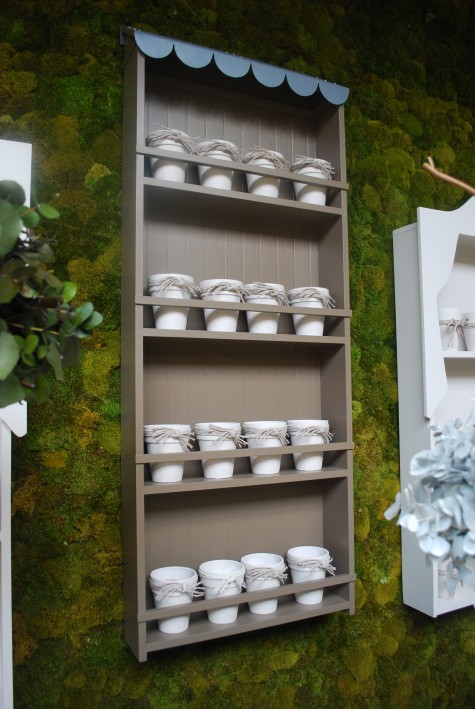 One of the plant theatres got a coat of Belgian chocolate paint.
 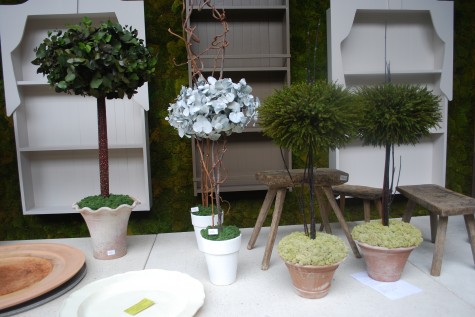 Pam has been making small topiary sculptures from preserved eucalyptus and other preserved greens. The trunks are made from cedar whips, kiwi vine, and fresh blacktwig dogwood. They are great for spots indoors asking for something soft, that will not support plant life. As I have no interest in house plants, these suit me fine.