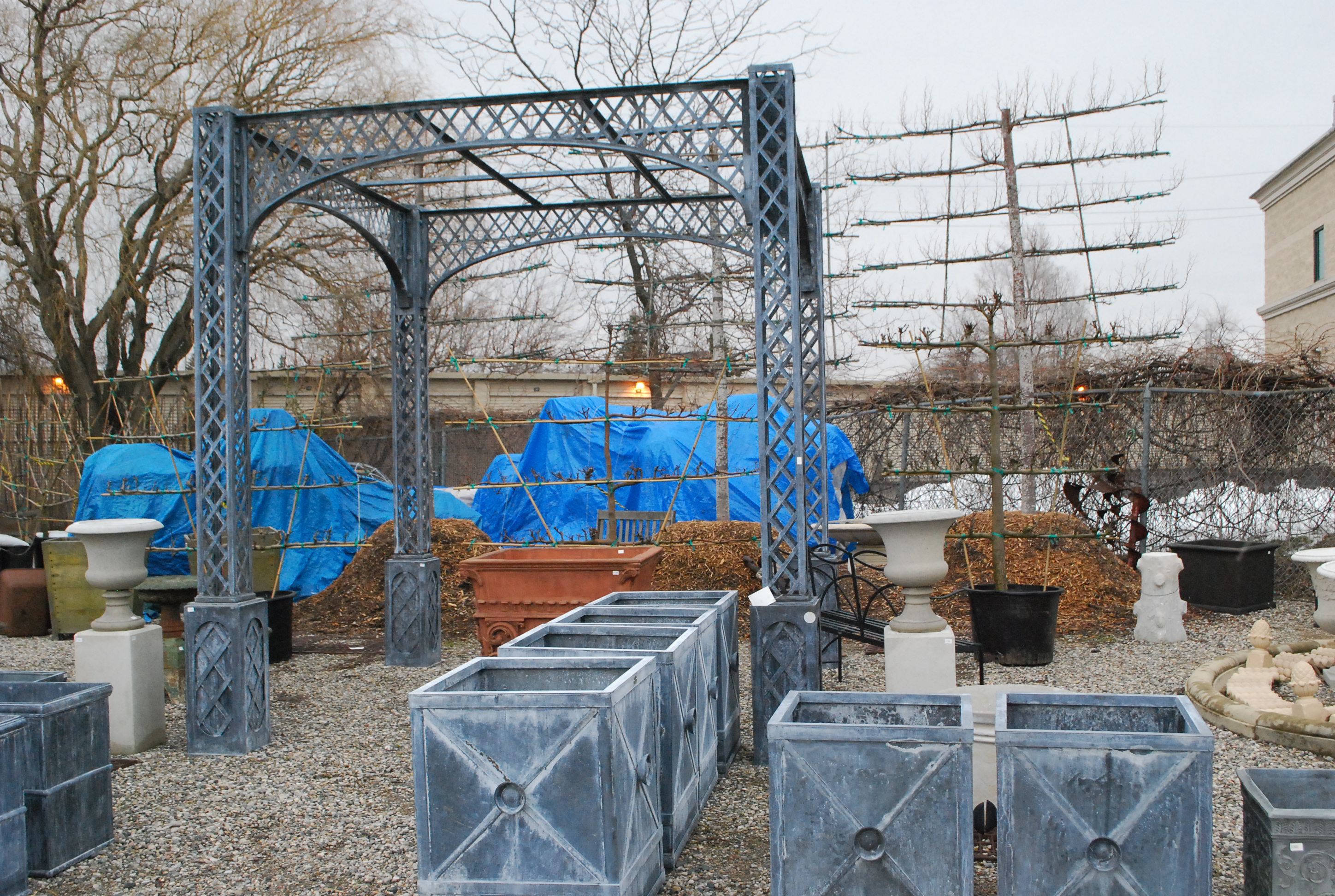
Budded

beech-ferns-in-March.jpg

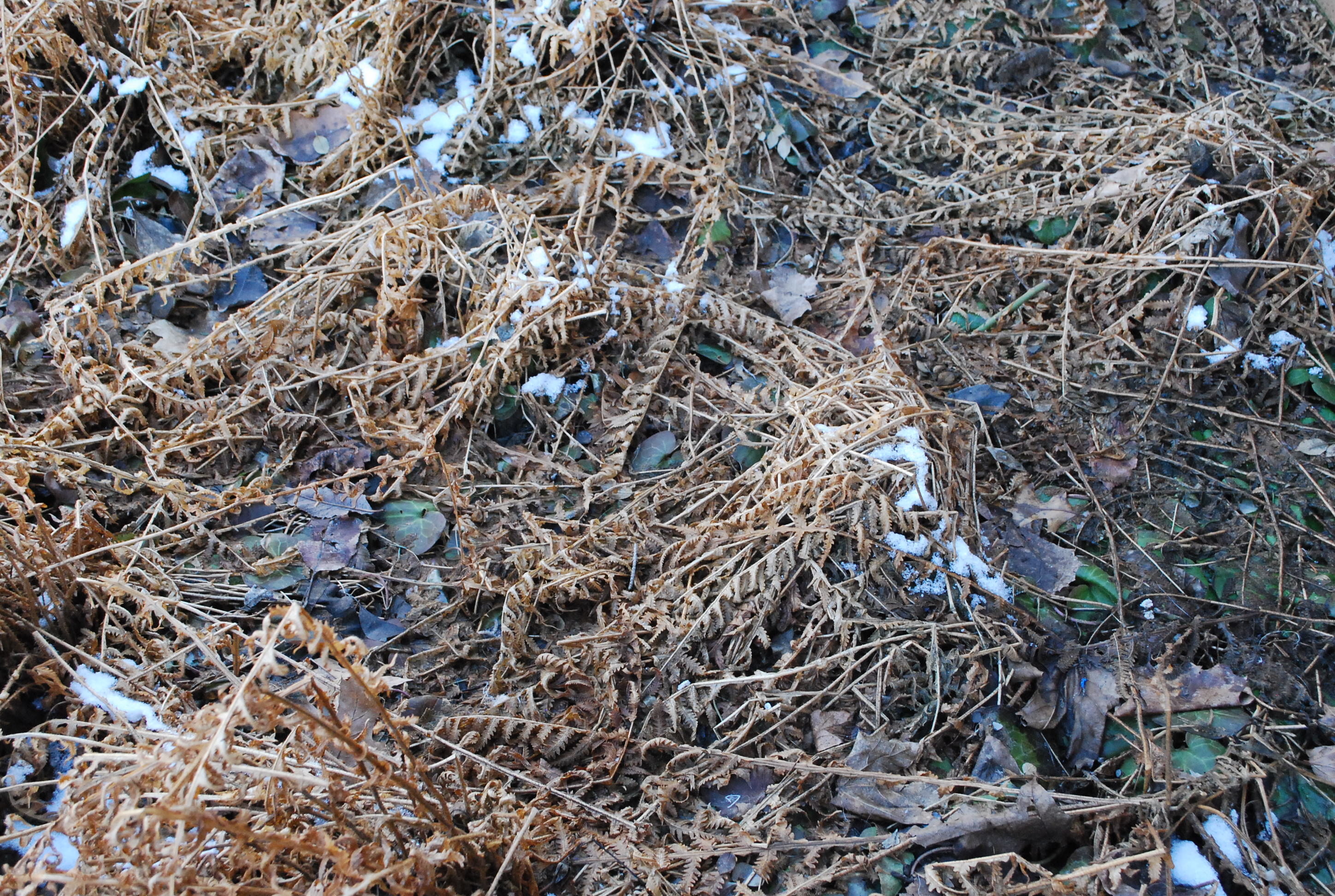
If you garden, March is an acutely disappointing month.  If March feels like an illness to you, it is. That late winter gardener’s fever–entirely predictable.  The hope that spring is almost here when it is in fact many weeks away-a normal symptom of said illness.  Once March arrives, no matter what constitutes likely and reasonable, I am over the winter.  I have eyes, ears and a nose for spring.  Though I have written this in countless ways for the last month, this time I really mean it!  The thought that spring is near has been much on my mind- for weeks.  What the gardening heart hopes for bears no remote resemblance to reality-that conflict would be a good definition of a Michigan March.  Hope versus reality-game on.
March-grass.jpg

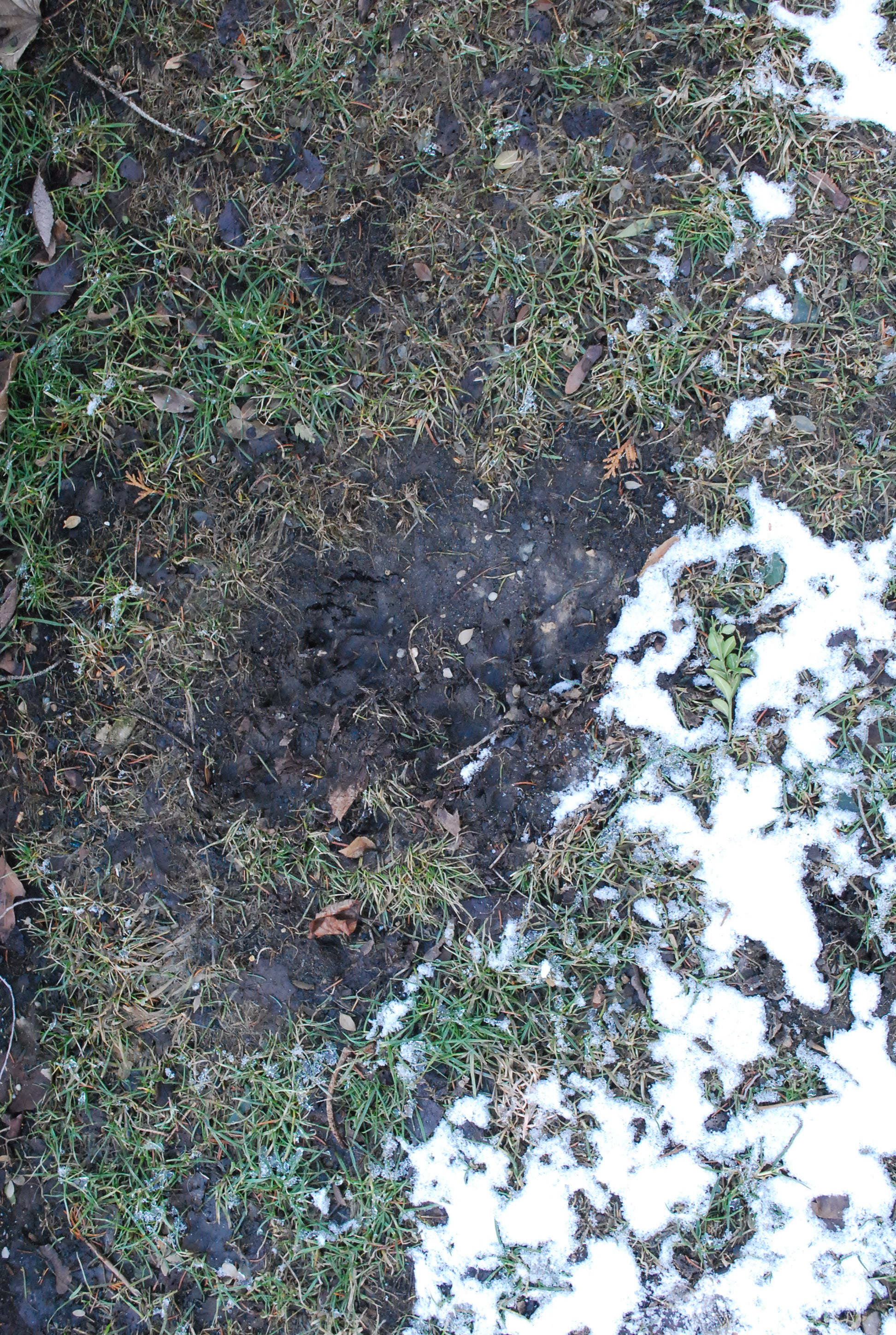
My yard is a trashed by the winter.The grass is the color of hay.  That hay has been pounded into the ground by the corgis, so the color is actually dirty hay.  How many gallons of paint do you suppose a paint manufacturer might sell if they names a color dirty hay?  Well, ok, gardeners might warm up to it.  But the idea of dirty hay is pretty unappetizing.  Just like March in Michigan.
isotoma-in-March.jpg

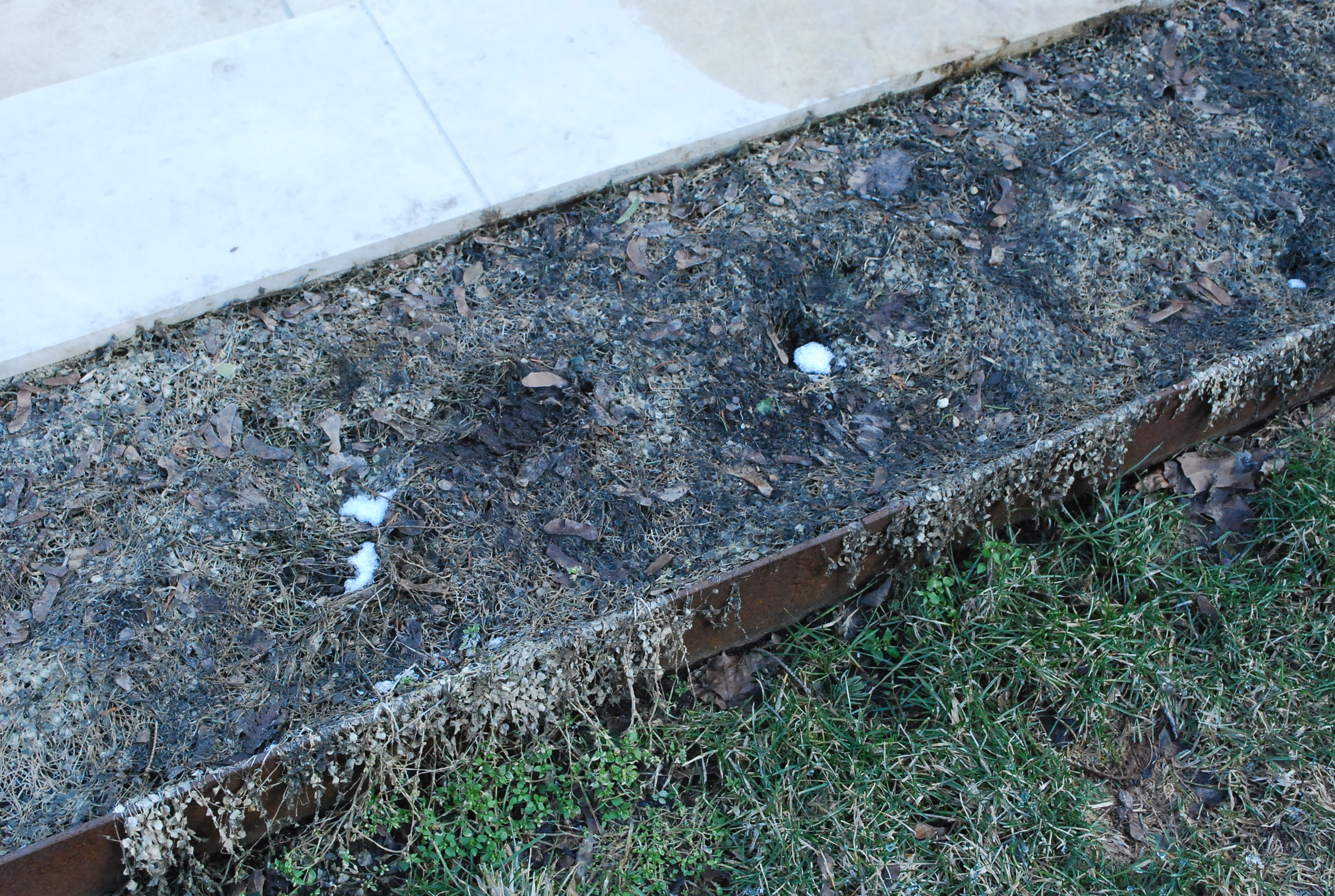
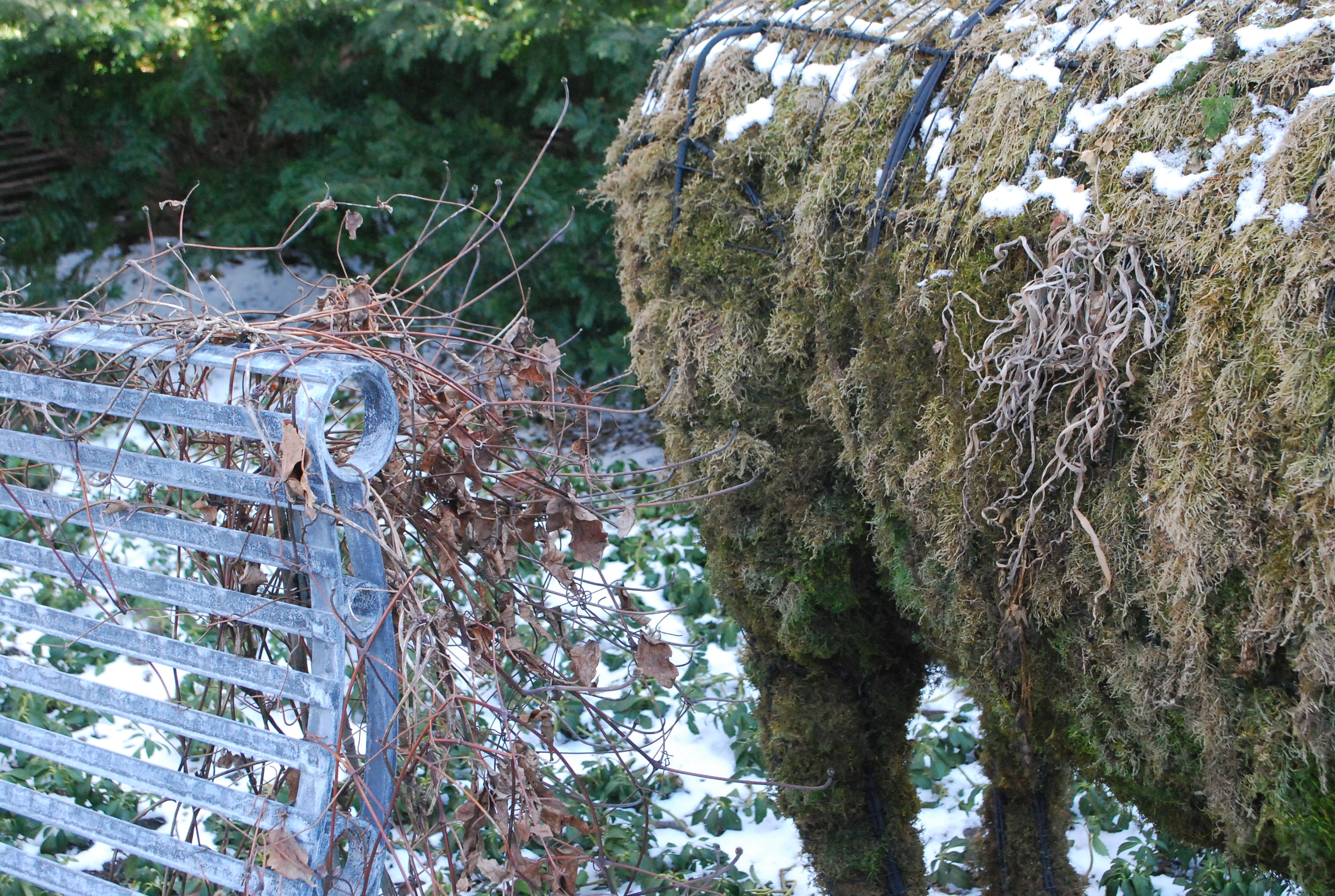
The isotoma around my fountain at home looks dead.  The leaves are brown and black, accented by a glaze of rot.  Who knows if or how much of it has survived this winter.  Some of the coldest days of the winter are courtesy of this March.  How it looks right now-horrifying.  The clematis are but brittle sticks, and the boxwood are burned.  My moss stuffed cow-known as Lady Miss Bunny, has dead weeds sticking out of her side.  Dead rotting leaves are sprinkled all over the yard.  Could my garden possibly look worse than it does right now?

european-ginger-in-March.jpg

The European ginger?  The leaves are limp, and lay flat on the ground-exhausted.  I so understand this feeling.  The look of it-I try not to look.  Many of the leaves have those large black patches gardeners know as decomposition.  I do not dare clean them up yet-we have night forecasts in the 20’s for the next week.  Most of the snow was gone, meaning really cold night temperatures could hurt.
frozen-hellebore.jpg


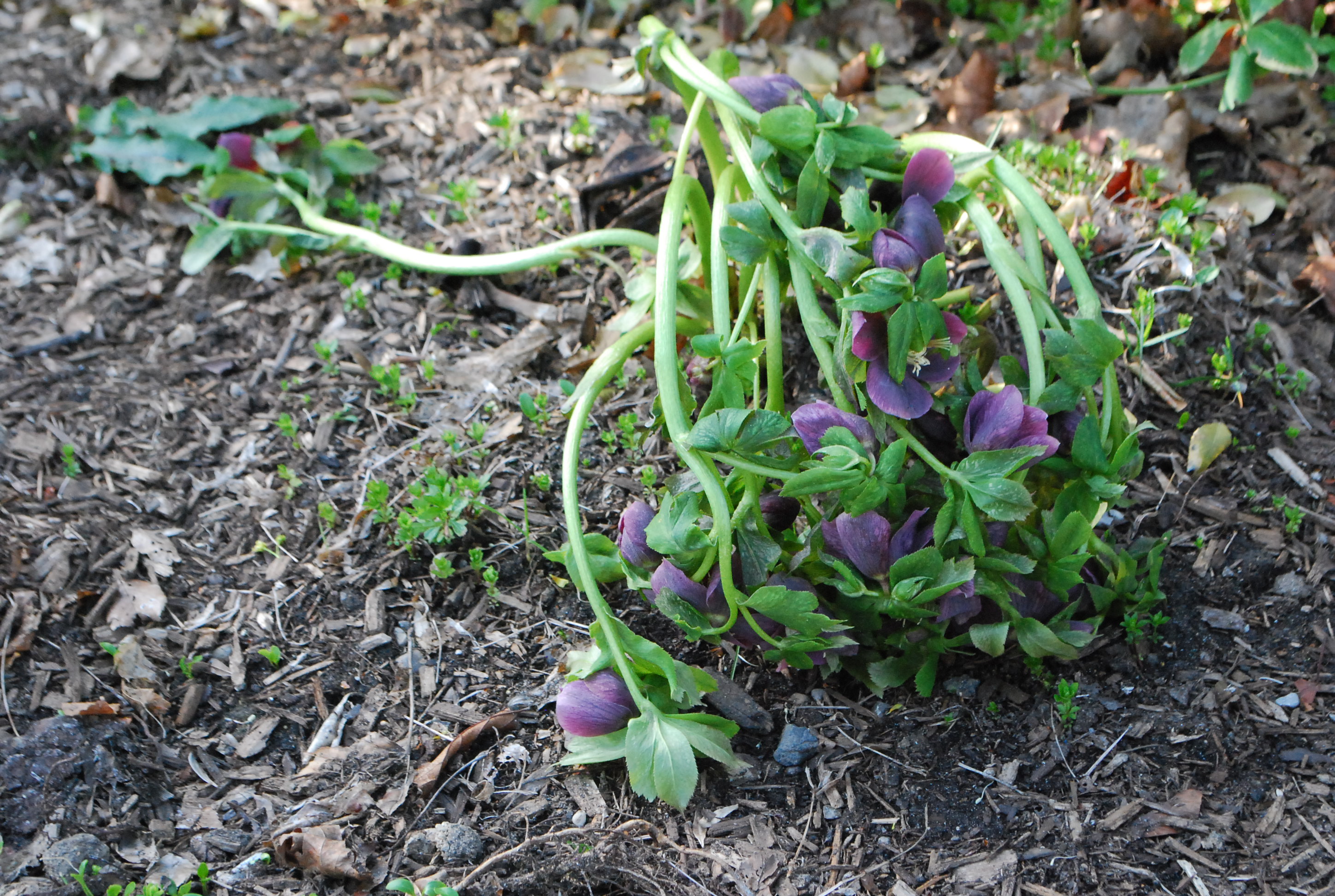
My hopes for March are always unrealistic.  Last year’s March was warm-enticing.  Though it satisfied my need for an early spring, it made me uneasy.  April confirmed that unease.  Freezing temperatures over an extended period of April days was destructive to early spring flowering trees, maples, and birch.  No spring for us, last year.  The 2012 spring disaster- every gardener in my zone remembers.  The nights covering vulnerable plants to no avail. All of the hellebores blooming collapsed in pathetic heaps on the ground. Such shock-realizing that our spring would be erased by deadly low temperatures.  Gardeners far away wrote to me, their voices charged with grief and irritation very much like mine.  Gardeners in my zone and in many other regions have been waiting for a glorious spring for close to 2 years.
dormant-clematis.jpg

March is anything but a spring month; March is in fact the last of the winter season.  We have has snow more days these first 2 weeks of March, than not.   A single oddball 62 degree day made me believe the winter was over-I truly believed that the crocus, eranthis and hellebores were but days away.  But one day does not a spring season make. The utter cold has returned; just this morning, four inches of fresh snow.  I m shoveling, not gardening.  March is a month marked by the tumultuous transition from one season to another.  Sometimes that transition is easy and sensible.  Other times that transition is so slow, boring, and treacherous,  one could weep.
rhododendron-buds.jpg

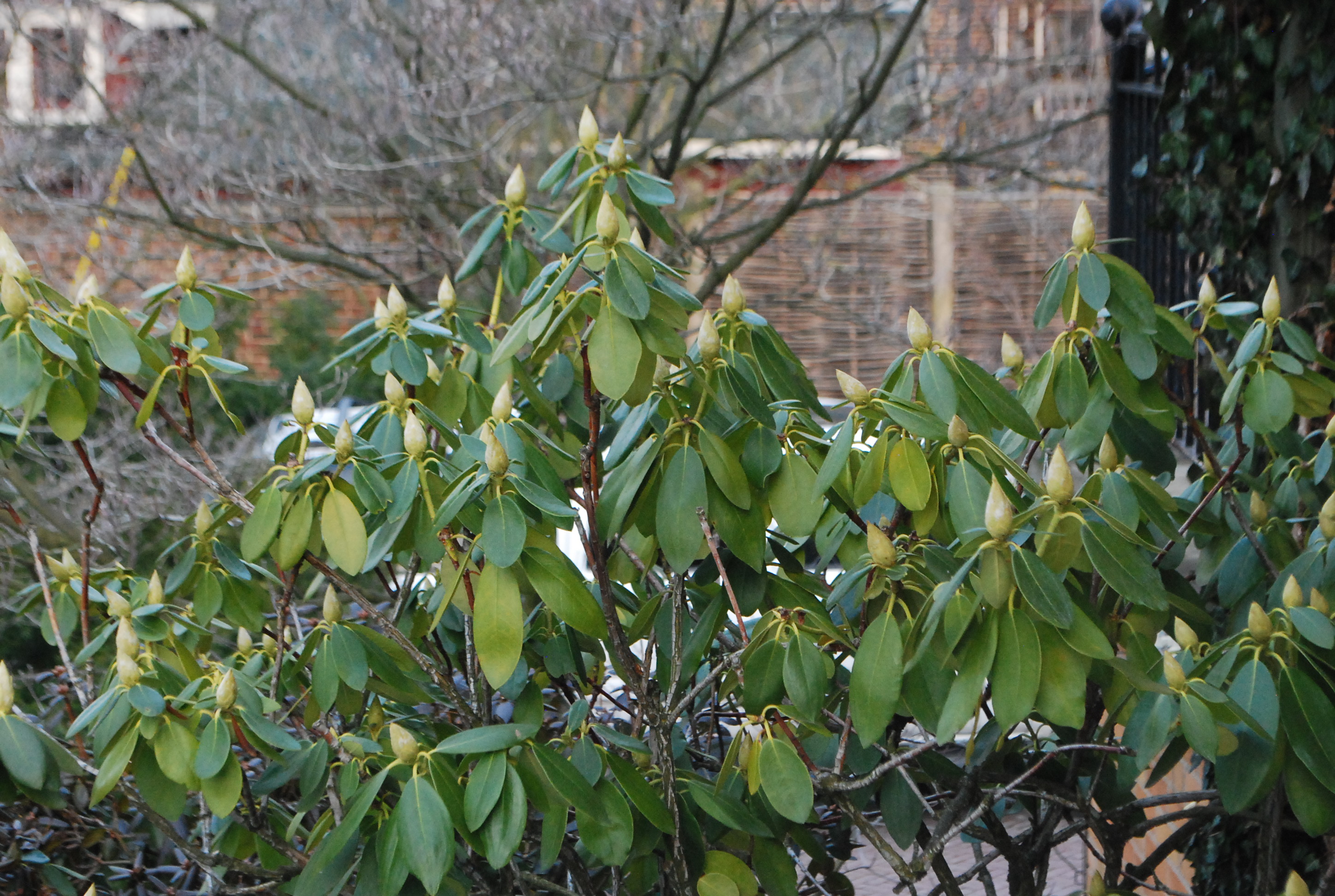
The trees and shrubs have no such angst.  They go dormant given the day length and temperatures.  They set buds for spring season, months ahead.  They prepare.  They have no expectation of mercy.  They wait.  The urge to emerge revolves around a complex set of conditions.  Natural relationships that culminate in the OK to grow.

dogwood-flower-buds.jpg

A bud is an undeveloped shoot.  A leaf or a flower shoot.  Once formed, that bud may lay dormant for months, waiting for the moment when conditions favor growth.  When woody plants form buds, the exterior of that bud is tough-encapsulating.  Breaking dormancy is a very vulnerable state-best not to do so, unless there is a reasonable expectation of success.  Nature provides mechanisms by which that tender stage we call growth is protected from its enemies, until the time is right.   Many plant buds are covered in scales.  These modified leaves protect the life brewing within that bud from cold, wind,and physical insult.
magnolia-stellata.jpg

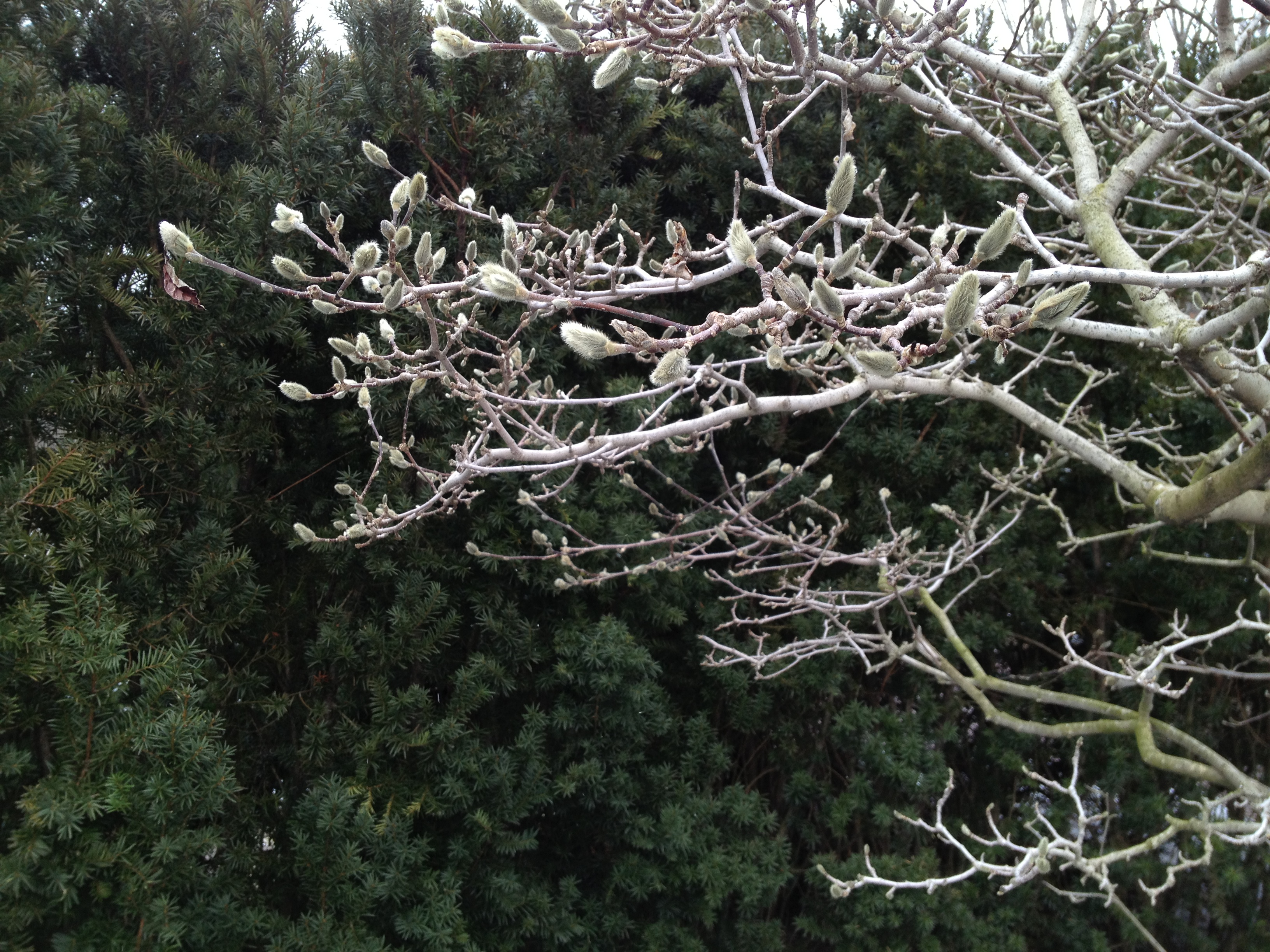
Many buds are covered in a gummy substance that further protects them from untoward conditions.  These magnolia flower buds have a remarkably rigid hinged casing that is covered in soft downy hair.  This magnolia is always the first plant to bloom in my yard. The buds are swelling, meaning that spring will arrive. Everywhere in my zone the buds are beginning to swell.  They anticipate spring in a very different way than I do.  They intuit the natural shift of the season. They respond to that subtle change in conditions, in a slow and subtle way.  These buds may swell, but they won’t break dormancy until there is a more extended period of moderate weather.
roses-and-asparagus-in-March.jpg

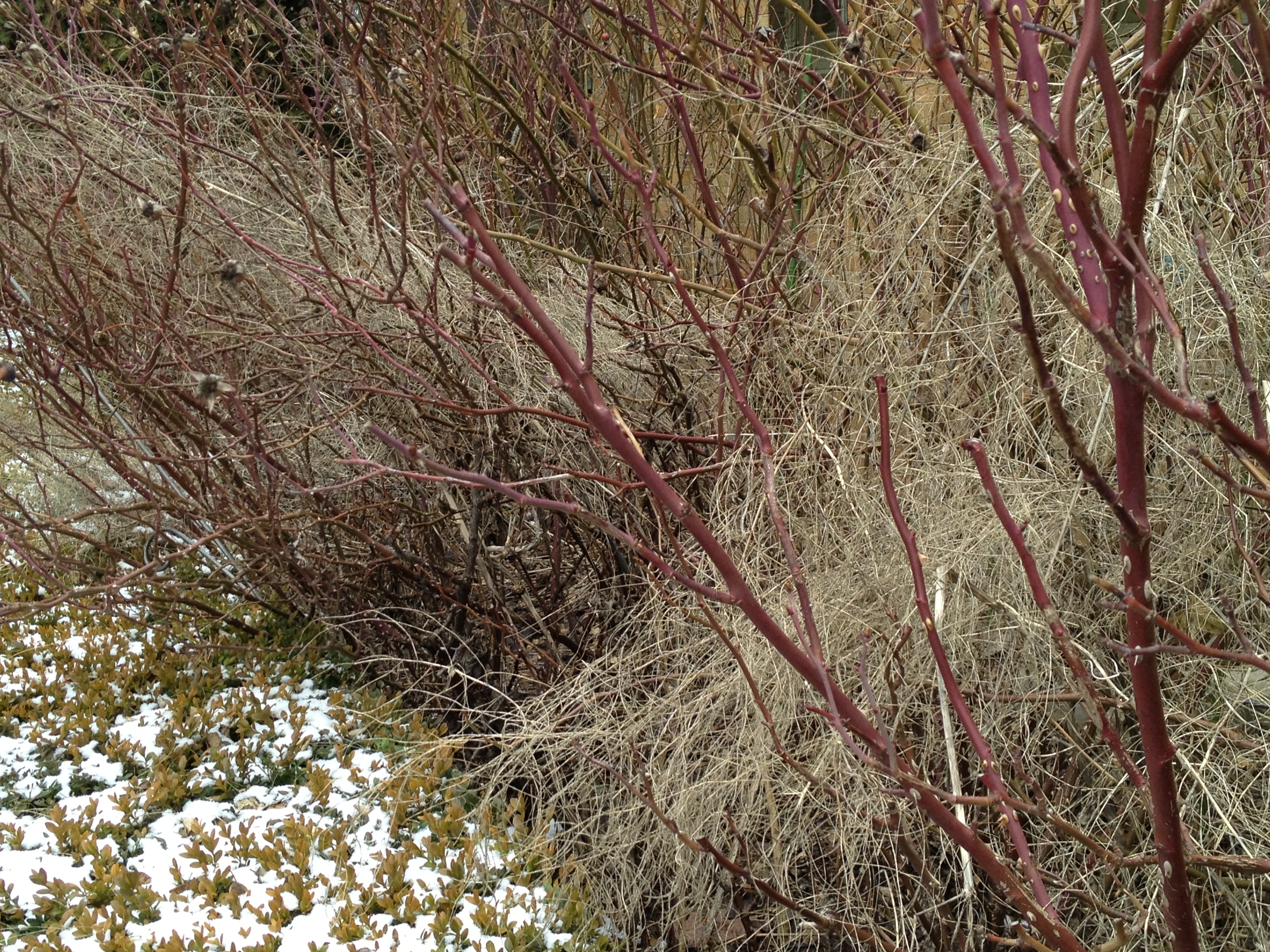
The buds can hold a very long time, if the weather does not take a more friendly turn. Most perennials have naked buds. What you see in this picture is the remains of my asparagus.  The spring shoots are still safely ensconced below ground. They have little defense against bitter cold. They stay dormant, buds and all, until they have the all clear. The leaf buds of the roses, encased in the same waxy substance as the stems.  They are ready, but holding their cards close.

yews-candling.jpg

The cream colored knobs on this yew-the flowers that will hardly be noticed.  The flowering stage is remarkable, the day a gust of wind throws a cloud of yellow pollen into the air.  At the tip of each branch, an elongated bud known as a candle.  Named for its resemblance to a candle, this growth tip is comprised of the countless needles which will populate the new shoots.  These needles lay flat against the stem, until the spring weather encourages them to spread out and grow.  The buds do a better job of predicting the arrival of spring than my winter weary heart.


The 2013 Espaliers

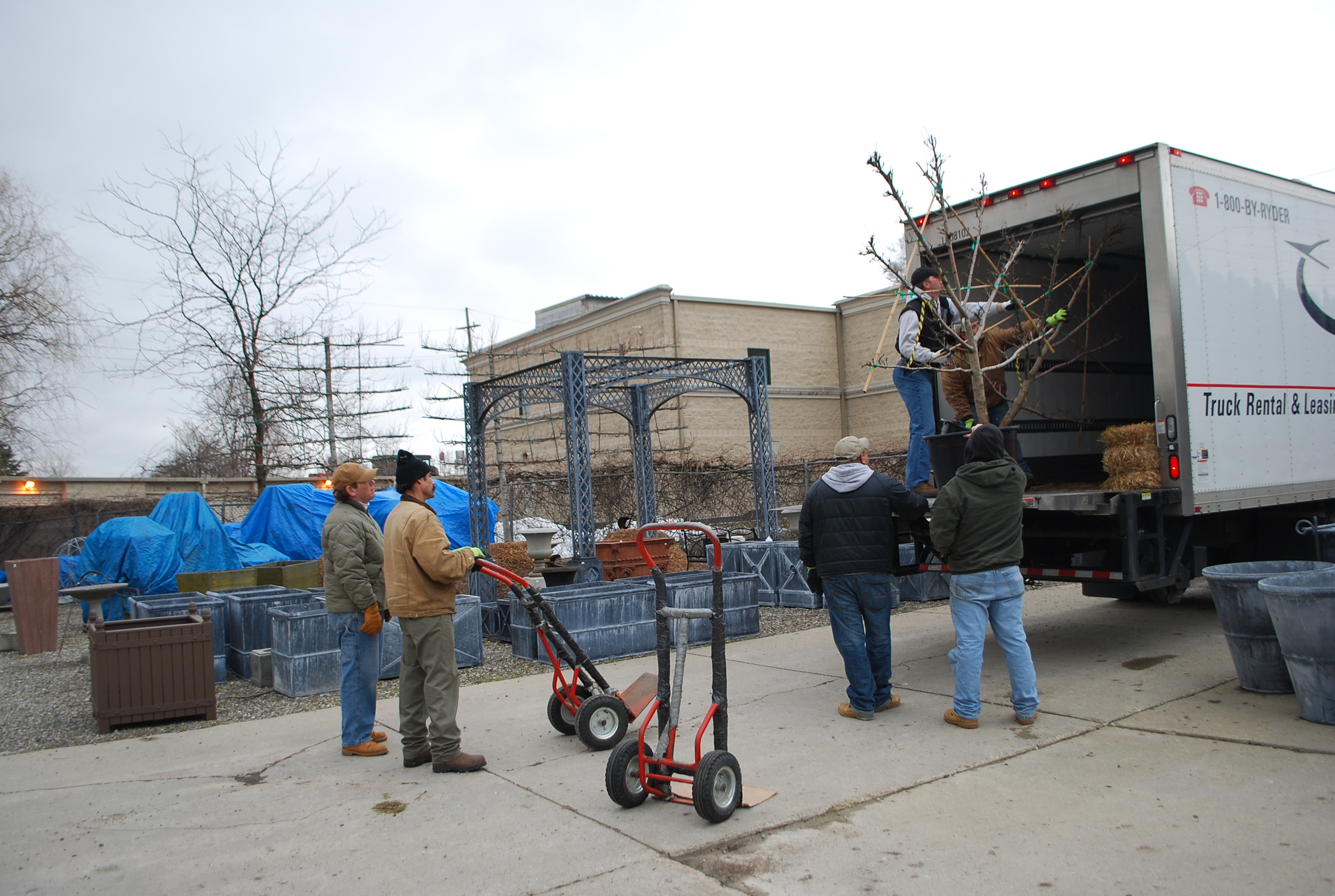
espalier-delivery.jpg
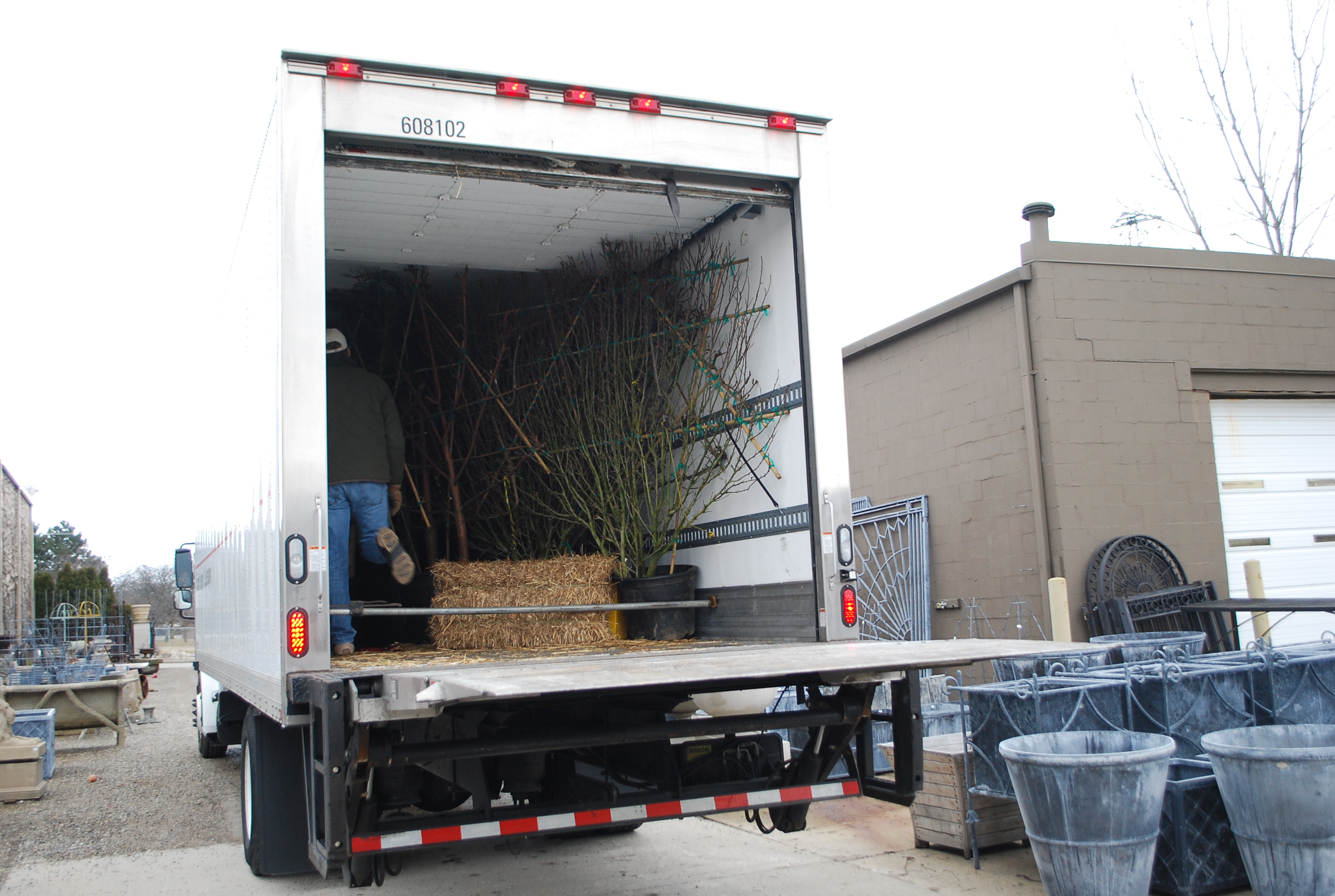
It is no secret that I am very fond of espaliered trees.  Espaliers?  These are trees or shrubs which are pruned to a 2-dimensional shape.  Though the practice dates back many centuries, a French monk, Fr. Legendre, published a book in 1684 entitled  “Palmette Legendre”.  He detailed his method for drastically pruning fruit trees so they could be grown against the monastery walls.  This made it possible to grow many more trees, and harvest more fruit, in a small space.  The French word espalier is derived from the Italian word “spalliera”, meaning “something to rest the shoulder (spalla) against”.  These fruit trees rested their shoulders against the wall.

unloading-the-espaliers.jpgFr. Legendre discovered that fruit trees that were subject to this kind of hard pruning, and enjoying the warmth generated by the wall,  produced better yields.  The growth generated in the third dimension would be cut back to the fruiting spurs. The first espaliers were pruned to encourage long horizontal arms.  It seems that horizontal branches bear more fruit than vertical ones. This horizontal shape is known as a cordon, and is quite similar to how grapes are pruned.

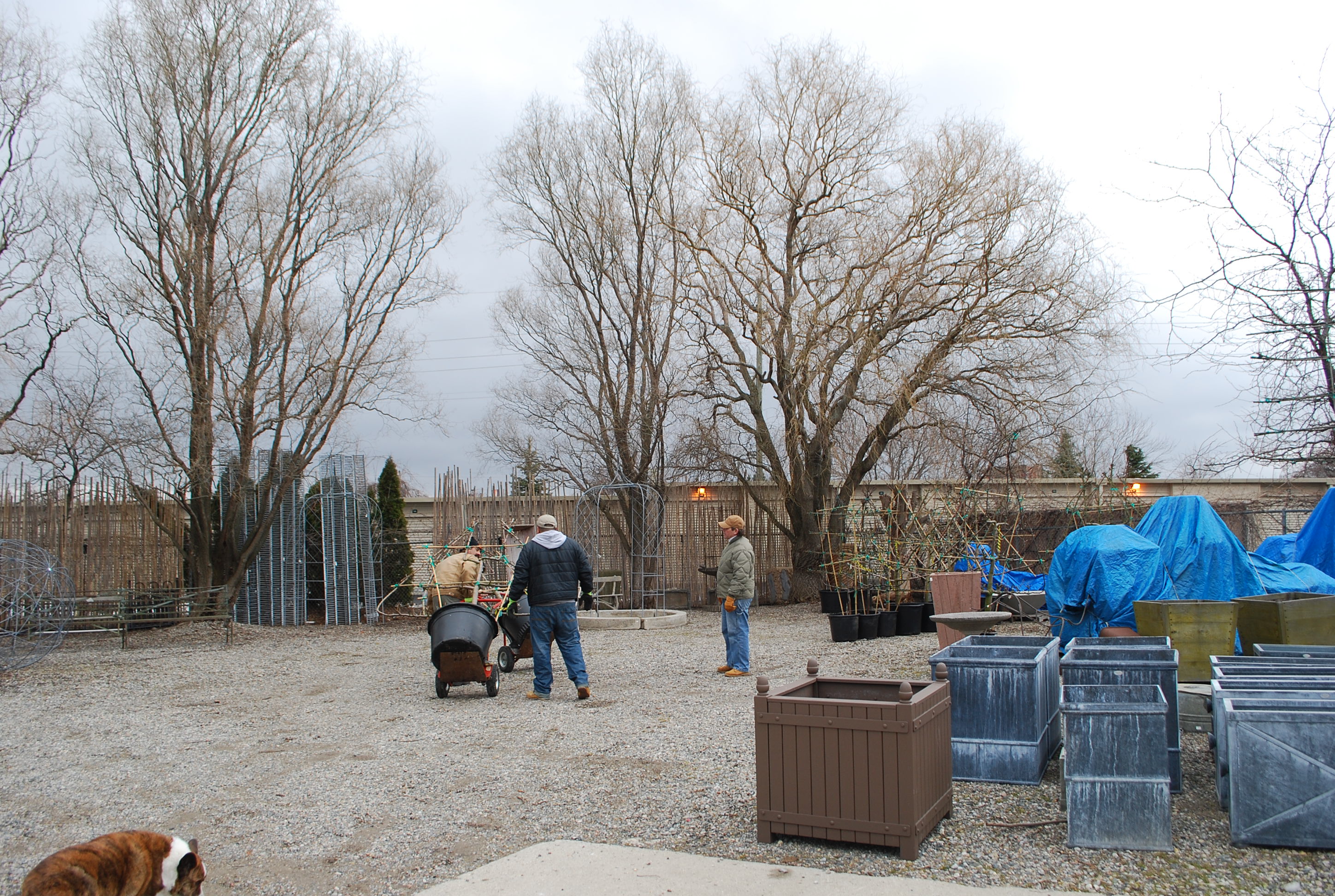
unloading-espaliers.jpg

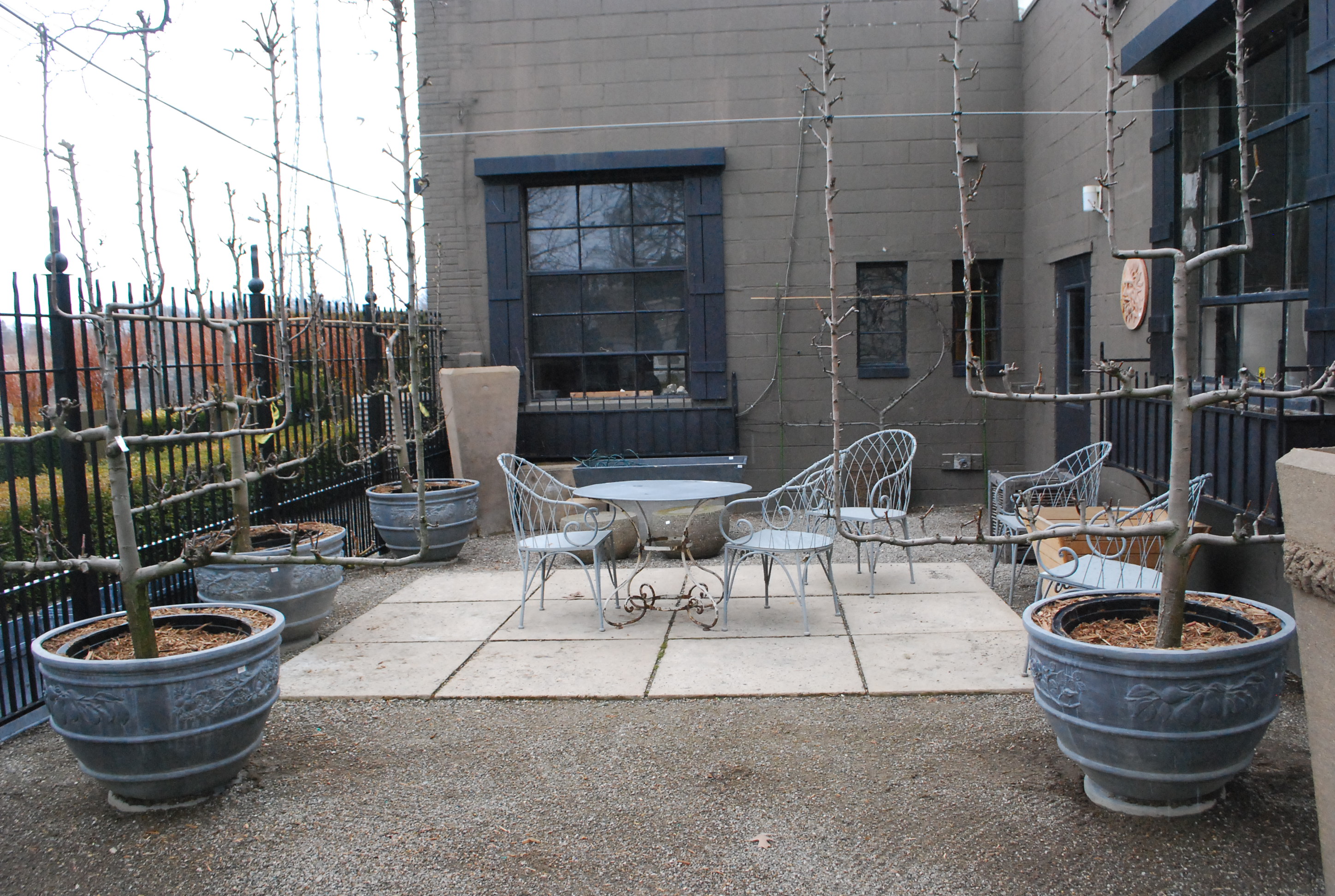
Eventually, many different styles of pruning emerged.  Some styles are just as decorative as they are utilitarian.  The tree pictured above has been trained into a classic fan shape.  All of the primary arms radiate outward from the trunk in the shape of a fan. This shape is great for a wall that is both tall and wide.  Blank walls in the landscape are a perfect spot for an espalier.  The pattern of green, light and shadow that the tree creates provides interest in a spot that is otherwise empty.  Should I under plant an espalier, I like like a short growing plant.  Part of the beauty of an espalier is being able to see the entire shape, from top to bottom.

espaliered-trees.jpgEspaliers are traditionally created from fruit bearing trees.  Though apples prefer a sunny location to fruit well, a pear tree is fairly tolerant of a shady location.  I am partial to pears.  Their glossy leaves are beautiful, and they seem more resistant to fungal problems.  Many fruit trees require another tree for cross pollination.  If you want to grow an espalier for fruit, be sure you grow a pair, or pick a variety that is self pollinating.  All  fruiting trees are beautiful when they bloom in the spring.  An espalier fruit tree in full bloom is especially gorgeous, as the white flowers dramatically detail the geometry of the shape.

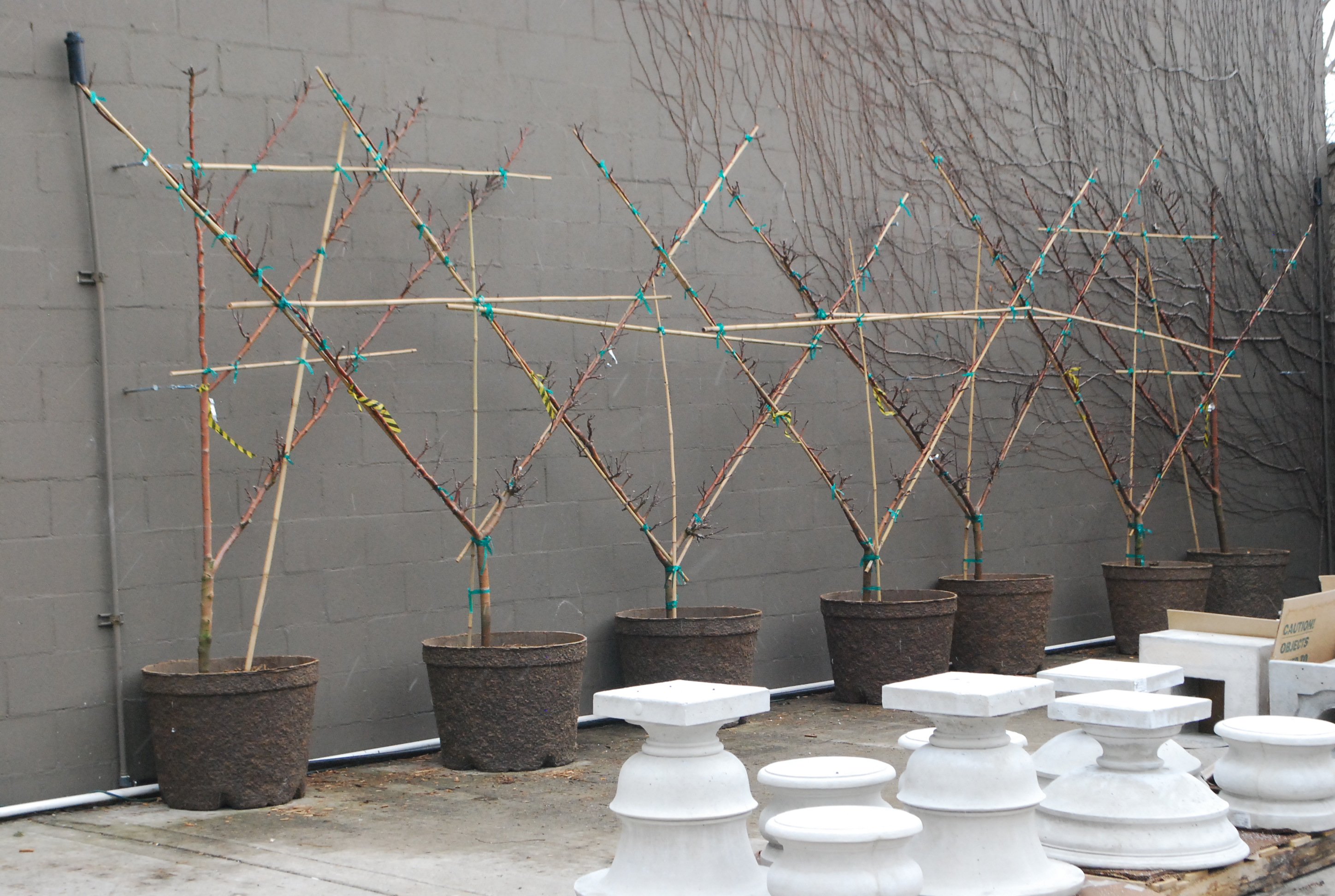
espaliers-2013.jpg
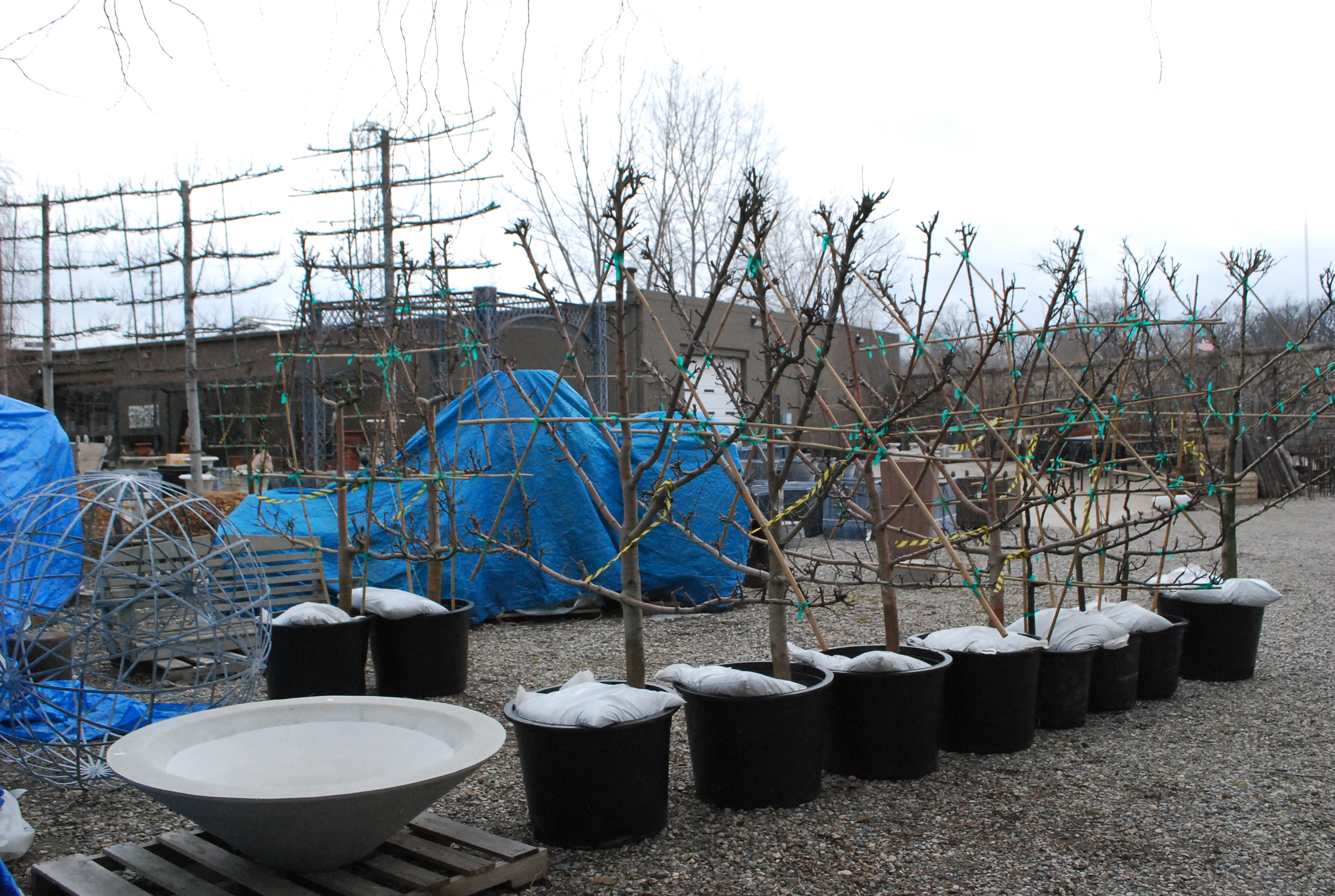
These four espaliers are Kieffer pears, trained in the candelabra form.  It is easy to see here that an overall form has been determined for the large branches.  Once a horizontal branch reaches the width desired, the young branch is turned towards the sky, and tied to a form.  That branch will require support until it gets enough to stand on its own.  Pear wood hardens off quickly.  If you are training an espalier, be sure to make any change in direction when the branch is still very young.  Barely visible at the top of this picture is a horizontal fish line.  The branches are tied to this to keep them vertical, and keep them the desired distance from neighboring branches.  We have secured the branches in this manner for display only.  Once they are planted against a wall, galvanized steel eyes will need to be installed in the mortar.  The branches will be tied to those eyes using a flexible and expandable landscape tie.

espaliered-rose-of-sharon.jpgThough a fruiting tree is a traditional subject for an espalier, lots of trees and shrubs readily take to this kind of pruning.  Pictured above is a white rose of sharon, trained into a fan. The picture is not the best.  Imagine many branches emerging from the soil in a line., rather than a mass.  Any branch which emerged from the ground outside of the line-either to the front or back-was removed.  The fan is created with many branches, rather than just a select few.  This shape of this shrub reminds me of fan coral.  It will be a solid mass of green, in leaf-and a solid mass of white in flower.

crabapple-Belgian-fence.jpg
A Belgian fence is a series of espaliered trees that are planted equidistant from each other. Each interior tree has a single trunk which comes up up out of the ground about 18″.  Years ago, that trunk was pruned down to 18″.  A pair of emerging side shoots were trained at a specific and repeating angle.  The collection of trees produces multiple diamond shapes.  Ideally, each diamond is the same size as its neighbor.  Maintaining the diamond shapes requires faithful and regular pruning.  The larger and simpler the diamonds, the easier the care.  This group of trees are Calloway crab apples.  They have a beautiful cinnamon colored bark, and flower and fruit like all crab apples.

horizontal-cordons.jpg
The large espaliers in this picture are lindens-old lindens. The cordon espaliers in front of them-Bradford pears. Both species are ornamental, and tolerate hard pruning. These trees may also be allowed to fill in between the horizontal layers. This would result in a solid thin wall of green.  They could be grown against a wall, or as a freestanding green wall.  Any espalier which is grown as a fence will need lots of support and direction in the early years.  Big bamboo stakes are prefect for this.  The bamboo you see on the foreground trees was attached to keep all the branches in place during shipping.

espalier-goblet.jpg
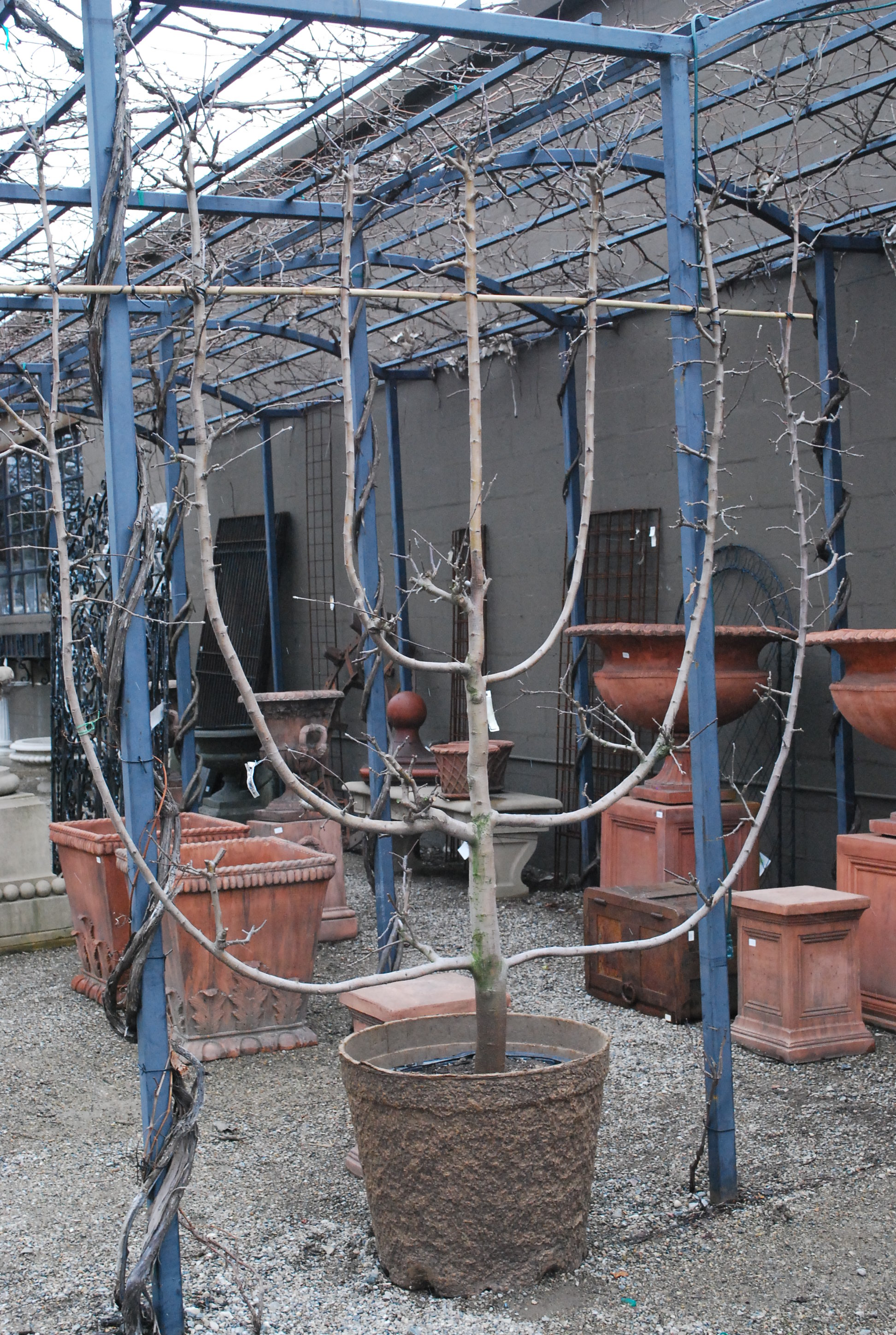
This espalier has been grown in a goblet shape. The change in direction from a horizontal to vertical is a gently curve, as opposed to the right angle of a candelabra style.  As the main arms are fairly well established, we only needed to secure the tops of the branches to keep the tree representing its intended shape.

espalier-fans.jpg

These fan espaliers are apples and pears of various varieties.  A whole orchard could be grown in a relatively small space.  Training espaliers is an art form, but a form that can be learned.  As slowly as trees grow, you would have time for your knowledge to grow.  A large caliper espalier is an investment, mainly due to the years it took to get it to size.  This particular grower does not sell any trees unless they are at least 7 years old.  Over the course of that 7 years, he waters and feeds, and keeps the yellow bellied sapsuckers from drilling holes in their trunks.  He has trees that have had a major arm die back-heartbreaking this.  But once an espalier is established, they are no more care than any other tree or shrub.  Some nurseries and garden centers carry 1-2 year old plants.  This makes it easy to give one a try.

Winter Green

landscape-in-winter.jpg

The color green has not nearly so much significance to a gardener as living green does.  I have never taken the time to record how many different plants I have on my property, but suffice it to say that there are lots.  Each of the plants have a certain shade of green associated with them.  Taken as a whole, a garden is a green tapestry.  Only a fraction of the possible colors of green represent in my garden today.  A good portion of the garden is still dormant.  My roses, shrubs and trees are bare.  The perennials are buried under snow whose crust has frozen solid.  My isotoma fluvialitis is entirely brown.  What’s to look at?  The living green in winter is a certain kind of green we call evergreen.  Given that our winter is still holding on in March, this is the perfect time to be thinking about evergreens, and how they endow the winter landscape.

evergreens-in-March.jpg

That group of plants that manage to stay green over our winter-not such a big range, but impressive in their delivery.  The ability for spruce,  douglas fir, white pine, boxwood, and rhododendron to stay green over the winter is an extraordinary story of adaptation.  Evergreen trees and shrubs do not shed their needles and leaves at the end of the season.  They shed interior needles on species specific schedules during the growing season-but definitely not during the winter.  Evergreen trees has evolved such that the individual needles have very little in the way of surface area.  Those needles are vastly better adapted to resist the drying from winter winds, and survive without photosynthesis going on, than a big fat juicy leaf of a hydrangea.  Hydrangeas, and many other deciduous plants, shed that juicy liability in the fall.  The needled and broadleaved evergreens-they tough it out.

old-spruce.jpg

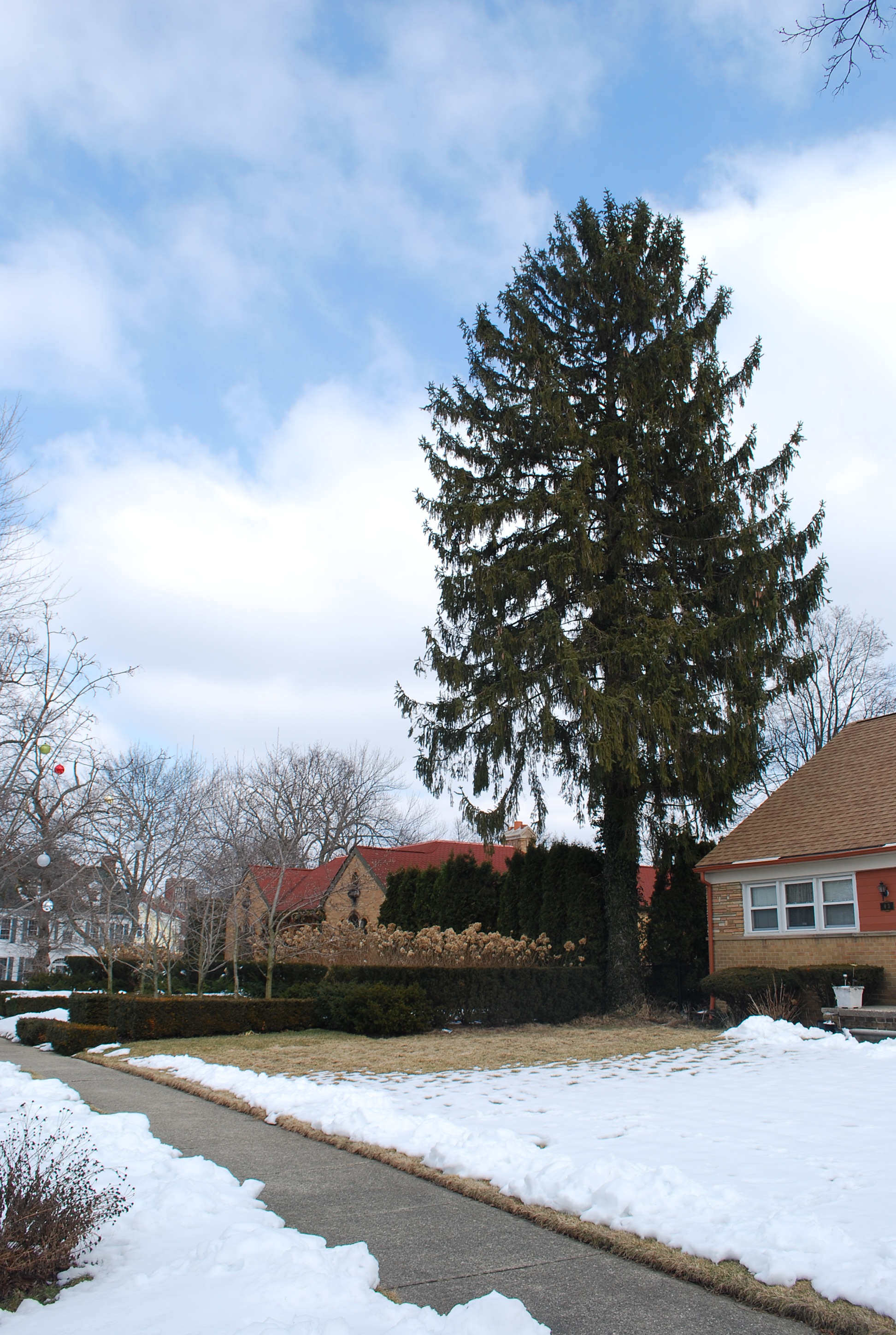
My urban property has but one large spruce.  I am sure it has been here at least 40 years.  Maybe 60 years.  This tree is green, winter and summer.  The winter green is moody and dark, unlike the summer emerald green.  I am never more appreciative of that green than I am right now.  I barely notice this tree in the summer.  In the winter, I see it coming from blocks away.  The evergreens that define my winter garden-I could not be more appreciative.

yews-in-winter.jpg

Yews are needle leaved evergreen shrubs.  Their dense and dark forest green needles provide such beautiful structure to a garden.   In the spring, the new growth is lime green.  In the depths of the winter, the color is almost black.  Watching the change in color given the season is to understand how plants deal with stress.  A yew floating in much too much water-the needles will be yellow.  A yew that dies makes a spectacular issue of that demise.  Orange needled yews-I am sure you have seen them.  Yews in the thick of enduring the winter-the needles are almost black.  The color green teaches, should you be watching.

yews-in-winter.jpg

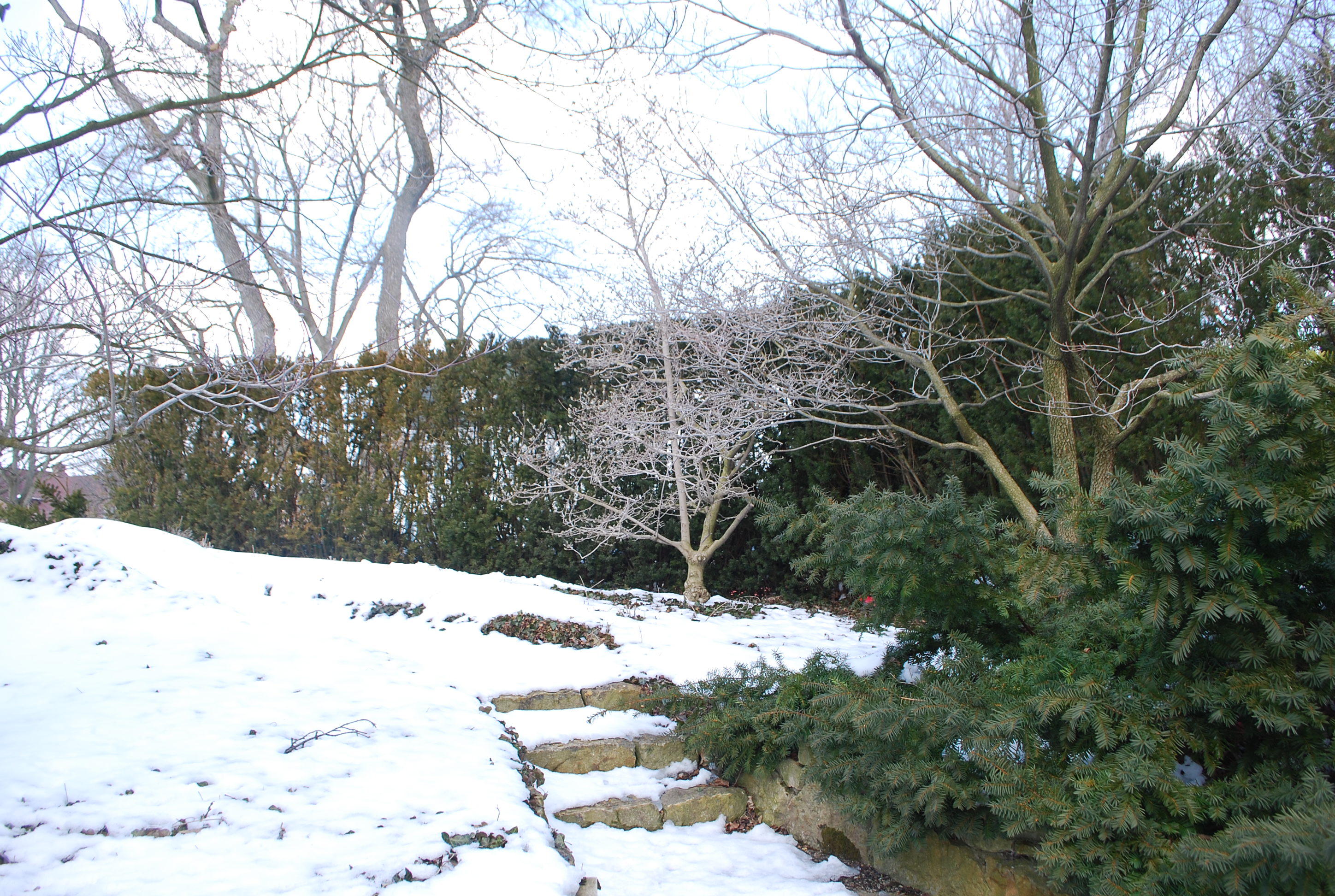
Evergreens provide a stalwart backdrop in the winter for the snow covered branches, and the wispy tufts and remains of the perennial garden.  This black green backdrop of hedged yews brings a magnolia into clear focus.  Were this view open to the street, the delicate tracery of the branches and the overall shape of this tree would be lost.  Specimen evergreens need ample space around them-appreciative space.  Hedging evergreens whose repetition defines spaces help to create winter interest.

rhododendrons-in-snow.jpg

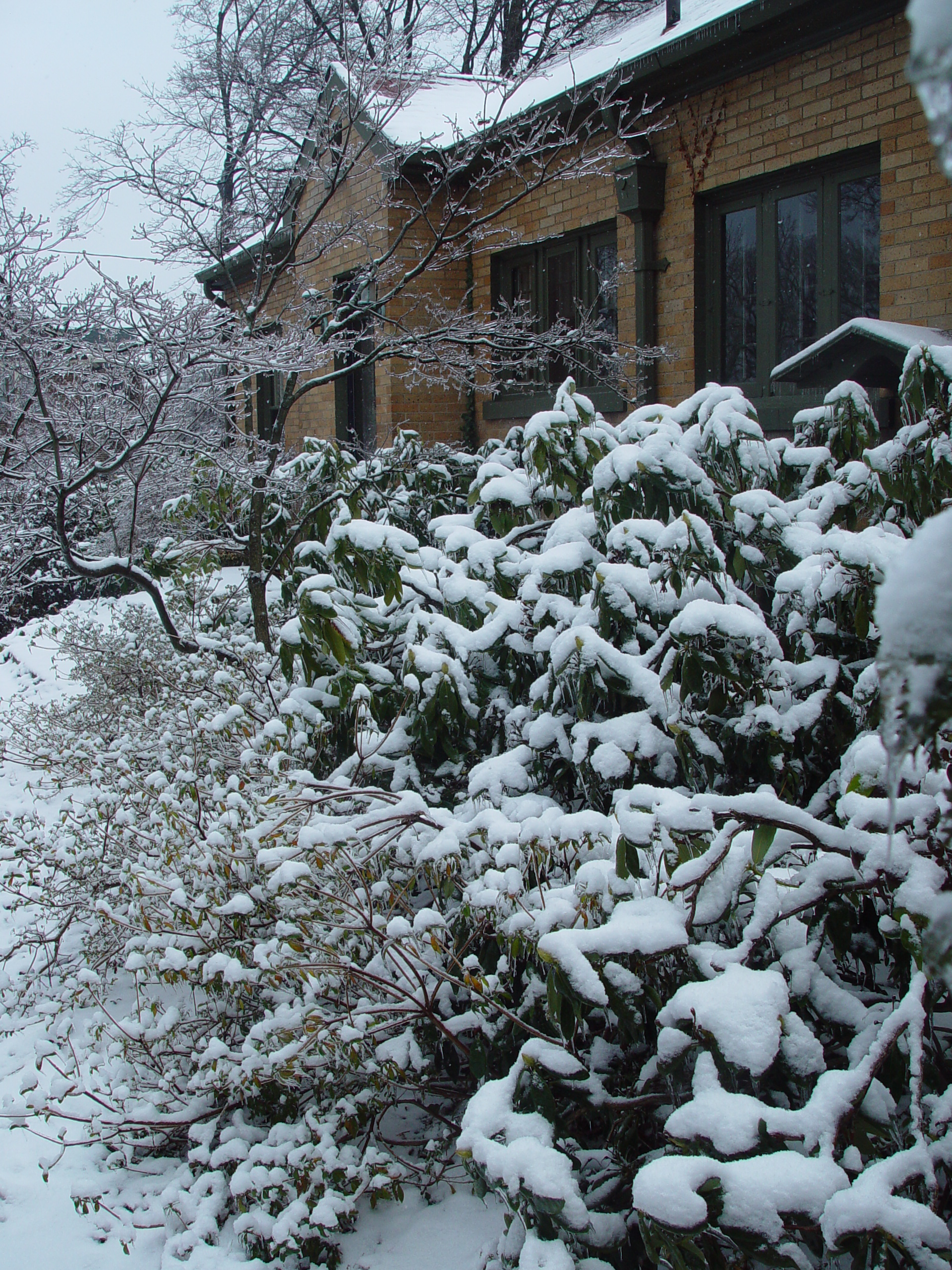
Broad leaved evergreens are a glutton for punishment.  Rhododendrons feature broad leaves with big surfaces that suffer much more damage than needled evergreens.  Those big leaves react to winter weather graphically.  Those big leaves are sitting ducks for serious cold and vicious wind.  The rhododendron outside my home office window tell me whether the day is cold.  In cold weather, rhododendron leaves curl and drop down.  In very cold weather, the droopy outline of the leaf is rolled in on itself- much like a pencil.  In much the same way as I curl up on a cold day, their curling and dropping mechanism helps protect them from extreme cold.  In the picture above, the leaves are hanging, dangling, from the stems.  This is a winter profile, generated by adaptation.  Once the leaves fan out, I know the temperature has moderated.  Rhododendrons prosper far better in warmer zones than mine, but my few plants grace my garden with green all winter.

boxwood-topiaries.jpg

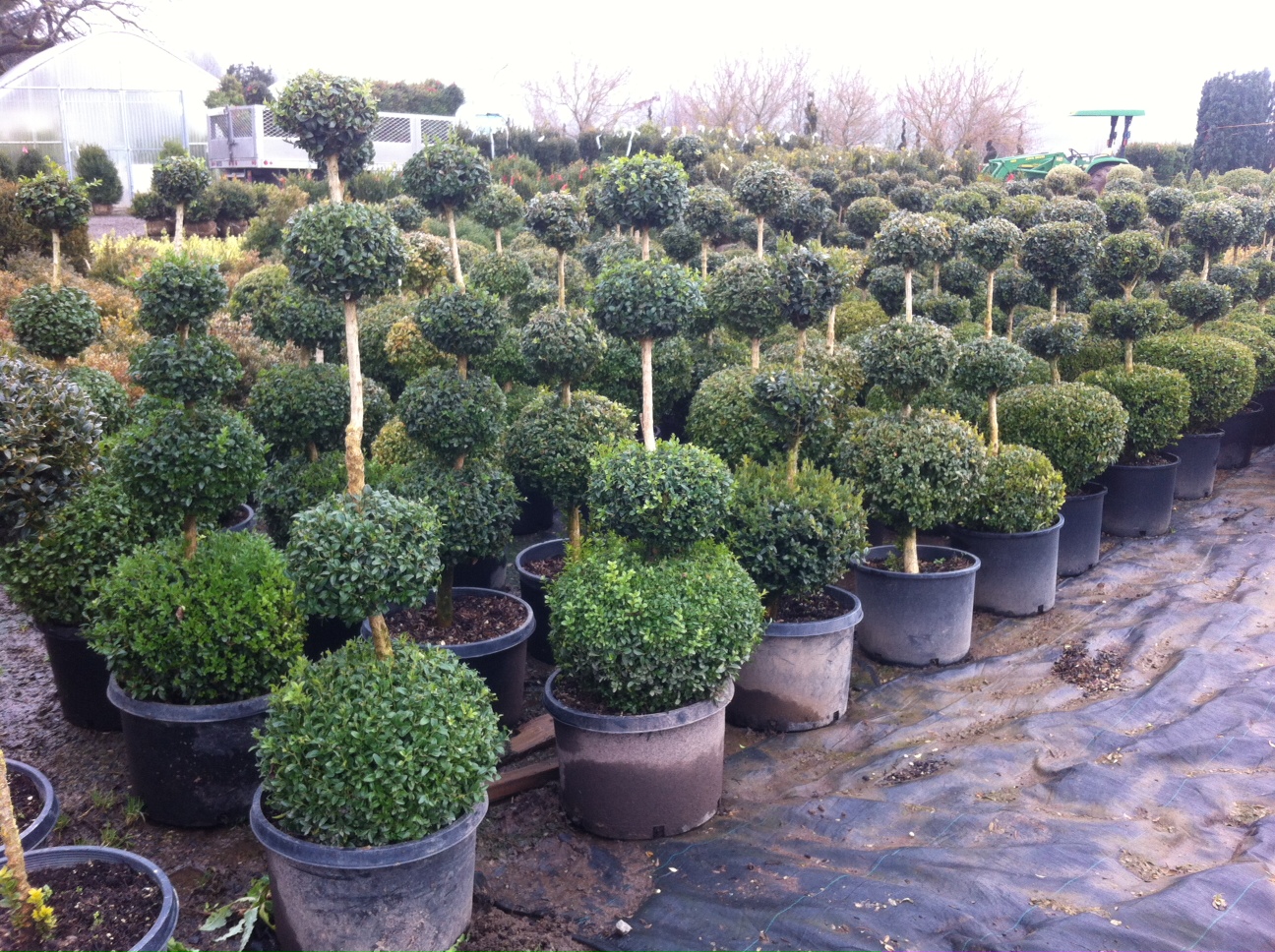
Boxwood-no other evergreen shrub describes a landscape better.  Most of our suppliers winter their boxwood in tunnel houses.  How so?  A boxwood out of the ground, in a pot, is an evergreen needing protection from the winter.  Boxwood in containers require special care, as their roots winter above ground.  Lots of water prior to the freeze is a good idea.  A wilt pruf spray- not a a bad idea.  Evergreens in pots at the front door is a very good winter look.

boxwood-sphere-in-summer.jpg

Boxwood in the ground prospers in my yard. The evergreens, both big and small, both needled and broad leaved, define a landscape both summer and winter.

winter-garden.jpg

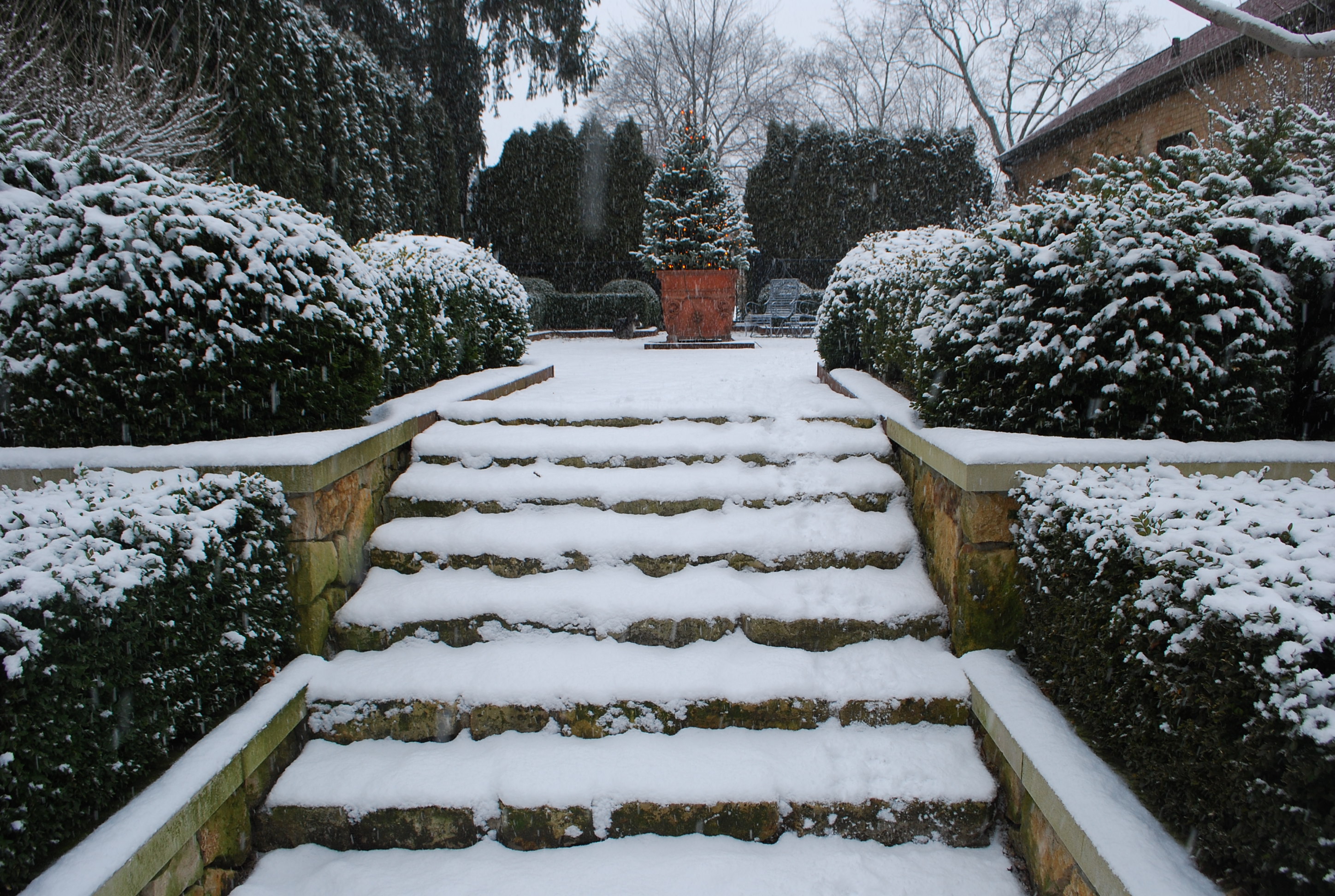
If a winter season is unavoidable, the evergreens help to make it a little easier to bear.  They organize a space when snow has all but obliterated any of the details.  Once established, evergreens are long lived, and low maintenance.

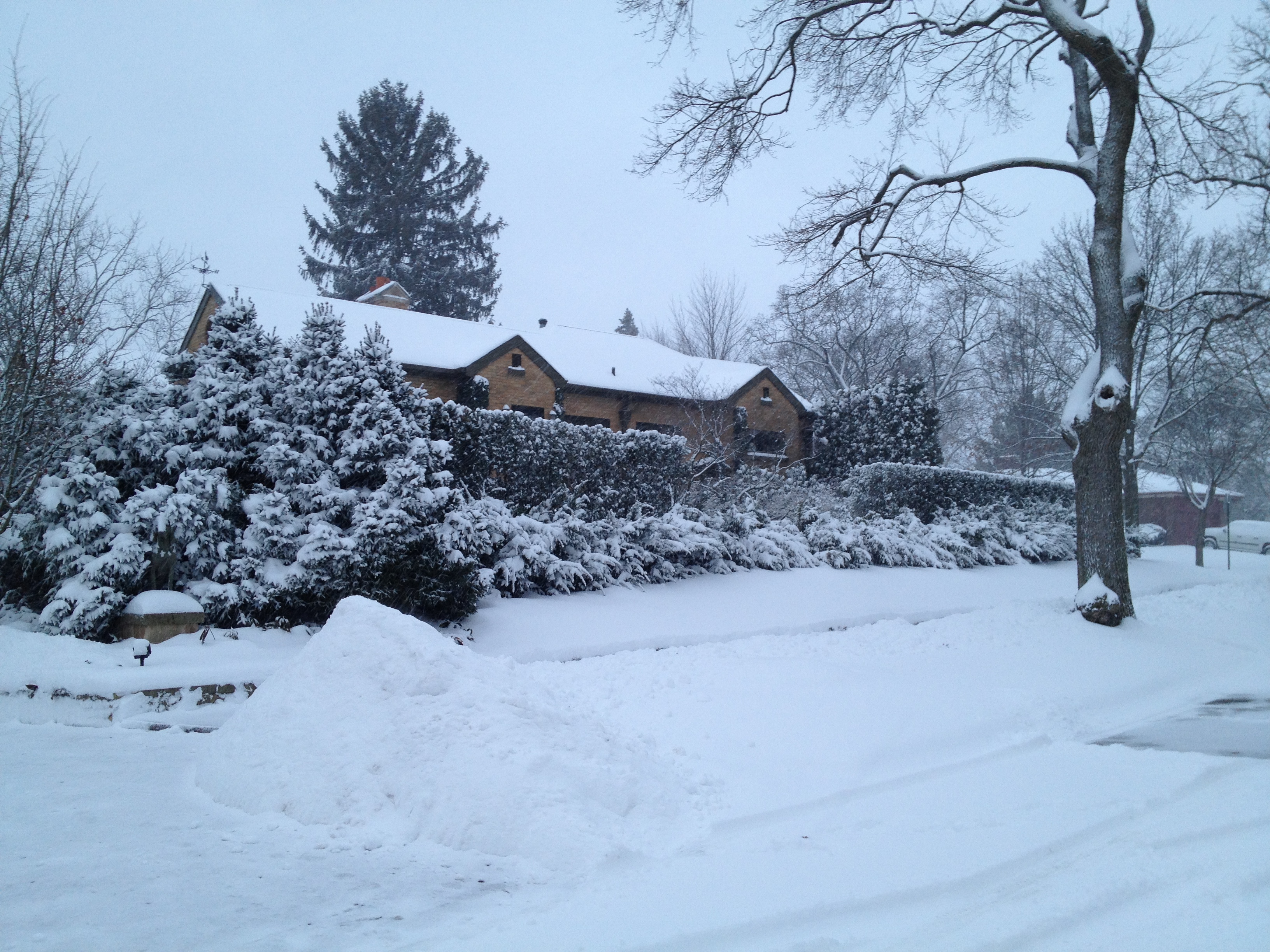
snowy-day.jpgThis day would have been ever so much more bleak, without the evergreens.

Notes From A Hort Head

Good friends came to the shop late in the day a week ago Saturday-they had a mind to shop our sale, and go to dinner afterwards.  We liked the idea.  They bought a round of handmade Italian terra cotta pots, given our once a year sale.  What would they plant in them?  Boxwood, and more boxwood.  Rob and I got into a rather spirited discussion about boxwood species and cultivars.  M interrupted the both of us with this: LISTEN TO THE HORT HEADS GOING AT IT!

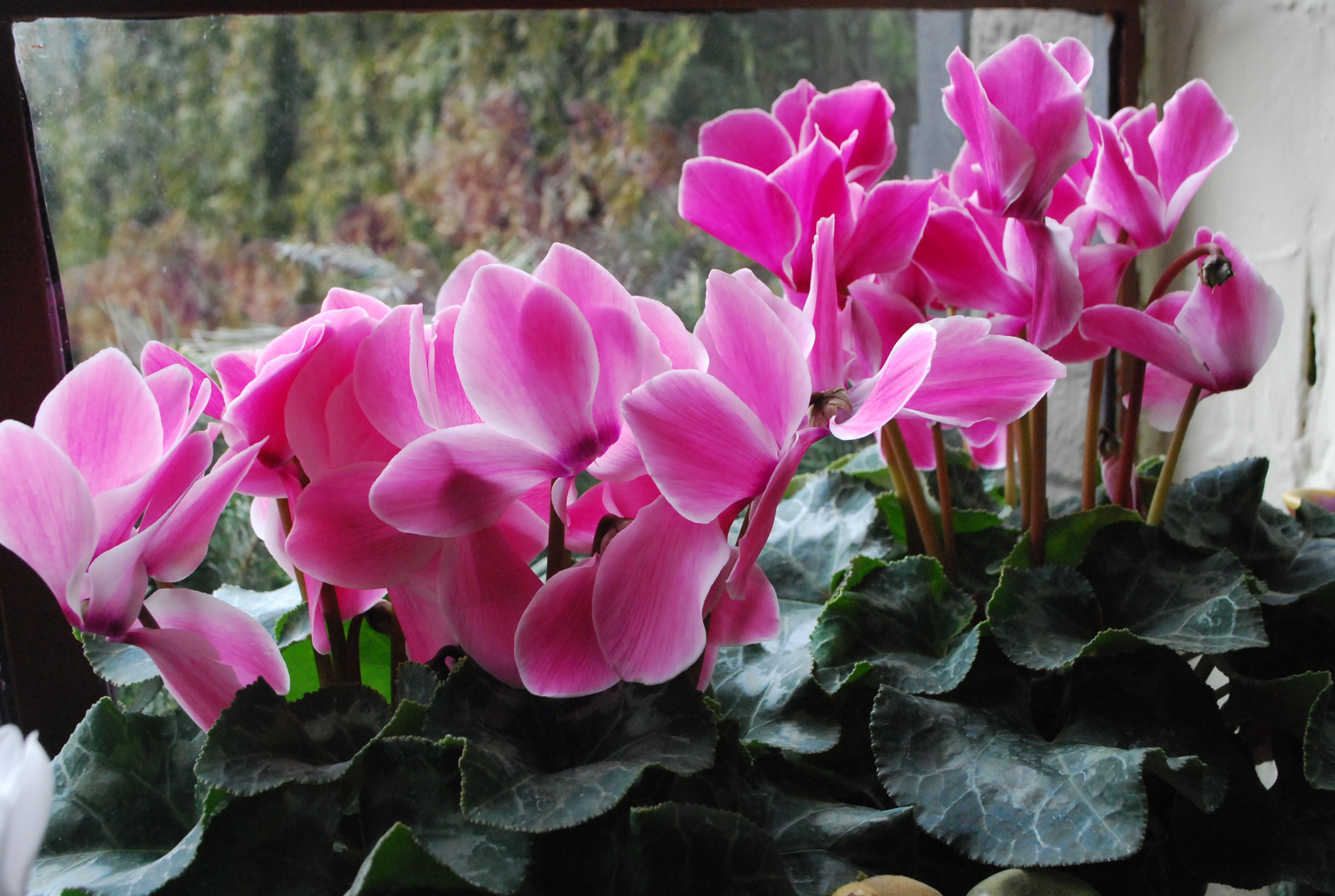
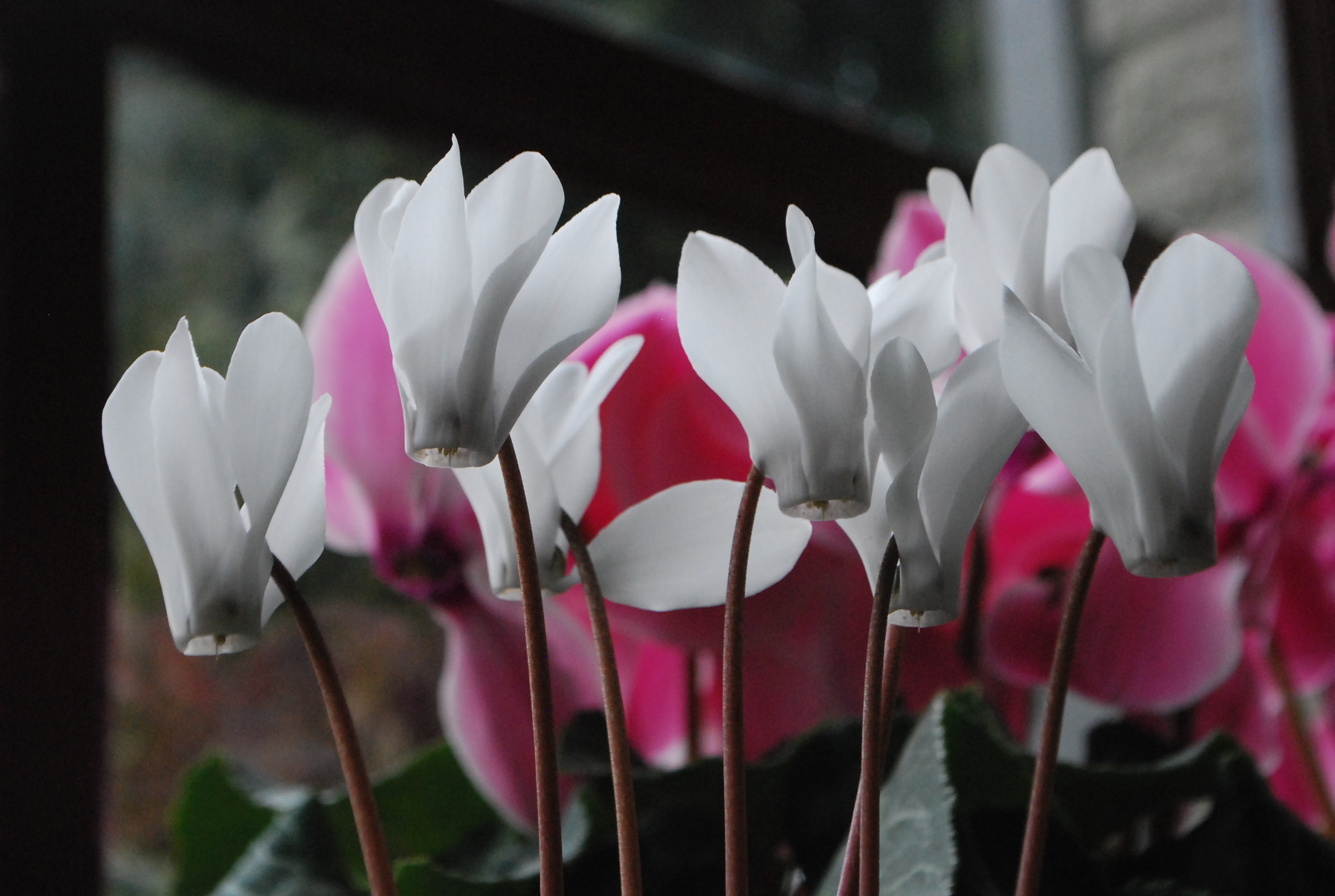
winter blooming cyclamen

I was amused, and then pleased.  Me, a hort head?  Well yes,  I guess that would be me.   My earliest days gardening was entirely about the horticulture.  Plants, soil, zones, weather and more plants-I doted on the White Flower Farms catalogue and the national weather service bulletins on TV.  Mind you, this time in my life was pre computers.  The print plant and seed catalogues were about all I had, beyond my own digging and experimenting.

I grew up into garden design via the plants.  Any plant-I was interested.  I read all that I could.  I learned the names.  The latin names-that too.  I sprung for small starts of every manner of wild flowers.   Rock garden plants-those were great too.  Peonies-species peonies.  Itoh hybrid tree peonies.  Lactiflora peonies.  Any peony-I was sure I had to have it.  The 5 acres I owned in Orchard Lake had 300 peonies the day I sold it.   Iris-loved those too.  I grew every iris I could get my hands on.  Species from Turkey.  Louisiana iris.  Japanese iris.  Bearded iris.  I could go on, but my hort headedness is not really of so much interest.  What is really interesting are the plants.

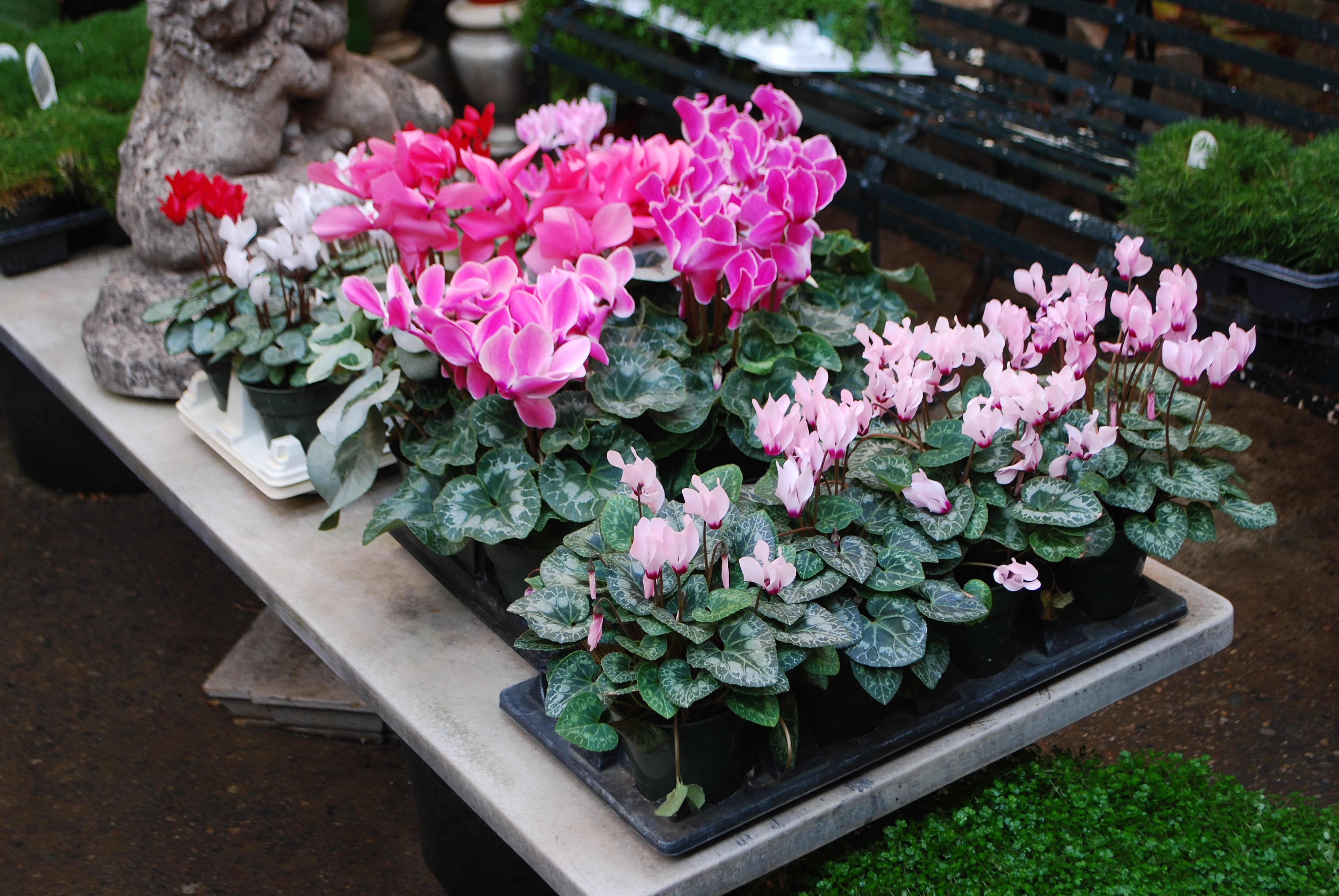
florists cyclamen

The winter in my zone is long-the better part of 6 months.  Every gardener in my zone needs a mechanism by which they cope.  January is not so bad.  The remnants and memories of the holidays sustain.  February-brutally colorless and cold.  March-still winter-although in late March comes the crocus, and the hellebores.  But March is not the glory that is spring.  Last spring was a torment, between the way too early heat, and the heartbreaking and lengthy late freeze.  I so hope for better this coming spring.

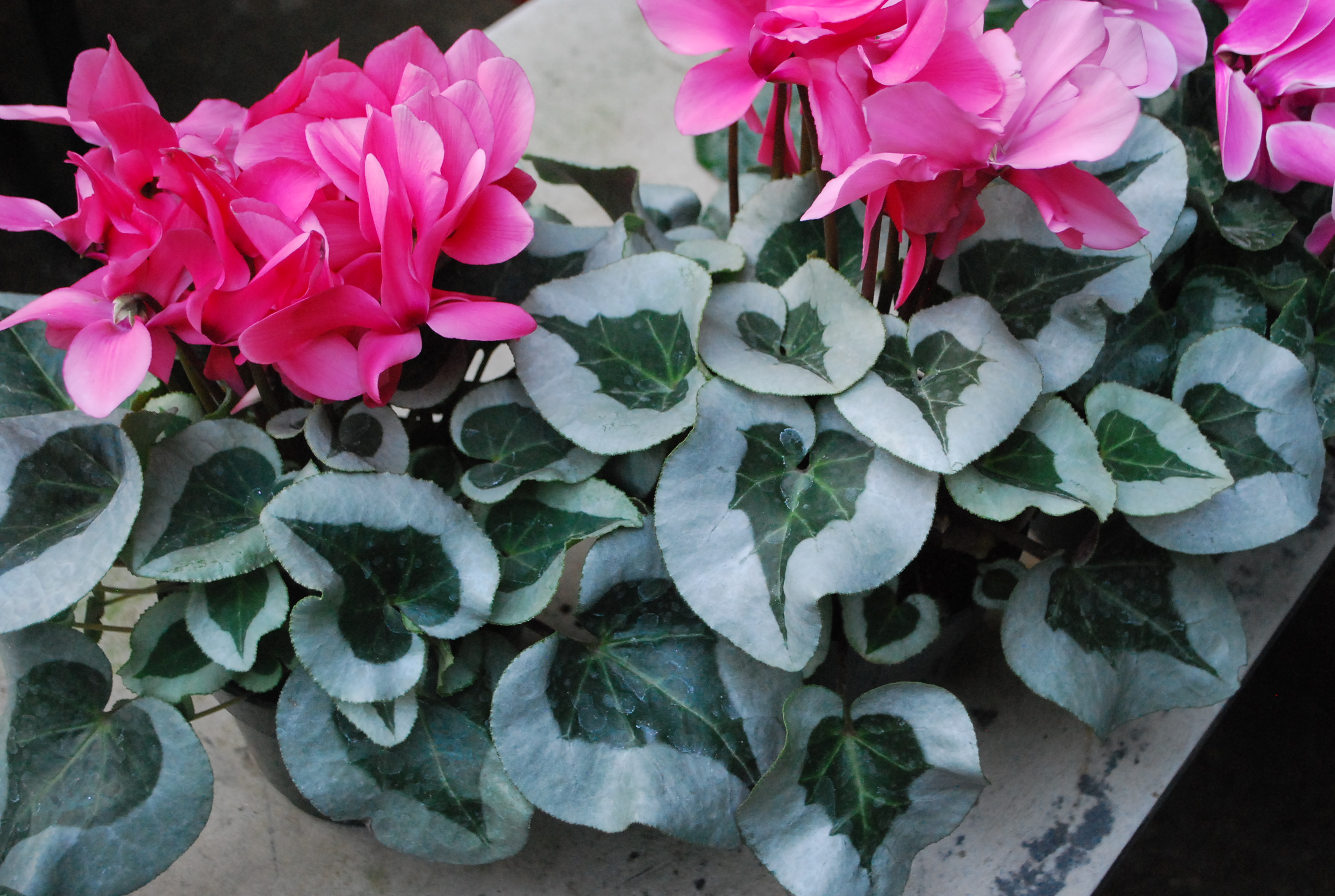
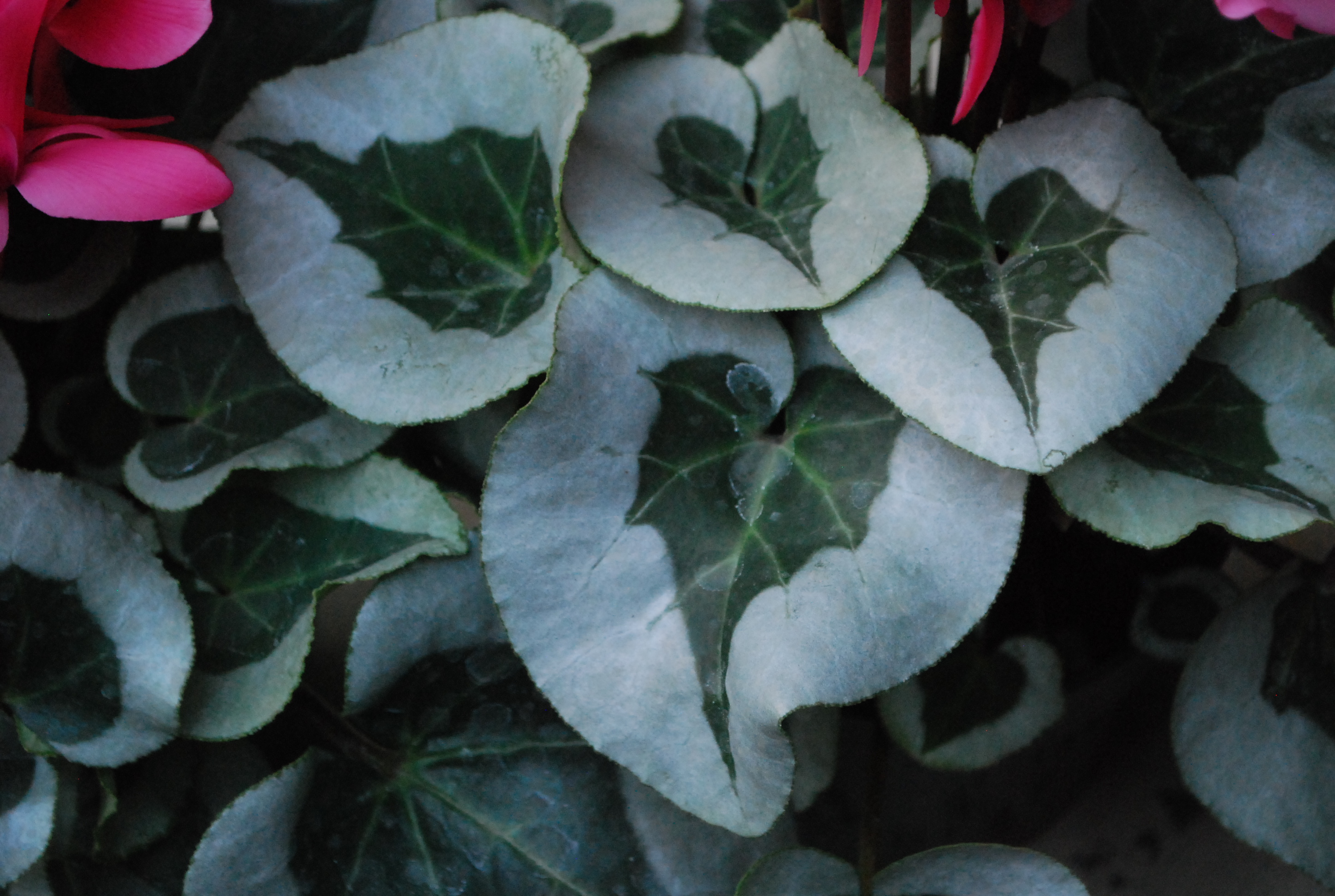
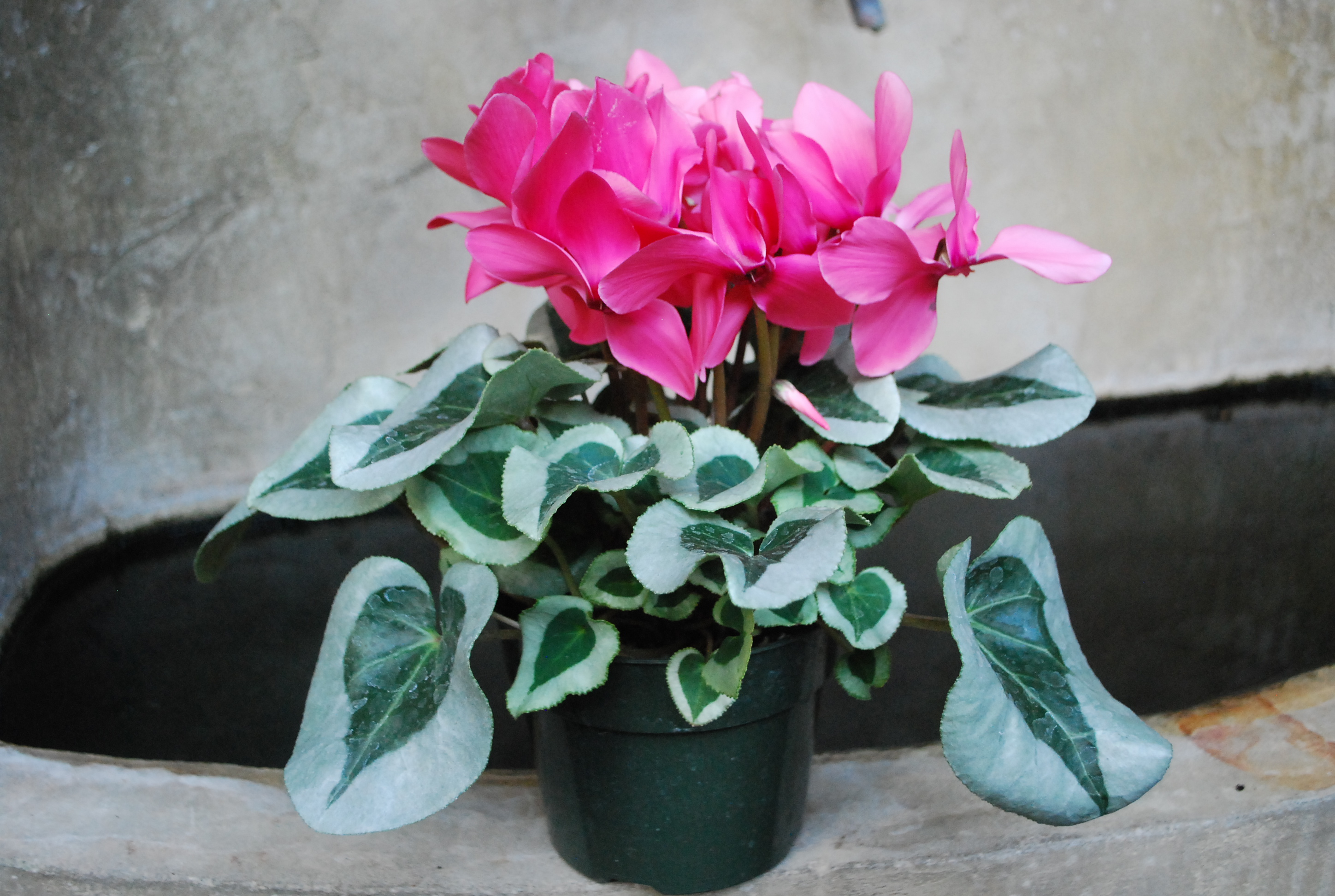
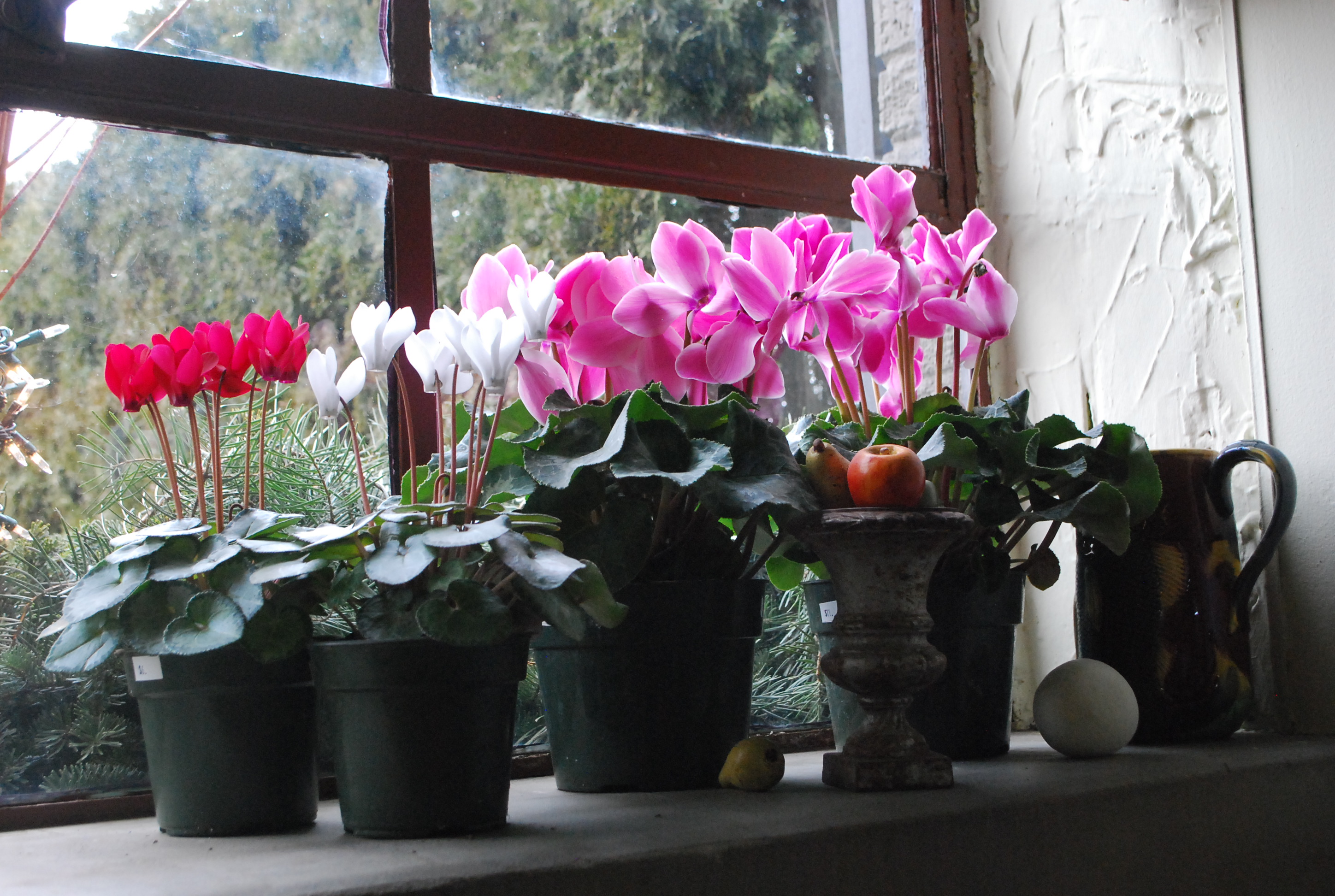
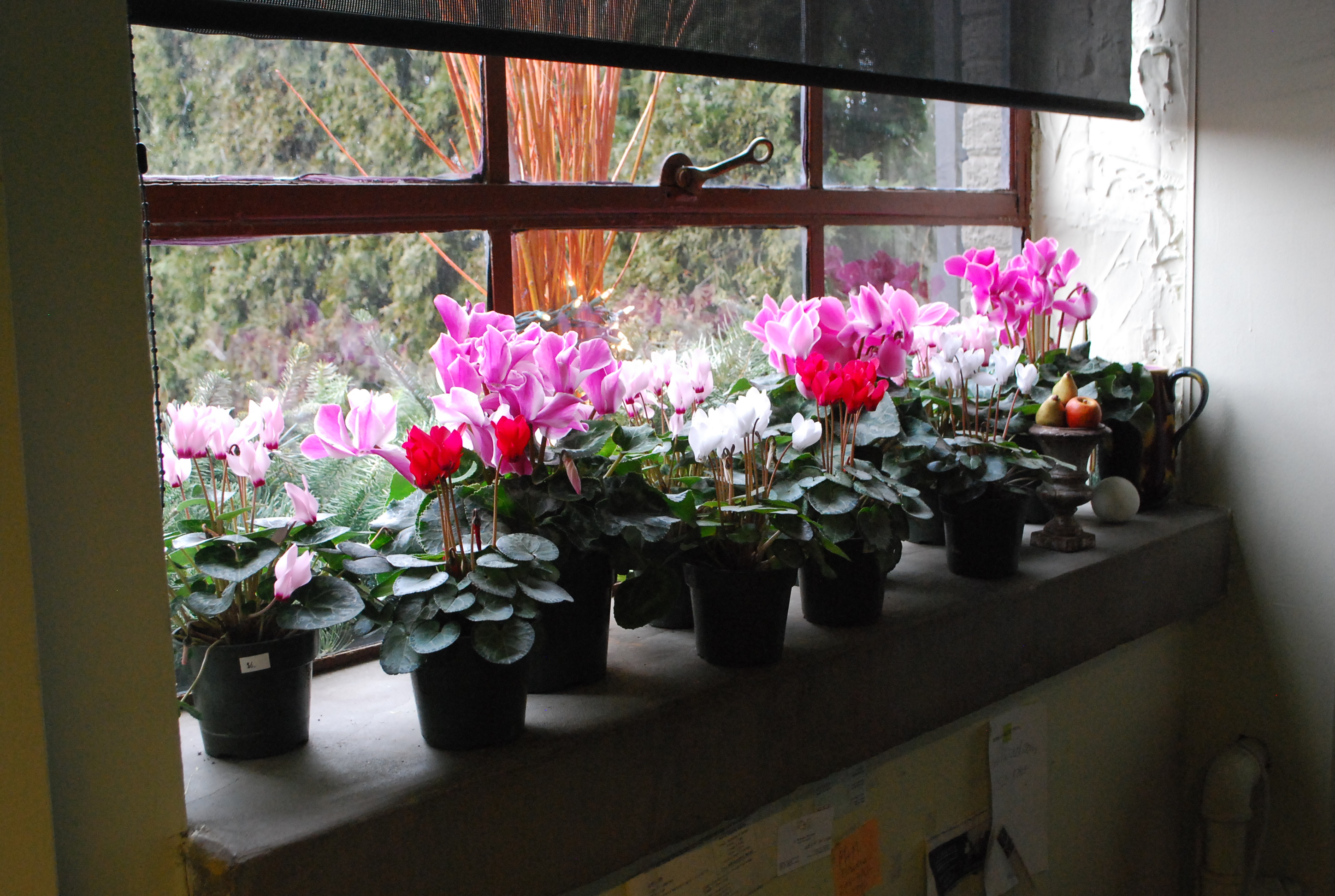
I had reason to shop for plants for an event.  Mark’s greenhouse sported two full benches of cyclamen.  Both the standard and miniature cyclamen were in full bloom-breathtaking.  Faced with all of those flowers, I loved what I saw, and grieved for the long winter that lays ahead.  There is no spring in my immediate future.  And I do miss the flowers. I filled my cart, and installed them in my window sill.  The leaves typically are dark green with striking white markings, but some newer cultivars sport leaves with big blotches of silvery white.

My windowsill is not a bad spot for cyclamen.  They like cool, even downright chilly temperatures.  Therre is something very cheery about all of this pink, red and white.

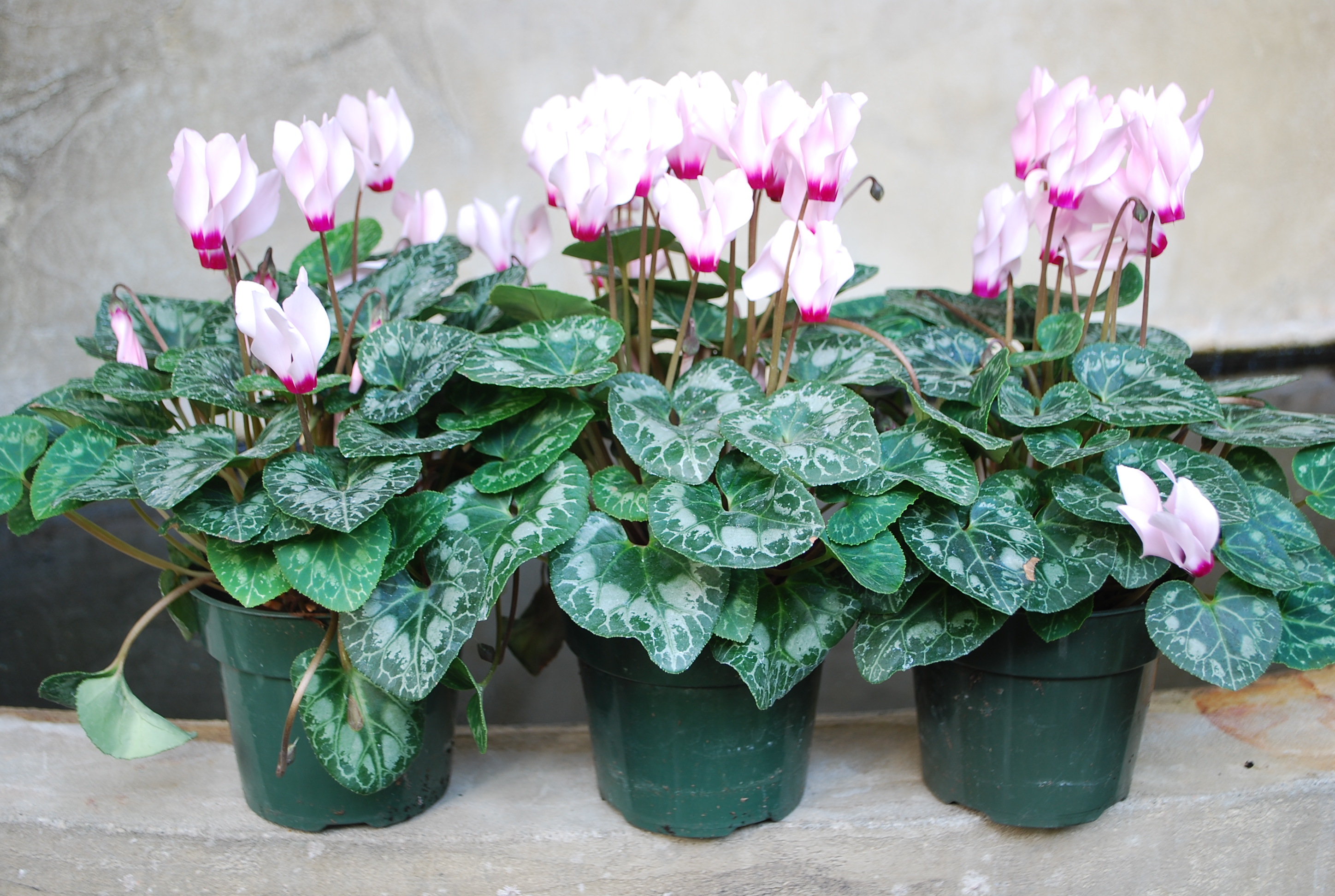
pink dwarf cyclamen

Cyclamen persicum is also known as the florists cyclamen.  This species, not hardy in my zone, has been intensively bred for winter bloom.  If you are longing for spring, these cyclamens might help you weather the winter storm. Be careful not to overwater.  Buy blooming plants that show clear signs of sending up new flowers.  I keep them on the dry and cool side, and fertilize every 3 weeks or so with a balanced fertilizer-at 1/2 strength.

Once the leaves start to yellow, I know the plants are asking for a rest period.  I will confess I have never tried to keep them over to a following winter.  I am not that good a grower.  That they help me winter my flowerless storm is enough.

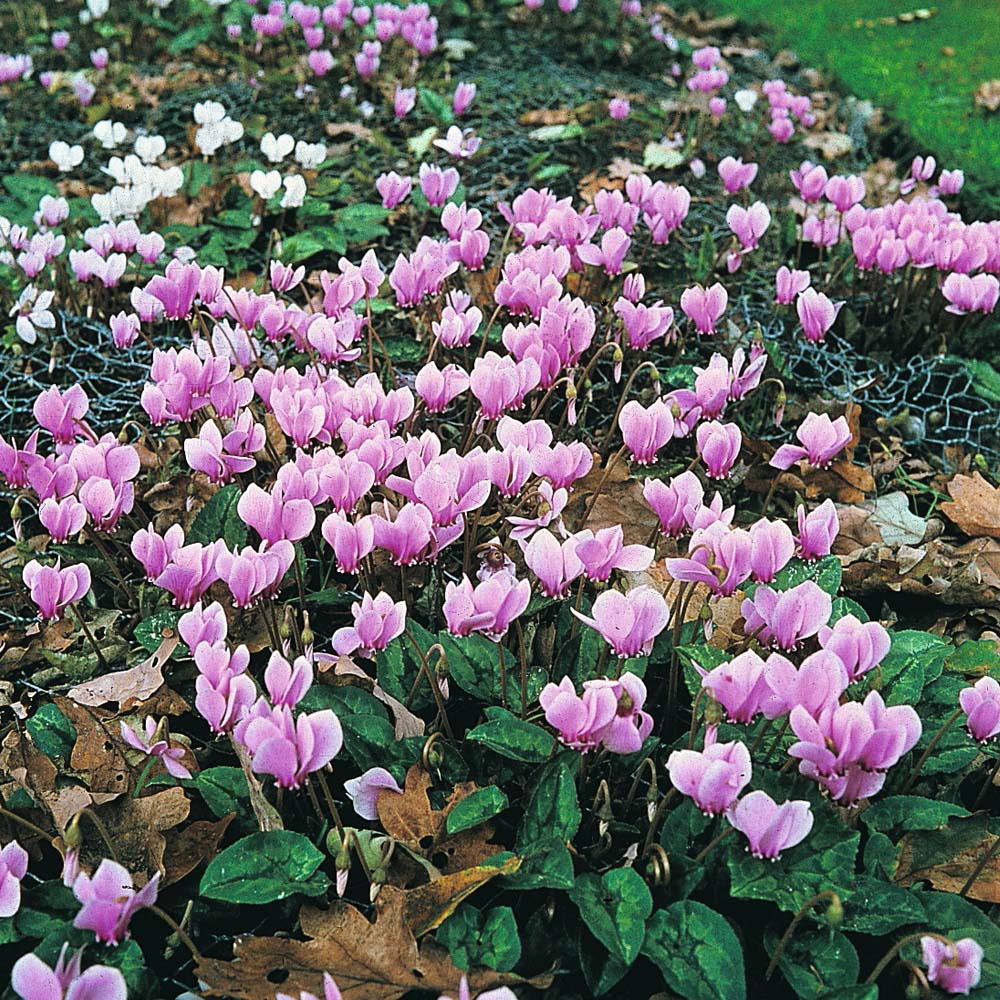
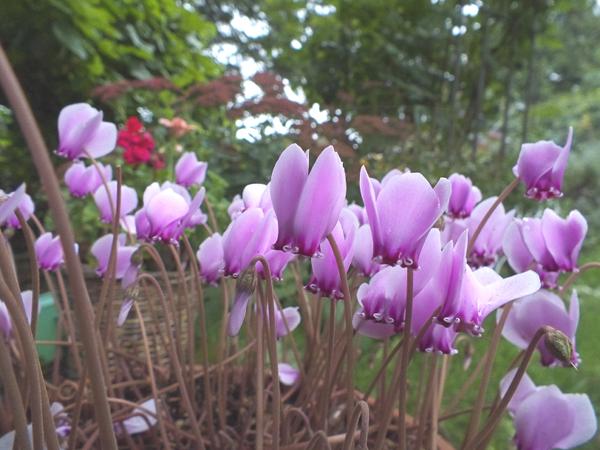
hardy cyclamen

There are cyclamen that are hardy in my zone.  Cyclamen hederifolium generally prospers in lower light and dry shade.  I would try them in a few locations before making a big investment.  They can be haughty, demanding, picky, and unfriendly.  Perfectly sited, they prosper.  Thriving colonies make you and your garden look good. For years I had a patch in dry shade that was as lovely in leaf as it was in flower.

The flowers are so similar to the florist’s cyclamen that I can not tell them apart.  Were I a cyclamen head, I am sure I could spot the differences.  They are diminuitive and charming in the garden, but they are really great on my winter window sill.

Not too shabby, this.