A Vase Full Of Flowers

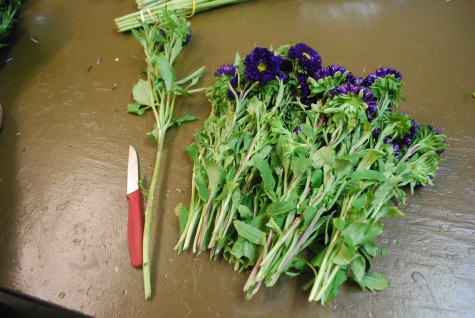
I would imagine that there are lots of gifts, in the form of cut flower arrangements, exchanging hands today.  Though a vase full of flowers is a traditional Mother’s Day gift, it is a thoughtful and appropriate choice.  In the interest of keeping those fresh cuts fresh as long as possible, I take the time to condition them.  These Matsumoto asters have very long, tough, and woody stems.  I cut them down to the approximate length I well need, and then strip off any foliage that might be below the water line.    
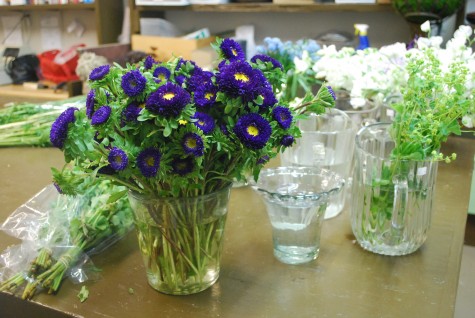
I do like cut flower arrangements that are more about the flowers than the foliage, but there are other good reasons to remove most of it.  any leaves below water will immediately begine to deteriorate.  Bacteria proliferate under such circumstances.  Eventually it will interfere with the stem’s ability to take up water.  That uptake is essential to a vase of flowers that lasts. A flower flush with water will stay fresh longer.
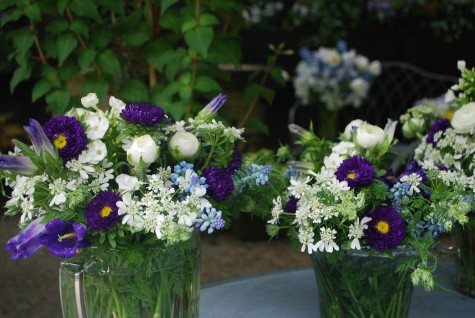
The cut flowers I buy from a wholesale flower house may be local, or they may come from a long ways away.  Though modern transportation means that a cut flower spends as little time as possible in a box, there is an immediate need to get them a drink of water.  After stripping the low foliage, I recut every stem on a slant.  This maximizes the stem surface that can absorb water.  The asters, ranunculus, and grape hyacinths in these arrangements have a naturally good shelf life.  The purple campanula, white phlox, and orlaya (this is the Queen Anne’s lace like flower)  need 24 hours of conditioning-meaning immersion deep lukewarm water in a cool spot- before they are arranged.  
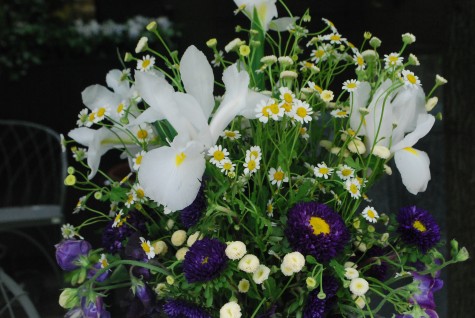
Dutch iris are fleeting in a vase under the best of circumstances, so I buy them in tight bud.  Making sure the flowers you buy are fresh to begin with is important.  If you are buying flowers from a grocery store, find out what day their fresh flowers come in.  Check for any browning.  Whether you are picking tomatoes or fresh flowers, the same rules apply.  Even if those buds of iris are not showing color, once the stems absorb water they will pop overnight.  Roses in tight bud, showing no color, may never open. 
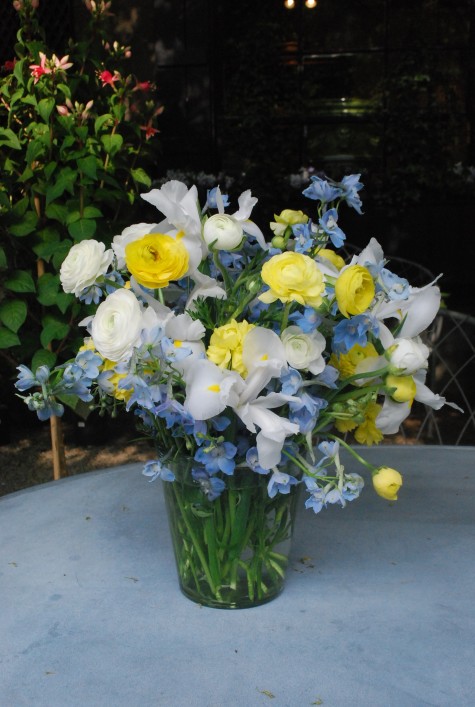
Ranunculus have an amazing long vase life.  They are readily available in the spring season.  Buying cut flowers that are in season means they are readily available at a reasonable price.  Long stemmed red roses available at Valentine’s Day in February are hot house grown, or shipped into my area from California, or South America-an out of season luxury. 
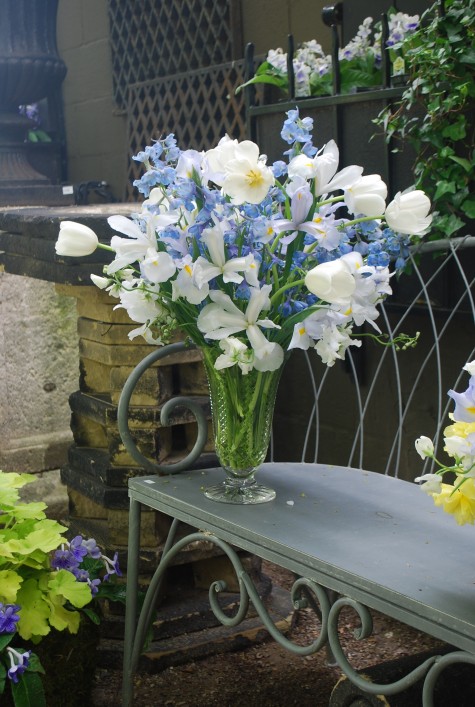
The giant long stemmed Pacific hybrid blue delphiniums are indeed a sight to behold, but they are difficult and awkward to arrange.  The shorter growing belladonna delphinium is every bit as beautiful a blue, and much more graceful in a vase. The delphiniums were arranged in this vase first.  The larger flowered tulips and iris came next.  The dashes of white sweet peas-last.  Trumpet shaped vases help give a cut flower arrangement a graceful overall appearance.  Cylinders can be tough.  Every flower wants to be upright. 
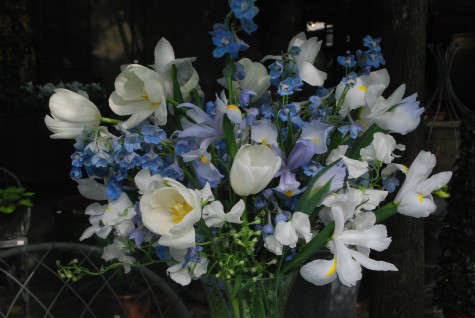
 Tulips are long lasting in a vase too.  But as their stems tend to be wobbly, they like a little existing structure to lean up against.  I try to condition tulips with plenty of natural light.  They look to the light.  I like them to be upright while they are taking up water that first day out of the box.  The flower heads are heavy, and the stems slight- inevitably the stems will swoop.  Conditioning will make them much easier to arrange. 
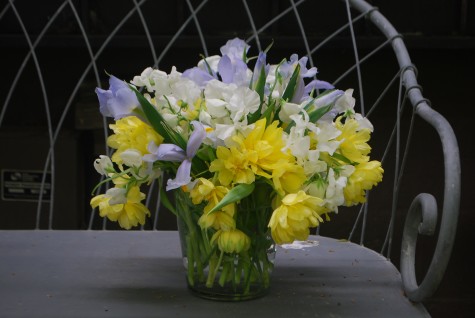
The Dutch iris are very stiff and set, once they open.  I like to pair them with other flowers that have a more relaxed habit in the vase.  Multiflowered double yellow tulips and sweet peas loosen things up a little.  This arrangement went to a Mom with great grandchildren.  Pastel flowers are easier to see that dark colored ones.  A bouquet of fragrant flowers adds a whole other dimension to the enjoyment of those flowers.
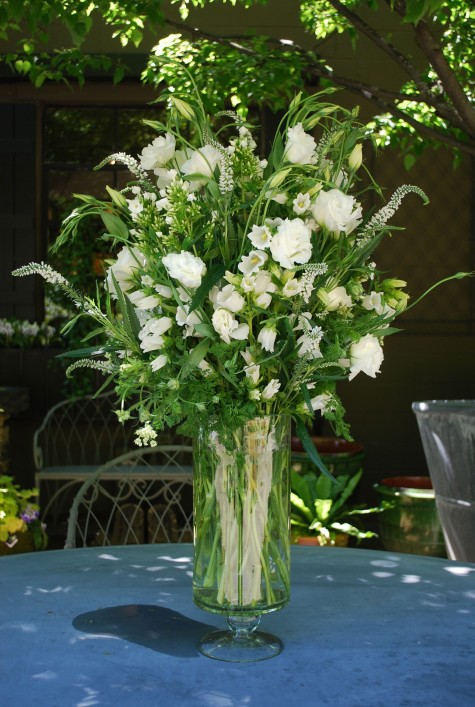
A mix of all white flowers is always a beautiful choice.  Veronica, lisianthis, phlox, campanula and orlaya in a vase suggests the profusion of the garden.  For a thoroughly modern Mom, a vase full of one kind of flower may be more appealing. 
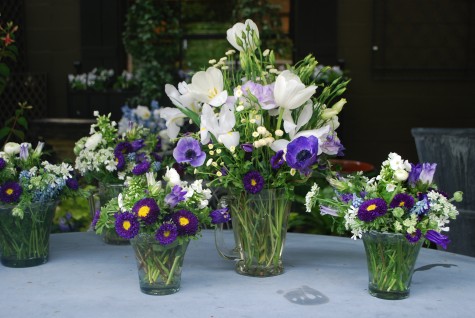
I like mixed flowers in a vase for one practical reason.  If the campanula wilts and fades, it can be removed.  Clean water, and a little fluffing means the arrangement it there to enjoy for a few more days. 
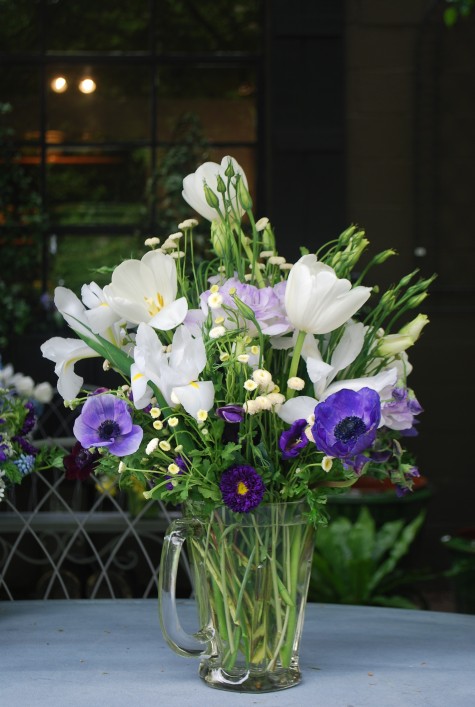
There are those circumstances when arranging flowers in oasis, or floral foam is a necessity.  But flowers arranged in water that is kept fresh will last.  All of those green stems in clean water is a pretty look.
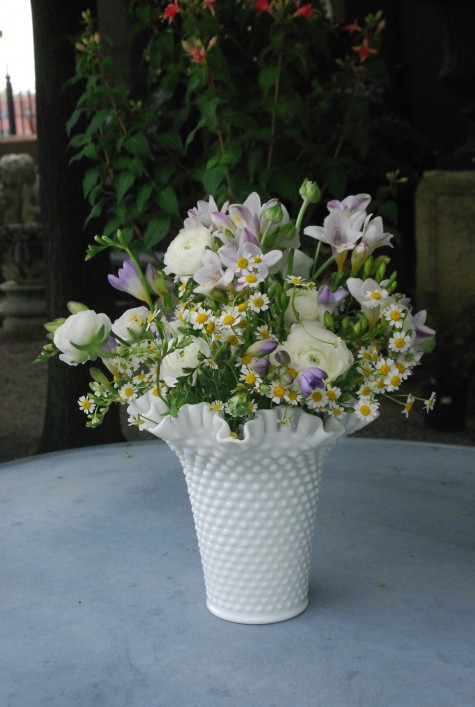
A smaller scale arrangement will be easier to handle.  Recutting the stems every other day, and clean water will help with their longevity.  If you buy cut flowers that routinely come with buds-such as lisianthus and ranunculus, making those buds part of the arrangement becomes part of the charm. 
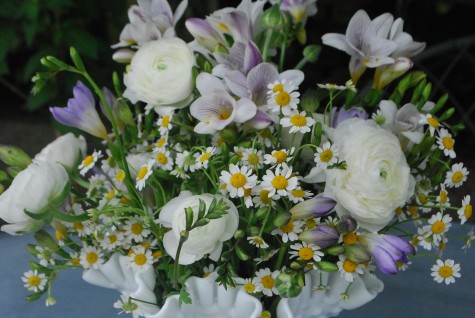
The lavender and purple veined freesia in this vase-wonderfully fragrant.  The feverfew-very garden like.  The ranunculus-like little peonies. 
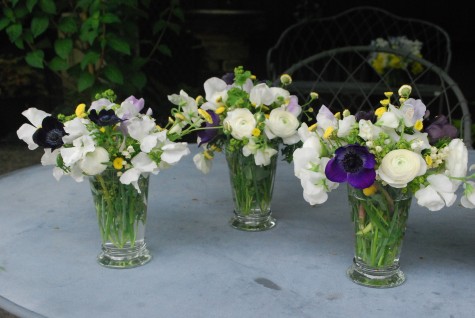
 

Cut flowers from the garden make lovely arrangements, but I have little in bloom right now.  What’s available in my yard and maybe yours right now-lily of the valley. Given that they are usually in bloom on Mother’s Day might be just enough of a good reason to grow them.   
 

Holiday Decorating

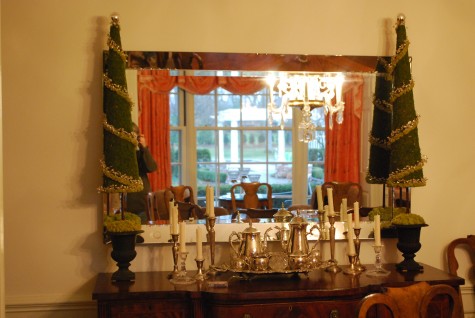
 Yesterday was my first indoor holiday installation.  A client with an event coming up the first week of December wanted the bones of her holiday decor in place before Thanksgiving. This pair of topiaries began with moss mat glued over foam cones.  The spiral garlands of reindeer moss, accompanied by a delicate silver wire garland took some time and patience to glue up, but the result is festive and elegant.  The formal dining room sideboard fresh decor can be added just before the event.  Fresh materials at the holiday look and smell great, but I like adding them at the last minute.  Holiday ornament like this-tall, thin, and taking up little space-can be used in lots of different places.  Perhaps next year’s decor will call for them on a mantel.         

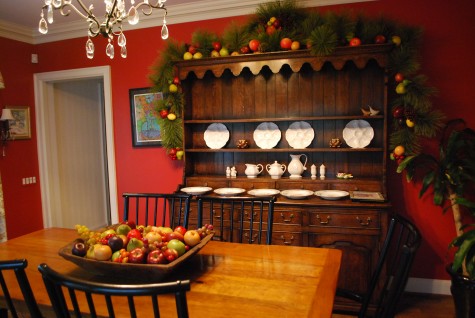
The breakfast room has an entirely different feeling than the formal dining room.  A garland studded with faux fruit is draped over the Welsh cupboard.    We filled her wood trough with lots of the same fruit.   This room is ready for the last minute addition of fresh greens, and candles. 

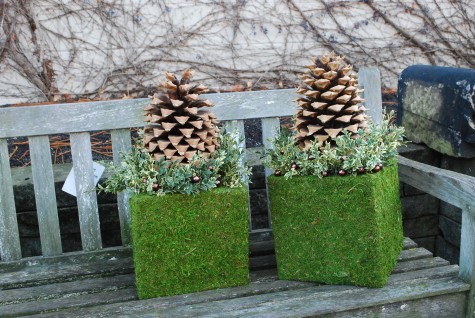
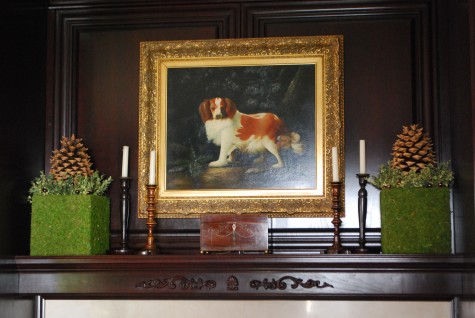
This pair of mossed cubes were topped with coulter pine cones, and variegated English boxwood.  Pinus coulteri is native to southern California and northern Mexico.  It produces the largest cones of any pine.  They can grow to a length of 16 inches, and weigh 10 pounds a piece.  I thought this pair of sculptures would look appropriate in the library.


The moss mat was applied over dry floral foam, making it easy to glue the heavy cones in an upright position, and insert the springs of boxwood.  They have a comfortably masculine look that is appropriate for the room.   

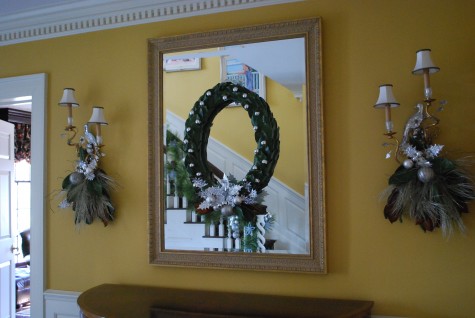
We paid lots of  holiday oriented attention to the foyer.  The moment a guest arrives, what they see first creates a lasting impression.  This is why I devote so much attention to the landscape of the driveway. The end of my drive is the foyer of my garden.  I come home every day, and I want what I see first when I get there to be beautiful and inviting. Decorating the foyer mirror and sconces means there is plenty of room on the table for family pictures, a holiday hostess gift, or a tray of champagne.  The oval magnolia wreath we made by gluing individual leaves over a foam form; the size and shape is friendly to the mirror.  A small suction cup provides a hook; the wreath weighs very little.  The sconces have glass ornament, silvery picks, silver fabric leaves, and magnolia wired to them.       

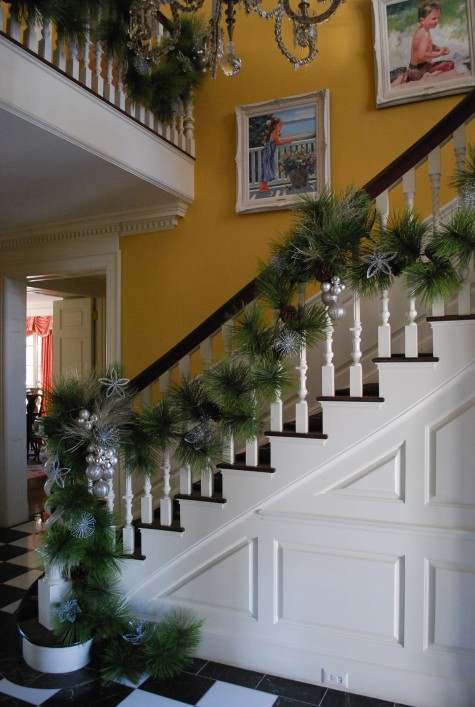
We dressed the staircase in a long needled faux pine garland.  We added glass holiday ornaments, glittered wire flower ornaments, and silvery pine picks for a soft and dressy look.  The result is beautiful and elegant.  The garland is affixed to the outside of the railing with black zip ties-this is friendly to the wood finish on the railing.  In between each length of garland-a pine pick of the same style.  This helps make a graceful transition from one garland swag to the next.  Most faux garlands are 6 feet long-which may or may not work with the length of your staircase.  The added picks helps to make the garland fit the space.

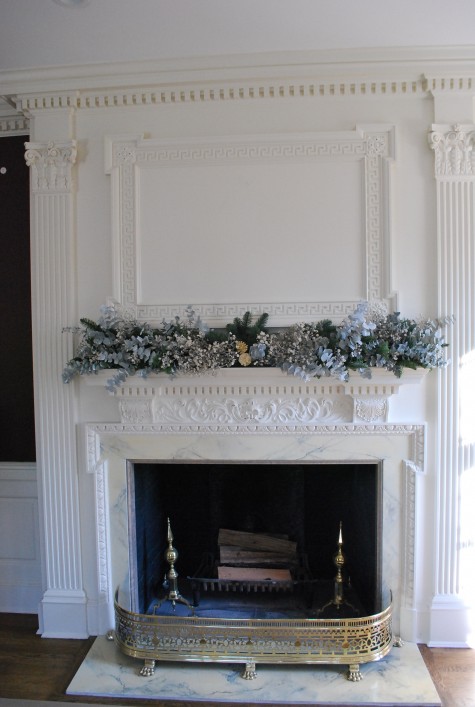
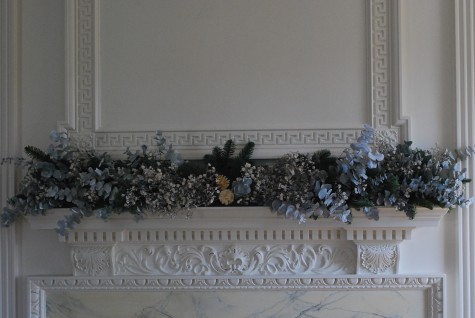
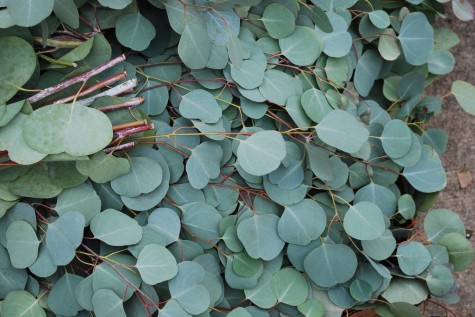
The living room fireplace mantel is short, with little depth. We attached overlapping bunches of preserved and whitewashed eucalyptus to a bamboo pole, cut to a length just shy of the width of this mantle.  We dressed that eucalyptus with silver fir greens, sparkly picks, and just a pair of bleached cones. Those cones address in a subtle way the color of the brass fireplace fender.  

The result is mindful of the elaborate carving on the mantel, and formal presentation of the fireplace.  Not every mantel asks for holiday garland that goes to the floor.  We will add a fresh and decorated wreath to the space above the fireplace, just before the event.  That wreath will be concolor and noble fir; both of these greens keep indoors over the course of the holiday. 


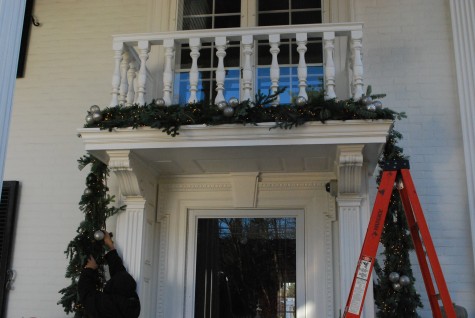
The fresh fir garland over the front door will stay fresh, given that the air temperature is cold.  The glass ornaments have had their caps glued on, to keep moisture out.  Not seen in this picture, a massive second story overhang supported by columns that will protect the glass from too much exposure to the weather.  The pots at the front door-this we will do next week.  This holiday project is well underway.

Good Ingredients


 I am not a cook.  I am not especially fussy about what I eat.  I like grilled cheese sandwiches and tomato soup.  I am happy with a tunafish sandwich, or a burger.  I like whatever Buck fixes.  Milo and Howard have eaten the same brand of kibble every day for 7 years-I am just about there.  I do on occasion long for some liver and onions, or Chinese food for a local and great restaurant, but day to day, I am a food bore.  Feed me please-I need to get that meal over with, and get going. I eat to live, not to be entertained.    

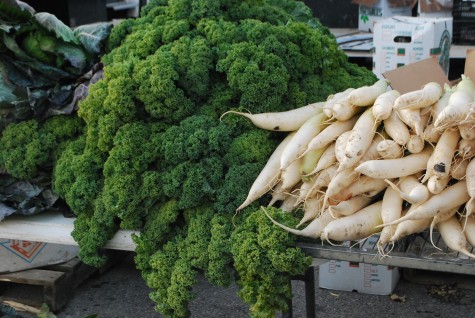
 But I really like fresh vegetables-why?  I grew up with that.  My Dad shopped for fresh vegetables and fruits-we always had them.   At least three, every meal.  A sample vegetable menu-home grown potatoes, spinach, and salad.  Or broccoli, corn, and tomatoes.  I like salad, every day.  On those days when Buck is too tired to fix one, I am happy with a wedge of iceberg lettuce-as long as it is fresh.  At this time of year, Buck and I eat good greens every day.  Swiss chard-a favorite. Turnip or beet greens-a close second.  Bok Choy, brussel sprouts, kale, beet greens, spinach, okra-we chow down all of the fresh greens.    

Buck really likes to cook.  He watches cooking programs on cable.  I and happy to join him.  This is the least I can do, considering that he shops weekly, and goes on to feed me every day.  Every program we watch emphasizes the importance of cooking with great materials. Fresh greens. Locally grown produce.  Every program he watches has a common thread-the importance of good ingredients.      

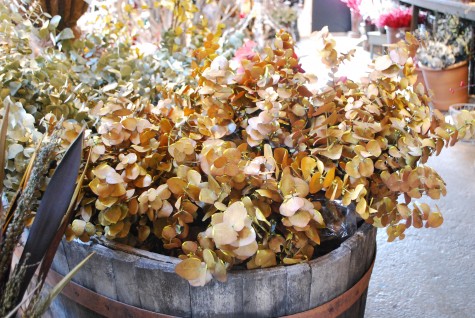
What I cook up in the landscape no one can eat, but anyone can see.  It is  tough to make a beautiful landscape with poorly grown shrubs, or park grade trees. Well grown perennials take hold quickly, and thrive.  Beautiful fresh flowers are easy to arrange.  Preserved eucalpytus has this going for it-the preservation part enables an arrangement that lasts a long time.      

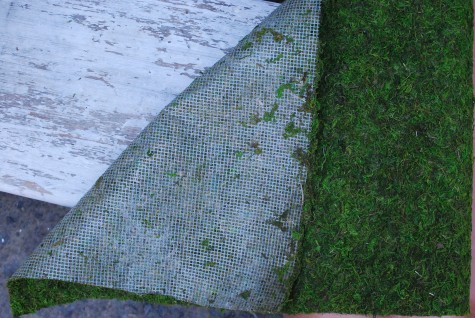
I have lined many a wire container with florist’s moss.  This raw material comes in varying thicknesses, and highly variable dimensions.  Moss rolls- his new product transforms the bits and pieces that I recognize as florist’s moss into sheets that are easy to work with.  How I love this good ingredient!  I could wallpaper a room with it.  

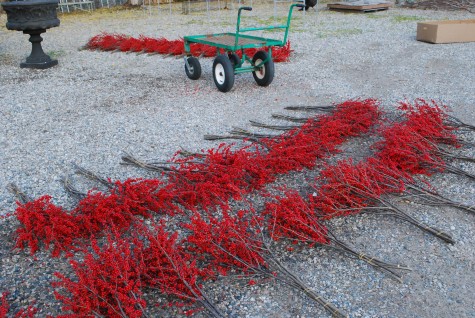
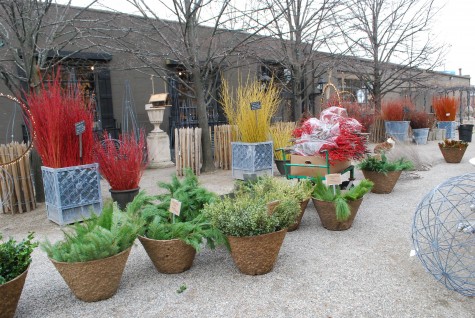
The good ingredients for holiday and winter pots are many.  A wide range of choices in materials means a wide range of expression is possible.   

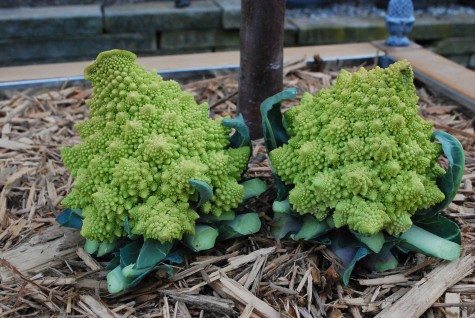
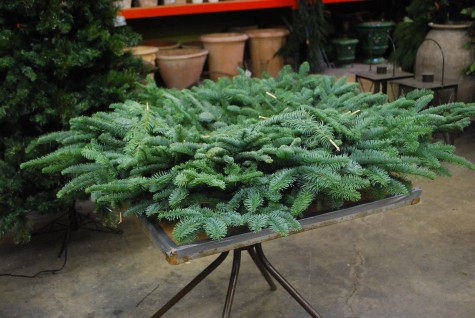
Cut noble fir is a really great ingredient.  Versatile and very long lasting. 

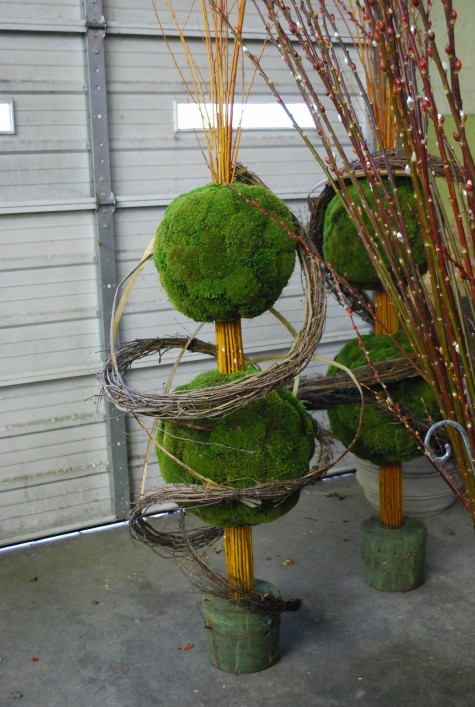
These double ball topiary sculptures-I made them for a client in 2005.  What you see here-a new, and fresh layer of dried moss.  Good materials are visually fresh.  This moss looks good enough to eat.  


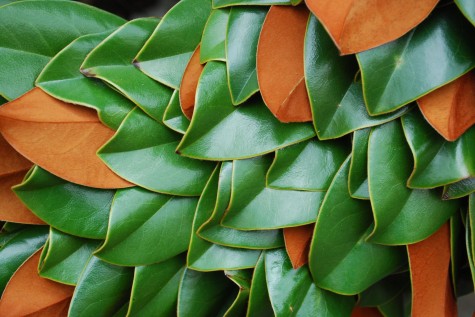
Our first shipment of magnolia came today.  Magnolia makes great wreaths and garlands.  The cut branches are mouthwatering good in winter containers.   

You are halfway home in any holiday decor project, assembling some good materials.  

Should you take the time to represent the season, use good ingredients.  There are lots of places to find them, including your own yard, a field down the street, the farmers market, your local nursery, a local fruit market, the grocery store,   I shop for good ingredients in all of these places-not just my own.

Tie It All Together

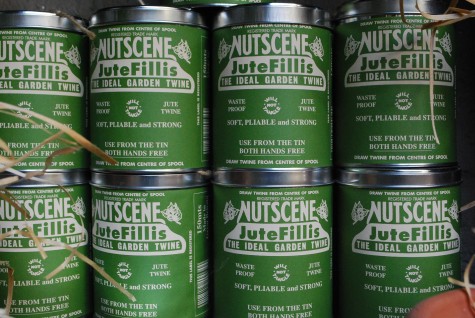
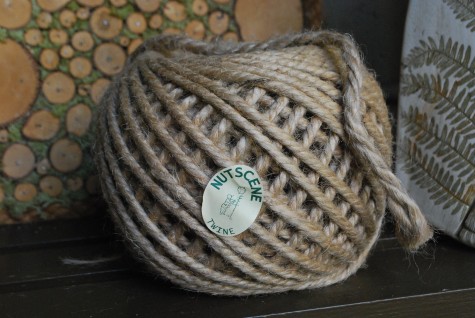
I am a fan of string, twine, thread and rope.  This is a material that helps with no end of chores in the garden.  The English adore twine; Nutscene is a company in England that makes string.  This jute string comes in a can-just like the label says, it is pliable-meaning it will not damage tender stems.  It does eventually deteriorate, but that process is slow.  Pulled from the center of the spool which is contained in a can, there is no tangled mess.  How you can use this jute twine with both hands free baffles me-but I am happy to let that claim pass.  This jute twine is ideal for tying wayward perennial stems to a stout stake, without injuring the plant. 

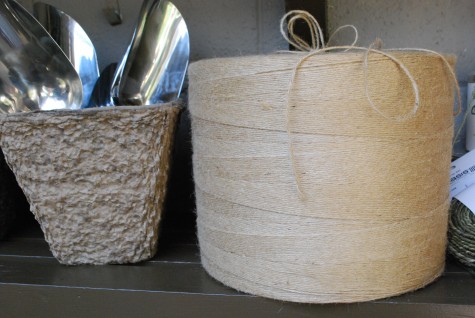
Should you have a need for thousands of yards of jute twine, Nutscene manufactures wheels of string.  Pray I never have a need for this much string.  But I love the look of this spool.  India is the primary source for jute worldwide-the fiber comes from corchorus capsularis, or corchorus olitorius.  They both are tropical annuals, from the linden family.  Burlap, a staple fabric of the landscaping industry, is woven from jute. Used to bind up rootballs, jute burlap eventually rots away, permitting the roots to work their weay into the surrounding soil, and the plant to take hold. It may not be the strongest string on the planet, but it is a natural, readily available, and traditional material appreciated just as much as a strong and well made terra cotta flower pot.

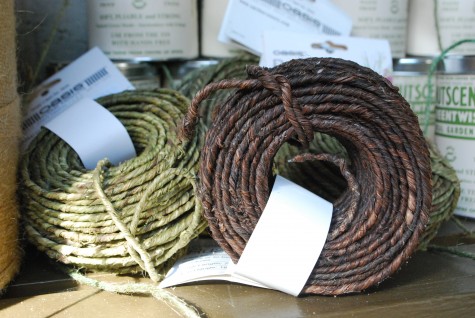
Bark wire is a staple in my tool kit.  I know that wire is the inner layer-I have no idea what fiber is wrapped around that wire.  I am sure it is not bark-it is a rough twine  of some sort.  I do know that when I need some strong restraint, bark wire does the trick.  Should I have a centerpiece wired in a visible way, this is my wired string of choice. 

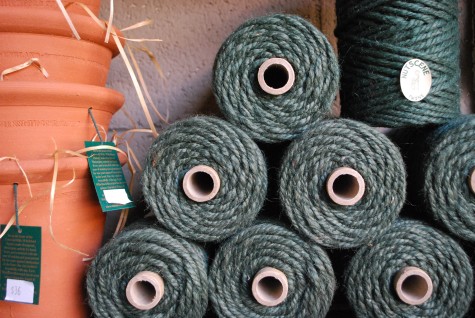
Jute dyed green is a color friendly to the garden.  These spools of widely twisted jute fibers are satisfying to look at.  How would I use them?  You might use this twine to make a fence for peas, or wrap a package.  On a twine binge, I might wrap a pot with it.    

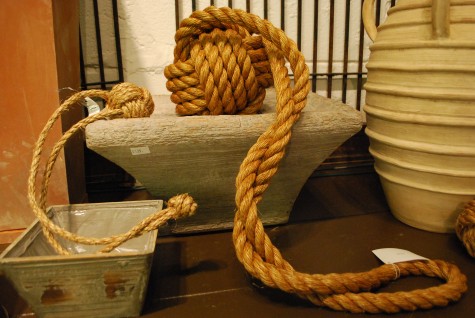
This pair of jute spheres are of vastly different sizes. The large rope wrapped sphere is a celebration of the strength that comes from many strands.  It is also a testament to the maker-it is incredibly difficult to make rope conform to a small or precise shape.  The technical issues aside, these are beautiful objects made from plants.

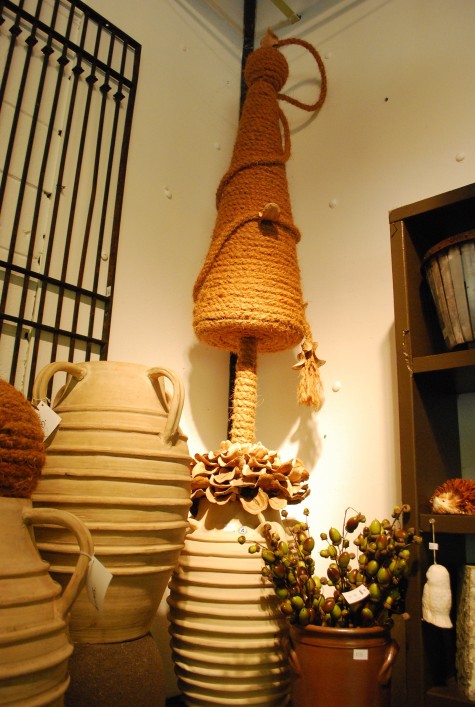
I wrapped this topiary form with its sphere finial in rope made from jute.  I like the look of the horizontal bands of rope in relationship to this french beehive pot fashioned from the natural color of a local clay. This I would call the next best thing to a living plant.  A sculpture from rope in a terra cotta pot brings the garden to mind.  

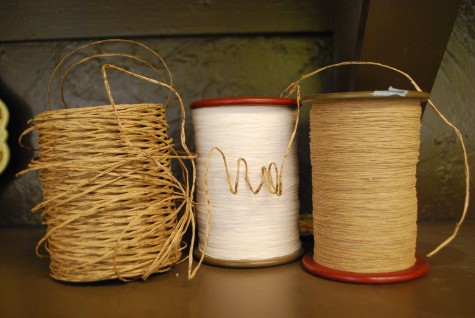
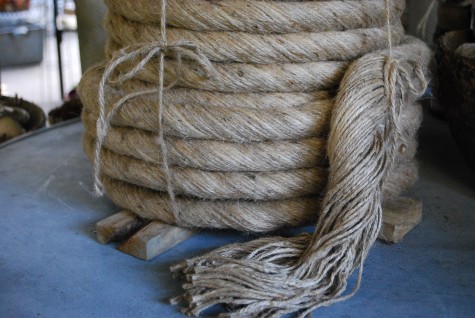
I collect string.  On the left, a spool of wire covered in paper.  In the center, linen thread. On the right, string made from twisted paper.This giant wood spool is covered with a flexible jute rope comprised of many individual strands.  We make bows from this rope.  We hang birdhouses, and light spheres from it.  We use it whole-we divide it up.  We wrap tree trunks for the winter,  and packages with it.  The smell of natural jute is as pleasing as the smell of phlox, roses, or petunias.      

Rob bought at least a hundred balls of natural jute Nutscene twine this past spring.  Most of those balls are gone.  I have no idea how they got used.  I do know they are beautidful objects in their own right.  I had occasion to  use 6 of those spools this past weekend.  

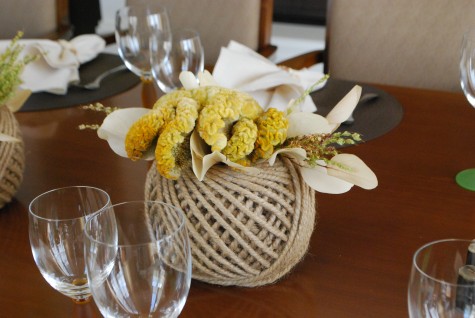
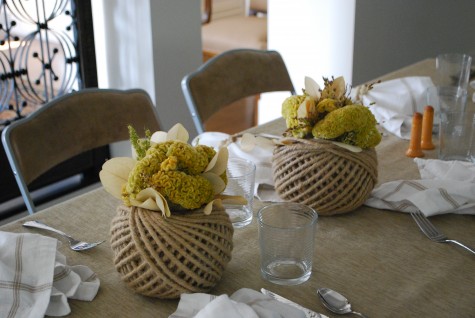
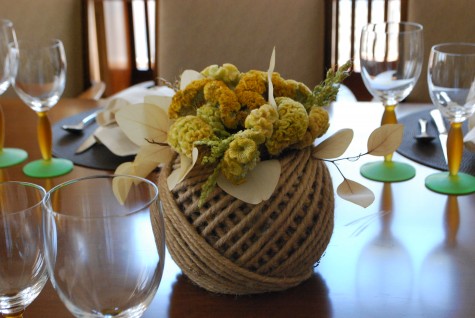
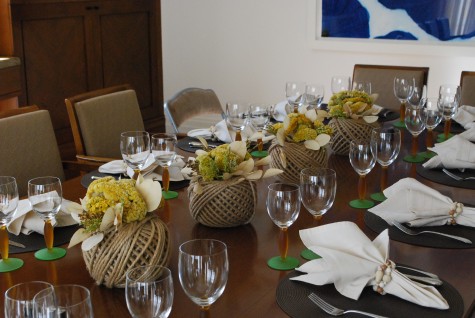
A client having her family for dinner over a holiday needed some centerpieces.  I could not take my eyes off those jute spools.  I worried plenty that she would not appreciate my idea about string spool vases and fall.  I need not have worried. 

She loved the string vases, the yellow celosia, the bleached leaves, and the green broomcorn bits.

These twine ball vases and their dry materials can stay on the table the entire fall.  Natural materials have a way of fitting-even on the most formally set table. 


It is amazing what a little twine can tie together.